
❌

Normal view

Costa, von der Leyen offer ‘solidarity’ to Greece, Cyprus after Turkey-Libya sea deal

20 October 2026 at 19:55

European Council President Antonio Costa and European Commission President Ursula von der Leyen on Tuesday offered “solidarity” to both Greece and Cyprus after the Libyan parliament had earlier in the day ratified a maritime boundary agreement with Turkey which both Greece and the Republic of Cyprus consider to be illegal.

“We deeply regret the ratification today by the Libyan parliament of the so-called Libyan-Turkey memorandum of understanding on the delimitation of maritime jurisdictions in the Mediterranean Sea. We recall that the EU’s position on this matter was clearly stated by the European Council in 2019 and remains unchanged,” they said.

They added that the agreement “infringes upon the sovereign rights of third states”, “does not comply with the law of the sea”, and “is null and void”.

“We reaffirm our solidarity with Greece and Cyprus. We reiterate the EU’s well-known position against any outside interference in Libya,” they said.

The European Council’s conclusions on December 12, 2019, had stated similarly that the agreement “infringes upon the sovereign rights of third states, does not comply with the law of the sea, and cannot produce any legal consequences for third states”.

Libya’s parliament voted unanimously to adopt agreement

Earlier on Tuesday, the Libyan parliament voted unanimously to adopt the agreement, which states that Libya and Turkey agree that their respective exclusive economic zones share a border in the Mediterranean sea, and that that border is located southeast of the Greek island of Crete.

The ratification came on a day on which a day on which Turkey’s national intelligence organisation (Mit)’s chief Ibrahim Kalin was in the country to meet Libya’s government of national unity’s Prime Minister Abdulhamid Dibeybe.

Turkey had signed an agreement with the Libyan government of national accord in 2019, but it had not until Tuesday been ratified by Libya’s legislature. The government of national unity superseded the government of national accord in 2021 and is now the sole internationally recognised government of Libya.

Mit chief Ibrahim Kalin and Libya’s government of national unity’s Prime Minister Abdulhamid Dibeybe

After the agreement was signed, Cypriot Foreign Minister Constantinos Kombos and his Greek counterpart Giorgos Gerapetritis held a telephone call, after which both ministries released condemnatory statements.

“The Republic of Cyprus’ foreign ministry condemns the Libyan parliament’s decision to approve the illegal Turkish-Libyan ‘memorandum of understanding’ of 2019. This ‘memorandum’ violates the sovereign rights of third states and is contrary to the recognised principles of the United Nations convention on the law of the sea,” the Cypriot ministry said.

It added that the agreement also violates “customary international law regarding the rights of islands in maritime zones, including the exclusive economic zone and the continental shelf”.

“Therefore, the foreign ministry continues to consider the said ‘memorandum’ illegal, null and void, and that it does not produce, in any way, legal effects against third states,” it said.

Turkey is not an Unclos signatory, Libya signed but did not ratify

Greece’s foreign ministry said that that it “rejects” it and that the decision “does not change the illegal, null and void nature of the memorandum, which is contrary to the international law of the sea and violates the sovereign rights of the states of the region”.

“Geography and the international law of the sea do not change with unilateral, legally unfounded parliamentary decisions. Turkey and Libya do not have opposing or adjacent coasts which would provide a legal basis for the attempted delimitation of maritime zones,” it added.

While Greece and the Republic of Cyprus are signatories to the United Nations convention on the law of the sea (Unclos), Turkey is not, and while Libya under its then leader Muammar Gadaffi signed the convention in 1984, no Libyan legislature ever ratified the signature.

Turkey’s belief is that the convention gives too much weight to islands, which it says should instead only be allowed 12 nautical miles of territorial waters as their own exclusive economic zone (EEZ), whereas Greece believes that its islands are entitled to full EEZs of their own.

As such, Turkey’s view is that its own EEZ stretches south to meet Libya’s EEZ, and as of Wednesday, Libya agrees, whereas Greece’s position is that Turkey and Libya do not share a maritime border because the sea in question belongs to Crete.

Given this to be the case, Turkey’s presidential press office director Burhanettin Duran described Tuesday’s vote as “an important advancement towards protecting the shared rights and interests of both nations in the eastern Mediterranean, establishing maritime jurisdiction areas on the basis of equity, and strengthening regional cooperation”.

“Under the leadership of our President Recep Tayyip Erdogan, Turkey will continue to safeguard its rights and interests within the Blue Homeland, while further developing its relations with friendly and brotherly Libya and promoting equitable resource sharing, peace, and stability in the eastern Mediterranean”.
Cyprus declares Turkey-Libya maritime agreement illegal

20 October 2026 at 18:16

Cyprus’ foreign ministry on Friday declared the maritime boundary agreement signed by the governments of Turkey and Libya to be both “illegal” and “null and void” after it was ratified by the Libyan parliament earlier in the day.

“The Republic of Cyprus’ foreign ministry condemns the Libyan parliament’s decision to approve the illegal Turkish-Libyan ‘memorandum of understanding’ of 2019. This ‘memorandum’ violates the sovereign rights of third states and is contrary to the recognised principles of the United Nations convention on the law of the sea,” it said.

It added that the agreement also violates “customary international law regarding the rights of islands in maritime zones, including the exclusive economic zone and the continental shelf”.

“Therefore, the foreign ministry continues to consider the said ‘memorandum’ illegal, null and void, and that it does not produce, in any way, legal effects against third states,” it said.

The Libyan parliament’s spokesman Abdullah Bliheg had said earlier in the day that the legislature had “voted unanimously” to adopt the agreement, on a day on which Turkey’s national intelligence organisation (Mit)’s chief Ibrahim Kalin was in the country to meet Libya’s government of national unity’s Prime Minister Abdulhamid Dibeybe.

Turkey had signed an agreement with the Libyan government of national accord in 2019, but it had not until Tuesday been ratified by Libya’s legislature. The government of national unity superseded the government of national accord in 2021 and is now the sole internationally recognised government of Libya.

Turkey and Libya officially agree that their EEZs share a border

As a result of the agreement, Libya and Turkey agree that their respective exclusive economic zones share a border in the Mediterranean sea, and that that border is located southeast of the Greek island of Crete.

Greece, too, reacted furiously to the Libyan parliament’s approval of the deal, with the country’s foreign ministry that it “rejects” it and that the decision “does not change the illegal, null and void nature of the memorandum, which is contrary to the international law of the sea and violates the sovereign rights of the states of the region”.

“Geography and the international law of the sea do not change with unilateral, legally unfounded parliamentary decisions. Turkey and Libya do not have opposing or adjacent coasts which would provide a legal basis for the attempted delimitation of maritime zones,” it added.

It then said that the agreement “also disregards the Greek islands and their rights to maritime zones based on [the United Nations convention on the law of the sea] Unclos and customary international law”.

“Having already concluded maritime delimitation agreements with Egypt and Italy, in accordance with the international law of the sea, Greece has demonstrated its respect for international law and the sovereign rights of neighbouring states. We call on the Libyan side to refrain from any action which is contrary to international law and undermines stability in the eastern Mediterranean,” it said.

It added that it has “already informed its partners and allies” and that it will “take all appropriate action to safeguard its sovereign rights”.

Libya’s parliament

Turkey is not an Unclos signatory, Libya signed but did not ratify

In this, the country’s Foreign Minister Giorgos Gerapetritis had earlier held a telephone call with his Cypriot counterpart Constantinos Kombos shortly after the Libyan parliament voted on the matter.

While Greece and the Republic of Cyprus are signatories to Unclos, Turkey is not, and while Libya under its then leader Muammar Gadaffi signed the convention in 1984, no Libyan legislature ever ratified the signature.

Turkey’s belief is that the convention gives too much weight to islands, which it says should instead only be allowed 12 nautical miles of territorial waters as their own exclusive economic zone (EEZ), whereas Greece believes that its islands are entitled to full EEZs of their own.

As such, Turkey’s view is that its own EEZ stretches south to meet Libya’s EEZ, and as of Wednesday, Libya agrees, whereas Greece’s position is that Turkey and Libya do not share a maritime border because the sea in question belongs to Crete.

Given this to be the case, Turkey’s presidential press office director Burhanettin Duran described Tuesday’s vote as “an important advancement towards protecting the shared rights and interests of both nations in the eastern Mediterranean, establishing maritime jurisdiction areas on the basis of equity, and strengthening regional cooperation”.

“Under the leadership of our President Recep Tayyip Erdogan, Turkey will continue to safeguard its rights and interests within the Blue Homeland, while further developing its relations with friendly and brotherly Libya and promoting equitable resource sharing, peace, and stability in the eastern Mediterranean”.

Greece rejects as “Illegal” Libya’s decision to approve Memorandum with Turkey

20 October 2026 at 17:52

Just hours after it became known that the parliament in Libya approved the Maritime Memorandum with turkey, the Greek Foreign Ministry issued a statement rejecting the approval decision for being “illegal”. Greece has rejected the Maritime Memorandum right from the beginning in 2019 and had also briefed its EU partners accordingly. Foreign Ministry Statement Greece […]

The post Greece rejects as “Illegal” Libya’s decision to approve Memorandum with Turkey appeared first on Keep Talking Greece.

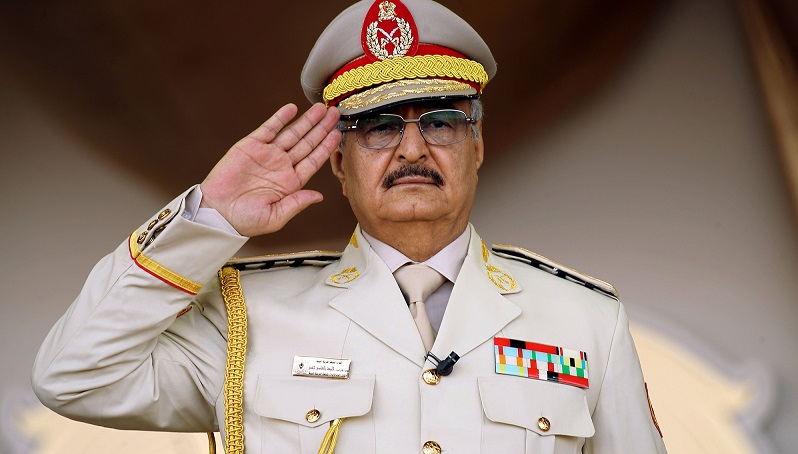
Haftar’s LNA Moves Closer to Turkey, Raising Stakes for Tripoli

20 October 2026 at 17:04

File image.

Libya’s eastern-based parliament on October 20 unanimously approved a disputed maritime agreement with Turkey and reversed its decision to sever political relations with Ankara, removing a major obstacle to rapprochement between the Turkish government and the Libyan National Army (LNA), led by Khalifa Haftar.

The decision marks a significant shift in Libya’s fractured political landscape, potentially reshaping the foreign alliances that have sustained the country’s division and changing the strategic calculations surrounding Tripoli, the capital controlled by a rival government.

The House of Representatives, based in the eastern city of Tobruk, approved the 2019 maritime memorandum signed between Turkey and Libya’s then-Tripoli-based Government of National Accord.

Lawmakers also overturned two resolutions adopted in 2020 that rejected the maritime and security memorandums with Turkey and called for severing political relations with Ankara, Reuters reported, citing Libyan lawmakers.

Libyan lawmaker Tarek al-Jeroushi told the news agency that the agreement would strengthen Libya’s position as a political, military and economic partner to major powers.

“Some countries may be upset by this agreement, but what matters to us is our national interest,” he said.

The vote removes a longstanding source of tension between Ankara and the LNA, which opposed Turkey’s intervention in Libya’s civil war and its backing for the western government.

Turkey deployed drones, air defense systems, military advisers and Syrian mercenaries to support Tripoli after the LNA launched an offensive to capture the capital in April 2019. Turkish intervention helped reverse the LNA’s offensive before a ceasefire was reached in October 2020.

Relations have since undergone a marked transformation. Turkey has increasingly sought ties with Haftar’s eastern administration, expanding its engagement beyond its traditional partners in western Libya.

Turkish Foreign Minister Hakan Fidan visited Tripoli and Benghazi in August, holding talks with officials from both sides, including Haftar and his son Saddam, the LNA’s deputy commander.

Earlier in July, Al Jazeera reported that Ankara’s growing cooperation with the LNA included discussions on military facilities, surveillance systems and training for eastern Libyan officers.

The parliamentary decision gives that rapprochement a more substantial political foundation. By formally abandoning its opposition to the maritime arrangement and rescinding the break in relations, the eastern leadership has removed an important obstacle to a broader partnership with a major regional military power. Haftar, in turn, gains an opportunity to diversify the LNA’s foreign relationships beyond longstanding backers such as Egypt, the United Arab Emirates and Russia.

The implications for Tripoli could be particularly significant. Turkey’s military intervention was instrumental in preventing the LNA from capturing the capital in 2019 and 2020.

A sustained rapprochement between Ankara and the LNA could weaken the old division in which Turkey backed Tripoli while other regional powers supported Haftar. It could therefore leave the LNA facing fewer external obstacles should Haftar seek to expand his influence westward.

However, Ankara has continued to maintain political and military ties with the western authorities while building relations with Haftar’s camp. Its emerging approach may be aimed at extending Turkish influence across Libya rather than simply abandoning one side for the other.

The agreement also carries implications beyond Libya. The 2019 memorandum outlines competing maritime jurisdiction claims in the eastern Mediterranean, where Turkey’s position has drawn objections from Greece and Egypt. Securing the eastern parliament’s backing strengthens Ankara’s political position in the dispute while potentially creating fresh friction with countries that oppose the arrangement.

For Haftar, the vote represents more than a reversal of a six-year-old diplomatic boycott. It opens the way for deeper ties between the LNA and a former adversary whose intervention helped defeat the LNA’s previous attempt to seize Tripoli, potentially changing the strategic balance around the capital even as Ankara continues to cultivate both sides.

_______________________________________________________________________________________________________________________

SouthFront: Analysis and Intelligence

NOW hosted at southfront.press

Previously, SouthFront: Analysis and Intelligence was at southfront.org.

The .org domain name had been blocked by the US (NATO) (https://southfront.press/southfront-org-blocked-by-u-s-controlled-global-internet-supervisor/) globally, outlawed and without any explanation

Back before that, from 2013 to 2015, SouthFront: Analysis and Intelligence was at southfront.com

SOUTHFRONT.PRESS

MORE ON THIS TOPIC:

The post Haftar’s LNA Moves Closer to Turkey, Raising Stakes for Tripoli appeared first on South Front.

The European Union Wants To Punish People for Their Speech—Without Even a Trial

20 October 2026 at 17:02
Hüseyin Doğru | Dmitry Shirinkin/Dreamstime/Hussedogru/X

The European Union claims that "the fundamental right to freedom of expression" only applies to journalists "acting in good faith," and that authorities do not have to give due process before freezing people's bank accounts, as these sanctions are "temporary and are not criminal in nature," according to a legal letter shared by a sanctioned journalist.

Last year, the European Union blacklisted 21 people for allegedly spreading Russian propaganda, banning them from doing business in Europe. One of them, Hüseyin Doğru, was falsely listed as a Turkish citizen living in Istanbul. In fact, Doğru is a German journalist in Berlin, making him the first European citizen on European soil to be sanctioned this way.

It was like being sentenced to "civil death," Doğru told American journalist Chris Hedges. He was banned from holding a job in Europe or having a European bank account, and authorities have restricted Doğru to a €506 ($567) per month allowance from his own money. "The sanctions are designed for people outside of Europe, so they don't really know how that should function with me, because I'm a European citizen and I'm living in Europe," Doğru told Hedges.

Last month, the civil libertarian Wau Holland Foundation hired lawyers to contest the sanctions against Doğru. And earlier this month, the Council of the European Union sent a response letter, which Doğru shared on social media, promising to escalate the case to the E.U. General Court. Although the council conceded to Doğru that he is not a Turkish citizen living in Turkey, it still insisted on the authority to punish him for his speech.

The council quoted a 2022 court case between the Russian news outlet RT and several European countries: "The protection of the right of the media and, more particularly, of journalists to impart information on issues of general interest is subject to the proviso that they are acting in good faith and on an accurate factual basis and provide 'reliable and precise' information in accordance with the ethics of journalism."

Doğru's lawyers insisted that he should be treated as innocent until proven guilty. But the council responded that sanctions fall short of a criminal punishment, so any complaint about a "violation of the presumption of innocence is therefore unfounded." In other words, because he is not accused of a crime, Doğru has fewer rights than a criminal suspect.

"People need to understand sanctions are an extrajudicial measure. They're extrajudicial. There's no court. There is no hearing, no evidence, there is no sentence by the court, nothing," Doğru told Hedges. "When you're sanctioned, you are not informed….The day when I was sanctioned, me and my wife, my wife was pregnant back then, we went to the pharmacy to buy medicine for her, and her cards did not work."

The original blacklisting decision accuses Doğru of supporting "actions by the Government of the Russian Federation which undermine or threaten stability and security in the Union" by spreading "false information on politically controversial subjects with the intent of creating ethnic, political and religious discord amongst its predominantly German target audience."

Doğru and his wife, British journalist Lizzie Phelan, previously worked at the Russian-funded publication Redfish. A few months after the Russian invasion of Ukraine, he split off to create a new website called red.media, insisting to The Left Berlin that "we are not Russian. We are not Kremlin. red.media is not funded by Russia or any other state." In the same interview, Doğru called Russia an "imperialist" regime.

But in September 2024, a Biden administration "fact sheet" on Russian propaganda offhandedly mentioned red.media, citing a hit piece on Doğru by the German newspaper Tagesspiegel. Doğru told Hedges that the U.S. fact sheet created a circular logic in German media: "They said red.media is Russian because [U.S. Secretary of State Antony] Blinken said so. But what they never said is that Blinken is referring to your articles where you never say it like that. You say there is a suspicion, it might be so."

Doğru shut down red.media in May 2025 due to the bad press. The European Union sanctioned him a few weeks later. Doğru's lawyer, Alexander Górski, told the Frankfurter Allgemeine earlier this year that the European Union didn't "even attempt to make an evidentiary case" about any ongoing connection to Russia.

The blacklisting decision also claimed that, during a pro-Palestinian student protest at Humboldt University in Berlin, red.media "coordinated with the occupiers to disseminate images of their vandalism—which included the use of Hamas symbols." Doğru told Hedges that these accusations are an attack on journalists' freedom to do their jobs.

The European Union does not have the same protections for the freedom of the press as the U.S. Constitution. Earlier this year, the Curia of the European Union ruled that simply reposting clips from Russian media could be a violation of European sanctions, even if no money changes hands, something that is explicitly exempted from U.S. sanctions under the Berman Amendment.

Still, U.S. authorities have tried to push the limits of international sanctions to censor speech. The Biden administration told an American nonprofit that "the provision of a platform for [the sanctioned individuals] to speak" was illegal, backing down after the nonprofit sued.

And the Trump administration sanctioned Italian academic Francesca Albanese for her "lawfare" calling for the prosecution of Israeli leaders and a boycott of Israeli industries. In addition to freezing her bank accounts, the sanctions forced Columbia University researchers to cut off their relationship with Albanese, and Georgetown University to close her email account. 

In the same statement accusing red.stream of being a Russian front, the Biden administration announced sanctions on two Russian news agencies. "We encourage dissent, open debate, and free discourse. But we will not stand for attempts by state actors to carry out covert activities with the goal of hijacking that discourse," the statement insisted. "The ultimate goal of sanctions is not to punish, but to bring about a positive change in behavior."

The post The European Union Wants To Punish People for Their Speech—Without Even a Trial appeared first on Reason Magazine.

Libya approves Maritime Memorandum with Turkey

20 October 2026 at 13:36

Libya’s parliament ⁠approved a maritime agreement ⁠with ​Turkey ⁠and ⁠revoked ‌a ⁠2020 ​boycott decision ‌on Tuesday, two ​members of ‌parliament told ​Reuters. The maritime delimitation accord was signed with non-neighboring Libya in 2019, Reuters reported on Tuesday. The Turkey-Libya maritime memorandum has been opposed by Greece and even the EU top diplomat has said that […]

The post Libya approves Maritime Memorandum with Turkey appeared first on Keep Talking Greece.

New Flash and Massive Floods in US. WILD WEATHER WORLDWIDE: From Asia to Europe. It’s all El Niño’s fault only? (VIDEOS). WMO and Peterson Institute Predictions

22 October 2026 at 04:35

VERSIONE IN ITALIANO

Over the past ten days, a great many extreme weather events have been recorded—from the USA to Europe, and from Asia to South America.

Is it truly all the fault of El Niño only?

Or does geoengineering—a subject to which Gospa News has devoted numerous investigations—play a role?


UPDATE on OCTOBER, 22, 2026

New Massive and Flash Flooding in the US even inside an Hospital

In the latest hours and days new massive floods are devastating some US states and North America. Four footages in one video below on ocober, 2026 events.

  • 1st footage – Water Surges Through Endoscopy Recovery Bays in Austin Hospital in Texas
  • 2nd footage – Flash flooding buried cars in debris on Tuesday in Clifton, Arizona.
  • 3rd footage – Heavy rain inundated parts of West Texas on Thursday, part of a multi-day flood threat fueled by tropical moisture colliding with a massive cold front moving across the country.
  • 4th – footage Millions in Electronics Drenched as a Massive Ceiling Flood Destroys a Toronto Showroom

Wild Weather across Europe. Devastation in Spain, UK, Italy, France and Portugal

The western Mediterranean is currently experiencing a period of extreme weather, characterized by torrential rain, flooding, and overflowing rivers across Europpe ande above all eastern Spain, southern France, and Italy. The situation is most critical along the Spanish coast, where Storm Adam has triggered exceptional rainfall, resulting in a heavy toll of casualties and displaced people.

The Valencian Community has been among the hardest-hit areas. In Pego, in the province of Alicante, 693 mm of rain was recorded over a 36-hour period.

As of October 20, the provisional toll stands at four fatalities, with over 2,100 people evacuated and hundreds of rescue operations carried out. Blocked roads, flooded homes, and vehicles swept away by the currents bear witness to the intensity of the event.

The severe weather is now also affecting southern France and Corsica. This Mediterranean weather system has primarily impacted the Languedoc region, with the departments of Hérault and Gard being of particular concern.

In the latest hours and days new massive floods are devastating some European countries. Below the footages from Spain, France, UK, Italy and Portugal in October, 2026

1st footage – Helicopters continue to rescue people trapped in Oliva (Valencia, Spain). The La Safor and La Marina Alta districts are the most severely affected.
2nd footage – An intense downpour hit El Palo, Málaga (Spain). The storm dumped nearly 60 liters per square meter in just 30 minutes, causing significant water accumulation on the streets.
3rd footage – Massive Flash Flood Turns a London Airport Baggage Hall Into a Raging River
4th footage – The famous giant waves of Nazaré are found at Praia do Norte, in the town of Nazaré, in the Western region of Portugal.

France

Italy


FIRST POSTED on OCTOBER, 20, 2026

Harsh Floods in Las Vegas, Newport and Long Beach

El Niño Alert: WMO and Peterson Institute Warn of Up to $986 Billion in Damages by 2027

The current El Niño event could have far-reaching economic and humanitarian consequences. The World Meteorological Organization (WMO) predicts that the phenomenon will almost certainly persist until February 2027, while the Peterson Institute for International Economics estimates that global losses in 2027 could reach nearly $986 billion if the event’s intensity matches that of 1997–98.

The WMO has issued warnings regarding potential impacts on temperatures and precipitation, noting an increased risk of heatwaves, droughts, and floods.

In its Global Seasonal Climate Update for the September–November 2026 quarter, the organization forecasts a likely rise in temperatures across Europe—particularly in central and southern regions—along with a higher probability of above-average rainfall in Southern Europe.

The repercussions will extend beyond the climate. An analysis by the World Food Programme, cited in the study, indicates that among 45 countries already facing food insecurity, an additional 49 million people could fall into a state of severe food insecurity by the end of 2027. The most significant effects are expected in parts of Central America and Southern Africa, with substantial impacts also anticipated in East Africa, as well as South and Southeast Asia.

HAARP DOSSIER – 10. Military “GEOMAGNETIC STORMS” from Alaska at 3,6 MegaWatts (as Energy from 12,000 Homes). Over the “foF2 Frequency” that can “Modeling SPACE WEATHER” with Dangerous Impacts on Earth, Clouds (US-EU Studies – Videos)

From an economic perspective, the outlook is concerning: the Peterson Institute warns that, in addition to the nearly $1 trillion in losses projected for 2027 alone, cumulative losses over the following five years could exceed $7.2 trillion in the absence of coordinated intervention.

These figures have reignited the debate regarding the international community’s preparedness and response capabilities.

Extreme weather events in Italy have risen from 60 in 2015 to 376 in 2025.

On the mornign of October 9, 2026, in Marsala (Sicily, Italy) , a double waterspout struck the Alcide De Gasperi school, where approximately 270 children were present.

The building has been rendered unusable; reports vary, but five or six children sustained minor injuries. In Petrosino, two people are in critical condition (classified as “red code”) after their car was forced off the road. This is not an isolated incident.

Around the same time, severe weather rendered a nursery school in Viareggio unusable, left a school bus stranded in floodwaters in Giugliano, and caused a lightning strike on a 17th-century church in Forio d’Ischia.

Extreme weather events recorded in Italy have increased from 60 in 2015 to 376 in 2025—a sixfold increase in ten years.

The estimated cost of damages for 2025 alone is 11.9 billion euros. A national adaptation plan was approved at the end of 2023; the observatory tasked with its implementation began its work in February 2026, yet, according to Legambiente, the necessary funding is still missing.

MAIN SOURCES

GOSPA NEWS – ITALIAN VERSION

GOSPA NEWS – CLIMATE GEOENGINEERING DOSSIER


RELATED POSTS AND VIDEOS

HAARP DOSSIER – 9. CYCLONES, LANDSLIDES and POLAR VORTEX after New SECRET U.S. MILITARY TESTS. Electromagnetic Bombing from Alaska Station Before Climate Disasters

The FURY of RING of FIRE STRUCK AGAIN! 7.7 Earthquakes in Panama after 7,2 in Peru (VIDEO). Wild Weather or Geoengineering Nightmares inside HAARP & HARP, US Pentagon partner?

WEATHER WARFARE & GEOENGINEERING HISTORY. From Operation Popeye to recente Devastating storm ‘Ditwah’ in Asia


Turkey submits Saudi-Pakistan defence pact to parliament for ratification

20 October 2026 at 12:59

Turkey has submitted a defence pact with Pakistan and Saudi Arabia to parliament for ratification, three parliamentary sources said on Tuesday, moving NATO’s second-largest army closer to a formal mutual defence pledge with Riyadh as it faces Houthi attacks.

The three countries signed the Mecca Joint Defence Agreement in August, under which an armed attack on one member is considered an attack on all. A joint statement issued when they signed the deal did not specify what each country had committed to.

At an emergency meeting of the alliance in Riyadh earlier this month, they agreed to ensure the “rapid deployment” of military forces and capabilities in Saudi Arabia.

Turkey, which has a robust defence industry, has condemned Houthi attacks on Saudi Arabia, expressed willingness to help meet Riyadh’s military technology needs and agreed to join a Saudi-led coalition to ensure navigational safety in the Red Sea.

Parliamentary ratification is required for Turkey to formally approve the agreement.

Parliament Speaker Numan Kurtulmus, currently visiting Kyrgyzstan, will refer the agreement to parliament’s foreign affairs commission upon his return, two of the sources said. The contents and details of the agreement are expected to become public once it is submitted to the commission.

The commission could debate the agreement as early as Friday, another source said.

A Turkish official, who spoke on the condition of anonymity, said Turkey’s own contribution was expected to belimited to military equipment, intelligence sharing and weapons systems, adding that no other form of deployment had taken place under the alliance so far.

Asked how Turkey could help Saudi Arabia defend against attacks by Yemen’s Houthis, Turkish Foreign Minister Hakan Fidan said that the Mecca Agreement was not an “offensive agreement,” adding that Turkey would not send troops to another country to carry out attacks on its territory.

Twelve Migrants Die Off Greek Islands as EU Border Crossings Fall by a Third

20 October 2026 at 10:39

Twelve migrants, including an infant, have died in two separate incidents involving boats travelling from Turkey towards the Greek islands of Lesbos and Samos, prompting investigations into the circumstances of the deaths and the activities of suspected people smugglers.

The incidents occurred on Monday, 19 October, in the northeastern Aegean Sea. Six people died when a speedboat collided with a Greek coastguard vessel near Lesbos, while another six were killed after a separate boat overturned north of Samos.

The deaths coincided with the publication of new figures from the European Border and Coast Guard Agency, Frontex, showing that irregular crossings into the EU fell by almost one-third during the first nine months of 2026.

According to the latest border monitoring figures, approximately 91,000 irregular crossings were detected between January and September, although the eastern Mediterranean remained the busiest migration route into the Union.

Two incidents under investigation

According to information released by the Greek authorities, the first fatal incident occurred near Agrilia on Lesbos when a speedboat carrying migrants struck a coastguard patrol vessel before overturning.

Six people died, while eight survivors were taken to hospital. The authorities subsequently arrested a 37-year-old Turkish national, identifying him as the suspected operator of the migrant boat.

Greece’s Maritime Affairs Minister Vassilis Kikilias said the available evidence indicated that the speedboat had struck the left side of the coastguard vessel. The precise circumstances remain under investigation.

In the second incident, approximately four nautical miles north of Samos, a boat reportedly overturned after making a sudden manoeuvre while being pursued by the coastguard.

Five men and one woman died, while 14 people were rescued. An Iranian national was arrested on suspicion of involvement in migrant smuggling.

The arrests do not establish criminal responsibility, and the circumstances surrounding both incidents remain subject to investigation.

Greek authorities have attributed the dangers of the crossings to trafficking networks operating between Turkey and the Aegean islands. The government has reiterated its policy of pursuing smugglers and restricting unauthorised maritime arrivals.

Fewer crossings, continued fatalities

Frontex recorded approximately 31,800 detections along the eastern Mediterranean route during the first nine months of this year, representing a decline of around 15 per cent compared with the equivalent period in 2025.

Across the European Union’s external borders, the agency reported an even larger reduction, with overall detections down by almost one-third.

The Central Mediterranean route experienced a particularly substantial fall, while the Western Mediterranean recorded an increase, reflecting changes in departure points and migration patterns.

These figures count detected border crossings rather than individual migrants and do not necessarily capture every unauthorised arrival.

The latest data also have to be considered alongside exceptional developments elsewhere on Europe’s borders. In July, large-scale movements through Spain’s Ceuta enclave created additional pressures on Spanish authorities and raised questions about the application of the EU’s new asylum arrangements.

The eastern Mediterranean figures encompass several routes, including crossings from Libya towards Crete, movements through the Aegean islands and arrivals across the land border with Turkey.

Consequently, the total recorded for the wider region should not be interpreted solely as the number of people arriving on the Greek islands.

Greece remains central to European border policy

Greece has occupied a central position in EU migration policy since the 2015–2016 crisis, when hundreds of thousands of people arrived from Turkey, many travelling onwards through the Balkans.

The subsequent EU–Turkey migration arrangements were intended to reduce unauthorised crossings and establish procedures for returning certain migrants who did not qualify for protection.

Athens has also faced persistent criticism from human rights organisations concerning allegations of unlawful returns at sea and land borders. Greek authorities deny operating an unlawful pushback policy and maintain that their border operations respect domestic and international law.

The EU’s Pact on Migration and Asylum, which entered into application in 2026, has introduced common procedures for screening arrivals, processing asylum claims and managing people who do not have permission to remain.

Its implementation has placed greater emphasis on border identification, biometric registration and cooperation between national authorities and Frontex.

However, the two disasters demonstrate the continued risks associated with maritime crossings, even during a period of declining arrivals.

Investigators must now establish precisely how both boats overturned, whether criminal offences were committed and what occurred during the encounters with coastguard vessels.

The findings will be relevant not only to the prosecutions of those arrested, but also to continuing scrutiny of maritime enforcement along one of the European Union’s principal external borders.

❌