❌

Reading view

Against war, drought and hunger: A global coalition to prevent a food crisis
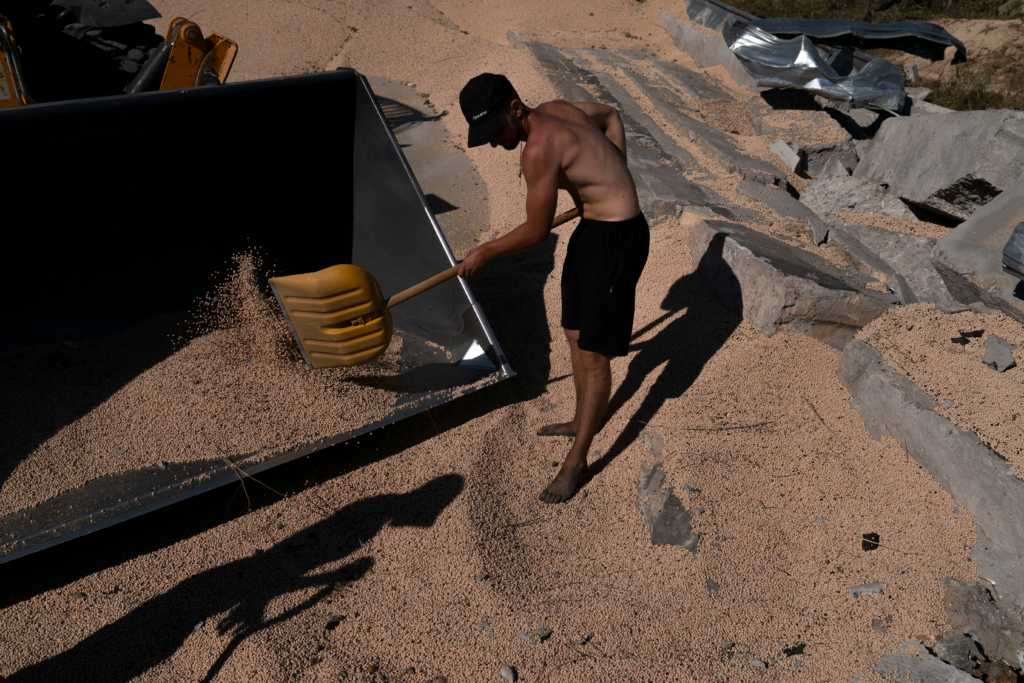
Ein Foto zeigt einen Mann ohne Hemd mit schwarzer Kappe, der Erbsen mit einer Schaufel in die Schaufel eines Laders schaufelt
Cover image: picture alliance / ASSOCIATED PRESS | Jae C. Hong

Three features of today’s unordered world are converging to create a devastating food crisis. Russia’s war in Ukraine is disrupting agricultural exports from both countries. The enduring blockage of the Strait of Hormuz is restricting fertiliser shipments. And this year’s El Niño (a sporadic warming of the Pacific Ocean generating widespread knock-on effects elsewhere) could be the most drastic on record, causing widespread droughts. As this year’s United Nations general assembly (UNGA) draws near, global food affordability and availability are at risk, and with them millions of lives and global security.

This looming catastrophe coincides with an absence of political leadership, including in multilateral institutions. As recently as 2022 a coalition of leaders convened by the UN secretary-general, António Guterres, managed to curb a food crisis. Today even that convening power is missing, with potentially more dire consequences. Political leaders face a test: amid war, climate crisis and diplomatic turmoil, is it still possible for groups of states and institutions to confront the direst humanitarian urgencies?

This note argues that a solution could still be found, requiring a comprehensive global effort on several fronts: drought, support for farmers, the Black Sea, the Strait of Hormuz and access to fertiliser. In all of this, Europe should lead.

The emerging calamity

Global food prices are already almost 75% higher than their 1999 lows. Almost 2.2 billion people face food insecurity. The coming trio of threats to food supplies will make that worse.

A “super El Niño” will likely bring heat and drought to southern Africa and significantly reduce food production in south and south-east Asia. It may reduce already falling rates of wheat production—which is expected to fall by 3% globally in 2026-27 (8% in the EU, 12% in Australia and 19% in Argentina)—and drive up rice prices.

Meanwhile the Strait of Hormuz remains blocked. It is the largest single conduit for the nitrogen fertilisers most directly linked to yield and is the export route of about half the global supply of sulphur, a vital component of phosphate fertilisers. Thus, about one third of global seaborne fertilisers cannot reach fields, especially afflicting smallholder farmers in sub-Saharan Africa (where fertiliser prices are highest) and south Asia.

All this may well generate wider ripple effects lasting years. Rising prices and exhausted government subsidies in states like Malawi are deterring fertiliser use, which could depress future production. Historically, El Niño events are associated with protectionism (India has imposed export restrictions hitting countries in south-east Asia), which in turn raises prices, lowers margins and curbs investment in future output.

There are two bright spots among the big global agricultural producers: Ukraine and Russia, which together generate 30% of the world’s wheat exports, 20% of its corn, 60% of its sunflower oil and, from Russia alone, 20% of its fertiliser. But there too war has brought disruption. Russia’s attacks on Ukraine’s highly exposed grain and port infrastructure cut the latter’s exports by 75%, and more damage has already been done in August. Ukraine has been striking Russian port facilities and ships in the Black Sea and Sea of Azov, taking over 90% of Russia’s grain export capacity offline.

In 2022, a UN- and Turkey-facilitated arrangement mitigated a similar crisis and kept Russian and Ukrainian grain and fertiliser supplies flowing through alternative routes. US and EU agricultural aid in sub-Saharan Africa also helped. In 2026, by contrast, multiple challenges stand in the way of a similar solution. Logistically, war damage to infrastructure and low water levels in the Danube make it harder to get grain out of the region. Diplomatically, the UN is approaching a leadership transition, the US has turned against the organisation, and there is no global focal point for action.

Preventing the worst

European leaders, including those of the UK and Ukraine if it wants, should move fast to convene a coalition of states influential among the combatants in the Iran and Ukraine conflicts (India, China and Turkey especially) and of states especially exposed to this nutritional crisis (states in sub-Saharan Africa and south and south-east Asia). This coalition could draw on arrangements from the 2022 deal, as well as new links between UN agencies and initiatives like the CGIAR agricultural innovation network. It should seek to transcend political and diplomatic tensions, bringing leaders or at least ministers together on the margins of UNGA in the week of September 21st.

The joint initiative should have the following core elements:

  • A programme to distribute food relief and technical assistance on drought-resistant agriculture and soil fertility, headed by an adviser to the UN secretary-general and supported by UN agencies. Such assistance works: one led by the CGIAR reached almost 6m African farmers in 2023-5 and, to cite just one example, in Malawi delivered maize yields 64% higher than the national average.
  • This will need to be funded. The World Food Programme’s conservative pre-El Niño budget needs for 2026 should be covered (only 34% met so far). But the initiative should also marshal resources for the medium-term response to the “super El Niño” and its geopolitical intensifiers. This would include a financial mechanism to subsidise efforts by states to mitigate higher input costs and shift agriculture to drought-resistant strains. A CGIAR-led sustainable productivity growth push should have a budget of $500m over three years, with the first portion delivered fast enough to support the upcoming planting season.
  • Coalition members should strive for a partial ceasefire between Russia and Ukraine, to include an end to attacks both on ships carrying grain and on ports and infrastructure identified as central to grain, fertilisers and inputs. Its European participants especially could undergird this with support for Ukraine’s farms, including mobile storage units, fertilisers, seed and repairs to infrastructure. Some of this work is already underway.
  • The programme should also involve an agreement with Iran that fertiliser shipments be allowed to transit the Strait of Hormuz. Several attempts have been made in this direction already, with no results to date. Two elements should be added to make it more attractive. First, Iran’s own fertiliser and urea exports, and fertiliser shipments from other states, should be exempted from the US blockade and Iran’s imports of wheat and rice should be secured. Second, an expert-level group—akin to that used in the 2022 Black Sea arrangement—would oversee implementation and resolve disputes quickly and locally. Part-time negotiators must also secure practical arrangements to ensure results, not just agree on principles.

Unpalatable—but necessary

This effort would still face a series of obstacles. It would require multiple states to cross their red lines—or at least revisit established policies. There is a good chance that the two wars driving up food prices, in Ukraine and Iran, will escalate in the near future. Russia especially would likely be reluctant. The states most affected are a disparate and often antagonistic group. There is no single capital or organisation capable of appealing to all the decision-makers needed for a comprehensive solution.

But within this adversity dwells a constructive role for European governments. Along with the UN secretary-general, and a core group of middle powers including Brazil, Egypt, Kazakhstan, Mexico and Turkey, they can bring together the states most exposed to the crisis as the core of this new group. Along with partners from across the UN system, such as the UN Conference on Trade and Development, the World Food Programme and the Food and Agriculture Organization, they can amplify those countries’ voices and help marshal the resources needed to make the programme outlined above meaningful.

Besides winning over the most affected states, the next step would be to bring on board those states with influence on combatants in the Ukraine and Iran conflicts. This means especially China and India. The UN secretary-general can play a particularly vital role there. Europeans can also help by appealing to Chinese and Indian claims to speak for developing countries in general. In turn, Brazil, India and South Africa can invoke Russia’s claims to share that mantle, as fellow members of the BRICS formation.

Europeans can also play a crucial role in recruiting Ukraine into the programme—even if the latter’s commitment to any ceasefire would depend on Russia’s position. They could see this anti-hunger coalition also as a way to help rally support for Ukraine in the global south, as the Ukrainian president, Volodymyr Zelensky, did in 2022 with his Grain from Ukraine initiative.

In the Strait of Hormuz, meanwhile, the coalition could present free passage for fertiliser exports as a means of trying out the Omani-Iranian technical plans for opening sea routes. It would present this as a win-win proposition: Iran would get some of its exports to global markets; the US would be supporting its Gulf allies; and both parties and their European interlocutors might see the long-term geopolitical benefits of a stabilising anti-hunger act along these lines (for example, curbing mass migration).

This initiative is intended to be a “no regrets” effort. Even if it takes time for the combatants to join—and it will—supporting farmers and global trade will improve the food situation. Progress in addressing hunger should provide an opportunity to highlight the further contribution that progress in the Black Sea and the Strait of Hormuz could bring. This sense of momentum may bring some or all combatants closer to agreement.

It will take leadership from both the most affected states and from wealthier countries to achieve this defiantly cooperative act in a world of unorder. But its very defiance, its assertion that common action is still possible, makes it all the more valuable.

Source

  •  

New report warns: Psychosocial risks at work 'constitute a major problem'

A new study claims to show the scale of psychosocial risks, stress and mental health of those in work.

The findings were made public just ahead of the European Parliament’s Committee on Employment and Social Affairs (EMPL) vote on psychosocial risks, stress and mental health at work.

The “unique” mapping was carried out across all 27 EU member states

It reveals what it calls “significant differences” in national approaches to tackling the issue.

There are, it goes on, “uneven levels” of worker protection, a problem which “strengthens” the case for a common preventive approach at EU level.

The good news is that a majority of European countries have already introduced legislation to address the problem.

Social partners and courts have also taken action to address these risks, says the report.

The report is called 'Mapping of national laws, collective agreements and jurisprudence concerning work-related psychosocial risks, workplace bullying and work-related stress in the EU27.'

It was conducted by the European Trade Union Institute, he independent research and training centre of the European Trade Union Confederation.

The research was authored by Aude Cefaliello, ETUI Senior Researcher and conducted along with colleagues, Aditya Jain and Stavroula Leka

Cefaliello said: “It is not a lack of action that makes the case for an EU initiative, but rather the fragmented nature of that action and the uneven levels of protection that result from it.”

The report says, “Psychosocial risks at work constitute a major and growing occupational health problem.

“Almost 45% of workers in the EU report being exposed to risks at work that could negatively affect their mental health, and almost one-third experience stress, depression or anxiety linked to work.

What makes the ETUI’s mapping “unique”, says the authors, is that it examines not only how work-related psychosocial risks are defined, regulated and prevented across the Member States, but also the role played by collective bargaining and the courts where legislative frameworks are incomplete.

It states that Europe is “not starting from scratch – but action is urgently needed.”

The findings build on those of the ETUI Policy Brief published in the spring.

It concludes, “The time for a coherent and binding EU approach to psychosocial risk prevention is now. It stresses that psychosocial risks at work should not be reduced to an individual mental health issue: they need to be prevented at source, by addressing inadequacies in work organisation, design and management.”

“While EU occupational safety and health legislation requires employers to protect workers from all work-related risks, psychosocial risks at work are still neither explicitly defined nor specifically regulated at EU level.

“The absence of clear legal obligations contributes to the fragmented national approaches highlighted by the mapping, generating legal uncertainty and uneven levels of worker protection across the EU.”

  •  

François-Xavier Bellamy : "La Commission européenne reconnaît enfin notre combat contre le Mercosur"

En cette rentrée morose pour l'Union européenne, nous recevons François-Xavier Bellamy, vice-président des Républicains, député européen au Parti populaire européen (PPE) et ancien professeur agrégé de philosophie. Il a mené la liste Les Républicains aux élections européennes où il a été réélu en 2024, avec 7,2 % des voix (soit six députés en tout). En cette rentrée, il revient sur les grandes crises de l'été, notamment les menaces russes, les enjeux écologiques ou encore l'arrivée de dizaines de milliers de migrants dans l'enclave de Ceuta.

  •  

La voix de l'UE peine toujours à se faire entendre : une diplomatie européenne à réformer ?

Branle-bas de combat dans la diplomatie européenne. Une réunion informelle des ministres des Affaires étrangères, dès la semaine de rentrée, entend mettre les 27 en ordre de bataille sur les grands dossiers internationaux. Mais la diplomatie européenne se pose des questions existentielles : à quoi sert-elle vraiment ? Pourquoi semble-t-elle si inaudible ? L'autorité de l'Estonienne Kaja Kallas – la Haute représentante de l'Union européenne (UE) pour les Affaires étrangères – est contestée. Le couple franco-allemand et d'autres acteurs réclament une réforme radicale au nom de l'efficacité.

  •  

Orchestrators, not customers: A new role for European governments in defence

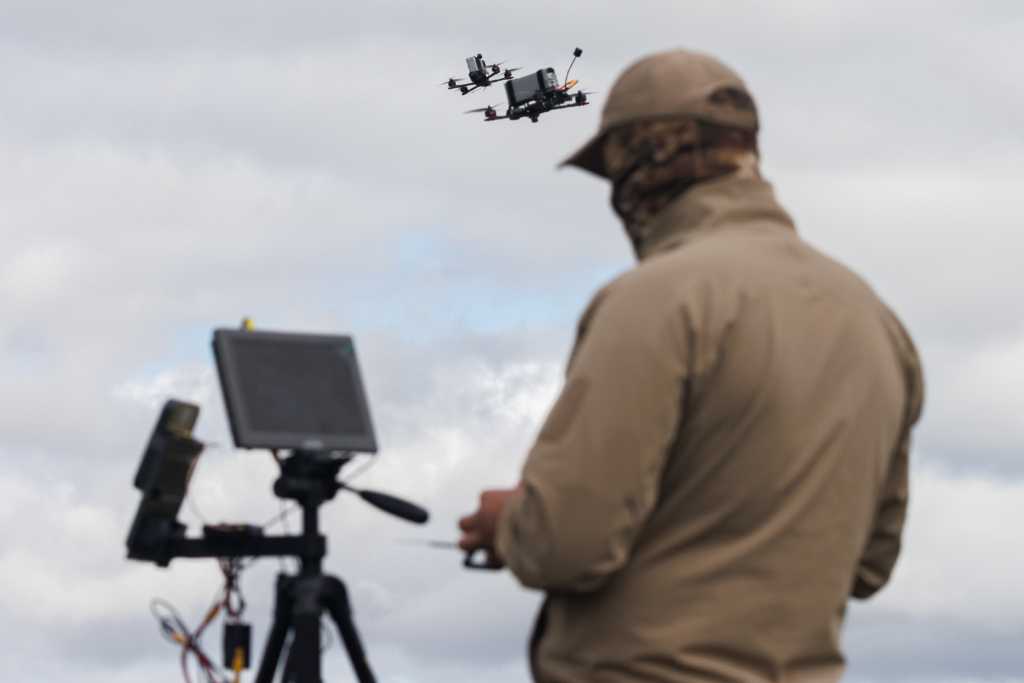
Ein Foto zeigt eine Person in beiger Jacke und Cap, die an einem Monitor einen Controller hält, während zwei kleine Drohnen v
Instructor at the training ground of the Unmanned Systems Troops (UAVS). | picture alliance / Picvario Media | Sergey Elagin

Europe is rearming. Defence budgets are rising, factories are expanding, and new EU instruments are pouring money into ammunition production and joint procurement. But money is only part of Europe’s defence problems. The main constraint is that its systems remain slow, fragmented and poorly suited to an age when military technology can change in months rather than decades.

Three transformations are hitting the continent at once. Russia’s invasion of Ukraine has brought back large-scale war to European soil. Washington’s growing focus on the Indo-Pacific, its renewed interest in Greenland and its push to move NATO from “burden sharing” towards what might be called “burden shifting” mean that Europe will have to provide not only more money for the alliance but also a larger share of its combat power. At the same time, technology is changing warfare faster than traditional procurement systems can keep up.

At present, procurement systems work as follows: a military identifies a requirement; officials draw up specifications; companies compete for a contract and, years later, a system enters service. The problem is that, by then, the technologies shaping the battlefield may have changed dramatically. Promising technologies can become obsolete or fall by the wayside before they ever reach soldiers.

Ukraine has demonstrated a different model. Operational problems generate ideas; engineers turn them into prototypes; soldiers test them; manufacturers improve and scale them; battlefield experience feeds into the next iteration. Technology can also work in the other direction: new capabilities, such as cheap drones, can create tactics that planners had not previously considered.

The real measure of defence-industrial success should not be how many platforms roll off the line, but how fast capability can be imagined, built, tested, industrialised, fielded and adapted again

Europe needs to make this cycle permanent. I propose a model called Adaptive Defence Industrial Ecosystem Management, or ADIEM. The principle is for governments to move from being regulators and buyers to orchestrators of a defence ecosystem that links governments, armed forces, defence and tech companies, start-ups, universities and investors in a continuous loop. The real measure of defence-industrial success should not be how many platforms roll off the line, but how fast capability can be imagined, built, tested, industrialised, fielded and adapted again.

Industrial resilience and human capital are central to this model. Ukraine has shown that sustained operations depend on raw materials, reliable energy, resilient logistics and skilled labour quite as much as on the platforms themselves. And because digital capability now depends as much on software and data engineering as on heavy manufacturing, Europe’s defence sector competes directly with the commercial tech industry for the same scarce talent. This makes the appeal of a defence career a strategic question.

How to make ADIEM work

Reform defence governance. Create permanent structures that bring together military planning, industrial policy, innovation and procurement around shared capability goals. Give them room to depart from standard rules where those rules are the obstacle.

Start with battlefield problems. Build capabilities around what armed forces need to achieve. It works in reverse too: a new system needs a concept of operations written for it before it is bought at scale. Treat these as living documents that evolve with experimentation and real-world lessons.

Make procurement faster and more flexible. Use a hybrid procurement method. While central procurement agencies buy major systems, individual units are allowed to meet certain urgent combat needs. Alongside that, break large procurements into smaller contracts with incremental delivery, allow continuous software updates, use open architecture and speed up certification.

Build a genuine innovation ecosystem. Give start-ups, universities and public labs clear routes to deployment. Reward experimentation and operational relevance over novelty for its own sake.

Achieve affordable mass. Create dedicated programmes for weapon systems that are effective enough, cheap enough to buy in large numbers and simple enough to replace quickly. These include drones, autonomous vehicles, loitering munitions, low-cost intelligence, surveillance and reconnaissance (ISR) systems and electronic warfare.

Invest in human capital. Build a long-term pipeline of software engineers, AI specialists, systems engineers and skilled production workers, and change how the sector is perceived—presenting it as a high-technology field, not just a traditional military one.

Institutionalise experimentation. Set up permanent centres where soldiers, engineers, researchers and industry jointly evaluate new operational concepts and technologies. Test continuously rather than only in the run-up to a procurement decision.

Develop digital defence infrastructure. Invest in a sovereign defence cloud, secure data architecture, digital twins and common digital standards.

Governments also need to reform the institutions through which capability is developed, not just the funding lines that feed them. And while Europe has much of what it needs­—sophisticated armed forces, world-class manufacturers, strong universities and a growing defence-tech sector—it still lacks a system capable of connecting them quickly enough. That is the purpose of ADIEM: to connect these actors in a continuously adapting ecosystem, with governments acting as orchestrators rather than simply regulators and buyers.

Source

  •  

'Fascism begins with words, stereotypes, indifference', says European Roma Institute for Arts and Culture

Minorities say they fear a rise in anti-Roma rhetoric following predictions of Germany’s AfD surge in Sunday’s Saxony-Anhalt election.

As Germany heads into a closely watched state election in Saxony-Anhalt this Sunday, 6 September, with the AfD polling above 40% and potentially within reach of an outright majority, right groups say they are “growing concerns over what its increasing electoral strength means for minorities and Germany’s and the EU’s democratic norms and values.”

Anna Mirga-Kruszelnicka, Executive Director of the Berlin-based European Roma Institute for Arts and Culture, looks ahead to the election.

She told this site: “For Roma and Sinti communities in particular, the election comes against a backdrop of increasingly visible anti-Roma racism.”

The Central Council of German Sinti and Roma described the situation “as a cynical example of a far-right party once again targeting Sinti and Roma.”

The incident, says the institute, comes amid "growing evidence of antigypsyism in Germany."

The Institute says that MIA, the country’s reporting and information centre documenting anti-Roma racism, reportedly recorded 1,193 cases of stereotyping and disparaging remarks targeting Roma and Sinti in 2025, as well as 55 physical attacks, up from the previous year, and eight cases of extreme violence.

The institute says Roma experts warn of a changing political landscape in Germany and the growing strength of the far right.

They note that “the normalisation of nationalist, racist and anti-minority rhetoric is reshaping political discourse, including the increasing use of anti-Roma stereotypes.”

Mirga-Kruszelnicka said: “Over 80 years since more than 4,300 Roma and Sinti were murdered during the liquidation of the “Zigeunerlager” at the Auschwitz-Birkenau concentration camp, a far-right party that openly stigmatises and singles out Roma citizens is yet again on the rise in Germany. In April 2026, AfD politician Enxhi Seli-Zacharias led party colleagues through a German city, handing brooms to residents she took to be Sinti and Roma and filming them as they swept the pavement, telling one woman: “Germans have had enough—look what this looks like.”

As the EU prepares its next €2 trillion budget, the institute says experts are also questioning whether Roma communities are "being adequately accounted" for in how European funding is tracked and measured with”, says the insititute, “antigypsyism not mentioned once in the Performance Framework Regulation".

“Fascism is never simply a chapter in history books. It begins with words, stereotypes, indifference and the gradual erosion of democratic values. Honouring those who were murdered is not enough. We must also recognise how quickly democratic societies can unravel when prejudice, dehumanisation and political extremism become accepted as ordinary," concluded Mirga-Kruszelnicka.

  •  

Lois et majorités au Parlement européen : qui a voté quoi ?

Nous vous proposons une "opération vérité" sur les grands textes adoptés et les positionnements politiques, à méditer pendant les congés d'été ! L’année 2026 est particulièrement chargée en grands textes législatifs - près de 300 ont été votés -  et, phénomène nouveau, les majorités sont très fluctuantes au Parlement de Strasbourg, en fonction des sujets.

  •  

Immersion au cœur de la démocratie européenne et chasse aux fake news

Dans cet épisode d'Aux 4 coins de l’Europe, Caroline de Camaret embarque les téléspectateurs pour un voyage à travers le Parlement européen afin de décrypter l’actualité qui secoue Bruxelles, capitale européenne. L'épisode vous emmène au plus près de ceux qui font l’Europe d’aujourd’hui, tout en traquant la désinformation et les débats qui traversent l’hémicycle.

  •  

Union européenne : quatre questions sur les "hubs de retour" de migrants

L’Union européenne devrait bientôt permettre à ses États membres de créer des "hubs de retour" dans des pays tiers, qui auront pour but d’accueillir les étrangers en situation irrégulière expulsés du territoire européen. Le texte est considéré comme une avancée en matière de politique migratoire par la droite et l’extrême droite, et comme un recul pour les droits humains par la gauche. Explications.

  •  

450 millions d'Européens : l'Union européenne investit-elle pour ses citoyens ? (version intégrale)

À l'occasion de la Journée de l'Europe, célébrée place de la République, à Paris, le samedi 9 mai, nous vous proposons un grand débat public et télévisé, réalisé en partenariat avec le bureau en France du Parlement européen, la représentation de la Commission européenne et la mairie de Paris.

  •  

450 millions d'Européens : l'Union européenne investit-elle pour ses citoyens ? (version courte)

À l'occasion de la Journée de l'Europe célébrée place de la République, à Paris, samedi 9 mai, nous vous proposons un grand débat public et télévisé, réalisé en partenariat avec le bureau en France du Parlement européen, la représentation de la Commission européenne et la mairie de Paris.

  •  

Bonus episode: The EU enlargement game

What happens if your economy is suddenly in crisis, Brussels offers help with strings attached—and Turkey, China or Russia can move faster? What if your country delivers every reform the EU asks for, only for a member state to block the next step anyway? And after years of waiting, would voters still choose to join?

In this special bonus episode, The Neighbourhood goes live from Lisbon for an EU enlargement game. Jessica Hendrick brings together RE-ENGAGE experts representing six EU candidate countries and throws a series of fictional—but very plausible—political and economic shocks at them inspired by real headlines: Russia’s intensified attacks on Ukrainian infrastructure, Ireland’s EU presidency push on enlargement, Iceland’s referendum, Germany’s regional elections and the upcoming 2026 Enlargement Package. Drawing on three years of surveys, interviews and crisis simulations, each expert has to answer for their country.

Playing for each country:

  • Albania: Morten Bøås, research professor at the Norwegian Institute of International Affairs (NUPI), representing RE-ENGAGE’s Albanian partners at the European University of Tirana
  • Bosnia and Herzegovina: Damir Kapidžić, director of the Institute for Social Science Research at the University of Sarajevo
  • Georgia: Ketevan Bolkvadze, senior lecturer in the department of political science at Lund University, originally from Georgia
  • Moldova: Mathilde T. E. Giske, research fellow at the Norwegian Institute of International Affairs (NUPI), representing RE-ENGAGE’s Moldovan partners at Moldova State University
  • Serbia: Luka Filipović, research associate at the Institute for Contemporary History in Serbia
  • Ukraine: Roman Petrov, president of the Ukrainian European Studies Association

The result is part enlargement simulation, part policy conversation and part game night. The experts bargain over a fictional €100 million EU cheque, decide whether the EU can compete with faster offers from other powers, test how easily disinformation could exploit frustration with enlargement, and imagine what would happen if EU membership was finally put to a public vote. Along the way, Serbia proposes keeping its relationship with Brussels “casual”, Bosnia finds a creative use for €100 million, and Ukraine calls for Hungarian “Varangians” when backsliding strikes.

When a crisis hits, does speed matter more than values? Can “Europe never wanted you anyway” become a winning political message? And if a country finally joins the EU, what stops democracy from sliding backwards once the prize of membership is secured?

Further reading:
RE-ENGAGE research overview
RE-ENGAGE research on Albania
RE-ENGAGE research on Bosnia and Herzegovina
RE-ENGAGE research on Georgia
RE-ENGAGE research on Moldova
RE-ENGAGE research on Serbia
RE-ENGAGE research on Ukraine

This podcast was recorded live in Lisbon on September 3rd, 2026.

Source

💾

  •  

Art lovers’ event gives public a chance to see some of UK’s best artists

It’s one of the most anticipated arts events in the UK and the starting pistol is set to sound on Herefordshire Art Week.

h.Art 2026, as it is affectionately called, runs from 5 to 13 September and is hailed as a “celebration of local creativity”.

The event takes place right across Herefordshire and its neighbouring borders where hundreds of artists will open their doors to share their work. 

h.Art is widely seen as being special for art lovers,offering personal encounters with some of the UK’s finest artists and makers in the intimacy of their own homes and studios. 

It is a chance to discover new work and buy or commission artwork, all direct with the artists.

h.Art was founded in 2002 as part of Herefordshire Council’s ‘Creative Industry’ programme, with the vision to offer “personal life enhancing experiences through art, whilst stimulating a vibrant local economy.”

It celebrates its 25th anniversary next year and has recently been taken over by a new organiser.

A spokesman said, “It’s a chance to gain a rare insight into the creative lives of our artists and craft-makers. You’ll uncover amazing art in atmospheric and unexpected locations as well as learn new skills through hands-on workshops and demos.”

Among those taking part for this year’s edition are Canwood Gallery and Eastnor Pottery.

Eastnor Pottery and “the Flying Potter”, located near Ledbury, is recognised as one of the country’s leading studios for potter’s wheel courses, classes and educational experiences.

Jon Williams shares Eastnor Pottery with his wife and fellow potter, Sarah Monk.

In an interview with the event organisers, Jon, who makes ceramic sculpture and decorative items, explained, “Although our ceramic work is very different to each other (chalk and cheese!) we collaborate on our courses, classes and experiences, taking it in turns to lead and support the sessions.”

Asked to describe his work, he added, “Through skilful facilitation and a love of clay and people in equal measure, I travel all over the West Midlands and beyond exploring and developing creativity in others.

“I regularly work in early year’s settings, schools, libraries, art galleries and museums, encouraging people to play and express themselves in clay.

“My approach has its roots in Reggio Emilia philosophy. Reggio is a pedagogy based upon self-directed, experiential learning.

“Children, young people and adults are offered a range of tools, materials and environments and encouraged to develop their own, totally unique way of working. When I get opportunity to produce my own ceramics, I approach my making in a similar fashion to my social engagement work. The concept of play is at the centre of everything. Nearly all my work starts its life on the potter’s wheel.”

He says it means “everything” to be an artist, adding, “It is being independent, resourceful, resilient and creative whilst having a shed load of fun. I enjoy partnership working with individuals and organisations and am always up for a collaboration.”

Eastnor also gives the public a chance to take part in various pottery workshops and experiences, including beginner’s classes, day courses, and weekend courses. It is a chance to learn to use a potter’s wheel under expert guidance, with all materials included. They also offer clay modelling sessions and a ‘Flying Potter’ service that can take the workshop to an individual’s own location.

Jon adds, “It’s always really hard to describe what I do, as my creative practice is so varied and wide-ranging. I am The Flying Potter, I am a maker, a studio potter, a ceramic artist, educationalist and facilitator.”

Artist Andrew Findlay, also taking part in the week-long event, is based at The Forge Eastnor, just 100m from the pottery.

Another participating in Art Week is Canwood Gallery which is nestled in the serene Herefordshire countryside.

It is a contemporary art gallery and sculpture park dedicated to providing an “art oasis.”

Set across ten acres of landscape, the site includes two indoor gallery spaces and an expansive sculpture park, alongside an on site café.

It showcases a diverse range of work by internationally recognised alongside emerging and local artists, offering a great opportunity to experience and purchase art in a tranquil rural setting.  The gallery is free to enter, with free on site parking.

Also participating are Old Chapel Gallery, Wobage and Sorrel & Sage (full details available via the  links below).

The Art Week is expected to attract people from both the UK and abroad and one excellent way of finding out more about the event and much else in the county is via the Eat Sleep Live Herefordshire, the leading independent destination marketing company for the county.

Its supports not only Herefordshire’s food and drink businesses, accommodation providers, activities, leisure venues and pursuits and events but promotes the county’s crafts, creatives and artisans.

You can discover more about Herefordshire via www.eatsleepliveherefordshire.co.uk

Further info:

Old Chapel Gallery – Home
https://eastnorpottery.co.uk
https://www.wobage.co.uk
https://sorrelandsage.square.site
https://www.h-art.org.uk
www.eatsleepliveherefordshire.co.uk

Photo credit: Herefordshire Art Week

  •  

Maximum pressure on Iran, round two

This week, Mark Leonard is joined by Ellie Geranmayeh, deputy director of ECFR’s Middle East and North Africa programme, to unpack a volatile new chapter in the confrontation between the United States and Iran. After months of managed escalation, military strikes have resumed and President Donald Trump has launched an ambitious new sanctions package, dubbed an economic “D-Day”, aimed at squeezing Tehran into submission.

Ellie argues that Washington has returned to a familiar strategy of maximum pressure, betting that unprecedented economic isolation and a blockade of Iranian exports will either force the regime to make major concessions or trigger domestic unrest. But Tehran appears determined to hold out, relying on sanctions-evasion networks, regional diplomacy and the belief that the US will struggle to sustain its campaign over the long term. As both sides continue limited military operations while keeping channels for negotiation open, the prospect of a comprehensive deal remains elusive.

The conversation also explores the domestic pressures facing Iran’s leadership, from a shrinking economy and growing public dissatisfaction to the threat of renewed nationwide protests. Mark and Ellie examine whether economic hardship could destabilise the regime, why Iranian leaders remain sceptical of American commitments and how internal politics in both Washington and Tehran are shaping the path ahead.

Finally, they discuss the wider regional and European implications of the conflict. How are Gulf states positioning themselves between the US and Iran? What risks does the confrontation pose to global shipping through the Strait of Hormuz? And can European governments still play a meaningful diplomatic role as tensions rise and fears grow that the Iran conflict could become increasingly entangled with the war in Ukraine?

This podcast episode was recorded on September 3rd 2026.

Bookshelf

Hillbilly Elegy, by J.D. Vance.

Source

💾

  •  

“Climate change is here, and it hurts” — interview with the European Environment Agency’s Executive Director  

The hottest summer ever recorded, rivers and lakes drier than ever, and wildfires burning thousands of hectares of nature to the ground – Europe is experiencing it all. 

The Executive Director of the European Environment Agency (EEA), Leena Ylä-Mononen, said that climate adaptation is no longer optional as the impact of climate change is already visible. “Severe droughts have disrupted agriculture, our transport, and even energy infrastructure. And we have seen intense heatwaves across many parts of Europe that have had huge impacts on the infrastructure, health and well-being of people,” she told the European Newsroom (enr) in an interview. 

She urged European politicians to look beyond the next election and plan for the climate risks already foreseeable over the next decade. “This kind of short-termism is not going to help us,” she said. 

Ylä-Mononen warned that these extreme conditions could fundamentally change agriculture in parts of Europe, with some crops no longer viable in the driest areas of the Mediterranean. 

She also underlined that accelerating the uptake of renewables is key to reducing dependence on imported fossil fuels and limiting Europe’s exposure to volatile energy prices. The EEA chief pointed to the need for greater flexibility and storage capacity to help protect households and businesses when prices rise. 

According to the EEA, gas price fluctuations in early 2026 cost the EU €13 billion by mid-April, while renewable energy generated €29 billion in consumer savings, highlighting its role in stabilising the energy system. 

The interview was conducted by journalists from European Newsroom partner agencies dpa Deutsche Presse-Agentur GmbH and Czech News Agency (CTK) on behalf of the entire network. 

Read some of our network’s coverage here: 

  •  

Creating a 'dynamic space' for young people

Since June 2026, Brussels’ bustline Place Noord has made a space available to three local associations led by young people to develop their activities, projects, and events.

The associations are primarily from the Quartier Nord (spanning the City of Brussels and Schaerbeek).

The space is now gradually becoming a hub for meeting, creativity, and initiative for the neighbourhood's youth.

This Thursday, 3 September, the venue is opening its doors to the public for an evening to mark what is called 'Residents Day'.

The initiative stemmed directly from a request made by young people. 

In May, Laila, Marouane, and Rashad came to meet the Place Noord team one by one to ask if a space could be made available to them—both for their weekly activities and for organizing their own events.

Pauline Omnes, programmer at Place Noord, told this site on Wednesday: "I have been working in the Quartier Nord for several years, collaborating closely with local community groups.

“The idea was for Place Noord to also serve projects led by the neighbourhood's youth, with support from those who have been working here longer.

“The goal is not only to provide them with a venue but also to connect them with others so they can grow their projects.

“On one hand, Play Label organizes events that generate the funds needed to make the space available for free, thereby supporting these local initiatives."

Since their arrival, the three associations have been gradually settling into the premises. Young people work on their projects there, but also come to study, play board games, organize movie nights, or simply socialize.

The presence of the three associations also creates a collective dynamic that extends beyond their individual activities, said Omnes.

"Young people share ideas, skills, and projects, and are beginning to build a shared life within the space."

  •  

Renewables key to cutting fossil fuel use and stabilising energy prices, European Environment Agency says 

Brussels/Copenhage (enr) – Increasing the uptake of renewable energy is key to safeguarding Europe’s energy security as the EU seeks to heavily reduce CO2 emissions and become independent from imported fossil fuels, European Environment Agency (EEA) Executive Director Leena Ylä-Mononen said. 

“Shifting to the sustainable future by improving our circular economy, uptake of renewables, improving energy efficiency – all this is central to Europe’s push to reduce our dependency and reliance on energy imports, fossil fuels, and imports of natural resources,” she said in an interview with the European Newsroom (enr) published Tuesday. 

Following a summer leaving Europe scarred by heatwaves, drought and wildfires across the continent, the EEA chief renewed calls to speed up the reduction of greenhouse gas emissions to mitigate “the increasing magnitude of climate-related disasters and related losses.” She argued that breaking away from fossil fuels and accelerating the transition to renewable energy is a crucial piece of the puzzle. 

At the same time, she pointed to the typical increase of gas prices during “a period of cold weather.” Ylä-Mononen called for for “flexibilities” when it comes to energy storage, “so that we would have a bit of more buffer for the citizens when the hard times come.”   

In a report published in July, the EEA warned that the EU “remains vulnerable to external fossil fuel supply shocks, as gas prices still drive EU wholesale electricity prices.” The report said gas price fluctuations in early 2026 cost the EU 13 billion Euro by mid-April while consumers saved 29 billion Euro thanks to renewable energy, making it “the system’s most effective shock absorber.” 

Ylä-Mononen said that “many aspects and solutions are needed indeed to protect also the most vulnerable households.” She cited innovative solutions such as using electric vehicles’ batteries to power homes “as a specific reserve then to feed back in electricity when the prices are high.”  

The EEA chief pointed out that ramping up local renewable energy sources was particularly difficult for cities. “Cities in particular have a challenge because their whole energy and also the mobility infrastructure is based very much still on the fossil economy.”  

Cities had “limited possibilities to have individual windmills,” she said. However, she added, solar panels are “a feasible option, especially if the city or the national authorities are supporting that type of investment.” 

The European Environment Agency (EEA) is the EU agency that provides independent environmental data, assessments and analysis to support policymaking in Europe. 

  •  

EEA chief warns climate change could make parts of Europe unsuitable for farming 

Heat, drought and water scarcity could fundamentally change agriculture in parts of Europe, with some crops no longer viable in the driest areas of the Mediterranean, European Environment Agency (EEA) Executive Director Leena Ylä-Mononen said. 

“Some crops will not grow anymore, especially in the most arid Mediterranean, southern European area,” Ylä-Mononen said in an interview with correspondents of the European Newsroom (enr) published Tuesday. More intensive irrigation would not necessarily provide a solution because of water possible water scarcity. Some land currently used for farming might therefore no longer be suitable for agriculture in some regions in Europe, she said.  

This summer gave the “clearest possible illustration” of what Europe is facing, she told the enr. “Severe droughts have disrupted agriculture, our transport, and even energy infrastructure. And we have seen intense heatwaves across many parts of Europe that have had huge impacts on the infrastructure, health and well-being of people.” Harvests were coming in late and smaller, “so we may have even food security issues this winter,” Ylä-Mononen warned. 

The effects are spreading beyond Europe’s traditional dry zones, according to Ylä-Mononen. She pointed to drought in Ukraine and Hungary, as well as unusually dry conditions in the United Kingdom and her home country, Finland. Although northern Europe could become suitable for some additional crops, it was unlikely to compensate for recurring losses caused by drought, floods and extreme weather elsewhere, she added.  

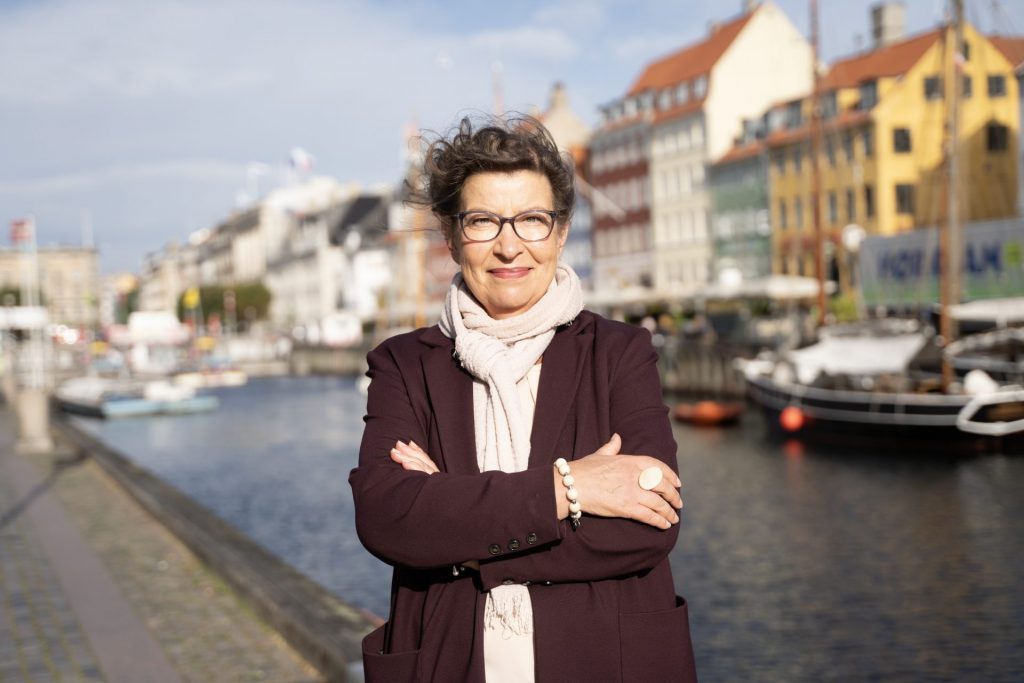
Leena Ylä-Mononen, Executive Director of the European Environment Agency (EEA) based in Copenhagen. Photo: © European Environment Agency (EEA)

Future-proof solutions 

Ylä-Mononen urged European politicians to look beyond the next election and plan for the climate risks already foreseeable over the next decade. “This kind of short-termism is not going to help us,” she said, arguing that infrastructure and agricultural investment decisions needed to take account of ten-, 20- and 50-year time horizons.  

The warning comes as the EU’s Joint Research Centre reports drought conditions across half of the EU and the United Kingdom, with low river flows and deteriorating conditions for some crops in several parts of Europe. 

In an assessment released in March – ahead of this year’s summer heatwaves – the EEA said “at present, drought (54%), heavy rain (21%), frost (16%), and hail (9%) together account for 80% of agricultural losses in the EU.”  

Ylä-Mononen said Europe could no longer treat climate adaptation as an optional policy to be addressed when budgets allow. Heat and drought are already affecting agriculture, water resources, transport and energy systems, and some damage could have been avoided through earlier investment, she said.  

The EEA chief stressed that adaptation must complement, not replace, mitigation: Europe needs both to reduce emissions and to prepare for climate impacts that will continue even under ambitious emissions cuts. But the costs of both action and inaction are rising.  

Estimates of adaptation costs in the sectors transport, energy and agriculture cited by the EEA range from 53 billion Euro to 137 billion Euro per year until 2050, depending on the scenario of temperature rise above pre-industrial levels. 

The European Environment Agency (EEA) is the EU agency that provides independent environmental data, assessments and analysis to support policymaking in Europe. 

  •  
❌