Serving a prison sentence in Russia apparently was not enough. Years after Konstantin Rudnev completed his term, the accusations that put him behind bars keep following him from one continent to another. This was the message a French NGO brought to Warsaw, where the Organization for Security and Co-operation in Europe (OSCE) held its 2026 […]
Until Russia’s full-scale invasion of Ukraine, Czech Vanadium was among the European companies which clearly had Russian owners.
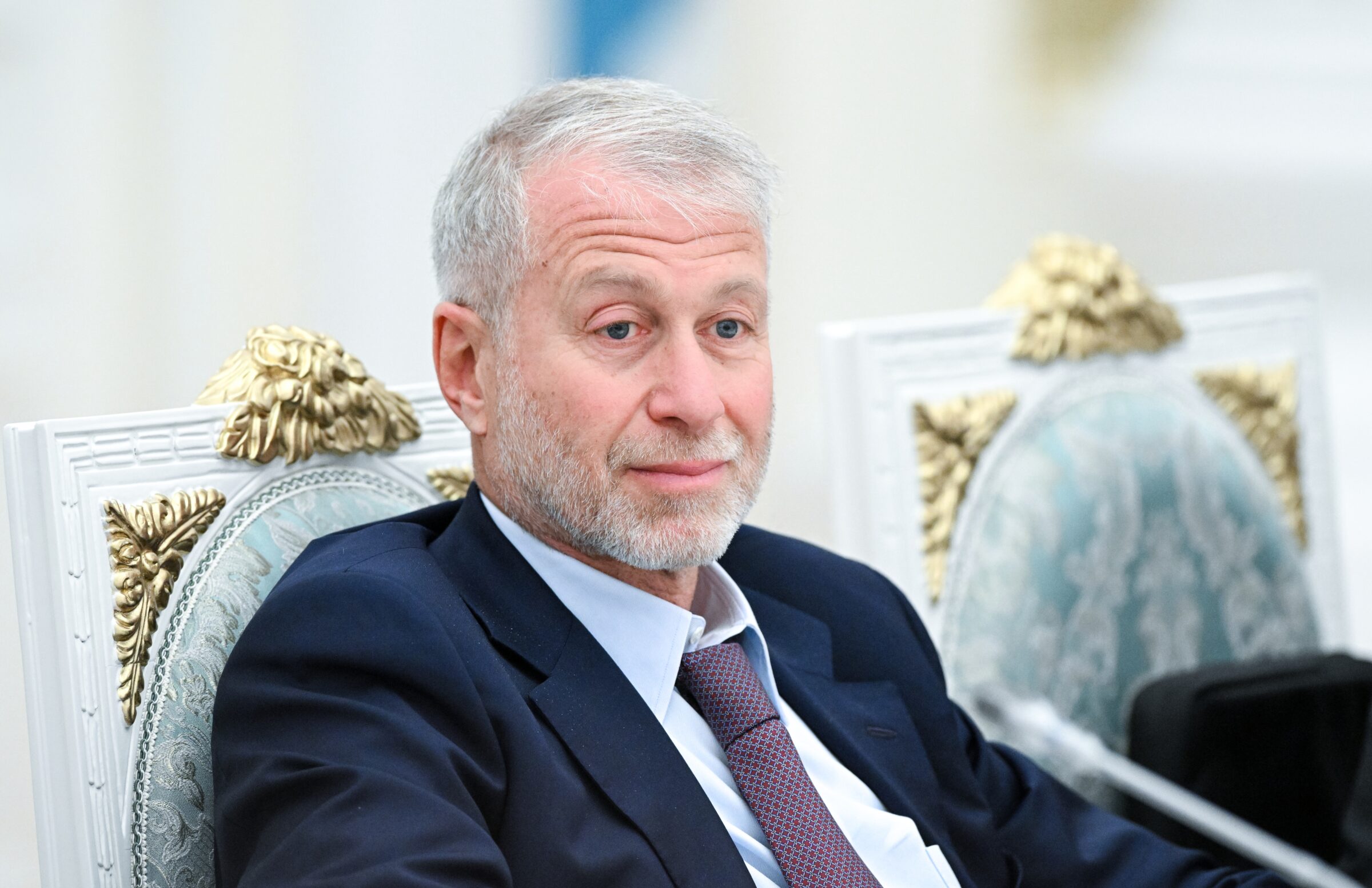
Since 2007, the company has been controlled through the Evraz group by Russian businessman Roman Abramovich, who is close to Russian leader Vladimir Putin.
The ferrovanadium producer was part of a chain through which vanadium ore mined in Russia reached Europe before being sent on to Abramovich’s factories in the US. Ferrovanadium is an alloy added to steel to help improve its properties. And Czech Republic accounts for six percent of global production.
But sanctions following Russia’s full-scale invasion of Ukraine in 2022 forced the oligarch to sell up.
Evraz, the holding company in which Abramovich is the largest shareholder, supplied the Russian army, according to media reports. But Evraz denied this.
In 2024, the Abu Dhabi-based company Metco (now ‘Metco Holding’) became the sole shareholder in the Czech factory, but it is not clear who controls it.
Czech authorities and police suspect the transfer of the vanadium factory to a new parent company in the UAE may conceal the true owner. They are seeking to establish who is really behind the opaque company in the Persian Gulf, and whether it is still Roman Abramovich.
According to Deník N sources familiar with the investigation, specialists from Czech police bodies for organised crime (NCOZ) and the financial intelligence unit (FAÚ) are involved.
“Yes, we are investigating who is behind the company. There are many leads and the suspicion is clear that the company may still be backed by its former owners from Russia,” a source close to the investigation confirmed.
NCOZ spokesperson Jaroslav Ibehej declined to comment in more detail on the search for Czech Vanadium’s beneficial owner. “As a rule, we neither confirm nor deny what we are working on,” he said.
According to documents in the Czech judicial database, the company is formally controlled by one owner — a Dubai-based lawyer of Indian origin who provides nominee services for beneficial owners. The lawyer has been linked to money-laundering investigations in Ukraine and Moldova.
Apparent fake owner scheme
The officially declared owner of Czech Vanadium is Nikhil Skariah Kolekunnel. According to the ADGM free zone business register in the UAE, he is both the sole shareholder and director of Metco Holding.
However, the Gulf state’s database does not disclose so-called beneficiaries, who are entitled to the company’s profits and may also secretly control it.
Although the Czech judicial register lists Skariah as Czech Vanadium’s beneficial owner, this does not necessarily indicate the person exercising control in the background. For example, trustees of trust funds are also listed in the registers as beneficial owners.
The nature of Skariah Kolekunnel’s business suggests that he performs the specific role of an administrator, a so-called fiduciary — someone who accepts an ownership mandate and effectively manages another person’s assets.
He is a lawyer originally from India who founded two law firms in the UAE years ago. His companies represent large corporations and businesspeople who do not wish to publicly acknowledge ownership of a business.
“South Bridge Legal is an advisory firm for comprehensive business establishment in Dubai, Abu Dhabi and the UAE. Our highly experienced team has been active in the sector for more than 10 years, providing services tailored to the unique needs of every ambitious entrepreneur setting up companies in Dubai,” the company wrote on its website.
“We have all activities, which is tax management, tax consulting, accounting, corporate services, offshore company formation, free zone company formation…everything,” Skariah said in a recently published video on YouTube.
Metco Holding’s address in Abu Dhabi suggests it may be a shell company. And it is headquartered from a WeWork.
Moldova and Ukraine links
‘Skariah’, the name of the Indian administrator, had already emerged eight years ago in connection with the concealment of ownership structures during an investigation into the privatisation of Moldova’s national airline. At the time, Skariah appeared as the owner of the opaque company Gold Craft FZE, established in Dubai in 2015.
“On Monday 1 October 2018, one day before the privatisation agreement for Air Moldova was signed, a plane from Istanbul landed at Chișinău International Airport. One of the passengers, a 39-year-old man, was carrying nearly €2.6m in cash in his luggage. He declared the money to customs officers, which, according to the Office for the Prevention and Fight against Money Laundering, he had borrowed four days earlier from Gold Craft FZE in the United Arab Emirates,” the investigative outlet RISE Moldova reported.
It finds that Andrei Ianovici brought cash from Dubai, equivalent to tens of millions of Czech crowns. Later that day, he deposited the money in a bank, and it ended up in the accounts of Civil Aviation Group SRL. That company privatised Air Moldova, and Ianovici was one of its partners.
The true origin of the money was never established, leading local investigators to suspect that the money had not been earned legally. No charges were brought, however.
According to court records, Skariah was also involved in disputes in Ukraine, where Gold Craft FZE claimed ownership of an Ilyushin aircraft which the company allegedly purchased in 2017.
Skariah’s Russian-linked empire
However, the UAE-based lawyer was not the only individual to have emerged as an administrator of Czech Vanadium. Another is Sergei Gushchin.
A man of this name was formerly a prominent Russian businessman in rail freight transport and, although he withdrew from Russia three years ago, he appears on Ukrainian sanctions lists for supporting the Russian army.
Gushchin became a senior manager at PJSC TransContainer, a Russian rail freight carrier, after Evraz sold its stake. In the past, a quarter of the company was owned by the holding company of Abramovich.
Meanwhile another of Gushchin’s companies, Rail Service, formed a joint venture with Evraz in 2019 focused on the production of railway wheels.
According to a UAE register, Gushchin was a director and shareholder of Metco, which became Czech Vanadium’s parent company from 2022-23.
US credit-rating agency Moody’s shared data with Deník N that listed Gushchin as a recent beneficiary of Metco Holding and as the company’s director.
Moody’s data shows Sergei Gushchin as Metco Holding’s director.
Russia’s ferrovanadium monopoly
Czech Vanadium’s revenues regularly exceed €81m, and in 2024 the company reported profits of more than €8m. This summer, the company sent over €0.6m of that sum to the Dubai company, the remaining funds staying in its retained earnings account.
Last year, the company recorded a modest €0.2m loss. Its accounts retained more than €12m in undistributed profits in total.
Czech Vanadium’s business remains closely tied to Russia. Last year alone, vanadium oxides or hydroxides worth nearly €82m were imported into the Czech Republic from the Russian Federation. Russia is effectively the sole supplier of the raw materials needed to produce ferrovanadium. According to the statistical office database, exports mainly go to the United States, as well as Germany and Taiwan.
Czech Vanadium did not reply to requests for comment or an explanation of its ownership structure.
It also did not answer the question of how a Dubai lawyer had bought the Czech company, which, according to some estimates, is worth more than €40m.
Company representatives have not responded to questions about its owners since 2024, when the company left the Evraz group structure.
Fake owner model in US
Jiří Skuhrovec, an analyst at Datlab, specialises in the global vetting of business partners. He says Abramovich uses a similar model for concealing ownership in the United States.
Sanctions also forced the Russian oligarch, who became better known through his former ownership of the British football club Chelsea, to withdraw from US companies. But Skuhrovec concluded that they were probably still controlled by people linked to Abramovich just like the factory in Czech Republic.
“We mapped the entire chain, from the Russian ore supplier through the Czech smelter to the final recipient: the US company Strategic Alloys LLC. Until recently, all three companies officially belonged to Abramovich, and all three are now controlled by people with links to his Evraz group. Abramovich may therefore still secretly control the entire supply chain for this strategic raw material. This would be a textbook case of sanctions circumvention, as well as an obvious security risk,” Skuhrovec said.
Findings led Datlab and Transparency International to submit a complaint to police. “We believe that the 16m Czech crowns (around €655,000) in distributed profit may have gone to Abramovich, who is on a sanctions list. That would constitute a criminal offence,” the analyst explained.
In brief:
Czech Vanadium, owned by Russian oligarch Roman Abramovich’s holding company until 2024, was taken over by Dubai-based company Metco Holding.
The company is opaque, and Czech authorities are investigating who actually owns the Czech factory. It is suspected it is still linked with former owner.
This would amount to circumventing sanctions imposed by the European Union.
Deník N and Datlab analyst Jiří Skuhrovec found that the company is backed by lawyer Nikhil Skariah Kolekunnel and Sergei Gushchin, who conduct business with Abramovich’s Evraz group.
Skariah has been linked to money laundering in Moldova and Ukraine. He has long covered for companies that are in fact owned by someone else.
Cette semaine, nous recevons David Clarinval, Vice-premier ministre et ministre belge de l'Emploi, de l'Économie et de l'Agriculture. Il commente la position de son pays en termes de concurrence commerciale ou de participation au prochain budget de l'Union européenne (UE).
L'intelligence artificielle se développe et promet de révolutionner notre quotidien. Elle suscite des opportunités mais aussi des inquiétudes, notamment lorsque nous écoutons les déclarations des géants du secteur.
2020 was an annus horribilis. Covid stalked the land. Lockdowns, curfews and social distancing were the order of the day. But there was a silver lining: European countries showed themselves to be capable of great solidarity, jointly procuring vaccines and then agreeing on a mammoth post-Covid recovery fund, the Recovery and Resilience Facility (RRF). That fund has disbursed €450 billion in grants and loans to EU member states since 2021. As the RRF enters its crucial final phase, we take stock of the situation with Pierre Moscovici, the French member of the European Court of Auditors (ECA).
It has been dubbed "the PISA shock". Countries that had been used to their school pupils performing well in test scores are seeing a plunge in standards. The PISA test is an international assessment led by the Organisation for Economic Co-operation and Development (OECD), which measures how well 15‑year‑olds in over 80 countries apply reading, mathematics and science skills to real‑world problems. In the latest rankings, France's results were the worst it has ever had, and Germany's school pupils got their worst PISA report card too.
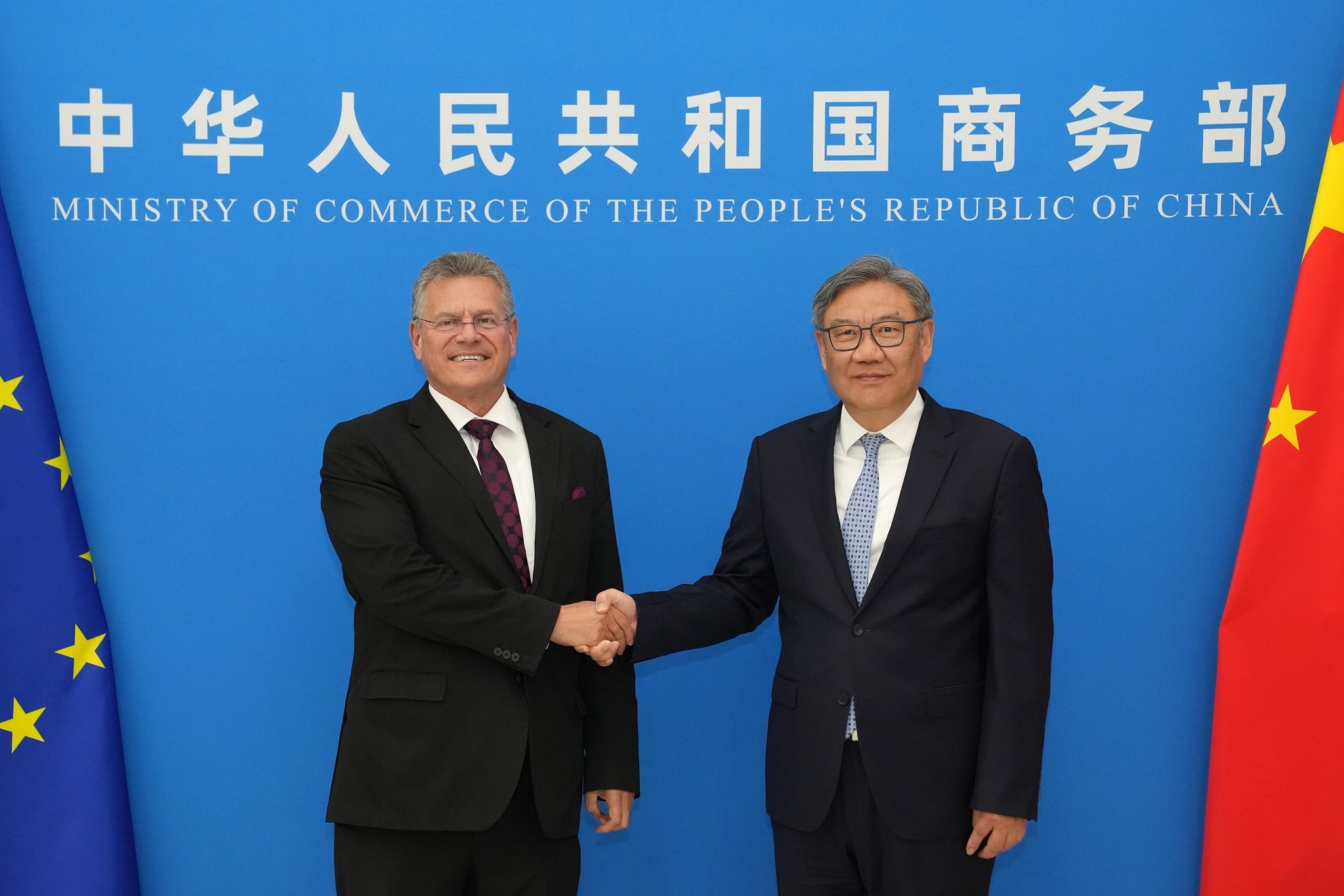
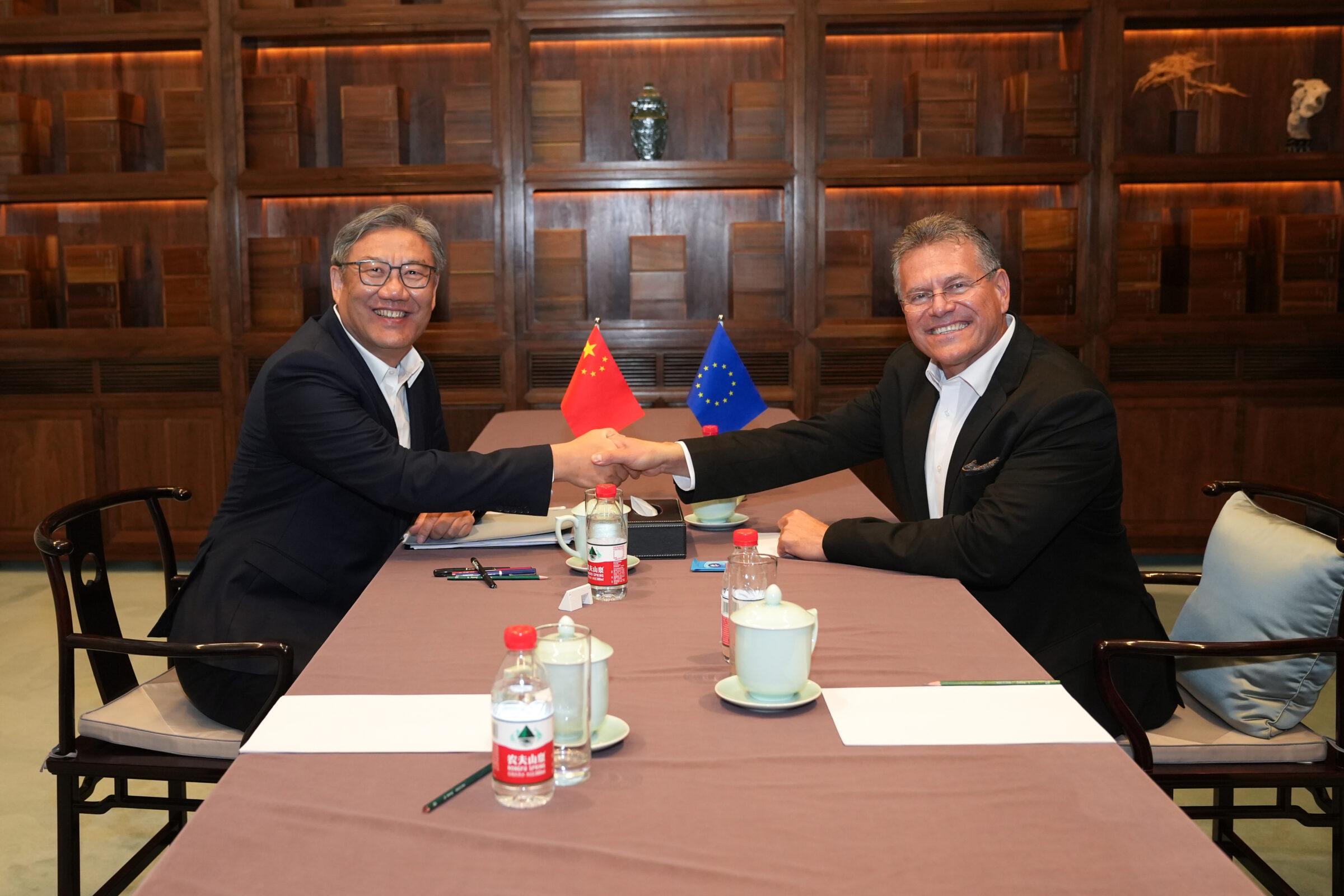
EU and Chinese officials agreed a series of trade concessions covering electric cars, rare earths and tariffs that dragged them away from a damaging trade war on Friday (9 October), following two days of crisis talks.
Following two days of talks in Beijing, EU trade commissioner Maroš Šefčovič said that he and China’s commerce secretary Wang Wentao had made a “crucial first step” towards rebalancing EU-China trade relations.
Europe can point to progress on hybrid vehicles, stronger assurances over the supply of critical raw materials, and continued engagement on market access issues in China.
Hours before Šefčovič arrived, Beijing rejected an EU demand for so-called “voluntary export restrictions” on its electric vehicles (EVs). However, in a joint statement on Friday, the two sides said that they had reached an “understanding on trade in hybrid vehicles in a WTO compliant manner”, but without providing further details.
They added that further negotiations on reducing tariffs and minimum pricing deals would allow Chinese EVs to enter the EU at a lower duty rate.
This article continues, but the full version is available only to EUobserver.com subscribers. Visit account.euobserver.com/membership
This week, FRANCE 24's media show Scoop revisits a fatal assignment for a Fox News team in Ukraine. On March 14, 2022, a Russian strike hit the crew reporting near the capital Kyiv. Reporter Benjamin Hall was seriously injured and two other journalists were killed. The journalists' families are suing Fox, saying the network put the story ahead of its people. Our guest is NPR's David Folkenflik.
Montenegro detained Mikhail Zvinchuk, the founder of the Rybar Telegram channel.
Key directions according to Rybar, Ukrainian and independent analysts.
Forget Sloviansk: its capture is currently unrealistic.
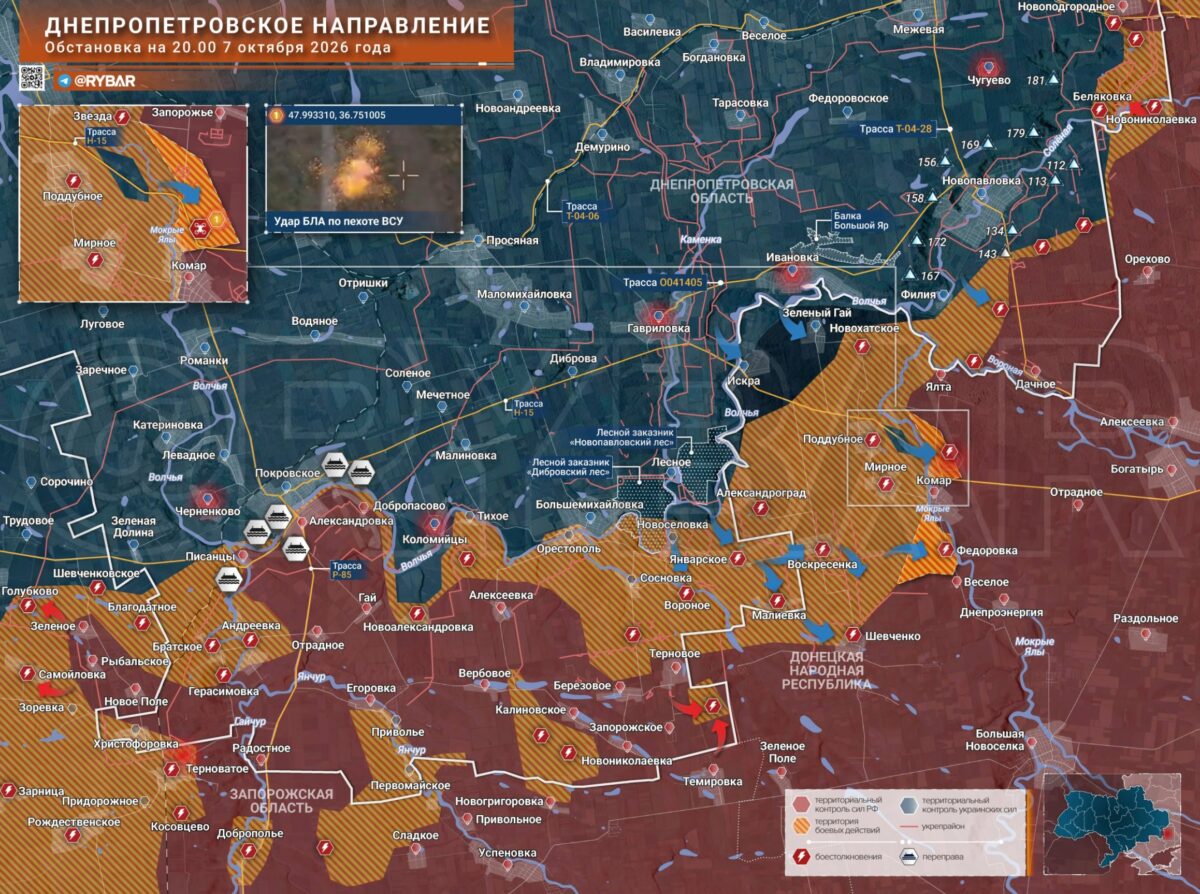
Ukrainian pressure continues towards Velyka Novosilka, with fighting already under way near Komar on the eastern bank of the Mokri Yaly river.
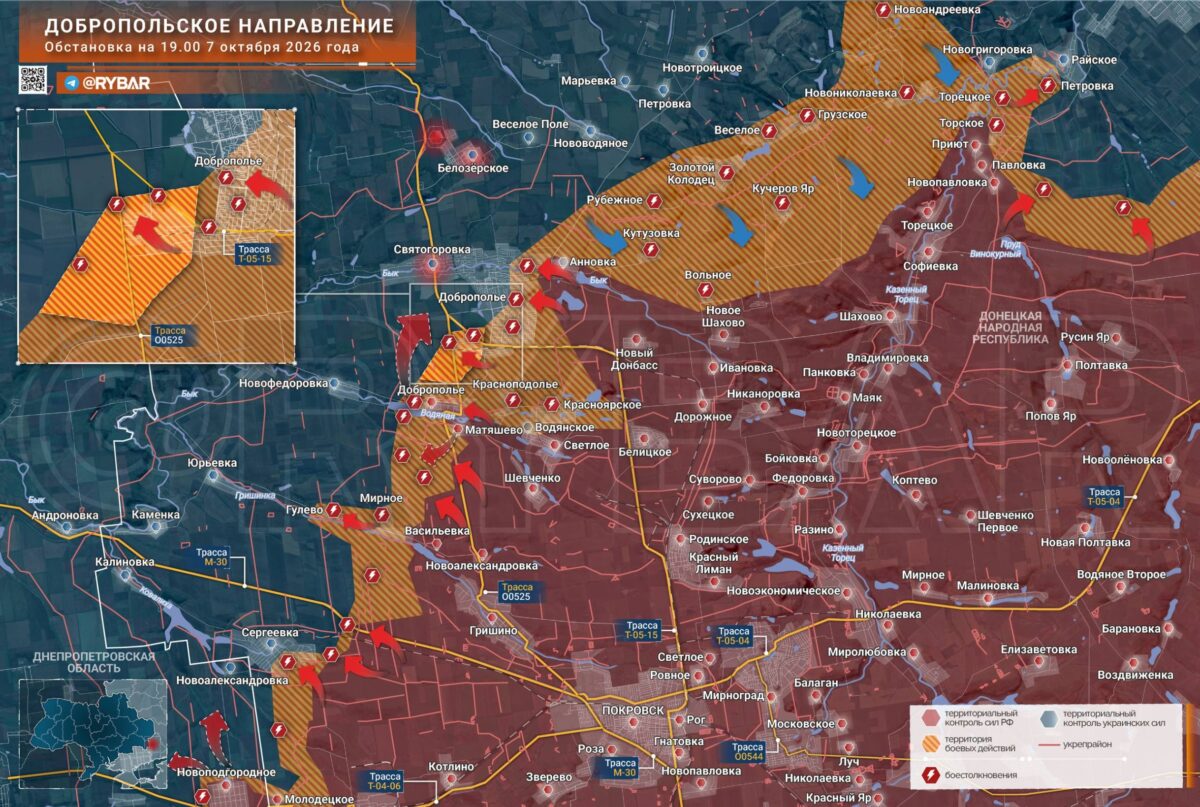
Russians are infiltrating Dobropillia, but a Ukrainian counteroffensive is pressing against their flank from the north.
The battle for data centres is now two-way, with Ukrainians attacking Russia’s ‘Google’.
Maps of the day — Sloviansk direction; Velyka Novosilka direction; Dobropillia direction.
Videos of the day — a scene from the Second World War: a MiG-29 shoots down a drone with its cannon; soldiers clear a network of Russian bunkers; Himars destroys an artillery radar; what the R-280 road to Crimea looks like.
Montenegro detained Mikhail Zvinchuk, the founder of the Rybar Telegram channel, who occupies one of the leading positions in the ecosystem of Russian media supporting the war. His wife and several associates were arrested alongside him. Colleagues in Moscow issued a statement saying they had been planning to film a report on one of the local monasteries, but the authorities of the Nato member state suspected them of conducting a hybrid operation.
At the top of Russian propaganda are the traditional state media, under the Kremlin’s complete control. They have almost no informational value, as they merely repeat the regime’s propaganda.
Below them, however, is a complex structure of Telegram channels that provide more varied reporting, including critical coverage. However, criticism is permitted only of mistakes in the conduct of the war, not of the war itself.
These channels, too, spread propaganda and keep Russian society in a state of war, but they also provide information that helps in analysing the course of the fighting. Rybar is among the largest and most influential of them.
In this case, it is not the work of an individual author but a media outlet with an editorial team and extensive content for 1.5m readers, so Zvinchuk’s arrest does not mean the end of publishing under this brand.
Yet through him, we can follow the fascinating story of a man who came from Russia’s defence ministry to spread its propaganda in the years that followed.
Paradoxically, however, he has recently been one of the few sources in Russia to report regularly on the Russian army’s failures at the front. And the preceding 48 hours were particularly rich in such assessments.
We will therefore gradually describe events in three different directions where, according to Rybar, the Russians are either retreating or at risk of doing so. Coincidentally, these are currently the most important directions of military operations.
We will compare all of its information with independent or Ukrainian sources.
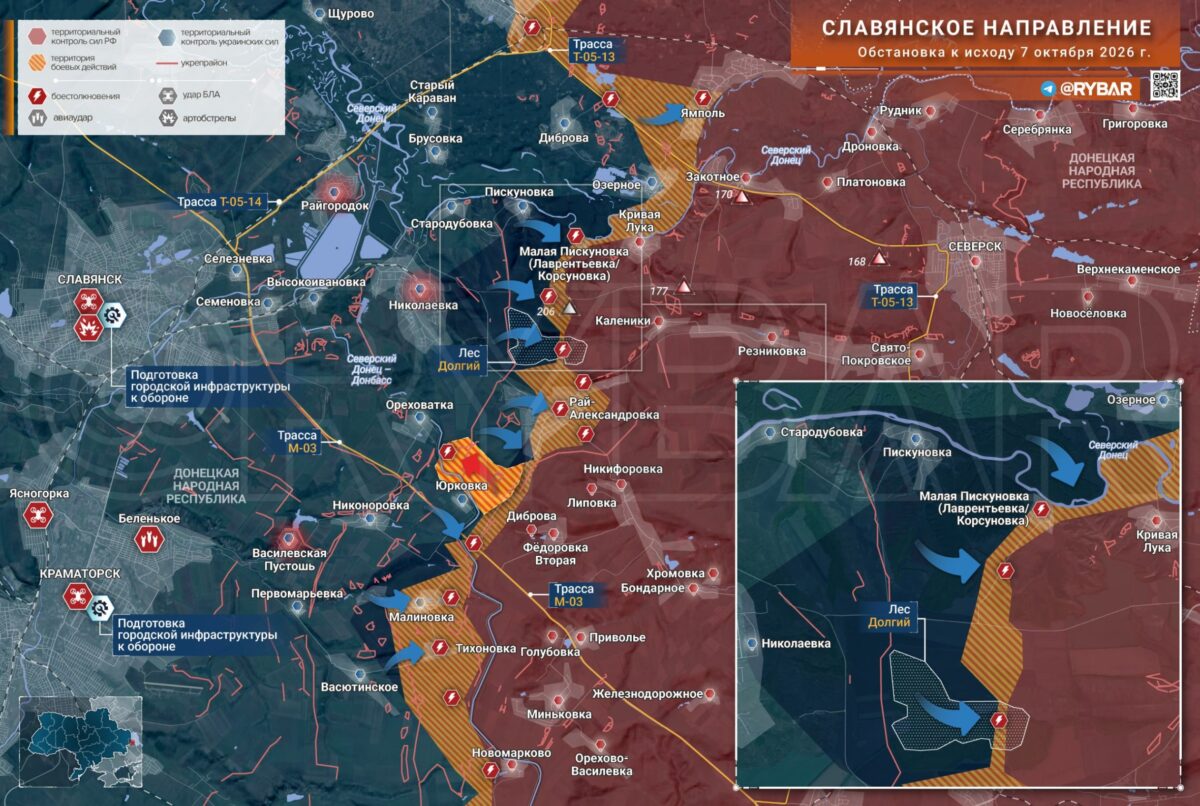
Forget Sloviansk: its capture is currently unrealistic. “The situation is worsening; Sloviansk is being postponed,” Rybar wrote in the first sentence of its latest analysis of the Sloviansk direction. It explained why at length.
According to it, Ukrainian units in the area are increasing the pressure and exploiting their successes near Lyman, which lies north of Sloviansk. The Russian army has suffered a serious defeat here in recent months, losing a large salient from which it had hoped to bypass the Sloviansk-Kramatorsk agglomeration from the north.
Rybar listed the ensuing complications: according to it, Ukrainians have concentrated fresh drone units around the village of Dibrova; the Russians had to withdraw from the village of Piskunivka and are now trying to save Kryva Luka. Ukrainians are also pressing into the village of Ozerne.
Ukrainian formations are increasing their activity, exploiting successes in the Lyman area, where fresh forces of drone operators have been concentrated around Dibrova.
Russian troops were pushed out of what remained of the village of Piskunivka and are now defending the approaches to Kryva Luka. The enemy is trying to break through there both from the west and across the river from Ozerne.
Moreover, heavy fighting is under way west of the village of Kalynyky, while fighting for Rai-Oleksandrivka is “fierce”, “although it was under the Russian army’s full control only recently”.
Nor is this the end of Rybar’s bad news. An “equally difficult situation” persists on the western bank of the Siverskyi Donets-Donbas Canal, where Russian soldiers are “for now” holding positions in the villages of Malynivka, Tykhonivka, and Yurkivka.
Taken together, all of this means that the prospect of an “attack on the agglomeration has receded considerably”.
“Without control of the forests below Lyman, the offensive is doomed, if not to failure, then to high losses from attacks on its flank,” Rybar added.
Its map fully matches the verbal description. The red arrows running from east to west along the entire stretch have been replaced by blue, Ukrainian arrows pointing from west to east.
Paradoxically, the local Telegram channel Mikolaivka-Sloviansk Online provides a far less optimistic picture.
While Rybar no longer even mentions Mykolaivka, which directly borders Sloviansk, according to this source — which has repeatedly provided highly accurate and widely cited information — Russians are still managing to infiltrate it. On Wednesday, it wrote that “the Russian army is applying pressure from the direction of Rai-Oleksandrivka”, while the village itself is in the grey zone.
The explanation may be simple. Most of the names refer to villages the Russians never fully captured, although they claimed they had — including Rybar itself. This is why its map looks as though a small counteroffensive were under way east of Sloviansk. In reality, it mainly makes its previous misleading claims more realistic.
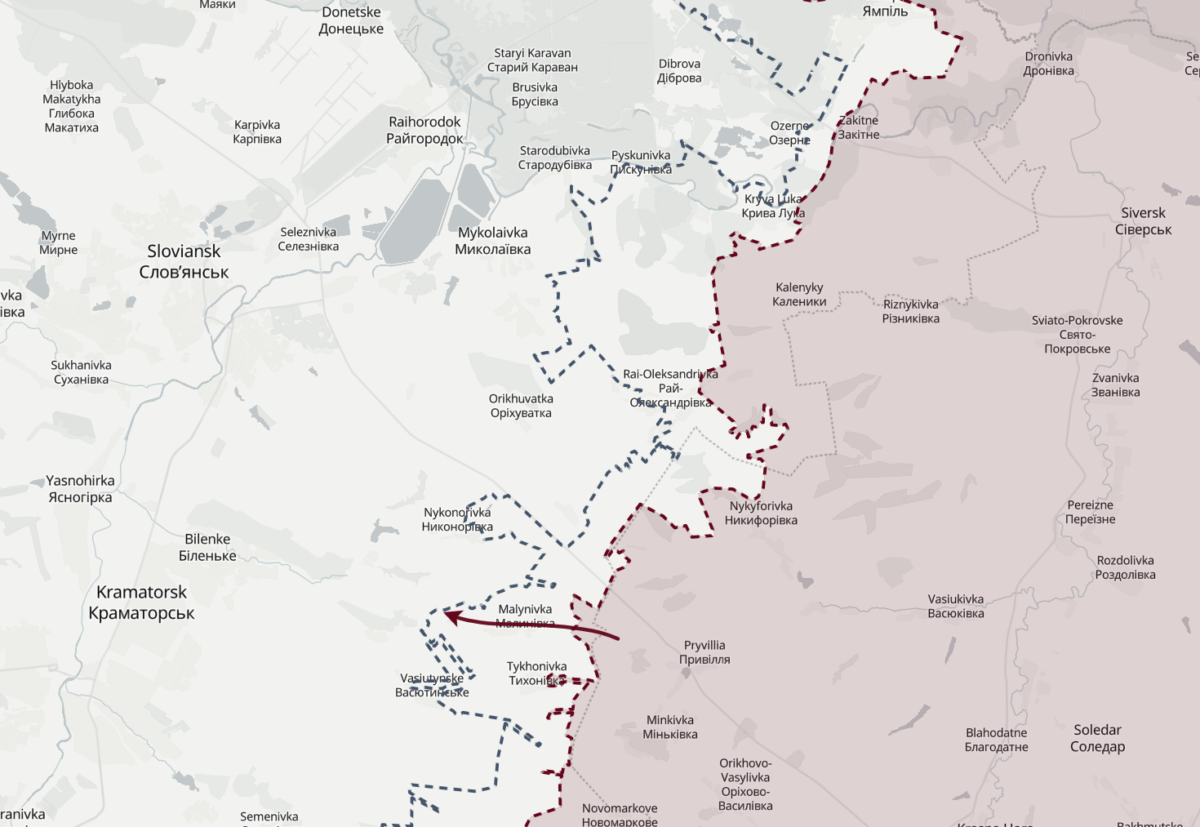
Far more accurate is the map by the Finnish Black Bird Group. Rai-Oleksandrivka is in the middle of the image — no credible analysts have ever considered it occupied by the Russians. Further north are Ozerne and Kryva Luka. Ozerne is particularly interesting.
According to Rybar, the Russians are trying to prevent the Ukrainian army from entering the village; independent analysts show it partly in the grey zone and partly under Ukrainian control. Rybar therefore correctly sees Russian problems, but at this point this is more its usual cartographic “retreat” from unrealistic positions.
Ukrainian pressure continues towards Velyka Novosilka, with fighting already under way near Komar on the eastern bank of the Mokri Yaly river. This is not entirely new either, but several Russian sources are writing about fighting in this direction with new urgency and, from the Russian perspective, scepticism.
“The situation remains extremely tense. There is mounting evidence that the enemy is seeking to advance around the village of Komar,” Rybar wrote.
This is an important village. When the Russians captured Velyka Novosilka last year after taking Vuhledar, Komar was a significant obstacle to their advance into Dnipropetrovsk oblast.
Fierce fighting took place over the village at the time, and the Ukrainian army lost it in June 2025. The front then moved another 15 to 20 km deeper into Ukrainian territory, but it is now moving back after months of slow advances.
Here, too, Rybar’s map appears more dramatic than the situation actually is. It depicts territory being liberated since February. However, it claims that the situation is worsening and the outlook is negative.
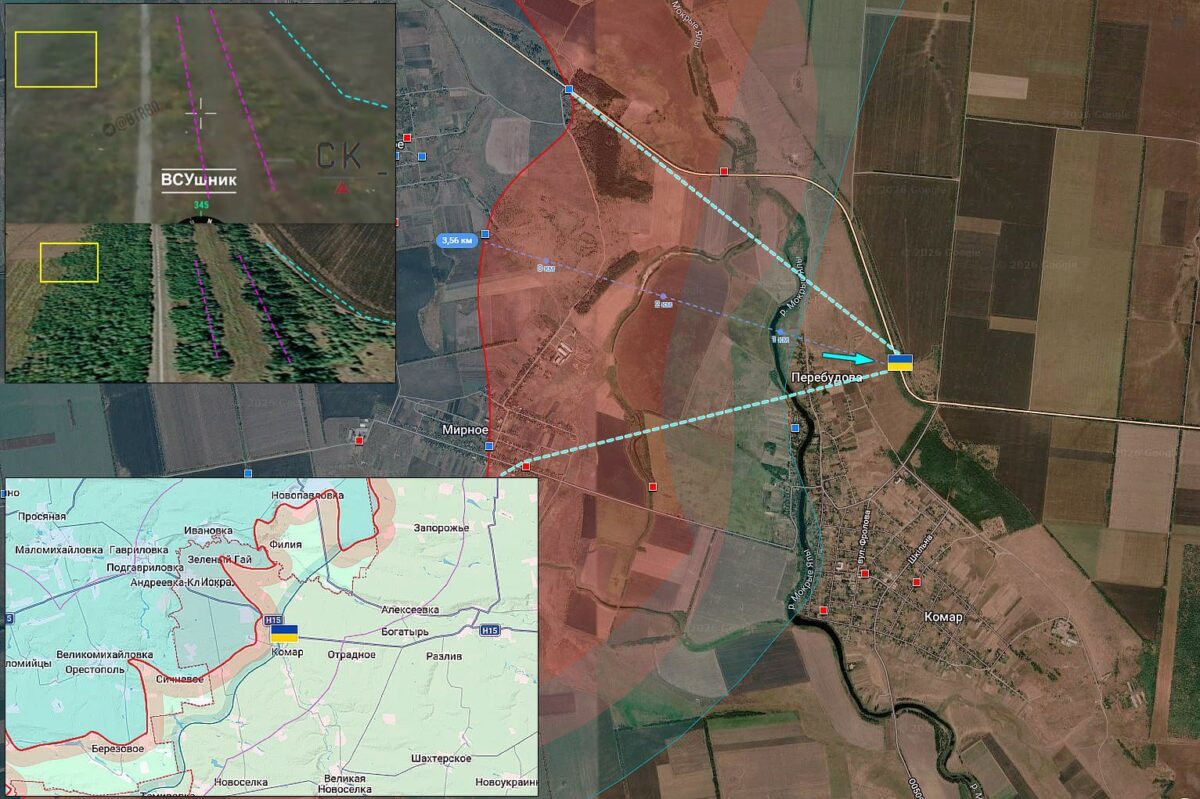
But the information about movements near Komar is genuinely fresh. Other sources agree on it almost metre for metre.
The Russian mapping project Slivochny Kapriz showed the exact location at the northern end of Komar, across the Mokri Yaly river, where Russian drones struck a Ukrainian video.
The Ukrainian Telegram account Petrenko also geolocated the incident at the same location.
Alexander Radov, another pro-war Russian, claimed that testimony from Ukrainian prisoners in this direction indicated that the Ukrainian command’s objectives were Bahatyr, 12 km east of Komar, and Velyka Novosilka itself, 13 km to the south.
This claim cannot be verified, but if it were true, Ukrainian objectives in this sector would be becoming ambitious. (Both Bahatyr and Velyka Novosilka are in the lower-right section of Rybar’s map at the beginning of this section.)
Russians are infiltrating Dobropillia, but a Ukrainian counteroffensive is pressing against their flank from the north. The fact that Russians are already operating in the town has been objectively confirmed by both sides. However, an earlier Russian claim that it had been encircled is false.
Rybar’s map again reflects what was written. In the town itself and its surroundings, red arrows show Russian attacks, while northeast of it, Ukrainian counterattacks are shown against the flank.
The Ukrainian channel Petrenko again serves as a source from the other side. Its map of Dobropillia has three circles, each marking a location where drones spotted Russian soldiers.
A Ukrainian soldier writing under the name Bakhmut Demon also confirmed Russian infiltrations into the town. However, he said they were being eliminated and that Russian losses would rise from November. He probably meant the period when the leaves fall and the terrain begins to turn muddy. Both will make the attackers’ advance more difficult.
Bakhmut Demon also warned that vigilance needed to be increased, as Russians are changing into civilian clothes and trying to infiltrate between Ukrainian positions in them.
Soldiers on the Zaporizhzhia direction described the same practice to us during a recent trip to Ukraine. There, too, they said that men in civilian clothing are sent ahead of infiltration groups in order to deceive drone operators.
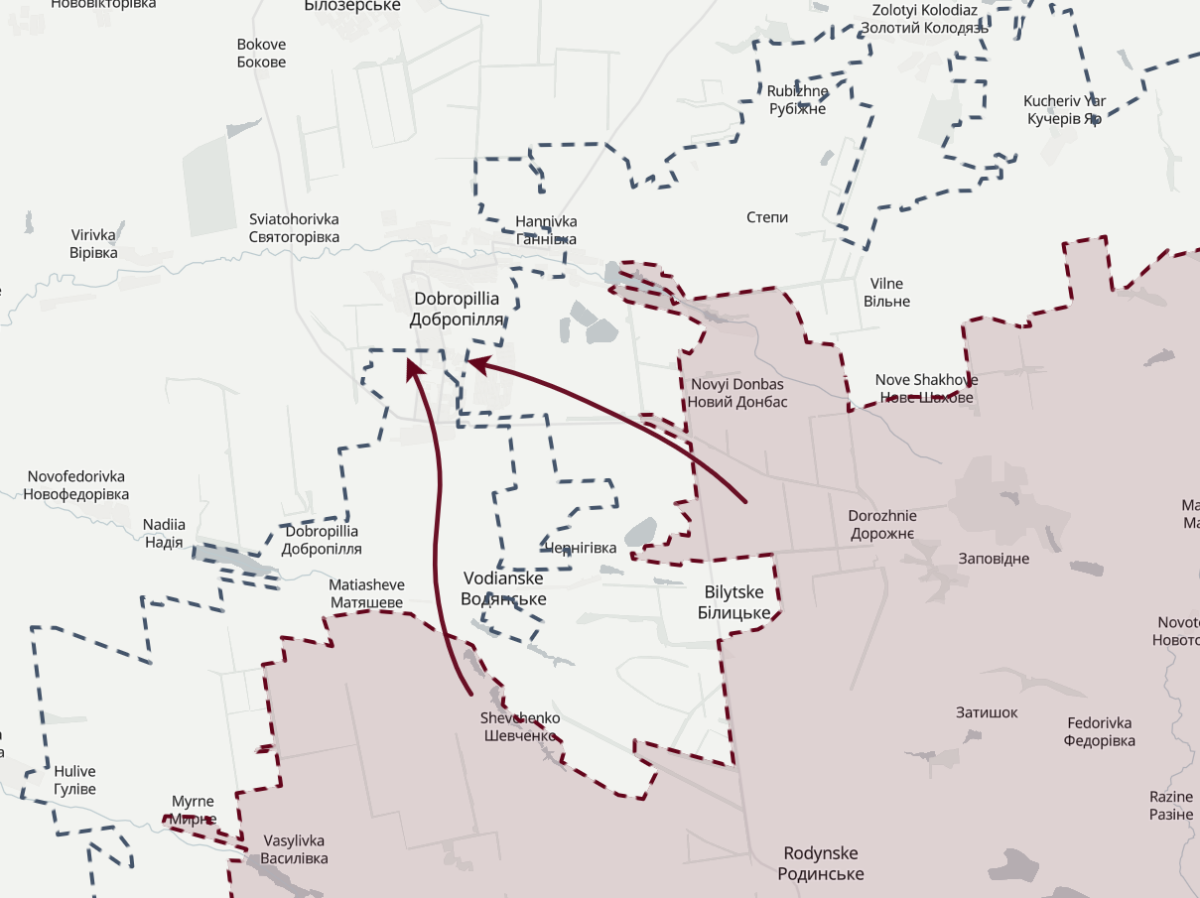
Finally, another map by Black Bird Group. It, too, confirms the Russian advance towards Dobropillia, but does not show Ukrainian attacks in the north. The explanation is the same as in the previous cases: Rybar had drawn Russian positions much further forward than they actually were.
The battle for data centres is now two-way, with Ukrainians attacking Russia’s ‘Google’. Yandex is a technology giant that underpins the Russian internet. Its search engine, for example, is used by two-thirds of Russians. But its services are far broader. Among other things, it provides cloud storage to its clients.
The company provides its services through five main data centres. On Thursday, drones attacked the first of them. They struck the facility in Sasovo, in Ryazan oblast.
“This data centre is one of the key and largest data centres in Yandex’s Russian infrastructure. It contains tens of thousands of servers, and the company’s cloud services and computing capacity for machine learning operate on its equipment,” the Russian Telegram channel Military Informant explained the significance of the target.
As a result of the attack, outages in various internet-connected services were reported throughout the day.
The exile website Meduza listed several affected media outlets whose websites either could not be loaded at times or loaded slowly: RBC, Vedomosti, RIA Novosti, Kommersant, Vesti, Interfax, and Rossiyskaya Gazeta.
On Friday, another Yandex data centre was attacked, this time in Kaluga. The company acknowledged damage to equipment and announced that “some Yandex services may experience outages”.
Videos of the day
The events in the following video are almost identical to those witnessed by people in south-east England in 1944. Nazi Germany had then begun using V-1 flying bombs, and the most effective weapon against them was fighter aircraft, which shot down hundreds of these “wonder weapons” just above the sea while flying at the limit of their maximum speed.
Ukrainian pilots are now using the same tactic because of a shortage of air-to-air missiles. In this case, a MiG-29 shot down a Russian Geran-4 jet drone with fire from its 30mm cannon.
The MiG-29 is 17.4 metres long. The distance between it and the drone when firing began was around eight times its length — just under 150 metres. The risks to the pilot are obvious: the cloud of debris endangers the aircraft itself.
Once a common sight, now more of a rarity. A Himars multiple-launch rocket system destroyed a Russian artillery radar.
💥A rare sight these days: a HIMARS strike, apparently using a GMLRS rocket, destroys a Russian Irbis counter-battery radar after it was detected and tracked by reconnaissance drones of Ukraine’s 43rd Artillery Brigade.
— Special Kherson Cat 🐈🇺🇦 (@bayraktar_1love) October 8, 2026
The war has moved underground to an even greater extent than was previously customary. Soldiers at the front are building interconnected underground bunkers. A video by the 5th Assault Brigade shows the clearing of what were probably abandoned Russian positions.
Soldiers throw explosives into the openings. The footage then allows viewers to see, from plumes of smoke and dust pouring from underground, how many entrances the bunker had and how they were arranged.
🇺🇦2nd Assault Battalion of the 5th Assault Brigade clearing a collapsed bunker system, #Huliaipole sector at south eastern front pic.twitter.com/OoVU6x7PIH
By Monday (5 October), Russia had demonstrably lost 24,170 pieces of heavy equipment (24,138 on Tuesday, 22 September). Of these, Ukrainians destroyed 19,133 (19,105), 1,003 (1,000) were damaged, 1,194 (1,194) were abandoned by their crews and the Ukrainian army captured 2,840 (2,839). This includes 4,452 (4,448) tanks, of which 3,357 (3,353) were destroyed in combat.
Ukraine lost 12,238 (12,175) pieces of equipment, of which 9,633 (9,579) were destroyed, 711 (702) damaged, 695 (695) abandoned and 1,199 (1,199) captured. This includes 1,466 (1,464) tanks, of which 1,126 (1,125) were destroyed in combat.
Note: Neither side regularly reports its own dead or destroyed equipment. Ukraine publishes daily figures for Russian casualties and destroyed equipment, which cannot be independently verified. This overview uses data from the Oryx project, which has compiled a list of equipment losses documented exclusively by photographs since the beginning of the war.
The European Union’s technology chief expects countries that oppose stricter artificial intelligence rules to change course, as AI systems are becoming more capable and harder to evaluate.
“I’m sure that all those countries who are not willing to regulate the use of AI, they will come back to that quite soon,” European Commission Executive Vice-President Henna Virkkunen told the European Newsroom (enr) on Friday. She warned of a “risk of very serious incidents” in the absence of any guardrails and called for the establishment of safeguards at an international level.
Concerns about the risks of AI have been at the centre of public attention for weeks, sparked mainly by hacking attacks carried out by AI software that acted autonomously during test runs. Some industry insiders have sounded the alarm, warning that artificial intelligence could potentially cause large numbers of deaths if the technology were to spiral out of control.
Virkkunen warned that fierce global competition is creating a risk that “companies are coming to the markets with products that they haven’t been testing enough.” She pointed to incidents in which AI agents had escaped from test “sandboxes” and service providers or developers had been unable to control their own systems.
At the same time, she said, some AI models “have become so capable that it’s more and more difficult also to evaluate them.” Adequate testing required highly qualified experts, sufficient expertise and enough time, she added.
The EU began enforcing its AI Act, the world’s first comprehensive legal framework to regulate AI based on the level of risk it poses, in August. Virkkunen said that the Commission had already sent a Request for Information (RFI) to two major US-based AI companies – OpenAI, known for ChatGPT, and Anthropic, known for Claude – as well as to some Chinese companies not further specified.
An RFI is a formal investigative tool used by the Commission to gather facts, data, and internal documentation from businesses, governments, or member states.
Global AI race
China and the United States have emerged as frontrunners in the development of AI systems, showing no signs of hitting the breaks. Governments in both countries have rejected calls to slow down its development, arguing it would create a competitive, strategic and economic disadvantage.
“Currently the risks are mainly focused and related to cyber security,” Virkkunen said, but she warned of more serious risks in future, including the possibility that highly capable models could be used in connection with biological weapons or fall into the hands of terrorists.
The Finnish politician called for the establishment of international rules to mitigate the risks of AI. She said the security of AI models had already been discussed within the Group of Seven (G7) this year as well as among G20 countries, and that the discussions would continue.
Talking about the EU’s role in AI development, Virkkunen said the Union should avoid dependence on a single company or third country for critical technologies and develop AI systems based on European values, languages and culture.
An interactive event in Warsaw explored how artificial intelligence, platform algorithms and commercial interests influence young people’s digital experiences — and why their voices should matter in decisions about technology. MEDIA-SOCIETY.COM // WARSAW, 9 October 2026 — What does a teenager actually encounter when opening a social media app? And how much of that experience […]
At the Warsaw Human Dimension Conference, three OSCE representatives examined the persistence of religious hatred, the political misuse of religion and the need to prevent discrimination before it turns into violence. MEDIA-SOCIETY.COM // Warsaw | 9 October 2026 | Human Rights & Religious Freedom. Governments across the OSCE region have made extensive commitments to combat […]
Last week, EU member states reached a common position on the European Commission Omnibus X ‘Food and Feed’ proposal, in a bid to simplify regulation of pesticides. In reality, however, it will weaken protection against pesticides’ negative effects in Europe. The proposal pleases the chemical industry but goes against the wishes of a vast majority of citizens and many scientists who value people’s health, clean drinking water and biodiversity.
A hearing in the European Parliament on 3 September highlighted the real problem. Under the guise of a ‘discussion with experts’ in the field of health and environment, the parliament handed the megaphone to lobbyists representing a broken, toxic agricultural model.
Representatives of industrial agriculture – sugar beet, apple and cereal growers – parroted industry arguments, justifying their demands to stop banning pesticides that are toxic to public health, the environment and pollute our water resources.
Despite Europe witnessing massive droughts, extreme heatwaves leading to countless deaths, wildfires destroying biodiversity, and devastating crop losses, it seems that a significant share of MEPs are ready and willing to accelerate the degradation of European’s wellbeing and natural resources.
Listening to them raises a fundamental question: Do farmers truly want to rely on a cocktail of toxic chemicals to maximise yields at low market prices, destroying their own health and local ecosystems in the process? Or do they wish to make an honest living, producing quality food in balance with nature for a fair income?
CAP subsidies
To better grasp this contradiction, we must look at what is actually at stake here.
Agrochemical corporations seek their share of the Common Agriculture Policy (CAP) cake – a colossal €58bn budget, accounting for one third of the EU’s total budget.
Their own survival is reliant on keeping as many farmers as possible dependent on pesticides, fertilisers and industrial seeds. By diverting public CAP funds through farmers into the pockets of their shareholders, these companies ensure their long-term profitability.
Many farmers’ unions also represent agri-cooperatives that profit significantly from selling pesticides, which raises questions about whether they truly represent farmers’ long-term interests, or those of the pesticide industry.
Since the European Commission published its ‘simplification’ proposal in December 2025, proponents of pesticide-intensive farming have presented a series of flawed arguments that in fact reveal the dead-end to which intensive agriculture has led us.
Firstly, farmers’ organisations complain about a “lack of pesticide substances” on the market.
Currently around 450 different pesticide active substances are approved in the EU, from insecticides to fungicides, and herbicides. If 450 different options are insufficient, does this not signal an unhealthy addiction rather than a shortage?
Lobbyist groups, furthermore, claim that pest resistance to synthetic pesticides would inevitably lead to dramatic yield losses and hunger, arguing for even more pesticides with diverse modes of action.
And yet, according to scientific research, the multiple chemical strategy that has been applied for more than 40 years is the very cause of the appearance of resistance. This problem cannot be solved with the mindset that caused it. The only scientific solution is, therefore, not more chemistry but prevention, and the use of alternative methods.
Thousands of farmers across the EU and the rest of the world are already proving this by switching towards Integrated Pest Management (a strategy for low-pesticide-input pest management) or organic practices to reduce pesticide inputs.
Who bares the cost
The call to keep all pesticides on the market – and potentially even use some of the banned ones – serves only the short-term interests of the pesticide industry, not of the farmers.
Destroying soil life – the basis of soil fertility – with chemicals, and killing insect populations that naturally control pests and pollinate crops, jeopardises the very basis of farming and long-term food security.
The societal costs of this pesticide-dependent model are staggering. Citizens are the ones who bear the healthcare costs for chronic diseases such as cancer and Parkinson’s, which impact not only farmers but also residents of agricultural areas.
We face water pollution that has become nearly impossible to remediate. Fewer pollinators means fewer healthy fruit and vegetables. These ‘externalities’ far outweigh any short-term benefits.
This is the reason why the Paris and Munich water companies financially support farmers in protecting the groundwater, because doing so is up to 45 times cheaper than depollution.
In the meantime, the agrochemical industry enjoys huge profits from pesticide sales, largely supported by CAP subsidies, while society foots the bill for the damage. It is indeed a perfect business model…for them.
Lobbyist circus
The spectacle witnessed in the alleged House of European Democracy is testament to the state of our political world; one that is dominated by corporate interests over citizens and farmers’ wellbeing.
We witnessed the desperate battle of a toxic agricultural model that struggles to survive, and resists being replaced by sustainable farming methods.
The lobbyist speakers in the European Parliament hearing more or less gave the diagnosis to the current pesticide-intensive agricultural system: it is simply broken.
Citizens have repeatedly expressed their concern on the impact of pesticides on their health and biodiversity. They have also expressed the need that public support for agriculture serves the common good.
The pesticide Omnibus X proposal is merely an attempt to maintain a detrimental status quo that favours the pesticides industry.
What is needed now is a new blueprint for a system which financially supports farmers to implement practices that improve soil and plant health, favour beneficial insects, accelerate the availability of alternatives to pesticides such as biocontrol products, and rapidly phase out toxic synthetic pesticides to protect our health, water resources and biodiversity.
Only then can we ensure a sustainable future for European agriculture and our children. Only then, will a greater share of the CAP remain in the hands of farmers who feed us and protect our nature.
EUobserver is proud to have an editorial partnership with Europod to co-publish the podcast series “Briefed” hosted by Léa Marchal. The podcast is available on all major platforms.
Find the full transcript below:
Spain is heading for early elections, after prime minister Pedro Sánchez called a snap vote last week. According to current polls, the conservative People’s Party, or PP, is ahead of Sánchez’s Socialists, while Vox is also making significant gains.
So, what would happen if the PP and Vox decided to govern together? And what would that mean for Europe?
Let’s start with the numbers. According to Politico’s poll of polls, the PP, the conservative right-wing party, is currently polling first, at around 34 percent. The Socialists of the PSOE are at around 26 percent, and the far-right party Vox at around 18 percent.
The Socialists already came second in the last general election, in 2023. The PP won the most seats, but it couldn’t form a government. Pedro Sánchez eventually secured enough support from other parties, including the left-wing Sumar, to remain prime minister.
This time, the balance could be different. If the current polling were reflected in the election result, the PP and Vox could have enough seats to form a government together. PP leader Alberto Núñez Feijóo has said he could negotiate with Vox.
And this would not be completely new in Spain. The PP and Vox are already governing together in four Spanish regions: Extremadura, Aragon, Castilla y León and Andalusia.
Now, would that mean Spain would have a government with Vox ministers? One possibility would be a government led by the PP, with Vox supporting it from outside, without taking ministerial positions. That’s what we’ve seen in Sweden, for example.
But what seems more and more likely is that Vox would become part of the government itself. The Vox MEP José Buxadé told Politico a few weeks ago that if his party negotiates a coalition with the PP, it would seek ministerial positions proportional to the number of votes it receives.
According to Politico, based on current polling, that could mean a third of ministers coming from Vox. So, what would this mean for Europe and for Spain? A lot.
Spain is currently one of the EU countries where the government has taken relatively progressive positions on issues such as migration, climate policy and social policy.
A change of government would therefore give more weight to the right in the European Council. That could be particularly important on migration, but also on economic files.
And then there is climate policy. Vox has called for the abolition of the European Green Deal, arguing that environmental policies have harmed employment and Spain’s energy policy.
Something that is very much contradicted by the fact that Spain is one of the European countries that has been particularly resilient during the energy crisis, thanks to its renewable energy.
So a change in climate policy could have consequences not only for Spain, but also for the EU’s wider energy transition.
And there could be another major change: foreign policy. Pedro Sánchez has been one of the more outspoken European leaders on the war in Gaza. Spain has taken a particularly critical position towards Israel and has recognised a Palestinian state.
Vox takes a very different position. The party strongly supports Israel and has called for European funding to the Palestinian Authority to be suspended.
The Spanish election is still several weeks away, so we don’t yet know whether the PP and Vox will actually be able to form a government, or what form such an agreement would take.
But if they do, Spain’s position in Europe could change quite significantly.
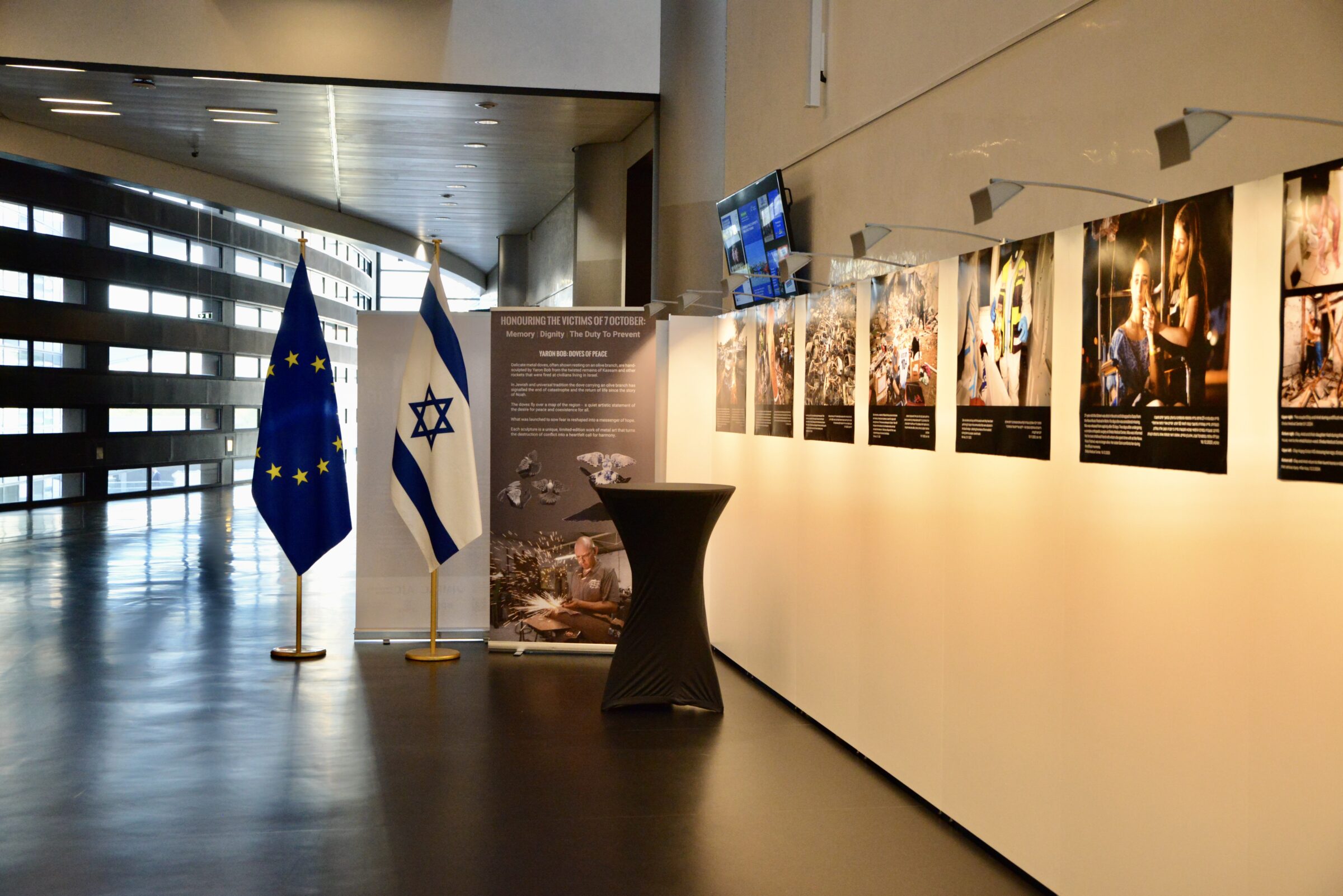
An EU Parliament memorial for victims of the 7 October attack caused disarray and anger as well as grief in a divided European house.
It was crowned by a towering Israeli flag, alongside the EU’s.
The exhibit set up in Strasbourg’s parliament included maps showing Occupied Palestinian Territories as part of Israel and sold trinkets made from debris of Israeli missiles.
But it made no mention of the 74,200 people killed by Israel in Gaza in the past three years, after Palestinian militants Hamas killed some 1,200 Israelis in a surprise attack.
This situation struck a chord with the sole Palestinian in parliament, left-wing French MEP Rima Hassan, who tried to take down the Israeli flag in protest, and toppled over the EU one as well in an unwanted domino effect.
“My action was in no way directed at the victims of 7 October or their memory,” Hassan told EUobserver.
Instead, it targeted “this incessant and untenable double standard, for a Russian flag would never be permitted, and rightly so, within the [EU] institution’s premises”.
The memorial was organised by German centre-right MEP Hildegard Bentele, who chairs the parliament’s Israel delegations, alongside the Israeli embassy, and the The International Movement for Peace & Coexistence (IMPAC) group in Brussels, as well as others.
“During a conversation with a member of my team, the guest artist [at the EU Parliament memorial] claimed that Palestine ‘does not exist’,” Hassan added.
Her family were expelled from their birthplace by Israel in 1948 along with hundreds of thousands of others in what Palestinians call the Nakba (Catastrophe).
But in the cacophony of narratives in the EU assembly, those who saw her anti-Israel flag protest as offensive or antisemitic had echoing voices.
This article continues, but the full version is available only to EUobserver.com subscribers. Visit account.euobserver.com/membership
Persuading China that its €1bn daily trade surplus with the EU is not sustainable was always going to be a hard sell for EU trade commissioner Maroš Šefčovič.
And the early signs are that Šefčovič’s two days of talks with Chinese commerce secretary Wang Wentao, which conclude on Friday (9 October), are not going to deliver the breakthrough demanded by EU leaders when they gather for a summit in Brussels next week.
“The message around the table was clear: the need to improve access to the Chinese market, while boosting our economic security,” Šefčovič posted on X ahead of the first day of talks.
But rhetoric aside, three months after the EU Commission set up a series of ‘work streams’ with Chinese officials, with a mandate to address the multi-layered EU-Sino trade dispute, it is hard to see much tangible progress.
Hours before Šefčovič arrived, Beijing rejected an EU demand for so-called “voluntary export restrictions” on its electric vehicles (EVs).
In August, data published by Schmidt Automotive Research found that 14 percent of EV sales across Europe this year were Chinese-made, up from 9.4 percent last year.
That is despite the EU imposing additional tariffs of between 17 and 36 percent on Chinese EVs in October 2024.
This article continues, but the full version is available only to EUobserver.com subscribers. Visit account.euobserver.com/membership
Unsavoury news comes from Russia often these days. But the latest unexpected development is the spread of a deadly disease.
Behind the mysterious death of a young woman in Siberia in early October was reportedly pneumonic plague – a disease so contagious it is considered as bad as anthrax, smallpox, and Ebola.
Local authorities in Russia have denied the plague as cause of death, but despite this, they have implemented anti-epidemic measures.
Eva Hrncirova, a spokesperson for the European Commission, said on Thursday (8 October): “Russia should make information about the plague available as soon as possible. This is what we need”.
“We had a meeting with the member states yesterday within the [EU Commission’s] Health Security Committee, and with the WHO [World Health Organization], who are in contact with our delegation in Moscow,” she said.
Russia was asked by the WHO to share “timely, precise, and exact information” about the possible plague in Siberia, she also said.
“We don’t have enough information to assess the epidemiological situation,” she added.
Nothing to see here, says Russia
Pneumonic plague disease can be treated with antibiotics if detected early, but officials beyond Russia’s borders are left with worrying questions.
Did an Irkutsk Anti-Plague Institute lab technician in Shelekhov (Siberia) really die of plague?
If so, was it a natural version of the disease, or a more dangerous bacterium modified in military labs?
And what is the risk of the Middle Ages-era disease spreading?
Pneumonic plague is caused by the bacterium Yersinia pestis — the same one that once brought devastating plague epidemics known as the Black Death.
The pneumonic form of plague, a disease that killed up to half of Europe’s population in the 14th century, spreads through droplets by coughing or sneezing.
It manifests as severe, rapidly developing pneumonia that almost always ends in death if left untreated. But if antibiotics are administered in time (ideally within 24 hours of the onset of symptoms), the disease is treatable.
Independent Russian-language media say that Darya Shipilova, a 28-year-old laboratory technician at the research and hygiene institute in question, accidentally broke a test tube containing plague bacteria in late September, became infected and died in hospital several days later, on 2 October.
Authorities have not confirmed the cause of the woman’s death, letting on only that she died of pneumonia and claiming that no microorganisms connected with her work had been found in her body.
Some 200 of her contacts were subsequently put into quarantine with medical supervision.
Authorities also ordered a three-week quarantine at several hospitals in the wider area, and facemasks for the wider population – even for schoolchildren.
Russia’s neighbours, Mongolia, Kazakhstan, Kyrgyzstan and Uzbekistan, have all introduced border controls.
Russia said the epidemic situation in the area was stable, that none of the deceased woman’s contacts had shown signs of infection, and that there was no cause for concern.
However, the head of Russia’s public health authority reportedly travelled to Irkutsk to attend a meeting with local officials, while residents of Shelekhov report that people in protective suits are moving around the town.
And epidemiologists say it is simply not possible that Russia’s public health service would resort to such dramatic measures, including closing hospitals, over a single case of ‘pneumonia of unknown origin’ .
The institute where the laboratory technician worked is said to be a civilian facility that, among other things, researches and monitors the incidence of plague.
In Siberia, especially near the borders with China and Mongolia, the bacteria in question still circulate among animals and occasionally infect humans, as they do in some parts of Africa, where the disease is most common.
This article continues, but the full version is available only to EUobserver.com subscribers. Visit account.euobserver.com/membership
Horrifying stories from the occupied Ukrainian town are mounting.
Two clans have emerged in Oleshky — those who support Putin can get food.
According to experts, Russia is fundamentally violating international law and using residents’ vulnerability as a weapon.
Putin’s tragic gift: the death toll in Pryluky rose to 22; 12 people were killed on a bus the following day.
Maps of the day: Operation Vivaldi continues to make gains in Donbas.
Videos of the day: an FPV drone attacked a fully occupied quad bike; a refinery is on fire.
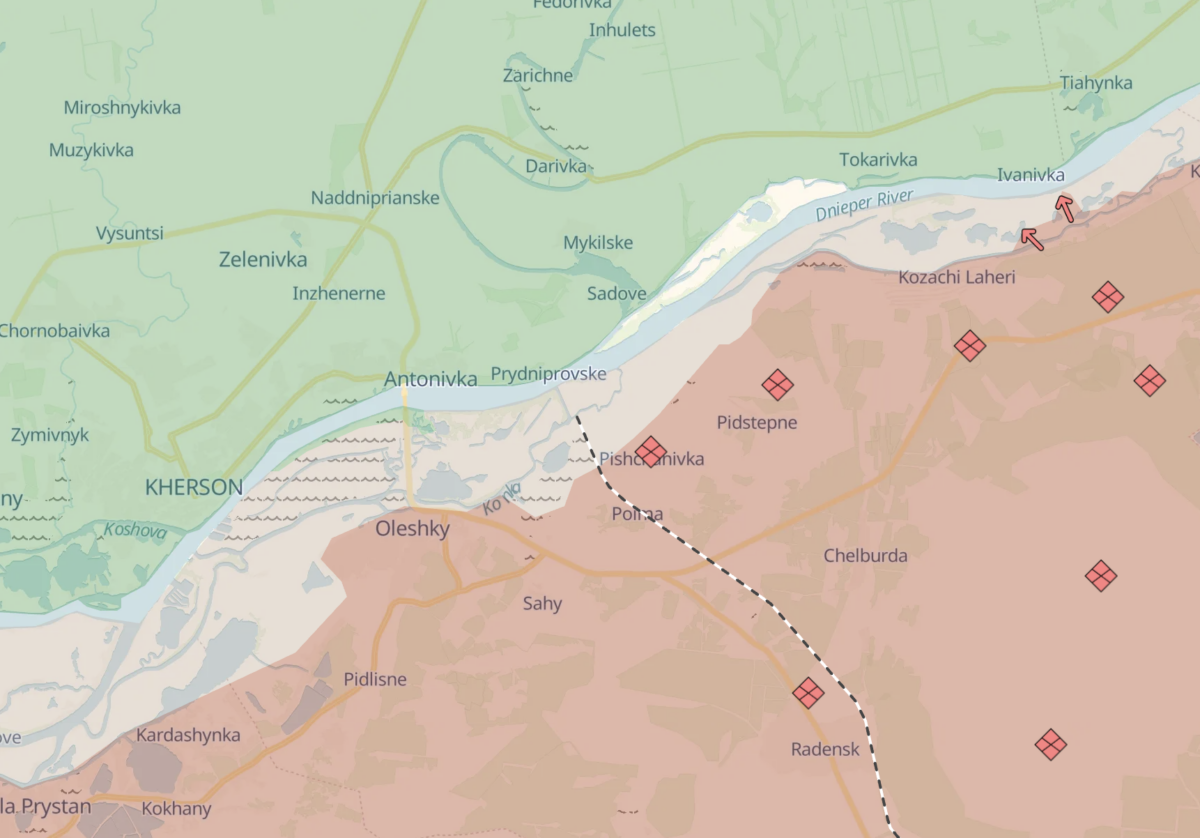
Horrifying stories from the occupied town are mounting. The situation in Russian-occupied Oleshky, in Ukraine’s southern Kherson region, has long been extremely tense.
Around 2,000 residents have long faced a severe humanitarian crisis and isolation. Before the Russian invasion, 24,000 people lived in the town.
And the situation of local residents left behind shows how Russia, as an occupying power, treats civilians brutally and deliberately violates international agreements.
Map — DeepState
“There is a lack of food and healthcare. Since the destruction of the hydroelectric power plant, there has been no drinking water, electricity or gas. They do not even have wood for heating. Not only is it impossible to live with dignity, it is also impossible to bury people with dignity, because the occupiers even prohibit the burial of the dead,” Tetiana Hasanenko, head of Ukraine’s military administration for Oleshky, told Denník N.
Russia is also using Oleshky to shell the right bank of the Dnipro, especially the city of Kherson, just nine km away. Fierce fighting is under way over the surrounding islets. This turns Oleshky residents into human shields and prevents their safe evacuation.
According to the BBC, Oleshky is trapped by both geography and war. “To the north and west, it is cut off by the river and destroyed bridges, while to the south and east it is cut off by dangerous or impassable roads,” the report said.
The situation in the town had already been dramatic in 2023, when the destruction of the Kakhovka dam caused flooding.
A few days ago, special units of the SBU security service and Ukraine’s National Guard launched, according to the RBK-Ukraine website, a new operation to deliver humanitarian packages containing food, water and medicines across the Dnipro.
The aid totalled around four tonnes, with each package weighing 19 kg.
Footage from the mission can be viewed in this video by Suspilne television.
In these difficult conditions, heavy Vampire drones — dubbed Baba Yaga by Russians — are, according to a Ukrainian website, one of the few ways of providing aid to people on the occupied side of the river. Ukrainian soldiers often deploy them at the front for their own logistics in areas that are extremely dangerous.
Last year, the drone was even described as the most effective combat vehicle changing the course of the war.
According to Hasanenko, Ukraine’s armed forces have regularly dropped food by drone into the occupied area since March.
“They did it, but not on such a large scale. And every time drones fly over, the occupiers punish local people for it,” said the Ukrainian woman, who is in contact with people from Oleshky.
She said people try to immediately transfer the aid into unmarked containers to avoid punishment. “The occupiers believe that if people accept help from the Ukrainian armed forces, they supposedly have some connection with them and are betraying the country — which is not actually their country. And that is why they punish them,” Hasanenko explained.
In recent months, Oleshky residents have relied mainly on their own harvests, but at the end of the season they face a critical food shortage.
There have even been reports that residents were forced to eat dogs. A BBC report from late September revealed shocking findings from the town: people had learned to cook even with weeds.
Some, according to Ukrainska Pravda, caught pigeons or pheasants, while others cooked borscht “in a new way” — from eggs, courgettes, tomatoes and herbs.
“Prices there are not merely high but almost astronomical. Eggs sell for 800 hryvnias a dozen (€19), potatoes and onions for 500 (€11.90), courgettes for 250 (€5.95), and tomatoes for 200 (€4.76), because there was a good harvest,” the website wrote.
Despite the risk of being killed by a mine, residents travel along a “road of death”, lined with burnt-out cars, to the nearest town, Radensk, for food. This was also confirmed by Reuters, which spoke to people who still have relatives there.
“The choice Russia imposes on civilians every day: stay and die of hunger, or leave and risk being blown up by a landmine,” the agency quoted Ukrainian ombudsman Dmytro Lubinets as saying.
Two categories of people and harassment over humanitarian aid. In the hospital, where dead bodies have been lying in the basement for four months, people have been divided into two clans, according to witnesses.
“Those loyal to the Russian regime have some food, sometimes even meat and alcohol. The people they call Ukraine-lovers have nothing. The hospital director took everything from the latest deliveries provided as humanitarian aid and handed it out to his own people,” Ukrainska Pravda quoted the son of a man who remained in Oleshky as saying.
When Ukrainians succeeded in dropping humanitarian aid into Oleshky, a new phase of psychological warfare by the Russian Federation began.
Under normal circumstances, an operation to drop humanitarian aid would not attract so much attention, but according to Ukraine’s SBU security service, the Russian response reached particularly absurd proportions.
According to its information, Russian soldiers were ordered to arrange a series of interviews aimed at discrediting the Ukrainian side.
The recorded interviews were meant to include claims that Ukrainians were shelling Oleshky, positive views of Putin’s regime and expressions of gratitude. The SBU therefore urged Ukrainians to treat such reports cautiously and not spread unverified information.
According to information from the Ukrainian resistance movement in the Kherson region, which cannot be independently verified, those who received the aid faced abuse during interrogations.
According to Hasanenko, the most important thing now is to evacuate people from the town.
“Even what humanitarian missions are doing now, dropping food, will not solve their problems. I have reports in which people wrote that they had food left for two days and that this saved them. But it will not save them forever. Many people are dying there because of drones and artillery shelling. We need to establish a humanitarian corridor,” said the head of Oleshky’s military administration, adding that last winter had already been difficult and that they might not survive this one.
She herself has received reports that people have lost 10, 20 or even 40 kg. “There is one case: a woman wrote that she weighed 110 kg and now weighs 67. She has lost 40 kg and writes to me that she is dying.”
Violations of international law. During the recent UN General Assembly session, Ukrainian foreign minister Andrii Sybiha spoke about Oleshky. Ukraine’s main aim, he said, was to establish a humanitarian corridor in the area and safely evacuate people who have not accepted the Russian occupation.
It is precisely because of this stance, Kyiv says, that the Russian army is retaliating by blockading the town, where tourists had before the war come for its unique natural environment of pine forests and Dnipro inlets.
“There is no supply of electricity or gas. Over the past month, the delivery of food, medicines and other basic necessities has been completely blocked. Horrifying testimonies are coming from occupied Oleshky about how people are trying to survive under a blockade imposed by Russia: they are looking for scraps of food and gathering grass because there is simply no other food,” Ukrainian website NV quoted the foreign minister as saying.
Another dimension of Russian terror, he said, is the hunting of civilians. Russian FPV drones pursue and attack people, turning even an attempt to leave one’s home or move around the town into a deadly risk.
According to TSN, Russia is artificially creating food shortages in Oleshky, selling an ordinary food package for 50,000 hryvnias — nearly €1,000 — compared with a standard price of up to 2,000 hryvnias (€40). When people have no money, they offer their jewellery in exchange for food.
Food was last delivered to the town at the end of May, and according to Ukrainska Pravda, no further attempt to bring in food was made. When locals tried on 2 June, their four cars were blown up by anti-personnel mines, killing two people.
Legally, the humanitarian crisis in Oleshky, as well as the use of the population as human shields, constitutes, according to Ukrainian website Rubryka, a violation of the Fourth Geneva Convention — on the protection of civilians in time of war — and a war crime under Article 8 of the Rome Statute of the International Criminal Court (ICC).
An occupying power is responsible for those living in occupied territory. “It must provide people with food, medical care and proper sanitation. But Russia is indifferent to all international requirements,” Ukrainska Pravda wrote.
According to the Institute for the Study of War, Oleshky has become a test of Russian dominance in an area “characterised by population decline, damaged infrastructure, chronic insecurity and growing isolation from the rest of Ukraine”.
Rather than reversing these conditions, the think tank said, Russia governs through them.
“Oleshky demonstrates that the humanitarian crisis unfolding across many Russian-occupied communities is not merely a byproduct of war but increasingly appears to be the result of an occupation system that tolerates, exploits, and sustains civilian vulnerability as a means of maintaining control,” wrote US experts.
According to Hasanenko, Russian fears of Ukrainian operations are also behind this. “I think they are simply trying to prevent the Ukrainian armed forces from crossing the Dnipro, because they could begin liberating the left bank. And people simply serve as human shields for them, while they mine everything completely,” she told EUobserver.
A tragic toll on Putin’s birthday. At least 22 people were killed, including five children, in a Russian Kh-101 cruise missile attack on an apartment building in Pryluky, in the Chernihiv region, on 7 October. Rescue workers pulled many people from the rubble of the destroyed building. According to local authorities, Russia fired as many as six cruise missiles at the town.
“This is the ‘gift’ Putin gave himself for his birthday. Killing children, killing people. There were new attacks with Shahed drones and aerial bombs during the day. It is important that leaders do not remain silent about what happened,” said Ukrainian president Volodymyr Zelensky, calling on the West to help with air defence.
Brutal Russian attacks continued the following day. As many as 12 people were killed after Russia hit a bus in the Donbas city of Kramatorsk. Putin’s regime is currently facing a crisis at the front, which it is trying to address through massive shelling of Ukrainian cities.
Maps of the day
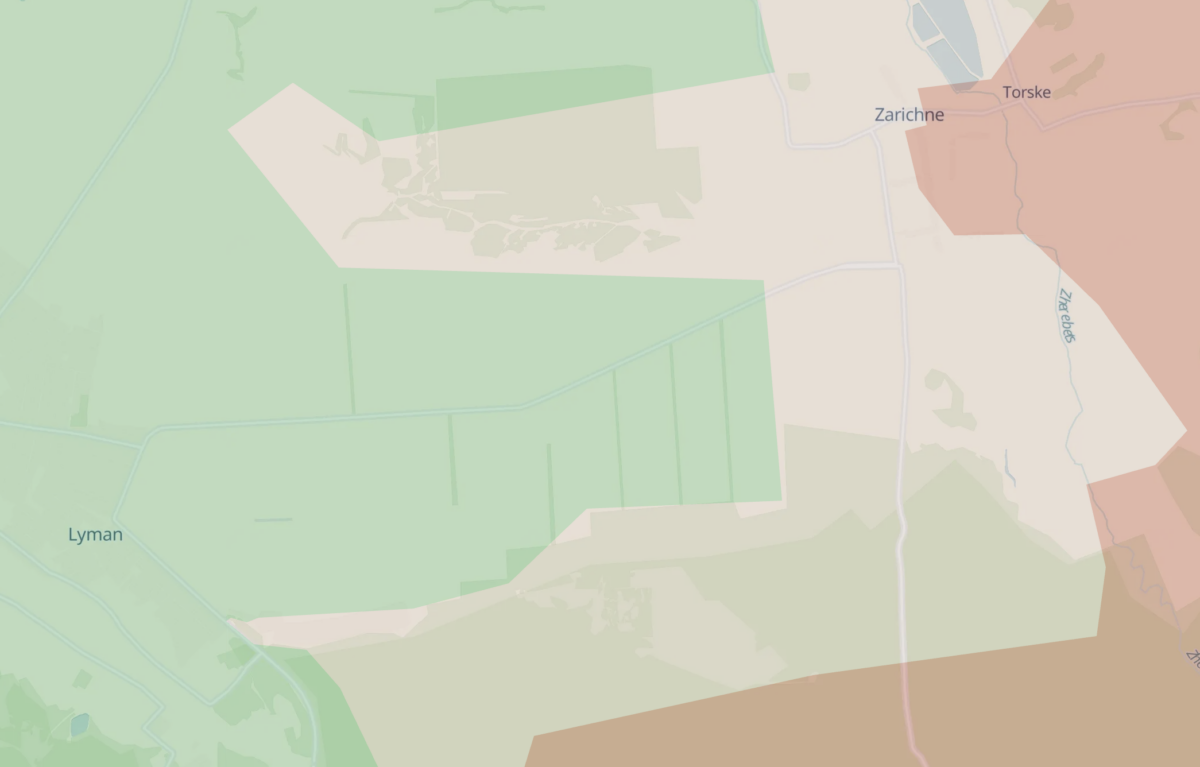
Ukraine’s successful Operation Vivaldi continues. According to a report by the Institute for the Study of War, Ukrainian forces are continuing counterattacks towards the eastern bank of the Zherebets River, northeast of Lyman. The numerical superiority of Ukrainian forces and drones there is preventing Russian forces from consolidating their positions in the town.
Map — DeepState
According to September statistics, which we wrote about a few days ago, Russia has just had its worst month in Donbas for the past three years. The US newspaper The New York Times also charted this on its map.
— Institute for the Study of War (@TheStudyofWar) October 7, 2026
Videos of the day
Smoke over a distant refinery. Ukraine continues to launch drone attacks on Russian energy infrastructure. Most recently, it caused a fire at the Gazprom Neftekhim Salavat plant in the Bashkir region, one of Russia’s largest refineries. It is located around 1,300 km from the front line.
A fatal quad bike ride. The Hornets of Dovbush, from the 68th Brigade, released a video showing five Russian soldiers on a quad bike coming into view of their FPV attack drone. The location of the attack is unknown.
What are the losses
No update on Thursday.
By Monday (5 October), Russia had verifiably lost 24,170 pieces of heavy equipment (24,138 on Tuesday, 22 September). Of these, Ukrainians destroyed 19,133 (19,105), 1,003 (1,000) were damaged, 1,194 (1,194) were abandoned by their crews, and the Ukrainian army captured 2,840 (2,839). This includes 4,452 (4,448) tanks, of which 3,357 (3,353) were destroyed in combat.
Ukraine lost 12,238 (12,175) pieces of equipment, of which 9,633 (9,579) were destroyed, 711 (702) were damaged, 695 (695) were abandoned and 1,199 (1,199) were captured. This includes 1,466 (1,464) tanks, of which 1,126 (1,125) were destroyed in combat.
Note: Neither side regularly reports its own dead or destroyed equipment. Ukraine publishes daily figures for Russian casualties and destroyed equipment, which cannot be independently verified. This overview uses data from the Oryx project, which has compiled a list of equipment losses documented exclusively by photographs since the start of the war.
Regulation could be the fastest response for tenants facing their next rent payment, Italian MEP Irene Tinagli said. Measures to moderate rent increases and restrict short-term rentals in neighbourhoods under the greatest pressure could help in the short to medium term.
“In the long term we need structural measures that provide a greater supply of affordable homes,” she told the European Newsroom (enr) on Wednesday. That would however require substantial investment and long-term planning, she added.
Tinagli, who chairs the European Parliament’s Special Committee on the Housing Crisis (HOUS), said residential property “has become an asset” and was increasingly attracting investors and real estate funds. These investors were buying entire buildings and evicting tenants or sharply raising rents, she said, describing a pattern seen in cities across the EU.
One such case was Maricarmen Abascal, whose eviction from her longtime Madrid home made her a symbol of Spain’s housing protests. She died in hospital at the age of 87 on October 7, two weeks after her eviction. She never returned home, despite an agreement with the apartment’s owner, Urbagestión, that would have allowed her to return at roughly her previous rent rate.
In the interview, conducted before news of Abascal’s death emerged, Tinagli described Abascal’s eviction as “a case that we are seeing in many other cities and countries across the European Union” and added: “It tells me that we need to do something.”
European tools, local action
While housing remains primarily a national and local responsibility, the EU could provide authorities with tools to act, alongside guidelines and parliamentary resolutions, Tinagli said.
She pointed to greater use of cohesion funds, “reprogramming them to address housing investments”, and more flexible state-aid rules to support social and affordable housing projects.
Work on an Affordable Housing Act, which the European Commission proposed last month, was intended to give authorities clearer criteria for restricting short-term rentals “where they are becoming increasingly invasive of the dynamics of the city,” the Italian politician said.
Such restrictions could range from limits on licences to outright bans, depending on local housing pressures. Reducing potential returns from holiday lets could curb investors’ interest in driving up property prices, she added.
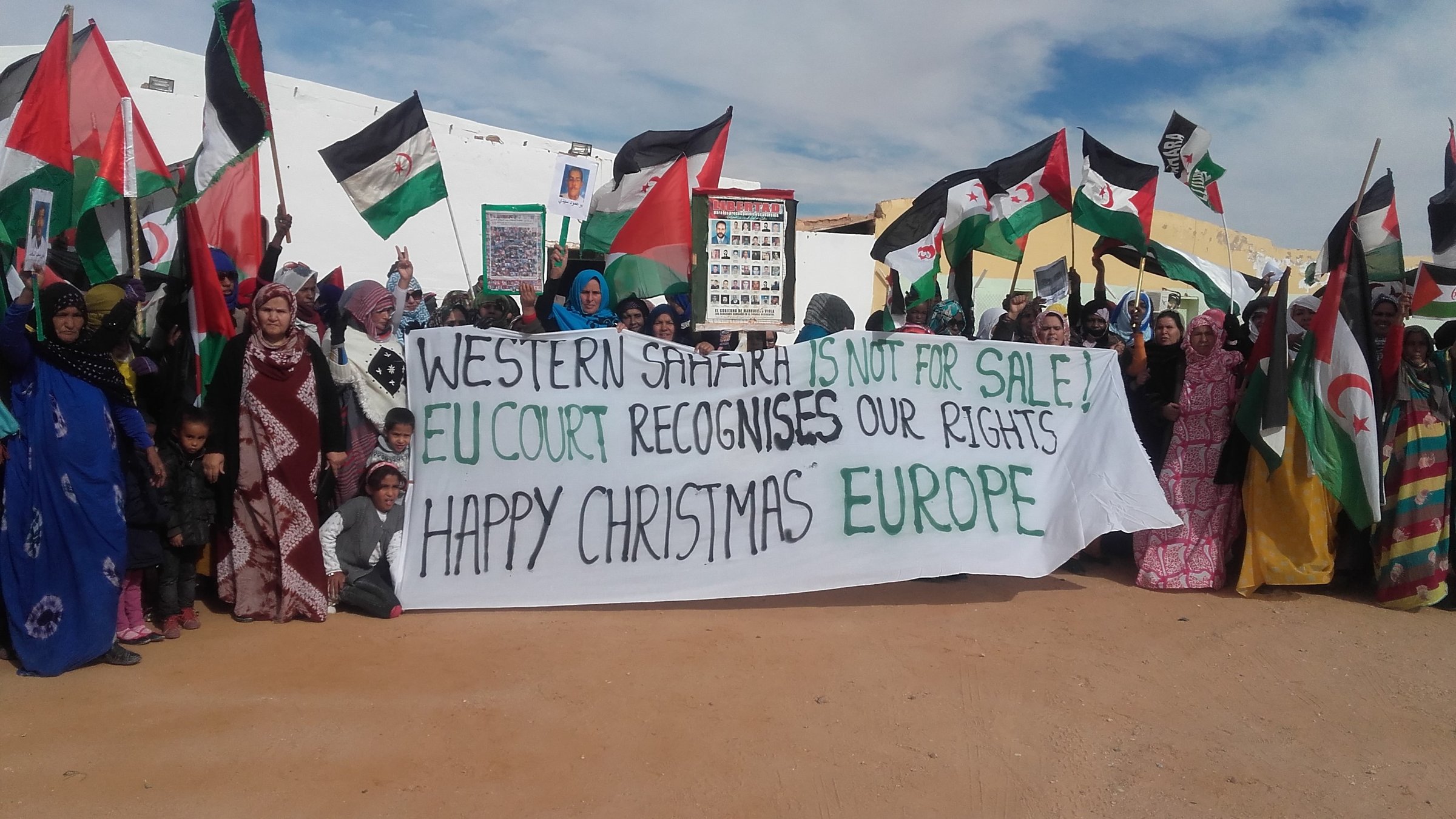
Amnesty describes a surveillance ecosystem involving spyware, physical surveillance, location tracking, informants, judicial pressure and smear campaigns. Western Sahara is not peripheral to its findings.
The organisation devotes a case study to Sahrawi activists and reports that a former member of Morocco’s domestic intelligence service, identified as “Safir,” described Sahrawis and Riffians as priority intelligence targets, including beyond Morocco. Amnesty says it independently verified his identity, employment and key elements of his testimony.
The report also contains forensic evidence involving Pegasus spyware and documents cases connected to Sahrawi activism that reached European territory.
The people Amnesty examined are the tip of the iceberg. They are documented cases: people researchers could interview, devices they could examine, or targets for whom other evidence was available.
Surveillance is secret by design. Most people never learn that their phones have been compromised, and most suspicious devices will never reach a forensic laboratory.
That is why the chronology matters.
Chilling effect
On 8 April 2021, The Guardian quoted my warning that Sahrawi activists’ “phones and internet connections are hacked.” We were describing the symptoms years before Amnesty’s latest investigation exposed more of the machinery.
But surveillance is not simply about collecting information.
When a security service knows who an activist speaks to, where that person travels and what exists inside a phone, information can become power.
Amnesty documents cases in which private information gathered through surveillance later appeared in media coverage and coordinated smear campaigns against human rights defenders.
The organisation is careful: it could not independently establish the source of every piece of private material published. But it says the nature of some material raises serious concerns that surveillance-derived information may have reached media actors.
For Sahrawis, that raises an obvious question: How does private information about activists move from their lives and devices into the public sphere?
That question deserves independent forensic investigation.
But Amnesty’s report should provoke another examination — this one in Washington and European capitals.
For decades, Western governments have built close security relationships with Morocco around counterterrorism, intelligence cooperation, migration and regional stability.
The question is not whether those relationships should exist. It is whether the West has adequately examined what happens to security capabilities once they are in the hands of its partners.
Amnesty does not establish that every security capability Morocco obtained through Western cooperation was used against Sahrawis. The evidence does not support such a sweeping conclusion.
It does, however, justify harder questions.
What safeguards accompanied security cooperation? Who monitored end use? What happens when capabilities developed or acquired in an environment shaped by counterterrorism are directed toward peaceful human rights activism?
That is the line separating security from repression.
Western Sahara struggle
The contradiction is especially striking because Sahrawi human rights activism has often relied on peaceful means: demonstrations, documentation, journalism and engagement with international institutions.
Amnesty reports restrictions on expression and assembly concerning Sahrawi rights, alongside reports of arbitrary arrests, prolonged surveillance, restrictions affecting families and the dispersal of peaceful demonstrations.
Europe has encountered similar contradictions in its relationship with Morocco.
In June 2021, the European Parliament explicitly rejected Morocco’s use of border control and migration, particularly involving unaccompanied minors, as political pressure against Spain.
Yet the same resolution emphasised the longstanding relationship and cooperation between the European Union and Morocco in counterterrorism, migration and trade.
That contradiction should matter to Europeans.
When democratic governments make another state indispensable for stopping terrorism, controlling migration or providing intelligence, they provide more than resources. They provide leverage. Eventually, fear of losing cooperation can make scrutiny of a partner more difficult.
Europe has confronted another warning sign. In its response to the corruption scandal that engulfed the European Parliament, the Parliament itself denounced alleged attempts by Morocco and Qatar to influence lawmakers and staff through acts of corruption.
These remain allegations. They do not mean that every European position favourable to Morocco was corrupt. But they demonstrate why foreign influence over democratic institutions requires serious scrutiny.
European vs American foreign policy
Western Sahara remains an issue on the United Nations agenda and is tied to a decades-long international process concerning the political future of the territory.
That should matter to an EU that regularly invokes a rules-based international order.
Morocco has rejected previous allegations concerning Pegasus and described earlier Amnesty findings as baseless. Amnesty says it provided Moroccan authorities with a summary of its latest findings before publication and invited a response but received none before the report was published.
Those denials belong on the record.
So does the evidence.
The test of a human rights policy is not only how a democracy responds to abuses by its adversaries. The harder test is what it does when credible allegations concern a security partner.
For Sahrawis, however, this story is older than spyware.
For nearly half a century, generations of Sahrawis have lived through restrictions and documented abuses connected to political expression over the future of Western Sahara. Children have grown into adults watching what can happen when someone speaks publicly: surveillance, imprisonment, smear campaigns, pressure and fear.
After all these years, what Sahrawis are asking for is not complicated.
We are not asking the world to choose an answer for us. Nor should the outcome be written in advance in our favour.
We are asking for something more elementary: Treat the Sahrawi as a free human being, capable of thinking, choosing and expressing a view about the future of the land he or she calls home without fear.
It is easy to live in a democratic society, protected by freedom of expression and equality before the law, and then propose a political solution for a distant people who will have to live with its consequences every day.
But a human question should come before the geopolitical one:
Would you accept for yourself and your children a political order in which expressing your views about your homeland could expose you to surveillance, intimidation or punishment?
A Sahrawi is not a number in a diplomatic file, a detail in a geopolitical bargain or a security problem to be managed.
A Sahrawi is a human being, with a memory, a family, a homeland, an opinion and a future.
After nearly 50 years, perhaps it is time simply to hear that voice as it is, rather than as others interpret it.
Give Sahrawis one day without fear.
One day to speak without surveillance, without pressure and without wondering whether their words will reach their phone, their workplace, their home or their family.
Do not write the answer for them.
Just let them speak.
If any political solution is truly just, why should it fear the voice of the human being who will have to live under it?

 Login