Beijing warns against ‘discriminatory’ step after France drops opposition to British role in Made in Europe package
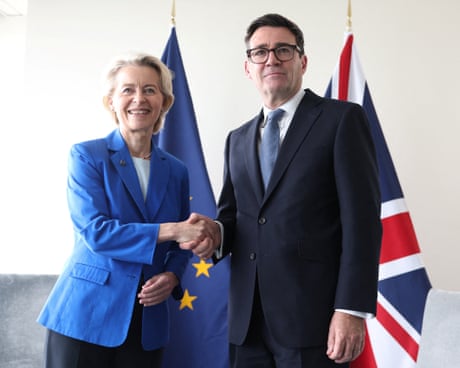
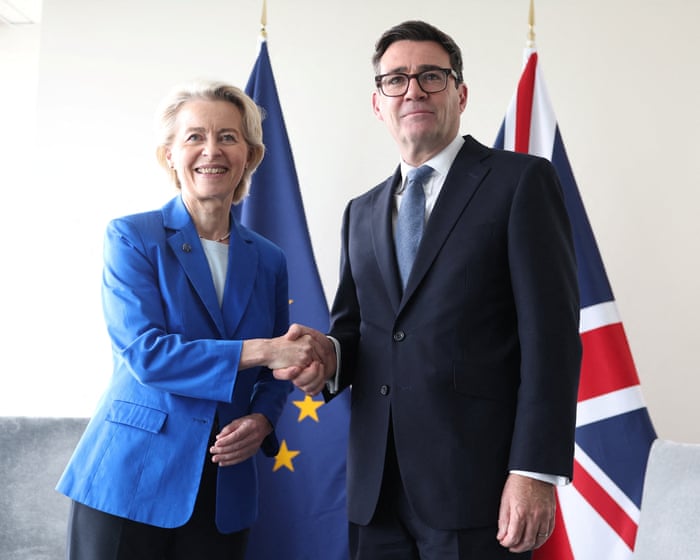
No 10 has left the door open to imposing tariffs on Chinese-made electric vehicles as part of the Made in Europe package, prompting a warning from Beijing that such a move would be “discriminatory”.
Depuis 1977, la Cour des comptes agit comme un auditeur externe de l’Union européenne, examinant la gestion financière et le budget de l’Union. Ancien député européen, Pierre Moscovici fut ministre des Affaires européennes puis de l'Économie, avant de devenir commissaire européen aux affaires économiques et financières, président de la Cour des comptes française et, finalement, membre de la Cour des comptes européenne à Luxembourg.
En dépit des difficultés que connait l'Europe, l'Union continue d'attirer des candidats à l'adhésion. De l'Ukraine au Canada, en passant par les Balkans, des aspirants se manifestent, qu'ils soient séduits par les valeurs européennes ou veuillent rejoindre les Vingt-Sept pour des raisons économiques et géopolitiques. Le Royaume-Uni, qui a quitté le club européen en 2020, pourrait même faire son retour.
En dépit des difficultés que connait l'Europe, l'Union continue d'attirer des candidats à l'adhésion. De l'Ukraine au Canada, en passant par les Balkans, des aspirants se manifestent, qu'ils soient séduits par les valeurs européennes ou veuillent rejoindre les Vingt-Sept pour des raisons économiques et géopolitiques. Le Royaume-Uni, qui a quitté le club européen en 2020, pourrait même faire son retour.
In 2022, the Neptune missile sank the cruiser Moskva; in 2026, it is destroying aircraft at airfields.
Ukraine has run out of Patriot missiles, while parts of Kyiv are without electricity following new air raids.
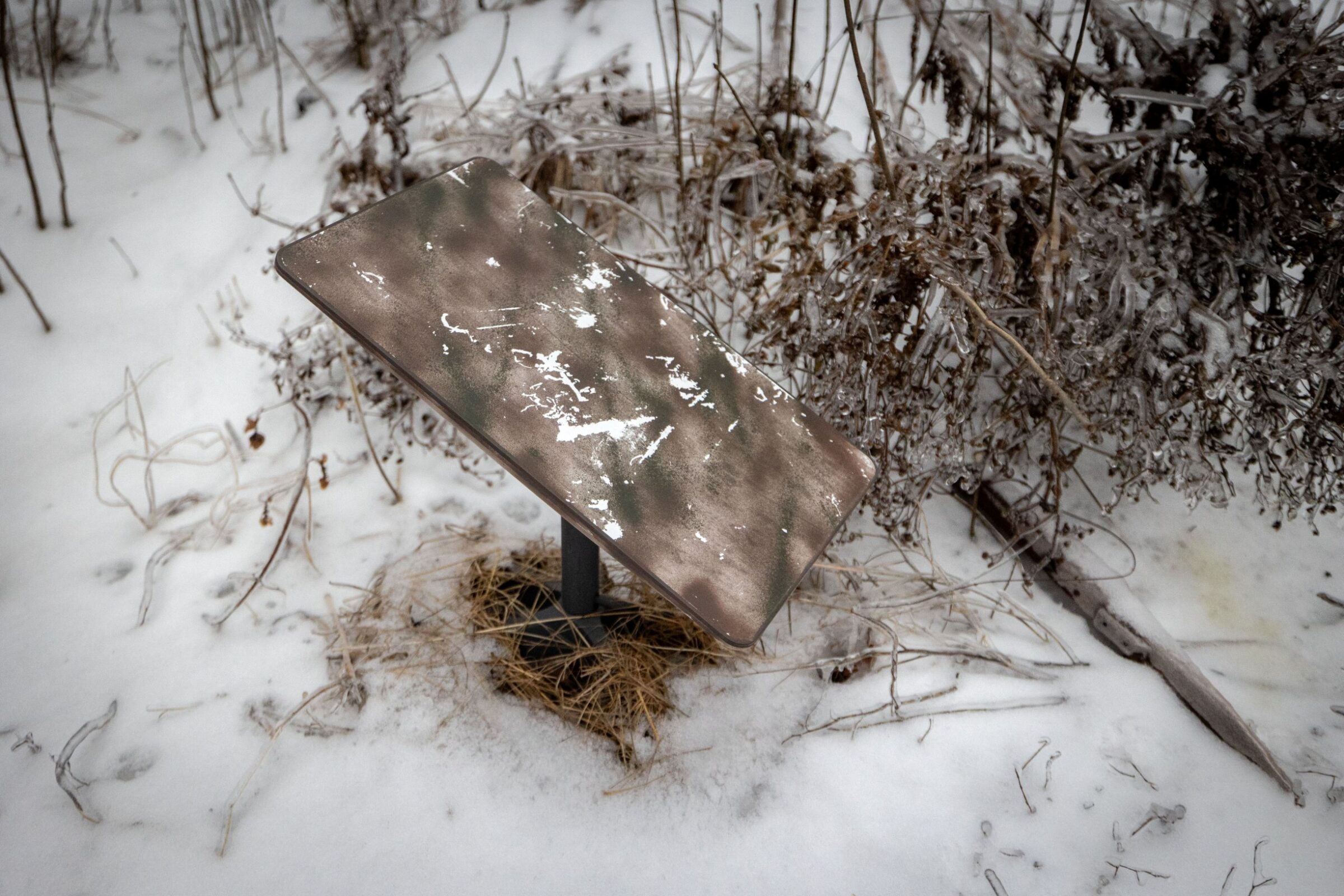
The order to slow down Starlink came from the White House, Reuters reported.
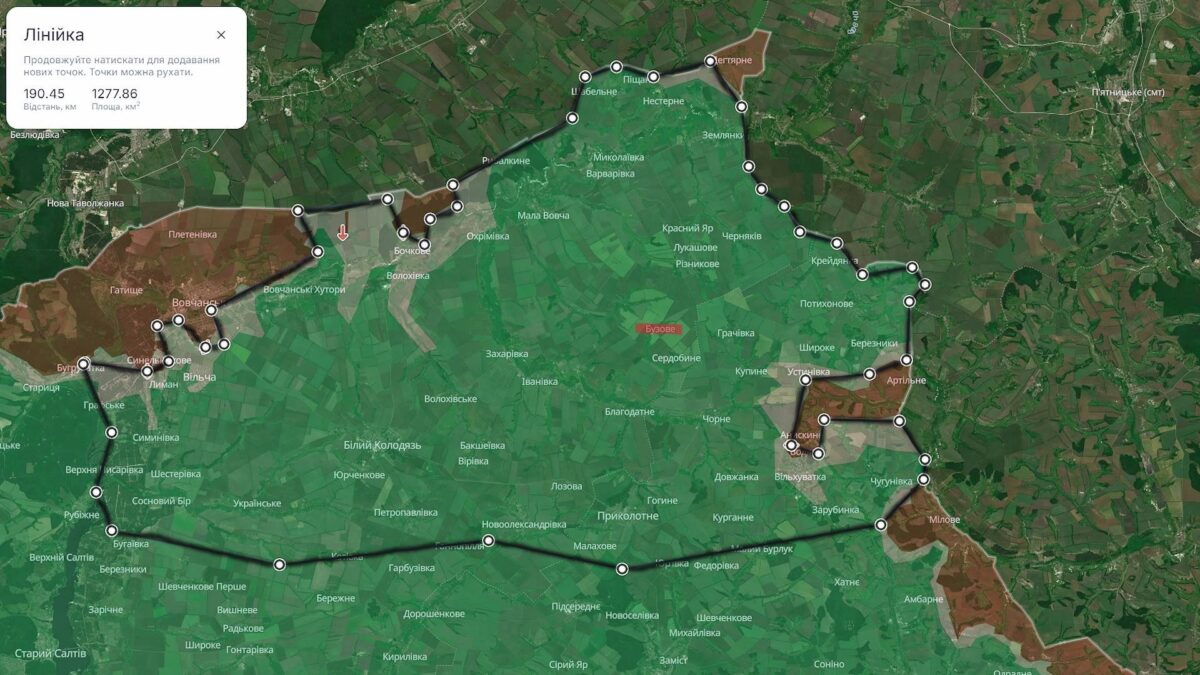
What is new in the “captured” part of Kharkiv region? Ukrainian soldiers capture a Russian soldier in its centre.
Drones sank a ship off the Bulgarian coast, and Sofia turned to Nato.
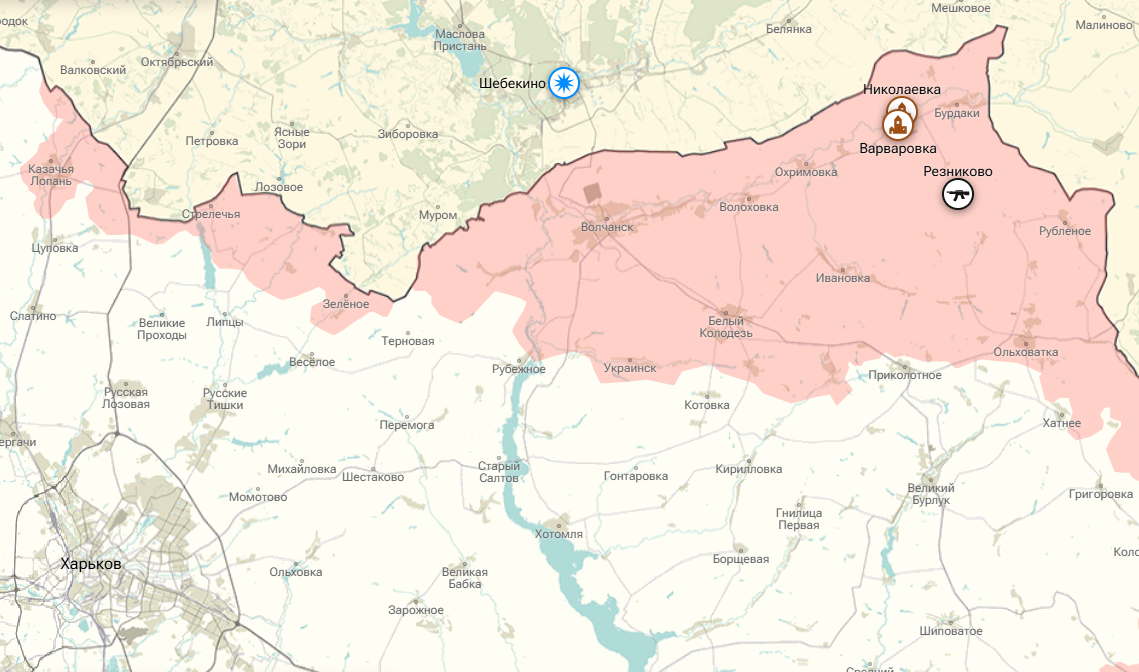
Maps of the day– Kharkiv region
Videos of the day – a Russian drone destroyed a grocery store in Odesa while it was fully operational; a strange drone with a strange name
In 2022, the Neptune missile sank the cruiser Moskva; in 2026, it is destroying aircraft at airfields. On Thursday, the Ukrainian president released a report saying that a strike on the Borisoglebsk Russian military airfield in Voronezh region had destroyed four Su-34M strike aircraft on the ground and damaged two more.
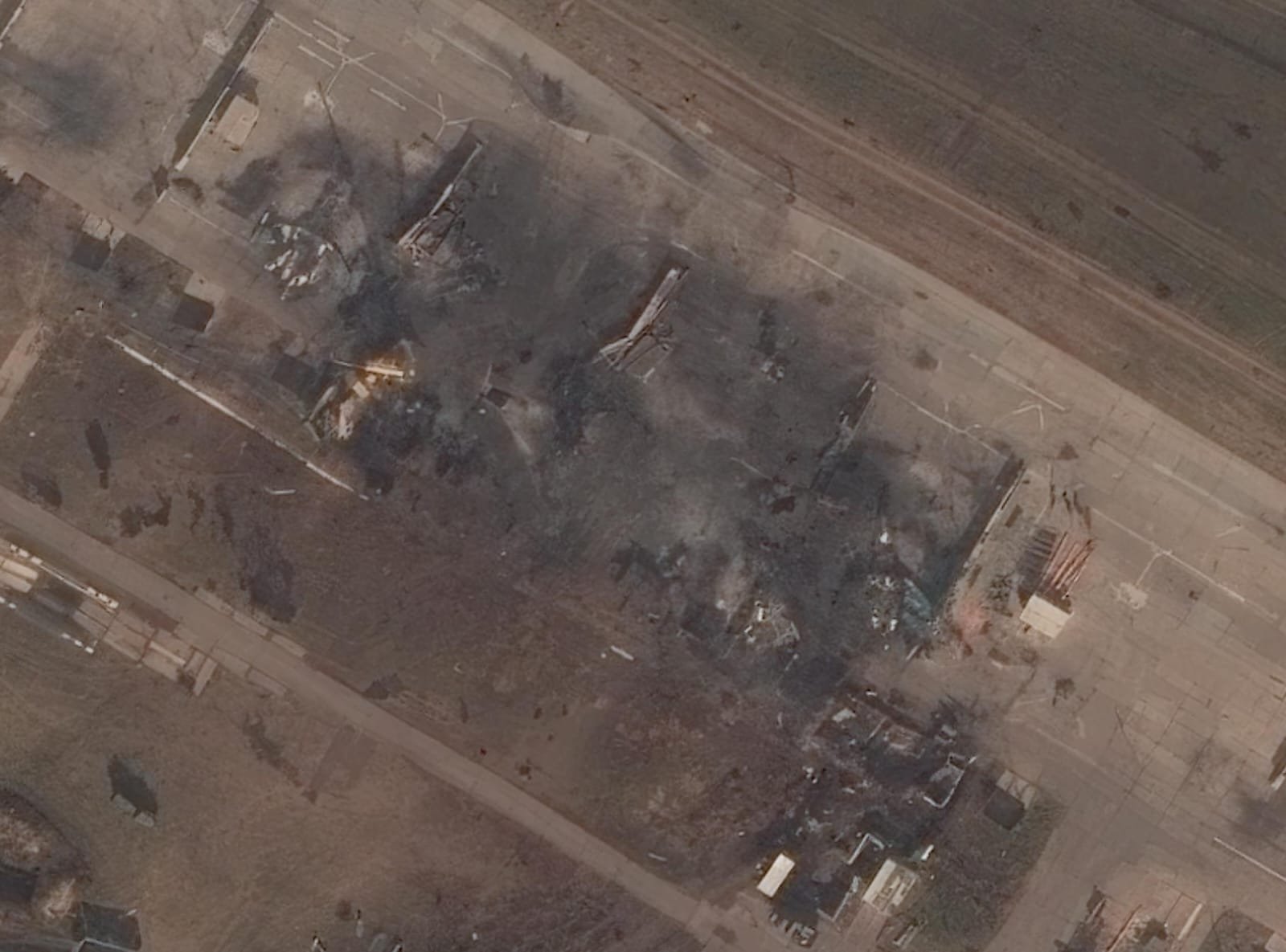
Volodymyr Zelensky also released a satellite image, which is the lead photograph of Friday’s Ukraine Battlefield update.
The airfield lies around 340 km from the front line and was built to accommodate even the largest aircraft types in the Russian air force’s inventory: the Tu-160 and An-124.
In this war, however, it serves as a base from which smaller Su-34s take off for glide-bomb attacks. It is therefore a place from which otherwise almost invulnerable aircraft operate, bombing Ukrainian army positions directly on and near the front line.
Ukraine does not yet have fighter jets capable of shooting down enemy aircraft at the distances from which they release their bombs, while the Patriot system has no missiles of the type that have already shot down several Su-34s in mid-air. The destruction of four aircraft and at least damage to two more is therefore a major success.
Several aspects are noteworthy: the weapon used; the apparent capacity to react exceptionally quickly; the Russian military’s continuing reluctance to build protected aircraft shelters at airfields; as well as its carelessness during operations. Crucially, the impact on operations is easy to calculate in this case.
Zelensky confirmed that the successful attack was carried out using a Neptune missile. It is one of the Ukrainian arms industry’s most successful achievements.
It was originally designed to fight enemy ships. It is launched from ground-based launchers and flies close to the terrain on its way to the target. The manufacturer completed the first battery shortly before the invasion began.
Until it sank the Black Sea Fleet’s flagship in April 2022, it was not known whether the Ukrainians had made it operational. The sinking of the cruiser Moskva provided a clear answer.
Since then, the missile has been repeatedly upgraded. The aim was not only to extend its range, but also to enable it to strike ground targets. Both have been achieved, as the attack on Borisoglebsk demonstrates.
As almost always, local residents managed to record the moment of its arrival and impact on the target:
Ukrainian forces carried out a missile strike on Russia’s Borisoglebsk airbase tonight, with at least one massive explosion and post-strike fire seen. pic.twitter.com/aA1xxZlhCl
The photographs below most likely show the consequences. There are signs of fire at the aircraft stands marked one and six. The damaged aircraft probably stood there.
Two Su-34 wrecks are clearly visible at positions two and five, while at positions three and four, alongside a crane clearing debris, there is mainly a large burnt-out area and the outline of one Su-34.
Even the Russians do not keep so many aircraft together for long at an airfield relatively close to the front line during wartime. The Ukrainians therefore had a very short window between detecting the target and carrying out the attack. That they succeeded points to highly accurate intelligence and a very short response time.
Even so, it was very careless of the Russians to park at least four, but more likely as many as six, valuable combat-ready aircraft so close together, even for a short time.
Russian Z-bloggers criticised the fact that, despite repeated assurances that hardened shelters were being built, there are still none at Borisoglebsk airfield.
By 2022, Russia had built 147 aircraft, including prototypes. Exact production figures since the start of the invasion are not known, but according to Polish analyst Jaroslaw Wolski, Russia lost between a quarter and a third of its annual production on Thursday, which is estimated at between 18 and 24 aircraft. This is more likely an upper estimate, and average actual production over the entire period of the invasion is probably lower.
Meanwhile, the Oryx website has counted 44 Su-34s lost to date; with the additional six, the total has now reached 50.
Russia has therefore produced no more than around 200 aircraft of this type, a quarter of which it has lost in combat, while at least half of the remainder are unfit for combat as a result of wear and tear.
The Russian Z-channel Fighterbomber said on Friday that the annual flying time of a Russian air force fighter jet amounted to thousands of hours: “No, not hundreds, not one thousand, but thousands. Divide that by the number of days in a year and you will see how much each individual fighter jet works on average per day.”
It wrote this in connection with its claim that, although the Ukrainian air force was incapable of fighting the Russian one, it and Ukrainian drones were nevertheless “consuming the resources of all our fighter jets, which have essentially been continuously in the air for five years, taking turns with one another”.
Fighterbomber did not mention Su-34s in this context, but these aircraft bear the main burden of front-line missions, meaning they too are heavily used: “This inevitably leads to malfunctions and crashes, resulting in repairs that take an aircraft out of combat readiness, with another aircraft taking over its tasks …”.
Fighterbomber concluded that although “we have many aircraft, there are still too few of them”.
Since this year, Russia has been able to mount six glide bombs under each Su-34, rather than four. The loss of six aircraft — since even damaged aircraft cannot fight, at least temporarily — therefore means at least 36 fewer precision-guided bombs against Ukrainian positions each day.
This assumes, of course, that every aircraft flies only one mission per day. In practice, they fly more, making this a significant relief for soldiers on the front line.
Ukraine has run out of Patriot missiles, while parts of Kyiv are without electricity following new air raids. A shortage of the most advanced surface-to-air missiles, which alone can effectively shoot down Russian ballistic missiles, is nothing new. Ukrainian batteries have previously had nothing to fire, leaving them to watch Russian air raids helplessly.
CNN reported most recently that this had happened again. Russian missiles consequently damaged three Kyiv power plants again on Wednesday morning.
The destructive air raid was repeated on Friday morning. It led to emergency power cuts. “Power outages have been recorded in Kyiv, as well as in Kyiv, Volyn, Odesa, Zaporizhzhia, Dnipropetrovsk, Kharkiv, Sumy and Chernihiv regions. Work to restore supplies has already begun wherever the security situation permits,” NEC Ukrenergo said.
The NV website reported that 370,000 customer connections in Volyn region alone had been left without power.
The situation is exacerbated by the fact that the heating season officially began in Kyiv on Thursday. However, as NV wrote, this was not possible in two Kyiv districts because energy workers had not had time to deal with the consequences of the attacks.
At the same time, a dispute is under way between Volodymyr Zelensky and the capital’s mayor, Vitali Klitschko. According to the president, Kyiv’s leadership had “almost entirely” failed to meet the deadlines of the so-called Resilience Plan, which was intended to prepare the city for winter. Klitschko rejects this, but he had already come under criticism from the media in previous months.
The order to slow down Starlink came from the White House, Reuters reported. The respected news agency said, citing sources within the administration itself. However, it has no information on who specifically issued such an order.
The restriction concerns the military component of the system, called Starshield. Elon Musk also drew attention to this in a post, which essentially confirms the accuracy of the Reuters report.
No reliable information on whether the system was functioning was available on Friday.
What is new in the “captured” part of Kharkiv region? Ukrainian soldiers capture a Russian soldier in its centre. In the context of the entire war, this is an insignificant episode, but the Russian defence ministry still insists that it has captured 65 villages and 1,200 square km of territory in the north-eastern part of Kharkiv region, and has moreover encircled some Ukrainian units.
A video has appeared online from the village of Buzove — its location is highlighted in red on the map of the Ukrainian Petrenko account — where a group of Ukrainian soldiers captured a Russian hiding in bushes by the road. There was also a dead Russian soldier there.
For comparison, this is how Russian maps — specifically those of the state news agency Ria Novosti — depict the same territory. Buzove is not named on the map, but it lies roughly halfway between the village of Reznikove — marked by a black assault-rifle symbol in a white circle — and Ivanivka, which is a short distance to the left and below. According to the Russians, the village is 12 km in a straight line from the nearest Ukrainian positions.
Drones sank a ship off the Bulgarian coast, and Sofia turned to Nato. Drones attacked in Bulgaria’s exclusive economic zone as recently as last week. One of the vessels sank and all 10 sailors are presumed dead.
Earlier this week, the HS Dignity, flying the flag of Guinea-Bissau, was sunk 31 km off the Bulgarian coast. According to the BBC, 10 people were missing.
As many as 18 drones damaged the Ukrainian vessel Chelsea-3, which was sailing from Turkey to a Ukrainian port along the Black Sea coast to avoid the Russian military.
🛳️ Route of the vessel hit by drones off Bulgaria's coast overnight
Bulgarian Prime Minister Rumen Radev said that the Chelsea 3 is Ukrainian-owned and sails under the Maltese flag.
The crew — seven Ukrainians and eight Azerbaijanis — was rescued.
It is almost certain that Russia was behind the attacks. Even the government, which is otherwise sympathetic towards Russia, is convinced of this and has summoned the Russian ambassador. Sofia has also asked Nato to deploy aircraft to protect vessels in the Black Sea.
Videos of the day
A Russian drone struck an ordinary grocery supermarket in Odesa while it was fully operational.
Russian forces carried out a drone strike on a Ukrainian supermarket in Odessa this morning.
A Geran-4 slammed into a busy Tavria V supermarket in Mayaky, injuring multiple people and setting the building ablaze. pic.twitter.com/iuDmascrvV
The drone in this video not only looks unusual, but also has a highly unusual name — Prince Vladimir Svyatoslavich. This design allows vertical take-off, after which the drone transitions to conventional flight, increasing its speed and range compared with ordinary FPV drones. According to the manufacturer, its range reaches 50 km.
Це — новий російський дрон-камікадзе «Князь Владимир Святославич». Був.
Ворогом цей безпілотник заявлений як «ударний для середніх дистанцій». Але до цілі він не долетів — один із підрозділів «Дронопаду» збив його перехоплювачем, який ми передали бійцям завдяки вашим донатам.… pic.twitter.com/UXN9lFLkTP
By Tuesday (13 October), Russia had demonstrably lost 24,192 pieces of heavy equipment (24,170 on Monday, 5 October). Of these, 19,155 (19,133) were destroyed by Ukrainians, 1,002 (1,003) were damaged, 1,194 (1,194) were abandoned by their crews, and 2,841 (2,840) were captured by the Ukrainian army. This includes 4,453 (4,452) tanks, of which 3,358 (3,357) were destroyed in combat.
Ukraine lost 12,259 (12,238) pieces of equipment, of which 9,652 (9,633) were destroyed, 713 (711) damaged, 695 (695) abandoned, and 1,199 (1,199) captured. This includes 1,471 (1,466) tanks, of which 1,131 (1,126) were destroyed in combat.
Note: Neither side regularly reports its own fatalities or destroyed equipment. Ukraine publishes daily figures for Russian casualties and destroyed equipment, which cannot be independently verified. This overview uses data from the Oryx project, which has compiled a list of equipment losses documented exclusively by photographs since the beginning of the war.
Our guest is veteran French journalist and commentator Bernard Guetta, who is a Member of the European Parliament for the centrist Renew group. He tells the programme that Donald Trump is "a liar, because he tried to tell the American people that Zelensky and the Ukrainian resistance were responsible for the price of diesel. This is a pure lie. He (Trump) is responsible because he started the war with Iran." Guetta goes on to say that "without American intelligence sharing, Ukraine is weaker and weaker. That's terrible, to see the president of the United States giving a hand to Putin against Ukraine."
Johannes Kongsnes Natland, 19, was arrested in Huddersfield with two guns and live ammunition
A teenage hitman who travelled from Norway to the UK with the intention of carrying out a murder on behalf of an Iran-backed international crime gang has been jailed for 20 years.
Johannes Kongsnes Natland, 19, a talented footballer, had agreed to shoot an unknown target in return for €25,000 (£21,500).
As the international context becomes more challenging for the European Union, the bloc is looking to boost its ties with like-minded allies. Canada is part of that architecture that the EU says it wants to build. The big news of EU Commission President Ursula von der Leyen's State of the Union speech in September was that Canada could become an associate member – an arrangement that does not exist for the EU's partners at the moment.
Landslide blocks river and triggers downstream flooding, while summer temperatures persist in Portugal
Flash floods have swept through Nepal’s central Gorkha district after a pre-dawn landslide on 11 October blocked the Budhi Gandaki River, triggering severe downstream flooding. Two villages in the worst-affected Chumanubri rural municipality were reportedly destroyed, with homes, roads and bridges washed away. Part of a hydropower station was also damaged.
After river levels surged from 2 metres to nearly 8.5 metres within hours, the national disaster risk reduction and management authority reported that 204 homes were damaged, and more than 650 people had been affected. More than 100 foreign trekkers were stranded in the popular hiking region. The floods come just two months after catastrophic flooding and landslides devastated parts of the country on the border with Tibet, leaving thousands dead or missing.
Joshua Foster pleaded guilty over death of toddler who fell from fourth-floor window of hotel during family holiday
A British man has been fined €3,000 (£2,500) after his two-year-old son fell 10 metres (33ft) to his death from the fourth-floor window of a hotel in Cyprus.
Joshua Foster thought the window was closed when he approached it with the boy to show him the view of a waterpark and “lost control” of him, the court previously heard.
Europe is heading into an electoral moment without recent precedent. Four of its five most populous member states, Spain, France, Italy and Poland, are due to vote within the next 12 months – starting with Spain on 29 November.
If voters move further right, the combined effect could reshape the Union far more profoundly than any single national election.
Two shifts stand out. First, the firewall between the centre-right European People’s Party (EPP) and the hard-right is crumbling, even in Germany, its last bastion.
Hard-right parties sit in the governments of Italy, Czech Republic, Finland, Slovakia and Croatia, while Slovenia’s government relies on outside support from one.
Second, competition from the far-right is pushing established radical-right parties to harden their positions.
In Catalonia, Aliança Catalana is challenging Vox; in France, Éric Zemmour’s Reconquête, despite scoring single digits, is pressing on Marine Le Pen’s National Rally; in Italy, Roberto Vannacci’s National Future is challenging Giorgia Meloni’s Brothers of Italy; and in Poland, Grzegorz Braun’s Confederation of the Polish Crown is cannibalising the Confederation.
Under pressure, established conservatives tend to move towards these parties rather than hold the line, as Spain’s Partido Popular and France’s Les Républicains illustrate. Positions once on the margins become mainstream.
The implications go beyond immigration.
Le Pen and Vox leader Santiago Abascal advocate “national priority” in access to welfare and public services. Under pressure from the League and National Future, Meloni’s government has introduced a 30-percent cap on first-year classrooms for pupils without Italian citizenship, based on their birthplace or prior schooling.
A leaked AfD strategy paper reportedly goes further, proposing that national constitutions override EU law and reducing the Court of Justice to a forum for disputes between governments.
This article continues, but the full version is available only to EUobserver.com subscribers. Visit account.euobserver.com/membership
With support for far right politics well established across Europe, how might upcoming elections shape its future? Europe correspondents Jon Henley and Ashifa Kassam answered Reddit users’ questions about their reporting from the continent
Support for far-right parties has been growing across Europe, with radical right, populist parties in coalition governments in Croatia, Czechia, Italy and Finland, and leading in the polls in Austria, Belgium, France and Germany.
EUobserver is proud to have an editorial partnership with Europod to co-publish the podcast series “Briefed” hosted by Léa Marchal. The podcast is available on all major platforms.
Find the full transcript below:
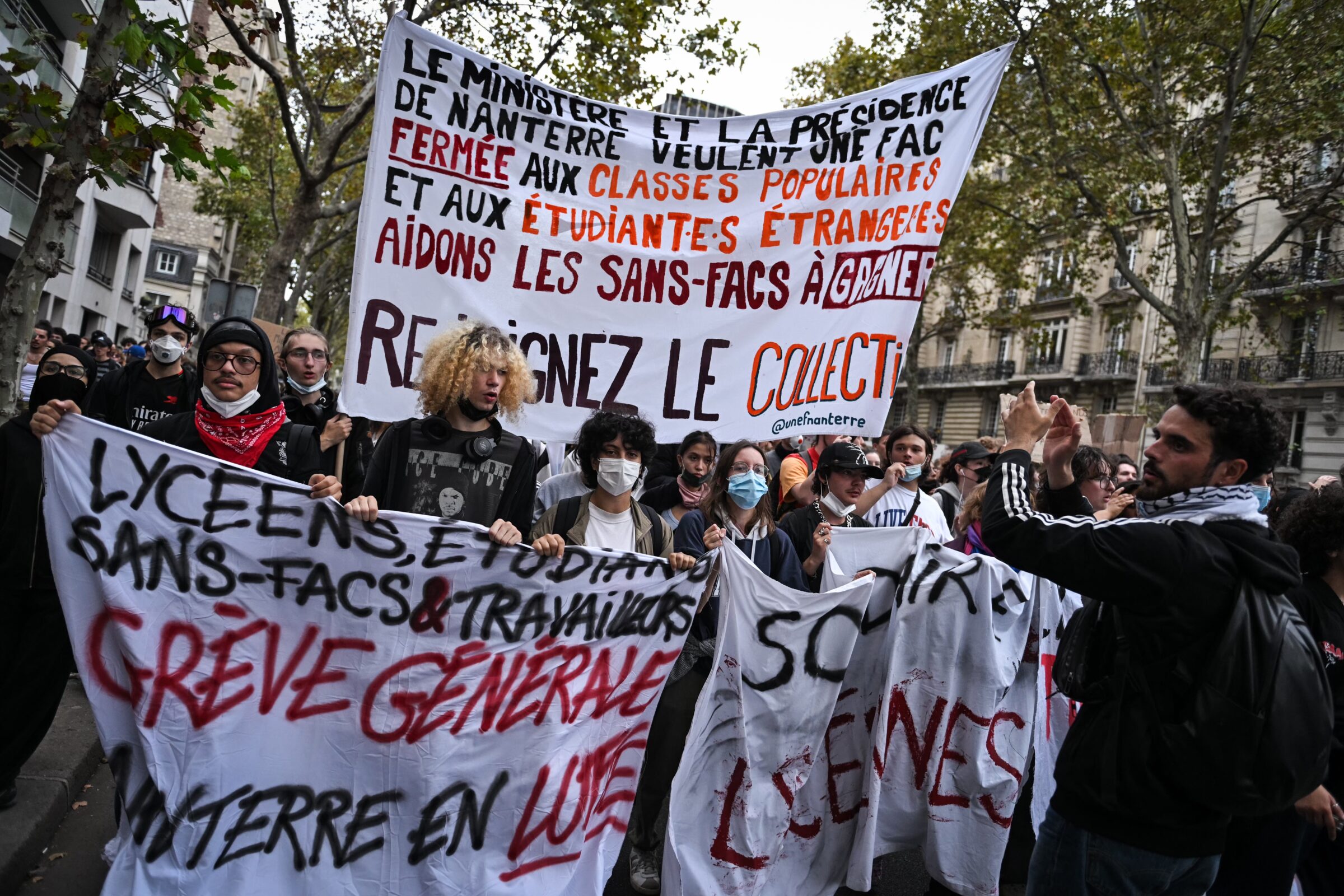
Do you remember the Yellow Vests movement that shook France 2018? On TikTok, a young user has called for a national mobilisation on the seventeenth of October against the cost of living, and the video quickly went viral. So could the Yellow Vests make their big return?
“Please, give us a date, we’re ready to protest! We young people are struggling. We just can’t make a living anymore,” that’s what Justine, a TikToker from Normandy in France has posted a few weeks ago, while wearing a fluorescent yellow vest.
The reference to the 2018 Yellow Vests is unmistakable. The French movement, which began in protest at rising fuel prices, has been widely revived on social media in recent weeks, especially by younger users.
Our colleague Romane Lizée from StreetPress, a fellow member of the Sphera Network alongside Europod, spoke to some of them: young people reviving a protest movement they only knew from a distance.
Yves, a 24-year-old TikToker with over 80,000 followers, made a video called “Survival Guide for the Yellow Vests 2026”. He gives would-be protesters practical advice, such as bringing thick ski goggles or writing a lawyer’s phone number on a piece of paper.
So why is the movement resurfacing now? For many, the movement has come to stand for a general sense of being fed up, something they still feel today.
“Eight years ago, France put on the yellow vest because petrol hit 1.50 euros a litre, and now we’re almost at three euros and nothing is happening!” That’s how Saïd, a 23-year-old delivery driver, sees it.
The economic context is indeed worse than it was eight years ago. The price of fuel is now almost 2.40 euros a litre.
Throughout September, a series of protests followed one another, called by different professions and for different reasons: climate action, firefighters, a public-sector strike, the law on sexual violence, and finally the student blockades.
High school students have been protesting for a few weeks now, blockading their schools to demand better conditions. We talked about this in a previous Briefed episode. You can find the link in the description.
Now, will the protest be as big and long-lasting as the one in 2018?
Online, a petition launched by the website 17octobregiletjaune, which calls for the protest, has gathered more than 21,000 signatures. Over a thousand actions across the country have been identified on a map by the same website: mostly protests in several cities, but also actions on roundabouts and at petrol stations.
Youth organisations, students’ unions and education staff have already answered the call. More importantly, the CGT, one of France’s main labour unions, has backed it, as have some political figures, like Marine Tondelier, the Green candidate for the presidential election. Still, the true extent of the movement is difficult to predict.
In other European countries, protests are also multiplying, especially among young people. In Spain, huge demonstrations for the right to housing have been taking place in several cities since mid-September. They went quite far: they pushed Prime Minister Pedro Sánchez to call snap elections.
In Brussels, on October 9th, thousands of protesters, including rail workers, teachers, and university and secondary school students, marched against the federal government’s policies, in particular its socio-economic measures. Here again, precarity is a central grievance.
In Italy, on October 8th, students called for mobilisation, notably by camping in front of universities across the country to protest against the sharp rise in tuition fees and student rents.
The triggers behind these protests are not all the same, and the mobilisations take different forms from country to country. But the goal is broadly the same: to call for better living conditions and to defend basic social rights. And young people are particularly mobilised.
Cristian Mungiu’s Cannes winner echoes the news story of a Romanian couple whose children were taken by the Norwegian government. As it heads to London film festival, two writers explain how the film exposes real hypocrisies
When Cristian Mungiu’s Fjord was shown in Romania as a one-day preview this June, the reception was extraordinary. Across 53 towns and 96 cinemas, the film reportedly pulled in over 40,000 viewers in a single night, a number arthouse cinema rarely sees in Romania. But the response here had little to do with cinema. It felt instead like a reopening of a familiar fault line about the clash of values within the EU itself.
Shevaun Haviland argues PM is right to revisit Labour’s EU red lines as current trading relationship is bad for business
Repairing the economic damage of Brexit should be the top priority for Andy Burnham as he reconsiders Labour’s red lines on EU membership, the head of one of Britain’s leading business groups has said.
Shevaun Haviland, the director general of the British Chambers of Commerce (BCC), said she welcomed the prime minister reopening the Brexit battle lines despite the uncertainty it could create, arguing that the UK’s current trading relationship with the EU was bad for business.
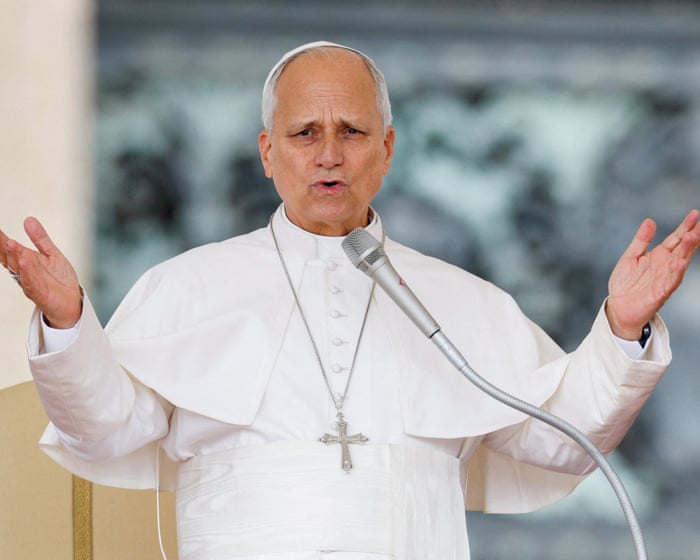
Pontiff is recovering from a lobectomy, which is standard treatment for lung cancer caught early and can be curative
On Tuesday, surgeons in Rome removed the lower part of Pope Leo’s right lung, after a routine health check found a small growth that tests have since confirmed as lung cancer. The operation, called a lobectomy, is the standard treatment for lung cancer caught early, and for many patients it is the only treatment they will ever need. So what exactly did his doctors do, and what happens next?
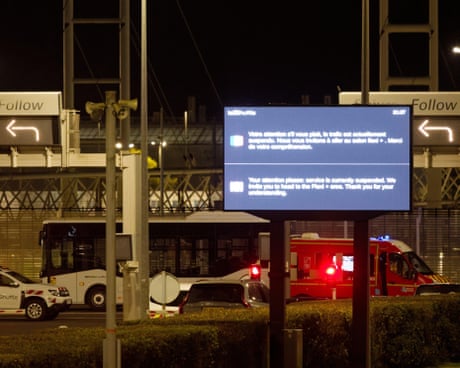
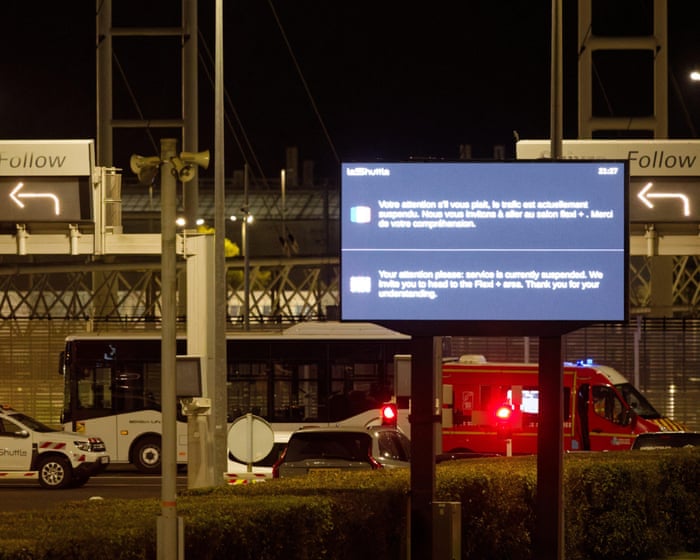
Two people critically hurt when vehicle carrying HGV drivers hit stationary train in Calais, say French authorities
Nineteen people have been injured after a minibus collided with a stationary freight train at the loading platform of the Eurotunnel near Calais, French authorities have said.
Pas-de-Calais underprefect Agathe Cury said 18 passengers and the bus driver were injured in the incident.
Zelensky has lost patience; the US is acting as Putin’s ally.
How Ukrainians attackedRussian targets without Starlink.
If Musk did not switch off Starlink, who did? The main suspects.
Ukrainian attacks on data centres hit Russia where it hurts.
Why this type of attack will continue to escalate and not only in this war.
Videos of the day: a hero robot returns without a wheel; attacks on ammunition depots.
Zelensky has lost patience; the US is Putin’s ally. Despite problems with Starlink, which Kyiv said cut connections with attack drones when they exceeded a certain speed, major Ukrainian attacks on Russian territory continued in recent hours. Long-range strikes over Russia are carried out by drones without Starlink.
These included an attack on the military airfield in Borisoglebsk, more than 300 km from the border, as well as on a refinery in Ryazan, which the local governor confirmed. The Ryazan refinery belongs to Rosneft and is one of the largest, with a capacity of around 17 million tonnes of oil a year.
This came after Ukrainian president Volodymyr Zelensky told the Financial Times that he had had enough after Russian attacks during the so-called energy truce, and announced that refineries would once again become Ukrainian targets.
It was precisely a limitation of such Ukrainian strikes that US president Donald Trump had demanded, after last week concluding a controversial agreement with Moscow to buy Russian oil without asking for anything in return from the Russian side.
This was followed by steps that raised serious suspicions that Trump had begun acting in favour of Putin’s war against Ukraine.
The US threatened Ukraine with restricting supplies of weapons or critically important intelligence and, ultimately, as we examined on Wednesday in the Ukraine Battlefield update, Ukrainian soldiers began experiencing a serious problem with the full internet connection provided by the military version of Starlink, which Musk’s SpaceX developed for the Pentagon.
This is crucial to the Ukrainian army not only for attacks on Russian logistics at the front, but also in defending against more dangerous Russian jet-powered drones, which have terrorised Ukrainian cities in recent months.
Russia’s pro-Kremlin scene naturally noticed this as well. The Z-blogger Rybar called for the use of an “opportunity” in which Russian forces could inflict maximum damage on Ukrainian infrastructure.
“I think the crisis is entirely clear and understandable. The crisis lies in Trump’s position, which is trying to help Russia in every possible way,” expert Volodymyr Ohryzko commented on the situation.
We write below about what the company’s owner, Elon Musk, has said about these developments.
How Ukrainians attacked without Starlink. In the first of the Ukrainian attacks mentioned above, on the airfield in Borisoglebsk, Ukrainian Neptune missiles were used, according to the Ukrainian navy. Ukrainians said they destroyed as many as six Su-34M aircraft. They have their own navigation systems and do not need SpaceX services.
⚡️ BREAKING: Ukraine’s Navy claims to have struck SIX Russian Su-34M fighter-bombers in a Neptune missile attack on Borisoglebsk military airbase in Russia’s Voronezh region overnight. https://t.co/kMEuVbmrVXpic.twitter.com/fH8igvygd5
The attack on the refinery in Ryazan involved drones that are likewise not connected to Starlink, as SpaceX has geographically restricted Ukraine’s access to both Starlink and Starshield services.
“The Ukrainian armed forces therefore rely on alternative means of communication and point-to-point navigation to strike targets in Russia. The speed restrictions under the Starshield service are unrelated to this and will not prevent the Ukrainian armed forces from attacking Russian oil refineries, data centres and other stationary targets in Russia,” the Institute for the Study of War said.
However, Ukrainians felt the problems mainly at the home front.
An unnamed Ukrainian officer compared it to nuclear strikes in comments to Politico. “All operations have been suspended. It will cost many of us our lives,” an experienced soldier commanding a medium-range unmanned aircraft unit in south-eastern Ukraine told the Brussels-based website.
They use Hornet drones to attack targets at distances of up to 150 km.
Ukrainian soldiers contacted by Politico said the restrictions had halted some medium-range drone attacks over Ukraine, disrupting strikes on Russian logistics and reducing support for Ukrainian units at the front.
The scale of the disruption is unclear, however, and it is not known whether the restriction remains in place.
If Musk did not switch off Starlink, who did? The main suspects. Several Ukrainian soldiers reported on Wednesday that they had had to suspend their operations because of restrictions on satellite connections with drones that exceeded 160 km/h.
According to former minister Mykhailo Fedorov, this capability was later restored. NV sources, by contrast, said the speed limit remained in place on Wednesday evening. The following day, operation of the system was fully restored, according to Ukraine’s defence ministry, while the circumstances of the outage are being investigated.
Importantly, Zelensky said it was not a technical problem but an apparent deliberate act. It is not yet certain who was behind it, although the main suspect is clear.
Musk claims that, because the military version of the Starshield satellite internet connection is military in nature, it is controlled by the US government, which also owns it.
“Any decisions on speed or usage restrictions are made by the US military and, ultimately, the US president (POTUS),” the world’s richest man wrote on his social network X. However, the White House, according to Axios sources, claims it had nothing to do with the restriction and wants Musk’s company to investigate the circumstances.
Republican senator Tom Tillis is also calling for this in Congress. “I do not expect defence secretary Hegseth to ensure transparency, and therefore we will ask the defence department’s inspector general to launch an investigation and report to Congress and the American people,” he wrote on X.
Starshield differs from the regular network in its greater resistance to jamming and its specialisation for military use.
Oleksandr “Serg Marco” Karpiuk, a well-known Ukrainian specialist in military aerial reconnaissance, wrote on Facebook that standard Starlink terminals currently have a preset speed limit of 22 m/s.
“To be able to fly at speeds above 22 m/s, Ukraine signed contracts for the Starshield system, which is managed by the Pentagon. This is a military system using Starlink terminals that offer greater functionality, although these accounts are substantially more expensive,” he explained. According to him, the Pentagon did two things within a single day: it restricted intelligence-sharing and changed the parameters of Starshield accounts.
“It was a decision by Pentagon chief Pete Hegseth, evidently on Trump’s orders,” Karpiuk believes, as quoted by Illia Ponomarenko in a post.
Pro-Kremlin propaganda has welcomed the latest developments.
The Russian daily Kommersant quoted a Musk post in which he wrote that it was “time for Zelensky to leave”. His words followed Trump once again pushing Ukraine to hold elections in which it would choose a new president.
Zelensky responded that they would be happy to organise elections if Russia observed a 60-day ceasefire.
Experts agree that it is unrealistic to organise a proper vote under the wartime conditions Ukraine faces.
Ukrainian attacks on data centres hit Russia where it hurts. Although it has not yet been confirmed that pro-Kremlin bots became less active after Ukrainian drones struck Russian servers, ordinary Russians felt the impact. Russia started such attacks in September, amid escalating air raids on Kyiv.
As many as around 100,000 households lost internet access at the time. Now, this tactic has been turned against Moscow.
Researchers studying Russian trolling did not observe any real decline in the activity of pro-Putin bots either, according to a BBC analysis. Far more interesting, however, are the real-world consequences of Ukrainian attacks on the data centres of Yandex, Russia’s Google, which have manifested themselves in a range of ways.
According to Politico sources, Ukrainians wanted to show Russians that it takes two to play this game. According to the Financial Times, they have already managed to seriously damage three of Yandex’s six data centres: in Sasovo, Kaluga and Vladimir.
The consequences of these attacks subsequently showed how vulnerable Russia’s centralised internet ecosystem is.
“Russia has become a victim of its own policies, which has led to the worst possible scenario,” Alena Epifanova, an expert at the German Council on Foreign Relations, told the FT.
The impact of the Ukrainian attack has affected the daily lives of Russians. Here overview of services that were affected to a greater or lesser extent, according to the British daily:
problems accessing Yandex email;
Yandex Taxi was taken offline;
several websites — including a dating app and the Russian equivalent of McDonald’s — were inaccessible;
saved files and documents could not be opened;
bus timetables disappeared in some cities;
residents of some Moscow apartment buildings could not get through electric gates;
banking services were not fully operational.
All the affected data centres also have supercomputers used to train AI, which is playing an increasingly important role on the battlefield.
For example, one of Yandex’s three supercomputers — Chervonenkis — in Sasovo had long ranked among the world’s 100 most powerful supercomputers, and only in 2026 fell to 101st place, according to the BBC.
However, it has not been confirmed that Ukrainian attacks damaged any of them. According to the Russians, an attack on a similar Sberbank facility did not cause significant damage.
“If the supercomputers are damaged, replacing the loss will be difficult — they were powered by chips from the US company Nvidia, which Yandex imported through ‘complex and complicated schemes’ because of sanctions,” a former company employee told the BBC.
Given the current shortage of Nvidia chips, Yandex’s data centres may not be restored until 2028, according to the website.
Why this could escalate. Attacks on buildings that provide computing capacity are comparable, according to Politico, to strikes on a power plant supplying electricity, heat and fuel, on which both military and civilian functions depend.
That is also why this type of attack sits on the edge of international law.
“It may weaken the enemy’s military effort, but it can also completely paralyse ordinary life,” the Brussels-based website wrote. According to Politico, the cost of restoring data centres in Russia is particularly high because the necessary materials are scarce and their import is restricted by Western sanctions.
“Obtaining a large quantity of equipment to replace what has been destroyed will not be easy,” cyber specialist Oleg Shakirov told Politico.
For now, Ukrainian expert Yevhen Pronin is cautious in assessing the effectiveness of attacks on data centres. “For example, after the attack on Sberbank’s data centre — Russia’s largest bank and one of its key technology companies — its representatives said its systems were operating without disruption, and reports indicated that the centre itself was still under construction,” Pronin told Denník N.
However, a series of such strikes fundamentally changes the scale of the risk, he said. If attacks continue to hit large operational centres on which banks, state services and corporate services depend, the consequences could be far more serious.
“They range from widespread outages to data loss and disruption to critical digital infrastructure. We do not yet see a catastrophe for all of Russia, but rather the vulnerability of a system that is increasingly dependent on a few major technological hubs,” he added.
Attacks on data centres themselves are not a new feature of the Russia-Ukraine war.
At the start of Trump’s war against Iran, Amazon data centres in the United Arab Emirates and Bahrain were hit. This was followed by an attack on a data centre in Tehran, after which soldiers’ salary payments were interrupted and banks’ online services stopped working.
The Center for Strategic and International Studies examined at the time how data had become a new front line of warfare. Following a trip to Kyiv, its researcher Emily Harding concluded that “state-of-the-art software, flexible operational procedures, and the strategic migration of data to cloud storage both inside and outside the country have given Ukraine the advantage it needs to fight”.
The problems linked to Starlink only confirm this digital vulnerability of modern warfare.
Videos of the day
It returned even in critical condition. Ground robots are being deployed increasingly often at the Ukrainian front, saving more and more lives in the deadly zone where drones hunt people. In this case, one such robot returned from a demanding mission even without one wheel.
A Ukrainian logistics UGV returns from a combat mission despite sustaining critical damage pic.twitter.com/d8fT8sh21T
Attacks on ammunition depots. FPV drone operators from Artan, a special unit of Ukrainian military intelligence — apparently also thanks to Starlink — launched a series of attacks on field ammunition depots. Over several months, they reportedly struck 2,308 enemy targets.
Enemy tanks and self-propelled artillery systems probably accounted for a significant proportion of them.
By Tuesday (13 October), Russia had demonstrably lost 24,192 pieces of heavy equipment (24,170 on Monday, 5 October). Of these, 19,155 (19,133) were destroyed by Ukrainians, 1,002 (1,003) were damaged, 1,194 (1,194) were abandoned by their crews, and 2,841 (2,840) were captured by the Ukrainian army. This includes 4,453 (4,452) tanks, of which 3,358 (3,357) were destroyed in combat.
Ukraine lost 12,259 (12,238) pieces of equipment, of which 9,652 (9,633) were destroyed, 713 (711) damaged, 695 (695) abandoned and 1,199 (1,199) captured. This includes 1,471 (1,466) tanks, of which 1,131 (1,126) were destroyed in combat.
Note: Neither side regularly reports its dead or destroyed equipment. Ukraine publishes daily figures for Russian casualties and destroyed equipment, which cannot be independently verified. In this overview, we use data from the Oryx project, which has compiled a list of equipment losses documented exclusively by photographs since the beginning of the war.
Europe’s trade deficit with China reached a record $34.8bn [€31bn] in September, as EU leaders meet in Brussels on Thursday (15 October) to discuss Europe’s competitiveness agenda and what they call “macroeconomic imbalances” — a euphemism to avoid mentioning China by name.
EU heads of state and government are expected to give a mandate to the EU Commission to propose a set of trade defence measures and tools to reduce the EU’s reliance on Chinese industry, based on a new Franco-German blueprint, as a united front spreads across the bloc.
There was a move towards a “surprising unitary position” on Beijing among member states, said an EU diplomat, ahead of a two-day summit in Brussels which began on Thursday (15 October).
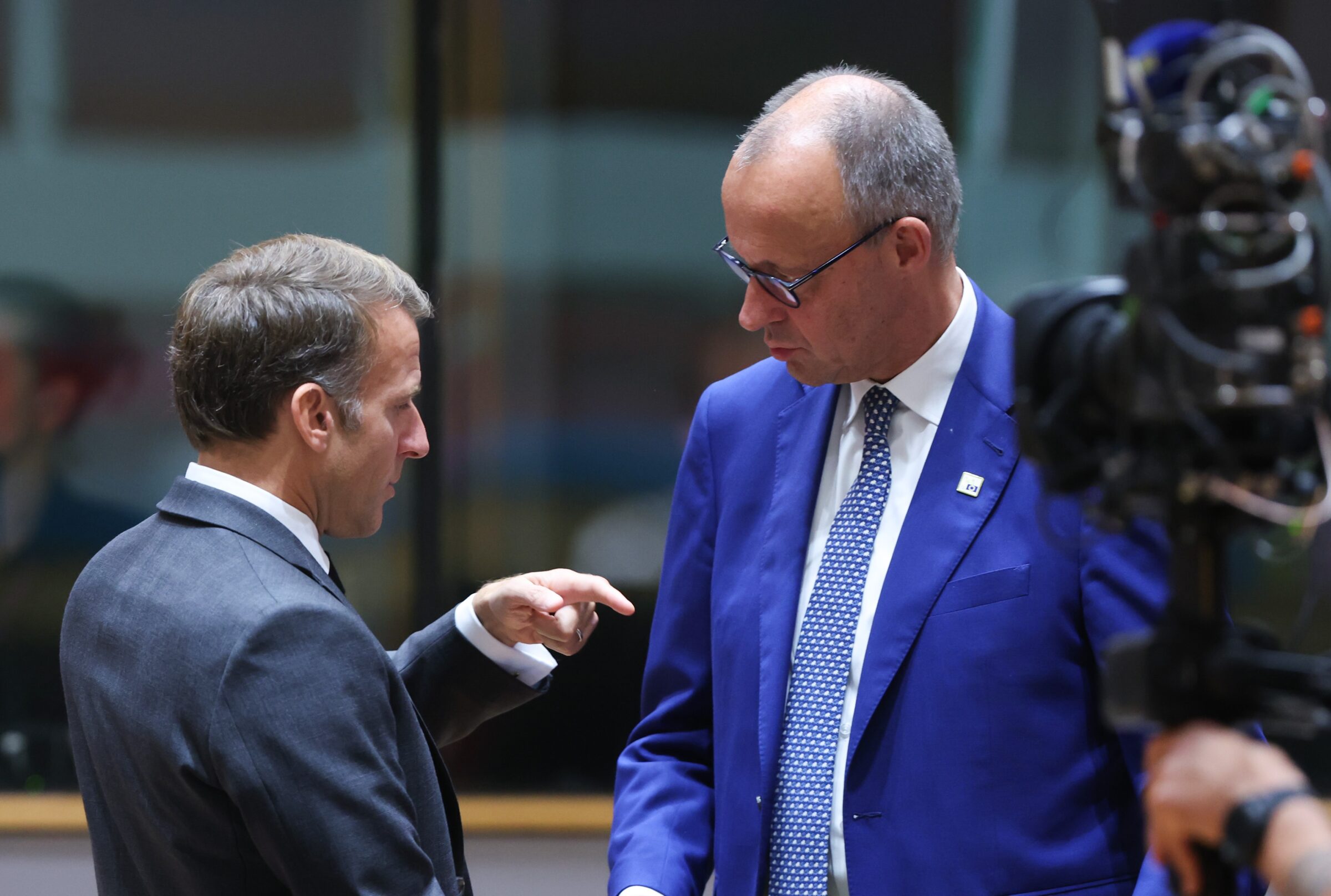
A joint letter and policy paper submitted by French president Emmanuel Macron and German chancellor Friedrich Merz to commission president Ursula von der Leyen last week was viewed by many EU diplomats as marking a decisive shift towards a more consolidated EU stance on trade relations with China.
“For a long time, there were significant differences between these two countries on how to deal with China, how to address the economic situation,” parliament president Roberta Metsola told reporters on Thursday.
The diplomat added that the commission’s trade diversification package, designed to reduce the bloc’s reliance on Chinese industrial inputs and curb Chinese exports, will be presented by the end of the year and will be based on the Franco-German paper.
But the commission, for its part, has downplayed the prospect of rapid progress to EU-Chinese trade statistics. “It’s an issue which is not going to be solved in a couple of months,” said one official.
‘Be ready for escalation’ but do nothing
This article continues, but the full version is available only to EUobserver.com subscribers. Visit account.euobserver.com/membership
PRESS REVIEW – Thursday, October 15: First, reported Starlink disruptions in Ukraine make the European front pages. Next, US papers go into more detail about the situation. Also, an unusual alliance forms in Germany between far-right and far-left parties. Meanwhile, the winners of the Wildlife Photographer of the Year awards have been announced. Finally, Finland flaunts its smelly islands.

 Login