Multinational ‘anti-war bloc’ uses Istanbul summit to call for a diplomatic solution to Middle East crisis
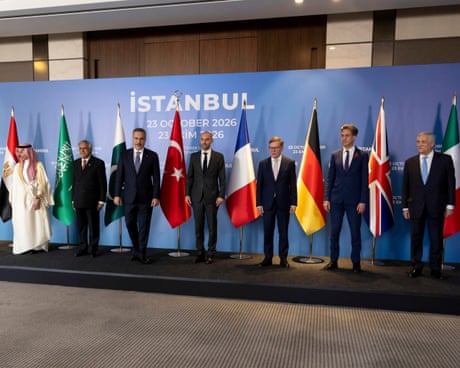
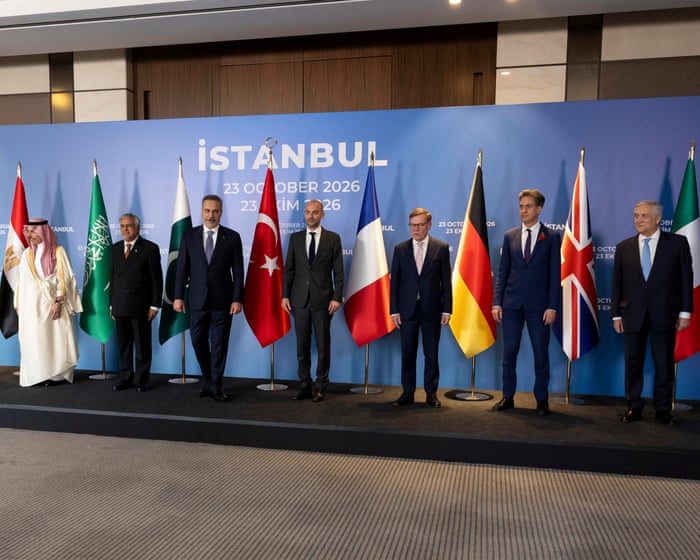
Foreign ministers at a summit of eight European and Middle Eastern countries have urged the US and Israel not to renews their attacks on Iran, warning a fresh outbreak of fighting would spread conflict and push oil prices even higher.
The development of a new multinational “anti-war bloc” represents a challenge to the increasingly open plans by the US and Israel to relaunch strikes on Iran while talks on Tehran’s nuclear programme remain deadlocked.
Nous recevons Clément Beaune, ancien conseiller spécial du Président Emmanuel Macron puis secrétaire d’État aux Affaires européennes, ancien ministre des Transports et désormais Haut-commissaire à la Stratégie et au Plan. Il vient de diriger l’ouvrage Comment vivrons-nous en France demain ? paru le 8 octobre aux éditions Tallandier. Il évoque le rôle de l’Union Européenne dans le soutien à l’Ukraine, la concurrence économique chinoise ou encore les mouvements sociaux qui agitent le continent.
Video shows AI likenesses of people linked to Pedro Sánchez’s Socialist party appearing to admit to wrongdoing
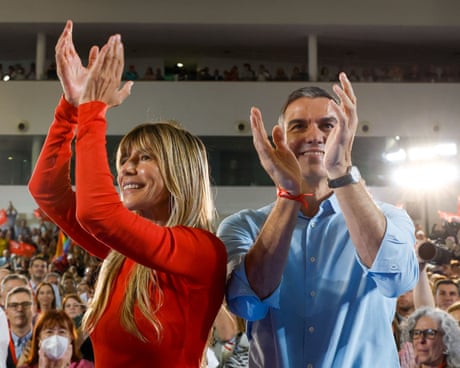
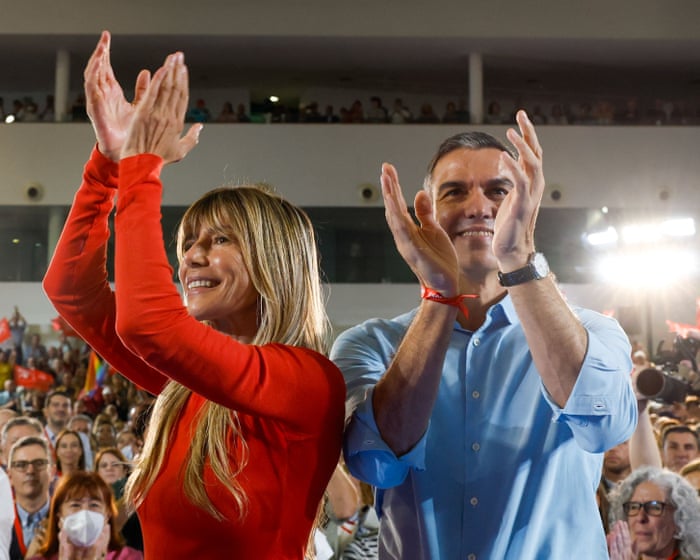
A political ad from Spain’s main opposition party that used a deepfake video of the prime minister’s wife has sparked outrage and set off a wider debate on AI, as the deeply polarised country gears up for general elections next month.
Launched this week across the social media channels of the conservative People’s party (PP), the video used artificial intelligence to manipulate the likenesses of various people linked to Pedro Sánchez’s Socialist party and appeared to show them admitting to acts such as soliciting prostitutes and taking kickbacks.
Le budget à long terme de l’Union européenne sera au centre des prochains sommets européens. Les Vingt-Sept n’arrivent pas à s’entendre sur les recettes et les dépenses souhaitables entre 2028 et 2034. La proposition de la Commission européenne est toujours de 2 000 milliards d’euros, soit 1,26 % du PNB de l’UE.
UK allies have long urged people to stockpile supplies for a crisis. How are people from France to Australia being advised to prepare?
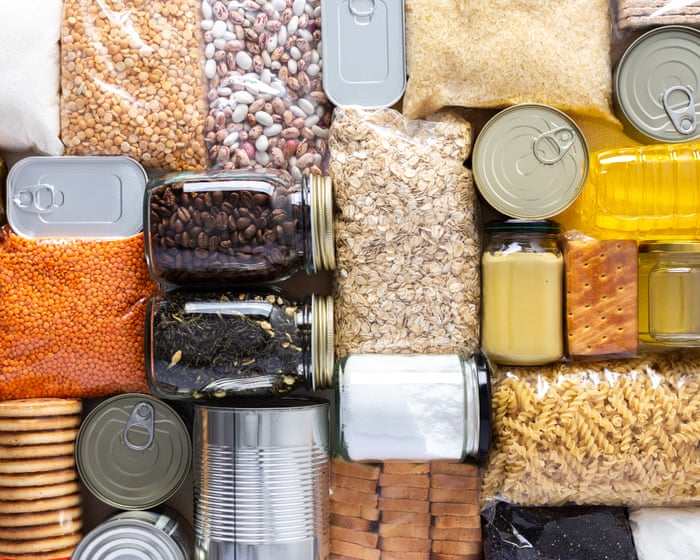
The UK has told people to fill their pantries with food for three days in case of catastrophe, joining a host of countries urging citizens to ready themselves for core systems failing.
Such advice, once dismissed as the preserve of preppers, has become more common in government circles as climate breakdown worsens weather extremes and geopolitical tensions turn cyber-attacks and sabotage into a regular occurrence.
Even if Israelis vote out the current government, an ideological shift will endure, says Beth Oppenheim, a policy fellow in the Middle East and North Africa programme at the European Council on Foreign Relations.
The London-based analyst explains how once-fringe ideas have crept into the political mainstream and the limitations of liberalism.
In this interview:
Why Netanyahu’s departure would not bring about fundamental change.
How 7 October has put diplomacy permanently off the table.
What to expect if a new government was elected in Knesset (Israeli parliament) elections.
The lessons Europe can draw from all this.
You say Israel’s illiberal and ethnonationalist turn represents a transformation beyond Israeli prime minister Benjamin Netanyahu; these ideologies would not disappear even with him gone. In your analysis of Israeli politics, you avoid the traditional left–right political spectrum – why?
Beth Oppenheim: In the Ideas of Israel project for ECFR, I wanted to unpack this binary we often see on the question of Netanyahu’s leadership. He dominates Israeli politics, but the debate about the prime minister often obscures more interesting trends like the rightward shift of Israeli politics. Often, the opposition is referred to as the liberal bloc, whom the right wing label as leftists – but this is inaccurate.
The pro-Netanyahus form a government coalition, while the opposition bloc is actually rather ideologically diverse. So in my research I wanted to go beyond the reductive question of Netanyahu to understand how parties behave in elections; I wanted to see where all these different parties’ ideologies and visions fit in.
And this led you to categorise Israeli parties into four groups: the liberal Zionists, the nationalists, the ultra-Orthodox camp, and the religious nationalists. Could you describe each group? Let’s start with the liberal Zionists, who are considered the most left-wing of the Jewish Israeli camps…
Of course. The liberal Zionists include figures such as Yair Golan, Yair Lapid and Gadi Eisenkot.
Eisenkot (Yashar party) is a former general in the military. Despite this, many on the right brand him as a leftist.
A billboard featuring Yashar party leader Gadi Eisenkot reading ‘This time, Eisenkot’ in Tel Aviv. (Source: EPA/ABIR SULTAN)
Lapid (Yesh Atid party) comes from a liberal centrist tradition in the mould of his father. Like Eisenkot, he is very secular. A secular vision for Israel and an emphasis on liberal democratic institutions unite the camp of liberal Zionists.
Golan (The Democrats party) is the left flank of this camp. In Europe, he wouldn’t be seen as far left, but within the Israeli spectrum, he is seen as radical. He has security credentials, too, but he’s the only liberal Zionist who talks about a political settlement with the Palestinians.
The two-state solution is not really on the menu in the Jewish Israeli political mainstream – that’s now the preserve of the far-left fringe; it’s not a mainstream discussion anymore.
“The two-state solution is not really on the menu in the Jewish Israeli political mainstream”
The liberal Zionists are united around their secularism and their commitment to the liberal democratic institutions, but there’s one big caveat: when it comes to the Palestinian issue, their liberalism is more circumscribed.
They are not talking about the ongoing occupation and the effect that that has on Israel’s democratic standing. But of course, they’re very united in their opposition to Netanyahu.
The liberal Zionist camp lacks a coherent platform other than this; they basically advocate for good governance, but don’t offer a robust vision.
Election billboards featuring The Democrats Party leader Yair Golan and Israeli prime minister Benjamin Netanyahu. (Source: EPA/ABIR SULTAN)
And that cannot be said about the nationalists, whose vision is quite clear, right?
Traditionally, the nationalist camp was the mainstream right wing. Today’s main contenders are prime minister Benjamin Netanyahu’s Likud and Avigdor Lieberman’s Yisrael Beiteinu.
Meanwhile, former prime minister Naftali Bennett is running on a joint list with Lapid’s Yesh Atid, called Beyachad (‘Together’). Bennett and Lapid joined forces despite coming from different ideological traditions. They have very different ideas about the country, but they’re coming together to present a more technocratic agenda, get Netanyahu out and normalise Israeli politics.
The nationalist camp descends from the Revisionist Zionist tradition based on Ze’ev Jabotinsky’s vision: a liberal democratic outlook fused with ultra-nationalist convictions. So to take a Revisionist Zionist view is to take a hawkish and hardline approach towards Arabs, while keeping a commitment to liberal democratic values. But affinity for liberalism and democratic values has really withered away over recent decades, not only under Netanyahu.
And then there is the ultra-Orthodox camp, without which the current government would never have completed a full term.
The ultra-Orthodox group does not fit easily on the left-to-right political spectrum, which in the Israeli understanding is defined by hawkishness on Palestinians and security.
They are made up of two Ashkenazi parties – Degel HaTorah and Agudat Yisrael – and Sephardic party Shas. What unites them is strict religious observance of Jewish law and their commitment to separation from secular society or modernity.
“The ultra-Orthodox camp is predominantly non-Zionist, but not necessarily anti-Zionist”
Interestingly, the ultra-Orthodox camp is predominantly non-Zionist, but not necessarily anti-Zionist since they didn’t endorse the creation of Israel in its secular form. They engage with the state, but in a limited way – they’re very transactional and pragmatic.
And the ultra-orthodox camp work within state apparatus to advance sectoral interests, yeshiva education, the military service exemption, and subsidies to maintain a somewhat introverted separation from the rest of society.
They are mostly passive when it comes to issues of foreign policy and security policy, but they do not support loss of Jewish life for nationalist ends – they don’t believe that the state in its current form is sacred. And so they don’t, for instance, endorse the loss of Jewish life for territorial expansion.
That leaves us with the last category: the religious nationalist camp.
Religious nationalists draw together ultra-orthodox religious observance, but with ultra-nationalism.
This article continues, but the full version is available only to EUobserver.com subscribers. Visit account.euobserver.com/membership
Russian journalists reveal what the Kremlin and US are discussing.
Starshield was supposedly fixed, but that doesn’t seem to be the case.
Russians advance in Rai-Oleksandrivka towards Sloviansk.
Russia loses two combat Sukhoi aircraft in accidents in one day.
Map of the day: Rai-Oleksandrivka
Videos of the day: Kramatorsk evacuation; Russian Su-30 crashes; how helicopters hunt drones.
Russian journalists have described the nature of talks between the Kremlin and the US. A demilitarised zone in Donbas. A Ukraine without Nato membership but is allowed to join the EU membership in return. Sanctions against Russia eased, Russian gas in Europe and news talks on the Nord Stream 2 pipeline. And America makes its own deals with Russia.
This is how, according to The Economist, the US proposal to the Kremlin for ending the war sounded, presented in Moscow on Wednesday (21 October) by Steve Witkoff, Trump’s negotiator.
It sounds like something Russia might welcome, but that does not appear to be the case. At least not according to the findings of the Russian exile website Verstka, which a day later published an extensive report on the mood among Russia’s Kremlin-linked elite.
The article, signed by the newspaper’s editorial board, contains numerous quotes from government officials and people close to the regime, whose views on the prospect of swiftly reaching a peace deal and ending the fighting are sceptical.
Verstka wrote that war fatigue was mounting among these people, whose names it naturally did not disclose, but that they fully defer to Russian president Vladimir Putin and are waiting to see what he agrees with US president Donald Trump.
“It can be said with certainty that American sympathies have shifted to our side. We have been working on this for a year and a half,” a source close to the foreign ministry told the journalists, describing Moscow’s strategy.
Russia achieved this through the following argument: since Ukraine considers itself a victim — which it undoubtedly is, editor’s note — and asks for assistance, but is unwilling to make concessions in return for that assistance, it is no longer in fact a victim, but a player with ambitions of its own, which Western taxpayers are unwilling to fund.
Incidentally, the Slovak government uses very similar rhetoric and arguments.
According to the same source, Moscow will emphasise during the talks the hopelessness of Ukraine’s supposed situation.
Another quoted voice was a political strategist directly linked to the Kremlin, who pointed out that Trump’s son-in-law Jared Kushner did not directly take part in the talks in St Petersburg on 21 October, reportedly due to illness.
Nevertheless, this source also praised the US approach, even if Trump’s dispute with Ukraine proved only short-lived: “We have nothing to lose from these solutions. And we could gain both an improved budget and an advantage on the battlefield.” At the same time, the domestic political strategist saw no fundamental changes that could lead to an end to the fighting.
The extent of the irrationality prevailing within the regime was illustrated by statements from another unnamed representative of a formally non-governmental organisation working directly with the Kremlin.
In his analysis, he claimed that Ukrainian president Volodymyr Zelensky had created a dictatorial system from which neither elections nor a coup could remove him, and that the war would not end while he remained in office. He also cited reports by Russia’s foreign intelligence service claiming that Kyiv was cooperating with Mexican drug cartels.
Another government official had low expectations of the Americans: “For almost two years now, we have been saying that Trump is supposedly one of us and that the talks are constructive, but they have produced no results. We are fighting, burning, drowning, suffering alongside our homeland.”
The man spoke of a “peace wing”, allegedly comprising people in the presidential administration responsible for domestic policy and economic circles, but this did not mean that there was any open opposition to the war.
“There is no escape from the ship. We are waiting for them to have had enough of the war,” the official said.
This article continues, but the full version is available only to EUobserver.com subscribers. Visit account.euobserver.com/membership
Estonia's counterintelligence service has recently warned that sabotage operations orchestrated by Russian special services have reached a new and dangerous phase in Europe, with targets no longer being purely symbolic. Talking Europe sits down with the country's foreign minister, Margus Tsahkna, to discuss the security situation in Estonia and the European Union in general.
A marathon EU summit on October 15-16 failed to produce a breakthrough on the European Union's next long-term budget. Although EU leaders put on a brave face at the end of the talks by saying that "the way forward is clearer", EU capitals appear deadlocked on what that path is. At stake is the EU's ability to finance its strategic priorities from 2028 to 2034. The main dividing line is between the so-called "frugal countries", who want deep cuts to the proposed budget, and the "friends of cohesion", who say that cuts are not the answer.
Two leading Jewish groups want the EU’s next antisemitism tsar to also brief diplomats on foreign policy – despite the controversy it caused for the last one, Katharina von Schnurbein.
“EU external decisions have direct consequences for Jews living in Europe. Diplomats should hear from the person who sees those consequences every day,” said Pinchas Goldschmidt, who heads the Conference of European Rabbis (CER) in Munich, Germany.
The European Jewish Congress (EJC) in Brussels also told EUobserver: “The [EU antisemitism] coordinator should ensure that this objective is systematically reflected in all relevant EU policies, including external action and foreign policy.”
They spoke as von Schnurbein prepared to leave her EU post after 10 years to become a German “federal government commissioner for Jewish life in Germany and the fight against antisemitism” on 28 October.
The 53-year-old German baroness was highly active at events in EU capitals, had three staff, and travelled on missions to Israel, Serbia, Switzerland, and the US.
She also worked next door to European Commission president Ursula von der Leyen in her Brussels HQ and had close ties with the Israeli government.
This article continues, but the full version is available only to EUobserver.com subscribers. Visit account.euobserver.com/membership
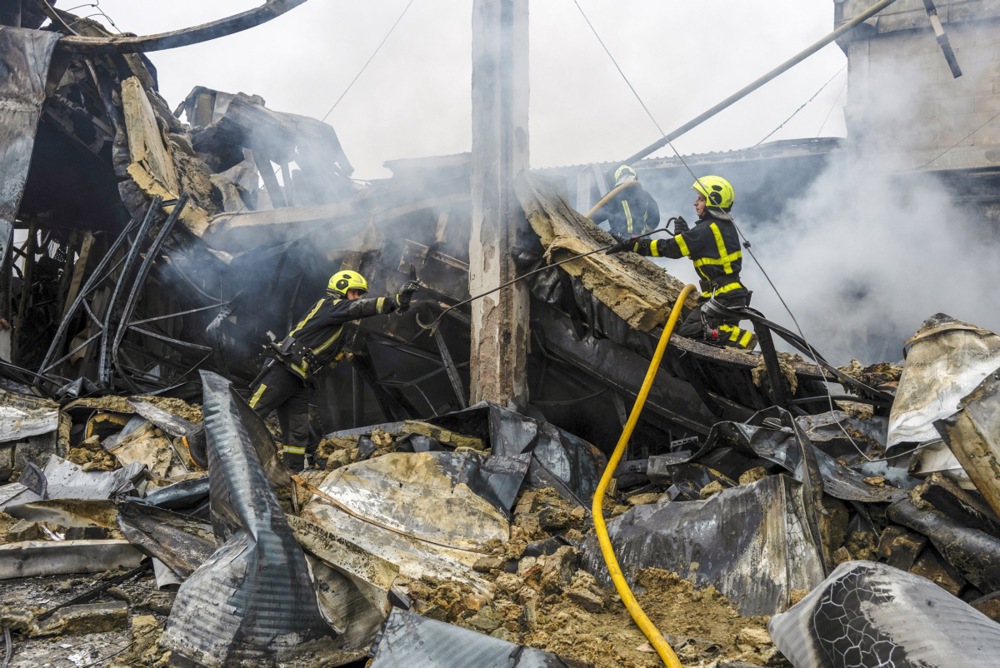
People in Russian-occupied city facing severe shortages of food, water and electricity, with some reportedly surviving on weeds
The White House has said that Russia and Ukraine have agreed to a ceasefire in the Russian-occupied city of Oleshky, where a deepening humanitarian crisis has left thousands of civilians struggling to survive.
In a statement on Friday, the White House said both sides had agreed to halt all military operations in the city from 27 October to allow humanitarian aid deliveries and preparations for the evacuation of civilians.
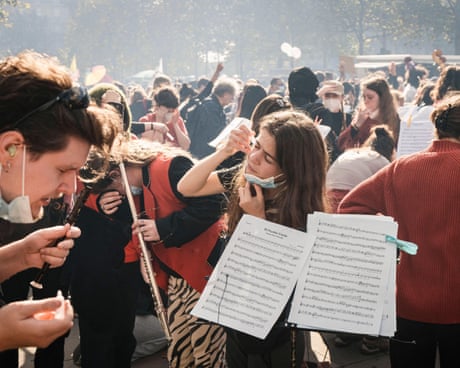
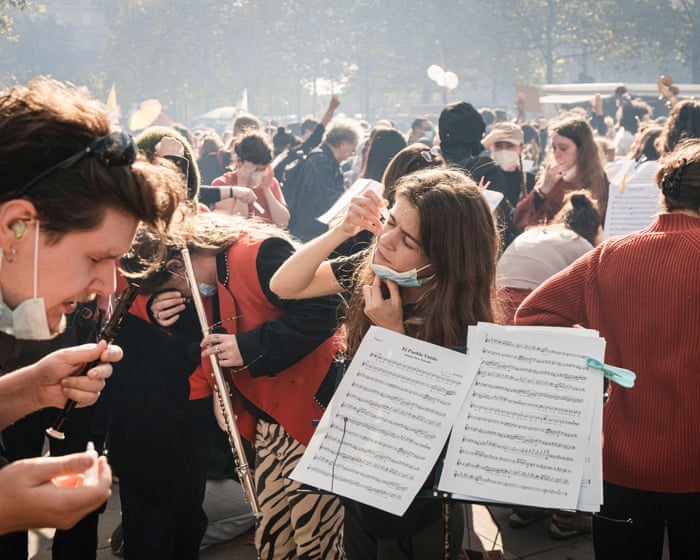
As riot police encircled Place de la République last week, lobbing teargas canisters to disperse demonstrators, the conductor Étienne Jarrier and his orchestra played on. They kept playing even after everyone else had disappeared and teargas was being fired into the central Paris square.
It was only when Jarrier noticed his musicians were being directly targeted that he ordered them to stop. “There were teargas canisters landing in the double bass and music stand cases, and starting fires the musicians had to stamp out,” he told the Guardian.
Show features live chat sessions with breeders, a podcast and updates on dogs’ progress from birth to weigh-ins
A 24-hour Finnish TV show dedicated entirely to the live progress of a dog and her six newborn puppies is drawing millions of viewers.
As well as a 24-hour webcam, Pentulive (Puppy Live) includes live evening chat sessions with the dogs’ breeder, a podcast and an instant notification service that updates followers on the puppies’ progress – from their birth to weigh-ins and first nail trims – for eight weeks.
Heineken has warned British bars and pubs that the boom in popularity of weight-loss drugs could lead to a fall in sales of beer and cider.
The world’s second-largest brewer sent a presentation to British hospitality customers earlier this month that said the use of GLP-1 medication – such as Ozempic and Wegovy – could reduce the desire to drink alcohol. This in turn could result in “fullness and fewer serves” of pints in pubs and bars, it added.
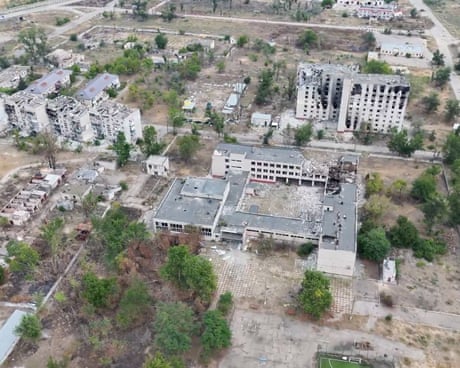
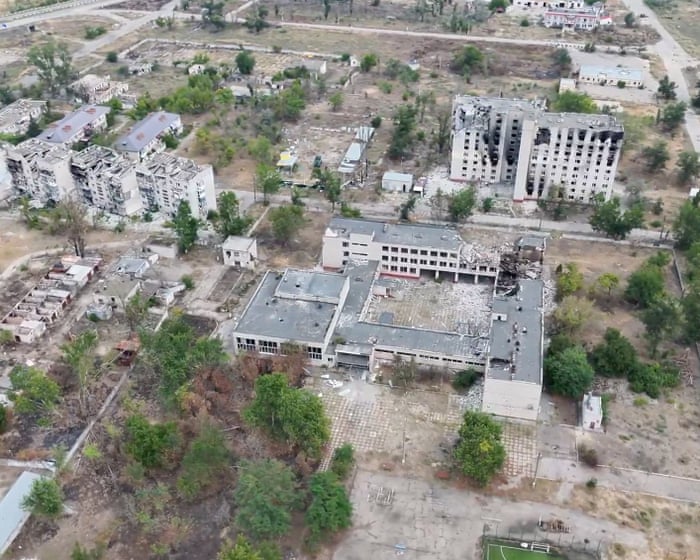
Residents in Oleshky have been enduring a worsening humanitarian crisis due to the lack of food, electricity and other resources
The French prime minister Sébastien Lecornu has just issued a statement on a shooting in a town west of Paris this morning where one person was killed and four others injured.
Police said a gunman had opened fire in Trappes, in the Yvelines, and neighbouring La Verriere. The gunman was later arrested in nearby Coignieres.
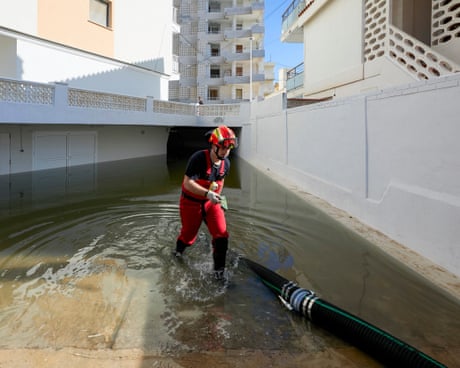
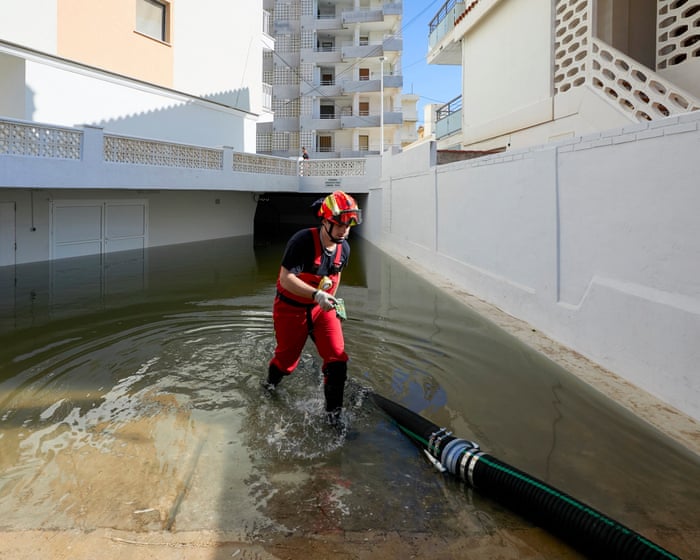
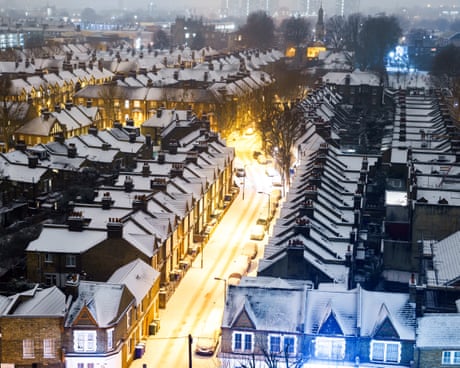
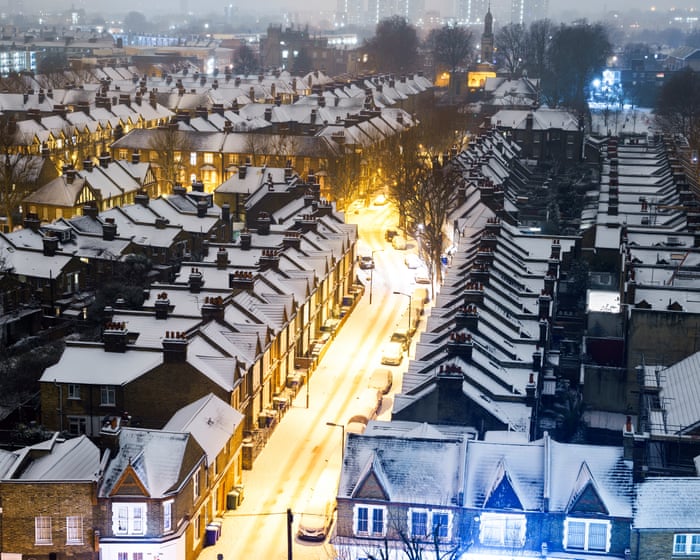
Storm Adam brings torrential rain to Valencia, Alicante and Balearic Islands, as Storm Austen strikes England and Wales
Storm Adam brought torrential rain to eastern Spain earlier this week. In Pego, Alicante, 632mm fell in 36 hours, with 430mm of this falling in just six hours, while the Valencian town of Olivia received 600mm in 24 hours.
The severe flooding led 145 municipalities across Valencia and Alicante to impose a temporary lockdown on about 850,000 people on Monday. At least five people have died, 500 have been rescued and 2,100 evacuated.
Official forecasts show country will meet energy demand by paying high prices to secure imports
Great Britain is expected to pay some of the highest energy costs in Europe this winter as its reliance on imports to ensure a steady supply is forecast to deepen.
Energy system operators have said the country will have enough gas and electricity to meet demand over the coldest months – in part because of paying higher market prices than neighbouring markets to secure imports.
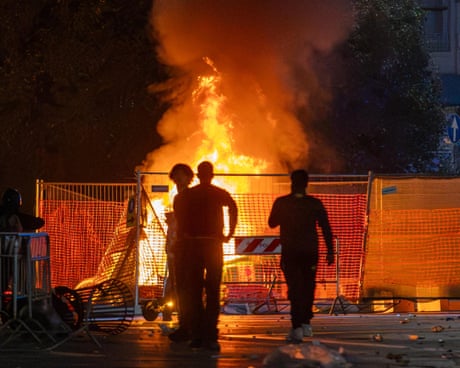
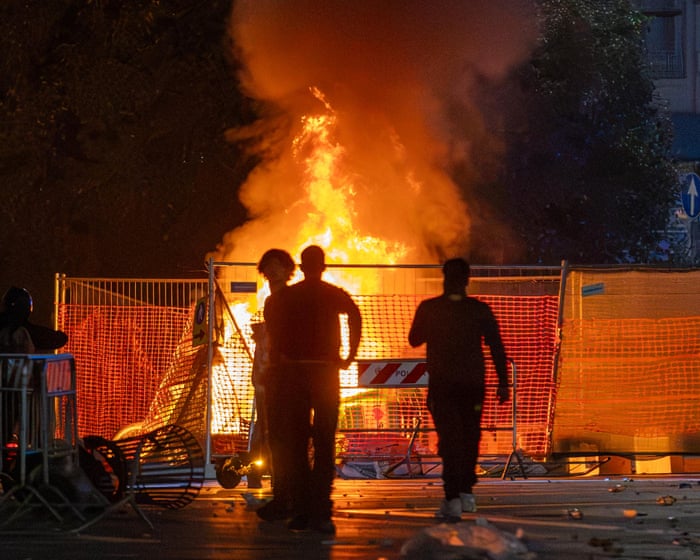
Protests and fringe violence expose sharp divide between marginalised and immigrant youth and those with greater prospects
Martina Miccichè was filming riot police kicking and beating a teenager with batons as they dragged him along Piazza del Duomo, the central Milan square hosting its cathedral, when she was struck by a flying object, causing a deep gash and bruising near her right eye.
The journalist had joined hundreds of mostly young people marching through the northern Italian city on Saturday afternoon to protest over soaring living costs and unaffordable housing, echoing the wider wave of economic discontent fuelling protests across Europe.
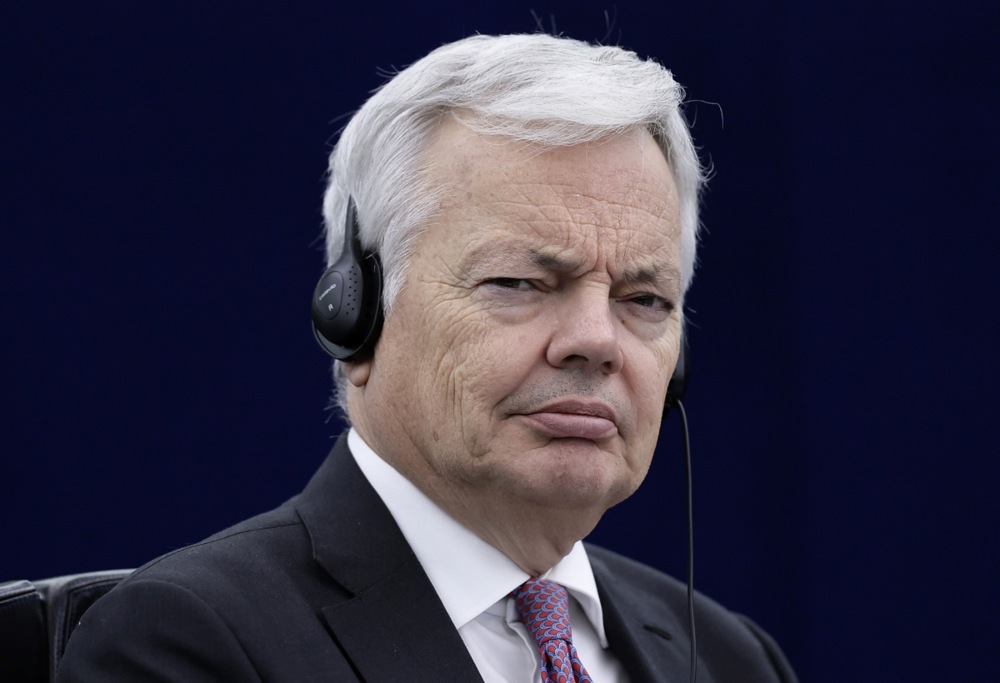
“The ‘job’ … has been mostly accomplished,” said a senior official in Belgium’s spy service, Hugues Brulin, in a WhatsApp message to the Belgian then EU commissioner, Didier Reynders.
“Bravo for the work you did,” said Reynders.
It was back in 2022, and, at least on the surface, they were chatting about a staff reshuffle inside Belgium’s intelligence service, La Sûreté de l’Etat/Veiligheid van de Staat (VSSE) — which was already a peculiar thing for Brulin to be doing on WhatsApp with an EU official.
But their messages, seen by EUobserver and published in full below, were now also evidence in a Belgian police investigation into Reynders on money-laundering charges, which painted them in the light of a potentially criminal conspiracy.
Brulin’s real “job” had been to stop the VSSE from probing Reynders and his potential Russia links, according to five former and current Belgian intelligence officers who spoke to EUobserver.
And Brulin also WhatsApp-ed Reynders on how to “counterattack” a Russia whistleblower.
The 68-year-old liberal politician from Liège, in French-speaking southern Belgium, had had a glittering career before his sudden fall from grace in December 2024, when Belgian police raided his properties, and before he was subsequently charged in 2025 with having laundered some €1m via the ING Bank, using lottery tickets and cash deposits.
Reynders had been EU justice commissioner from 2019 until 30 November 2024 (just four days prior to the police raid) and Belgium’s foreign and defence minister from 2011 to 2019.
And Belgium had vetted and cleared him to read “top secret” national, EU, and Nato documents.
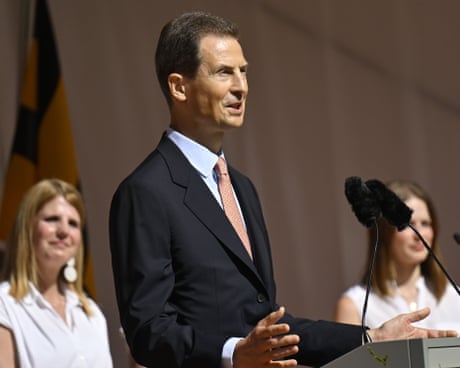
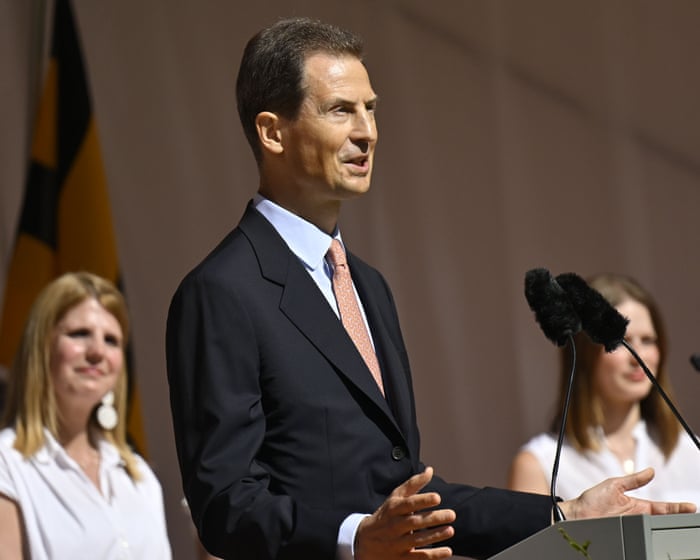
Alois uses the first veto of his reign to quash parliament-approved bill backed by a national petition
The hereditary prince of Liechtenstein has used his veto for the first time in his reign to quash a bill aimed at bringing abortion laws in line with much of Europe.
The legislation was approved by Liechtenstein’s parliament last month after the presentation of a citizens’ initiative signed by roughly a quarter of the nation’s voters.

 Login