Vučić’s 12-year reign looks to have been ended by record turnout of voters in election provoked by student-led protests
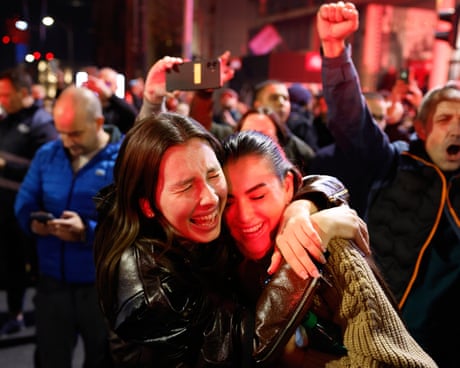
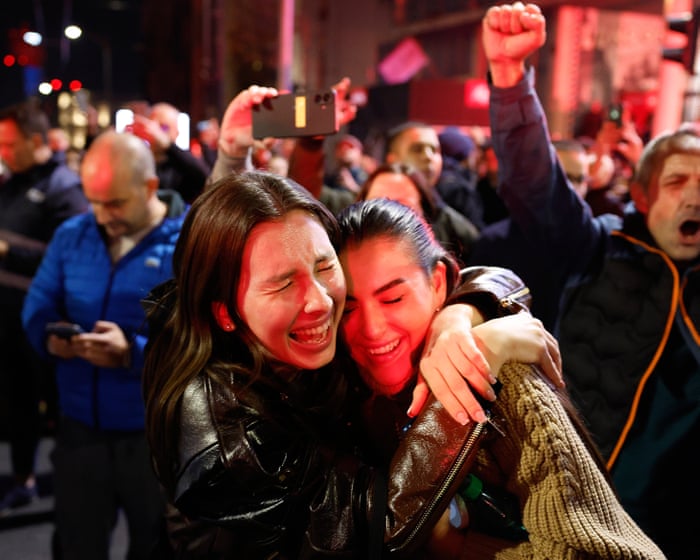
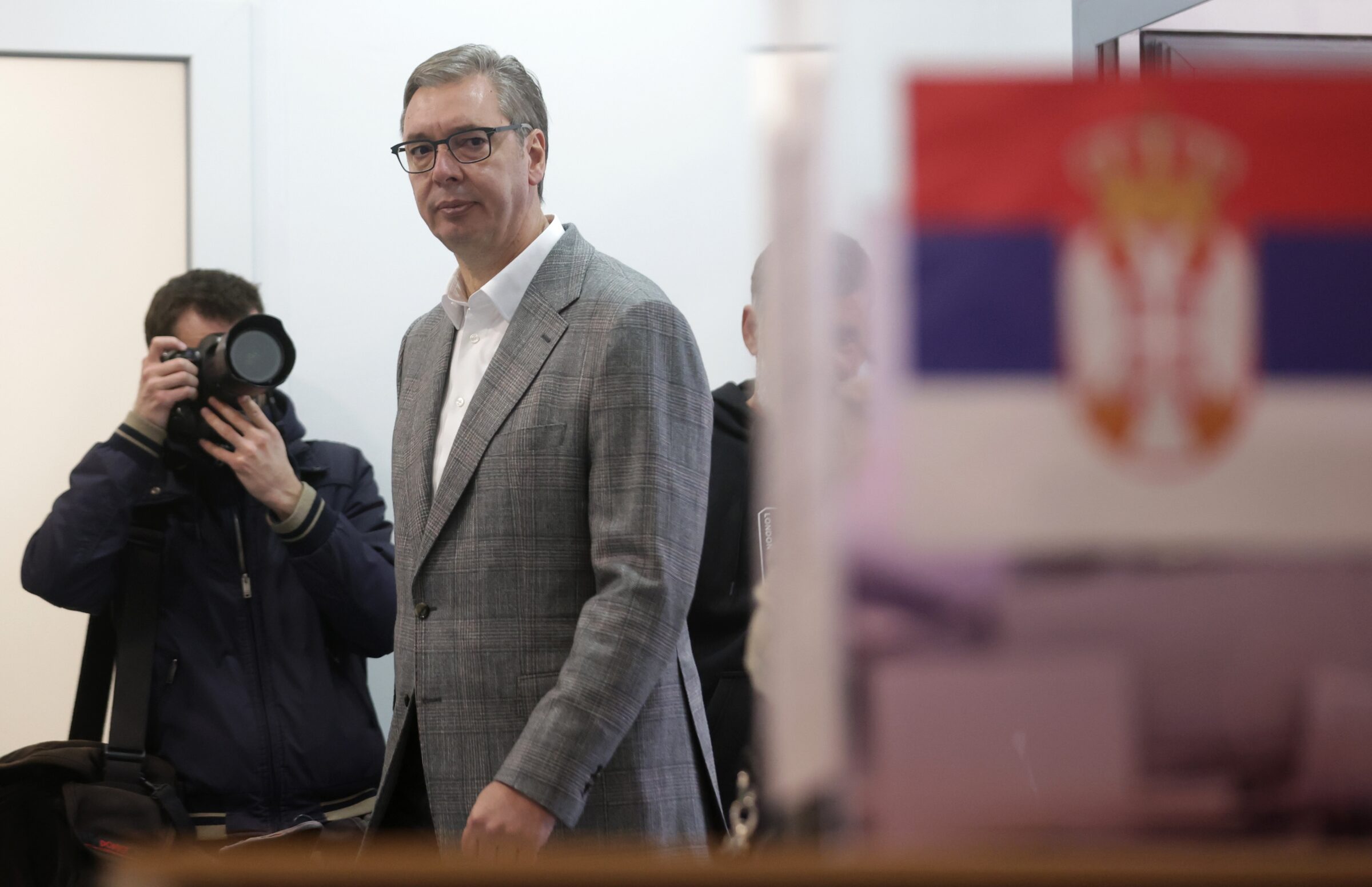
The long-serving leader of Serbia, Aleksandar Vučić, has conceded defeat, ushering in a seismic political shift after a historic election that saw the increasingly authoritarian leader pitted against a student-led movement that had spent two years protesting against his government.
Vučić pointed to preliminary results that suggested voters had overwhelmingly backed the students, potentially giving them a majority in the country’s 250-seat parliament.
The peaceful departure of Serbian president Aleksandar Vučić could open a positive new chapter in Western Balkans history, even as France drifts in the opposite direction.
Vučić acknowledged defeat shortly after 9.30PM on Sunday (25 October), when exit polls put his SNS party on 105 seats in parliament, behind the reformist Student List movement, led by cardiologist Ilija Srdanovic, on 135 to 140, even though the final results were far from clear.
“Serbia is free! People, BRAVO!,” the Student List posted on X.
It had been a tense night in Belgrade, with a heavy police presence in front of government buildings, scuffles at polling stations, and with student and other citizens’ patrol groups monitoring voting, as well as over 300 formal international observers.
MEPs and US senators had also warned Vučić (who had once worked at the top of the brutal dictatorship of Slobodan Milošević) on X not to resort to violence to try to steal the vote,
But it seems that the landslide was so huge and the turnout so massive (over 69 percent) that there was nothing to be done.
Serbian nationalism, Western Balkan corruption, and Russian interference will not disappear from the region overnight, but with the nationalist-populist Vučić gone there is more chance of normalisation of Kosovo relations and less chance of a Bosnia break up.
And there is every chance that a positive reform momentum, rewarded by the EU, could spread from Serbia and help bring more Western Balkan countries into Europe after Montenegro next year.
It is the fourth defeat in national elections in a row for pro-Russian and/or far-right parties in Europe this year, after Hungary, but also Sweden and Latvia.
And that is a good trend for progressives, in the run-up to the election super-cycle of 2026/2027, which will see similar battles unfold in Spain, France, Estonia, Finland, Greece, Slovakia, Poland, and Italy in the next 12 months.
“If we have peace, whatever the outcome, it will be beneficial and blessed. If we have unrest, anger and hatred, whatever the outcome, it will be disastrous for everyone,” said Serb Orthodox Church patriarch Porfirije earlier on Sunday.
The spectacle of a peaceful transition of power in Serbia will not be welcomed by Moscow.
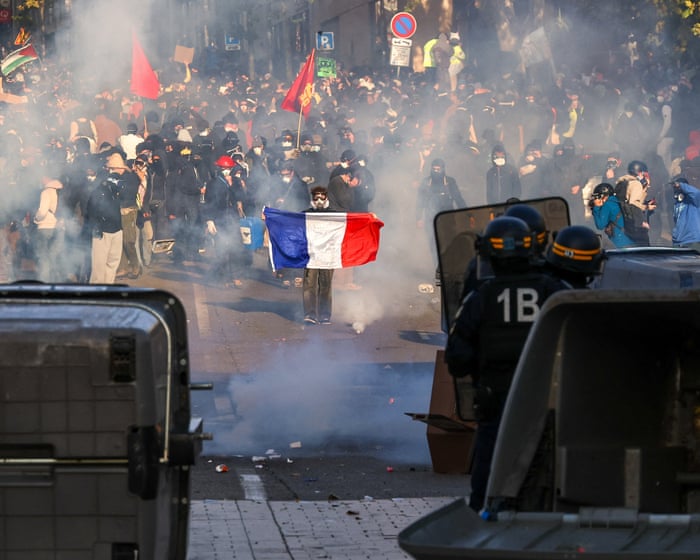
But it is also a powerful example to any students or ethnic minorities in France, Italy, or further afield in Europe, who spent a second weekend rioting in multiple towns in protest at social inequality.
If the far right was to take power in France in April, spurred on by racial tension and civil unrest, it would quickly wipe out any gains made on Sunday in Serbia, both in terms of EU stability, Western Balkans’ enlargement prospects, and Russian strategy.
But if young people in the EU want change and fairer societies, then the students of Serbia, who began today’s tectonic movement in protests two years ago in the town of Novi Sad, have shown them that the path to victory lies in non-violent resistance and patience.
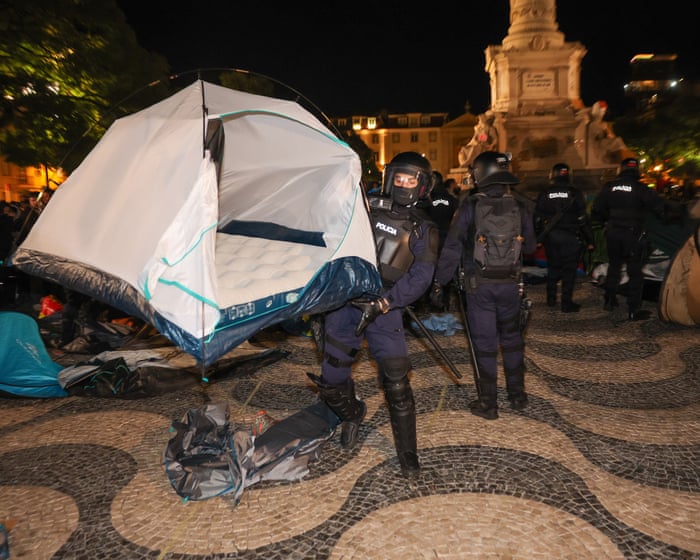
More than 30 people arrested as officers clear at least 100 tents in central Lisbon and about 50 in Porto
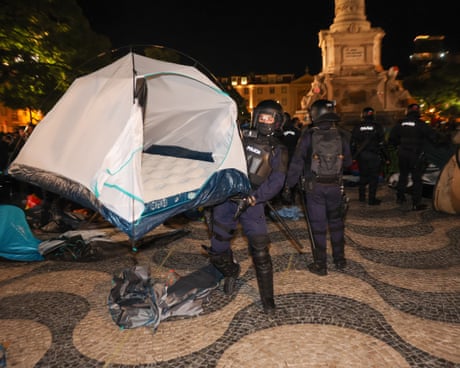
Police in Portugal have dismantled housing protest camps in Lisbon and Porto, baton-charging campaigners in the early hours of Sunday and arresting more than 30 people.
The raids were the latest incident in days of clashes between police and campaigners who – inspired by similar camps in Spain – had sought to pitch tents in central squares to protest against the country’s deepening housing crisis.
PM’s plea supported by Angela Rayner, Ed Miliband and business leaders, while some ‘red wall’ MPs voice concern
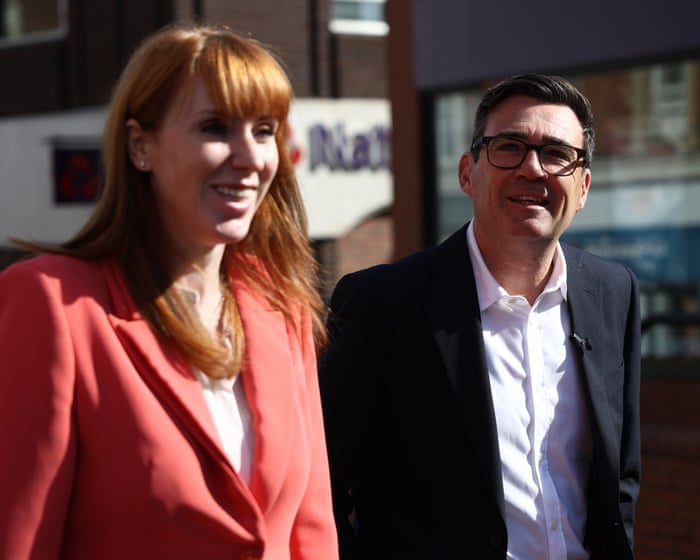
Andy Burnham’s call for the UK to consider a return to free movement with Europe has been backed by senior cabinet ministers but risked a rift with “red wall” Labour MPs, who say it could jeopardise Brexit-voting seats.
The prime minister made his plea for an “honest discussion” about freedom of movement in an interview with the Sunday Times, making clear that staying out of it would no longer be a red line in talks with the EU.
James ‘Fergie’ Chambers, in prison in Spain, has applied for asylum as US seeks extradition over alleged Hamas support
US authorities seized wealthy activist James “Fergie” Chambers’s cellphone at some point after Spanish police arrested him in July without notifying him or his attorneys, the Guardian has learned.
Chambers, a US citizen and wealthy donor to leftwing and humanitarian projects, is imprisoned in Madrid. His case is the first known instance of the US seeking to extradite a citizen over alleged support for Hamas, an accusation tied to money Chambers has donated to support Palestinians, including the Sameer Project, in Gaza.
Israel’s 27 October election might disappoint everyone. To start, there may be no next-day resolution. Polls show the Netanyahu-allied and opposition blocs nearly tied, both short of a majority.
If that holds, expect weeks of furtive factional negotiations that diminish the reputations of all involved. If those fail, back to the ballot box.
If a new government forms quickly, it will likely be led by Benjamin Netanyahu or the opposition’s Gadi Eisenkot. Most observers outside Israel are hoping for Gadi. In truth, either result will confront Brussels and Washington with tough choices that both have put off too long.
Last week’s grudging and partial White House endorsement notwithstanding, Netanyahu is near-friendless on the international scene.
If he grinds out another win, many European leaders and US presidential contenders will find themselves managing bilateral relationships of mutual contempt.
Unwilling to face hard facts at home, Bibi seemed to think he could gamble them away with Gulf money and American missile interceptors. He marketed himself as the founding entrepreneur of a new-model Middle East powered by Saudi normalisation and Iranian regime change.
Instead, Houthi drones and Saudi budget deficits are vaporising the mirage of glass cities and data centres in the desert.
Trump’s war now
Iran is Trump’s war now, not Israel’s: He will fight or end it as he pleases. What’s left on the IDF’s regional briefing map are small places with complicated pasts and unclear futures, lands that Israel wishes the rest of the world would forget but is itself unwilling to leave.
The old Middle East is back. In truth, it never left.
It has been the beggar at the door of every air-conditioned Gulf investment conference. But the poor relations — Gaza, the West Bank, Lebanon, Syria, Yemen — have refused to go quietly.
Israel’s old politics are back, too.
The median Israeli is 29-years old. Netanyahu, whose hair and makeup bills are the subject of a considerable body of investigative journalism, just turned 77. His leading rival Eisenkot, who lost a son and two nephews in Gaza, launched his career as a platoon commander in Israel’s 1982 invasion of Lebanon.
Israel, like America, is due generational change.
Instead, Israelis (or at least undecided centre-right voters) got a choice of character: the embarrassing, but reassuringly indestructible Bibi, or the earnest but untested Eisenkot.
It’s not just the faces that are familiar. The candidates are still fighting Israel’s culture wars. The debates that dominated the election — ultra-orthodox military enlistment, judicial reform, and the role of religion in the state — are serious. But they’re also stalemated.
Despite deafening recriminations about who is to blame for exposing Israel to Hamas’s 7 October attacks, the debate about security in Gaza and Israel’s north is equally stuck.
Indiscriminate destruction and deliberate destabilisation
Netanyahu promised “total victory”; that turned out to mean indiscriminate destruction and deliberate destabilisation. His opponents claim Netanyahu has squandered the IDF’s achievements. They promise to do what Netanyahu could not, by using the same crude tools to achieve the same poorly defined objectives — but this time, with greater skill.
The question of what that means for ordinary Palestinian civilians, and what future they can expect for their children, has barely been discussed.
Many Israeli voters, desensitised to the situation of Palestinians who are routinely dehumanised by Israel’s domestic press, don’t ask. Most Israeli candidates carefully avoid answering.
Both blocs pledge they’ll refuse to partner with the Arab-Israeli parties that could hold the key to a Knesset majority — even as prominent Arab candidates downplay their support for Palestinian statehood and campaign on more palatable topics like under-policing in Arab communities.
It’s comforting to imagine an Israeli government formed by anyone left of Netanyahu will steer instinctively towards international expectations. But a more centrist Israeli government, like any elected government anywhere, will operate within the political space created by the policy priorities and the empathetic capacity of its voters.
There isn’t much room for Palestinians.
If an opposition-bloc government forms, it will surely ask for time, assuring foreign capitals that the appearance of pressure makes meaningful change harder back home.
European leaders and US Democrats poised to win at least one house of Congress in November may be tempted to pause efforts to compel Israel towards rapid implementation of the international road map in Gaza, an end to ethnic cleansing in the West Bank, and full IDF withdrawal from Lebanon and Syria.
That would be a mistake.
There will be no place in Israeli politics for a realistic discussion of Gaza, the West Bank, Lebanon, and Syria until the foreign partners necessary to Israel’s security and economy insist, soberly and relentlessly, on creating one.
That will require tough new sanctions, not just wordplay. The things that have to be admitted are too hard, and the promises that must be broken are too many, for any Israeli leader to act alone.
Amanda Pilz served for 22 years as a U.S. Foreign Service Officer. She is a former U.S. Deputy Assistant Secretary of State for Israeli-Palestinian affairs.
The basketball star seems proud to leave the job to his partner. That’s so last century
Nobody can accuse the basketball star LaMelo Ball of being bad at his job. That said, the Minnesota Timberwolves point guard doesn’t seem to be a huge fan of dribbling.
Ball has a nine-month-old son, LaOne, with his partner Ana Montana (real name: Analicia Chaves) and is apparently uninterested in dealing with all the body fluids that come with a baby.
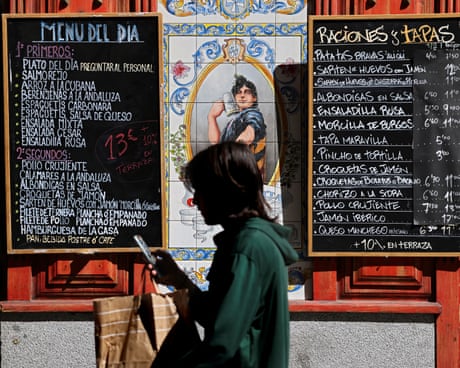
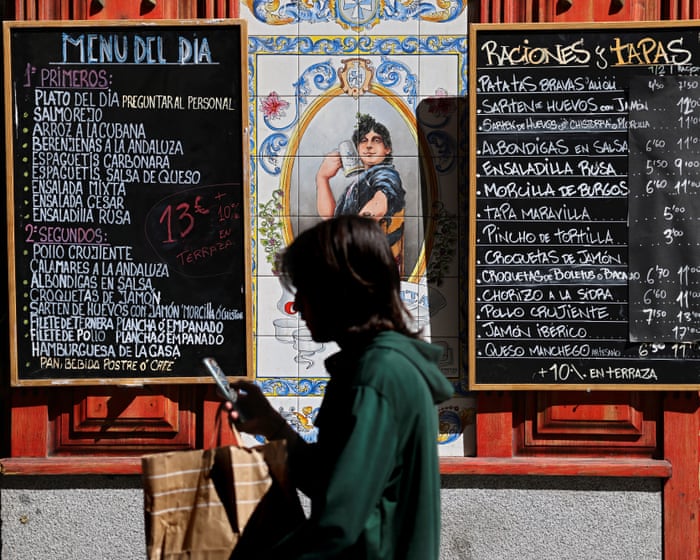
Established under the Franco dictatorship, the lunchtime ritual is in decline but all is not lost
A little before lunchtime each working day across Spain, evidence of one of the lingering, if less notorious, legacies of the Franco dictatorship is carefully traced in chalk, marker pen and printer ink.
Beckoning to hungry workers from blackboards, whiteboards and pieces of paper hastily taped to windows, the competitively priced menú del día, or daily set-price lunch, has been part of everyday Spanish life for more than half a century. But while 4m menús are still served each weekday, Spain is slowly losing its appetite for the familiar ritual.
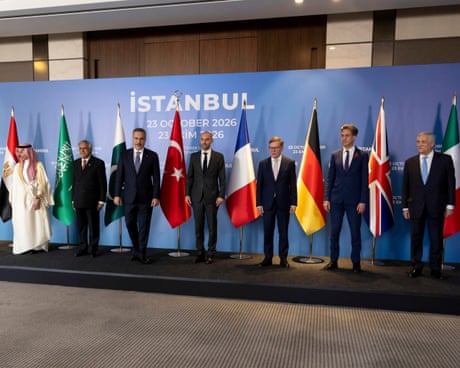
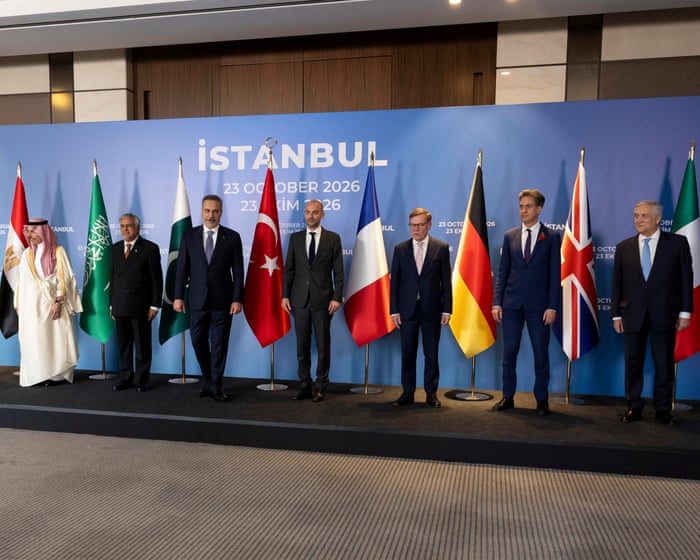
Multinational ‘anti-war bloc’ uses Istanbul summit to call for a diplomatic solution to Middle East crisis
Foreign ministers at a summit of eight European and Middle Eastern countries have urged the US and Israel not to renews their attacks on Iran, warning a fresh outbreak of fighting would spread conflict and push oil prices even higher.
The development of a new multinational “anti-war bloc” represents a challenge to the increasingly open plans by the US and Israel to relaunch strikes on Iran while talks on Tehran’s nuclear programme remain deadlocked.
Nous recevons Clément Beaune, ancien conseiller spécial du Président Emmanuel Macron puis secrétaire d’État aux Affaires européennes, ancien ministre des Transports et désormais Haut-commissaire à la Stratégie et au Plan. Il vient de diriger l’ouvrage Comment vivrons-nous en France demain ? paru le 8 octobre aux éditions Tallandier. Il évoque le rôle de l’Union Européenne dans le soutien à l’Ukraine, la concurrence économique chinoise ou encore les mouvements sociaux qui agitent le continent.
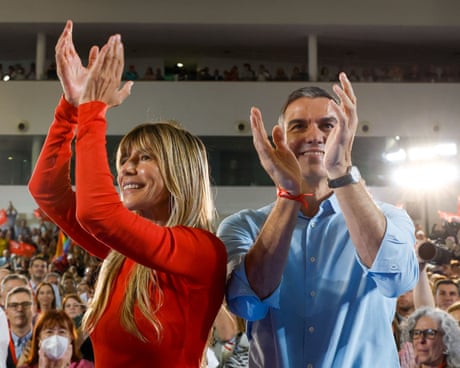
Video shows AI likenesses of people linked to Pedro Sánchez’s Socialist party appearing to admit to wrongdoing
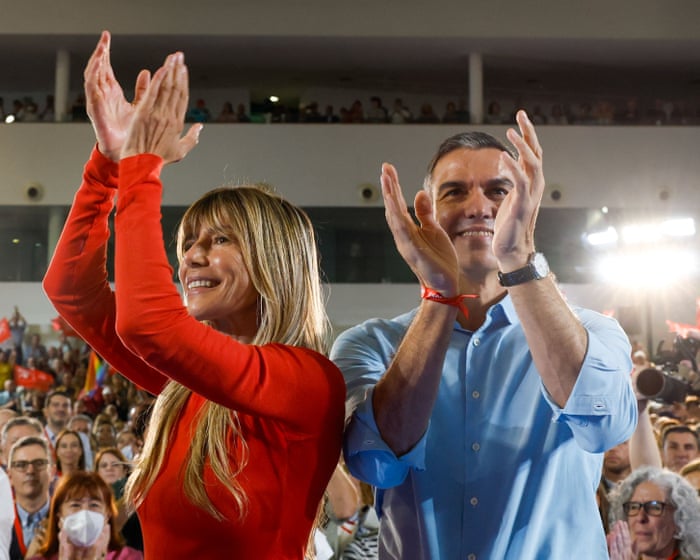
A political ad from Spain’s main opposition party that used a deepfake video of the prime minister’s wife has sparked outrage and set off a wider debate on AI, as the deeply polarised country gears up for general elections next month.
Launched this week across the social media channels of the conservative People’s party (PP), the video used artificial intelligence to manipulate the likenesses of various people linked to Pedro Sánchez’s Socialist party and appeared to show them admitting to acts such as soliciting prostitutes and taking kickbacks.
Le budget à long terme de l’Union européenne sera au centre des prochains sommets européens. Les Vingt-Sept n’arrivent pas à s’entendre sur les recettes et les dépenses souhaitables entre 2028 et 2034. La proposition de la Commission européenne est toujours de 2 000 milliards d’euros, soit 1,26 % du PNB de l’UE.
UK allies have long urged people to stockpile supplies for a crisis. How are people from France to Australia being advised to prepare?
The UK has told people to fill their pantries with food for three days in case of catastrophe, joining a host of countries urging citizens to ready themselves for core systems failing.
Such advice, once dismissed as the preserve of preppers, has become more common in government circles as climate breakdown worsens weather extremes and geopolitical tensions turn cyber-attacks and sabotage into a regular occurrence.
Even if Israelis vote out the current government, an ideological shift will endure, says Beth Oppenheim, a policy fellow in the Middle East and North Africa programme at the European Council on Foreign Relations.
The London-based analyst explains how once-fringe ideas have crept into the political mainstream and the limitations of liberalism.
In this interview:
Why Netanyahu’s departure would not bring about fundamental change.
How 7 October has put diplomacy permanently off the table.
What to expect if a new government was elected in Knesset (Israeli parliament) elections.
The lessons Europe can draw from all this.
You say Israel’s illiberal and ethnonationalist turn represents a transformation beyond Israeli prime minister Benjamin Netanyahu; these ideologies would not disappear even with him gone. In your analysis of Israeli politics, you avoid the traditional left–right political spectrum – why?
Beth Oppenheim: In the Ideas of Israel project for ECFR, I wanted to unpack this binary we often see on the question of Netanyahu’s leadership. He dominates Israeli politics, but the debate about the prime minister often obscures more interesting trends like the rightward shift of Israeli politics. Often, the opposition is referred to as the liberal bloc, whom the right wing label as leftists – but this is inaccurate.
The pro-Netanyahus form a government coalition, while the opposition bloc is actually rather ideologically diverse. So in my research I wanted to go beyond the reductive question of Netanyahu to understand how parties behave in elections; I wanted to see where all these different parties’ ideologies and visions fit in.
And this led you to categorise Israeli parties into four groups: the liberal Zionists, the nationalists, the ultra-Orthodox camp, and the religious nationalists. Could you describe each group? Let’s start with the liberal Zionists, who are considered the most left-wing of the Jewish Israeli camps…
Of course. The liberal Zionists include figures such as Yair Golan, Yair Lapid and Gadi Eisenkot.
Eisenkot (Yashar party) is a former general in the military. Despite this, many on the right brand him as a leftist.
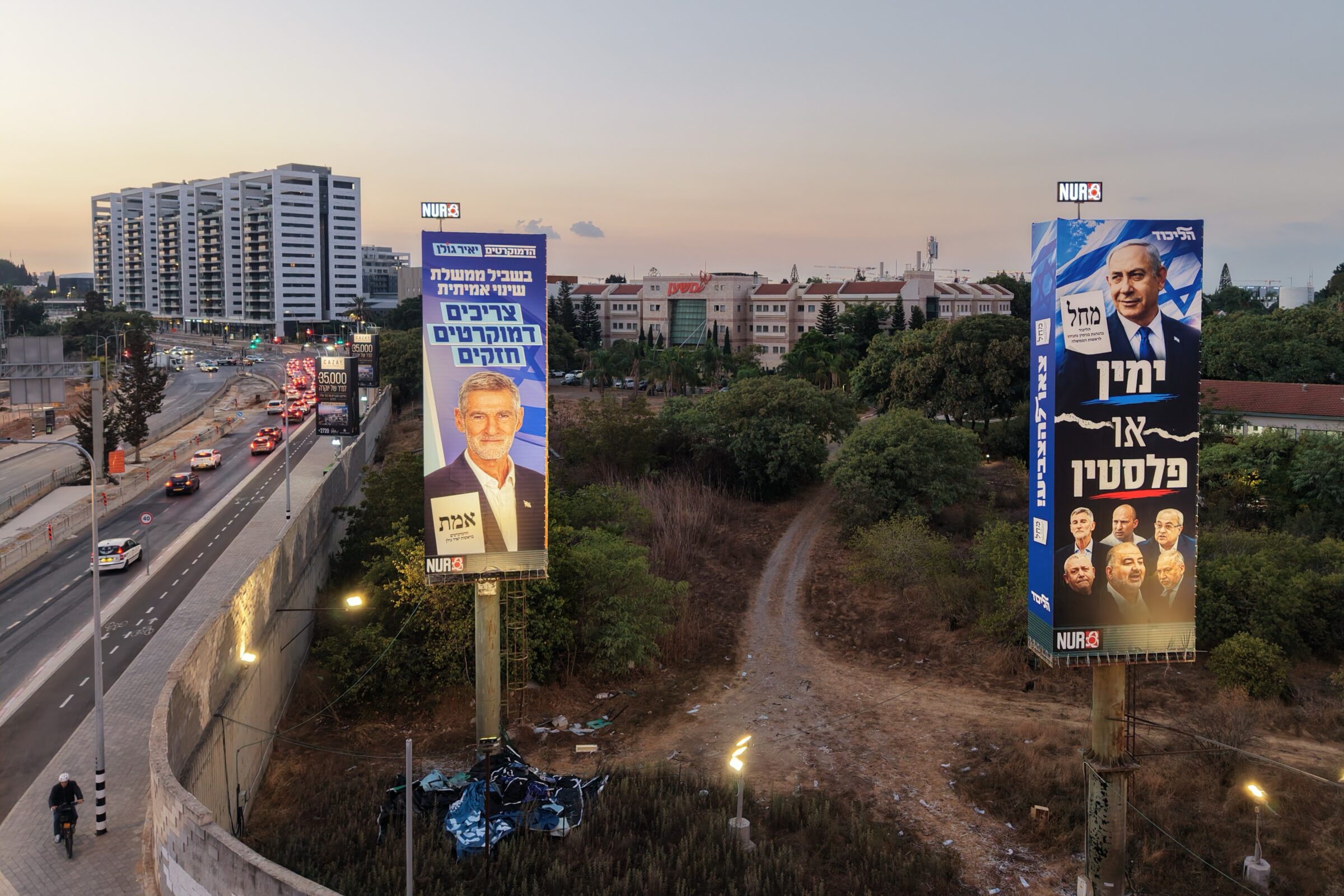
A billboard featuring Yashar party leader Gadi Eisenkot reading ‘This time, Eisenkot’ in Tel Aviv. (Source: EPA/ABIR SULTAN)
Lapid (Yesh Atid party) comes from a liberal centrist tradition in the mould of his father. Like Eisenkot, he is very secular. A secular vision for Israel and an emphasis on liberal democratic institutions unite the camp of liberal Zionists.
Golan (The Democrats party) is the left flank of this camp. In Europe, he wouldn’t be seen as far left, but within the Israeli spectrum, he is seen as radical. He has security credentials, too, but he’s the only liberal Zionist who talks about a political settlement with the Palestinians.
The two-state solution is not really on the menu in the Jewish Israeli political mainstream – that’s now the preserve of the far-left fringe; it’s not a mainstream discussion anymore.
“The two-state solution is not really on the menu in the Jewish Israeli political mainstream”
The liberal Zionists are united around their secularism and their commitment to the liberal democratic institutions, but there’s one big caveat: when it comes to the Palestinian issue, their liberalism is more circumscribed.
They are not talking about the ongoing occupation and the effect that that has on Israel’s democratic standing. But of course, they’re very united in their opposition to Netanyahu.
The liberal Zionist camp lacks a coherent platform other than this; they basically advocate for good governance, but don’t offer a robust vision.
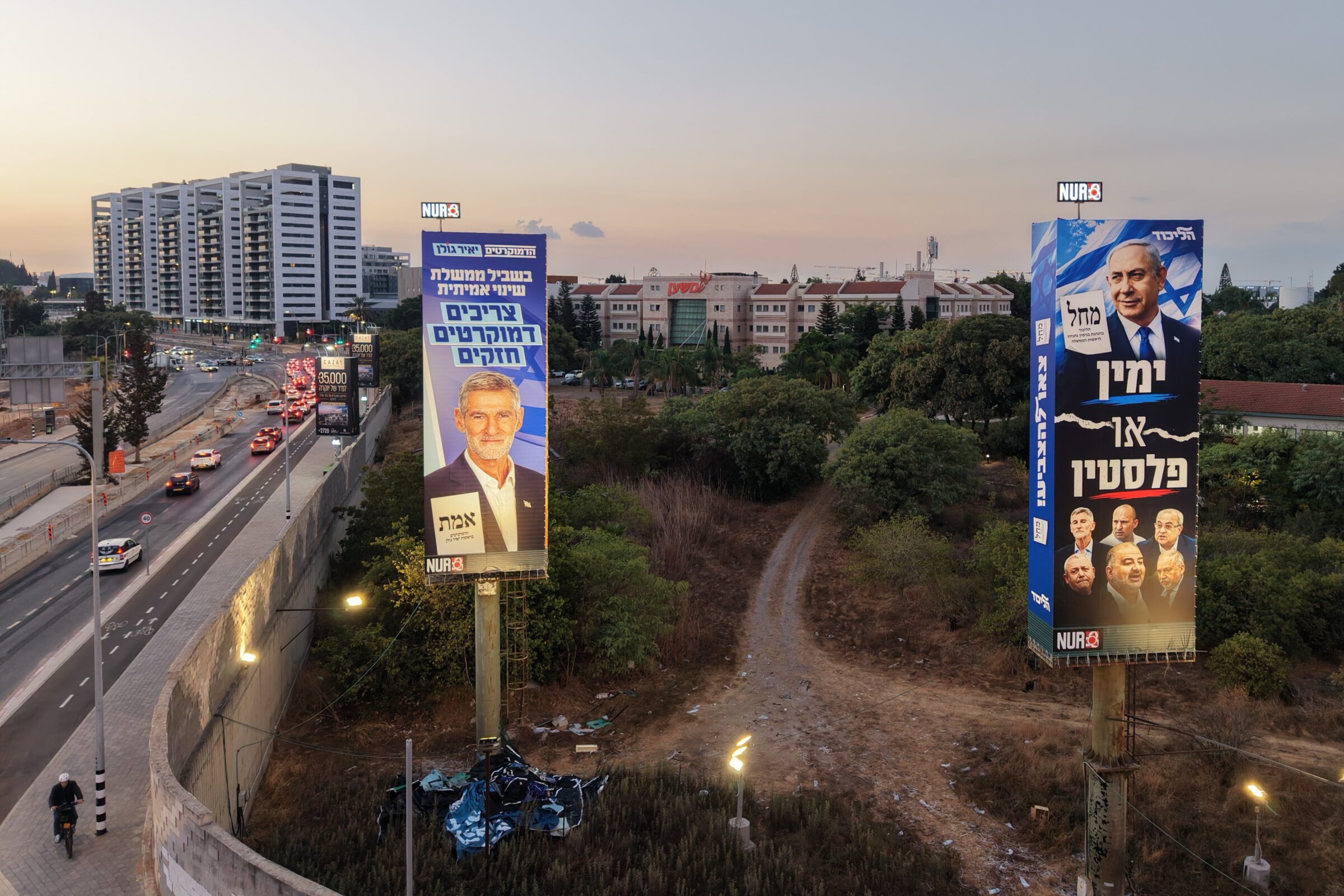
Election billboards featuring The Democrats Party leader Yair Golan and Israeli prime minister Benjamin Netanyahu. (Source: EPA/ABIR SULTAN)
And that cannot be said about the nationalists, whose vision is quite clear, right?
Traditionally, the nationalist camp was the mainstream right wing. Today’s main contenders are prime minister Benjamin Netanyahu’s Likud and Avigdor Lieberman’s Yisrael Beiteinu.
Meanwhile, former prime minister Naftali Bennett is running on a joint list with Lapid’s Yesh Atid, called Beyachad (‘Together’). Bennett and Lapid joined forces despite coming from different ideological traditions. They have very different ideas about the country, but they’re coming together to present a more technocratic agenda, get Netanyahu out and normalise Israeli politics.
The nationalist camp descends from the Revisionist Zionist tradition based on Ze’ev Jabotinsky’s vision: a liberal democratic outlook fused with ultra-nationalist convictions. So to take a Revisionist Zionist view is to take a hawkish and hardline approach towards Arabs, while keeping a commitment to liberal democratic values. But affinity for liberalism and democratic values has really withered away over recent decades, not only under Netanyahu.
And then there is the ultra-Orthodox camp, without which the current government would never have completed a full term.
The ultra-Orthodox group does not fit easily on the left-to-right political spectrum, which in the Israeli understanding is defined by hawkishness on Palestinians and security.
They are made up of two Ashkenazi parties – Degel HaTorah and Agudat Yisrael – and Sephardic party Shas. What unites them is strict religious observance of Jewish law and their commitment to separation from secular society or modernity.
“The ultra-Orthodox camp is predominantly non-Zionist, but not necessarily anti-Zionist”
Interestingly, the ultra-Orthodox camp is predominantly non-Zionist, but not necessarily anti-Zionist since they didn’t endorse the creation of Israel in its secular form. They engage with the state, but in a limited way – they’re very transactional and pragmatic.
And the ultra-orthodox camp work within state apparatus to advance sectoral interests, yeshiva education, the military service exemption, and subsidies to maintain a somewhat introverted separation from the rest of society.
They are mostly passive when it comes to issues of foreign policy and security policy, but they do not support loss of Jewish life for nationalist ends – they don’t believe that the state in its current form is sacred. And so they don’t, for instance, endorse the loss of Jewish life for territorial expansion.
That leaves us with the last category: the religious nationalist camp.
Religious nationalists draw together ultra-orthodox religious observance, but with ultra-nationalism.
This article continues, but the full version is available only to EUobserver.com subscribers. Visit account.euobserver.com/membership
Russian journalists reveal what the Kremlin and US are discussing.
Starshield was supposedly fixed, but that doesn’t seem to be the case.
Russians advance in Rai-Oleksandrivka towards Sloviansk.
Russia loses two combat Sukhoi aircraft in accidents in one day.
Map of the day: Rai-Oleksandrivka
Videos of the day: Kramatorsk evacuation; Russian Su-30 crashes; how helicopters hunt drones.
Russian journalists have described the nature of talks between the Kremlin and the US. A demilitarised zone in Donbas. A Ukraine without Nato membership but is allowed to join the EU membership in return. Sanctions against Russia eased, Russian gas in Europe and news talks on the Nord Stream 2 pipeline. And America makes its own deals with Russia.
This is how, according to The Economist, the US proposal to the Kremlin for ending the war sounded, presented in Moscow on Wednesday (21 October) by Steve Witkoff, Trump’s negotiator.
It sounds like something Russia might welcome, but that does not appear to be the case. At least not according to the findings of the Russian exile website Verstka, which a day later published an extensive report on the mood among Russia’s Kremlin-linked elite.
The article, signed by the newspaper’s editorial board, contains numerous quotes from government officials and people close to the regime, whose views on the prospect of swiftly reaching a peace deal and ending the fighting are sceptical.
Verstka wrote that war fatigue was mounting among these people, whose names it naturally did not disclose, but that they fully defer to Russian president Vladimir Putin and are waiting to see what he agrees with US president Donald Trump.
“It can be said with certainty that American sympathies have shifted to our side. We have been working on this for a year and a half,” a source close to the foreign ministry told the journalists, describing Moscow’s strategy.
Russia achieved this through the following argument: since Ukraine considers itself a victim — which it undoubtedly is, editor’s note — and asks for assistance, but is unwilling to make concessions in return for that assistance, it is no longer in fact a victim, but a player with ambitions of its own, which Western taxpayers are unwilling to fund.
Incidentally, the Slovak government uses very similar rhetoric and arguments.
According to the same source, Moscow will emphasise during the talks the hopelessness of Ukraine’s supposed situation.
Another quoted voice was a political strategist directly linked to the Kremlin, who pointed out that Trump’s son-in-law Jared Kushner did not directly take part in the talks in St Petersburg on 21 October, reportedly due to illness.
Nevertheless, this source also praised the US approach, even if Trump’s dispute with Ukraine proved only short-lived: “We have nothing to lose from these solutions. And we could gain both an improved budget and an advantage on the battlefield.” At the same time, the domestic political strategist saw no fundamental changes that could lead to an end to the fighting.
The extent of the irrationality prevailing within the regime was illustrated by statements from another unnamed representative of a formally non-governmental organisation working directly with the Kremlin.
In his analysis, he claimed that Ukrainian president Volodymyr Zelensky had created a dictatorial system from which neither elections nor a coup could remove him, and that the war would not end while he remained in office. He also cited reports by Russia’s foreign intelligence service claiming that Kyiv was cooperating with Mexican drug cartels.
Another government official had low expectations of the Americans: “For almost two years now, we have been saying that Trump is supposedly one of us and that the talks are constructive, but they have produced no results. We are fighting, burning, drowning, suffering alongside our homeland.”
The man spoke of a “peace wing”, allegedly comprising people in the presidential administration responsible for domestic policy and economic circles, but this did not mean that there was any open opposition to the war.
“There is no escape from the ship. We are waiting for them to have had enough of the war,” the official said.
This article continues, but the full version is available only to EUobserver.com subscribers. Visit account.euobserver.com/membership
Estonia's counterintelligence service has recently warned that sabotage operations orchestrated by Russian special services have reached a new and dangerous phase in Europe, with targets no longer being purely symbolic. Talking Europe sits down with the country's foreign minister, Margus Tsahkna, to discuss the security situation in Estonia and the European Union in general.
A marathon EU summit on October 15-16 failed to produce a breakthrough on the European Union's next long-term budget. Although EU leaders put on a brave face at the end of the talks by saying that "the way forward is clearer", EU capitals appear deadlocked on what that path is. At stake is the EU's ability to finance its strategic priorities from 2028 to 2034. The main dividing line is between the so-called "frugal countries", who want deep cuts to the proposed budget, and the "friends of cohesion", who say that cuts are not the answer.
Two leading Jewish groups want the EU’s next antisemitism tsar to also brief diplomats on foreign policy – despite the controversy it caused for the last one, Katharina von Schnurbein.
“EU external decisions have direct consequences for Jews living in Europe. Diplomats should hear from the person who sees those consequences every day,” said Pinchas Goldschmidt, who heads the Conference of European Rabbis (CER) in Munich, Germany.
The European Jewish Congress (EJC) in Brussels also told EUobserver: “The [EU antisemitism] coordinator should ensure that this objective is systematically reflected in all relevant EU policies, including external action and foreign policy.”
They spoke as von Schnurbein prepared to leave her EU post after 10 years to become a German “federal government commissioner for Jewish life in Germany and the fight against antisemitism” on 28 October.
The 53-year-old German baroness was highly active at events in EU capitals, had three staff, and travelled on missions to Israel, Serbia, Switzerland, and the US.
She also worked next door to European Commission president Ursula von der Leyen in her Brussels HQ and had close ties with the Israeli government.
This article continues, but the full version is available only to EUobserver.com subscribers. Visit account.euobserver.com/membership

 Login