Cette semaine, nous recevons David Clarinval, Vice-premier ministre et ministre belge de l'Emploi, de l'Économie et de l'Agriculture. Il commente la position de son pays en termes de concurrence commerciale ou de participation au prochain budget de l'Union européenne (UE).
L'intelligence artificielle se développe et promet de révolutionner notre quotidien. Elle suscite des opportunités mais aussi des inquiétudes, notamment lorsque nous écoutons les déclarations des géants du secteur.
2020 was an annus horribilis. Covid stalked the land. Lockdowns, curfews and social distancing were the order of the day. But there was a silver lining: European countries showed themselves to be capable of great solidarity, jointly procuring vaccines and then agreeing on a mammoth post-Covid recovery fund, the Recovery and Resilience Facility (RRF). That fund has disbursed €450 billion in grants and loans to EU member states since 2021. As the RRF enters its crucial final phase, we take stock of the situation with Pierre Moscovici, the French member of the European Court of Auditors (ECA).
It has been dubbed "the PISA shock". Countries that had been used to their school pupils performing well in test scores are seeing a plunge in standards. The PISA test is an international assessment led by the Organisation for Economic Co-operation and Development (OECD), which measures how well 15‑year‑olds in over 80 countries apply reading, mathematics and science skills to real‑world problems. In the latest rankings, France's results were the worst it has ever had, and Germany's school pupils got their worst PISA report card too.
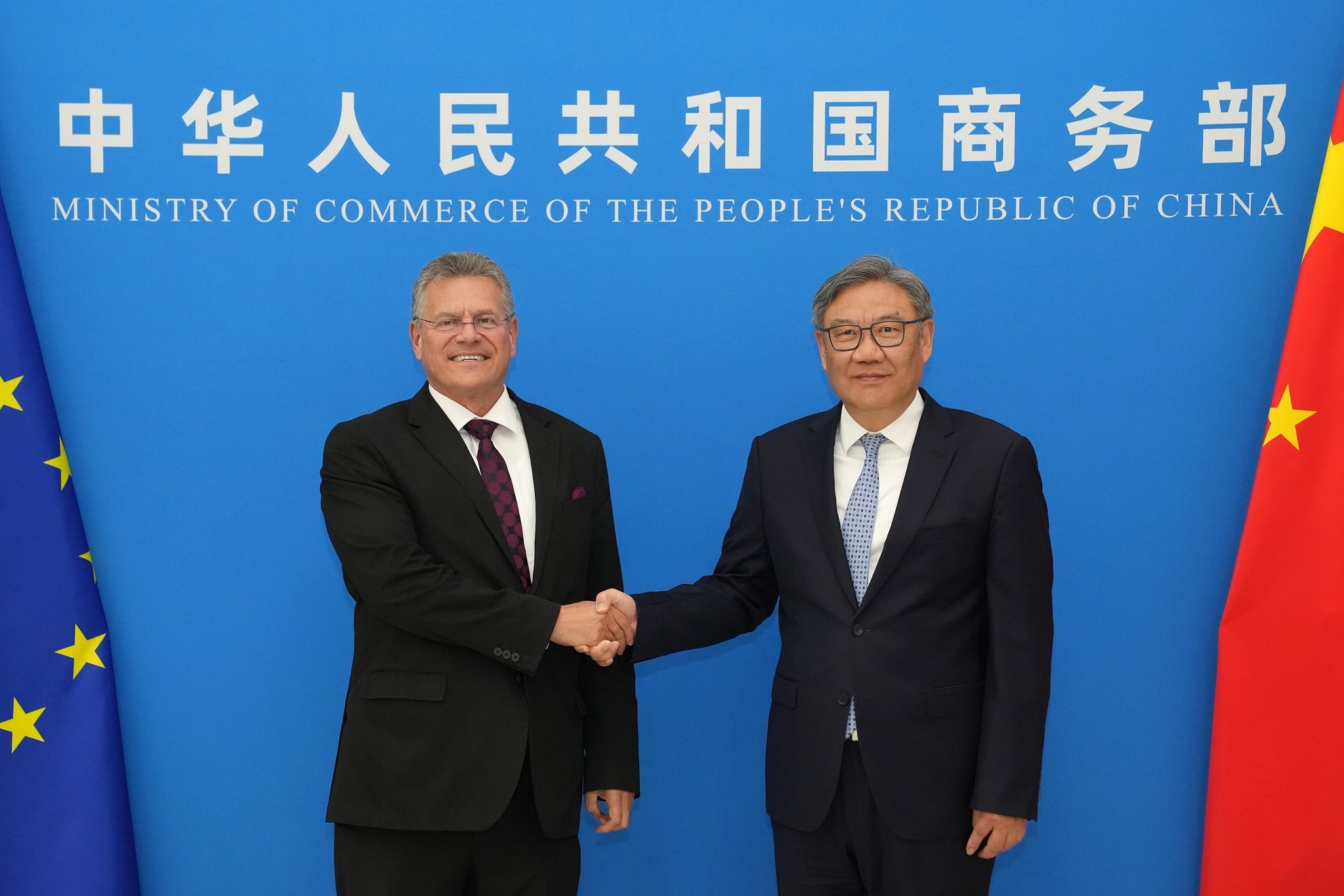
EU and Chinese officials agreed a series of trade concessions covering electric cars, rare earths and tariffs that dragged them away from a damaging trade war on Friday (9 October), following two days of crisis talks.
Following two days of talks in Beijing, EU trade commissioner Maroš Šefčovič said that he and China’s commerce secretary Wang Wentao had made a “crucial first step” towards rebalancing EU-China trade relations.
Europe can point to progress on hybrid vehicles, stronger assurances over the supply of critical raw materials, and continued engagement on market access issues in China.
Hours before Šefčovič arrived, Beijing rejected an EU demand for so-called “voluntary export restrictions” on its electric vehicles (EVs). However, in a joint statement on Friday, the two sides said that they had reached an “understanding on trade in hybrid vehicles in a WTO compliant manner”, but without providing further details.
They added that further negotiations on reducing tariffs and minimum pricing deals would allow Chinese EVs to enter the EU at a lower duty rate.
This article continues, but the full version is available only to EUobserver.com subscribers. Visit account.euobserver.com/membership
This week, FRANCE 24's media show Scoop revisits a fatal assignment for a Fox News team in Ukraine. On March 14, 2022, a Russian strike hit the crew reporting near the capital Kyiv. Reporter Benjamin Hall was seriously injured and two other journalists were killed. The journalists' families are suing Fox, saying the network put the story ahead of its people. Our guest is NPR's David Folkenflik.
Montenegro detained Mikhail Zvinchuk, the founder of the Rybar Telegram channel.
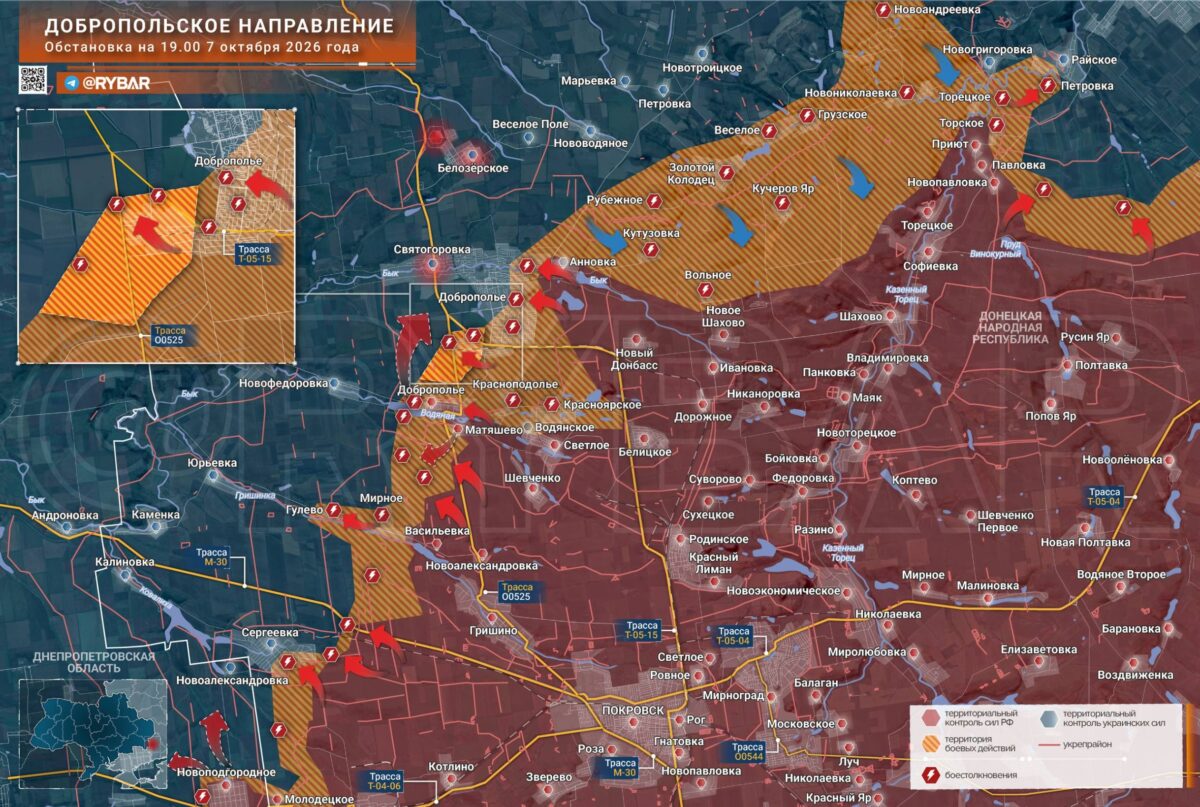
Key directions according to Rybar, Ukrainian and independent analysts.
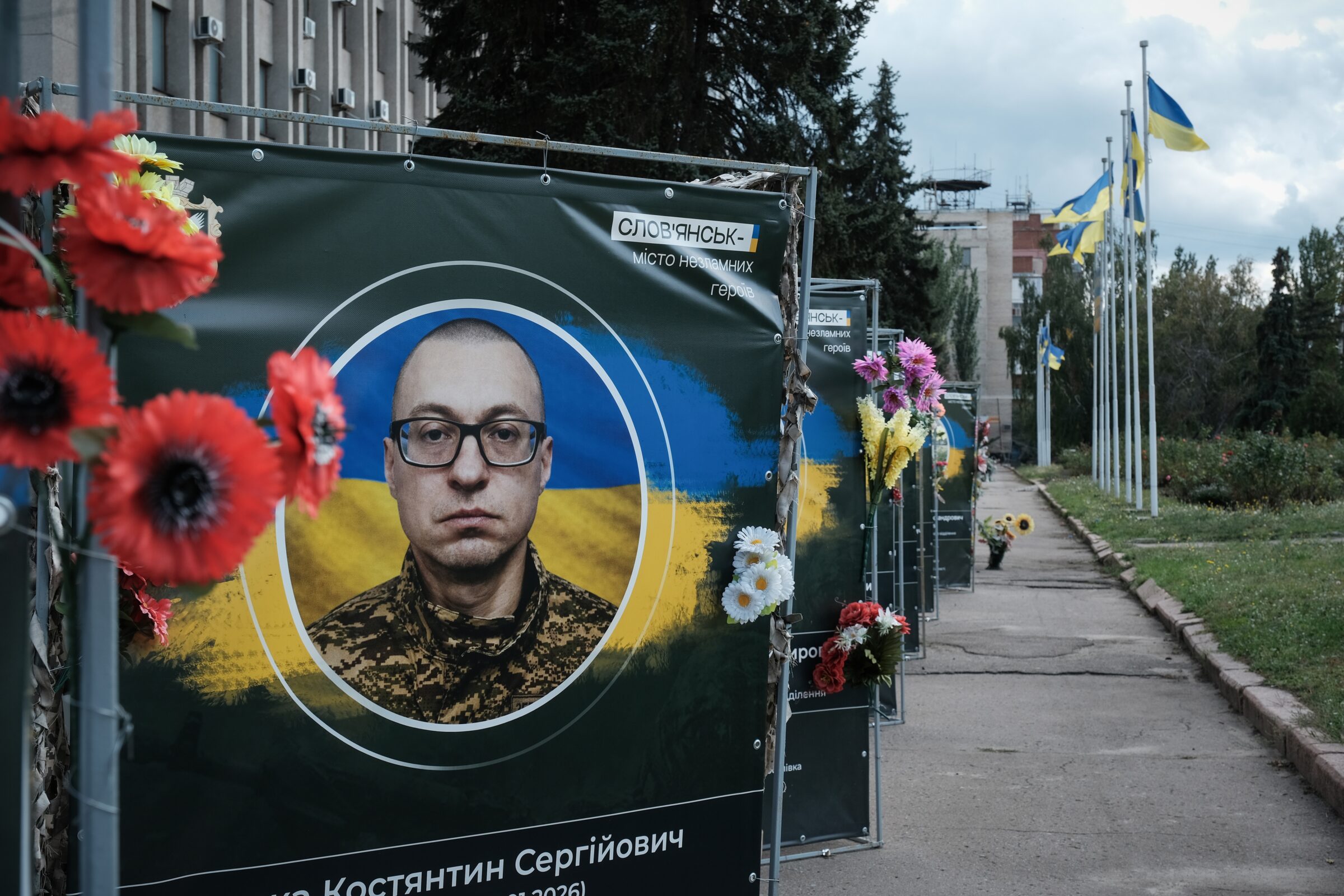
Forget Sloviansk: its capture is currently unrealistic.
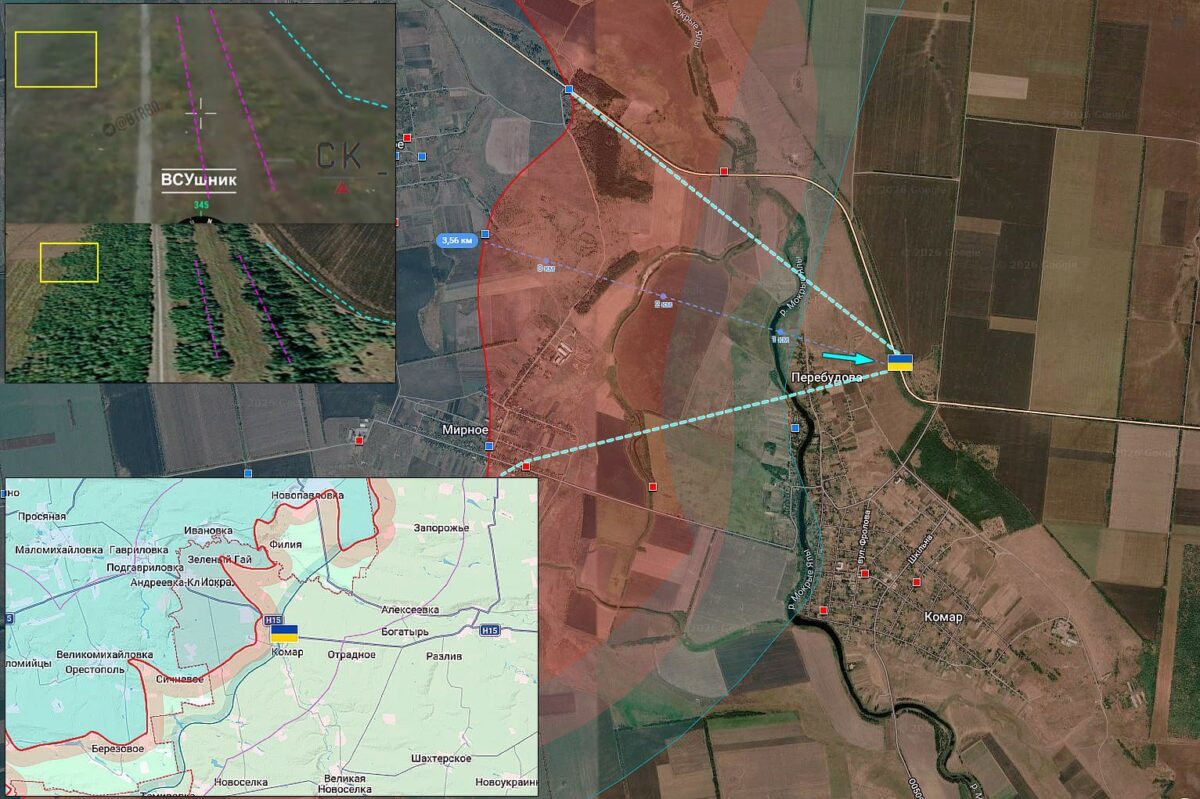
Ukrainian pressure continues towards Velyka Novosilka, with fighting already under way near Komar on the eastern bank of the Mokri Yaly river.
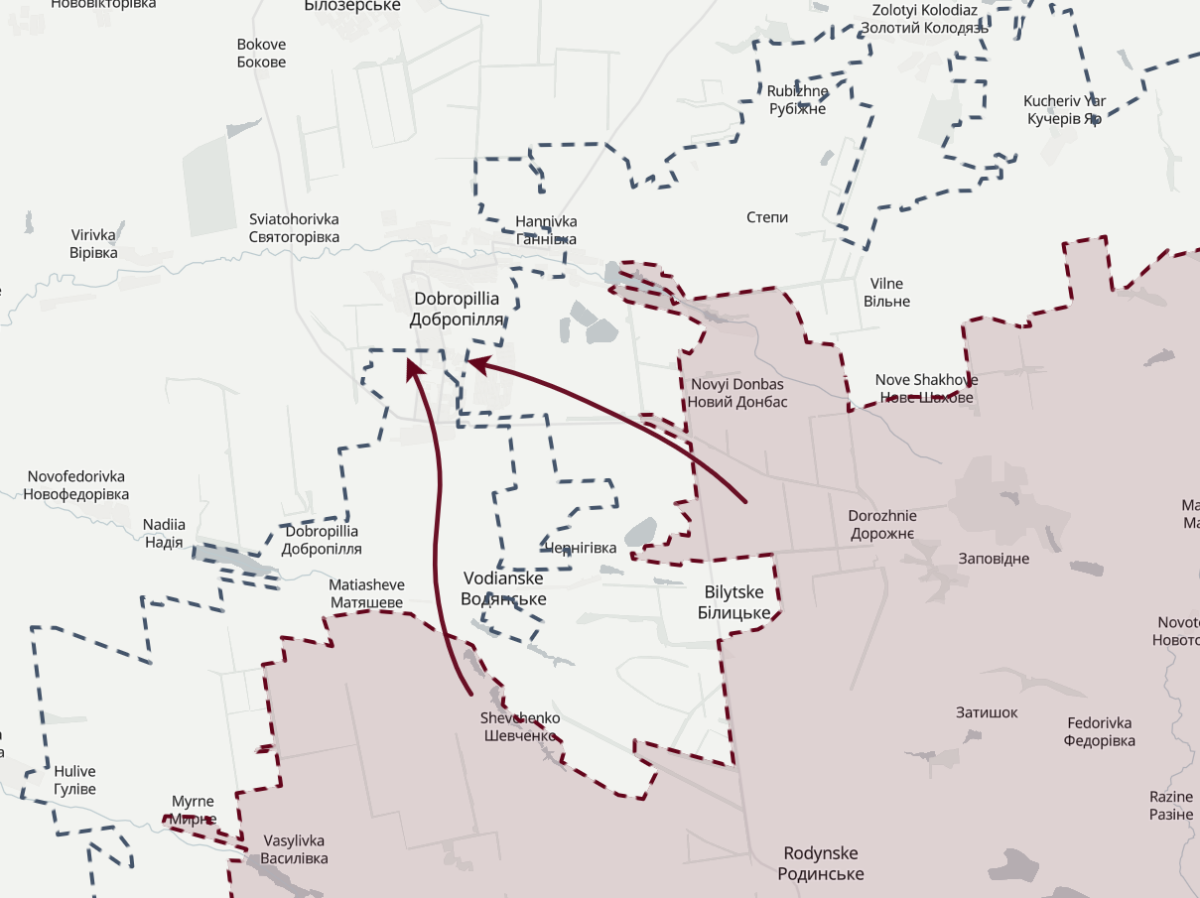
Russians are infiltrating Dobropillia, but a Ukrainian counteroffensive is pressing against their flank from the north.
The battle for data centres is now two-way, with Ukrainians attacking Russia’s ‘Google’.
Maps of the day — Sloviansk direction; Velyka Novosilka direction; Dobropillia direction.
Videos of the day — a scene from the Second World War: a MiG-29 shoots down a drone with its cannon; soldiers clear a network of Russian bunkers; Himars destroys an artillery radar; what the R-280 road to Crimea looks like.
Montenegro detained Mikhail Zvinchuk, the founder of the Rybar Telegram channel, who occupies one of the leading positions in the ecosystem of Russian media supporting the war. His wife and several associates were arrested alongside him. Colleagues in Moscow issued a statement saying they had been planning to film a report on one of the local monasteries, but the authorities of the Nato member state suspected them of conducting a hybrid operation.
At the top of Russian propaganda are the traditional state media, under the Kremlin’s complete control. They have almost no informational value, as they merely repeat the regime’s propaganda.
Below them, however, is a complex structure of Telegram channels that provide more varied reporting, including critical coverage. However, criticism is permitted only of mistakes in the conduct of the war, not of the war itself.
These channels, too, spread propaganda and keep Russian society in a state of war, but they also provide information that helps in analysing the course of the fighting. Rybar is among the largest and most influential of them.
In this case, it is not the work of an individual author but a media outlet with an editorial team and extensive content for 1.5m readers, so Zvinchuk’s arrest does not mean the end of publishing under this brand.
Yet through him, we can follow the fascinating story of a man who came from Russia’s defence ministry to spread its propaganda in the years that followed.
Paradoxically, however, he has recently been one of the few sources in Russia to report regularly on the Russian army’s failures at the front. And the preceding 48 hours were particularly rich in such assessments.
We will therefore gradually describe events in three different directions where, according to Rybar, the Russians are either retreating or at risk of doing so. Coincidentally, these are currently the most important directions of military operations.
We will compare all of its information with independent or Ukrainian sources.
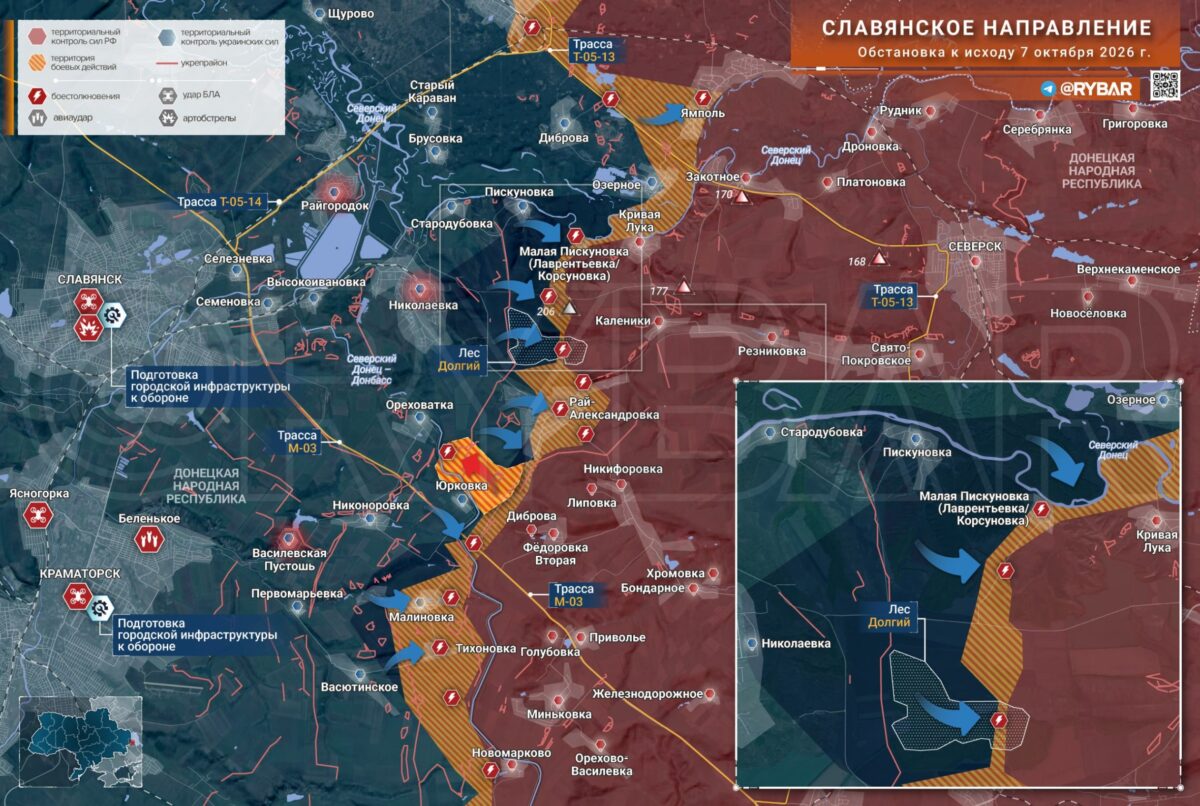
Forget Sloviansk: its capture is currently unrealistic. “The situation is worsening; Sloviansk is being postponed,” Rybar wrote in the first sentence of its latest analysis of the Sloviansk direction. It explained why at length.
According to it, Ukrainian units in the area are increasing the pressure and exploiting their successes near Lyman, which lies north of Sloviansk. The Russian army has suffered a serious defeat here in recent months, losing a large salient from which it had hoped to bypass the Sloviansk-Kramatorsk agglomeration from the north.
Rybar listed the ensuing complications: according to it, Ukrainians have concentrated fresh drone units around the village of Dibrova; the Russians had to withdraw from the village of Piskunivka and are now trying to save Kryva Luka. Ukrainians are also pressing into the village of Ozerne.
Ukrainian formations are increasing their activity, exploiting successes in the Lyman area, where fresh forces of drone operators have been concentrated around Dibrova.
Russian troops were pushed out of what remained of the village of Piskunivka and are now defending the approaches to Kryva Luka. The enemy is trying to break through there both from the west and across the river from Ozerne.
Moreover, heavy fighting is under way west of the village of Kalynyky, while fighting for Rai-Oleksandrivka is “fierce”, “although it was under the Russian army’s full control only recently”.
Nor is this the end of Rybar’s bad news. An “equally difficult situation” persists on the western bank of the Siverskyi Donets-Donbas Canal, where Russian soldiers are “for now” holding positions in the villages of Malynivka, Tykhonivka, and Yurkivka.
Taken together, all of this means that the prospect of an “attack on the agglomeration has receded considerably”.
“Without control of the forests below Lyman, the offensive is doomed, if not to failure, then to high losses from attacks on its flank,” Rybar added.
Its map fully matches the verbal description. The red arrows running from east to west along the entire stretch have been replaced by blue, Ukrainian arrows pointing from west to east.
Paradoxically, the local Telegram channel Mikolaivka-Sloviansk Online provides a far less optimistic picture.
While Rybar no longer even mentions Mykolaivka, which directly borders Sloviansk, according to this source — which has repeatedly provided highly accurate and widely cited information — Russians are still managing to infiltrate it. On Wednesday, it wrote that “the Russian army is applying pressure from the direction of Rai-Oleksandrivka”, while the village itself is in the grey zone.
The explanation may be simple. Most of the names refer to villages the Russians never fully captured, although they claimed they had — including Rybar itself. This is why its map looks as though a small counteroffensive were under way east of Sloviansk. In reality, it mainly makes its previous misleading claims more realistic.
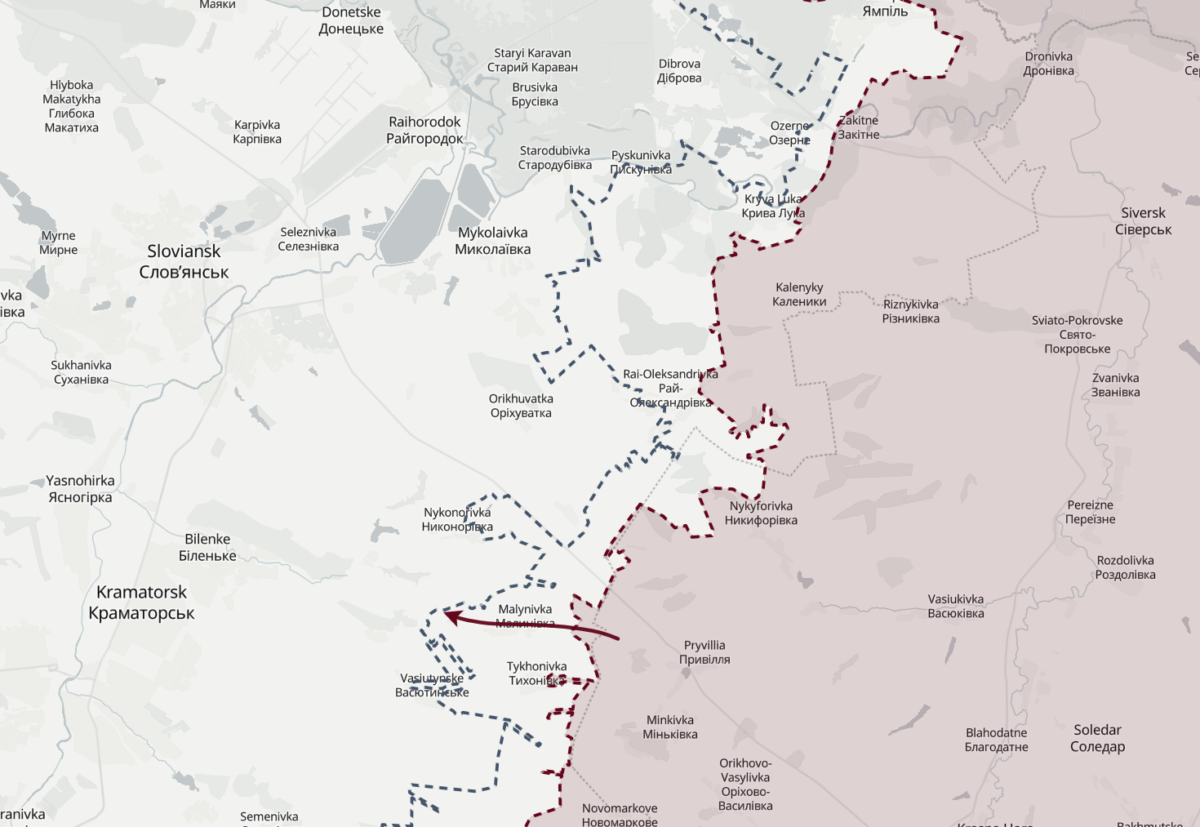
Far more accurate is the map by the Finnish Black Bird Group. Rai-Oleksandrivka is in the middle of the image — no credible analysts have ever considered it occupied by the Russians. Further north are Ozerne and Kryva Luka. Ozerne is particularly interesting.
According to Rybar, the Russians are trying to prevent the Ukrainian army from entering the village; independent analysts show it partly in the grey zone and partly under Ukrainian control. Rybar therefore correctly sees Russian problems, but at this point this is more its usual cartographic “retreat” from unrealistic positions.
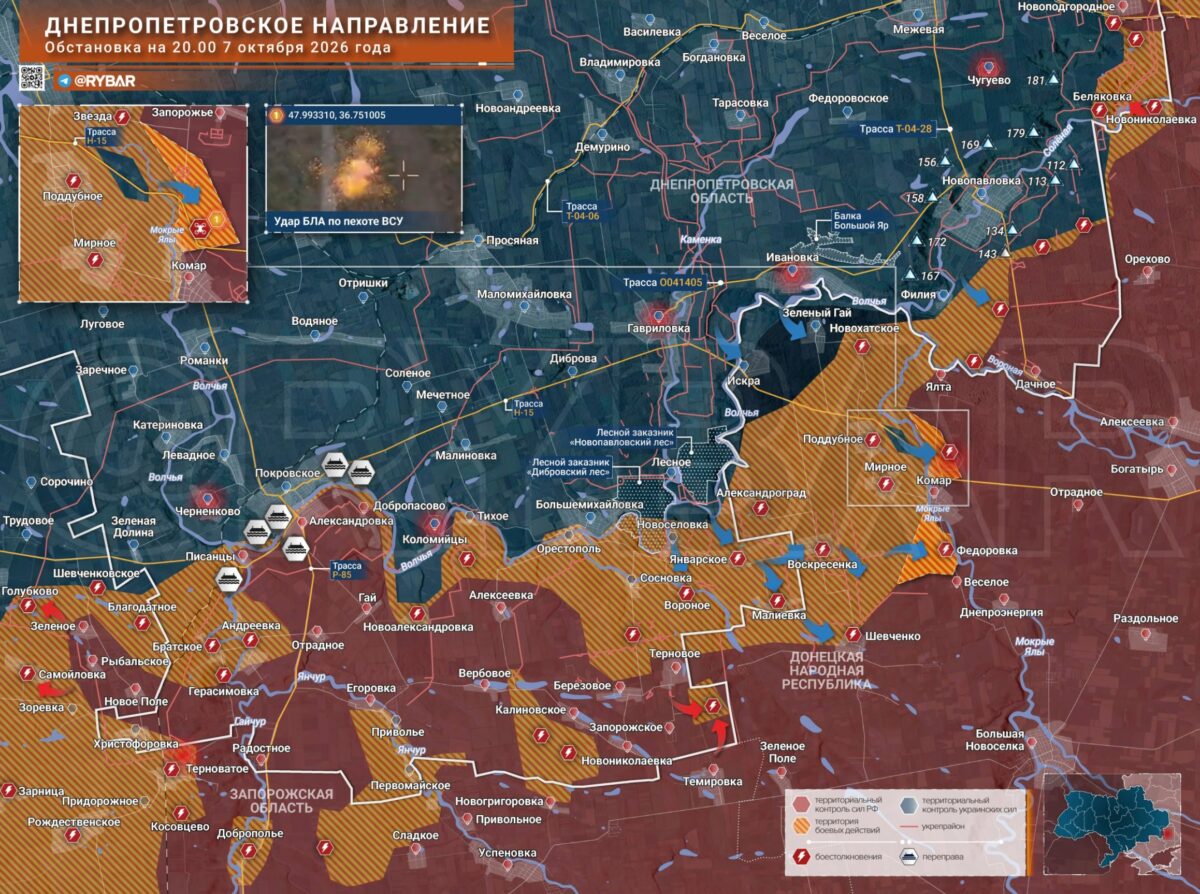
Ukrainian pressure continues towards Velyka Novosilka, with fighting already under way near Komar on the eastern bank of the Mokri Yaly river. This is not entirely new either, but several Russian sources are writing about fighting in this direction with new urgency and, from the Russian perspective, scepticism.
“The situation remains extremely tense. There is mounting evidence that the enemy is seeking to advance around the village of Komar,” Rybar wrote.
This is an important village. When the Russians captured Velyka Novosilka last year after taking Vuhledar, Komar was a significant obstacle to their advance into Dnipropetrovsk oblast.
Fierce fighting took place over the village at the time, and the Ukrainian army lost it in June 2025. The front then moved another 15 to 20 km deeper into Ukrainian territory, but it is now moving back after months of slow advances.
Here, too, Rybar’s map appears more dramatic than the situation actually is. It depicts territory being liberated since February. However, it claims that the situation is worsening and the outlook is negative.
But the information about movements near Komar is genuinely fresh. Other sources agree on it almost metre for metre.
The Russian mapping project Slivochny Kapriz showed the exact location at the northern end of Komar, across the Mokri Yaly river, where Russian drones struck a Ukrainian video.
The Ukrainian Telegram account Petrenko also geolocated the incident at the same location.
Alexander Radov, another pro-war Russian, claimed that testimony from Ukrainian prisoners in this direction indicated that the Ukrainian command’s objectives were Bahatyr, 12 km east of Komar, and Velyka Novosilka itself, 13 km to the south.
This claim cannot be verified, but if it were true, Ukrainian objectives in this sector would be becoming ambitious. (Both Bahatyr and Velyka Novosilka are in the lower-right section of Rybar’s map at the beginning of this section.)
Russians are infiltrating Dobropillia, but a Ukrainian counteroffensive is pressing against their flank from the north. The fact that Russians are already operating in the town has been objectively confirmed by both sides. However, an earlier Russian claim that it had been encircled is false.
Rybar’s map again reflects what was written. In the town itself and its surroundings, red arrows show Russian attacks, while northeast of it, Ukrainian counterattacks are shown against the flank.
The Ukrainian channel Petrenko again serves as a source from the other side. Its map of Dobropillia has three circles, each marking a location where drones spotted Russian soldiers.
A Ukrainian soldier writing under the name Bakhmut Demon also confirmed Russian infiltrations into the town. However, he said they were being eliminated and that Russian losses would rise from November. He probably meant the period when the leaves fall and the terrain begins to turn muddy. Both will make the attackers’ advance more difficult.
Bakhmut Demon also warned that vigilance needed to be increased, as Russians are changing into civilian clothes and trying to infiltrate between Ukrainian positions in them.
Soldiers on the Zaporizhzhia direction described the same practice to us during a recent trip to Ukraine. There, too, they said that men in civilian clothing are sent ahead of infiltration groups in order to deceive drone operators.
Finally, another map by Black Bird Group. It, too, confirms the Russian advance towards Dobropillia, but does not show Ukrainian attacks in the north. The explanation is the same as in the previous cases: Rybar had drawn Russian positions much further forward than they actually were.
The battle for data centres is now two-way, with Ukrainians attacking Russia’s ‘Google’. Yandex is a technology giant that underpins the Russian internet. Its search engine, for example, is used by two-thirds of Russians. But its services are far broader. Among other things, it provides cloud storage to its clients.
The company provides its services through five main data centres. On Thursday, drones attacked the first of them. They struck the facility in Sasovo, in Ryazan oblast.
“This data centre is one of the key and largest data centres in Yandex’s Russian infrastructure. It contains tens of thousands of servers, and the company’s cloud services and computing capacity for machine learning operate on its equipment,” the Russian Telegram channel Military Informant explained the significance of the target.
As a result of the attack, outages in various internet-connected services were reported throughout the day.
The exile website Meduza listed several affected media outlets whose websites either could not be loaded at times or loaded slowly: RBC, Vedomosti, RIA Novosti, Kommersant, Vesti, Interfax, and Rossiyskaya Gazeta.
On Friday, another Yandex data centre was attacked, this time in Kaluga. The company acknowledged damage to equipment and announced that “some Yandex services may experience outages”.
Videos of the day
The events in the following video are almost identical to those witnessed by people in south-east England in 1944. Nazi Germany had then begun using V-1 flying bombs, and the most effective weapon against them was fighter aircraft, which shot down hundreds of these “wonder weapons” just above the sea while flying at the limit of their maximum speed.
Ukrainian pilots are now using the same tactic because of a shortage of air-to-air missiles. In this case, a MiG-29 shot down a Russian Geran-4 jet drone with fire from its 30mm cannon.
The MiG-29 is 17.4 metres long. The distance between it and the drone when firing began was around eight times its length — just under 150 metres. The risks to the pilot are obvious: the cloud of debris endangers the aircraft itself.
Once a common sight, now more of a rarity. A Himars multiple-launch rocket system destroyed a Russian artillery radar.
💥A rare sight these days: a HIMARS strike, apparently using a GMLRS rocket, destroys a Russian Irbis counter-battery radar after it was detected and tracked by reconnaissance drones of Ukraine’s 43rd Artillery Brigade.
— Special Kherson Cat 🐈🇺🇦 (@bayraktar_1love) October 8, 2026
The war has moved underground to an even greater extent than was previously customary. Soldiers at the front are building interconnected underground bunkers. A video by the 5th Assault Brigade shows the clearing of what were probably abandoned Russian positions.
Soldiers throw explosives into the openings. The footage then allows viewers to see, from plumes of smoke and dust pouring from underground, how many entrances the bunker had and how they were arranged.
🇺🇦2nd Assault Battalion of the 5th Assault Brigade clearing a collapsed bunker system, #Huliaipole sector at south eastern front pic.twitter.com/OoVU6x7PIH
By Monday (5 October), Russia had demonstrably lost 24,170 pieces of heavy equipment (24,138 on Tuesday, 22 September). Of these, Ukrainians destroyed 19,133 (19,105), 1,003 (1,000) were damaged, 1,194 (1,194) were abandoned by their crews and the Ukrainian army captured 2,840 (2,839). This includes 4,452 (4,448) tanks, of which 3,357 (3,353) were destroyed in combat.
Ukraine lost 12,238 (12,175) pieces of equipment, of which 9,633 (9,579) were destroyed, 711 (702) damaged, 695 (695) abandoned and 1,199 (1,199) captured. This includes 1,466 (1,464) tanks, of which 1,126 (1,125) were destroyed in combat.
Note: Neither side regularly reports its own dead or destroyed equipment. Ukraine publishes daily figures for Russian casualties and destroyed equipment, which cannot be independently verified. This overview uses data from the Oryx project, which has compiled a list of equipment losses documented exclusively by photographs since the beginning of the war.
The European Union’s technology chief expects countries that oppose stricter artificial intelligence rules to change course, as AI systems are becoming more capable and harder to evaluate.
“I’m sure that all those countries who are not willing to regulate the use of AI, they will come back to that quite soon,” European Commission Executive Vice-President Henna Virkkunen told the European Newsroom (enr) on Friday. She warned of a “risk of very serious incidents” in the absence of any guardrails and called for the establishment of safeguards at an international level.
Concerns about the risks of AI have been at the centre of public attention for weeks, sparked mainly by hacking attacks carried out by AI software that acted autonomously during test runs. Some industry insiders have sounded the alarm, warning that artificial intelligence could potentially cause large numbers of deaths if the technology were to spiral out of control.
Virkkunen warned that fierce global competition is creating a risk that “companies are coming to the markets with products that they haven’t been testing enough.” She pointed to incidents in which AI agents had escaped from test “sandboxes” and service providers or developers had been unable to control their own systems.
At the same time, she said, some AI models “have become so capable that it’s more and more difficult also to evaluate them.” Adequate testing required highly qualified experts, sufficient expertise and enough time, she added.
The EU began enforcing its AI Act, the world’s first comprehensive legal framework to regulate AI based on the level of risk it poses, in August. Virkkunen said that the Commission had already sent a Request for Information (RFI) to two major US-based AI companies – OpenAI, known for ChatGPT, and Anthropic, known for Claude – as well as to some Chinese companies not further specified.
An RFI is a formal investigative tool used by the Commission to gather facts, data, and internal documentation from businesses, governments, or member states.
Global AI race
China and the United States have emerged as frontrunners in the development of AI systems, showing no signs of hitting the breaks. Governments in both countries have rejected calls to slow down its development, arguing it would create a competitive, strategic and economic disadvantage.
“Currently the risks are mainly focused and related to cyber security,” Virkkunen said, but she warned of more serious risks in future, including the possibility that highly capable models could be used in connection with biological weapons or fall into the hands of terrorists.
The Finnish politician called for the establishment of international rules to mitigate the risks of AI. She said the security of AI models had already been discussed within the Group of Seven (G7) this year as well as among G20 countries, and that the discussions would continue.
Talking about the EU’s role in AI development, Virkkunen said the Union should avoid dependence on a single company or third country for critical technologies and develop AI systems based on European values, languages and culture.
An interactive event in Warsaw explored how artificial intelligence, platform algorithms and commercial interests influence young people’s digital experiences — and why their voices should matter in decisions about technology. MEDIA-SOCIETY.COM // WARSAW, 9 October 2026 — What does a teenager actually encounter when opening a social media app? And how much of that experience […]
At the Warsaw Human Dimension Conference, three OSCE representatives examined the persistence of religious hatred, the political misuse of religion and the need to prevent discrimination before it turns into violence. MEDIA-SOCIETY.COM // Warsaw | 9 October 2026 | Human Rights & Religious Freedom. Governments across the OSCE region have made extensive commitments to combat […]
Last week, EU member states reached a common position on the European Commission Omnibus X ‘Food and Feed’ proposal, in a bid to simplify regulation of pesticides. In reality, however, it will weaken protection against pesticides’ negative effects in Europe. The proposal pleases the chemical industry but goes against the wishes of a vast majority of citizens and many scientists who value people’s health, clean drinking water and biodiversity.
A hearing in the European Parliament on 3 September highlighted the real problem. Under the guise of a ‘discussion with experts’ in the field of health and environment, the parliament handed the megaphone to lobbyists representing a broken, toxic agricultural model.
Representatives of industrial agriculture – sugar beet, apple and cereal growers – parroted industry arguments, justifying their demands to stop banning pesticides that are toxic to public health, the environment and pollute our water resources.
Despite Europe witnessing massive droughts, extreme heatwaves leading to countless deaths, wildfires destroying biodiversity, and devastating crop losses, it seems that a significant share of MEPs are ready and willing to accelerate the degradation of European’s wellbeing and natural resources.
Listening to them raises a fundamental question: Do farmers truly want to rely on a cocktail of toxic chemicals to maximise yields at low market prices, destroying their own health and local ecosystems in the process? Or do they wish to make an honest living, producing quality food in balance with nature for a fair income?
CAP subsidies
To better grasp this contradiction, we must look at what is actually at stake here.
Agrochemical corporations seek their share of the Common Agriculture Policy (CAP) cake – a colossal €58bn budget, accounting for one third of the EU’s total budget.
Their own survival is reliant on keeping as many farmers as possible dependent on pesticides, fertilisers and industrial seeds. By diverting public CAP funds through farmers into the pockets of their shareholders, these companies ensure their long-term profitability.
Many farmers’ unions also represent agri-cooperatives that profit significantly from selling pesticides, which raises questions about whether they truly represent farmers’ long-term interests, or those of the pesticide industry.
Since the European Commission published its ‘simplification’ proposal in December 2025, proponents of pesticide-intensive farming have presented a series of flawed arguments that in fact reveal the dead-end to which intensive agriculture has led us.
Firstly, farmers’ organisations complain about a “lack of pesticide substances” on the market.
Currently around 450 different pesticide active substances are approved in the EU, from insecticides to fungicides, and herbicides. If 450 different options are insufficient, does this not signal an unhealthy addiction rather than a shortage?
Lobbyist groups, furthermore, claim that pest resistance to synthetic pesticides would inevitably lead to dramatic yield losses and hunger, arguing for even more pesticides with diverse modes of action.
And yet, according to scientific research, the multiple chemical strategy that has been applied for more than 40 years is the very cause of the appearance of resistance. This problem cannot be solved with the mindset that caused it. The only scientific solution is, therefore, not more chemistry but prevention, and the use of alternative methods.
Thousands of farmers across the EU and the rest of the world are already proving this by switching towards Integrated Pest Management (a strategy for low-pesticide-input pest management) or organic practices to reduce pesticide inputs.
Who bares the cost
The call to keep all pesticides on the market – and potentially even use some of the banned ones – serves only the short-term interests of the pesticide industry, not of the farmers.
Destroying soil life – the basis of soil fertility – with chemicals, and killing insect populations that naturally control pests and pollinate crops, jeopardises the very basis of farming and long-term food security.
The societal costs of this pesticide-dependent model are staggering. Citizens are the ones who bear the healthcare costs for chronic diseases such as cancer and Parkinson’s, which impact not only farmers but also residents of agricultural areas.
We face water pollution that has become nearly impossible to remediate. Fewer pollinators means fewer healthy fruit and vegetables. These ‘externalities’ far outweigh any short-term benefits.
This is the reason why the Paris and Munich water companies financially support farmers in protecting the groundwater, because doing so is up to 45 times cheaper than depollution.
In the meantime, the agrochemical industry enjoys huge profits from pesticide sales, largely supported by CAP subsidies, while society foots the bill for the damage. It is indeed a perfect business model…for them.
Lobbyist circus
The spectacle witnessed in the alleged House of European Democracy is testament to the state of our political world; one that is dominated by corporate interests over citizens and farmers’ wellbeing.
We witnessed the desperate battle of a toxic agricultural model that struggles to survive, and resists being replaced by sustainable farming methods.
The lobbyist speakers in the European Parliament hearing more or less gave the diagnosis to the current pesticide-intensive agricultural system: it is simply broken.
Citizens have repeatedly expressed their concern on the impact of pesticides on their health and biodiversity. They have also expressed the need that public support for agriculture serves the common good.
The pesticide Omnibus X proposal is merely an attempt to maintain a detrimental status quo that favours the pesticides industry.
What is needed now is a new blueprint for a system which financially supports farmers to implement practices that improve soil and plant health, favour beneficial insects, accelerate the availability of alternatives to pesticides such as biocontrol products, and rapidly phase out toxic synthetic pesticides to protect our health, water resources and biodiversity.
Only then can we ensure a sustainable future for European agriculture and our children. Only then, will a greater share of the CAP remain in the hands of farmers who feed us and protect our nature.
EUobserver is proud to have an editorial partnership with Europod to co-publish the podcast series “Briefed” hosted by Léa Marchal. The podcast is available on all major platforms.
Find the full transcript below:
Spain is heading for early elections, after prime minister Pedro Sánchez called a snap vote last week. According to current polls, the conservative People’s Party, or PP, is ahead of Sánchez’s Socialists, while Vox is also making significant gains.
So, what would happen if the PP and Vox decided to govern together? And what would that mean for Europe?
Let’s start with the numbers. According to Politico’s poll of polls, the PP, the conservative right-wing party, is currently polling first, at around 34 percent. The Socialists of the PSOE are at around 26 percent, and the far-right party Vox at around 18 percent.
The Socialists already came second in the last general election, in 2023. The PP won the most seats, but it couldn’t form a government. Pedro Sánchez eventually secured enough support from other parties, including the left-wing Sumar, to remain prime minister.
This time, the balance could be different. If the current polling were reflected in the election result, the PP and Vox could have enough seats to form a government together. PP leader Alberto Núñez Feijóo has said he could negotiate with Vox.
And this would not be completely new in Spain. The PP and Vox are already governing together in four Spanish regions: Extremadura, Aragon, Castilla y León and Andalusia.
Now, would that mean Spain would have a government with Vox ministers? One possibility would be a government led by the PP, with Vox supporting it from outside, without taking ministerial positions. That’s what we’ve seen in Sweden, for example.
But what seems more and more likely is that Vox would become part of the government itself. The Vox MEP José Buxadé told Politico a few weeks ago that if his party negotiates a coalition with the PP, it would seek ministerial positions proportional to the number of votes it receives.
According to Politico, based on current polling, that could mean a third of ministers coming from Vox. So, what would this mean for Europe and for Spain? A lot.
Spain is currently one of the EU countries where the government has taken relatively progressive positions on issues such as migration, climate policy and social policy.
A change of government would therefore give more weight to the right in the European Council. That could be particularly important on migration, but also on economic files.
And then there is climate policy. Vox has called for the abolition of the European Green Deal, arguing that environmental policies have harmed employment and Spain’s energy policy.
Something that is very much contradicted by the fact that Spain is one of the European countries that has been particularly resilient during the energy crisis, thanks to its renewable energy.
So a change in climate policy could have consequences not only for Spain, but also for the EU’s wider energy transition.
And there could be another major change: foreign policy. Pedro Sánchez has been one of the more outspoken European leaders on the war in Gaza. Spain has taken a particularly critical position towards Israel and has recognised a Palestinian state.
Vox takes a very different position. The party strongly supports Israel and has called for European funding to the Palestinian Authority to be suspended.
The Spanish election is still several weeks away, so we don’t yet know whether the PP and Vox will actually be able to form a government, or what form such an agreement would take.
But if they do, Spain’s position in Europe could change quite significantly.

 Login