❌

Reading view

NATO’s weapons-buying agency opens dedicated door for Ukraine, non-member, letting it buy arms through its contracts and its firms bid for tenders
Ukraine has just become the first country with which NATO’s weapons-buying agency has ever established a dedicated partnership. Under a new agreement, Kyiv has gained the right to purchase weapons through the NATO Support and Procurement Agency (NSPA), and Ukrainian firms can bid on its tenders, the Defense Ministry reports.

The deal, approved by the Ukrainian government in August and signed last week, is called the Security Cooperation Support Partnership. Through it, Ukraine can tap the agency’s 45 procurement partnerships, which cover the purchase, maintenance, and lifecycle support of weapons systems.

A single window into NATO’s arms market

For Ukraine’s military, the partnership is meant to make buying faster and cheaper. Orders can run through existing NSPA contracts or through new tenders, including an emergency-procurement track, and pooling Ukraine’s needs with those of other countries is designed to sharpen prices.

The purchases can be paid for from Ukraine’s state budget, by international partners, or through joint financing.

“Ukraine is the first and only country, and a non-member of NATO at that, for which a separate partnership was created as a single entry point to the agency’s work, and Ukrainian industry was given broad access to the agency’s tenders,” said Deputy Defense Minister Mstyslav Banik.

And a way in for Ukraine’s arms makers

The agreement cuts both ways, too. Ukrainian defense companies can now register in the agency’s supplier database, submit proposals, compete in tenders on equal footing with foreign firms, and sign contracts with NSPA under a mechanism that runs for five years from April 2025.

“We want our partners to gain access to this experience and these technologies, and Ukrainian producers to gain new opportunities for cooperation,” said Deputy Defense Minister Hanna Hvozdiar.

This is a partnership that benefits both sides, the Ukrainian official added.

The signing was announced on 14 October at an NSPA industry event in Kyiv that drew about 150 Ukrainian defense manufacturers.

  •  

Zelenskyy names three postwar security guarantees for Ukraine. Even Russia needs one of them, he says

warnings back starlink cap isn’t zelenskyy says ukraine’s two lifelines one restored · post ukrainian president volodymyr interview nbc’s meet press aired 18 2026 ukraine news reports

The hardest part of ending Russia's war is making sure it cannot start it again. As the peace talks have escalated ahead of the US elections, Ukraine is weighing three options for its postwar security.

Among them are NATO membership, direct US guarantees modeled on NATO’s Article 5, and a European “Coalition of the Willing” backed by Washington, President Volodymyr Zelenskyy says, according to UNIAN. But none of them have been agreed to yet.

Zelenskyy describes the guarantees as a single package, with each layer still under discussion with partners. All of it, he says, rests on a strong Ukrainian army, in both numbers and quality.

Three guarantees, none of them signed

Everyone counts on NATO, Zelenskyy says, but Kyiv is also negotiating direct guarantees from the US, including an Article 5-style collective-defense clause, alongside the European Coalition of the Willing that would act together with Washington. The arithmetic, he said, is already done.

“Our colleagues in Europe and America know this. We have already calculated everything: both the financing and the corresponding number of our soldiers, so that our state can be at peace,” he states.

Why Zelenskyy says even Russia should want Ukraine in NATO

He went further, arguing that NATO membership would serve not only Ukraine and the Alliance but also Russia.

“I think, honestly, the Russians need our accession to NATO too, because for them that is more security than Ukraine outside NATO,” he claims.

The talks come as Washington pushes toward negotiations. Zelenskyy says he expects signals from US Secretary of State Marco Rubio within a day or two, as well as a call with envoy Steve Witkoff. He adds that Jared Kushner, on his way to Kyiv in November, told him Russia supports a trilateral meeting of the US, Ukraine, and Russia, at the level of technical teams.

  •  

One year of Ukrainian arms exports, and industry has questions: how much army gained, where Berlin office is, who joins joint ventures

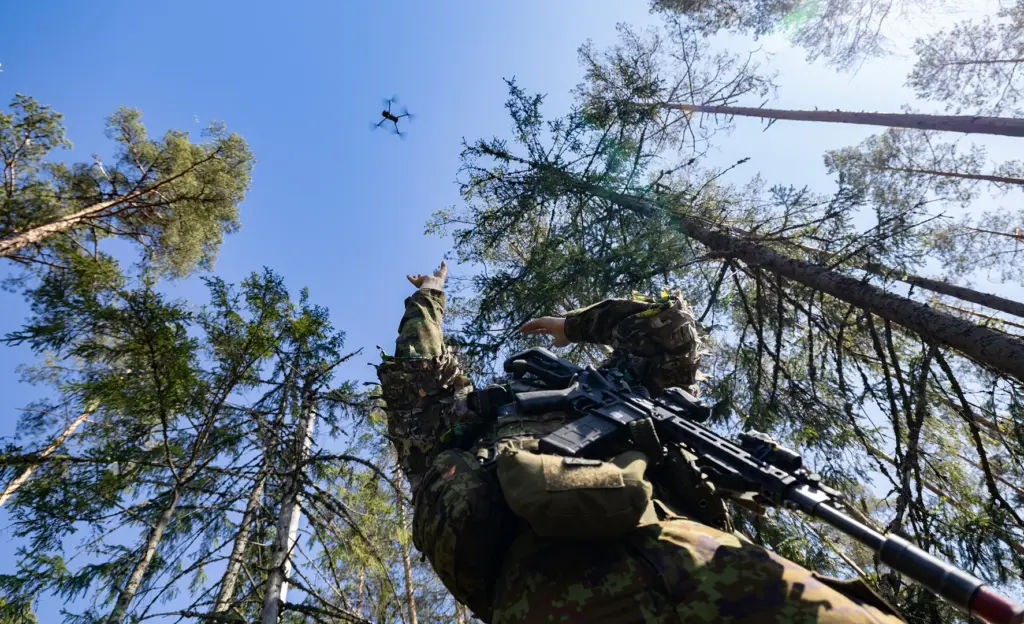
Estonian and Ukrainian soldiers fly drones together during Exercise Hedgehog 2025 in Estonia, where Ukrainian operators were credited with knocking out two battalions in a simulated engagement. Photo: vbl/OR-7 Ardi Hallismaa/ERR

Ukraine now builds far more weapons than it can afford to buy. A year ago, it promised to sell the surplus abroad and turn the proceeds back into its own army. However, 12 months later, that promise has barely materialized: a state fee of up to 30% is pricing Ukrainian arms out of foreign markets, and no one can say how much the army has actually gained, said Ihor Fedirko, executive director of the Ukrainian Council of Armorers.

President Volodymyr Zelenskyy announced the resumption of controlled weapons exports in October 2025, resting it on four promises: 1) sell what Ukraine makes beyond its own needs, 2) channel part of the proceeds into a special fund for the army, 3) open export offices in Europe and the US, and 4) establish joint ventures abroad.

The surplus is real: Ukraine's defense output is projected to reach $55 billion in 2026, far beyond what the state can finance. A year on, Fedirko checked each promise in turn.

1) Export of surpluses: rules that strangle businesses

    On 1 July 2026, the government approved rules for controlled arms exports. They shortened the maximum application review period from 90 to 30 days, but also introduced an export fee: 20% for finished products and technologies, and 30% for components. For finished products exported under the special procedure, the contract value must be at least $334,000.

      In September, the Ukrainian Council of Armorers, together with other associations, proposed a zero rate, no advance collection of the fee, refunds for deals that fall through, and simplified test shipments. The industry was promised that its amendments would be taken into account and that the resolution would be rewritten.

      Even in early October, however, the rules still needed work. According to Fedirko, the new mechanism has effectively not started working. Whether it can bring in additional funds for defense depends on how acceptable the export terms are to manufacturers.

      Fedirko says, though, that judging by current decisions, the state intends to keep the export fee.

      “The industry is ready to discuss its contribution to defense financing. But the rate must be economically justified,” he says.

      2) Procurement for the Ukrainian military: balance is only being established

      He adds that the Ukrainian Council of Armorers intends to push for a rate significantly lower than 20%, one that would let companies fulfill contracts and invest in production.

      With such high rates, Fedirko says, the competitiveness of Ukrainian weapons on foreign markets is in question, as is the ability to send even small test batches to potential buyers.

      “The fundamental requirement is post-payment: after the contract has actually been fulfilled and the manufacturer has been paid. A company should not pay the state in advance a share of income it has not yet received,” he says.

      He added that, given all this, the real export figures remain unclear, as does how much exports have actually brought the military.

      “The military and manufacturers must feel the benefit of exports. I sincerely hope that next year will bring much better results,” he says.

      In addition, on 12 October, the Ukrainian Parliament passed bill No. 15400 in the first reading. It provides for crediting the export fee to a special fund directed to the Ministry of Defense: 50% for the procurement, modernization, and repair of weapons and equipment, and 50% for the pay of Armed Forces personnel.

      The bill has not yet been adopted, but Fedirko says he expects “final adoption and launch of the mechanism.”

      3) Export offices: offices in Germany and Denmark

      On 3 November, the Ukrainian government named the first cities for export offices: Berlin and Copenhagen. On 15 December, it again spoke of preparing an office in Berlin. In reality, Fedirko says he does not know the office’s status, and it likewise remains unclear how companies can apply to it and how many contracts it has helped close.

      4) Joint ventures abroad: There are concrete results in this area

      According to Fedirko, eight joint ventures have been created, five of which are already supplying products to Ukraine. He stresses that this is the result of work by Ukrainian companies, foreign partners and the state, and that it deserves recognition.

      As early as February 2026, the authorities spoke of plans to create ten joint ventures in Europe within a year. At the same time, they announced Quantum Frontline Industries in Germany, with a planned annual capacity of 10,000 drones for Kyiv.

      Beyond the number of ventures and deliveries, however, it is important to understand how other manufacturers can join the Build with Ukraine program.

      “Who accepts applications, by what criteria are decisions made, and what support does a company receive?” Fedirko asks.

      In other words, joint ventures are already delivering results, but the rules of participation and the state support mechanism must be clear to companies that want to develop production abroad.

      •  

      Trump cannot get Putin to halt strikes on Ukraine’s power grid, so he blames Ukraine instead, Zelenskyy says

      musk tells ukraine’s president go zelenskyy says won’t resign never accept ukrainian land russian · post volodymyr during interview piers morgan recorded visit britain 14 2026 video uncensored / ukraine

      US President Donald Trump has failed to reach an agreement with Russian ruler Vladimir Putin on halting strikes against Ukraine's energy infrastructure. However, Trump is trying to shift the blame for this failure onto President Volodymyr Zelenskyy, he said on The Diary of a CEO podcast.

      His words came amid Russia's four record waves of ballistic missile attacks, after US Special Envoy Steve Witkoff described Putin as a "humanitarian." Previously, US officials cut Kyiv off from US intelligence and lowered a speed cap on Starlink to pressure Ukraine into stopping strikes on Russia's oil refineries that bring Moscow revenue for its war.

      Trump pins the problem on Kyiv, not Putin

      Zelenskyy explained the behavioral pattern behind Trump's recent actions and statements. At first, Putin rejected his proposal for a ceasefire. Then, the US president blamed it all on him, explaining to his people that world fuel prices are rising because of him, which is not true at all, said the Ukrainian leader.

      He pointed to the blocked Strait of Hormuz shipping chokepoint, not Ukraine’s refinery campaign, as the driver of higher prices.

      He also noted that the volumes of diesel allowed by the US are insufficient to lower global oil prices.

      Even so, Zelenskyy said he keeps a working relationship with Trump. What he will not accept is being cast as the villain in Russia’s war: by his account, the US president is rewriting the context, turning Ukraine’s leader into the target for a problem that starts in Moscow.

      Earlier, experts said the diesel deal was unlikely to meaningfully lower diesel prices. For Putin, the agreement itself was a win.

      A former senior State Department official says it hardly matters whether the fuel arrives, because Putin “has already achieved the result he wants,” with Trump believing he has a pre-election card that could move markets.

      •  

      War-hit Kyiv puts 85 European-funded buses on its streets. Here’s what riders find inside

      Kyiv has put 85 new buses into service. They have been bought under a financing agreement with the European Investment Bank, Mayor Vitali Klitschko said, after meeting EIB Group Vice-President Karl Nehammer to mark the project’s completion.

      The buses were purchased under the “Ukraine Urban Public Transport” project, backed by an EIB loan of 18.5 million euros, and arrived in several batches. All 85 will carry passengers on the capital’s routes, part of a push to modernize the fleet of the municipal operator Kyivpastrans even as the war grinds on.

      “The purchase made it possible to increase the accessibility of public transportation in the capital and improve passenger travel conditions,” Klitschko said, thanking the EIB for its help.

      What riders get on the new buses

      The vehicles are built for accessibility. The 12-meter low-floor buses carry ramps for people with disabilities and limited mobility, information displays, air conditioning and heating, video surveillance cameras, stop announcements, energy-saving LED lighting, and tinted glass.

      Each bus seats 27 passengers and holds another 80 standing. The vehicles are Turkish-built low-floor models that entered Kyiv service in batches between 2025 and 2026, aimed at riders whom older high-floor buses left behind, from wheelchair users to parents with strollers.

      A European bank rebuilding the way Kyiv moves

      The buses are one piece of a longer partnership. Since Russia’s war began, the EIB has provided more than 2 billion euros for emergency repairs to Ukraine’s infrastructure, the bank reported.

      Its urban-transport work for Kyiv has already delivered 20 new low-floor trams, and the bank signed a separate 50-million-euro loan, the first tranche of a 200-million-euro package, to help the Kyiv metro replace coaches that were 80% Russian-made before the war and end its dependence on Russian spare parts, the EIB said. The money is intended to upgrade or replace between 120 and 160 metro coaches.

      •  

      Ukraine’s Navy killed Russian Shahed: one drone boat launched another drone, which shot down third, all unmanned, all at sea

      fewer targets more waves jet-powered gerans partly free russia concentrate missiles isw says · post russia's shahed drone ukraine news ukrainian reports

          One drone launched another drone, which then shot down a third. All three were unmanned, and all at sea off Ukraine.

          Ukraine’s Navy has destroyed a Russian Shahed attack drone with a Sting interceptor launched from the Sargan 3000 unmanned surface vessel, the Navy said, showing sailors adapting to new aerial threats with sea-launched interceptors.

          Russian Shaheds threaten Ukraine’s ports, coastline and the ships that approach them, so meeting those drones out at sea, before they reach land, matters for the whole southern defense.

          A Ukrainian Navy sea drone, the Sargan 3000, destroyed a Russian Shahed kamikaze drone with a Sting interceptor drone

          Ukrainian troops continue to adapt to new threats to protect civilians and infrastructure
          🎥 Ukrainian Navy pic.twitter.com/kXvnqaebAw

          — Euromaidan Press (@EuromaidanPress) October 21, 2026

          The Sting is built to destroy Russian kamikaze drones such as the Shahed, Geran and Lancet, as well as reconnaissance drones, with quick deployment, a short training course and a top speed of 280 km/h, its producer, Wild Hornets, says.

          The interceptor that has become Ukraine’s Shahed-killer

          The Sting has earned its place at the front. The Ukrainian FPV interceptor has proven highly effective in combat, with a typical hit rate of 80 to 90% depending on the unit, and on some days reaching 100 percent, one launch for one kill.

          It is currently Ukraine’s most productive Shahed interceptor, according to the Wild Hornets, having destroyed more than 3,000 drones in its first seven months of use. Mounting it on a sea platform extends that record from land into the Black Sea.

          A drone boat that keeps finding new ways to kill

          The Sargan 3000 has become a multi-purpose hunter. In July, Ukrainian naval personnel used a Sargan 3000 to sink a Russian second-rank border patrol ship.

          In October, the same drone boat shot down a Russian Shahed with a turret-mounted machine gun over the Black Sea. Ukraine’s Navy took the Sargan 3000 into service in April 2026, and the drone boat has a combat radius of up to 1,600 kilometers, letting it clear the sky far from shore without putting a sailor in range.

          •  

          Ukraine sends ground robot to string wire obstacles in open, taking its sappers out of kill zone

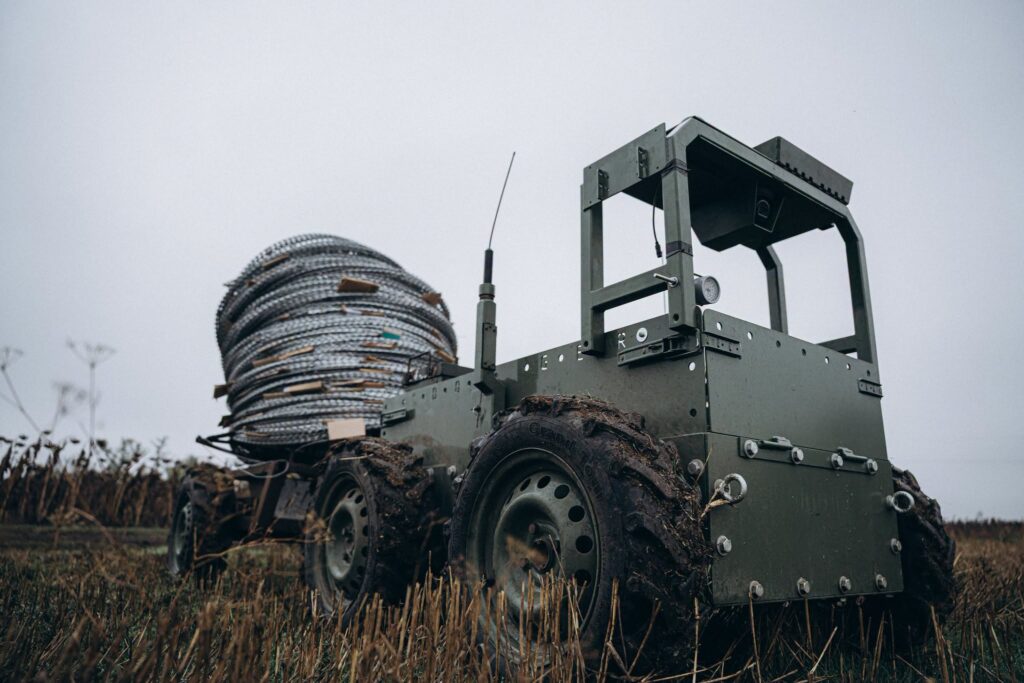
          Stringing wire in the open is one of the deadliest jobs at the front, and Ukraine is handing it to a robot. Ukraine’s Ground Forces have shown a ground robotic vehicle from the 16th Separate Support Brigade laying wire obstacles in open terrain, letting combat engineers do the dangerous work remotely.

          Laying obstacles in the open exposes sappers to Russian drones and artillery, so moving the task to a machine takes a soldier out of the kill zone. The vehicle carries a sloped frame holding a heavy coil of wire and unrolls the barrier on its own while the operator drives it from a safe distance.

          Ukraine’s Ground Forces have shown a ground robotic vehicle laying wire obstacles in open terrain. Source: The 16th Separate Support Brigade
          Ukraine’s Ground Forces have shown a ground robotic vehicle laying wire obstacles in open terrain. Source: The 16th Separate Support Brigade

          “Laying obstacles in open terrain always means risks for combat engineers. But today this hard work is done by ground drones,” the Ground Forces said.

          Ukraine’s Ground Forces have shown a ground robotic vehicle laying wire obstacles in open terrain. Source: The 16th Separate Support Brigade
          Ukraine’s Ground Forces have shown a ground robotic vehicle laying wire obstacles in open terrain. Source: The 16th Separate Support Brigade

          From supply runs to combat engineering, one machine at a time

          The wire-laying robot is one of many jobs in a fast-growing fleet. Ukraine’s ground robots ran more than 100,000 missions in the first eight months of 2026, with monthly runs logged in the Delta system climbing from 7,511 in January to nearly 20,000 in July. Kyiv has contracted over 22,000 of the machines since January, nearly double the total for all of 2025.

          The number of units operating them grew from 117 at the end of 2025 to 230 by mid-2026, and those machines already haul supplies, evacuate wounded and carry out strikes.

          From laying wire to leading the assault

          Robots are increasingly going where the fighting is hardest. For the first time in the war, Ukraine air-dropped kamikaze ground robots more than 10 kilometers behind Russian lines from heavy drones during Operation Vivaldi near Lyman, a counteroffensive in which the 3rd Army Corps retook more than 125 square kilometers of Donetsk Oblast.

          “In assault operations, drones and ground robots always go ahead of the infantry,” corps commander Brigadier General Andrii Biletskyi said. In another Vivaldi tactic, ground robots each fitted with two Bullspike grenade launchers attacked Russian positions and then detonated inside their shelters.

          This year, Ukraine’s Defense Procurement Agency began tendering logistics and strike ground robots against Defense Ministry specifications, with no manufacturer allowed more than half the order.

          •  

          Russian strikes close plant of Ukraine’s biggest aid backer. Its 3,600 workers and millions in taxes now hang in balance

          wiring maker volkswagen škoda takes russian hit zhytomyr oblast · post kromberg & schubert plant ablaze after strike overnight 9 2026 bunechko 5458835242480244867 ukraine news ukrainian reports

          Russia is now hitting the German investment that helps keep Ukraine’s economy running. Russian strikes have forced one of the Zhytomyr Oblast's largest employers, the German-invested Kromberg & Schubert plant, to shut down completely, putting 3,600 jobs at risk, the Zhytomyr Regional Military Administration said.

          Germany is Ukraine’s single biggest partner by volume of security aid, providing about a third of all support the country receives, according to Ukraine. Russia’s destruction of a German-owned factory strikes at the economic ties Kyiv most depends on.

          The plant produced electrical onboard cable systems for world-class cars. Its closure will cost the region millions of hryvnias in tax revenue. Some of its workers may leave the country, while others move to company sites in other cities.

          Regional Administration Head Vitalii Bunechko said the plant’s management and owners are working out options for the workers’ future. The authorities also promise maximum support if a decision is made to restart operations.

          A war that now reaches every corner of the economy

          The factory is one loss in a campaign that has widened far beyond the front. Russia has escalated its drone and missile attacks through 2026, striking first at power plants and residential blocks, then trains, factories, retailer warehouses and medicine depots across Ukraine.

          Ukraine’s Economy Ministry expects losses from Russian strikes to reach up to $10 billion this year, the same report noted. By late August, officials said Russia had destroyed about 90% of retail chains’ food logistics, a measure of how deep into civilian commerce the attacks now cut.

          The slow bleed on businesses that survive

          Even companies left standing lose working days to the strikes. Russia’s air war cost the average Ukrainian shopping mall 166.8 working days between 2022 and mid-2026, more than eight months of closed floors.

          For Zhytomyr, the Kromberg & Schubert shutdown turns that slow erosion into an outright closure, removing a budget-forming employer at a stroke.

          •  

          Her own city is under Russian fire, yet Kyiv woman urges killing Ukrainians among nearly 100,000 pro-Kremlin posts in two years. She faces up to 12 years

          russian strike in Kyiv

          Russia bombs Kyiv almost every day. Inside the same city, a single account spent two years pumping out nearly 100,000 posts in Russia’s favor. Ukraine’s Security Service has served notices of suspicion on six more pro-Kremlin agitators across the country, among them the Kyiv woman behind those posts, which included calls to kill Ukrainians, the agency said.

          Social media has become a channel for spreading hatred during the war, and the scale is striking. Except for Russian narratives, the Kyiv suspect also incited violence against a national minority and called for destroying the churches of religious communities, the agency said.

          The agency framed the six as part of a wider effort to justify Russia’s aggression and inflame ethnic and religious hatred. Investigators notified them of suspicion.

          Six accounts, one message from the Kremlin

          The others span the country. In Mykolaiv, SBU cyber specialists detained a person they say acted on a Russian handler’s orders, administering a local Telegram channel of more than 13,000 subscribers in support of Russian forces, investigators said.

          In Cherkasy Oblast, the wife of a priest of the Moscow-linked Ukrainian Orthodox Church allegedly praised Vladimir Putin and denied Russia’s aggression in Telegram chats, while a Russian citizen with permanent residence in Ukraine allegedly called the full-scale war an “internal civil conflict.” In Zakarpattia region, two women allegedly urged the region’s “separation” from Ukraine.

          What the suspects face, and where this fits

          The charges are grave. The suspects were notified under several articles of Ukraine’s Criminal Code, including inciting ethnic and religious hatred combined with threats and justifying Russian aggression, and face up to 12 years in prison with confiscation of property, the agency said.

          The sweep continues a long campaign against homegrown pro-Russian propagandists. In February, the SBU detained three suspected agitators who used Telegram and TikTok to call for missile strikes on Kyiv and to justify Russian war crimes, part of a pattern in which Moscow recruits users online to spread its narratives.

          •  

          Some of Ukraine’s artillery soldiers were TikTokers yesterday, ComBat Vision says. Their new plugin teaches them to aim

          This is what the UGV operator’s assistant in ComBat 4 looks like when operating at night or in low-visibility conditions.

          Ukraine receives Western weapons, but the code that teaches soldiers to aim them is increasingly its own. Developers of the Ukrainian battlefield reconnaissance and coordination system ComBat Vision have released a new plugin that turns the abstract math of artillery fire into a visual tool, letting crews simulate firing and learn to adjust it, the team says.

          The developers built the tool around a problem they name plainly: the quality of specialists entering the military is falling rapidly.

          “Artillery soldiers are sometimes yesterday’s TikTokers or "tanks" players,” the team explain, so the plugin makes firing and aiming as visual as possible to teach indirect fire quickly.

          On screen, it draws a round’s flight path from the weapon’s firing tables and the dispersion ellipse for that gun and munition, warns of obstacles on the calculated trajectory, and simulates the shell after the shot with a training error added. It then shows real or simulated bursts, averages the correction across a series of hits, and lets the user enter corrections, including by voice, and watch the result.

          The plugin draws its ballistics from MyGun, an app by Yaroslav Sherstiuk that automates ballistic and fire calculations for artillery. ComBat Vision itself coordinates troops and shares object data, integrating with optical sensors such as drones, ground robots and security cameras to fix targets in space.

          From a single app to a platform with a plugin store

          ComBat Vision’s bigger move is becoming a platform rather than a single app. The developers say they will open a plugin store within a week, where units can download the new artillery feature and others, such as repeater-coverage calculations and remote control of minefields.

          The team has announced plans to open it, not results from using it, so its payoff, letting one platform add new tools without building a separate system each time, is a claim to watch rather than a proven gain.

          •  

          In Oslo, US pushes Zelenskyy toward deal with Russia again. Day later, in same city, Norway discusses arming Ukraine with more NASAMS missiles

          Ukrainian President Volodymyr Zelenskyy in Oslo, on 21 October 2026. Source: Facebook/Zelenskyy

          As Washington leans on Ukraine to make a deal with Russia amid its diesel agreement ahead of the US elections, its European partners are meeting to keep it armed against deadly weapons.

          President Volodymyr Zelenskyy said he met Kongsberg CEO Eirik Lie and Norwegian Defense Minister Tore Sandvik in Oslo on 21 October to discuss more NASAMS air defenses, a day after meeting US presidential envoy Steve Witkoff in the same city.

          Washington has spent the past two weeks easing pressure on Russia and leaning on Kyiv, with a diesel deal, throttled Starlink, and talk of cutting intelligence, while Ukraine’s European partners move in the other direction. Russia pounds Ukrainian cities almost nightly, and the Norwegian-made NASAMS is one of the systems holding that barrage off critical infrastructure.

          Kongsberg opened an office in Ukraine in 2025. Its NASAMS uses the AIM-120 AMRAAM missile built by the US defense giant RTX, the same firm behind the Patriot launchers that are Ukraine’s only means of downing Russian ballistic and hypersonic missiles. The same missile is also used in F-16s.

          “They effectively protect our people and critical infrastructure from Russian missile and drone attacks virtually every day,” Zelenskyy said.

          He added that Ukraine is counting on additional defense support packages next month.

          A European shield Ukraine wants tested this year

          The visit also advanced a joint missile-defense project. Norway is actively involved in FREYJA, a European anti-ballistic missile program that Ukraine is helping to build.

          “There are already first results in creating individual elements of the system. Today we determined where we can and must speed up to reach testing by the end of this year,” Zelenskyy said.

          FREYJA now draws in 10 countries and is built around an interceptor missile designed to stop ballistic threats, a capability Europe largely lacks against Russia’s fastest weapons.

          A push for satellites as Starlink falters

          Zelenskyy also raised satellite communications amid the scandal over speed limitations on Elon Musk’s military Starlink service that disrupted a series of front-line missions.

          “We discussed in detail the start of work on new satellite-communication capabilities for our soldiers,” the president said, adding that Kyiv would bring in partners able to support them.

          The push comes after SpaceX throttled the StarShield military package Ukrainian drones use. Ukraine’s 7th Air Assault Corps said the connection began dropping as drones moved at speed, negatively affecting their missions.

          •  

          Ukraine’s top war charity names only way to save $25,000 to $4 million each time cheap Russian jet-powered drone is shot down

          ukraine recovers russia's undamaged geran-3 jet kamikaze drone carrying camera live-link equipment (video) · post russian jet-powered lying cornfield after being recovered intact 16 2025 реактивний дрон-камікадзе герань-3 вересня року

          Intercepting a jet-powered Geran can cost anywhere from $2,000 to $4 million depending on the weapon used. Cheap interceptor drones are the only option that keeps air defense affordable, the foundation of Ukrainian top war volunteer Serhii Sternenko said on Telegram.

          Russia’s jet Gerans now carry every characteristic of a small cruise missile, and Russians keep raising their speed in answer to each Ukrainian countermeasure. Former commander-in-chief Valerii Zaluzhnyi has framed the shift bluntly: an expensive Cold War missile has become a cheap weapon fired in bulk, and the drone is now “a missile in all but name,” affordable to any side, not only wealthy countries.

          Sternenko heads a charitable foundation that has purchased 291,502 FPV drones, which have helped Ukraine’s military down more than 12,954 aerial targets. Also, has advised the team of former Defense Minister Mykhailo Fedorov.

          Three ways to kill a jet Geran, and what each costs

          The foundation laid out the price of each method:

          • Aircraft (F-16, MiG-29, Su-27, Mirage 2000): $25,000 to $1.2 million per kill. Effective, but the stock of missiles is critically low, and some air-to-air types are no longer being replenished.
          • Surface-to-air and shoulder-fired systems (IRIS-T, NASAMS, Vampire, Avenger): about $30,000 to $4 million. Good for shielding key sites, but a missile capable of reaching a jet Geran at 6 to 7 kilometers costs $0.5 million to $4 million.
          • Interceptor drones (makers undisclosed): from $2,000. Cheap, with trained operators ready, but not yet scalable.

          Why the cheapest option is the one that matters

          No single tool is enough, the foundation stresses. Downing jet Gerans still needs aircraft, small aviation and missile systems together, but it is the interceptors that make the defense affordable, taking out the cheaper Shaheds and saving costly missiles for targets nothing else can reach.

          The foundation says it has found a way to counter drones that already match small cruise missiles, working with Ukrainian manufacturers, without disclosing details. The method is far cheaper than other ways of downing jet Gerans and significantly strengthens air defense, it says, as part of a wider Ukrainian push to field interceptor drones fast enough to catch Russia’s fastest weapons.

          •  

          Fifteen months ago, Ukraine’s online arms store for front-line units didn’t exist. Now, it delivers 1 in 5 drones that state buys

          fifteen months ago ukraine's online arms store front-line units didn't exist now delivers 1 5 drones state buys · post ukrainian soldier drone 658142610_1298690549110687_5343675139334166676_n ukraine news reports

          Ukraine has turned buying weapons into something closer to online shopping. One in five drones bought by Ukraine's Defense Procurement Agency now reaches troops through DOT-Chain Defence, a state digital marketplace established in 2025 that lets combat units order what they need directly, the Defense Ministry says.

          Drone technology changes so fast that a weapon ordered through months of paperwork can be obsolete before it arrives, so Ukraine built a marketplace that puts the choice in the hands of the units that fight. Launched in July 2025, DOT-Chain Defence now serves more than 500 combat units.

          Unlike the agency’s other channels, central competitive tenders and fixed procurement lists, the marketplace lets commanders pick from a catalog themselves. The system works like an online store, where the military spends state funds to decide exactly what the state supplies them.

          From a catalog to the trenches in eight days

          Speed is the point of the model. When an item is in stock, the average time from a unit’s order to shipment is eight days, rising to about a month and a half for pre-orders, the ministry notes.

          “Delivery speed is especially important for unmanned systems, because technology in this field develops dynamically,” DOT-Chain Defence chief Artem Romaniukov says.

          Also, he states that makers and soldiers constantly rework designs to beat new countermeasures.

          The catalog spans the main types of unmanned aerial vehicles, FPV drones, bombers and fixed-wing aircraft, along with their munitions, ground robotic systems and electronic-warfare gear.

          Who carries the paperwork now

          The shift moves the burden off the fighters. A unit builds its own order in DOT-Chain Defence, and the agency handles the procurement side, signing contracts with manufacturers and making payments. That means that purchases are completed in a few clicks.

          In the first nine months of 2026, Ukraine’s troops received more than a million drones and other equipment through this system, part of a drone-buying surge that reached about $8 billion in the first half of the year.

          •  

          Ukraine opens its first war-crime case against a ship captain for carrying off 54,000 tons of its stolen grain

          Ukraine has opened its first war-crime case against a ship captain for carrying off its stolen grain. Source: SBU

          Ukraine has opened its first war-crime case against a ship captain for carrying off its stolen grain. Ukraine’s Security Service and Prosecutor General’s Office have charged the captain of the cargo ship Matros Pozynich with illegally shipping more than 54,000 tons of Ukrainian wheat that Russian forces stole from occupied territory, the Security Service said on Telegram.

          Russia has looted grain across the Ukrainian land it occupies and sold it abroad as its own, a trade Ukrainian intelligence puts at more than 2 million tons in 2025 alone. The case against the Matros Pozynich captain is the first time Kyiv has classified a ship captain’s role in that trade as a war crime, prosecutors said.

          The captain, a Russian citizen, twice sailed wheat from occupied Sevastopol in Crimea to the Syrian port of Latakia in 2022 and 2023, according to the Security Service. The first shipment of more than 27,000 tons left Crimea in 2022, and another 27,000-plus tons followed in January 2023.

          A crime ordered from the top, investigators say

          The shipments were no freelance smuggling run. The grain was removed on the decision of the Russian state’s top political leadership, the Security Service stated, in breach of the Geneva Conventions, which forbid pillaging property in occupied territory.

          To hide the voyages, the captain periodically switched off the ship’s automatic identification system and transmitted false coordinates, investigators found. He was notified of suspicion in absentia under two articles of Ukraine’s Criminal Code, including the violations of the laws and customs of war. The service said it is working to identify others in the scheme.

          One ship in a fleet that feeds the war

          The vessel is a single thread in a much larger theft. Russia has taken roughly 15 million tons of Ukrainian grain from occupied territory between 2022 and August 2025 and earned at least $1 billion from it, money that helps fund the war.

          Much of it moves through Russian-controlled ports such as Sevastopol, often relabeled as Russian produce or passed between ships at sea to hide its Ukrainian origin. Buyers have included Syria, Egypt, Türkiye, Lebanon, and others, though Egypt has since pledged to stop accepting grain tied to occupied territories.

          •  

          Most Ukrainians reject giving Russia all of Donbas. Support for resistance on rose to 62% after new US pressure, poll finds

          Ruins of a street in Kostiantynivka, Donetsk Oblast, 9 April 2026

          A majority of Ukrainians reject handing all of Donbas to Russia in exchange for US and European security guarantees. Some 62% are ready to endure the war for as long as it takes, a survey by the Kyiv International Institute of Sociology shows.

          Russia has spent the fall hammering Ukrainian cities, and Washington has eased sanctions on Russian diesel and cut Ukraine’s intelligence and Starlink speed, both apparently aimed at wearing Ukrainians down toward a capitulation. Instead, the majority calls the withdrawal of troops from Donbas categorically unacceptable, with 35% willing to accept it and 4% undecided, a position essentially unchanged since late summer.

          The pressure campaign tracked the other way. Among those polled on 8-9 October, before the diesel deal and the pressure that followed, 57% were categorically opposed. Among those polled on 10-16 October, the figure rose to 62% afterward, KIIS reports.

          In every region, at least half reject the trade. Resistance is firmest in Kyiv, which has borne a relentless campaign of ballistic and jet-drone strikes, where 66% are categorically against, the highest figure of any region. Even in the east, around Kharkiv, where the most are open to a compromise at 45%, 51% still rule it out.

          Bracing for a long war, and ready for it

          Few Ukrainians expect a quick end. Only 10% think the war will end by the close of 2026 and 13% in the first half of 2027, while 56% expect it to run into the second half of 2027 or beyond, the institute reports.

          Who Ukrainians blame for blocking peace

          The poll also measured who is seen as the obstacle. Asked to choose, 78% said Russia’s drive to subjugate Ukraine is what blocks peace, against 12% who blamed an inflexible Ukrainian government, and 92% said Russia strikes economic sites to wreck the economy and force capitulation, not in retaliation.

          “The enemy, with its vile strikes by ballistic missiles and drones, is unable to break the spirit and will of Ukrainians,” KIIS executive director Anton Hrushetskyi says.

          He argues that what Ukraine needs is “packages of interceptors for Patriot systems,” not an election or one-sided concessions dressed up as peace. The survey polled 1,031 adults across government-controlled Ukraine from 8-16 October.

          •  

          EU paid Russia 682 million euros for steel in eight months, with slab loophole keeping money flowing, and big consumers lobbying to keep it open — analysis

          eu remains ambitious opening all ukraine clusters several capitals hold back · post ukrainian flags flying front european parliament brussels eastnewsua colors flag cities protest against russian invasion news reports

          Four years of sanctions have not closed the door through which Russian metal still reaches Europe. The EU imported 1.6 million tons of Russian iron and steel products in the first eight months of 2026, paying 682 million euros, down 54% in value year on year, GMK Center, a Ukraine-based consulting company, reports, citing Eurostat data.

          Every euro spent on Russian metal is revenue for a state waging war on Ukraine, and the EU has banned most of it: pig iron, direct-reduced iron, iron ore and ferroalloys. Yet one category still flows almost untouched: semi-finished steel, mostly slabs, which made up 97.8% of the imports, or 1.56 million tons worth 670 million euros.

          Volumes dropped 55% year on year after the full ban on Russian pig iron and DRI took effect on 1 January 2026, and no pig iron, ferroalloys, iron ore, or DRI reached the EU from Russia in the period, the center found. Iron ore and ferroalloys fall under sectoral limits, and the largest Russian producers are subject to corporate sanctions.

          The slab loophole that keeps the money flowing

          Slabs are the gap in the wall. Belgium took 767,700 tons of Russian semi-finished steel, nearly half the EU total, and Italy 191,800 tons, the center said.

          Demand still outstrips the rules, with a slab quota for the year to September 2026 standing at nearly 3 million tons and effectively used up within four months, the data showed. Scrap was the only other notable inflow, at 41,300 tons worth 11.7 million euros, down about a third.

          A ban that keeps getting postponed

          The door is closing slowly, and not without a fight. The quota falls to 2.6 million tons for the year to September 2027, and to 2 million for the following year, the center added, yet attempts to halt Russian slab imports early have failed because the biggest consumer countries lobby against it.

          Earlier, the Kiel Institute for the World Economy reported that the EU paid Russia €317 billion in goods since February 2022. The sum is €116 billion more than the €201 billion the bloc extended to Ukraine in financial aid over the same period.

          •  

          “This is a historic event”: Ukraine’s 92nd Assault Brigade uses heavy hexacopter to fly wounded soldier off kill zone in world’s first aerial evacuation of this kind

          “This is a historic event”: Ukraine uses heavy drone to fly wounded soldier off front line in a world first. Source: The 92nd Assault Brigade

          Ukraine’s casualty evacuations usually rely on crawling robots. This one had to fly.

            Ukraine has carried out what it calls the world’s first aerial evacuation of a wounded soldier from the front line, flying him out by heavy drone after mines and Russian drones made a ground rescue impossible, the 92nd Assault Brigade said on Telegram.

            Russian FPV drones hunt almost anything that moves in the “kill zone,” the belt tens of kilometers deep along the front. A wounded soldier of the 30th Mechanized Brigade was stranded on a position there, beyond the reach of the ground robots Ukraine normally uses. So the 92nd’s unmanned-systems specialists did what no one had done before and lifted him out through the air.

            “This is a historic event, at least for our unit for sure,” said Napalm, a squad commander and programmer in the 92nd’s unmanned ground systems company.

            The aircraft was a heavy hexacopter from Ukrainian maker Gurzuf Defence, which supplied it free of charge. The drone was piloted by an operator of the 30th Mechanized Brigade, and the soldier was saved, now in treatment and recovery with his life no longer in danger.

            Why the ground robots could not do it

            Ground robotic systems have become Ukraine’s workhorse for pulling out the wounded, logging about 112,000 logistics and evacuation missions from January through August 2026, and the 92nd itself had used them before.

            But mud, craters, mines and drones can stop a ground robot altogether, and this position was both mined and under heavy drone fire. That left an aerial lift as the only way in, a mission the specialists said they took on knowing it had never been tried.

            "The operation was successful — the wounded man was rescued! He is now undergoing treatment and rehabilitation, and his life is no longer in danger," the military said.

            Ukraine flew a wounded soldier out of a front-line position with a heavy hexacopter drone, in the world’s first aerial evacuation

            Ground robots usually carry casualties out, but Russian drones and mined ground made that impossible this time
            🎥 92nd Assault Brigade pic.twitter.com/d83E5uGiDN

            — Euromaidan Press (@EuromaidanPress) October 19, 2026

            A first that outran the prototypes

            The flight turns a tested idea into a battlefield fact. Ukraine only began front-line testing of StarGate, a purpose-built aerial medevac drone from the company SkyFall, days earlier, the Associated Press reported.

            •  

            Ukraine, EU set up joint task force to fast-track anti-corruption reforms that gate membership

            ukraine's right self-determination non-negotiable all eu leaders say except hungary's flags european union commons/thijs ter haar backdrop potential territorial concessions looming over trump's meeting putin stand united support sovereignty 12

            Ukraine and the EU have agreed to establish a joint working group to accelerate rule-of-law and anti-corruption reforms. This will help Kyiv meet the interim benchmarks for EU accession, Enlargement Commissioner Marta Kos says on X after talks with Ukrainian Prime Minister Serhii Koretskyi.

            Ukraine’s path into the EU runs through its courts and anti-corruption agencies, and the bloc releases membership progress and much of its money only as Kyiv delivers those reforms.

            “Ukraine is among the countries making most progress towards EU membership,” Kos says, adding that the group will work through outstanding requirements on the rule of law and the fight against corruption.

            The move follows a breakthrough on the accession track. On 13 October, the Council of the EU opened two more negotiating clusters for Ukraine after the Ukrainian Parliament passed a minority-language education law on 12 October, clearing Hungary’s veto.

            Why the reforms decide the money and the timeline

            The group lands amid pressure on both fronts. Kos cast the education law as proof the system can work, crediting Ukrainian lawmakers with the consensus needed to adopt the reforms membership requires.

            Meanwhile, Koretskyi expects the remaining clusters to open by the end of the year.

            “Our success will require unity and commitment from all involved Ukrainian partners,” Kos emphasizes.

            The official made clear the outcome depends on Ukraine keeping its side. The reforms are the same ones tied to Ukraine’s wartime financing, with billions in EU aid released only as Kyiv meets its commitments.

            Billions in EU money hang on laws Ukraine has not passed

            The stakes are financial as well as political. Ukraine is deep in a budget crunch and leaning on EU financing to keep the country running, and the Ukrainian Parliament returned from a month-long break this week to work through reform bills tied to that support.

            As of 12 October, none of the needed laws had passed, according to anti-corruption activist Vitaliy Shabunin, who said the delay is already costing the country and blamed lawmakers who have stalled the reforms the money is tied to.

            “As of today, Ukraine has NOT received several BILLION euros from the EU and others, because members of parliament have blocked the reforms to which that money is linked,” Shabunin said.

            •  

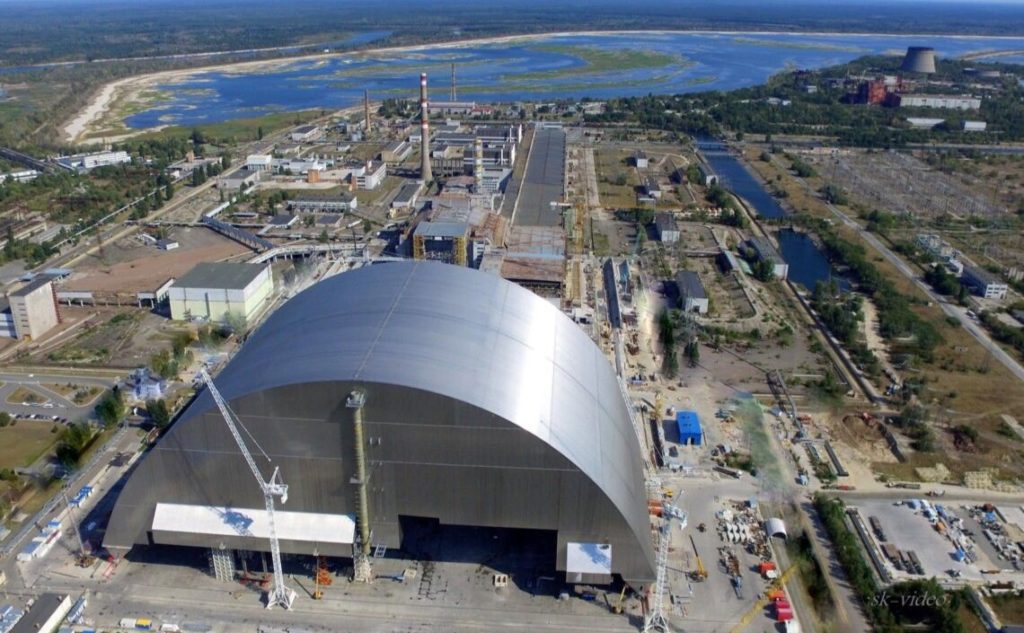
            G7 pledges 260 million euros to repair Chornobyl’s shield after Russia pierced it. Full repair will require 500 million euros by 2030, before corrosion sets in

            A Russian drone tore a hole in the shield over Chornobyl’s dead reactor. Now the G7 is paying to patch it.

            The Group of Seven nations plans to allocate 260 million euros ($292 million) to repair the New Safe Confinement at the Chornobyl Nuclear Power Plant, First Deputy Prime Minister and Energy Minister Denys Shmyhal says.

            The confinement, a 35-story steel arch sealing the reactor that exploded in the 1986 disaster, was damaged by a Russian drone strike in February 2025. Full restoration will cost at least 500 million euros, the European Bank for Reconstruction and Development (EBRD) estimates, so the G7 pledge covers just over half, leaving about 240 million euros still to raise.

            Shmyhal calls the decision an important step toward restoring nuclear safety at the plant, which the Russian strike had compromised. The money will go to priority work, including resealing the structure and restoring its ventilation system.

            “Thank you to France and personally to Minister Roland Lescure for leadership in mobilizing international support,” Shmyhal says, crediting France and the EBRD with co-chairing the effort.

            The night a drone pierced the sarcophagus

            The damage dates to 14 February 2025. A Russian drone carrying a high-explosive warhead punched a hole through the arch’s roof and ignited a fire in the cladding, breaching the structure’s seal and ventilation.

            The attack caused a 15 m² breach in the inner and outer cladding and damaged around 200 m² of panels.

            "It was a targeted Russian attack on the Chornobyl station with a drone that is an analog of the Iranian Shahed," Ukrainian President Zelenskyy said at that time.

            A bill only half-covered, and a 2030 deadline

            The G7 money closes only part of the gap. Partners must still raise roughly 240 million euros more, and Ukraine hopes to secure it at a donor conference in Paris co-chaired by Ukraine, France and the EBRD, Shmyhal says.

            The clock matters as much as the cost. The work must be finished by 2030 to limit corrosion and protect the arch’s 100-year design life, the EBRD says, turning a repair bill into a race against the rust the strike set loose.

            •  

            Ukraine cannot be forced to surrender, says commander whose brigade destroyed 57,000 Russian targets, as US pressure and Russian missiles test its will

            Yurii Fedorenko, commander of Ukraine’s 429th separate unmanned systems regiment “Achilles”.

            Ending the war by forcing Ukraine to capitulate is impossible, the commander of the 429th “Achilles” Unmanned Systems Brigade, Yurii Fedorenko, said in an interview with 24 Kanal.

            His statements came as Ukraine absorbed the fallout from the US-Russia diesel deal that saw its Starlink throttled and US intelligence lapse, a gap tied to a strike that killed three in Kyiv.

            Achilles is a volunteer unit formed in the first days of the full-scale invasion, built around aerial reconnaissance and drone strikes and credited with more than 57,000 strikes. Fedorenko, its commander, was named a Hero of Ukraine in January 2026.

            Fedorenko says he believes that there would be no “miraculous de-escalation,” and now argues that neither pressure from Washington nor Russian missiles can break the country’s will to fight for its liberty.

            Russia will keep terrorizing Ukrainians with ballistic missiles, jet drones and Shaheds, and no near-term shift in US policy will stop it, Fedorenko stresses, so Ukraine will keep defending itself and striking back. A lasting energy ceasefire, he added, will not hold.

            “Ukrainian society is ready to defend itself and to uphold its right to life by force,” he says, arguing that the Kremlin’s mouthpieces, and those working for third countries, have misjudged the mood in Ukraine.

            No measure, he insists, could force Ukraine to capitulate in the short term.

            Why the US election could swing the pendulum back

            Fedorenko sees the political balance shifting after the US vote. President Donald Trump will probably not hold the majority he once had, making it harder for him to take domestic decisions alone, he notes. Even foreign policy, a presidential prerogative, will have to reckon with that balance.

            If Trump must bargain with Democrats to pass domestic measures, that will shape the wider picture, Fedorenko argues. He stopped short of predicting impeachment, calling that the wrong framing, but cautioned that decisions already taken could be reviewed, challenged and overturned in the courts.

            “I am firmly convinced we will get through the difficulties dictated by circumstances, including those arising across the ocean,” he says.

            A cold shower for Europe that could help Ukraine

            The US turn toward Moscow has jolted Europe, in Fedorenko’s view. American threats to leave NATO or rewrite how it shares the burden landed on European leaders like a cold waterfall, he recounts, pushing each state to ask how it would stand if the US walked away and to treat the Russian threat as one standing at its own borders, no longer a problem confined to Ukraine.

            That alarm can work in Kyiv’s favor, drawing more weapons, defense financing and economic support from European partners, Fedorenko argues.

            The same logic drives the satellite question. Ukraine cannot build a Starlink alternative alone, lacking its own space program, so the answer is collective, with NATO states pooling launches into a shared network, he explains. Russia is taking the other path with its “Rassvet” system, much of it, in fact, built by China, and if Moscow and Beijing get there first, he warns, the fallout would reach far beyond Ukraine.

            •  
            ❌