❌

Reading view

Ukraine’s military now orders supplies based on real front-line data, not guesswork, lawmaker says. Shift comes under new commander-in-chief

The image shows Ukrainian soldiers on motorcycles. Source: The 3rd Separate Assault Brigade

New Ukrainian Commander-in-Chief Mykhailo Drapatyi is moving away from his predecessor’s legacy on several fronts, making the army more human-centric and tying procurement to its real needs, lawmaker Yehor Cherniev of the Parliamentary Defense Committee says, per NV.

Drapatyi took over as commander-in-chief on 21 July 2026, after protests over the sacking of Defense Minister Mykhailo Fedorov widened into demands for a military shake-up. His guiding principles, Cherniev says, differ sharply from those of his predecessor, Oleksandr Syrskyi.

The change is spelled out in a document Drapatyi published, “Principles of Leadership of the Commander-in-Chief and the Development of the Force in Wartime,” which sets out his intent and priorities. Its core is human-centricity.

“War demands resolve, but never recklessness. Every unjustified loss weakens the Armed Forces,” Drapatyi writes in the document, addressing commanders.

A command philosophy built around the soldier

The document sets out a single objective, eight priorities, 14 requirements for commanders and eight expectations of headquarters, with the protection of the country, its cities, villages and critical infrastructure at the top of the list. People, it says, are the most valuable combat capability.

Commanders and staff are required to give honest assessments and not let optimism, fear or personal ambition distort reality while preparing soldiers for combat, reducing unjustified risk, caring for the wounded, honoring the fallen and supporting their families.

Support does not end when service does: those who defended Ukraine must get proper rehabilitation, recognition and opportunities, the document says.

Buying what the front actually needs

The second shift Cherniev flags is in procurement. Under Drapatyi, the General Staff began shaping the army’s purchasing needs anew, adapting them to approaches introduced at the Defense Ministry under Fedorov, so orders follow real front-line demand rather than guesswork.

“The General Staff now works from real data, not just pointing a finger at the sky, but this product is needed in this quantity. That makes procurement fairly transparent and clear,” Cherniev says.

He frames both changes, on people and on purchasing, as the most important Drapatyi has brought to the armed forces.

  •  

Posting strike videos online may help Russia tune its drones’ optical targeting. Moscow now pays people to film hits, Ukrainian adviser warns

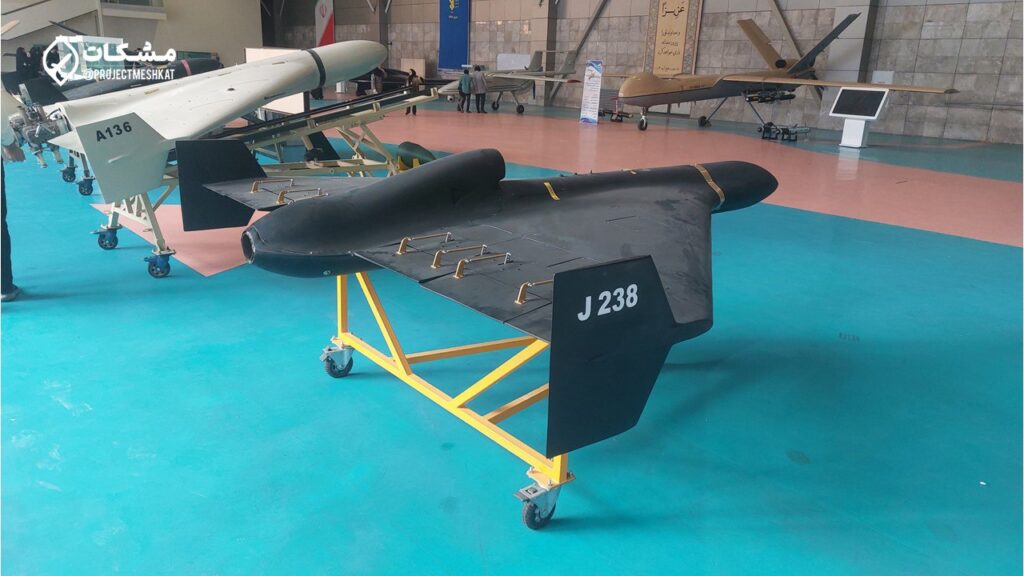
Jet powered Shahed-136 kamikaze drone Credit: Open sources

Filming a drone strike and posting it online may be quietly teaching Russia’s drones to aim better. Russia is collecting footage of its Geran attack drones striking Ukraine, probably to check how its optical target-recognition and guidance algorithms perform in combat, presidential defense-technology adviser Serhii “Flash” Beskrestnov says.

Russia has fitted its jet-powered Geran drones with machine vision that lets them recognize and track targets on their own in the final seconds of flight, a capability Ukraine’s electronic warfare cannot easily defeat. Now, Moscow is paying people inside Ukraine to film where those drones land, which Flash says is no coincidence after four years of not asking.

“Across many Telegram channels, the enemy is asking traitors to film videos of ‘Geran’ impacts and transmit information for a reward. For four years they didn’t ask, and suddenly it has become so crucial,” Beskrestnov notes.

The reason, he believes, lies in those optical guidance systems. Russian forces need impact footage to see how its algorithms are performing in real combat conditions, according to the expert.

The warning Flash is pressing on civilians

His takeaway for them is blunt: stop posting the videos of Russian assaults. He stresses the serious danger of publishing footage of impact sites and urges people not to film or share it.

“This serves as a signal to everyone: do not film and do not publish videos of ‘Shahed’ hits. You see how vital and necessary this is to Russia,” Beskrestnov adds.

Earlier, Ukrenergo board chairman Vitaly Zaichenko said that a Russian drone severed a unique power transmission tower at the Dnipro River crossing in Kyiv, and it cannot be restored. He added that the company was developing new technical solutions "on the fly, and very fast."

It would start the procedures for those solutions from 15 October. Russia’s use of drones able to sever metal towers is a new and serious challenge for Ukraine’s power engineers.

  •  

Ukraine’s shell factories outpace state orders, arms company chief says: Kyiv spent five months buying from them this year, leaving six to produce

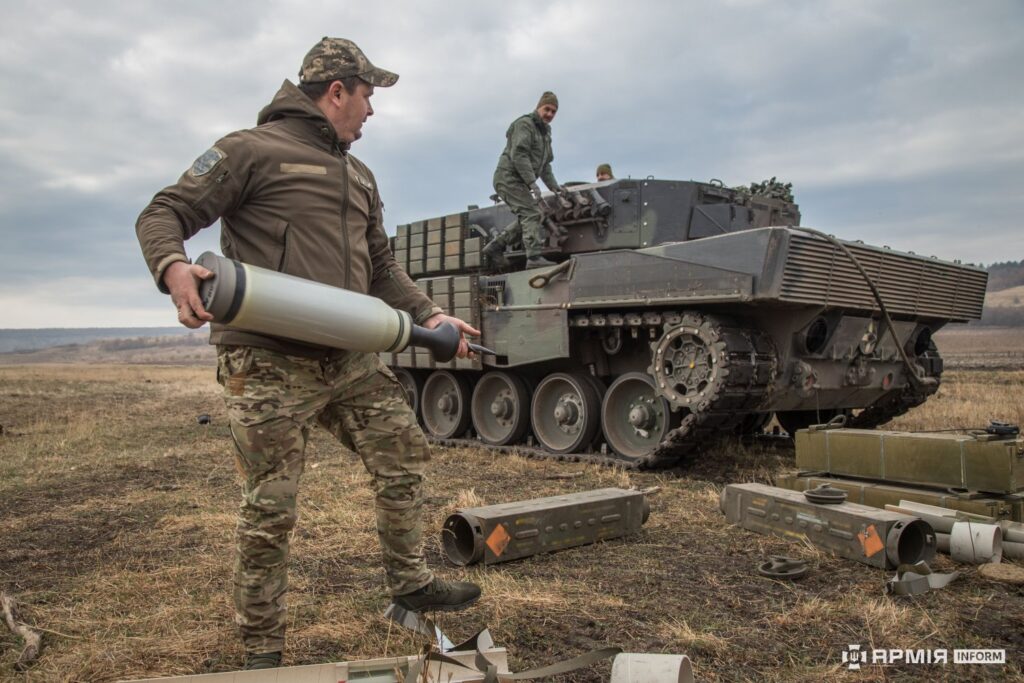
ukraine now makes nato-standard tank shells abrams leopard 2 tanks · post crew member ukrainian army 2a4 carrying 120 mm shell during field loading armyinform image_672f38bb44146779194270 news reports

Ukraine has built an artillery-ammunition industry whose capacity now exceeds what the state budget can order. Yet its main problem is not production but the absence of a predictable state order, Ukrainian Armor chief executive Vladyslav Belbas said on Radio NV.

Private firms built those plants with their own money under constant Russian fire, but they still do not know how much the state will buy next year, or when it will sign the contracts that keep the lines running. The paradox is stark: Ukraine went from depending on Western shell deliveries at the start of the invasion to making more than its budget can buy, with room to export as much again.

“Now we supply ourselves with more than the budget can buy, and we can supply the same amount again for export. The building of an artillery-ammunition industry has happened. For certain types of ammunition, we can even speak of a closed cycle,” Belbas says.

He calls the shift a clear gain of recent years, with similar progress across many types of weapons.

Factories built on private money, waiting on the state

The producers are flying blind on demand. Private makers receive no state investment and are paid only for finished products, having built their plants themselves, yet they do not know in advance how much the state will buy or when it will sign contracts, he explains.

“All producers have been saying for years that we need a stable, clear order so that plants and workshops run without stopping. Private producers have not received a single coin of investment from the state. It is very hard to live and develop without forecasting,” Belbas says.

A procurement clock that runs out before the shells do

The calendar works against the factories. Contracting for next year has not begun because the budget is not yet set, and the procedures drag on: this year buying artillery ammunition took five months, leaving six for production, he notes.

For now, long-range ammunition is being actively contracted, and foreign deliveries are arriving, and he expects no supply problems by year’s end except for special munitions, including cluster rounds.

  •  

UK to resupply Ukraine with more Storm Shadow missiles to strike Russia, Bloomberg reports

In a meeting in London on Oct. 14, President Volodymyr Zelensky and U.K. Prime Minister Andy Burnham agreed on a new shipment of missiles, Bloomberg reported, citing people familiar with the matter. No official public announcement of this resupply has been made.

  •  

No one's owning up to throttling Ukraine's military Starlink, and that's telling

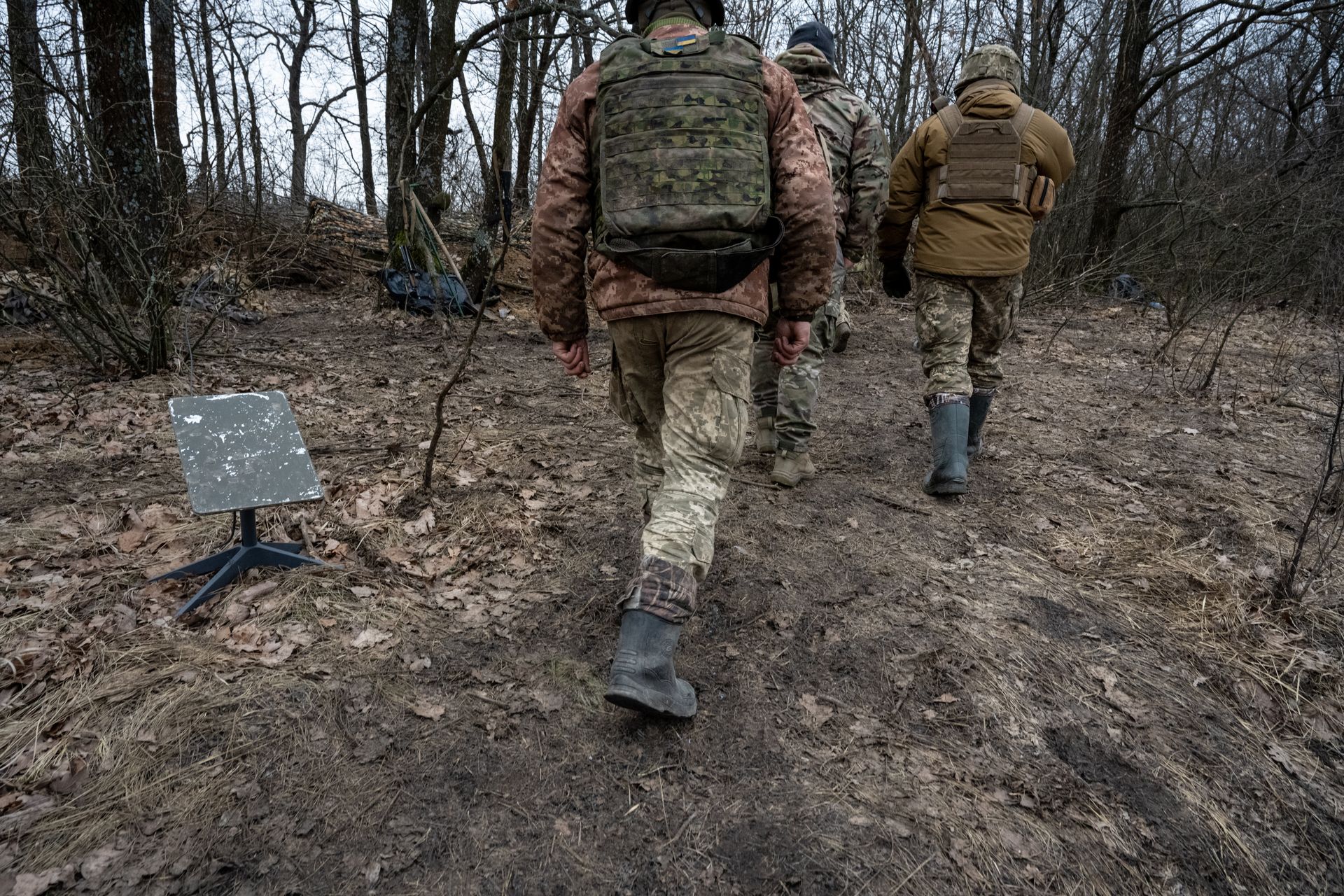
Nearly 48 hours after Ukraine's Starshield terminals started mysteriously malfunctioning, nobody in Washington, nor at SpaceX, has taken responsibility for the apparent decision to hobble Ukrainian military communications.

Starshield terminals — the militarized version of SpaceX's Starlink satellite internet system — began losing connectivity as they

  •  

The EU loophole Russia is using to free its oligarchs from sanctions

Russia has exploited an EU sanctions loophole to unfreeze $3 billion worth of assets held by Belgium's Euroclear, according to a Flemish media report, and Austria's Raiffeisen Bank could be about to execute the same maneuver.

  •  

The Russian commentators living in Europe who justify Moscow's war against Ukraine

Latvia's decision last week to declare Russian-born journalist and blogger Leonid Ragozin persona non grata has drawn attention to a broader trend: Russians who once presented themselves as opponents of Vladimir Putin are now accused of echoing Kremlin narratives.

Some now live in Europe, taking advantage of the

  •  

Russian drone cuts down unique energy line tower over Dnipro River in Kyiv. It can’t be rebuilt, and world is queuing for more power equipment

Kyiv's Northern Bridge connecting the city's two sides across the Dnipro River. Photo via Wikimedia Commons

Russia has found a way to cut Ukraine’s power lines that no repair crew can undo. A unique power transmission tower that a Russian drone cut down at the Dnipro River crossing in Kyiv cannot be restored,  Ukrenergo board chairman Vitaliy Zaichenko says, as the grid operator rushes to build alternative ways to keep electricity flowing, Interfax reports.

Russia has spent the war trying to switch off Ukraine’s lights. Now, it is widening the campaign before winter with a new tactic: drones that slice through the steel towers carrying high-voltage lines.

“Everyone has seen the video showing the destruction of one of the unique power transmission towers at the crossing over the Dnipro in Kyiv. It was severed, and it is impossible to restore it,” Zaichenko continues.

He adds that now the company is developing new technical solutions "on the fly, and very fast." It will start the procedures for those solutions from 15 October, he notes. Russia’s use of drones able to sever metal towers is a new and serious challenge for Ukraine’s power engineers.

Zaichenko did not say when the tower was hit. On 30 September, Russia first used a jet-powered drone carrying a 40-kilogram charge built to cut steel towers, and that evening an eyewitness filmed one striking a power line tower in Kyiv, which cut electricity in parts of three districts, Informator reported.

When the spare parts are as scarce as the targets are plentiful

Rebuilding is colliding with a global shortage. Ukrenergo faces serious difficulties getting backup equipment, Zaichenko explains, because the whole world’s energy system is expanding at once and everyone needs the same hardware.

“There is a real problem with equipment. The global power system is expanding, and everyone needs energy equipment. There is a tough queue,” Zaichenko says.

Ukraine has faced such challenges since August 2026, when Russia began launching its jet-powered drones. Kyiv still has no effective solution against them and relies more on a mix of air defenses, such as automated turrets and interceptor drones.

Kyiv has also engaged over 100 private air defense system brigades to protect its enterprises in the ranks of the Ukrainian Air Forces.

  •  

Hungary held $82 million in cash and gold from Ukraine for months. Now, it faces torture complaints in Europe’s top court

Hungary stopped a Ukrainian Oschadbank armored convoy in 2026, held its couriers, and kept $82 million in cash and gold. The European Court of Human Rights has registered six applications from the bank's couriers, who say Hungarian police unlawfully detained and tortured them.

In March, Hungarian forces stopped two bank vehicles carrying cash and bank metals from Austria to Ukraine, with seven employees transporting $40 million, 35 million euros, and nine kilograms of gold. It happened just before Hungary’s parliamentary elections, in which then-prime minister Viktor Orban had built his campaign around a sweeping anti-Ukraine message, and lost.

Six of the employees filed with the court on 5 July 2026, and the court’s secretariat has now confirmed their registration and assigned each an official number, according to the bank. It expects a seventh courier’s application, alleging the same violations, to be registered too.

“The fact that the ECHR has accepted the complaint and opened proceedings indicates that there are reasonable legal grounds for the case, that it has legal merit, and that the court intends to examine it on its merits,” Oschadbank says.

The rights the couriers say Hungary broke

The complaints rest on two articles of the European Convention on Human Rights. Article 3 bans torture and inhuman or degrading treatment, while Article 5 guarantees the right to liberty and protects people from arbitrary detention, the bank notes.

During the detention, one courier, a diabetic former Security Service officer, was forcibly injected with an unknown substance, which his Hungarian lawyer confirmed he received despite his objections. He then suffered a hypertensive crisis, lost consciousness and was hospitalized, and Oschadbank confirmed that medical care came only after he passed out, The Guardian reported.

Oschadbank calls the registration an important step in defending its staff. Board chairman Yury Katsion said the bank will continue to protect the couriers’ interests and its own reputation, expects a legal assessment of the Hungarian forces’ actions and is grateful to partners for their support.

Why registration is a start, not a verdict

The cases are only at an early stage. Registration does not mean the court has found a violation or ruled the complaints admissible, as it must separately weigh the procedural conditions and the circumstances the applicants describe, Oschadbank stresses.

The incident itself, however, is documented: Hungary returned the seven couriers the next day but held the cash and gold for months, releasing the vehicles on 12 March and the money and gold by May.

  •  

Open letter to Trump from ex-Ukrainian President Yushchenko: Ukraine's desire for peace is not willingness to surrender

Mr. President,

I write these words without diplomatic formulas or ceremonial language. I write simply, from one human being to another, and from one president to another — two men who understand that there are moments in history when decisions determine not only the fate of nations, but the fate

  •  

“Operation to strike Russian targets deep in swamps continues”: Ukrainian Commander Madiar says his unit hits 7,306 Russian troops in first half of October, up 59% on August

A Ukrainian drone operator.

Ukraine’s operation to strike Russian targets at operational and strategic depth is continuing, Unmanned Systems Forces Commander Robert “Madiar” Brovdi said. He listed data centers, military and strategic sites, and energy hubs “deep in the swamps,” his usual name for Russia.

The fresh statement lands amid fears that a Starlink disruption could break front-line operations.

Overnight into 14 October, the 7th Air Assault Corps said the faster StarShield military package, an advanced version of Starlink that its units depend on, had been throttled, halting a series of missions. Against that backdrop, Brovdi says his branch’s strikes are not falling.

“A serious brawl is underway in conditions of significantly worse weather, drizzle, fog, and precipitation,” Brovdi says, underscoring that the pace held through conditions that usually ground drones.

Over the first two weeks of October, the drone branch verified 7,306 Russian soldiers killed or wounded, up 59.45% on the same period in August and 24.65% in September, he writes on his Telegram page, calling the trend the opposite of de-escalation.

Where the killing climbs fastest, and who is doing it

One sector stands out above the rest. On the Dobropillia-Pokrovsk axis, in the zone of the Azov group, the branch’s drones accounted for 3,221 Russian losses in the first two weeks of October, a 102% jump on August and 42.5 percent on September, Brovdi reports.

The figures cover only the drone branch and are verified in the military’s Delta, the video fixation system, he stresses, so the full count of Russian losses across all Ukrainian forces can be much higher.

The scale of a campaign that will not slow down

The numbers behind the claim are large. Over the first two weeks of October, the branch flew 124,500 combat missions, strike and reconnaissance, and hit 32,172 Russian targets, of which manpower was 22.7%, by his count.

That works out to about 2,298 Russian targets a day, he adds, the kind of tempo that makes any talk of a lull on the front hard to square with what his drones are recording. The deep-strike half of that campaign has grown 1,150% over 2026, reaching military-industrial and energy sites far inside Russia, according to Euromaidan Press.

  •  

Europe shuts US out of Russian assets conversation

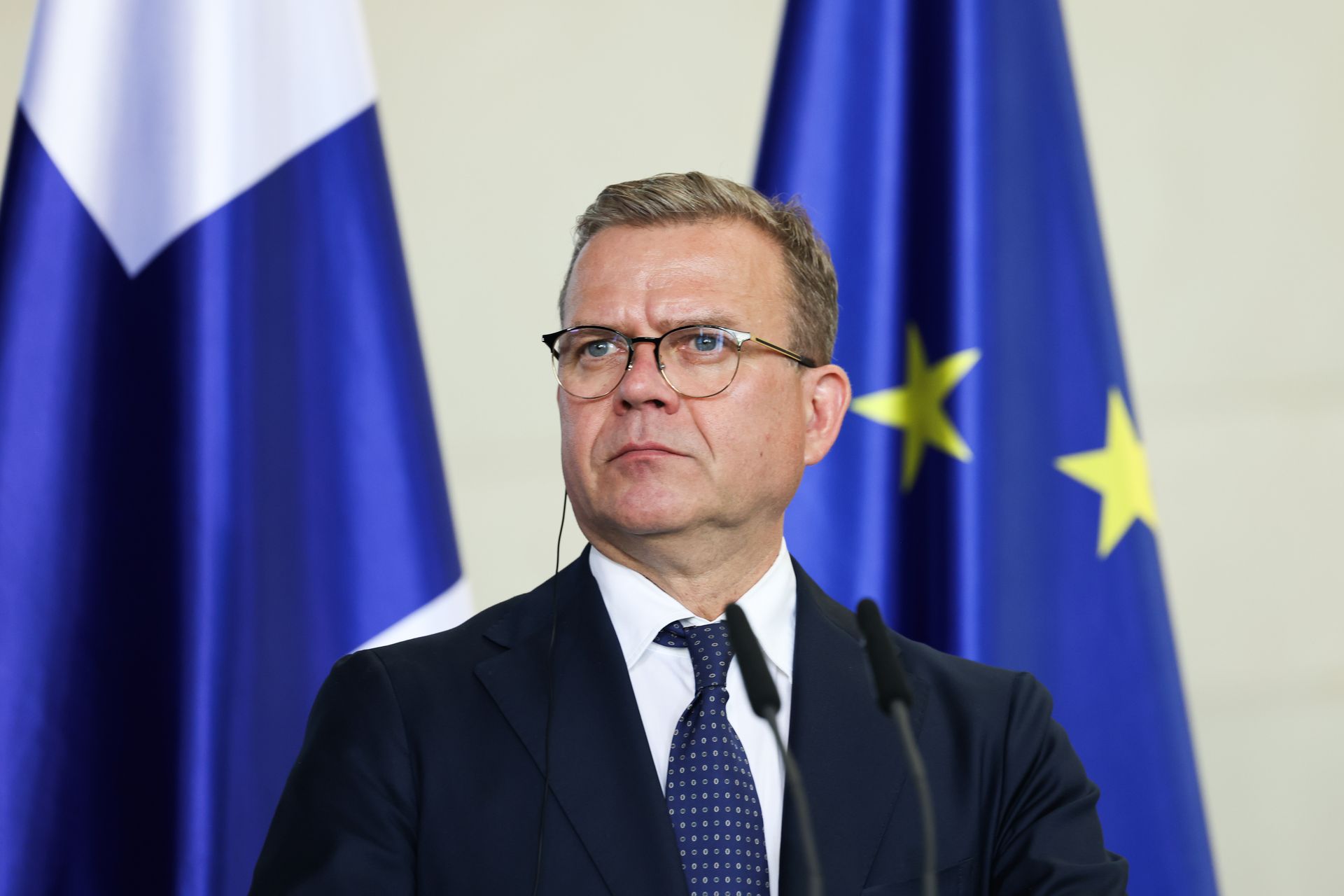
"These are frozen Russian assets held in Europe, belonging to Russians who are destroying Ukraine and killing people there every day... the idea of releasing these assets is completely out of the question," said Finnish Prime Minister Petteri Orpo.

  •  

Ukraine’s hobbit-named robot fired on targets up to 1.3 km away in a demo for border guards

Frodo universal ground robotic vehicle (UGV).

Ukraine’s six-wheeled Frodo ground robot fired on targets during a demonstration in Kharkiv Oblast for the Pomsta (Revenge) Border Guard Brigade, a border guard detachment posted on Facebook. Frodo made its public debut only on 30 September.

Ukraine had contracted more than 22,000 ground robots for 2026 by July, mostly logistics carriers, with combat models the smallest group, the Defense Ministry said. Frodo’s first reported mission was an evacuation. The demo shows its armed version to a fighting brigade, the kind of robot Ukraine has ordered least.

What the armed version carries

The platform completed its tasks at a training ground in near-combat conditions, said the 3rd Border Guard Detachment named after Hero of Ukraine Colonel Yevhenii Pikus. The Buria turret mounted on Frodo can fire either a Mk 19 automatic grenade launcher or a Browning M2 heavy machine gun. It engaged targets at up to 1.3 km (0.8 mile), the detachment said.

Frodo ground robotic vehicle (UGV).
Frodo ground robotic vehicle (UGV). Screenshot from a video by the 3rd Border Guard Unit

The 47-kg (104-lb) module has a ballistic calculator, stores up to 256 targets, aims in three seconds, and has a stated autonomous run time of up to 48 hours, the post said. Frodo is rated for up to 150 km (93 miles) on paved roads and 75–80 km (47–50 miles) over rough terrain, the post added. A Frontline Robotics Zoom reconnaissance drone flew reconnaissance during the test.

The developer, Frontline Robotics, describes its core philosophy as arriving fast, doing the job, and leaving very fast—hit and run, the detachment’s post said. Familiarizing the brigade’s soldiers with such systems aims first and foremost to preserve personnel’s lives and health, the detachment said.

A robot first reported as a medevac

Frontline Robotics told Militarnyi at the unveiling that Frodo had passed Defense Ministry codification and was built for logistics, evacuation, and strike missions. The robot reaches 40 km/h (25 mph) and carries up to 200 kg (441 lb) of payload, or 400 kg (882 lb) at most, the company said. A single soldier can swap its batteries.

Frodo ground robotic vehicle (UGV).
Frodo ground robotic vehicle (UGV). Photo: Frontline Robotics

The 92nd Assault Brigade used an early test unit to evacuate a wounded soldier, Frontline Robotics told Militarnyi. An operator, callsign Tango, named the robot’s speed and its ability to handle complex maneuvers as its main advantages, Militarnyi reported.

  •  

Ukraine and Japan plan prefabricated backup crossings for Kyiv’s bridges: 720 meters of structures already delivered

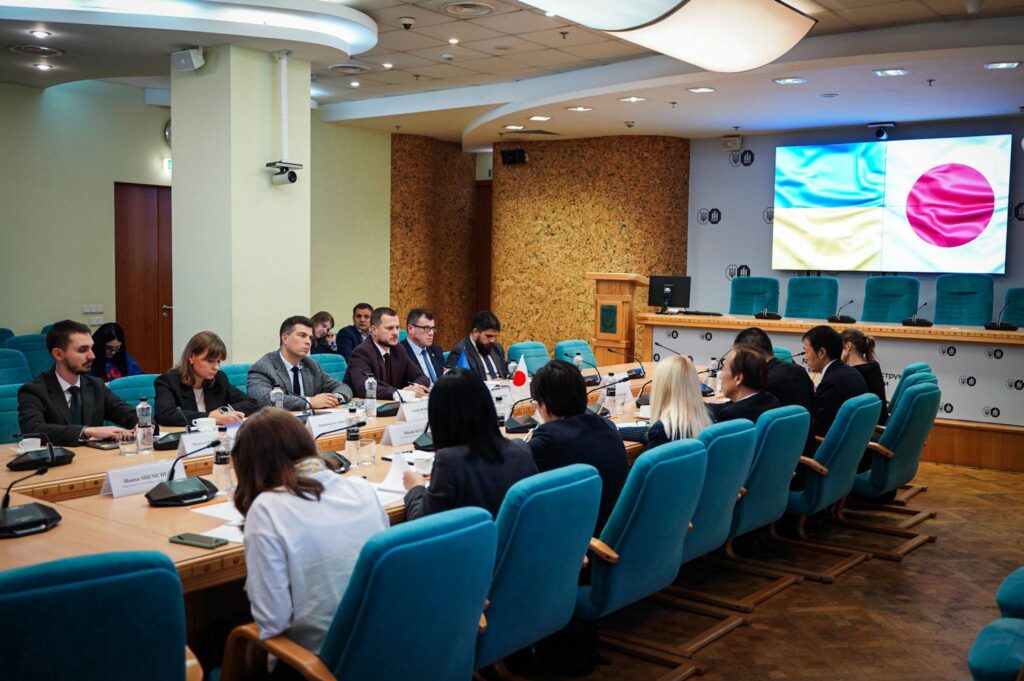
Meeting between Ukraine’s Minister for Restoration, Infrastructure and Transport Mykola Kalashnyk, Japan’s Ambassador to Ukraine Yo Osumi, and JICA Ukraine Office Chief Osamu Hattori, October 2026. Photo: Mykola Kalashnyk/Telegram

Ukrainian and Japanese officials discussed establishing backup bridge crossings in the event of Russian strikes, preparing municipal infrastructure for winter, and Japan's continued assistance with Ukraine's recovery, Ukraine's Minister for Restoration, Infrastructure and Transport, Mykola Kalashnyk, reported on 14 October.

Russia is targeting Kyiv's bridges to paralyze the city and break civilian morale, defense analyst Hamish de Bretton-Gordon wrote in The Telegraph. On 1 and 2 October, Russia attacked Kyiv's Southern Bridge, then struck the Northern Bridge on 3 and 4 October. Ukraine is now working with international partners to establish backup bridge crossings that could maintain connectivity even if major routes are damaged.

The discussions took place during a meeting between Minister Kalashnyk, Japan's Ambassador to Ukraine Yo Osumi, and Osamu Hattori, head of the Japan International Cooperation Agency (JICA) office in Ukraine, according to the statement.

Ukraine's Minister for Restoration, Infrastructure and Transport Mykola Kalashnyk during a meeting with Japan's Ambassador to Ukraine Yo Osumi and JICA Ukraine Office Chief Osamu Hattori, October 2026. Photo: Mykola Kalashnyk/Telegram

Backup crossings could prevent logistical disruptions if major bridges are damaged

Kyiv's Southern Bridge, for example, plays a critical role in logistics because freight traffic uses it, transport planning expert Dmytro Bespalov noted in an article for Ukrainska Pravda. At the same time, installing additional metal structures to reinforce bridges could be dangerous given their technical condition and existing load levels, he said.

One potential solution is to establish backup bridge crossings.

Ukraine and JICA have agreed to continue working together on engineering solutions for setting up these crossings. Japan has already delivered 720 meters of prefabricated bridge structures to Ukraine, which are expected to be used to create alternative routes if Russia's attacks damage major bridges, Kalashnyk said.

The initiative is intended to help maintain transportation links, ensure the delivery of critical supplies, and preserve evacuation routes for civilians.

The flags of Japan and Ukraine displayed on a screen during a meeting between Ukraine's Minister for Restoration, Infrastructure and Transport Mykola Kalashnyk, Japan's Ambassador to Ukraine Yo Osumi, and JICA Ukraine Office Chief Osamu Hattori, October 2026. Photo: Mykola Kalashnyk/Telegram

Ukraine prepares water utilities and boiler plants for winter amid the threat of Russian infrastructure strikes

During the meeting, Ukraine and JICA discussed equipping water utilities with backup power supplies, addressing the need for modular boiler plants, and obtaining equipment to ensure uninterrupted heating and water services. Ukraine has already submitted lists of the necessary equipment to JICA for consideration as part of a new emergency assistance project, Kalashnyk said.

An intercepted document outlining an alleged Russian plan for strikes against Ukraine this winter reportedly describes attacks on 60 critical infrastructure facilities using up to 1,000 missiles, drones, and aerial bombs. Potential targets include electrical substations, hydroelectric power plants, thermal power plants, boiler facilities, and infrastructure related to water supply and wastewater management.

Kyiv during a blackout caused by Russian strikes on energy infrastructure, 11 October 2026. Photo: Yan Dobronosov

The document also describes potential strikes on facilities in Kyiv, Kharkiv, Odesa, and several other cities. Such attacks could disrupt electricity, heating, water supply, and wastewater services.

  •  
❌