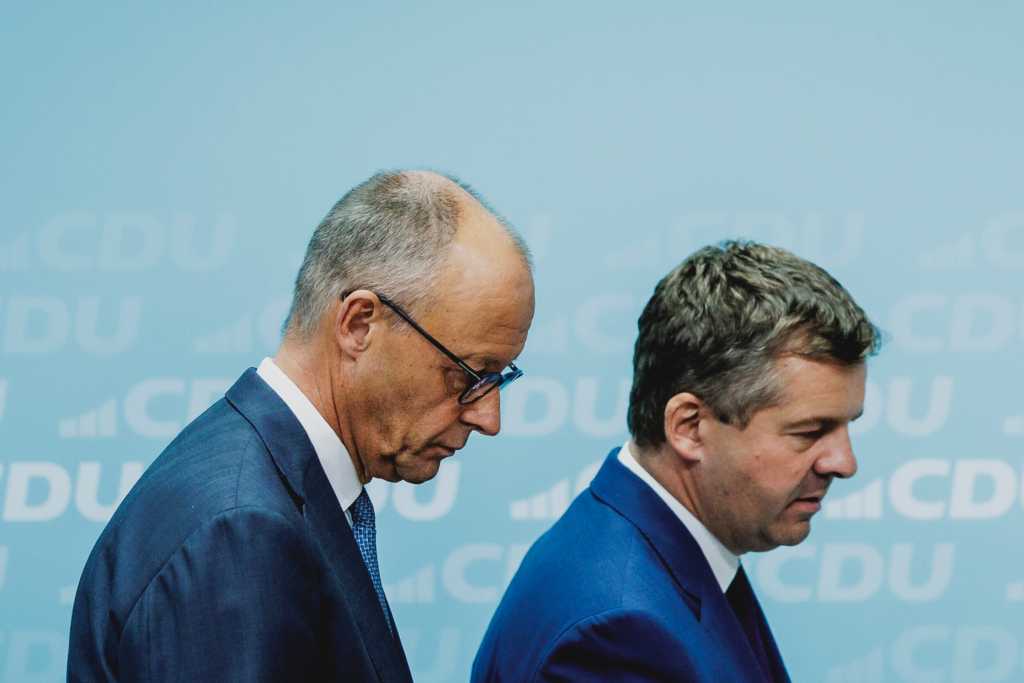
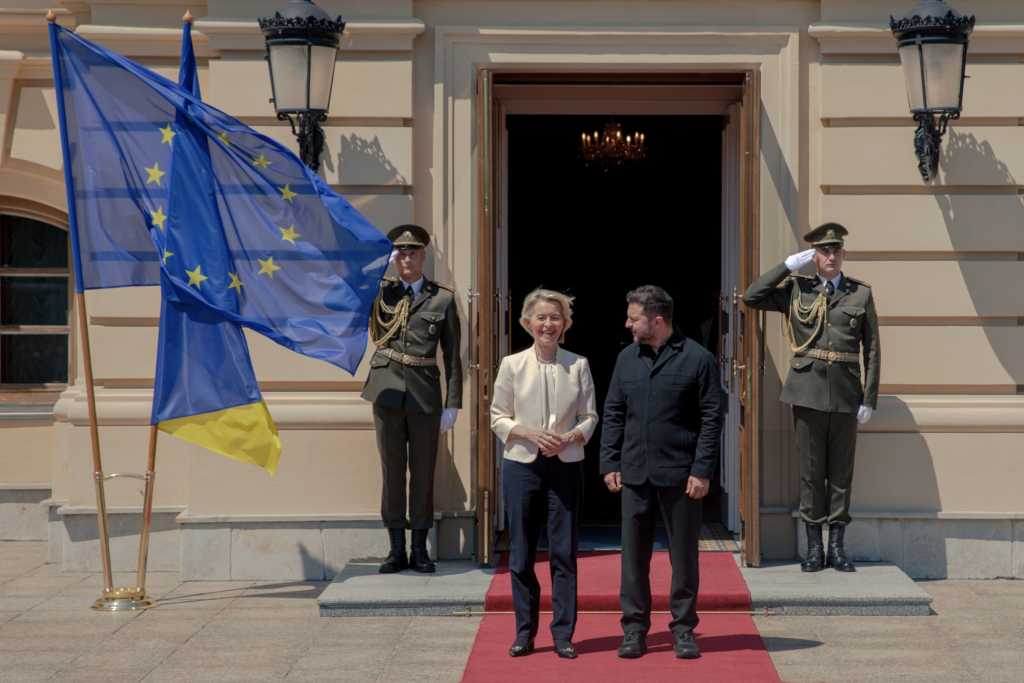
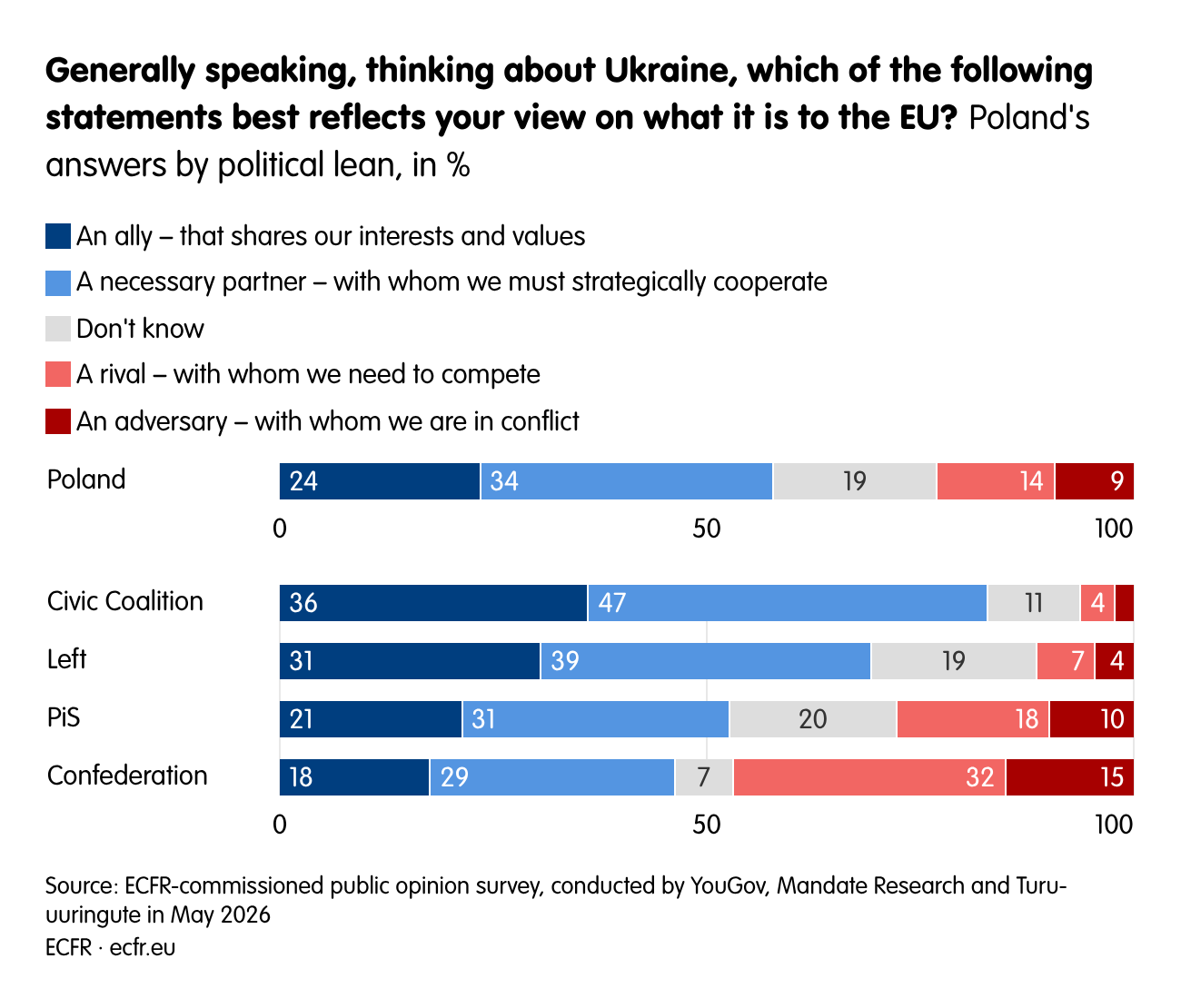
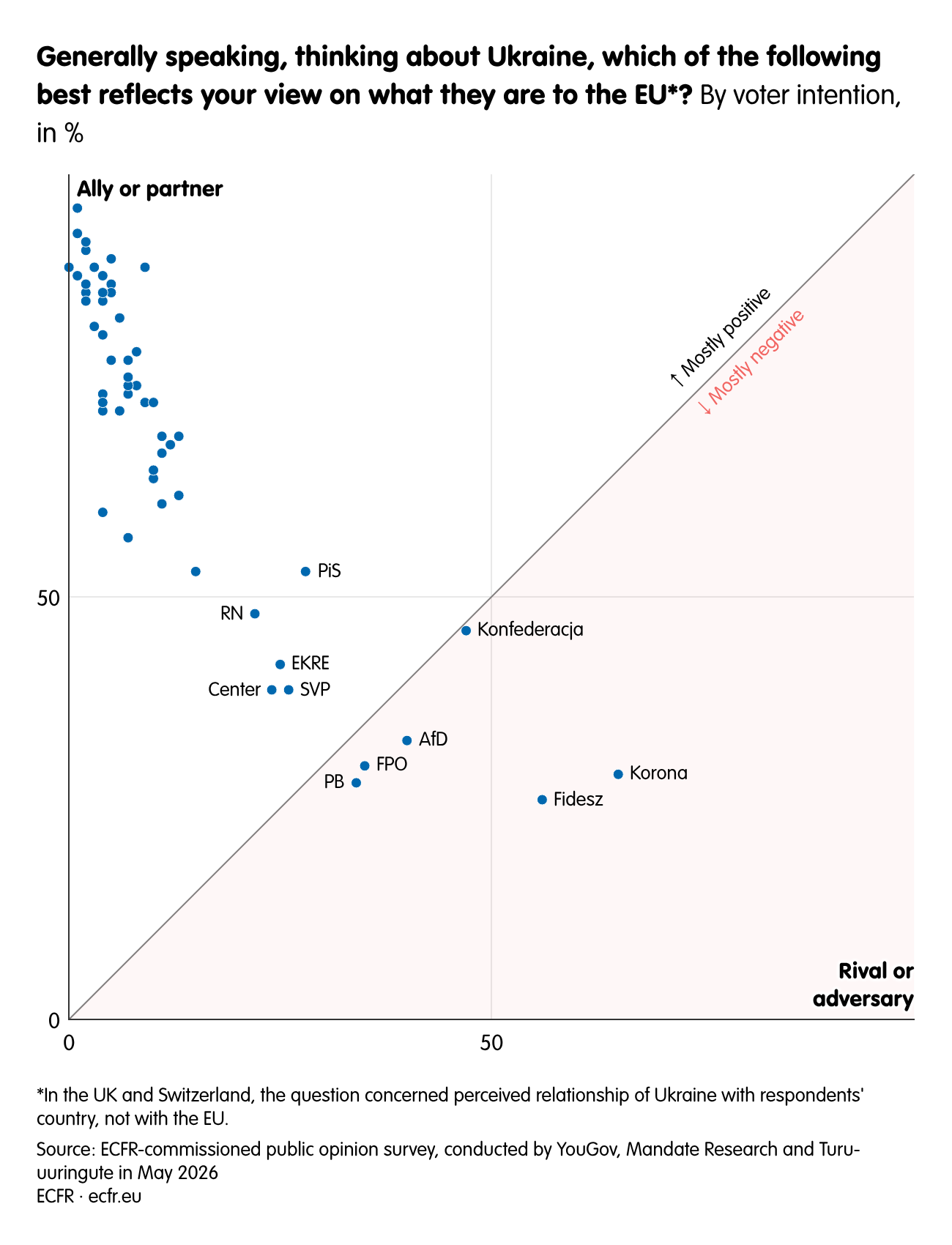
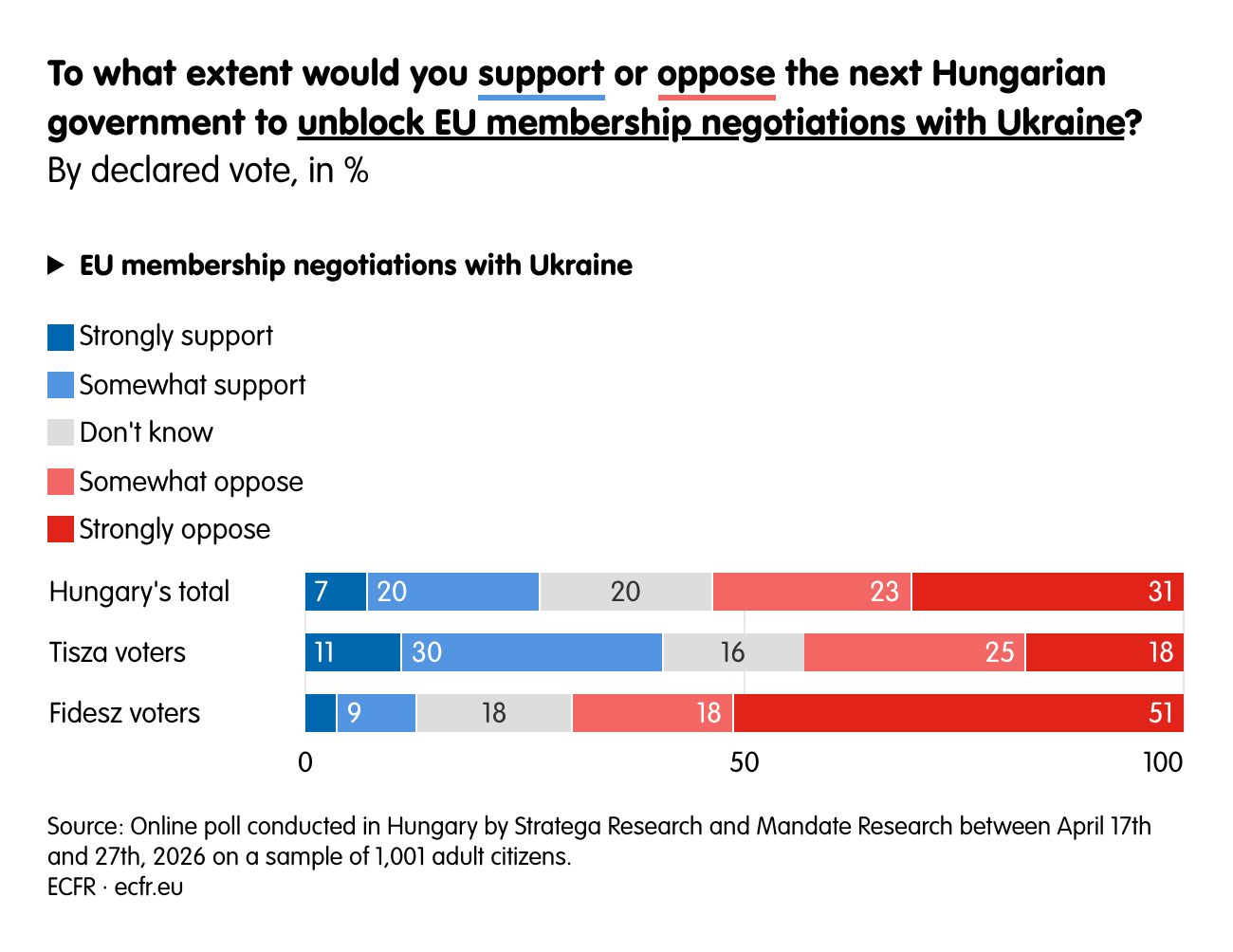
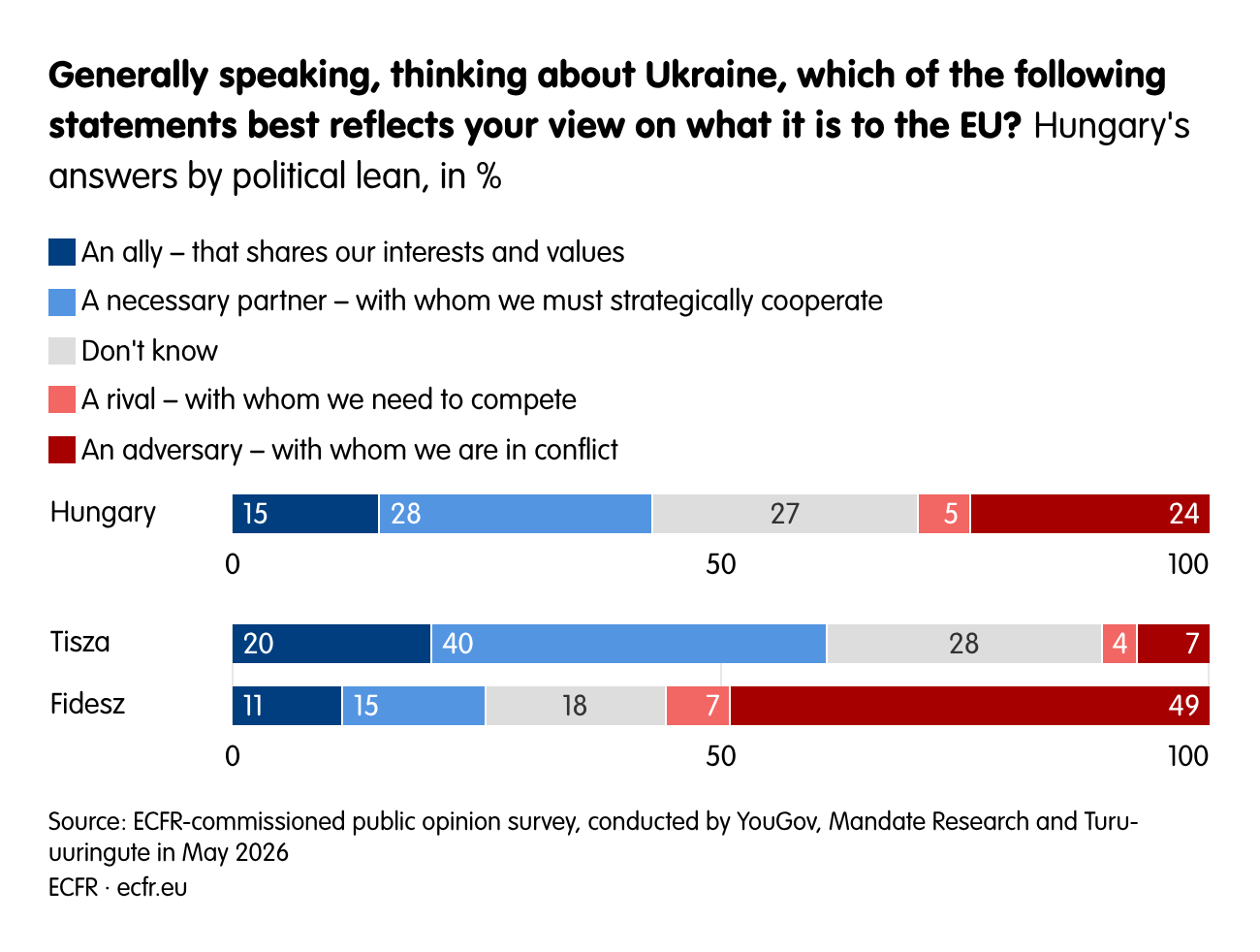
Saxony-Anhalt has returned 43.8% of the vote for the Alternative for Germany (AfD) in its state election. The result puts the party within reach of forming what would be the first state government run by the far-right in the history of the German federal republic.
The AfD has no executive experience and its Saxony-Anhalt branch is riven with tensions and splits. A chaotic state government could deter voters elsewhere from backing such parties. But if the AfD manages to govern halfway coherently, it will have the chance to pick fights with authorities in both Berlin and Brussels, and significant leeway to try out policies that could later be applied elsewhere. This might then embolden the radical right elsewhere in Europe.
Meanwhile the result increases the pressure on Chancellor Friedrich Merz’s centrist federal coalition. Already before the Saxony-Anhalt election, splits were widening between eastern and western branches of his Christian Democrats (CDU/CSU), and between him and his conservative party base. The result exacerbates these and, in turn, increases the chance that Merz will be too distracted and constrained by domestic politics to provide European leadership.
With France, Italy, Poland and Spain all entering election seasons, a Germany riven by internal drama cannot be the anchor that Europe needs.
Solution
Bold action is needed both in Berlin and beyond Germany. Talk of a party ban is too late and would anyway be unlikely to quell the underlying discontent felt by AfD voters. Action by the federal authorities against stand-out extremists in the party, and its funding streams, is both more realistic and more likely to keep its voters open to persuasion.
Meanwhile the CDU/CSU needs to make a strategic decision about what sort of party it wants to be; including where it will and will not cooperate with parties outside the traditional mainstream. Germany’s other pro-European parties also need to marshal a better answer to the radical right: substantive policies proving that they are on the side of ordinary people rather than powerful interests (Piotr Buras, Jeremy Cliffe and Susi Dennison have made concrete suggestions along these lines where climate policy is concerned.)
Other European capitals should curb their expectations of German leadership and nurture broader sources of impetus, including the new E6 group of major EU economies and the “coalition of the willing” on Ukraine. Merz, for example, is now even less likely to achieve a breakthrough on the EU’s 2028-2034 budget negotiations or on EU accession talks. Other European leaders, including European Commission president Ursula von der Leyen, will need to depend less on him to advance ambitious proposals. European diplomats in Berlin should think hard about how to sell their ideas into a more distracted and inward-looking government.
Context
Saxony-Anhalt is a small and demographically unrepresentative German state, with an atypically old and homogeneous population of 2.1m out of a national total of 83.5m. Nevertheless, its election result has reverberated through European capitals.
The vote on September 6th gives the AfD 39 seats, three short of a majority, requiring the party to seek support either from the left-conservative Sahra Wagenknecht Alliance (BSW) or the right flank of the CDU in order to govern. The only alternative would be a government supported (at least passively) by all five of the other parties, including the socialist Left party, cooperation with which is anathema to the CDU. The development comes as Merz’s fragile “grand coalition” is struggling to pass reforms aimed at reviving Germany’s stagnant economy.
Two upcoming state elections on September 20th—in Mecklenburg-Western Pomerania and in Berlin—could further dent his authority. It is possible, though not currently probable, that he will be forced out as chancellor in the coming months. The obvious frontrunner to replace Merz is Hendrik Wüst, the premier of North Rhine-Westphalia, but his moderate politics may not fit the polarised mood.
This week, Mark Leonard is joined by Jana Puglierin, senior policy fellow and head of ECFR’s Berlin office, in a World in 30 Minutes Emergency Room episode to discuss the latest in German politics.
The AfD’s win in the small eastern state of Saxony-Anhalt was widely expected, but the scale of the result and the collapse of Chancellor Friedrich Merz’s Christian Democrats (CDU/CSU) have still shocked Berlin. For the first time since the second world war, a far-right party is within reach of governing a German Bundesland. Jana unpacks the AfD’s possible paths to power, the pressure on Merz and his grand coalition, and what the result says about the far right’s continued rise in Europe.
Why does an election in a state of two million people matter so much for a country of 84 million? Can the AfD govern without a formal coalition partner, and would CDU lawmakers break the historic “firewall” to make that possible? Why is the party still treated as beyond the pale, even as it leads national polls? And should Europe prepare for a Germany too absorbed in its own crisis to lead?
Cover image: picture alliance / ASSOCIATED PRESS | Jae C. Hong
Three features of today’s unordered world are converging to create a devastating food crisis. Russia’s war in Ukraine is disrupting agricultural exports from both countries. The enduring blockage of the Strait of Hormuz is restricting fertiliser shipments. And this year’s El Niño (a sporadic warming of the Pacific Ocean generating widespread knock-on effects elsewhere) could be the most drastic on record, causing widespread droughts. As this year’s United Nations general assembly (UNGA) draws near, global food affordability and availability are at risk, and with them millions of lives and global security.
This looming catastrophe coincides with an absence of political leadership, including in multilateral institutions. As recently as 2022 a coalition of leaders convened by the UN secretary-general, António Guterres, managed to curb a food crisis. Today even that convening power is missing, with potentially more dire consequences. Political leaders face a test: amid war, climate crisis and diplomatic turmoil, is it still possible for groups of states and institutions to confront the direst humanitarian urgencies?
This note argues that a solution could still be found, requiring a comprehensive global effort on several fronts: drought, support for farmers, the Black Sea, the Strait of Hormuz and access to fertiliser. In all of this, Europe should lead.
The emerging calamity
Global food prices are already almost 75% higher than their 1999 lows. Almost 2.2 billion people face food insecurity. The coming trio of threats to food supplies will make that worse.
A “super El Niño” will likely bring heat and drought to southern Africa and significantly reduce food production in south and south-east Asia. It may reduce already falling rates of wheat production—which is expected to fall by 3% globally in 2026-27 (8% in the EU, 12% in Australia and 19% in Argentina)—and drive up rice prices.
Meanwhile the Strait of Hormuz remains blocked. It is the largest single conduit for the nitrogen fertilisers most directly linked to yield and is the export route of about half the global supply of sulphur, a vital component of phosphate fertilisers. Thus, about one third of global seaborne fertilisers cannot reach fields, especially afflicting smallholder farmers in sub-Saharan Africa (where fertiliser prices are highest) and south Asia.
All this may well generate wider ripple effects lasting years. Rising prices and exhausted government subsidies in states like Malawi are deterring fertiliser use, which could depress future production. Historically, El Niño events are associated with protectionism (India has imposed export restrictions hitting countries in south-east Asia), which in turn raises prices, lowers margins and curbs investment in future output.
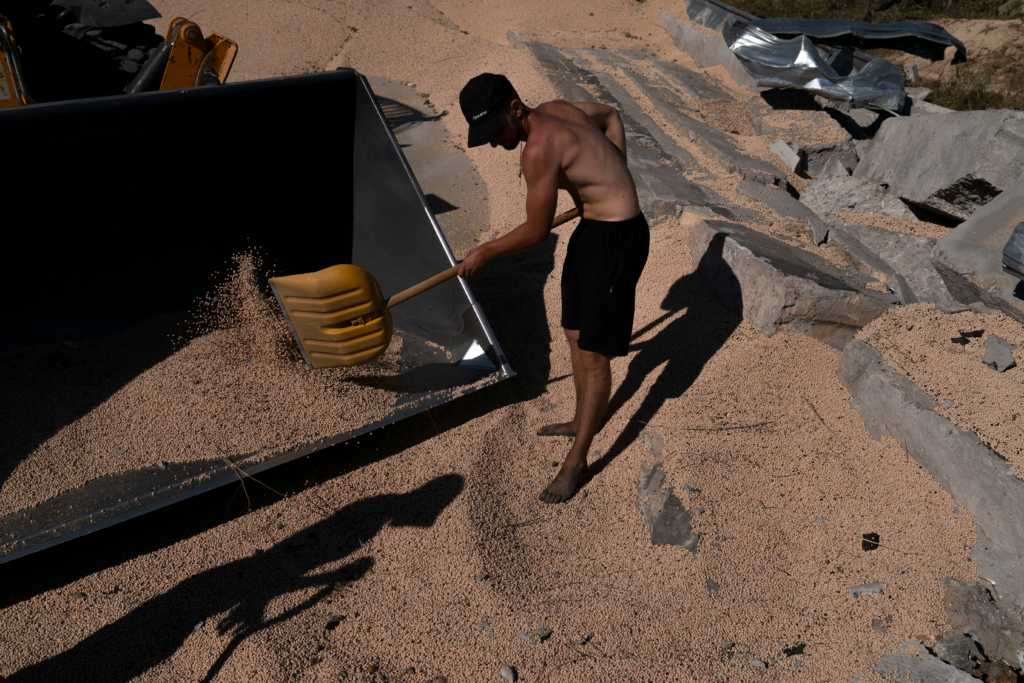
There are two bright spots among the big global agricultural producers: Ukraine and Russia, which together generate 30% of the world’s wheat exports, 20% of its corn, 60% of its sunflower oil and, from Russia alone, 20% of its fertiliser. But there too war has brought disruption. Russia’s attacks on Ukraine’s highly exposed grain and port infrastructure cut the latter’s exports by 75%, and more damage has already been done in August. Ukraine has been striking Russian port facilities and ships in the Black Sea and Sea of Azov, taking over 90% of Russia’s grain export capacity offline.
In 2022, a UN- and Turkey-facilitated arrangement mitigated a similar crisis and kept Russian and Ukrainian grain and fertiliser supplies flowing through alternative routes. US and EU agricultural aid in sub-Saharan Africa also helped. In 2026, by contrast, multiple challenges stand in the way of a similar solution. Logistically, war damage to infrastructure and low water levels in the Danube make it harder to get grain out of the region. Diplomatically, the UN is approaching a leadership transition, the US has turned against the organisation, and there is no global focal point for action.
Preventing the worst
European leaders, including those of the UK and Ukraine if it wants, should move fast to convene a coalition of states influential among the combatants in the Iran and Ukraine conflicts (India, China and Turkey especially) and of states especially exposed to this nutritional crisis (states in sub-Saharan Africa and south and south-east Asia). This coalition could draw on arrangements from the 2022 deal, as well as new links between UN agencies and initiatives like the CGIAR agricultural innovation network. It should seek to transcend political and diplomatic tensions, bringing leaders or at least ministers together on the margins of UNGA in the week of September 21st.
The joint initiative should have the following core elements:
A programme to distribute food relief and technical assistance on drought-resistant agriculture and soil fertility, headed by an adviser to the UN secretary-general and supported by UN agencies. Such assistance works: one led by the CGIAR reached almost 6m African farmers in 2023-5 and, to cite just one example, in Malawi delivered maize yields 64% higher than the national average.
This will need to be funded. The World Food Programme’s conservative pre-El Niño budget needs for 2026 should be covered (only 34% met so far). But the initiative should also marshal resources for the medium-term response to the “super El Niño” and its geopolitical intensifiers. This would include a financial mechanism to subsidise efforts by states to mitigate higher input costs and shift agriculture to drought-resistant strains. A CGIAR-led sustainable productivity growth push should have a budget of $500m over three years, with the first portion delivered fast enough to support the upcoming planting season.
Coalition members should strive for a partial ceasefire between Russia and Ukraine, to include an end to attacks both on ships carrying grain and on ports and infrastructure identified as central to grain, fertilisers and inputs. Its European participants especially could undergird this with support for Ukraine’s farms, including mobile storage units, fertilisers, seed and repairs to infrastructure. Some of this work is already underway.
The programme should also involve an agreement with Iran that fertiliser shipments be allowed to transit the Strait of Hormuz. Several attempts have been made in this direction already, with no results to date. Two elements should be added to make it more attractive. First, Iran’s own fertiliser and urea exports, and fertiliser shipments from other states, should be exempted from the US blockade and Iran’s imports of wheat and rice should be secured. Second, an expert-level group—akin to that used in the 2022 Black Sea arrangement—would oversee implementation and resolve disputes quickly and locally. Part-time negotiators must also secure practical arrangements to ensure results, not just agree on principles.
Unpalatable—but necessary
This effort would still face a series of obstacles. It would require multiple states to cross their red lines—or at least revisit established policies. There is a good chance that the two wars driving up food prices, in Ukraine and Iran, will escalate in the near future. Russia especially would likely be reluctant. The states most affected are a disparate and often antagonistic group. There is no single capital or organisation capable of appealing to all the decision-makers needed for a comprehensive solution.
But within this adversity dwells a constructive role for European governments. Along with the UN secretary-general, and a core group of middle powers including Brazil, Egypt, Kazakhstan, Mexico and Turkey, they can bring together the states most exposed to the crisis as the core of this new group. Along with partners from across the UN system, such as the UN Conference on Trade and Development, the World Food Programme and the Food and Agriculture Organization, they can amplify those countries’ voices and help marshal the resources needed to make the programme outlined above meaningful.
Besides winning over the most affected states, the next step would be to bring on board those states with influence on combatants in the Ukraine and Iran conflicts. This means especially China and India. The UN secretary-general can play a particularly vital role there. Europeans can also help by appealing to Chinese and Indian claims to speak for developing countries in general. In turn, Brazil, India and South Africa can invoke Russia’s claims to share that mantle, as fellow members of the BRICS formation.
Europeans can also play a crucial role in recruiting Ukraine into the programme—even if the latter’s commitment to any ceasefire would depend on Russia’s position. They could see this anti-hunger coalition also as a way to help rally support for Ukraine in the global south, as the Ukrainian president, Volodymyr Zelensky, did in 2022 with his Grain from Ukraine initiative.
In the Strait of Hormuz, meanwhile, the coalition could present free passage for fertiliser exports as a means of trying out the Omani-Iranian technical plans for opening sea routes. It would present this as a win-win proposition: Iran would get some of its exports to global markets; the US would be supporting its Gulf allies; and both parties and their European interlocutors might see the long-term geopolitical benefits of a stabilising anti-hunger act along these lines (for example, curbing mass migration).
This initiative is intended to be a “no regrets” effort. Even if it takes time for the combatants to join—and it will—supporting farmers and global trade will improve the food situation. Progress in addressing hunger should provide an opportunity to highlight the further contribution that progress in the Black Sea and the Strait of Hormuz could bring. This sense of momentum may bring some or all combatants closer to agreement.
It will take leadership from both the most affected states and from wealthier countries to achieve this defiantly cooperative act in a world of unorder. But its very defiance, its assertion that common action is still possible, makes it all the more valuable.
Instructor at the training ground of the Unmanned Systems Troops (UAVS). | picture alliance / Picvario Media | Sergey Elagin
Europe is rearming. Defence budgets are rising, factories are expanding, and new EU instruments are pouring money into ammunition production and joint procurement. But money is only part of Europe’s defence problems. The main constraint is that its systems remain slow, fragmented and poorly suited to an age when military technology can change in months rather than decades.
Three transformations are hitting the continent at once. Russia’s invasion of Ukraine has brought back large-scale war to European soil. Washington’s growing focus on the Indo-Pacific, its renewed interest in Greenland and its push to move NATO from “burden sharing” towards what might be called “burden shifting” mean that Europe will have to provide not only more money for the alliance but also a larger share of its combat power. At the same time, technology is changing warfare faster than traditional procurement systems can keep up.
At present, procurement systems work as follows: a military identifies a requirement; officials draw up specifications; companies compete for a contract and, years later, a system enters service. The problem is that, by then, the technologies shaping the battlefield may have changed dramatically. Promising technologies can become obsolete or fall by the wayside before they ever reach soldiers.
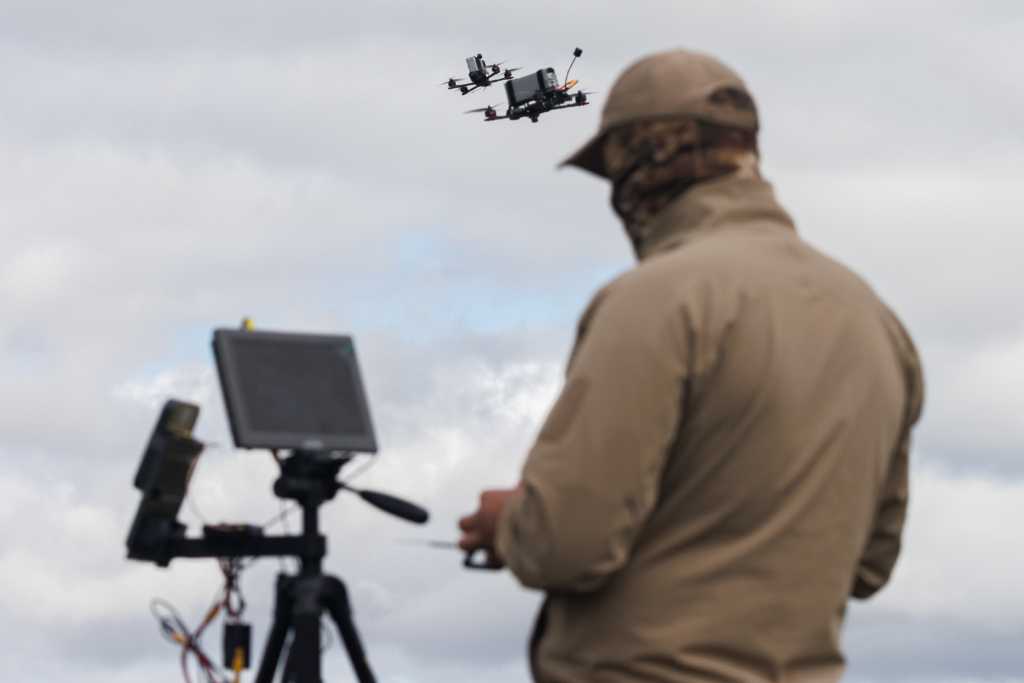
Ukraine has demonstrated a different model. Operational problems generate ideas; engineers turn them into prototypes; soldiers test them; manufacturers improve and scale them; battlefield experience feeds into the next iteration. Technology can also work in the other direction: new capabilities, such as cheap drones, can create tactics that planners had not previously considered.
The real measure of defence-industrial success should not be how many platforms roll off the line, but how fast capability can be imagined, built, tested, industrialised, fielded and adapted again
Europe needs to make this cycle permanent. I propose a model called Adaptive Defence Industrial Ecosystem Management, or ADIEM. The principle is for governments to move from being regulators and buyers to orchestrators of a defence ecosystem that links governments, armed forces, defence and tech companies, start-ups, universities and investors in a continuous loop. The real measure of defence-industrial success should not be how many platforms roll off the line, but how fast capability can be imagined, built, tested, industrialised, fielded and adapted again.
Industrial resilience and human capital are central to this model. Ukraine has shown that sustained operations depend on raw materials, reliable energy, resilient logistics and skilled labour quite as much as on the platforms themselves. And because digital capability now depends as much on software and data engineering as on heavy manufacturing, Europe’s defence sector competes directly with the commercial tech industry for the same scarce talent. This makes the appeal of a defence career a strategic question.
How to make ADIEM work
Reform defence governance. Create permanent structures that bring together military planning, industrial policy, innovation and procurement around shared capability goals. Give them room to depart from standard rules where those rules are the obstacle.
Start with battlefield problems. Build capabilities around what armed forces need to achieve. It works in reverse too: a new system needs a concept of operations written for it before it is bought at scale. Treat these as living documents that evolve with experimentation and real-world lessons.
Make procurement faster and more flexible. Use a hybrid procurement method. While central procurement agencies buy major systems, individual units are allowed to meet certain urgent combat needs. Alongside that, break large procurements into smaller contracts with incremental delivery, allow continuous software updates, use open architecture and speed up certification.
Build a genuine innovation ecosystem. Give start-ups, universities and public labs clear routes to deployment. Reward experimentation and operational relevance over novelty for its own sake.
Achieve affordable mass. Create dedicated programmes for weapon systems that are effective enough, cheap enough to buy in large numbers and simple enough to replace quickly. These include drones, autonomous vehicles, loitering munitions, low-cost intelligence, surveillance and reconnaissance (ISR) systems and electronic warfare.
Invest in human capital. Build a long-term pipeline of software engineers, AI specialists, systems engineers and skilled production workers, and change how the sector is perceived—presenting it as a high-technology field, not just a traditional military one.
Institutionalise experimentation. Set up permanent centres where soldiers, engineers, researchers and industry jointly evaluate new operational concepts and technologies. Test continuously rather than only in the run-up to a procurement decision.
Develop digital defence infrastructure. Invest in a sovereign defence cloud, secure data architecture, digital twins and common digital standards.
Governments also need to reform the institutions through which capability is developed, not just the funding lines that feed them. And while Europe has much of what it needs—sophisticated armed forces, world-class manufacturers, strong universities and a growing defence-tech sector—it still lacks a system capable of connecting them quickly enough. That is the purpose of ADIEM: to connect these actors in a continuously adapting ecosystem, with governments acting as orchestrators rather than simply regulators and buyers.
What happens if your economy is suddenly in crisis, Brussels offers help with strings attached—and Turkey, China or Russia can move faster? What if your country delivers every reform the EU asks for, only for a member state to block the next step anyway? And after years of waiting, would voters still choose to join?
In this special bonus episode, The Neighbourhood goes live from Lisbon for an EU enlargement game. Jessica Hendrick brings together RE-ENGAGE experts representing six EU candidate countries and throws a series of fictional—but very plausible—political and economic shocks at them inspired by real headlines: Russia’s intensified attacks on Ukrainian infrastructure, Ireland’s EU presidency push on enlargement, Iceland’s referendum, Germany’s regional elections and the upcoming 2026 Enlargement Package. Drawing on three years of surveys, interviews and crisis simulations, each expert has to answer for their country.
Playing for each country:
Albania:Morten Bøås, research professor at the Norwegian Institute of International Affairs (NUPI), representing RE-ENGAGE’s Albanian partners at the European University of Tirana
Bosnia and Herzegovina:Damir Kapidžić, director of the Institute for Social Science Research at the University of Sarajevo
Georgia:Ketevan Bolkvadze, senior lecturer in the department of political science at Lund University, originally from Georgia
Moldova:Mathilde T. E. Giske, research fellow at the Norwegian Institute of International Affairs (NUPI), representing RE-ENGAGE’s Moldovan partners at Moldova State University
Serbia:Luka Filipović, research associate at the Institute for Contemporary History in Serbia
Ukraine:Roman Petrov, president of the Ukrainian European Studies Association
The result is part enlargement simulation, part policy conversation and part game night. The experts bargain over a fictional €100 million EU cheque, decide whether the EU can compete with faster offers from other powers, test how easily disinformation could exploit frustration with enlargement, and imagine what would happen if EU membership was finally put to a public vote. Along the way, Serbia proposes keeping its relationship with Brussels “casual”, Bosnia finds a creative use for €100 million, and Ukraine calls for Hungarian “Varangians” when backsliding strikes.
When a crisis hits, does speed matter more than values? Can “Europe never wanted you anyway” become a winning political message? And if a country finally joins the EU, what stops democracy from sliding backwards once the prize of membership is secured?
This week, Mark Leonard is joined by Ellie Geranmayeh, deputy director of ECFR’s Middle East and North Africa programme, to unpack a volatile new chapter in the confrontation between the United States and Iran. After months of managed escalation, military strikes have resumed and President Donald Trump has launched an ambitious new sanctions package, dubbed an economic “D-Day”, aimed at squeezing Tehran into submission.
Ellie argues that Washington has returned to a familiar strategy of maximum pressure, betting that unprecedented economic isolation and a blockade of Iranian exports will either force the regime to make major concessions or trigger domestic unrest. But Tehran appears determined to hold out, relying on sanctions-evasion networks, regional diplomacy and the belief that the US will struggle to sustain its campaign over the long term. As both sides continue limited military operations while keeping channels for negotiation open, the prospect of a comprehensive deal remains elusive.
The conversation also explores the domestic pressures facing Iran’s leadership, from a shrinking economy and growing public dissatisfaction to the threat of renewed nationwide protests. Mark and Ellie examine whether economic hardship could destabilise the regime, why Iranian leaders remain sceptical of American commitments and how internal politics in both Washington and Tehran are shaping the path ahead.
Finally, they discuss the wider regional and European implications of the conflict. How are Gulf states positioning themselves between the US and Iran? What risks does the confrontation pose to global shipping through the Strait of Hormuz? And can European governments still play a meaningful diplomatic role as tensions rise and fears grow that the Iran conflict could become increasingly entangled with the war in Ukraine?
This podcast episode was recorded on September 3rd 2026.
VISBY, SVERIGE 20260625 Socialdemokraternas partiledare Magdalena Andersson (S) håller sitt tal under Almedalsveckan. Foto: Henrik Montgomery / TT / Kod 10060 | picture alliance / TT NYHETSBYRÅN | Henrik Montgomery/TT
The Gripen fighter jet came in low over the medieval rooftops of Visby, stood on its tail and climbed vertically out of sight. Hundreds of hands went up holding phones. Every late June, all Swedish party leaders gather for Almedalen Week in this town on Gotland, the Baltic Sea’s most strategic island. This year, the military display drew the only unanimous reaction of the week.
Sweden holds a general election on September 13th, but defence has barely featured in the campaign. All parties take the Russia threat seriously, and all want to face it as one. The election is being fought instead over welfare, migration, crime, climate and the economy—and on many of those, the government parties are losing.
Ulf Kristersson’s centre-right Moderates have held the prime minister’s office for four years, after an agreement in 2022 secured them the support of the far-right Sweden Democrats in exchange for a hard line on migration and crime. The so-called Tidö agreement—named after the castle where it was negotiated—broke a taboo: for the first time the Sweden Democrats had formal influence over a government, though it stopped short of joining the cabinet. Now the four parties supporting Kristersson’s government are trailing the opposition in the polls. The Liberal Party, currently in government, has suffered the most from the cooperation with the Sweden Democrats and is now polling below the 4% threshold to get into parliament.
Many analysts therefore expect Magdalena Andersson of the Social Democratic Party to return as prime minister. Her party governed Sweden for most of the 20th century and again between 2014 and 2022, when the country abandoned centuries of military non-alignment to join NATO. What would an Andersson government mean for Sweden’s foreign policy and its role in the EU? Based on several conversations with key people in the opposition parties, in Almedalen and elsewhere: not a dramatic change. But look closer and the differences start to show.
The maths
The political course will partly depend on the majority Andersson can assemble. A deal with the formerly communist Left Party, which is still formally committed to leaving NATO, would create a different government from one built with the market-liberal Centre Party and perhaps the Christian Democrats—and getting all them into the same majority would require political magic. The Green Party is likely to be part of the coalition either way, although senior figures say the case for being in government is still hotly debated internally.
The most likely outcome is that Andersson will lead a red-green coalition, assembled over months of difficult negotiations. The Greens and the Left would push for a less restrictive migration policy than the Social Democrats are ready to accept, having themselves tightened asylum rules when they were in power. For its part, the Centre Party would press for deregulation and other market liberal reforms Swedish business wants—against the trade unions as well as the Greens and the Left.
If Andersson struggles to hold a red-green government together, a grand coalition between the Social Democrats and the Moderates also cannot be ruled out. But that would require a serious external crisis and a significant change within the Moderates.
Names circulating for foreign ministers or “sherpa” for the prime minister are Paula Carvalho, Morgan Johansson, Ylva Johansson, Ann Linde, Kerstin Lundgren, and Oscar Stenström. Peter Hultqvist is likely to return as defence minister.
What will not change
On many key issues, a government led by the Social Democrats would continue Sweden’s current course, regardless of coalition partners. Support for Ukraine is strong across the Riksdag. NATO membership will not be reopened: the security situation and strong public support for NATO membership discourage the Left Party from pushing its formal position, and the Social Democrats would refuse if it tried.
Sweden rejected the euro in a referendum in 2003 and will not revisit it in the coming four years unless there is a deep economic crisis, although the Centre Party may extract a report on the topic. The country’s dependence on exports keeps every party in favour of open trade. Sweden will also remain one of the EU’s most frugal members in negotiations of the next Multiannual Financial Framework.
‘Magda will be Magda’
Elsewhere, the change will be real. A centre-left government will focus more on relations with the global south and gradually increase aid spending. The Social Democrats have a long tradition of cooperating with countries such as South Africa and Brazil and have deepened those ties while in opposition. If Lula da Silva is re-elected, Andersson will be well-placed to strengthen EU-Brazil engagement. The Social Democrats also want closer relations with African states and OECD countries such as Canada, where Andersson has built a strong rapport with Mark Carney.
This agenda includes climate politics—all red-green parties want greater ambition at home and in Europe. For the Social Democrats, green industrial policy is the way to keep workers on side in the green transition, a view shared by trade unions and many industrial leaders. The Green Party might get the development and environment portfolios back, but they would have to fight with the Centre Party for climate and energy.
Middle East policy would also shift. In 2014, a Social Democratic-led government recognised Palestine, the first EU member state in Western Europe to do so, to loud criticism by the centre-right. An Andersson-led government is more likely to criticise Israel’s actions while also condemning terrorism. The complication is Ebba Busch: her Christian Democrats are strongly pro-Israel, and if they join the coalition, Middle East policy will become more complicated.
Andersson would champion a strong UN and revive the “feminist foreign policy” of Margot Wallström and Ann Linde. But in an EU dominated by the European People’s Party, she would find few allies for traditional social democratic causes. The Nordic and Baltic countries are her natural bloc. Beyond them, only a re-elected Pedro Sánchez in Spain—a big if—would give the Party of European Socialists a large member state. However, leading Social Democrats are keen to avoid comparisons with Sánchez or Denmark’s Mette Fredriksen. “Magda will be Magda”, says one. On other topics, such as support to Ukraine, Sweden will continue to be part of coalitions of the willing.
A rapid increase of defence spending would continue with either Kristersson or Andersson as prime minister, with the Social Democrats also advocating additional resources for civil defence.
The consensus on security policy runs deep. In the all-party Defence Commission’s report this summer, the Social Democrats fully agreed with the government’s assessment of the security situation. A rapid increase in defence spending would continue with either Kristersson or Andersson as prime minister, with the Social Democrats also advocating additional resources for civil defence.
However, a centre-left coalition could face internal conflicts over the envisaged rotating presence of French nuclear-capable aircraft in Sweden or cooperation with Turkey on intelligence and anti-terrorism, both of which the Left Party would resist. Rather than fight it, the coalition might just pay them off. “Magda will buy them out,” says a prominent Social Democrat, comparing to how Fredriksen made a deal with the left-ish Enhedslisten in Denmark, giving them social reforms in exchange for staying out of her cabinet.
And while the Social Democrats accept the role of nuclear weapons in NATO strategy, they press harder than the Moderates on global non-proliferation.
Biting their tongue on Trump
Although senior Social Democrats are highly critical of US president Donald Trump in private, and Andersson expressed solidarity with Denmark when he threatened Greenland, the party will not pick a public fight. It agreed with the conclusions of the Defence Commission, such as the importance of the American security partnership, and even in background talks Social Democrats decline to discuss alternatives to NATO command structures for large military operations. “We presume that SACEUR is responsible”, says one senior figure, referring to NATO’s commander in Europe, who has always been an American. Sweden’s reliance on American aircraft, interceptors and satellites in the sensitive Baltic Sea area leaves Andersson far less room than Sánchez has in Madrid.
If Kristersson survives
None of this is settled. ECFR’s New Politics research shows how volatile European electorates have become, and a late swing could leave Kristersson in office—this time with Sweden Democrats in ministerial posts, as the Moderates have promised.
That would hand the far-right party real power this time. Given its size, it will likely take influential portfolios, such as representing Sweden in EU negotiations on migration policy and home affairs, and perhaps finance and competitiveness too, like the Finns Party in Finland.
Even more importantly, the Sweden Democrats would fully participate in foreign and security policy decisions. In Sweden, ministers make government decisions collectively and are briefed on sensitive intelligence matters at cabinet meetings. While the party has been vocal in criticising Vladimir Putin since its links to Moscow were exposed, the opposition still sees them as a security risk.
***
A new government will bring more of a tilt than a dramatic change in Sweden’s foreign and European policy. This will be important in the decisive year of 2029, when a new president of the European Commission will be chosen—and in a political landscape that might include far-right leadership in France, Italy and Poland. The Gripen will keep flying over Visby whoever wins in September. What changes is Sweden’s place in an EPP-dominated Europe.
This week, Mark Leonard is joined by Hugh Lovatt, senior policy fellow at ECFR, to unpack a turbulent summer in Israel and the Palestinian territories. While Palestinian factions in Gaza have agreed in principle to decommission their weapons , the proposal faces significant obstacles, not least opposition from the Israeli government. Meanwhile settler violence is surging and settlement construction is spreading, redrawing the map faster than any negotiation could.
Hugh explains why a sustainable ceasefire cannot rely on disarmament alone but requires a broader political process that addresses the future governance of Gaza and creates a pathway towards a two-state solution. He also explores why developments in the West Bank could prove just as decisive as those in Gaza, and what role Europe can play in responding to settlement expansion and growing instability.
Against this backdrop, Israelis are preparing to head to the polls on October 27th . Mark and Hugh examine the state of the race, the challenge facing Binyamin Netanyahu, Israel’s prime minister and whether a new government would bring meaningful policy change, or simply a different style of leadership. How much do Gaza and the West Bank matter to Israeli voters? Could an opposition victory create space for greater pragmatism? And what would that mean for Europe’s approach to the conflict?
This podcast episode was recorded on August 24th 2026.
This week, Mark Leonard is joined by Janka Oertel, director of ECFR’s DARE* initiative, and Andrew Small, head of ECFR’s Asia programme, to examine the growing impact of the “China shock 2.0” on Germany and Europe.
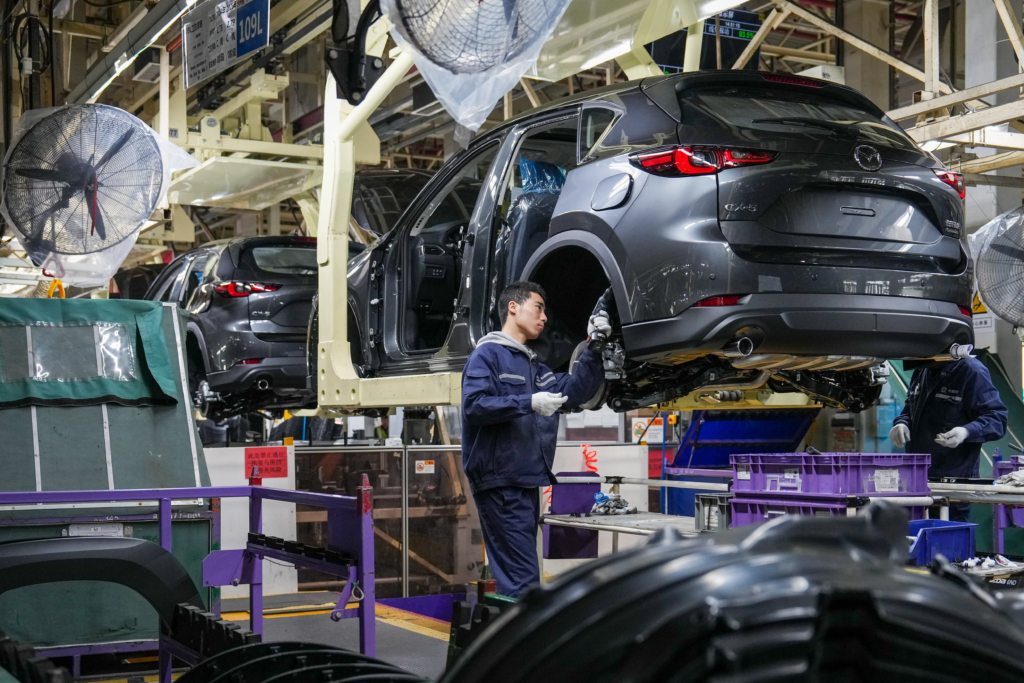
A new wave of Chinese competition, driven by overcapacity and state-backed industrial strength, is hitting sectors such as car manufacturing, chemicals and machine tools. Germany is at the epicentre, with mounting job losses raising questions about Europe’s long-term economic resilience and competitiveness. The crisis is reshaping German politics, exposing government divisions and putting pressure on Chancellor Friedrich Merz ahead of September’s potentially divisive regional elections.
Together, Mark, Janka and Andrew discuss the policy options being considered in Brussels and in European capitals—from emergency trade measures to new industrial strategies. Can Europe protect its industrial base without triggering a damaging escalation with China? Is Germany able to lead a coherent European response amid its own political turbulence?
The disputed 2020 presidential election and Russia’s 2022 invasion of Ukraine accelerated Belarus’s integration into Moscow’s military strategy, with the country becoming a rear-operating base.
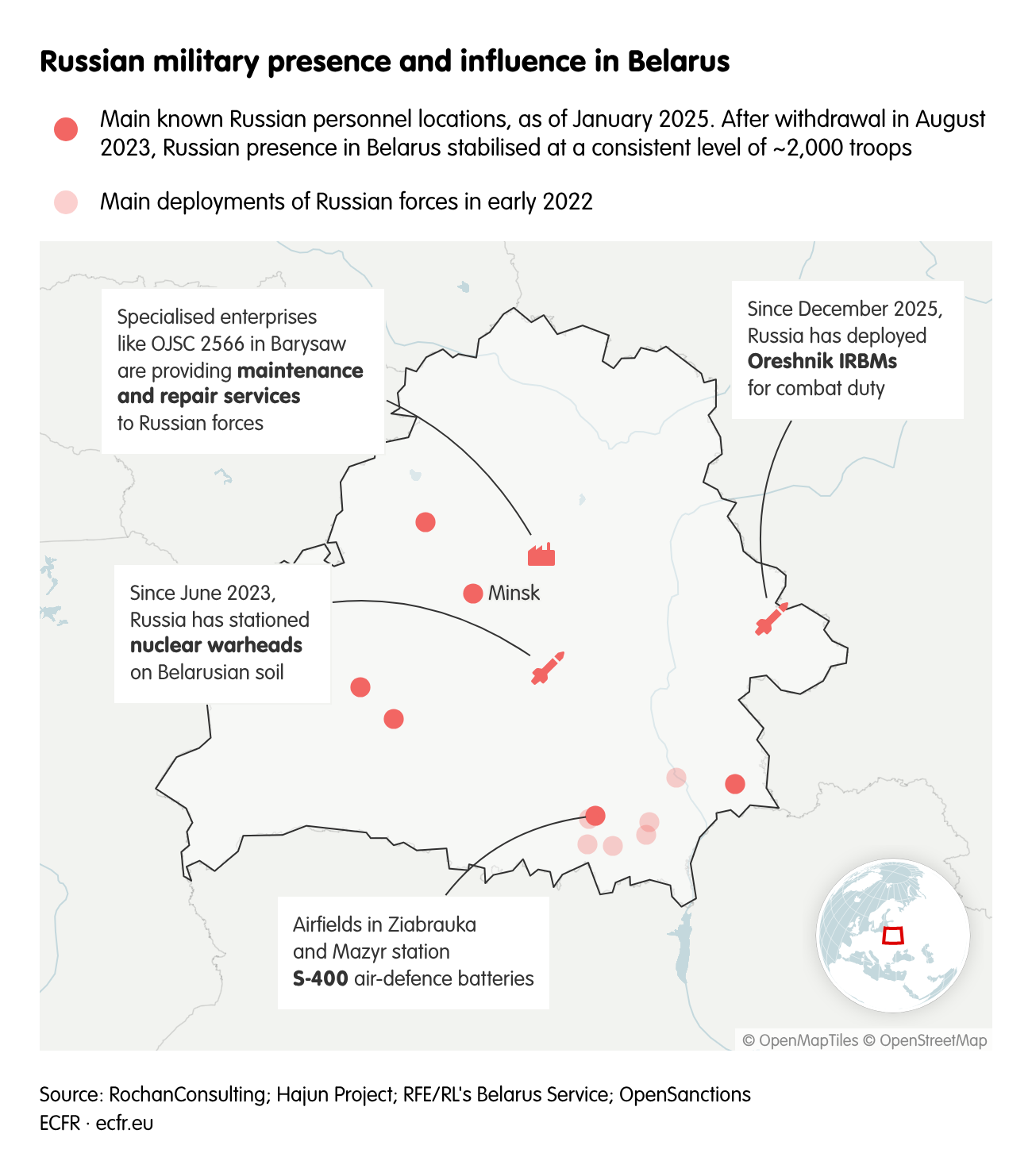
Since 2023, Russian deployments have increasingly positioned Belarus as a potential forward-operating base. Nuclear-capable systems, missile forces and military infrastructure on Belarusian territory mean that the Russian threat extends further along the EU’s eastern border.
Europe wants to preserve Belarus as a strategic buffer, yet sanctions and diplomatic isolation have not slowed Russian military entrenchment. Its continued path risks further binding Minsk to Moscow. Belarus has quietly become a major frontline security challenge for Europe.
The EU should move away from relying mostly on sanctions and economic pressure, and instead pursue a pragmatic strategy which aims to increase Minsk’s autonomy from Moscow. In the meantime, Europe must remain supportive of Belarusian exiles and its diaspora community.
The EU also needs to complement existing NATO deterrence with stronger support for countries on its eastern border, namely Poland, Latvia and Lithuania. This would reduce opportunities for Russian coercion and support Europe’s long-term plan for Belarus.
A satellite state
Take a map of Europe and find Belarus. Trace a finger clockwise, from the country’s northern borders and around to the east, where Russia is followed by Ukraine, Poland, Lithuania and Latvia. Belarus’s capital, Minsk, is itself almost at the exact geographic heart of the country, surrounded by hills, with vast forests sprawled out like capillaries beyond.
It is from here that Belarus’s longtime leader, Alexander Lukashenko, looks out from his “Palace of Independence” on Minsk’s Pieramozcau Avenue. To the east, in Russia, his fellow authoritarian Vladimir Putin continues to decimate Ukraine from its eastern borders and scheme to undermine European political interests. To the west, stretching hundreds of kilometres past Belarus’s western border with Poland and across Germany, lies Brussels. Faced with instability across the continent, the EU’s capital is increasingly unsure about what to do with its problematic Belarusian neighbour.
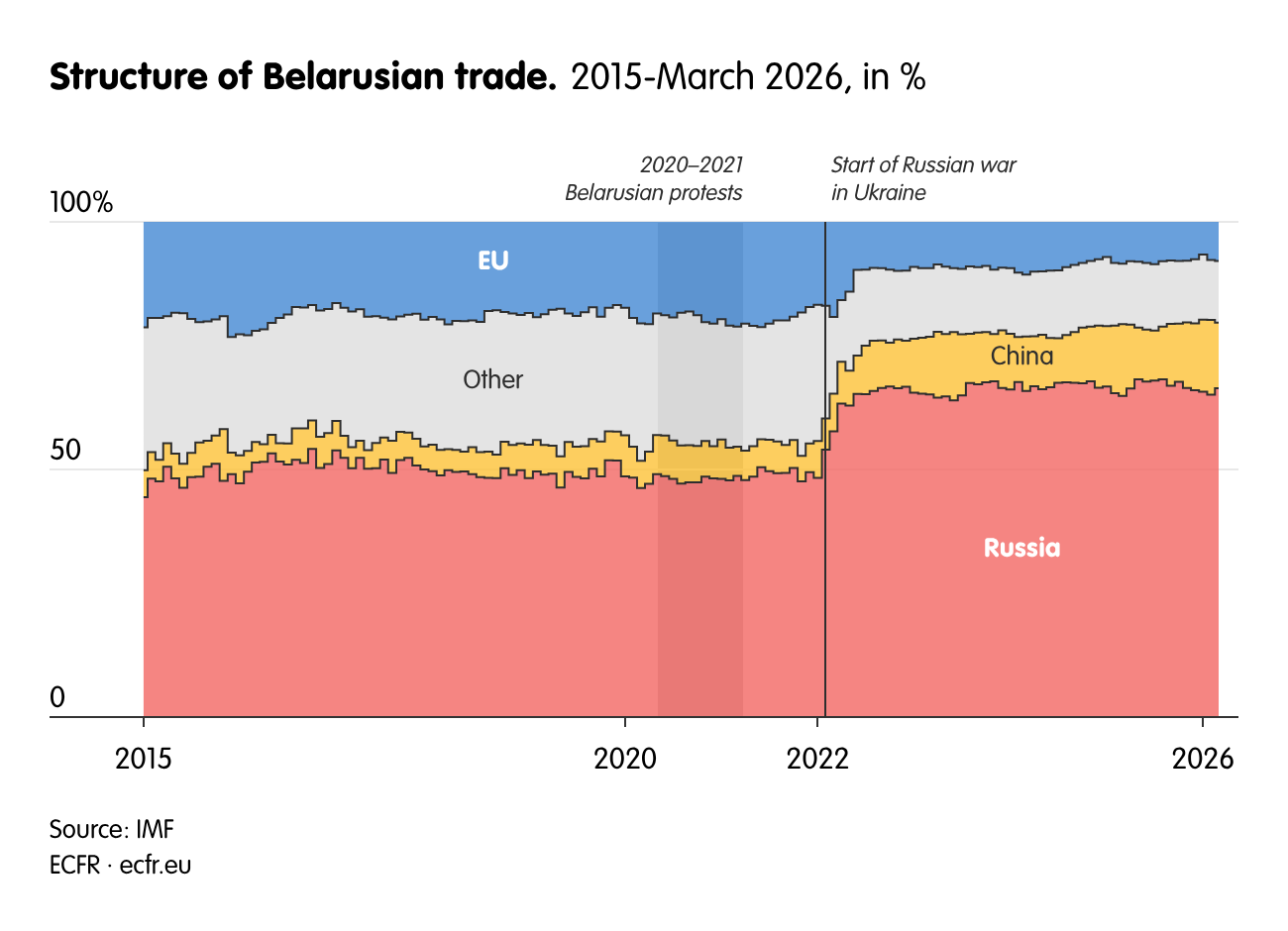
The EU downgraded its diplomatic relations with Belarus in 2020 after the latter’s disputed presidential election, which saw Lukashenko’s government violently repress protestors who took to the streets to oppose the president seizing victory by undemocratic means. Although bilateral trade between the EU and Belarus was largely undamaged in the subsequent years, the fall in trade with the bloc after Russia’s invasion of Ukraine in 2022 created an economic gap which Russia has exploited. For example, it has stepped up its own trading relationship with Belarus and become a key market for exports of Belarusian goods such as dairy products and petrochemicals—also allowing Moscow to evade EU sanctions. In doing so, Russia filled a vacuum for Belarus; Lukashenko, facing limited alternatives, deepened his dependence on Moscow.
Although Belarus did not formally commit troops to Russia’s war of aggression, it did allow the latter to house missiles, tanks, artillery, helicopters, aeroplanes and other military equipment in its territory prior to the invasion. It also provided military and civil infrastructure for Russia’s use, including airfields, hospitals and railway lines. This year alone, Russia has transferred more missiles—including dual-capable, hypersonic missiles—to Belarusian territory and conducted joint exercises encompassing the Belarusian Armed Forces. This, combined with a breakdown in dialogue between the EU and Belarus, gives Putin yet more sway in his quest to entrench Russia further into Belarusian structures.
Now that Belarus is apparently firmly committed to the supranational union of Belarus and Russia, known as the Union State, it has become a structural security concern for Europe. Russian deployment of nuclear-capable weapons on Belarusian territory makes Europe’s eastern flank more vulnerable, while Belarus’s already tense relations with neighbouring border states Poland, Latvia and Lithuania are at risk of deteriorating further. At the same time, Belarus has 879 political prisoners languishing, with Lukashenko’s regime having essentially outlawed any political or civic activity which the authorities see as a threat.
All this has compounded the breakdown in relations between Belarus and Europe. Russia is further emboldened to entrench its military deeper into Belarusian territory, tighten its economic dependencies and integrate the country further into its nuclear strategy.
This paper examines Belarus’s transformation from a problematic but stable buffer state between western Europe and Russia to a country which poses an increasing military and security threat to the EU. It argues that the EU should move away from relying solely on economic leverage and the blanket application of sanctions—which are pushing Belarus to rely more heavily on Russia—and develop a more targeted approach. Europeans need to actively contain the growing military and nuclear threat by finding new avenues of diplomatic negotiation, and by incorporating NATO-inspired approaches into its defence policy for its vulnerable eastern states.
Perhaps most importantly, Europeans need to assess to what extent they can treat Minsk as an autonomous actor capable of making decisions independently from Moscow. Europeans should take recent developments, such as Ukraine’s discovery of four signal relay stations in two Belarusian oblasts and their subsequent removal, as proof that Lukashenko retains the authority to make territorial-based decisions—especially under pressure from Russia.
However, for as long as Lukashenko remains in power, Belarus will never be entirely free of Moscow: he is an authoritarian, and Minsk remains sanctioned due to its breach of human rights clauses and mistreatment of its population. Belarus’s geopolitical position is also at least partly down to early decisions that Lukashenko made when he turned towards Moscow in the mid-1990s—a time when most other former Soviet nations chose real independence. Long before 2020, this posture led to missed opportunities with the EU, reinforced Lukashenko’s propensity to commit human rights violations and kickstarted Belarus’s deepening economic and military integration with Russia.
In its pursuit of a new strategy, the EU needs to recognise that—even if Belarus remains a stable, contained buffer zone—the country will not undergo a full democratic transformation. Europeans are thus searching for a Belarus which no longer presents an urgent security threat on its eastern border. They should aim to help shape a country whose stability reduces geopolitical risk without abandoning the EU’s long-standing commitment to democracy, human rights and the well-being of Belarusian society.
Belarus as a security actor
Belarus declared its independence from the Soviet Union in 1991. But, with what Russia perceived as the NATO and European sphere of influence shifting eastwards, Belarus became increasingly valuable to Moscow—especially because of the Suwalki Gap, which lies between the Russian exclave of Kaliningrad and Belarusian territory. The Russia-Belarus relationship became more entrenched once Lukashenko and Putin came to power in 1994 and 1999, respectively. The two leaders are hardly close personal friends—but they have nonetheless developed strong cultural and economic ties based on the similarity of their two anti-Western and authoritarian regimes, and their notion of a shared history.
Over the past 30 years, Belarus has moved closer to Russia in economy, trade and idea sharing. But it has gone beyond simply sharing a similar geopolitical outlook; now it is a militarised actor on the EU’s eastern flank. The first tipping point came with Russia’s invasion of Ukraine in February 2022. At this point, Lukashenko was already politically entangled with Moscow due to its support for Belarus’s trade network and economic sector after Minsk’s break with Europe in 2020. But the invasion meant that Belarus also became entrenched in the Russian military machine: in the early phase of Russia’s invasion, it became a launchpad for Russian ground offensives towards Kyiv and Chernihiv, and for missile strikes and combat aviation operations.
Since this period, Russia has attempted to consolidate its control even further. Now it has approximately 2,000 troops concentrated around air-defence systems, training facilities, logistics hubs and long-standing Russian military installations. Between 2022 and 2023, ammunition transfers from Belarus to Russia exceeded 130,000 tonnes. Since then, joint training centres, storage bases and transport corridors (many inherited from the Soviet period) have been repurposed and modernised under Belarus-Russia Union State programmes to support Russian operational needs. Rail-linked depots, armament storage facilities and training grounds now serve as key infrastructure for Russian forces on its western flank.
The second tipping point came with the two countries regularly staging recurring joint military exercises that institutionalise operational integration, such as the Zapad military drills which have been taking place since before 2022. Now Russia is eyeing up Belarus as a key component of its nuclear ambitions and has also deployed Oreshnik intermediate-range missile systems in Belarus. In April this year, Belarus confirmed it would no longer allow Russian conscripts who desert the military to leave via its border. Belarus is also a staging post for Russian nuclear missiles and joint military exercises.
The country has thus become Russia’s territorial, militaristic and logistical resource, achieved through durability, military routinisation and institutional embedding. The military aspect of this entrenchment is also compounded through hybrid attacks. For example, as early as November 2021 the EU condemned Belarus for facilitating the weaponisation of migrants—predominantly from conflict areas such as Iraq and Syria—who it had apparently encouraged to breach the borders of Latvia, Lithuania and Poland.
This form of hybrid warfare has continued into 2026: recent reports say that Lithuanian authorities have discovered a cross-border tunnel from Belarus to Lithuania, which they suspect is to continue to facilitate the potential movement of migrants through European territories. Now, with the Union State increasingly functioning as a homogeneous force, there is a threat that Belarus will become more emboldened to facilitate further dangerous hybrid manoeuvring. It intends to check Europe’s readiness and destabilise it from the inside.
Belarus as a threat to Europe
The difference in the threat which Belarus now poses to Europe lies in its shift—which has taken place over the past six years—from being Russia’s “rear-operating base” to Russia’s “forward-operating base”.
As Russia’s rear-operating base, Belarus functioned as a non-combat zone for logistics and maintenance. While it supported Russian military activity and provided strategic depth by shifting military infrastructure and combat flashpoints away from Russian territory, as a rear-operating base Belarus avoided deploying its own forces into Ukraine and directly engaging in combat operations. This allowed Lukashenko to avoid many of the challenges that Putin is experiencing, including politically sensitive military mobilisation, high personnel casualties and mounting internal economic pressure. This approach had previously provided Lukashenko with the degree of political deniability and diplomatic leverage necessary to continue negotiating with Western economies on economic sanctions and market access. He was able to point to Belarus’s arm’s-length approach to the war in Ukraine as proof that he was willing to engage with Europeans at a diplomatic and economic level.
However, Belarus’s position has changed since 2022. Evidence collected by the author demonstrates that Russia is increasingly establishing the country as a forward-operating base. Moscow is building on its routinisation and institutional embedding of military infrastructure to deploy personnel on Belarusian territory and undertake recurring joint military exercises, lately including nuclear forces preparation. Minsk’s rhetoric is changing to match these actions. In 2022, Belarus changed its constitution to allow Russia to store nuclear missiles on its territory; in a “Militarization of Europe” meeting held in June 2026, Belarus’s deputy minister of foreign affairs Igor Sekreta said he was “deeply concerned by… military exercises on NATO’s eastern flank” and “the EU and NATO… systematically promoting a militarist agenda at all levels.”
The Belarusian government is simultaneously becoming a component of Russian forward-military position and aligning ideologically with Russia’s view that Europe (and the West in general) constitutes an existential threat. Lukashenko himself reiterated this in May 2026, when he declared that “… [Belarus is] ready in every possible way to defend our common fatherland from Brest to Vladivostok.” The change is especially worrying for Ukraine, which is already fighting a war against Russia on several fronts. Its brow-beaten army could soon be required to deploy yet more resources to another defensive line on its northern border. Belarusian state media have suggested that Putin desires to open a “second front” against Ukraine, using Belarus as a launchpad for further attacks.
Indeed, evidence suggests that Russia is already using Belarusian infrastructure to gain an advantage in its drone warfare against Ukraine: in June 2026, Ukrainian intelligence services discovered four signal relay stations in the Belarusian oblasts of Homiel and Brest. Ukraine’s president, Volodymyr Zelensky, appealed directly to Belarus to dismantle the sites or face potential Ukrainian consequences. The Belarusian president apparently acquiesced—although no public statement or confirmation has been made.
Belarus’s transformation into a forward-operating base was further bolstered in 2023, when Russia deposited tactical Iskander nuclear-capable warheads on its territory. Then, in early 2025, Russia moved Oreshnik hypersonic missiles to a location which experts estimate to be around 60km south of Minsk. This has changed the calculus for the rest of Europe. Europeans must contend with an additional nuclear threat right on its border (aside from Kaliningrad) and consider how this could compromise security along its eastern flank.
Meanwhile, as noted above, Belarus is mixing concrete actions with rhetoric that suggests it sees Europe as a threat to its own sovereignty. In the same speech, Sekreta commented that Poland, Latvia and Lithuania have a combined defence expenditure of €52bn, which is apparently “25 times more than Belarus allocates for defence”. This suggests that Belarus increasingly views European and NATO defence investments through the lens of Russian military planning. If left unchecked, Russian influence will leave EU member states more vulnerable to further hybrid attacks from Union State forces.
For Europeans, there is also potential for escalation in how these border countries respond, and uncertainty about where escalation could lead. For example, the Zapad-2025 military drills, which took place on September 12th 2025, prompted Poland to close its border with Belarus due to “heightened security concerns”. Prior to this, on September 9th and 10th, Russia had flown several drones into Polish airspace during an attack on Ukraine. Lithuania also closed its border with Belarus for a whole month in October 2025 (and refused to enter negotiations to reopen it) after meteorological balloons travelled into its airspace from Belarus. The latter responded by accusing Lithuania of “pursuing an anti-Belarus policy”. Latvia, for its part, is struggling to deal with Belarus’s tactic of sending illegal migrants over its border. As of July 21st 2026, the Latvian government had recorded 8,413 instances of migrants attempting to cross into its territory this calendar year, stirring discontent prior to the parliamentary election in October. The country has also uncovered several sabotage operations that have appear to have been carried out by Belarusian and Russian spies.
European leaders heating up their confrontations in such critical areas is further adding to NATO’s headache. Belarus’s degradation as a buffer zone between western Europe and Russia means the potential for these flashpoints to drift further west is growing, not helped by a continually deteriorating diplomatic relationship between the Lukashenko government and the governments of neighbouring EU states. The proximity of Russian missiles and personnel to European territory could compromise NATO warning systems; it also suggests that the Union State is becoming increasingly willing to test European responses to its increasingly integrated deterrent.
Now the EU needs to reconfigure its strategy towards Belarus. The goal should be to ensure that Lukashenko does not limit his room for manoeuvre so much that he has no choice but to descend into a fully armoured satellite state; and that he has no choice but to react to any order Putin gives.
What Europe is doing…
On sanctions
Since Belarus’s flagrantly undemocratic 2020 presidential election, which sparked the country’s largest political crisis since independence, the EU and Belarus have downgraded their diplomatic relations. This is a cycle which Europe and Belarus have found themselves in since at least 2006: repression conducted by the regime triggers sanctions and isolation from Europe, which are followed by limited thaws and diplomatic re-engagement, which are then interrupted by renewed crackdowns—and so on. This time, however, the diplomatic downgrading was mutual: Lukashenko made Poland and Lithuania’s ambassadors leave Minsk in October 2020, and requested the EU ambassador return to Brussels.
In 2021, following Lukashenko’s contested re-election, Europe’s approach became more actively political. Belarusian opposition leader Sviatlana Tsikhanouskaya lobbied European governments to move beyond broad economic measures, such as existing targeted sanctions, to adopt harsher and broader sectoral sanctions. These were directed at, for example, specific officials, judges, prosecutors and police officers responsible for repression of Belarusian citizens. Belarus, for its part, suspended participation in the Eastern Partnership, an initiative which aims to strengthen political and economic relations between the EU, its member states and the partner countries of Armenia, Azerbaijan, Georgia, Moldova and Ukraine.
Europe’s response remains to take a blanket approach to sanctions towards Belarus. It reinforced its sanctions cycle even after Russia’s invasion of Ukraine in 2022 and the EU’s approach to Belarus is embedded within its anti-Russia packages. This means that the EU not only targets individuals involved in conflict operations, but also bundles Minsk in together with the trade restrictions, export controls and financial measures which it aims at Moscow. Europeans have fallen into the trap of treating their Belarus policy as an extension of their Russia policy, although some politicians—including French president Emmanuel Macron and, back in 2021, former German chancellor Angela Merkel—have also pursued limited efforts to test whether targeted incentives could shape Minsk’s behaviour.
However, some EU sources say that Minsk is an unwilling negotiating partner. It remains to be seen whether it will be explicit about the desire to reshape engagement with Europe. As of 2026, EU–Belarus relations remain largely frozen. They have seen only minimal diplomatic engagement and sustained sanctions, and only limited, transactional contact has emerged—for example, in negotiations over political prisoners and technical discussions over border management. In its latest sanctions announcement, the European Council extended its sanctions regime against Belarus until 2027.
The EU is thus in a difficult position when it comes to pursuing normalisation with Minsk. Since Europe’s Belarus policy is considerably shaped by Belarus’s neighbours, Lithuania and Poland—and Vilnius is especially reluctant to open any dialogue with Minsk—other member states are less emboldened to force through normalisation policies which are at risk of simply being blocked. What is clear is that, unless Belarus makes clear improvements in its human rights conditions and clearly distances itself from Russia’s war in Ukraine, European policy will remain structured around three aspects: progressive sanctions targeting regime elites and key economic sectors; political non-recognition of the legitimacy of Lukashenko’s rule; and support for Belarusian civil society and exiles.
Another problem for Europe is that continuing to heavily limit industrial trade and the transfer of dual-use goods and military equipment to Belarus could see Lukashenko rely more heavily on Putin’s open markets. But, if Europeans do not pursue sanctions, they indirectly aid Russia: Lukashenko supports Russia’s war against Ukraine by selling military and dual-use goods to Russia, thus helping it circumvent sanctions. This, in turn, creates a cycle of obligation whereby Minsk acquiesces to future military requests from Moscow and Russia further entrenches along Europe’s eastern flank.
The EU approach broadly treats Belarus as a subsidiary of Russia and narrows Europeans’ ability to develop a tailored security policy which directly targets Belarus as a forward-operating base. As things stand, sanctions on the economy and trade are not adequately addressing the developing threat that Belarus poses to European security. And they do not help alleviate the suffering of the ordinary Belarusians at home and in exile.
On the diaspora
Since 2020, Lukashenko has stepped up his repression and exile of Belarusian civil society actors opposed to his regime. Evidence collected by the author through focus groups carried out for ECFR suggests that, for Belarusians, exile is no longer perceived as a temporary or marginal condition. Rather, it has become a structural feature of Lukashenko’s authoritarian governance. Participants consistently described forced migration as a way for the Lukashenko regime to externalise dissent to maintain internal stability. The government pushes out political activists, journalists, researchers and civic organisers to reduce domestic pressure, while the regime projects an external image of control and normalisation.
This means that Belarus has shifted much of its political contestation into European societies. As a result, the EU has faced myriad challenges related to diaspora governance, transnational repression (including surveillance, intimidation, pressure on relatives and legal harassment across borders) and social cohesion. The EU has, particularly after 2020, provided unprecedented political recognition and support to Belarus’s democratic forces, including security guarantees and sustained funding. For Lukashenko, exile therefore functions as a strategic arena.
How Europeans govern this space—through legal regimes, funding structures or protection mechanisms—directly shapes whether repression through exile succeeds as a long-term strategy.
On its foreign policy approach
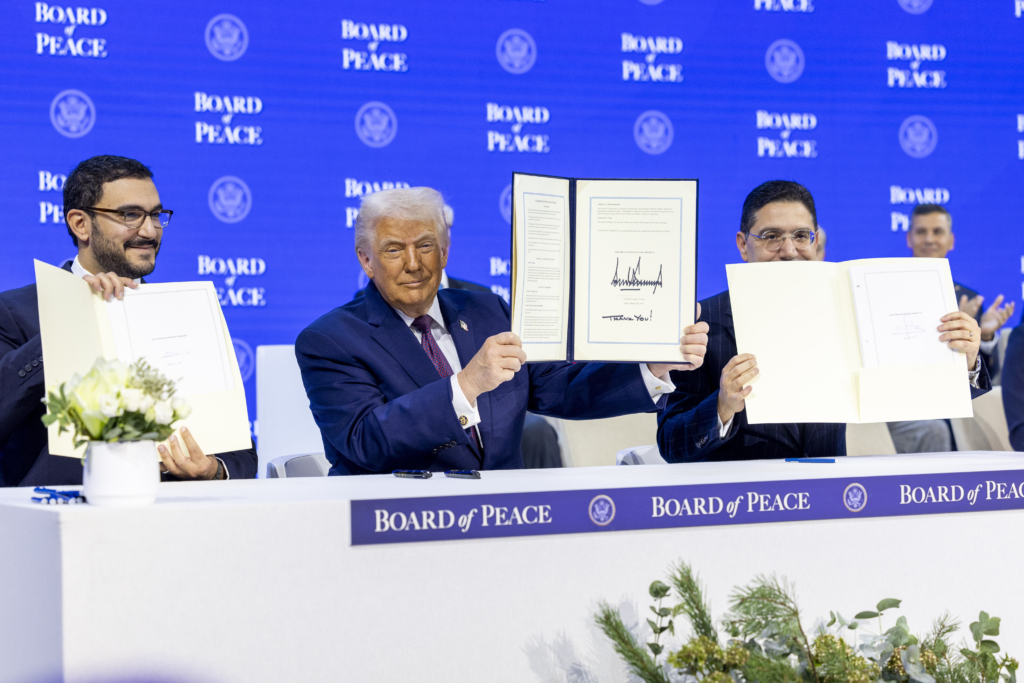
The EU’s treatment of Belarus as having limited sovereignty over its foreign policy is also at odds with the US approach. Washington’s current relationship with Minsk is based on President Donald Trump recognising Lukashenko as legitimate, and the US agreeing to negotiate sanctions relief in exchange for the release of political prisoners. America still casts Belarus as a strategic adversary; but it nonetheless accepts that the country needs careful handling to safeguard American and NATO interests in Europe. EU member states, which eye Washington’s approaches to Minsk with caution, have ramped up their scepticism further since Lukashenko joined Trump’s questionable “Board of Peace” (despite the Belarusian leader lending credence to Moscow’s campaign in Ukraine).
Overall, America is searching for “visible deals” whereby it can secure humanitarian wins via economic channels. The clearest example of this is its pursuit of calibrated sanctions relief: in 2025, Belarus released 123 political prisoners in return for the US easing sanctions on the Belarusian potash industry. And it could be argued that this has paid some dividends: lifting sanctions on Belarus helps ease the domestic economic pressure on Lukashenko, which leaves him less dependent on support from Russia for trade.
However, the thaw in America’s approach does nothing to address Belarus’s increasingly entrenched role as a Russian military staging post. Indeed, no approach taken by any American president ever has. And while former president Joe Biden synchronised Washington’s policy towards Belarus with that of Brussels, under his successor, Trump, the two approaches are disparate. Of course, the US does not have the major consideration of the security challenges which Belarus poses to Europe’s borders. But this divergence between America’s prioritisation of transactionalism and the EU’s prioritisation of security will only grow in the absence of a coordinated transatlantic framework towards Belarus.
There also exists the possibility that Lukashenko could exploit the gap between America’s leverage-based approach and Europe’s risk-based approach, to play each side against the other. From the US, Lukashenko has already achieved incremental sanctions relief and diplomatic rehabilitation while continuing to align Belarusian security with Russian territorial involvement and pursuing domestic repression. As it stands, all signs point to US bargaining having no impact on Belarus’s strategic alignment or its military cooperation with Russia. Human rights abuses remain.
What Europe can do next
Europe’s continued policy of isolating Belarus and imposing sanctions is turning the country towards Russia as a more attractive option for trade and investment. However, Europeans cannot simply restore diplomatic relations, even to their pre-2020 iteration: they need to hold Lukashenko accountable for his disregard of democratic norms and civilian abuse, and accountable militarily for his assistance to Russia’s war in Ukraine.
This requires developing an alternative approach which goes beyond the current binary choice of engagement or isolation and identifies as a priority exactly the type of Belarus that Europeans want to—or are willing to—work with. Europeans need to examine existing EU and US approaches to Belarus, and discover where Lukashenko could exploit gaps in their divergence—and where room for leverage and leeway exists.
This also requires Europeans to understand the type of pressure that Russia is exerting on Belarus. It is true that Russia continues to provide loans to Belarus, open its market to sanctioned Belarusian goods and give Belarus access to infrastructure through which it can continue exporting goods to Brazil, China and India. But this is illusory: Russia exerting “real” pressure would amount to trade wars, blockades of Belarusian goods, cutting off financial aid and propaganda attacking Lukashenko. Putin has exercised similar measures before, when Moscow was unhappy with Minsk. Now, in 2026, their actions might be well coordinated, but Russia has not established any real economic, financial, military, informational or political coercion against Lukashenko and his government.
Europeans could use this distinction to consider the type of Belarus they want to shape. This should be a Belarus which has secure, meaningful economic alternatives to Russia; a Belarus which sees the geopolitical and economic sense of having a choice of trading partners; a Belarus which has functioning communication channels. Overall, Europeans should expect that their future relationship with Belarus will go beyond mere transactionalism and value the voices of those who Lukashenko continues to silence. Europeans should seek a Belarus which retains a degree of political room for manoeuvre away from Putin’s military and political influence. The following recommendations set out how it can achieve this.
Support eastern border states
The EU has already made progress in strengthening its defence security arrangements for its eastern flank. For example, the 2022 Strategic Compass aimed to prevent crises in states most vulnerable to Russian (or indeed Belarusian) encroachment, and the EU has developed a targeted “Communication on the EU’s Eastern Regions Bordering Russia, Belarus and Ukraine” (or “Strong regions for a safer Europe”) programme. This includes the five priority areas of security and resilience; growth and regional prosperity; building on local strengths; connectivity; and empowering its people. The bloc is also channelling funds into shoring up transit routes and financing, including the customs infrastructure along its eastern border which is a target for Russian and Belarusian interference.
However, the EU should more deeply incorporate its support for states that border Belarus—which are facing hybrid pressure, border incidents and spillover risks—into a defence strategy which builds on the NATO model, particularly in its approach to deconfliction. This would mean better aligning military preparedness with diplomatic signalling and crisis-management channels.
For example, NATO maintains a partnership with the Organization for Security and Co-operation in Europe which promotes risk-reduction frameworks and transparency measures among signatory states—including the Vienna Document, which has been signed by the US, all European nations and Russia. Europeans could establish a similar partnership with selected states which builds on Lukashenko’s willingness—up to now—to notify his Western counterparts about activities such as Zapad military drills, where in some instances he has even invited them as observers.
Strengthen connections inside Belarus
To go one step further, however, Europeans—and especially EU border states—should maintain established working-level diplomatic contacts in Belarus, especially those located at EU member-state embassies in Minsk. These could also be third-party intermediaries or use technical-level communication formats, such as hotlines, to relay information about military movements or developments.
This could also rely on trusting selected contacts inside the country itself: for example, there are several initiatives which hold meetings which bring speakers and thinkers together to share both Western and non-Western perspectives, including from inside Belarus and Russia. By acting as a conduit for open communication—and by remaining open and depoliticised—protecting such channels encourages a more open dialogue. This, in turn, mitigates the risk of miscalculation and helps develop a diplomatic environment in Belarus which is less dependent on the relations created through the Union State. The aim for Europeans should be to build a pro-EU constituency inside Belarus through democratic initiatives—not with the intention of overthrowing the regime tomorrow, but rather to embolden those who see it in their interest for Belarus to have normal working relations with the EU.
Europeans could also continue to financially support or work with Belarus’s small- and medium-sized businesses, both inside and outside the country. Directing economic support and capacity building to enterprises within its borders would strengthen the country’s independent economic capacity by allowing it to gradually decouple from other trade relationships. At the external level, in 2022 the EU and the European Bank for Reconstruction and Development pledged €4bn for SMEs which had relocated their businesses abroad. The EU should explore ways in which it can strengthen Belarus’s SMEs inside the country, to help build a constituency which sees partnership with the West, not just Russia, as an advantage.
Opportunities exist for cooperation at the non-profit level, too. While not directly related to European security policy, concerted work by the EU to fund Belarusian NGOs and support apolitical initiatives can help strengthen the country’s national identity and foster conditions for a more fruitful working relationship. Europeans can connect with Belarusian youth and help shape a more democratic future of Belarusian leaders through the funding of communal projects such as Erasmus+ and the European Solidarity Corps for Belarusian students.
The European Commission is funding ArtPower Belarus, in collaboration with the Belarusian Council for Culture and Danish Cultural Institute, from 2022-2028. This demonstrates how outreach in Belarus—with willing internal institutions—can forge a common sense of purpose and prevent the “othering” of either side. The EU should continue to strive for flexible support for civic and political activism, especially at the grassroots level, through institutions such as the European Endowment for Democracy.
Engage with the Belarusian diaspora
Europeans should treat the Belarusian diaspora as a “strategic constituency” and help secure their participation in national and international civil life. For example, despite Belarus’s exit from the Eastern Partnership, the country’s civil society remains active in the initiative. This political knowledge and organisational capacity are vital for educating Europeans and ensuring that Lukashenko’s approach does not condemn the country and its people for any longer than it already has. Indeed, the EU needs to ensure that the Belarusian diaspora remains at the forefront of its policies regarding safe migration and access; it must avoid inadvertently reinforcing the regime’s strategy of repression through exile, lest any temporary or fragmented protections undermine diaspora members’ political and institutional capacity.
The EU should prioritise legal stability and predictability for Belarusian exiles. Where possible, longer-term residence pathways, access to labour markets and recognition of professional qualifications should be expanded and harmonised across member states. Indeed, Europeans need to take transnational repression seriously as a security issue, not only a human rights concern. Surveillance, digital harassment, pressure on family members remaining in Belarus and alleged monitoring activities in EU states challenge European sovereignty and social cohesion. To counter this, the EU should keep pursuing democratic initiatives such as the project “Towards a Local Democracy Agency (LDA) Belarus in Exile”. Its establishment has helped reinforce the notion that exile is not a temporary condition and encourages the need for “sustainable democratic infrastructure” which supports communities in exile. Addressing these practices strengthens both diaspora resilience and internal EU security norms.
In the long term, the EU should introduce more permanent diverse and sustainable funding streams, and move away from reliance on emergency or externally volatile sources. While several exile-based civil society institutions have benefited from multi-year EU funding frameworks—and the EU has committed €200m since 2020 in supporting the Belarusian people—recent reductions in US assistance have exposed structural vulnerabilities. The EU needs to use such funding streams to support independent media, research organisations and civic initiatives in exile, since they are repositories of political memory and organisational capacity.
Europeans should also continue to engage with Belarus’s political opposition on a more formal level, rather than treating it as a protest movement. For example, they generally treat Tsikhanouskaya as the de facto leader of Belarus from her base in Warsaw. This gives Europeans access to a political figure with different views and priorities, and could see the two sides shape future engagement with Belarus via insights from the country’s more civic-minded, democratic channels. The EU should be wary of treating her as the sole alternative to Lukashenko, especially because it is unlikely that Tsikhanouskaya will be installed as his successor—but openness to her influence will bolster trust between Europeans and Belarusian exiled civic society. It will also provide EU member states with an understanding of how the Belarusian state works.
Link diplomacy with action
EU engagement should focus on areas where European interests are directly implicated and where limited leverage still exists. Recent developments, including prisoner releases secured through negotiations with the US and Lukashenko inviting Western officials to observe military drills, suggest that Minsk remains open to selective forms of engagement.
But while targeted incentives can produce limited concessions, the EU should avoid simply replicating the American model. Instead, the bloc must approach conditional engagement as a security instrument rather than simply a human rights policy. Unlike Washington, it has long-term security interests in Belarus—regional stability, border security, migration management, securing its eastern frontier—and needs engagement to be more strategic than transactional.
Europeans should therefore try to couch any diplomatic, economic or symbolic concessions (such as forming high-level diplomatic contacts, limited sanctions relief or participation in dialogue formats) in measurable and verifiable actions. These could include independent verification of the release and treatment of named political prisoners, a sustained halt to politically motivated detentions and access for international humanitarian organisations.
This could build on Lukashenko’s demands for sanctions relief in exchange for Belarus releasing political prisoners and ceasing its aggravation towards Europe’s eastern borders by making such concessions with the conditionality just described. Such engagement with Belarus could help generate durable behavioural change and address underlying sources of regional insecurity.
Untangle Minsk from Moscow
Europeans can also adapt their approach to Minsk based on how America treats it: as a viable, autonomous actor, not an extension of Moscow. The fact that negotiations between Trump and Lukashenko led to the release of prisoners—albeit with hundreds still being held—suggests that the Belarusian leader remains sensitive to economic pressure and to the optics of his own international legitimacy. Trump’s recognition of Lukashenko as Belarus’s legitimate president has only served to reinforce the latter’s willingness to reestablish closer contacts between Minsk and Washington. The US can use this thaw to its advantage to leverage selective sanctions adjustments (for example, easing restrictions on Belarusian potash exports in response to global fertiliser market pressures) and further widen Lukashenko’s limited transactional opening.
Europeans should consider whether closer coordination with Washington, whereby both camps identify common red lines and incentives for better diplomatic ties with Minsk, would deter potential coercion by Lukashenko and prevent him playing the US and Europe against each other. Indeed, the two erstwhile allies finding common ground in their strategy towards Belarus could secure further progress on humanitarian issues and demonstrate to Lukashenko that the US remains key in the protection of Europe’s eastern frontier. It is worth noting that, in this event, the EU should strongly articulate its own priorities—particularly regarding border security and societal agency—and pursue pragmatic coordination at the level of officials, agencies and technical experts.
A practical example of Belarus demonstrating more autonomy is the recent ultimatum proposed to Belarus by Ukraine. Zelensky’s bold statement over the four signal relay stations in Belarus led to their quiet removal (or they were at least turned off), suggesting that Lukashenko can roll back certain decisions—even on military issues. And, even if reports that it was in fact Ukraine which destroyed them are true, Lukashenko has accepted this development without retaliation. His response suggests that he fears the consequences of escalation from Ukraine and other Western allies. But it also supposes that Putin is not yet able to dictate Lukashenko’s every move, not even in zones which Union State forces could view as fundamental to ensuring their continued sovereignty. This episode shows that Lukashenko still retains meaningful room for manoeuvre even in matters of security, and that calibrated pressure from neighbouring states can shape his decisions.
Europeans should exploit this hint of residual agency to discover in which other areas Lukashenko retains an interest in limiting escalation or preserving his room for manoeuvre. They should determine in which other areas calibrated diplomatic and economic pressure could shape Belarusian behaviour and complicate Russian military planning. This could help decouple Belarusian decision-making from Russian power structures and isolate Lukashenko into a more favourable position for further negotiations.
Shaping stabilisation on European terms
By reducing the opportunities for Russian coercion and Belarusian-enabled hybrid pressure on the eastern flank, Europeans can better counter the impact of Russian entrenchment on their neighbour. But Europeans should not frame the recommendations as a part of a rehabilitation for the Belarusian regime. Rather, these policy suggestions should function to safeguard against further deterioration of the stable buffer zone that Belarus once provided for western Europe. Most importantly, they need to address the Belarus that has been created since 2020 and seek to prevent its further entrenchment as a Russian satellite state.
To achieve this, the most important thing Europeans can do is move beyond the false dichotomy between isolation and engagement. Europe can still rebuke Belarus as an externally managed satellite state, for example by disavowing the Lukashenko regime, while providing incentives which help it shape the conditions under which stabilisation unfolds. Europe cannot force rapid change in Minsk’s strategic alignment, but it could help prevent the complete consolidation of a security order in which Europe has no voice.
Europeans should also focus on how their approach to Belarus differs in the short and the long term. In the short term, Europeans need to prioritise preventing Russia’s military configuration in Belarus from becoming permanent and irreversible, and work to limit the extent to which Russia has entrenched itself into Belarusian military institutions. They should aim to separate Belarus from Russia as much as possible by ensuring that Moscow ceases stationing its weapons (conventional or otherwise) on Belarusian territory. At the same time, Europeans need to be aware of continued escalation, such as further military deployments on Belarus’s territory, applying hybrid pressure on member states or facilitating cross-border incidents.
In the long term, Europeans should not aim for Belarus to be aligned with the West; nor should they expect that their intervention will transform Belarus into a democratic state. But the EU should work towards Belarus becoming a country that is sovereign enough to resist becoming a permanent forward base for Russian power, and open enough to maintain a managed relationship with both Europe and Russia. Ideally, Belarus should become sovereign enough that it can make rational decisions—based on the best interests of its country and its people—regarding with which power it wants to be aligned.
As it stands, Russia’s war of aggression in Ukraine shows no signs of abating. America, for its part, is increasingly reluctant to fund deterrence in EU countries, including those which border Belarus. It is, under Trump, using economic and political posturing to exert pressure on the Lukashenko regime. But Europeans can still find the avenues of cooperation which still exist in the allies’ fractured relationship. Most importantly, the EU needs to grant a degree of agency to its most problematic neighbour.
About the author
Vasil Navumau is a former visiting fellow at the European Council on Foreign Relations. He now works as a researcher at the University of Siegen, where he focuses on civic activism in eastern European countries, particularly Ukraine and Belarus, and its transformation via information and communication technologies.
Acknowledgments
The author would like to thank Pavel Slunkin and the ECFR editorial team (in particular Amy Sandys and Portia Kentish) for their valuable input and suggestions, as well as Nastassia Zenovich for her graphics.
This work was produced as part of the project “Portrait of Exiled Belarusians and the Role of Belarus in Russia’s War on Ukraine”, financed by the European Union under the EU4Belarus – Support to Advanced Learning and Training (SALT II) programme.
This document has been produced with the financial assistance of the European Union. The contents of this document are the sole responsibility of the European Council on Foreign Relations (ECFR) and can under no circumstances be regarded as reflecting the position of the European Union.
This week, Mark Leonard is joined by Jörg Lau, international correspondent at Die Zeitand Jana Puglierin, head of ECFR’s Berlin office, to explore the political turmoil in Germany ahead of an electoral autumn. Chancellor Friedrich Merz’s government is becoming increasingly unpopular: it faces collapsing approval ratings, growing tension within the governing coalition and mounting pressure from the far-right Alternative for Germany (AfD).
As regional elections approach, Jana argues that Germany’s traditional parties face difficult choices that could reshape the country’s political landscape, while Jörg discusses what the AfD’s rise means for Germany. A “firewall” has kept mainstream parties from cooperating with the far right in the post-war period—but Jörg reflects on the strain this is under, and whether the AfD’s first taste of regional power could transform German politics.
Together, Mark, Jörg and Jana assess the prospects for Merz’s leadership, the future of the CDU and whether Germany’s political centre can withstand such pressure. Are established parties capable of renewing themselves? What happens if the AfD makes gains at the regional level? And what would prolonged instability in Berlin mean for Europe?
This podcast episode was recorded on August 12th 2026.
Many—perhaps most—Trump administration foreign policy initiatives find ways to make money for people selected by Trump officials. These deals unjustly enrich a chosen few.
They can also create facts on the ground that could bequeath problems to the next US administration. For example, grants of property rights to friends and family by the Trump-controlled Board of Peace could decide who has land and money in Gaza. This would limit the discretion of any approach that aims to increase Palestinians’ role in the place they live in. Other peace deals contain similar long tails.
To address this threat to peace around the world, the next US administration should introduce anti-corruption sanctions from its first day in office. The new administration could bar non-US persons or institutions involved in such transactions from the US itself and from the American financial system. To do this, the administration would use the Global Magnitsky Act and related executive orders, including the Trump-issued executive order 13818.
Europeans can help this along even now. They can begin to declare their expectations that a new US administration will break from the practice of enriching chosen insiders. Such statements will influence preparations for the new administration. Over the next two years, Europeans can also preserve information about US insider dealing while publicly refusing to support or finance such deals where European interests are involved, including in the south Caucasus, Western Balkans, Gaza, Russia and Ukraine. And they can shore up their own sanctions and anti-corruption regimes.
Starting discussions about sanctions now will also send a message about the importance of professional, thorough investigations by journalists, civil society, and especially by congressional committees if Democrats take control of the House or Senate. This information can inform decisions about sanctions. Clear signalling from American and European political leaders now may deter potential foreign partners of the current administration from entering into corrupt deals over the remaining two years of the administration.
What sanctions can and cannot do
Sanctions will not provide complete answers in any situation, and they may not be appropriate in some instances. An understanding of how they work will clarify their importance and some of their limitations.
Executive order 13818 authorises sanctions against any “foreign person” (that is, not a US citizen or person) who participated in:
corruption, including the misappropriation of state assets, the expropriation of private assets for personal gain, corruption related to government contracts or the extraction of natural resources, or bribery
The commercial aspects of President Donald Trump’s foreign policy appear to fall squarely into this framework. Even if not every instance is found to involve corruption, a close look is warranted. For example, Kazakh authorities were reportedly pressed to award a valuable mineral concession to a specific American company (associated with US political insiders, including the president’s family) while the administration considered financing for the development and export of the minerals. This was not an effort to promote a fair process in which American companies could compete—a staple of US government advocacy in any administration—but an attempt to short-circuit the normal process. It appears to involve the essence of the behaviour targeted by the Magnitsky act and executive order.
In Bosnia and Herzegovina, a specific American company was newly created by two US citizens with no relevant experience but with a track record of supporting the president (and one of whom is the brother of a senior official in the first Trump administration). The US lobbied for this company to receive a lucrative concession for a natural gas pipeline, and the US demanded the resignation of a reluctant international official.
American sanctions apply only to non-American citizens. It may seem unfair to leave US beneficiaries of a scheme out of a US response. But the administration’s power to require foreign persons or institutions to provide all relevant information about suspect transactions could impede the activities that unjustly enrich American insiders.
Further, by the end of the Trump administration, many insiders (and possibly some foreign persons) are likely to be covered by presidential pardons. This could make it difficult, if not impossible, to proceed with US criminal investigations, at least not without extensive litigation while the US justice system recovers from Trump’s attacks on its capacity. This could make a new administration look feckless, and foreign partners may expect that Trumpian practices will return in future administrations. Crucially, sanctions are not subject to the pardon power, and their emphasis on non-US persons and institutions will provide some protection against charges that they are part of a partisan agenda.
Another concern may be that sanctions have generally been adopted after careful review by relevant US agencies, including the Justice Department. Given the amount of information available, a reasonable basis for a decision on sanctions can be prepared for day one of a new administration. This decision can be accompanied by a provision that reviews will follow as new information becomes available and US government agencies rebuild enough capacity to conduct them.
The investigative resources of European governments, the US Congress (or parts controlled by Democrats after the 2026 midterms), civil society and independent journalism will provide an ample, well-documented basis for sanctions in many instances. By inviting those who might be subject to sanctions to provide information, the effort will gather more information, more quickly, aiding in decisions about priorities for further sanctions or investigations by congressional or law enforcement authorities.
Significantly, early sanctions may be necessary for a new administration to deliver on promises it makes on issues of foreign and domestic policy. For example, the Trump administration is seeking to have rights to minerals critical to US industrialisation granted to its preferred partners, including in Central Asia, Ukraine and eastern Congo. Individuals holding these rights would be important stakeholders in any policy shifts, even though they may have obtained the rights through insider dealing and could be opposed to the direction a new administration would like to take on policy.
The leverage provided by a policy of using sanctions may be a key instrument of foreign policy
The same situation could occur in other locations. In addition to the examples of Gaza and the Western Balkans noted above, in Venezuela, if a democratic government emerges, it may face challenges from Trump-affiliated companies accustomed to working with Maduro-regime holdovers kept in place by Trump and Marco Rubio. Control of a key trade route from Central Asia to global markets, along with a US-taxpayer funded investment vehicle, is said to be in the process of being placed under the control of a Trump-associated individual. In each instance, more knowledge about what deals are in place and how they came to be will improve both policy and decisions on sanctions. The leverage provided by a policy of using sanctions may be a key instrument of foreign policy.
The list goes on. Even before his second inauguration, a Trump-owned business accepted a $500m investment from a fund controlled by a member of the United Arab Emirates’ ruling family; within weeks the UAE received an exemption to purchase high-end computer chips. A Chinese businessman purchased $50m in a Trump-owned crypto business (part of the president’s $1.2bn windfall from crypto in 2025); weeks later his US criminal problems were resolved by the president.
If other jurisdictions like the EU and Britain join new American sanctions efforts, the costs to the non-US individuals and institutions affected will be real. To do this, the EU might consider how its rule of law initiatives, including its investigative bodies such as OLAF or the European Public Prosecutor’s Office, could prepare to work alongside US sanctions authorities. It could propose that the EU and the US return to coordinating assistance programmes to reinforce public procurement reforms. Various European states have national anti-corruption sanctions programmes; more should consider adopting them.
Some will worry that rapid deployment of sanctions may distract from a new administration’s positive agenda. This will depend on the strength of that agenda. Europeans can help make clear that they regard this as a false choice: a break from the insider dealing of the Trump administration should be part of a new, positive plan for government. This will make it easier for a new administration to adopt sanctions policy as part of leaving Trump practices firmly in the past.
There will, of course, be difficult decisions around the application of sanctions. Not every example of insider dealing will be proven to be corrupt. Some potential targets of sanctions may be important to other US administration initiatives, and if the new administration defers sanctions it may be subject to accusations of hypocrisy. Other countries may object strongly to seeing their institutions or citizens named in sanctions documents. A new administration will face many choices like this; people who want to exercise power from Washington therefore need to prepare now and confront the choice early. It is better to start with a strong tool like sanctions rather than to disarm everywhere pre-emptively in order to avoid hard choices in a few places.
Wise observers of democratic transitions have said that democrats taking power after corrupt regimes should seek to be quick, effective and legal; but that they can be only two of the three. But sanctions might get a new administration closer to three out of three. They provide a legal tool that will help the next administration be quick and effective in stopping the insider enrichment typical of Trump foreign policy while coming with limits (no targeting of US citizens) and with the ability to adjust quickly. By taking up this tool, it will free itself of shackles that would come from those who seek to control the land and property important to peace in many parts of the world. But this will come to pass only if people begin to talk about it now. European leaders have the ability to help make sure that happens.
This week, Mark Leonard is joined by Adriana Abdenur, a Brazilian policy expert and co-president of the Global Fund for a New Economy, and Jorge Castañeda, former foreign minister of Mexico and professor at Sciences Po, to explore debates about development and ideas of strategic autonomy across Latin America.
Jorge explains why China’s role is varied across the region, arguing that Mexico and much of Central America remain deeply constrained by their economic ties to the US. Adriana discusses Brazil’s long tradition of strategic autonomy, describing how policymakers engage with China as both an economic partner and a source of ideas on development, technology and global governance.
Together, Mark, Adriana and Jorge explore how intensifying US-China competition is reshaping the region’s choices. Can Latin American countries balance relations with both powers? Is China a model, a market or simply another partner in a multipolar world? And what does strategic autonomy look like in an increasingly coercive geopolitical environment?
This podcast episode was recorded on July 31st 2026.
Cover image: picture alliance / Xinhua News Agency | Li Bo
Reluctance among German decision-makers has long stopped Berlin taking a tougher economic approach towards China. When France, Italy, Lithuania, the Netherlands and Spain recently pressed the European Commission for tougher measures and faster trade defence action against China, Germany not only declined to join, it even called for stronger industrial ties with Beijing.
Yet, one thing Berlin should not worry about is voters’ disapproval should it pursue a more hawkish China policy. ECFR polling data find that Germans are the most China-sceptical out of 15 European countries surveyed. No fewer than 60% of Christian Democrat and Social Democrat supporters regard the country as an adversary or rival. In contrast, elsewhere in Europe, majorities still see China as either a “necessary partner” or even an ally. In Italy and Spain, 56% and 65% of people hold this view respectively. (Closest to the sceptical Germans are the French public; President Emmanuel Macron’s increasingly hawkish political posture vis-à-vis Beijing may have found an audience willing to listen.)
The China shock has hit Germany particularly hard: its manufacturing sector lost around 420,000 jobs between 2019 and 2025 and it continues to shed 10,000 jobs each month. The car industry is paying the highest costs, being squeezed out of a market increasingly dominated by Chinese manufacturers at home and abroad.
The mood in the European Council is shifting, and with Germany’s acquiescence. When EU leaders met in June 2026, they backed a stronger trade defence toolbox of existing measures against China. This included instruments such as the Industrial Accelerator Act’s “Buy European” provisions and limits on high-risk Chinese technology. Despite its past hesitations, Germany no longer acts as a spoiler on firmer EU action, and it has cautiously supported this new direction. Nevertheless, the combination of growing public scepticism towards China, mounting pressure on German industry and appetite for a more assertive policy on the European level creates a political mandate that German decision-makers could yet seize.
The German public’s views on the energy transition should also prove encouraging for their leaders. Voters want to see investment in renewables: 57% back what would amount to the growing electrification of the economy. Across the countries polled by ECFR, 61% of respondents say they support prioritising renewables and the clean tech sector.
This public support should help persuade leaders, including in Germany, that they can take action to limit emerging dependencies on China. They can accelerate the energy transition while de-risking the clean tech sector through providing support for domestic European industries, from wind to batteries.
For Berlin, and capitals across Europe, it is safer to move ahead rather than delay. Chinese economic policy is already doing irreparable damage to European industry—but European policymakers still need to protect an increasingly electrified economy from weaponisation by China. If they fail to do so, governments will almost certainly pay the price at the ballot box. Those that pursue electrification and economic de-risking as a single package are most likely to reap the political rewards.
Marine Le Pen’s candidacy for president means Europeans should brace for the possibility of a France wholly different to the one they know.
A Rassemblement National government would be hostile to the EU and a disruptive partner on numerous issues facing Europe; including on Russia, enlargement, climate and migration.
The party is divided over whether and how to work with other right-wing parties in France; and how to position the country within Europe and the Western alliance.
Le Pen is likely to work in a “duo” with party leader, Jordan Bardella, but there are notable differences between their outlooks. Europeans should pay attention to these.
European political leaders would struggle to influence a Le Pen-led government, but nor should they expect a unified European far-right to emerge. They would be wise to begin their preparations now.
Note: This policy brief is a second edition of an earlier paper published on June 9th 2026. It updates the prior analysis in light of Marine Le Pen’s confirmation that she will run for the French presidency.
The restoration of a matriarch
In the early hours of November 2nd 1976, a bomb exploded outside the Paris home of the far-right leader Jean-Marie Le Pen and his family. The perpetrators were never found. His youngest daughter, Marine, 8 years old at the time of the attack, later seethed that the family was not shown “the slightest sign of solidarity or compassion” by the French authorities. Today, as Marine Le Pen launches into her fourth—and most competitive—bid for France’s presidency, that quote reveals something of the woman who might soon occupy the Elysée Palace. If she wins, European policymakers will need to understand this self-defined outsider and how her family’s and party’s long years in the political wilderness shape her domestic and international agenda.
That insurgent self-perception may seem odd now. After all, the National Rally (Rassemblement National, RN) is far ahead in polling for the first round of the election, is accepted by an increasing share of French polite society, and is close to some of the country’s most powerful economic elites. But it still explains why the rest of Europe should brace for the possibility of a French president who sees herself as a rebel against the country’s and the EU’s established norms and institutions. As this paper will argue, a Le Pen presidency of France would be a significantly more formidable challenge to European orthodoxies than Giorgia Meloni is in Italy or Viktor Orban was in Hungary.
*
Only one thing is certain about the result of France’s presidential election next year: President Emmanuel Macron’s decade in power will come to an end. Who replaces him is an open question, with any number of conceivable outcomes. The exact field of candidates is not yet clear, not even in Macron’s centrist camp, where two former prime ministers—Édouard Philippe and Gabriel Attal—are vying for primacy. French presidential election campaigns are often volatile; both those in 2017 and 2022 saw major shifts over the half-year before polling day. But current polling suggests that the RN party candidate is on track to win the first round, on April 18th 2027, and to enjoy good prospects in the second, due on May 2nd.
The RN went through months of speculation over who would represent it at the presidential election. In March 2025, Marine Le Pen was convicted of embezzling European parliamentary funds and received a five-year ban on standing for election. Over recent months, Jordan Bardella, the RN’s untested young leader and Le Pen’s protégé, was talked about as the party’s best hope.
On July 7th 2026, however, the Court of Appeal reduced Le Pen’s ineligibility penalty, which enabled her to run. It also required her to serve a year of house arrest with an electronic ankle tag. That evening, Le Pen announced that she would seek the presidency and would appeal to the Court of Cassation. The penalty is suspended until France’s highest court rules on the case, which could take place as late as April 2027.
Her candidacy has significant implications for the rest of Europe. Le Pen is an experienced campaigner and an established (though also divisive) figure in France. Her bid for the presidency is perhaps more likely to survive the heat of the campaign than a Bardella run would have. The fact that she is the candidate probably increases the chances of the French far-right coming to power for the first time since Marshal Pétain, the puppet leader of Vichy France.
Le Pen is marked by the RN’s long years in the wilderness. She believes in radical solutions. As president, she would likely be a confrontational and abrasive force in Europe.
To reiterate, the outcome of the election remains wide open. But the scale of the potential rupture of a Le Pen win means policymakers elsewhere in Europe must both understand the RN and prepare for that eventuality. To that end, the authors of this paper have extensively researched the party’s Europe and foreign policies. The following study is based on in-depth interviews with an array of senior RN figures and external experts as well as analysis of the party’s speeches, legislative proposals, voting records and electoral programmes. The result is a series of five theses about what a Le Pen win next year would mean for Europe.
Understanding an RN presidency
Point 1: Marine Le Pen’s candidacy reaffirms her primacy inside the RN, although her duo with Bardella will endure
Marine Le Pen’s decision to run for president despite her upheld conviction—and in contradiction of her own prior statements—is a reminder of her centrality to the RN. She is still the party’s dominant leader. The decision also dispelled the illusion that Bardella constitutes a real alternative to her leadership. It showed that today’s RN is still Marine Le Pen’s inheritance and achievement.
The party was founded as the National Front (FN) in 1972 by Jean-Marie Le Pen, along with French former members of the Waffen-SS and other nostalgists for colonial French Algeria. It drew together different threads of the far-right. For decades most French citizens considered it beyond the pale. When Jean-Marie Le Pen narrowly made it into the second round of the 2002 presidential election, it shocked both France and Europe. He was roundly defeated by 82% to 18% by then-president Jacques Chirac.
Taking the reins of the party from her father in 2011, however, Marine Le Pen pursued a strategy of “dédiabolisation” (“detoxification”). This saw her expel Jean-Marie from the party in 2015 over his racist and anti-Semitic comments. After her resounding defeat to Macron in 2017 she intensified the process, renaming the party and dropping its commitment to “Frexit” (leaving the EU).
In 2019, she appointed a fresh-faced young activist from a deprived Paris suburb to lead the RN’s campaign for the European Parliament election. Jordan Bardella delivered the party’s first ever first-placed result in a national election and was rewarded with the RN presidency in 2021. He would play a central role in the party’s 2022 presidential campaign—a much closer contest—and in its triumphant win in the 2024 European vote. Le Pen further empowered Bardella when she announced he would be her choice for prime minister. When it looked like she might be banned from running, Bardella became her natural replacement as a presidential hopeful.
Nevertheless, despite Bardella’s rapid rise and growing public profile, the RN remains firmly in Le Pen’s hands. For nearly half a century, the promotion of family members, such as Marine Le Pen’s niece Marion Maréchal, and significant turnover among the lower levels of the party has kept power within the Le Pen clan. Many of the party’s cadres remain more loyal to her than to Bardella, and were determined that she should run rather than him.
Now that the party is back behind its leader, Le Pen will continue to highlight the duo she forms with Bardella—as she did on prime-time television when she launched her campaign. She once again promised to make him prime minister if she becomes president. Running a “ticket” for the French presidency is unprecedented and anathema to the function. But it has a distinct advantage: broadening her voter coalition while keeping the party together.
Le Pen’s own political base has two main parts. First, an anti-elite and disaffected working- and middle-class electorate in the northern post-industrial Pas-de-Calais region that she has represented since 1998 (as a councillor, MEP and in the National Assembly), And, second, a chain of strongholds along the Mediterranean coast, which adhere to long-term RN positions hostile to immigration and taxes.
By contrast, Bardella appears more economically liberal and temperamentally closer to other parts of the French right, including the conservative flank of the Republicans (LR, the rump centre-right force) and culturally reactionary forces like Éric Zemmour’s far-right Reconquest. He is also more engaged with the wider European right, especially Meloni in Italy. Within the RN itself this aligns him more with a more bourgeois and younger new electorate.
Over the last year, Bardella had even started to sand down some of the party’s most abrasive ideas. Where Le Pen cleaves to some of the party’s old Putin-friendly instincts on Russia, he has spoken in defence of Ukraine’s sovereignty. He also broke from Le Pen on pensions reform, suggesting dropping the fixed retirement age and moving to a more contributory system. Where Le Pen went to Budapest to help out an embattled Orban, he struck a friendly tone towards Germany and even met with the country’s ambassador in Paris. All this created expectations in Brussels and other EU capitals that a President Bardella might be closer to the bloc’s economic orthodoxies and more open, at least, to compromises.
Le Pen’s candidacy firmly relegates him to a subordinate position within the party. Gone, too, is the spectre of a somewhat more conciliatory RN presence in the Elysée Palace if the party wins power next year. “Bardellism cannot exist, as it is ultimately Marinism”, Jean-Philippe Tanguy, a senior RN figure, has said. The reassertion of Le Pen’s primacy within the RN thus makes the party both more likely to take power and more likely to disrupt the rest of the EU and its foreign policies if it does.
Point 2: An RN presidency would be a rupture in French and European politics
France is a highly centralised state, and its president wields executive power more akin to an American president than to counterparts in its European neighbours. The country also remains a pivotal power in Europe as one of its two nuclear-armed countries and half of the Franco-German motor that long drove the European project.
News of an RN win would therefore send shockwaves around the continent, stunning the mainstream. It would also lift the spirits of much of Europe’s radical right after a difficult 2026 in which its pre-eminent governing leader, Orban, lost power and its links with Trump turned out to be liabilities. After all, the RN has been unapologetic in its support for fellow “patriots” across Europe. Le Pen campaigned for Orban, and Bardella has engaged closely with Meloni and her government in Italy and Nigel Farage’s Reform in the UK.
Farther afield, the RN has been increasingly welcomed by fellow nationalists like Israel’s Likud government, which hosted Bardella and other far-right leaders in 2025. The Trump administration has professed its own commitment to supporting “patriotic parties” and would react favourably to an RN win. This is despite Bardella’s and Le Pen’s efforts to cool their party’s earlier enthusiasm for the US president.
The RN would revel in the sense of rupture. In private, party leaders compare their potential accession to power to left-winger François Mitterrand’s historic victory in 1981—which they see as the only true political change France has undergone in the last 50 years.
*
Thus empowered, the RN would want to enact its programme. Although foreign and defence policy may not be its top policy priority, “fixing” France’s relationship with the EU is bound to be one.
In its 2019 and 2024 European election campaign manifesto, the RN suggested transforming the European Commission into a mere secretariat of the EU, leaving legislative initiative only to the European Council. The party decries attempts to expand qualified majority voting, refuses any new transfers of competencies on foreign and defence policy to the commission—and seeks European allies in that endeavour.
The RN is vehemently against EU common taxation and borrowing. Both Le Pen and Bardella have proposed slashing the French contribution to the EU budget (by “between €2bn and 3bn”, as Bardella suggested, equivalent to 9-14% of the French payment in 2024). RN MPs have already put forward severalamendments to the budgetary laws to that effect. In July, Bardella has even advocated reducing the contribution by half. In place of European joint spending, the party wants the creation of a sovereign wealth fund to back “sovereign industries” in defence, technology and energy.
The party’s antipathy towards NATO means it plans to prioritise national-level defence instead. The RN has committed to maintaining current defence spending, but argues this should support France’s own military-industrial infrastructure first and foremost. Even if it has paused an earlier plan to leave NATO’s integrated command, at least for “as long as the war [in Ukraine] goes on”, Le Pen revived the idea as recently as May 2026.
The strictly national principle applies to energy too. The RN has promised to lower French energy costs, notably by breaking from EU-wide electricity pricing (which often depends on gas prices less relevant to France’s nuclear-heavy energy system) and thus allegedly reducing the French retail price. And, despite claiming to be concerned about the consequences of climate change, the RN is relentless in its opposition to the European Green Deal and its insistence that French nuclear energy should exempt the country from EU climate strictures.
Overall, if Le Pen were to become president, the RN’s highly disruptive European agenda would inevitably put France on a path to confrontation with European partners and institutions. As the fight against the EU is both a symbolic and a policy priority for the RN, other European leaders may have to find a way to negotiate on some of the demands—that for a budget rebate, for example—in order to prevent French vetoes.
Point 3: The RN’s inexperience and lack of interest in foreign policy would make France an erratic partner, especially in a crisis
Europe’s best hope, in the event of a Le Pen presidency, may reside in the fact that foreign policy would not be the top priority for the RN in power.
First, the RN’s foreign policies often remain vague or only partially formed. Despite its long-standing presence in the French political landscape, the party has no national governing experience and only in 2022 won a significant share of seats in the National Assembly. With little network among the French diplomatic establishment, RN leaders have rarely engaged closely with foreign policy debates. The party prefers to hide behind references to General de Gaulle’s pro-independence foreign policy to justify criticisms of the EU or NATO without being too specific.
According to RN insiders, the party’s foreign policy decisions emanate from private discussions between Le Pen and Bardella, with the occasional counsel of the advisory group Les Horaces. If she attains power in 2027, Le Pen may seek to attract more experienced figures from the traditional right (from LR or UDR) or from the military to lead on top foreign policy positions.
Second, the RN is clearly prepared to change its tone on international topics when political expediency dictates. RN figures privately insist that foreign policy cannot win it elections, but can lose it ones. They blame Le Pen’s defeat in April 2022 on her failure convincingly to pivot away from Russia after its full-scale invasion of Ukraine two months earlier.
The party abandoned Frexit after the UK’s Brexit turned out to be a disaster. It curbed its old openness to strongmen such as Putin (repaying a contentious loan to a Russian bank in 2023) and Syria’s Bashar al-Assad. In recent years, it attempted to erase its anti-Semitic past by adopting a strongly pro-Israel line. Since February 2022, the party has walked a tightrope: paying lip service to Ukraine’s right to self-defence while criticising sanctions against Russia as costly to French consumers and opposing some military aid to Kyiv as escalatory. Having greeted Trump’s re-election in 2024, the party has become a nimble critic as his erratic foreign policies have made alignment with him a political liability.
It is safe to assume, then, that, even with Le Pen as candidate, the party will tend towards orthodox language on most foreign policy ahead of the election. It has a vested interest in a campaign that focuses on topics such as immigration, crime and purchasing power (where the party is most confident), rather than one that debates France’s role in Europe or global geopolitics (where it is more uncertain and, in some cases, divided).
And even if the party wins power, the domestic agenda will likely come first. This can be summarised as: countering cultural and industrial decline by pursuing “national preference”. In policy terms it would include harsher law-and-order measures (especially on migration and crime), trade protectionism and efforts to reverse green policies in the hope of revitalising industry, and prioritising French nationals over foreigners in accessing welfare or public services. European partners should reckon on an RN presidency being most intransigent on EU matters related to those domestic priorities—and possibly being more open to negotiation in other areas.
In sum, however, they should expect a Le Pen foreign policy that is unclear, evolving or even contradictory. Under her leadership, France would take few initiatives and rather behave as a blocker. For example, it is hard to imagine an RN president responding decisively to a security crisis on Europe’s eastern flank. If under pressure from EU member states to be tougher on Russia, she would likely seek concessions and negotiations rather than further action.
If it does anything proactively, such a presidency would concentrate on disentangling France from EU policies that contradict its domestic goals. At best, the RN’s lack of interest and inexperience may be an opportunity for other European governments to shape some of the outcomes, as long as they keep their expectations low.
Point 4: How broad and how European? The strategic debates running through the RN
Today’s RN is infused by two strategic debates that would shape Le Pen’s tenure as president.
Movement or coalition?
The first has to do with the RN’s political identity: the party is struggling to determine whether it seeks to forge an union des droites (union of the right) or whether its outsider populist status remains its core identity.
In the long years the FN and the RN spent on the political margins, the Le Pens’ “neither left, nor right” approach appealed to disillusioned voters who rejected all forms of politics. It acknowledged the cordon sanitaire between the mainstream right and their parties. Even back in the FN days, Jean-Marie Le Pen crushed several internal attempts to unite the right. Marine Le Pen remains firmly opposed to any such efforts today.
If she is elected, it is unclear how Le Pen will position herself towards other right-of-centre French parties. Her instinct seems to be that working with them would dilute the RN and prevent it from conducting truly disruptive policies. Given her aversion to compromise and her long years of ostracism by the mainstream political class, Le Pen would struggle to extend a hand to others to form a majority in the National Assembly.
She may, however, continue using Bardella as a useful bridge to other parties of the right, at both national and European levels. In an interview with Le Figaro after Le Pen’s official launch of her presidential bid, he insisted that, as prime minister, he would seek to gather the right-wing electorate back to his party in order to build a “solid majority”.
It is reasonable to expect that, if Le Pen allows Bardella to forge these links at home, she will let him do so abroad too. If so, Bardella would continue building alliances with the European right spanning conservatives and various families of the radical right, likely with immigration as a focal point. The RN has already demonstrated its ability to build coalitions with other far-right parties and the European People’s Party to advance tougher migration legislation in the European Parliament. It would likely continue to do so if elected. Bardella has indicated that he wouldshare this agenda with leaders such as Meloni and German chancellor Friedrich Merz and seek to work with them.
Rival futures
The second faultline within the RN today is between rival conceptions of national sovereignty, a point that came across especially strongly in the authors’ interviews with senior party figures. Le Pen and the “old guard” around her have long held the view that France must resist Anglo-American hegemony and EU technocracy alike. They treat Washington and Brussels as equal threats to French autonomy.
Yet a new generation around Bardella—having come of age against the backdrop of the 2015 terror attacks in Paris and the Russian full-scale invasion of Ukraine—has adopted an identity-based sense of Europeanness. It acknowledges the need for European cooperation against common threats, as long as this cooperation is “chosen”. It is inclined to invoke a shared Western and European cultural affinity.
For example, on Russia and Ukraine, Le Pen and the old guard have continued to blame NATO’s enlargement for “provoking” Russia. This fits their antipathy to Washington and Brussels. Their old ideological affinities with Moscow as a counterweight to American hegemony allow them to imagine a future in which Russia might even be a partner in a multipolar order once the war ends. But Bardella has admitted the “naivety” of Europeans in the face of the Russian challenge. Despite a less-than-keenly pro-Ukrainian voting record in the European Parliament, he has also spoken in favour of Ukrainian national sovereignty and against Russian imperialism.
These debates will continue within the RN—especially because Le Pen has been unwilling to sweep aside Bardella’s “union of the right” and rhetorically “pro-Ukraine” positions. For as long as she wants the electoral breadth he brings, the tension will persist.
Point 5: The likeliest outcome of an RN presidency would be a more isolated France in a weaker EU
The disruptive nature of RN policies towards Europe means France’s relationship with European partners would deteriorate over time.
At first, the RN would likely seek to reassure the financial markets and its international partners. Victory for the party may be accompanied by protests and strikes, and the new government would face economic limitations like France’s high levels of debt. In this context, Le Pen may want to project stability. Nevertheless, the RN has promised to engage on a number of priorities that will put it at odds with other European governments—including those led by the right—as well as EU institutions.
Opting out of the EU-wide electricity pricing could push up prices for other member states; quitting the migration pact would put greater pressure on others; curbing the French contribution to the EU budget would force others to pay more and possibly trigger an infringement procedure. More generally, Paris governing in a spirit of French exceptionalism would roil Europe’s collective efforts on common challenges.
Enlargement could prove an especially inflammatory topic. Plenty of European governments have concerns about bringing Western Balkans countries, Moldova and especially Ukraine into the EU. But if the RN wins the French presidency, it will be the most outspokenly opposed government among major European states. It has warned that enlargement would ruin French agriculture and suppress French wages; intensify the EU budgetary demands on France; and further centralise power within the EU at the cost of individual states. The accession of Ukraine, with its vast agricultural industry, particularly alarms the RN.
The long-term result of these trends would likely be some degree of French isolation. The party’s policies and instincts would set Le Pen up for conflict with the European Commission—but also with other national governments, including right-wing counterparts. Although others in the EU might conceivably come around to RN doubts about enlargement, the insistence on French national priority will alienate even ideologically sympathetic forces elsewhere.
Tensions could emerge with other far-right leaders, such as Meloni, over issues like migration. Despite broad ideological alignment on reducing migration, the RN prioritises national sovereignty over the management of borders and migration flows. By contrast, Brothers of Italy has advocatedgreater EU coordination and burden-sharing. As a result, a cohesive far-right alliance at the EU level should not be taken for granted. If these conflicts escalate, an “empty chair” moment, where France simply withdraws from EU meetings as it did under de Gaulle in 1965, is not unthinkable.
At a time when nationalist parties are rising in other major EU states, including Germany, an RN presidency could encourage unilateralism there too. The result could be doubly paradoxical: a lonelier right-wing France in a more right-wing Europe, and a more nationalist France more exposed to the interference of external powers like China, Russia and the US.
How the rest of Europe can move into “brace position”
As the rest of Europe faces up to the possibility of President Le Pen, the risk is that leaders and other policymakers bunch around one of two poles: complacency (the over-confident belief that she could simply be “handled” like any other challenging leader); and panic (the fatalistic assumption that an RN-led France would automatically mean the beginning of the end of the European project). Of the two courses, the first—the assumption of business as usual—currently looks like the greater risk. But neither is advisable.
This paper has shown that an RN win is a real possibility and would herald great disruption for the EU and its place in the world. It has argued that a Le Pen presidency would see itself ultimately as a radical insurgency against the French and European establishment. But it has also explored some of the complexities and shed some light on how the rest of Europe should think about them. In particular, leaders elsewhere on the continent should:
Abandon all precedents when thinking about an RN-led France
As president, Le Pen would be as fundamentally rooted in French traditions and peculiarities as equivalent leaders are in those of their countries. Trump’s America is simply too different to be closely relevant to France, despite the executive power both presidents wield. Orban’s Hungary does not fit either, with its distinctive tale of state capture and subordination to kleptocratic interests. Meloni’s Italy, meanwhile, is a complex story of creeping authoritarianism at home but emollience internationally. A Le Pen presidency would bear passing resemblances to each, but be sui generis.
Seek to understand the party and its instincts
Le Pen is a familiar figure, but her party has never held national power before and has evolved over time. Knowing how it ticks will be essential. This should lead decision-makers to engage with the party now, including by pursuing carefully calibrated efforts to meet with its senior figures to assess their true intentions. The decision of the German government to make contact with Bardella, for example, was the right one—though Europeans should be wary about reading Le Pen’s positions and instincts via Bardella and his circle.
Brace for a wider, but not necessarily more unified, European right
An RN win would be significant for Europe’s far-right. But ECFR’s research points firmly away from the idea of a coherent and durable European “union of the far-right” of any sort. The radical right has an emphatic sense of momentum, but that is not the same thing as a common project. Indeed, dismantling European integration is likely to generate conflicts over budgets and policies on issues like borders, energy, industry and defence—even between governments of similarly nationalist ideological hues.
Manage expectations when seeking to work with an RN-led France
Even in today’s more plural Europe, France is too big and too important to be circumvented entirely in a world of predators. Perhaps there would even be some limited common ground (most likely to be around defence, geoeconomics and building strategic autonomy). There could even be the possibility to mould a party that is still uncertain about its exact foreign policy agenda. But, especially under Le Pen rather than Bardella, this would still be a significantly less predictable, less collegiate and less European France than the one partners have known under Macron.
Prepare to deploy all the arts of European and international politics
An RN-led presidency would be complicated and disruptive. It would call for real diplomatic skill and political leadership in the EU and the rest of Europe, especially in powerful states like Germany, Italy, Poland, Spain and, outside the bloc, Britain. In some cases, the task at hand might be to moderate France and bind it into groups of other states on matters of common and agreed interest. In others, it would be to build coalitions of the willing where France was reluctant to join. This would be a good time to deepen relationships between Brussels, Berlin, Rome, Warsaw, Madrid and London, as well as other capitals.
The other futures
Europeans prepare for the possibility of Le Pen as president of France, they should keep in mind that an array of outcomes is still possible. There is also a significant chance of a moderate candidate making it to the second round and rallying the republican front once again against the RN. And in today’s volatile and fragmented French politics, there is even the possibility of a far-right against far-left runoff. But polls are polls, and probabilities are probabilities. This paper is a response to one major possibility among several—and an urgent call to France’s European partners to be ready.
About the authors
Célia Belin is a senior policy fellow at the European Council on Foreign Relations and head of its Paris office.
Jeremy Cliffe is editorial director and senior fellow at the European Council on Foreign Relations. He co-heads the New Politics Project within the European Power programme.
Camille Lons is a policy fellow and deputy head of the Paris office at the European Council on Foreign Relations.
Constance Victor is the Paris office coordinator at the European Council on Foreign Relations.
Acknowledgments
We would like to start by thanking ECFR colleagues, including Piotr Buras, Teresa Coratella, Agathe Demarais, Janka Oertel, Nicu Popescu, Jana Puglierin, Marta Prochwicz Jazowska, Herman Quarles, Jeremy Shapiro, Vessela Tcherneva and Pawel Zerka who gave thoughtful comments on various drafts. We would also like to thank Zineb Bouziane for her thorough research support in the earlier stages of this project.
We are grateful to experts such as Catherine Fieschi, Jacob Ross and Victor Mallet for engaging with us and offering constructive feedback. We also would like to acknowledge the politicians, journalists and thinkers we interviewed over the course of this research; while we respect their anonymity, we thank each of them for their time and insights.
The task of editing the two editions of this paper fell to Kim Butson and Adam Harrison and we are grateful for their time and dedication in bringing it to completion. Thanks also go to Chris Eichberger for offering beautiful visuals to complement our work.
Cover image: picture alliance / Anadolu | Lucas Mukasa
When the G20 met on African soil for the first time in November 2025, it signalled that the continent is becoming more important to the world as an economic partner. China and the United Arab Emirates (UAE) have already spent the past decade gaining ground as trade partners to African countries, narrowing the EU’s long-held lead.
France and Italy have recast their economic strategies accordingly, hunting for markets and suppliers of their own in Africa as global alliances shift and supply chains fracture. In 2026 alone, Italy convened its second Africa Summit in Addis Ababa and France held its Africa Forward Summit in Nairobi, the first France-Africa summit co-organised with an African country outside France or Francophone Africa. The rest of Europe is also adapting its approach. Since 2020, at least nine European countries have revised or substantially repositioned their Africa policies, recognising that Africa can be more than a supplier of natural resources.[1]
Africa’s own governments are pressing for this shift, positioning themselves as equal partners rather than aid recipients. European language is adjusting to match, with Brussels, Paris and Rome talking more about investment and partnership than about aid. European leaders must now make those national strategies pull in the same direction, keeping pace with rivals and delivering for both sides of the Mediterranean.
Under pressure
The EU is Africa’s largest trading partner, but individually its largest member states are just middle-sized players in today’s Africa.
Investment tells a similar story. European firms hold the largest stock of foreign investment in Africa, over €250bn, but only 10% of all new investment to African companies in 2024 came from Europe.[2]China and Gulf Arab states have spent the past decade increasing state-backed private investment to build market share across the continent. On present trends, the EU will fall further behind.
The right sort of investment
The kind of investment matters as much as its scale in making Africa a stronger industrial partner for Europe: greenfield manufacturing projects, regional infrastructure and industrial ecosystems do more than capital alone to build that capacity. However, European commercial ties with Africa are more extractive than transformative. In 2025, 70% of EU imports from Africa were primary products and just 28% were manufactured goods. Both French and Italian imports from Africa follow the same trend, which also shows up in where the money goes. In 2024, Italy and France were among the top investors in Africa’s extractives. Most capital-exporting economies share this extractive bias, since it reflects where Africa’s industrial development currently stands. Manufacturing gets only a modest share of investment, even though it matters most for the continent’s shift away from raw material exports.
The reason lies in how investors price risk. Capital is expensive in Africa: investors see the continent as disproportionately risky, which pushes money towards safe, asset-backed extractive projects rather than the long-term capital needed for more uncertain sectors, such as manufacturing. Even Africa’s own $4trn in domestic capital sits idle: weak banks and cautious institutions channel it into short-term holdings and government debt instead of long-term manufacturing investment.
Winds of change
France, Europe’s traditional leader on African matters because of its colonial and post-colonial history, and Italy, now seeking to emerge as its rival in European policy towards Africa, are already trying to address these issues. Both have overhauled their Africa policies and both used their G7 presidencies (in 2024 and 2026 respectively) to position Africa and development cooperation within a broader agenda of economic security built on private capital rather than aid. Yet this shift has not been matched by greater strategic coordination across Europe.
France, Italy and the EU broadly agree on what matters—energy, critical minerals, infrastructure, skills and industrialisation—but not on how to pursue it. A growing number of other member states, such as Germany and Spain, now see the continent as a partner for secure supply chains and political influence. The EU’s Global Gateway, its flagship strategy to mobilise up to €300bn in global infrastructure investment by 2027, was meant to give these efforts a common framework. Yet these strategies largely continue to operate in parallel, reflecting national priorities, commercial interests and historical ties. That leaves Europe without the scale, coherence or investor confidence needed to support industrial ecosystems and compete with partners able to combine finance, diplomacy and commercial clout.
Italy’s flagship Africa strategy, the 2024 Mattei Plan, and France’s 2026 Africa Forward investment strategy illustrate this dynamic: though the two emerged from different starting points, they increasingly pursue the same objectives, target overlapping countries and lean on comparable financial instruments. This reflects both Europe’s converging strategic interests and the reality that Africa’s infrastructure deficit concentrates investment in a narrow set of sectors. But it also shows that these strategies are additive rather than complementary.
Doing more with less
A core part of France’s and Italy’s new strategies is how to finance their ambitions in Africa. China, the UAE and even America use their private sectors as tools of state strategy. Italy and France are responding by using public money to pull in private investment and international lenders.
The Mattei Plan itself is a modest €5.5bn public fund spread over four years (2024–2027), but it uses guarantees, development finance and partnerships to unlock far more money than that. Italy’s export credit agency, SACE, has already put up €4bn in guarantees since the Mattei Plan was launched, pulling in an estimated €18.5bn of private funds. Partners such as the African Development Bank (AfDB), the World Bank and the UAE add even more to the pot.
France’s plan, set out in the Africa Forward Summit, is part of a wider €23bn package, split between a €14bn pledge from Paris and €9bn from African partners. Of that, just €1.94bn is public funds; the rest is private. The strategy targets African strategic autonomy, especially in food and digital technology, and leans more on small businesses, private investors, and risk-mitigation tools such as the African Trade and Investment Development Insurance, a pan-African credit insurer. As with Italy, the aim is to make limited public money go further.
Rome and Paris find it easier to build coalitions with international lenders and non-European partners than with each other
Both countries have internationalised their financing—leaning on institutions such as the AfDB, the World Bank, Gulf sovereign investors and export-credit cover. Yet joint European ventures remain rare: aside from a handful of joint initiatives—such as the collaboration between the Italian, French and German state development banks on a water infrastructure project in Morocco under the Mattei Plan, or Denmark’s support for the Italy-AfDB Mattei Plan financing facility—both strategies have attracted relatively little structured participation from other European governments. Rome and Paris find it easier to build coalitions with international lenders and non-European partners than with each other. This limits opportunities to pool resources and build larger industrial investment platforms.
What Europe should do
France and Italy are changing course. The EU should now turn their separate initiatives into systems that reshape investment and drive African industrialisation. Three recommendations show how.
Share the risks
Since European countries individually cannot outspend China or the Gulf states, they must change the terms on which their capital competes. Member states and European institutions should increasingly pool guarantees, coordinate development finance institutions and build common project pipelines. Joint risk-sharing mechanisms involving institutions such as Italy’s development bank (Cassa Depositi e Prestiti), France’s development agency (Agence Française de Développement), the European Investment Bank and African financial institutions would reassure private investors more than multiple national commitments operating independently. The objective should be to change the risk calculus for investors.
Think in corridors
European countries deal with Africa country by country, or sector by sector. Industrialisation, however, crosses borders and sectors. Value chains need regional energy systems, transport corridors, customs integration, digital connectivity and labour mobility. Europe’s comparative advantage lies precisely in its experience building integrated markets. Even its most ambitious African venture, the Lobito Corridor—a planned rail line linking Congolese and Zambian mines to Angola’s Atlantic coast, backed by America, the EU and Italy—has yet to knit infrastructure, investment and regional integration into a single plan. Rather than approaching Zambia, Angola or Namibia as separate investment destinations, Europeans should use their collective weight to back it, and corridors like it, as platforms that align infrastructure, regulation, energy and manufacturing across several countries.
Help shape the rules
Some barriers sit above any single project: high sovereign risk premiums, the cost of capital and weaknesses in the global financial system continue to discourage productive investment in Africa. Europe should use platforms such as the G7 and the upcoming UK and South Korean G20 presidencies to ensure greater African participation in these discussions. It should also work to reform the global investment environment itself: support the African Credit Rating Agency, use multilateral guarantees more, and make financing cheaper for African economies. Shaping these rules is how Europe can help Africa become an industrial partner.
***
Europe is adapting, and France and Italy are showing the way. The challenge now is to weave these separate national efforts into one system capable of making Africa a genuine economic partner with a stronger geopolitical voice.
[1] Czech Republic, Denmark, France, Italy, Germany, Netherlands, Spain, Sweden, United Kingdom.
[2] EU outward investment to Africa: €9bn in 2024, per Eurostat (approximately $9.7bn converted at the yearly average exchange rate of 1 EUR = 1.0822 USD). Total FDI inflows into Africa: $97bn in 2024, per UNCTAD’s World Investment Report 2025. $9.7bn ÷ $97bn ≈ 10%.
This week, Mark Leonard is joined by Loubna El Amine, lecturer in political theory at King’s College London and affiliate of the Lau China Institute, and Cobus van Staden, head of research at the China-Global South Project. They draw on insights from Africa and the Middle East to examine how younger generations in these regions view China, Europe and the US, and together they discuss the new “China-native generation”.
Cobus explains why many young Africans increasingly associate China with modernity, technological progress and economic opportunity, while Loubna posits that, in the Middle East, China is often viewed less as an aspirational model. Instead, China has become more of a counterweight to US influence—it is a relatively neutral actor and potential balancing force in the Middle East’s changing geopolitical landscape.
Together, Mark, Cobus and Loubna explore whether a new post-Western, rather than anti-Western, generation is emerging. They discuss the political consequences of China’s growing presence, the legacy of colonialism and the challenges of building intellectual and economic connections beyond traditional Western frameworks.
How is China changing ideas of development across Africa? Why does it occupy such a different place in the Middle Eastern political imagination? Can South-South partnerships create new pathways for growth and influence? And what do these changes mean for Europe’s relationships throughout the world?
This podcast episode was recorded on July 10th 2026.
Cover image: picture alliance / ZUMAPRESS.com | Louis Lemaire-Sicre
Summary
The prospect of a peace settlement in Ukraine has prompted a flurry of activity among the EU and member states on how to carry out enlargement.
For now, the debate is contained among elites. But this will need to change.
Key “clusters” of member states can begin to address this. They should work together to create a new approach to enlargement and tailor messages to voters.
To drive an accession framework suitable to the geopolitical and domestic challenges of today, a “Team Enlargement” coalition of ten key EU states should come together.
This coalition, led by Germany, should work through a four-step timetable to deliver this strategy over the next 18 months.
The coalition should also promote a narrative that is flexible enough to reflect national and local contexts while sharing the benefits of enlargement for European security and prosperity.
Time to move
The EU lacks a strategy to get Ukraine quickly and safely through the door.
The question has surged to the fore because EU membership is highly likely to be essential to any peace settlement that Kyiv—and the Ukrainian people—would accept. America has also made clear it sees Ukrainian membership as an indispensable element of such a settlement. Ukraine itself is pushing to join as early as 2027.
But the EU and its member states are not ready. They have struggled for decades to absorb new members, and more recently failed to agree on how to bring in Ukraine, Moldova and others. In 2026, proposals have swirled around Brussels and member state capitals; and Berlin has shared a notable proposal that aims to answer the question of how to make accession happen.
It is time for the EU to move forward decisively. The geopolitical case for enlarging the EU to include Ukraine, Moldova and the Western Balkans has never been more compelling. Failing to integrate candidate countries bordering the bloc represents a growing vulnerability in economic, political and strategic terms. European leaders largely understand the geopolitical imperative for enlargement. Where they hesitate is over how to make it work in practice. They are faced with public scepticism, questions about the EU’s own preparedness, the rise of far-right parties as well as American transactionalism that undermines EU conditionality frameworks. Many are thus asking the same question: Can the EU successfully enlarge without overstretching itself?
This policy brief identifies the key challenges shaping the current enlargement debate within the EU. It acknowledges the array of competing enlargement models and explores the lack of alignment between the EU, its member states and candidate countries. The paper draws on the findings of more than 25 interviews conducted by the authors with officials and experts working on enlargement in Europe. Views and ideas shared in closed-door seminars and dinners in Berlin, Paris and Vienna also informed the paper, as did the expertise found in ECFR’s network of national offices across Europe.
Listening to policymakers, alongside studying public opinion data, enabled the authors to propose three distinct clusters of member states on enlargement. The “principled conditionalists”— Denmark, Germany and Sweden—support enlargement in principle but also provide its credibility backbone by insisting on rule of law safeguards and institutional reform. The “conditional sceptics”— Austria, France, Italy and the Netherlands—carry political weight but remain risk-averse, with their backing more subject to national concerns. The “security maximalists”—Lithuania and Poland—are driven less by unconditional enthusiasm than by an urgency rooted in their exposure to Russia. Hungary sits as an outlier that is nevertheless supportive of enlargement in the Western Balkans.
The clusters’ logics are not mutually exclusive, and a credible enlargement strategy will need to weave together narratives that appeal across many countries. On this basis, the paper offers solutions that are limited in number but potentially transformational if achieved. EU member states should agree a core, but sizable, Team Enlargement coalition to thrash out the issues. They must make a definitive proposal for a new enlargement framework, agree a timetable for 2026 and 2027, and work hand in hand with candidate countries to make the political case and allay fears about enlargement.
Member states have not yet converged around a single strategy. The moment to move is now; or enlargement may never happen.
Getting on the front foot
The EU debate over enlargement has entered a new, more dynamic phase. This is principally because discussions around an eventual peace settlement for Ukraine invariably presuppose EU membership for the country. This geopolitically driven situation led the European Commission to present member states with three options for enlargement at a dinner in Brussels in March this year. The options were:
The status quo: continue the existing, merit-based accession process, with all its strengths and weaknesses.
Enhanced gradual integration: a version of “gradual integration”—an established idea under which candidate countries would access specific EU policies and benefits progressively, but before they have completed full accession. The enhanced model would introduce new benefits and be linked to negotiation clusters.
Phased integration: also known as “reverse enlargement”, under this model new members would be initially integrated into a small number of selected EU policies, with full rights and obligations extended to them over time. It would make Ukraine a political member before it fulfils all the criteria.
But the commission found little support for reverse enlargement in particular among member states; in the words of an EU official, “this presented the real unity of member states”.[1] Member state representatives pushed back hard against what they saw as the commission developing new proposals without engaging them first, and indeed on a model they felt to be undeliverable. Nonetheless, member states still seem willing to explore the contours of an enhanced gradual integration model.
Merz’s letter
Following the backlash, the commission asked countries for their own ideas.[2] Small groupings of member states set about drawing up proposals.
One idea, initiated by Austria, came from the informal group of EU member states known as the Friends of Western Balkans. France and Germany each shared plans for Ukraine’s accession aiming mainly to develop the concept of gradual integration. France also floated “an integrated state status”, which it envisaged would be granted through a European Council decision to open all accession negotiations and provide access to EU funds available to third countries.
But the most influential proposal came in May when German chancellor Friedrich Merz sent a letter to European institutional leaders proposing associate membership for Ukraine. This would give Ukraine a presence in the European Council, European Commission and European Parliament, without voting rights but retaining the eventual aim of full membership. The proposal was unlike anything suggested for an accession country before. (Merz has also argued on several occasions that the EU cannot afford to frustrate the aspirations of Western Balkans countries.)
Among those most closely involved in planning for enlargement, the move was welcomed as a first step in the right direction.[3] Officials regard it as the most compelling proposal on the table, perhaps the only one with a realistic chance of building consensus.[4] It has yet to be developed into a full concept. But it has already ignited debate across Europe and could open the way to a feasible enlargement strategy.
Ahead of an EU summit with Western Balkans states held in Montenegro in June, France and Germany issued a joint proposal whose thrust was to simplify the joining process for Western Balkans countries and Moldova. At the European Council meeting in June, Germany pushed for a debate among member states on this idea and his Ukraine proposal. One major change in the first half of 2026 was the result of the Hungarian general election, after which Budapest lifted its veto over starting accession talks for Ukraine. The council duly agreed to open the first cluster on fundamentals for both Ukraine and Moldova.
Merz and Macron further institutionalised their joint proposal in their ministerial council meeting on July 17th, and emphasised enlargement’s contribution to building “a secure, prosperous and democratic Europe”. The two leaders further called on the EU to push for progress internal reforms and trailed an in-depth discussion at the October council meeting.
The politics of enlargement in an age of fragmentation
As they begin to peer over the precipice, domestic decision-makers know they need to create politically sustainable coalitions to see enlargement through.[5] To build a bridge to enlargement, they will have to tailor both policy design and political messaging to the concerns that dominate in member states. Security, rule of law safeguards, migration management, economic stability, identity and sovereignty concerns—all shape how enlargement is perceived and politically contested across the EU. But the next phase of EU enlargement will not be decided by technical accession criteria alone.
The enlargement debate has so far remained confined to policy circles. However, the lack of conversation with domestic audiences may leave fertile ground for populist and far-right narratives. Such narratives often frame enlargement and associated issues not as a strategic investment but as a source of risk: a driver of migration, a fiscal burden and a potential importer of instability. In particular, the prospect of Ukraine joining the EU is a potential flashpoint, with various forces—from Russian disinformation to European political players—portraying the country as a war risk, a reconstruction and economic liability and a governance challenge. This frames enlargement as something that will harm Europe and Europeans rather than something that will strengthen the EU and keep people safe.
Trump’s return to power, alongside the deepening political and ideological links between MAGA-aligned actors and European far-right parties, has given related movements in Europe a renewed sense of confidence and legitimacy. In candidate states, America’s transactionalism is eroding the very conditions candidate countries must meet to join the EU—even as Washington still expects Ukraine to become a member. In the Western Balkans, Washington has been actively undermining the EU’s rule of law conditionality by engaging with illiberal leaders, including lifting sanctions previously placed on them. Its focus on making money for American business has led to episodes such as the EU ambassador to Bosnia and Herzegovina warning that US antics were jeopardising the country’s EU accession process.
In this political environment, the fear of handing additional ammunition to populists, the spectre of divisive national referendums on future accessions, and the lingering trauma of dealing with Hungary deter decision-makers in EU capitals from openly engaging with the enlargement debate.[6]
Building a team
Enlargement can only succeed if the process, the chosen model and the accompanying politics all address the concerns outlined above. Member states remain divided over which model to adopt for acceding countries. But what commonalities could EU capitals converge around? What could give them a solid basis with which to go to their electorates?
To find out what plausible coalition could look like, the authors of this paper focused on the following ten EU members: France, Germany and the Netherlands (members that talk above all about the importance of merit-based accession and the rule of law); Austria and Italy (the driving forces in the existing Friends of Western Balkans group); Denmark, Poland, Lithuania and Sweden (which border Ukraine and the eastern neighbourhood and support the accession of Ukraine and other candidate states); and Hungary (an outlier, because it supports the integration of Western Balkans countries but long blocked Ukraine’s accession).
The authors then examined four key issues that could bring the ten member states together and enable consensus on enlargement. As noted, they drew on interviews with officials in Brussels and EU capitals, discussions with experts at different convenings and their own desk research.
Maintaining merit-based conditionality and adherence to the rule of law
The first of the four unifying issues is merit-based conditionality and the rule of law: they are the foundation of the enlargement process, and the one point on which none of the ten disagrees. European Council president António Costa and European Commission president Ursula von der Leyen reconfirmed the centrality of these issues at the most recent EU-Western Balkans summit. These principles are also firmly embedded in the 2020 revamped enlargement methodology. The “Fundamentals” cluster covers core EU values and principles, the rule of law, fundamental rights and the democratic functioning of institutions. This cluster is first to open in accession negotiations, but it is also the last to close. This is to ensure rule of law conditionality is applied throughout other clusters and chapters.
Denying access to membership funds before full accession
The second issue is driven by fears that new members’ financial demands will reduce the amount of cohesion funding existing member states receive. The common agricultural policy (CAP) is often the main focus of policymakers because of worries about Ukraine’s massive agricultural potential. Although the commission has suggested pre-accession allocated funds for Ukraine and other accession countries, its new proposal for the new multi-annual financial framework omits any suggestion of allocated funds for new members. Since the recommencement of Russian aggression in 2022, the commission has increased the amount of pre-accession funds for the Western Balkans, Moldova and Ukraine. The growth plan for the Western Balkans aims to integrate countries into the single market and deepen EU-related reform.
In June, Belgium, France, Germany, Luxembourg and the Netherlands suggested the accession treaties of new member states should include a new blueprint to support “sustained progress after enlargement”. The goal was to strengthen the rule of law but also to boost public support for the ratification of future accession treaties. The commission and member states are looking for ways to insulate the new enlargement framework from Orban-style regression in the rule of law and democratic practices after new members join. Aligning around this issue will reassure both policymakers and voters that the EU can enlarge without then being undermined from within.
Controlling migration
Migration is the top concern connected to enlargement according to the latest EU barometer on “Attitudes towards EU Enlargement”, at 40% (followed by corruption and organised crime at 39%, and the cost to European taxpayers at 37%). In Austria 47% of people express concern about uncontrolled migration arising from future enlargement, and the figures are similar in Denmark, France, Germany, Hungary, Italy, Lithuania, the Netherlands, Poland and Sweden. Although mobility concerns are driven more by Schengen arrangements and transition periods than by accession itself, this remains an under-communicated element of the accession debate. Parts of the accession process (Chapter 24, Justice and Home Affairs) are aimed at preventing migrants from transiting through candidate countries. Still, enlargement-sceptic countries refer to the issue of uncontrolled migration to slow-walk accession.
The only genuine common ground across all ten member states examined (including Hungary) is merit-based conditionality—it is the glue that holds this group together. No member state publicly opposes this; disagreement centres on what “merit” means in practice and how fast the bar can be cleared. What could keep the group divided is the tension between Ukraine becoming a member first, with Western Balkans states coming later (although a new enlargement approach open to all candidates could address this tension).
Three clusters on enlargement
The ten countries analysed can be clustered into three distinct groupings. Each has different primary drivers, domestic constraints and potential roles in building a coalition to drive enlargement.
ECFR polling shows that a big chunk of European voters are yet to make up their mind about enlargement in the current context. Space remains for opinions to change, either for or against enlargement. The following three clusters can help shape this trajectory. (The clusters are covered in more detail in the annex, including public opinion polling.)
Principled conditionalists, comprising Denmark, Germany and Sweden
These countries’ support for enlargement is genuine but calibrated by strong insistence on a merit-based approach, the rule of law and strict institutional quality. These member states provide credibility on governance standards without which an enlargement framework could appear to trade the rule of law and conditionality for geopolitical imperatives.
Conditional sceptics, comprising Austria, France, Italy and the Netherlands
These countries’ support for accession is real but determined through specific national concerns (decision-making safeguards for France, fiscal prudence for the Netherlands, migration for Italy and Austria). It is unlikely the members of this group will proactively champion enlargement in the near term. But they could come along as supporters of an initial framework for future members, especially if they can secure specific gains.
Security maximalists, comprising Lithuania and Poland
These countries’ support for enlargement is not entirely unconditional, but it is urgency-driven and anchored in these countries’ existential threat perception of Russia. Lithuania and Poland articulate the geopolitical urgency and the eastern European solidarity essential to any future enlargement framework.
The outlier, comprising Hungary
Prime minister Peter Magyar’s government will not obstruct Ukraine’s accession and financial support like his predecessor, Viktor Orban, did. Moreover, with Budapest no longer providing a convenient shield, some member states may increasingly have to reveal their own rather sceptical positions on enlargement.
“Managed enlargement with pragmatism and gains for the EU and its member states at its core”
Support enlargement if reassured
Security maximalists (Lithuania, Poland)
Russian aggression, geopolitical vacuum
Enlargement as security architecture
Anti-Brussels sovereignty politics, putting Ukraine above the needs of domestic audiences
Defence, resilience, strategic sovereignty, Ukraine as a security asset
“Security through enlargement”
Maintain urgency and momentum
Outlier (Hungary)
Domestic backlash
Transactional and domestically constrained
Anti-Ukraine narratives, anti-Brussels rhetoric
National-interest framing, gradual normalisation
“Protecting sovereignty within Europe”
Passive enabler in the best-case scenario
The clusters were constructed by the authors on the basis of an assessment of interviews, public opinion data, the public positioning of the countries on EU enlargement and analysis of the narratives surrounding EU enlargement. They reflect recurring themes identified across EU enlargement debates, including salient domestic public concerns and sensitivities, as well as framings advanced by political parties. As such, they help identify narratives and measures (such as safeguards and transition periods) with the greatest potential to resonate with both governments and their electorates, foster support for enlargement and explain each cluster’s role within the coalition.
The review and the summarising table display the different logics of the clusters and the roles each would play in a broader coalition. Those logics and roles are not mutually exclusive. If balanced correctly, these can be used to devise a credible, watertight (to the extent this is possible) enlargement strategy that respects the urgency of the matter while bringing EU citizens on board. For example, a French government can confidently say it is insisting on rigorous merit-based standards while retaining its influence in EU decision-making. A Dutch government can say it is applying strict rule of law principles as well as fiscal prudence. An Austrian or an Italian government can say it has secured migration management as a precondition.
The coalition’s centre of gravity is situated between the urgency felt in Lithuania and Poland and the emphasis placed on conditionality in countries like France and the Netherlands. The credibility insisted on by Denmark, Germany and Sweden can enable them to build bridges among the different clusters. Austria and Italy could be brought along provided some of their wishes, such as controlled migration and economic security, are met. The politics of Hungary could always prove difficult but the opportunity now exists to move ahead.
How to make enlargement happen
Set up a “Team Enlargement” coalition
The ten member states examined here should form a “Team Enlargement” coalition. Its goals would be to agree the parameters of the next phase of accession and actively shape domestic discourse on enlargement.
Germany would be a key player because of its support for merit-based accession, exploration of new approaches, and express political commitment to accession countries. Merz’s May letter set Germany apart as the member state willing to lead on this major question facing the EU. The principles set out in the letter encapsulated almost completely the issues that divide—but could unite—Team Enlargement: its stipulation that associate membership is intended as an interim step towards full membership; its insistence that candidate states must fulfil the criteria to become a fully-fledged member; its denial of access to funds reserved for EU states until full membership is achieved; its enshrining of reversibility should the country show signs of regress.
A Team Enlargement coalition also aligns with evolving German policy more generally. In May 2026, the German federal foreign minister Johann Wadephul laid out six points on Germany’s role in Europe’s politics. The first point described forming coalitions of member states around topics where consensus cannot be found among all 27 EU member states.
Take four steps to lock in a durable enlargement strategy by 2027
Team Enlargement should take the following four steps to drive a new enlargement strategy.
Step one—Agree to develop the “Merz letter” into a full concept
Timeframe: From now until the October 2026 European Council meeting)
A German lead supported by the security maximalists and principled conditionalists should move forward and turn Merz’s letter into a fully developed enlargement concept. This would set out a framework of principles structured explicitly around the four key issues: merit-based conditionality, no access to certain funds before full membership, safeguards and reversibility, and migration. Next, Germany should circulate the concept to the remaining coalition members—conditional sceptics will have the ability to ensure it adequately addresses domestic concerns and is shaped with national sensitivities in mind, thereby strengthening its political viability. The concept would then be refined through iteration and broadened out to other supportive member states. Throughout, Germany should continually work with France as a co-shaper of the process. Meanwhile, discussions with Hungary would focus less on shaping the concept itself and more on mitigating potential veto risks and limiting future obstruction.
Step two—Share a new narrative on enlargement
Timeframe: From now until late 2026
Wherever they are starting from, each member state should recognise the inevitability—and potential urgency—of providing for Ukraine, and being seen to play their part in bringing about peace.
Member state governments would therefore be well advised to invest in domestic narrative work. This would include parliamentary debates, media and influencer outreach, civil society action, social media campaigns and expert analysis. But effective narrative preparation cannot be the responsibility of governments alone. The political sensitivity of enlargement means a whole-of-society approach is essential to ensure the conversation is credible and inclusive. Experts, academics and think-tanks can contribute evidence-based analysis that helps counter misinformation. Businesses and economic stakeholders would bring practical perspectives, highlighting opportunities for the economy. Civil society organisations can involve local communities, youth groups and underrepresented voices. Governments can share lessons learned and best practice among themselves, and especially so within the clusters.
On specific messaging, the principled conditionalists can lead and anchor the process in rule of law, safeguards and credibility. The conditional sceptics can demonstrate that enlargement can be managed in ways that protect economic stability and address public concerns. The security maximalists can set out the security rationale to their domestic audiences but also to the other coalition members. As such, rather than promoting a single rigid vision, a broad European narrative should allow member states to emphasise the aspects most relevant to their domestic realities.
Step three—Secure endorsement by the European Council
Timeframe: October and December 2026
The coalition would propose the new enlargement framework as a formal position in the General Affairs Council ahead of the October European Council meeting, with coalition members working to gain the support of other member states. Coalition clusters should draw on their respective strengths in this effort: principled conditionalists should underline the framework’s credibility; conditional sceptics should help reassure more cautious governments that concerns related to migration, fiscal impacts and economic disruption have been adequately addressed; security maximalists should make the strategic and geopolitical case for enlargement. Acting in concert, the coalition would aim to demonstrate the framework combines security and geopolitical imperatives with responsible governance and risk management.
At the October 2026 European Council meeting, EU member states should endorse the new enlargement proposal. The Irish presidency would be charged with using the December 2026 European Council to agree political conclusions that endorse the framework.
Step four—Put the new framework into practice
Timeframe: Throughout 2027
The EU would apply the framework to candidates Albania, Moldova, Montenegro and Ukraine to demonstrate its use as a functional governance instrument. In particular, Montenegro’s accession treaty will provide the first opportunity to put the new framework into practice. This would build confidence among sceptical EU member states that enlargement can be both strategically necessary and responsibly governed. The accession treaty could then act as a final membership contract for Montenegro as it joins.
Work more closely with candidate states
Candidate states have an important role to play in helping reduce anti-enlargement sentiment across the ten member states analysed in this paper. Beyond aligning with formal accession requirements, candidate countries will need to adapt to a far more politicised and fragile enlargement environment inside the EU itself.
This means the governments of candidate states must prepare to take seriously the fears surrounding enlargement in existing members. They must of course demonstrate a clear and sustained commitment to implementing EU reforms in full and swiftly, particularly regarding the rule of law, anti-corruption measures, democratic governance and institutional resilience. They should also demonstrate openness to discussing safeguards, transitional arrangements, migration management mechanisms and other tools. This can help reassure sceptical member states and voters that enlargement would remain controlled and manageable.
Crucially, candidate states need to pay close attention to the domestic political realities within member states. Political leaders in member states operate within politically constrained environments and contend with strong domestic pressure on issues such as migration, economic security and agriculture. In turn, EU member states should signal how domestic sensitivities may obstruct the path to accession. With this two-way communication in place, candidate countries should work with member states to identify ways to make enlargement more politically sustainable across different national contexts.
This could include candidate state representatives speaking directly with audiences in member states. Citizens’ dialogues, town hall discussions and public debates on issues that matter to local communities should become the hallmark of a sustained public communications and outreach campaign. Business roadshows, investment forums, study visits, cultural initiatives and exchange programmes for community leaders—all these activities can make candidate countries more familiar and relatable to EU citizens. These should take place across all parts of a country, not just in capital cities.
Conclusion
The approach suggested by this paper can help build a broad European narrative around enlargement: one that combines enhanced security with enlargement that is credible, responsible and managed. The purpose of such a narrative would be not to erase national differences or political sensitivities—having a single grand and rigid vision on enlargement could be counterproductive. But it will allow different member states to emphasise the aspects of enlargement most relevant to their domestic political realities while remaining part of a coherent collective strategy.
European leaders must be ready to promote and defend stories and visions for a better future. They should also do this sooner rather than later, given the calendar of elections in the coming years. The opportunity for a newly minted enlargement framework will shrink as the months pass—France’s 2027 electoral cycle will freeze discussions and decision-making around enlargement, as will elections in other member states during the second half of 2026 and 2027. The uncertainty around when a ceasefire might take place in Ukraine only increases the pressure on the EU and member states to prepare.
While none of the candidate countries (with the possible exception of Montenegro) is ready to join the EU today, now is precisely the moment for the EU and its member states to act. This means seeing through reforms via a credible and strictly conditional accession process. The other main challenge will be for the EU to prepare itself internally—its institutions, politics, and, crucially, its publics—for the moment when candidates are ready to join. This, too, will require a specific, and urgent strand of work which must take place in parallel to the work lead by Team Enlargement.
Annex
Today, enlargement politics are rooted in different political logics competing over what kind of enlargement Europe can politically sustain. As such, enlargement can only succeed if it addresses multiple forms of insecurity simultaneously among the clusters of countries identified in the paper. The clusters provide a way to understand the dynamics at play, the commonalities between countries and domestic drivers within them.
Principled conditionalists (Denmark, Germany and Sweden)
This cluster favours EU enlargement in principle and brings a backbone of credibility and legitimacy to the process. For the states in this cluster, safeguards within the enlargement process are crucial, as they dread new dysfunction within the EU, do not want a repetition of dealing with Hungary in the Orban years, stress the importance of the rule of law and have fiscal concerns.[7] This group worries about the EU falling apart if enlargement is not carried out correctly. As such, the principled conditionalists may not fear enlargement itself, but they do fear enlargement without control.
This generally positive stance is strongly reflected in public opinion—75% of people in Denmark, 49% in Germany and 79% in Sweden back EU enlargement. In all these countries, respondents identify “complicated decision-making at EU level” as their biggest concern about enlargement. Worries around corruption, organised crime, terrorism and costs to European taxpayers follow. Unsurprisingly, respondents stress upholding the rule of law, the fight against corruption and protecting fundamental rights as the elements crucial to the success of future enlargement.
Such topics are often found among the narratives of the far-right—that new members would bring corruption with them into the EU, make European cities less safe through uncontrolled migration and worsen the already-bureaucratic monster of EU decision-making. In this context, the principled conditionalists cluster could help take on the challenge contained in these attacks by supporting the credibility of enlargement policy. The commitment to enlargement shown by the members of this cluster means they can play an important role as the broker between geopolitical urgency and ensuring the credibility and feasibility of the enlargement process.
Conditional sceptics (Austria, France, Italy and the Netherlands)
The states within this cluster carry significant political weight but are (domestically) politically risk-averse towards enlargement. The governments of these countries worry that enlargement would not be politically survivable with their electorates. As such, their politics often revolve around issues such as domestic stability, migration, economic security, social cohesion and fiscal concerns. Top concerns among conditional sceptics for both governments and publics centre on economic security, the costs of enlargement and the financial burden created by admitting new members. In countries such as France and Italy, these are the practical worries that likely include fears of reduction of cohesion funds, destabilisation in the labour market and the impact of Ukraine’s membership on the CAP given its massive agricultural sector. All that being said, voters in these countries could be further persuaded in either direction: 45% of people in Austria, 43% in France, 53% in Italy and 69% in the Netherlands are in favour of further EU enlargement.
Voters in the countries in this cluster also have other worries: respondents in France and Italy note uncontrolled migration as their main concern. In Austria, the costs to European taxpayers, corruption, organised crime and terrorism, downward pressure on employment or wages, and uncontrolled migration are the main concerns.
The conditional sceptics are unlikely ever to become enlargement enthusiasts. But they could find ways to secure reassurance for themselves and their voters and refrain from blocking the process. They do not respond well to moralising and share many of the ideas and worries of the principled conditionalists—they have a pragmatic approach that emphasises practical gains, control, predictability and risk management. Addressing these should thus be core to any enlargement strategy.
Security maximalists (Lithuania and Poland)
In Lithuania and Poland, enlargement is looked on very favourably: 74% of people in Lithuania and 70% of people in Poland indicate their support. When asked about the biggest benefit of future enlargement, a “more secure EU and better defence against foreign influence” is the top choice among respondents in both countries. Alongside this, the countries of this cluster and their publics stress the necessity for a merit-based approach and emphasise the rule of law. Nevertheless, the sense of urgency is palpable, which may allow the security maximalists to be creative in the solutions for enlargement they would accept. This could include being open to interim solutions for candidate states.
In Lithuania especially, Ukraine’s accession is considered a key element in Europea’s security architecture. Poland’s position is also supportive, with the added nuance that this support is driven by Ukraine’s integration into the West (and especially into NATO) being a strategic necessity for Poland. Concerns around domestic agricultural competition, labour markets and historical memory issues can induce a somewhat more cautious outlook regarding Ukraine’s EU accession. This leads many in Poland to favour a gradual approach, complete with safeguards, transition periods and carve-outs.
The tension is evident both within the public but also between the oft-diverging views of the Polish government, presidency and other political power centres. Just recently, a leader of the nationalist far-right Confederation party argued Poland should block Ukrainian accession over historical disputes, including a military unit name controversy and Volhynia massacre exhumations. Such anti-Ukraine sentiment is also reflected in ECFR polling, which shows that the voters of the two far-right parties in Poland see Ukraine as primarily a “rival” or an “adversary”. (Similar sentiments are shared by supporters of the Freedom Party of Austria, Fidesz in Hungary and Alternative for Germany.)
The security maximalists may lead on the geopolitical and security narrative of enlargement and present it as a crucial element of European security. Without the close involvement of this cluster, the whole process could slip into proceduralism or slowly disappear altogether. At the same time, this cluster can strongly relate to, and cooperate with, the principled conditionalists and conditional sceptics on the need to uphold the rule of law and obtain clear commitments to reforms from candidates.
Outlier (Hungary)
This year’s change of government in Hungary may well enable a reset between Budapest and Brussels on questions of enlargement. ECFR data reveal that the new prime minister’s mandate is not straightforward. While the new government aims to restore trust and ties with its European allies and partners, Magyar will be dealing with a society that expects domestic matters to come first. It is split on Ukraine following a decade of anti-Kyiv propaganda, with Fidesz voters being particularly opposed Ukraine’s accession bid moving forward.
A total of 64% of Hungarians say they favour further EU enlargement, for mainly pragmatic reasons: being part of a larger, more innovative market, and gaining more opportunities for work and skilled labour. Causes for worry include corruption, organised crime and terrorism, along with increased vulnerability to security challenges.
Hungary is unlikely to seek creative solutions around EU enlargement, especially when it comes to Ukraine. Its government will have to navigate turbulent waters and needs time to change public perceptions. Nevertheless, there is good reason to believe Budapest will drop its previous role as blocker-in-chief on Ukrainian membership. Domestically, enlargement could gain more sustainable traction if the economic and pragmatic benefits of welcoming new members are tangibly showcased to citizens, in a similar vein to the challenge facing members of the conditional sceptics cluster.
About the authors
Engjellushe Morina is a senior policy fellow with the European Council on Foreign Relations’ European Security programme, based in Berlin. Her work mainly addresses the geopolitics of EU enlargement, Kosovo-Serbia relations and Euro-Atlantic integration.
Gabrielė Valodskaitė is the European Security programme coordinator at the European Council on Foreign Relations, based in Berlin.
Acknowledgments
We are deeply grateful to all the interviewees who generously shared their time, expertise and candid insights with us. Their perspectives were invaluable to this research.
We would also like to thank ECFR’s European Security programme team for their thoughtful feedback and support throughout the development of this paper. Their insights helped sharpen our analysis at every stage, and their patience in listening to our reflections, debates and occasional frustrations about the intricacies of enlargement was greatly appreciated.
Special thanks go to Adam Harrison for his sharp editing and for helping transform a collection of ideas into a coherent argument. We are also grateful to Nastassia Zenovich, whose talent for turning data into clear and compelling visualisations greatly enhanced this paper.
This paper was made possible with support from the ERSTE Foundation but does not necessarily represent the views of the ERSTE Foundation.
[1] ECFR closed-door high-level dinner, Berlin, May 2026.
[2] Author interviews with high-level EU officials, Brussels, March 2026.
[3] ECFR closed-door high-level dinner, Berlin, May 2026.
[4] ECFR closed-door high-level dinner, Berlin, May 2026.
[5] Author interview with officials, Paris, March 2026.
[6] Author interviews in Brussels, Paris and Berlin, March and April 2026.
[7] Author interviews in Brussels, March 2026, and Berlin, April-May 2026.
Cover image: picture alliance / AP Photo/Virginia Mayo | Virginia Mayo
Problem
Bulgaria has agreed to host up to eight American refuelling tankers at its Bezmer military base to support US operations in the Middle East. The announcement came just days after prime minister Rumen Radev withdrew his country from the European coalition of the willing (CoW) for Ukraine, arguing that military support would only prolong the war and that Bulgaria lacks the resources to contribute.
Radev has put the final decision on Bezmer to a vote in Bulgaria’s parliament, allowing him to spread the political responsibility and limit direct ownership of the move. Now the prime minister can maintain his rather clumsy position: by rejecting military support for Ukraine (despite previous parliament votes) and justifying logistical support for American military operations elsewhere, he hopes to preserve US security guarantees without dedicating Bulgaria to Europe’s developing security architecture.
These decisions expose a growing inconsistency in Bulgaria’s strategic posture. Sofia is distancing itself from European efforts to strengthen Ukraine and is planning for its own defence, while simultaneously supporting Washington’s military operation in the Middle East. Rather than aligning with the broadly pro-European consensus and anti-American sentiments in Bulgarian society, Radev is attempting to balance competing security frameworks without sufficiently considering European security interests.
This ambiguity also presents a broader challenge for Europe. As the Trump administration continues to conduct foreign policy through bargaining, some European governments appear tempted to pursue bilateral arrangements with Washington rather than invest in European unity. Such behaviour risks weakening collective defence, precisely when strategic coordination is needed.
Solution
European security cannot rely on member states choosing cooperation only when politically convenient. The EU needs to engage more actively with the Bulgarian government and push back on Radev’s form of hedging while political conditions remain favourable, to help strengthen defence cooperation among the EU’s 27 member states.
The EU should also reinforce the political and practical incentives for participation in common defence initiatives, for example through its Multiannual Financial Framework (MFF) and other European defence instruments. At the same time, it needs to reduce opportunities for external powers—particularly China, Russia and the US —to exploit divisions, institutional weaknesses and the strategic ambiguity encouraged by MAGA. Bulgaria’s recent work to delist two Russian oligarchs and a Russian patriarch from the EU’s 21st sanctions package is an example of Russia’s growing leverage over the government in Sofia.
Overall, the EU should treat Bulgaria as an urgent political case rather than a lost cause. This is especially true given that, in 2027, Europe will see several major elections which have the potential to return governments that are more concerned with nationalism than European unity. This, in turn, would constrain the political space in which governments committed to a strong European foreign and security policy can act.
Context
Since taking office in May 2026, Radev has gradually shifted Bulgaria’s foreign policy away from alignment with its European partners. Bulgaria did not join the international agreement to establish the Special Tribunal for the Crime of Aggression against Ukraine, nor did Radev attend May’s B9 summit in Bucharest. Bulgaria’s decision to leave the CoW has attracted strong criticism from pro-European parties and raises broader questions about Bulgaria’s long-term strategic orientation.
The latest move in Bezmer follows the previous deployment of as many as 15 US tanker aircraft at Sofia Airport between February and June, which sparked political controversy. The government ended the deployment, which was linked to arrangements for (unsuccessful) discussions on Bulgaria’s inclusion in the US Visa Waiver Program, on June 30th.
Delays in military modernisation and uncertainty surrounding planned defence-industrial cooperation, including a Rheinmetall partnership, are compounding Sofia’s lack of clarity about whether it intends to become a consistent contributor to Europe’s security architecture. As it stands, Radev appears to be pursuing more transactional, case-by-case relationships with both Europe and the US.
Cover image: picture alliance / Sipa USA | Davide Bonaldo
Problem
Industrial decarbonisation is not easy. While EU leadership in the field has brought some benefits—it was the first to offer innovative, low-carbon products to the global market, for example—there are also transition costs, especially in sectors such as steel and chemicals.
Now Russia’s full-scale war in Ukraine and the US-Israel-Iran conflict are pushing up energy prices; there is fierce competition from China and others for products such as chemicals, fertilisers and steel. At the same time, companies also face growing emission trading costs. Other parts of the world are not moving fast enough to reduce cost differences for European front-runner companies; the 2025 IEA Breakthrough Agenda report shows that global low-carbon industrial transitions are happening too slowly to achieve the targets of the Paris Agreement.
At the EU level, climate diplomacy is not sufficiently prioritising partnerships for industrial decarbonisation and instead focuses on general mitigation and financing issues. While the launch of the EU Task Force for International Carbon Pricing and Markets Diplomacy in 2024 was an important step, it did not address how Europeans can help develop the infrastructure, access to finance, intellectual property rights and personnel skills necessary for industrial decarbonisation.
The EU thus requires a stronger and more coherent diplomatic approach to industrial transformation. Most of all, it needs to focus on improving its outreach and expanding its offers on finance, market demand and innovation cooperation.
Solution
An informal meeting of environment and climate ministers (ENVI) is taking place on July 23rd-July 24th. It has two relevant items on the agenda: decarbonisation and competitiveness, and climate diplomacy. But these items are interconnected, and ministers should take an integrated approach when addressing them.
The EU should learn from the more active industrial policies of China, Japan and South Korea, which have the institutional capacity to make strategic choices about which technology to support, and have designed a good mix of policy instruments to promote them. Europeans should also look at how European coal regions, for example in Poland, have transitioned to create new green jobs. Such areas provide a blueprint for other countries trying to build public acceptance for closing mines and winding down fossil-dependent manufacturing.
The EU needs to devote more resources to international cooperation with partner countries on industrial transformation, for example by lowering the climate impact of steel and cement production. Such partnerships should be long term and include innovation cooperation for emerging clean technologies. Ministers should include industrial transformation diplomacy in the strategic roadmap document that underpins their discussions, and push for adequate funding in the next “Global Europe” instrument for development policy.
The EU must address the lack of coherence between EU and member state initiatives and promote a “Team Europe” approach. To meet the China challenge, even big member states such as Germany cannot build strong enough partnerships alone. But this requires a more cooperative culture; staffing for climate diplomacy in Brussels and at EU delegations should be increased to facilitate this.
Finally, ministers should engage more positively in the industrial decarbonisation agenda under the Paris Agreement. This could follow Brazil’s 2025 initiative to launch a process for accelerating low-carbon transformations of industry, and Turkey’s ambition to continue this work at COP31 in November 2026.
Context
The EU has set ambitious climate targets for 2030 and 2040, with the bloc aiming to become climate neutral by 2050. However, policy instruments are being hotly debated. For example, on July 17th the European Commission proposed weakening EU emission trading to accommodate industry while simultaneously strengthening its support mechanism for green transitions.
In parallel, EU environment ministers and their climate negotiators have started a process to improve climate diplomacy after what many saw as disappointing, weak language on reducing overall emissions at the 2025 COP30 in Belém. The process has so far focused on improving preparations for formal climate negotiations, such as the upcoming COP31 in Turkey—and less on broader partnerships around, for example, industrial decarbonisation.

 Login