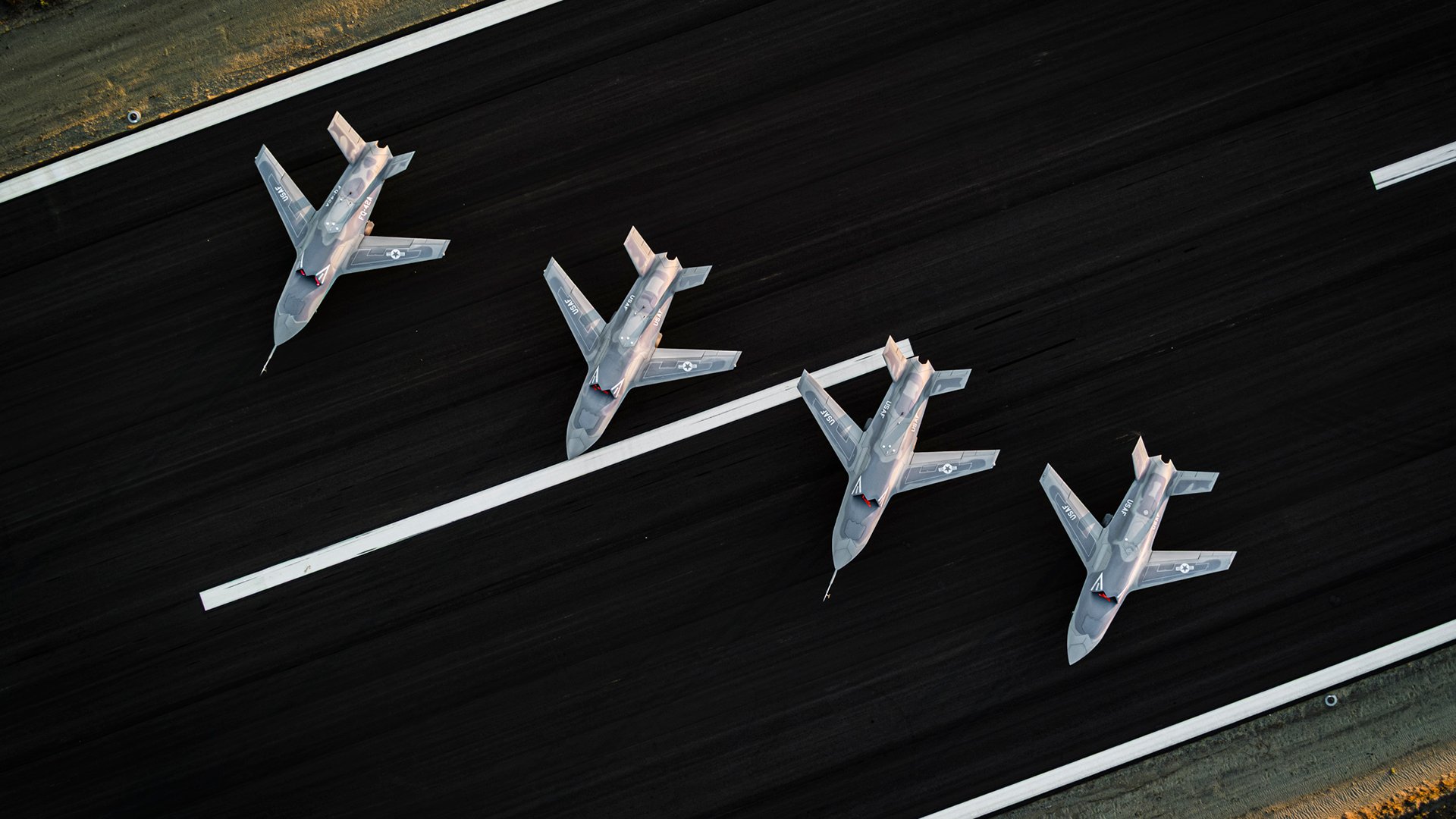
A Florida fishing charter boat made a very unusual catch Saturday while operating near Eglin Air Force Base. Located in the western end of the Florida Panhandle, Eglin is home of the U.S. Air Force weapons test wing. Hot Spots Charters pulled a delta-wing aerial drone out of the water during an excursion, according to local charter captain Charlie Green. The recovered drone closely resembles a clone of the Iranian Shahed-136 one-way attack weapon, specifically the U.S. military’s Low-Cost Uncrewed Combat Attack System (LUCAS) that took center stage during its first combat use in Operation Epic Fury. The target version of that drone is built by SpecktreWorks and is designated the FLM-136. It was originally designed for mimicking one-way attack munitions, specifically the Shahed-136, which it was reverse engineered from, for testing and training before it was weaponized into LUCAS.
An Eglin AFB spokesperson told us the installation recently lost a drone, but would not confirm it was the same one found by Hot Spots Charters.
“I can confirm that we were doing a test and the test article went down,” the spokesperson told us, declining to provide further details about what kind of drone, when it was lost or the location it went down. They referred us to the Pentagon, which could not immediately provide any additional details.
“The drone was found by local charter Capt. Daniel Arsenault with Hot Spots Charters,” said Green, who is also an aviation photographer whose work can be found at Aquatic Charlie on social media. “He saw the object at a distance and went over to check it out. When he did, he pulled a good size mahi-mahi out from underneath it, complementing his already stocked cooler full of fish from that morning charter. His passengers helped him haul it aboard.”
The drone found by Hot Spots Charters. (Charlie Green)
“Arsenault and his charter company did all the due diligence possible to notify local agencies of the recovery- and was eventually collected by one of them,” Green added. He did not know which agency.
Images taken of the drone shared with us by Green show that it did not have the engine, propeller or the nose cone/seeker intact. Losing these kind of components is common for impacts into water.
(Charlie Green)
While the Eglin spokesperson offered scant details, the host unit at the installation is the 96th Test Wing, which is the “test and evaluation center for Air Force air-delivered weapons, navigation and guidance systems, command and control systems, and Air Force Special Operations Command systems,” according to the wing’s homepage. It oversees the massive Eglin Gulf Test Range, which “provides approximately 120,000 square miles of overwater airspace, covering the eastern third of the Gulf of Mexico from the Florida panhandle to the Florida Keys. The land range covers 724 square miles and contains 70 specific test and training areas, including an approved depleted uranium test range and the only qualified air-to-ground supersonic range east of the Mississippi River.”
Eglin Test Range. (Eglin Air Force Base)
As noted in the opening of this article, the LUCAS drone was used for the first time in combat during the opening day of the Operation Epic Fury war on Iran on Feb. 28.
“Costing approximately $35,000 per platform, LUCAS is a low-cost, scalable system that provides cutting-edge capabilities at a fraction of the cost of traditional long-range U.S. systems that can deliver similar effects,” Navy Capt. Tim Hawkins, a CENTCOM spokesperson, told TWZ when the command stood up Task Force Scorpion Strike (TFSS), the military’s first one-way attack drone unit, back in December. “The drone system has an extensive range and the ability to operate beyond line of sight, providing significant capability across CENTCOM’s vast operating area.”
“LUCAS drones deployed by CENTCOM have an extensive range and are designed to operate autonomously,” CENTCOM added in a press release. “They can be launched with different mechanisms to include catapults, rocket-assisted takeoff, and mobile ground and vehicle systems.”
TFSS falls under the auspices of U.S. Special Operations Command Central (SOCCENT), which oversees U.S. special operations activities across the Middle East.
A LUCAS drone. (NAVCENT/C5F/U.S. Army Spc. Kayla McGuire) NAVCENT/C5F/U.S. Army Spc. Kayla Mc Guire A LUCAS drone. (Courtesy photo/Naval Air Warfare Center Weapons Division)
While we aren’t sure if the drone found by Hot Spots Charters is the one lost by Eglin, it wouldn’t be the first time something like this has happened in Florida. For example, in 2021, beachcombers in Florida’s Palm Beach County found a U.S. Air Force BQM-167A high-performance target drone that washed ashore.
Indeed, the Air Force has a handful of 120-foot boats, the only vessels in its service, to help recover drones after they are shot down during live-fire exercises, or otherwise need to be recovered from these waters. The boats are operated by a contracted crew from Florida Offshore and retrieve around 100 of the drones each year.
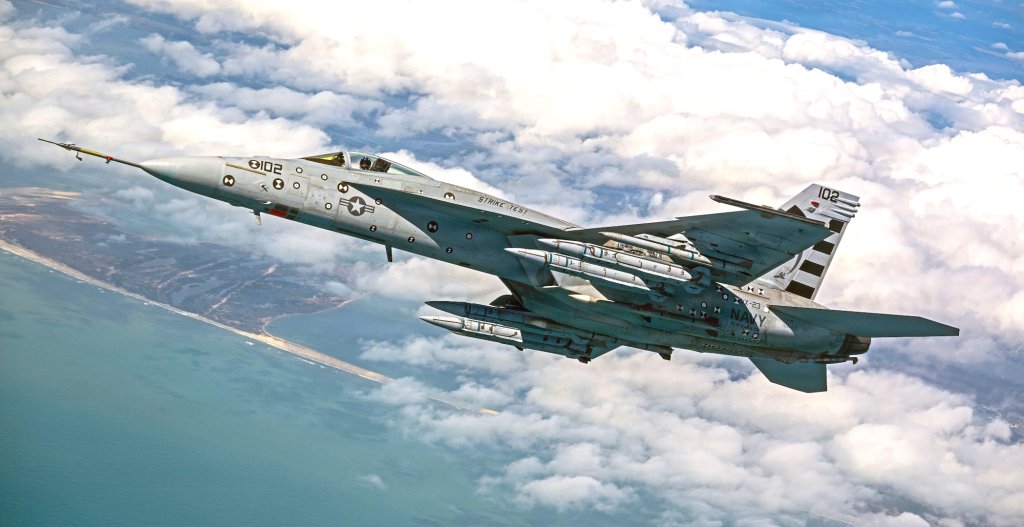
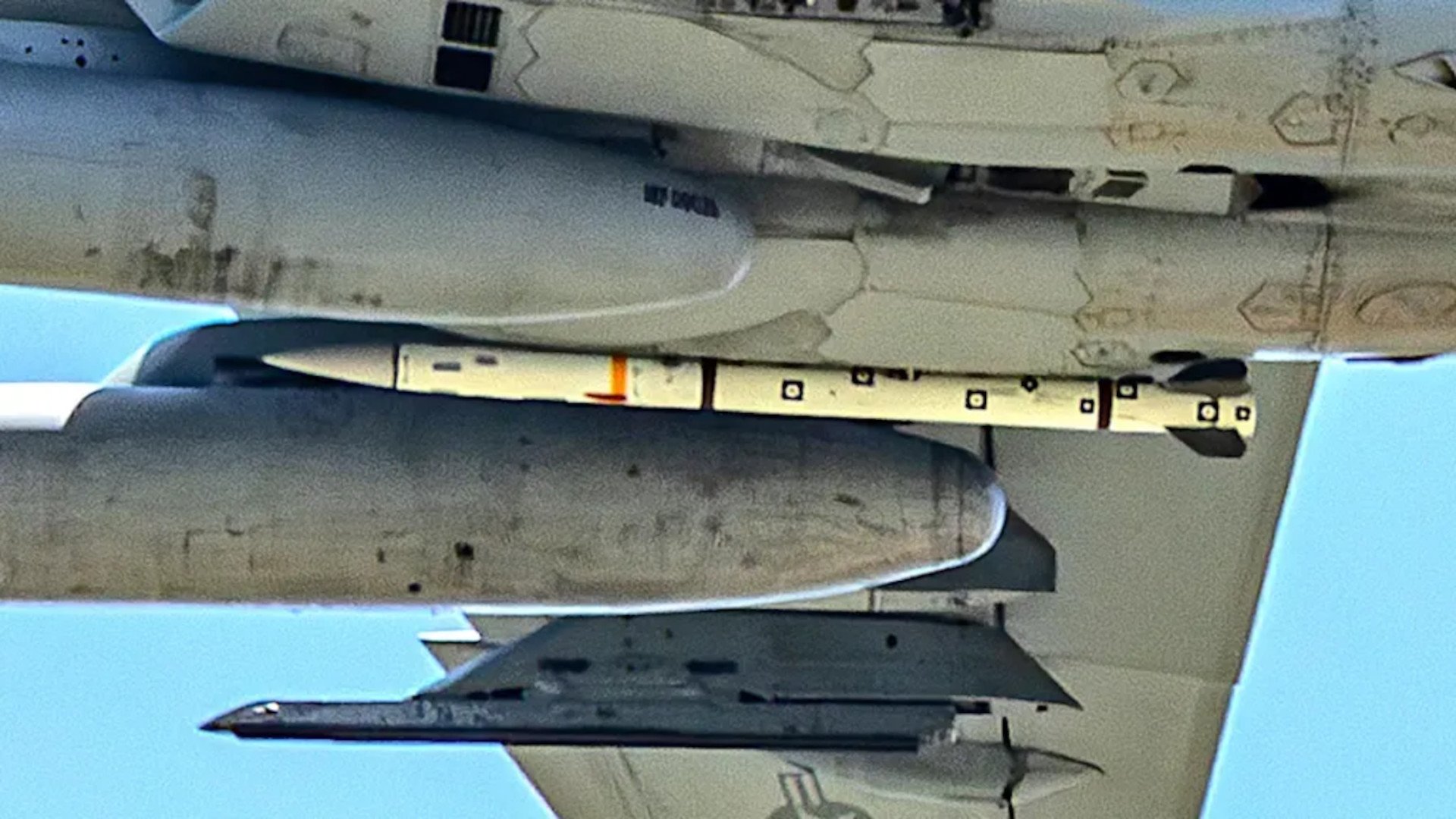
The FLM-136’s origins as a target drone are highly relevant here. Counter-unmanned aerial system (C-UAS) capabilities are being hotly pursued on all fronts across the U.S. military as the threat from them has ballooned. During the war in Ukraine and multiple engagements with Iran, including Operation Epic Fury, one-way attack drones have proven to be a massive threat that is heavily influencing how wars are fought. As far as Eglin AFB goes, maybe the most high-profile C-UAS development as of late that has emerged from there has been arming USAF fighters with FALCO APKWS laser-guided rockets to shoot down exactly the same kind of threat that the FLM-136 is meant to emulate. This program began in 2019, which TWZ was first to report on, but was finally rushed into service years later as the standoff with Iran went hot. Now there are many other programs aimed at dealing with these same threats, including a more capable “fire and forget” air-to-air APKWS.
A 2019 test of air-to-air APKWS laser-guided rockets occurred off Eglin AFB. (USAF)
LUCAS development is continuing at a high-pace, with its ability to swarm cooperatively with other LUCAS drones — a feature we reported as central to the LUCAS vision when the existence of the program was disclosed — being worked on now. You can read more about this here. These systems need sanitized airspace for development activities, and the vast ranges over the gulf are some of the best in the country for it.
So, it’s not surprising to see an FLM-136 floating in the waters off Eglin AFB. Even in the war with Iran, there were multiple losses of LUCAS drones where they were found intact. These weapons are produced to be risked in large numbers, and some failing, for whatever reason, is just part of the calculus.
Locals in Iraq appear to have recovered a crashed and almost entirely intact Low-Cost Unmanned Combat Attack System (LUCAS), an American copy of the Iranian Shahed-136 Attack Drone, which is confirmed to have been used recently by Task Force Scorpion Strike during U.S. attacks on… pic.twitter.com/SEqO6627en
We will update this story with any additional details we can find about this drone. Though we don’t yet know for sure where it came from, one thing is for certain, the folks on the Hot Spots Charters boat that found it will always have a good tale about the one that didn’t get away.
UPDATE: 2:38 PM Eastern Sept. 21 –
Eglin Air Force Base provided us with an update.
“On Thursday, Sept. 17, a LUCAS UAS impacted the water during routine scheduled testing on the Eglin AFB Range. The aircraft has been recovered and is back in the Department’s possession.
We do not have any additional details to provide at this time.”
Welcome to Bunker Talk. This is a weekend open discussion post for the best commenting crew on the net, in which we can chat about all the stuff that went on this week that we didn’t cover. We can also talk about the stuff we did or whatever else grabs your interest. In other words, it’s an off-topic thread.
This week’s caption reads:
2nd Lt. Michelle Lee and Capt. William Yau conduct pre-operational checks inside of a Launch Control Center used for training purposes at Minot Air Force base, North Dakota, Mar. 7, 2022. The 91st Missile Wing contributes to the nation’s strategic defense by sustaining and operating various Minuteman III intercontinental ballistic missiles and the associated launch facilities.
PRIME DIRECTIVES:
If you want to talk politics, do so respectfully and know that there’s always somebody that isn’t going to agree with you.
If you have political differences, hash it out respectfully, stick to the facts, and no childish name-calling or personal attacks of any kind. If you can’t handle yourself in that manner, then please, discuss virtually anything else.
No drive-by garbage political memes. No conspiracy theory rants. Links to crackpot sites will be axed, too. Trolling and shitposting will not be tolerated. No obsessive behavior about other users. Just don’t interact with folks you don’t like.
Do not be a sucker and feed trolls! That’s as much on you as on them. Use the mute button if you don’t like what you see.
So unless you have something of quality to say, know how to treat people with respect, understand that everyone isn’t going to subscribe to your exact same worldview, and have come to terms with the reality that there is no perfect solution when it comes to moderation of a community like this, it’s probably best to just move on.
Finally, as always, report offenders, please. This doesn’t mean reporting people who don’t share your political views, but we really need your help in this regard.
Swedish and German forces are conducting what appears to be the first joint rehearsal of their rapid-reinforcement plans for the Baltic island of Gotland. The exercise is another step in Sweden’s defense planning for an island whose position in the middle of the Baltic gives it an outsized strategic importance for controlling access, protecting the Baltic states, and maintaining NATO’s freedom of movement in a region where Russian military activity remains a persistent concern.
German and Swedish warships stand offshore while a Swedish CB90 fast assault craft operates in the harbor at Visby. Bundeswehr/Marc Tessensohn
The exercise, Silver Wotan 2026, running between September 14-23, brings together Swedish and German forces across the land, maritime, and air domains. The scenario is built around a Swedish request for allied assistance, with German forces moving personnel and equipment across the Baltic before integrating with Swedish units already defending the island. The operation is testing the entire process of getting allied combat power to Gotland, protecting it during the movement to Visby, and rapidly incorporating it into the island’s existing defensive network.
A video shows troops coming ashore on Swedish CB90 fast assault craft, a type that German soldiers are also trained to operate:
A rapid deployment of German and Swedish forces to Gotland island is being carried out today. Units from and are rehearsing the swift reinforcement of the strategic island in order to ensure the security of the Baltic Sea.#SilverWotan#NATOpic.twitter.com/A0r3LF8XUP
The strategic importance of Gotland has grown considerably following Sweden’s accession to NATO in March 2024, which was a direct response to the full-scale Russian invasion of Ukraine.
Located approximately halfway between mainland Sweden and the Baltic states, the island occupies a central position in the Baltic Sea, close to the maritime approaches to the Gulf of Finland and within reach of the Russian exclave of Kaliningrad. Its location gives forces operating from Gotland a potentially significant position from which to conduct surveillance, air defense, and maritime operations, while also making the island an important part of the wider network connecting NATO’s northern and eastern members.
The location of Gotland within the Baltic region. Google Earth
At the same time, Gotland sits within an extremely complex littoral environment, where shallow waters, islands, narrow maritime approaches, and the proximity of multiple states can make both offensive operations and defensive planning more difficult. The region has also been shaped by longstanding Swedish concerns about Russian clandestine activity, including intelligence gathering and other forms of covert or deniable activity. The complexity of the Baltic operating environment can make such activities harder to detect and attribute, adding another layer of uncertainty alongside the more conventional military challenges facing the region.
The unloading operation in Visby. The vehicles seen here were transported by sea from Karlskrona to the Swedish mainland. Bundeswehr/Marc Tessensohn
Geography has long made Gotland important to Swedish defense planning, but its significance has taken on a broader dimension since Sweden joined the alliance. NATO has described the island as strategically important to its freedom of maneuver in the Baltic, while Swedish officials have highlighted its potential role as a hub for military operations and logistics in the region.
The current exercise is designed around the practical difficulties of reinforcing such a position.
Military equipment is being transported by sea to Visby, Gotland’s principal port, including by commercial ferry. In Visby, Swedish and German personnel are securing the harbor and conducting the reception of the arriving force. Among the equipment being moved are air defense systems, while Swedish forces are also operating coastal defense systems armed with anti-ship missiles.
German Army vehicles roll into Visby during Silver Wotan. Bundeswehr/Marc Tessensohn
Meanwhile, publicly available flight-tracking data showed German Luftwaffe transport aircraft, including at least one Airbus A400M airlifter, apparently involved in the effort. The commercial airport at Visby has long also been used for military activities related to Gotland and the wider Baltic region.
The movement is supported by Swedish and German naval forces and other aircraft, creating a scenario in which the maritime transit, protection of the port, air operations, and subsequent movement of troops and equipment ashore all form part of the same military problem. Once ashore, the arriving forces have to be moved into position and integrated with Swedish units already responsible for defending the island.
The Swedish Gotland Regiment, P 18, provides the core of the island’s permanent military presence. The regiment, Sweden’s youngest and smallest, has been rebuilding its capabilities since Sweden began expanding its military presence on Gotland. Its forces form the basis of the ground-defense structure into which allied reinforcements would be incorporated.
Soldiers of the Gotland Regiment of the Swedish Army camouflage an armoured vehicle during an earlier field exercise near Visby. Photo by Jonathan NACKSTRAND / AFP
Swedish coastal defense capabilities are another important element of the drill. Land-based anti-ship missiles provide the island with a means of threatening hostile surface vessels operating in the surrounding waters, giving the defense of Gotland a direct connection to the wider maritime battle for the Baltic. During Silver Wotan, Swedish and German forces are also conducting anti-surface warfare activities alongside the broader reinforcement operation.
Germany is contributing more than 500 troops to the exercise, part of approximately 2,000 Bundeswehr personnel involved, including elements from the army, navy, and air force. The German Luftwaffe has deployed Panavia Tornado aircraft for surveillance, while German naval forces are participating in the maritime component, and German ground personnel are involved in the reinforcement and security activities on Gotland.
Stock photo of a Luftwaffe Tornado ECR equipped for a reconaissance mission. Bundeswehr
The exercise scenario is particularly relevant against the backdrop of Russia’s continuing military presence in the Baltic region.
Russia maintains major military infrastructure in Kaliningrad, including naval, air, missile, and air defense capabilities, while the Russian Baltic Fleet operates from bases in the region. Kaliningrad’s position between Poland and Lithuania gives Moscow a significant military foothold inside the NATO area, while Russian forces and military infrastructure elsewhere along the Baltic add to the complexity of operating and reinforcing allied territory in the region.
The security environment around the Baltic has also deteriorated considerably since Russia’s full-scale invasion of Ukraine. NATO has increased its surveillance and military activity in the region, including the launch of Baltic Sentry in January 2025 following a series of incidents involving critical undersea infrastructure. The alliance has subsequently expanded efforts to monitor maritime activity and protect infrastructure and sea lines of communication.
A Swedish Navy Helicopter 15 on the flight deck of patrol ship HMS Carlskrona as part of the NATO Baltic Sea patrol mission, Baltic Sentry, aimed to secure critical underwater infrastructure. Photo by Johan NILSSON / TT NEWS AGENCY / AFP
Swedish authorities have stressed that Silver Wotan was planned in advance and is not being conducted in response to a specific imminent Russian threat. The exercise nonetheless reflects the operational environment in which Swedish and NATO planners now have to consider the possibility that maritime and air movements across the Baltic could be monitored, disrupted, or contested.
The exercise also builds on a series of increasingly large Swedish-led activities designed to test the reception of allied forces on Swedish territory. During Aurora 26 earlier this year, more than 18,000 troops from 13 countries participated in operations across Sweden, including the deployment of allied forces to Gotland alongside the Gotland Regiment and Swedish Home Guard. NATO described that activity as an emergency deployment intended to test the reinforcement of the island.
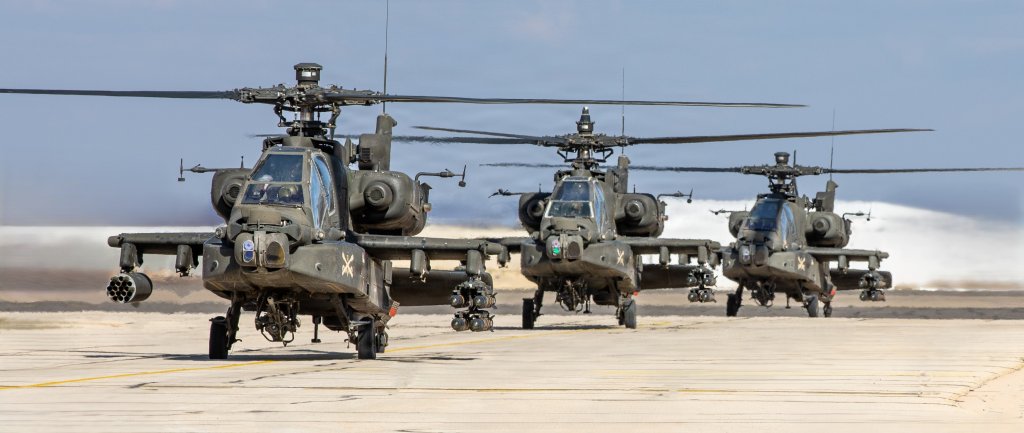
A Dutch AH-64 Apache attack helicopter takes part in Exercise Aurora 26 in southern Sweden on April 29, 2026. Photo by Johan NILSSON / various sources / AFP
Silver Wotan places a more concentrated emphasis on the Swedish-German relationship and on the movement of an allied force into the island’s existing defensive structure.
Germany’s participation is also consistent with its growing military role in the Baltic and along NATO’s northeastern flank. Berlin is already providing forces for NATO’s forward defense in Lithuania and has increasingly emphasized the ability to move German forces rapidly across northern Europe in support of allied operations.
For Sweden, meanwhile, Gotland has become one of the clearest examples of how NATO membership has changed the country’s defense planning. The island remains a Swedish responsibility, but its location means that what happens there has consequences well beyond Sweden’s territorial defense.
German and Swedish troops on a Swedish CB90 fast assault craft. Bundeswehr/Marc Tessensohn
A defended and adequately supplied Gotland provides NATO with a strategically positioned base for surveillance and defensive operations in the Baltic, while the ability to reinforce it demonstrates that the alliance can maintain access to the island even as the surrounding maritime and air environment becomes more contested.
The exercise comes as European allies are being forced to plan for a NATO in which the United States may provide less of the conventional military weight it has supplied for decades. The Pentagon is reviewing the size and posture of U.S. forces in Europe, including the forces and capabilities Washington would make available in a European crisis, while NATO’s top commander has said further U.S. troop withdrawals should be expected as European allies build up their own conventional capabilities.
A German and a Swedish soldier involved in securing Visby during Silver Wotan 2026. Bundeswehr/Marc Tessensohn
At the same time, the alliance now describes Russia as its most significant and direct security threat, citing military activity alongside airspace violations, sabotage, cyber operations, and other forms of hybrid pressure. There are also growing concerns that Russia could try something in the Baltics, while it continues to step up its gray-zone activities regardless. NATO officials have warned that Russia could rebuild enough military capacity to pose a more serious conventional challenge to the alliance before the end of the decade.
There are escalating warnings from Poland that Russia is preparing to widen its war against Ukraine, with "accidental" missile and drone strikes on NATO territory.
Such a move – Russia falsely claiming air strikes that hit NATO allies happened by accident – would be designed to…
For Sweden and Germany, the Silver Wotan exercise is a practical test of how quickly European forces can reinforce and defend one of the Baltic’s most strategically important positions. As the security environment grows more contested and Europe prepares for a future in which U.S. forces may not be as readily available, the ability to move allied combat power across the region and integrate it into existing defenses is becoming an increasingly important part of NATO’s deterrence.
The officer who led the 31st Marine Expeditionary Unit (MEU) on its recent combat deployment to the Middle East told us he needs his own uncrewed surface vessels (USVs) on future deployments. Operationalizing USVs is an area where the Marines are lagging behind. In particular, he wants the ability to send USVs forward to reconnoiter potential highly-contested beach landing areas, a mission largely assumed by the Navy.
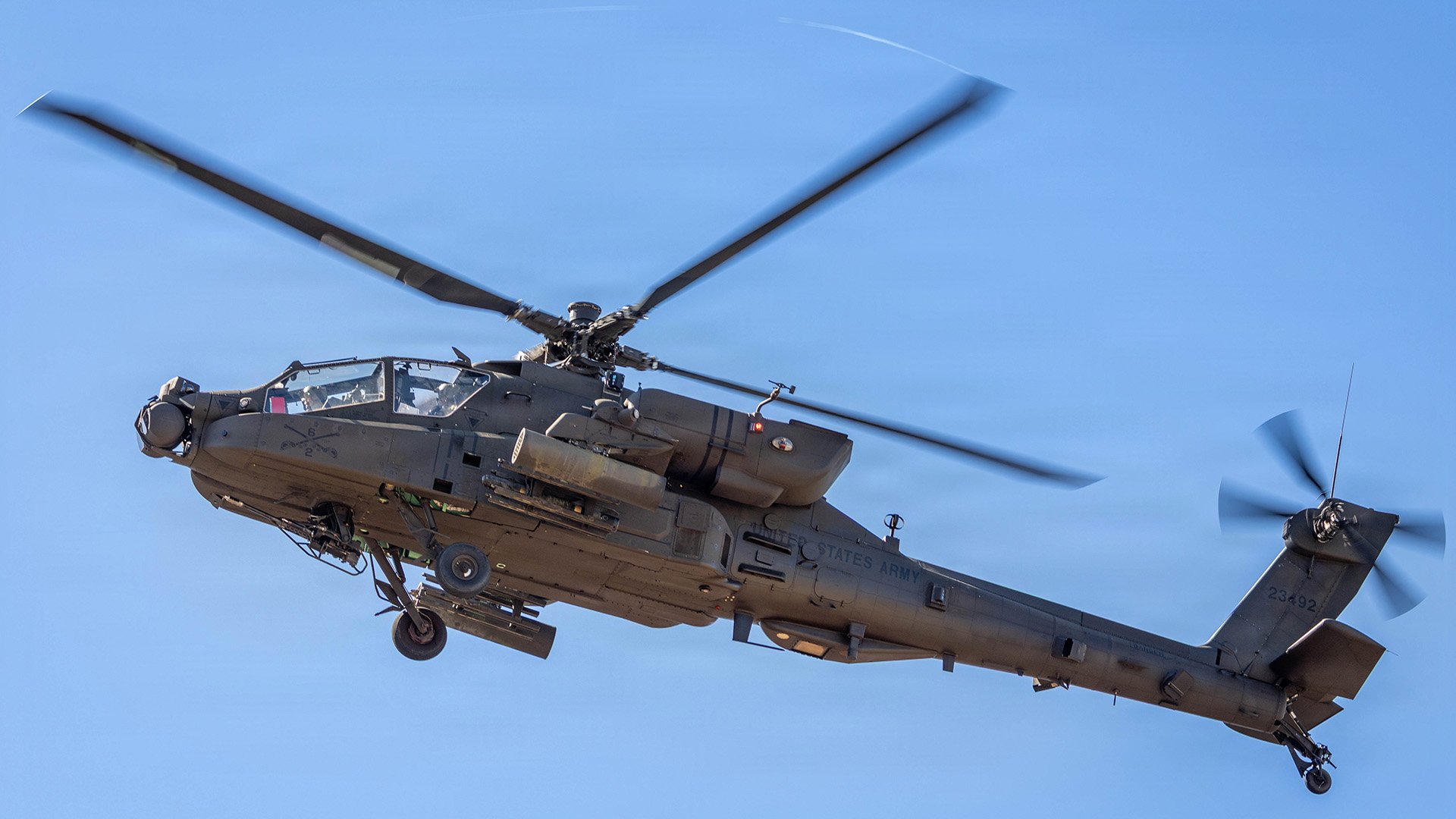
As we have frequently reported, the military use of USVs is now proliferating around the globe at an increasing rate. Ukraine has employed sea drones to devastating effect against Russia’s Black Sea Fleet vessels and facilities, forcing the general evacuation of Russian naval assets from occupied Crimea to bases in Russia proper. During Operation Epic Fury, the U.S. used them for the first time in combat, as one-way attack weapons against Iranian targets, to hunt for mines, and for a search and rescue operation to locate the crew of an AH-64 Apache helicopter downed by Iran, as well as general broad-area surveillance and awareness. China is investing heavily in the space, as well, along with many other navies around the globe, both friend and foe.
The following video shows the first U.S. use of a USV as a kamikaze weapon.
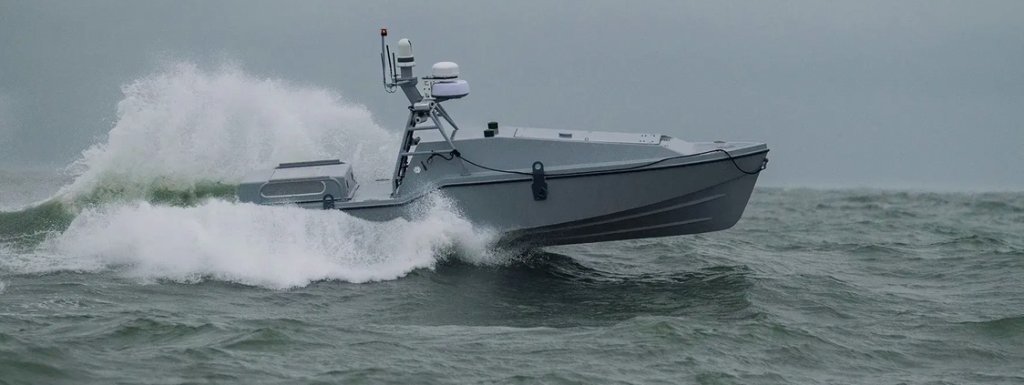
Yesterday, using multiple one-way attack surface drones, CENTCOM forces successfully struck a submarine and ship maintenance facility in Iran. Three Corsair unmanned surface vessels hit the port at Bandar Abbas Naval Base, marking the first time American forces have employed sea… pic.twitter.com/bOM2kmgRxz
“There was a lot in theater that were being used, but it wasn’t something that we went out with,” Col. Chris P. Niedziocha told us when asked if the 31st MEU deployed with USVs. He then answered in the affirmative in response to a question about if MEUs need sea drones on future deployments. He said it is part of the “explosion in robotics and autonomy” being used in combat.
“These systems are incredibly useful and capable,” explained Niedziocha, now director of the USMC Expeditionary Warfare School. “And you say, ‘Hey, you know, [in] the next war, if the first thing you’re putting through the breach isn’t a robot, something’s wrong. You say never send a Marine someplace you haven’t sent a bullet. I think the new way is [you] never want to send a Marine someplace you haven’t already sent a robot. So yeah, we’re embracing [the technology] and we’re not leaders. We’re fast followers in that regime.”
Asked for specific use cases he sees for USVs, the colonel talked about using them before putting Marines ashore.
“I can tell you if you’re doing an amphibious operation, you want to understand what’s waiting beneath the surface in the water column,” Niedziocha noted. “So something can go either with a side-looking sonar array or even forward-looking to demonstrate that there’s nothing there, and the hydrography and bathymetry is what you… need for the operation to be successful.”
Hydrography measures “the shape and features of the shoreline; the characteristics of tides, currents, and waves; and the physical and chemical properties of the water itself,” according to NOAA. Bathymetry, which is part of that, focuses on mapping the depths and shapes of underwater terrain.
NOAA
These functions are critical for mine detection and determining whether there are man-made or natural obstacles that would impede landing operations. While these missions are largely being performed by the Navy, including with USVs, the Marines are moving toward making that an organic capability. Recently, the Marines announced they were testing a counter-mine USV system. The evaluation was conducted late last month at Camp Pendleton by the Program Manager Combat Support Systems (PM CSS) Explosive Hazard Defeat Team.
The test of the USV was “in response to a littoral capability gap,” according to the media release. “The solution: seek a commercial USV solution that is equipped with integrated autonomous driving and payloads that consist of Sonar, Forward-Looking Infrared (FLIR) cameras, Line of Sight (LOS) Communications and Acoustic Communications (AComms).”
This was part of the overall effort to develop “solutions that enable increased standoff for Marines to detect, investigate and neutralize threats,” the release added. “The innovation of Explosive Ordnance Disposal (EOD) and Littoral Explosive Ordnance Neutralization (LEON) systems will provide Marine EOD Technicians with the confidence to operate in contested environments while preserving combat power, increasing operational reach, and minimizing exposure to explosive threats.”
LEON is a so-called system of systems, using a remotely operated vehicle, diver equipment, an unmanned underwater vehicle (UUV), a USV, and an Amphibious Unmanned Ground Vehicle to enable “EOD to confirm and mark hazards and obstacles from very shallow water to the beach zone,” the media release added.
While unmanned systems have long been part of EOD operations, “we’re expanding that into maritime systems that allow more endurance and less risk for operators,” said Chief Warrant Officer 2 Alfredo Andrade, officer in charge, Explosive Ordnance Disposal Company, 7th Engineer Support Battalion (ESB). “Some of the conflicts that we are engaged in take a toll on the force, and surging in new forces is costly. It turns into a logistical problem. To preserve the safety and the health of the forces… the USV and the [LEON] program exist to ensure that we have readily available combat power.”
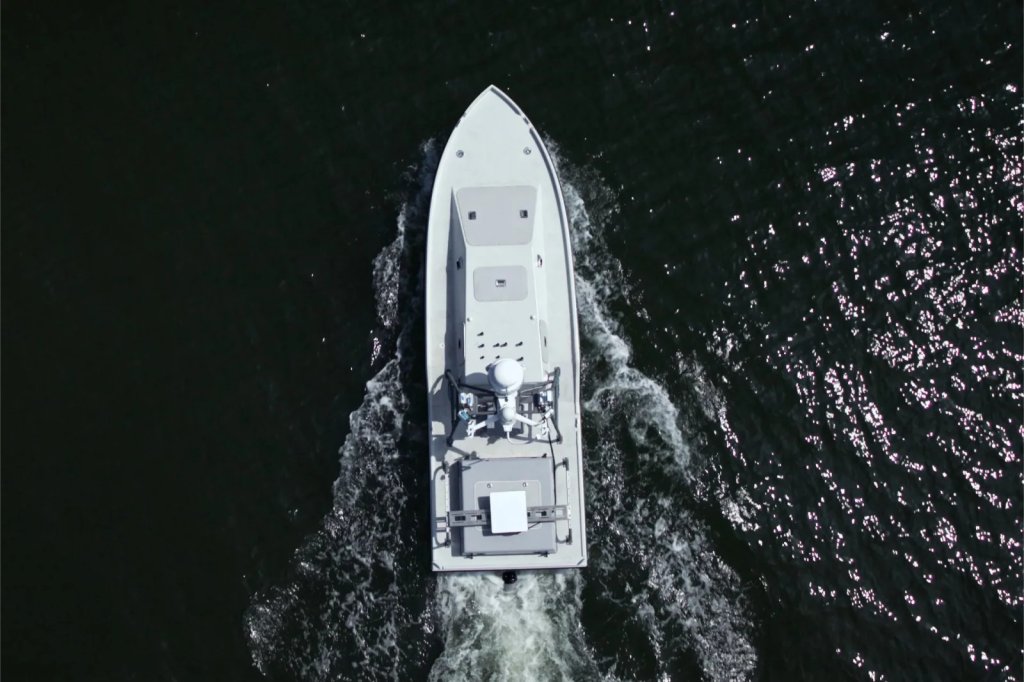
In late August at Camp Pendleton, the PM CSS Explosive Hazard Defeat Team tested an unmanned surface vessel in response to a littoral capability gap. (PAE Marine Corps photo by Kristiana Gehly) Kristiana Gehly
While Niedziocha didn’t address USVs for offensive combat roles, the Marines have evaluated them for that use as well as for logistics, among other functions.
Our Autonomous Low-Profile Vessel (ALPV) solicitation is now accepting submissions.
The @DeptofWar and the @USMC need to resupply units spread over wide distances in contested littoral environments. Increased all-domain threats targeting logistics capabilities, locations, and… pic.twitter.com/Af8v0DTRHS
— Department of War Innovation Unit (@DIU_x) March 3, 2026
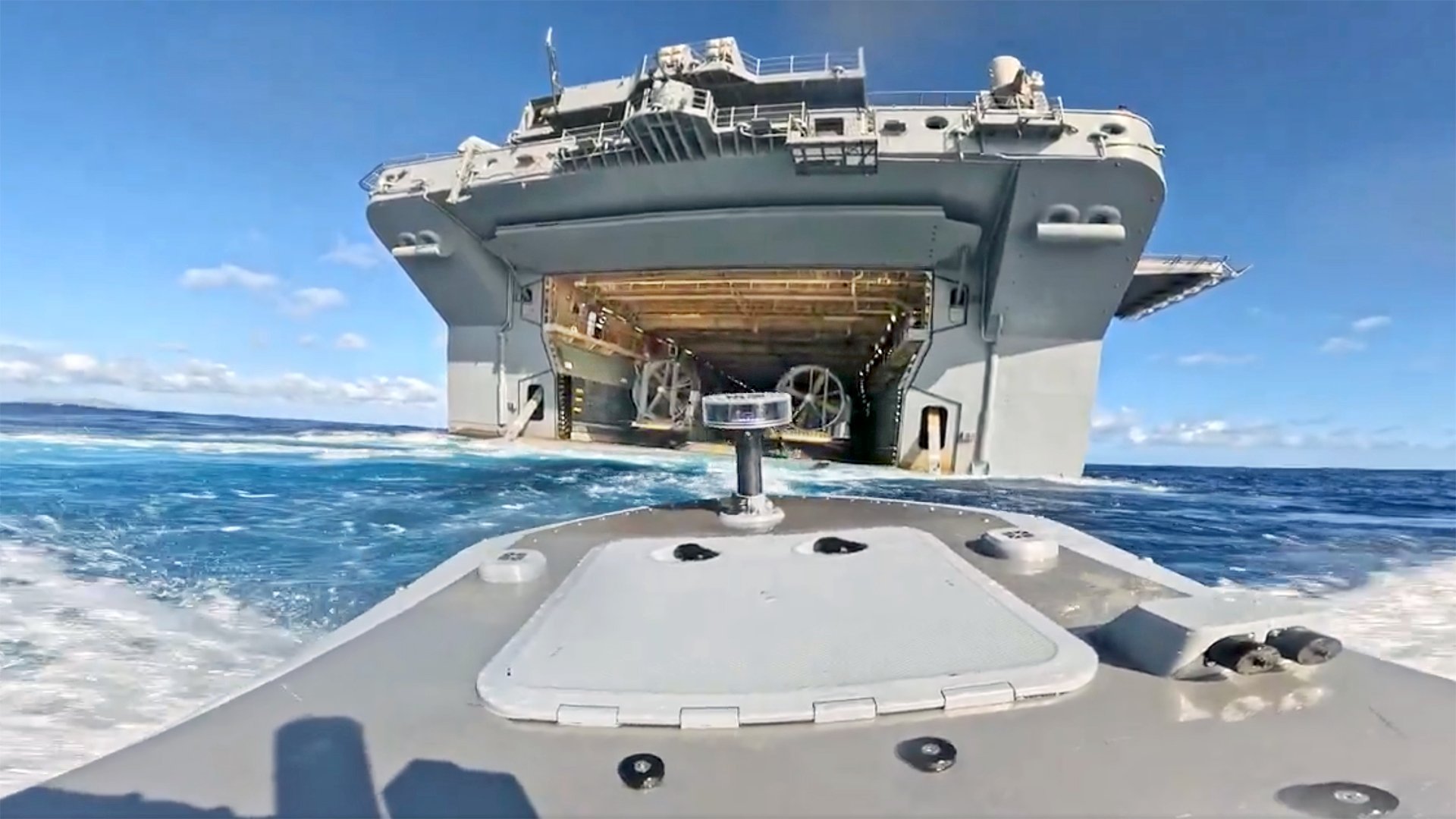
There have been many other tests, as well. Including one just this summer at RIMPAC. These trials saw the launch and recovery of one of Splash Industries’ Typhoon USVs aboard the USS Essex. The ‘Gator Navy’ of amphibious assault vessels that haul Marines and their kit around the oceans is uniquely suited to act as USV motherships. Their well decks allow for easy deployment and recovery of USVs of many sizes and capabilities near seamlessly. So it won’t be surprising if these vessels and the Marines aboard them quickly become staples in the Pentagon’s USV playbook.
Watch us land one of our drone-boats inside a moving US Navy warship during RIMPAC. This world-first resupply mission was performed completely autonomously using a Splash Industries Typhoon USV. pic.twitter.com/AEzNzZjsL1
You can see that engagement in the following video.
Ukraine's Navy says a Sargan unmanned surface vessel destroyed a Russian unmanned boat with machine-gun fire in the Black Sea, the first-ever battle between unmanned surface vessels. Ukrainian Navy personnel operated in coordination with HUR. #Ukrainepic.twitter.com/Avg4ecz8m6
Having recently returned from a six-month deployment that saw the Marine Corps’ first use of its Expeditionary Advanced Base Operations (EABO) concept in a combat setting during the fight against Iran, Niedziocha has a good sense of the realities of modern warfare. His Marines operated forward arming and refueling points (FARPs) for various aircraft in combat for the first time and set up remote sensing locations.
That a commander like him sees value in USVs is a good sign for progress in the development of these systems.
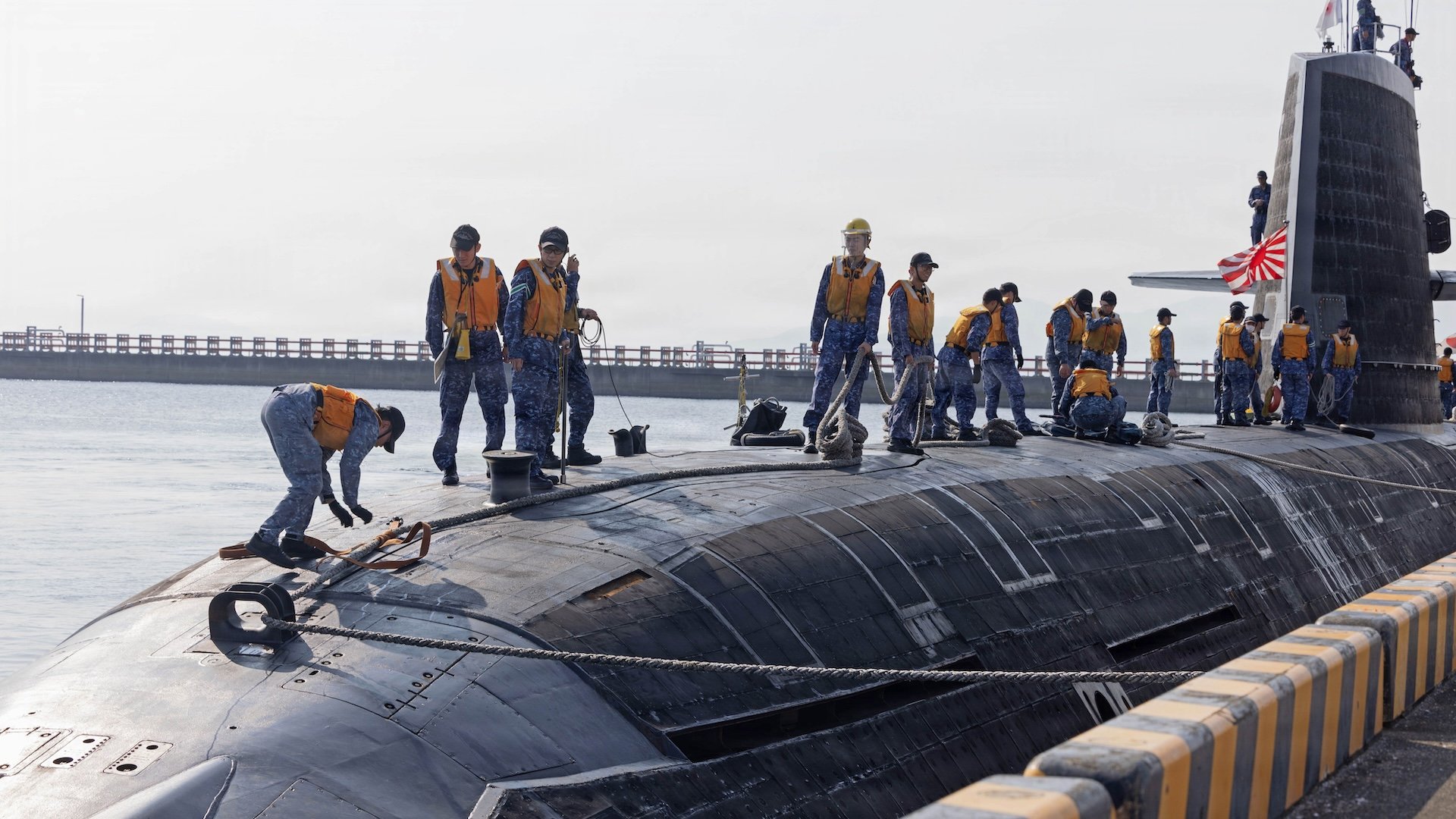
Japan has said it is keeping the door open to acquiring nuclear-powered submarines, a potentially major shift for a country whose submarine force has historically relied exclusively on conventional propulsion. Defense Minister Shinjiro Koizumi confirmed recently that Tokyo is not ruling out nuclear-powered submarines as it considers the future requirements of the Japan Maritime Self-Defense Force (JMSDF).
Should Japan ultimately pursue the capability, it would join an exclusive group of nations operating nuclear-powered submarines. China, France, India, Russia, the United Kingdom, and the United States are currently the only countries with nuclear-powered submarines in active service. Brazil is already working to join the club, while Australian and South Korean nuclear-powered submarine plans are somewhat longer-term.
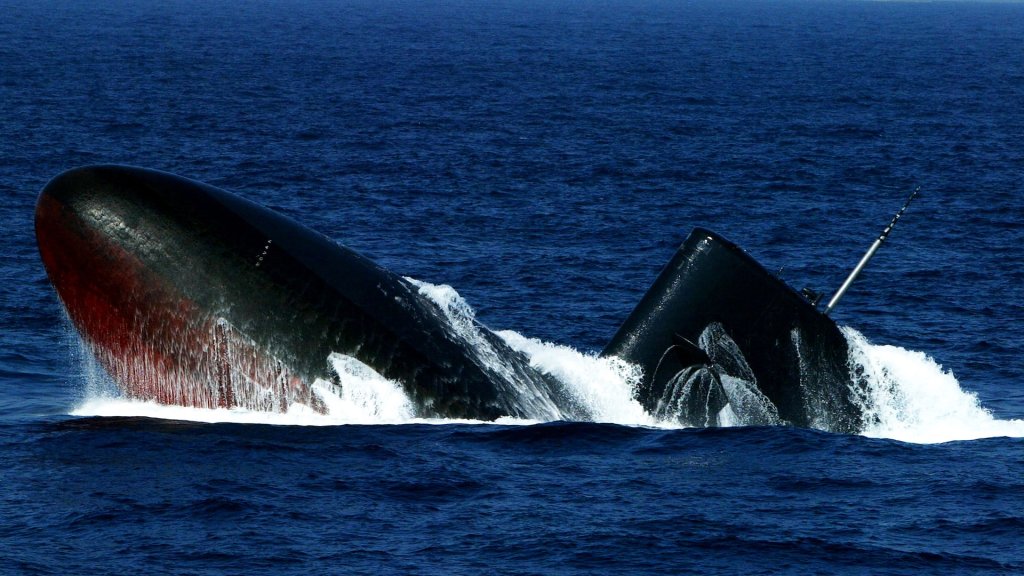
A submarine of the Japan Maritime Self-Defense Force surfaces during a naval review off Sagami Bay, Japan. Photo by Koichi Kamoshida/Getty Images
Japan’s submarine fleet is already regarded as among the most capable conventionally powered forces, and is very much at the forefront of advanced naval propulsion technologies. Even with that considerable expertise, however, developing and sustaining a nuclear propulsion capability would represent a huge challenge, requiring expertise and infrastructure far beyond those needed to build Japan’s existing conventionally powered submarines.
Koizumi’s comments do not represent a decision to acquire nuclear-powered submarines, nor do they indicate that Japan has begun a procurement program. They do, however, mark a significant evolution in the country’s public debate over submarine propulsion and point to a growing willingness within the Japanese defense establishment to consider capabilities that were previously largely outside the mainstream of defense planning.
Secretary of War Pete Hegseth hosts a bilateral meeting with Japanese Minister of Defense Shinjirō Koizumi at the Pentagon, Washington, D.C., Jan. 15, 2026. (DoW photo by U.S. Navy Petty Officer 1st Class Alexander Kubitza)
Currently, Japan operates one of the world’s most capable conventional submarine fleets, centered on increasingly sophisticated diesel-electric boats equipped with air-independent propulsion and advanced lithium-ion batteries. These submarines are well suited to operations around Japan and the country’s surrounding waters.
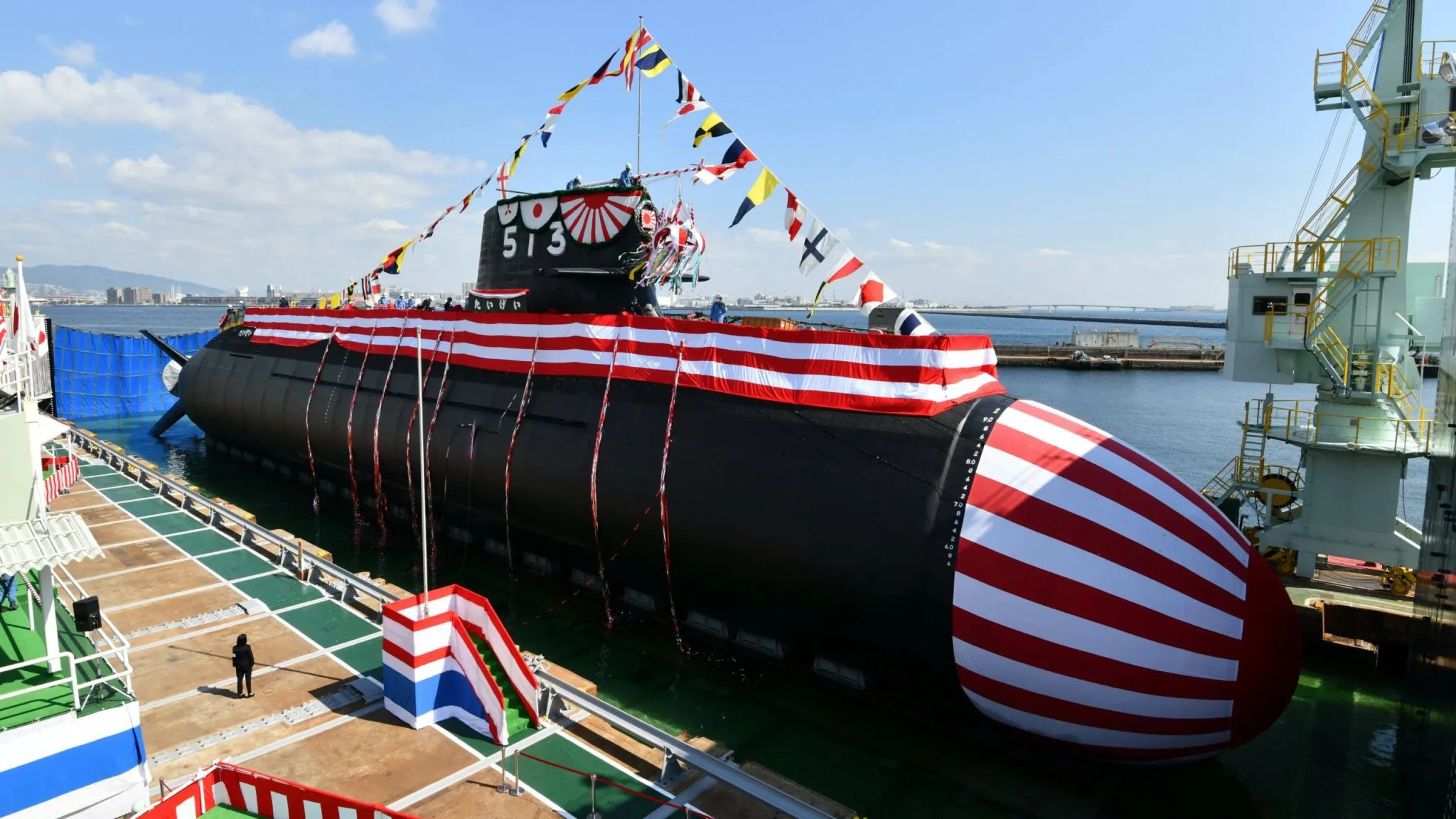
The JMSDF currently operates 22 conventionally powered submarines, maintaining the force structure established in the 2010s while progressively replacing older boats with the more capable Taigei class. Five Taigei class submarines are now in JMSDF service, with additional boats in the pipeline.
The first-of-class Taigei was launched on October 14, 2020, at the Mitsubishi Heavy Industries (MHI) shipyard in the city of Kobe, in the western prefecture of Hyogo. Japan Maritime Self-Defense Force
Nuclear propulsion, however, would offer substantially greater endurance and sustained underwater speed, allowing Japanese submarines to conduct longer-range operations across the broader Western Pacific with minimal support. This is a requirement that is becoming increasingly relevant as Tokyo’s strategic focus expands beyond its immediate maritime approaches.
China’s rapidly expanding naval force, including its growing submarine fleet and increasingly distant maritime operations, is forcing Tokyo to consider how it would monitor and potentially counter Chinese forces farther from the Japanese archipelago. A nuclear-powered attack submarine could remain submerged for extended periods without the endurance limitations imposed by conventional propulsion, making it particularly useful for long-range surveillance, tracking, and sea-denial missions.
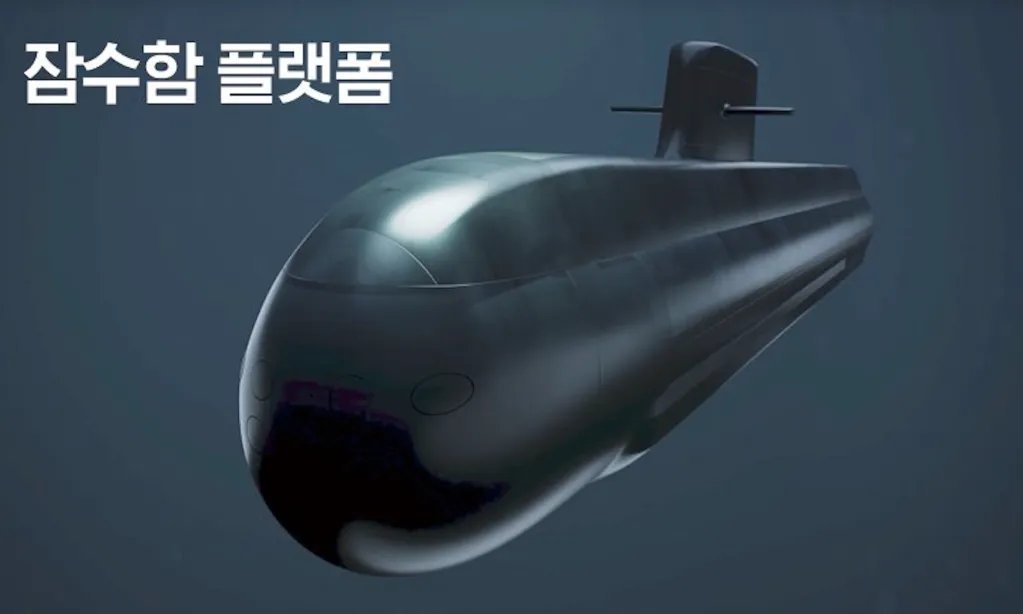
Japan’s debate is also unfolding alongside a significant development in neighboring South Korea. Seoul has confirmed plans to develop a new class of nuclear-powered submarines, a move that could add further momentum to an emerging undersea competition in Northeast Asia. South Korea’s decision is particularly relevant to Tokyo because it demonstrates that nuclear propulsion is no longer merely a theoretical capability for U.S. allies in the region. While the missions and strategic priorities of the Japanese and South Korean navies are different, both countries face the challenge of operating in waters increasingly contested by China and North Korea.
A South Korean Ministry of Defense rendering shows how the nuclear-powered Jang Bogo N Project boats may look. MND
A Japanese decision to pursue SSNs could eventually create a much deeper basis for cooperation with Australia, including submarine interoperability, undersea warfare, workforce and technical expertise, infrastructure, sustainment, and potentially aspects of the industrial base. Analysts have already examined how Japan could fit into the wider AUKUS submarine ecosystem as Australia’s nuclear-submarine program develops.
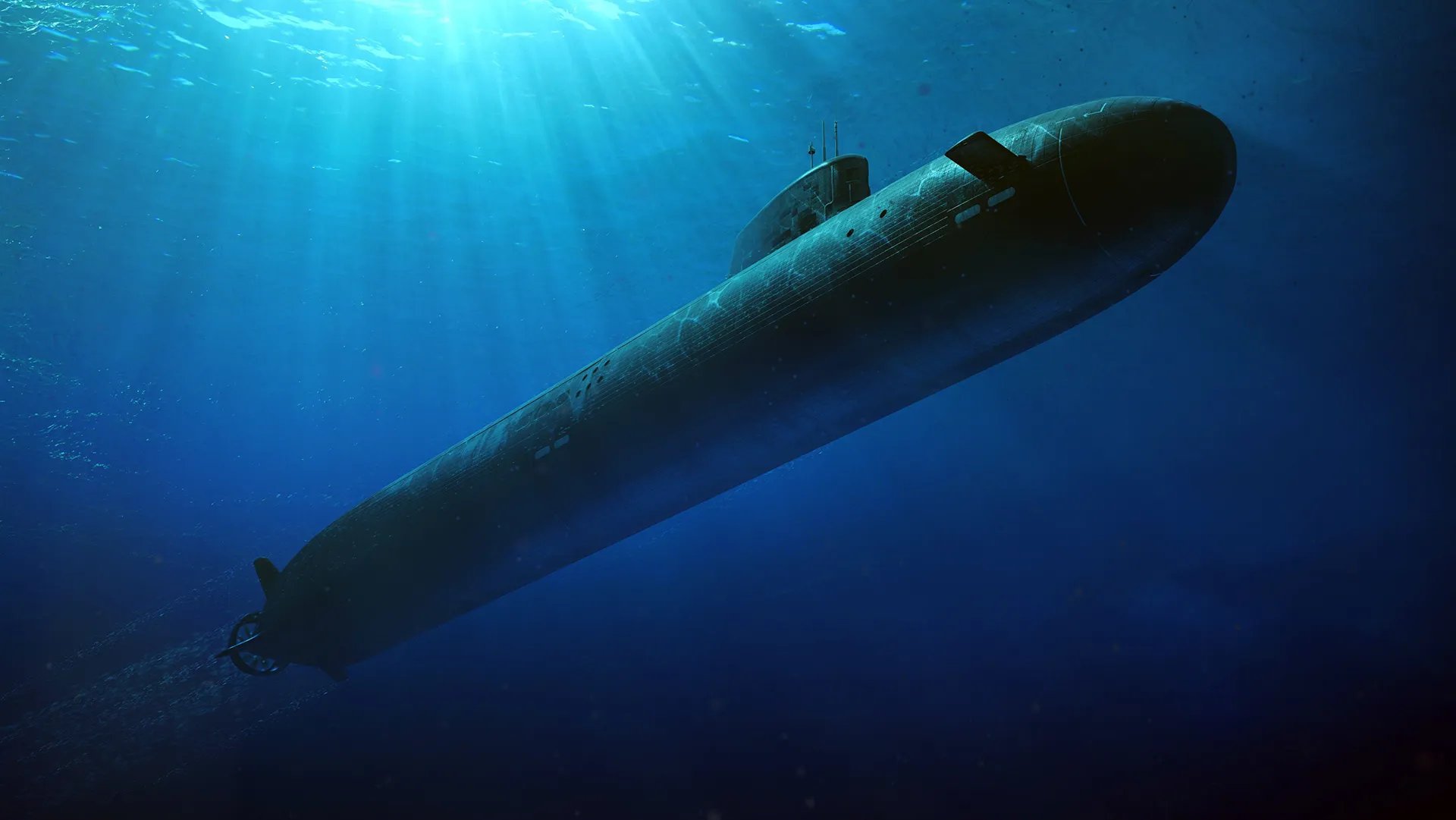
Concept art of the submerged SSN-AUKUS nuclear-powered attack submarine. U.K. Ministry of Defense illustration
A Japanese nuclear-powered submarine with a robust capacity to launch land attack cruise missiles would also be a powerful component in the country’s emerging “counterstrike” posture, which is increasingly centered on acquiring the ability to strike targets at longer ranges.
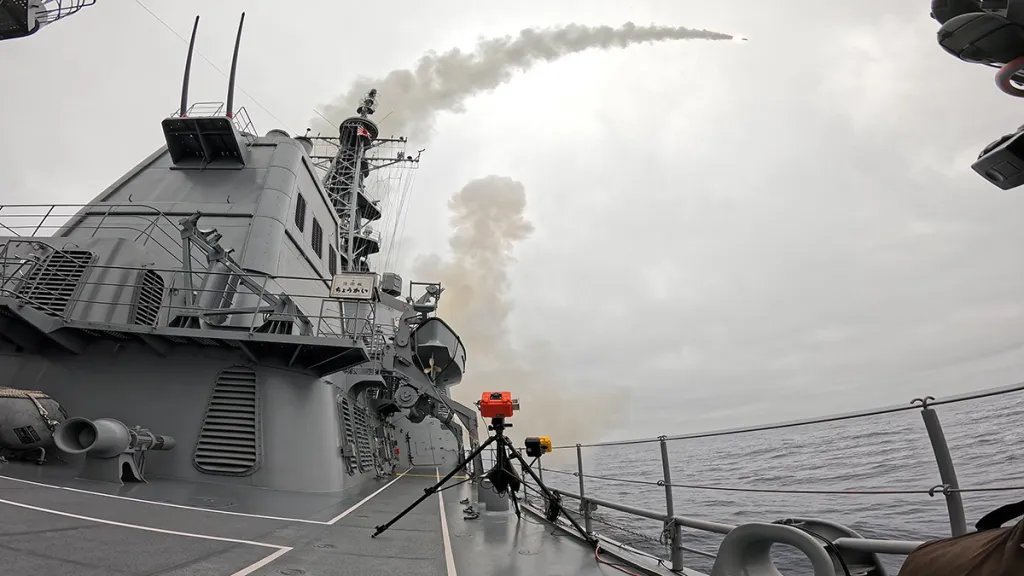
Launch of the first Tomahawk missile from the Kongōclass Aegis destroyerChōkaiat an undisclosed location in the Pacific. Japan Ministry of Defense
An SSN would potentially add a highly survivable, mobile platform to this emerging strike architecture, allowing Japan to position long-range weapons farther from its home territory and complicating an adversary’s efforts to locate and neutralize them. That could be particularly valuable in a conflict in which Japanese air bases, missile batteries, and other fixed infrastructure were under attack.
The potential SSN requirement also fits with Japan’s expanding expeditionary ambitions. As the JMSDF converts its Izumo class helicopter destroyers to operate F-35B fighters, giving Japan a more credible carrier aviation capability, nuclear-powered attack submarines could provide a valuable escort for these increasingly important surface groups. Their speed, endurance, and ability to remain submerged for extended periods makes SSNs particularly well suited to accompanying carrier forces on longer-range deployments and supporting contingencies farther from Japanese waters.
Looking at the bigger picture, it is highly significant that nuclear propulsion was effectively excluded from Japan’s conventional defense debate for decades. More recently, however, Japanese defense officials and policymakers have begun examining whether future submarines will require a different propulsion system. The issue is now one that can be discussed openly at the ministerial level.
Nevertheless, pursuing a nuclear-powered submarine program would come with huge challenges.
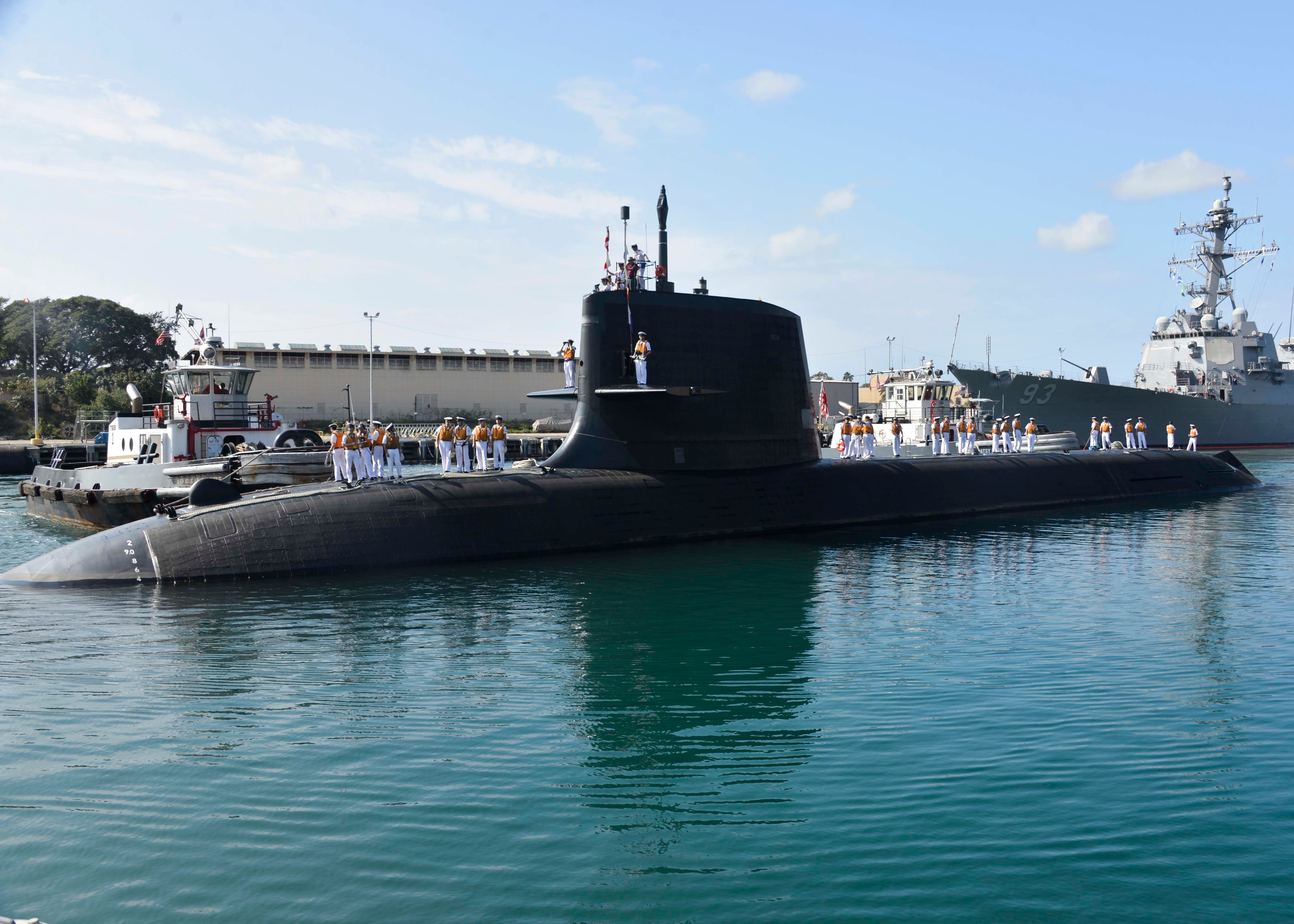
The Japan Maritime Self-Defense Force Sōryū class submarine Hakuryū arrives at the submarine piers of Joint Base Pearl Harbor-Hickam. U.S. Navy photo by Mass Communication Specialist 1st Class Steven Khor/Released
Building and operating nuclear-powered submarines would require Japan to establish an entirely different industrial, regulatory, and training infrastructure. The vessels would also be considerably more expensive and complex to build and operate than Japan’s existing conventionally powered submarines. Tokyo would have to resolve questions involving nuclear regulation, reactor technology, maintenance facilities, crew training, and the handling of nuclear material.
There would also be a significant political dimension. Although naval nuclear propulsion is fundamentally different from possessing nuclear weapons, any move in that direction would inevitably receive scrutiny in a country whose postwar security policy has been shaped by its experience with nuclear weapons and its longstanding non-nuclear principles.
For those reasons, Koizumi’s statement should be viewed less as an announcement of a Japanese nuclear-submarine program than as evidence that the political barrier to discussing such a program is falling.
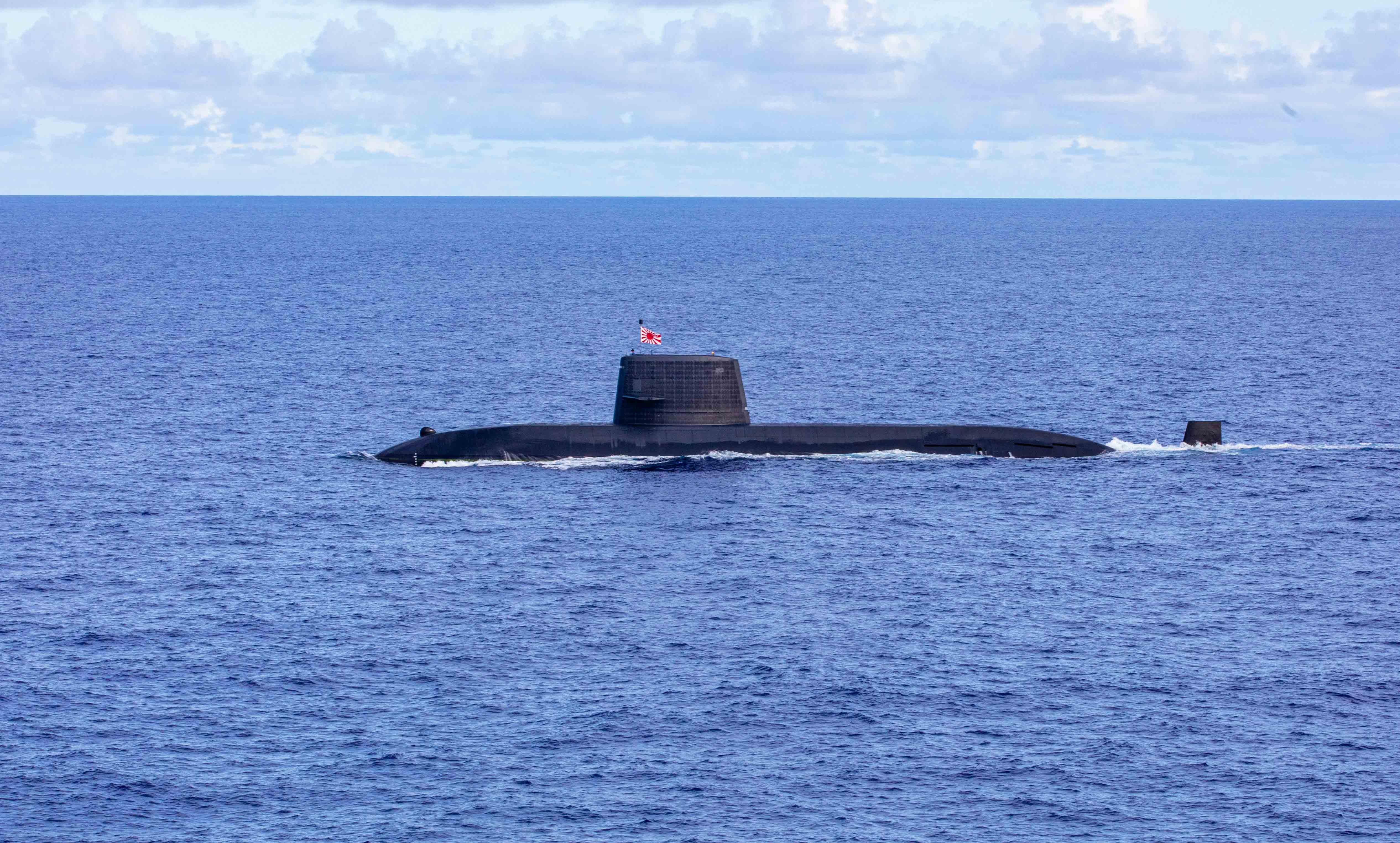
The Japanese Oyashio class submarine Yaeshio transits the Philippine Sea during Exercise Pacific Vanguard 23. U.S. Navy photo by Mass Communication Specialist 3rd Class Santiago Navarro
The next question is whether the Japanese government will move from keeping the option open to actually studying a nuclear-powered submarine design, propulsion technology, and acquisition pathway in detail.
If it does, the consequences could extend well beyond Japan’s submarine fleet. A Japanese nuclear-powered submarine capability would represent a major enhancement of Tokyo’s ability to operate across the Western Pacific and could alter the undersea balance between Japan, China, and the United States’ other regional allies. At the very least, the idea is one that is now part of wider discussions at the highest levels.
An annual award has gone to one of the U.S. Air Force’s most secretive drone squadrons, offering a very rare window into its activities. The 30th Reconnaissance Squadron is one of two units known to operate the stealthy RQ-170 Sentinel, and it is unusual to hear anything about its operational exploits. Much about the RQ-170 itself remains highly classified 17 years after its existence was first officially acknowledged.
The General Atomics Remotely Piloted Aircraft (RPA) Squadron of the Year award for 2025 was presented to the 30th Reconnaissance Squadron at the Air & Space Forces Association’s (AFA) 2026 Air, Space & Cyber Conference on Tuesday, at which TWZ was in attendance. The AFA’s Mitchell Institute for Aerospace Studies works together with General Atomics’ Aeronautical Systems, Inc. division (GA-ASI) to recognize an Air Force drone unit in this way each year.
“The RPA Trophy is awarded annually at the USAF level for outstanding performance of active duty, Air Force Reserve, and Air National Guard … squadrons in achieving persistent attack and/or reconnaissance over the preceding calendar year,” the Mitchell Institute told TWZ in a statement. “Squadrons are judged on performance across their specified mission sets, exercise participation, and squadron and individual achievements.”
The RPA Squadron of the Year trophy seen at the 2026 Air, Space & Cyber Conference this week. The name and unit insignia of the 30th Reconnaissance Squadron are seen on a plaque on the front of the base. Air & Space Forces Association
The institute sent an additional statement regarding this year’s particular award to the 30th Reconnaissance Squadron, which is as follows:
“Through relentless combat support, operational agility, and enterprise leadership, the 30th Reconnaissance Squadron – known as the Blackbirds – has set the standard for the remotely piloted aircraft community and strengthened the Joint Force’s intelligence advantage. In 2025, the 30th Reconnaissance Squadron conducted intrusive intelligence, surveillance, and reconnaissance missions across three areas of responsibility, filling critical intelligence gaps and disrupting enemy networks. In the face of urgent deployment requirements, the squadron demonstrated exceptional agility, rapidly pivoting resources to establish forward operating locations and execute critical missions under severely compressed timelines. The Blackbirds’ accomplishments paved the way for future remotely piloted aircraft capability, distinctly identifying them as the Air Force’s most outstanding RPA squadron.“
Larry Stutzriem, the AFA’s Executive Vice President, while presenting the award to representatives of the 30th Reconnaissance Squadron ahead of a panel at the Air, Space & Cyber Conference.
“In 2025, the 30th Reconnaissance Squadron conducted 87 ISR [intelligence, surveillance, and reconnaissance] missions across three different AORs [areas of responsibility], filled critical intelligence gaps, and disrupted enemy networks,” Stutzriem said. “On the unit mobility side, the Blackbirds executed 7.2 million dollars worth of airlift in six movements across four combatant commands, moving 250 tons of personnel, top secret material, and equipment to provide low-observable RPA support for a critical Secretary of War-directed mission.”
“With their deployments, the Blackbirds demonstrated exceptional agility under extremely compressed timelines,” he added.
The official unit insignia of the 30th Reconnaissance Squadron, with its prominent blackbird motif. USAF
Furthermore, during 2025, the squadron “also executed six large force exercises to develop tactics, techniques, and procedures; validated joint force tactical objectives in land and maritime environments; and provided combat-relevant training,” according to Stutzriem. “Instructors and evaluators graduated the largest ever combat mission-ready class, 30 percent ahead of schedule, and accelerated mission-ready status 33 percent, while increasing total unit aircrew by 26 percent.”
Though Stutzriem noted that the 30th Reconnaissance Squadron provided “low-observable RPA support,” no explicit mention was made of the RQ-170. Whether or not the squadron may now operate other kinds of low-observable (stealthy) drones is unknown. As mentioned, to date, the Air Force has only confirmed that Sentinels are assigned to two units, the other being the 44th Reconnaissance Squadron. Both the 30th and 44th are assigned to the 432nd Wing at Creech Air Force Base in Nevada. Between 20 and 30 RQ-170s, in total, are understood to be in the Air Force’s inventory.
What three specific AORs the 30th Reconnaissance Squadron operated in during 2025 is also not known.
However, at least one, and possibly two, RQ-170s took part in the mission to capture Venezuelan dictator Nicolas Maduro in January of this year, as you can read more about here. It’s very likely that the Sentinels were tracking Maduro ahead of the operation. In December 2025, Air Forces Southern (AFSOUTH) had also made a post on X that included a picture of an individual wearing a name patch with the silhouette of Sentinel and the sleeve insignia of the 432nd Wing, prompting questions about whether the drones were operating in the region. The post was subsequently deleted.
Further in the past, RQ-170s are also known to have been deployed to the Middle East, Central Asia, and the Pacific. The Sentinel first emerged publicly in Afghanistan in the late 2000s, prompting the U.S. military to confirm its existence in 2009. Sentinels are notably understood to have surveilled Al Qaeda founder Osama Bin Laden’s compound in Pakistan in the lead-up to the raid that led to his death in May 2011.
Later in 2011, one of the drones infamously went down in Iran while presumed to be on a mission to monitor aspects of that country’s nuclear program. With that in mind, it is possible, if not extremely probable, that RQ-170s likely played a role in relation to the Operation Midnight Hammer strikes on Iranian nuclear sites last year. Sentinels could have provided direct surveillance over the sites in question, as well as collecting post-mission bomb damage assessments and other intelligence. These are exactly the kinds of missions the drones were designed for and that operators have trained for.
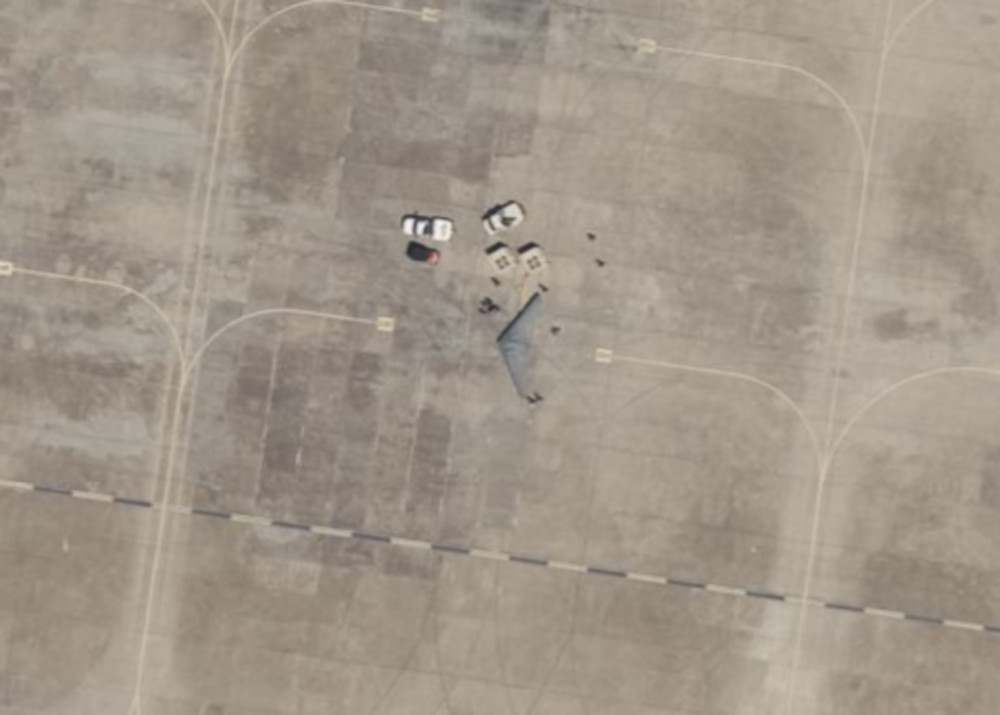
A satellite image available through Apple Maps, seen below, also shows an RQ-170 at Naval Air Station Sigonella in Italy, likely in the 2023-2024 timeframe, based on the state of construction visible elsewhere at the base. It is not known how many Sentinels were deployed to Sigonella and for how long. The Apple Maps image does lend some credence to earlier reports that these drones may have flown missions in the Black Sea region, gathering intelligence on Russian forces on the heavily defended, occupied Crimean Peninsula, between 2022 and 2023.
Apple Maps
Overall, the RQ-170 does still appear to be a go-to for performing penetrating tactical reconnaissance missions, especially when there is a need to provide persistent surveillance in denied areas, resulting in extremely important intelligence collection.
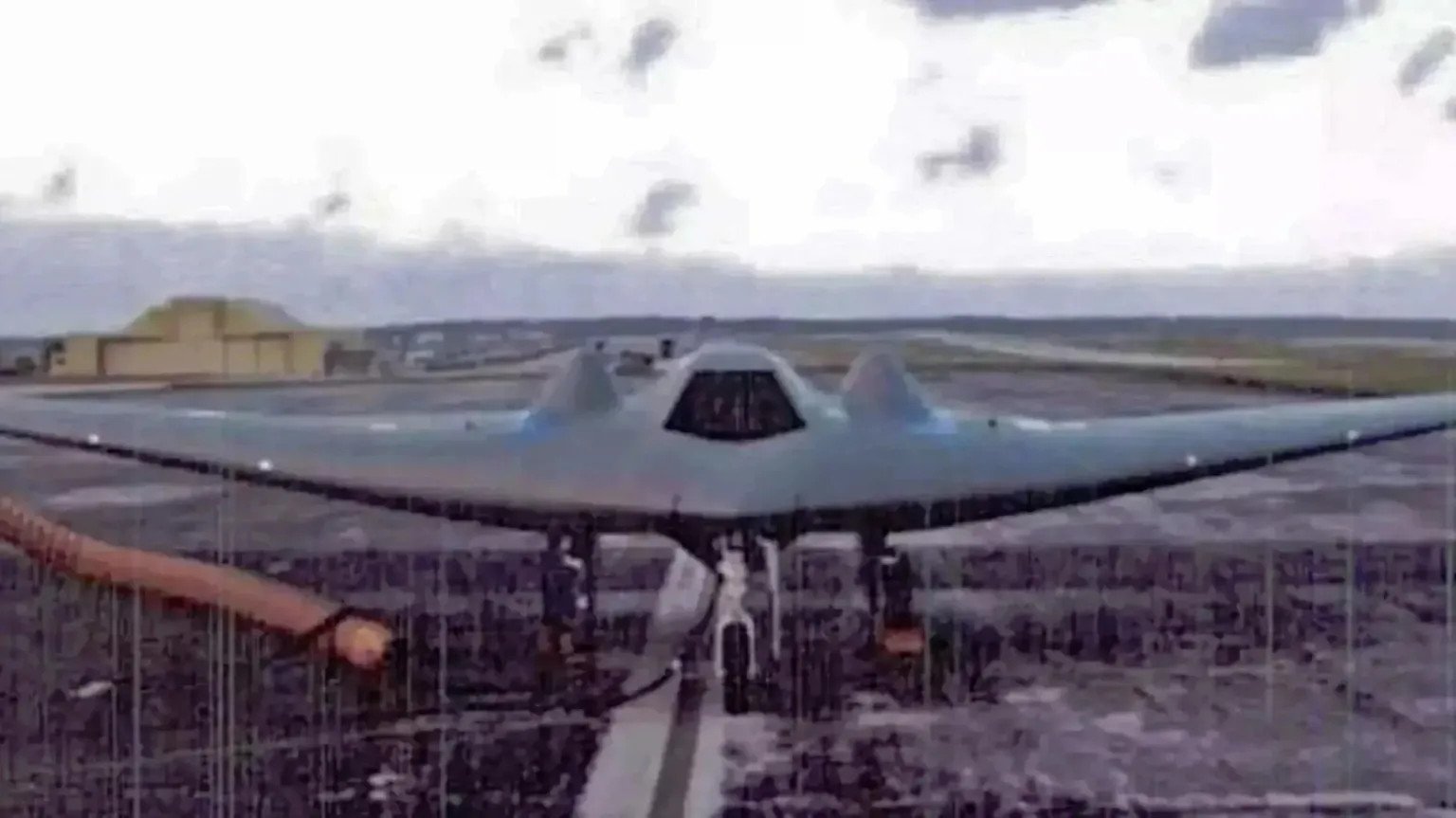
Again, it is important to reiterate here that we do not know if the 30th Reconnaissance Squadron operates any other stealthy drones beyond the RQ-170, or has in the past. A very stealthy high-altitude, long-endurance (HALE) surveillance and reconnaissance drone commonly and unofficially referred to as the RQ-180, or an evolution thereof, burst into the public eye in March after it was spotted landing in broad daylight at a base in Greece. Much about the drone, including what units are involved in its operation and where the home base of the fleet is, as well as the reasons for its deployment to the region, has yet to emerge. It does seem unlikely that the 30th would have taken on operation of the RQ-180, which is a larger strategic reconnaissance-focused platform compared to the smaller, tactically-minded, and less exquisite RQ-170. This is also just one example of what could still be lurking in the classified realm.
American RQ-180 stealth drone landing in Greece, supporting US operations against Iran. pic.twitter.com/Go5YHBM1p8
Whether or not the awarding of the 2025 RPA Squadron of the Year trophy to the 30th Reconnaissance Squadron might now point to a new willingness to talk about that unit’s activities and/or the RQ-170 remains to be seen. Regardless, the award and its description are yet more reminders of just how important the Sentinel remains nearly two decades after it first appeared.
The 31st Marine Expeditionary Unit’s (31st MEU) recent deployment to the Middle East marked the first time the United States Marine Corps (USMC) used its Expeditionary Advanced Base Operations (EABO) concept in a combat setting, the service confirmed to TWZ on Thursday. At its core, EABO involves relatively small groups of Marines quickly establishing bases of operation in forward areas, often within the enemy’s weapons range. During operations in the fight against Iran, Marines refueled and rearmed their own aircraft, as well as those from the joint force, at these austere locales. They also set up remote sensing locations, among other actions from the EABO playbook.
This employment of EABO for Epic Fury is a highly significant development. After years of progressively evolving the EABO playbook, it was no longer an experimental exercise. This meant that Marines were forward deployed in a contested area in a region where established bases were taking heavy fire from Iranian missile and drone barrages. Troops were killed in some of these attacks and U.S. aircraft, buildings and equipment were damaged and destroyed across the Middle East. Pushing aircraft from the MEU, as well as the joint force, to FARPs (forward arming and refueling point) would have been a relevant asset preservation tactic as well as one that would help accelerate combat operations, and it’s exactly what EABO is meant to do.
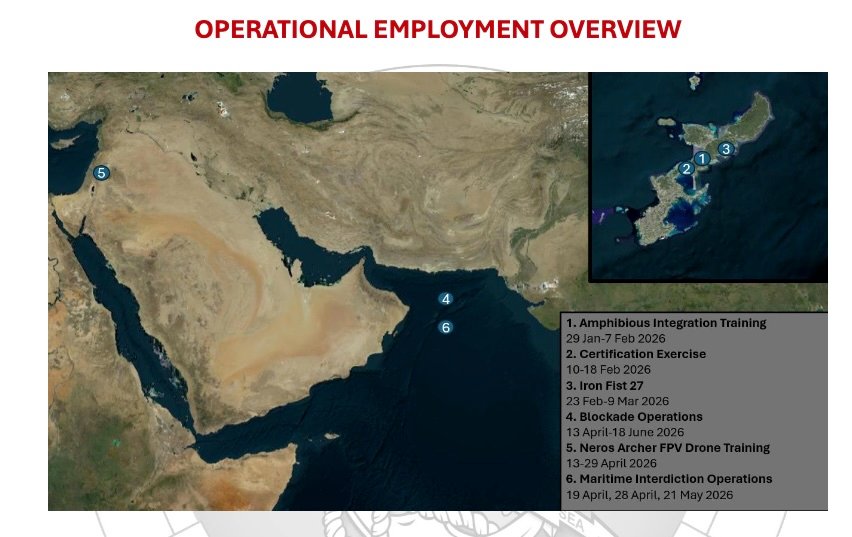
The 31st MEU’s six-month deployment began in January in the Pacific, before the unit was ordered to the Middle East in March, returning to Okinawa, Japan, in July. That’s where it is stationed as the USMC’s only continuously forward-based MEU.
A map of the 31st MEU’s deployment. (31st MEU)
“This was the first time we were able to implement EABO in combat operations since the concept was created for the force,” Capt. Steven J. Keenan, a USMC spokesperson, told us. “We have practiced it many times, but this was a first for supporting a Joint Force named operation with forward FARPs and forward bases that supported joint ops and combat power sustainment.”
EABO was first introduced in 2020 by then-Commandant Gen. David Berger in his Force Design 2030 plan for the future of the Corps. It was created with a fight against China in mind, especially utilizing small Pacific islands. The idea is to have highly mobile, low-signature forces deployed forward in austere, contested or potentially contested maritime locations. The mission is to “support sea control operation, conduct sea denial operations within the littorals, contribute to maritime domain awareness, provide forward command, control, communications, computers, combat systems, intelligence, surveillance, reconnaissance, targeting, and counter-targeting capability and forward sustainment,” according to the Marines.
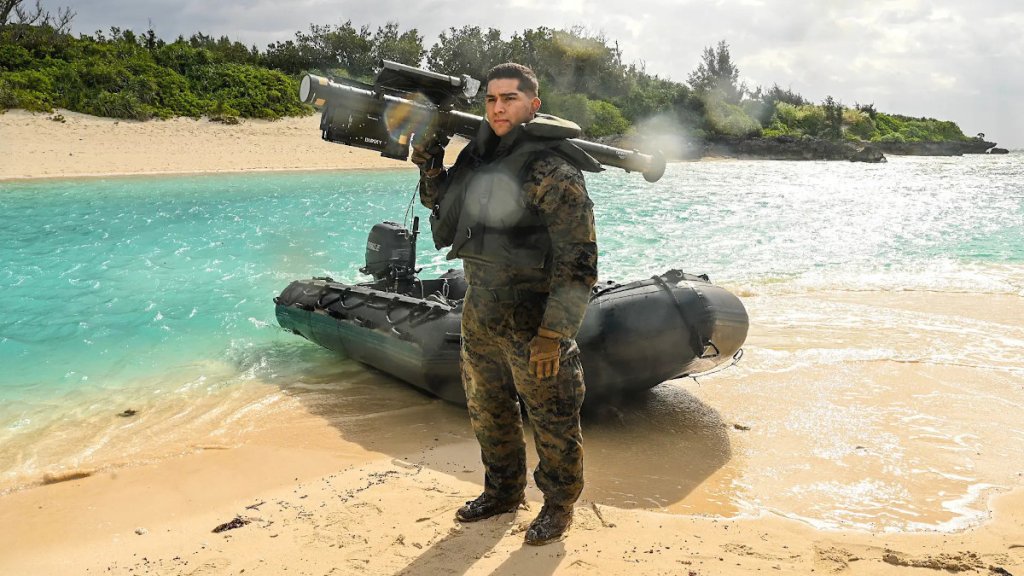
A Marine holding a Stinger missile launcher stands in front of a Combat Rubber Raiding Craft on Ukibaru Island off the coast of Okinawa during Exercise Hagatna Fury 21. (USMC) A Marine holding a Stinger missile launcher stands in front of a Combat Rubber Raiding Craft on Ukibaru Island off the coast of Okinawa during Exercise Hagatna Fury 21. USMC
The news of the first activation of the EABO concept in combat came Wednesday during a media roundtable with Col. Chris P. Niedziocha, who commanded the 31st MEU during its deployment to the Middle East in support of Operation Epic Fury. Now director of the USMC Expeditionary Warfare School, Niedziocha discussed EABO and a range of other operations during that deployment, including boarding vessels during the blockade of Iranian ports.
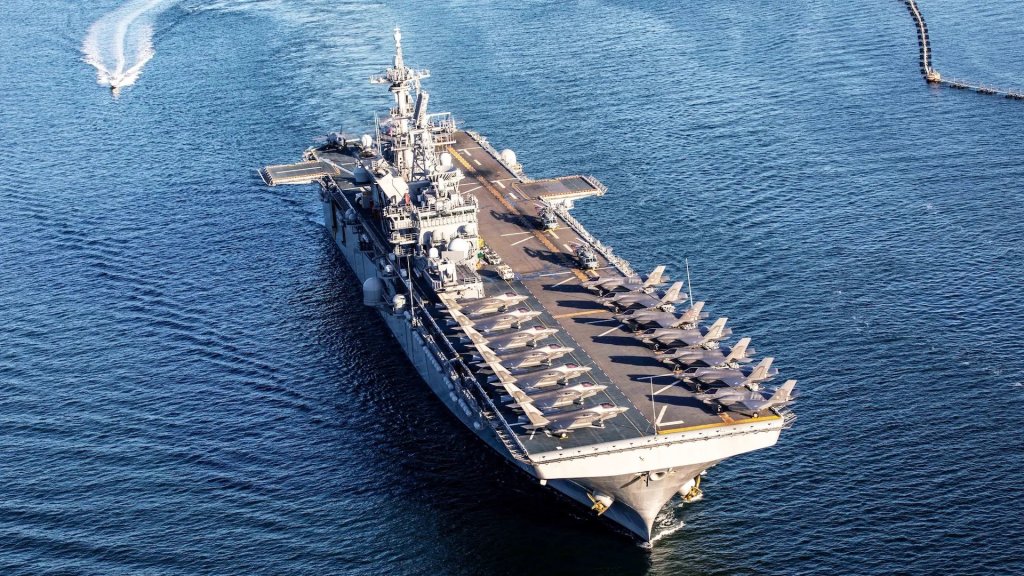
The 31st MEU was embarked aboard the Tripoli Amphibious Ready Group (ARG), which consisted of the America class amphibious assault ship USS Tripoli, San Antonio class amphibious transport dock ship USS New Orleans, and Whidbey Island class dock landing ship USS Rushmore. You can read more about the ARG/MEU and its assets in our initial story about the deployment to the Middle East here.
USS Tripoli. (Staff Sgt. Samuel Ruiz)
“You’re starting to see this has been validated,” the colonel said of the EABO concept during the roundtable TWZ attended virtually. “It’s still nascent, but we actually, for the first time, demonstrated what we thought we were able to do, which I think is pretty exciting. And then things like forward arming and refueling to extend the operational reach of aircraft and expeditionary reloading, and then the ever-present logistic challenge of doing something like that. So that’s pretty significant.”
“We successfully implemented critical Expeditionary Advanced Base Operations (EABO), establishing sensor expeditionary advanced bases and forward arming and refueling points (FARPs) where none existed,” the colonel added. “Through our forward logistic elements, we proved that an agile Marine Air-Ground Task Force can sustain itself and generate ready, lethal power in contested maritime environments, directly setting the theater for follow-on joint forces.”
“There was all manner of tankers all the time, but the FARP is to extend the operational reach, and if you can do it, you reduce the load on that,” Niedziocha noted. “Because there’s some aircraft that are basically for expeditionary austere operations, especially the F-35B,” the Marine Corps’ variant of the aircraft designed for short take off and vertical landing.
“There are some trade-offs associated with the Bravo,” Niedziocha pointed out, using a slang for the jets. “There’s less internal fuel, but you have the lift [system], which gives you the option to do these kinds of things. So, the goal there was to walk that fine line between providing the full sortie over wherever you needed it, and keeping the ships far enough away to make them as survivable as possible.”
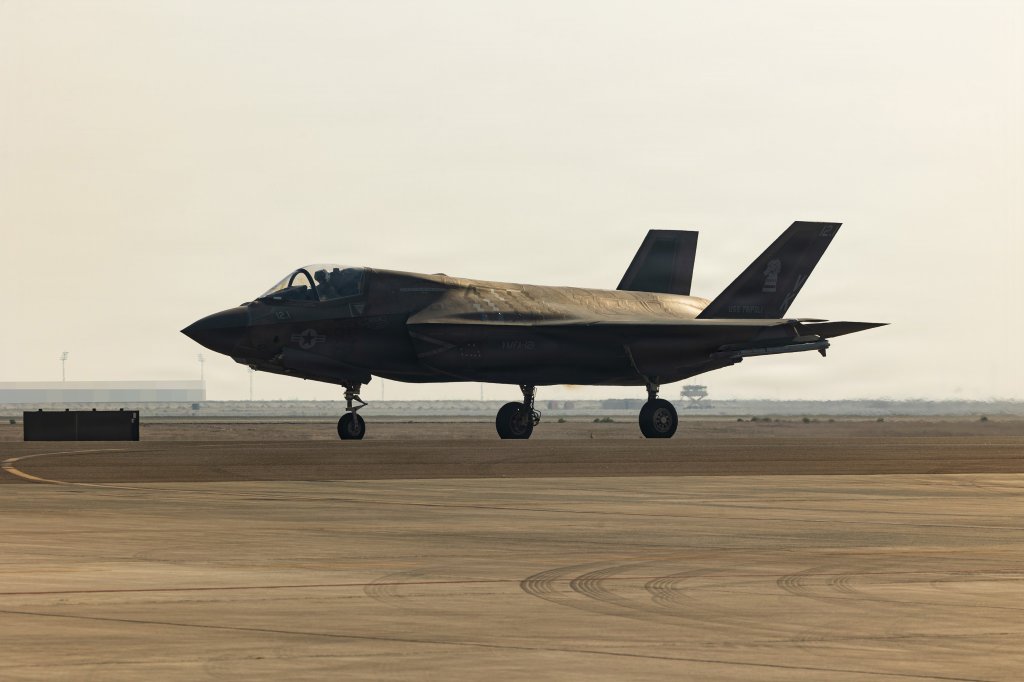
An F-35B Lightning II aircraft taxis to a forward arming and refueling point in the U.S. Central Command area of responsibility, May 26, 2026. (U.S. Marine Corps photo by Cpl. Maksim Masloboev) Cpl. Maksim Masloboev
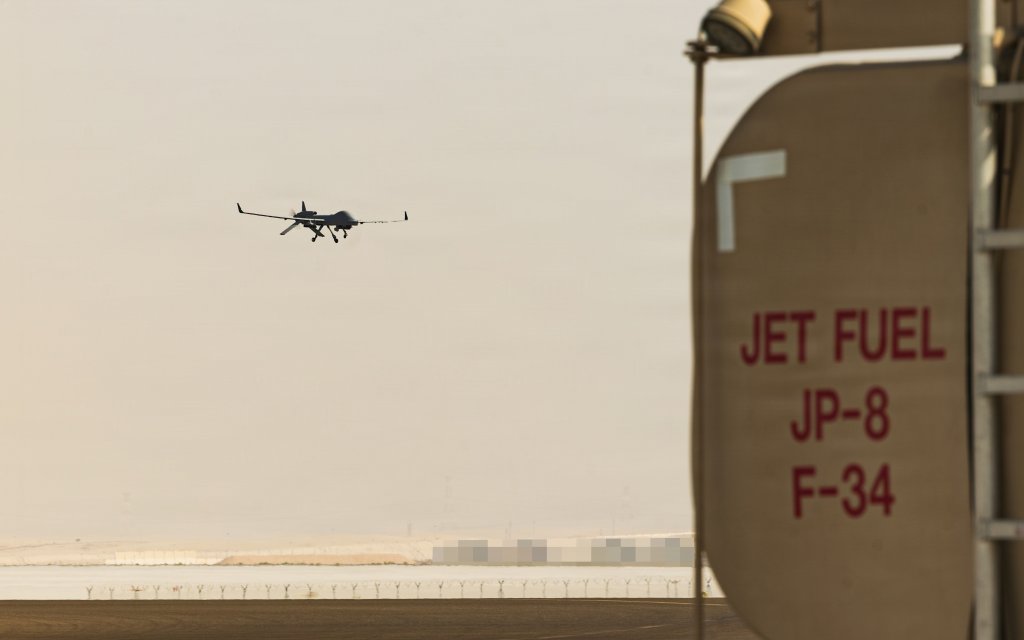
In addition to the F-35Bs and other aircraft organic to the 31st MEU, the FARPs were also used by Army helicopters, Keenan told us. Imagery posted on the Pentagon’s image distribution site also showed U.S. Army Gray Eagle drones and Marine MV-22B Osprey tiltrotor aircraft were included.
A Gray Eagle drone lands at a forward arming and refueling point in the U.S. Central Command area of responsibility, May 26, 2026. (U.S. Marine Corps photo by Cpl. Maksim Masloboev) Cpl. Maksim MasloboevU.S. Marines with the 31st Marine Expeditionary Unit transport AIM-120 AMRAAMs to a forward arming and refueling point in the U.S. Central Command area of responsibility, May 26, 2026. (U.S. Marine Corps photo by Cpl. Maksim Masloboev) Cpl. Maksim Masloboev
Niedziocha did not provide details about where the FARPs were set up, but a U.S. defense official told us they were “disaggregated throughout the Middle East.” The official declined to provide further information, citing operational security concerns since they are still being used.
“Throughout the deployment, the Tripoli ARG and 31st MEU successfully conducted over 1,600 mishap-free flight hours of combat aviation missions, including precision strikes, transporting 800,000 pounds of cargo, and moving 5,000 personnel,” a 31st MEU overview of the deployment explained. “The units also provided sustained combat support to joint force operations by delivering critical intelligence and refueling over 300 aircraft ashore and underway.”
The colonel also didn’t provide details about the sensor expeditionary advanced bases. According to the Marines, “a sensing expeditionary advanced base (SEAB) brings together coastal surveillance radars, electronic sensors, and Marines ashore to extend maritime domain awareness, complementing the radars and sensors already at work aboard naval ships off the coast.”
“When SEAB systems identify surface vessels in nearby sea lanes, small unmanned aircraft system (sUAS) operators launch their platforms to visually identify and track the contacts,” the Marines added. “Sensor data and imagery are transmitted in real time across the blue-green command network to decision-makers.”
U.S. Marines with 12th Marine Regiment, 3rd Marine Division, prepare to set up a Ground/Air Task Oriented Radar (G/ATOR) system during a routine unit level training exercise on Iejima, Okinawa, Japan, July 15, 2023. (U.S. Marine Corps photo by Staff Sgt. Manuel A. Serrano) Gunnery Sgt. Manuel Serrano
This capability could have been used to track Iran’s remaining fleet of small boats that it has used to harass shipping and mine the Strait of Hormuz, as well as larger vessels trying to transport oil. Other sensors, like radars and counter-drone systems, could also help identify incoming threats and provide general situational awareness. The EABO concept was employed as part of the 31st MEU’s larger role in supporting the blockade and mine clearance efforts.
The 31st MEU interdicted four vessels during the deployment, three of which led to boardings. On April 19, Marines boarded the MV Touska; on April 28, the MV Blue Star III; and on May 19, the MT Celestial Sea.
The Touska was boarded after USS Spruance fired multiple 5-inch rounds, targeting the engine room and disabling the vessel’s propulsion. The crew of the vessel was retained for about two weeks before being repatriated.
Niedziocha told us that none of the crews offered any resistance.
“At two in the morning, when 30 Force Reconnaissance Marines fast rope onto your vessel, [you are] just compliant with a capital C. They did exactly what they were directed to do. The overmatch that you put onto that vessel is pretty surprising. And then there’s overwatch provided by UAS and manned aircraft, so you create this bubble around the vessel. So yeah, they complied.”
You can see the Touska being boarded in the following video.
The U.S. just released a video of its forces boarding and seizing the Iranian container ship M/V Touska near the Hormuz Strait after it tried to break the U.S. naval blockade pic.twitter.com/FpB2obb3jY
Two years ago, as the EABO concept was maturing, TWZ was invited to get an exclusive look at how an advanced EABO concept would be put into action, including how squadrons operated the F-35B out of an austere combat environment while generating combat sorties. It was an unprecedented and exclusive peek into the EABO playbook and what a real fight in the Pacific with the USMC’s most advanced fighter aircraft could actually look like. You can read about that in our story here. It appears the operations in the Middle East mirrored this exercise closely.
James Deboer
Now back in Japan, the ARG/MEU is getting ready for a new deployment, said the colonel.
“We got back to Okinawa, I think July 22nd, and they had already begun their workup cycle in earnest to be on the water in early January to go out and do another Iron Fist [training exercise] with the Japanese, and then long periods of a crisis response,” said Niedziocha, who relinquished command in August before moving on to his new role. “Just being there, present in the First Island Chain to partner with your allies, demonstrates the resolve and commitment to deter whatever needs deterring.”
As noted earlier in this story, the EABO concept was designed with a Pacific fight in mind. Its first combat employment in the Middle East clearly offers lessons that can now be adapted to enhance EABO operations globally.
A U.S. Air Force F-16 Fighting Falcon crashed in northern Michigan today, according to WOOD-TV, a local NBC affiliate. The pilot was reported to be in stable condition after ejecting from the aircraft.
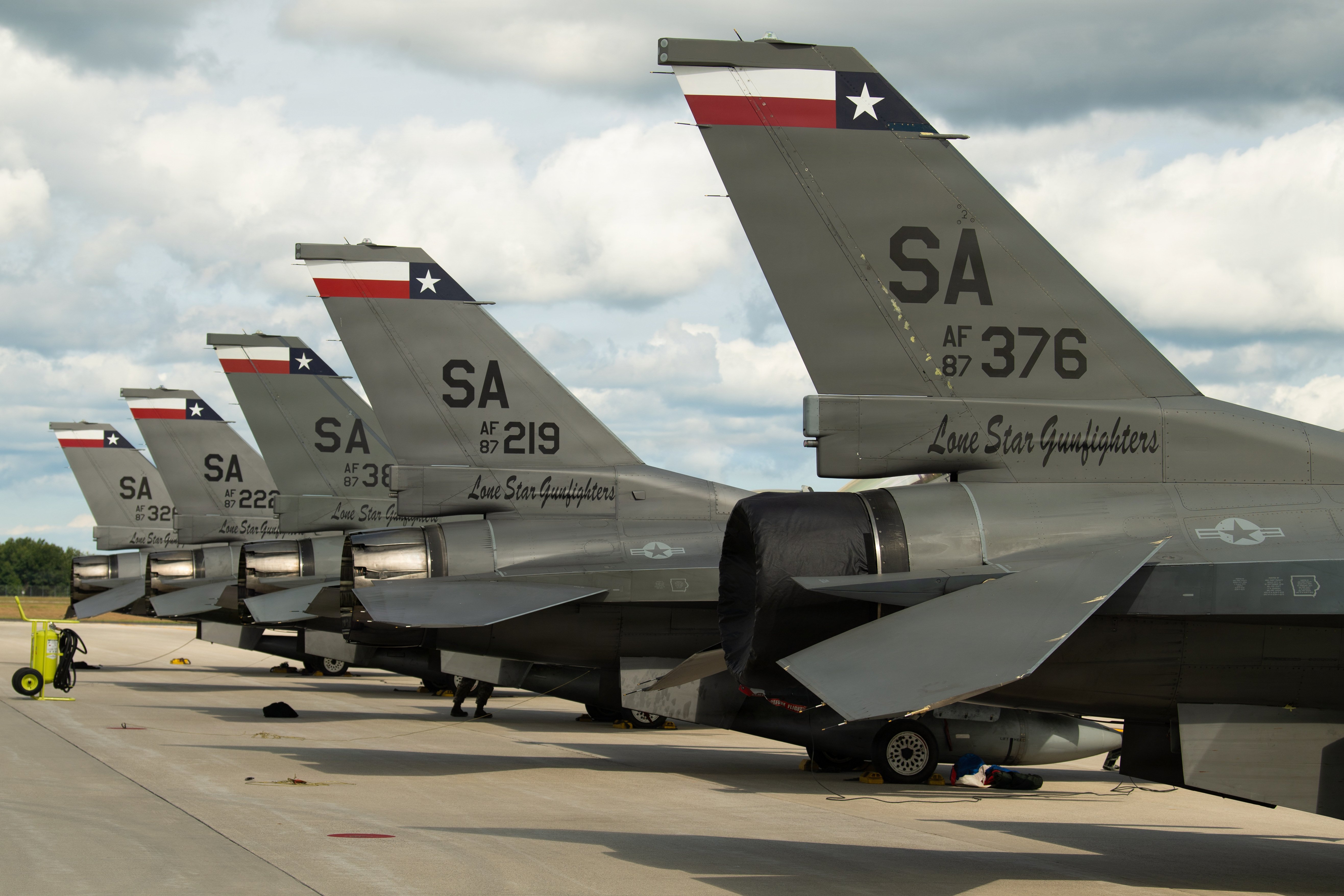
A spokesperson with the Michigan Department of Military and Veterans Affairs told the station that “the F-16 is a part of the 149th Fighter Wing from Joint Base San Antonio-Lackland in Texas.”
Video emerging on social media showed what is claimed to be the wreckage of the aircraft in flames.
FOX 2 Detroit confirmed that the plane which crashed in Blair Township, Michigan was a F-16.
According to air traffic control (ATC) audio, the pilot’s wingman said, “we have a possible mayday. My wingman may have taken a bird.” TWZ cannot independently confirm what caused the crash. The audio continues and offers a fairly dramatic and raw look at how the incident occurred over the air waves.
F-16 crash ATC audio, BUCK 11 flt x2 F-16s were flying along the VFR low level route VR634 when the 11 advised MINNEAPOLIS CENTER that his wingman may have hit a bird and was going to eject just south of Traverse City, Michigan
We have reached out to the 149th Fighter Wing, the Michigan Department of Military and Veteran Affairs, the Grand Traverse County Sheriff’s Office and the Grand Traverse County Emergency Management Office for further details.
A shelter-in-place order was issued by Grand Traverse County Emergency Management for residents near the plane crash.
“Shelter indoors, close windows/vents,” the order stated. “Follow instructions from emergency personnel. More information to follow. This shelter in place applies to residents in the indicated area ONLY.”
The proposed deal, worth an estimated total cost of $24.3 billion, was announced as the Kingdom is in the midst of a fierce fight against the Houthi rebels of Yemen. It marks a major policy shift, with Washington previously being unwilling to export the advanced stealth fighters to Arab states and will likely serve as a reminder at a very challenging time for the Saudis of the unique security capabilities that only the U.S. can provide them.
In addition to the jets, which will be conventional takeoff and landing variants, Saudi Arabia has requested 49 Pratt & Whitney F135-PW-100 engines, support and other items.
Despite concerns from Israel that providing Saudi Arabia with the advanced fighters will tip the balance of power in the region, the proposed sale of this equipment and support “will not alter the military balance in the region,” the State Department noted.
The United States has a requirement to maintain Israel’s so-called qualitative military edge, which essentially guarantees that Israel will be prioritized for advanced U.S. weapons ahead of Arab states in the region. Among these advanced weapons, the stealthy F-35 is highly prominent.
You can read our past feature about the wide-ranging impacts of an F-35 sale to Saudi Arabia here.
Israeli Air Force F-35i fighters. (Israeli Air Force)
“This proposed sale will support the foreign policy and national security objectives of the United States by improving the security of a major non-NATO ally that is a force for political stability and economic progress in the Gulf region,” the State Department wrote. “The proposed sale will improve Saudi Arabia’s capability to deter current and future threats by strengthening its homeland defense, and improving interoperability with U.S. forces, and other regional and NATO forces. The proposed sale will also augment Saudi Arabia’s operational aircraft and enhance its air-to-air, and air-to-ground self-defense capability. The Kingdom of Saudi Arabia will have no difficulty absorbing this equipment and services into its armed forces.”
In November, “President Trump approved a major defense sale package, including future F-35 deliveries, which strengthens the U.S. defense industrial base and ensures Saudi Arabia continues to buy American,” according to the White House.
Trump has pushed for closer ties between Israel and Saudi Arabia and wants the Kingdom to join the Abraham Accords initiative. This is a set of agreements that establish normalized diplomatic relations between Israel and different Arab states. Doing so would be a major breakthrough, following the United Arab Emirates, Bahrain, Morocco, and others.
A Saudi F-35 deal was also discussed under the Biden administration, as part of a broader deal that sought to normalize the Kingdom’s relations with Israel.
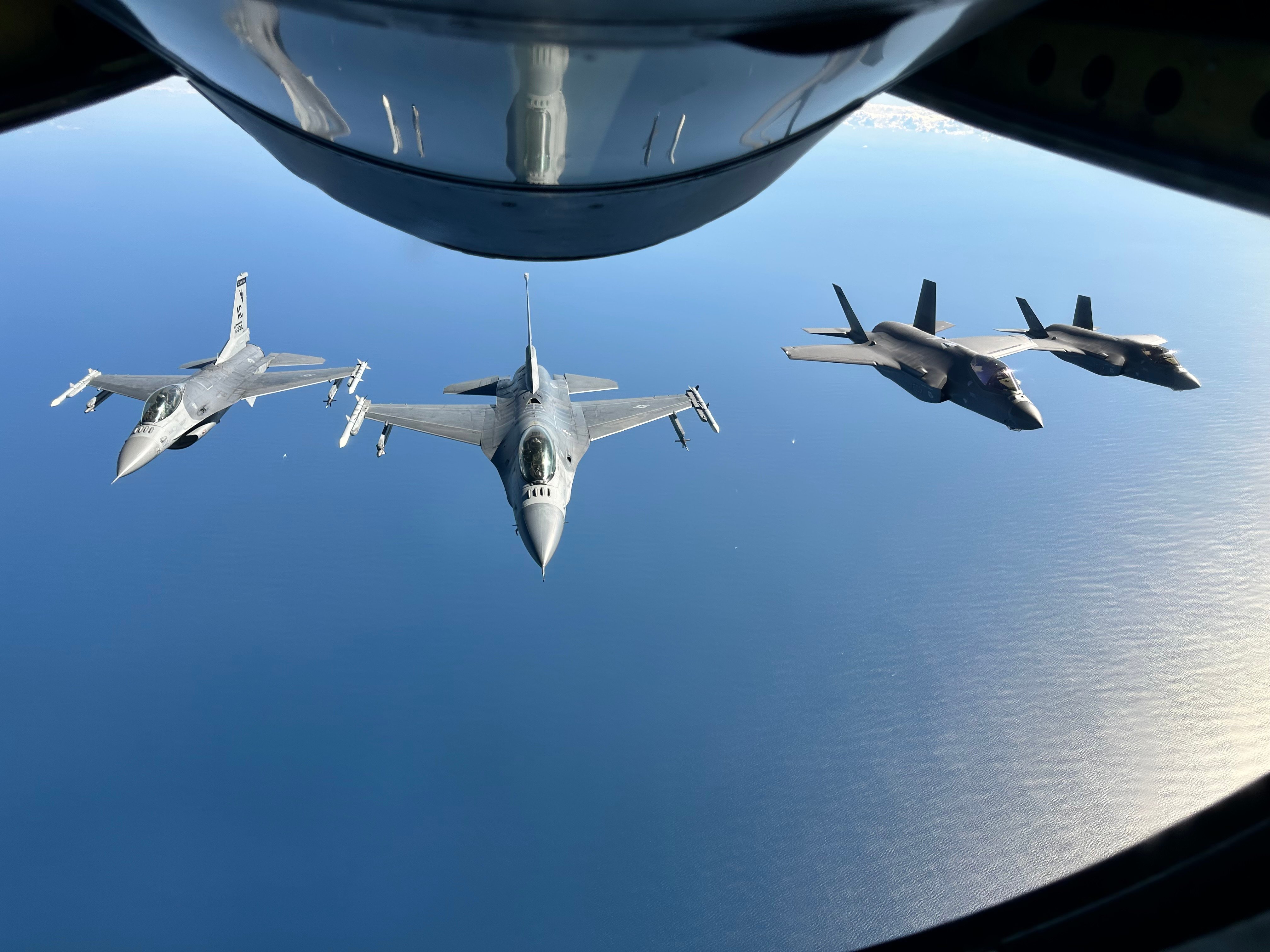
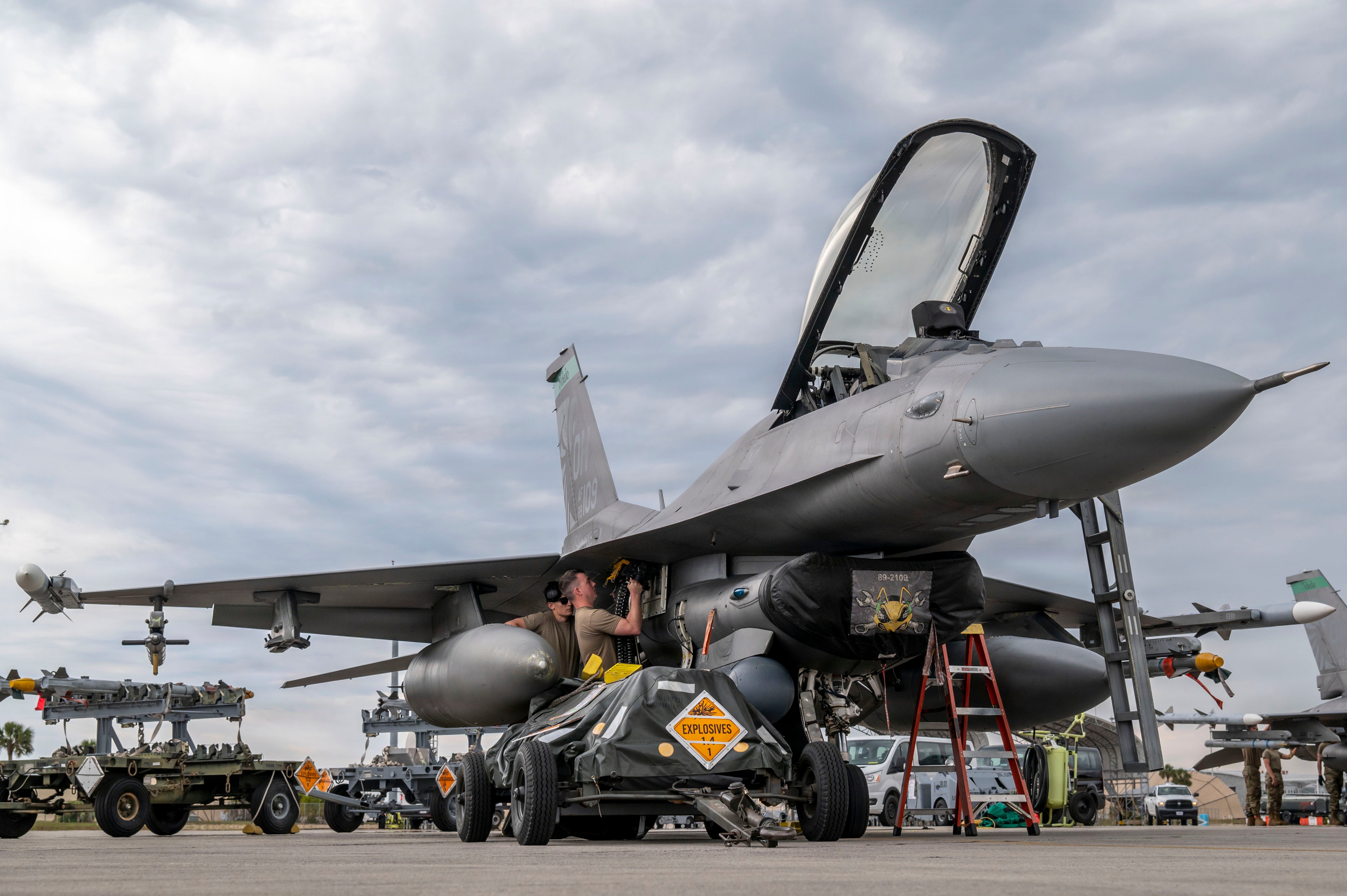
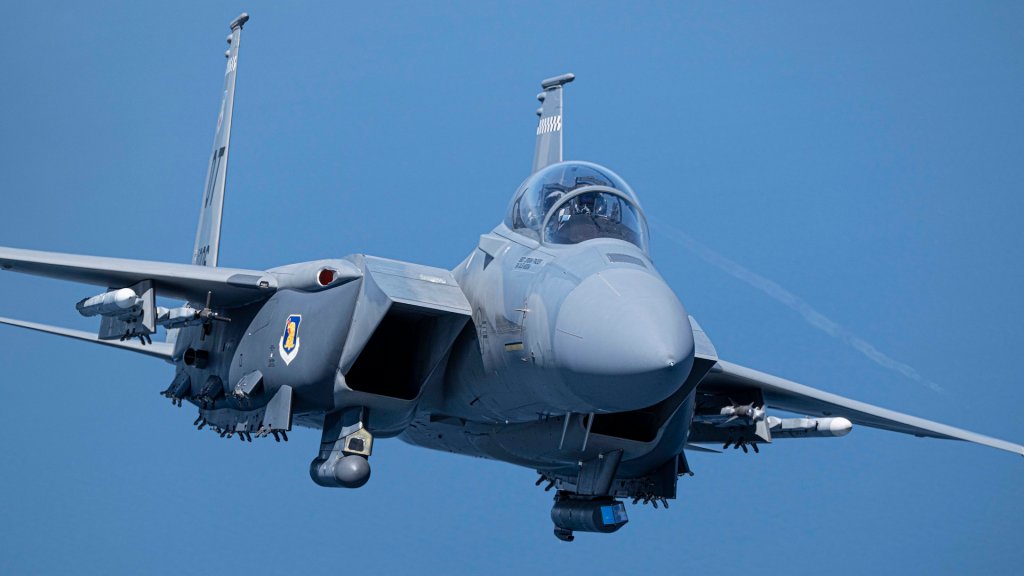
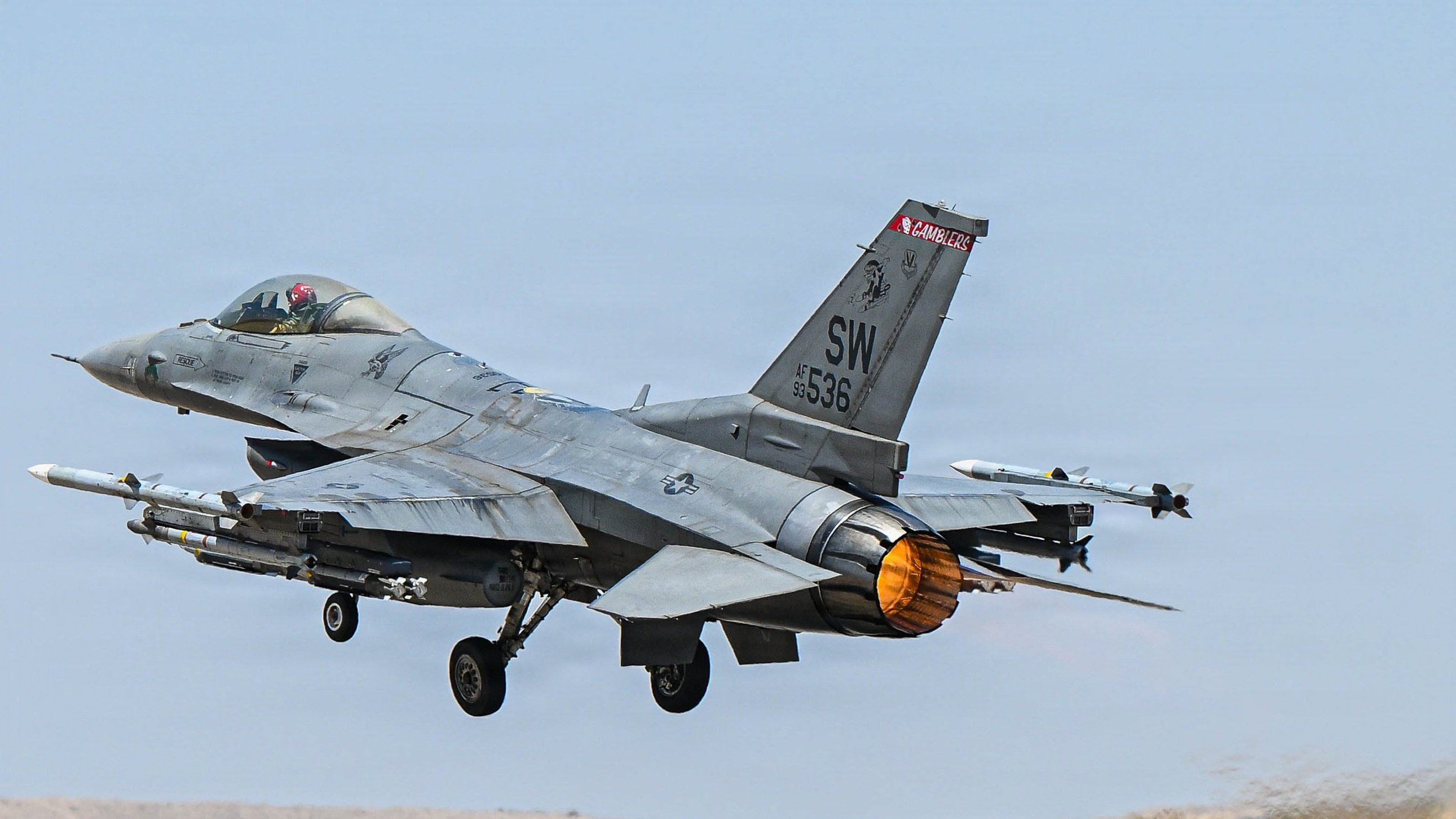
Lockheed Martin and the U.S. Air Force are once again discussing new-build F-16s. The development comes as the service grapples with a fighter fleet that is simultaneously aging, shrinking, ballooning in sustainment cost and being called upon to do more. This also comes at a time when the Air Force is now investing heavily in the F-15EX, another fourth-generation type it hadn’t bought for many years after committing to an all stealth future fighter fleet in the 2000s.
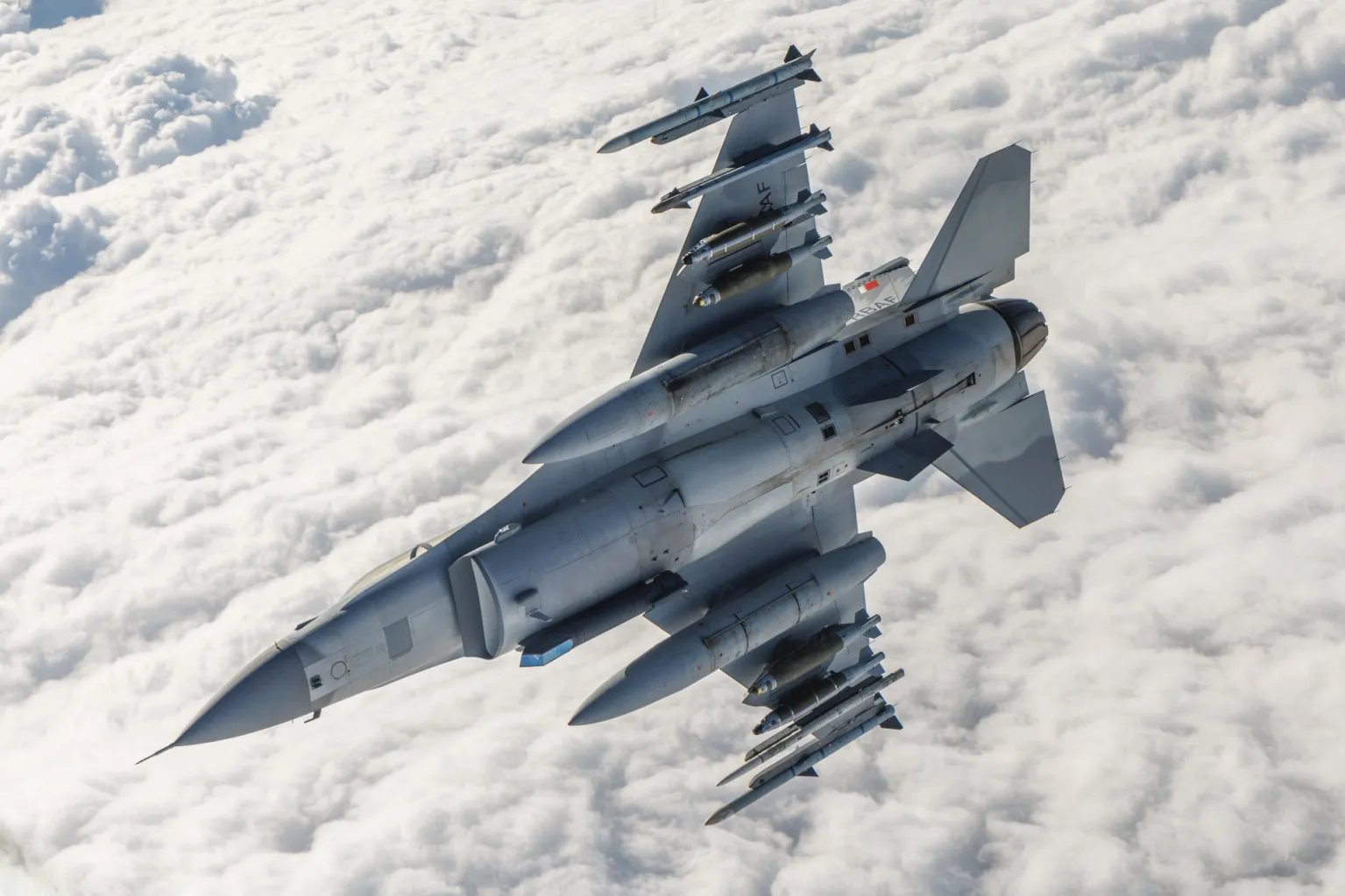
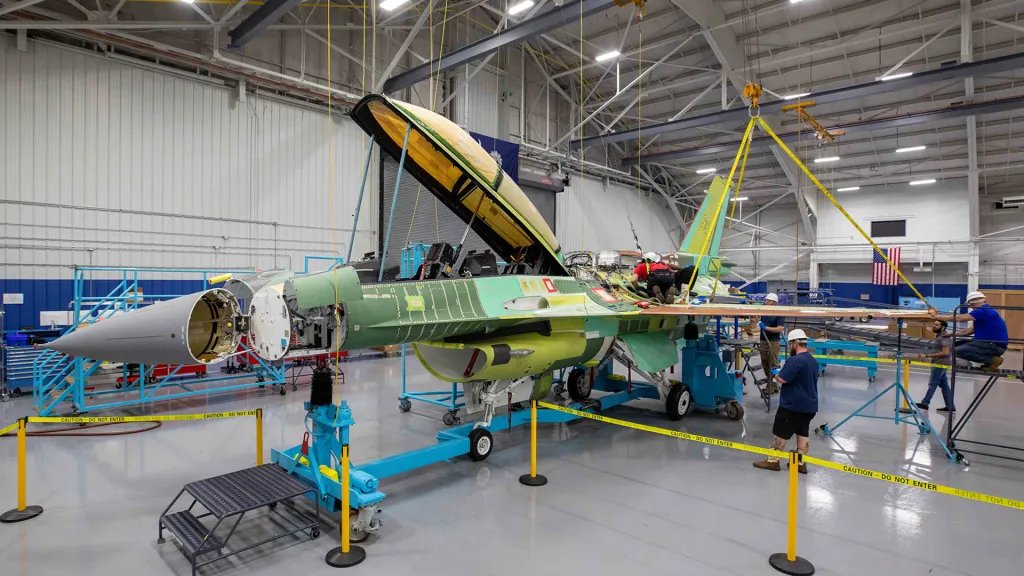
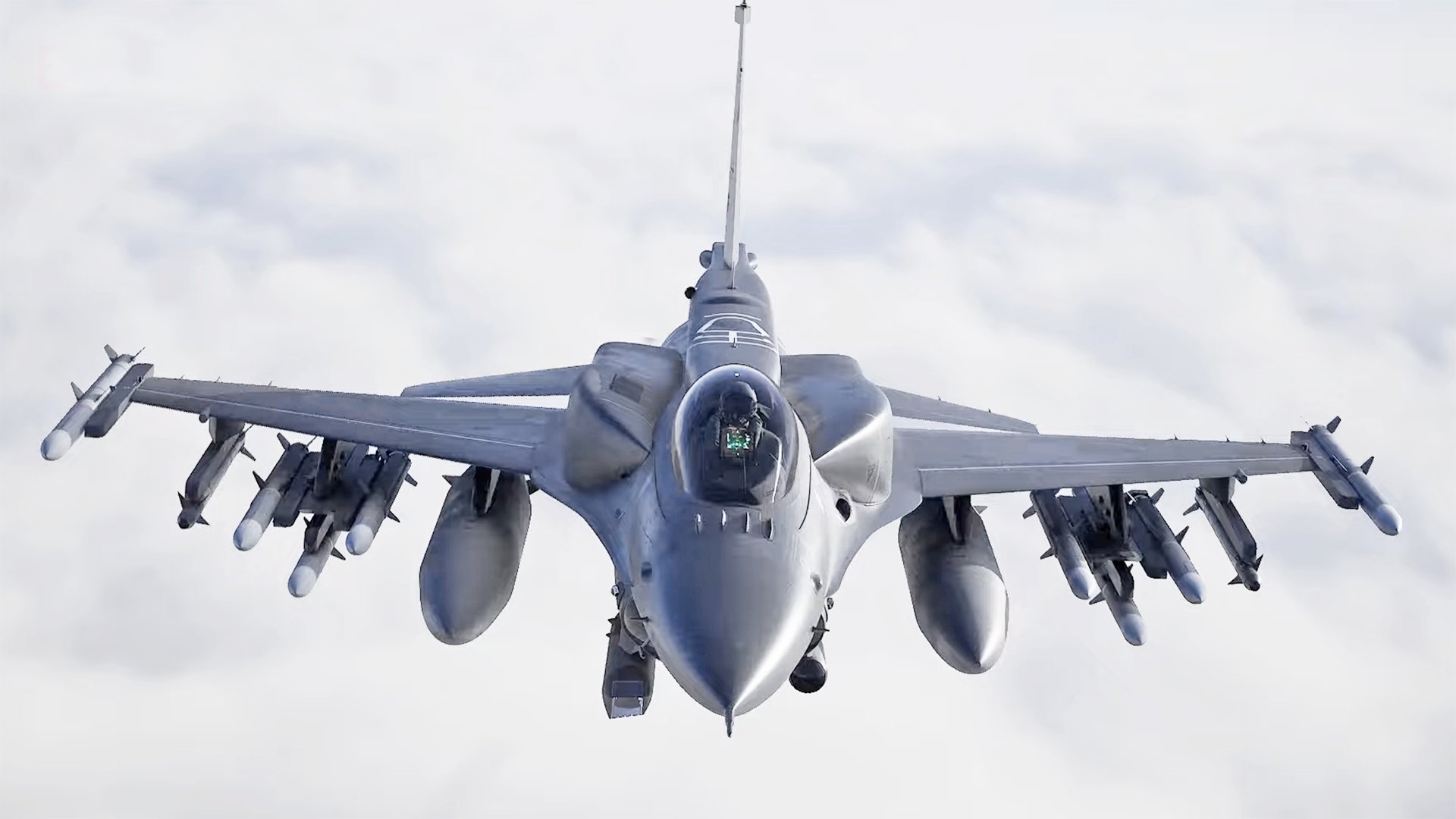
According to Aviation Week, the company has proposed an aircraft called the F-16G, an enhanced derivative of the F-16 Block 70. The proposed configuration reportedly incorporates conformal fuel tanks, 600-gallon wing tanks, an infrared search-and-track (IRST) system, a Sniper targeting pod, and a drag chute. All of these features have appeared on previous F-16s in one form or another. Lockheed is positioning the new version as a potential replacement for USAF F-16 units whose existing aircraft are approaching the end of their useful lives.
A Bahraini Block 70 F-16D flown by members of the 416th Flight Test Squadron pulls away after receiving fuel from a KC-135 tanker with a crew from the 370th Flight Test Squadron during asortie out of Edwards Air Force Base in California on March 7, 2024. U.S. Air Force
The Air Force, for its part, says that it has not yet settled on either the requirements or the options for addressing the problem. As it stands, the service has not committed to buying any new F-16s. The proposal is nevertheless notable because it follows an earlier round of discussions in which the Air Force was already examining whether a new-build F-16 could help address the growing fighter gap.
In December 2025, Inside Defensereported that the Air Force had reached out to Lockheed Martin about pricing for Block 70 F-16s — the current export standard. The conversations were described as exploratory, with no firm procurement plan, but the reporting established that the idea had moved beyond a purely theoretical discussion. One congressional aide told the publication that officials were looking at ways to “plug their holes” as part of their future force-structure planning.
A new Viper variant based on the Block 70 would be cheaper than replacing an aging F-16 with an F-35, while allowing the Air Force to retain much of the infrastructure, training, and experience associated with the existing aircraft. This is a major advantage as the F-35’s unique infrastructure and support requirements are a costly addition to the aircraft’s base price tag. An even bigger factor is unrelated to acquisition and bed-down costs: a Block 70 is far cheaper to sustain and operate over its service life than an F-35, a difference that compounds significantly across a fleet.
A line-up of F-16s assigned to the 149th Fighter Wing, a unit of the Texas Air National Guard. Air National Guard photo by Airman 1st Class Jonathan Rasco Airman 1st Class Jonathan Rasco
The idea of a new Viper buy had already reached the highest levels of Air Force leadership several months earlier.
In May 2025, Sen. Tom Cotton asked then-Air Force Chief of Staff Gen. David Allvin about the possibility of buying a U.S.-configured “Block 80” F-16 if Congress provided additional funding. Allvin did not endorse the proposal, but he did not dismiss it either, saying he needed to examine the time required to adapt the Block 70 design, where a U.S. aircraft could fit into Lockheed Martin’s production line, and what the industrial base could support. He also noted that the existing Block 70/72 line was already heavily occupied by foreign military sales.
At the same hearing, Allvin acknowledged the broader force-structure logic, saying the Air Force needed both the high-end capabilities required for an Indo-Pacific fight and other fighters that “may not need to be as sophisticated as our fifth-generation, sixth-generation.” He also emphasized that the first increment of Collaborative Combat Aircraft (CCA) was intended to augment rather than replace crewed fighters like the F-16.
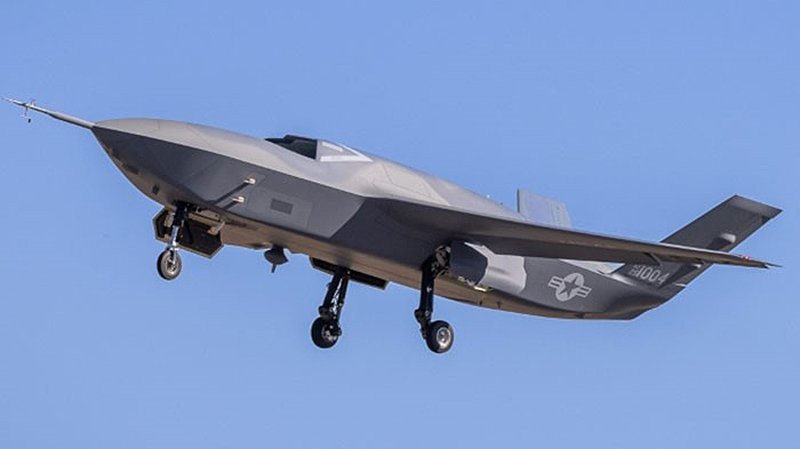
General Atomics’ YFQ-42 for the first increment of the Air Force’s Collaborative Combat Aircraft program, which has now received the official nickname Vengeance. General Atomics
Taken together, the developments show that the concept has remained alive through the Air Force’s evolving force-structure debate.
The Numbers Game
At first glance, the idea of buying new F-16s for the Air Force in the late 2020s might seem puzzling. The F-16 entered U.S. service in the 1970s, and the Air Force stopped buying new examples for itself more than 20 years ago. The established plan has been to replace the legacy F-16 fleet with the F-35A. For a long time, the service’s stated ambition was ultimately an all-stealth tactical fighter force — but that vision has already largely melted away as budget, operational and industrial-capacity realities have set in.
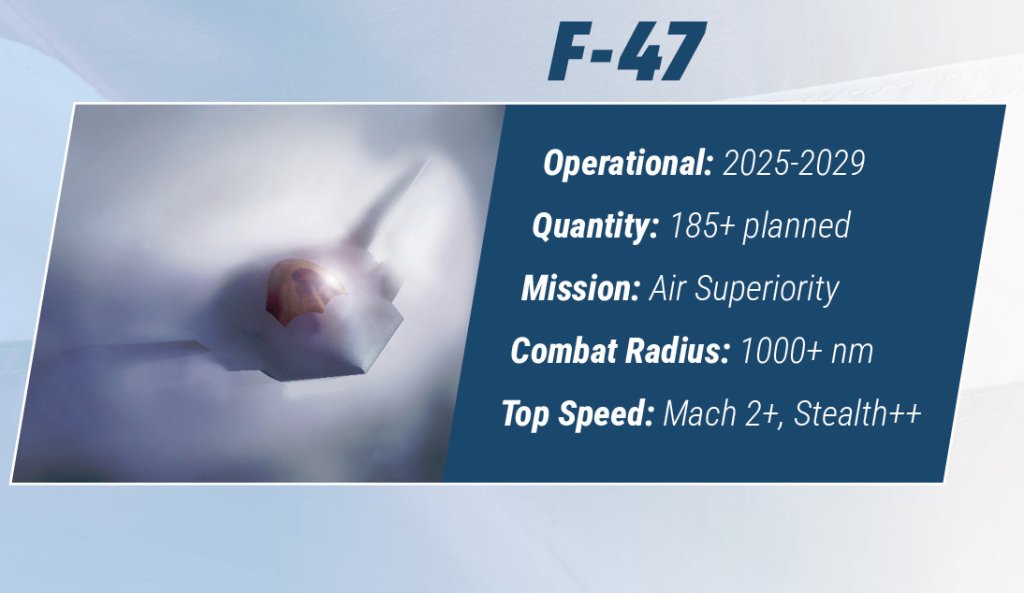
Today, the fighter fleet is still far older on average than it needs to be and legacy fourth generation types, minus a handful of new F-15EXs, are now well over 20-years old at the youngest. The oldest of these aircraft are increasingly challenging and costly to support. Meanwhile, the F-35 has had its fair share of successes and challenges, but replacing all of the USAF’s oldest fighters with JSFs in a timely and efficient manner, and operating those aircraft over future decades, looks increasingly problematic. The F-47 is also on the horizon, but that aircraft fits a different capability set more aligned with the F-22 than the F-16 and will come at a much higher cost than any fighter currently being procured.
Above all else, the problem is that the Air Force’s fighter challenge is one of numbers.
The service’s 2025 long-term fighter force-structure assessment concluded that it needed 1,558 combat-coded manned fighters by 2035 to reach what it considers a low-risk operational posture. The Air Force had only 1,098 fighters in its inventory as of May 2026, below the statutory minimum of 1,145.
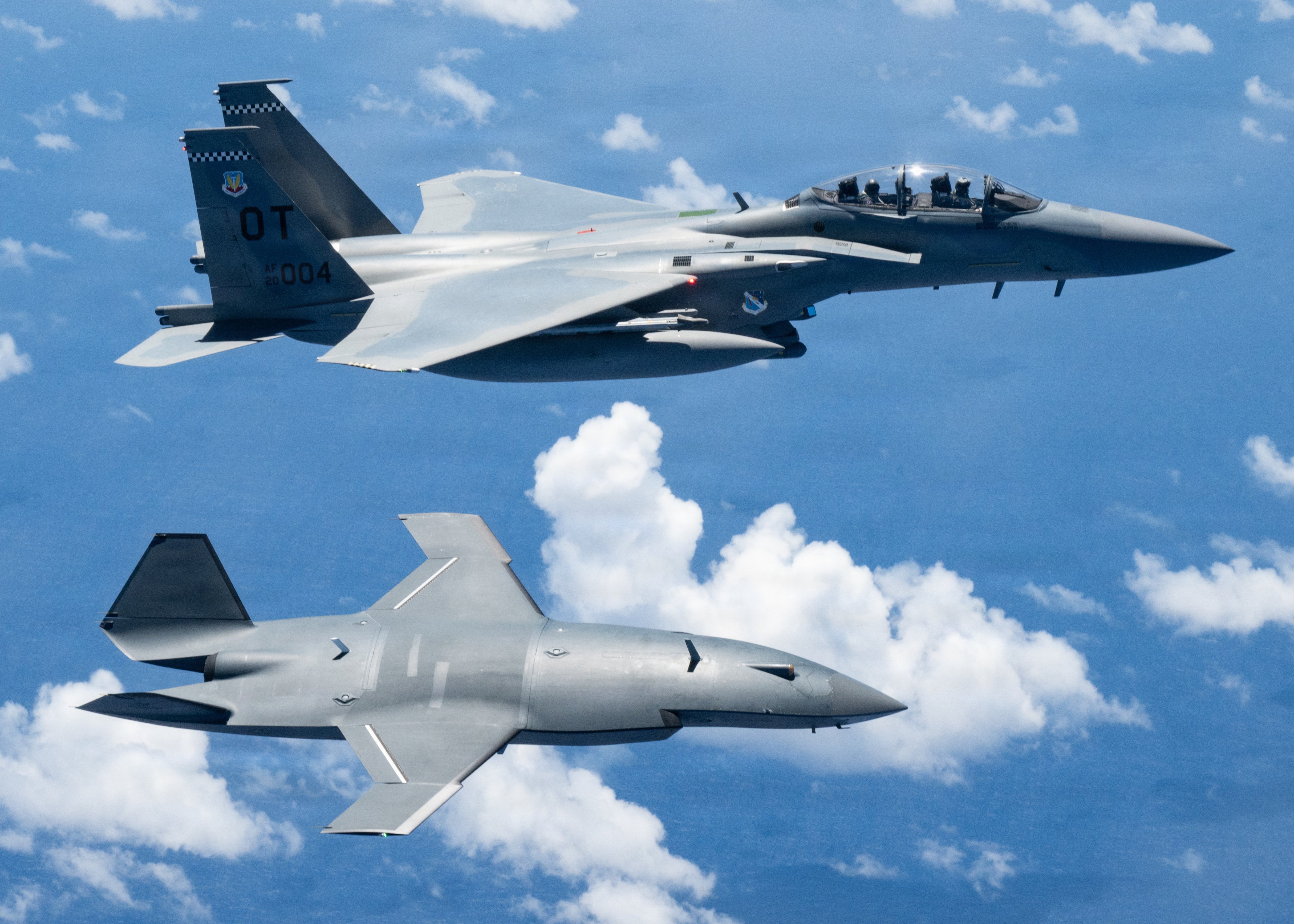
An MQ-28 Ghost Bat and a U.S. Air Force F-15EX participate in Valiant Shield 2026 over the Philippine Sea, June 27, 2026. U.S. Air Force photo by Tech Sgt. Thomas Barley Tech. Sgt. Thomas Barley
For the Air Force, the question has not simply been whether the F-16 remains militarily useful, but also whether the aircraft provides a possible answer to a capacity shortfall, while also dealing with delays in F-35 deliveries, and the retirement of the A-10, blowing another hole in the inventory. Meanwhile, some older F-16s that had been expected to leave the fleet are instead receiving upgrades, including a new radar and electronic warfare suite, to keep them flying longer.
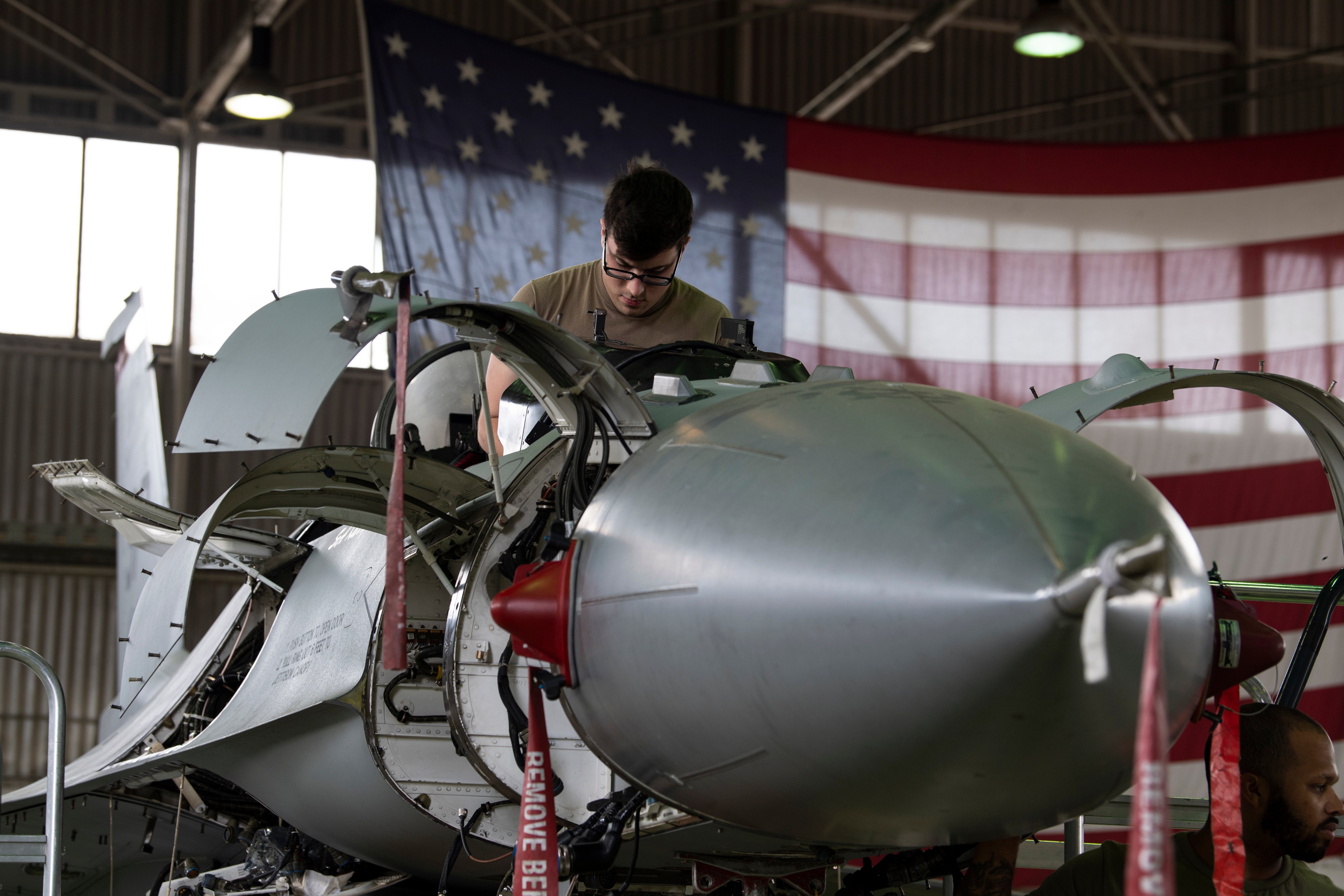
A U.S. Air Force airman works to install a new active electronically scanned array (AESA) radar system onto a 480th Fighter Squadron F-16C at Spangdahlem Air Base, Germany, May 23, 2022. U.S. Air Force photo by Tech. Sgt. Maeson L. Elleman 2nd Lt. Maeson Elleman
That creates a difficult transition period. The Air Force wants to retire aging fighters, but it also needs to keep enough aircraft available while their replacements arrive. The F-16 keeps reappearing because it offers a way of addressing at least part of that problem with a very well known commodity and without requiring every legacy fighter to be replaced by an F-35 or F-15EX.
The Production Line Matters
There is another reason the F-16 procurement idea refuses to disappear: Lockheed Martin already has an F-16 production line operating in the United States.
The Greenville, South Carolina, facility was established to produce Block 70/72 aircraft for foreign customers and is now the world’s only F-16 production facility. The Air Force helped establish the line as part of its broader effort to sustain the F-16 industrial base through foreign military sales. The line moved there after the massive Lockheed Martin plant at Fort Worth, Texas — where the F-16 had been built for decades — transitioned fully over to F-35 production.
So, buying new F-16s would not require reviving a dormant production line or spinning up an entirely new aircraft program. The basic manufacturing infrastructure already exists, and the additional work required for a U.S.-specific aircraft may end up being minimal — potentially amounting to little more than taking an existing Block 70 and tweaking it, rather than a large-scale new engineering, testing, and weapons-integration effort.
A two-seat F-16D Block 70 on the production line in Greenville. Lockheed Martin
The Air Force has been aware of that possibility for years. In 2021, then-Air Force Assistant Secretary for Acquisition Will Roper argued that the service should consider the new F-16 production line as part of its capacity solution. Roper specifically pointed to the upgraded capabilities available from the South Carolina production line.
However, Greenville is not an empty production line waiting for a U.S. customer. Lockheed Martin’s F-16 facility already has a substantial Block 70/72 backlog for foreign operators, with the company reporting more than 100 aircraft in the queue and continued potential for additional international orders. It’s also unclear how much the facility could realistically be expanded, since it was designed around a relatively more modest foreign military sales production volume rather than the kind of surge a large U.S. order could require. Still, the USAF could step in and buy up open slots, which would also ensure the line stays open for the foreseeable future, which has major strategic and industrial protection benefits.
That brings us back to Gen. Allvin’s question in May 2025 about where a U.S. aircraft could fit on the production line. Even if the Air Force decided to buy the jets, it would have to compete for production capacity with an established international order book while developing whatever U.S.-specific configuration, testing, and integration work it requires.
This Is Not Your Dad’s F-16
The proposed F-16G is also significant because it is not simply another upgraded F-16C/D like the USAF already has.
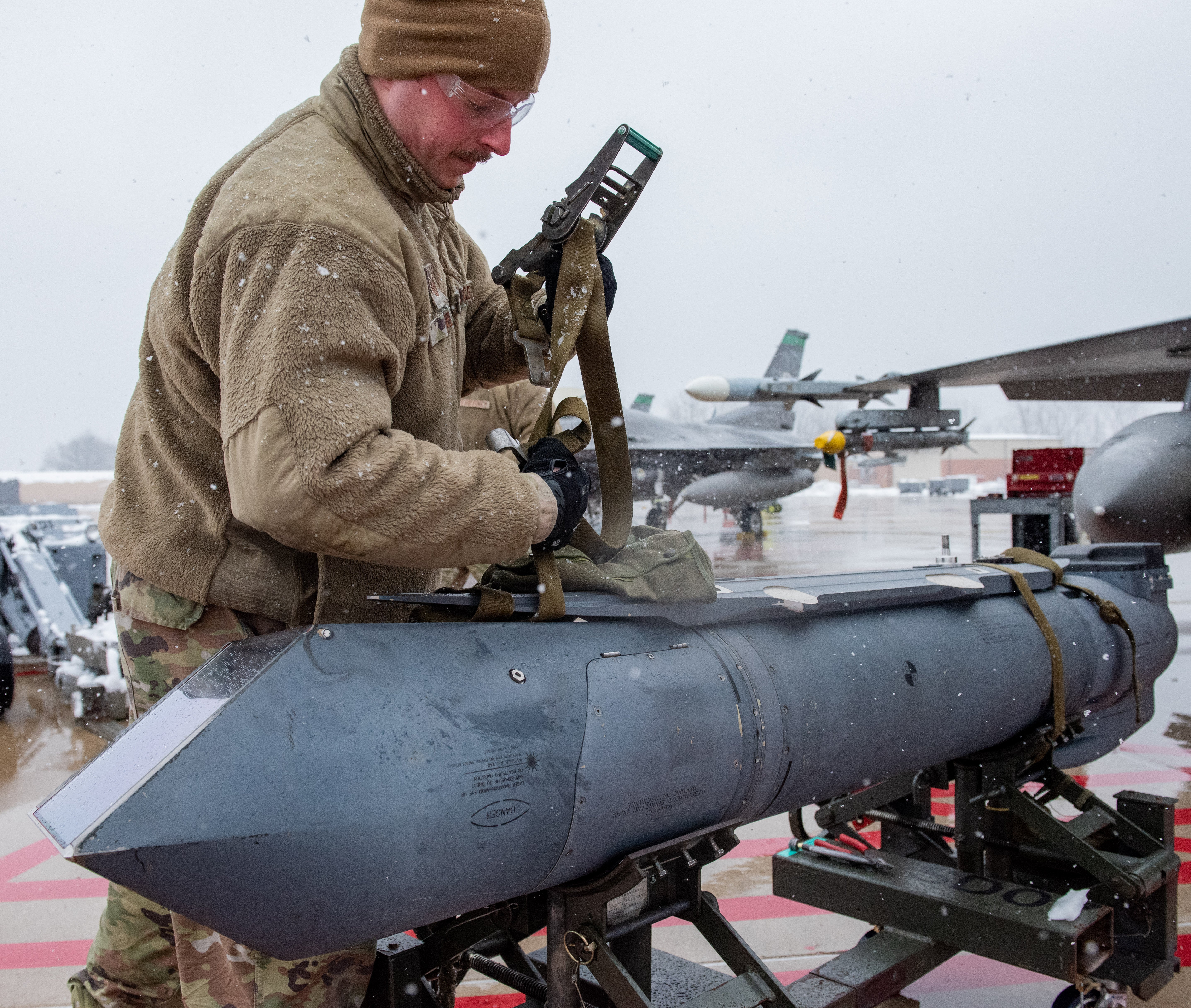
Lockheed’s proposed configuration reportedly would add conformal fuel tanks and 600-gallon wing tanks, along with an IRST, and the latest Sniper targeting pod, as well as a drag chute. All of these systems are already fielded and available today rather than requiring new development.
Those additions point toward an aircraft intended to provide even more basing flexibility, range, persistence, weapons and sensing capability than the current F-16, which had already grown into a medium-weight fighter years ago. That is relevant to how such an aircraft might actually fit into the future Air Force.
A U.S. Air Force avionics specialist prepares to install a Sniper Advanced Targeting Pod onto an F-16. U.S. Air National Guard photo by Airman 1st Class Sarah Stalder Lundgren Staff Sgt. Sarah Stalder Lundgren
A contemporary F-16 is already a very different proposition from the aircraft that entered U.S. service decades ago. Modern AESA radars, electronic warfare systems, digital architecture, datalinks, advanced cockpit interfaces and weapons have substantially expanded its capabilities. The proposed F-16G would push that evolution further, but, like the F-15EX, it would still occupy a different part of the spectrum from the F-35 and whatever eventually emerges from the F-47 program.
That distinction could be useful in a larger force. An F-35 provides capabilities, particularly its combination of stealth and advanced sensor fusion, that an F-16 can never reproduce. But the Air Force does not conduct every mission in the most heavily defended portion of an adversary’s airspace. Homeland defense, training, defensive counter-air, a range of strike missions, and operations in permissive or partially contested environments don’t necessarily require the same characteristics as a penetration mission against an integrated air defense network. In a major conflict, no fighter will fight alone, either. Far from it. Operation Midnight Hammer, the B-2 strikes against Iran’s nuclear program, provides a salient example here, with F-16s flying deep into the country along with F-22s and F-35s, to clear the way for the B-2 strike force. By now, the Air Force is well-versed in leveraging the total-force fourth-and-fifth-generation mix, and it has discovered that they complement each other in unique ways that can be an advantage, not just compensation for lack of capability.
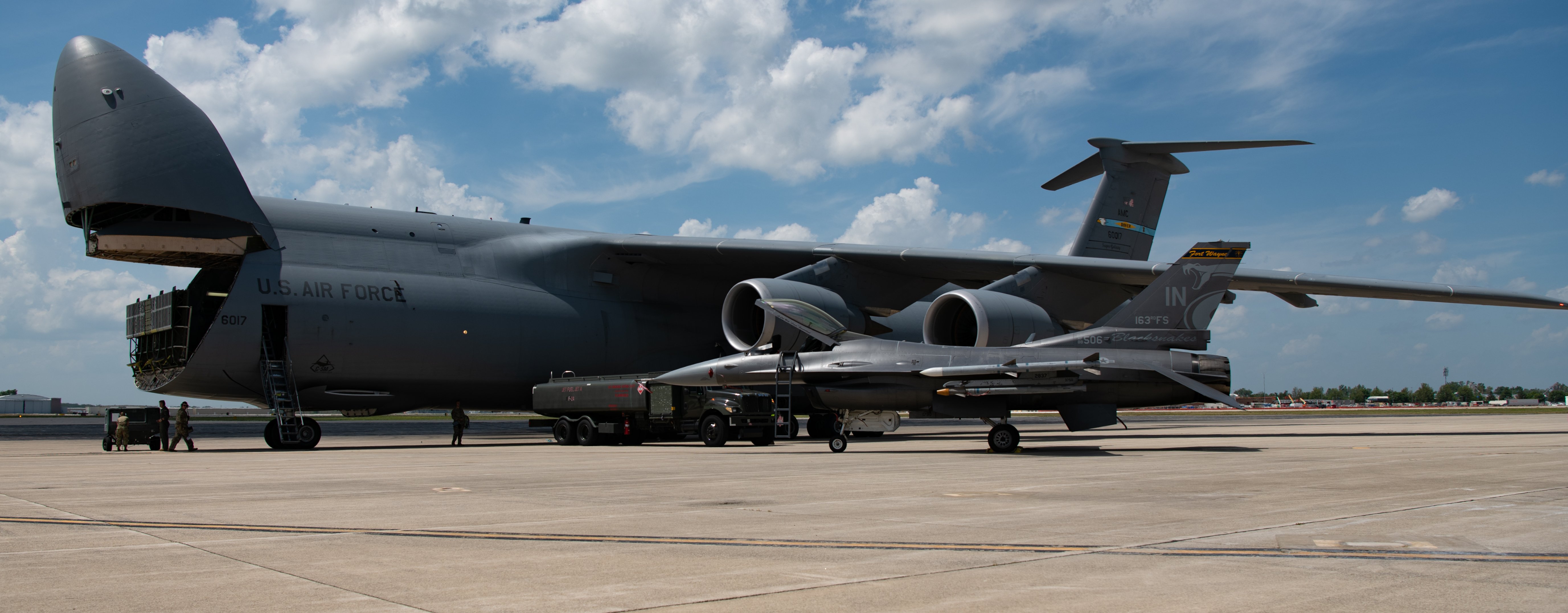
As far as the drag chute, that is a highly relevant addition to the USAF’s F-16 capability set. The chute would allow for the F-16 to better execute Agile Combat Employment (ACE), which includes operating from austere airfields within the enemy’s weapons engagement zone. The F-16 can get off the runway pretty quick, but landing is a different story. The chute can help greatly in this regard.
A U.S. Air Force C-5M Super Galaxy aircraft assigned to the 9th Airlift Squadron, Dover Air Force Base, left, sits beside an R-11 fuel truck and an F-16C Fighting Falcon aircraft assigned to the 122nd Fighter Wing on the flight line at the 122nd Fighter Wing, Fort Wayne, Indiana, July 24, 2025. The C-5 participated in an agile combat employment exercise that included wet wing defueling to the fuel truck which then provided fuel to the F-16. (U.S. Air National Guard photo by Tech. Sgt. David Sherman) Tech. Sgt. David Sherman
There is no question that an F-16 is not a replacement for an F-35. But it could help the Air Force better allocate its limited inventory of increasingly expensive fifth-generation and future sixth-generation aircraft while also maintaining a much larger overall fighter fleet.
CCA Changes the Calculus for Fourth-Gen Jets
One factor that is easy to overlook is Collaborative Combat Aircraft. CCAs are not just a complement to fifth- and sixth-generation fighters, they can also breathe new relevance into fourth-generation types like the F-16. Pairing stealthy, and even optionally expendable CCAs with a fighter like the F-16G could substantially boost its survivability and lethality by pushing sensing, shooting, and some of the risk forward onto uncrewed platforms, extending the F-16’s combat relevance even into higher-end scenarios where it would otherwise be at a disadvantage. In that sense, CCA may end up being arguably as relevant to fourth-generation aircraft as it is to fifth-generation ones.
In other words, CCAs are a positive factor in the F-16G’s business case.
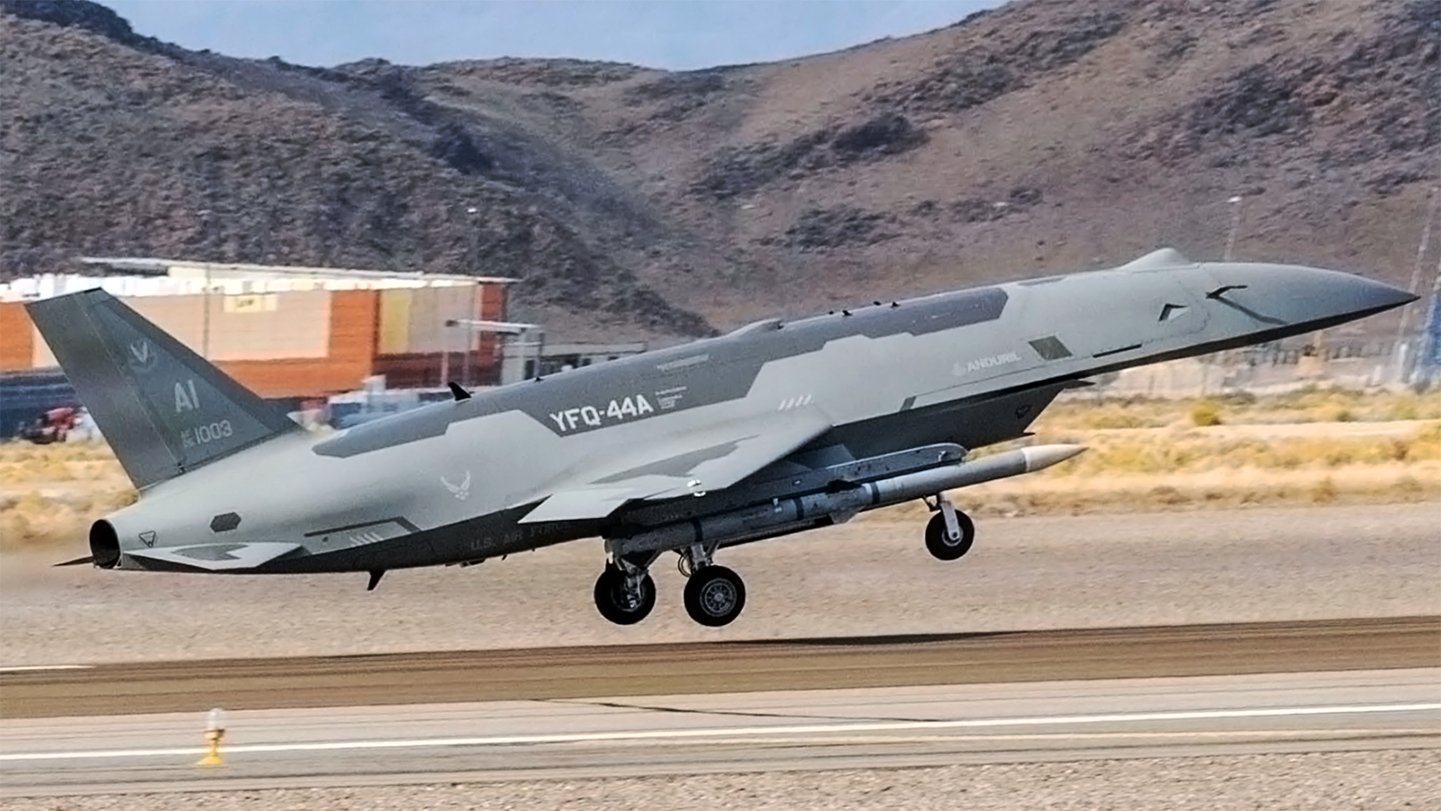
A U.S. Air Force YFQ-44A Fury aircraft, assigned to the Collaborative Combat Aircraft Experimental Operation Unit, takes off for a mission flight during an Agile Combat Employment exercise at Creech Air Force Base, Nevada, July 21, 2026. The flight was part of a broader ACE exercise designed to test the resilience, adaptability, and combat effectiveness of the semi-autonomous fleet. (U.S. Air Force photo by Staff Sgt. Kristal Munguia) Staff Sgt. Kristal Munguia
While the F-22 and F-35 are slated to get CCAs first, the F-16G can be built ready to interoperate with them, which could be a massive force multiplier to what would be the most affordable crewed tactical asset in the inventory. CCAs can eventually be used to also help augment F-16Gs operating in a homeland defense mission and other more mundane roles as well.
The Guard Argument
New Block 70s could make particular sense for the Air National Guard.
The Guard continues to operate F-16s in large numbers, meaning that its personnel, facilities, simulators, and maintenance infrastructure are already built around the aircraft. A new-build F-16 could therefore replace an aging F-16 without requiring the same organizational transition associated with converting a unit to an entirely different fighter, and especially a highly complex fifth-generation type with all its unique support requirements.
That has financial implications beyond the aircraft itself. Replacing an existing F-16 squadron with Block 70s would reduce construction costs and training requirements because much of the existing infrastructure and expertise could be retained.
From left, two U.S. Air Force F-16Cs assigned to the 177th Fighter Wing, New Jersey Air National Guard, and two F-35As assigned to the 158th Fighter Wing, Vermont Air National Guard, follow a KC-135 Stratotanker off the coast of Atlantic City, New Jersey. U.S. Air National Guard courtesy photo by Tech. Sgt. James Norman Andrew J. Moseley
The Air Force would still have to pay for the aircraft and sustainment, but it would not be starting from scratch in terms of operating infrastructure, while the modernized fourth-generation capabilities of an F-16G would still mark a step forward for the Guard over its older F-16s.
It’s worth noting there has also been discussion of replacing more aging F-16s with additional F-15EXs instead. That path, however, is more expensive on both the acquisition and operating-cost side, and it would still require units to convert to a different airframe rather than simply recapitalizing in place.
Viper Refreshed
A new F-16 offers a fresh and highly mature airframe — one with a full service-life ahead of it, on the order of 12,000 flight hours without the need for structural upgrades — double that of the original F-16. This is compared to existing F-16s in the inventory with the decades of wear and fatigue already accumulated on them, with structural upgrades keeping them in the air. That difference in remaining structural life is arguably the single biggest advantage a new-build aircraft has compared with extending an existing one.
U.S. Air Force aircraft armament systems specialists assigned to the Ohio National Guard’s 180th Fighter Wing load 20mm ammunition into an F-16’s M61A1 Vulcan cannon. U.S. Air National Guard photo by Master Sgt. Kregg York Master Sgt. Kregg York
Dumping more money into existing F-16s is becoming questionable. Service life extensions and technical upgrades can only go so far and supporting these jets is becoming harder as parts dry up and suppliers who made them are long gone. A new airframe would give the Guard many decades of highly efficient service and the piece of mind for future force planning that goes with it.
Also, just like F-15EX, the development of the Block 70 F-16 has already been paid for largely by foreign customers over many years. It is as off-the-shelf of a solution as it gets and that is a very attractive proposition to an air arm trying to balance its books.
Above all, F-16 sustainment and operating costs run far below the F-35’s — a gap that already holds true even with older F-16s, and one that would widen further with new-build jets.
The Argument Against Simply Buying More F-35s
One seemingly obvious alternative would be to accelerate F-35A procurement. But the F-35 is not simply another fighter that can be substituted one-for-one whenever an F-16 reaches the end of its service life. That would also be difficult to do in practice. F-35A production is effectively capped and there are dense order books, and the well-documented troubles with the Block 4 upgrade are a huge factor pushing the Air Force to look at alternatives like the F-16G in the first place.
The Air Force’s current force-structure plans call for significantly more fighters overall, while the service is simultaneously pursuing F-35As, F-15EXs, and the F-47.
A U.S. Air Force F-15EX Eagle II. U.S. Air Force U.S. Air Force photo by Tech Sgt. Jacob Stephens
Among the reasons why a modernized F-16 might be considered alongside those programs are concerns not only about the cost of those aircraft, but also about the timing of F-35 deliveries, something that has been disrupted by well-publicized problems with Joint Strike Fighter upgrades. At the same time, keeping older F-16s active through upgrades is an increasingly unattractive way of managing the shortfall.
The issue is therefore less about choosing the F-16 instead of the F-35 than about deciding whether the Air Force should use both aircraft for different portions of the force structure.
The service is already doing something along these lines with the F-15EX. It has accepted that a modernized fourth-generation aircraft can have a role alongside the F-35 and the F-22, rather than requiring every new fighter to be stealthy.
A new F-16 would extend that logic to a lower-cost segment of the fleet, potentially allowing the Air Force to use F-35s where their particular capabilities are most valuable while maintaining additional capacity with a less expensive aircraft.
What Could Happen Next?
Even if Air Force leaders conclude that the F-16G makes operational sense, Congress would still have to decide whether it is worth funding.
The December 2025 reporting identified the central problem: lawmakers would want the service to demonstrate that buying new aircraft is preferable to continuing to upgrade the F-16s it already owns. They would also have to weigh the proposal against the F-35 and CCA programs.
If an existing F-16 can be kept operational with a relatively inexpensive upgrade, a new aircraft has to justify its acquisition cost and the additional long-term sustainment burden. But if maintaining an increasingly old F-16 fleet doesn’t save large sums of money over the long haul, the new Block 70 variant begins to look more compelling.
A U.S. Air Force F-16 takes off at a base in the U.S. Central Command area of responsibility on August 10, 2026. U.S. Air Force photo by Staff Sgt. Justin W. Moore Senior Airman Justin Moore
There remains a substantial gap between Lockheed Martin pitching the F-16G and the Air Force actually buying it. The service told TWZ that it is “in the initial phases of analyzing options for the next Future Years Defense Program.” The Air Force spokesperson added: “At this stage, we have neither defined the precise mission requirements nor the spectrum of options that could fill it.”
That is consistent with the status described by Inside Defense nine months earlier. At the time, the Air Force had no plans to procure Block 70s, and the discussions with Lockheed were described as exploratory. Even if senior officials ultimately favored the aircraft, Inside Defense reported that the program could not appear in the Future Years Defense Program until at least fiscal 2028 because the FY2027 budget process was already too far along.
The F-16G therefore remains a proposal rather than a program. But the persistence of the idea is itself significant. It should be noted that the F-15EX buy emerged out of very similar machinations, with the benefits proving to be undeniable.
The new proposal would let some Guard and Reserve units swap their F-16s for vastly improved F-16s — the same logic that drove the F-15EX buy — while also keeping the Greenville line hot, which is a significant benefit in its own right. And it accomplishes both in the most efficient way possible: not just in acquisition cost, but in sustainment cost, which is really the more problematic burden of the two. In the end, this points to another glaring reality check for the all-stealth-force concept, a vision the Air Force has effectively already abandoned.
The Air Force has spent years describing the F-35 as the replacement for its F-16 fleet, yet it now has to contend with aging F-16s, delayed or constrained fighter production, a larger stated requirement for total fighter capacity, and the lengthy transition toward the F-47 and uncrewed combat aircraft. In that environment, a new-build F-16 provides an option that sits between extending legacy aircraft and buying the most sophisticated — and expensive — fighters available.
Regardless, there are so many priorities facing the force right now, buying new F-16s will be a challenge at every turn, but that doesn’t mean it won’t become too compelling of a proposition to accept. Still, many will argue that every dollar should be invested in higher-end fighter and uncrewed platforms that are more survivable against America’s primary pacing threat, China. That country is rapidly evolving its own air arm with stealth fighters and advanced uncrewed aircraft. Stepping back to the F-16 while facing down such a threat can appear to be counterproductive when taken at face value. At the same time, the F-16 is already slated to stay in the inventory by the hundreds for decades to come, which does take some of the bite out of that argument.
In the end, it is remarkable that the F-16 was supposed to have left the U.S. fighter equation years ago. Instead, every time the Air Force looks closely at the gap between the fighter force it has and the force it says it needs, the aircraft somehow finds a way back into the conversation.
The Pentagon has reached an agreement with Lockheed Martin to lay the groundwork for stepped-up production and delivery of new AIM-260 Joint Advanced Tactical Missiles (JATM) to the U.S. military and allied air arms in the coming years. The AIM-260 is still in development, but the head of the Air Force Test Center also touted efforts to further accelerate that work just earlier this week. From the start, the U.S. military has presented JATM as especially critical for ensuring China, with its own growing array of longer-range air-to-air missiles, does not gain an edge in future air combat.
The new framework agreement announced today “is critical to ensuring long-term demand signals flow to key suppliers, allowing Lockheed Martin and the munitions supply chain to invest in manufacturing capacity, workforce, and production efficiencies,” according to a Pentagon press release. “It establishes a framework for future Multi-Year Procurement (MYP) of JATM, executing congressional authority to secure the nation’s highest-priority missile systems.”
“This agreement forms the foundational agreement for a multiyear procurement contract, pending Congressional approval, that provides long-term demand to strengthen and expand the defense industrial base for the program,” according to a separate release from Lockheed Martin.
A US Navy F/A-18F Super Hornet seen carrying an AIM-260 Joint Advanced Tactical Missile (JATM). Jonathan Tweedy/ @flightline_visuals
In response to questions from TWZ, the Pentagon declined to comment on the projected number of JATMs covered under this agreement, as well as estimated costs and delivery schedules.
A rendering depicting an F-22 Raptor firing an AIM-260 JATM. USAF
The releases today from the Pentagon and Lockheed Martin confirm that the new framework deal also includes planned foreign military sales of AIM-260s. Australia, one of America’s top allies, is the first confirmed international customer for the JATM, and plans to integrate the missiles on its F/A-18Fs, F-35As, and EA-18G Growler electronic warfare jets. The Royal Australian Air Force’s MQ-28 Ghost Bat CCA-type drones, initial versions of which are already capable of firing AIM-120s, might be another AIM-260 launch platform in the future.
The AIM-260 remains in development, with the Navy and Air Force test communities supporting that work.
“We are accelerating weapons development from high-end air dominance weapons like the JATM to hypersonic strike systems like the Hypersonic Attack Cruise Missile,” Air Force Brig. Gen. Mark Massaro, head of the Air Force Test Center (AFTC) at Edwards Air Force Base in California, told TWZ and other outlets at a media roundtable yesterday. The roundtable took place at the Air & Space Forces Association’s (AFA) 2026 Air, Space & Cyber Conference.
“We’re actively testing JATM, and it’s progressing along its program path. In test, we are working through the development stages there,” Massaro added. “So, we’re testing it in [sic] the ground with models, like I mentioned. We’re testing it in the air on aircraft. So, from a performance standpoint, I’ll hold on to that from an operational security perspective. But we’re happy seeing where it’s going, and we expect that to be a key piece of capability for our warfighters to have.”
“Just from a testing perspective, we’re always looking at making sure that we’ve got the throughput,” he added when asked if he could talk about challenges or other issues AFTC has run up against in work on the AIM-260. “So, from a test perspective only, infrastructure and throughput to make sure that we can get things out … and make the testing happen. But I’m not, from a capabilities perspective, worried about the system.”
Another look at the AIM-260 loaded on the Navy Super Hornet. Jonathan Tweedy/ @flightline_visuals
It is unclear when the first operational AIM-260s may begin entering the U.S. inventory. When the program was first disclosed to the public in 2019, the stated goal was to start fielding the missiles in 2022. There were also reports in late 2025 that funding issues had caused a three-month delay, based on a fact sheet distributed to some members of the U.S. House Committee on Armed Services. The committee later said that the information was incorrect.
Work to date on JATM has been conducted under a heavy veil of secrecy, with the existence of the program only being announced in 2019. The first public glimpse of the missile only emerged in May of this year. Beyond the aforementioned size requirement and that the new missile will offer significantly greater engagement range over the AIM-120, details remain limited. Readers can learn more about what we do know so far here.
The AIM-260 is not the only longer-ranged air-to-air missile known to be in development in the United States, either. In 2024, the Navy revealed it had begun fielding an air-launched version of the surface-launched Standard Missile-6 (SM-6), called the AIM-174B Gunslinger, at least on a limited level. Just in August of this year, the service disclosed the existence of another very long-range air-to-air missile, the AIM-424 Malice, which has already reached the flight testing phase of development.
A US Navy F/A-18F Super Hornet test jet with four AIM-174B missiles under its wings. point_mugu_skiesA US Navy Super Hornet test jet carrying a load of AIM-424 Malice missiles. USN
An Air Force spokesperson told Air & Space Forces Magazine last month that the service was “closely following” the Navy’s work on the AIM-424. In June, the Air Force itself shared details about another potential future air-to-air missile, dubbed the Air Force Long Range Weapon (AFLRW), including a target requirement for a maximum range of at least 1,000 nautical miles.
Based on past experiences with public disclosures about the AIM-260, AIM-174B, and AIM-424 programs, additional work on advanced longer-range air-to-air missiles is certainly ongoing in the classified realm.
Today’s announcement about the new framework agreement, together with Brig. Gen. Massaro’s brief update yesterday, makes clear there is a continued commitment to JATM amid a still-growing field of new, longer-range air-to-air missiles.
The head of Air Mobility Command (AMC) on Wednesday offered some new details about what went into repairing a KC-135 Stratotanker riddled with shrapnel holes from an Iranian attack. We have previously written about a couple of these jets damaged during Operation Epic Fury (OEF) as they came through RAF Mildenhall in the U.K. on their way back to the U.S. for comprehensive repair work. We are also getting new information of how AMC kept its fleet operating at such a prolonged high-tempo ahead of and during OEF.
A U.S. Air Force maintainer performs preflight maintenance on a KC-135 Stratotanker refueling aircraft at a base in the Middle East, April 30, 2026. (U.S. Air Force photo by Master Sgt. James Cason) Master Sgt. James Cason
“A KC-135 ops crew is in the jet,” he said. “KC-135 maintenance team is about to launch this jet. Unexpected Alarm Red [an attack warning]. Everyone jumps in a bunker.”
After the barrage, the airmen emerged from their bunkers and checked out the plane.
“That aircraft is smoking,” Tulley said. “There are holes in it, and it’s a fully loaded KC-135. Two hundred thousand pounds of jet fuel. Took 48 hours for that [fuel] to be drained out of that aircraft. In the meantime, first on the scene was I think the pro super [production superintendent] and the expediter. They immediately began to collect the fuel… They start to patch the holes. They start to fix all the systems. Long story short, they were eventually able to get that plane to make a transoceanic flight back home to be fully repaired.”
Tulley did not say where the attack took place. However, as we have previously reported, five tankers were reportedly damaged in an Iranian long-range strike on Prince Sultan Air Base (PSAB) in Saudi Arabia on March 14. That was later confirmed in a Department of War Inspector General report released earlier this week.
You can see two of the shrapnel-damaged KC-135s as they passed through the UK on the way home in the following photographs shared with us by aviation photographer Andrew McKelvey. We do not know if either of these is the one discussed by Tulley.
(Andrew McKelvey) (Andrew McKelvey)
Lt. Gen. Linda Hurry, Commander of Air Force Materiel Command (AFMC), followed Tulley’s comments with additional details about the repair work.
“I’ll pick right up on that because it was our aircraft battle damage repair team that was actually able to patch their aircraft back together to get it back to Tinker [Air Force Base in Oklahoma] that can put it completely back where it needed to be,” she noted. Tinker is home to the Expeditionary Depot Maintenance (EDMX), which is “responsible for maintaining the Air Force’s sole source for Aircraft Battle Damage Repair (ABDR) rapid repair capabilities for the entire tanker and bomber fleets,” according to the Air Force.
“So with Operation Epic Fury, we’re asking those questions: What can we sustain for how long? And it begs a question about regeneration,” Tulley further explained. “You know, our new teammates have regeneration as part of their doctrine, so readiness in contact is the way we’re approaching this. What can we do to improve how we generate capability while under fire, in contact, persistently in an extended or protracted conflict? Lots of great examples of work being done to get after this. General Hurry’s team has brought a lot of capability forward at Mildenhall Air Base.”
One example of how this has worked has been repairing damaged aerial refueling booms in the U.K. instead of all the way back to the U.S., Tulley highlighted. The booms, which extend from the back of tankers so that receiving aircraft can get their gas, can be damaged by the process, especially during combat refueling.
“I think we turned 30 booms instead of bringing them all the way back to the states,” Tulley noted.
A KC-135 refueling boom. (USAF)
Repairing battle damage is certainly a unique situation for AMC airman, but keeping hundreds of the command’s tankers and cargo aircraft moving at such a high rate prior to and during the war was a huge undertaking that was helped by new maintenance concepts. The Air Force sent maintainers and parts to bases in Europe to drastically speed up major maintenance that would have demanded the aircraft return stateside.
“We moved some maintenance actions forward, so they didn’t have to – the aircraft didn’t have to go all the way back to the states,” Air Force Chief of Staff Gen. Kenneth S. Wilsbach said during his keynote speech earlier this week. “We put some of them in Europe, so they could get through some normal safety inspections that were either due or deferred. Got those done, and the aircraft doesn’t have to go all the way back to the states. They can go somewhere in Europe, get the thing done, and then get right back to the flight. And so, those measures by Air Mobility Command paid dividends in the readiness of our mobility fleet.”
Air Force Global Strike Command (AFGSC), which maintains the service’s fleet of strategic bombers and its ICBM force, did something similar at RAF Fairford in the U.K., AFGSC commander Gen. Stephen L. Davis explained.
“It’s a complex problem,” said Davis. “I would say in the past we probably didn’t do this the right way. When we thought a conflict was kicking off, the first thing we do is start sending bombers forward, and that actually consumes our readiness. So I think we got it right during OEF.”
“We pushed maintainers and support personnel forward to RAF Fairford, and then we actually took the bombers, we loaded them up in CONUS [Continental United States]. We took them to the Middle East. They actually did a mission. They employed, deployed, conducted a combat mission, and then landed at Fairford. And then for the next, well, I guess they’ve been there for now six-plus months.”
“They’ve been conducting nearly daily operations out of there,” Davis proffered. “When bombers are back at home base, they build readiness. When we deploy it forward, they consume readiness. And then, as [Gen. Hurry] said, we’re getting great support in terms of parts, in terms of supplies, and in terms of forward depot support. So that fleet remains healthy.”
A U.S. Air Force B-1B Lancer at RAF Fairford, England, July 15, 2025. (U.S. Air Force photo by Tech. Sgt. Robert M. Trujillo) Tech. Sgt. Robert Trujillo
Being able to do as much repair and maintenance work as close to the front lines as possible will be hugely important in any future fight against China, and, unfortunately, repairing battle damaged aircraft will be necessary too. Clearly, the Air Force has learned some very important lessons from Epic Fury.
A new drone collaboration by Cessna owner Textron and autonomy provider Merlin Labs aims to offer the U.S. military a hot production line and a familiar platform for uncrewed aerial logistics, including in contested environments.
The product is SkyCourier UX, a drone version of the Cessna 408 SkyCourier that has flown for FedEx, foreign special operations forces and small remote commercial airlines during its six years of active service. TWZ previously covered how the SkyCourier would likely end up taking on military applications when it was first announced, which you can read here.
A partial full-size model on the show floor at the Air & Space Forces Association’s Air, Space & Cyber Conference in Washington, D.C., this week showed a nose that opened with hydraulics to a cargo bay in lieu of a cockpit. We have seen this same front door conversion concept for uncrewed cargo-carrying helicopters as of late. This allows for easy loading of outsized cargoes without specialized equipment, according to the company, though it does not increase the payload. Like the original SkyCourier, it’s good for about 6,000 pounds, or three standard containers.
(Hope Hodge Seck)
The form factor of the uncrewed SkyCourier variant is otherwise identical to its crewed counterpart, with twin turboprops, a high-wing configuration and an aluminum body.
As with the base SkyCourier, a major advantage of the aircraft is its optimization for loading and carrying standard pallets. This means that cargoes don’t necessarily have to be downloaded, broken up and repackaged for movement to forward positions. This is a big logistical advantage and can speed the flow of critical supplies to where they are needed most.
The aircraft’s range is about 900 nautical miles, which the makers say suits it well for Pacific island-hopping, allowing for refueling stops on austere runways. It can take off on runways as short as 3,300 feet and land in just 2,500 feet, according to a spec sheet.
SkyCourier can hold three standard LD3 pallets. (Textron)
The Textron/Merlin collaboration aims to differentiate itself with proven capability in the missions it intends to fulfill, along with the ability to roll out a new drone variant fast and one it can sustain consistently. Bob Gibbs, Textron’s vice president of special missions sales, told reporters in a Monday briefing that the conventional SkyCourier was now fulfilling new orders, not previously announced, to deliver modified aircraft to foreign nations for medical evacuation, casualty evacuation and environmental protection.
“The aircraft’s being operated literally from the Arctic to the Amazon,” Gibbs said. “There are three different island nations in the Pacific that have airline fleets of them. We support our aircraft in 170 countries around the world. So, just like a Cessna Caravan or a Beechcraft King Air, they’re ubiquitous. You find them anywhere, and we support them anywhere in the world.”
While the 900-mile range can’t take the loaded-up aircraft the nearly 2,000-mile stretch between the first and second island chains, Merlin and Textron executives said they don’t need to accomplish that to make it effective.
“This is the ability to disperse the forces among the second island chain … to do the island-hopping to be able to get to, whether it’s Palau, Tinian, Saipan, pick your various islands there,” Kyle Kremer, a retired Air Force major general who now advises Merlin, said. “With the range that it has, it has the ability to agilely move through there” and connect logistics pipelines.
SkyCouriers are flying all over the world, including in some very harsh environments. (Textron)
The autonomy package, Merlin Pilot, is already in use under a $105 million U.S. Special Operations Command contract to develop autonomy for the C-130J Super Hercules transport aircraft. It’s been flown aboard four different single and multi-engine airframes, the company says. A promotional web page for Merlin Pilot shows tanker-class and commercial cargo applications with developing and future capabilities.
Merlin has also teamed with the Air Force to develop an AI copilot for KC-135 tankers that can decrease crew workload and even possibly fly the aircraft on its own in the future. TWZ reported on planned tests for these autonomy-enabled tankers in 2024, with the flights set to begin the following year.
However, the Air Force has not confirmed the completion of any flight tests for the effort since. And on Wednesday, Lt. Gen. Daniel Tulley, commander of Air Force Mobility Command, appeared to confirm that the tests had never taken place.
“There’s some companies out there who have offered to develop things where they can bring a carry-on kit onto old KC-135s and other aircraft, but we haven’t seen them test those successfully,” he said.
He added that autonomy technology may lack the maturity needed for tanker missions.
“An optionally manned or an unmanned tanker at range, [at] the ranges we needed to operate at. It’s a very large aircraft, and we’re not yet to where we’re employing fully autonomous large aircraft. But the technology, I would say, is there and rapidly getting there,” he said.
Tulley did stress that the Air Force saw a need for unmanned aircraft in the last-tactical-leg delivery.
“I’m wrestling with that as we develop an AMC strategy,” he said. “There is absolutely room for some sort of autonomous or other small light lift capability, and that’s just one domain in the air, right? This could be by sea, could be by land, but there is absolutely some requirement for distribution from those major points of debarkation.”
In addition to autonomous takeoff, landing and navigation, and protection of the flight envelope, Merlin Pilot, the company says, has digital copilot human-machine teaming characteristics that include pilot health monitoring, gaze tracking and fatigue detection; pilot incapacitation and contingency response; and flight monitoring and assistance.
A military variant concept of the SkyCourier. (Textron)
Some of Textron’s new features are making light steps toward autonomy already. Gibbs pointed out that the company’s Cessna Citation Gen3 business jets now include standard Garmin auto-land technology.
“Obviously, it’s a different scale than what Merlin’s doing as far as automation,” he said. “But … as we develop new products, we try to future-proof them, and so that’s where you get this nice transition between us.”
The SkyCourier can cost up to $8.5 million, depending on modifications, and while the SkyCourier UX sports GPS-denied navigation and the ability to seek different flight paths to avoid danger, it doesn’t have other built-in defenses. For contested logistics missions, it’s not clear how much risk the services are willing to tolerate for a relatively small logistics payload capability. Kremer maintained, though, that a drone of this size could be a mission-saving capability when dispatched to austere locations. And, in a Pacific conflict, it may reduce demand on already-stretched C-130 transports, now the smallest platform capable of carrying standard containers and long overtasked.
A U.S. Military C-130 prepares for takeoff at Pohakuloa Training Grounds, Hawaii, Oct 28, 2022. (U.S. Army photo by Pfc. Wyatt Moore / 28th Public Affairs Detachment) Spc. Wyatt Moore
“If you can’t get the spare tire, if you can’t get the component, that small thing where you need it in these dispersed operations, they don’t keep the big logistic supply chain built up in these locations,” Kremer said. “You have to be able to get it where you need it, when you need it, and that’s what this provides.”
Nonetheless, the Air Force has a clear appetite for a capability like this. Last year, it signed a $17.5 million contract to put a Reliable Robotics autonomy package on a Cessna 208B Caravan.
On Monday, Air Force Chief of Staff Gen. Ken Wilsbach reiterated the Air Force’s interest in unmanned aerial logistics platforms.
“We’re doing testing on them,” he said in response to an audience question. “We believe that there’s some value in that as well. It certainly could be valuable in the Pacific with the ranges that we’re talking about, and so we’re looking at several different options and evaluating them. But I would say nothing, no program of records just yet, but [we’re] certainly taking a look at some demonstrators and the like to see what’s available to us.”
Notably, China has made significant advancements in developing logistic drone capabilities, with reported successful flight tests of massive heavy-lift uncrewed aircraft, including a 7-ton cargo plane that’s currently the world’s largest uncrewed freighter to take flight. Among them is China’s CH-YH1000, a medium-altitude cargo drone developed by the China Academy of Aerospace Aerodynamics that boasts, like SkyCourier UX, a hatch in lieu of a cockpit for ease of flat-pallet loading up to a weight of 1.2 tons. These are just some of an increasing number of similar systems being developed in China that aim to take the crew out of lower-end logistical missions over short, medium and long distances.
China’s big CY-8 uncrewed logistics aircraft undergoing testing. (Chinese Internet)
Though Textron and Merlin have yet to build a SkyCourier UX prototype, Merlin CEO Matt George emphasized that the company had chosen to partner with Textron because they could start delivering aircraft fast.
“You’ll see over the course of the show a lot of concept aircraft. You’ll see a lot of renders. You’ll see a lot of people who have big empty factories all around the country,” he said. “But I also want to be very clear about the fact that none of this matters without production … There’s 14,000 Americans working in Wichita, Kansas, on a production line where these aircraft, at least in the crewed configuration, are coming off the production line. So when we talk about capability, we’re talking about that capability and bringing that capability to bear soon, rather than in the future.”
Next in the development process, executives say, will be an optionally piloted version of SkyCourier that will allow users to develop comfort with the platform and open the door to further iteration.
The Textron/Merlin team is also leaving its options open in terms of which U.S. military customer might find its platform most useful.
“I hope [the Army and Air Force] fight over it,” Gibbs said.
The U.S. military’s top officer on Wednesday talked about how AI is changing the character of warfare and offered two examples to illustrate his points. His comments included new insights into how two U.S. Army AH-64 Apache crew members were rescued after being shot down by an Iranian drone near the coast of Oman in June. The recovery effort involved America’s first known use of an uncrewed surface vessel (USV) executing a personnel recovery action as part of a military search and rescue operation.
“Information moves so fast that leader decision times have compressed from weeks down to days down to seconds,” explained Air Force Gen. Dan Caine, chairman of the Joint Chiefs of Staff, during his keynote speech at the Air & Space Forces Air, Space and Cyber Conference that TWZ is attending. “In the future fight, advantage will go to the side who can see first, who can understand first, decide first, and act first, and along the way, be a learning organization, and no factor is accelerating change as fast as artificial intelligence and advancing cyber capabilities.”
“AI is here now, and it’s already changing the way militaries see, sense, decide, and act across the joint force,” the chairman proclaimed.
The first example Caine used to highlight these changes took place on June 8. After the Apache went down, “U.S. CENTCOM launched a rapid, responsive joint search and rescue effort to recover the crew. That response drew on the totality of the joint force, and ultimately was required to use enabled unmanned vessels to participate in the rescue of downed U.S. service members for the first time ever.”
A flight of U.S. Army AH-64 Apache attack helicopters, armed with rockets and Hellfire missiles, taxi out to conduct a scheduled flight in the U.S. Central Command area of responsibility. In addition to rockets and missiles, the Apache is additionally armed with a 30mm chain gun. (U.S. Army photo) U.S. Army Central
As we noted in our previous coverage, CENTCOM deployed “a U.S. Navy Corsair unmanned surface vessel,” the command’s spokesman told us at the time.
The Corsair uncrewed surface vessel (USV) (Saronic)
The ability to pull off that rescue mission “did not appear overnight,” Caine pointed out. “It came from the men and women of Task Force 59, CENTCOM’s forward-leaning unmanned joint maritime unit who spent the last several years testing, integrating, and operationalizing unmanned systems and AI in one of the most demanding and kinetic environments on Earth right now.”
“What helped make this possible was not a bunch of general officers and flag officers,” Caine continued. “What made this possible was a bunch of entrepreneurial sailors and members of the joint force on watch floors, at piers, managing networks of unmanned systems across thousands of miles of water, and using AI to turn massive amounts of data into a crisp, clear, perfect maritime picture that allowed us to go grab those two soldiers in the water.”
A top-down view of the Saronic Corsair USV. (Saronic)
The second example Caine shared about the use of AI “points in the other direction, not how quickly we are using these tools, but how quickly these tools are changing the threat.”
In Ukraine, “we see first-person view drones operating in heavily contested EMI [electromagnetic interference] environments. Some now using AI-enabled computer vision to continue to drive towards targets, even when there’s no GPS or the links are cut. That gives small units affordable precision and shows how quickly software and autonomy are changing what is possible at the tactical edge, and the results are stark.”
“In certain locations on the front line of troops right now, the life expectancy of a new Russian recruit arriving on the front lines is as little as 20 to 30 minutes,” Caine added. “Think about that. This is what happens when low-cost precision is fielded fast, adapted quickly, and scaled across the battlefield.”
“The price of lethal exchange is decreasing day over day,” the chairman noted. “One wonders what the future of close air support looks like, but I am comforted by the fact that each and every one of you are in this room thinking about that. Taken together, these examples from the Straits of Hormuz to the front lines in Ukraine show how quickly technology is changing the character of war, and this means our joint force needs to do two things at one time.”
“[W]e need to prepare the joint force to win in this kind of conflict,” the general stated. “We have to assume from now on that our formations will be hunted by autonomous systems, jammed across the spectrum, and tracked in real time, and we have to transition the joint force to be prepared to fight and win our future war by generating and delivering lethality at scale with an agile, optimized, high-low mix of combat capabilities to give the young members of the 2.8-million member all volunteer joint force the tools that they need before they need them.”
The U.S. Air Force has been taking a new look at the feasibility of restarting production of the C-17 Globemaster III cargo plane as part of its still-evolving next-generation airlift plans. The service also continues to explore a wide range of next-generation aerial refueling concepts, including new stealthy and/or uncrewed tankers, but a firm vision for the way forward there has yet to emerge.
Air Force Lt. Gen. Daniel Tulley, head of Air Mobility Command (AMC), shared new details about future airlift and aerial refueling efforts, with TWZ and other outlets at a roundtable at the Air & Space Forces Association’s (AFA) 2026 Air, Space & Cyber Conference.
On the airlift side, the Air Force’s stated plan to date is to replace both the C-17A and C-5M Galaxy with a single Next-Generation Airlift (NGAL) platform, starting in the mid-2040s. Separately, the service is pursuing what could be a family of future aerial refueling capabilities under what is now called the Advanced Tanker Systems (ATS) program. Very broadly speaking, ATS presents a path toward what might come after the retirement of the aging KC-135 tanker fleet, though those aircraft are still expected to keep flying for years to come. The Air Force is also moving to further expand its fleet of newer KC-46A tankers in the interim, but persistent technical and other issues with that design continue to present hurdles.
A US Air Force C-5, at left, together with one of the sevice’s C-17s, at right. USAFA KC-135, at right, prepares to link with a KC-46, at left, during a test. USAF
At the roundtable today, Lt. Gen. Tulley was asked explicitly about restarting C-17 production. The manufacturer of those aircraft, Boeing, shuttered that line in 2015. The company also just marked the 35th anniversary of the design’s first flight yesterday.
“Heck yeah, but with a caveat, right?” Tulley said in response. “So we were just asking this question over the course of last week, and it’s in the context of next-generation airlift. So we are about to embark on the Analysis of Alternatives to replace the C-17 and replace the C-5. All options are on the table.”
“There’s always the option to service life extend the C-17, but the [production restart] question came up,” he continued. “I’ve heard this my entire career. Once we terminate an assembly line, can we ever bring it back? Does somebody store all the machinery and the dies and whatnot, and can you bring that out? So we’re asking that question.”
“But then whatever that answer is from the vendors, what will be the price tag associated with that?” he added. “You have to ask yourself, okay, is rebuilding a C-17 even if you make improvements – and there’s a loose analogy with the C-130J, [a] much more modern, capable variant of the C-130E [author’s note: the C-130J evolved more directly from the C-130H variant] I first learned to fly – if you do that with the C-17, is that the best move? Or are there new technologies that we can incorporate into it so that it can defend itself, so that it’s connected, it’s networked, it does all the things that maybe the current C-17 doesn’t do?”
“We’re looking into it as part of the Analysis of Alternatives. I’m hopeful that we’ll get to answer that question.”
In June, the House Armed Services Committee also directed the U.S. Air Force to prepare a formal briefing on the matter of new C-17 production in a report accompanying a draft of the annual defense policy bill, or National Defense Authorization Act (NDAA), for Fiscal Year 2027.
The RAND Corporation did conduct a detailed, independent analysis more than a decade ago that assessed the costs and complexities that could come from Boeing building more C-17As, as well as other variants and derivatives of the design. RAND’s conclusion was that any of the courses of action would require billions of dollars of new investment and entail risks, as you can read more about in more detail here.
Foreign participation in a new C-17 production run could help at least defray costs. Australia, Canada, India, Kuwait, Qatar, the United Arab Emirates, and the United Kingdom all currently fly Globemaster IIIs. The Strategic Airlift Capability (SAC) initiative, a multinational arrangement with several European members, as well as the United States, also operates three of these aircraft.
Boeing told TWZ directly in June that unnamed C-17 operators had been reaching out about the prospect of restarting the production line, and that the company was “encouraged” by those discussions.
As Lt. Gen. Tulley stressed, there are significant questions about whether buying new-production C-17s, even with substantial improvements, is not only feasible, but a good use of resources. The Air Force’s Globemaster III fleet today continues to prove itself to be critical to the U.S. military’s ability to project power globally, and is in very high demand right now, especially amid the ongoing conflict with Iran.
The Air Force’s desire to replace both the C-17 and C-5, which are very different aircraft in form and function, could still easily lead the service down a different route. Boeing is not the only one looking at future NGAL opportunities. Another company, Radia, has been very actively pitching a clean-sheet design that is physically bigger than either the C-17 and the C-5, and that is geared toward greater operational flexibility, at the Air Force. Radia is targeting a first flight of its aircraft, called Windrunner, by the end of the decade, but it is still in a very aspirational stage at present.
A rendering of Radia’s Windrunner design. Radia
Many questions also still remain about how the Air Force will ultimately proceed on the next-generation aerial refueling front.
“So thinking beyond the current KC-46 buy and the program extension, whatever that next tanker looks like, our Advanced Tanker System, it’s got to be connected. It’s got to be able to defend itself,” Lt. Gen. Tulley said at the roundtable. “But it begs the question: does it need to be manned? Could it be optionally manned? Could it be autonomous? Or is there a family of solutions maybe that would answer that question? So I do not believe that it has to be manned.”
“I think you’re seeing that with the MQ-25 and the Navy’s work, but then, how do we, the U.S. Air Force, bring that to bear in scope, scale, and range?” Tulley continued. “An optionally manned or an unmanned tanker, at range, the ranges we need to operate at, it’s a very large aircraft. And we’re not yet to where we’re employing fully autonomous large aircraft, but the technology, I would say, is there and rapidly getting there if it’s not.”
A rendering of a larger, land-based derivative of the MQ-25, depicted refueling from a KC-46 tanker. BoeingOne of the advanced tanker concepts Lockheed Martin’s Skunk Works has shared publicly in recent years. Lockheed Martin Skunk Works
“We will be going after how to make the tanker survive,” William Bailey, the Air Force official currently performing the duties of the Assistant Secretary of the Air Force for Acquisition, Technology and Logistics, had also told TWZ and other outlets at a separate roundtable at the Air, Space & Cyber Conference yesterday. Bailey was responding to a direct question about whether the service was moving away from the idea of a stealthy tanker as part of the ATS plan.
“So, lots of work around what do we do in the future for our tankers, and we spent a pretty dedicated effort to go through and look at what do we think those design solutions could look like,” Bailey also said. “We looked internally. We went out to industry, had those guys come back with their thoughts on how to provide a more survivable aircraft.”
“The stuff that was coming in for me might have been an incremental improvement, but [it was] not clear that that represented the next step, the next phase,” he added. “What you’ll see is we’ll take our efforts, and we’ll look at, hey, if the real question is tanker access, then let’s not constrain ourselves to just the aircraft itself and trying to make a stealthy tanker. We need a tanker to have access, so we’ll talk about all those systems that it would take to protect that tanker.”
Bailey said the question of operational “access” applied to next-generation discussions, as well.
This ex-French Air Force KC-135FR tanker, now operated by private contractor Metrea, is an example of the outside aerial refueling capacity the U.S. military has been increasingly leveraging in recent years. Metrea
Greater connectivity “can be a game changer, and it has been a game changer in Operation Epic Fury [against Iran],” Lt. Gen. Tulley said at today’s roundtable. “The ability for air crews to communicate, to coordinate tanker orbits and rendezvous, to pass threat information, to save lives and save aircraft has been everything we expected it to be and more.”
“We have MAF NEXUS that we’re pursuing. The goal is to have this on all mobility aircraft, whether they’re future-built and it’s incorporated, or it’s an add-on capability to existing aircraft,” he continued. “It brings edge compute, the ability to then employ AI [artificial intelligence] and much more computing core power forward on the aircraft, and it does network with the rest of the joint force and the Air Force’s battle management system.”
A picture of a US Air Force KC-135 tanker spotted earlier this year with a new large satellite communications antenna (further highlighted in the inset), underscoring work underway now to improve the network connectivity of those aircraft. Alessandro Ledda
When it comes to new options for protecting existing tankers, “nothing’s off the table,” the AMC boss added. “Whether it’s [in the] electromagnetic spectrum, whether it’s kinetic self-defense, a layered approach, we’re looking at everything to come up with what might be the best system. But it’s got to be a system that we can afford, and it’s got to be one that we can put on all the aircraft we have and the ones we’re about to build.”
The Air Force is otherwise still clearly continuing to shape its future airlift and aerial fueling visions. As part of that work, the service is now at least considering the possibility of rebooting C-17 production.
Senior U.S. Air Force leaders in Europe say NATO allies are increasingly looking to participate in the development and employment of collaborative combat aircraft (CCAs), even as several of those same countries pursue their own indigenous fighter and drone programs. American commanders say they are looking forward to CCAs expanding the alliance’s overall capacity, and are already pushing for such systems to work together from the outset.
Speaking yesterday at the Air & Space Forces Air, Space and Cyber Symposium that TWZ is attending, Lt. Gen. Jason T. Hinds, commander of U.S. Air Forces in Europe, U.S. Air Forces Africa, and NATO’s Allied Air Command, and Chief Master Sgt. Joshua J. Wiener, USAFE-AFAFRICA’s command chief, discussed how the command is preparing for an eventual European role in the U.S. Air Force’s planned fleet of hundreds of CCAs.
U.S. Air Force Lt. Gen. Jason T. Hinds, U.S. Air Forces in Europe – Air Forces Africa commander (far left), and U.S. Air Force Chief Master Sgt. Joshua J. Wiener, USAFE-AFAFRICA command chief (second from left), pose for a group photo with the Association of African Air Forces representatives from Kenya, Nigeria, and Tunisia at Ramstein Air Base, Germany, earlier this month.
The issue is particularly significant for USAFE, which operates a fraction of the fighter force it maintained in Europe during the Cold War, even as many of its NATO allies contend with shrinking fleets of crewed combat aircraft. This comes against a backdrop of deepening tensions with Russia and the emergence of new kinds of threats. Autonomous aircraft that can augment crewed fighters could provide the alliance with additional combat mass without requiring a corresponding increase in the number of crewed aircraft and personnel permanently based in Europe.
“I’m excited about what CCAs have in store for the Air Force,” Hinds said, pointing to recent comments from the Secretary of the Air Force Troy Meink, including the aim of having at least 500 CCAs in service by 2032.
He added that European interest in these kinds of platforms is already growing.
“I think you’re going to see a lot more interest from other nations inside Europe about what is America doing with CCAs and how they can join this party, if you will,” Hinds said.
Germany is “heavily involved,” he said, while Scandinavian countries and the Netherlands are also showing interest.
In the case of Germany, we have previously explored how that country is looking to procure CCAs by 2029. Sweden, too, recently unveiled a concept for a high-end, stealthy CCA-type drone, while the Dutch are looking to become more closely alligned with U.S. Air Force CCA efforts.
Saab has produced a full-scale concept model of a future uncrewed combat air system, known as aircraft A3. Saab
USAFE is currently using two broad operational scenarios to explain to allies how CCAs could fit into NATO’s force structure.
The first is defensive. A CCA could operate as part of an integrated air and missile defense network, potentially engaging one-way attack drones or cruise missiles without the need for expensive crewed fighters.
The second is offensive. In that scenario, autonomous aircraft could help suppress or destroy integrated air defense systems and potentially attack fielded forces during an effort to repel a hostile incursion into NATO territory.
Allies are interested in both missions, Hinds said, and want the ability to incorporate CCAs into their own force designs. Interestingly, only yesterday, Anduril shared photos of its YFQ-44A Fury configured with air-to-ground weapons, underscoring the fact that the CCA could take on an air-to-ground role in the future in addition to its current air-to-air focus.
A YFQ-44A carrying pods for 2.75-inch rockets and 500-pound Joint Direct Attack Munitions (JDAM) under the wings. Anduril
That kind of interest has already prompted work at the NATO level. Hinds pointed to a study by the Joint Air Power Competence Center, the alliance’s airpower think tank based in Kalkar, Germany, examining how NATO members could employ CCAs in a modular fashion, including issues such as sustainment, training, and exercises.
“It was a pretty long paper, but the nations wanted it,” Hinds said.
Initial experimentation is expected to take place in the United States, but European experimentation could follow, including by Sweden and potentially other NATO members.
At the same time, European countries are not simply waiting for an American CCA to arrive.
The United Kingdom has launched its own Storm Fighter CCA program. Germany is pursuing a separate loyal-wingman effort, while the United Kingdom, Italy, and Japan are meanwhile jointly embarked on the Global Combat Air Program, or GCAP, which is intended to produce the Tempest next-generation crewed fighter and associated uncrewed systems.
A rendering of a CCA concept released at the launch of the U.K. Royal Air Force Storm Fighter program, earlier this year. BAE Systems
The proliferation of national programs raises an obvious question: How does NATO prevent a growing fleet of autonomous aircraft from becoming a collection of incompatible national systems?
Hinds said the answer starts with commonality.
“The first and foremost thing is we want to strive for commonality,” he said. “Commonality means we don’t even have to worry about interoperability.”
Where common equipment is not possible, however, USAFE wants interoperability built into national systems from the beginning.
“Interoperability by design” is the preferred approach, Hinds said, with NATO data standards and other requirements incorporated before a system enters service rather than retrofitted later.
The good news for USAFE is that NATO already has extensive experience establishing common standards for interoperability, covering everything from tactics and procedures to communications, datalinks, weapons employment, and other technologies. That existing framework gives the alliance a foundation for integrating increasingly diverse national systems without requiring every member to field identical equipment.
F-35A from the U.S. Air Force’s 48th Fighter Wing and the Royal Norwegian Air Force fly tandem after a formation flight near Lofoten, Norway, March 10, 2026. The formation flight was intended to symbolize the partnership and degree of interoperability displayed between participating NATO militaries during Exercise Cold Response 26. U.S. Marine Corps photo by Cpl. Mya Seymour Cpl. Mya Seymour
Hinds did warn that some countries have previously acquired equipment that was not compatible with NATO systems, leaving them with the choice of paying to modify their own equipment or forcing the alliance to adapt its systems around it.
That problem becomes particularly important as autonomous aircraft are connected to increasingly complex sensor and weapons networks. Even more important is the requirement for a baseline command-and-control network for CCAs themselves, allowing different platforms to manage them seamlessly.
The ability to share and control CCAs across a complex battlespace is already emerging as both a major opportunity and a significant integration challenge. The U.S. Air Force and Navy, for example, have made clear that their respective CCAs are being developed with the ability to be controlled seamlessly across services, pointing toward a future in which autonomous aircraft need not remain tied to the service or platform that launched them.
In such an architecture, the aircraft, sensor, command-and-control network, and weapon do not necessarily have to belong to the same country.
As an example, Dutch F-35s, operating in Europe, have used a data-exchange system to transmit targeting coordinates to Israeli-made PULS (Precise and Universal Launch System) rocket artillery. The system, developed by Lockheed Martin is known as Keystone, and you can read more about it here.
A Dutch F-35A brandishing its AIM-120 AMRAAM missiles during a NATO air policing drill. Bartek Bera
USAFE is making “significant advances” in areas including cross-servicing, cross-loading, and cross-flying allied aircraft, Hinds said, all of which are intended to make multinational operations more seamless.
A U.S. Air Force F-35 crew chief conducts post-flight checks at Pirkkala Air Base, Finland, during the tactical exercise, Ramstein Flag 26. U.S. Air Force photo by 2nd Lt. Sarah Hedgman
The same philosophy applies to weapons.
“We want to have all the fires, right? Whether it’s U.S. built or built inside European nations,” Hinds said.
That could prove increasingly important as European countries expand domestic production of missiles, drones, and other weapons alongside their aircraft programs.
The growth of GCAP and other European defense programs comes amid broader debate over how much Europe should depend on U.S. military equipment.
But Hinds rejected the idea that allies developing indigenous aircraft and autonomous systems necessarily signals a move away from American equipment.
“No, I don’t,” he said when asked whether allies were moving away from U.S. systems.
Instead, Hinds characterized the trend as an expansion of the transatlantic defense-industrial base.
Sweden was one example he cited. The country, which recently joined NATO, continues to produce new military equipment, including Gripen fighters, while those aircraft are already being operated by NATO members.
Swedish Gripens are currently leased to Hungary, and other countries are considering the aircraft, Hinds said.
A Hungarian Air Force JAS 39C Gripen participating in NATO Exercise Ramstein Flag 24 flies over the west coast of Greece, in 2024. U.S. Air Force photo by Tech. Sgt. Emili Koonce
The broader trend toward co-manufacturing and co-production is also something he welcomed.
“I’m seeing a lot of discussions about co-manufacturing and co-production, and I welcome those discussions as well,” Hinds said.
That approach could become increasingly important as NATO tries to expand its available combat power without relying exclusively on additional U.S.-built platforms.
For USAFE, the objective is to ensure that whatever aircraft NATO countries develop or purchase can plug into a common architecture, sharing data, receiving targeting information, drawing on common logistics networks, and contributing weapons effects across national boundaries.
For a U.S. Air Force command that has spent decades trying to cover Europe with far fewer fighters than it once had, hundreds of autonomous wingmen, whether American-built or allied, could provide a significant way to generate additional combat mass.
Senior U.S. Air Force officials are now working to ensure that the networking, weapons integration, logistics, and command-and-control architecture will be in place once those aircraft start to come online.
Yemen’s Houthi movement, formally known as Ansar Allah, has released imagery that it says shows the downing of a Royal Saudi Air Force F-15 fighter over Marib governorate. The material includes photos of the wreckage of an F-15 on the ground. At this stage, the fate of the two crew members is unclear. The incident comes amid a major escalation in fighting between Saudi Arabia and the Iran-aligned Houthi movement.
A video of what Ansar Allah says is the successful shootdown of the F-15 shows the typical ground-based forward-looking infrared (FLIR) systems we have seen in use by air defenses in Yemen previously, and, more recently, in Iran.
Onboard footage of a Houthi SAM system shooting down a Saudi F-15 overnight over Yemen’s Marib province. pic.twitter.com/6mh23B2Ovu
After a period of relative calm following the 2022 truce, fighting has intensified in recent weeks, with Houthi forces making significant advances against Saudi-backed Yemeni government positions, including around the strategically important coastal areas of Marib and Taiz. The group has also stepped up missile and drone attacks against southern Saudi Arabia, targeting military and energy infrastructure while strangling the kingdom’s ability to move oil through the Red Sea. The Houthis have further declared the Bab el-Mandeb closed to Saudi oil traffic, directly challenging one of Riyadh’s key energy-export routes.
An aerial view of the apparent impact site. Houthi-controlled mediaThe impact site seen from the ground. Houthi-controlled media
Prior to the release of imagery, earlier today the Houthi military spokesman Brig. Gen. Yahya Saree claimed that Houthi forces had shot down a Saudi F-15 while it was conducting operations in support of Saudi-backed forces in Marib. Saree said the aircraft was engaged by a locally manufactured surface-to-air missile, although he did not identify the weapon. Reuters likewise reported that the Houthis had claimed the shootdown but that the claim had not been independently verified.
Saree also claimed that Houthi air defenses subsequently engaged formations of Saudi F-15s and Eurofighter Typhoons that entered the area while attempting to locate the downed aircraft. According to the Houthi account, those aircraft were forced to withdraw. That portion of the claim has likewise not been independently verified.
Saudi Arabia has not, at the time of writing, publicly acknowledged the loss of an F-15. Reutersreported that the Saudi-led campaign had intensified considerably in recent days, with Saudi aircraft striking targets across Yemen while the Houthis have launched missiles and drones toward Saudi territory.
The aircraft appears to be an F-15SA, the most advanced variant of the Eagle operated by the Royal Saudi Air Force. Specifically, it appears to be tail number 5539, assigned to the 55th Squadron based at King Khalid Air Base.
A close-up of one of the tailfins with the apparent tail number 5539. Houthi-controlled mediaAnother view of one of the tailfins. Houthi-controlled media
The Royal Saudi Air Force received 84 of the new-build F-15SA. Meanwhile, the 68-strong fleet of earlier F-15S aircraft has been upgraded locally to a similar standard, also known as F-15SR (for Saudi Retrofit). Aircraft 5539 is understood to be among the latter.
The reported shootdown highlights the continuing threat posed by Houthi air defenses, which have proven considerably more capable and difficult to suppress than their improvised appearance might suggest.
As TWZ has previously detailed, the Houthi air-defense network includes mobile surface-to-air missile systems, repurposed infrared-guided R-73 and R-27 air-to-air missiles, and Iranian-derived systems such as the Saqr/358.
Houthi Thaqib-1 surface-to-air missiles (repurposed R-73s) in front of Thaqib-2s (repurposed R-27). Other Houthi air defense missiles are also seen at the rear. Houthi-controlled media
Of particular concern is the group’s use of passive infrared sensors for detection, tracking, and missile cueing. Unlike conventional fire-control radars, these sensors do not provide an aircraft’s electronic-warfare systems with an early warning that it has been detected or targeted. TWZhas noted that this combination of mobility and passive sensing can create a difficult problem even for highly sophisticated combat aircraft, with the Houthis having previously demonstrated the ability to threaten U.S. crewed and uncrewed aircraft.
That capability does not mean that Houthi air defenses constitute a conventional, integrated air defense network comparable to those operated by major state militaries. However, they can still be effective through a combination of concealment, mobility, passive detection, unconventional employment of missiles, and the difficult operating environment over Yemen.
Previous Saudi aircraft losses attributed to Houthi air defenses during the Yemen war from 2015 to 2022 include several helicopters, fixed-wing aircraft, and drones. Total Saudi losses to all causes in the conflict amount to around a dozen helicopters, five jets, and as many as 30 drones. A Saudi F-15 crashed in the Red Sea at the start of the war in 2015 and Eagles were also reportedly engaged and damaged by Houthi surface-to-air missiles in 2018, although they returned safely.
Video footage that emerged in 2021 shows Saudi troops on the ground watching an F-15 swoop in a relatively low level to knock down a Houthi Qasef-series suicide drone:
In the past, Houthi forces have come close to engaging U.S. F-35s and have repeatedly demonstrated an ability to bring down MQ-9 Reaper drones. If the Saudi F-15 loss is ultimately confirmed, determining precisely how the aircraft was detected, tracked, engaged, and hit could therefore provide valuable insight into how this unusual air defense architecture is being employed against Saudi and other combat aircraft.
As we discussed at the time, the clear risk posed by Houthi air defenses is likely the main factor behind Saudi employment of a Chinese-made short-range ballistic missile (SRBM) in the current fighting with Yemen.
The timing of the reported shootdown is also notable. It comes amid a sharp escalation in the conflict, with Saudi Arabia conducting air operations against Houthi positions in Yemen and Ansar Allah launching missiles and drones toward targets inside Saudi Arabia. Reutersreported that the Houthis had attacked the Saudi Red Sea port of Yanbu and a southern airbase at Khamis Mushait, while Riyadh has reported intercepting Houthi drones.
The F-15 incident also follows a separate confrontation over an alleged Houthi drone attack near Mecca. Saudi authorities said their air defenses intercepted and destroyed a Houthi drone south of Mecca before it entered the restricted airspace over the city. The Houthis denied targeting the holy city.
Meanwhile, there are reports that U.S. officials met representatives of the Houthis in Oman over the weekend, with the Houthis apparently telling the U.S. officials that they had no intention of attacking American vessels and that they remained committed to the 2025 ceasefire with the United States unless they stepped in on behalf of Saudi Arabia. The Kingdom reportedly requested exactly this in recent weeks but was denied.
For the moment, the most that can be established from the available imagery is that a Saudi F-15 was destroyed, with Ansar Allah claiming responsibility.
This is a developing story and will be updated as additional imagery, official statements, or other independently verifiable information becomes available.
Israel’s Rafael and Lockheed Martin are working to accelerate integration of the 1,000-pound-class SPICE standoff weapon with the Israeli Air Force’s F-35I Adir. The development could potentially open the door for the precision-guided munition to be offered to other Joint Strike Fighter operators.
Rafael Advanced Defense Systems announced the effort September 15 during the Air & Space Forces Air, Space and Cyber Symposium that TWZ is attending. The work is being conducted as a joint project with Lockheed Martin at the U.S. contractor’s facilities in the United States and is expected to take several months.
AFA 2026: For the first time, Rafael's SPICE 1000 is being integrated on the F-35
Rafael Advanced Defense Systems Ltd. is integrating its SPICE 1000 air-to-surface munition on the F-35 Adir fighter aircraft.
Rafael says the effort could eventually make the weapon available to other F-35 operators. “At a later stage, F-35 operators worldwide will be able to field SPICE 1000,” the company said.
The effort was previously referenced in U.S. government documentation before Rafael’s announcement. Published in August, the Pentagon F-35 Modernized Selected Acquisition Report identified the weapon as the “Israel-unique Smart, Precise Impact, Cost-Effective 1000B,” or SPICE 1000B, and said its integration was progressing “with a strategy to accelerate the implementation via a SPICE Lite process.”
The report does not explain what the “SPICE Lite” process entails.
SPICE — which stands for Smart, Precise Impact, and Cost-Effective — is a family of electro-optically guided standoff weapons developed by Rafael. The family includes SPICE 2000, SPICE 1000, and SPICE 250, with the numbers corresponding broadly to the weight class of the underlying warheads.
Based around a 1,000-pound-class bomb, SPICE 1000 uses pop-out wings to achieve a manufacturer-stated range of approximately 125 kilometers, or 78 miles. Rafael gives the weapon a claimed circular error probable of around three meters.
The glide bomb combines inertial and satellite-aided navigation with an electro-optical seeker. During the terminal phase, its seeker can compare the observed target area with stored imagery using scene-matching algorithms, allowing the weapon to continue its attack without relying exclusively on GPS. That feature allows it to engage targets autonomously, offering the launch aircraft a true ‘fire and forget’ capability, and provides resilience in GPS-denied or GPS-degraded environments.
SPICE can also be programmed to approach a target from a particular azimuth and impact angle. This provides flexibility in selecting the terminal attack geometry and can support steep attack profiles against targets where penetration from above is desirable.
SPICE 1000 is not a new Israeli capability. It has been operational with the Israel Air Force since 2017 and is already integrated with Israeli F-16I Sufa, F-16C/D Barak, F-15I Ra’am, and F-15 Baz fighters.
An F-15 Baz configured for precision strike, with a pair of 2,000-pound Rafael SPICE standoff weapons on the underwing pylons. Amit Agronov
“SPICE 1000 has been sold to several countries and is in operational service with a number of air forces worldwide,” Rafael said. “It has served as a primary munition of the Israeli Air Force for several years, including extensive use in recent long-range operations flown from F-15 and F-16 aircraft.”
The Israeli Air Force has released footage showing SPICE weapons being used during recent operations, including imagery from the weapon’s own perspective during its terminal attack.
Israeli Air Force F-15 Bazs preparing for a strike on Iran, each carrying a pair of Spice 1000 glide bombs.
Notably, one of the F-15s, tail no. 450, took part in Operation Wooden Leg exactly 40 years ago, striking PLO targets in Tunisia. pic.twitter.com/FEy6PiDkdU
Combat validated. The stand-off strike capability air forces are asking about. SPICE 250 at Farnborough. Pinpoint accuracy against high-value targets. Real operational results.
— Rafael Advanced Defense Systems (@RAFAELdefense) July 22, 2026
Israel’s F-35I is already unusual within the international Joint Strike Fighter fleet. The IDF has developed and demonstrated an external Joint Direct Attack Munition (JDAM) carriage capability, and said in March 2025 that the Israeli Adir was the only F-35 to have conducted operational strikes with an external weapons configuration. You can read more about that here.
The unique instrumented F-35I assigned to the Israeli Flight Test Center carrying four external 2,000-pound class GBU-31 JDAMs. A single AIM-120 AMRAAM air-to-air missile can be seen in one of the internal weapons bays, which may also house another internal JDAM. Israeli Air Force
However, according toThe Jerusalem Post, the SPICE weapon is expected to be carried internally by F-35Is equipped with Technology Refresh 3, or TR-3, hardware, which would maintain its low-observable configuration. Neither Rafael nor Lockheed Martin has publicly detailed the specific carriage configuration, aircraft modifications or software associated with the current integration effort.
The long-delayed TR-3 is a major upgrade to the F-35’s computing architecture and provides the processing infrastructure required for subsequent Block 4 capabilities. Israel received its first three F-35Is equipped with TR-3 hardware in January of this year.
Lockheed Martin describes Block 4 as the F-35 program’s “most significant evolution of F-35 capabilities to date,” encompassing more than 70 major upgrades, including increased weapons capacity, advanced electronic warfare capabilities, and improved target recognition.
Some of the unclassified upgrades within Block 4. The exact configuration has not been publicly disclosed. U.S. Department of Defense
It remains unclear if the SPICE 1000 integration itself requires the full Block 4 configuration.
The potential significance of the Israeli integration extends beyond the Israel Air Force. If SPICE 1000 ultimately becomes available to other F-35 operators, the completed Israeli integration could provide those countries with another pathway toward fielding a precision standoff weapon rather than requiring them to begin an integration effort entirely from scratch.
Integrating national weapons onto the F-35 can be a lengthy process. It involves not only the weapon itself, but aircraft software, interfaces, weapons-bay compatibility, flight testing, mission-system integration and certification within the U.S.-led F-35 program.
In 2022, the U.K. Ministry of Defence said that scheduled delivery dates for SPEAR 3 had been delayed because of “prioritisation in the overall F-35 development programme,” which is managed by the U.S.-led F-35 Joint Program Office.
An artist’s impression of an F-35 armed with SPEAR 3 and Meteor missiles. MBDA
The program has continued to progress, including F-35B integration work and flight testing. But in June 2026, the U.K. government said that completion of mission-systems integration and jettison trials remained part of a wider weapons-integration program and that SPEAR 3 integration and subsequent release to service would occur in the early 2030s.
Nevertheless, another F-35 operator would not be able to adopt the Israeli SPICE integration without additional work. National configurations, software baselines, certification requirements, weapons procurement, and export approvals would still have to be addressed.
Already, however, aided by its uniquely configured test jet, Israel has demonstrated an unusual ability to integrate nationally developed capabilities onto its F-35I. This has been aided by privileged access to the Joint Strike Fighter’s closely guarded software codes.
The Israeli Air Force F-35I test jet on the flight line together with an F-15I strike fighter. Amit Agronov/Israeli Air Force
A U.K. parliamentary report noted delays in integrating British weapons onto the F-35B while contrasting that with Israel’s ability to integrate domestic electronic warfare systems, sensors, and communications technology onto its Adir.
Meanwhile, Rafael and Lockheed Martin already have experience working together on the SPICE family.
The companies signed a teaming agreement in 2019 covering the joint development, marketing and manufacture of SPICE guidance kits for the U.S. market. In 2021, they expanded the agreement to include SPICE 250, including development for potential sales to the United States and Poland. With some unque capabilities, SPICE could be of particular interest to the U.S. military, especially as it seeks to leverage multiple sources of precision munitions.
The SPICE family also extends beyond the 1,000-pound-class weapon now being integrated with the F-35.
At the other end of the family is SPICE 250, a much smaller weapon designed around a 250-pound-class payload. It incorporates a man-in-the-loop capability that allows an operator to redirect the weapon during its flight and abort the attack if necessary.
Its smaller dimensions also allow substantially greater weapon carriage. Rafael has marketed configurations in which a fighter can carry as many as 16 SPICE 250 weapons.
SPICE 1000, by comparison, is a substantially heavier weapon intended to provide longer-range precision attack capability with a larger warhead.
The SPICE effort is taking place alongside several other Israeli initiatives aimed at extending the F-35I’s range and weapons capabilities.
The Pentagon’s F-35 documentation has referenced ongoing work on extended-range fuel tanks and electronic warfare pods for the Israeli Air Force, although it did not provide fielding dates.
In May 2026, Israel’s defense ministry awarded an extended-range capability development contract for the F-35I to Elbit Systems subsidiary Cyclone. The capability is intended to increase the aircraft’s radius of action and reduce its reliance on aerial refueling during long-range missions.
For the F-35I, SPICE 1000 adds a long-range strike option that pairs the aircraft’s low observability with substantial standoff range and a relatively heavy warhead. This offers a survivability advantage in increasingly contested environments, allowing attacks from farther outside capable air defense systems and under heavy electronic warfare conditions. This factor will only become more important as integrated air defense systems become more capable and the F-35 more detectable.
Exactly how the weapon will be integrated remains undisclosed. Rafael and Lockheed Martin have not announced the final carriage configuration, aircraft software requirements, flight-test schedule, or expected date for operational clearance.
At the same time, Rafael is explicitly positioning the effort as a potential pathway for SPICE 1000 to become available to the wider F-35 community. This would conceivably give other operators another option at a time when integrating a new standoff weapon onto the fighter can take years.
As both the Navy and the USAF were racing to field a new generation of advanced tactical jets, the seagoing service’s program hit a wall. A major reason behind this from the Pentagon was concern that the U.S. industrial base could not handle simultaneous final development and production of two extremely complex new fighter aircraft. This was a controversial justification that many had a hard time swallowing. The Navy’s program, dubbed F/A-XX, is supposedly back on and a down-select on who will build it is coming soon, but that concern appears to linger among at least one of the Department of War’s top acquisition officials.
Though he remains confident that the U.S. Air Force F-47 sixth-generation fighter will fly in the next two years, Air Force Gen. Dale R. White, Director, Critical Major Weapon Systems — the service’s leading weapons procurement advisor — remains concerned about the overall capacity of industry to provide the military with the aircraft it needs, including two new fighters. His comments were in response to questions about the Navy’s challenges in building its own sixth-gen fighter alongside F-47.
The concerns are “not unique” to the F-47 or the Navy’s program but the problem exists to various degrees across the industrial base too, White told reporters Tuesday during a media roundtable at the Air & Space Forces’ Air, Space and Cyber Conference that TWZ is attending.
White has a dual-hatted role, serving as the Pentagon’s top weapons procurement officer and as the senior acquisition advisor to the Secretary of the Air Force for all acquisition matters.
A rendering of the F-47. (U.S. Air Force) U.S. Air Force
“We’re seeing it in multiple platforms,” said White, who did not elaborate. “And so what we’re having to do is, at some point, we’re having to make some trade space in between some of these.”
“I see Boeing making smart investments,” White said of the prime contractor of the F-47, selected for the U.S. Air Force’s Next Generation Air Dominance (NGAD) ‘fighter’ initiative. “They have a lot of CAPEX [capital expenditure] that they’re pouring in, but we have to get through the process of the design piece, getting that completed and closed out. Then we all hit some major milestones with things like flight tests and software and those things.”
F-47 specifications infographic (USAF)
“Really, it’s just being able to manage the overall resourcing as it relates to number one, people resources,” the general added. “Number two, when you start getting into the production conversation, do we have enough capacity to be able to produce at that rate? And so, by and large, I have concerns. I have concerns about the capacity of our industrial base, but they are not unique to F-47 or to any program.”
As for the F-47, White said the program “continues to progress exceptionally well.”
“As you know, many, many years in tech maturation and risk reduction gave us a tremendous head start on this program,” White explained. “Extremely proud of what the team has done, what they continue to do each and every day. We are still absolutely on [the] path to be able to hit the mark of flying within this administration. So we see no issues in front of us right now.”
While the first example of the F-47 has been in production for about a year now, the Navy has yet to even select a prime contractor for its next generation fighter. The current competitors for the F/A-XX are Boeing and Northrop Grumman. A decision was supposed to have been made by last month.
“The F/A-XX program remains on track, and we have no further information to provide at this time,” a Navy official told us last week.
In response to a question from TWZ earlier this year, the Chief of Naval Operations acknowledged the uncertainty over the F/A-XX program.
“One of the challenges we’re seeing is, not only [are] our peer competitors improving their capability for anti-air, either air-to-air or surface-to-air, but the lower cost of entry of very capable weapons is also making more players on the field in which that level of stealth and technology is required,” Adm. Daryl Caudle told us back in April at the Sea-Air-Space 2026 exposition. “So this is not about the need for a peer adversary. This is just having an aircraft that can operate with a level of uncertainty and with the acceptable level of risk.”
With Boeing as a finalist, it is also possible that F/A-XX could be a variant of the F-47. As we noted in a past story, the Boeing render for its F/A-XX concept is remarkably similar to artwork for its F-47.
Last year, Steve Parker, Boeing Defense and Space CEO, said he didn’t see a problem with his company building both jets stating that this had been part of the strategy all along.
If this is the case, the company’s claim that it would not have a problem building both the Navy and Air Force next-generation fighters would make more sense. There are a number of advantages when it comes to establishing a high-degree of commonality between F/A-XX and F-47, although there would also be challenges, especially when it comes to getting the most out of a design that was not meant to operate from a carrier deck and scaling production up for both services. There is already significant sharing of elements of both the Navy’s and Air Force’s sixth-generation fighter programs. So commonality in some subsystems and interoperability are already baked in.
We should hopefully finally get a clearer picture in the coming weeks about the status of the F/A-XX and possibly the answer to who will actually build it, which will give us a better idea of what the industrial base impact actually will be.
It is stunning to see the impact the USAF’s Collaborative Combat Aircraft (CCA) program has made on discourse surrounding the future of the Air Force since it was officially announced. There is still much to prove regarding the concept, but testing is accelerating and the USAF now plans on buying 500 CCAs by 2032. At the same time, the USAF is now hunting for a successor to the MQ-9 Reaper, with plans on procuring hundreds of those drones, as well, by early in the next decade.
With all this in mind, TWZ’s Jamie Hunter talked to Mike Shortsleeve from General Atomics on the show floor at Air, Space & Cyber 2026. The two discussed the latest progress for the company’s newly-named FQ-42 Vengeance Collaborative Combat Aircraft, as well as General Atomics’ new Wildfire platform designed to address the lower-cost Massed Modular Aircraft program that could replace the company’s iconic MQ-9 Reaper.
Check out the interview below or at the top of this post.

 Login

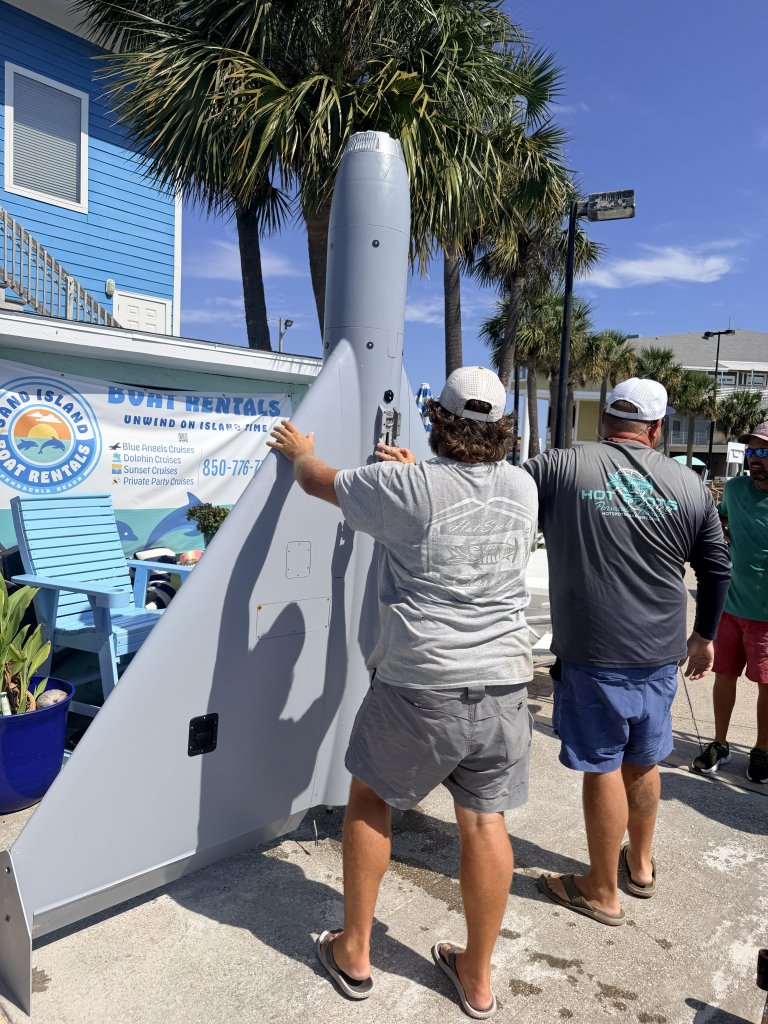
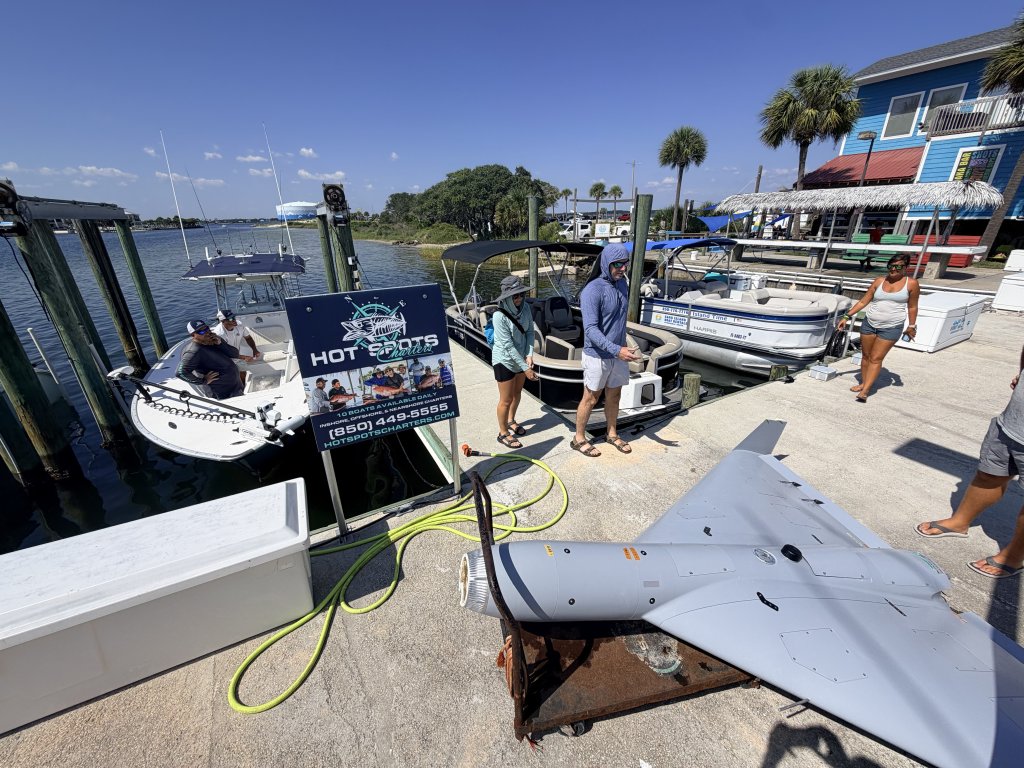
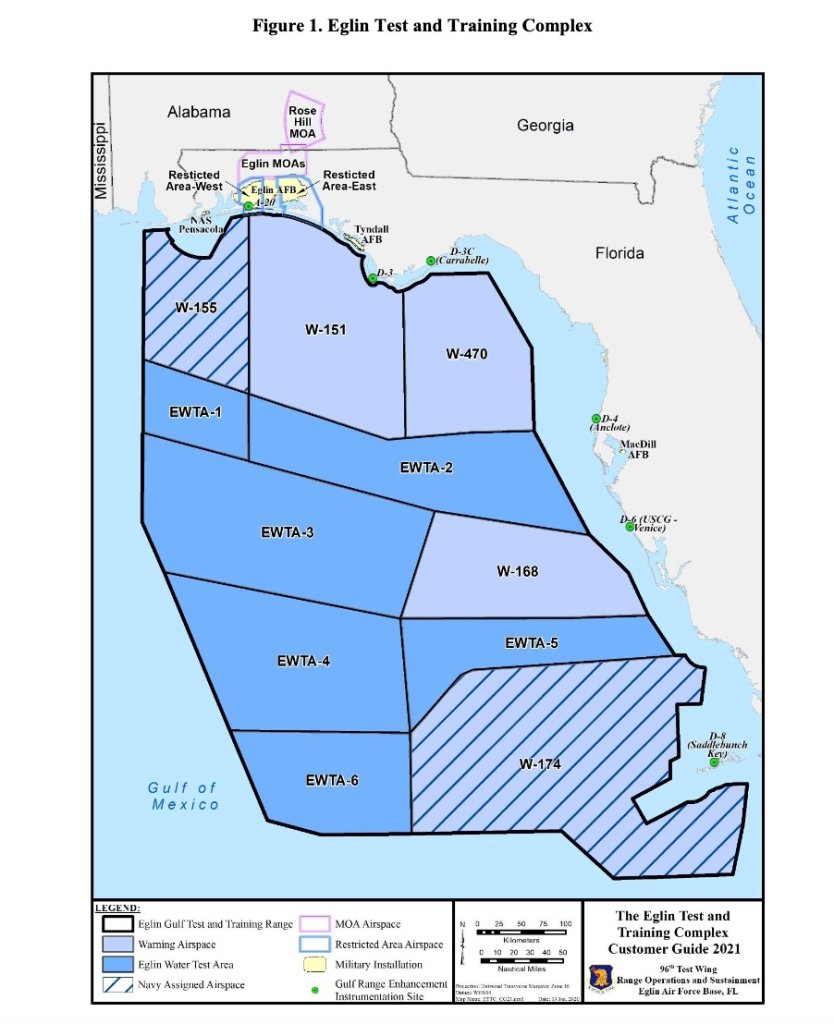
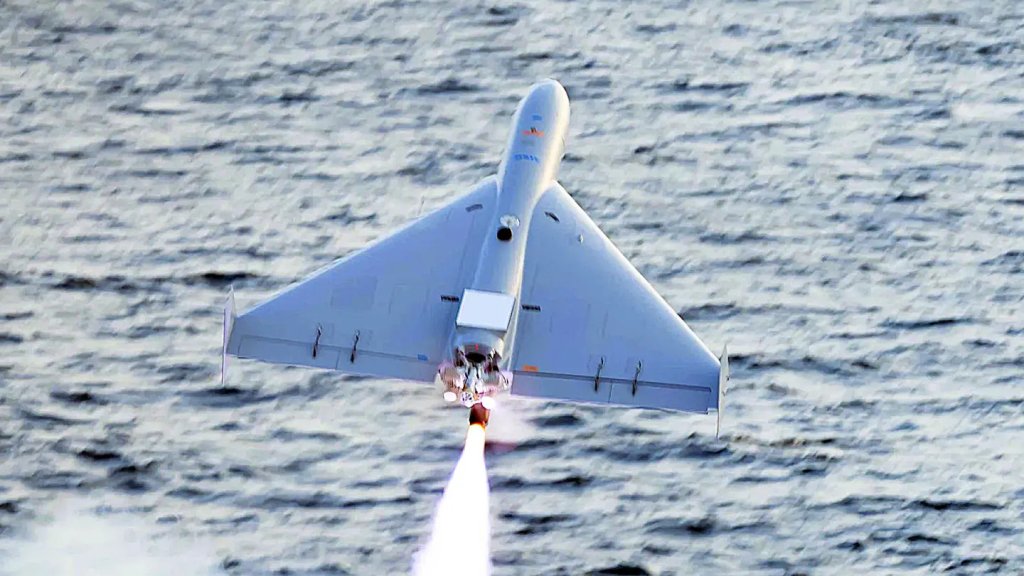
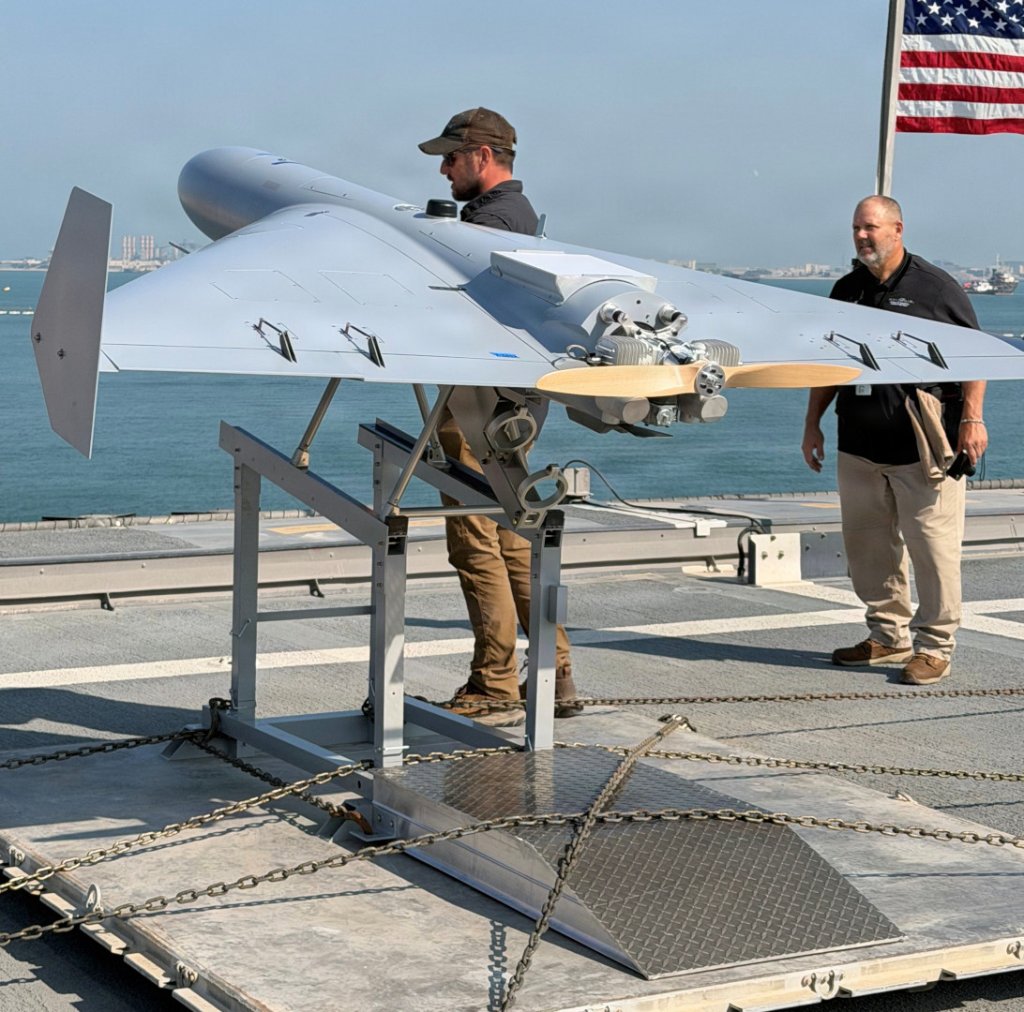
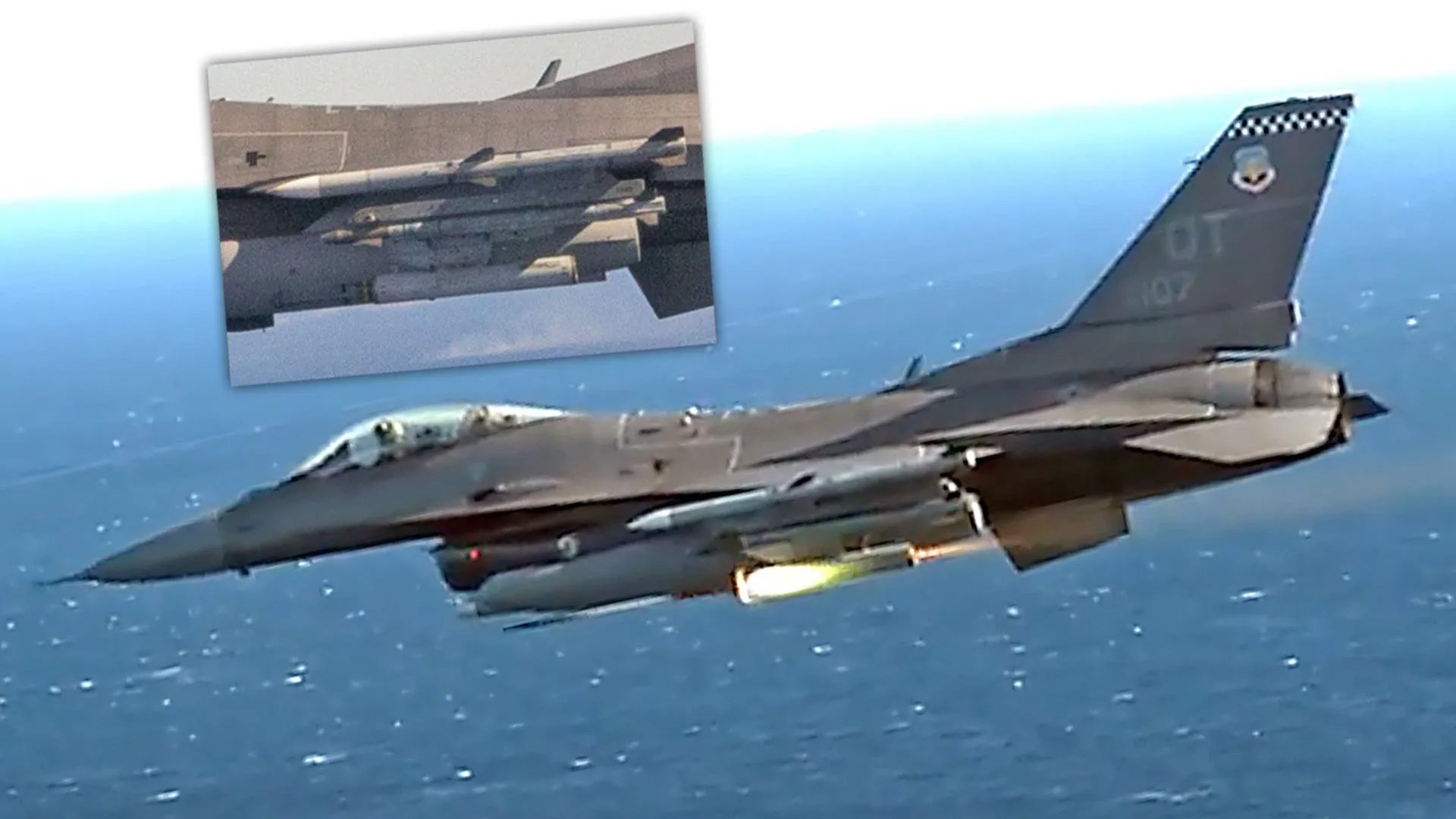
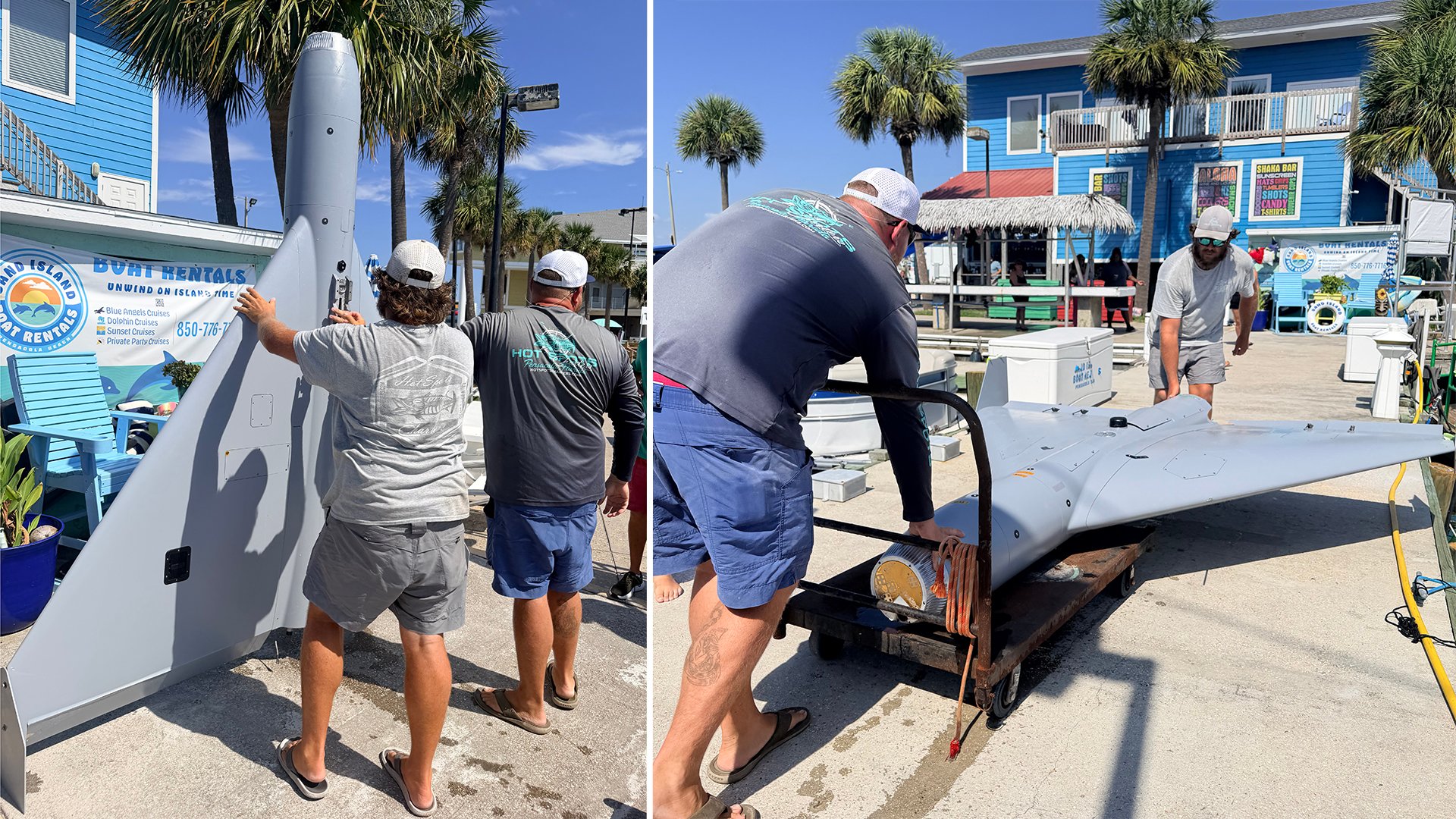
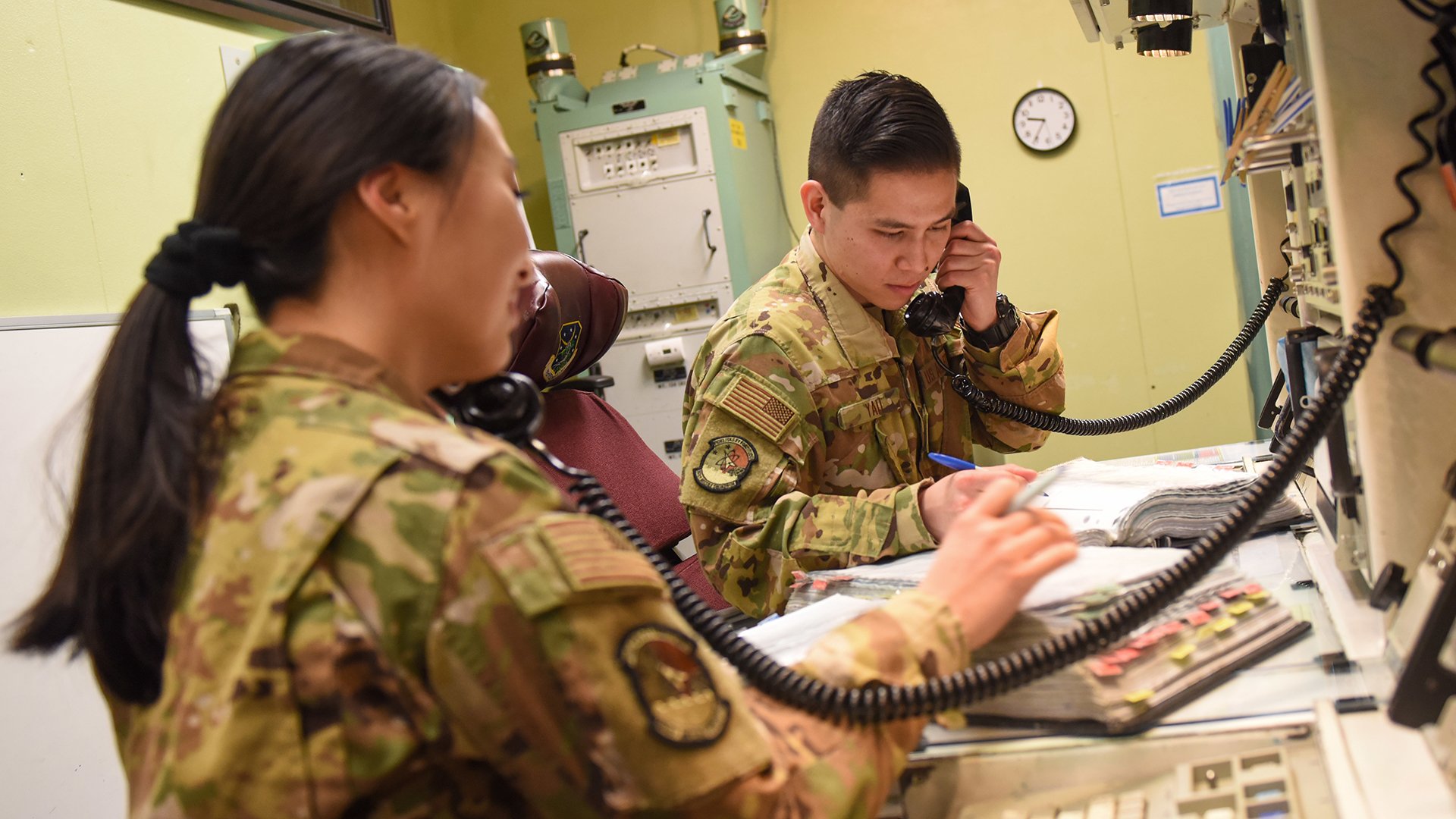
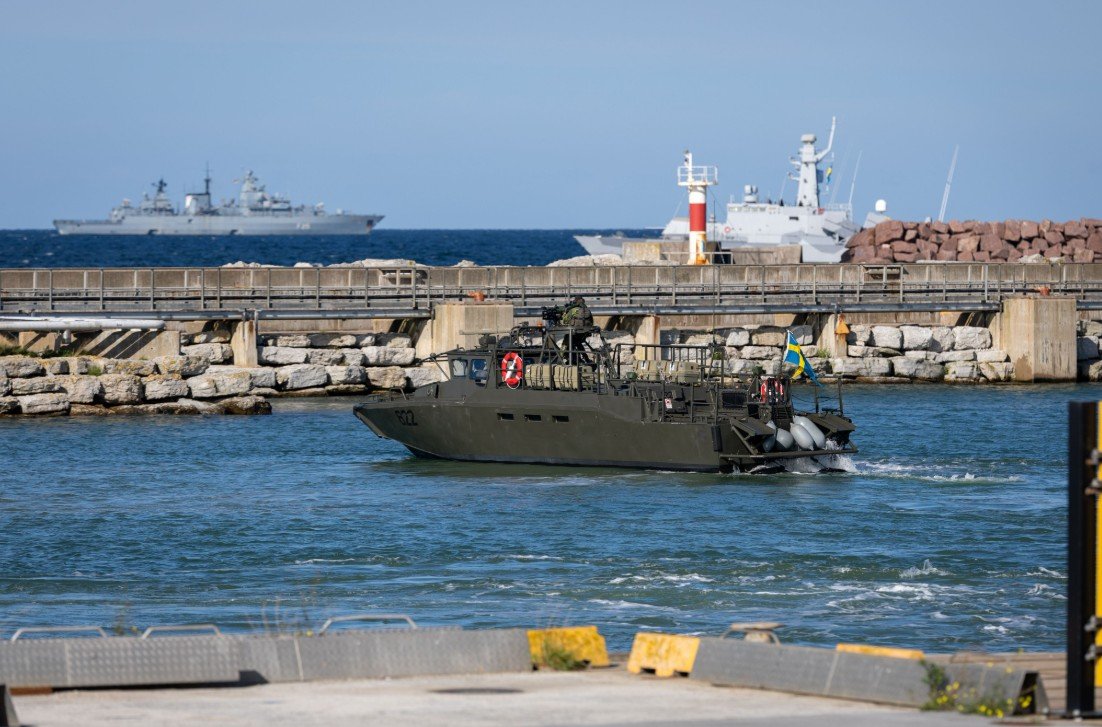
 and
 are rehearsing the swift reinforcement of the strategic island in order to ensure the security of the Baltic Sea.
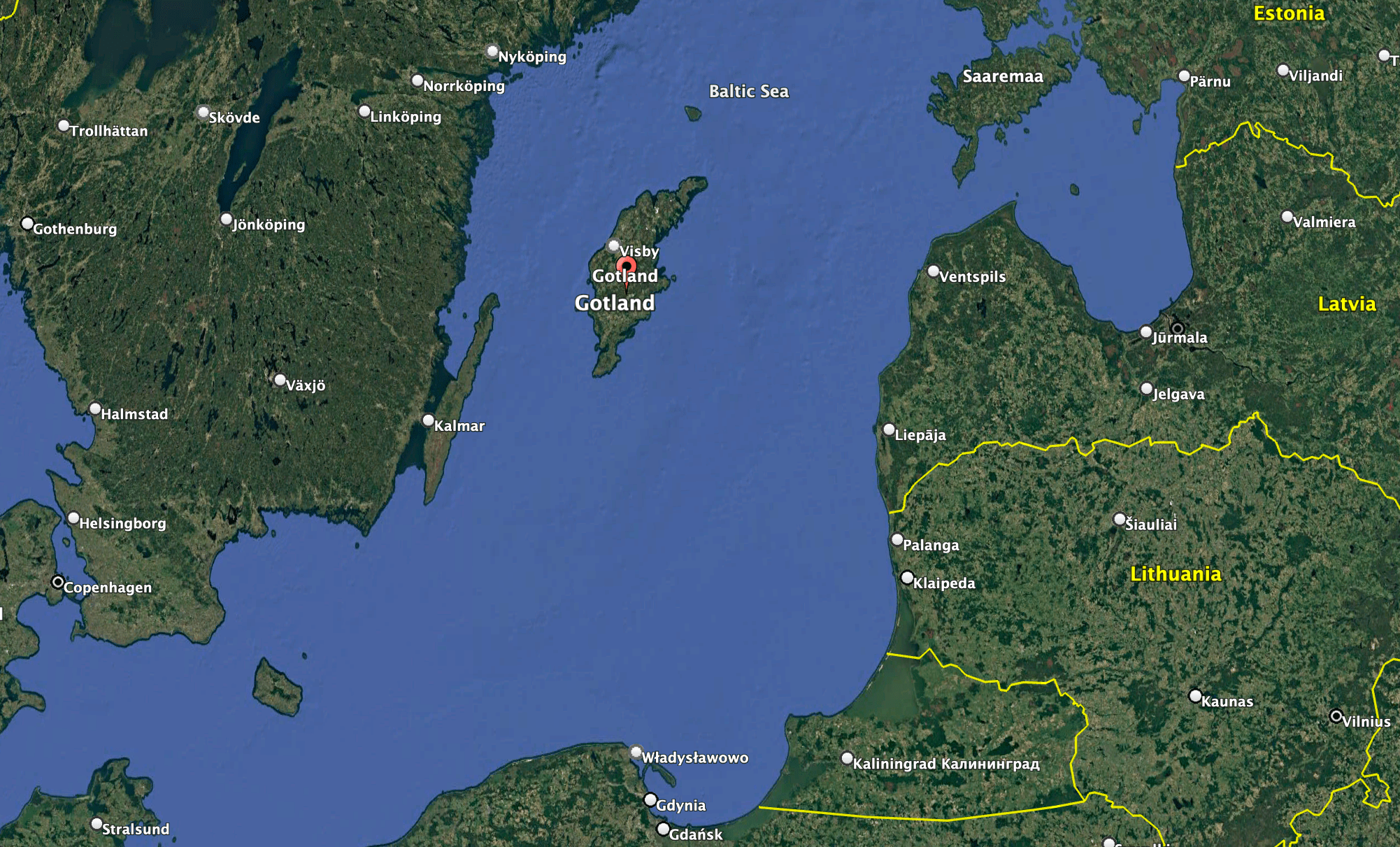
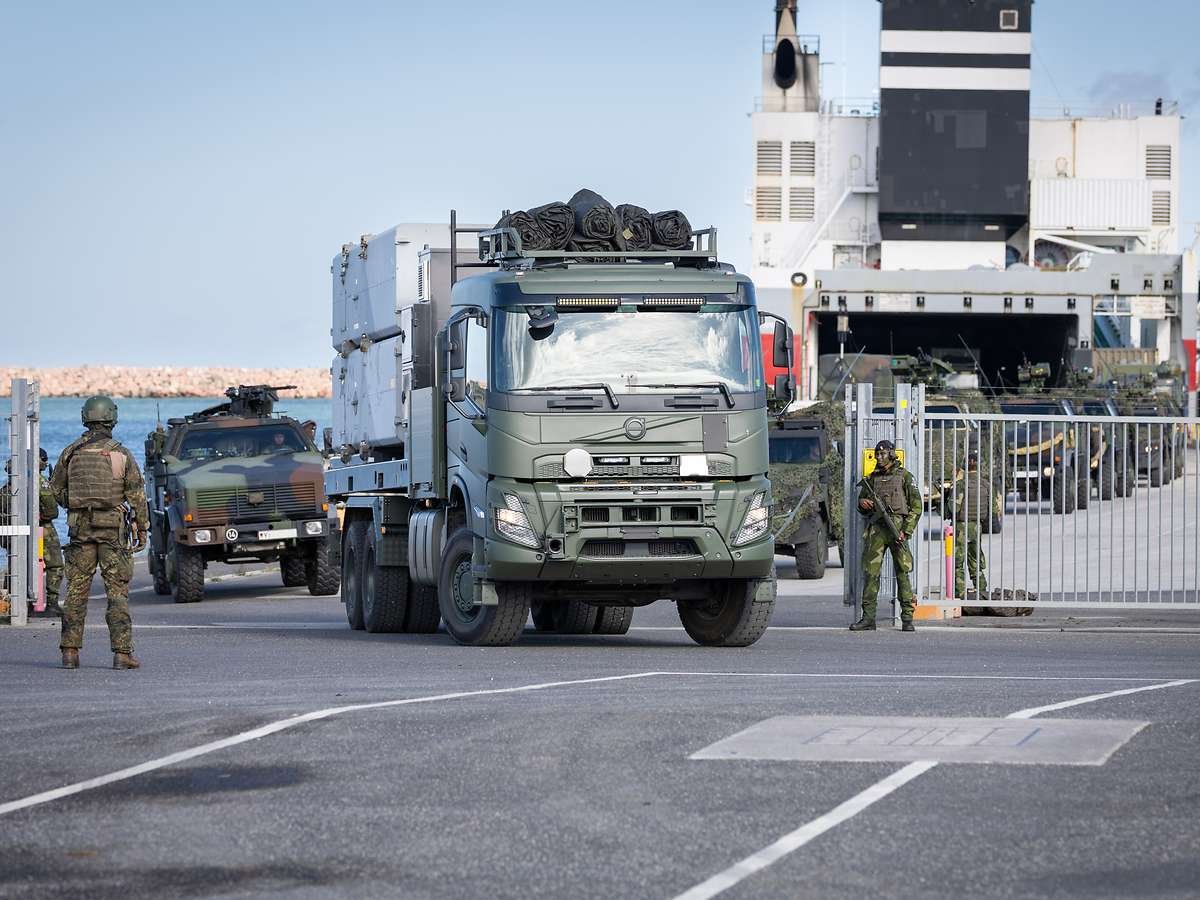
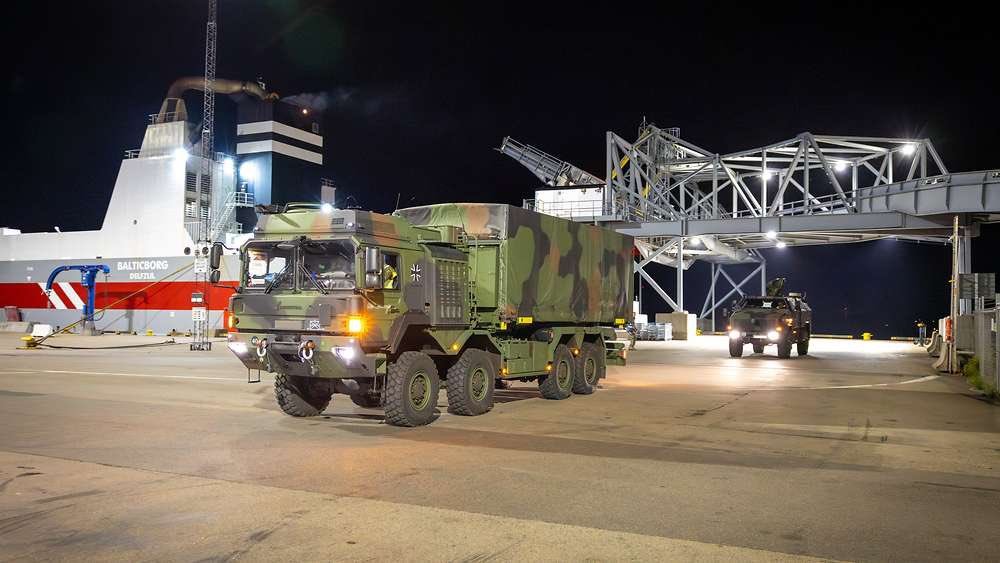
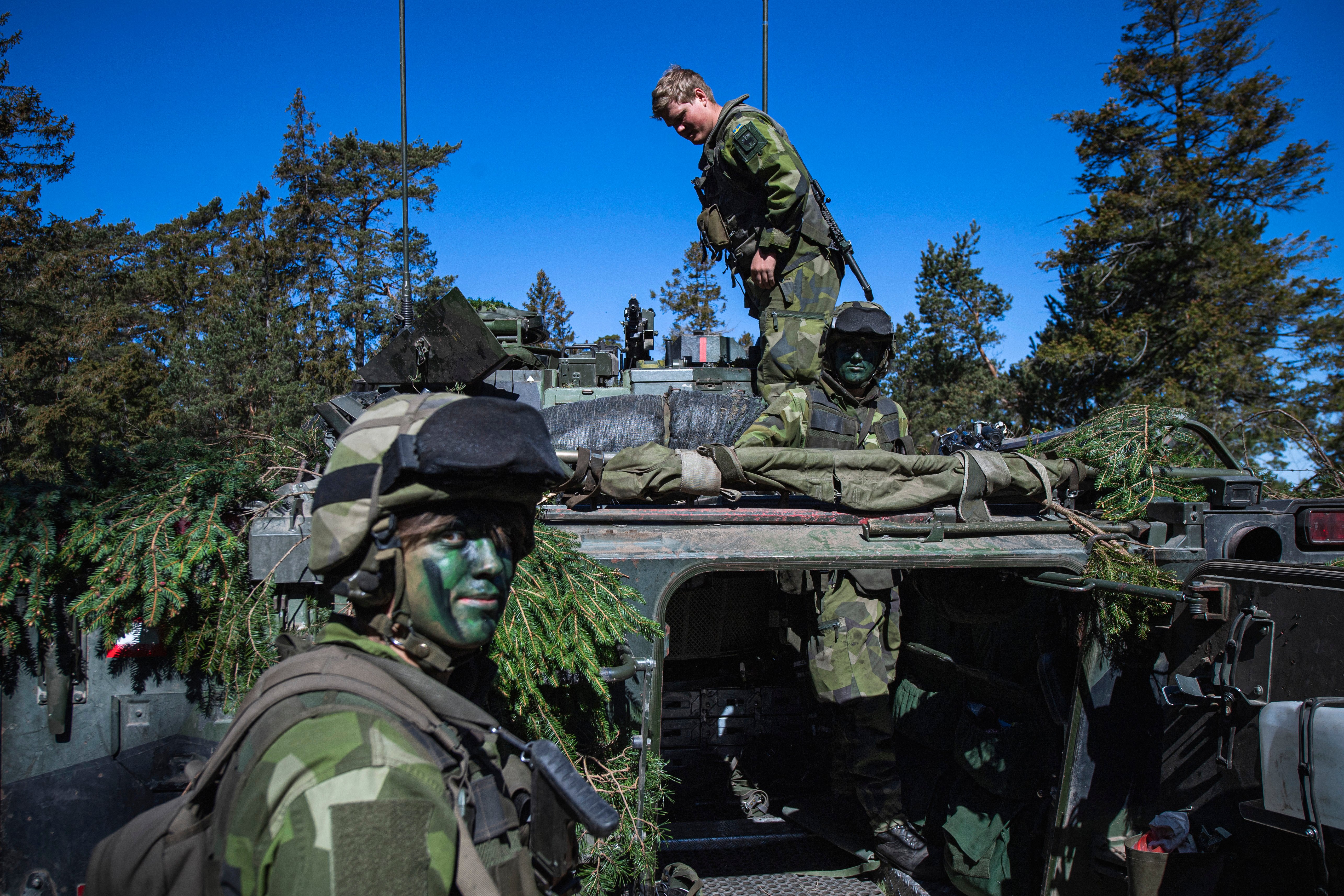
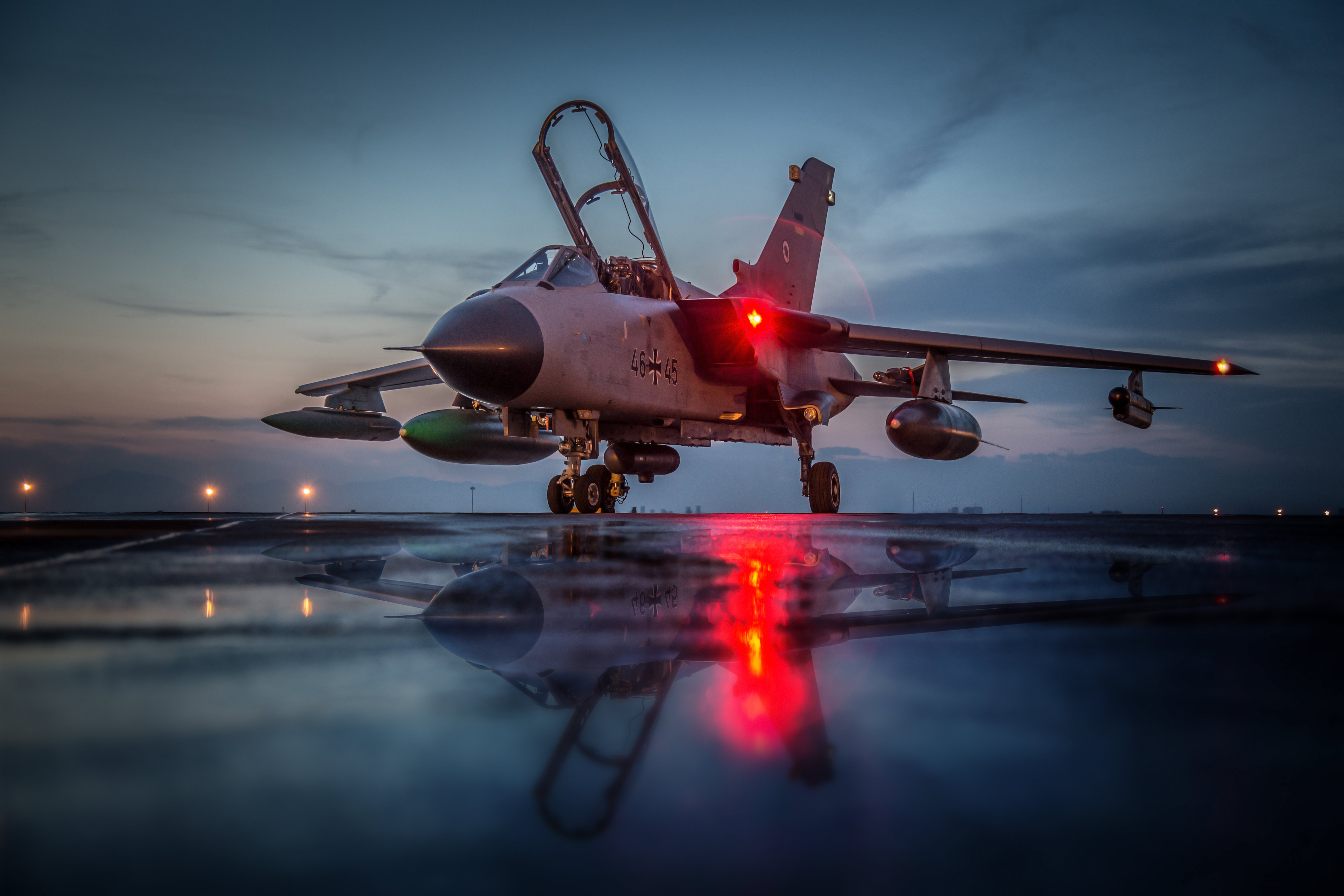
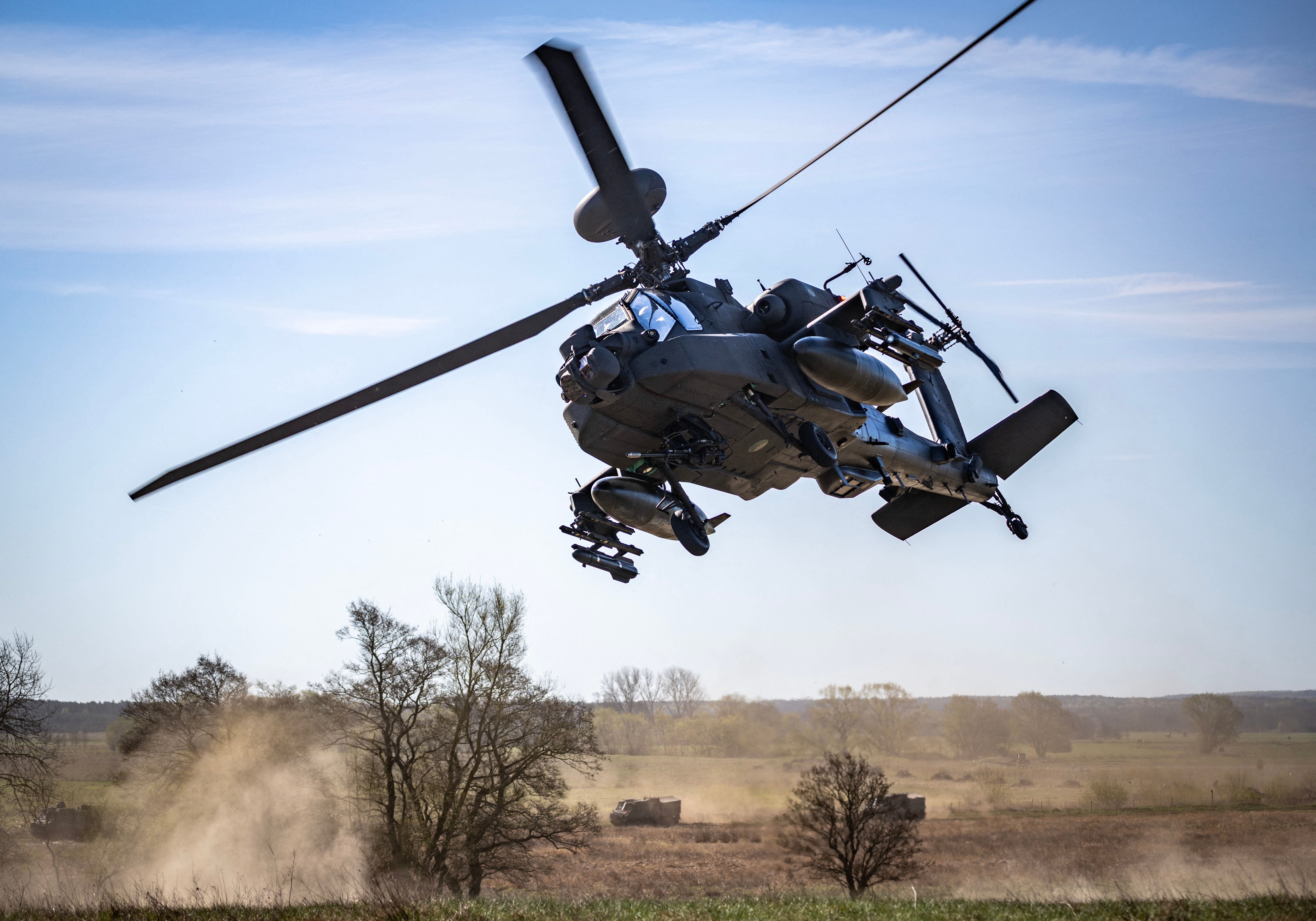
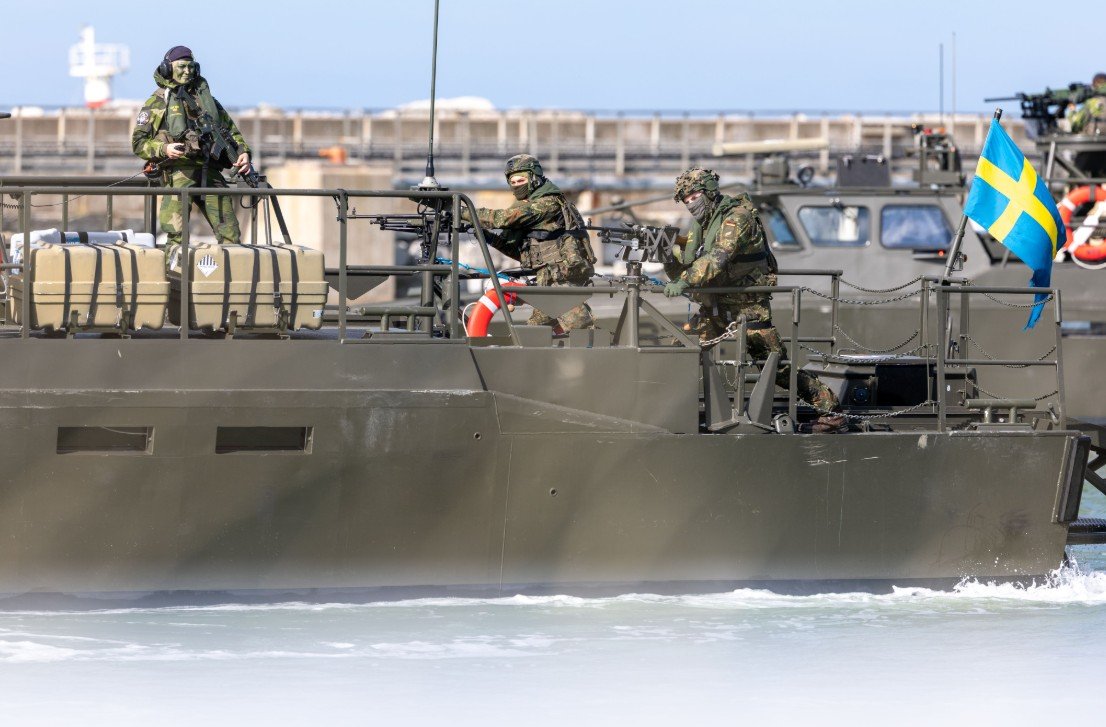
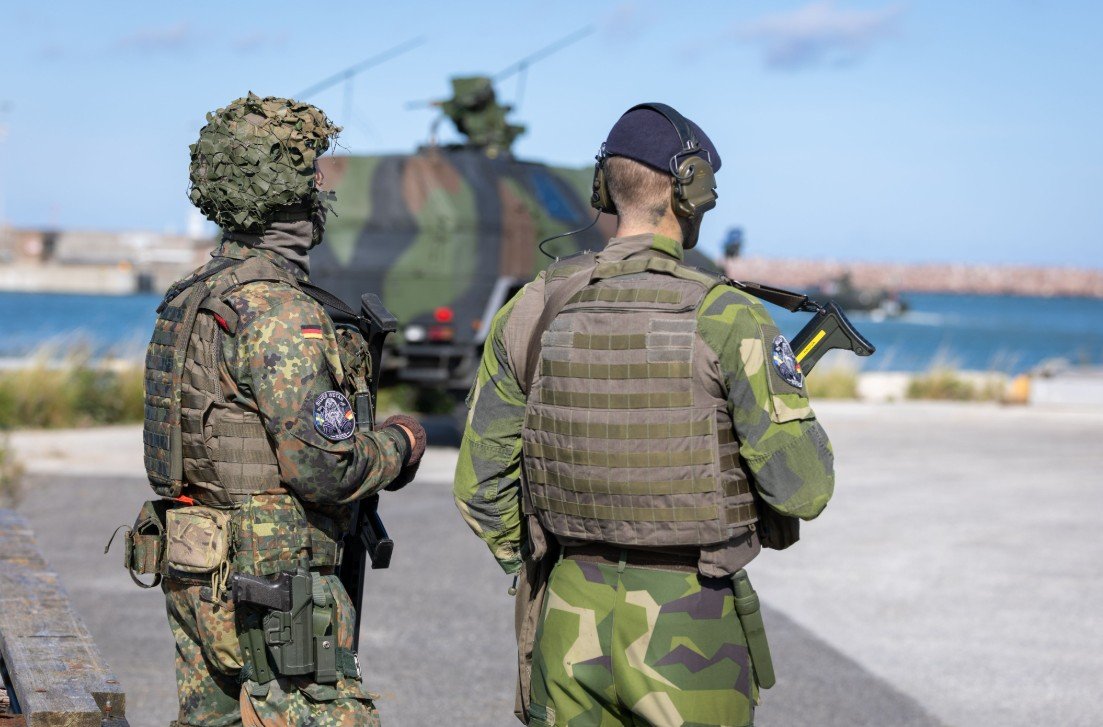
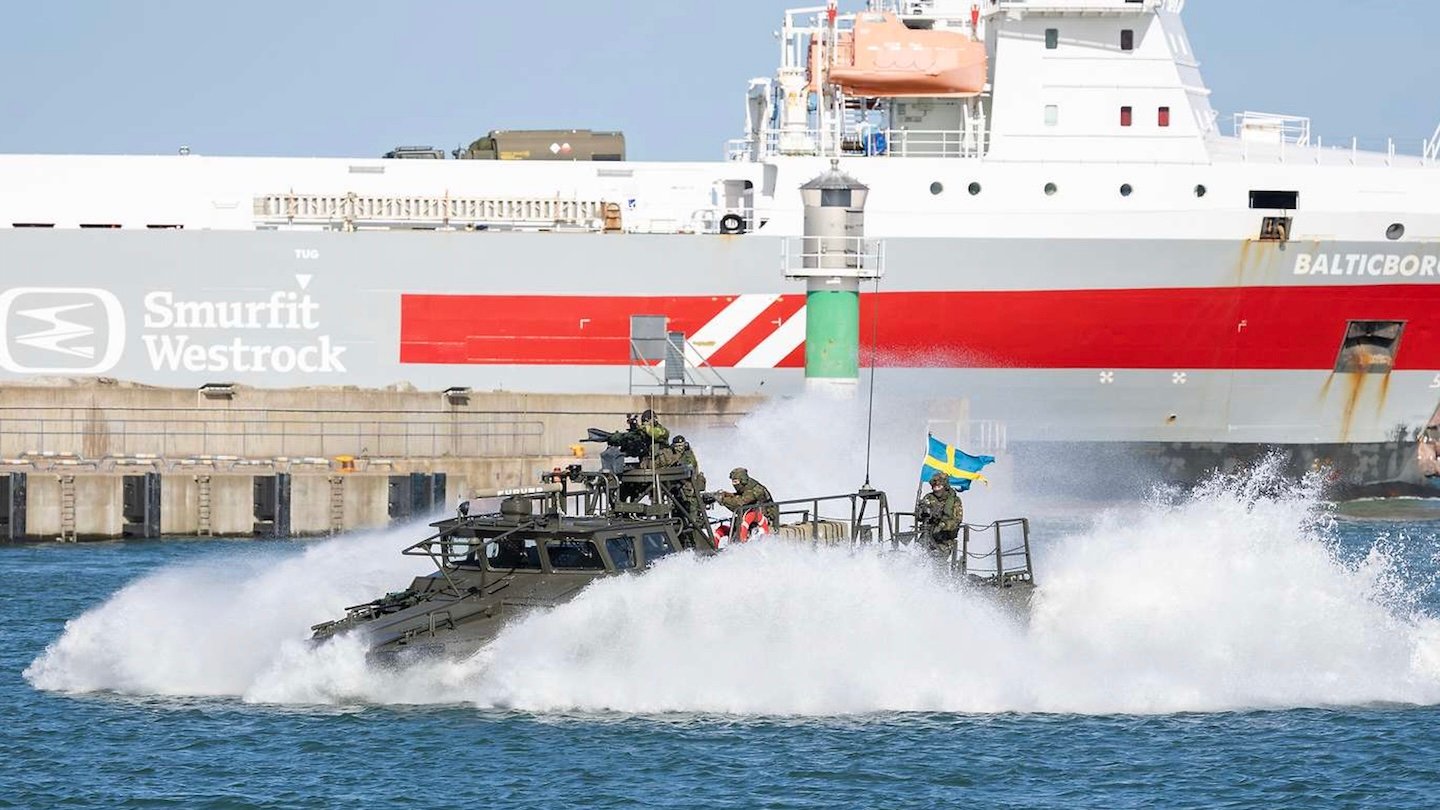

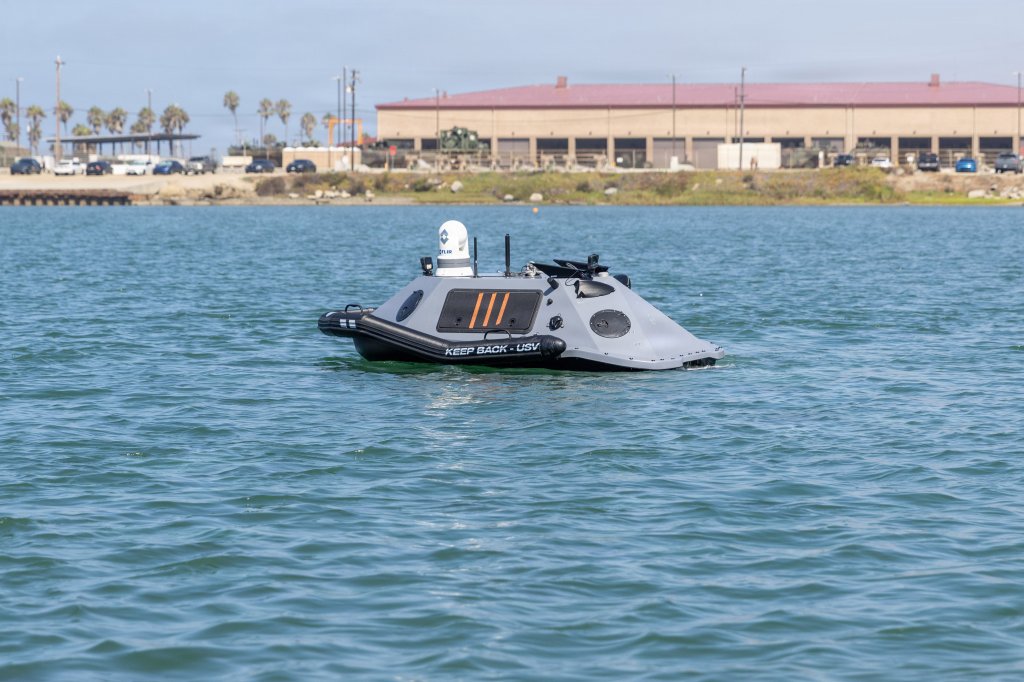

 (@NOELreports)