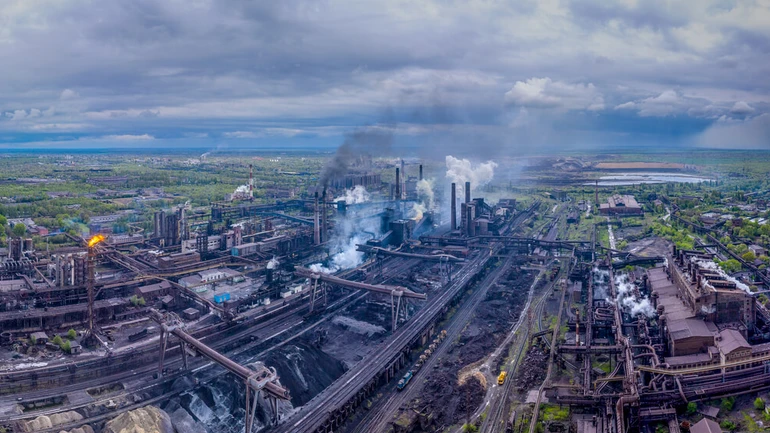
❌

Reading view

Ukraine’s 3rd Army Corps took the lessons of the failed 2023 counteroffensive into Operation Vivaldi. It fought small, and won.

3rd Army Corps.

  • Ukraine's Operation Vivaldi has succeeded because ground commanders thought small instead of big
  • Rather than hoping for a major breakthrough, they fought incrementally and with heavy support from the air
  • Contrast Operation Vivaldi's small but successful thinking with the big thinking of Ukraine's failed 2023 counteroffensive

Five months after launching Operation Vivaldi, a local counteroffensive in northern Donetsk Oblast, the Ukrainian 3rd Army Corps has eliminated the Russian bridgehead on its most important long-term objective: the Zherebets River, which flows south through eastern Ukraine and forms a natural defensive barrier east of the last big free cities in Donetsk: Sloviansk and Kramatorsk.

Attacking methodically under strict secrecy, the 3rd Army Corps has pushed back the Russian 20th and 25th Combined Arms Armies and returned 176 sq km of northern Donetsk to Ukrainian control as of 30 September, according to Ukraine's presidential office. The figure could not be independently verified. Operation Vivaldi netted the Ukrainians hundreds of Russian prisoners and erased 18 months of Russian advances toward Sloviansk.

"Ukrainian forces have defeated the 2026 Russian campaign to seize Donetsk Oblast," the Institute for the Study of War in Washington concluded.

It's a remarkable feat for the overall outgunned and outmanned Ukrainian forces. Equally remarkably, the Ukrainians deftly dodged several potentially fatal traps as they flanked the 20th and 25th CAAs. They didn't get stuck in the Russians' dense minefields. They didn't expose themselves to devastating air attack. Perhaps most importantly, they didn't set their sights on distant objectives. They thought small instead of big, stacking small gains on top of small gains until those wins amounted to a big victory.

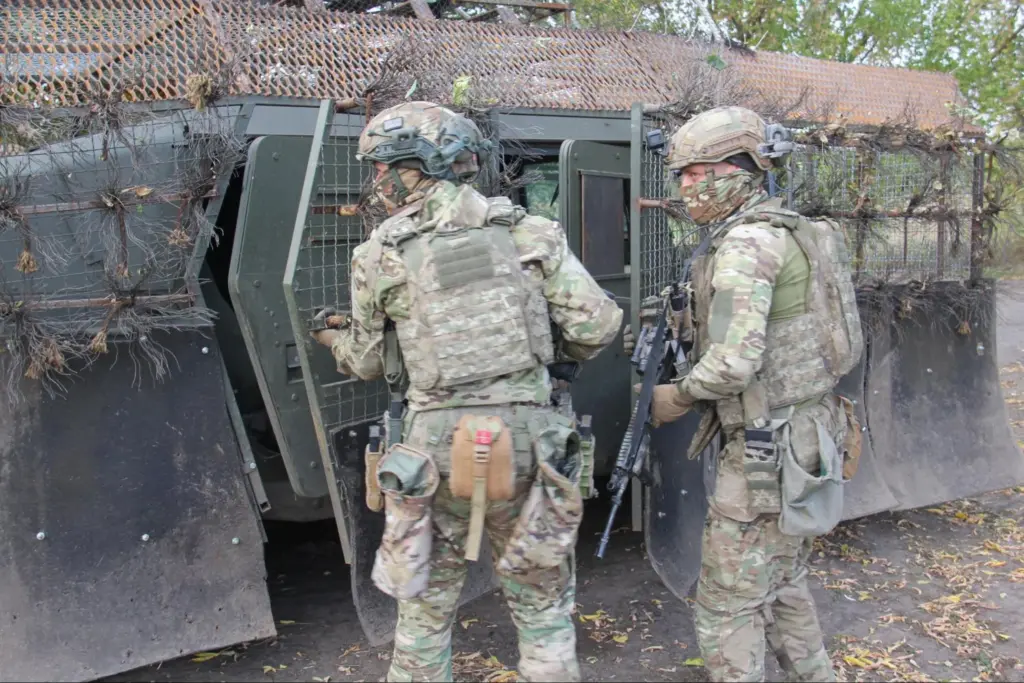
3rd Army Corps troops disembark from an armored vehicle.
Explore further

Armored assaults aren’t dead. Robots got the credit, but it was Ukrainian infantry in armored trucks that reversed a year of Russian gains near Lyman

A trio of US Army officers—Col. Timothy Price, Capt. Patrick Visser, and Capt. Andrew Carter—described this achievement in academic terms. The corps' defeat of the Russian bridgehead on the Zherebets "had little to do with maneuver warfare," the officers wrote for the Modern War Institute at the US Military Academy in West Point, New York.

In military parlance, "maneuver" generally involves heavy ground forces supported by air strikes and artillery decisively breaking through enemy lines and then rushing vehicles and troops into the panicking enemy's unguarded rear area to quickly inflict maximal destruction and achieve maximal territorial gains.

That's not what the 3rd Army Corps did in its five-month—and ongoing—counteroffensive. No, the Ukrainians "won through systematic, geometric interdiction and positional pressure," Price, Visser, and Carter wrote. Put plainly, the corps carefully probed for tree-covered assault lanes toward key settlements, deployed unmanned ground vehicles to clear mines and explode the most important nearby Russian strongpoints, and then rushed in armored vehicles carrying infantry.

Map of settlements Ukraine's 3rd Army Corps says it liberated north of Lyman, as of 28 September 2026.
Settlements Ukraine's 3rd Army Corps says it liberated during Operation Vivaldi north of Lyman, Donetsk Oblast, Ukraine, as of 28 September 2026. Map: ISW

They marched step by step, incrementally liberating a kilometer at a time instead of running a marathon toward a major objective tens of kilometers away. In that way, Operation Vivaldi is the very opposite of Ukraine's failed 2023 summer counteroffensive, which massed tanks for what commanders hoped would be a decisive breakthrough around the village of Mala Tokmachka in southern Ukraine's Zaporizhzhia Oblast.

The objective at that time was to break into the Russian rear and speed tanks 80 km to the occupied city of Melitopol near the Sea of Azov. That never happened. The Ukrainians got mired in minefields around Mala Tokmachka, suffered badly from Russian air attacks, and, after a grueling season of costly attacks, lost momentum just 10 km south of Mala Tokmachka. Later Russian counterattacks erased even those modest Ukrainian gains.
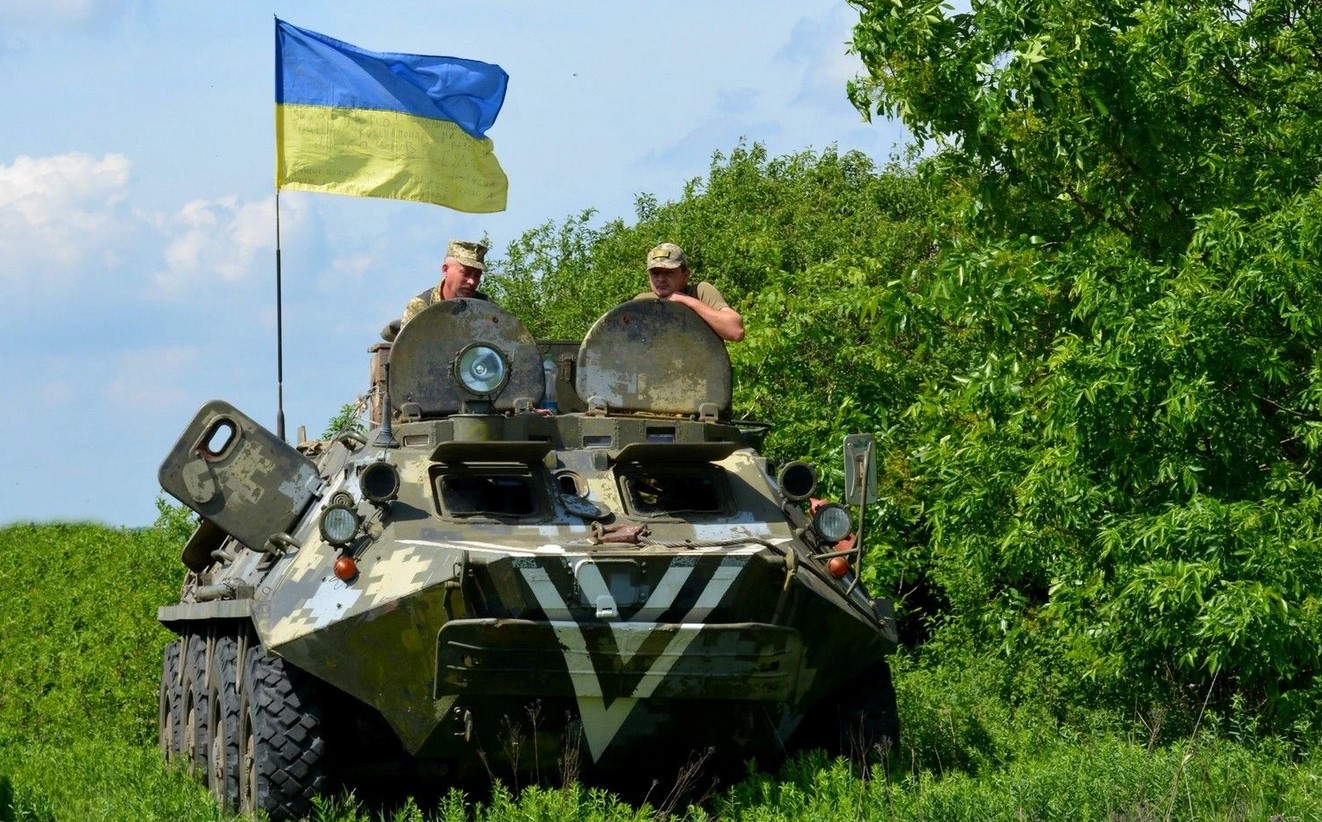
A BTR-60B. Source: Ukraine's Ministry of Defense.
Explore further

In Ukraine’s Vivaldi offensive, nobody rides in the BTR-60s. Bulgaria’s old troop carriers go into Russian bunkers packed with mines

Old thinking versus new

The planners of the failed 2023 counteroffensive were stuck in an old way of thinking about maneuver warfare. The planners of the successful 2026 counteroffensive shrugged off obsolete ideas. They thought smaller—and, ironically, achieved much more as a result.

The 3rd Army Corps couldn't, and didn't, do it alone. Indeed, the corps depended on the Ukrainian Unmanned Systems Forces to fray the Russians' supply lines, electronic warfare teams to jam Russian drones, and the Ukrainian air force to bomb Russian drone operators the EW teams couldn't suppress. By contrast, the Ukrainian forces attacking south from Mala Tokmachka in 2023 did so without much aerial support.

The aerial and electronic preparation was a prerequisite for each of the 3rd Army Corps' incremental advances this spring and summer. The lesson, the officers argue, is that "higher headquarters must degrade key enemy capabilities" before a smaller ground formation can expect to gain ground and keep it. If the support falters, the ground forces won't be able to hold.

Think small. Prepare hard. Now that the Ukrainians know this is how to win on the ground, can they repeat Operation Vivaldi's success?

There's some evidence they're already doing so in the southeast, where a clutch of Ukrainian air assault brigades has been pushing back the Russian 29th Combined Arms Army.

  •  

Russo-Ukrainian war, day 1693: Russian ballistic missiles hit Kyiv before air raid sirens, as fears grow that the US could cut launch warning data

Exclusives

“Now it’s your turn”: US envoys planned to show Moscow a refinery pause and a diesel deal, then ask for something back, a source tells Reuters. Ukraine’s part of that exchange was to stop striking Russia’s oil plants, a request Kushner repeated at the Miami meeting.

Military

Ukrainian scouts used a captured Russian soldier’s radio to gather intelligence for four days. Recon soldiers shared stories about their daily lives with ArmyInform.

No contact with command, a comrade maimed by a mine. A former TV director fought—and halted the Russians. He saved three soldiers in six months, ArmyInform says. One wounded comrade he could only hear on the radio.

Ukraine says it hit 12 Russian refineries in September. No refinery strikes reported since Trump’s “energy ceasefire”. Zelenskyy said Russia’s attacks on Ukrainian energy facilities continued after Trump’s announcement, while Moscow had yet to confirm a ceasefire.

The night Trump announced a diesel deal with Putin, drones knocked out more than half the tanks at a Russian fuel-export terminal. The Rostov-on-Don site, which loads oil products onto river and sea tankers, burned for two days and was still smoking on the third.

“We don’t need to hit the entire plant”—Ukraine’s drones go for refinery parts sanctions make hard to repair. Of 54 strikes The Washington Post examined, more than half appear to have damaged the units that start turning crude into fuel.

Intelligence and technology

Ukraine’s swimming robot can tow 10 tons, its maker says. Hook up a gun, and the shells ride aboard. It has already swum across the Desna River, its team says, and Ukraine’s Defense Ministry cleared it for use in 2025.

Russian ballistic missiles hit Kyiv before sirens, gap that lands hard amid fears that Washington could cut data that warns of launches. The alert came late because Ukrainian radar detected the missiles only during the attack, with no advance data on launches, the Air Force says.

Kinzhal is 90% identical to Iskander-M: Ukraine’s intelligence identifies 58 companies in production chain. Russia is developing a modified version of the Kinzhal missile, equipped with a warhead that strikes targets with fragments and a blast wave.

Built by Ukraine’s ex-defense minister and unit that wrecked $12 billion of Russian gear, new interceptor downs two jet drones over Kyiv. Mykhailo Fedorov and Lasar’s Group commander Pavlo Yelizarov developed the drone in a month, Fedorov says.

Russia is building satellite network that could put all of Europe in reach, defense executive warns. Oleksandr Danyliuk, head of the European defense-tech firm Destinus, called Russia’s Rassvet system an extraordinary threat, first to Ukraine and then to Europe.

International

Ukraine wins seat on UN Human Rights Council, vows to seek accountability for Russian abuses. Elected with 162 votes, Ukraine says it will focus on documenting violations, protecting prisoners of war and unlawfully detained civilians, and returning children taken by Russia.

Finland calls for EU tourist visa ban on Russians until Moscow ends war against Ukraine as bloc weighs tougher restrictions. As suspected Russian sabotage and other hybrid operations spread across Europe, EU officials are weighing tighter restrictions on Russian travel, diplomats, and former combatants to reduce security risks.

Germany works to organize a Coalition of the Willing meeting as Russia strikes Ukraine’s energy sector. Ukraine and Germany have also agreed to hold a meeting of national security advisers in the E3 format.

France seizes Russian shadow fleet tanker in Indian Ocean, vows to combat illicit oil trade “wherever it may be in the world”. The French Navy intercepted the DF Peak in the Indian Ocean over suspicions it was sailing under a false flag. Russia relies on shadow fleet tankers to keep oil revenues flowing despite Western sanctions.

Germany detains two Turkish nationals suspected of torching a Polish Starlink station that helps route internet to Ukraine. Polish radio reports that two more people who may be tied to the arson are in German custody.

Russia’s sabotage of Europe should bring Ukraine more weapons through US purchase scheme, with clear statement of where its red lines lie, NATO’s top European commander says. The PURL program lets allies fund US-made weapons for Ukraine and drew nearly $5.5 billion in pledges before May.

EU blacklists 1,569 Russian arms suppliers and their bosses in its biggest sanctions round ever, as Trump eases up on Moscow. Most of the listed firms feed the supply chain behind the ballistic missiles Russia fires at Ukrainian cities, and EU ministers vowed to keep up the pressure despite the US-Russia fuel arrangement.

Humanitarian and social impact

Russia used civilians as human shields, then shelled them near Kupiansk, Ukraine’s Khartiia says. Aerial reconnaissance footage recorded casualties among a group that included two women and a child, according to Khartiia. The Ukrainian corps says Russian media could use the incident to accuse Kyiv of attacking civilians.

Russian strike collapses a Kharkiv apartment stairwell and kills three, days after the US waived sanctions on Russia’s diesel. Rescuers dug through the night to reach the people buried in the four-story building, while the White House still wants Kyiv to stop striking Russian refineries.

Ukraine’s largest steelworks begins cold shutdown after extensive damage from Russian strikes, saying safe operation is impossible while war continues. The plant will spend two months shutting down safely before mothballing its industrial assets, with any restart dependent on conditions after the war.

Political and legal developments

Energy truce with strings attached: Kyiv reportedly told to spare Russian refineries or lose US intelligence and arms. EU loans ease Ukraine’s budget, yet satellite data, Patriot interceptors, and US-made weapons still hinge on Washington, giving US President Donald Trump room to squeeze Kyiv.

US continues sharing intelligence with Ukraine, Trump says amid Russia deal backlash. Questions remain over missed warning for latest attack. Ukraine received no advance warning before Russia launched five ballistic missiles and more than 100 drones, President Volodymyr Zelenskyy said, raising questions about how intelligence support was functioning.

Frozen assets, embargoes, entry bans: Ukraine names the pressure it wants the EU to put on Moscow. Kyiv says it is ready for energy, food-security, and full ceasefires—and that Moscow has to be forced to agree.

“Zelenskyy is helping Democrats”: Trump’s MAGA base accuses Ukraine of trying to swing US midterms, says journalist in US. The narrative runs across all levels of the US information space, from anonymous accounts to national television.

Bipartisan US senators say Trump’s Russian diesel deal conflicts with 2022 ban, as he presses Kyiv to spare Russian refineries. The administration says the deal will lower fuel prices, but lawmakers warn it could help finance Russia’s war against Ukraine.

For years, Hungary tied Ukraine’s whole EU course to ethnic Hungarians’ language rights. Kyiv has now passed the schooling law meant to lift the block. Hungary had blocked four stages of Ukraine’s membership process over the matter.

Zelenskyy says Ukraine could hold elections if Russia agrees to 60-day ceasefire. Moscow counters with truce lasting only voting day. Spokesperson Dmitry Peskov says Ukraine needs the 60 days not to hold elections but to heal its wounds and keep fighting.

Read our previous daily review here.

  •  

Ukrainian scouts used a captured Russian soldier’s radio to gather intelligence for four days

Ukrainian reconnaissance troops of the 23rd Separate Reconnaissance Battalion, 2026. Photo: ArmyInform

Ukrainian reconnaissance troops used a captured Russian soldier’s radio for four days to listen to Russian military communications and relay important intelligence to their command, according to a report by ArmyInform, which covered the episode. The soldiers serve in the 23rd Separate Reconnaissance Battalion, which operates in the Oleksandrivka sector, the report noted.

Russia uses infiltration tactics involving small groups to slip through Ukrainian positions undetected, establish themselves into the rear of Ukrainian positionse, and create conditions for the further advance of its main forces. They are countered not only by reconnaissance drones but also by specialized reconnaissance teams, which sometimes cover several dozen kilometers on foot to reach their designated targets.

Ukrainian scouts capture Russian soldier in the grey zone

Ukrainian reconnaissance troops captured a Russian soldier in the grey zone as he was trying to enter a neighboring house, the report said.

“He took off his body armour and set his rifle aside. He felt right at home. Our commander went over and offered him a chance to surrender, and he agreed. He then stayed with us for four days. He told us everything he knew,” a soldier with the call sign Kubik said in the report.

The soldiers’ hideout was later discovered. Fleeing a Ukrainian drone, a Russian infantryman ran into the building where the reconnaissance troops were staying. The position was subsequently attacked by FPV drones, followed by an artillery barrage.

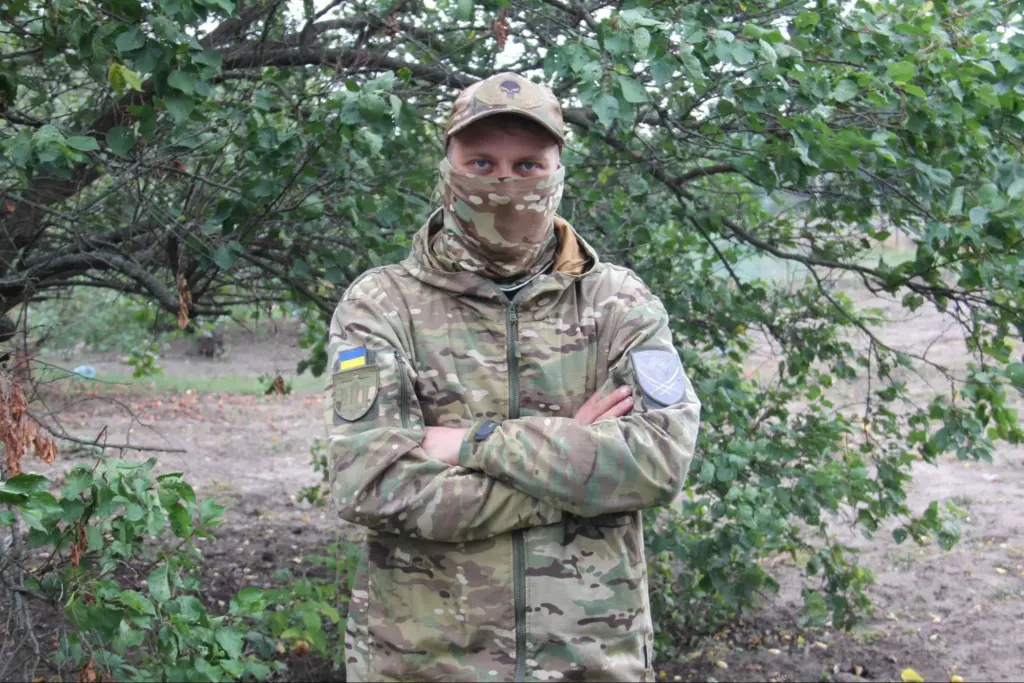
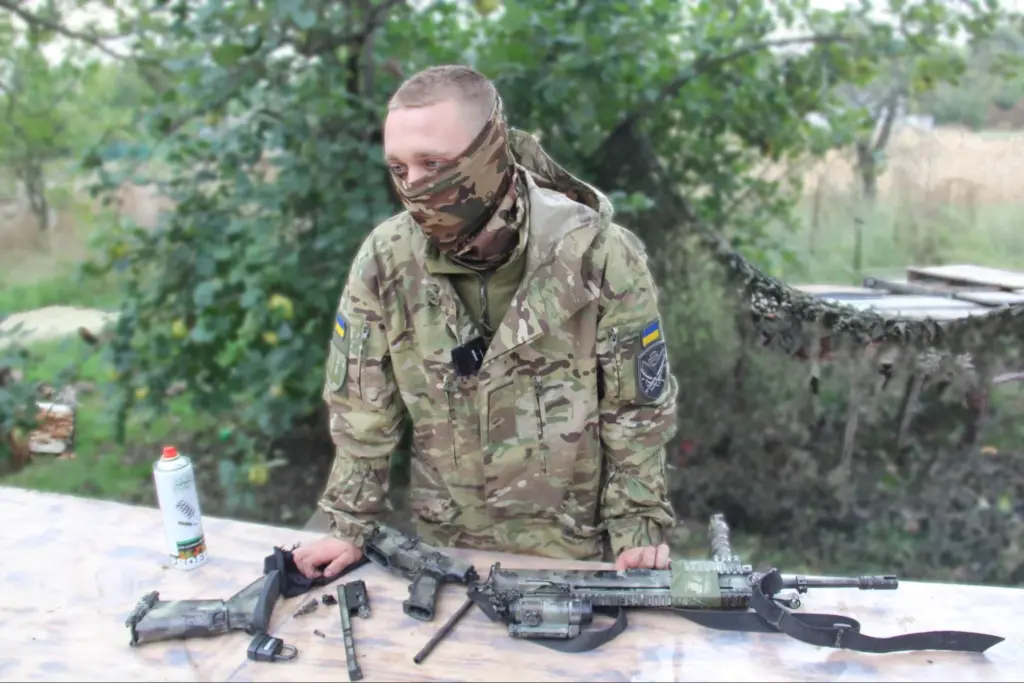
Reconnaissance soldier with the call sign “Kubik” of the 23rd Separate Reconnaissance Battalion, 2026. Photo: ArmyInform

One Ukrainian soldier sustained a minor injury, but the group managed to withdraw without suffering serious losses.

Reconnaissance soldier Kubik spent 23 days on a combat mission

For reconnaissance troops, the journey to their positions and the return trip remain perhaps the most dangerous parts of a mission. During his year of service, Kubik has completed five combat missions, one of which lasted 23 days, according to the report.

During their most recent mission, the soldiers covered 20 kilometers on foot in one direction, moving mostly through tree lines, Kubik said. He added that they had to run across open areas and destroy enemy drones lying in wait before quickly retreating to cover.

Because of the constant threat from the air, the length of time reconnaissance troops can remain at their positions depends on the weather and the situation, the report noted. Sometimes, staying in place longer is safer than risking exposure while a team is being replaced.

Dzhus’s first mission: 20-year-old reconnaissance soldier chooses infantry

Twenty-year-old Mykyta, whose call sign is Dzhus, is preparing for his first combat mission as part of the 23rd Separate Reconnaissance Battalion, the report said. He joined the military under the “18–24 Contract” program after leaving the police force.

“Many people who join under the ‘18–24’ contract go into UAV operations, but I’m more interested in infantry work. We have many experienced reconnaissance soldiers, and the guys are constantly giving advice and sharing their experience,” Dzhus said.

Reconnaissance soldier with the call sign “Dzhus” of the 23rd Separate Reconnaissance Battalion, 2026. Photo: ArmyInform

He is heading out on the mission under the guidance of an experienced commander, he said. The soldiers prepare thoroughly for every mission, practicing at the training ground and rehearsing procedures tailored to the specific task, the media outlet noted.

Russian troops seek new hiding places for infiltration along the front

Russian forces continue to use small-group infiltration tactics. For example, the Russian army is likely increasing its infiltration efforts in Kharkiv Oblast, taking advantage of the remaining summer foliage for concealment, the Institute for the Study of War reported on 9 October. In particular, Russian forces are seeking to infiltrate the city of Kupiansk in small groups, according to an RBC-Ukraine report published on 7 October.

Similar incidents have also been reported in Donetsk Oblast. Russian troops are attempting to infiltrate the gaps between Ukrainian observation posts in small groups and establish positions there, Artem Prybilnov, spokesperson for the 155th Separate Mechanized Brigade, said during a broadcast on Suspilne.Studio on 7 October, NV reported. Their aim is to build up forces for a further advance toward Dobropillia. Ukrainian infantry, working alongside drone operators, is repelling the ongoing Russian attacks and preventing them from achieving this goal, Prybilnov added.

As autumn sets in and vegetation becomes thinner, Russian troops find it increasingly difficult to conceal themselves in tree lines, Prybilnov noted. During the summer, they used these areas for cover and to accumulate personnel, ammunition, and equipment, the spokesperson said. Russian forces are now attempting to infiltrate villages, where they can hide in buildings and basements and establish positions, he added.

  •  

Ukraine wins seat on UN Human Rights Council, vows to seek accountability for Russian abuses

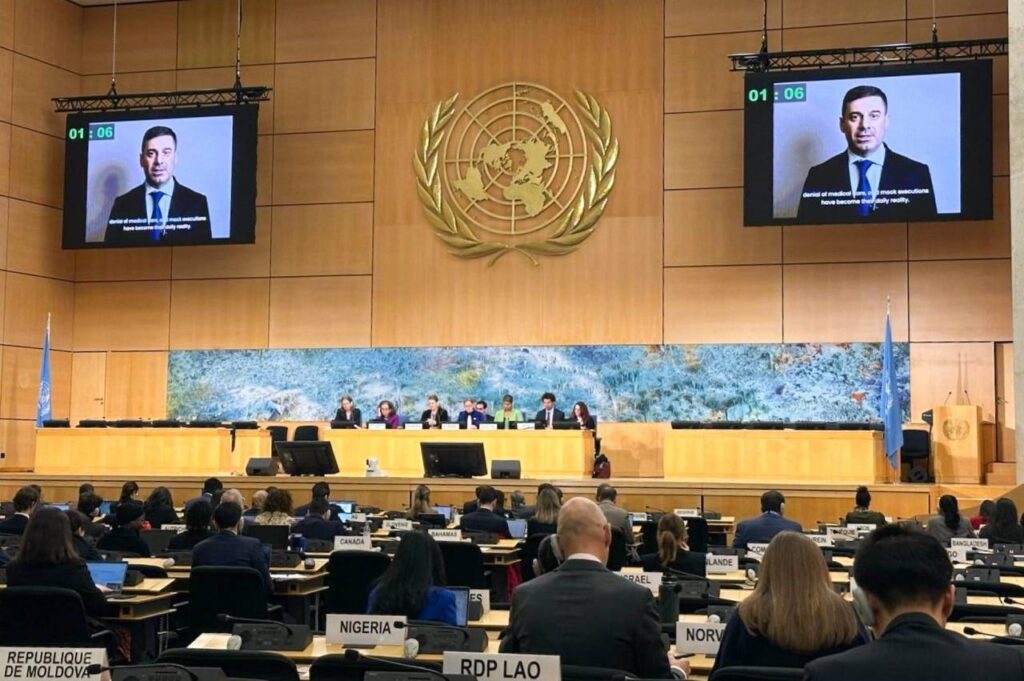
Ukraine’s Human Rights Commissioner Dmytro Lubinets addressing the UN Human Rights Council, 3 March 2026. Photo: Dmytro Lubinets

Ukraine has been elected to the UN Human Rights Council for the 2027–2029 term, receiving support from 162 UN member states in a vote by the UN General Assembly on 13 October, Ukraine’s Permanent Mission to the UN said.

The three-year term gives Ukraine an opportunity to shape international human rights discussions while drawing attention to abuses stemming from Russia’s war. Kyiv says it will work with partners to strengthen accountability mechanisms and protect civilians affected by conflict.

Ukraine’s Permanent Mission to the UN called the result a major diplomatic achievement, saying its team had spent more than a year securing support for the candidacy.

Ukraine’s Foreign Minister Andrii Sybiha said Kyiv would use its membership to push for accountability for Russian human rights violations, support international investigations, and advocate for prisoners of war and civilians unlawfully detained by Russia.

Ukraine will also continue efforts to secure the return of Ukrainian children deported or forcibly transferred by Russia, Sybiha said.

Ukraine to focus on accountability for Russian violations

Ukraine’s election comes as Russia continues its full-scale war against the country, which has brought grave violations of human rights and international humanitarian law consistently since 2022.

As a council member, Ukraine plans to work with international partners to strengthen mechanisms for documenting and investigating abuses, protect human dignity, and reinforce international human rights institutions, Sybiha said.

Ukraine has been elected to the UN Human Rights Council for 2027-2029. I thank all UN Member States that supported Ukraine’s candidacy.

Ukraine joins the Council while continuing to defend its people and its sovereignty against Russia’s ongoing aggression, which has brought…

— Andrii Sybiha 🇺🇦 (@andrii_sybiha) October 13, 2026

Ukraine is returning to the council after previously serving multiple terms, most recently from 2021 to 2023. It was among the council’s founding members when the body was established in 2006.

Russia was suspended from the UN Human Rights Council in April 2022 following reports of gross and systematic human rights violations during its war against Ukraine. Moscow subsequently announced it was withdrawing from the council.

15 countries elected to the council

Alongside Ukraine, the General Assembly elected Brazil, Ghana, the Dominican Republic, Zambia, Ireland, Jordan, Kuwait, Moldova, Nepal, Nigeria, Germany, Uruguay, and Japan to the Human Rights Council.

The 47-member council is the UN’s principal intergovernmental body responsible for promoting and protecting human rights worldwide. Members serve three-year terms.

  •  

Finland calls for EU tourist visa ban on Russians until Moscow ends war against Ukraine as bloc weighs tougher restrictions

Finland’s Foreign Minister Elina Valtonen, 20 September 2025. Photo: Elina Valtonen / X

Finland’s Foreign Minister Elina Valtonen has called on the European Union to stop issuing tourist visas to Russian citizens until Russia ends its war against Ukraine, urging the bloc to adopt a unified policy. Her call comes as the EU discusses broader restrictions on Russian diplomats, tourists, and former combatants.

Russia has intensified its hybrid campaign across Europe in recent months, with suspected sabotage, arson attacks, and other covert operations targeting infrastructure and undermining security. European officials have increasingly called for a coordinated response, arguing that tighter controls on Russian diplomats, travel, and former combatants could help reduce security risks and limit opportunities for Russian intelligence operations.

In a statement published on 12 October, Finland’s Ministry for Foreign Affairs said Valtonen was calling on the European Commission to introduce stricter guidelines for processing Russian visa applications and propose changes to EU legislation needed to implement a complete ban on tourist visas.

“As long as Russia continues its invasion, Russian citizens should not be issued tourist visas,” Valtonen said. “It is not right that Russians can travel to Europe to enjoy the way of life and freedoms here while their country bombs the homes of Ukrainians.”

Finland banned visas for non-essential travel by Russian citizens in 2022. Valtonen said the same restriction should now be adopted at the EU level.

The Finnish minister has invited other EU member states to join a joint letter to the European Commission. Beyond a complete ban on tourist visas, the letter proposes barring Schengen visas for people in Russian President Vladimir Putin’s inner circle, restricting visas for Russian athletes, and enforcing an EU-agreed visa ban on former Russian combatants.

We must stop issuing tourist visas for Russian citizens across the EU.

I have invited other EU Member States to join a letter addressed to the European Commission. I am calling for a complete EU ban on Russian tourist visas for as long as Russia continues its war of aggression.…

— Elina Valtonen (@elinavaltonen) October 12, 2026

EU considers wider restrictions on Russians

The proposal comes as EU foreign ministers discuss additional measures to counter Russian hybrid threats. EU foreign policy chief Kaja Kallas said after a meeting of the bloc’s foreign ministers in Luxembourg on 12 October that the EU was considering reducing the number of tourist visas issued to Russians, restricting Russian diplomats’ movements within the bloc, and accelerating entry bans for former Russian combatants, Radio Svoboda reported.

Kallas said the EU needed a comprehensive response to Russian hybrid threats, including new sanctions, stronger enforcement of existing restrictions, action against Russia’s shadow fleet, accountability for hybrid attacks, and improved intelligence sharing.

One proposal would require Russian diplomats to obtain advance permission before traveling to other EU member states, rather than simply notifying authorities of their trips.

Polish Deputy Foreign Minister Marcin Bosacki said tighter rules were necessary because some acts of sabotage and subversion were coordinated, at least in part, through Russian diplomatic missions.

Kallas said the European External Action Service and European Commission would also prepare proposals for further isolating Russia in international sport. She argued that sport and culture should not be used to whitewash Russian aggression.

EU divided over tourist visa restrictions

Several EU countries have pushed to reduce tourist visas for Russian citizens. In June, a group of member states jointly called for fewer visas, according to DW. The Finnish ministry said Schengen countries issued nearly 500,000 tourist visas to Russian citizens in 2025.

Estonia has also proposed measures to bar former Russian military personnel who fought against Ukraine from entering the EU. Estonian Foreign Minister Margus Tsahkna warned that large numbers of Russian veterans could try to enter Europe after the war, potentially with support from Russian intelligence services. 

The European Commission has supported including a mechanism targeting former combatants in the EU’s 21st sanctions package, and officials are working on how to implement it.

However, EU countries remain divided over the scope of visa restrictions. France and Italy have previously opposed a blanket isolation of Russian tourists. Member states are also debating how to prevent former Russian combatants from entering the bloc without restricting entry for military deserters or opponents of the war.

No timeline has been announced for the proposed restrictions on Russian tourists and diplomats. The measures remain under discussion and have not been adopted as a bloc-wide ban.

  •  

No contact with command, a comrade maimed by a mine. A former TV director fought—and halted the Russians

Senior Sergeant Dmytro, call sign Berezen (“March”).

A Ukrainian drone sergeant who volunteered for the infantry held a frontline position for six months, ArmyInform reported. He saved three soldiers in that time, and in one fight he stopped a Russian advance after contact with command was lost. The agency did not say where or when.

Senior Sergeant Dmytro, call sign Berezen “March”, spent 20 years as a television director before the invasion. In the 152nd Separate Jaeger Brigade, he served as chief sergeant of a drone platoon, worked with three crews, and trained soldiers. When the need arose to reinforce the infantry, he volunteered to switch. ArmyInform did not say what created that need.

“I didn’t come here to a sanatorium. I’m in my third year of fighting, I know what this is. It was my choice,” Dmytro said

Two wounded, one firefight

One comrade was hit by a mine and lost a leg. As Dmytro treated him, Russian troops began moving toward the position. Another wounded soldier was trying to reach them, and contact with command was lost. He killed two Russian soldiers and halted their advance, ArmyInform reported. He said he barely thought about himself, because a breakthrough could have hurt the soldiers holding positions behind him.

Not everyone could be saved. One wounded comrade was about 200 meters away. Dmytro heard his voice on the radio but could not leave his position mid-fight. Over the six months, he saved three soldiers. Two left the position with him, and the third was evacuated wounded. No money, he said, is worth blood.

  •  

Energy truce with strings attached: Kyiv reportedly told to spare Russian refineries or lose US intelligence and arms

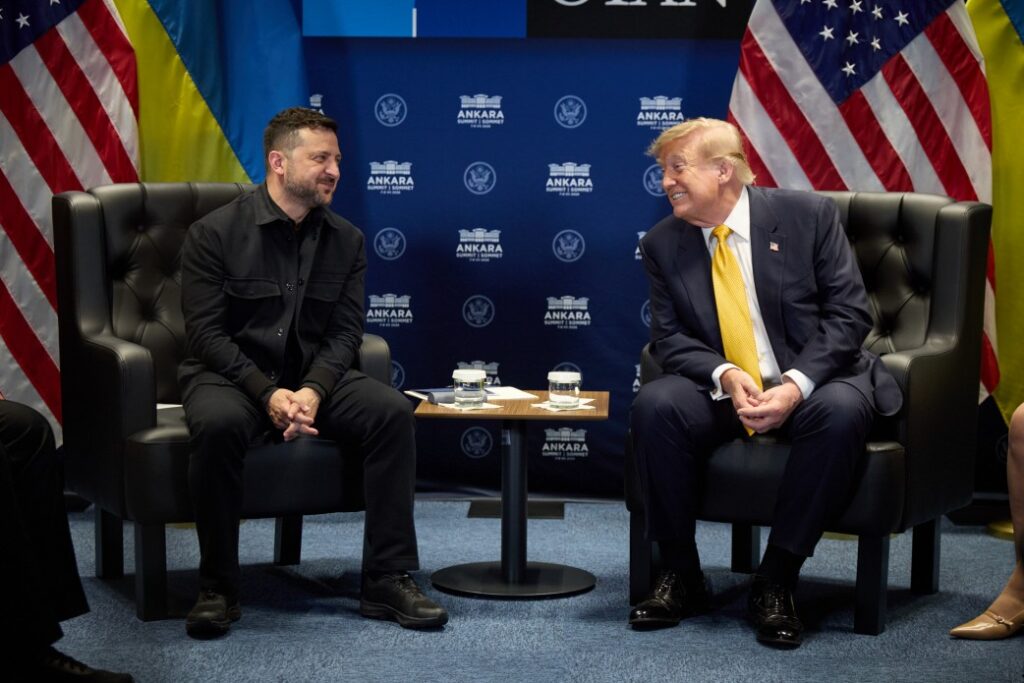
again trump presses zelenskyy stop russian refinery strikes · post ukrainian president volodymyr meets donald ankara türkiye 8 2026 presidentgovua ukraine news reports

Ukraine has loosened its reliance on Washington but still depends on the United States in three military areas that let US President Donald Trump keep pressuring Kyiv, The Telegraph wrote on 12 October. That pressure now centers on the energy ceasefire Trump declared on 11 October, with US officials reportedly warning Kyiv not to hit Russian energy during the truce. Kyiv backs a mutual truce, but Moscow has not confirmed it, and Russian strikes on Ukraine’s grid have continued.

The paper named three such ties: satellite intelligence, Patriot interceptors, and American weapons bought with European money. A pause in any of them would hit just as Russia’s winter campaign begins. Ukraine says an intercepted document reportedly lays out up to 1,000 Russian missiles, drones, and bombs for 60 critical sites this winter, so any pause in US intelligence, interceptors, or PURL deliveries would land as that campaign gets under way.

Satellite intelligence: the US still holds the key

The Central Intelligence Agency (CIA) and other US services still pass precise satellite data that help Ukrainian forces hit targets inside Russia, by the paper’s estimate. Trump briefly suspended that flow in March 2025 to pressure Zelenskyy. A Ukrainian official told Axios that Trump envoys Steve Witkoff and Jared Kushner threatened during 9 October talks in Miami to cut off US intelligence.

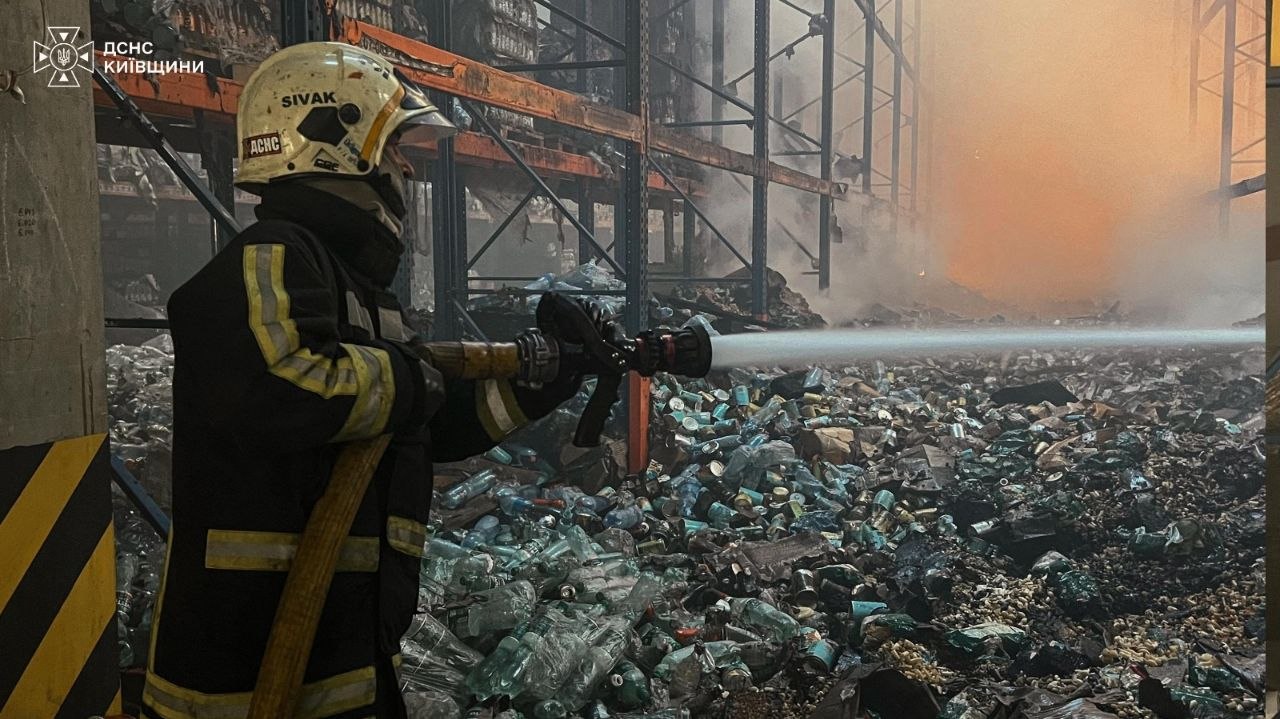
just power plants russia’s drones also went after warehouses groceries hardware chain · post firefighter puts out fire warehouse burned food drink stock hit russian attack bucha district kyiv oblast
Explore further

Russian ballistic missiles hit Kyiv before sirens, gap that lands hard amid fears that Washington could cut data that warns of launches

Patriot interceptors: no quick substitute

The Telegraph called interceptor missiles the second and probably sharpest dependency. Only American Patriot systems can down Russia’s most powerful missiles, which strike Ukrainian cities daily, the paper wrote. Kyiv’s PAC-3 stocks ran dry mainly because US reserves were diverted to the Middle East after America’s war against Iran, the paper added. Kyiv had warned in March that a long Middle East war would squeeze its PAC-3 supply.

Five European defense firms—Destinus, MBDA Deutschland, Safran, Airbus, and Thales—signed a letter of intent in July to develop a joint interceptor, but a testable prototype is not expected before next year, the paper wrote. Ukraine is also building its own interceptor with European allies under the FREYJA program.

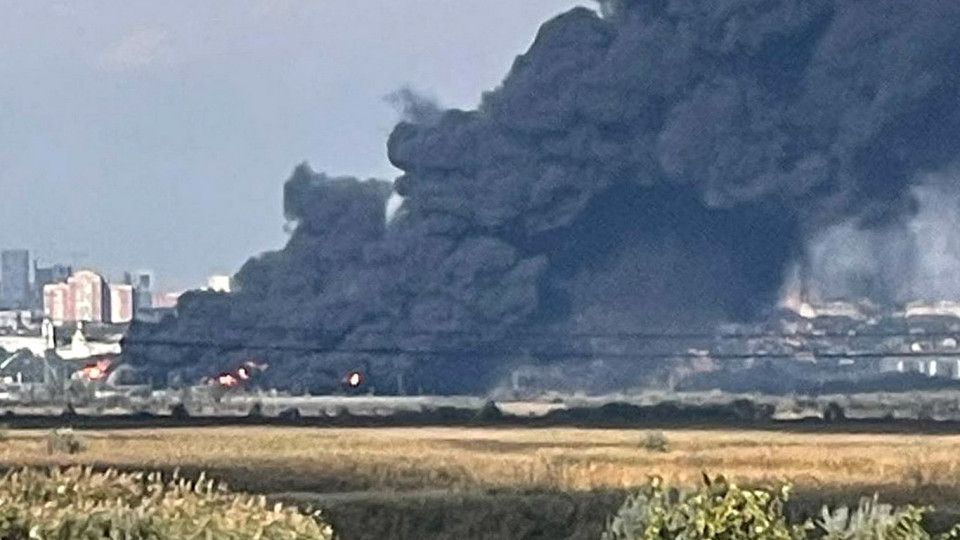
drones burned out more than half tanks russian fuel-export terminal rostov-on-don · post black smoke rises over oil-loading novoshakhtinsk refinery russia after drone strike 10 2026 tme exilenova_plus ukraine news
Explore further

The night Trump announced a diesel deal with Putin, drones knocked out more than half the tanks at a Russian fuel-export terminal

US arms bought with European money

The third is buying American arms with European money through the Prioritized Ukraine Requirements List (PURL), a NATO-run purchasing scheme. US officials have reportedly warned Europe that Trump may halt those supplies if Ukraine keeps striking Russian oil refineries.

  •  

US continues sharing intelligence with Ukraine, Trump says amid Russia deal backlash. Questions remain over missed warning for latest attack

Ukrainian President Volodymyr Zelenskyy meets US President Donald Trump in Ankara, Türkiye, on 8 July 2026.

US President Donald Trump said on 13 October that the US continues to share intelligence with Ukraine, following reports that Washington had threatened to suspend intelligence assistance unless Kyiv stopped striking Russian oil refineries, POLITICO reported.

The comments came after Ukraine received no advance warning from its partners ahead of Russia's latest ballistic missile strike, raising fresh questions about intelligence sharing between Kyiv and Washington.

“We are helping them, and we are sharing intel. We want the war to end,” Trump told reporters at the White House, according to POLITICO, reaffirming US support after his recent efforts to reach an agreement with Russian President Vladimir Putin drew criticism over his approach to the war.

Trump reaffirms support after backlash over Russia deal

Last week, the US threatened to cut intelligence sharing if Ukraine did not stop attacking Russian oil refineries. Zelenskyy did not publicly confirm the reported threat.

The reports came amid criticism of Trump’s announcement of a deal to buy Russian oil and his pressure on Kyiv to make concessions, even as Russia continued attacking Ukraine.

Zelenskyy said Ukraine had refrained from striking Russian oil refineries and the energy sector for two days after Trump announced an energy ceasefire. Russia, however, continued attacking Ukrainian energy facilities and critical infrastructure, he said, with 19 Ukrainian regions coming under attack during those two days.

Trump said Monday that both Russia and Ukraine had violated the energy ceasefire, arguing that each side was responsible. He also said Putin wanted a deal and that Washington needed to persuade Zelenskyy to agree.

Trump's latest comments publicly reaffirm that intelligence sharing is continuing. However, the circumstances surrounding the latest Russian strike have raised questions about whether Ukraine is receiving the early warnings it needs to protect civilians.

Ukraine received no warning before latest Russian strike

Early warnings of incoming Russian ballistic missiles give Ukrainians a brief window to reach shelter before impact. US intelligence helps make those warnings possible, giving civilians crucial time to protect themselves.

Zelenskyy said Russia's latest attack involved five ballistic missiles and more than 100 drones, and that Ukraine received no warning from its partners before the strike.

“Intelligence on Russian ballistic missile launches helps save lives,” Zelenskyy said Tuesday. “This is precisely what helps prevent people from being killed — when there is an early warning about ballistic missiles.”

He added that Ukraine had received no warning ahead of the attack.

just power plants russia’s drones also went after warehouses groceries hardware chain · post firefighter puts out fire warehouse burned food drink stock hit russian attack bucha district kyiv oblast
Explore further

Russian ballistic missiles hit Kyiv before sirens, gap that lands hard amid fears that Washington could cut data that warns of launches

Ukraine normally receives alerts about impending Russian missile launches through the Battlespace Command and Control Center, a system operated by the US military and NATO members, among others, POLITICO reported.

Citing an unnamed official familiar with the matter, POLITICO reported that US officials attributed the missing warning to bad weather. The explanation reportedly raised doubts among Ukrainian officials.

Ukrainian Air Force spokesperson Yurii Ihnat said the warning system had failed to transmit information on previous occasions. He said specialists would work with international partners to resolve any technical problems.

Ukrainian Foreign Minister Andrii Sybiha said Tuesday that intelligence sharing through the platform was continuing, according to POLITICO.

  •  

Frozen assets, embargoes, entry bans: Ukraine names the pressure it wants the EU to put on Moscow

ukraine's defenses against jet drones aren't built up yet its f-16s getting more rounds meantime · post ukrainian foreign minister andrii sybiha сибіга andrij 7ca21 ukraine news reports

Ukraine wants the EU to force Moscow into a ceasefire with frozen Russian assets, trade and transit embargoes, maritime bans, and entry bans, Ukrainian Foreign Minister Andrii Sybiha wrote on X after the EU Foreign Affairs Council in Luxembourg on 12 October 2026. He also welcomed new EU sanctions listings adopted that day and progress in Ukraine’s EU accession talks.

Kyiv has spent this month laying out truce formats it would accept while awaiting Russia’s position on talks, and the levers it is pressing the EU to use include frozen Russian assets that EU leaders failed to agree on tapping last December.

The pressure Kyiv wants from the EU

Sybiha called it “devastating pressure.” He also wants Russian combatants and their families barred from the EU, maximum visa restrictions, and Russia’s isolation in culture and sports.

I was pleased to attend the EU Foreign Affairs Council today.

It is time for Europe to define its strong role. Our future and our security are in our hands.

Now is the time for real European pressure on Moscow. Not half-measures, but devastating pressure: frozen assets, trade… pic.twitter.com/AnI8h6HXbs

— Andrii Sybiha 🇺🇦 (@andrii_sybiha) October 12, 2026

His post named three types of ceasefire—energy, food security, and a full ceasefire—without saying whether Kyiv would accept them separately. Earlier this month, he told journalists Ukraine was ready for an energy and Black Sea ceasefire “but only in such a combination.”

New sanctions listings and two more accession clusters

The minister welcomed the EU’s 12 October adoption of new sanctions listings against Russia—the largest single expansion of the bloc’s blacklist. EU ambassadors agreed on the 1,646 names on 7 October. They include 1,569 tied to Russia’s military industry and 77 to its so-called State Duma elections. The listings are separate from the EU’s 22nd sanctions package, which the EU has yet to adopt.

He also welcomed the EU’s “green light” for opening two more clusters in Ukraine’s EU accession talks: Internal Market, and Competitiveness and Inclusive Growth. The formal opening was scheduled for an intergovernmental conference on 13 October.

Front-line briefing and aid requests

Sybiha said he briefed European colleagues on the front-line situation, Russia’s plans, and ways to deprive it of its advantages, and that he passed partners specific requests for aid. He reaffirmed Ukraine’s commitment to reforms.

  •  

Russia used civilians as human shields, then shelled them near Kupiansk, Ukraine’s Khartiia says

Ukrainian Khartiia Corps reconnaissance footage shows a group of civilians near Kupiansk who were allegedly shelled by Russian forces on 13 October 2026, according to the unit. Screenshot from video: Khartiia Corps

Ukraine's Khartiia Corps has accused Russian forces of using civilians as human shields and then shelling them near a gas pipeline in Kupiansk, Kharkiv Oblast, on 13 October. The group included two women, a child, and several men, according to the Ukrainian military unit.

Khartiia warned that Russian media could use footage of the incident to accuse Ukrainian forces of attacking civilians. The corps said the shelling came from Russian-held territory and described the incident as a deliberate provocation.

The corps said Russian troops led the civilians toward the Shebelinka–Ostrogozhsk gas pipeline before the group came under repeated mortar and artillery fire. Aerial reconnaissance footage recorded casualties among the civilians, the unit said.

Russian forces used civilians as human shields before shelling them near Kupiansk, Ukraine’s Khartiia Corps alleges.

The group included two women, a child, and several men who were being led toward a gas pipeline when they came under mortar and artillery fire, according to the… pic.twitter.com/XvbcwRIwLb

— Euromaidan Press (@EuromaidanPress) October 13, 2026

Khartiia says Russian forces fired from occupied side of Oskil River

According to Khartiia, Ukrainian forces did not open fire on the group. 

The corps said an analysis of the explosions indicated that the shelling came from the eastern bank of the Oskil River, from territory held by Russian forces.

The unit described the incident as a deliberate provocation, warning that Russian media could use footage from the scene to falsely accuse Ukraine of attacking civilians.

Evidence to be submitted for war crimes investigation

Khartiia said it would submit the collected materials for investigation into potential war crimes.

The corps did not provide a confirmed number of civilian casualties or further details about the condition of those shown in the reconnaissance footage.

The allegations have not been independently verified.

  •  

Germany works to organize a Coalition of the Willing meeting as Russia strikes Ukraine’s energy sector

Ukrainian President Volodymyr Zelenskyy during a phone call with German Chancellor Friedrich Merz, 12 October 2026. Photo: Volodymyr Zelenskyy/X

Germany is preparing a new meeting of the Coalition of the Willing to coordinate further support for Ukraine, President Volodymyr Zelenskyy said on 12 October following a conversation with German Chancellor Friedrich Merz.

Russia continues to strike Ukraine’s energy infrastructure despite US President Donald Trump’s claim that Moscow has agreed to an energy truce. German Chancellor Friedrich Merz is initiating a meeting of European leaders to discuss assistance to Ukraine in this situation.

Kyiv and Berlin have also agreed to hold a meeting of national security advisers in the E3 format, with Ukraine participating, according to the statement. The format involves an informal grouping of three leading European countries: the United Kingdom, France and Germany.

Zelenskyy and Merz discuss energy truce and support for Ukraine

During the conversation, the two sides also discussed US President Donald Trump’s proposal for an energy truce and Russia’s subsequent actions. Russian forces continue to attack Ukraine’s energy infrastructure, Zelenskyy noted.

“This is exactly how the Russians behave when pressure eases. It is very important that Europe continue to act on principle,” Zelenskyy stressed.

German Chancellor Friedrich Merz speaks online with Ukrainian President Volodymyr Zelenskyy, 12 October 2026. Photo: Volodymyr Zelenskyy/X

Germany is coordinating preparations for a meeting of the Coalition of the Willing, the Ukrainian president noted. The two sides also discussed support for Ukraine’s financial stability. Further steps are to be coordinated in greater detail during a meeting scheduled for this week, Zelenskyy said.

The Coalition of the Willing seeks additional support for Ukraine

The Coalition of the Willing was initiated by the United Kingdom and France, which held talks with representatives of 37 countries in March 2025 on supporting Ukraine in the event of a peace agreement. The initiative envisaged financial assistance and the deployment of troops, air forces or naval forces to protect Ukraine against renewed Russian aggression, Bloomberg reported.

The latest meeting of the Coalition of the Willing took place on 24 August and was the 16th meeting, according to a statement on the website of the President of Ukraine. Zelenskyy called on partners to strengthen Ukraine’s air defense and provide at least 300 missiles for Patriot systems for the winter, the statement said.

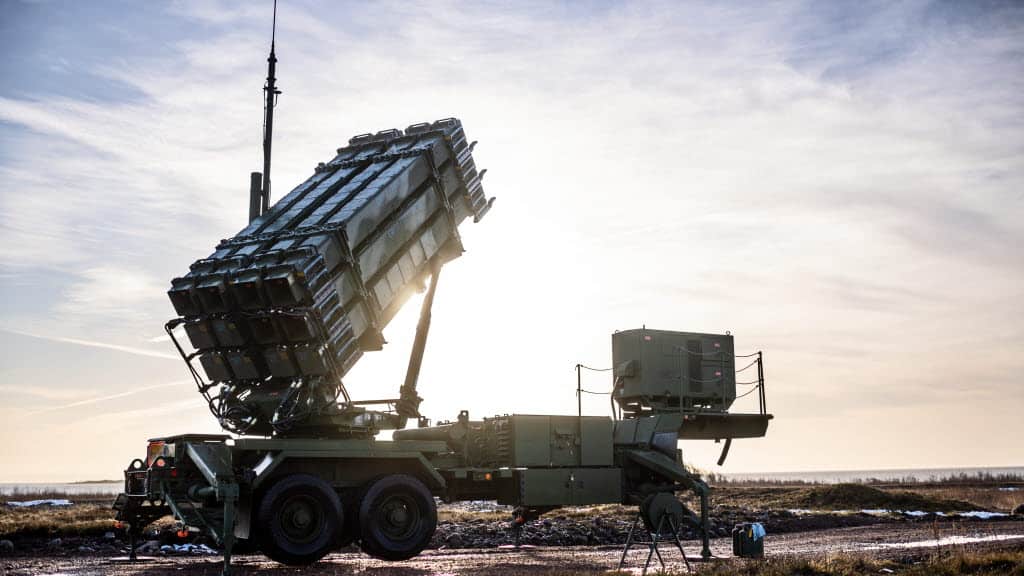
Patriot PAC-3 surface-to-air missile system.
The Patriot PAC-3 surface-to-air missile system. Photo: Swedish Ministry of Defense

The president also proposed bringing forward part of the European loan financing planned for 2027 so that Ukraine could receive the funds this year. He separately stressed the need to find a mechanism for using frozen Russian assets to defend Ukraine and to unblock the maritime corridor in the Black Sea.

“We value this format—the Coalition of the Willing. It brings together countries that are ready not only to talk about security but also to act. We need this—to act and build real security together,” Zelenskyy stressed.

A ceasefire in words, but fresh attacks on energy infrastructure in practice

Ukraine and Russia had allegedly agreed to an immediate energy ceasefire, US President Donald Trump said on Truth Social on 11 October. However, at the time of publication, neither Kyiv nor Moscow had confirmed such an agreement, Ukrainska Pravda reported.

Ukraine supports the ceasefire and is awaiting details from the US side, Volodymyr Zelenskyy said in a post on X the same day. Russia must also agree to halt the strikes, he stressed.

Ukrainian forces had received the relevant orders, and Kyiv was ready to refrain from striking Russian energy infrastructure provided Russia reciprocated, Zelenskyy said in his evening address on 11 October.

Russia continued attacking Ukraine’s energy infrastructure after the ceasefire was announced, including striking a gas production facility and a petrol station, Zelenskyy said on his official Telegram channel on 12 October. Moscow had shown no willingness to abide by the ceasefire, the president added.

  •  

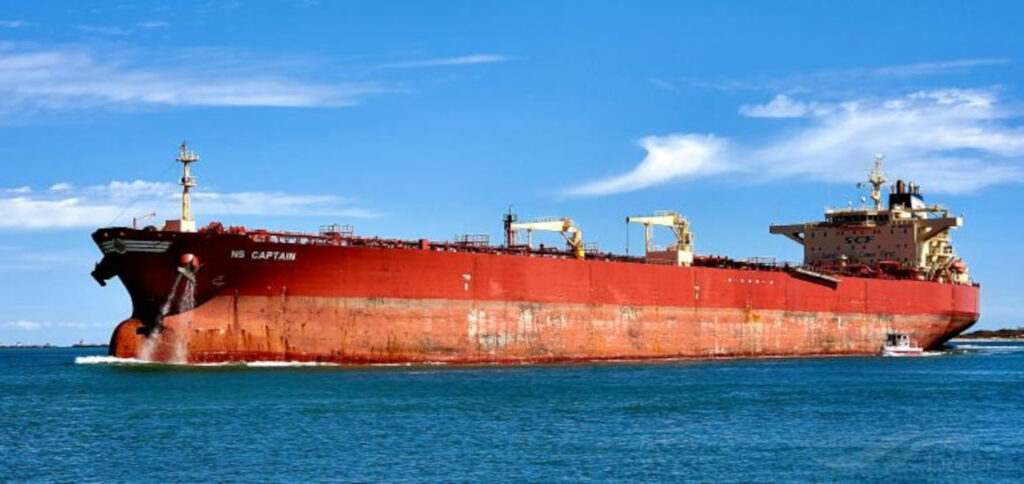
France seizes Russian shadow fleet tanker in Indian Ocean, vows to combat illicit oil trade “wherever it may be in the world”

The DF Peak crude oil tanker, part of Russia's shadow fleet. Photo: VesselFinder

France has seized an oil tanker suspected of belonging to Russia’s shadow fleet after intercepting it more than 450 nautical miles south of Réunion in the Indian Ocean, French President Emmanuel Macron announced on 12 October.

The seizure targets a network Russia relies on to keep oil revenues flowing despite Western sanctions imposed over its full-scale invasion of Ukraine. The shadow fleet allows Moscow to continue exporting oil and funding its war in Ukraine. 

The French Navy boarded the DF Peak over suspicions that it was sailing under a false flag and involved in illegal fuel transportation, Macron said. French forces escorted the vessel to an anchorage near Réunion for further checks as part of a judicial investigation. 

La France est déterminée à lutter contre la flotte fantôme, partout dans le monde.

Ce matin, à plus de 450 nautiques au sud de La Réunion, notre Marine nationale a arraisonné le pétrolier DF Peak, suspecté de naviguer sous un faux pavillon et impliqué dans des activités… pic.twitter.com/GS91egdvzN

— Emmanuel Macron (@EmmanuelMacron) October 12, 2026

What is Russia’s shadow fleet?

Russia’s shadow fleet consists of oil tankers used to keep Russian oil and petroleum exports moving despite Western sanctions imposed after Moscow launched its full-scale invasion of Ukraine in 2022.

The vessels often operate through opaque ownership structures, change names or flags, and use registration practices that make it harder to establish who controls them and where their cargo originates. These methods help Russia maintain oil revenue while limiting the impact of sanctions and restrictions on shipping and insurance. 

The fleet also raises safety and environmental concerns. Many of the vessels are older tankers operating with unclear insurance coverage or limited oversight, increasing the risk of accidents and oil spills.

DF Peak previously sailed under different name

The DF Peak was previously named Kaliningrad and sailed under the flag of Benin. It has been subject to US, UK, and EU sanctions since 2024, according to Reuters. Ukrainian military intelligence has also linked the tanker to Russian crude oil transportation and the shipping company Sovcomflot. 

The tanker was last tracked near Madagascar on 12 October after departing from Venezuela, according to shipping data cited by Reuters. French authorities said the vessel would be taken to Réunion for a closer examination of its registration and activities. 

Russia condemns seizure

Russia’s embassy in France condemned the seizure, calling it a violation of international law and describing the operation as “piracy,” according to Russian state media cited by Reuters. The embassy said France had not notified Moscow about the seizure and that it was checking whether Russian citizens were among the crew. 

The seizure is part of wider European efforts to enforce sanctions against Russia’s oil exports and target vessels suspected of using false flags. France has seized at least five Russian-linked tankers since 2024, Reuters reported. 

  •  

Ukraine says it hit 12 Russian refineries in September. No refinery strikes reported since Trump’s “energy ceasefire”

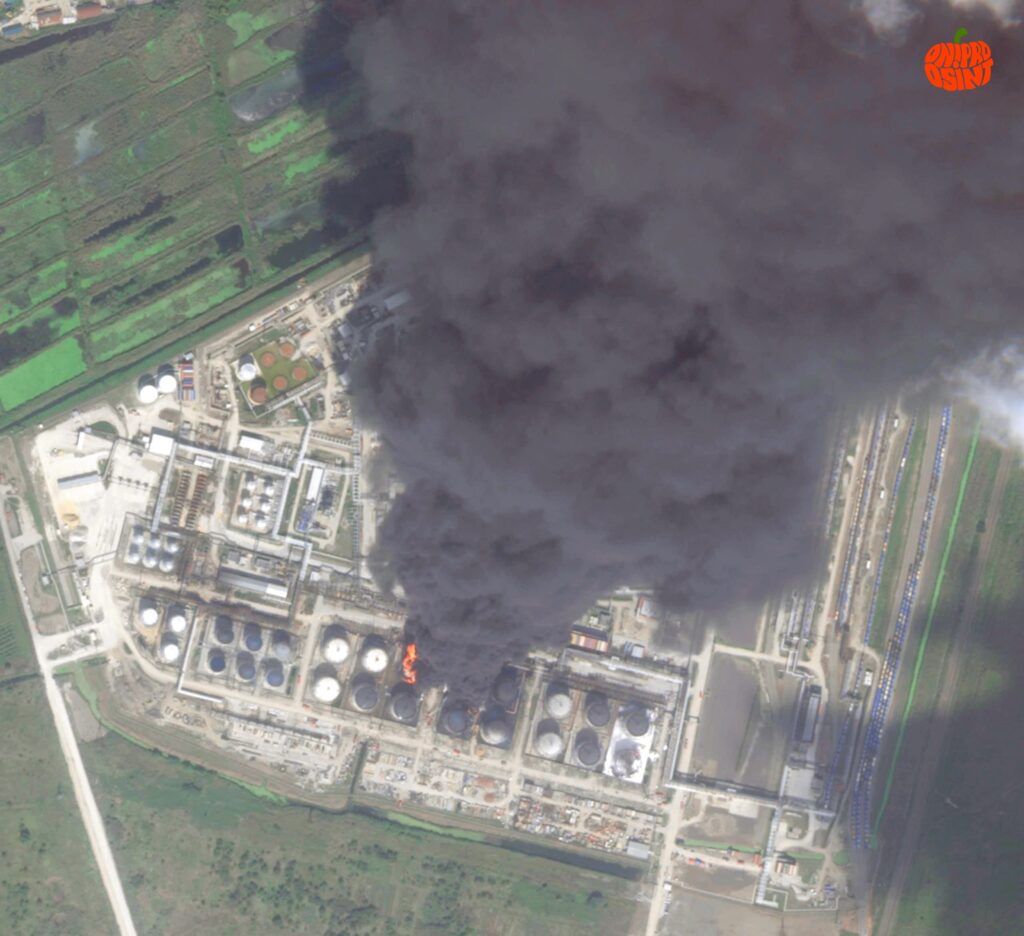
Satellite imagery of the Slavyansk oil refinery after a nighttime UAV attack on 13 September. Part of the refinery is obscured by thick smoke from a fire in the tank farm, Krasnodar Krai, Russia. Photo: Dnipro Osint

Ukrainian forces hit 12 large Russian refineries in September, Ukraine’s Ministry of Defense said, according to ArmyInform on 12 October. The farthest on the ministry’s list, Lukoil’s refinery in Perm, lies about 1,500 kilometers from Ukraine’s border. Since Trump's 11 October announcement, Euromaidan Press has found no reports of new Ukrainian refinery strikes in the official and unofficial Ukrainian and Russian sources it monitors.

A refinery-for-refinery pause would limit Ukraine’s ability to disrupt Russia’s oil industry while leaving Moscow free to keep attacking Ukraine’s energy system, giving Russia an advantage in a war where both sides use energy infrastructure as a target. The issue has become urgent since Trump announced an “energy ceasefire” on 11 October, after which Ukraine reported holding off strikes on Russian energy facilities while Zelenskyy said Russia attacked several Ukrainian energy sites.

The campaign continued into October. Ukraine’s General Staff said Ukrainian forces struck the Samara oil pumping station overnight into 10 October, the third attack on the station that month, according to Radio Svoboda.

Ukraine held off, Russia hit six energy sites

Zelenskyy said Ukraine had refrained from striking Russian energy facilities overnight on 11–12 October following Trump's announcement. Monitoring channels and official Russian sources did not report any new refinery strikes on 13 October.

“Last night, we did not attack any energy facilities on the territory of Russia because President Trump said that there would be an energy ceasefire,” Ukrainian President Volodymyr Zelenskyy said.

He added that Ukraine does not announce its next operational steps. Zelenskyy said Russia attacked six Ukrainian energy facilities on 12 October alone, according to Radio Svoboda.

Refineries first, power plants possibly later

A White House official told Axios that the proposal would begin with both sides halting attacks on oil refineries, with a possible agreement covering power plants to follow. Axios reported that Russia had not accepted a ceasefire.

The Institute for the Study of War (ISW) said the proposal, as described, would give Russia a major concession without offering Ukraine anything in return: Russia has scores of operating refineries, while Ukraine has one. ISW also said the proposal would allow Russia to continue its winter strikes on Ukrainian power stations.

  •  

Germany detains two Turkish nationals suspected of torching a Polish Starlink station that helps route internet to Ukraine

Officers of Poland's Internal Security Agency (ABW).

German services detained two Turkish citizens on 12 October over the 23 September arson attack on a Starlink ground station in Wola Krobowska, near Warsaw, Poland’s Internal Security Agency (ABW) said. Both are suspected of arson, and Polish officials blame Russian intelligence. RMF24 later reported that German police also detained two more people who may be connected to the attack.

Poland is one of the main corridors for Western aid to Ukraine, and Polish Foreign Minister Radosław Sikorski has said Poland spends about $50 million a year on Ukraine's Starlink service. That puts Polish infrastructure in the path of a Russian campaign that already hacks cameras to track arms heading east.

Fingerprints, DNA, and a route out

The men were held under European arrest warrants and now await transfer to Poland. Interior Minister Marcin Kierwiński wrote that the suspects would face charges of “subversion, sabotage on behalf of a foreign intelligence service” after their transfer to Poland. Polish authorities issued European arrest warrants for the suspects, who were subsequently detained in Germany.

Działania @PolskaPolicja i @ABW_GOV_PL we współpracy ze służbami niemieckimi (BKA) doprowadziły
do zatrzymania na terenie Niemiec 2 obywateli Turcji odpowiedzialnych za podpalenie stacji Starlink w Woli Krobowskiej. Zarzut-dywersja, sabotaż na rzecz obcego wywiadu. @CBSPolicji

— Marcin Kierwiński (@MKierwinski) October 12, 2026

Police chief Marek Boroń said investigators reconstructed how the suspects prepared the attack and fled. “We have secured recordings pointing to this specific action. We have fingerprints, the perpetrators’ DNA, how they moved, when they came to Poland, and when they were evacuated from our country,” he said. One suspect lives in Germany, and the other had been ordered to leave the country, he added.

Warsaw points at Moscow

Prime Minister Donald Tusk called the fire another act of Russia's hybrid war and promised the saboteurs will answer to Polish justice.

Na zlecenie polskich służb niemiecka policja zatrzymała dwóch obywateli tureckich podejrzanych o podpalenie stacji Starlink na Mazowszu. To kolejny akt wojny hybrydowej. Sprawcy sabotażu odpowiedzą przed polskim wymiarem sprawiedliwości.

— Donald Tusk (@donaldtusk) October 12, 2026

“We have no doubt that Russian intelligence services are behind this act of sabotage,” said Tomasz Siemoniak, the minister coordinating Poland’s special services.

Those services increasingly turn to people tied to the criminal world, he added.

Two more possible links

German counterterrorism officers detained a woman in Berlin, and a man is also in German custody, Polish radio RMF FM reported, citing its reporter. Both may be linked to the arson. The woman allegedly picked up the Turkish men near Łódź after they entered Poland from Germany, then drove them to Wola Krobowska. The man’s role is still being examined.

  •  

“Now it’s your turn”: US envoys planned to show Moscow a refinery pause and a diesel deal, then ask for something back, a source tells Reuters

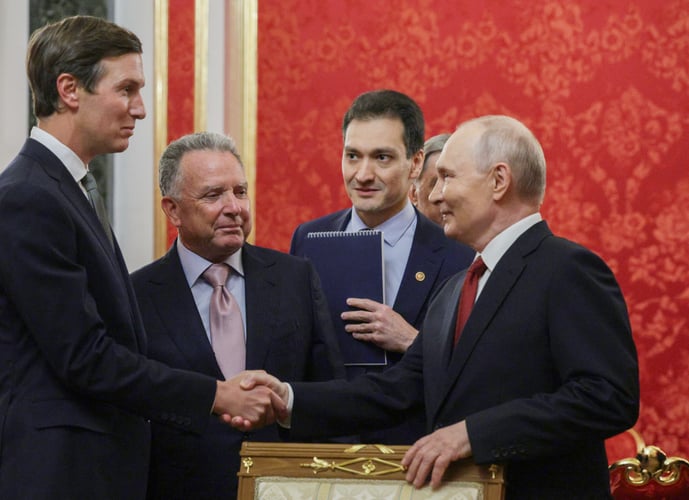
“now it’s turn” envoys planned show moscow refinery pause diesel deal ask something back tells · post jared kushner shakes hands russian president vladimir putin special envoy steve witkoff beside

US President Donald Trump’s envoys told Kyiv that letting Russia sell diesel could draw Moscow back to peace talks, Reuters reported. In the same meeting, they said Russia’s leader was not ready to negotiate. Since then, Moscow has offered nothing in return, and Trump has brushed off claims that Russia helps Iran.

Washington is pressing Ukraine to stop striking Russian refineries and offering Moscow economic incentives to return to peace talks, even though Russia has made no commitment in return. Yesterday, Russian ballistic missiles hit Kyiv before air raid sirens sounded, amid disputed warnings that the US could cut intelligence support. Meanwhile, Ukraine is being asked to halt its long-range campaign against the oil infrastructure that fuels and finances Russia's war.

The pitch: a diesel deal as a signal to Moscow

Trump’s Middle East envoy Steve Witkoff and Trump’s son-in-law Jared Kushner met the Ukrainian delegation in Miami on 9 October. They described Russian President Vladimir Putin as unprepared to negotiate but said the diesel deal could help restart three-way talks, two of the sources said.

The third source said the deal could “soften” Moscow because it “sends a signal that Trump is open to do things” with Russia. One of the sources described the plan:

“The idea was that the US could go back to Russia and say ‘See, the Ukrainians stopped striking and we gave you this deal. Now it’s your turn to do something.’”

Ukraine’s part was to stop hitting Russian refineries. Kushner repeated Trump’s request at the meeting, noting the administration had made it several times, two sources said.

trade banks energy crypto—the eu keeps its full russia economic sanctions wall standing 2027 · post flags member states headquarters council european union brussels belgium 17 2025 getty images/thierry monasse
Explore further

EU blacklists 1,569 Russian arms suppliers and their bosses in its biggest sanctions round ever, as Trump eases up on Moscow

Kyiv was asked to hold its fire on Russian oil

The Ukrainians agreed to nothing formally, Reuters’ sources said. They signaled they would accept an energy ceasefire if Russia did the same, but saw the US approach as an attempt to appease Russia with business deals.

Two days later, Trump declared an energy ceasefire, and Ukrainian President Volodymyr Zelenskyy said Ukraine was ready if Russia reciprocated. Euromaidan Press has monitored official and unofficial Ukrainian and Russian sources and found no reports of new Ukrainian strikes on Russian refineries after Trump’s announcement. One of the last, on the night of the diesel announcement, knocked out more than half the tanks at a fuel-export terminal in Rostov-on-Don.

Three sources told Reuters the envoys did not threaten to cut US support over the refinery strikes. A Ukrainian official told Axios, however, that the envoys warned Trump could cut Ukraine off from US intelligence, which a US official denied. US officials are also believed to have told European allies that Trump would halt PURL, the NATO scheme for Europe-funded US weapons for Ukraine, unless the strikes stopped, according to FT.

U.S. President’s envoys, Steven Witkoff and Jared Kushner on 6 September in Kyiv. Source: President's Office of Ukraine
Explore further

Ukrainian journalist asks Trump’s envoy to his face whether he was disgusted to sit across from “international criminal” Putin. Witkoff wouldn’t answer directly

What Moscow has offered in return

A person close to the Kremlin told Reuters that Putin would return to the table only when he gets “the remaining 11% of Donbas.” Ukraine refuses to cede more land. During the 9 October call that produced the deal, Putin declined to commit to resuming talks, his aide Yuri Ushakov told reporters, Axios reported.

Moscow has not confirmed the energy ceasefire either. Trump insisted on 12 October that the sides had agreed “because I said they agreed,” RFE/RL reported. On the evening of 12 October, Russian munitions collapsed an apartment stairwell in Kharkiv, killing four people. Russian Deputy Prime Minister Aleksandr Novak, meanwhile, claimed diesel exports could reach 3.0–3.5 million tons a month by year-end, above the volumes Trump announced.

“Too much to lose”: Trump on Russia and Iran

Late on 12 October, Trump wrote on Truth Social that he did not believe Russia and China were helping Iran, since they have “too much to lose.” In March, he told Fox News that Putin “might be helping them a little bit.” Asked about Russia’s possible support for Iran, Treasury Secretary Scott Bessent told Fox News on 2 September that his message to everyone was to “stay away.” That month, a Financial Times investigation found Russia secretly helping Iran develop supersonic cruise missiles that could threaten US warships.

  •  

The night Trump announced a diesel deal with Putin, drones knocked out more than half the tanks at a Russian fuel-export terminal

drones burned out more than half tanks russian fuel-export terminal rostov-on-don · post black smoke rises over oil-loading novoshakhtinsk refinery russia after drone strike 10 2026 tme exilenova_plus ukraine news

A drone strike on 10 October put more than half of the large fuel tanks out of action at an oil-loading terminal in Russia’s Rostov-on-Don, Russian news Telegram channel Astra found. The terminal loads fuel onto river and sea tankers for export, and it burned for two days while a local channel wrote that reeds might be on fire. Neither Kyiv nor Moscow has officially acknowledged the hit. It came hours after US President Donald Trump announced a diesel deal with Russian leader Vladimir Putin.

Russia has spent the autumn hammering Ukraine’s power grid ahead of winter. Ukraine’s long-range drones keep hitting the refineries, depots, and terminals that fuel Russia’s army and earn it export revenue. Every burned tank turns that revenue into repair bills, while Moscow is already subsidizing its own fuel pumps. A refinery-only truce of the kind the White House described a day after the strike would shield the Russian plants that feed terminals like this one.

Seven of 12 tanks out of action

Astra’s analysts concluded from eyewitness footage that at least seven of the terminal’s 12 large tanks had been knocked out. Ukrainian monitoring channel Supernova+ counted seven burned-out tanks and one more scorched by the fire.

The fire was still burning in the early hours of 12 October. Local channel Rostov Glavny posted video of the burning tank farm, passing on rumors that reeds were on fire and noting the city’s second day under smoke, The Moscow Times reported. Footage filmed in the daytime on 12 October showed no more open flames, only gray smoke, according to Astra.

drones burned out more than half tanks russian fuel-export terminal rostov-on-don · post satellite oil-loading novoshakhtinsk refinery russia during fire 10 2026 radio liberty новошахтинський завод нафтопродуктів уражені резервуари жовтня
Satellite image of the oil-loading terminal of the Novoshakhtinsk refinery in Rostov-on-Don, Russia, during the fire, 10 October 2026. Satellite image: Radio Liberty

A terminal that loads fuel for export

The site is the oil-loading terminal of the Novoshakhtinsk Oil Products Plant, formerly known as Yug Rusi, in Rostov-on-Don’s Zheleznodorozhny District. It receives, stores, and transships fuel onto river and sea tankers, including for export, Ukrainian monitoring channel Exilenova+ said.

The terminal also supplies fuel to the Russian army and earns Moscow hard currency, ZN reported. The Moscow Times put its loading capacity at 3.5 million tons a year and its tank farm at about 60,000 cubic meters, roughly 16 million gallons.

The White House in Washington DC, USA. Illustrative image: Wikimedia Commons.
Explore further

Trump’s Russian diesel deal, which drew fury in Ukraine, is unlikely to lower prices, experts say

The refinery itself stands in the town of Novoshakhtinsk near the border with Russian-occupied Luhansk Oblast. The terminal sits on the Don River with access to the Sea of Azov, Ukrainian military outlet Militarnyi noted. Ukraine hit the refinery in June, and Ukraine’s General Staff reported striking the Yug Rusi terminal on 9 July, placing it in Bataysk.

A night of drones over the region

Exilenova+ posted images of the burning terminal in the early hours of 10 October. It presented them as the site after Trump’s phone call with Putin. The channel later shared NASA satellite fire data showing the blaze.

Rostov Oblast Governor Yuri Slyusar claimed the attack injured six people. Slyusar further stated air defenses downed more than 100 drones over the region. Radio Liberty’s Russian Service noted that neither side had officially confirmed the hit on the terminal.

drones burned out more than half tanks russian fuel-export terminal rostov-on-don · post aerial view oil-loading novoshakhtinsk refinery russia astra assessed hit marked red orange 12 2026 новошахтинський завод нафтопродуктів
Aerial view of the oil-loading terminal of the Novoshakhtinsk refinery in Rostov-on-Don, Russia, with the tanks Astra assessed as hit marked in red and orange, 12 October 2026. Map: Astra

Hours after the US-Russia diesel deal

The strike came hours after Trump announced on 9 October that Russia had agreed to supply diesel to US and global markets. The US Treasury then cleared the trade with a sanctions license.

On 11 October, Trump declared an “energy ceasefire” between Russia and Ukraine. Under it, he expects Ukraine to stop striking Russian refineries, a White House official told Axios.

Ukrainian President Volodymyr Zelenskyy said that evening that Ukraine’s armed forces had received all relevant orders. Neither Ukrainian monitoring channels nor Russian officials have reported a new strike on a Russian oil facility since. On 13 October, Zelenskyy said Ukraine was ready to guarantee an energy ceasefire if Russia took matching steps.

  •  

“We don’t need to hit the entire plant”—Ukraine’s drones go for refinery parts sanctions make hard to repair

Satellite imagery of the Slavyansk oil refinery after a nighttime UAV attack on 13 September. Part of the refinery is obscured by thick smoke from a fire in the tank farm, Krasnodar Krai, Russia. Photo: Dnipro Osint

Ukrainian drones have helped push Russia into its worst fuel crisis since the Soviet Union fell, The Washington Post (WaPo) reported on 11 October.

Diesel is where this war reaches American drivers. US President Donald Trump blames rising diesel prices mostly on Russia’s war in Ukraine, while experts blame mainly the US war with Iran. Some of his allies now accuse Kyiv of trying to sway the US midterms.

Drones go for the first stage of refining

The Washington Post looked at dozens of strikes between 1 April and 31 August. Three refinery experts then examined satellite images of 54 strikes with visible damage. In over half, the damage seems to be to the desalting and distillation units, known by the Russian acronym ELOU-AVT. These units clean the crude of water and salt, then split it into separate compounds, the first steps toward gasoline and diesel. More than a third appear to have hit secondary units, which turn those compounds into jet fuel, gasoline, and liquefied petroleum gas.

From April through August, drones struck two-thirds or more of the 36 big Russian refineries that S&P Global Energy tracks, a strike every third day. Some took as many as five hits. On 16 June, drones set the Moscow refinery’s distillation towers on fire. That strike and a second one days later kept the plant offline into September, WaPo reported, citing data firm Kpler. Ukraine targeted the refinery again on 20 September.

The White House in Washington DC, USA. Illustrative image: Wikimedia Commons.
Explore further

Trump’s Russian diesel deal, which drew fury in Ukraine, is unlikely to lower prices, experts say

“We don’t need to hit the entire plant,” a Ukrainian drone battalion commander with the call sign Tango told The Washington Post. Ukraine knows where to strike so that a refinery stops and stays down, he said. His unit, Ukraine’s 1st Separate Center of Unmanned Systems, runs long-range strikes deep inside Russia.

Sanctions slow the repairs

The EU banned exports of oil-refining equipment to Russia the day after the 2022 invasion, and the US followed days later. WaPo reported that the bans cover the distillation and secondary processing units Ukraine keeps hitting. The bans make spare parts hard to get, Alexander Kolyandr of Eurasia Group told the paper, and the strikes come faster than repairs.

Since last year, Ukraine has doubled the size of each wave, decoys included, a person involved in the strike campaign told WaPo. The decoys are unarmed and draw Russian fire, wasting air-defense ammunition, WaPo explained. Without them, the person said, Ukraine would simply lose expensive systems. András Rácz of the German Council on Foreign Relations told WaPo that even if only 2–3% of drones get through, the damage is significant.

  •  

Ukraine’s swimming robot can tow 10 tons, its maker says. Hook up a gun, and the shells ride aboard

UNEX UGV ground robotic system.

Ukraine’s amphibious ground robot UNEX UGV can tow artillery guns, its project lead said in a video interview, Militarnyi reported on 13 October. The electric platform from ABRIS Design Group (ABRIS DG) also swims, climbs, and hauls cargo on its own deck.

The Defense Ministry’s robot tally, kept in its DELTA system, counts supply and evacuation runs. It logged 25,143 of them in August, a monthly figure that has climbed all year. In April, then-Defense Minister Mykhailo Fedorov said the goal was for robots to handle all frontline logistics. A robot that brings a gun and its shells to a position adds artillery moves to that workload.

A gun behind, shells aboard

The robot can pull a gun or another wheeled vehicle of up to 10 metric tons (about 22,000 lb), the project lead said. Ammunition can ride aboard, so the gun and its rounds reach the position together. No crew has to go with them, he said, and the team has already demonstrated the setup. On its own deck, ABRIS DG says, the robot carries up to 1.7 tons (3,750 lb) on land and 1.25 tons (2,760 lb) on water.

UNEX UGV ground robotic system.
UNEX UGV ground robotic system. Screenshot: Militarnyi

ABRIS DG said US Army testers ran UNEX through scenarios that included towing Joint Light Tactical Vehicles (JLTVs), which are armored US military trucks. The trials took place at the Army’s XTech competition in Vilseck, Germany, in March 2026. UNEX was picked as one of five winners, the company said.

Swims, climbs, backtracks

The robot can float for more than an hour. The team has already crossed the Desna River and narrow stretches of the Dnipro with it, the project lead said. Ultra-low-pressure tires spread its weight over soft ground and swamps. ABRIS DG says it climbs obstacles up to one meter (3.3 ft) high and drives out of water onto ice.

ukraine turned ground robots frontline workhorse its first competitive tender reward cheap copies over proven machines officer warns · post fifth-generation themis unmanned vehicle developed milrem robotics themis_5th_generation_ugv-1536x1024jpg news ukrainian
Explore further

Ukraine turned ground robots into a frontline workhorse. Its first competitive tender may reward cheap copies over proven machines, an officer warns

Operators steer it via Starlink or radio. An escort drone can add an overhead view to the robot’s own cameras. If the link drops, the robot retraces its route to where the signal last held.

It runs on a Ukrainian-made 78 kWh battery. The project lead puts its work time at up to six hours and its range at up to 120 km (75 miles), with a top speed of 20 km/h (12 mph). Load and terrain cut into those figures, he added. With a generator now in development, a mission should stretch to about 12–14 hours, he said.

The robot is not built for the zero line, the project lead said. It works 20–30 km behind the front, at night, where armor would add little. Developers also plan demining and air defense versions. Ukraine’s Defense Ministry codified the robot and cleared it for use in its forces in April 2025.

  •  

Russian strike collapses a Kharkiv apartment stairwell and kills three, days after the US waived sanctions on Russia’s diesel

russian strike collapses kharkiv apartment stairwell killing three · post rescuers clear rubble excavator building hit kharkiv’s kholodnohirskyi district ukraine 13 2026 oda news ukrainian reports

Russian munitions brought down a stairwell of an apartment building in Kharkiv on the evening of 12 October, and rescuers recovered three bodies from the rubble overnight, local authorities reported. Survivors described fire, falling glass, and pets left behind. The strike came days after Washington waived sanctions on Russian diesel, as it expects Kyiv to stop hitting Russian refineries.

Russia hits Ukraine’s cities every day as it readies a winter campaign against Ukrainian infrastructure, and its oil exports keep bringing in the money that pays for the drones and missiles. A halt to Ukraine’s refinery strikes with no matching halt to Russia’s strikes would leave Moscow’s fuel income intact while Kharkiv digs through rubble. Estonia’s prime minister has already urged Europe to help Ukraine destroy those refineries instead.

A stairwell gone in Kholodnohirskyi district

Russian munitions hit Kharkiv’s Kholodnohirskyi district repeatedly from around 21:17, and Mayor Ihor Terekhov preliminarily identified them as Banderols. At 22:21, he said one strike had hit a residential building, possibly trapping people. He then added in a follow-up post: “Very serious destruction—an entire stairwell has collapsed.”

The strike destroyed an entrance of the four-story building, the State Emergency Service (DSNS) said. It counted 11 injured across the city’s evening strikes, and a rescuer was hospitalized, while Terekhov put the number at 10. By 06:56 on 13 October, rescuers had found a third body. Oblast head Oleh Syniehubov confirmed three dead and said the search continued. Experts will check whether the building is still fit to live in, he added.

A rescuer at the collapsed stairwell of an apartment building hit by a Russian strike in Kharkiv, Ukraine
A rescuer at the collapsed stairwell of an apartment building hit by a Russian strike in Kharkiv’s Kholodnohirskyi district, Ukraine, 12 October 2026. Photo: Oleksandr Manchenko/Suspilne Kharkiv

Over 24 hours, Russian attacks killed three people in Kharkiv and injured 37, including two children treated for acute stress, Syniehubov reported.

“I realize I’m on fire”: two residents recall the strike

Larysa Maksimenko had just put her bedridden husband to sleep when the strike hit, she told Suspilne Kharkiv. She suffered a head wound and burns.

“I went to the kitchen to switch on the kettle for myself, to have some coffee. I realize I’m on fire. Then glass fell on me. I came to, and I’m buried under everything. All covered in blood,” she said.

Larysa Maksimenko, a resident injured in the Russian strike on her apartment building in Kharkiv, Ukraine
Larysa Maksimenko, a resident injured in the Russian strike on her apartment building in Kharkiv’s Kholodnohirskyi district, Ukraine, 13 October 2026. Photo: Valeriia Yemets/Suspilne Kharkiv

The window bars were broken, and medics carried her husband out through the window. Rescuers later found a woman under the rubble in her apartment, likely a neighbor, Maksimenko said. All she wants now, she said, is to get to her husband in hospital.

Viacheslav Chibitko with one of his dogs outside his damaged apartment building in Kharkiv, Ukraine
Viacheslav Chibitko, a resident of the apartment building hit by a Russian strike in Kharkiv’s Kholodnohirskyi district, Ukraine, with one of his dogs, 12 October 2026. Photo: Valeriia Yemets/Suspilne Kharkiv

Viacheslav Chibitko, who lives on the second floor next to the collapsed entrance, saw a flash, and then everything blew out. He got his three dogs out, but five cats are still inside. During the clearing, a concrete slab fell on a rescuer, Suspilne’s correspondent reported. Crews pulled him out and handed him to medics.

Cars burning outside a 25-story apartment building in Kyiv after a Russian drone strike
Cars burning outside a 25-story apartment building in Kyiv’s Darnytskyi district after a Russian drone strike, Kyiv, Ukraine, 12 October 2026. Photo: Office of the Prosecutor General of Ukraine

Kyiv’s toll rises, and strikes hit other cities overnight

The evening drone strike on a 25-story building in Kyiv’s Darnytskyi district killed two people, Kyiv prosecutors reported. The second victim was found dead in a car near the building. Prosecutors counted at least seven injured, including a 17-year-old girl, while Mayor Vitali Klitschko counted 11 in the capital.

just power plants russia’s drones also went after warehouses groceries hardware chain · post firefighter puts out fire warehouse burned food drink stock hit russian attack bucha district kyiv oblast
Explore further

Russian ballistic missiles hit Kyiv before sirens, gap that lands hard amid fears that Washington could cut data that warns of launches

From 18:00 on 12 October, Russia launched five ballistic missiles, nine loitering munitions, and 108 attack drones, Ukraine’s Air Force reported. Air defenses downed or suppressed 88 drones. A Russian drone attack injured four patients at a medical facility in Khmelnytskyi Oblast, oblast head Serhii Tiurin said. In Dnipro, a Russian attack injured a 64-year-old man, oblast head Oleksandr Hanzha reported. A downed Russian drone set two houses on fire in Murovane near Lviv, oblast head Maksym Kozytskyi said.

On 12 October, a Russian Smerch rocket with a cluster warhead hit a house in Cherkaske, Donetsk Oblast, killing three people, including a 13-year-old girl, oblast head Vadym Filashkin reported.

Russian attacks killed more than 150 people in the week to 11 October, Ukrainian President Volodymyr Zelenskyy said. Russian bombs killed at least 20 people in Zaporizhzhia on 10 October, by the oblast’s count. On 9 October, the US waived its sanctions on Russian diesel until April 2027. The White House expects Kyiv to halt refinery strikes under its proposed energy ceasefire.

  •  

Ukraine’s largest steelworks begins cold shutdown after extensive damage from Russian strikes, saying safe operation is impossible while war continues

ArcelorMittal

ArcelorMittal Kryvyi Rih has begun the process of placing its plant in cold shutdown following four Russian missile attacks, the company said on 10 October. The attacks killed six workers, injured more than 18 others, and forced the suspension of primary steel production.

ArcelorMittal Kryvyi Rih is Ukraine’s largest steelworks, so its shutdown adds to the pressure on an industry already hit by Russian attacks and disrupted exports.

ArcelorMittal Kryvyi Rih CEO Mauro Longobardo said the company’s priority was to protect workers and industrial assets. He said the ArcelorMittal Group would remain in Ukraine, but that its assessment was that safe operation was impossible while the war continued.

Workers and the city

As of July, ArcelorMittal Kryvyi Rih and its subsidiaries employed about 17,000 people, local outlet Pershyi Kryvorizkyi reported. On 29 September, the outlet reported that the company had not said how many workers could lose their jobs and was assessing its staffing needs after production stopped. It also said municipal water and heating utilities had about 1,000 vacancies and had been instructed to help ArcelorMittal workers find jobs. The outlet noted that it was unclear whether the vacancies were new and that the announcement did not specify the roles or salaries.

In late September, Kryvyi Rih defense council head Oleksandr Vilkul wrote on Telegram that the city would cut spending and stop a number of projects as tax revenues fell. He attributed the pressure to Russian attacks and the inability to export through seaports, and said several major industrial facilities were idle, including ArcelorMittal Kryvyi Rih and three mining and ore-processing plants.

September steel output down 4.7-fold

Ukraine’s steel production fell 4.7-fold year on year in September, to 131,000 tons, the steelmakers’ association Ukrmetalurhprom said, NV reported. Metinvest chief operating officer Oleksandr Myronenko told Forbes Ukraine on 15 September that the group would declare force majeure on some contracts after Zaporizhstal and Kametstal halted operations.

An expected $1 billion impairment

The ArcelorMittal Group said on 25 September that it expected to record a non-cash impairment of about $1 billion, mostly related to property, plant, and equipment. It also said it had provided more than $700 million in financial support to its Ukrainian business.

  •  
❌