It has been a good week for Russian soft power in the sporting world.
On Tuesday (22 September) in Brussels, the EU lifted a visa-ban on a portly 73-year-old Russian billionaire, Alisher Usmanov, who is head of the International Fencing Federation.
And on Saturday in Samarkand, FIDE, the world chess body, elected a Kazakh billionaire, Timur Turlov, who has no professional chess rating, but who does have strong links to Russia, to be its next president.
On paper, Turlov ended 30 years of Russian rule at FIDE, but at a closer look, his victory seems like its continuation under a false flag.
The 38-year-old financier was born in Moscow and made his fortune there, but left Russia after its 2022 invasion of Ukraine, renounced his Russian citizenship, and divested most of his Russian holdings, giving him a nice alibi against Western sanctions.
But he has still been blacklisted by Ukraine for ongoing business ties to Russia’s oil and gas sectors.
This article continues, but the full version is available only to EUobserver.com subscribers. Visit account.euobserver.com/membership
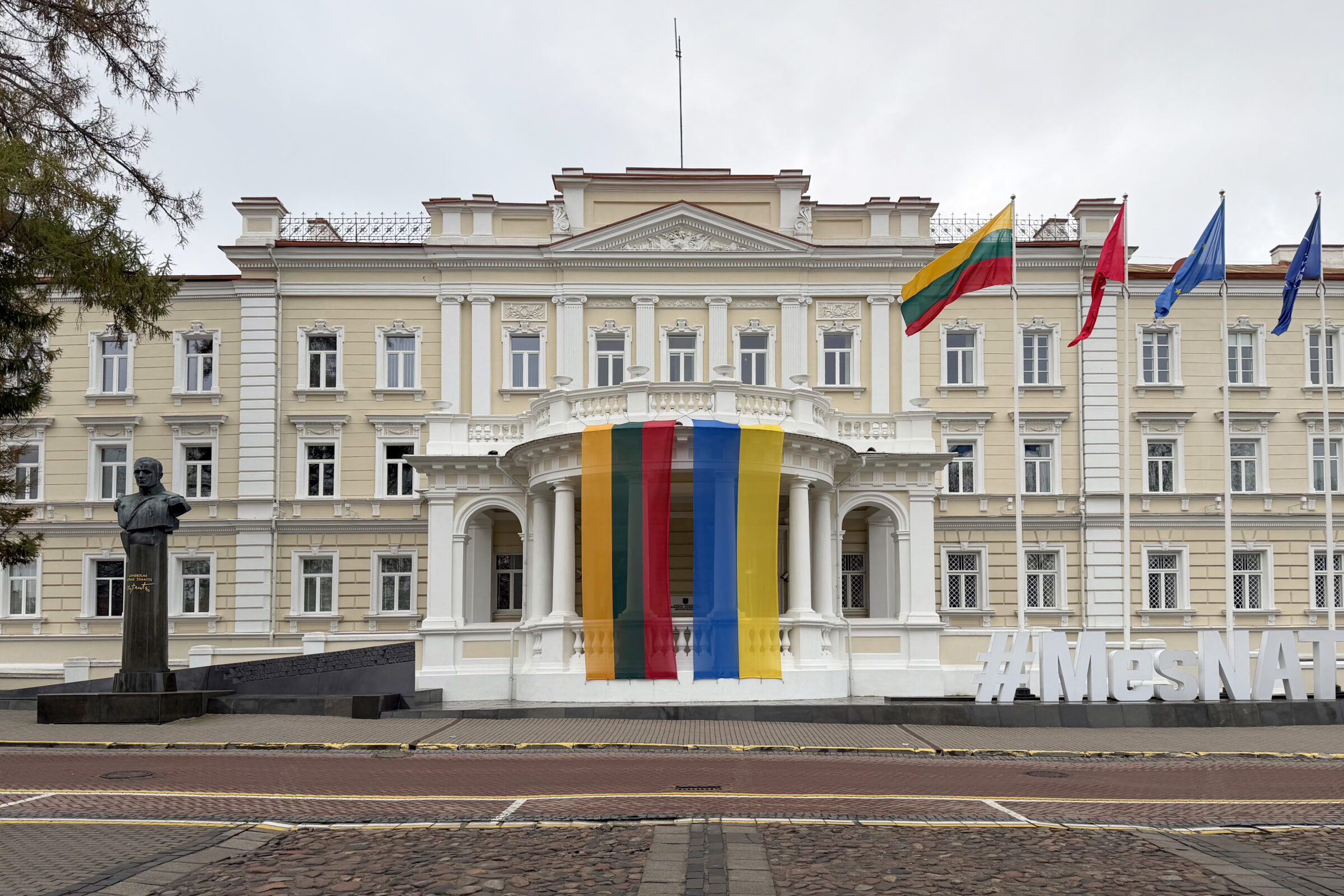
On Tuesday (22 September), the Lithuanian parliament backed a proposal to lift the constitutional ban on the deployment of nuclear weapons and foreign military bases on the country’s territory.
Lithuanian radio LRT reported on the development, which paves the way for nuclear weapons in the country.
Lawmakers overwhelmingly approved the constitutional amendment to lift the ban, with 99 votes in favour, 13 against and five abstentions. The proposal must pass two further parliamentary votes, three months apart, before it comes into effect.
This comes as Europe as a whole debates nuclear deterrence.
In March, French president Emmanuel Macron announced a new French nuclear doctrine. He also raised the possibility of extending France’s nuclear umbrella over countries that could temporarily host French strategic aircraft capable of carrying nuclear weapons.
However, the final decision on their use would remain in the hands of the French president.
France is the only EU member state with its own nuclear weapons and has a similar number of nuclear warheads to the United Kingdom, which sources them from the US.
However, France has long advocated greater autonomy from the US. Macron has justified this due to the inflammatory rhetoric of US president Donald Trump, who puts into question US commitments to European allies.
Ten European countries have joined France’s forward deterrence programme: the United Kingdom, Germany, Poland, the Netherlands, Belgium, Greece, Sweden, Denmark, Norway and Finland, which joined this month ending military neutrality after Russia’s full-scale invasion of Ukraine.
It was in the context of the new European nuclear architecture that MP Remigijus Motuzas, chair of the Lithuanian parliament’s foreign affairs committee, plus another 50 Lithuanian MPs tabled a proposal to lift the constitutional ban on deploying nuclear weapons on the Baltic country’s territory.
Lithuania borders Russia’s heavily-militarised Kaliningrad exclave and Belarus, Moscow’s closest ally in its war against Ukraine.
“Given the situation we are in, the geopolitical situation and what is happening, I think it is certainly worth it,” parliamentary speaker Juozas Olekas said in May, referring to nuclear deterrence.
This article continues, but the full version is available only to EUobserver.com subscribers. Visit account.euobserver.com/membership
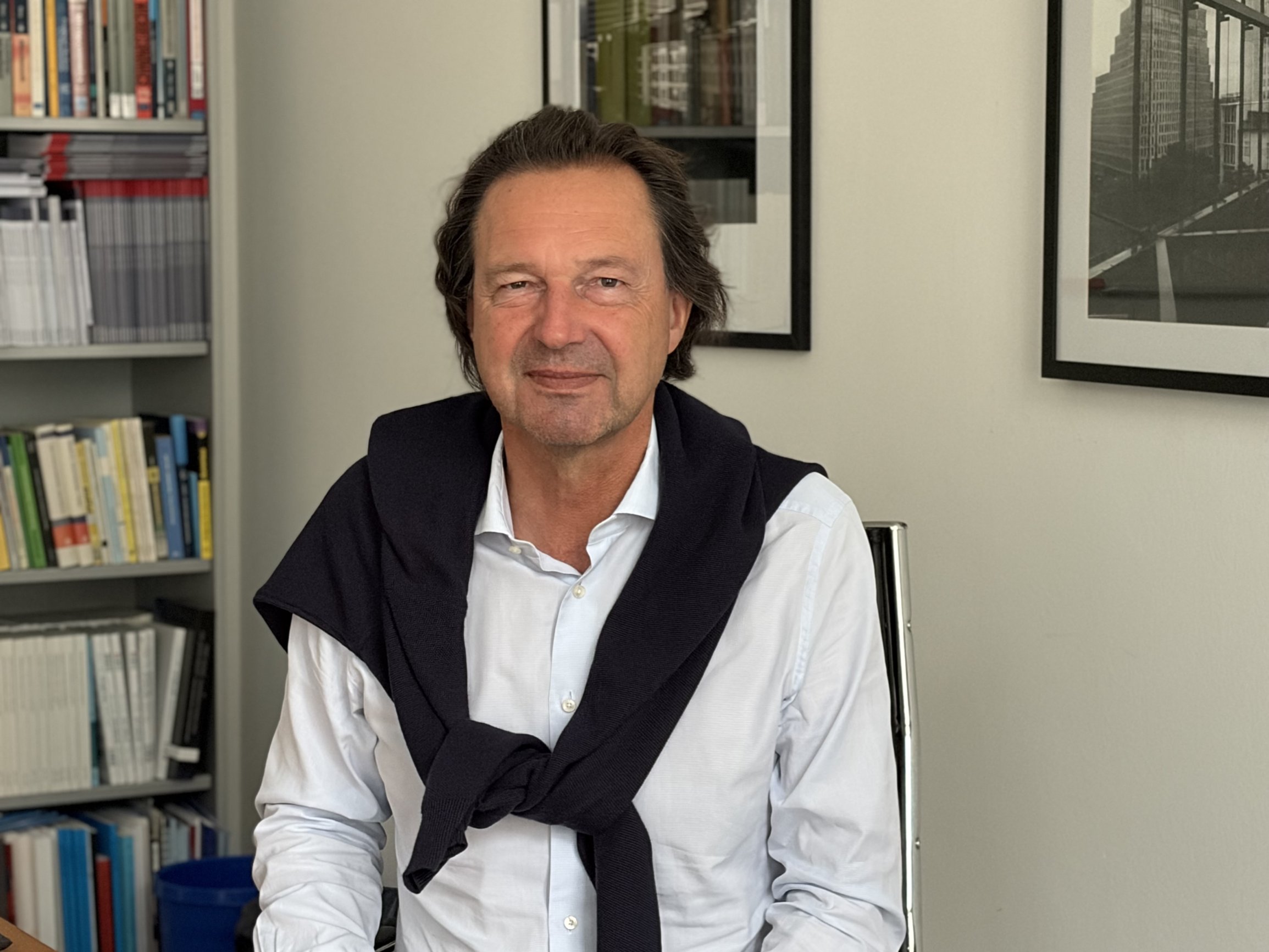
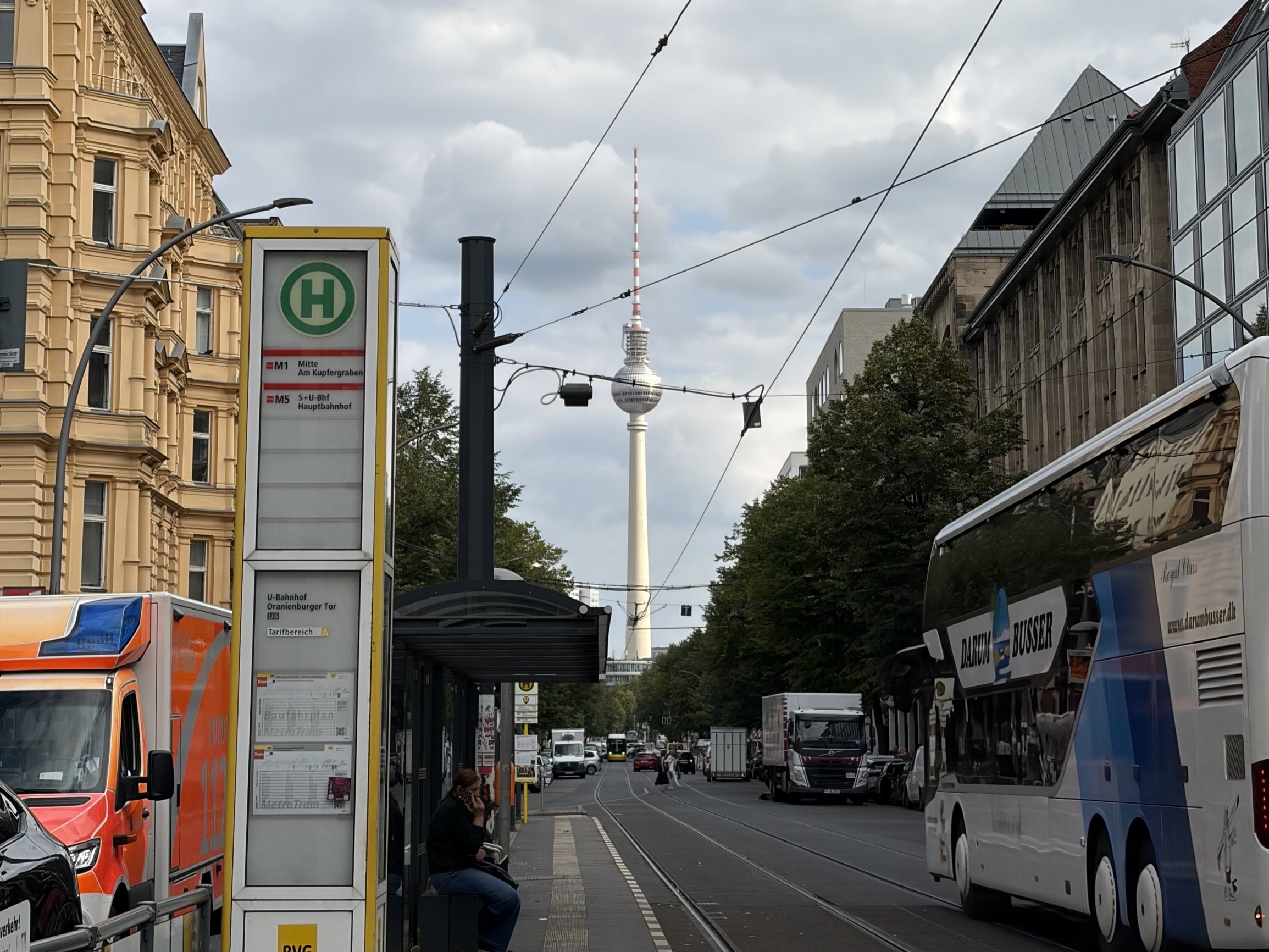
In Berlin, you can be whoever you want to be – as long as you can afford it. By some estimates, the city is short of 100,000 flats. Economist Alexander Kritikos of the German Institute for Economic Research explains how the housing crisis contributed to support for radical political parties.
The housing crisis is one manifestation of wider discontent that is also reflected in support for political parties at opposite ends of the spectrum, from the far-right Alternative for Germany (AfD) to the far-left Die Linke (The Left).
Find out:
Why so few new homes have been built in Berlin.
Will the Left’s plans to purchase homes from private owners work?
What lies behind growing support for the AfD?
How Germany can get back on track with digitisation.
Germany is one of Europe’s richest countries, but it suffers major housing shortages. How come?
The housing crisis is a problem in three or four large cities. Berlin is one of them, and it is a truly major issue here, especially after an influx of tens of thousands of people from within and outside the country.
What happened in 2003?
2003 was a turning point when Berlin became a city of start-ups. Before then, the people were unable to rent out their flats due to an oversupply.
When in the 1990s Berlin was restored as the capital, people expected that many would move here. But the calculations at the time overlooked one thing: the city [West Berlin] had been surrounded by a wall, and its residents could not move to the suburbs.
In the 10 to 15 years following the fall of the Berlin Wall, when rents were at their lowest, more people left the city than arrived. Developments were therefore exactly the opposite of what had been expected. The trend did not stop until 2003, when the last major wave of residents left.
Alexander Kritikos believes that expropriating flats will not resolve the crisis. Source: Anastasiia Furman, Deník N
The city began attracting start-ups. It had an excellent environment for their development and outstanding research institutions. From then until today, more people have been arriving in Berlin than leaving it.
It is therefore clear that, from a certain point onwards, we no longer had any additional flats or houses available to offer.
“When you expropriate something, no new homes are built. It does not solve the housing shortage; you merely shift it from one owner to another”
With so many people arriving, why were more homes not being built?
Building new homes became a bureaucratic nightmare. Obtaining all the permits and dealing with administrative matters took a great deal of time.
And construction became exceptionally expensive while politicians regulated rent levels. Many investors concluded that building homes was not worth their while. For them, costs were too high, bureaucracy too complex and income too low.
Doubts over Left’s proposed flat buy-backs
The Left plans to buy back 220,000 flats fromcorporate landlords. In 2021, 58 percent of Berliners voted in a referendum in favour of expropriation.Now, the Left wants to fulfil this mandate. What do you think?
When you expropriate something, no new homes are built. It does not solve the housing shortage; you merely shift it from one owner to another.
The Left also promise the number of flats will increase, but it will not. It cannot increase in this way.
Historically, Berlin’s housing stock was managed by public institutions, who offered lower rents. And we saw that those who benefited were people with good connections to those allocating the flats.
Whenever demand exceeds supply, other ways of allocating resources emerge, whether through personal connections, under-the-table payments or otherwise.
Mitte, a central Berlin district. Almost everyone would like to live here. Source: Anastasiia Furman, Deník N
It does, insofar as migrants also come to Berlin. But we must really distinguish between refugees and highly educated people who come here to establish their own businesses. They too are immigrants. So I would not say that migration is the problem. Rather, more people are arriving in Berlin than leaving, and that creates excess demand for housing.
This article continues, but the full version is available only to EUobserver.com subscribers. Visit account.euobserver.com/membership
Why Operation Vivaldi is being described as the offensive operation of 2026 and a huge Russian disaster.
Robots in the leading role.
How the operation, which is not yet over, was prepared.
Satellite image of the day: damaged Russian refinery.
Videos of the day: a drone chasing motorcycles and a dummy used as bait.
The first stages of Operation Vivaldi. Long months of preparations in complete secrecy, followed by a series of steps that proved exceptionally successful thanks to smooth coordination and modern technology, have caused the Russian army a major fiasco in its campaign in eastern Ukraine.
Ukraine’s Operation Vivaldi, aimed at pushing back Russian forces around Lyman in Donbas, was long shrouded in uncertainty. A growing number of accounts from within the 3rd Army Corps now show just how exceptional the operation is.
“I can say that this operation may become the most technologically advanced of all those carried out not only during the full-scale war in Ukraine, but anywhere in the world,” Ukrainian military analyst Oleksandr Kovalenko told Denník N.
Розкриваємо деталі та масштаби першого сезону «Вівальді» від Третього армійського корпусу.Хто такі «флаговтики» rф і чому для боротьби з ними Трійка створила об’єднаний штаб, який на тактичному рівні координував дії спеціальних і розвідувальних підрозділів у межах єдиного задуму?Про л*квідацію інфільтрованого противника, чого це коштувало ок*пантам і як виглядають 85 км² території, очищеної від в*рога, — мовою мап і фактів Трійки!
The Ukrainian website NV, which spoke to soldiers involved in it, also considers it the most successful offensive operation of 2026.
Russia’s Meduza took a more cautious view, saying that Ukraine’s advance near Lyman is real, but that for now it is more accurate to speak of a series of local successes than a major strategic breakthrough.
In this article, we summarise what is currently known about the operation, which is still under way, and whose name was inspired by Vivaldi’s The Four Seasons, as it is intended to have exactly the same number of stages. The opening stage, involving extensive preparations, has already ended.
The first details were released in mid-September by Andriy Biletskyi, commander of the 3rd Army Corps, and further accounts gradually followed. Officially, Ukrainians spoke of the “clearing” of 75 km² and the deoccupation of 10 km² in the first stage, the loss of around 1,500 soldiers, more than 12,000 drones, and hundreds of armoured vehicles, artillery systems and vehicles.
The elite Russian Rubikon drone unit was also forced to withdraw because of heavy losses.
In the second stage, Ukrainian forces advanced by another 40 km² and took destroyed villages including Shandryholove, Derylove and Drobysheve.
The logistics of Russian forces in this section of the front collapsed and, according to NV, which spoke to Petro Horbatenko, the chief of staff of the 3rd Corps, the supplies of Russian units had to be moved outside Ukraine.
Thanks to this operation, Ukrainians have severely complicated the Russian occupiers’ ability to infiltrate in the Lyman direction. If the Russians intended to use this section of the front to capture the city and advance further towards Sloviansk, that has for now been thwarted.
The fortified belt of cities in Donbas is holding, although the overall situation is extremely difficult and unbearably dangerous for the ordinary residents who remain there.
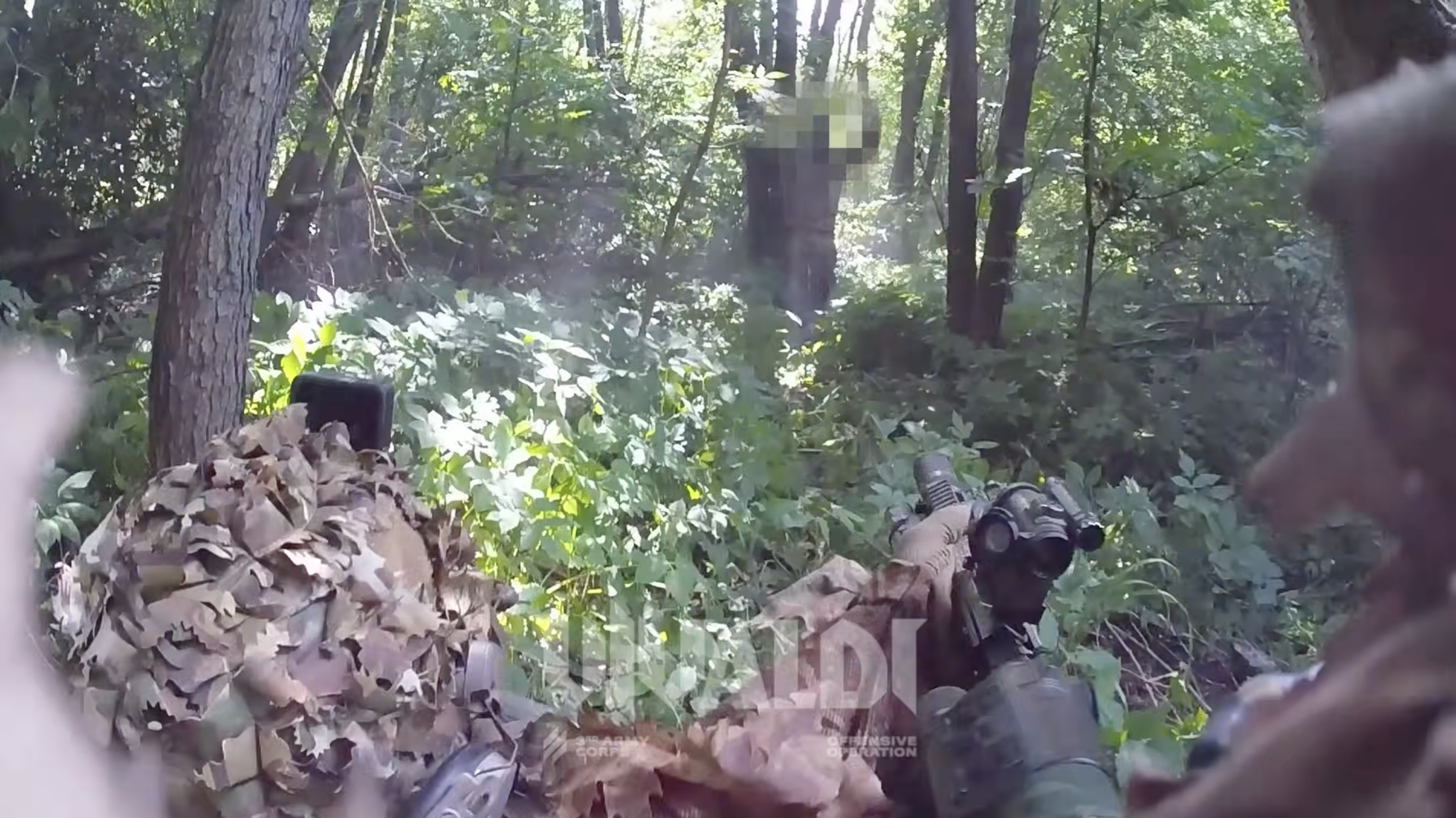
The 3rd Army Corps published footage of one of its many operations. Once the “anti-drone cover” has been destroyed, the attack begins, along with the destruction of Russian armoured and transport vehicles.
Палають вантажівки, танк і мотоцикли — привіт від СБУ!
Під час операції «Вівальді» Третього армійського корпусу FPV спецпідрозділу «Альфа» СБУ нищили піхоту противника, незважаючи на «антидронові» плащі, які тільки більше привертали увагу.
According to the 3rd Army Corps, unmanned systems units carried out 36,000 strike missions during the first stage of the operation.
Unlike the unsuccessful attempt at a counteroffensive in 2023, when its plans were leaked, Ukrainians this time managed to plan the operation quietly for many months.
“For Russia, this is a catastrophe. It is a huge blow, and we can see that they are currently unable to stabilise the situation. They cannot stop this operation, especially as it has in fact only just begun. This is only the first stage; others will follow. That is why its significance is so crucial,” Kovalenko said.
The first task, he said, was to expand the Ukrainian Armed Forces’ zone of control between the Nitrius and Chornyi Zherebets rivers, both tributaries of the Siverskyi Donets. The salient created by the Russian occupiers between those rivers directly threatened the city of Lyman itself.
“In the long term, if Lyman had been captured, there was also a risk that Russian troops would reach the Siverskyi Donets River and its southern bank. They would then have been able to put pressure on Sloviansk, and above all on the entire Sloviansk-Kramatorsk urban area. That is why it was exceptionally important for us to ensure the complete security not only of Lyman itself, but of the entire area,” the analyst from Odesa said.
The second important objective was to cut off Russia’s ability to exert pressure from the south on the range of high ground stretching towards Borova, from Novomykhailivka to Pershotravneve.
“By doing so, we have effectively pushed the Russians back to roughly the positions they held in October and November 2022. It can therefore be said that Russia fought for this section for almost four years, expending enormous human resources, forces and assets, only to be pushed back to its old positions within a few months,” Kovalenko said.
Robots in the leading role. Kovalenko said the operation was also unique because of the new technologies deployed, which show what warfare in the near future could look like.
“Until now, there has been no operation anywhere in the world in which ground robotic systems and drones have formed such a massive component,” Kovalenko said.
According to him, the 3rd Army Corps became the first operational-tactical formation to use a large group of ground robotic systems for demining.
“Within two days, nearly 30 km of roads were demined, mostly at night. Normally, two companies of combat engineers would need around two weeks to clear mines across such an area. All this was completed within 48 hours, mostly at night and without any loss of life, because it was all done by robots,” Kovalenko said.
Later, during counterattacks and offensive operations, robotic systems again formed the vanguard, with drones in some cases dropping them into position.
“Ground robotic systems were equipped with various weapons that enabled them to fire at the enemy. Many of this corps’ procedures and decisions during the offensive were based precisely on the use of these systems,” Kovalenko explained.
“Improvised explosive devices were used to blow up certain buildings where you would not want to send infantry,” Major Akhmet told NV. According to him, a vehicle carrying a kilogram of explosives simply drove up and destroyed the building. Such robots were also used for logistics, evacuation, or intimidation — in the form of a robot fitted with a turret — to deter Russians from advancing further.
According to Kovalenko, the 3rd Army Corps is among the most technologically advanced formations and has the highest proportion of robotic elements in the performance of various tasks. As a result, it was able to restore control over vast areas with minimal losses.
How it was prepared. According to NV sources from within Andriy Biletskyi’s corps, the overall preparations lasted many months, or as long as a year.
Footage of operations during Operation Vivaldi:
As Rodion Kudriashov, deputy commander of the 3rd Army Corps, wrote for Ukrainska Pravda, the situation at the front first had to be stabilised and enemy infiltration stopped.
“This sounds less impressive than the word ‘offensive’, but there can be no offensive without it. It is impossible to plan a complex operation if you do not know where your front line will be tomorrow,” Kudriashov said, adding that the beginning was not actually about moving forward, but about creating the conditions that would make it possible.
In the more interesting part of the operation, according to Dolyna, the commander of Kraken’s unmanned aircraft company, Ukrainians first destroyed logistical support to a depth of 50 km, leaving Russian soldiers on the “zero line” without food, ammunition or fuel.
“It was precisely because of the logistical failure that their drone pilots flew less often,” Dolyna told NV, describing the gradual demoralisation of Russian forces.
At the next stage, Ukrainians struck logistics as far as 120 km behind the lines. “In the enemy’s rear areas, Ukrainian drones systematically attacked and destroyed fuel and ammunition depots, as well as equipment repair bases,” NV wrote of the operations divided among the extensive formation of the 3rd Army Corps.
As Robert G. Rose stressed in his analysis for the Modern War Institute, former defence minister Mykhailo Fedorov had long realised that Ukraine needed to fight deep behind Russian lines because, as he put it: “Russia always operates at operational depth. Russian doctrine is built that way; Russia essentially created this concept.”
According to the analyst, Fedorov therefore favoured the transition to a higher-level corps system, enabling Ukraine to fight in depth and shift from tactical attritional warfare to fighting at the operational level.
A necessary prerequisite before this phase, however, was above all preparation for electronic warfare, which took nine months. Electronic warfare units systematically destroyed both large Russian drones and small reconnaissance drones, effectively “covering the Russians’ eyes”.
“Fortune loves silence,” Sergeant Akhmet told NV, commenting on how they had managed to conceal preparations for such a large-scale operation from the Russians.
At the front, electronic warfare specialists operated continuously, 24 hours a day. One unit member, Barista, described how they destroyed 150 enemy drones over one small area measuring 5 km. With a very limited information footprint, they managed, using drones and electronic warfare, to create confusion among Russian forces, which for a long time did not know what was happening.
After creating an information blackout and destroying logistics, the infantry could move in. During operations, it often found Russians disguised in civilian clothes, while some surrendered on their own because they had neither food nor water.
In war, it is assault units that capture territory, but according to the Ukrainians involved, the conditions for this had been created long beforehand. As Kudriashov, the deputy commander of the 3rd Corps, explained, “an offensive does not begin at the moment infantry receives an order to advance”.
“It begins much earlier: at headquarters, with commanders, in personnel training, logistics, intelligence, unmanned systems, support and dozens of decisions, most of which never make the news.”
According to NV’s findings, the key factor in the success of Operation Vivaldi was ultimately “well-developed interaction between units” — that is, seamless and smooth coordination.
“This was the best cooperation I have had during the war,” Ukrainian soldier Akhmet told the Ukrainian website. “If we spot the enemy somewhere in our zone, I always know that our neighbours will help us. You do not even have to tell them; they will help you. We try to do the same,” he added.
Satellite image of the day
Ukrainians attacked a Russian refinery in Kuibyshev, in Russia’s Samara region, this week. The fire indicated that the attack had been successful. Satellite images published by Radio Svoboda confirmed this. They show that the strikes destroyed five fuel tanks at the refinery. In August, Ukrainians hit a record number of Russian refineries.
💥 Four fuel tanks were destroyed at the Kuibyshev Oil Refinery as a result of a Ukrainian strike on September 22, – Radio Liberty pic.twitter.com/JXzDiqTXD3
When you are riding a motorcycle and a faster drone is chasing you, there are not many options. Either you veer into a ditch, risking death in a crash, or you keep going and the drone catches up with you. This video shows Russian soldiers, each choosing a different path. From the Ukrainian operator’s perspective, it was the best outcome: one drone took out two motorcyclists.
A SIGNUM FPV drone operator takes out two Russian motorcycle assault troops with a single drone.
Chased by the FPV, the first rider apparently panics while trying to evade it, loses control and crashes hard into the roadside. The drone then continues after the second rider and… pic.twitter.com/KUqsZCd2gH
This video shows a dummy in camouflage intended to imitate a soldier. While decoys of military equipment are fairly common in war, the use of such dummies is less widespread. In theory, a drone with a poorer camera could mistake it for a soldier, but it is unclear whether this actually works.
Russian decoy position with a dummy soldier.
Decoy positions themselves are extremely common and widely used. Dummy Russian soldiers have also appeared from occasionally throughout the war, but still do not seem to be nearly as widespread. pic.twitter.com/cblBYVCGGR
By Tuesday (22 September), Russia had verifiably lost 24,138 pieces of heavy equipment (24,098 on Monday, 14 September). Of these, 19,105 (19,065) were destroyed by Ukraine, 1,000 (1,000) were damaged, 1,194 (1,194) were abandoned by their crews, and 2,839 (2,839) were captured by the Ukrainian army. This includes 4,448 (4,447) tanks, of which 3,353 (3,352) were destroyed in combat.
Ukraine lost 12,175 (12,143) pieces of equipment, of which 9,579 (9,551) were destroyed, 702 (698) damaged, 695 (695) abandoned and 1,199 (1,199) captured. This includes 1,464 (1,462) tanks, of which 1,125 (1,120) were destroyed in combat.
Note: Neither side regularly reports its own fatalities or destroyed equipment. Ukraine publishes daily figures for Russian casualties and destroyed equipment, which cannot be independently verified. This overview uses data from theOryx project, which has compiled a list of exclusively photographically documented equipment losses since the start of the war.
EU governments are deadlocked on how to proceed with a major overhaul to the bloc’s pesticides rules following a sustained pushback from scientists and countries outside the EU.
The revisions to the pesticides regulation form part of a food-and-feed ‘Omnibus’ law proposed by the EU Commission last December and are primarily aimed at reducing bureaucracy for European farmers by making it easier to authorise and use pesticides.
But there are deep divisions among member states about some proposals, particularly the revised thresholds on maximum residue levels of chemicals.
Earlier this week, the Irish EU council presidency abandoned plans to get diplomats to adopt a formal negotiating position on the file.
For their part, a group of more than 500 scientists signed an open letter to the commission on 16 September demanding a pause on the file pending “an independent assessment, whether carried out by parliament’s own research service or by an equivalent independent body.”
“Given the scale of the changes under consideration, and in a broader context in which the scientific community is increasingly called upon to warn of cumulative environmental and health pressures, we believe that responsible policymaking calls for caution rather than speed,” the letter says.
Under the proposal, residue limits for certain pesticides banned in the EU could be lowered to the lowest level laboratories can reliably detect, even when those substances remain legally-used in exporting countries.
In order to avoid leaving any residue on fruits and vegetables, producers would essentially have to stop using the substance in question.
This article continues, but the full version is available only to EUobserver.com subscribers. Visit account.euobserver.com/membership
“It takes years to sanction something that can be replicated in days—so what is the point of sanctions at all?”
This is a question we hear repeatedly in our work at the Independent Anti-Corruption Commission (NAKO) in Ukraine to close gaps in the sanctions regime.
And the frustration behind it is justified: several entities we submitted for designation years ago were added to the EU sanctions list only recently.
Since 2014, the European Union has sanctioned about 3,000 individuals and entities in relation to the war against Ukraine. The US has blacklisted over 7,000.
These lists include, among many others, third-country sanctions-evasion facilitators.
One such network exposed in late 2024 supplied microelectronics and British-made optical equipment later used in Russian military aircraft.
The UK sanctioned it nearly six months later; the EU took almost two years. It is one of hundreds, perhaps thousands, of such cases.
Sanctions take time: authorities must gather evidence, meet legal requirements, and assess their impact. Meanwhile, new companies can replace those under scrutiny, keeping the network running.
The British optics case shows how the main facilitator sourced goods from an alleged Hong Kong supplier of essential oils and confectionery flavourings — at an address shared with several companies already sanctioned for evasion.
(Almost) all roads lead to China
This essential-oils supplier was hardly an isolated curiosity.
It pointed to a wider infrastructure of shared addresses, corporate service providers, and unlikely businesses through which new suppliers can keep appearing as others are sanctioned.
Our study traced roughly 1,800 foreign suppliers and more than $800m [€702m] in trade in priority Western microelectronics—only a fraction of the true scale. Most passed through mainland China and, especially, Hong Kong.
China’s role in sanctions evasion — and the shell companies that help facilitate it — is hardly breaking news. But some suppliers in our dataset run very real businesses in rather unexpected fields.
Fuxin Pharmaceutical makes medicines and agrochemicals — and trades in Western microelectronics. Taibung Piping Equipment sells steel fittings for energy and petrochemical systems, alongside integrated circuits, semiconductors, and power electronics.
Shenzhen NuanQin Technology took things further.
It advertised “smart sex toys” but shipped to Russia no “Leopard Print Beginner’s Floggers” or “OMG! Feather Ticklers”.
Customs records show industrial electronics, integrated circuits, and other dual-use components instead.
Its corporate footprint is equally eclectic: NuanQin is also linked to an FPV drone retailer.
Many others have generic names, no websites, and almost no public footprint.
To a Western dual-use manufacturer, they may look like small retailers or freight forwarders — unremarkable enough to pass conventional sanctions screening and keep trading.
Shared addresses are a red flag
Their addresses can reveal what company-by-company screening misses. Sharing one with a sanctioned firm does not warrant automatic designation, but it is a strong signal of diversion risk.
The numbers speak for themselves.
One Hong Kong office unit housed at least 45 companies, with perhaps 20 more: 14 under sanctions or export controls, and 31 unrestricted. Together, they supplied Russia with over $16m in priority microelectronics—within our dataset alone.
Other obscure suppliers lead businesses to claim they sell hats, salon equipment, or even offer immigration services.
Such links may be unsurprising in a world of virtual offices and corporate service providers, but a simple sanctions check misses them, even as tens of millions of dollars in trade pass through.
Beyond the shopfront
Offshore links recur throughout the data. We found 33 addresses associated with offshore structures and used by 66 suppliers, fewer than half of them restricted. Together, those suppliers accounted for over $57m in shipments to Russia, including $26m from unrestricted firms.
A shared office in the British Virgin Islands or Seychelles may raise an obvious red flag. Other connections are much harder to spot.
Take another Hong Kong supplier linked to millions of electronics and microelectronics supplies to Russia. Its ordinary-looking office address has also been used by offshore service providers and operators of tankers linked to Russia’s shadow fleet.
A shared address does not prove a coordinated network, but it points to corporate infrastructure serving both chip procurement and oil-sanctions evasion.
An even more striking case leads to Liu Baoxia. The United States sanctioned her in 2017, and the FBI placed her on its wanted list in 2025. Her network smuggled US electronics to Iran for its missile and drone programmes through Hong Kong front companies in the Ho King Commercial Center.
NAKO identified at least 14 companies supplying microelectronics to Russia from those same offices. Only five have been sanctioned.
Follow the address, not the company
Every company in our dataset, sanctioned or not, supplied Russia with priority microelectronics. We found more than 200 addresses linked to restricted entities. Over 450 suppliers used them, accounting for nearly $380m in trade.
Since 2024, the US Bureau of Industry and Security has listed high-risk addresses alongside company names.
Yet address-based screening remains limited, especially outside the United States. The Common High Priority List shows that governments can agree on shared diversion risks.
They should now do the same for addresses, particularly as Russian and Iranian procurement networks appear to use overlapping corporate infrastructure.
A shared list would help governments and manufacturers scrutinise replacement companies before each requires a separate investigation.
An address does not make every tenant guilty by association. But it should stop an ostensibly clean supplier from getting an automatic green light. Sanctions target companies; evasion networks reuse the infrastructure behind them.

 Login