❌

Reading view

Flávio Bolsonaro’s Campaign Uses AI to Engineer Fake Support

Flávio Bolsonaro at a rally for his presidential campaign. Photo: JOTA.

Digital models modified Flávio Bolsonaro’s event photography to artificially expand audiences and simulate support from female voters.


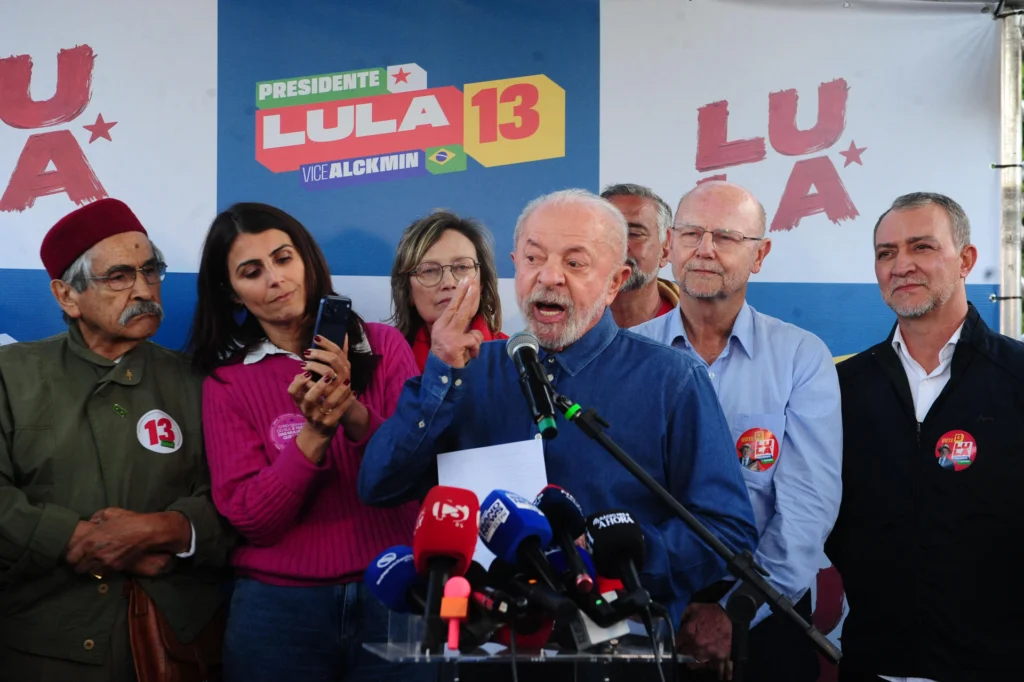
The Brazilian presidential election has become an arena for modern, dirty digital tactics. Senator Flávio Bolsonaro, representing the Liberal Party (PL), has centered his campaign strategy around coordinated digital reach and automated content production.

RELATED: UN Experts Raise Concerns Over Meta’s Handling of Political Expression During Brazil Elections

Rather than working as a traditional political campaign of physical rallies, the operation relies heavily on digital distribution infrastructure across social media platforms.

Flávio’s strategy operates through two main mechanisms. First, the campaign uses synthetic consensus tools, automated social media accounts, AI image generation, and digital avatars to simulate organic public backing.

Second, the campaign benefits from algorithmic distribution asymmetries on digital platforms, which amplify far-right material while placing system restrictions on competing political content.

Collected evidence by independent researchers, journalism networks, and electoral authorities indicates that systemic digital manipulation and platform-level infrastructure played a decisive role in shaping voter perception and electoral engagement in Brazil.

Industrial Bot Networks

A core component of Flávio Bolsonaro’s digital strategy involves the commercial purchase of automated networks designed to manufacture artificial public support.

An investigation by The Intercept Brazil revealed that Flávio Bolsonaro paid Elytron, a cybersecurity firm, to carry out data collection and voter identification to spread rumors and create fake accounts.

These automated tools operate primarily across WhatsApp, Instagram, and X, generating synchronized posts and artificial engagement to bypass standard organic distribution patterns.

This infrastructure uses astroturfing techniques to alter online public discourse. By deploying thousands of automated accounts programmed to post identical messaging scripts, the campaign artificially inflates engagement metrics, pushes specific political hashtags into regional trending lists, and floods comment sections on public news pages.

This creates a false impression of widespread popular momentum, designed to sway undecided voters through perceived consensus.

Technical evaluations submitted during electoral court proceedings reveal the scope of these automated operations. Data presented to electoral monitors shows coordinated account clusters posting at frequencies humanly impossible without software automation.

🚨 BREAKING: Flávio Bolsonaro paid R$600,000 to a company that offered AI to manipulate elections, according to Intercept Brasil. pic.twitter.com/eFcRp74vNw

— Pop Core (@TheePopCore) October 16, 2026

Deepfakes, AI Avatars, Demographic Manipulation

Various social organizations and media outlets have denounced the deployment of AI image and video generation tools as another facet of Flávio Bolsonaro’s digital strategy.

A prominent example occurred during campaign launch events, where the campaign broadcast an AI-generated digital avatar of former president Jair Bolsonaro endorsing his son’s candidacy. This technique allowed the campaign to maintain the political presence of the former president Bolsonaro in public events despite judicial rulings restricting his direct participation in political activities.

In addition, the campaign used AI tools to manipulate visual documentation of campaign gatherings. Documented instances show event photography processed through image generation models to alter crowd compositions.

These AI modifications included scaling up crowd sizes to exaggerate physical attendance and digitally swapping male attendees with female faces. The primary objective of this demographic engineering was to simulate broader support among female voters, a demographic group where polling data consistently showed lower support for the candidate.

An investigation by a Brazilian media outlet identified more than 50 TikTok videos altered using AI, specifically on-the-street interviews in which subjects claimed they would vote for Flávio Bolsonaro. These videos garnered over 7 million views, yet in only 18% of them did the platform indicate that the individuals featured were AI-generated.

While Brazilian law prohibits the use of AI-generated videos in political campaigns, it is difficult to determine when such content is created by third parties with no direct affiliation to the campaigns.

Due to a lack of female supporters, Brazilian presidential candidate Flávio Bolsonaro has resorted to using AI to transform middle-aged men into attractive young women.

This AI-generated creation has been dubbed the "Bolsonaro Bombshell." pic.twitter.com/ap1ecKou9K

— Vatnik Soup (@vatniksoup) October 20, 2026

Disinformation and Aggressive Public Discourse

Flávio Bolsonaro’s public communications strategy relies heavily on coordinated attack campaigns directed against President Luiz Inácio Lula da Silva and the Workers’ Party (PT).

The Flávio campaign’s public messaging routinely utilizes sensationalist allegations and targeted attacks. Online networks affiliated with the campaign circulate manufactured claims regarding public safety, economic stability, and social values, framing the current administration in terms of moral crisis.

On Sunday the 18th, the public debate between the two candidates took place, and Flávio Bolsonaro spent most of his time attacking Lula during his turns to speak.

Throughout the debate, Flávio was sarcastic and mocking toward President Lula; he attempted to intimidate him physically, to which Lula responded by moving away, stating that he did not want to be near either Flávio or the Bolsonaro family.

Furthermore, when the discussion turned to public safety, Flávio claimed that Lula is the preferred candidate of organized crime, pointing out that Lula received a large number of votes from within the country’s prisons. Lula replied, “I want 100% of them to vote for me -even your father,” a reference to the fact that Jair Bolsonaro is currently incarcerated.

This aggressive messaging strategy directly impacts the broader political environment. By flooding public discourse with inflammatory claims, the campaign creates heightened polarization, distracts from substantive legislative evaluations, and systematically delegitimizes established democratic processes and electoral monitoring bodies.

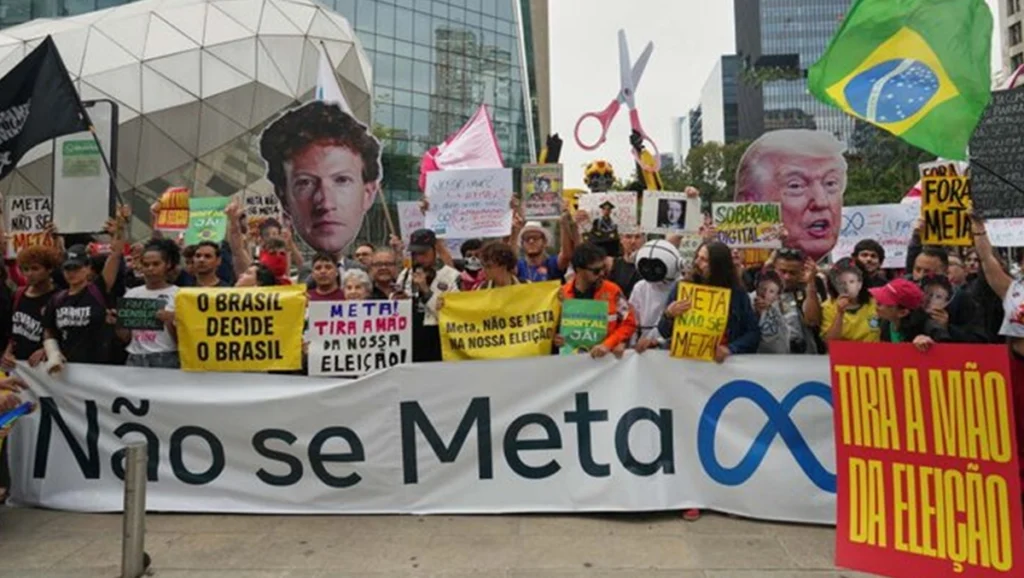
Hundreds of Brazilians protested outside Meta’s São Paulo offices, accusing the technology giant of limiting President Luiz Inácio Lula da Silva’s campaign reach while boosting far-right candidate Flávio Bolsonaro, just six days before the presidential runoff. The demonstration… pic.twitter.com/KRAxExFjMO

— teleSUR English (@telesurenglish) October 20, 2026

Meta’s Structural Bias in the Campaign

The Brazilian presidential race was shaped by asymmetries within Meta’s platforms, including Instagram, WhatsApp, and Facebook.

Filings submitted to the Superior Electoral Court (TSE, in Spanish) by President Luiz Inácio Lula da Silva’s legal team documented clear disparities in how content from both campaigns was handled by the different platforms.

A primary issue involved Meta’s generative AI features. When users requested campaign materials incorporating Lula’s official ballot number, 13, the system repeatedly rejected the prompts, citing political content restrictions. Conversely, identical requests containing Flávio Bolsonaro’s candidate number, 22, were routinely processed, generating promotional material for the far-right campaign.

In other instances, the AI tool inserted Bolsonaro’s electoral number into completely unrelated image requests. Following formal complaints, the Superior Electoral Court ordered Meta to ensure equal treatment. Meta attributed these outcomes to technical errors and implemented broad restrictions on political image generation.

Internal Meta communications revealed that technical errors caused Lula’s official Instagram profile to be excluded from platform search results and recommendation engines, while Flávio Bolsonaro’s profile remained fully discoverable and actively recommended to users. Furthermore, internal technical escalations confirmed that temporary account restrictions had hindered the reach of Lula’s messaging assets.

WHO'S THE REAL THIEF? LULA CHALLENGES BOLSONARO TO SHOW RECORDS

Ahead of Brazil’s presidential election, Brazilian President Lula da Silva publicly challenged rival Flávio Bolsonaro to open his bank accounts, release his phone records, and let the Brazilian people decide who… pic.twitter.com/U6Ge0yOV6A

— Sovereign Media (@sov_media) October 21, 2026

Regulatory Imperatives and Popular Sovereignty

The execution of Flávio Bolsonaro’s digital presidential campaign illustrates the evolving mechanics of far-right electoral operations.

By combining commercial bot procurement, generative AI deepfakes, coordinated public attacks, and platform-level algorithmic advantages, the campaign constructed a heavily synthetic media environment designed to influence voter perception.

These developments underscore the limitations of existing legal and regulatory frameworks in addressing digital campaign manipulation. While judicial interventions by the Superior Electoral Court forced technical corrections, reactive oversight remains insufficient to counteract real-time automated suppression and algorithmic imbalance.

Protecting democratic processes requires structural regulatory reform, including mandatory algorithmic transparency, strict auditing of generative AI systems, and clear accountability standards for global technology corporations operating within national borders.

Exposing the mechanics of digital manipulation through independent research and data-driven journalism remains essential to safeguarding electoral integrity against automated distortion and platform bias.

Sources: Brasil de Fato – Agência Brasil – Gov.br – O Globo – Folha de S.Paulo – O Estado de S.Paulo – El País – CNN Brasil – EFE – Instituto Tricontinental – La Base América Latina – Diario Red – The Intercept – El Salto
  •  

U.S. Early Vote Surpasses 10 Million Two Weeks Before Midterm Elections

Photo: EFE.

More than 10 million U.S. citizens have already cast ballots for the U.S. midterm elections, and Democrats account for over half of that early turnout as the November 3 vote approaches.


General early voting began on Monday, October 19, led by Texas, Alaska, Arkansas, Colorado, Connecticut and South Carolina. Hawaii, Louisiana, Utah, Wisconsin, Florida and Missouri have since joined.

Voters will decide seats in the U.S. Senate and House of Representatives, governorships, state legislatures and local measures on November 3.

RELATED: Texas Early Voting Breaks Records in Key Counties as Senate Race Heats Up

Democratic voters have shown up in force across several districts, a pattern party strategists read as an early effort to blunt the conservative agenda in Congress. That mobilization carries weight because the races will decide control of the Senate, the House of Representatives, several governorships and state legislatures, along with local ballot measures.

The opening surge unfolded amid deep polarization over the federal administration’s record. Turnout in the early states has outpaced expectations even as the national political climate remains volatile.

🎉 Double digits! We've just passed 10 MILLION early votes cast nationally in the 2026 midterms! 🗳️

Democrats 48.9% | Republicans 36.6% | Other 14.5%

And there are still 14 days to go until polls close. pic.twitter.com/0hxKEiMu9T

— E_DataGuy (@E_DataGuy) October 20, 2026

Divided Vote

In Alaska, polls will stay open for 15 days before Election Day. In Arkansas, the Secretary of State estimates early participation of half a million people. In counties such as Saline and Pulaski, early reports show a divided electorate: conservative voters back Governor Sarah Huckabee Sanders and Senator Tom Cotton, who are noted for their alignment with President Donald Trump’s administration.

In Colorado, in-person voting centers opened on October 19 and four million ballots were mailed out. Preliminary records show that 13% of Democrats have returned their ballots, compared with 10% of Republicans and 7.5% of unaffiliated voters. Colorado is electing all of its main executive and legislative offices. Inflation, public safety, defense of social benefits and control of presidential power dominate the priorities mentioned by community organizations and independent voters in Arkansas and Colorado.

Florida prepares to open its mandatory in-person period on October 24, where Hispanic voters make up roughly 29% of the population and carry decisive weight.

Early voting for the midterm elections begins this week in these states:

— Alaska
— Arkansas
— Colorado
— Connecticut
— South Carolina
— Texas
— Hawaii
— Louisiana
— Missouri
— Utah
— Wisconsin
— West Virginia
— Delaware
— Maryland
— Florida
— Michigan
— New Jersey
— New York pic.twitter.com/YPYDIWpkNP

— Headquarters (@HQNewsNow) October 19, 2026

Elections officials warned that, because of the complexity of the voting system, close races could be resolved only on November 18, when the count of ranked choices ends.

The early surge arrives as surveys show some of the lowest approval numbers of Trump’s current administration. The President’s backers have framed the midterms as a referendum on his governing record, while Democrats describe the contest as a check on executive power.

The record pace of early ballots has already surpassed previous benchmarks, with Texas posting one of the strongest showings. As more states open their voting windows in the coming days, the national count is expected to climb sharply before November 3, when the full scope of the midterm verdict takes shape.

#FromTheSouth News Bits | In the United States, analysts assert that the Trump administration is seeking to destabilize democratic-led states by instilling fear through immigration agents known as ICE, in an effort to manipulate the midterm elections and win them. pic.twitter.com/e5Dal77aj0

— teleSUR English (@telesurenglish) October 20, 2026
  •  

Lula Proposes Constitutional Amendment for Free Weekend Transit in Brazil

Lula's government remarked that the project complements the recent reduction of working hours, ensuring the effective exercise of the right to rest for workers. Photo: EFE.

Brazil’s President Luiz Inácio Lula da Silva presented a constitutional amendment on Wednesday that would reserve budget funds for free public transport on weekends and holidays, tying the move to workers’ newly expanded right to rest.


The initiative would redirect 26.8% of parliamentary budget amendments to fund the program, which the government says would strengthen working-class access to leisure and urban mobility.

It envisions reallocating 11.2 billion reais (more than 2.2 billion dollars) from the budget controlled by Congress, whose concentration of resources has historically limited the federal government’s ability to carry out social policies. The proposal still needs to pass Congress.

RELATED: Lula Signs Constitutional Amendment Reducing Brazil’s Workweek to 40 Hours

The Brazilian government argues that this concentration of resources in parliamentary hands has historically limited the federal government’s capacity to carry out social programs. Reassigning the money, officials contend, restores room for initiatives aimed at urban mobility and access to leisure for the working class.

PESSOAL URGENTE 🚨

Lula anuncia tarifa zero para ônibus aos fins de semana em todo o país. PEC foi enviada ao Congresso e prevê que parte do orçamento das emendas parlamentares financie a medida. #FandomsComLula pic.twitter.com/cYNB8bGf9q

— Fandoms Com Lula ⭐️ (@fandomscomlula) October 21, 2026

During the same ceremony at Planalto Palace Lula signed a separate law forgiving 16 billion reais (about $3.1 billion) in tax debts accumulated by individual microentrepreneurs, a category that covers millions of small producers and self-employed workers.

Administration officials portrayed the debt pardon as a lifeline for families whose tax obligations had outpaced their ability to pay. The two measures, they said, respond to the same pressure weighing on popular households across Brazil.

The Brazilian President described the weekend transport plan as a pilot program. Its purpose is to measure the social and operational impact of the zero fare model before any decision to extend it nationwide.

Lula’s administration said the project complements the recent reduction of the working week, helping workers make effective use of their right to rest. Days before Wednesday’s event, Lula attended the Senate promulgation of a separate constitutional amendment that abolishes the six-days-on, one-day-off schedule. The change secures two paid days of rest each week, preferably Saturday and Sunday, and shortens the maximum work week without cutting pay.

🚍 MAIS TEMPO PARA VIVER!

Hoje enviamos ao Congresso a PEC da Tarifa Zero, que propõe transporte público gratuito aos fins de semana e feriados em todo o Brasil e em cidades que possuem transporte público.

Essa proposta se conecta a uma conquista fundamental: o fim da escala… pic.twitter.com/yOcfXFuZ05

— Lula (@LulaOficial) October 21, 2026

Despite criticism from far-right sectors backing Senator Flávio Bolsonaro, the executive said it will deepen its commitment to restoring rights and defending popular gains. The announcements come days before the October 25 presidential runoff in which Lula faces Bolsonaro.

The weekend fare initiative arrives as Lula’s administration pushes a broader agenda of recovering social and labor protections. The Brazilian President has linked the transit measure and the shorter work week as parts of a single effort to lift the weight of daily costs from working families.

  •  

Cuba Denounces U.S. Pressure Ahead of the UN Assembly Vote On Economic Blockade

The accumulated losses from more than six decades of the blockade exceed US$150 billion.

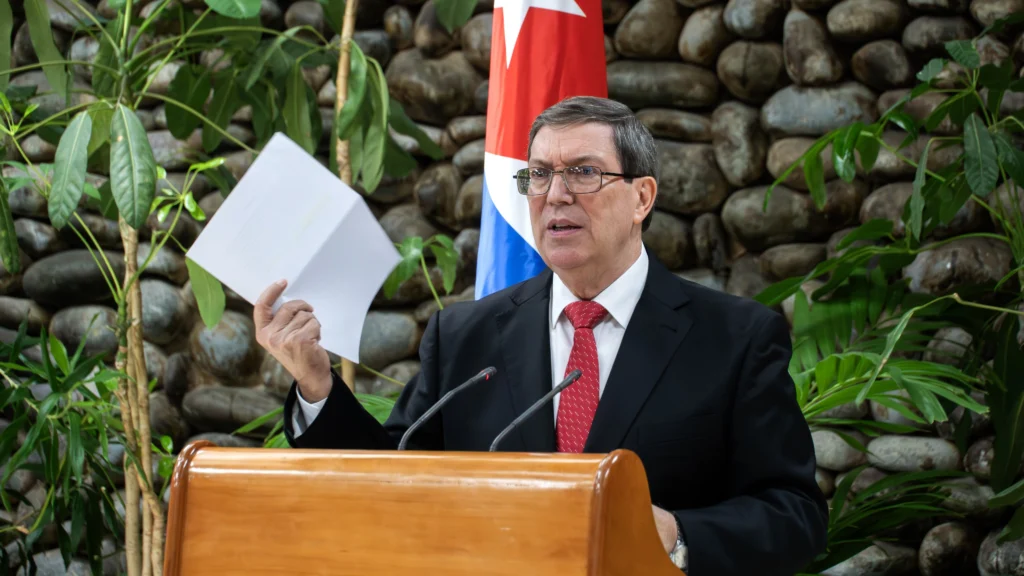
On Wednesday, Cuban Foreign Minister Bruno Rodriguez denounced the United States for exerting diplomatic pressure on numerous countries to change their stance ahead of the upcoming United Nations General Assembly vote on the economic blockade imposed on the island.

RELATED:

United States Escalated Hostility Toward Cuba Throughout 2026

According to the Cuban minister, Washington’s actions are intensifying in the lead-up to the debate scheduled for October 27 and 28, when UN member states will again vote on the draft resolution calling for an end to these sanctions.

Rodriguez stated that the current discussion is taking place against a backdrop of a tightening blockade and noted that, for the first time, the General Assembly will also address the effects of the energy blockade imposed on Cuba.

The foreign minister maintained that the U.S. measures are affecting Cuban foreign trade and are part of a strategy designed to create economic and social hardship in order to generate instability in the country.

During a public appearance, the Cuban foreign minister asserted that he possesses documents evidencing efforts to influence foreign governments to change their vote on the resolution presented by Cuba.

As the cruelty of collective punishment continues, Cubans are standing together against the shortages caused by the U.S. blockade.

Watch how hundreds of community groups are helping Cubans get the medicine they need 👇 pic.twitter.com/0NdgM0mM29

— Cuban Americans For Cuba (@Cubans4Cuba) October 21, 2026

According to Rodriguez, these documents include messages that deem the blockade legitimate. The minister also denounced threats of sanctions against sovereign countries, including trade measures, restrictions against officials, and other forms of political and economic pressure.

He also rejected claims that, he said, attempt to link Cuba to the conflict in Ukraine, calling these accusations “false” and part of a “smear campaign” against the Caribbean nation.

Rodriguez asserted that these actions reflect the international isolation of U.S. policy toward Cuba and recalled that, according to calculations presented by Havana to the United Nations, the accumulated losses from more than six decades of the blockade exceed US$150 billion.

#FromTheSouth News Bits | In Cuba, over a million students return to school, marking an achievement for the nation's education system amid ongoing United States aggression. pic.twitter.com/oMCCt8jRPD

— teleSUR English (@telesurenglish) September 4, 2026

teleSUR: JP

Source: teleSUR

  •  

US Supreme Rejects Trump’s Bid to End Gender-Affirming Care for Trans Inmates

The decision preserves a lower court ruling blocking a federal prison policy that would end hormone therapy.

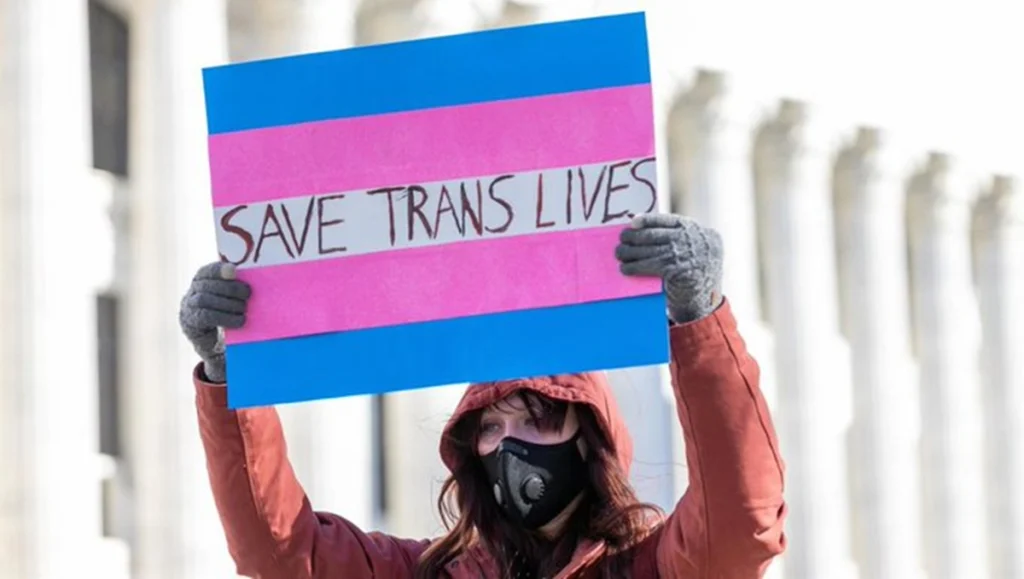
On Wednesday, the U.S. Supreme Court rejected an emergency request from President Donald Trump’s administration, preventing the implementation of a policy seeking to deny gender-affirming treatment to hundreds of transgender inmates in federal prisons.

RELATED:

Brazil’s Far-Right Deputy-elect Faces Transphobia Complaint After Post Targeting Erika Hilton

The decision leaves in place a lower court ruling blocking the Federal Bureau of Prisons from implementing a directive that would have ended hormone therapy and other types of medical care for transgender people in these correctional facilities.

“The application for a stay presented to the chief justice and by him referred to the Court is denied,” the brief court order states. It adds only that conservative Justices Clarence Thomas and Samuel Alito would have supported the Trump administration’s request.

During the summer, a federal judge in the District of Columbia ruled against the Republican administration’s policy, which has supported measures to restrict the rights of the LGBTQ community as part of the culture war promoted by Trump.

All major medical organizations in the US support gender-affirming care. The Trump administration opposes it.https://t.co/my0B4j1dXG

— LGBTQ Nation (@lgbtqnation) October 15, 2026

An appeals court rejected the federal government’s request to suspend the block, an injunction that now remains in place following the Supreme Court’s decision. Meanwhile, litigation over the directive continues.

The “Trump v. Kingdom” case represents the interests of about 1,000 inmates diagnosed with gender dysphoria who are represented by the American Civil Liberties Union (ACLU), which estimates that nearly 800 of them have been prescribed hormone therapy.

More than 2,000 inmates in U.S. federal prisons identify as transgender, according to ACLU estimates. The Federal Bureau of Prisons stopped publishing data on transgender individuals after Trump returned to power in 2025 and now records only men and women in the prison system.

In June, the conservative majority (6-3) on the U.S. Supreme Court sided with Trump and upheld state laws prohibiting transgender athletes from competing on girls’ and women’s teams in school and college sports, concluding that the laws do not violate the Constitution.

teleSUR/ JF

Source: EFE

  •  

UN Experts Raise Concerns Over Meta’s Handling of Political Expression During Brazil Elections

They warn of disproportionate restrictions on campaign accounts and urge Meta to ensure fair treatment of candidates.

On Wednesday, United Nations human rights experts expressed concern about restrictions on political freedom of expression occurring in Brazil as a result of the way the technology company Meta is handling its social media platforms during Brazil’s presidential elections.

RELATED:

Brazilian Court Gives Meta 24 Hours to Prove Equal Treatment of Presidential Campaigns

“Reports of restrictions on legitimate political expression on Meta platforms during Brazil’s elections raise concerns for freedom of expression, association, political participation and equal treatment of political viewpoints, UN experts said.

“Online platforms are key actors in democratic debate. Preventing people from speaking or reaching audiences without explanation affects who is heard,” they added.

This assessment is based on findings by international election observers who have reported incidents of political discrimination through electronic media.

🇧🇷 | META ATACA DE NUEVO A LULA

Empleados de Meta admitieron afecciones voluntarias a las cuentas de Lula, mientras favorecían la visibilidad de Flavio Bolsonaro.

👉🏻 Un aporte oportuno para analizar las elecciones en la nueva arena híbrida:https://t.co/oIAXraHGud pic.twitter.com/kHjb9CxlUM

— Adrián Ramírez (@_adrianramirez_) October 17, 2026

The text reads, “META TARGETS LULA AGAIN. Meta employees admitted to intentionally interfering with Lula’s accounts, while boosting the visibility of Flavio Bolsonaro.”

Among those incidents, they highlighted the temporary interruptions of the campaign account of President Lula da Silva, the candidate of the Workers’ Party who is competing against U.S.-backed far-right Senator Flavio Bolsonaro in the runoff scheduled for Sunday, Oct. 25.

Observers have also recorded differences in audience engagement, user feeds, view counts and reach; restrictions on that campaign’s Instagram posts; and differences between the main political parties in AI image generation, WhatsApp channel search results, candidates’ stories and the distribution of political content potentially benefiting Bolsonaro’s campaign.

“Monitoring reports show thousands of accounts and posts have faced suspensions, reduced visibility and sharing limits, including journalists, human rights defenders, civil society actors and content creators,” the UN experts said.

“Information, including from Meta employees, suggests that accounts linked to one side of the presidential race were disproportionately curtailed.”

3 days after Meta was ordered to stop manipulating algorithms to favor Flavio Bolsonaro in the presidential election, two orgs have submitted evidence to Brazil's Superior Electoral Court that the corporation is still violating national election laws. https://t.co/GzJIA8gSjL

— BrianMier (@BrianMteleSUR) October 19, 2026

Last week, due to this discriminatory treatment, the Brazilian Superior Electoral Court ordered Meta to apply the same rules to both candidates until the runoff, prohibiting unequal restrictions on campaign reach, recommendations, and search results.

“Losing reach can mean losing a voice in public debate and the ability to mobilise communities. Algorithms, AI systems and content-moderation decisions must not become invisible arbiters of political discussion. Where political expression appears disproportionately restricted, platforms must explain why, address unequal impacts and ensure effective remedies,” the UN experts warned.

“The responsibility to respect human rights requires technology companies to identify, prevent and address adverse impacts, in line with the UN Guiding Principles on Business and Human Rights, including in platform governance and content moderation,” they added.

A Meta AI chatbot tells grad student Laura Morgado why Meta is backing Bolsonaro. “Trump & the Bolsonaros are the global political shield for big tech companies against the advance of European regulation & the Latin American left." Another technical glitch?https://t.co/NyVrTkP07d

— BrianMier (@BrianMteleSUR) October 16, 2026

“During elections, delayed remedies may have irreversible consequences. Freedom of expression and information integrity must therefore go hand in hand. Measures against disinformation must not arbitrarily restrict legitimate political expression,” the UN experts stressed, and urged Meta to assess whether its moderation, recommendation, and AI systems disproportionately restricted one side of Brazil’s electoral debate.

“Digital platforms must not become unaccountable gatekeepers of political debate, nor should their systems be susceptible to undue influence by political actors. Democracy and free and fair elections depend on independent and consistent platforms and an open, pluralistic environment where people can access information, scrutinise those seeking power, exchange views and organise without arbitrary interference,” the experts said.

The statement was signed by figures including Leopoldo Maldonado, Special Rapporteur on the promotion and protection of the right to freedom of opinion and expression; Margaret Satterthwaite, Special Rapporteur on the independence of judges and lawyers; and Gina Romero, Special Rapporteur on the rights to freedom of peaceful assembly and of association.

teleSUR/ JF Sources: UNHRC – EFE

  •  

Netanyahu Orders to ‘Topple the Iranian Regime’

The Zionist leader claims U.S. President Trump agrees with the Israeli approach.

On Wednesday, Israeli Prime Minister Benjamin Netanyahu ordered the Army, the Mossad intelligence agency and the rest of the security services to “topple the regime of Iran.”

RELATED:

Netanyahu Orders Prosecution of Israeli Soldiers Who Exposed Gaza Crimes in Documentary “Naza

During a graduation ceremony for army officers, the Zionist leader maintained that the Persian nation has “resumed its efforts to acquire weapons,” which would represent “an existential threat” to Israel.

Netanyahu asserted that he had conveyed this position to U.S. President Donald Trump during a telephone conversation held on Monday, and claimed that the Republican leader agreed with his approach.

Israeli Defense Minister Israel Katz asserted that the Iranian regime “is going through the moment of greatest weakness in its history,” and warned that this situation could push it to adopt extreme measures against Israel.

US and Israel must 'finish' the job

— Netanyahu calls for resumption of large-scale military operations against Iran, according to FT, citing sources pic.twitter.com/J73zmUBbwC

— RT Intl (@RT_on_X) October 21, 2026

“Our message to the Iranian regime is clear: we see its attempts, we are prepared to thwart them, and we are ready to respond with all our strength. If Iran attacks Israel, Iran will burn!” he said.

A security source cited by Israel’s Channel 12 television, however, maintains that the security services have no record of the information presented by Netanyahu, and therefore expressed concern about the possibility that it was erroneous information.

The Financial Times reported that the Zionist prime minister is pressing to resume large-scale attacks against Iran and even prepared a plan to do so ten days ago, although he ultimately did not go ahead with it because of Trump’s opposition.

On Monday, without prior announcement, U.S. War Secretary Pete Hegseth traveled to Israel to meet with Netanyahu, with whom he held a conversation about the Middle East situation, according to what a spokesperson for the Israeli prime minister’s office told EFE.

With that background, the leader of Israel’s leftist Democrats party, Yair Golan, warned on Wednesday about possible military campaigns “for political purposes” ordered by Netanyahu a few days before the general elections in Israel.

teleSUR/ JF

Source: EFE

  •  

Nearly 200,000 Zimbabweans Returned Home Due to Xenophobic Incidents

Anti-immigrant groups often blame foreigners for problems such as unemployment, crime, and strain on public services.

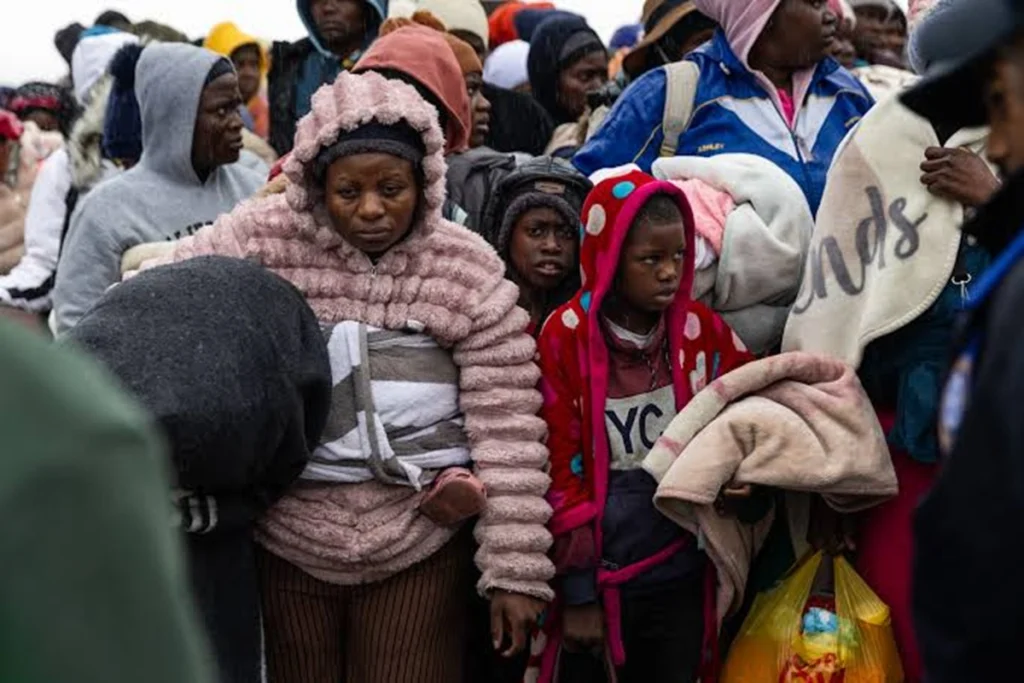
On Tuesday, the Zimbabwean government reported that nearly 200,000 Zimbabweans have returned to their country in recent months due to the rise in xenophobic incidents in South Africa.

RELATED:

Zimbabwe Confirms 93 Deaths in Lake Kariba Shipwreck

Zimbabwe’s Minister of Local Government Daniel Garwe stated that as of October 6, 197,294 nationals had returned since repatriation operations began in late May. He added that 42,553 people returned through government-sponsored programs, while another 154,741 returned on their own through various border crossings.

Among those repatriated are also 700 Zimbabweans who were being held at the Lindela Repatriation Centre in South Africa, some of whom will have to complete their sentences in Zimbabwe.

Garwe explained that the process involves security agencies managing the return of deportees who were facing legal proceedings or serving sentences in South Africa.

Thousands of Zimbabweans are returning home after xenophobic violence in South Africa, describing beatings, robbery and threats from anti-migrant groups.

Nearly 21,300 have been repatriated by the government in five weeks, with 56,800 more self-repatriating. pic.twitter.com/dHYP2LZmtB

— Al Jazeera English (@AJEnglish) July 11, 2026

The Zimbabwean government also reported that it provided assistance to more than 87,000 Malawian citizens who crossed the country during their return from South Africa to their homeland.

Xenophobic tensions are a recurring problem in South Africa and have repeatedly led to episodes of violence. Anti-immigrant groups often blame foreigners for problems such as unemployment, crime, and strain on public services, which has resulted in threats, protests, and acts of exclusion.

Official data from several African governments indicate that more than 260,000 citizens from countries such as Zimbabwe, Malawi, Mozambique, Nigeria, Kenya, Uganda, Tanzania, Ghana, and the Democratic Republic of Congo have been repatriated in recent months due to this wave of xenophobia.

#FromTheSouth News Bits | Africa: In Norton, Zimbabwe, women's soccer teams competed to promote, raise awareness, and support the funding of vaccination campaigns against the human papillomavirus (HPV) with their profits. pic.twitter.com/XrR3eq1QoZ

— teleSUR English (@telesurenglish) February 5, 2026

teleSUR: JP

Source: EFE

  •  

Dominican Baseman Junior Caminero Honored with the Juan Marichal Award

The day before receiving the award, Caminero hit a home run and drove in two runs in his team’s 7-3 victory.

On Tuesday, Tampa Bay Rays third baseman Junior Caminero was honored with the Juan Marichal Award, an accolade given annually to the best Dominican player in Major League Baseball.

RELATED:

Former Baseball Player Bernie Williams to Join Buena Vista Social Club on Broadway

Juan Marichal announced the award himself at the Ministry of Sports, where he highlighted the outstanding season completed by the 23-year-old. Marichal praised Caminero’s performance and asserted that he is destined to become “one of the great figures” of Dominican baseball.

The award comes at a time of great prominence for the third baseman, who played a decisive role in the Tampa Bay Rays’ qualification for the World Series.

The day before receiving the award, Caminero hit a home run and drove in two runs in his team’s 7-3 victory over the Cleveland Guardians, a result that secured their place in the Fall Classic.

Junior Caminero's trip around the bases ⚡ pic.twitter.com/SiANRvSDR6

— MLB (@MLB) October 20, 2026

During the regular season, the Dominican slugger achieved 42 home runs and 101 RBIs, which placed him among the American League’s offensive leaders. In addition to his power at the plate, Caminero finished the season with a .276 batting average, 170 hits, 100 runs scored, and 25 doubles.

In the Juan Marichal Award voting, he received overwhelming support, garnering 82 of the 100 first-place votes for a total of 558 points.

The Tampa Bay Rays player beat out pitcher Cristopher Sanchez of the Philadelphia Phillies and shortstop Elly De La Cruz of the Cincinnati Reds, who finished second and third, respectively.

#FromTheSouth News Bits | Social, trade union, and peasant organizations across the eastern Dominican Republic took to the streets of Higüey for a massive regional march with the slogan "the east rises: we can stand no more abuses." pic.twitter.com/e2TMhYTVgn

— teleSUR English (@telesurenglish) October 14, 2026

teleSUR: JP

Source: EFE

  •  

Russia Signals Willingness to Resume Peace Talks in November

President Putin Is Open to Renewing Trilateral Negotiations After Meeting With U.S. Envoy Steve Witkoff

On Wednesday, Russian President Vladimir Putin indicated that he was willing to resume U.S.-mediated peace negotiations on Ukraine in November following a meeting with White House envoy Steve Witkoff.

RELATED:

Russia Condemns U.S. Arrest Warrant for Raul Castro

“The president informed Witkoff that, in principle, we are prepared to resume trilateral negotiations around Nov. 10 on the most important issue: establishing a security system for Russia and Ukraine at the end of the conflict,” Yuri Ushakov, the Kremlin’s adviser on international policy, said during a telephone news conference.

Ushakov added that Witkoff commented that “this will undoubtedly be received with great satisfaction by U.S. President Donald Trump.”

Ushakov emphasized that Trump’s envoy briefed the Russian leader on the outcome of consultations with Ukrainian President Volodymyr Zelenskyy and European representatives in Oslo.

Lavrov: A Ukraine peace deal acceptable to both Russia and the U.S. entails removing the Zelensky regime.

🔗 Source: https://t.co/37wu5IrvaH pic.twitter.com/KouW6C4yeV

— Russia Direct (@RussiaDirect) October 20, 2026

He noted that Putin listened to the “new positions and ideas” agreed upon by Kyiv and the Europeans in the Norwegian capital, “although, in the context of the process of resolving the conflict in Ukraine, there were not many useful things.”

Putin also took the opportunity to highlight the Russian army’s “strategic initiative” across all sectors of the front and the fact that Ukraine launched a massive attack on Moscow on the day of the legislative elections.

Other issues were also discussed, including the war in Iran, the agreement to supply Russian diesel to the U.S. and other bilateral economic projects, Ushakov said.

Today’s announcement marks a milestone, as trilateral negotiations have not been held since mid-February because of the start of the U.S. war on Iran.

teleSUR/ JF

Source: EFE

  •  

Bolsonaro’s Lead Over Lula Narrows to 1 Point Ahead of Brazil’s Runoff

A new Quaest poll shows the far-right senator with 45% of voter support and the progressive president with 44%.

On Wednesday, polling firm Quaest revealed that Sen. Flavio Bolsonaro’s lead over President Luiz Inacio Lula da Silva in voting intentions for Brazil’s presidential runoff had narrowed from 2 points last week to just 1 point.

RELATED:

Lula Offers to Lift Bank Secrecy as Bolsonaro’s Wealth Faces Scrutiny

If the election were held today, the far-right candidate, who received the most votes in the first round, would receive 45% of the vote, while the progressive president would garner 44%, indicating that the two remain statistically tied because the poll has a margin of error of 2 percentage points.

In the poll conducted last week by the same firm, the son of former President Jair Bolsonaro (2019-2022) had 46% of voter support, a decline of 1 point, while Lula, who is seeking reelection and a fourth nonconsecutive term, had 44%, unchanged from the previous survey.

The new poll, released just four days before the runoff scheduled for Oct. 25, confirmed that the presidential election ranks among Brazil’s most polarized, with the country still divided between the progressivism led by Lula and the far-right politics of the Bolsonaro clan.

Quaest: Lula amplia vantagem entre beneficiários do Bolsa Família. O candidato à reeleição aumentou de 60% para 62%. Ao mesmo tempo, Flávio Bolsonaro (PL) caiu de 31% para 27%.

➡️ #GloboNewsRadar – de segunda a sexta, às 8h30, na #GloboNews. Assista na TV e no Globoplay pic.twitter.com/43AKlyZnCE

— GloboNews (@GloboNews) October 21, 2026

The text reads, “Quaest: Lula expands his lead among Bolsa Família beneficiaries. The candidate seeking reelection rose from 60% to 62%. At the same time, Flavio Bolsonaro (PL) fell from 31% to 27%.”

According to Quaest, which interviewed 2,154 voters between Saturday and Tuesday, the percentage of undecided voters rose from 1% to 2% over the past week, while the percentage of those intending to cast blank ballots or invalidate their votes remained at 9%.

The new poll was conducted after the candidates’ first televised debate on Oct. 18 and after the Brazilian president announced new measures. In addition to the reduction of the workweek from 44 to 40 hours, with two days off and no reduction in pay, Lula announced in recent days a measure to forgive microentrepreneurs’ debts and a bill to provide free bus transportation on weekends.

Bolsonaro received the most votes in the first round of the presidential election, with 47.03%, while Lula finished second with 45.16%, leaving a gap of less than 2 percentage points between them.

teleSUR/ JF

Source: EFE

  •  

Spain Hosts Digital Exhibit Honoring Mary of Hungary

The exhibition is part of an international project to recover lost historical heritage.

On Tuesday, the Alhambra Monument in Granada began hosting the digital exhibition “The Dream of a Renaissance Princess: Mary of Hungary,” which runs until November 20th.

RELATED:

Spanish Museum to Inaugurate Colombian Archaeological Exhibition

The exhibition honors one of the most influential women in 16th-century Europe, exploring the historical and cultural ties between Spain and Belgium through the life of Mary of Hungary, sister of Emperor Charles V and governor of the Netherlands from 1531 to 1555.

The exhibition uses virtual reconstructions and audiovisual resources to showcase the “artistic splendor” of Mary of Hungary’s court, renowned for her political and diplomatic role and her cultural patronage during the Renaissance.

Alhambra Trust Director Rodrigo Ruiz-Jimenez presented the exhibition as part of an international project to recover lost historical heritage. One of the main attractions is the digital recreation of the now-vanished palace of Binche, which Mary of Hungary transformed into a prominent center of cultural and artistic activity.

✳️ La @alhambracultura redescubre el legado de María de Hungría, una de las grandes mujeres del Renacimiento europeo.

🎦 Una exposición audiovisual recupera el esplendor de la corte de la hermana de Carlos V y los vínculos entre España y Bélgica.

ℹ️🔗 https://t.co/vdoyvJMw8x pic.twitter.com/PDPBGPuQI9

— Cultura Junta de Andalucía (@CulturaAND) October 20, 2026

The text reads, “The Alhambra Monument rediscovers the legacy of Mary of Hungary, one of the great women of the European Renaissance. An audiovisual exhibition recovers the splendor of the court of the sister of Charles V and the ties between Spain and Belgium.”

The organizers emphasize that the Binche Palace played a symbolic role similar to the Palace of Charles V in Granada, both conceived as expressions of the power and prestige of the Habsburg dynasty.

The experience invites visitors to tour different palace rooms virtually, learn about the Renaissance court life, and explore music and celebrations characteristic of the period.

The itinerary also includes content dedicated to the Mariemont hunting lodge and the performance of the motet Sancta Maria, a composition created in 1548 in honor of Mary of Hungary. The exhibition is part of the European project MARY4ALL and involves institutions from Spain, Belgium, and France.

#Spain | Madrid's public school teachers have launched an indefinite strike, demanding smaller classes, reduced teaching hours, and increased education funding.
Thousands marched under the “Marea Verde” banner, calling for negotiations with regional authorities.#TeachersStrike… pic.twitter.com/L9nYBiDnGs

— teleSUR English (@telesurenglish) October 19, 2026

teleSUR: JP

Source: EFE

  •  

China Condemns U.S. Legal Action Against Raul Castro

Beijing denounces the use of judicial measures to pressure Havana.

On Wednesday, China opposed the “abuse of judicial means” to pressure Cuba and urged the United States to “immediately end the blockade” against the island following the issuance of an arrest warrant in Florida for former Cuban President Raul Castro.

RELATED:

Russia Condemns U.S. Arrest Warrant for Raul Castro

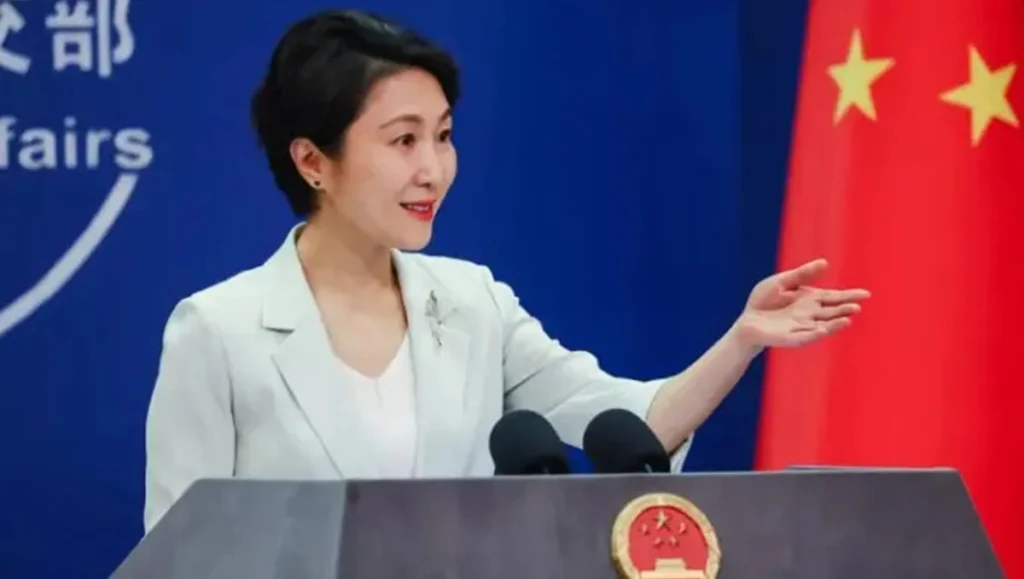
At a regular news conference, Chinese Foreign Ministry spokeswoman Mao Ning said that the former president “is a highly prestigious and respected Cuban revolutionary leader who enjoys enormous authority internationally.”

Mao stressed that Beijing has always opposed the “abuse of judicial means” to pressure Cuba, while expressing the Asian country’s “firm” support for the island in defending its national sovereignty.

The spokeswoman also urged the United States to “immediately end the blockade” against Cuba and “stop violating the Cuban people’s right to exist and develop.”

🇨🇺 95 years of Raúl. Today we honour Army General Raúl Castro Ruz. Born 3 June 1931. Still inspiring generations. From the Sierra Maestra to the highest offices of the Revolution, his life remains a testament to an unbreakable commitment to the Cuban people.#95DeRaúl #RaúlEsRaúl pic.twitter.com/K0DUB6IEiy

— Cuba in the UK (@EmbaCuba_UK) June 3, 2026

Judicial Proceedings Revived Nearly Three Decades After 1996 Incident

China’s position comes after Florida Attorney General James Uthmeier announced on Monday that he had obtained a state arrest warrant for Castro, 95, who has been retired from public life since 2021.

U.S. authorities are seeking to prosecute him on charges of conspiracy to commit first-degree murder, linking him to the chain of command that authorized the 1996 downing of two civilian aircraft belonging to the terrorist organization “Brothers to the Rescue,” an incident in which four Florida residents were killed.

The state-level legal action comes in addition to the indictment filed by the U.S. federal justice system last May. The reopening of the case nearly three decades later coincides with a period of intensified sanctions, political pressure and legal blockades directed by U.S. President Donald Trump against Havana.

#Iran condemns #US interventionist actions against #Cuba, denounces arrest warrant for Raul Castrohttps://t.co/KfOCUGGiFX pic.twitter.com/vBrbkTa05t

— Isna English (@Isna_English) October 21, 2026

Official Rejection From Havana

The announcement by U.S. prosecutors prompted an immediate and forceful response from the island’s top political leadership.

Cuban President Miguel Diaz-Canel called the judicial decision a “pathetic Miami circus” intended to appease the most extremist factions.

Foreign Minister Bruno Rodriguez described the measure as “another futile maneuver by anti-Cuban politicians in South Florida,” aimed at manufacturing pretexts to deepen the economic stranglehold on the Cuban population.

teleSUR/ JF

Sources: EFE – teleSUR

  •  

Spanish Students Protest Javier Milei’s Visit to University

Demonstrators at Rey Juan Carlos University denounce his policies threaten public higher education.

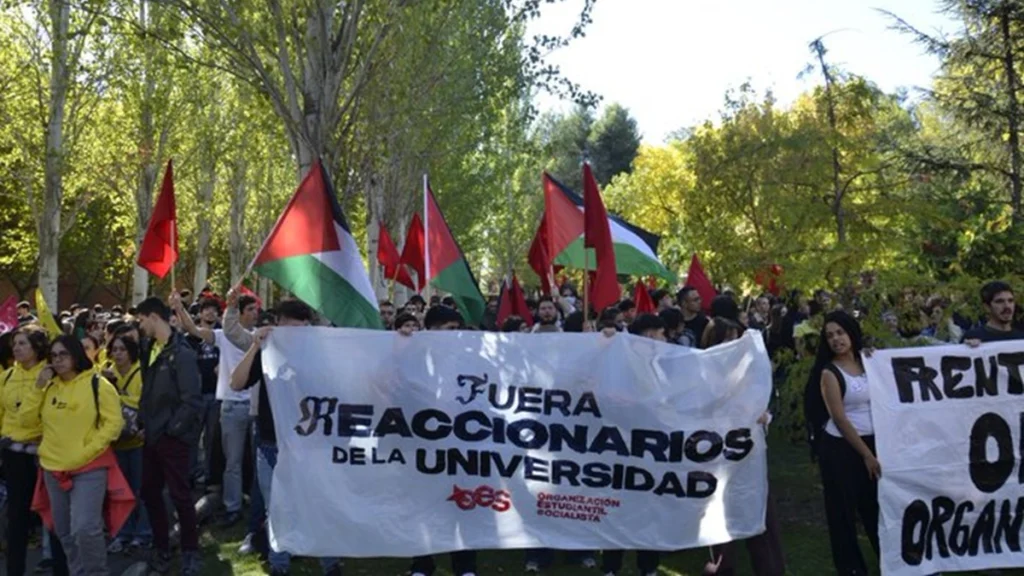
On Wednesday, hundreds of Spanish students gathered at Rey Juan Carlos University (URJC) to protest the visit of far-right Argentine President Javier Milei, who was scheduled to participate in a forum during his stay in Madrid.

RELATED:

Argentine Court Rules Milei University Funding Decree Unconstitutional

Armed with pots and pans, whistles, Palestinian flags, and banners, the students waited for the Argentine leader, who arrived at the university escorted by several security vehicles with tinted windows.

“Milei, fascist, you’re on our list” and “Milei, you rat, die,” social activists opposed to the presence of the far-right politician shouted in unison.

The URJC for Public Education Platform has called for Milei’s invitation to be canceled, arguing that his presence contradicts the values of a public university.

El fascista de Javier Milei se encuentra ahora mismo en el campus de Vicálvaro de la URJC impartiendo una charla, acompañado de Díaz Ayuso.

Las estudiantes nos negamos a que nuestros campus sean utilizados como altavoces para los discursos reaccionarios. No pasarán. pic.twitter.com/fkriIKhmnn

— Sindicato de Estudiantes (@SindicaEstudian) October 21, 2026

The text reads, “The fascist Javier Milei is currently at the URJC’s Vicálvaro campus giving a talk, accompanied by Diaz Ayuso. We, the students, refuse to let our campuses be used as a platform for reactionary discourse. They shall not pass.”

“The campus must be a free space where we can all express our opinions,” said Sara Pazos Garcia, a doctoral student in health sciences, who denounced the university administration’s failure to respond to her statement rejecting the visit.

Alejandro, a spokesperson for the organization Socialism, criticized the university model promoted by Milei and Isabel Diaz Ayuso, the conservative president of the Community of Madrid.

“They represent the same university model, which involves defunding public universities to drive the working class out of them,” he said.

The protest took place under a heavy security deployment, with dozens of riot police officers stationed in front of the library and six police vans on the campus’ main street, while demonstrators chanted, “Police out of the university.”

teleSUR/ JF

Source: EFE

  •  

Cost-Of-Living Protests Highlight Mounting Economic Pressures Across Europe

High debt, tight budgets and long-standing structural problems leave few quick or easy solutions.

Recent protests across Europe have brought social and economic strains into sharper focus, reflecting concerns that extend beyond prices to housing, incomes, public services and economic security. Governments face growing pressure to respond, but high debt, tight budgets and long-standing structural problems leave few quick or easy solutions.

RELATED:

Zakharova Accuses Macron of Hypocrisy Over French Protests

Holding a cardboard sign reading “I am 81 and being evicted,” retiree Maria Teresa Faleiro joined crowds in Lisbon protesting against soaring living costs and a deepening housing crisis.

Despite never missing a payment on the 724-euro (813-U.S. dollar) monthly rent for the home she has lived in for 22 years, Faleiro faced eviction after her landlords refused to renew her lease. With nowhere else to go, she plans to appeal the court-ordered eviction, she said.

Faleiro’s struggle highlights the growing plight many pensioners in Portugal face in securing affordable housing. It also reflects a broader cost-of-living squeeze across Europe, where thousands have taken to the streets to protest rising housing, food, fuel and energy costs, even as headline inflation has eased.

In France, protests that began with students demanding better school conditions and more teaching staff broadened into nationwide demonstrations over rising living costs and wider social grievances.

Violence soon erupted on the sidelines of some rallies, with clashes, looting and arson reported in several cities. The historic city hall in Limoges was largely destroyed by fire.

In Spain, more than 50 protests took place in Madrid and dozens of other Spanish cities on Oct. 3, demanding action on soaring rents, evictions and housing affordability after the government failed to pass emergency housing legislation.

Elsewhere, protests in Italy and Belgium have reflected a broader mix of concerns over wages, prices, public services and fiscal tightening. In Milan, hundreds of black-clad demonstrators besieged Piazza del Duomo on Saturday, throwing firecrackers and bottles at police. At least four officers and 20 protesters were injured, while about 50 demonstrators were detained, according to the Italian news agency ANSA.

Gen Z is leading protests across the world after a global lurch to the right.

Neoliberal governments have gutted publicly funded services, while many young people fear entering a barren job market and a future overshadowed by instability.

Frustrations fomented on social media… pic.twitter.com/Sp818NCL6I

— Novara Media (@novaramedia) October 14, 2026

ECONOMIC SECURITY UNDER STRAIN

Beyond higher daily expenses, mounting financial pressures are fueling a broader sense of economic insecurity across the continent. Although inflation has eased from its peak, households continue to feel the cumulative impact of earlier price increases.

The European Central Bank said food prices across euro-area countries were already 20 percent to 57 percent higher in August 2025 than at the end of 2019. Renewed energy pressures have added to the squeeze, with euro-area consumer energy inflation reaching 18.9 percent in September 2026, according to Eurostat.

Housing pressures are particularly acute among young Europeans. Data released by Eurostat showed that in 2025, 26.9 percent of young people aged 15 to 29 in the European Union (EU) lived in overcrowded households. And 9.1 percent of them lived in households spending at least 40 percent of their disposable income on housing, way above the 7.7 percent recorded for the total population.

Similar pressures are visible beyond the EU. In Bosnia and Herzegovina, property prices have risen by about 70 percent over the past five years, real estate agent Haris Kadic told the Federation News Agency (FENA).

Local media also reported that some residents are borrowing money or relying on help from children and friends to cover basic expenses as housing and fuel costs rise.

Emmanuel Conte, Milan’s city councilor responsible for housing, told Italian daily la Repubblica this month that when people who keep a city running can no longer afford to live there, housing is no longer just a social and economic issue but a political one.

Similarly, Jean Faniel, director general of Belgium’s Centre for Socio-Political Research and Information, told Belgian media outlet BRUZZ that violence accompanying recent protests should be understood in the context of mounting social frustration.

Faniel said peaceful demonstrations and violent confrontations are potentially interconnected rather than entirely separate phenomena, noting that successive austerity measures have placed mounting pressure on people’s living conditions, generating frustration and resentment.

Paris, 17 octobre 2026 ✨
📹 instagram : raphaelmetivet pic.twitter.com/1lztrGi4dG

— Mr. Propagande (@MrPropagande) October 17, 2026

STRUGGLE TO BALANCE FISCAL, SOCIAL NEEDS

European governments have introduced housing, energy and income support, but high debt, aging populations and competing demands for defense and investment are narrowing their room for further action.

As the European Commission expects France’s deficit to reach 5.1 percent of GDP in 2026 and public debt to reach 118.1 percent, Oliver Nachtwey, a sociologist at the University of Basel, said the country’s efforts to contain public debt through spending cuts leave governments with less room to invest in schools, teachers and other public services.

Experts said the challenge is to reconcile fiscal discipline with social stability. Thomas Decreus, a scholar at the Department of Philosophy at Tilburg University, warned that weakening basic social protections could undermine social peace. “A budget must be sound, but social investments are also necessary,” he said.

Former Croatian Economy minister Ljubo Jurcic told Xinhua that price freezes can help contain immediate pressures, but governments must consider who ultimately bears the cost. In the longer run, stronger productivity and a better economic structure offer more sustainable protection for households, he said.

While subsidies and price controls can provide relatively quick relief, expanding housing supply, improving public services and raising productivity can take years, analysts said.

The challenge lies in how governments should respond to demands for immediate results while pursuing reforms that may take much longer to deliver tangible benefits, they said.

teleSUR/ JF

Source: Xinhua

  •  

NASA Advances Lunar Rover Development for Future Moon Base

The rover will be delivered to the lunar surface by Blue Origin’s Blue Moon Mark 1 lander.

On Tuesday, NASA provided an update on the development of crewed and robotic lunar rovers to support its planned Moon Base initiative, highlighting efforts to develop the surface mobility capabilities needed for future exploration and sustained human operations on the Moon.

RELATED:

NASA Researchers Set Up in Spanish Village to Observe Total Solar Eclipse

NASA’s Volatiles Investigating Polar Exploration Rover is scheduled to embark on a mission to the lunar South Pole region in 2027 to explore permanently shadowed craters in search of water and other potentially valuable resources that could support sustainable lunar exploration.

The rover will be delivered to the lunar surface by Blue Origin’s Blue Moon Mark 1 lander and is expected to travel more than 30 kilometers, collecting data on local temperatures, lighting conditions and terrain.

NASA said the data could help scientists better understand the origin and distribution of water on the Moon and assess how lunar resources might be used to support future exploration.

Meanwhile, NASA has awarded task orders to Astrolab and Lunar Outpost to build the first phase of Moon Base rovers capable of carrying crew, called lunar terrain vehicles (LTVs), which are intended to reach the Moon ahead of crewed Artemis missions.

NASA is advancing work on robotic rovers and lunar terrain vehicles that will help explore the South Pole and support the early stages of a permanent human outpost.
The VIPER rover, assembled at Johnson Space Center, is scheduled to fly in late 2027 on Blue Origin’s Blue Moon… pic.twitter.com/U4hS3Sl6hQ

— Light Science 🇦🇷 (@LightSciencXXII) October 21, 2026

Blue Origin has been tasked with delivering the rovers to the lunar South Pole region by 2028 through NASA’s Commercial Lunar Payload Services initiative.

The LTVs will allow astronauts to explore geologically diverse areas near the lunar South Pole, collect samples and transport equipment. They will also be remotely operated from Earth to map the lunar surface before astronauts arrive.

According to NASA, the LTVs are designed to travel up to 10 kilometers on a single battery charge, support up to three moonwalks per Artemis mission, and carry up to 80 kilograms of lunar samples and tools.

“Lunar rovers are central to our surface mobility strategy,” said Robert Pickle, director of NASA’s Surface Mobility Office within the Moon Base Program. Their performance will help lay the groundwork for the mobility systems needed to build, operate and expand infrastructure for long-duration lunar exploration, he explained.

teleSUR/ JF

Source: Xinhua

  •  

Bolivia Lawmakers Demand Orobe Into Alleged Plot to Abduct Evo Morales

Former Bolivian President Evo Morales faces allegations of an abduction plot involving surveillance equipment and purported foreign agents.

Leaked recordings allegedly detail a $600,000-plus operation to capture Evo Morales, but their authenticity remains unverified.


Bolivian lawmakers from several political parties are demanding an impartial investigation into audio recordings allegedly detailing a plan to abduct former President Evo Morales, including the procurement of surveillance equipment, contacts with foreign actors and a budget of up to 8 million bolivianos ($685,000).

RELATED: Judge Rules There Is No Evidence Against Evo Morales in Child Abuse Case

The recordings, attributed to former consultant Fernando Cerimedo, reportedly outline an operation targeting Morales in the Chapare region, his political stronghold. Their authenticity has not been officially verified by forensic authorities.

The allegations drew international attention after digital journalist Julián Macías Tovar published information about the recordings on X. According to the material circulated, Cerimedo allegedly traveled to the United States and Israel to arrange helicopters and specialized tracking equipment for an operation in the Chapare.

A voice attributed to Cerimedo can reportedly be heard discussing logistics with Public Works Minister Mauricio Zamora, including the acquisition of drones and specialized equipment.

The operation’s estimated cost was between 7 million and 8 million bolivianos, equivalent to approximately $600,000 to $685,000. In the recordings, the speaker allegedly offers to cover the entire cost informally and in US dollars. The audio also refers to a previous attempt in which those involved allegedly reached the second security perimeter around Morales, with support from purported foreign agents.

The allegations have prompted calls for accountability from across Bolivia’s political spectrum. Edgar Zegarra, a lawmaker from the Libre party, described the revelations as extremely serious and called for a transparent, balanced investigation free from political bias to establish responsibility.

Morales has also criticized what he described as the Public Prosecutor’s Office’s inaction, urging authorities to investigate the recordings. In a post on X, he asked: “What is new prosecutor José Armando Urioste waiting for to investigate Cerimedo’s new audios?”

Lawmakers want the investigation to establish whether the recordings are authentic, identify the source of the alleged operation’s funding and determine whether state resources or institutions were improperly used. They have also raised concerns about possible foreign interference.

Zamora has categorically denied the recordings’ authenticity, claiming they were manipulated and edited. However, in statements reported by the media outlet Fama, Poder y Ganas, he acknowledged having had previous telephone contact with Cerimedo.

The recordings’ origin and authenticity remain unverified by forensic authorities. The allegations have nevertheless intensified scrutiny of the security of Bolivia’s leading political figures and the country’s institutions amid deep political polarization.

.

  •  

Colombia Budget Bill Faces Legal Challenge Over Text Discrepancy

Colombian Senator Esmeralda Hernández raises concerns over Article 65 of the 2027 national budget bill.

Senator Esmeralda Hernández says Colombia’s two legislative chambers approved different versions of a budget provision without reconciling them before the deadline.


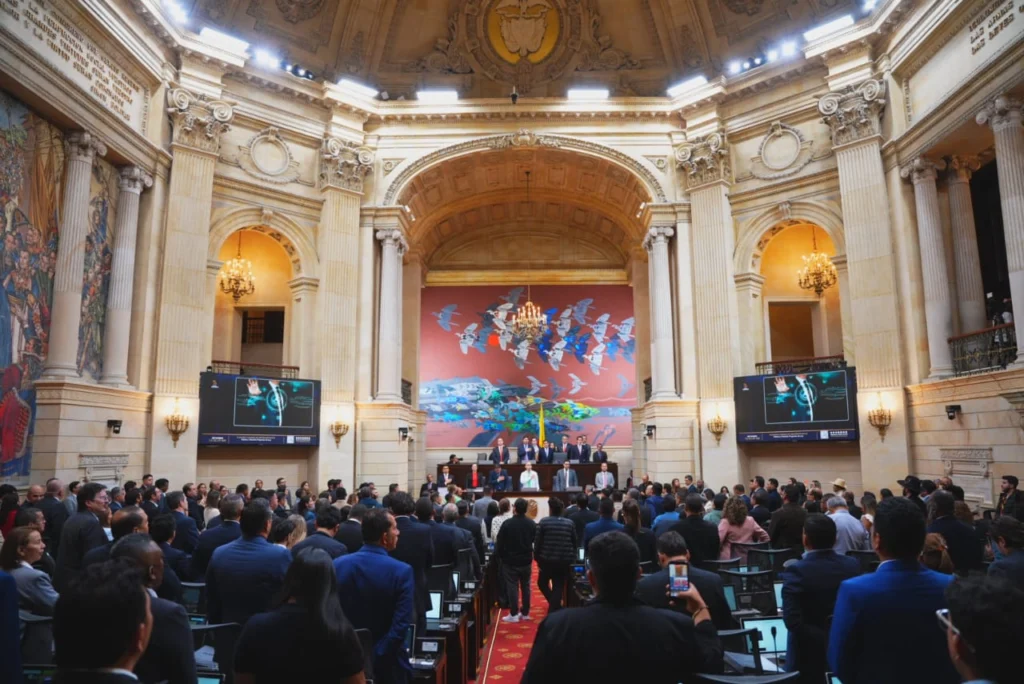
A dispute over conflicting versions of a provision in Colombia’s 2027 national budget has raised questions about the bill’s legislative validity. Senator Esmeralda Hernández says the Senate and House of Representatives approved different versions of Article 65 but failed to reconcile them before the October 20 deadline.

RELATED: Colombia’s Congress Approves 2027 Budget Over Opposition Objections

The provision concerns the stabilization of funds against fluctuations in international oil prices and gasoline prices. The budget, approved at 634.9 trillion pesos, is at the center of a disagreement over whether the legislative process complied with the required procedure.

Hernández said she identified the discrepancy alongside Lina García Sierra, Bogotá’s regional ombudswoman. They presented their findings in an interview with journalist Daniel Coronell on his program El Reporte Coronell.

According to Hernández, the Senate approved the original version of Article 65, while the House adopted a different text that included a proposal by Senator Juan Fernando Caicedo of the Democratic Center party and two additional paragraphs.

¡Tumbamos el Presupuesto de Abelardo!

Tras una revisión rigurosa junto a @LinaGarciaSi, encontramos que Cámara y Senado aprobaron textos diferentes, sin la conciliación obligatoria. Por el afán de pupitrearlo terminaron haciéndolo mal, a medianoche y de espaldas al país.

¡A la… pic.twitter.com/nPpWeItzII

— Esmeralda Hernández (@EsmeHernandezSi) October 21, 2026

Text Reads: We’ve taken down Abelardo’s Budget! After a rigorous review alongside@LinaGarciaSi, we found that the House and Senate approved different texts, without the mandatory reconciliation. In their rush to ram it through, they ended up doing it wrong, at midnight and behind the country’s back. We confront mediocrity and lies with rigor and arguments!

Caicedo withdrew his proposal during a Senate plenary session, leaving it on record rather than seeking its approval. “As the sole author of the proposal, I withdraw it and leave it on record,” he said.

“In the Senate, they approve the original text, while the House approves the text with Caicedo’s proposal, signed by a House representative, resulting in a different text,” Hernández told Coronell.

The Senate’s General Secretariat confirmed on October 20 that Article 65 had been approved without proposals or amendments. In a statement, Secretary-General Diego Alejandro González González said he had instructed the chamber’s reporting office to publish the official link to all proposals approved by the plenary, noting that none concerned Article 65.

#Colombia | Congress approved a US$201 billion budget for 2027 amid opposition criticism of cuts to education, social programs, and peace institutions.
The Historic Pact coalition announced legal challenges over reduced funding for the Special Jurisdiction for Peace.#Colombia… pic.twitter.com/Dq6v6E2Ksh

— teleSUR English (@telesurenglish) October 20, 2026

The House maintained during the debate that both chambers had approved identical texts. John Édgar Pérez, a Cambio Radical representative and coordinating rapporteur for the bill, argued that reconciliation was unnecessary and proposed that the House adopt the version approved by the Senate.

The House passed the budget in the early hours of October 20, with 96 votes in favor and one against.

Hernández argues that the differences required a reconciliation committee to produce a unified text and submit it to the appropriate legislative procedure. She maintains that the House vote came too late to complete that process before the legal deadline.

García warned that the failure to reconcile the texts could jeopardize the legality of the entire budget. She said she would file a constitutional challenge if the government enacted the legislation despite the alleged irregularity. Her statements reflect her legal assessment; no judicial ruling on the budget’s validity was cited.

Carlos Meisel, the Senate’s coordinating rapporteur for the bill, disputed the argument that a potential change introduced during the House proceedings would invalidate the entire process.

Meisel said the version approved during the first debate by the joint economic committees could serve as the basis for issuing the budget by decree. He added that this version accounted for 95% of the content subsequently approved by the Senate and had been developed through agreements with the national government.

El Presupuesto fue aprobado ayer en la plenaria del Senado de la República sin ningún error ni vicio.
Lo que aparentemente ocurrió después en la Cámara de Representantes (de ser cierto), no vicia todo el proceso desde el inicio.
Queda para decreto el texto que se aprobó en primer…

— Carlos Meisel (@carlosmeiselv) October 21, 2026

Text Reads: The Budget was approved yesterday in the plenary session of the Senate of the Republic without any errors or flaws. What apparently happened afterward in the House of Representatives (if true) does not taint the entire process from the beginning. The text approved in the first debate in the economic committees remains for decree. So please, let’s not exaggerate the uncertainty, because in any case, there is a budget and it is the one from the first debate. This one also came from a collective construction with the government. (And among other things, it was 95% of what was voted on yesterday) At this moment, this country does not benefit from us adding more nerves, and that’s why we work so arduously and committedly on a calm construction and agreements.

The dispute centers on whether the two chambers approved different versions of Article 65 and what consequences that discrepancy could have for the 2027 budget. Hernández argues that the lack of reconciliation left the legislative process incomplete, while Meisel maintains that a potential irregularity at a later stage would not invalidate the preceding steps.

  •  

Greek Students Protest Rising Rents, Demand Affordable Housing

Greek students and teachers protest rising rents and demand affordable housing in Athens and Thessaloniki.

Students and teachers in Athens and Thessaloniki demand affordable housing, higher wages and increased funding for public education.


Students and teachers in Greece have mobilized in Athens and Thessaloniki to demand affordable housing, higher wages and greater investment in public education, joining a wave of youth-led protests over rising living costs and housing insecurity across Europe.

RELATED: Meloni Announces Decree Targeting Juvenile Gangs and Violent Street Demonstrations

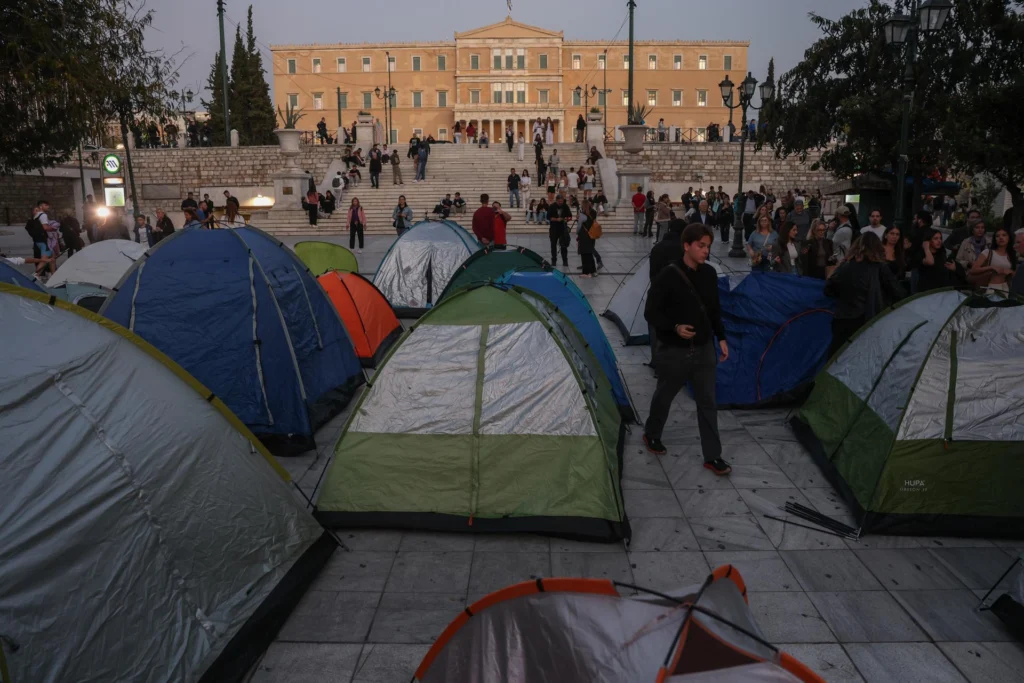
Tents have been erected in Athens’ Syntagma Square and in Thessaloniki as demonstrators call for fair rents, more university housing and increased funding for public education.

Authorities deployed more than 3,000 police officers in Athens to monitor a demonstration scheduled for Wednesday, organized by students and teachers. The protests come amid similar mobilizations in France, Spain, Italy, Portugal and Albania, where young people are challenging housing costs that they say make it increasingly difficult to combine work or study with securing a home.

Students pitch tents near Greek parliament over rising costs

📍 Students set up tents in Athens’ Syntagma Square, near the Greek parliament

➡️ The protest highlights rising living costs and soaring rents in Greece https://t.co/oWWMU3xUax pic.twitter.com/N8YzeW9lZa

— Anadolu English (@anadoluagency) October 20, 2026

The Greek primary school teachers’ union, DOE, called a 24-hour strike to demand a 20% pay rise, housing assistance for teachers assigned to work in other cities and improvements to school facilities.

Around 20 student associations in Athens joined the mobilization, planning to march alongside teachers. Their demands include decent housing for all university students, particularly those from low-income families who move to other cities to pursue their studies, higher student allowances and more places in public university residences.

Students are also calling for lower electricity and heating fuel costs, highlighting the pressure of energy expenses alongside the cost of accommodation.

The demonstrations reflect broader grievances among young Europeans over housing affordability. Protesters across several countries have pointed to property speculation, tourism-driven pressures on housing and austerity policies imposed by the European Union as factors affecting their ability to secure a home.

Athens Mayor Haris Dukas, a social democrat, expressed support for students and teachers while making clear his opposition to violent protests.

The demonstrations add Greece to a broader wave of Generation Z mobilizations across Europe over housing costs, economic pressures and access to public services, with students and educators pressing for changes to living and working conditions.

  •  

Nigeria Confirms First Ebola Case as Outbreak Spreads in Africa

Nigeria’s authorities detected the first case of Ebola in Abuja, triggering contact tracing immediately. Photo: Reuters.

Nigeria confirmed its first Ebola case on Tuesday, a woman who traveled from Uganda to the capital, Abuja, in the latest spread of an outbreak centered in the east of the Democratic Republic of Congo (DRC).


Health Minister Muhammad Ali Pate announced the diagnosis through a statement. The patient landed in Nigeria on an international flight from Uganda and went to a private medical facility in Abuja shortly after arriving, where she remained under care for several days before laboratory results confirmed the infection.

“The patient, a woman who recently arrived in Nigeria on an international flight from Uganda, was admitted to a private hospital where she received medical attention for several days before the diagnosis was confirmed,” Pate said.

RELATED: Ebola Outbreak in DR Congo Tops 8,700 Cases and 4,200 Deaths

She is now isolated and receiving medical attention. “Contact tracing has begun and 44 close contacts have been identified so far,” the minister added.

The confirmation sounded health alarms and added Nigeria to a continental alert that has gripped Africa since the outbreak began. The case pulls the country into an epidemic whose epicenter sits in the eastern Democratic Republic of the Congo (DRC). Uganda, where the woman boarded her flight, is also among the affected nations.

.@Fmohnigeria reported the first case in Nigeria of #Ebola caused by Bundibugyo virus. The patient is in isolation, since the onset of symptoms and receiving necessary clinical care: https://t.co/moqIMOGt24

Contact tracing is ongoing. @WHO and partners are working with the…

— Tedros Adhanom Ghebreyesus (@DrTedros) October 21, 2026

Outbreak Keeps Spreading

The current emergency began in May with the declaration of an outbreak of viral hemorrhagic fever in the DRC. The World Health Organization (W.H.O.) classified the outbreak in the DRC and neighboring Uganda as a “public health emergency of international concern” on May 17.

The current epidemic differs from previous Ebola outbreaks in one crucial way. Earlier waves were caused by the Zaire ebolavirus, but the infections now spreading across the region are driven by the Bundibugyo strain, an unusual variant for which no treatment or vaccine is available.

That absence of medical countermeasures has weighed heavily on the DRC, which is weathering a critical situation marked by high numbers of infections and deaths and intense community transmission. Official data count about 9,000 confirmed infections and roughly 4,381 deaths, making this the most devastating Ebola outbreak in the country’s history.

While Nigeria deals with its first case, Kenya’s Ministry of Health reported a new patient on Tuesday, raising the total number of infections detected in the country in this outbreak to eight.

Nigeria has experience with Ebola. The country contained a small outbreak in 2014 after a traveler arrived in Lagos, according to general public health records. Whether any of the 44 contacts develop symptoms in the coming days will indicate how far the virus may have spread inside the country.

Since emergency was declared the virus has crossed DRC borders, spread into Uganda, and now reached Nigeria, leaving contact tracers in Abuja racing to map every movement the patient made since landing, against a strain with no approved vaccine or treatment.

  •  
❌