❌

Reading view

Israel kills son of Gaza health official in latest atrocities

Footage flooded the internet on Saturday, September 19, showing Gaza Health Ministry Director General Dr. Munir al-Bursh asking young men to bring the rest of his son’s body as they carried his remains.

“Bring me his other half!” the grief-stricken father said. “We were supposed to go to heaven together today, but you got there before me, son.” 

According to media reports, Dr. Munir’s son, Bashir (28), was struck by a drone shortly after leaving his family’s tent in the al-Zahra neighborhood, near the Civil Defense headquarters, west of the Jabalia refugee camp in northern Gaza Strip.

Bashir was targeted while helping people fill their water containers, just meters away from his father. For many, the proximity of Dr. Munir implies that he, too, may have been a target of the attack.

Israel’s systematic targeting of health workers

The prominent Palestinian health official has been in the crosshairs of the Israeli forces since the beginning of Israel’s genocidal aggression on Gaza, due to his leading role in managing a crumbling health system that was severely devastated during the war.

Moreover, Dr. Al-Bursh is widely known for frequently reporting on Israeli assaults on the Gaza medical sector, and highlighting the dire conditions of medical facilities inside the besieged areas via international media outlets.

Al-Bursh and his family were previously targeted by Israeli warplanes at the very beginning of the war. In December 2023, his 13-year-old daughter, Jinan, was killed in an Israeli airstrike on a residential building in Jabalia. The aerial attack also resulted in the injury of Dr. Munir and the rest of his family.

The deaths of Bashir and Jinan al-Bursh echo the murder of 15-year-old Ibrahim Abu Safiya by an Israeli drone in October 2024. Ibrahim was the son of the former director of Kamal Adwan Hospital in northern Gaza, Dr. Hussam Abu Safiya.

Read more: ‘They brought me here to kill me,’ Dr. Hussam Abu Safiya tells lawyer

The day Bashir al-Bursh was assassinated, and the days that followed, saw the killing of several people by the Israeli Army across different parts of the war-ravaged enclave.

This took place as world leaders addressed the UN General Assembly. For the third year in a row, these addresses and the deliberations have failed to stop Israel’s aggression against Gaza and its ongoing heinous crimes carried out across West Asia.

  •  

‘He’s running away’: why Netanyahu is rushing his NYC visit

ICC fugitive Benjamin Netanyahu is scheduled to arrive in New York on Thursday to address the UN General Assembly – under an active arrest warrant for war crimes and crimes against humanity that the US has vowed not to enforce. Taher Dahleh, an organizer with the Palestinian Youth Movement, joins Rania Khalek and Zoe Alexandra ahead of the mass protests that have forced Netanyahu to reroute his flight through New Jersey.

Dahleh says the world is waking up to the fact that the architects of the Gaza genocide aren’t the outlier, but the mainstream norm for Israeli politics. He points to the irony of a fugitive war criminal speaking on ‘Restoring Trust’ at the United Nations. And he lays out the stakes of Democrats failing to respond to the cultural sea change on Palestine – as evidenced by Ed Sheeran’s career implosion – including why Zohran Mamdani’s choice to sit out Thursday’s protests sends a troubling if clear message to the movement that got him elected.

Watch full episodes of BT Live, join breakthroughnews.org as a member today!

  •  

ICE shoots Texas delivery driver, then detains him with bullet lodged in his back

Wilber Rafael Garces Perez, a food delivery driver in North Austin, Texas, was shot by Immigration and Customs Enforcement (ICE) agents while he was making a delivery on Sunday, September 20. Garces Perez, who survived the shooting but is now partially paralyzed, says his car was rammed by a large black unmarked truck. 

ICE claimed they attempted a traffic stop and that Garces Perez fled, but the DoorDash driver and his lawyers’ account contradict this report, saying after he tried to U-turn and pullover, ICE agents rammed his vehicle again, and then an agent got out and aimed his weapon through the passenger side of the car and shot Garces Perez in the back of his neck. 

CBP revealed on Tuesday, September 22, that the officer that fired the shot was not wearing a body camera, despite the agency’s body-camera requirements.

After a few hours in the hospital, Garces Perez was transferred to ICE custody with the bullet still lodged in his back. 

“I am not doing well due to the gunshot wound and I have not received the medical attention that I require,” he said through a translator at a press conference in Austin. After receiving no pain medication at the hospital, Garces Perez said that in ICE custody, he was forced to sleep on the floor and repeatedly asked for medical care while in severe pain.

His attorney also said he developed paralysis on his left side.

Local community demands ICE out of Austin

Within hours of the shooting, protests erupted in Austin. Hundreds of residents flooded the streets demanding ICE out of their neighborhoods. 

Organizers have connected the shooting to a growing number of fatal and nonfatal encounters involving immigration agents, including the killings of Lorenzo Salgado Araujo in Houston and Ruben Ray Martinez in South Padre Island.

“We cannot be silent as ICE is shooting and killing our neighbors!” a statement by the Austin branch of the Party for Socialism and Liberation said. 

Protests have continued across Austin on Monday and Tuesday. Student walkouts were also seen on Tuesday, September 22, by students across Pflugerville, Texas, north of downtown Austin, as well as Navarro Early College High School.

DHS defends the shooting and promises to investigate

After the shooting, the Department of Homeland Security quickly claimed that Garces Perez was an “illegal alien from Venezuela, who illegally entered” the United States.

Garces Perez’s lawyers have refuted these claims, saying he entered the country through CBP One, the US border processing system. “He had a work permit. He was seeking asylum.” They said that a notice of hearing was sent to an old address, despite Garces Perez updating his address with the immigration court. “He didn’t know he had a hearing. So he didn’t go and got a deportation order in absentia, which is a very common thing.”

According to reports, DHS and the Federal Bureau of Investigation (FBI) are leading an investigation into the ICE shooting of Wilber Rafael Garces Perez.

Austin police and the Travis County district attorney’s office have also said they intend to investigate the shooting. But their investigations come amid strong criticism of federal officials’ handling of previous ICE shootings in Texas. In Houston,  Harris County District Attorney Sean Teare has said federal officials did not provide his office with information about the fatal shooting of Lorenzo Salgado Araujo. He is taking his own investigation to a grand jury to force the release of more details.

ICE violence continues in the US

The Austin shooting follows a series of fatal encounters involving federal immigration agents this year, including the killings of Renee Nicole Good and Alex Pretti in Minneapolis and Johan Sebastián Durán Guerrero in Maine.

As federal agents continue to face scrutiny over deadly encounters in Texas and other states, Austin residents and organizers say they will continue protesting and organizing until ICE is out of their communities.

  •  

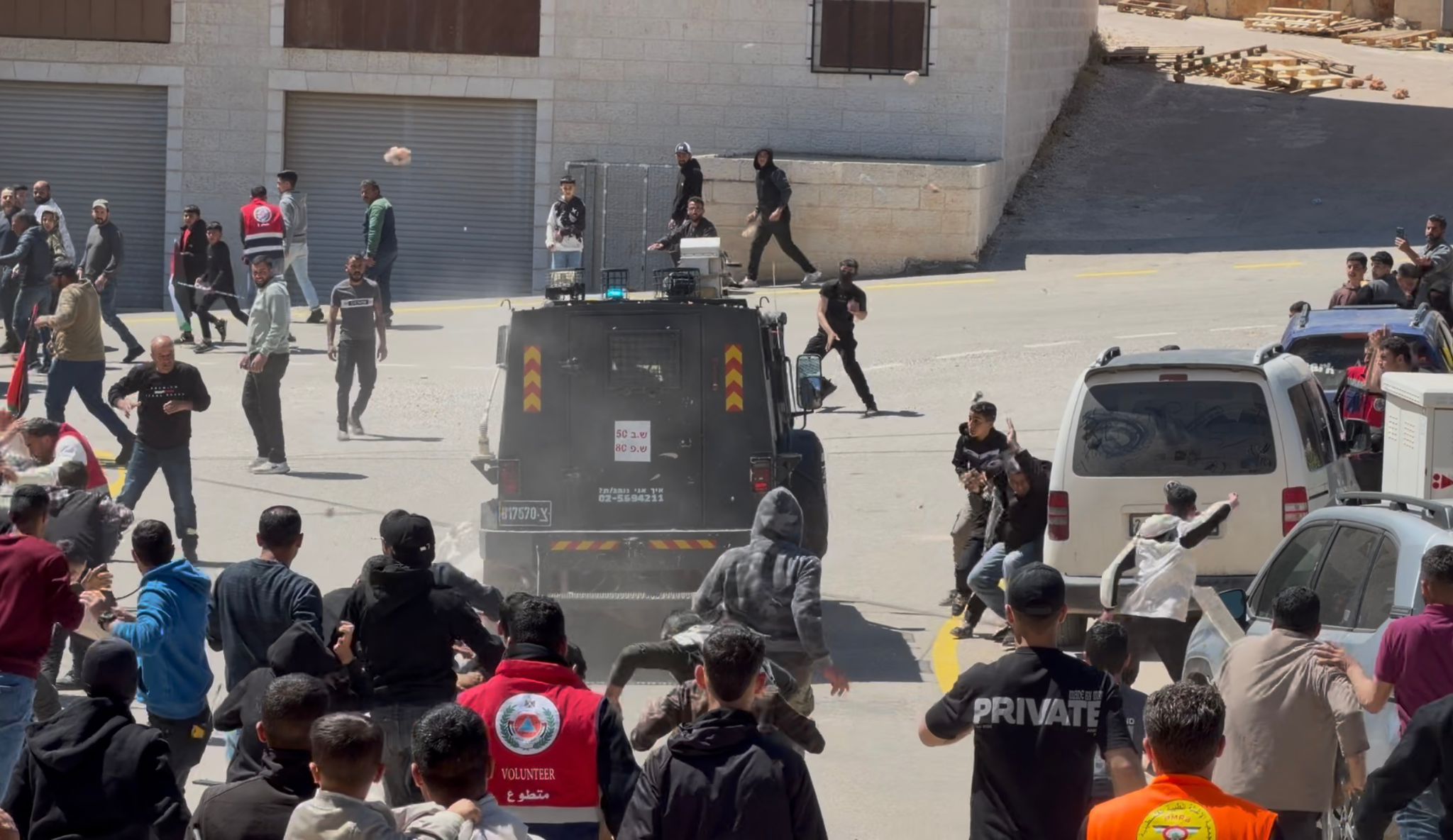
Israel tightens restrictions around Ramallah following attack near settlement

For the last several days, Israeli forces have blocked the main entrances and exits to the central West Bank governorate of Ramallah and Al-Bireh, further restricting Palestinian movement.

The punitive measure was taken after a Palestinian man carried out a shooting attack near the illegal settlement of Halamish, located to the northwest of Ramallah in the Occupied West Bank, on Sunday, September 20.

The attack resulted in the killing of an Israeli settler. The assailant was also injured and later identified as Qadri Samara (37). Samara was shot at by Israeli soldiers stationed at an army post near the site of the attack.

Although Samara managed to withdraw from the scene, later in the day Israeli forces carried out a raid at the HClinic Hospital in Ramallah and arrested him.

Following his arrest, the Israeli army also stormed Samara’s town of Biddu, northwest of Jerusalem, on Sunday evening, raiding his home and surrounding worshippers inside a mosque.

Ben-Gvir calls for implementation of death penalty law for the first time on Samara

In a security meeting held on Monday, September 21, Israeli National Security Minister Itamar Ben-Gvir called for the controversial death penalty law, mandated in March, to be used against Qadri Samara.

The law has faced widespread condemnation from international human rights groups for multiple reasons, mainly because it applies exclusively to Palestinians, while exempting Israelis convicted of the same offenses from the same penalty.

Both Israeli soldiers and illegal settlers have enjoyed total impunity despite murdering thousands of Palestinians over the past two decades in the occupied West Bank, a territory regarded under Palestinian jurisdiction in accordance with international law.

  •  

It still smells of sulphur: 20 years since Chávez’s speech at the UN

On September 20, 2006, Hugo Chávez stepped up to the granite podium of the United Nations General Assembly. A day earlier, from that exact same spot, the President of the United States, George W. Bush, had spoken. Chávez crossed himself, said that the room still smelled of sulphur, and the hall burst into laughter and applause. It was not the speech Chávez had originally intended to give, but rather the direct result of the deep indignation caused by hearing Bush speak as if he owned the world. The major media of the North latched onto the sulphur phrase and have tried to caricature it. But it is the rest of his intervention that remains fully relevant, 20 years later.

Chávez arrived at the General Assembly with a book in hand, “Hegemony or Survival” by Noam Chomsky. His warning was simple yet devastating: the United States’s pretense of dominating the world put the very survival of the human species at risk. At that time, US troops were occupying Iraq. A few weeks earlier, Israel had bombed Lebanon under Washington’s diplomatic protection. In the capitals of the global north, the “end of history” was still being celebrated, the idea that liberal capitalism was humanity’s definitive horizon. Chávez said that this thesis had been proven false in barely a decade, and that now the future of the world had to be defined.

Twenty years later, plunged into an even greater systemic crisis, we can see that every phrase of Chávez’s speech remains relevant.

From hegemony to hyper-imperialism

In 2006, the United States seemed like an empire at the peak of its power. Today it is an empire in relative decline, and therefore more dangerous. The Tricontinental Institute for Social Research has called this new stage hyper-imperialism: imperialism exercised in an exaggerated and agitated manner by a power that compensates for the loss of its economic hegemony by relying on the two areas where it still dominates, war and the control of information.

An empire’s hegemony is usually lost in three stages: first in production, then in finance, and finally in the military. The United States has already lost productive primacy: China is today the world’s largest economy measured by purchasing power parity. The reign of the dollar is beginning to be questioned, and many countries are opting for transactions in their own currencies. But military supremacy remains intact. The bloc led by Washington groups around 50 countries and concentrates about three-quarters of global military spending. The United States maintains around 900 military bases abroad. More than one in four countries on the planet lives under its sanctions.

An empire that declines economically while retaining its weapons is tempted to resolve its decline by force. The dilemma that Chávez borrowed from Chomsky, hegemony or survival, has become literal. Permanent war and climate catastrophe today threaten the very conditions of life.

The veto and the UN that doesn’t work

The least-cited part of the speech was perhaps the most prophetic. Chávez stated that the United Nations system born after World War II had collapsed. The General Assembly had become a merely deliberative space, without the capacity to change the terrible reality of the world. Back then, Chávez made four concrete proposals:

First, expand the Security Council to include Third World countries as permanent members. Second, create transparent methods for conflict resolution. Third, eliminate the veto, and fourth, strengthen the General Secretariat.

His example was Lebanon: a US veto had allowed the country to be torn apart before the eyes of the world. Unfortunately, over two decades, the UN’s strength to prevent wars and genocides has progressively diminished. That same mechanism criticized by Chávez has allowed a new genocide in Gaza. That inaction of multilateralism permitted the kidnapping of the sitting Venezuelan president. However, the conclusion is not to abandon the UN, but to contest it.

The debate on a “multipolarity” that reproduces rivalry between great powers is insufficient. What the South needs is true multilateralism, defending the United Nations Charter as the common heritage of the world’s peoples. It is the same Charter upon which, in 1955, the ten principles of the Bandung Conference were built.

“We are men and women of the South”

Chávez did not arrive in New York alone. He came from Havana, where more than fifty heads of state had just relaunched the Non-Aligned Movement. “Havana was the capital of the South for a week,” he said. And then he added a phrase that sums up a political identity: “we are men and women of the South.”

The Global South is not a cardinal point. Australia is in the southern hemisphere and belongs to the North; Cuba, Vietnam, or Burkina Faso are in the northern hemisphere and belong to the South. It is a historical category: they are the peoples of former colonies and semi-colonies and socialist projects, whose struggle for sovereignty has not yet concluded. Their weight has changed. By 2007, the economies of the South surpassed those of the North in purchasing power parity, and in recent years they came to represent nearly 60 percent of world product. BRICS and the Belt and Road Initiative have begun to create something that did not exist in Bandung’s time: material conditions for cooperation among the peoples of the South.

But, although there is a new mood in the Global South today, the spirit of Bandung is not yet there. In 1955, the strength of those governments came from organized masses that prevented them from abandoning the liberation program. Chávez’s speech was precisely that: the voice of Latin American twenty-first-century socialism, of peoples pushing their governments. It was, for Latin America, a kind of Bandung from below. Today, that spirit faces an “angry tide” and needs to be rebuilt.

Peoples, not governments

There is a fundamental element in that 2006 speech that we cannot forget. Chávez distinguished between the US government and its people. He said that if one walked through the Bronx or San Francisco, one would find people who want peace. The working class of the North, impoverished and battered by deindustrialization, is not the enemy of the peoples of the South. It is a possible ally. Specially today when it is persecuted by a renewed McCarthyism that sees terrorism in those who raise their voices for social justice.

When Bush accused those who opposed his war of being extremists, Chávez replied that it was not about extremism: the world was awakening and peoples were rising everywhere. Today, aggression takes multiple forms. It takes the face of military actions, lawfare, unilateral coercive measures, or the confiscation of national resources. But its objective remains the same: to discipline anyone attempting a sovereign path.

The future doesn’t just arrive; we must organize it

The speech closed on a note of optimism. Chávez said that there was a dawn on the planet, visible in Latin America, Asia, and Africa. Twenty years later, that optimism requires precision. The future is not a date on the calendar, but a rupture that must be built. Hope is not passive expectation, but a practice that requires organization, discipline, and internationalism.

The sulphur that Chávez smelled in 2006 has not dissipated; it has grown denser and spread beyond the diplomatic corridors of New York. That is why that speech does not belong to a record of the past, but to our current agenda. It reminds us that the South has a voice, that the UN can and must be contested, and that the North’s hegemony is not a natural law. What is missing, as in Bandung, is what has always made the difference: the peoples must organize.

Carlos Ron is Co-coordinator of the Nuestra America office of Tricontinental: Institute for Social Research. He was a Venezuelan diplomat and served as Vice Minister for North America (2018-2025).

This article was produced by Globetrotter. 

  •  
❌