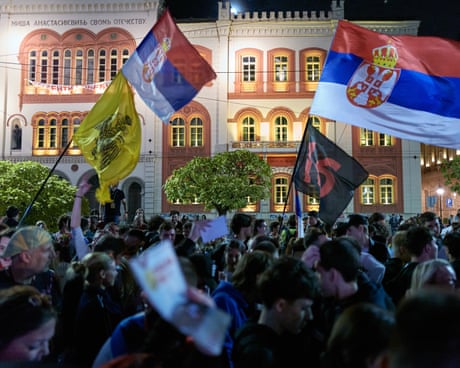
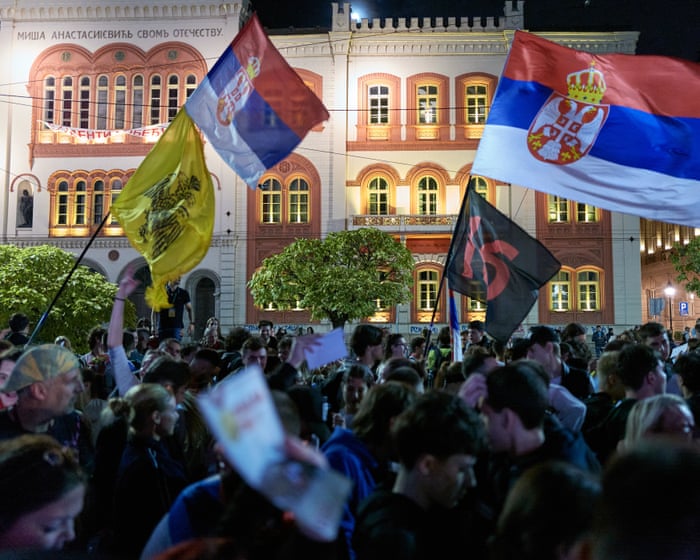
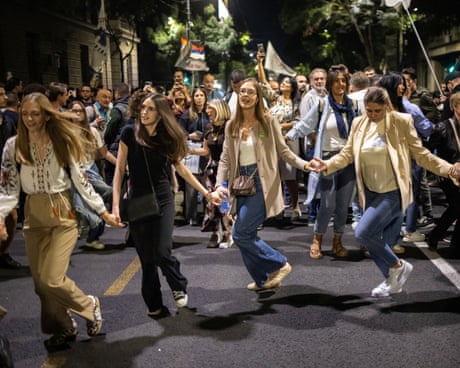
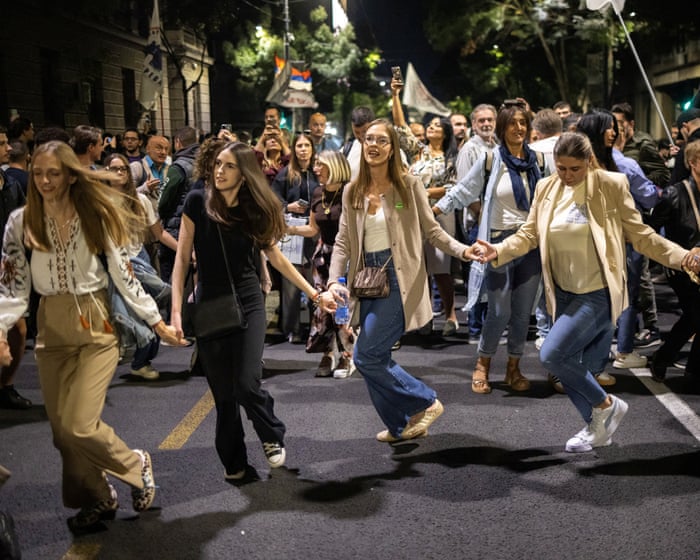
Serbia’s 6.5 million voters go to the polls on 25 October in a watershed parliamentary election characterised by civil unrest, a new political landscape, allegations of irregularities, an uncertain outcome and the potential of far-reaching consequences.
Leaders criticised for spreading misleading information as France prepares for further protests this weekend
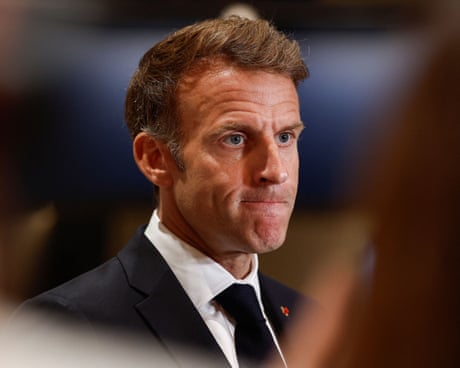
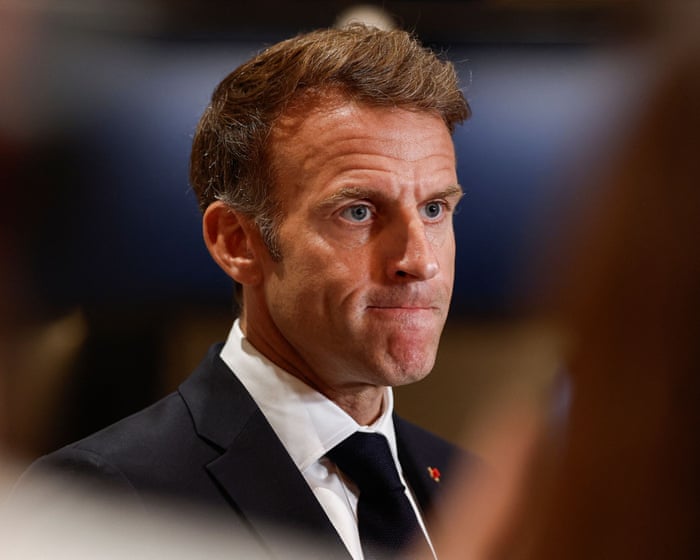
Emmanuel Macron has accused Donald Trump and other foreign leaders of making “stupid comments” about France’s street unrest for political gain, as the country prepared for more protests this weekend.
Speaking during a visit to Qatar, the French president did not name names but said “manipulation of information” after Saturday’s riots had led to “comments that are as unacceptable as they are stupid, from many people, including foreign leaders”.
Teachers face being banned from wearing politically-contentious insignia – such as pro-Palestinian badges – following a review of antisemitism in schools that found 60% of Jewish pupils reported suffering abuse.
Unorthodox campaign is challenging the ruling party’s 14-year reign with a bold democratic experiment
On a cool autumn evening, a team of Serbian student volunteers went canvassing in the housing estates of Krnjača, a Belgrade suburb. They were equipped with lanyards emblazoned with the word “victory”, a stock list of questions and a mobile app that mapped visited homes and the level of support in each.
The volunteers were part of a mass student movement, Student List, that has rocked Serbia with two years of constant protests. On Sunday, the group will represent the most serious challenge Aleksandar Vučić has faced in his 12 increasingly authoritarian years in power, by putting forward their own candidates in parliamentary elections.
Officers are instruments of state whose job is to repress, rather than manage, public dissent
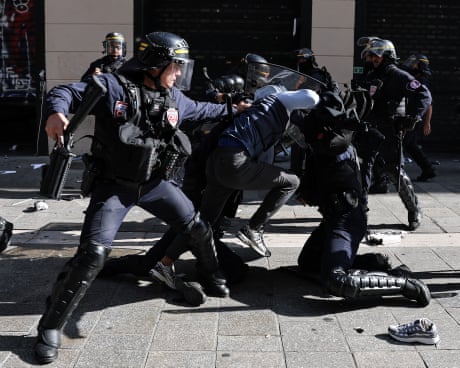
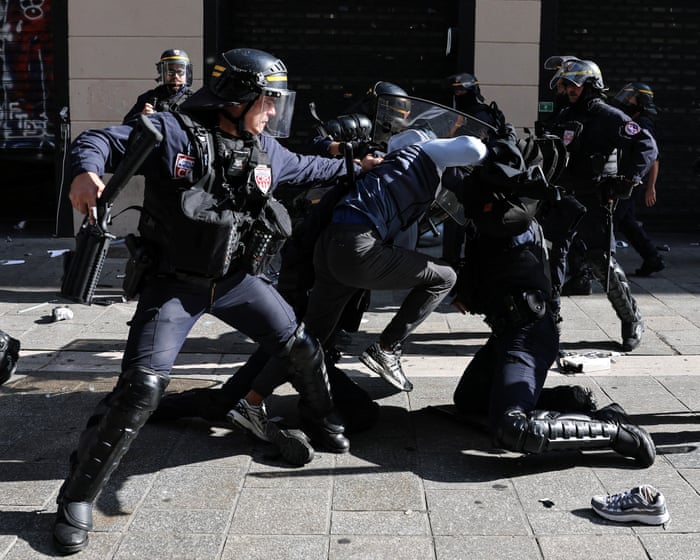
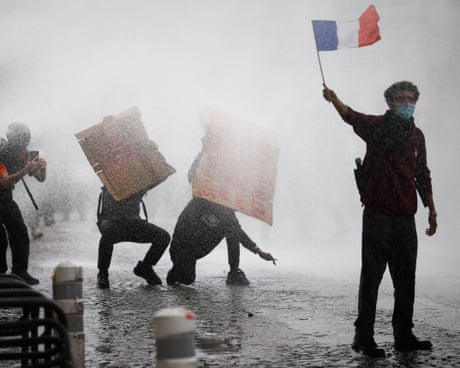
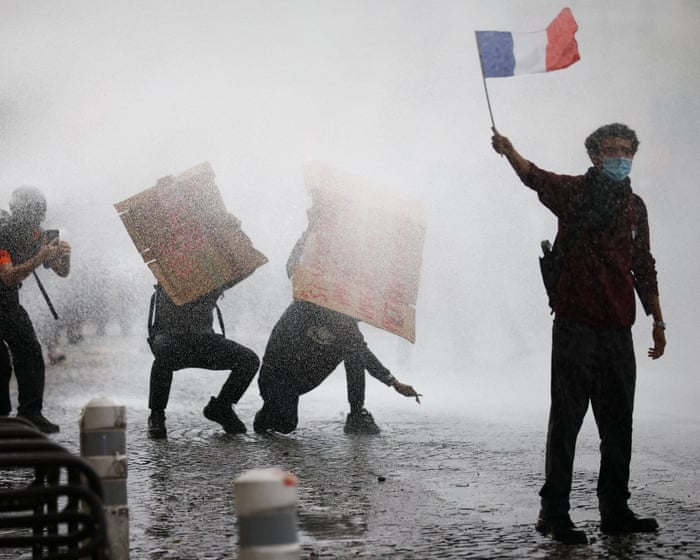
Familiar images of teargas clouds drifting across Paris squares, police baton charges against masked protesters and terrified teenagers floored – and worse – by stun grenades have once again focused the world’s attention on France’s policing methods.
While most of its western European neighbours generally favour police tactics that prioritise crowd containment and de-escalation, France has long responded to social movements that take to the streets with, at times, shocking physical force.
After a protest clip went viral, a teenager’s life was torn apart by threats that sent her and her family into hiding. Plus, a book on citizen journalism
Before 24 July, a person I will call R was preoccupied with the ordinary routines of teenage life: experimenting with makeup,grumbling over mathematics homeworkand hanging out with friends at a tea stall.
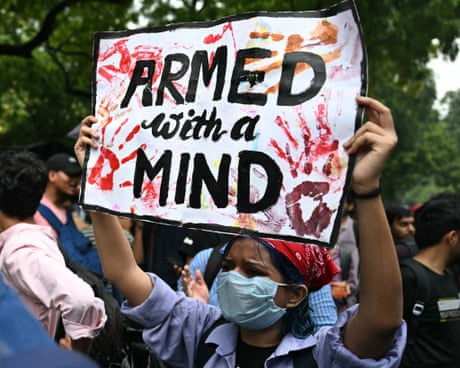
That month, as the fever of student protests spread across the country, the 15-year-old watched on her phone as young people poured into Jantar Mantar, the designated protest site in Delhi, demanding education reform. She went too. But an 11-second video clip from the protest site, in which she made crude and profane remarks about the prime minister, Narendra Modi, upended her life.
Thousands of pro-Palestinian demonstrators gathered outside Japan’s National Diet in Tokyo, demanding Prime Minister Sanae Takaichi’s resignation over her government’s stance on Palestine and its alignment with US and Israeli military policies.
The protesters expressed solidarity with the Palestinian people and condemned the ongoing Israeli war on the Gaza Strip and aggression across West Asia.
Demonstrators criticized Japan’s refusal to recognize the State of Palestine, its failure to impose sanctions on “Israel,” and its continued purchases of weapons from Israeli companies.
Protesters oppose Japan’s military expansion
Participants also voiced opposition to the government’s plans to increase military spending, revise Article 9 of Japan’s Constitution, which renounces war, and ease restrictions on arms exports.
Speakers criticized military cooperation between Tokyo and “Israel”, particularly reports of plans to purchase Israeli-made drones.
Protesters argued that these drones had been developed and tested through operations involving the direct targeting and killing of Palestinians. They called on the Japanese government to end all military partnerships with the Israeli occupation.
Protestors demand closure of Israeli embassy
In September, over 100 pro-Palestine demonstrators gathered outside of the Israeli embassy in Tokyo and called for the expulsion of the newly appointed Israeli ambassador to Japan, Emmanuel Navon, and the closure of the embassy.
The protesters denounced the Israeli war on Gaza and criticized Tokyo’s and Tel Aviv’s military relationship.
Protesters carried Palestinian flags and banners condemning the Israeli aggression, while chanting slogans calling for freedom for Palestine and an end to the war.
The Network Against Japan Arms Trade (NAJAT), one of the main groups organizing the protest, stated that the demonstration was intended to formally convey its demands to the Japanese state.
NAJAT said the appointment of a new Israeli ambassador provided an opportunity to renew calls for his expulsion and urge Japan to take a stronger stance against “Israel.”
Protesters further called on Japanese authorities to arrest Israeli Prime Minister Benjamin Netanyahu and demanded that the government close the Israeli embassy in Tokyo.
Abhijeet Dipke was detained before planned anti-government demonstrations in Delhi
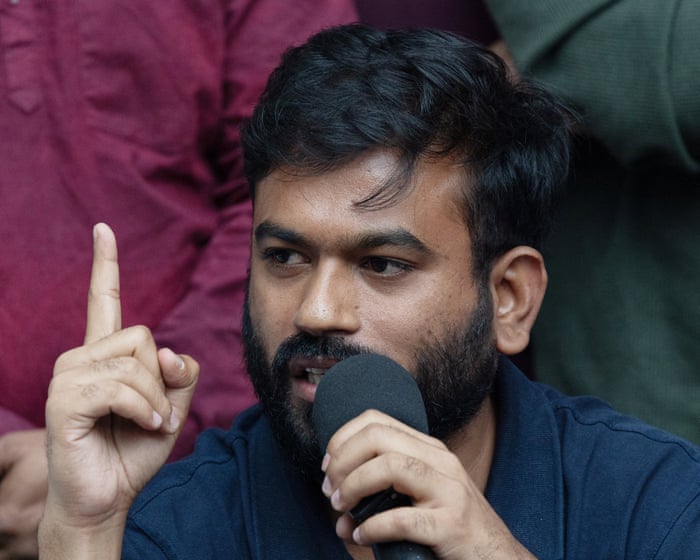
The leader of the Cockroach Janta party (CJP) youth movement, Abhijeet Dipke, was detained by police on Friday and then later formally arrested as authorities cracked down on fresh anti-government protests in the Indian capital.
Dipke was detained before a planned Friday evening demonstration he had called in central Delhi, urging supporters of the movement to come out and hold up the Indian flag.
Graham Linehan, the Father Ted creator, may have been unfairly arrested by the Metropolitan Police because of his gender-critical views, the police watchdog has said.
Say what you will about France’s high schools, they still produce world-class slogan writers. Here’s a brief selection spotted during three weeks of blockades and marches over chronic teacher shortages, overcrowded classes and crumbling buildings:
“Pas d’avenir, pas de calme” (No future, no calm). “Diplômés aujourd’hui, précaires demain” (Graduates today, insecure tomorrow). “Vous détruisez notre futur, on bloque votre présent” (You destroy our future, we block your present).
Ever been called 'far Right' for wanting low taxes, free speech and controlled immigration? You're in good company: JFK wanted much the same. The label is ludicrous – and the elites know it, says Dr James Allan.
Ireland’s preparations for Sunday’s Nations League match against “Israel” have been thrown into uncertainty after goalkeeper Gavin Bazunu reportedly told teammates that he did not want to participate in the fixture, prompting further discussions within the squad.
The players missed their scheduled training session and press conference in Debrecen, Hungary, as they held lengthy meetings over whether individual players should proceed with the match.
The Ireland squad was due to train at the Nagyerdei Stadium in Debrecen and hold a press conference ahead of Sunday’s Nations League encounter.
Instead, the players remained at their hotel for discussions with head coach Heimir Hallgrímsson and his coaching staff. They had earlier met with Football Association of Ireland (FAI) CEO David Courell.
The scheduled press conference was postponed with only 19 minutes’ notice. Irish and Israeli media had already assembled at the stadium when Irish journalists were informed that the event could be delayed by up to two hours.
The UEFA match delegate was also informed of the delay but was reportedly not given a reason. The team ultimately did not arrive for the scheduled training session.
The disruption followed an initial squad meeting on Friday intended to establish the players’ position on the “Israel” fixture and discuss whether they would stage a protest.
According to reports, a collective boycott was not initially the purpose of the meeting. During the discussions, however, Bazunu indicated that he did not want to participate in the match, with other players subsequently considering whether to join him.
The extent of opposition within the squad remains unclear, and no final collective decision had been announced at the time of reporting.
The developments mark a significant escalation in the controversy surrounding Ireland’s Nations League meetings with “Israel”.
Earlier this week, Ireland captain Dara O’Shea said the squad intended to fulfill the two fixtures, while any decision over a separate protest was to be discussed following Ireland’s opening Nations League match against Kosovo.
The position has since become less certain following the latest internal discussions.
Hallgrímsson had previously acknowledged that Ireland’s players did not share identical views or the same intensity of feeling regarding the “Israel” fixtures. He also said that he would respect a player’s decision if an individual did not want to take part.
Ireland’s match against “Israel” is scheduled for Sunday, September 27, at the Nagyerdei Stadium in Debrecen.
FAI faces pressure over ‘Israel’ games
The latest dispute follows months of controversy over the FAI’s decision to proceed with the fixtures.
In July, an FAI motion endorsing the fulfillment of the Nations League matches against “Israel” passed by 68% to 32%. The association had argued that failing to fulfill the fixtures could expose Irish football to sporting and financial consequences.
The FAI has also acknowledged the strength of public opposition to the fixtures. In September, CEO David Courell said the organization was in a “really difficult position,” arguing that UEFA’s failure to take action over “Israel’s” participation had left the FAI with limited options.
The controversy has extended beyond the football establishment. More than 160 Irish athletes have signed an open letter urging the national team to refuse to participate in the “Israel” fixtures, while protests have been held outside the team’s hotel.
China called on Saturday for an immediate end to the blockade on Cuba, in a speech to the UN General Assembly that stopped short of naming the United States.
Vice President Han Zheng urged the “relevant country” to “immediately stop using the threat of force against Cuba” and to “immediately and completely lift the blockade and sanctions.”
He also pushed back against the US on Iran, saying “China holds that the sovereignty and security of countries in the Middle East, including the Gulf, should be respected,” though he did not mention the US at any point in his remarks.
The comments come as a US pressure campaign has largely cut off oil supplies to Cuba. The US oil blockade began in January and has deepened blackouts, with the island’s electrical grid suffering a total collapse earlier this month that left millions without power.
Equality among states
Han said major countries carry special responsibility for international peace and security and should lead by complying with the rules, upholding the rule of law, and “doing what’s right.”
He also cast China as a reliable partner and a steadfast defender of developing nations, saying all countries, “big or small, are equal members of the international community” and that world affairs should be handled through consultation.
Russian Foreign Minister Sergey Lavrov spoke at the UN shortly after and made a similar appeal, urging Washington to end its siege of Cuba and ease trade restrictions on the island.
He also said the US should remove Cuba from its list of state sponsors of terrorism.
Trump-Xi summit
US President Donald Trump hosted Chinese President Xi Jinping at the White House earlier this week, welcoming him with military flyovers and a lavish state dinner, according to Reuters.
During the talks, Trump told Xi that China should refrain from providing support to Iran in the US war on Iran. The US ambassador to China claimed on Friday that Trump received assurances from Xi that Beijing would not do so.
This followed reports that China had supplied Iran with shoulder-fired air-defense missile launchers and that Tehran had found ways to evade sanctions on its oil sales with Chinese help.
Beijing has repeatedly rejected the US sanctions campaign against Iran. In August, the Foreign Ministry said that sanctions and pressure “will not help resolve the issue” and that China opposes “illegal unilateral sanctions” lacking a basis in international law.
Chinese support for Cuba
Cuba was the first Latin American country to establish diplomatic ties with the People’s Republic of China, and 2025 marked 65 years of relations.
China’s practical support has centered on energy. Reuters reported that Beijing financed 55 solar projects in Cuba in 2025, including a 21-megawatt plant near Jatibonico, with 37 more planned by 2028. Cuban media reported that a shipment of 5,000 solar panels arrived in September, the third of its kind in recent months.
Beijing has also committed 90,000 tonnes of rice to Cuba in 2026, of which 30,000 tonnes have been delivered and 60,000 tonnes pledged.

 Login