The central bank lifted its policy rate sharply as the country reels from war-fuelled price rises and faces further risk from an approaching 'super' El Nino.
Initial filings for US unemployment insurance slipped to a seasonally adjusted 194,000, among the lowest readings since the 1960s. The data points to a continuing trend of low layoffs across the American labor market.
New Zealand's annual inflation rate tumbled to 3.7 percent. The slowdown has raised the odds that the Reserve Bank will lift its benchmark interest rate at next week's policy meeting, even as price pressures are forecast to pick up again soon.
Norway's sovereign wealth fund, the world's largest, posted a $30 billion loss in the third quarter after a bond market slump hit its holdings. Norges Bank Investment Management, which runs the roughly $2.3 trillion fund, said returns on its bond portfolio turned negative as yields rose.
The European Union has reached a provisional agreement on reforms to its securitisation framework, potentially allowing banks to release more capital for lending to businesses, households and infrastructure projects.
The agreement, announced on Wednesday, 21st October, follows negotiations between the Council and European Parliament over changes to prudential requirements and the regulation governing securitised financial products.
The reform package agreed by EU negotiators would reduce capital requirements for lower-risk transactions, introduce a new category of resilient securitisations and simplify administrative procedures for financial institutions and investors.
It forms part of the EU’s Savings and Investments Union initiative, which aims to channel more private capital into the European economy.
Banks offered greater flexibility
Securitisation allows banks and other lenders to combine financial assets, including mortgages, consumer credit and corporate loans, into securities that can be purchased by investors.
By transferring some of the financial risks associated with these assets, banks can reduce the amount of regulatory capital they are required to maintain against particular exposures.
This can increase their capacity to extend new loans, although it does not guarantee that additional lending will follow.
The provisional agreement would recalibrate capital requirements according to the risk of individual transactions.
Lower-risk securitisations would receive more favourable treatment, while higher capital requirements would continue to apply to riskier structures.
A new category of resilient securitisations would be introduced alongside the existing framework for simple, transparent and standardised transactions, commonly known as STS securitisations.
The agreement would also strengthen supervision of independent organisations responsible for verifying compliance with the STS criteria.
The Council said that third-party verifiers would become subject to EU-level supervision, with the aim of improving consistency across national markets.
European financial markets remain fragmented
The reforms address a long-standing concern that European banks face higher administrative and capital costs for securitisation than competitors operating under other regulatory systems.
Following the financial crisis of 2008, European authorities introduced tighter rules governing structured financial products, including restrictions intended to improve transparency and ensure that lenders retained appropriate exposure to credit risks.
The resulting framework, which began applying in 2019, strengthened investor protection but also increased compliance costs.
The European Commission proposed the latest review in June 2025, arguing that the existing arrangements had constrained the development of securitisation as a financing tool.
According to the Association for Financial Markets in Europe, approximately €252.3 billion in securitised products was issued across Europe in 2025, with €156.3 billion placed with investors.
Those figures cover the wider European market, including activity outside the EU.
Brussels regards the development of deeper financial markets as necessary to finance infrastructure, technological investment and industrial development.
As EU Today previously reported, the EU’s largest economies have also been examining proposals to strengthen supervision and reduce fragmentation across European capital markets.
Will banks lend more to businesses?
The potential benefits of securitisation are not automatic.
Research published by economists on the European Central Bank’s website in September 2026 found that banks using synthetic securitisation increased corporate lending only modestly, while also distributing more capital to shareholders.
Synthetic securitisation allows banks to transfer credit risk to investors without necessarily removing the underlying loans from their balance sheets.
The researchers found that a one per cent increase in synthetic securitisation issuance was associated with an increase of approximately 0.02 per cent in corporate loan growth.
Their findings also indicated that banks participating in the synthetic securitisation market made greater use of capital released through these transactions to increase dividend payments.
The study suggests that easing capital requirements alone may not generate the substantial expansion in business lending envisaged by European policymakers.
Credit demand, economic conditions and banks’ commercial decisions will also influence whether the reforms produce measurable increases in investment financing.
Broader investment rules to change
The provisional agreement includes additional measures intended to encourage participation by institutional investors.
Investment limits for certain regulated funds, known as UCITS, would be increased, while targeted changes would allow insurers and reinsurers greater participation in specified synthetic securitisation transactions.
The package also seeks to facilitate securitisation arrangements used to finance infrastructure projects before they become operational.
Together, these provisions could widen the investor base and make financing structures available to a broader range of businesses and projects.
However, transferring credit exposure between banks and investors does not eliminate the underlying risk.
If borrowers default or the financial institutions providing protection encounter difficulties, losses may still emerge within the wider financial system.
European regulators will therefore have to assess whether the new classification and supervisory arrangements adequately reflect the risks of different securitisation products.
The political agreement now requires legal finalisation and formal approval by the Council and European Parliament.
The new arrangements would then form part of the EU’s wider programme to strengthen financial markets and reduce barriers to investment across the single market.
Norway has put into force a new round of sanctions against Russia that hits banks, listed oil refineries, ports, airports, and suppliers of Russia’s military industry, the Norwegian Foreign Ministry announced. The rules mirror the EU’s 21st sanctions package, which Brussels adopted in July.
The EU’s 22nd package, adopted on 12 October, is principally a list of names, while the 21st brought significant new measures, lawyers noted. Among them are new tools against the shadow fleet, the tankers with murky ownership that Russia uses to move oil around sanctions. That fleet also sails along Norway’s coast, and a new Norwegian Coastal Administration report found that it poses a growing threat to security and the environment there.
Banks, refineries, and Sheremetyevo
Norway is not an EU member, but it has joined every EU sanctions package against Russia, with a few exceptions and national adjustments. Oslo backed this one politically on 11 August, and the rules took effect on 21 October. Part of the package was already in force. It placed travel restrictions and asset freezes on 48 people and asset freezes on 168 entities, and it listed 41 shadow fleet vessels on 14 August.
Norway’s transaction ban now covers 33 more Russian credit and financial institutions. A separate ban covers 22 more abroad, including in India, Mongolia, Nigeria, and the UAE.
Explore further
Norway sends 69 Russians home without their ship, held for Ukraine
Another transaction ban reaches listed refineries in Russia and third countries that process Russian oil or help dodge sanctions. A Georgian refinery joins that list on 25 January 2027. The same ban adds two Russian ports and four Russian airports, including Moscow’s Sheremetyevo.
Drone gear and the shadow fleet
Export curbs on dual-use goods now cover 51 new entities that back Russia’s military industry. Some are in China, including Hong Kong, and others are in India, Kazakhstan, Kyrgyzstan, Türkiye, and the UAE. The banned-exports list adds nickel and beryllium powder, along with drone gear such as jamming and interception systems, launchers, and servo motors.
Oslo can now also list ships that service sanctioned shadow fleet tankers or swap cargo with them at sea. Elsewhere in Europe, France’s navy and UK forces have boarded sanctioned shadow fleet tankers this year.
The implicit interest rate on mortgage loans rose again in September, extending the upward trend to 3.194%, reaching its highest level since September 2025, according to data released by INE
Finance ministers from the Asia-Pacific Economic Cooperation forum reached consensus on cooperating on artificial intelligence and digital financing technology at a two-day meeting in Hong Kong. China's finance minister, Lan Foan, said the outcomes would help shape talks at next month's leaders' summit in Shenzhen.
Nigeria's finance minister, Taiwo Oyedele, said excessive money creation by the central bank and heavy petrol subsidy spending have driven up inflation pressures nationwide. He linked roughly 30 trillion naira in monetary financing directly to the price surge squeezing households and businesses.
Britain's annual inflation rate accelerated more than expected in September, rising to 3.5% on surging fuel prices. The data lands a week before the government presents its autumn budget, and as UK public-sector net debt tops £3 trillion.
US housing data weakened further in September, according to separate reports released Tuesday, even as the Federal Reserve weighs additional interest-rate increases. The figures add to signs that higher borrowing costs are weighing on home sales and construction activity. Economists say the reports complicate the central bank's next policy decision.
NatWest is forcing tens of thousands of staff members back into the office in the latest crackdown on remote working that mushroomed during the pandemic and has remained stubbornly high.
Monetary Authority of Singapore chief economist Edward Robinson said AI-driven productivity gains could eventually let central banks adopt a more accommodative monetary policy.
Japan's Ministry of Finance sold 20-year government bonds on Tuesday to the strongest investor demand on record for that maturity. Elevated yields drew renewed buying from domestic institutions.
Japanese Prime Minister Sanae Takaichi denied on Monday that her government's policies are responsible for the yen's weakness or rising interest rates, pushing back against concerns that her administration favors a more expansionary fiscal stance. Her comments came as currency traders and economists debate how far Tokyo will go to support growth.
New Zealand's economic recovery is progressing slowly, with employment and retail spending both still contracting, according to Bank of New Zealand senior economist commentary. The bank linked the weak results to ongoing pressure on household incomes across the country.
Paraguay's Association of Banks, representing 14 private lenders, has asked the Central Bank to report on the solvency of institutions that received facilities during merger processes. The request follows calls from both ruling-party and opposition senators for the bank's leadership to be removed. The pressure also touches President Santiago Peña's administration.
A bipartisan group of 22 House lawmakers is urging President Donald Trump to fully implement the new Russia sanctions law and revoke a license allowing certain Russian diesel transactions. In a letter sent on 15 October, they copied Secretary of State Marco Rubio and Treasury Secretary Scott Bessent and requested details on planned sanctions, tariffs and waivers.
Their request comes as the law’s first requirements fall due on 18 October, while lawmakers from both parties challengethe administration’s decision to allow certain Russian diesel transactions. Some restrictions take effect automatically, while others require presidential action. The law does not specify a penalty for the president missing the deadline.
What the Russia sanctions law requires
Congress passed the Lindsey O. Graham Sanctioning Russia and Iran Act of 2026 by votes of 86–11 in the Senate and 262–159 in the House. Trump signed it on 18 September. Graham, a Republican senator from South Carolina, died in July.
Restrictions taking effect automatically on 18 October include a ban on US banks and broker-dealers processing transfers to or from the Russian government, a ban on new US investment in Russia, a ban on new US investment in Russia’s energy sector, and a ban on US energy exports to Russia.
Other measures require presidential action by the same date. The law directs Trump to review and sanction Russian officials, oligarchs and shadow-fleet vessels, sanction the Bank of Russia, specified Russian banks and state-owned companies, and impose tariffs of up to 500% on Russian goods. Tariffs of up to 100% can apply to goods from countries among the five largest importers of Russian oil or gas, or among the top five countries facilitating Russian oil sanctions evasion.
Trump may waive sanctions, restrictions and tariffs under the law if he first certifies in writing to Congress that a waiver is in the US national interest and submits a report explaining its basis.
The diesel license at the center of the dispute
House members also urged Trump to revoke General License 135, which the Treasury Department issued on 9 October and that is valid until 7 April 2027. It permits certain transactions involving Russian-origin diesel, including imports into the United States. Trump said Russia would immediately supply more than 300,000 tons of diesel to US and global markets and predicted prices would fall sharply, according to a 9 October Truth Social post.
On 13 October, a bipartisan group of 12 senators also urged Trump to rescind the deal and revoke the license. Seven senators said the deal conflicted with a 2022 law banning Russian energy imports.
The Graham Act says nothing in its provisions affects the Treasury secretary’s existing authority to issue general licenses. That provision does not resolve whether the diesel license complies with the separate 2022 law.
A White House official told Newsweek the administration would comply with the Graham Act. Bessent said the administration would use “all the legal authorities we have” and called the deal “good for the American people,” Fox News reported on 11 October.
How the sanctions could be lifted
Separately, the law sets a process for terminating sanctions, restrictions or duties against Russia. Trump must report to Congress that Russia has signed a peace agreement accepted by Ukraine’s government and ceased military hostilities against Ukraine, as well as activities to overthrow, dismantle or subvert its government. Congress has 30 days to block termination through a joint resolution of disapproval, or 60 days for reports submitted between 10 July and 7 September.
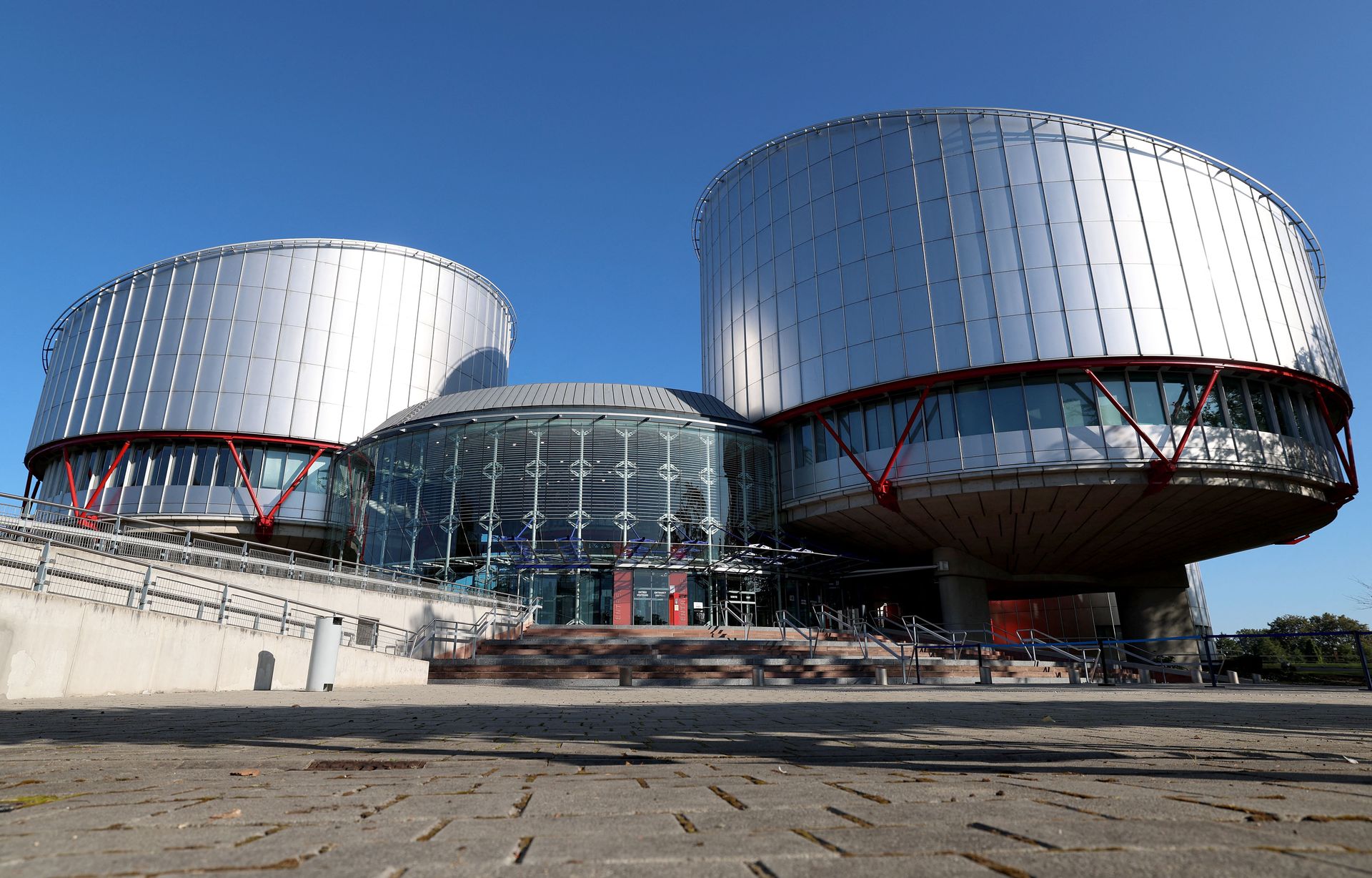
"The fact that the ECHR has accepted the complaint and opened proceedings indicates that there are reasonable legal grounds for the case, that it has legal merit, and that the court intends to examine it on its merits," the Ukrainian state-owned Oschadbank said.
Portugal must capitalise on its energy resources and digital infrastructure to attract investment in artificial intelligence (AI) and help Portuguese businesses expand internationally, according to Gonçalo Regalado, CEO of the
 Login