❌

Reading view

Trump cannot get Putin to halt strikes on Ukraine’s power grid, so he blames Ukraine instead, Zelenskyy says

musk tells ukraine’s president go zelenskyy says won’t resign never accept ukrainian land russian · post volodymyr during interview piers morgan recorded visit britain 14 2026 video uncensored / ukraine

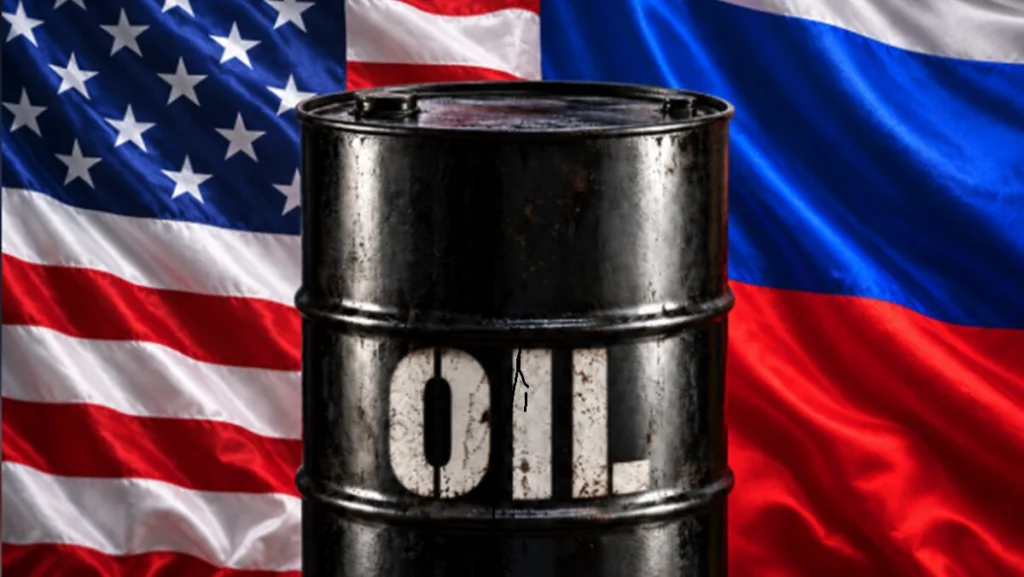
US President Donald Trump has failed to reach an agreement with Russian ruler Vladimir Putin on halting strikes against Ukraine's energy infrastructure. However, Trump is trying to shift the blame for this failure onto President Volodymyr Zelenskyy, he said on The Diary of a CEO podcast.

His words came amid Russia's four record waves of ballistic missile attacks, after US Special Envoy Steve Witkoff described Putin as a "humanitarian." Previously, US officials cut Kyiv off from US intelligence and lowered a speed cap on Starlink to pressure Ukraine into stopping strikes on Russia's oil refineries that bring Moscow revenue for its war.

Trump pins the problem on Kyiv, not Putin

Zelenskyy explained the behavioral pattern behind Trump's recent actions and statements. At first, Putin rejected his proposal for a ceasefire. Then, the US president blamed it all on him, explaining to his people that world fuel prices are rising because of him, which is not true at all, said the Ukrainian leader.

He pointed to the blocked Strait of Hormuz shipping chokepoint, not Ukraine’s refinery campaign, as the driver of higher prices.

He also noted that the volumes of diesel allowed by the US are insufficient to lower global oil prices.

Even so, Zelenskyy said he keeps a working relationship with Trump. What he will not accept is being cast as the villain in Russia’s war: by his account, the US president is rewriting the context, turning Ukraine’s leader into the target for a problem that starts in Moscow.

Earlier, experts said the diesel deal was unlikely to meaningfully lower diesel prices. For Putin, the agreement itself was a win.

A former senior State Department official says it hardly matters whether the fuel arrives, because Putin “has already achieved the result he wants,” with Trump believing he has a pre-election card that could move markets.

  •  

Marshall blames Ukraine war for high diesel prices

Sen. Roger Marshall (R-Kan.) on Wednesday blamed the war in Ukraine for high diesel prices, with energy costs as a key concern in the rapidly approaching midterms. “The real problem with the cost of diesel, in particular, is No. 1, is the Ukraine war, and because of that, diesel production has gone down. But beyond…

  •  

Jon Stewart: Trump waiving Russia sanctions ‘insane’ and ‘incoherent’

Jon Stewart blasted President Trump for waiving sanctions on Russia to allow more of its diesel to come to market, calling the move “insane” and “incoherent.” The president signed an executive order last week that waived the sanctions bill he signed into law in September. The legislative package, which was passed by Congress with bipartisan…

  •  

Trump announces $8B relief program for farmers

President Trump announced Monday that a new $8 billion program will help provide temporary relief to farmers during the harvest season. Trump announced the Harvest Fuel Relief Program during a rally in Kansas stumping for GOP Sen. Roger Marshall, who is running for reelection in a competitive race against his Democratic opponent Adam Hamilton. He…

  •  

Trump Shelves Russia Sanctions Weeks After Signing Them Into Law

President Donald Trump has waived sweeping sanctions and tariffs targeting Russia’s energy revenues, invoking national interest provisions in legislation passed only last month. The decision follows his controversial diesel agreement with Vladimir Putin and threatens to deepen divisions with Congress and European allies over economic pressure on Moscow.

President Donald Trump has suspended the implementation of sweeping American sanctions against Russia, using presidential waiver powers to prevent penalties approved by Congress from taking effect just weeks after he signed them into law.

The executive order issued by the White House on Friday, 16 October, suspends tariffs of up to 500 per cent on Russian imports, alongside penalties targeting major purchasers of Russian oil and gas. It also waives numerous financial and commercial restrictions intended to reduce Moscow’s ability to finance its war against Ukraine.

The decision comes two days before the 18 October deadline for implementing key provisions of the Lindsey O. Graham Sanctioning Russia and Iran Act of 2026, which Trump signed on 18 September. The legislation was named after the late Republican senator Lindsey Graham, who had championed tougher economic measures against Russia.

Sanctions established but immediately suspended

The presidential order formally establishes the tariff increases required by the legislation while simultaneously suspending their application.

Under the law, Russian imports into the United States would face additional duties of 500 per cent. A separate provision would impose 100 per cent tariffs on goods imported from the five largest purchasers of Russian crude oil and natural gas if those countries knowingly made new purchases from 18 October, subject to specified conditions and exemptions.

Another provision targets countries identified as leading facilitators of Russian oil sanctions evasion, potentially exposing their exports to similar American penalties.

Trump invoked Section 115 of the legislation, which permits the president to waive sanctions and tariffs after certifying to Congress that doing so serves the national interests of the United States.

The order confirms that the certification and an accompanying explanatory report have been submitted to Congress. However, the publicly released document provides no detailed justification for suspending the measures.

The waivers will remain in effect until the president or designated senior officials decide that further action is appropriate. Existing sanctions imposed under earlier executive orders are explicitly preserved, meaning the decision does not remove all American restrictions against Russia.

Nevertheless, the order prevents the new legislation’s principal economic penalties from operating at a time when Congress had sought to intensify pressure on Moscow.

Diesel agreement shapes Washington’s decision

The suspension follows Trump’s agreement with Putin to facilitate renewed Russian diesel exports, announced on 9 October as part of an effort to reduce international fuel prices.

As EU Today previously reported, the agreement envisages an immediate release of more than 300,000 tonnes of Russian diesel, followed by additional shipments in November and subsequent months. Washington also authorised certain transactions involving Russian diesel until April 2027.

The arrangement has raised questions about the relationship between the administration’s energy policy and sanctions intended to constrain Russia’s war economy.

Diesel prices have become an increasingly important domestic political issue ahead of the American congressional elections on 3 November. The war involving Iran and disruptions to international energy supplies have contributed to exceptionally high fuel costs, creating additional pressure on the administration.

The White House hopes additional Russian supplies will relieve pressure on international markets. However, energy analysts have questioned whether the quantities involved will materially affect American prices, particularly before the elections.

The latest waiver also removes the immediate threat of punitive tariffs against major Russian energy customers, including China and India, which had objected to the proposed measures.

Congressional opposition and European concerns

The decision is likely to intensify opposition within Congress, where the sanctions legislation attracted substantial bipartisan support.

Earlier this week, 12 senators, including six Republicans, called on Trump to reverse his diesel agreement, arguing that allowing Russian fuel back onto international markets would provide Moscow with additional revenue for its military operations.

Democratic Senator Richard Blumenthal, who helped develop the sanctions legislation, criticised the diesel arrangement as contrary to Congress’s intention to strengthen economic pressure on Russia.

The decision also exposes a widening divergence between Washington and Brussels.

At the European Council meeting on Friday, European Commission President Ursula von der Leyen and European Council President António Costa reaffirmed that EU sanctions against Russia would remain in place until Moscow ended its war against Ukraine.

Costa declared that the present circumstances required increased pressure on Moscow rather than a relaxation of existing restrictions. The European Union is also preparing a 22nd sanctions package while considering additional financial support for Kyiv.

For Ukraine, the decision means that Russia will continue to benefit from energy exports and the international trade that helps finance its war. Instead of tightening restrictions on these revenues, Washington has suspended measures specifically intended to cut them.

The timing is particularly significant. While Trump is pressing Kyiv to halt attacks on Russian oil refineries and other energy facilities, Moscow continues its strikes against Ukrainian cities and civilian infrastructure. Zelenskyy has argued that Ukraine cannot be expected to stop targeting Russia’s energy sector while Russian attacks on Ukrainian infrastructure continue.

Although Trump can reinstate the sanctions, his decision removes the immediate threat of additional penalties against Russia and its principal energy customers. It also places Washington increasingly at odds with its European allies. Brussels remains committed to maintaining and expanding sanctions against Moscow, while the White House is now giving priority to reducing American fuel prices, even if that means easing economic pressure on Russia.

  •  

U.S. Sanctions Relief on Russian Diesel Unlikely to Cool Fuel Prices

Russia would deliver 2.25 million barrels in October, 3.75 million in November and 7.5 million immediately thereafter.

On Friday, the United States temporarily lifted sanctions on Russia’s export of diesel in a bid to ease a global fuel shortage and curb soaring domestic prices, but analysts warn that limited supplies and damage to Russian refineries could possibly blunt the impact.

RELATED:

Trump’s ‘Energy Ceasefire’ Claim Raise Tensions with Ukraine

U.S. President Donald Trump said that he had struck a deal with Russian President Vladimir Putin during a phone call. On the same day, the U.S. Treasury Department’s Office of Foreign Assets Control issued a temporary general license, authorizing Russian diesel transactions until April 7, 2027.

Under the phased schedule, Russia would deliver 2.25 million barrels in October, 3.75 million in November and 7.5 million “immediately thereafter,” depending on the condition of Russian refineries. Russian Deputy Prime Minister Alexander Novak confirmed the volumes.

U.S. diesel averaged 6.28 dollars a gallon on Friday, according to the American Automobile Association, down from a record 6.53 dollars on Sept. 22, but still far above 3.68 dollars a year earlier, and up about 70 percent since the U.S.-Israel war with Iran began on Feb. 28.

A Pew Research Center survey released Oct. 8 found that 74 percent of Americans were “very concerned” about energy prices, and 84 percent of registered voters said the economy was “very important” to their vote in the Nov. 3 mid-term elections.

BREAKING: 🇷🇺🇺🇸🇺🇦 Zelenskyy indicated that Ukraine would attack Russian ships carrying diesel to the US.

Zelenskyy indicated that Trump needs to strike a deal with him if he wants Ukraine to refrain from attacking the oil tankers transporting diesel to the US. pic.twitter.com/UbYb8fy0MX

— Megatron (@Megatron_ron) October 12, 2026

On Saturday, the Russian government partially lifted its diesel export ban with immediate effect, allowing 500,000 tons to reach the global market, with Novak saying domestic supplies would not be affected.

However, analysts said that the U.S. relief on sanctions on Russian diesel is unlikely to help tame domestic diesel prices, which hover at close to record-high levels and threaten Republican control of Congress in the upcoming elections.

The International Energy Agency (IEA) says the world is short about 1.6 million barrels of diesel daily. Even if all 36 million barrels Russia promised arrived at once, they would plug the gap for only about three weeks. The October release alone is roughly 10 percent of what Russia exported in a typical month before Ukrainian drone strikes battered its refineries, according to analysts.

“It’s kind of shuffling deck chairs on the Titanic,” a report by The Seattle Times quoted Michael Lynch of the Energy Policy Research Foundation as saying. Russian diesel sent to the United States simply means that other buyers must look elsewhere. At best, he said, Americans might see “a tiny dip in prices locally in places like the New York-New Jersey area.”

“It’s clearly not a fix, but another stream to aid a very tight diesel market,” Jim Mitchell, director of oil trading analytics at consultancy Wood Mackenzie, was quoted as saying by Reuters.

“The biggest concern is the refiners being able to do it,” Ryan McKay, senior commodity strategist at TD Securities, a Canadian multinational investment bank and financial services provider, was quoted as saying by the Business Times.

𝐈𝐑𝐀𝐍 𝐓𝐀𝐔𝐍𝐓𝐒 𝐓𝐑𝐔𝐌𝐏: 𝐈𝐅 𝐇𝐎𝐑𝐌𝐔𝐙 𝐈𝐒 𝐑𝐄𝐀𝐋𝐋𝐘 𝐎𝐏𝐄𝐍, 𝐖𝐇𝐘 𝐃𝐈𝐃 𝐀𝐌𝐄𝐑𝐈𝐂𝐀 𝐁𝐄𝐆 𝐑𝐔𝐒𝐒𝐈𝐀 𝐅𝐎𝐑 𝐃𝐈𝐄𝐒𝐄𝐋?

Iran is not backing down an inch in the Strait of Hormuz standoff, even as the Trump administration insists the chokepoint 𝐧𝐨… pic.twitter.com/WehahJzQJa

— M.A. Rothman (@MichaelARothman) October 12, 2026

The November shipment amounts to roughly one day of U.S. consumption, noted Chris Kennedy, lead for Economic Statecraft at Bloomberg Economics. He questioned whether Moscow can deliver given refinery damage, logistics and legal hurdles, with the largest later tranches explicitly conditioned on the state of Russia’s refineries.

To make matters worse, Hurricane Isaias in the Gulf of Mexico has now shut down about 1.3 million barrels a day of U.S. oil production, which equals nearly 63 percent of total U.S. production in the gulf.

The Iran war also continues to disrupt flows through the Strait of Hormuz, which carried about 20 percent of global oil and fuel shipments before the war.

As part of an accelerated IEA emergency-stock release, Germany will release up to 15 million barrels of diesel, heating oil and crude, while France has committed 10 million barrels of diesel. Moreover, Italy says it has completed its 10 million-barrel commitment.

The Russian barrels address the shortage from the output side, while the stock releases address it from the inventory side. However, analysts say neither is large enough to repair the market on its own.

Patrick De Haan, head of petroleum analysis for GasBuddy, predicted that the deal could result in a short-term reduction of 10 to 20 cents for a gallon of diesel. However, he said, it would be “difficult to achieve” Trump’s import goals.

teleSUR/ JF

Source: Xinhua

  •  

US diesel crisis about to become Asia’s interest rate problem

Diesel in the US has climbed to more than US$6.50 a gallon, up about 75% from a year ago, and Asia is likely to pay for it in the form of higher interest rates. Expensive diesel keeps American inflation elevated, which gives the Federal Reserve reason to keep raising interest rates. Higher US rates lift […]

The post US diesel crisis about to become Asia’s interest rate problem appeared first on Asia Times.

  •  
❌