❌

Reading view

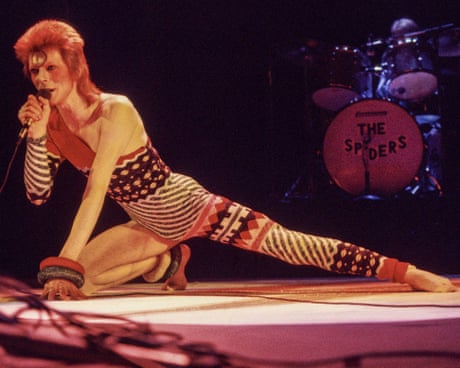
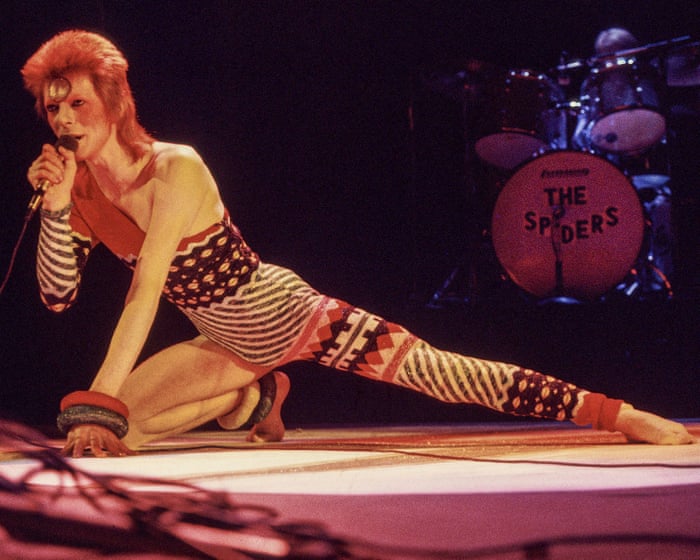
Getting Ziggy with it: David Bowie’s alter egos inspire dance show that will transform his songs

Subject to Change: A Dance for David Bowie will explore how the musician ‘practised a form of artistic reincarnation’, says choreographer Marcos Morau

‘Let’s dance,” sang David Bowie in 1983, commanding: “Put on your red shoes and dance the blues.” That call is to be answered – with footwear TBC – by an international dance production featuring new choral arrangements of songs from throughout his career.

Subject to Change: A Dance for David Bowie will be staged at Sadler’s Wells in London in autumn 2028 after a world premiere in Luxembourg. It will visit Tokyo in 2029. The show will explore how Bowie “practised a form of artistic reincarnation” according to Spanish choreographer Marcos Morau who is taking inspiration from the superstar’s transformations into personas such as Aladdin Sane and the Thin White Duke.

Continue reading...

© Photograph: Ilpo Musto/Alamy

© Photograph: Ilpo Musto/Alamy

© Photograph: Ilpo Musto/Alamy

  •  

'Incoherent,' 'deeply problematic,' and 'bad,' Europe reacts to Trump's recent pro-Russian turn

"Every step now to help the Russians increase their financing of the war is a bad sign. We very much stick to Volodymyr Zelensky's view on this," Swedish Prime Minister Ulf Kristersson.

  •  

Frozen assets, embargoes, entry bans: Ukraine names the pressure it wants the EU to put on Moscow

ukraine's defenses against jet drones aren't built up yet its f-16s getting more rounds meantime · post ukrainian foreign minister andrii sybiha сибіга andrij 7ca21 ukraine news reports

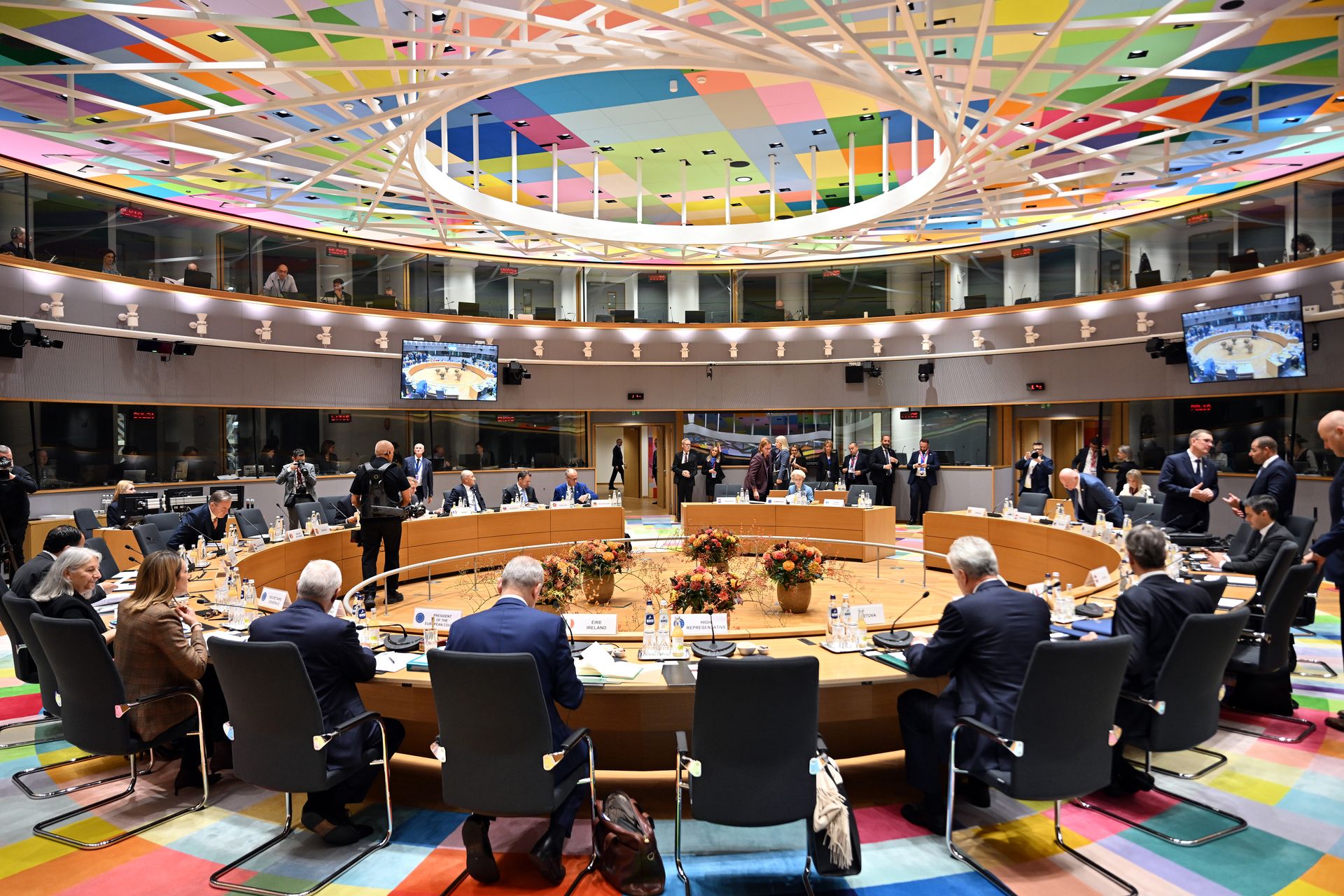
Ukraine wants the EU to force Moscow into a ceasefire with frozen Russian assets, trade and transit embargoes, maritime bans, and entry bans, Ukrainian Foreign Minister Andrii Sybiha wrote on X after the EU Foreign Affairs Council in Luxembourg on 12 October 2026. He also welcomed new EU sanctions listings adopted that day and progress in Ukraine’s EU accession talks.

Kyiv has spent this month laying out truce formats it would accept while awaiting Russia’s position on talks, and the levers it is pressing the EU to use include frozen Russian assets that EU leaders failed to agree on tapping last December.

The pressure Kyiv wants from the EU

Sybiha called it “devastating pressure.” He also wants Russian combatants and their families barred from the EU, maximum visa restrictions, and Russia’s isolation in culture and sports.

I was pleased to attend the EU Foreign Affairs Council today.

It is time for Europe to define its strong role. Our future and our security are in our hands.

Now is the time for real European pressure on Moscow. Not half-measures, but devastating pressure: frozen assets, trade… pic.twitter.com/AnI8h6HXbs

— Andrii Sybiha 🇺🇦 (@andrii_sybiha) October 12, 2026

His post named three types of ceasefire—energy, food security, and a full ceasefire—without saying whether Kyiv would accept them separately. Earlier this month, he told journalists Ukraine was ready for an energy and Black Sea ceasefire “but only in such a combination.”

New sanctions listings and two more accession clusters

The minister welcomed the EU’s 12 October adoption of new sanctions listings against Russia—the largest single expansion of the bloc’s blacklist. EU ambassadors agreed on the 1,646 names on 7 October. They include 1,569 tied to Russia’s military industry and 77 to its so-called State Duma elections. The listings are separate from the EU’s 22nd sanctions package, which the EU has yet to adopt.

He also welcomed the EU’s “green light” for opening two more clusters in Ukraine’s EU accession talks: Internal Market, and Competitiveness and Inclusive Growth. The formal opening was scheduled for an intergovernmental conference on 13 October.

Front-line briefing and aid requests

Sybiha said he briefed European colleagues on the front-line situation, Russia’s plans, and ways to deprive it of its advantages, and that he passed partners specific requests for aid. He reaffirmed Ukraine’s commitment to reforms.

  •  

EU blacklists 1,569 Russian arms suppliers and their bosses in its biggest sanctions round ever, as Trump eases up on Moscow

trade banks energy crypto—the eu keeps its full russia economic sanctions wall standing 2027 · post flags member states headquarters council european union brussels belgium 17 2025 getty images/thierry monasse

The EU adopted its largest-ever round of sanctions listings on 12 October, targeting the suppliers behind Russia’s war industry, the Council of the EU announced. The bloc acted as Russia keeps killing Ukrainian civilians every day, while US President Donald Trump eases sanctions on Russian diesel.

Russia’s planned winter campaign against Ukraine’s infrastructure depends on arms factories fed by a web of component suppliers and on oil revenue that still flows despite Ukraine’s refinery strikes, so every supplier cut off from that web raises the cost of waging it. As Washington eases off, Europe’s own pressure has a gap: its ports still take record volumes of Russian Arctic gas, and a full ban on long-term contracts starts only in 2027.

Missile suppliers top the list

More than half of the new listings hit the supply chain for ballistic missiles that Russia “uses to kill Ukrainian civilians every day,” EU foreign policy chief Kaja Kallas said in the statement. Russian attacks killed more than 150 people in the past week, Ukrainian President Volodymyr Zelenskyy said on 11 October.

The list names 826 Russian companies, mid-level firms the Council calls the “core” of Russia’s arms industry, with at least €20 billion in yearly turnover, and 743 people who run them. They make parts for missiles, drones, and military aircraft, from semiconductors and radars to explosives and navigation systems. Their assets are frozen, EU firms may not finance them, and the executives may not enter the EU.

Foreign ministers ratified a deal EU envoys reached on 7 October. Ukraine’s sanctions commissioner Vladyslav Vlasiuk said 60% of the listings came from Ukrainian proposals.

Ministers reject the diesel deal

EU foreign ministers in Luxembourg vowed to keep the sanctions despite Trump’s diesel deal with Russian President Vladimir Putin, Euronews reported. Kallas addressed Washington directly as she arrived.

“The US is our biggest ally, but our message is clear: if we want to end this war, the only way we can do this is (by) putting more pressure on Russia,” Kallas said.

Irish Foreign Minister Helen McEntee called the deal “concerning,” and Lithuanian Foreign Minister Kęstutis Budrys said it was “not the European way.” Kallas warned that an energy truce covering only refineries would favor Russia, since Ukraine has one refinery and Russia “plenty.”

Trump announced the diesel deal on 9 October, and the US Treasury waived sanctions on Russian diesel until April 2027. Zelenskyy said the EU would provide about €3 billion more in military aid this week.

Washington presses Kyiv

Trump expects Ukraine to stop hitting Russian refineries under his proposed energy ceasefire, a White House official told Axios. Zelenskyy said Kyiv would halt such strikes if Moscow did the same. On 10 October, Trump told reporters it was time for Ukraine to get a new president. Germany’s foreign minister, Britain’s defense secretary, and a senior lawmaker from Chancellor Friedrich Merz’s party backed Zelenskyy, while the Kremlin sided with Trump.

Zelenskyy offered to hold elections after a 60-day ceasefire, and Kallas said elections are impossible while the war goes on. The Institute for the Study of War assessed that Russia exploits Ukraine’s legal ban on wartime elections to drag out the war.

  •  

Spain, Portugal and Luxembourg Push EU for 2040 Renewables Target

Spain, Portugal and Luxembourg have called on the European Commission to establish a specific EU renewable-energy target for 2040 as Brussels prepares the next stage of the bloc’s climate and energy legislation.

The three governments have written to Energy Commissioner Dan Jørgensen arguing that a post-2030 renewables target would give investors greater certainty, accelerate deployment and reduce European dependence on imported fossil fuels.

Their intervention comes as the Commission prepares a new renewable-energy framework covering the decade after 2030.

The EU currently has a legally binding target requiring renewable sources to account for at least 42.5 per cent of final energy consumption by 2030, with an ambition to reach 45 per cent.

There is, however, no equivalent renewables target for 2040.

The European Commission says it is preparing a post-2030 renewable-energy framework for adoption before the end of this year. It is intended to complement the Union’s wider climate legislation and provide guidance for the next decade of energy investment.

Spain, Portugal and Luxembourg want that framework to contain a numerical target rather than rely solely on the EU’s overall greenhouse-gas reduction objective.

The proposal creates a policy divide with governments that want Brussels to use a broader definition of low-carbon or “clean” energy.

France, Sweden and Finland are among countries that have supported an approach allowing nuclear generation to contribute alongside renewable sources towards European decarbonisation targets.

France in particular operates the EU’s largest nuclear fleet and has repeatedly argued that European energy legislation should treat nuclear power according to its low carbon emissions rather than exclude it from frameworks designed specifically around renewable technologies.

Luxembourg, by contrast, has long opposed nuclear energy and has raised concerns about radioactive waste, safety and the financing of new reactors.

The argument is therefore not simply about the scale of the 2040 ambition. It concerns the structure of European energy investment over the next 15 years.

The Commission’s existing renewable-energy rules set the 2030 floor at 42.5 per cent, almost double the share recorded at the beginning of the decade.

Renewables accounted for 26.2 per cent of EU energy consumption in 2025, according to Commission figures.

Investment will have to increase substantially if the Union is to meet its existing target before any higher post-2030 requirement is introduced.

Grid capacity is another constraint. Wind and solar generation can be built faster than many traditional power stations, but projects increasingly depend on new transmission lines, interconnectors, storage and distribution infrastructure.

EU Today reported in June that member states were resisting greater Commission control over cross-border electricity-grid planning, illustrating the institutional difficulties surrounding an expansion of European electricity infrastructure.

The latest initiative also sits alongside the EU’s legally binding 2040 climate target.

In March, the Union formally approved legislation requiring net greenhouse-gas emissions to fall by 90 per cent from 1990 levels by 2040. EU Today reported on the final approval of the 2040 target, which is intended to bridge the gap between the bloc’s 2030 commitments and climate neutrality by 2050.

How that 90 per cent reduction is achieved is now moving to the centre of the policy debate.

For Spain and Portugal, greater renewable generation is also tied to their ambitions to expand electricity exports from the Iberian Peninsula into the rest of Europe. Limited interconnection capacity across the Pyrenees has historically restricted those flows.

The Commission’s post-2030 framework will therefore have consequences beyond environmental policy. It will influence investment decisions in power generation, grids, industrial electrification, hydrogen, storage and manufacturing.

The political question confronting the Commission is whether those decisions should be driven by a dedicated renewable-energy benchmark or by a technology-neutral emissions objective under which nuclear and renewable generation compete for investment.

With the 2040 climate target already fixed in law, the next dispute is increasingly about the energy system that will be built to reach it.

  •  
❌