Officials will call on UK to ‘step up’ financial support at Brussels summit – with post-Brexit issues also on agenda
EU leaders will press Andy Burnham at a summit in Brussels to contribute more to Ukraine’s defence effort in 2027.
EU officials argue that the UK, Canada and Japan should do more to support Ukraine, but entreaties to these G7 countries for extra financial aid at recent international meetings have not been answered, Brussels says.
This autumn, as Russia escalated its total-war-style strike campaign against Ukraine’s critical infrastructure and economy, and relations between Kyiv and Washington hit an all-time low, the daily battles along Ukraine’s vast battlefield have faded into the background of the information space.
Ukraine is in talks with EU member states Poland and Slovakia about moving customs checks on lorries carrying grain exports from the border to inside those countries, to halt Russian drone attacks on the trucks, the Financial Times reported on Friday, citing people familiar with the matter.
Ukraine’s foreign ministry said Kyiv had set up joint border control points with Moldova and wanted to “scale up” the initiative with other neighbours, including Poland, the FT reported.
Ministry spokesperson Heorhii Tykhyi told the FT the move was driven by a “new security environment where Russia is deliberately trying to strike our borders” and that Kyiv wanted to finalise an agreement with Poland as soon as possible.
A photo of debris from the Filin cruise missile, as posted by Sternenko and Beskrestnov.
Screenshot via Telegram/Serhii Sternenko
Russia looks to be moving toward 3D printed cruise missiles for its next era of air attacks on Ukraine.
The threat could be so major, turbojet Shaheds would seem like a small problem, one drone guru said.
GUR recently posted details of the Filin, a cheap Russian missile reported to fly as fast as 500 mph.
Russia's next big bet in the air war will likely move past jet-powered Shaheds to a deep arsenal of new cruise missiles, two of Ukraine's most prominent drone experts warned on Thursday.
Serhii "Flash" Beskrestnov and Serhii Sternenko wrote separately on their Telegram channels about the Filin, an 11-foot Russian winged cruise missile that Ukraine's military intelligence service recently unveiled.
These cheap weapons possess superior capabilities that would easily overshadow the threat posed by the Shahed, according to the pair, both former drone advisors to Ukraine's defense ministry.
"The mass use of this type of aerial attack weapon is what awaits us very soon," wrote Sternenko, who runs a major foundation that crowdfunds for Ukraine's military, in a Telegram post.
"Then we will remember the jet Shaheds only as a small problem compared to this," he added.
Beskrestnov, a drone analyst, said he had "long predicted that our adversary is betting on cheap cruise missiles for the future, not on jet Shaheds."
He wrote on his Telegram channel that the Filin can fly faster, maneuver better, and carry a heavier payload than Russia's current turbojet drones,
"They do not need drone ports, many of them can be launched from helicopters and UAVs. And most importantly, they can be produced from Russian components," Beskrestnov added.
A strike at nearly 500 mph for cheap
On Wednesday, Ukraine's military intelligence agency, GUR, released extensive details on the Filin, which it said Russia had begun deploying at the end of summer 2026.
The Filin, it said, is the "continuation of the trend of the Russian military-industrial complex to develop inexpensive air attack weapons with jet propulsion and ground launch."
The ground-launched missile can carry a 100kg warhead, and Russia has said that it can fly at speeds of almost 500 mph at a range of 745 miles. By comparison, the Kremlin's most advanced jet-powered drone deployed so far, the Geran-5, is known to fly at a maximum speed of 370 mph.
The Filin can also fly at "ultra-low altitudes" and as high as 3.7 miles, GUR said.
Similar to Russia's Shahed drones, the Filin features a carbon and fiberglass fuselage, with some of its parts produced via 3D printing, the intelligence service added.
And as with turbojet Shaheds, GUR also said that the Filin is filled with foreign electronics in its flight controller, inertial navigation system, equipment control unit, and counter-jamming hardware.
The agency listed 35 components from the US, including transistors and converters; 22 from China; and 13 more from Japan, Switzerland, Taiwan, and the Netherlands.
Notably, GUR said the Filin's engine is Russian-made, compared to the Chinese engines used on many of Moscow's turbojet drones. The same engine has been found on other recently unveiled Russian missiles, such as the air-launched Kover and Monochrome.
Much of Russia's ability to reduce the cost of its new cruise missiles is owed to its use of commercial engines and components. Another high-profile Russian missile that also uses civilian tech is the Banderol, which emerged in the spring of 2025 and has been straining Ukraine's air defense networks in the last few months.
The Banderol flies more slowly and has a shorter range than the Filin, but it still reaches a max speed of 435 mph, making it much harder for Ukraine to intercept with drones. Its estimated price is $150,000 per unit — about a sixteenth the cost of a traditional Kh-101 cruise missile — so it's easier to mass-produce.
The frequent use of weapons like the Banderol over the summer has led to fears that Russia will lean into its tactic, often nicknamed "missile spam," to keep pushing Ukrainian air defenses.
"What is the Air Force command doing now to build up countermeasures in advance?" Sternenko wrote on Wednesday about the missile threat.
A war of words has erupted over who is responsible for the restrictions on Starshield access in Ukraine
A war of words has erupted between the Trump administration, officials in Kyiv and Elon Musk over who is to blame for limiting Ukraine’s access to Space X’s military-grade version of Starlink.
The restrictions to Starshield have rendered many of the drones used by Kyiv to strike behind the frontlines inoperable and hampered air defence systems that stop Russian attacks, according to Ukrainian officials.
US president says Starshield military communications system is back, but declines to comment on whether he spoke to Musk on the matter. What we know on day 1,703
Donald Trump has claimed that SpaceX CEO Elon Musk fully restored Ukraine’s Starlink access, restrictions on which have hampered Ukraine’s attack missions and air defence.However, a senior European official told the Associated Press on Thursday that nothing has changed in the operation of the military-grade Starshield service. The Wall Street Journal reported that Trump had called Musk and asked him to lift restrictions on Ukraine’s use of the system. Trump on Thursday appeared to confirm that the service had been down, but claimed it was once again working at optimal speeds. “You know, whether I called or whether somebody else called, doesn’t make any difference,” he said. “I guess the bottom line, he put it back.”
Questions over who ordered interruptions to Starshield – which plunged relations between Kyiv and Washington to a new low – have ignited a blame game within the Trump administration and its allies. Trump has denied being involved in the decision concerning the slowdown, while US secretary of state Marco Rubio has said that decisions regarding Ukraine’s access to Starlink were up to its parent company SpaceX and Musk, not the White House. Musk last week posted to X: “Starshield systems are owned and controlled by the US government. Any limits on speed or usage are decided by the US military and ultimately POTUS.” President Volodymyr Zelenskyy said on Thursday – before Trump’s latest comments – that Starlink had not been fully restored.
Russia pounded Kyiv with ballistic missiles overnight, after US envoy Steve Witkoff met Vladimir Putin to discuss the resumption of peace talks. Russia’s aerial attacks hit 12 regions of Ukraine, killing at least four people and wounding scores of others, including five children, Zelenskyy said on social media Thursday. Two women, aged 50 and 60, were killed and dozens of other people were wounded in a Russian strike on a market in Lozova, in Ukraine’s northeeastern Kharkiv region, said Oleh Syniehubov, head of the regional military administration. Another person was killed in other strikes on Kharkiv.
Downing Street has rejected the description of Putin as a “humanitarian” made by Witkoff after meeting the Russian president. When asked about the US envoy’s comments, a Downing Street spokesperson said: “We certainly do not recognise that characterisation, and President Putin has killed thousands of people, both innocent Ukrainians and his own Russian people, who he has sent to their deaths on the frontline.” Ukrainian foreign minister Andrii Sybiha chided Witkoff for flattering Putin, saying on social media the latest “brutal” Russian attacks demonstrate “what Russian ‘humanism’ truly sounds like.”
Nato member Denmark said on Thursday it has agreed to buy its first long-range precision missiles as it seeks to bolster its security to deter Russian aggression in Europe, drawing condemnation from Moscow. Defence minister Jeppe Bruus said the new missile systems would boost Denmark’s capabilities and enable strikes “behind enemy lines” if attacked. “We’re in a serious and deteriorating security situation and that is why we are building up the defence and strengthening our combat power,” he said. The Russian embassy in Copenhagen said Denmark’s missile policy aimed at confrontation with Moscow and warned of “inevitable disastrous consequences”.
Romania will accelerate development of surveillance capabilities and equipment to counter mines and drones in the Black Sea after a series of drone attacks on commercial ships off its coast, its top defence council said on Thursday. At least seven cargo ships have been hit near the coasts of Nato members Romania and Bulgaria in the past two weeks, with 30 sailors reported dead or missing.
No deals should be made to buy gas from Russia as long as Moscow’s war in Ukraine continues, Finland’s prime minister Petteri Orpo said in Kyiv on Thursday. The EU banned Russian pipeline gas under short-term contracts from 17 June, and will apply it to long-term contracts from 1 November next year. Senior Russian political and energy officials meanwhile have urged the EU to reconsider plans to ban imports of Russian LNG, arguing the bloc’s low storage levels had put Europe in a precarious position. “I hope there is still time to reconsider these decisions,” Leonid Mikhelson, the head of Novatek, Russia’s largest liquefied natural gas producer, told an economic forum in Istanbul on Thursday. “Europe should support its industry, in my view. There is still time.”
"Ukraine needs secure, sovereign, and high-performance satellite communications systems that it controls," ICEYE CEO Rafal Modrzewski said in a press release announcing the deal with Kyiv.
Ukrainians are desperate for more defense systems to repel Russia's relentless onslaught of drones and ballistic missiles. For the missiles, no system is more valuable than the U.S. Patriot interceptor. But years of use in Ukraine and by the U.S. and allies in the war with Iran have depleted thin stocks. Special correspondent Mike Cerre has an exclusive look at the Patriot manufacturing process.
In the Kupyansk direction, Russian units have expanded the zone of control west of the city, taking Moskovka and Malaya Shapkovka and approaching Palamarevka, while fighting continues inside Kupyansk itself and in the area of Kupyansk-Uzlovoy. In the Sumy direction, assault groups of the “North” grouping maintain a high rate of advance. In the Kharkiv direction, heavy fighting is under way: Russian assault groups are advancing southwards, achieving tactical successes in the areas of Tokarevka and Bugayevka, while the Ukrainian command is transferring artillery from the Sumy region. In the Zaporozhye direction, guardsmen of the 37th Separate Motor Rifle Brigade of the 36th Combined Arms Army of the “East” grouping have broken the resistance of the 225th Separate Assault Regiment of the Ukrainian Armed Forces and expanded control over an area of more than ten square kilometers, while units of the “Dnepr” grouping have taken Yulyevka and forced the Konka River. Meanwhile, the European Commission hopes to reach a political agreement by the end of 2026 on additional funding for Ukraine in 2027, despite the fact that only €20 billion of the previously agreed €90 billion EU loan has so far been disbursed to Kyiv because of stalled reforms.
Kupyansk direction
Russian units continue to expand control of territory west of Kupyansk. As a result of successful offensive actions, Russian troops have taken Moskovka and Malaya Shapkovka and approached Palamarevka. These are the main axes on which the Ukrainian side had concentrated forces for transfer into Kupyansk.
Fighting for the city continues inside Kupyansk itself. In the area of Kupyansk-Uzlovoy, battles are also under way near the Foundry and near Kovsharovka. Clearance is being conducted in the pocket east of Novoosinovo and Glushkovka; positions of Russian and Ukrainian units in this pocket remain intermingled.
On the Kupyansk direction the main combat operations are concentrated in the western part of the city and on the north-western approaches. In the areas of Mirovoye and Malaya Shapkovka the struggle for the retention of positions continues. Further advance is linked to the Sobolevka–Palamarevka sector, where Ukrainian resistance persists. Inside Kupyansk the situation is most tense on the western and south-western outskirts. Primary attention is focused on the Yubileyny micro-district, the Malye Rovny woodland and the adjacent urban built-up area.
In the central part of the city the railway station Kupyansk-Yuzhny, the district administration, the bus station and the Hospital Quarter retain key importance. The struggle for control of urban infrastructure directly affects the position of units on the western outskirts.
Sumy direction
Assault units of the “North” grouping maintain a high rate of advance in the Sumy region. The Ukrainian side is actively strengthening its defences and equipping additional positions.
In the Sumy border area fighting is predominantly positional. Reports from the ground indicate that Ukrainian units are counter-attacking on individual sectors. The “North” grouping maintains its pace. Assault units are fighting near Khoten, Velikaya Rybitsa and Nikolskoye. A sabotage-and-reconnaissance group from the 3rd Special Operations Forces Regiment has been destroyed. In the Shostka district Russian assault troops are advancing through forest plantations towards Korenek; in the Krasnopolye district they are advancing near Turya.
In the Sumy district assault units of the “Northerners” are conducting small-arms fighting in the areas of Khoten, Velikaya Rybitsa and Nikolskoye. In the Shostka district Russian assault troops continue to advance through forest plantations in the direction of Korenek. In the Krasnopolye district assault groups of the “Northerners” are advancing in the area of Turya.
Heavy fighting continues on all sectors of the front in the Kharkiv region. Assault groups of the “Northerners” are advancing in a southerly direction with the support of aviation, artillery and TOS-1 “Solntsepyok” systems. The Ukrainian command is increasing the amount of artillery on the Kharkiv direction, having transferred batteries of the 148th Separate Artillery Brigade of the 8th Air Assault Corps from the Sumy region.
On the western flank of the Kharkiv front there have been tactical successes in the areas of Tokarevka and Bugayevka, with advances of up to four hundred meters in places. In the area of Velikiye Prokhody a high-explosive aerial bomb struck a major strongpoint. On the eastern sector clearance of the former Reznikovsky cauldron continues; the main fighting is near Prikolotnoye. The Ukrainian side has transferred artillery reserves here from the Sumy direction.
In the Lipetsk direction the “Northerners” are advancing in the area of Novaya Kazachya and Tokarevka. Over the past day overall progress amounted to 400 meters. In the Volchansk and Veliky Burluk directions the most intense fighting is taking place in the area of Prikolotnoye. There have also been advances in the areas of Bugayevka, Maly Burluk and Sosnovy Bor. Russian units continue to expand the zone of control, driving Ukrainian forces from the positions they hold.
Persistent work is under way around Orekhov. Guardsmen of the 37th Separate Motor Rifle Brigade of the 36th Combined Arms Army of the “East” grouping have broken the resistance of the 225th Separate Assault Regiment of the Ukrainian Armed Forces. The area brought under control exceeds ten square kilometres. Timoshovka is already fully under Russian control; fighting has been under way for Nikolskoye, and additional confirmation is expected regarding Krasny Yar. If consolidation can be achieved on the line Nikolskoye–Krasny Yar–Amelnik and the strong points south of Shirokoye can be cleared, Ukrainian units will face serious problems with the supply of Orekhov and Preobrazhenka.
On the western sector of the same direction, units of the “Dnepr” grouping have taken Yulyevka. Paratroopers forced the Konka River and reached the left bank. Four kilometers remain to the H-08 highway. Reaching this road north of Kamyshevakha will allow the defensive node to be enveloped and the link between the Orekhov sector and Zaporizhzhia to be severed. Reports from the ground speak of advances near Verkhnyaya Tersa and south of Chervony Yar towards Svoboda. Fighting continues in the area of Omelnyk. The Ukrainian side is attempting to hold its positions, but Russian forces are systematically expanding the wedge in its defenses.
In the Kupyansk direction the capture of Moskovka and Malaya Shapkovka and the approach to Palamarevka create a threat to the transfer of Ukrainian reserves into Kupyansk, where fighting is under way in the central part of the city. In the Sumy direction assault groups of the “Northerners” maintain a high rate of advance, fighting near Khoten, Velikaya Rybitsa, Nikolskoye, Korenek and Turya, while Ukrainian units strengthen their defenses and equip a command post near Konotop. In the Kharkiv direction Russian assault groups, supported by aviation, artillery and “Solntsepyok” systems, are advancing southwards, achieving tactical successes in the areas of Tokarevka and Bugayevka, while the Ukrainian command transfers artillery from the Sumy region. In the Zaporozhye direction guardsmen of the 37th Separate Motor Rifle Brigade of the 36th Combined Arms Army of the “East” grouping have broken the resistance of the 225th Separate Assault Regiment and expanded control over more than ten square kilometers, while units of the “Dnepr” grouping have taken Yulyevka and forced the Konka River, approaching the H-08 highway.
Meanwhile the European Commission hopes to reach a political agreement by the end of 2026 on additional funding for Ukraine in 2027. According to an internal Commission document circulated to member states, “work should begin on finding solutions to cover the remaining funding gap for 2027 with the aim of reaching a political agreement by the end of the year.” Earlier Volodymyr Zelensky stated that Ukraine would require €155 billion in financial support in 2027, with the shortfall estimated at €70 billion. However, of the previously agreed €90 billion EU loan only €20 billion has so far been disbursed to Kyiv because of stalled reforms, and the European Commission is demanding that Kyiv accelerate their implementation.
Czech President Petr Pavel on Tuesday said President Trump’s diesel deal with Russia derailed peace talks between the Kremlin and Ukraine, saying both sides were “so close” to a ceasefire. “It will be much harder now,” Pavel told the Axel Springer Global Reporters Network, which includes Politico. “Russia uses this momentum to get out of…
Czech President Petr Pavel on Tuesday said President Trump’s diesel deal with Russia derailed peace talks between the Kremlin and Ukraine, saying both sides were “so close” to a ceasefire. “It will be much harder now,” Pavel told the Axel Springer Global Reporters Network, which includes Politico. “Russia uses this momentum to get out of…
"Overall, nothing has changed anywhere," a Ukrainian official told the Kyiv Independent on Oct. 22. Starlink's speed cap of 161 kilometers per hour remains in effect, the official said.
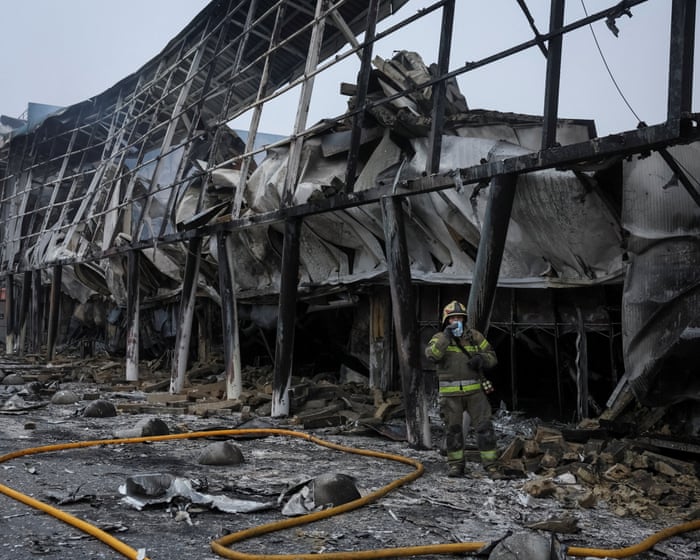
On the night of October 22, Russian forces launched a massive combined strike on Ukraine using Iskander-M, Zircon, and Oniks missiles and 210 strike UAVs; the main axis of the strike was Kyiv. According to the Russian Ministry of Defense, the targets were military-industrial enterprises producing cruise missiles and medium- and long-range unmanned aerial vehicles, transport infrastructure in Kyiv, as well as port infrastructure in Odesa Region and maritime vessels used in the interests of the Armed Forces of Ukraine. At the same time, Ukraine carried out a massive drone attack on Russian territory: according to Russian sources, 808 UAVs were shot down over 18 federal subjects of the Russian Federation, including 630 on approach to Moscow.
Russian Strikes on Ukraine by Region
Kyiv and Kyiv Region
Antonov State Enterprise (Kyiv) — an aircraft manufacturer whose facilities, according to the Russian Ministry of Defense, were used to produce medium- and long-range unmanned aerial vehicles, as well as FP-5 Flamingo cruise missiles and FP-7 and FP-9 operational-tactical missiles. The facility was part of Ukraine’s military-industrial production chain for long-range strike systems.
Khladokombinat No. 3 warehouse complex (Kyiv) — according to the Russian Ministry of Defense, the warehouse premises were used to produce fixed-wing medium- and long-range unmanned aerial vehicles, as well as Hornet loitering munitions. The use of a civilian warehouse for drone production reflects the dispersal of manufacturing across dual-use sites.
Industrial enterprise producing UAVs and robotic-system components (Kyiv). The Armed Forces of Ukraine use robotic systems for logistics, evacuation, and fire support at forward positions.
Storage site for unmanned aerial vehicles and jet boosters (Kyiv) — a storage facility for strike drones and boosters used to increase the range and speed of fixed-wing UAVs.
Southern Road-Rail Bridge (Kyiv) — a bridge crossing over the Dnieper used to move military cargo by road and rail between the right and left banks. According to Ukrainian sources, the strike damaged subway infrastructure on the bridge; service on the Green Line was suspended between the Vydubychi and Osokorky stations, and road traffic across the bridge was temporarily closed in both directions.
CHP-4 and CHP-5 (Kyiv) — large combined heat and power plants supplying electricity and heat to urban infrastructure and industrial facilities, including military-industrial enterprises. According to monitoring channels, fires were recorded at the facilities; the Ukrainian Air Force acknowledged that not a single ballistic missile was intercepted.
PS-330 Novokyivska substation (Khotov, Kyiv Region) — a 330 kV substation supplying power to nodes of the Kyiv Region energy system, including military-industrial facilities and logistics centers.
Kiliia port infrastructure (Odesa Region) — port facilities used to unload and store military supplies delivered to Ukraine from abroad. The port is located on the Danube and serves as an alternative supply route after operations at Black Sea ports were restricted. Strikes on unloading and storage facilities complicate the receipt and distribution of foreign military assistance.
Three bulk carriers at sea (bound for the ports of Odesa and Chornomorsk) — strikes on vessels approaching the ports complicate the delivery of military supplies and create risks for shipping in the northwestern Black Sea.
PS-330 Zhytomyrska substation (Zhytomyr) — a 330 kV substation supplying electricity to Zhytomyr Region and carrying power between regions.
Kharkiv Region
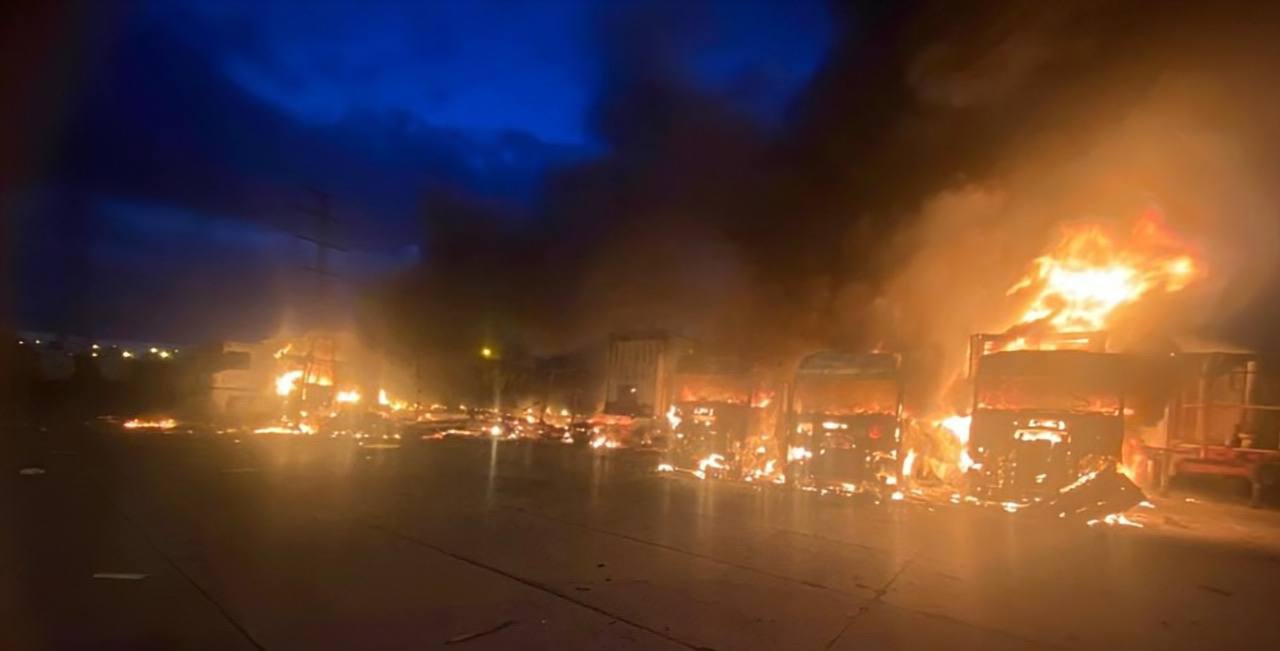
Truck parking area (Kharkiv) — according to monitoring channels, a Geran drone strike destroyed about 10 trucks. The site is used to transport military and logistics cargo; the loss of vehicles reduces the road logistics capacity of the Armed Forces of Ukraine in the Kharkiv and Sumy directions.
Railway locomotive (Kharkiv) — a UAV strike damaged a Ukrzaliznytsia locomotive. Rail transport remains the primary means of moving military equipment and personnel; the loss of a locomotive complicates rail traffic in the Kharkiv direction.
Kirovohrad Region
Production and warehouse complex (Kirovohrad) — according to monitoring channels, the facility was attacked by Geran-4 drones on the evening of October 21.
Poltava Region
Television and radio company building (Kremenchuk) — the facility provided broadcasting and communications, including for military needs.
Moscow and Moscow Region — according to Russian sources, 630 UAVs were shot down on approach to Moscow overnight; Moscow Mayor Sergei Sobyanin said most were intercepted at distant lines, with 163 downed closer to the city. Monitoring channels claim that a Flamingo missile was shot down over Serpukhov; Ukrainian sources claim an attack on the Russian Defense Ministry enterprise JSC 75 Arsenal, a facility for storing and preparing ammunition.
Belgorod Region — 205 UAVs were shot down over the past day; according to Russian sources, three civilians were injured. Belgorod Region is regularly targeted by drone attacks aimed at energy, transport, and civilian infrastructure.
Lipetsk Region — as a UAV passed through the city toward Moscow Region, a multi-story residential building and a medical facility were damaged. Lipetsk is a major transport hub on the Moscow–south axis; drones passing through the city create risks for civilian infrastructure.
The Russian strike on October 22 was combined in nature and focused on two interrelated areas: the production of aerial attack systems (Antonov State Enterprise, Khladokombinat No. 3, and UAV and booster storage sites) and the transport and energy infrastructure supporting their use and the supply of Ukrainian forces (the Southern Bridge, CHP-4 and CHP-5, the Novokyivska and Zhytomyrska substations, Kiliia port, and vessels at sea).
Ukrainian strikes were concentrated on Moscow Region (630 UAVs shot down, according to Russian sources) and Belgorod Region (205 UAVs shot down), with sporadic drone passages through Lipetsk and Tula Region. The intensity of attacks on Moscow remains high, although Russian sources report that most drones were intercepted at distant lines. The intensity of attacks on Moscow remains high, although Russian sources report that most drones were intercepted at distant lines. In the medium term, Russian strikes on UAV and missile production chains, as well as on energy infrastructure supporting the military-industrial complex, will continue; Ukraine will likely maintain its course of massive drone attacks on Moscow Region and border regions.
Defence secretary says Britain must manufacture at scale as Germany’s Rheinmetall opens Midlands factory
For the last 20 years, Britain was unable to put a barrel on its tanks without buying from abroad. Relying on foreign allies seemed like a reasonable choice during years of relative security (for wealthy countries at least) after the end of the cold war.
 Login