Russia bombarded Kyiv with ballistic missiles in an hourslong nighttime barrage, while the Russian military said Thursday that its air defenses intercepted over 800 drones fired by Ukraine at Moscow and other cities.
Sen. Roger Marshall (R-Kan.) on Wednesday blamed the war in Ukraine for high diesel prices, with energy costs as a key concern in the rapidly approaching midterms. “The real problem with the cost of diesel, in particular, is No. 1, is the Ukraine war, and because of that, diesel production has gone down. But beyond…
Sen. Roger Marshall (R-Kan.) on Wednesday blamed the war in Ukraine for high diesel prices, with energy costs as a key concern in the rapidly approaching midterms. “The real problem with the cost of diesel, in particular, is No. 1, is the Ukraine war, and because of that, diesel production has gone down. But beyond…
A Russian ballistic missile fitted with a cluster warhead struck the historic Pecherskyi district of Kyiv overnight on 21–22 October 2026, damaging buildings near two of the Ukrainian capital’s principal religious complexes, President Volodymyr Zelenskyy has said.
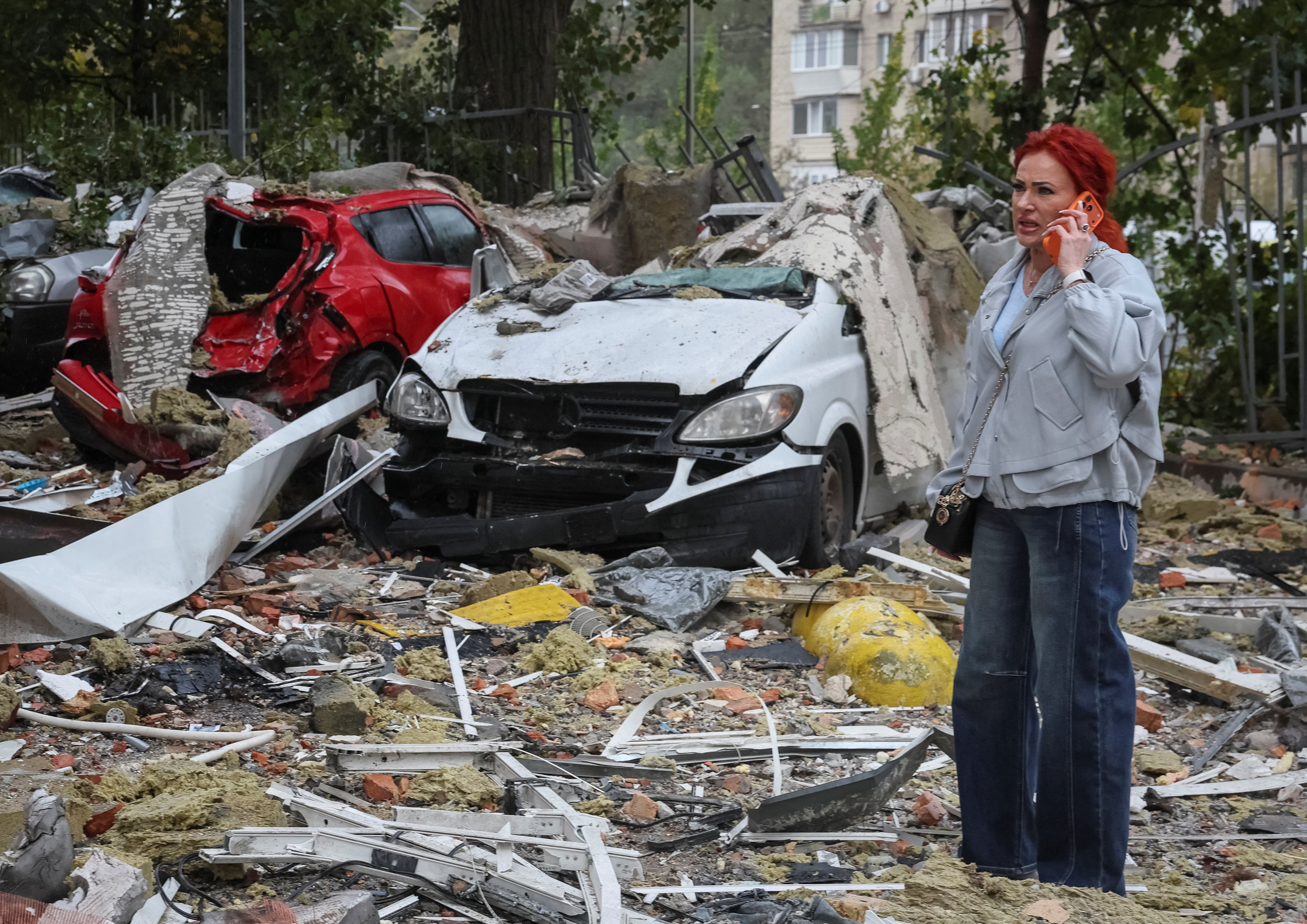
The missile landed between the Kyiv-Pechersk Lavra, a UNESCO World Heritage site, and the Holy Presentation (Sviato-Vvedenskyi) Monastery. Monastery buildings, homes, shops, cafés and other civilian infrastructure sustained damage in the surrounding area.
Zelenskyy disclosed that Russian forces had used three cluster-equipped ballistic missiles during the assault. Ukrainian authorities described weapons designed to explode in the air as they approach their targets, distributing explosive submunitions over an area approximately 400 metres in diameter.
After receiving reports from officials overseeing emergency operations across Ukraine, the president accused Moscow of deliberately choosing a weapon capable of inflicting extensive civilian casualties in a densely populated district.
“This was a deliberate choice of weapon and area of deployment,” Zelenskyy said.
He maintained that there were no military installations in the vicinity and that the attack had been intended to inflict maximum damage on civilians and their property.
Religious Buildings and Civilian Properties Damaged
Pecherskyi is one of Kyiv’s oldest districts, containing religious institutions and architectural monuments associated with centuries of Ukrainian history.
Among them is the Kyiv-Pechersk Lavra, established in the 11th century and subsequently developed into an important centre of Eastern Orthodox Christianity.
The complex includes historic churches, monasteries and an extensive system of underground caves. Together with Saint Sophia Cathedral and its related buildings, it forms part of a UNESCO World Heritage property that has appeared on the List of World Heritage in Danger since 2023.
Thursday’s explosion occurred in the area separating the Lavra from the Holy Presentation Monastery. Ukrainian authorities identified damage to buildings belonging to the latter, alongside neighbouring residential and commercial premises. Assessments of the destruction across the historic district were continuing.
This was not the first occasion in 2026 on which Russian weapons had damaged the area’s religious heritage.
On 15 June, a Russian drone struck the Kyiv-Pechersk Lavra complex, causing severe damage to the Dormition Cathedral. Its roof and structural elements suffered extensive destruction, prompting UNESCO to undertake emergency stabilisation measures.
The October strike has again exposed the vulnerability of the capital’s historic religious buildings, as well as the civilian neighbourhoods surrounding them.
The Use of Cluster Weapons in Urban Areas
The reported choice of ammunition has particular implications for the investigation into the attack.
Whereas a conventional missile warhead delivers its explosive force around a principal impact point, cluster munitions release numerous smaller explosive devices capable of striking separate locations across a broad area.
In an urban environment, such weapons can cause casualties and destruction well beyond an intended target. Unexploded submunitions may remain dangerous after the initial attack, posing further risks to residents and emergency workers.
The International Committee of the Red Cross has warned that deploying cluster munitions in populated areas creates a high likelihood of indiscriminate effects.
Under international humanitarian law, military operations must distinguish between civilian persons and objects and legitimate military targets. Indiscriminate attacks are prohibited.
The reported deployment of cluster warheads in central Kyiv therefore raises questions about whether those requirements were observed. Zelenskyy’s account of the three missiles had not, at the time of reporting, been independently established through publicly available forensic evidence.
Russian Barrage Follows Diplomatic Contact with Washington
The Pecherskyi explosion was one incident in a much larger attack on the Ukrainian capital.
According to Zelenskyy, Russia launched 21 ballistic missiles against Kyiv in three successive waves overnight. Ukrainian authorities reported at least two people killed and more than 30 wounded, with strikes damaging apartment buildings, commercial premises, transport infrastructure and energy facilities.
The bombardment took place shortly after Russian President Vladimir Putin met US presidential envoy Steve Witkoff in St Petersburg on Wednesday, 21 October.
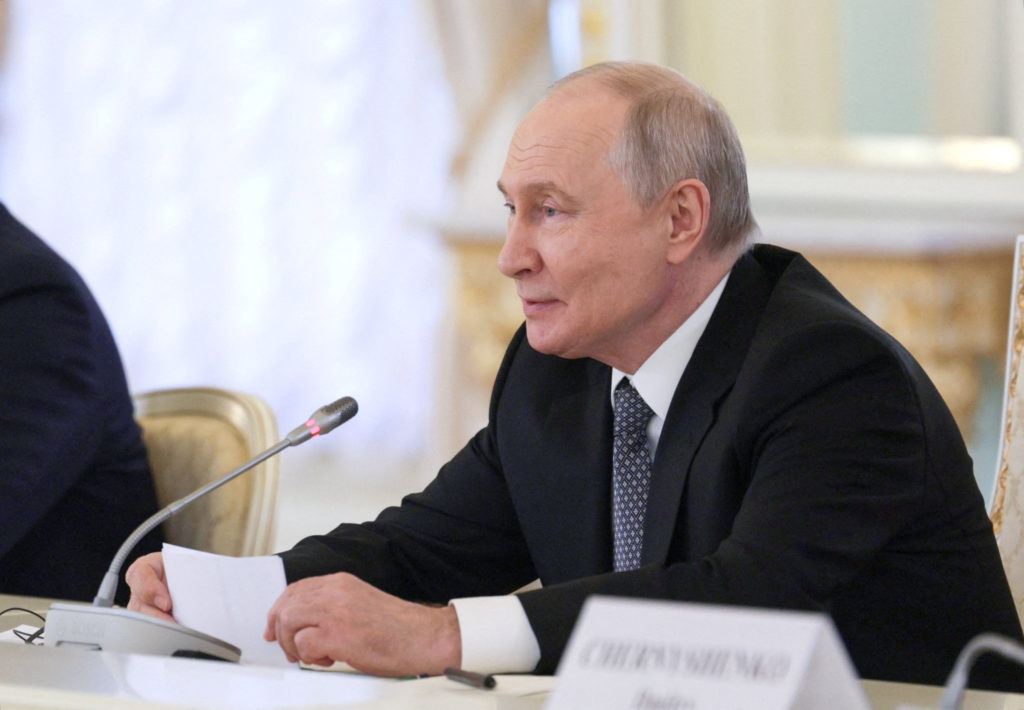
During their discussions, Putin indicated that Russia was prepared in principle to resume negotiations with Ukraine and the United States, potentially in November. However, no confirmed timetable emerged.
Witkoff’s visit followed consultations in Norway between American, Ukrainian and European representatives over possible arrangements to end the war.
The renewed diplomatic activity has done little to resolve the underlying disagreements. As EU Today has previously examined, Moscow continues to advance territorial demands while the parties remain divided over Ukraine’s future security guarantees.
Meanwhile, Kyiv faces an immediate requirement for additional air-defence ammunition.
Zelenskyy has repeatedly appealed for more Patriot interceptor missiles capable of engaging ballistic targets. Difficulties surrounding American military assistance and intelligence cooperation have increased tensions between Washington and Kyiv at a time when Russia is intensifying attacks against Ukrainian cities.
The latest strike also presents Ukrainian investigators with the task of establishing whether the reported use of cluster munitions against a historic civilian district constituted an unlawful attack.
For Zelenskyy, the bombardment following Putin’s latest diplomatic discussions demonstrates that Moscow’s military conduct remains unchanged. He has argued that Russia’s actions provide no evidence of a genuine intention to bring the war to an end.
Russia launched 21 ballistic missiles against Kyiv in three successive waves overnight on 21–22 October, striking residential buildings, energy facilities and transport infrastructure just hours after President Vladimir Putin held peace negotiations with US presidential envoy Steve Witkoff in St Petersburg.
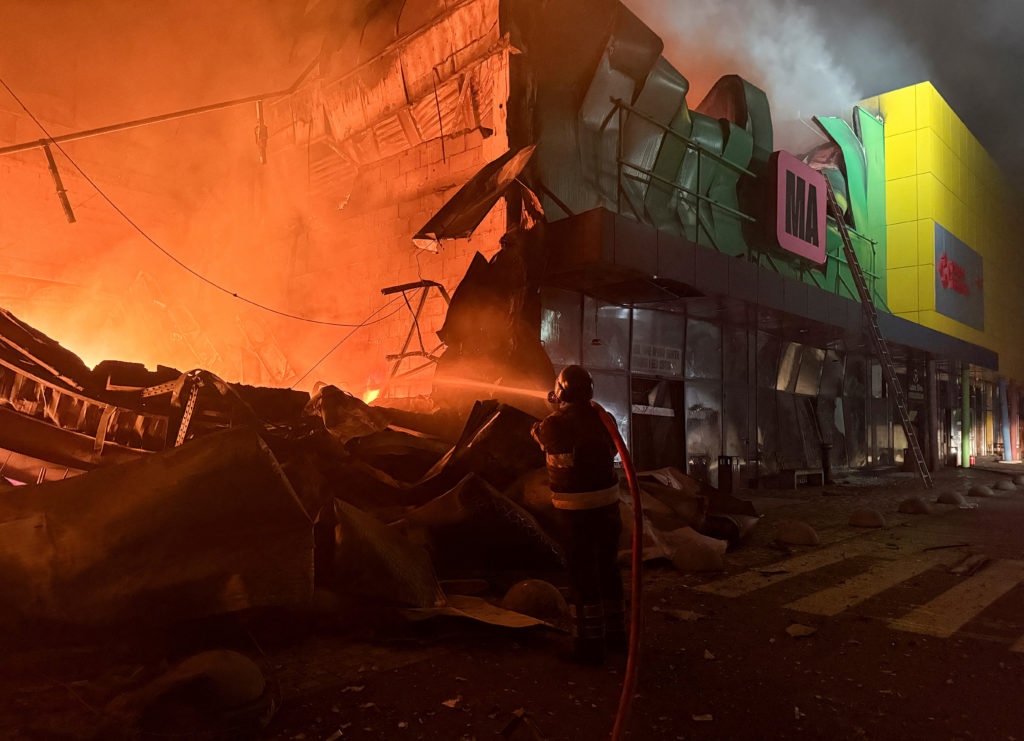
Ukrainian President Volodymyr Zelenskyy confirmed on Thursday morning that at least two people had been killed and 34 injured, including five children, in Russian attacks affecting 12 Ukrainian regions. The capital sustained extensive damage, with strikes reported against railway and metro infrastructure, shopping centres, industrial premises and a monastery.
The bombardment followed a three-hour meeting between Witkoff and Putin on Wednesday, during which the Russian president indicated his willingness to resume trilateral negotiations involving Moscow, Washington and Kyiv. The Russian attacks continued despite the diplomatic initiative, prompting Zelenskyy to call for renewed international pressure on the Kremlin.
Kyiv Under Three Waves of Ballistic Missiles
In a statement published on Telegram, Zelenskyy said Russian forces had launched three waves of ballistic missiles against the Ukrainian capital, causing numerous direct hits and widespread destruction.
The Ukrainian president referred sarcastically to Russia’s supposed humanitarian intentions, an apparent reference to Witkoff’s description of Putin as a humanitarian during their meeting the previous day.
Emergency services were deployed across several districts of Kyiv, where residential and commercial buildings suffered damage. Part of the capital’s metro infrastructure on the Southern Bridge was affected, disrupting traffic, while a strike on an ambulance station in the Pecherskyi district damaged six emergency vehicles. No medical personnel were injured at that location.
According to Ukrainian military and emergency service reports, the overnight assault also involved 210 attack drones and several types of missiles, including Iskander-M, S-400, Zircon and Oniks weapons.
By Thursday morning, Ukrainian air defences had intercepted or suppressed 181 drones. Russian weapons struck 32 locations, while debris from intercepted drones fell at eight others.
The assault followed several consecutive days of Russian attacks against Kyiv, including earlier strikes on hospitals, residential buildings and the capital’s transport network.
Witkoff’s Meeting with Putin
The timing of the latest bombardment placed renewed scrutiny on Washington’s diplomatic engagement with Moscow.
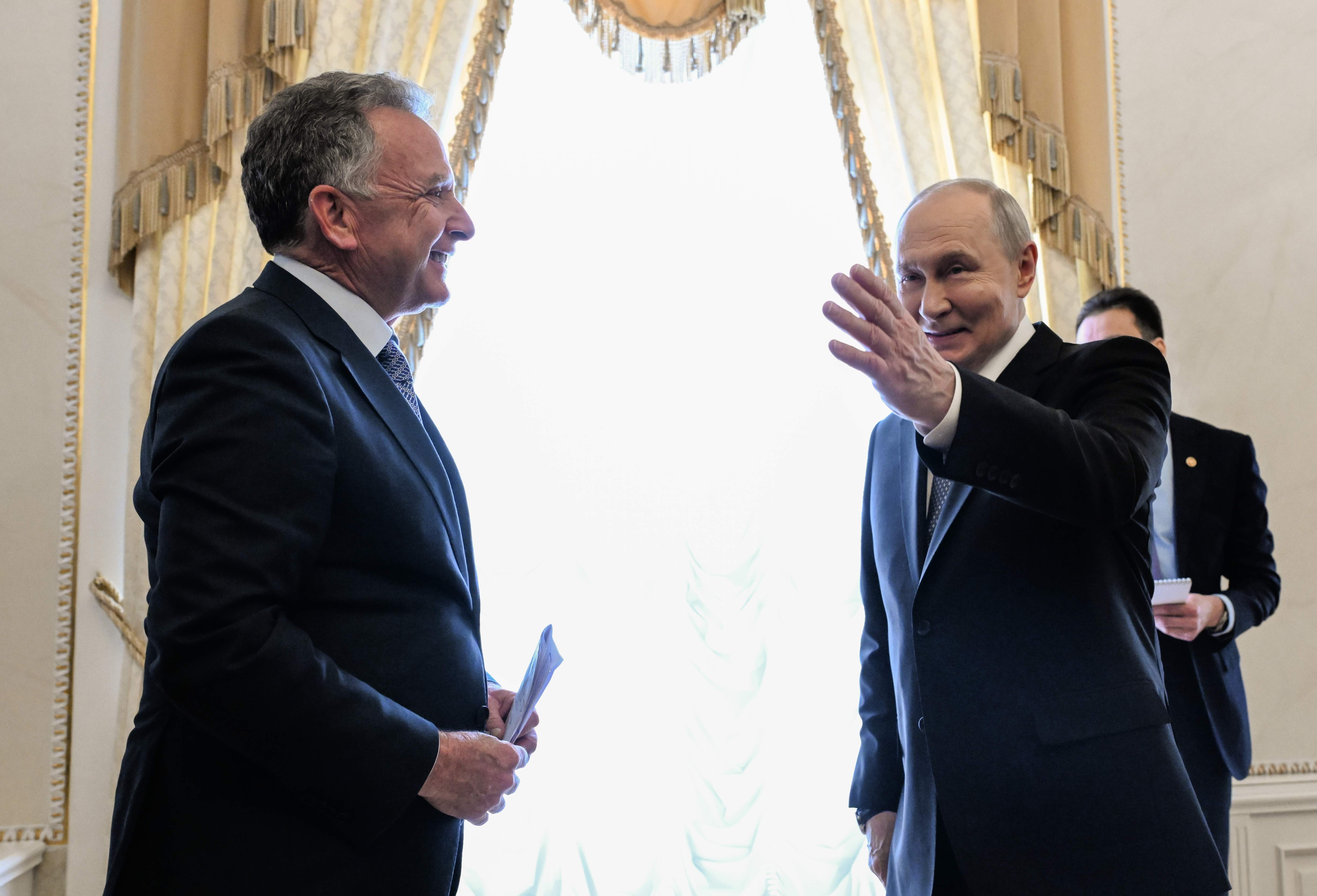
On 21 October, Witkoff met Putin at the Konstantin Palace in St Petersburg, accompanied by Russian officials, including Kirill Dmitriev, the Kremlin’s representative for international economic cooperation. The discussions lasted approximately three hours.
Following the St Petersburg meeting, Witkoff described the discussions as constructive and indicated that negotiations would continue at the technical level between representatives of the United States, Russia and Ukraine.
Putin reportedly expressed agreement in principle to restarting trilateral negotiations, potentially during the first half of November. However, no agreement on a ceasefire or suspension of Russian attacks was announced.
The meeting also attracted controversy after Witkoff praised Putin as a humanitarian following the release of Stephen Hubbard, a 74-year-old American citizen who had been detained in Russia for more than four years.
The remarks prompted criticism from Republican lawmakers in Washington, who questioned the characterisation of the Russian president while Moscow continued its military campaign against Ukraine.
Zelenskyy Calls for Pressure Rather Than Diplomatic Concessions
Zelenskyy characterised the overnight missile attack as evidence that Russia’s participation in negotiations had not produced any substantive change in its conduct.
He argued that diplomatic efforts to end the war should continue but must be accompanied by measures capable of altering Moscow’s military calculations.
Those measures, according to the Ukrainian president, include stronger air defence capabilities, faster deliveries of interceptor missiles, the ability to destroy Russian ballistic missile launchers and continued economic sanctions.
The latest attacks also place Ukraine’s air defence requirements firmly within the ongoing negotiations with Washington. Kyiv has repeatedly sought additional Patriot missiles and more reliable advance warning of Russian ballistic launches, particularly as repeated strikes place increasing demands on its interception capabilities.
For the Trump administration, the immediate question is whether Russia’s stated willingness to negotiate can produce verifiable commitments to reduce hostilities.
The Kremlin has offered the prospect of further talks without announcing a halt to its offensive operations. Kyiv, meanwhile, continues to face missile and drone attacks against civilian infrastructure even as discussions concerning a possible settlement proceed.
The events of 21–22 October leave Washington’s diplomatic initiative moving forward against the background of an expanding Russian aerial campaign, with no indication that Moscow intends to suspend its attacks while negotiations continue.
Missiles struck Kyiv in the early hours of Thursday, a Reuters witness said, and Ukraine sent hundreds of drones towards Moscow overnight, as the two sides kept up a barrage of attacks despite the latest US mediation attempts to end the war.
The Russian strikes wounded 15 people and damaged subway infrastructure on the Southern Bridge over the Dnipro River in the Ukrainian capital while also restricting traffic there, Kyiv authorities said. The strikes followed another attack on the city on Wednesday evening that wounded six people.
Russian strikes hit Ukrainian infrastructure
A Russian strike killed a woman and injured another four people in the Kharkiv region in Ukraine’s northeast, Regional Governor Oleh Syniehubov said on Telegram.
A drone also hit energy infrastructure in the Kremenchuk area in the Poltava region, a local official said on Telegram, without giving details.
Located on the Dnipro River, Kremenchuk is a major industrial hub and home to one of Ukraine’s biggest oil refineries. The area has been repeatedly hit by Russian strikes, including a 2022 attack on a crowded shopping mall that killed at least 21 people.
Hundreds of drones target Moscow
In Russia, two people were wounded near Moscow after 630 drones were sent towards the capital during the night, Mayor Sergei Sobyanin said on Telegram. Most of the drones were downed at long range, he added.
In the city of Lipetsk – home to a major steel plant some 400 km (250 miles) south of Moscow – a man was injured as drones hit apartment buildings and a medical facility, Governor Igor Artamonov said on the Telegram app.
Russia invaded Ukraine in 2022 after annexing the Crimea peninsula from its southern neighbour eight years earlier, locking the two nations into the deadliest conflict on the European continent since World War Two.
US pushes for renewed peace talks
The latest strikes come after US presidential envoy Steve Witkoff held talks this week with Ukraine’s President Volodymyr Zelenskiy and Russia’s President Vladimir Putin to mediate an end to the conflict.
Zelenskiy said on Wednesday that Ukraine supported a US proposal for three-way talks with Russia and the United States at the level of negotiators to be held as soon as possible, and the Kremlin said Putin has agreed to resume US-mediated peace talks with Kyiv as soon as next month.
Russia freed an American imprisoned for the last four years. Stephen Hubbard was captured in Eastern Ukraine and convicted of fighting against Russia. The 74-year-old retired teacher was reportedly freed without a swap. U.S. special envoy Steve Witkoff greeted Hubbard in St. Petersburg. He also met with the Russian president and praised Putin in unusually glowing terms. Nick Schifrin reports.
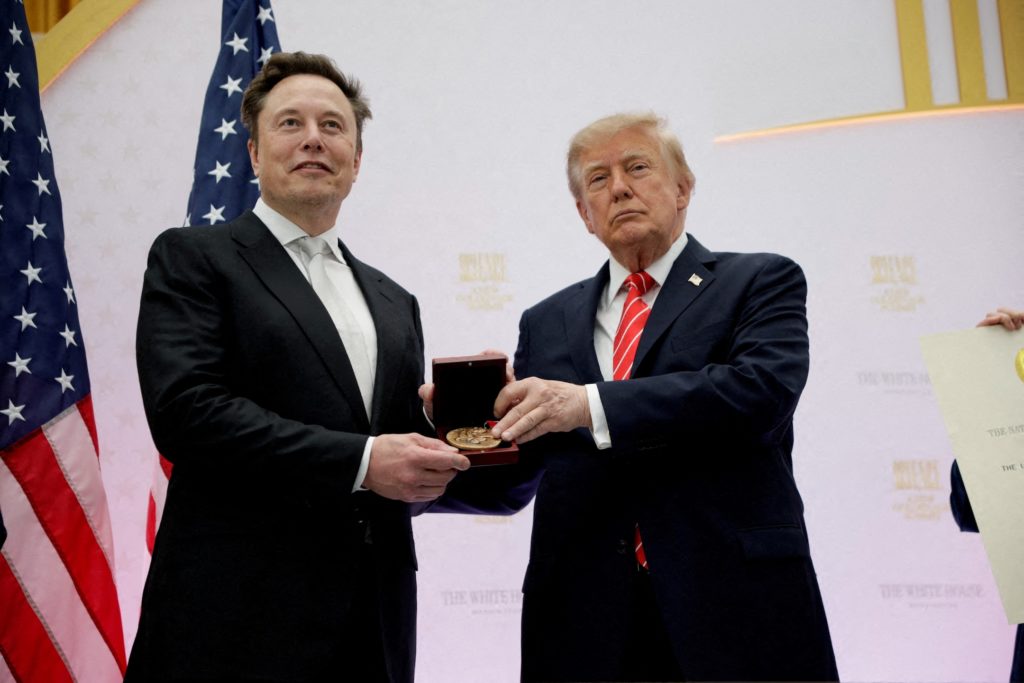
According to reports, Elon Musk ordered the slowdown of Ukraine's Starshield defense systems. Nick Schifrin reports, and Amna Nawaz discusses how the world's richest man gained such power over U.S. security interests with Charles Galbreath, a retired Air Force colonel who focused on space operations during his 30-year military career and is now at the Air Force Association's Mitchell Institute.
The Russian leader has agreed "in principle" to resume the talks after Nov. 10, Putin's foreign affairs adviser Yuri Ushakov told reporters following a meeting in St. Petersburg between Putin and U.S. President Donald Trump's envoy Steve Witkoff.
Moscow has released retired American teacher Stephen Hubbard after more than four years in detention, following President Donald Trump’s personal intervention with Vladimir Putin and amid renewed US-Russian negotiations over Ukraine.
Russia has released Stephen Hubbard, a 74-year-old American citizen imprisoned since 2022, as US special envoy Steve Witkoff holds talks with President Vladimir Putin in St Petersburg on Wednesday, 21 October.
Putin announced the release during his meeting with Witkoff, saying Hubbard had already been transferred to Pulkovo Airport in St Petersburg in preparation for his return to the United States. Witkoff thanked the Russian president for securing the American’s freedom.
The development follows direct intervention by President Donald Trump, who confirmed on Tuesday that he had personally raised Hubbard’s detention with Putin and requested his release.
Hubbard, a retired English teacher from Michigan, had spent decades living abroad before moving to Izium, in Ukraine’s Kharkiv region, in 2014. Russian forces detained him in April 2022, during their occupation of the city following the full-scale invasion of Ukraine.
In October 2024, a Moscow court sentenced him to six years and ten months in prison after finding him guilty of serving as a mercenary for Ukrainian forces.
Russian prosecutors alleged that Hubbard had joined a Ukrainian military unit and received approximately $1,000 a month for his activities, including guarding military checkpoints.
His family rejected the accusations. His sister, Patricia Hubbard Fox, maintained that he had never participated in military operations, while his American lawyer, Martin De Luca, said the charges were fabricated.
The US State Department subsequently designated Hubbard as wrongfully detained, making his release a priority in Washington’s negotiations with Moscow.
Release coincides with renewed Ukraine diplomacy
Hubbard’s release comes during another round of intensive diplomatic contacts involving Washington, Kyiv and Moscow.
Witkoff arrived in St Petersburg following talks in Oslo on Tuesday with Ukrainian President Volodymyr Zelenskyy, Norwegian Prime Minister Jonas Gahr Støre and Finnish President Alexander Stubb. Jared Kushner, another representative of Trump’s administration, participated remotely.
The discussions addressed security arrangements, energy and economic questions connected with Russia’s war against Ukraine.
Witkoff travelled directly from Norway to Russia, where he was received by Kremlin representative Kirill Dmitriev before his meeting with Putin.
The release provides a concrete outcome from the latest US-Russian contacts, although no indication has emerged that it forms part of a broader agreement concerning Ukraine.
It also follows several previous cases in which American citizens detained in Russia have been released through negotiations between Washington and Moscow.
In August, former US Marine Robert Gilman was released on humanitarian grounds amid serious concerns about his deteriorating health.
Hubbard was the only American prisoner in Russian custody officially classified by Washington as wrongfully detained at the time of his release.
Neither side has announced whether Moscow received any concessions in exchange for his freedom, while the outcome of Witkoff’s wider negotiations with Putin remains unclear.
In July 1971, Henry Kissinger developed a convenient stomachache in Pakistan, vanished from public view and turned up in Beijing. The secret trip that led to Nixon’s opening to China rested on a simple piece of geometry: in a world of three great powers, the smart move is to stand closer to each of your […]
The war in Ukraine can be ended permanently on terms that protect Ukraine’s statehood, meet Russia’s security concerns, and lay the foundation for a durable European security order. As another round of negotiations gears up in Norway, I propose a settlement concluded as a single package, signed by Ukraine and Russia, adopted by a vote […]
US envoy Steve Witkoff will meet Russian President Vladimir Putin on Wednesday after what a US official called “constructive” talks with Ukrainian President Volodymyr Zelenskiy in Norway, as President Donald Trump said it was time for Ukraine to end the war.
The US official said Ukraine brought forward new ideas and proposals to the Oslo talks, which also involved the leaders of Norway and Finland and European and NATO representatives, and that participants made “meaningful progress” toward a coordinated approach to engaging Russia.
The official, who spoke on the condition of anonymity, said the talks covered “key elements of a comprehensive peace framework,” including security guarantees for Ukraine, a post-war economic plan and a broader European security architecture.
Witkoff would aim to “create a pathway toward direct trilateral and broader multilateral negotiations,” the official said.
Ukraine seeks stronger security guarantees
Zelenskiy travelled to Oslo seeking to repair relations with Washington, which have sunk to new lows as Trump has courted Moscow. Kyiv has complained that Washington has withheld vital military support and intelligence.
Zelenskiy told a news conference after the Oslo meeting and an earlier phone call with US Secretary of State Marco Rubio that Ukraine was again receiving early warnings of Russian missile attacks.
“Now it works, it’s great,” he said, adding he and Rubio had discussed supplies of Patriot missile interceptors as well as the satellite-based Starlink system, which Kyiv complained had stopped working when mounted on fast-moving objects such as drones.
Trump’s recent gestures toward Moscow, including a deal to buy Russian diesel and a waiver of new sanctions, sparked bipartisan pushback in the US Congress and worry in European capitals.
Zelenskiy said he had discussed “Article 5-like” security guarantees, referring to the NATO stipulation that an attack on one ally is an attack on all.
“I am thankful to the American side that they underlined again that it will be strong,” he said.
Zelenskiy reiterated that Ukraine hoped to discuss key issues on how to end the war during a trilateral meeting of leaders of Ukraine, Russia and the US.
Norway’s Prime Minister Jonas Gahr Stoere told the news conference the Oslo meeting had been good and constructive, while Finnish President Alexander Stubb added: “I think the (peace) process is back on track.”
Washington has denied deliberately hindering Ukraine’s war effort. But Trump has repeatedly rebuked Zelenskiy, and called for him to be replaced.
On Tuesday, Trump called on Ukraine to make a deal to settle the war, and said Moscow wanted to get it done. “Ukraine has to want to settle this war,” he told reporters.
Trump suggested Moscow had the upper hand in the fight because “Russia is a big machine — they just keep grinding forward, and that’s what they’ve done. They’ve taken a very large piece of land.”
US missiles to Ukraine on hold?
The US under Trump has largely stopped providing weapons directly to Ukraine but lets European countries buy US weaponry on Kyiv’s behalf under a program known as Prioritised Ukraine Requirements List (PURL). It has also provided intelligence and technology that Europe cannot match.
A source familiar with the matter said most weapons deliveries under PURL continued to flow, but US Defense Secretary Pete Hegseth had not approved Ukraine’s latest requests for Patriot interceptors.
Rubio acknowledged on Tuesday that a consignment of interceptors bought by European countries for Ukraine may not have been delivered, but denied that the US had changed policy.
“There has not been some deliberate political directive to go out and harm Ukraine,” he said on a visit to India.
Hegseth told reporters US policy toward Ukraine had not changed and stressed the need to maintain US stockpiles. “Certainly, with things like interceptors, we want to make sure our guys have the most possible as well,” he said.
He also said Washington had not pulled back Ukraine’s ability to access Starlink, which is owned by Elon Musk’s SpaceX, and appeared to signal that the problem rested with corporate terms of service Kyiv needed to comply with.
Musk has said Starshield, the military-grade version of SpaceX’s Starlink communications system, is controlled by the US government and any limits on its use are ultimately up to Trump.
Tuesday’s Wall Street Journal cited US officials and people familiar with the matter as saying that Musk ordered the slowdown after consulting with Trump and other administration officials. Reuters reported earlier that the order to limit the service came from the White House.
US missile deliveries and Starlink restrictions questioned
While US ties with Ukraine have deteriorated, Russia has stepped up attacks on Ukrainian cities, particularly targeting power stations and fuel, despite a call from Trump for both sides to spare each other’s energy systems.
Russia bombarded cities in western Ukraine overnight, targeting electricity systems and knocking out power across swathes of the country that had previously been spared.
Ukraine held back for several days last week from hitting Russian oil refineries in deference to Trump’s request, but has resumed strikes after Russia showed no sign of complying. Both sides have also struck data centres.
Trump has repeatedly condemned Ukrainian attacks on Russia while saying little about Russia’s far more severe attacks on Ukraine.
Russia hits cargo vessels
Russia’s defence ministry said on Tuesday it struck three cargo vessels in Ukraine’s port of Reni and two other cargo vessels en route to Odesa. Russian forces also hit two logistics hubs, it said.
Energy facilities were attacked in seven Ukrainian regions overnight, knocking out power, and the western Lviv region was struck again during the day. Russian drones also struck an energy facility in Kyiv on Tuesday, mayor Vitali Klitschko said, with authorities saying power was out in four districts.
The deterioration of US-Ukraine relations began 10 days ago when Trump lifted sanctions on Russian diesel in a deal agreed with Putin. Trump said this would help reduce high fuel prices that have upset US voters ahead of midterm elections on November 3.
At the weekend, Trump issued a broad waiver of tougher sanctions on Russia that were meant to have begun this week.
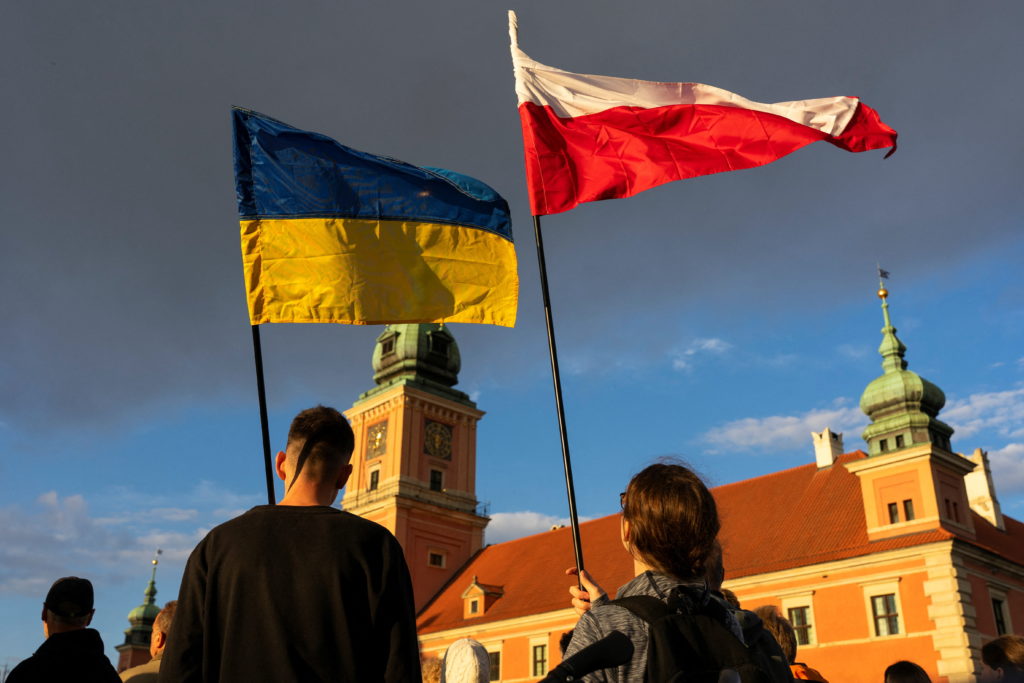
Poland has been one of Ukraine's staunchest supporters since the start of Russia's full-scale invasion. But many of its people are slowly turning against the one million Ukrainian refugees given sanctuary over the past four years. Divisions between Poles and Ukrainians are being exacerbated by bitter cultural memory of a World War II massacre. Special correspondent Malcolm Brabant reports.

 Login