❌

Reading view

Pete Ricketts’s Wealth Puts Class at the Center of Nebraska’s Senate Race

In a year when the wealth of the rich soared while workers lost ground to inflation, class has become political, especially in the Nebraska Senate race.

© David Robert Elliott for The New York Times

A campaign sign for the Senate candidate Dan Osborn adorns a stretch of farmland in Nebraska.
  •  

Billionaires fleeing California's wealth tax could cost the state more than the levy makes, Stanford economists say

Rows of auditorium seats display repeated campaign signs reading “SAVE LIVES TAX BILLIONAIRES” and ballot measure messages.
A Stanford paper warns that California could lose more in future income taxes than it would raise from a one-time billionaire tax.

Stephen Lam/San Francisco Chronicle via Getty Images

  • Several billionaires have left or plan to leave California over its proposed wealth tax.
  • The departures could mean that the state loses more in the long term than the one-time tax brings in.
  • That's according to a working paper shared by a pair of Stanford economists.

Supporters of California’s proposed billionaire tax say it could raise about $100 billion.

But a new paper puts the takings closer to $30 billion and warns that the state could ultimately lose money if its richest residents flee.

Proposition 40, which goes before voters on November 3, would impose a one-time 5% tax on billionaires who were California residents on January 1, 2026, with their wealth valued at the end of the year. Most of the tax proceeds would go toward healthcare.

In a National Bureau of Economic Research working paper released this week, Stanford economists Benjamin Jaros and Joshua Rauh estimate the tax would collect between $28 billion and $36 billion — far short of supporters' $100 billion projection.

They point to billionaires moving away before the residency cutoff. Their estimate also assumes legal challenges could prevent California from collecting some of the remaining tax.

The authors identified seven billionaires reported to have left the state before the cutoff: Google cofounders Larry Page and Sergey Brin, investor Peter Thiel, director Steven Spielberg, Uber cofounder Travis Kalanick, investor David Sacks, and car loan tycoon Don Hankey.

Together, they accounted for nearly 30% of the wealth the researchers considered potentially taxable. The researchers noted that moving out of the state does not, by itself, settle someone's tax residency.

The authors' bigger concern is what happens afterward. California would collect the wealth tax only once, but billionaires who leave could stop paying state income taxes year after year.

If those departures and lost payments last, their model projects an average net loss of $38.9 billion. The researchers said they ran 100,000 simulations, and that in 85% of scenarios, losses outweighed revenues from the tax.

The forecast depends on who actually left and whether they stay away.

California's nonpartisan Legislative Analyst's Office offers a less stark view. It expects tens of billions in tax revenue and a possible ongoing drop of less than $1 billion a year in billionaire income-tax payments.

Brin is fighting the proposal on another front, too. He has given at least $102 million to Building a Better California, a group backing efforts to defeat or block Proposition 40. Two competing measures on the same ballot could keep Proposition 40 from taking effect, even if voters approve it.

While some billionaires have been vocal in their opposition to the tax, some have welcomed it. Nvidia CEO Jensen Huang told CBS News last month that being able to pay an estimated $8 billion over five years would be a "privilege."

In filings released this week, it was revealed that Meta CEO Mark Zuckerberg had considered moving out of California due to the tax, but ultimately decided to stay. To ensure that Zuckerberg has sufficient liquidity to pay without diluting his control of the company, Meta created a new class of shares.

Many economists back the plans. Six Nobel Prize winners — Daron Acemoglu, Abhijit Banerjee, Peter Diamond, Esther Duflo, Paul Krugman, and Joseph Stiglitz — signed a letter in September calling the proposal the "first opportunity for the people to start reining in the power of billionaires."

At the time, Acemoglu said it could counter years of tax avoidance by the very wealthy and curb their political influence. He said that while the proposal isn’t perfect, it "deserves support."

Read the original article on Business Insider

  •  

In San Francisco, a Family Earning $325,000 Qualifies for Government Aid

With the A.I. boom driving up prices, the city is subsidizing child care for households with high incomes. Even with the help, families say they are struggling.

© Christie Hemm Klok for The New York Times

Natsumi Makiyama and John Marman, a married couple in San Francisco, together make just under $235,000, qualifying them for free child care under a city program.
  •  

France Riots Expose the Rage Aimed at Dior, Hermès and Other Luxury Brands

The looting of stores belonging to brands like Dior, Celine and Hermès has exposed a crack in the glossy facade.

© Thibaud Moritz/Agence France-Presse — Getty Images

A vandalized Hermès storefront in Marseille, France, on Saturday.
  •  

In Fighting for Every Black Child, Did I Betray My Own?

A decade ago, I made a decision about my daughter’s education that I hoped would challenge New York City’s separate and unequal school system. Now 16, she thinks I made the wrong choice.

© Wayne Lawrence for The New York Times

Reflecting on her path through New York’s school system, Najya said, “I never really got the education I wanted.”
  •  

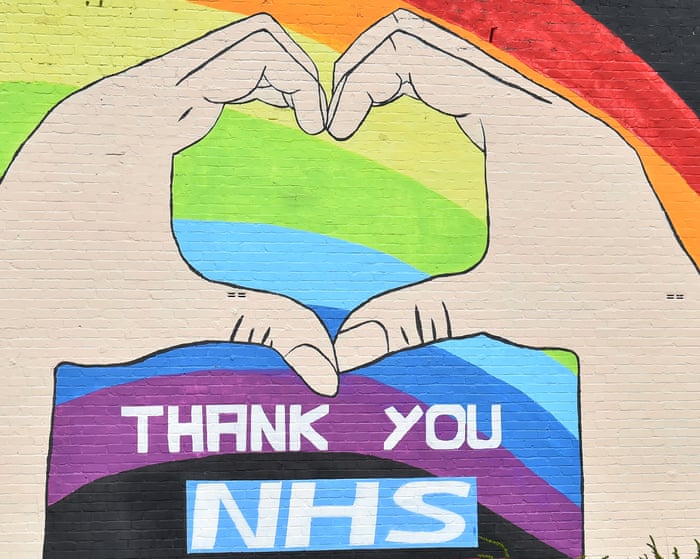
Public support for founding principles of NHS is falling across UK population

Rise in economic hardship and changes in attitudes towards migration could explain drop in support, experts say

Public support for the NHS’s founding principles – that it is free to use, available to everyone and tax-funded – has fallen over the last five years, research has shown.

Backing for all three pillars dropped between 2021 and 2025 across the UK population, except for a small rise in millennials’ support for the NHS being funded from taxation.

Continue reading...

© Photograph: Nathan Stirk/Getty Images

© Photograph: Nathan Stirk/Getty Images

© Photograph: Nathan Stirk/Getty Images

  •  

Data centers, grocery bills, and the Epstein files: Inside the Pennsylvania swing district that could decide the House

Pennsylvania’s 7th District, the Lehigh Valley region that includes Allentown, Bethlehem, and Easton, is one of the most competitive House races in the country. Democrat Bob Brooks, a firefighters union president, is challenging Republican incumbent Rep. Ryan Mackenzie, and how voters here feel could help decide who controls the House. Taya Graham and Stephen Janis spent several days in the district talking to the people who will determine the outcome.

Voters say high prices, a lack of affordable housing, and a Washington disconnected from working people are driving their vote. Two more specific issues are also shaping the race: proposed data centers, which residents say are being imposed on their communities without adequate review, and the Epstein files, which arrived in Bethlehem aboard the “Donald J. Trump and Jeffrey Epstein Memorial Bookmobile,” a traveling archive of the documents released to date. Underneath it all is a darker worry: that their votes won’t be counted.

Credits

Producers: Taya Graham and Stephen Janis
Writer: Stephen Janis
Editing/Post-Production: Stephen Janis

Transcript

Taya Graham: Pennsylvania’s 7th District is a diverse community stretching across the Lehigh Valley, but just before the midterm election, there is a common theme from residents that we spoke to.

Kathy: We are not liking what we see in our country.

Taya Graham: Anger and the desire for change.

Kathy: We’re not liking the effects of the things that are taking place in Washington, and therefore people are out trying to make a change.

Taya Graham: And how voters feel here could be critical to who controls the House. It is one of more than a dozen battleground districts, which is why we spent several days speaking to the people who will determine the outcome. Many said high prices, lack of affordable housing, and a disconnect between Washington and the concerns of working people were motivating their vote.

Valerie: But from what I see, a lot of people, including people that were always Trumpers or used to be always Trumpers, are actually changing their mind. They’re really upset. When they go to the grocery store, my grocery bills in the last year have tripled.

Taya Graham: But we also learned there are other more specific issues that could sway the election. Data centers have become a national issue, but the impact is truly local. Last week, the Bethlehem City Council met to approve more restrictive zoning regulations for data centers. The law would create wider setbacks from residential neighborhoods and limit noise levels. For some, data centers were the deciding factor on how they would vote.

Darcy: I actually see this as it being forced on us, it being forced on us quickly, it being forced on us without the proper studies and concern about the environment that honestly, I think it’s across the board, people don’t want them. And this is an issue that I think Republicans, Independents, and I think this is our stamp act.

Taya Graham: A unifying issue in an otherwise fractured electorate.

Mary Collier: Doors and on the phones across our turfs in Pennsylvania right now, affordability, housing and data centers are the top issues. I think there’s a lot of reasons to hate data centers, but the fact that 40% of Pennsylvanians can’t afford their bills right now, knowing that these things are going to raise their utility bills is a huge reason that it’s on people’s minds and they’re thinking about it going into this election.

Taya Graham: The race between Democrat Bob Brooks and Republican Ryan McKenzie is tight. The Cook’s political report gives Brooks a five point lead, but 16% of voters remain undecided. Neither attended the hearing. Brooks did make an appearance when the Donald J. Trump and Jeffrey Epstein Memorial bookmobile visited Bethlehem. It’s a moving repository of Epstein investigatory files and emails that has traveled across the country. We asked Brooks if he thought that the Epstein scandal would impact voters.

Bob Brooks: I think they’re a huge factor. People of all walks and want to see these things released. I think it’s a huge issue. I know within my union, I’ve watched my union members feel like they’ve been lied to, and this is one of the big topics that they voted that way in the beginning and now they’re feeling lied to. So I think you’re going to see it be a really big factor.

Taya Graham: At another stop, residents agreed.

Krista: I wanted to see the 3.5 million books. I wanted to see what it was all about and that I can’t believe our leaders in our country are saying this is a hoax.

Taya Graham: However, looming over the district were other more foreboding concerns that democracy itself was on the ballot and that their vote would not be counted.

Cathy: I am going to vote by mail, but I’m going to put my ballot in a drop box as opposed to the mail because I don’t trust that process, which is ridiculous. The United States Postal Service, we feel like we can’t even trust that anymore.

Thomas: I think that there’s a strong possibility that they would block as many votes as possible.

Taya Graham: We will continue to be on the ground in this critical district as the midterms unfold. This is Taya Graham and Steven Janis reporting for you.

💾

In Pennsylvania’s 7th District, rising prices, data centers, and the Epstein files are fueling an electorate ready for change.
  •  

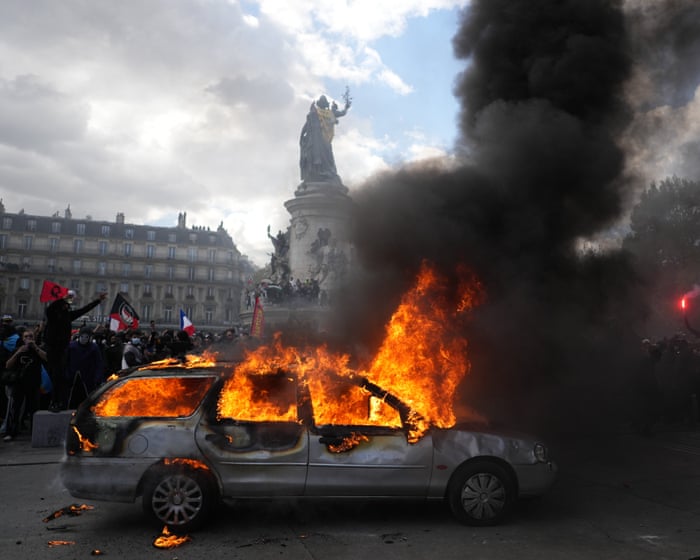
The Guardian view on France’s protests: a polarised country is in a perilous political moment | Editorial

The scenes of social unrest and violence at the weekend are an ominous portent, ahead of elections which may deliver a far-right presidency

In Emmanuel Macron’s book Revolution, published ahead of the 2017 presidential election that he went on to win, he promised to restore hope to a country that was losing faith in its future. As Mr Macron’s lame-duck second term enters its last phase against a quasi-insurrectionary backdrop of torched public buildings and looted shops, the failure of that political project appears total.

The worst scenes of urban violence for years overshadowed a weekend of protest that gravely undermined what is left of the French president’s authority. As police lost control of the streets, more than 2,000 shops were ransacked. Far-left groups targeted town halls and local buildings, and engaged in pitched battles with the police, whose disastrously heavy-handed response to last week’s high school protests has succeeded only in escalating tensions.

Do you have an opinion on the issues raised in this article? If you would like to submit a response of up to 300 words by email to be considered for publication in our letters section, please click here.

Continue reading...

© Photograph: Thibault Camus/AP

© Photograph: Thibault Camus/AP

© Photograph: Thibault Camus/AP

  •  

Burnham urged to launch inquiry into unequal health impacts of air pollution

Letter from 150 scientists, MPs and activists calls for action to protect lower-income and minority-ethnic communities

The government must hold an inquiry into the unequal impacts of air pollution, 150 scientists, MPs and activists have urged.

Research by the Institute for Fiscal Studies shows that across England, lower-income areas have persistently higher levels of air pollution than wealthier areas.

Continue reading...

© Photograph: Alicia Canter/The Guardian

© Photograph: Alicia Canter/The Guardian

© Photograph: Alicia Canter/The Guardian

  •  

Europe’s Poverty Divide Persists as New Figures Reveal Huge Regional Disparities

Nearly 93 million EU residents were at risk of poverty or social exclusion in 2025, with the latest regional figures revealing sharp differences both between and within member states. The findings raise questions about how effectively European investment is addressing longstanding economic inequality.

More than one in five people living in the European Union remained at risk of poverty or social exclusion in 2025, according to Eurostat figures that reveal substantial differences in living conditions across the bloc’s regions.

Approximately 92.7 million people, representing 20.9 per cent of the EU population, fell into the category during the year. Although the total declined slightly from 93.3 million in 2024, regional data show that economic vulnerability remains heavily concentrated in particular areas.

In 26 of the 243 EU regions for which figures were available, at least 31 per cent of residents were at risk of poverty or social exclusion. At the opposite end of the distribution, 24 regions recorded rates below 13 per cent.

The regional figures published by Eurostat show that the highest rate was recorded in French Guiana, at 54.8 per cent, while Slovakia’s capital region, Bratislavský kraj, recorded the lowest at 2.9 per cent.

National averages conceal substantial differences

The contrast is not confined to richer and poorer member states. In several countries, internal regional disparities are more pronounced than comparisons of national economic performance might suggest.

Within Slovakia, the proportion of people at risk of poverty or social exclusion in Východné Slovensko was 9.1 times the rate recorded in the Bratislava region.

In Italy, the equivalent rate in Calabria was 8.1 times that of Valle d’Aosta, illustrating the persistent economic divide between parts of the country’s north and south.

These differences are recorded in Eurostat’s regional living-conditions statistics, which provide a more detailed picture than EU-wide or national averages.

The comparison requires care. Eurostat’s measure of poverty or social exclusion combines three indicators: relative income poverty, severe material and social deprivation, and very low household work intensity.

Consequently, the figures do not mean that every person included lacks sufficient income to meet basic needs. They identify people experiencing at least one of the defined forms of economic disadvantage.

Differences in income, employment, household composition and living costs can also influence the results, making direct comparisons between metropolitan areas, rural districts and overseas territories more complicated than a single percentage might imply.

Nevertheless, the scale of regional variation illustrates why national economic growth does not automatically produce equivalent improvements in living standards throughout a country.

Poverty reduction remains an EU commitment

The European Union has set a target of reducing the number of people at risk of poverty or social exclusion by at least 15 million by 2030, including at least five million children.

The limited annual reduction recorded in 2025 indicates that progress remains modest relative to the scale of that objective.

The problem has become increasingly important for European policymakers as housing costs, energy prices and employment insecurity affect household finances in different ways across member states.

In May, the Commission presented an anti-poverty and housing policy package, bringing together measures concerning social inclusion, housing exclusion and child poverty.

The regional figures indicate that such initiatives will need to account for considerable differences in local economic conditions.

Policies designed for prosperous urban economies may have limited relevance in regions characterised by low employment, weak infrastructure or dependence on a small number of industries. Conversely, economic activity and relatively high average incomes do not necessarily prevent serious poverty problems within major cities.

Cohesion funding becomes a central question

The findings have direct relevance to negotiations over the EU’s next long-term budget, covering 2028 to 2034.

The European Commission’s proposal envisages roughly €450 billion for economic, social and territorial cohesion under national and regional partnership plans, including at least €218 billion for less developed regions.

The proposed structure would combine several funding programmes within broader national plans, with the Commission arguing that the changes could improve coordination and make spending more responsive to local requirements.

However, regional authorities have expressed concern that greater national control over financial allocations could weaken their influence over investment decisions.

As EU Today reported earlier this week, representatives of European regions have warned that the proposed budget arrangements could concentrate decision-making in national capitals.

The latest poverty statistics provide a concrete context for that disagreement. Investment priorities may differ considerably between a region experiencing industrial decline, an agricultural area with limited employment opportunities and a metropolitan district facing severe housing affordability problems.

A central question for EU institutions is therefore how funding allocations will reflect measurable regional needs rather than being driven primarily by national political negotiations.

The Commission maintains that its proposed partnership arrangements will protect allocations for less developed regions and continue supporting social inclusion.

Negotiations over the financial framework will determine how those commitments are translated into enforceable rules, while Eurostat’s figures provide a statistical basis against which future claims of progress can be assessed.

With 92.7 million people still at risk, the debate is not simply about the overall size of the EU budget. It is also about whether spending reaches the communities where economic disadvantage remains most concentrated.

  •  

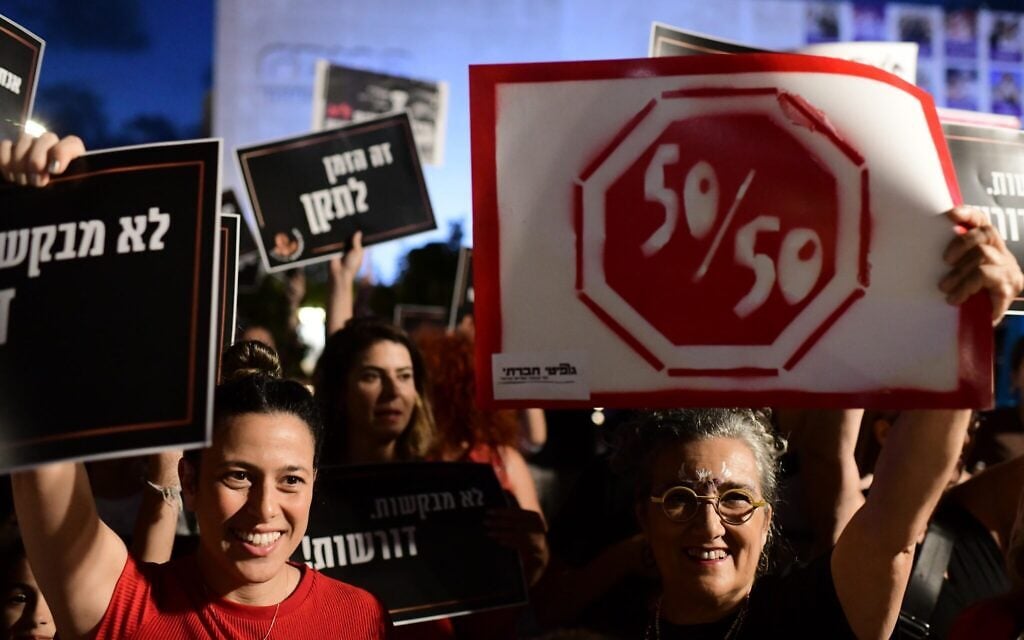
A record number of women are poised to enter the next Knesset

While the 2026 election largely ignores gender equality, structural changes in centrist parties and a grassroots ultra-Orthodox movement might be quietly shifting the political map
  •  

AutoZone workers won a union. Then the company fired them.

An AutoZone store with logo sign is seen in Chicago, Illinois, United States, on August 3, 2026. Photo by Marcin Golba/NurPhoto via Getty Images
Jacobin logo

This story originally appeared in Jacobin on Oct. 12, 2026. It is shared here with permission.

Speaking with members of the newly formed AutoZone Workers Union, you would never guess that one of them had just been fired — and that another would be the next morning. That’s what happened to Nathan DuCongé and then David Valencia after they won their union election. On a Zoom call with Jacobin, though, their joy was contagious. DuCongé and his coworkers were all smiles and banter as they talked about their union campaign, how it feels to win, and the unexpected boost they received from filmmaker Boots Riley.

On Friday, September 25, an AutoZone store in White Plains, New York, became the first of the company’s nearly seven thousand American retail locations to unionize. DuCongé and his coworkers, now members of United Auto Workers (UAW) Local 259, said they hadn’t been sure which way the vote would go.

“The deck was really stacked against these workers trying to organize here,” said Brian Murray, an experienced organizer brought on in August by UAW Local 259 Vice President Mike DiGuiseppe. “It was because of their sticking together, the amount of fun they have, and their camaraderie, their solidarity for each other, [that] they were able to overcome a lot of union busting.” He added, “I would have expected [them] to not have succeeded in winning that vote, but they did.”

“We Were Already a Union”

DuCongé moved to New York City two years ago and soon started working for AutoZone as a part-time employee. A year later, he became a parts sales manager. He said he decided to start organizing his store after he was removed from the schedule one Saturday in April, and instead went to a joint meeting of the Emergency Workplace Organizing Committee (EWOC) and the New York City Democratic Socialists of America (NYC-DSA). There he was connected with UAW members who encouraged him to unionize.

By then, DuCongé and Valencia, who was hired several months after him, had already discussed the possibility of a union. Valencia’s turning point came in 2025, when he worked a Fourth of July shift and found out from his paycheck that he wasn’t getting holiday pay. “I went in and I told my manager that day . . . I’m going to make a union.”

“I know this isn’t always the case, but for us, it was already there,’ said Valencia. ‘We were already a union.“

Valencia said he already knew DuCongé’s political orientation when he approached him about unionizing. “We got to talking about it, and it took a long time because we didn’t have the institutional knowledge on where to even begin, until by chance Nate met someone at a DSA meeting. They hooked us up with the UAW, and the rest is history.”

Given the store’s small size, the workers’ specific grievances, and the tight-knit relationships among several key employees, DuCongé and Valencia felt it would be a good place to test whether AutoZone could be organized.

“I know this isn’t always the case, but for us, it was already there,” said Valencia. “We were already a union.”

Do the Job Right

Juan Accostupa, a full-time sales associate who has worked at AutoZone for ten years and trained many of the organizers, described the extra responsibilities workers take on. “We’re not just a retail place. We do a lot of work,” he said. “We unload the trucks, we do installations — batteries, headlights, brake lights, wiper blades, whatever the case might be — and we’re just not getting paid properly.”

“You’re expected to do a lot for so little,” said DuCongé. “These are the kind of things that mechanics are paid to do, right?”

Accostupa said he has made minimum wage throughout his tenure at the store. “Some people think this is, like, a revolution thing. It’s not. We’re just asking for what should be done: better pay and better benefits. That’s it.”

Jess Omelia, a part-time commercial driver who previously worked for a Pepperidge Farm warehouse in Florida with “really great benefits,” said working for minimum wage with little to no benefits was a huge adjustment. “It was a job that I needed at the time, so I took it.”

“Some people think this is, like, a revolution thing. It’s not. We’re just asking for what should be done: better pay and better benefits.“

Omelia said the lack of holiday pay for part-time employees came as a shock. She recalled being put on the schedule for Mother’s Day even though she was the only one among her coworkers with a toddler. “I was the only one there working on Mother’s Day,” she said. “It was only my store manager there. He had given everyone the day off or people had called out to be with their families.”

Workers also cited other reasons for unionizing: inconsistent and last-minute scheduling, inadequate equipment, no say in how they handle their routine responsibilities or in disciplinary procedures, and a push to upsell customers known as “WITTDTJR” — short for the AutoZone slogan “What It Takes To Do the Job Right.”

“We would literally come in and underneath the [sales] numbers every day, there would be a threatening note underneath that you need to get these numbers up,” said Omelia. “You would be punished and your hours would be taken away if you weren’t upselling.”

What Makes a Supervisor?

Workers said their card drive proceeded with little incident until July, when corporate got wind of it. After the workers sent their demand letter and submitted their cards in late July, AutoZone promptly rejected them, saying DuCongé’s involvement as a parts sales manager — a position the company says is supervisory — nullified them.

DuCongé disputes that categorization. Under the National Labor Relations Act, a supervisor must have the authority, using independent judgment, to make or effectively recommend decisions like hiring, firing, disciplining, or promoting other workers — authority DuCongé said he did not have. Rather than fight the issue, which could have delayed an election, the workers resubmitted the cards without him.

“I just felt like it would be selfish if I tried to fight for my eligibility,” said DuCongé. “I never wanted to stand in the way of these people. They’re my friends, my coworkers. It was a good feeling to be able to just help.” He added, “As a member of DSA as well, I felt that as a responsibility. It was kind of like, hey, look, I’m in this organization, I might as well do something that lives up to the organization and the reason why I’m in it.”

Workers said that at a prehearing meeting in late August, AutoZone made clear that it intended to challenge the election not before the National Labor Relations Board but in federal court in Tennessee, where the company is based. At the same meeting, the workers and AutoZone signed an agreement that locked in the list of eligible voters to prevent challenges to votes on election day.

Yet other employees who hold the same position as DuCongé were allowed to vote. Two workers who were transferred to the store in mid-August were also deemed eligible.

“We Will Accept Your Invitation to Fire You”

In the lead-up to the vote, workers reported being subjected to heavy surveillance, multiple antiunion meetings per week, and threats of disciplinary action against the organizers.

“We were having three meetings a week. It was constant . . . and they were really just reading off of a script every time,” said Omelia. “It was just all anti-union. They were extremely against it, said that they would do everything in their power to fight it. If we didn’t like the conditions, [they said] that we could quit and go to another store.”

Valencia said the anti-union messaging relied on half-truths and accusations, including misleading claims about union dues and employees’ ability to communicate with their manager. Organizers, he said, were accused of misleading or threatening workers into voting yes, and were portrayed as using the campaign to land union jobs paid for by workers’ dues.

Workers said AutoZone brought in managers from locations around the country to surveil the store. “There were up to eight, nine people in the store a day, and even the customers were like, ‘What’s going on?’” said Omelia. “There would be times where they’re literally just standing at the back of the store with their arms crossed, just watching us.”

DuCongé said that after the workers submitted their demand letter on July 24, an account under the name of AutoZone CEO Philip Daniele showed up among the viewers of one of his Instagram stories.

In a September 4 recording shared with Jacobin, management threatened to fire DuCongé for union activity on the grounds that he was a supervisor: “If you continue to involve [yourself] in unionization activity, we will accept your invitation to fire you.”

LaborLab, a workers’ rights watchdog group, estimates that AutoZone spent around $200,000 trying to defeat the union. “They do everything except pay you more,” said Murray.

AutoZone in Six

Despite the onslaught of anti-union activity, the workers said the solidarity they felt with one another kept them moving forward. When Omelia’s mother died, her coworkers took up a collection. “I came into work, and they had a little envelope, and they all pitched in to help with my mom’s funeral costs. That’s how close we are.” Accostupa was quick to point out that every manager declined to contribute.

Support also came from outside the store. DuCongé, a filmmaker himself, had posted on social media about how inspiring he found Boots Riley’s new film, I Love Boosters. To his surprise, Riley started reposting updates on their organizing efforts. His first feature, Sorry to Bother You, follows a group of telemarketers who organize and go on strike.

“Boots has been massively influential on my personal life, my filmmaking efforts, but also really, really influential for this campaign,” he told Jacobin. “The solidarity is going beyond the movies and TV shows that he makes.” He added, “I just can’t thank him enough, truly, for helping us out.”

Workers said management kept talking to employees about the election in the twenty-four hours before the vote — and even during it. “On the day of voting, during voting happening, managers were pulling some of those people out of the store, and trying to sway those votes,” said Omelia.

Barred from voting and, he said, from entering the store, DuCongé stayed nearby. He recounted the moment:

I didn’t know what to do with myself, so I just stand on this hill that’s looking down at the store . . . I felt locked onto the ground, and there’s this groundhog sitting right next to me, just also looking out there too. I’m looking at the groundhog, and then eventually it just looks at me, like, “What are you looking at?” It turns out we’re both just looking down at the store. There’s this beautiful sunset and all these crows and everything, and that’s when Mike [DiGuiseppe] texted us the news, and said, “You won.” I just collapsed.

The final tally was 6–4 in favor of the union. Despite the prehearing agreement, and despite his serving as the union’s election observer, Valencia’s vote was challenged during voting, but, in the end, every eligible vote was counted.

After the Win

The day after the vote, AutoZone fired DuCongé. In a recording provided to Jacobin, management tells him: “Effective immediately, AutoZone is terminating your employment as a result of the failure to act appropriately as a manager by engaging in and/or facilitating union activity.”

The following day, another worker was fired for, in DuCongé and Valencia’s words, “not stopping the union.”

Valencia says he was fired too, on October 3, the morning after the Zoom call. Asked on the call whether he was worried about his job, he had said, “If I get fired, I get fired. They’re going to have to come up with a good reason, because I’m in the bargaining unit. It won’t be so easy.”

“If I get fired, I get fired. They’re going to have to come up with a good reason, because I’m in the bargaining unit.“

That same day, AutoZone filed three objections to the election with the National Labor Relations Board, a move the union sees as a delay tactic. The workers seem undeterred.

“We fought for this and we did it. It’s funny, I was telling the staff and everybody else, we were like the Knicks. Knicks in six,” said Accostupa. “The thing about it was we won six and four, 6–4. That was the key.”

Next they intend to help workers at other AutoZone stores organize. “I deliver to other stores, so I see the things that they go through,” said Omelia. “They were watching this election and waiting to see what happened with us to see if they could move forward.”

Valencia says AutoZone runs on the work of people like him and his coworkers. “People come into AutoZone frantic,” he says. “You help them out, you send them on their way with a smile on their face. It’s a good thing. We’re not saving the world, but one person at a time, we’re making their day better.”

“The workers on the ground are really providing all the value to the companies that eat up all the value,” Valencia says, “and all the people at the top that take all the profits that we create. And we just want some kind of compensation that looks closer to the value that we provide.”

  •  

Could Islamophobia one day become EU law?

If the day should ever come where Islamophobia gets concrete legal backing in Europe, it could be soon.

The European Parliament (EP) just voted to “condemn the strategies of Islamist entryism” and to develop ways to disrupt Muslim political movements in a resolution on 8 October.

Some 381 out of 720 MEPs worry Muslims are seeking to infiltrate democratic institutions, weaken European rule of law, gender equality, and what they deemed “European values”. 

And almost every one of the centre-right and rightwing MEPs in the house voted to surveil EU funding for anti-racism organisations, so as to ensure none of it gets into the hands of the Muslim Brotherhood.

The brotherhood is a transnational Muslim group founded in 1928 in Egypt, involved in religious revival, social welfare, and political activism.

But according to a French government memo from May 2025, as well as the EP resolution, it is guilty of “entryism”, to sabotage French democracy.

The EP resolution and French memo were dubbed “a political witch-hunt targeting racialised people – particularly Muslim, migrant and refugee communities” by academics and civil society, like the European Network Against Racism (ENAR).

The group called the EP motion “a stain” on the EU Parliament, belonging “within the tradition of discredited far-right conspiracy theories.”

ENAR is among those the EU has sought to defund, due to rightwing views that its work aligns with Islamist threats.

The Forum of European Muslim Youth and Student Organisations (FEMYSO), a pan-European anti-Islamophobic group, which also risks EU defunding, said it had faced “relentless targeting and demonisation.”

Young Muslims in Europe were being forced “to choose between their identity and their right to belong,” FEMYSO president Hiba Latreche told EUobserver.

And the EP “witch-hunt” resolution, which was drafted by the centre-right European People’s Party (EPP) group and authored by its French MEP, Céline Imart, comes at a bad time for this demographic. 

Advocacy group Collective Against Islamophobia in Europe (CCIE) recently looked at 876 incidents of anti-Muslim hatred in Europe in 2025.

Four out of five incidents targeted Muslim women, 41 percent of which involved discrimination or violence linked to their headscarves.

Disturbingly, the documented episodes “occur predominantly in public or institutional spaces, highlighting the persistence of forms of institutional racism.”

But seeing as the EU Commission’s own anti-Muslim hatred group has been inactive since 2024, the prevailing view in Brussels appears to be that rampant Islamophobia in the EU is less of a problem than the imputed influence of a nebulous Islamic movement from Egypt, which is better known for providing social care to deprived communities, than aiming to overthrow French president Emmanuel Macron.

The EP motion did not legally bind the European Commission to propose new anti-Muslim Brotherhood measures.

But it did enforce a stereotype of Muslims “as acting in a nefarious, dangerous, anti-democratic manner, until proven otherwise,” said Omran Shroufi, a political science researcher at the Free University of Brussels.

Rightwing EU politics is pushing young European Muslims into a lose-lose, or Catch 22 situation.

The notion of “entryism holds Muslims to an impossible standard, where non-participation in public life is a sign of disinterestedness, a lack of civic duty and the growth of parallel societies, whilst active engagement in civic life is treated with suspicion,” Shroufi told EUobserver.

The centre-right EPP group used to represent a moderate EU mainstream.

But now it had joined with open racists on Europe’s far right to be “effectively calling for an institutionalised form of discrimination, where Muslim communities need to prove their European and democratic values – whatever these are supposed to mean – before being allowed a seat at a table,” Shroufi said. 

  •  

Fighting big money in politics: California’s Community News Act

California Gov. Gavin Newsom signs the Community NEWS Act on Sept. 30, 2026. Photo via Office of Gov. Gavin Newsom

This article originally appeared on Dean Baker’s Patreon. It is reprinted here with permission.

Virtually everyone who is not a billionaire, or owned by one, agrees that we have to limit the ability of the rich to buy elections. While the Republican Party has taken “policy for sale” politics to a new level, there are plenty of Democrats who have been happy to support obviously awful policy in exchange for contributions from the AI industry, the pharmaceutical industry, the crypto industry, and Wall Street more generally. It costs a lot of money to run a competitive campaign and it’s hard to raise that from small contributions, so there will always be a temptation to bend policy positions to get some serious money.

While most people favor limits on campaign contributions, the current Supreme Court has made this very difficult. They have ruled that campaign contributions are speech and therefore any effort to limit campaign contributions is an unconstitutional restriction on speech.

There are some promising alternative paths that focus on making small donors matter. Seattle has a system of “democracy vouchers” that give every voter in local elections a modest sum that they can contribute to a candidate(s) of their choice. To qualify to get the vouchers, candidates must agree to limits on spending and large contributions.

Super-matches are a comparable system. Under this system, small dollar contributions can be matched up to 8 to 1, which means that even a $50 contribution can make a difference to a campaign. New York City, along with several other cities, have gone this route.

While these paths for amplifying the voice of ordinary people are promising, it will take much more to match the power of the billionaires. It is important to realize they exercise their political power in ways other than campaign contributions, primarily through their ownership of the media.

The importance of billionaire ownership goes far beyond the constant stream of lies and right-wing propaganda from Fox News. Last year, the very Trumpy Ellison family took control of CBS and immediately began to shift its news to the right. They are now taking control of CNN through the merger of Paramount and Warner Brothers. They also got control over TikTok, after Trump wrestled it away from a Chinese company for them.

Trumper Mark Zuckerberg owns Facebook and Instagram and is not shy about banning political material he doesn’t like. And Elon Musk bought Twitter, explicitly to advance his right-wing agenda. The rest of the media landscape doesn’t look much better. The rich and very rich own the countries’ newspapers and broadcast outlets, and most of these people lean right, even if they have not yet joined the Trump Reich.  

And let’s just be clear. The idea that the campaign ads bought by the rich can influence votes, but not the material that people see between the ads, is beyond absurd. Even if we banned all political contributions from rich people and corporations, the rich could still control elections by showing us nothing but their propaganda on television, in newspapers, and on social media.

This is why the Community News Act that Governor Gavin Newsom just signed is so important. The measure provides $20,000 each for up to five journalists per news outlet covering local news. This subsidy can keep newspapers and news sites across the state in business and help to support new ones that might start up. It is similar to other programs that have been started in Illinois, New York, and New Mexico.

This might seem like small change in a world with multi-billion dollar media empires, but it is not realistic to imagine matching the super-rich dollar for dollar; the goal is to sustain reality-based reporting that people can rely upon. (Repealing Section 230 protection for the mega-platforms like Facebook and X would be a big step towards leveling the playing field.) And support for local news reporting is likely to also lead to better national and international reporting, both by training more reporters and also increasing the comfort level with public funding, perhaps opening the door for a national system.

To be clear, there are no political conditions attached to this funding. Conservative news outlets are as eligible for this subsidy as more liberal ones. The point is to support local journalism, not to favor a particular political perspective.

To my view, this system is not ideal. I prefer support coming through an individual refundable tax credit to support local news. This would allow people to have a more direct attachment to the news outlets being supported with public money. Ideally, this would give them a sense of ownership that many feel towards other community organizations.

But whether or not this is the best approach, there is no doubt that the California bill, along with the ones already passed in other states, are big steps forward. It will help to reverse the collapse of local news reporting, which is giving corruption free rein in many areas. We need to build on the positive and make it better, rather than reject a plan because it may not be ideal. Progressive opponents of California’s wealth tax initiative may want to give that point some thought.

  •  

25-year-old Natalia, born in Russia, served in the Israeli army, returned to Ukraine during the full-scale invasion, and join the Armed Forces of Ukraine

25-year-old natalia born russia served israeli army returned ukraine during full-scale invasion join armed forces · post fellow soldiers service courtesy natalia/nv nataliia_israel_army news ukrainian reports

Natalia is 25 years old and from Odesa. She has served in two armies—the Israeli and Ukrainian militaries. In the Armed Forces of Ukraine, she has, among other things, carried out missions as part of a UAV, FPV drone, and strike-wing crew on the Zaporizhzhia and Kupiansk fronts, NV reported on 5 October.

During the Russo-Ukrainian war, women in Ukraine have the right to voluntarily enlist in the military. As of March, more than 75,000 women were serving in the armed forces, more than 55,000 of them as service members, the commander-in-chief said, and their number has been growing every year. Recently, discussion around the mandatory mobilization of women has intensified. Keith Kellogg, former US Special Presidential Envoy for Ukraine under President Donald Trump, said that he considered mobilizing women in Ukraine appropriate. In response, Iryna Vereshchuk, Deputy Head of the Office of the President of Ukraine, said she would rather see more missiles and more will from the United States than advice to mobilize women.

In Israel, Natalia served in a search-and-rescue brigade as a rescue soldier and in the engineering corps during a deployment along the northern border.

Natalia was born in Russia’s Saint Petersburg but does not remember her life there

The young woman was born in St. Petersburg, where her family lived at the time. When she was a year and a half old, her mother returned to Odesa with her and her older son. Natalia says she remembers her life exclusively in Ukraine.

She spent the first nearly two years studying at Lviv University, but later decided to leave the university and look for other educational opportunities. Natalia studied, among other places, in Denmark through a scholarship program. After completing it, she planned to enroll at a European university to study sound engineering, but the coronavirus pandemic began at that time.

She moved to Israel under a program for Jewish youth at the end of 2020. After the program ended, due to quarantine restrictions and closed airports, Natalia faced a choice: obtain a work visa or acquire citizenship under the Law of Return. She chose the latter—and with it, she also became obligated to perform military service.

In May 2022, Natalia joined the Israeli military and chose a combat unit.

“When the war started in Israel itself, I still had six months of mandatory service left. I was discharged and immediately transferred to reserve service. Once I managed to resolve all the bureaucratic issues so that this would not be considered desertion, I returned to Ukraine,” the young woman says.

Natalia returned to Ukraine in March 2025, and in August signed a contract with the Armed Forces of Ukraine.

Natalia (right) and her fellow servicewoman. Photo courtesy of Natalia/NV

“The army—both Israeli and Ukrainian—gives you a deeper understanding of what society is made of”

Among the advantages of the Ukrainian army, she highlights its ability to quickly adapt to circumstances. In particular, she mentions the use of drones, OSINT, and solving complex technological tasks with minimal resources.

“The West could learn from this situational agility. They often spend huge budgets on developments that should be cheap and mass-produced,” the veteran says.

However, such Ukrainian ingenuity is largely a consequence of a lack of funding, Natalia notes.

In the Israeli military, Natalia highlights society’s readiness for the constant threat of war and more systematic planning of military service.

“There, preparation for and perception of the army begin at school: by the age of 14–15, teenagers already understand where they want to go, what skills they need, and undergo selection for special or intelligence units,” the young woman says.

She then gives the opposite example of the situation in Ukraine.

A Ukrainian female soldier with a call sign "Tsyhancha" went from FPV operator to piloting the Heavy Shot bomber. Image: The 125th Separate Heavy Mechanized Brigade
Explore further

This Ukrainian female soldier flies one of war’s heaviest drones. She turns down promotion twice to keep doing it

“In Ukraine, with very rare exceptions, people hide until they are mobilized, and suddenly face the reality of conscription without having any understanding of the system,” the veteran says.

Asked how adapted the Ukrainian army is to women, she answered: “In no way,” adding that the Israeli army is “also largely not fully adapted.”

In Ukraine, this is reflected, in particular, in the provision of clothing and equipment that often does not correspond to women’s sizes and physiology. She says she had to purchase her own anatomically fitted body armor. She cited the example of veteran Natalia Lishchyshyna, who had her breasts amputated due to prolonged wearing of body armor that was not adapted to the female anatomy.

In Israel, by contrast, there is a practice of reimbursing expenses for equipment that service members purchase at their own expense.

Serving in the military in both countries provides an opportunity to better understand what society is actually made of, the young woman says.

“The army—both Israeli and Ukrainian—gives you a deeper understanding of what society is made of. You encounter people you would never have crossed paths with in your civilian bubble because of differences in views or socioeconomic circumstances,” Natalia says.

She believes this makes it easier to accept mistakes, difficulties, and new challenges.

The Ukrainian army is not adapted to women in any way, Natalia says

In Natalia’s view, the problem is not only the living and working conditions but, above all, the lack of mechanisms necessary for the systematic mandatory mobilization of women. At the same time, she believes voluntary recruitment should be encouraged and expanded.

One of the problems is the lack of a legal procedure for temporary childcare in cases when both parents are simultaneously carrying out combat missions, Natalia says, stressing that she means the period of their service, rather than situations involving the death of one of the parents.

Another shortcoming is insufficient protection against sexual violence and harassment in the Ukrainian military.

“Here, any complaint goes through the direct chain of command. If the commander is not interested in resolving the problem or is involved in it themselves, the woman is left defenseless,” the veteran says.

In Israel, by contrast, there is a separate hotline and mechanisms for documenting such cases without directly approaching a commander.

Natalia (second from left) during her service in the Israeli army. Photo courtesy of Natalia/NV

Women in combat positions can also still be taken insufficiently seriously, denied participation in combat missions, or transferred to staff positions without their consent.

Natalia also emphasizes the lack of systematic military training for civilian women “at any level” and gives school education as an example.

“Even with the weak level of the school curriculum for the subject ‘Defense of Ukraine,’ boys had at least some basic knowledge. Girls were not involved in it at all,” the veteran says.

For now, Natalia believes that women’s military service should remain voluntary, as society as a whole is still not ready to fully accept women in the military.

  •  

He loved working in concrete. Now, he’s dying from the chemical exposure.

Photo of James “NDN” Gardner. Photo courtesy of James Quigg.
https://www.spreaker.com/show/2952221/episodes/feed

Because he was bullied in elementary school for being Native American, James Gardner’s friends lovingly call him “NDN.” His friends and family know NDN to be a fiercely loyal, loving person, and a fiercely hard worker. But as a third-generation concrete specialist, NDN was exposed to chemicals that have left him disabled, terminal, and facing foreclosure on his home. In this episode of Working People, we speak with James “NDN” Gardner and his best friend James Quigg.

Additional links/info:

Featured Music:

  • Jules Taylor, Working People Theme Song

Credits:

  • Audio Post-Production: Jules Taylor
Transcript

The following is a rushed transcript and may contain errors. It will be updated.

Maximillian Alvarez:

Alright. Welcome everyone to Working People, a podcast about the lives, jobs, dreams, and struggles of the working class today. My name is Maximillian Alvarez, and today we are in Fort Worth, Texas, and we’re talking about a fellow worker named James. As Maven Navarro recently reported in the Fort Worth Star Telegram, “After leaving Oklahoma, James Gardner built a life for himself in Fort Worth. Now he could lose it all. When Gardner walks into doctor’s offices to receive treatment for his terminal liver failure, he has to ask staff to remove all the air fresheners for his skin condition. Gardner has multiple chemical sensitivity, which he says was caused by his time as a concrete specialist working with two-part epoxy resin. The illness causes him to break out anytime he gets around chemicals, air fresheners, perfumes, cleaning supplies, and paint spark allergy flare-ups that can last for 10 days.

Concrete work is known to cause health problems. Cement plants can also cause respiratory or cardiovascular issues according to the Environmental Protection Agency. James Quigg first met Gardner in high school in Oklahoma where he was given the nickname NDN after enduring bullying for being Native American and kids calling him Indian. A few of Gardner’s friends started calling him NDN or Indian, and it stuck. Now, Quig started a GoFundMe to help prevent Gardner from losing his house. As he is unable to work and has faced challenges receiving disability, Gardner was denied disability the first two times he applied for it. It wasn’t until his third application that he was approved because of his internal organs shutting down.” So to talk about all of this, I am truly grateful to have James Indian Gardner himself and James Quigg, who they have given me permission to call them “NDN” and “Quigg,” friends since high school, both here on the show with us today.

Thank you guys so much for being here. It is really, really great to be connecting with y’all. And my God, I wish we were connecting under less horrifying circumstances and I’m so sorry that you’re going through all of this. And NDN, as much as you’re comfortable, I want us to make sure that we focus a good chunk of time today talking about what you’re going through now, where things stand now and what people listening can do to help. But we’ve got 50 minutes here and I really want listeners to get to know you and your lives more, your friendship and all the things that make you, you, not just these horrible people and jobs and systems that have done all this unforgivable damage to you. So NDN, start us off. Tell us the story of you and what brought you to Fort Worth. And then Quigq, hop in and tell us your story and how it intertwines with Indians.

James “NDN” Gardner:

I’ll start with a nickname “NDN” and then I’ll go from there. So as you were saying, back in school, kids were making fun of me and bullying me, and my principal called us into the office in my freshman year, said, “You guys can’t call him an Indian anymore. You’re being racist.” And one of my friends stood and said, “We’re not calling him Indian. We’re calling him letter N, letter D, letter N.” And he says, “Well, I can’t do anything about that.” And it just stuck and I’ve always enjoyed it. A lot of people are like, “He’s not just a Indian, he’s the Indian. There’s only one of them running around.” As far as career goes, I am third generation doing precast concrete with the passion. I’ve always enjoyed doing concrete. I’ve loved it. Being able to take the raw elements of earth and forging it into something that’s going to last and help the world is phenomenal to me.

I relocated down here to Fort Worth to actually do the McKinley Stadium, which is my third stadium to be a part of. Years ago, I was working for a company that dealt with a very strong epoxy resin and only 4% of the people that are exposed directly to it will develop an allergy to it. And with the company, it’s easier for them just to pay you off than it is to change their safety protocols, which shouldn’t be the way, but it’s cheaper for them that way. And over time, my symptoms and my condition got worse and worse and worse because it just doesn’t stop once you’re out of the environment of that specific thing. I remember one time they laid a new asphalt in front of my house here on the road and I broke out for a week because of the adhesive and the tar and the asphalt and I couldn’t avoid it because I was in my own home.

Maximillian Alvarez:

So I have so many questions about that specifically because I don’t know if you guys know about it, but on this show specifically, I’ve been doing a lot of interviews with working people who have been exposed to toxic chemicals from work, from industrial disasters near their homes, all this kind of stuff that poor and working people are being exposed to daily. I mean, I was just filming in South Baltimore last night where residents just like you guys, but here in Baltimore are fighting trash incinerators that are blasting toxic chemicals into the lungs of their children. So this is definitely something that we’ve talked a lot about on the show, but I do want to talk about what that looked like for you, Indian, on a day-to-day working level. But before we get there, I want to go deeper into some of the lore here. Take me back to where you guys were in high school where you first met.

Quigg, who was this guy in high school when you met? And NDN, same question about Quigg.

James Quigg:

So Indian is a grade above me. So I came in as a freshman. He was already an established sophomore. He had a cool car. It was painted. He had some lady. Did it have a female on the hood and it had the universe? I mean, you couldn’t miss this car.

Maximillian Alvarez:

You had a low rider?

James “NDN” Gardner:

No, actually, it was a 91 Chevy Cavalier and anytime I’d get bored, we would just re-spray paint it. It was all animal print once. Once it was all hippied out, make love, not war. Even at one point I gave all the kids an art paint pens and we just wrote quotes over the entire car. People would stand there and read it for hours. It was just something to do. So

James Quigg:

You’d see this car. I’d see the car around before I was even in high school. So then you see, oh, this is the cool guy with the cool car. And then he’s always hanging out in the courtyard and he’s always got this group of girls because he’s just very didn’t try very hard, I guess. And honestly, I don’t think we liked each other necessarily in the beginning. It was just he had this girls that I was trying to hang out with, talk to, and he just didn’t really like the new guy, the new skinny white dude that was hanging around.

Maximillian Alvarez:

You got to earn your keep, baby.

James Quigg:

It took a couple years.

James “NDN” Gardner:

He really had to. And most of these girls I’ve been friends with for years, so I was very protective of them because they were my friends. And here’s this scrawny kid coming in trying to ask them all different kinds of things and get involved. I’m like, “Hey, hey, you don’t need to be around here right now.” But eventually he warmed over to me and I warmed over to him.

James Quigg:

Yeah, I was saying hope I was best friends with his cousin for a couple years. Then probably what, sophomore, not sophomore, junior, senior year, we started maybe hanging out a little bit more. You invited me to your house.

James “NDN” Gardner:

I had a house that most people weren’t allowed to. I was very young and I lived on my own, so it was just me and this trailer house at 16 years old. So a lot of parents didn’t even allow their kids over to my place. And they spray painted up too in the walls.

Maximillian Alvarez:

Yeah. I mean, to be honest, I don’t think my parents wouldn’t allow that either, but that would be exactly the house we’d all want to go to. Exactly. Exactly. I mean, can I ask how you ended up having your own kind of place when you were 16?

James “NDN” Gardner:

My parents separated and it was a choice of either do I go live with my dad or do I go live with my mom? And I was already working full-time at the time, and I bought a trailer house on state auction and moved into it. And it was just simpler that way. My mother ended up moving back in with me a few years later, but it was just more convenient. So like I said, I already had the income coming in.

Maximillian Alvarez:

What were you doing back then for work?

James “NDN” Gardner:

Back then? Well, my first job was working for the Department of Wildlife through a program called ATEC, which was American Indian Education Training Association. They took Native Americans and put them at federal buildings and gave them summer jobs. So that got me experience. Pretty much I was doing property management, mowing the yard, stuff like that, but I got to do a lot of really cool stuff with them because I was, “Hey, let’s grab him and take him with us to go do this fish survey or let’s go explore the bat caves and do a survey out there.” And so it was very fun as a youth to have that. And then I went straight from that to Home Depot, working at Home Depot as a pro associate.

Maximillian Alvarez:

So paint a picture for me. When you guys were back there in Oklahoma, are we talking kind of small town Oklahoma, medium town, city? Yeah, paint a picture for me.

James “NDN” Gardner:

So Bethany, Oklahoma at that point was the very edge of Oklahoma City. So it’s pretty much small town. I knew all the police officers, they all knew me, not because I was in trouble, just because there wasn’t a lot of us running around. And of course it was the late ’90s, early 2000s, so we were always getting into some sort of trouble as we all did back in that time.

James Quigg:

Oklahoma is a pretty small, big town. I think less than a million people in the whole city, probably less than that now, but I mean it takes what, 10 minutes or less to get down into the heart of Bricktown, downtown Oklahoma City. I mean, it still is small town, but it’s trying to be bigger than it really is.

Maximillian Alvarez:

I mean, I come from Southern California, the land of endless lights and sprawl from the beach to the mountains. So everything feels small town to me to some extent. But to be honest, I kind of got a lot of love for the small and medium-sized towns in the country. I don’t think I gave them enough credit when I was younger, but the older I get and go visit more, the more fascinating they are. But I wanted to ask in that vein, we’re talking about Oklahoma. I guess we’re talking in the colonial project of the United States of America, so everything is ironic, but living in a state named Oklahoma and going to a school where you make fun of Native American kids feels so ironic and ridiculous that I don’t even know what to do with myself. But was that normal Indian? I mean, what was the kind of ratio?

Were there a lot of indigenous kids going to school there?

James “NDN” Gardner:

No. No, there wasn’t. In high school, there was maybe five of us altogether. I mean, there’s not a lot of us left. It’s sad to say. I was fortunate enough to run into… I mean, we just kind of all clicked together because, oh yeah, you’re native too. Cool. What tribe? What’s your family line? But the whole reason why we were in Oklahoma City is that my father was one of the Native Americans you hear about in the past being adopted off the res for a very low amount of money. And then he was adopted with four other siblings, all native from different tribes raised by a white man in the city. So yeah, there just wasn’t a lot that made it to the inner city area at that time. They all stayed out near the reservations, near the small towns like Carnegie and Adarko. So being inside the city, yeah, there wasn’t a lot of us.

Maximillian Alvarez:

And I take it from the origin story of your nickname that it wasn’t a very kind place to Native kids like you?

James “NDN” Gardner:

Oh, no, no, no. I remember once I was 14 walking down the street and the cops pulled me over because they had an APP put out on a Native American with long hair. I just happened to be a Native American with long hair. And they picked me up and took me down to the police station, which was just three blocks from my house. I wasn’t the person they were looking for. The person they were looking for had robbed a gas station and he was in his late 20s and I was 14. We stood out, so you either knew who we were or it’s just the way it was.

James Quigg:

It’s true. And what they only taught us in school about Native American culture is just an annual field trip we take to the Cowboy Hall of Fame and they’d show us the statues and talk about the Trail of Tears.

Speaker 4:

Yeah.

Maximillian Alvarez:

But there’s a lot to this story that I identify with in certain ways. I don’t know what that’s like Indian, but I know what it’s like to be a bald, scary looking Mexican dude in America. I’ll take looking like Quigg over looking like us on a normal day if I don’t want to get stopped by the cops. But that’s all the more reason why it just fills my heart when I hear stories of comradery and lifesaving solidarity, even among kids who are standing up for a friend. Tell me more about that, both of you, the stepping in to sort of reclaim the name and to say this is not how we’re going to do things. This guy’s our friend, not our enemy.

James “NDN” Gardner:

Oh yeah. I mean, Quig is my white guy. I always joke with people like, “I got my white guy. He’s right here. I’m safe. I don’t need a card. I got a whole person.” And I mean, he’s always had my back. Once we really connected and I realized that this is somebody that I needed to be part of my life and everything he’s done for me over the years, I can’t live up to. I try.

James Quigg:

I seriously doubt that, brother. I have computer smarts and I can do techie stuff, but this guy is the dude if you need any help. I mean, I’ll go back to last year, we had a leak in my daughter’s bathroom and it was coming down in the guest bathroom and I was like, “I don’t know what the hell to do, man. It’s just coming down.” And he just hopped in his car and he brought all his tools because he’s just that guy. And so he came and he helped me change the drywall. And as he’s doing this and helping me with all the stepping outside because I got to spray some kills on the wood, I mean, he’s getting hives, he’s getting blisters. I’m feeling incredibly guilty and he’s like, “Don’t worry about it. Don’t worry about it. Let’s just get it done.” But he’s just that kind of guy and it’s been like that anytime I’ve needed him.

He’s just always there. And it’s not just me, it’s everybody. He’s helped damn near everybody that we know, either with a place to stay, help fixing their car, mowing a yard. It doesn’t matter. He’s a helper, he’s a doer, and that’s just something I’ve always admired from him.

Maximillian Alvarez:

Well, and it’s genuinely beautiful to hear you guys say that, right? Because first and foremost, I’m thinking just as three men in the country today, we don’t say this enough to each other and we don’t allow ourselves to be that for each other. And so I just wanted to kind of honor the beautiful friendship that you guys have, having each other’s backs for this long is a marvelous thing. And I’ll be honest with all of you listening, Quig reached out to me about Indian’s story and told me about it, and that’s how it got on my radar. So these guys have been together for years and they’re still looking out for each other, and I think the world will be a better place if we all do a little more of that for each other. And Quig, even you telling that story reminds me that we’ve still got so much to talk about here, Indian, about your working life and the conditions and chemicals that you were exposed to that are now collapsing your health and your quality of life.

So that’s normally what we talk about on this show is I talk to workers and I say, “Tell me about your working life.What does it look like on the job?

For people who’ve never worked in this line of work, what does it entail?” Can you kind of take us a little bit on that journey and then tell us about the kind of work hazards that you were exposed to?

James “NDN” Gardner:

Yeah. The company where I was working for made burial vaults and the poncho that they used went on the liners of the burial vaults to seal it to the concrete so it maintain a watertight sealness for 50 to 100 years. That’s what they were concerned about. The people working in there that were alive being exposed to a hazardous chemical to keep somebody that’s going to go in the ground from being exposed to the elements of the ground was more important to them than the people actually doing the job because there was other things that could have been used that was more efficient but cost more money.

And after my initial exposure with this company, I was still passionate about concrete. I still wanted to do concrete, but I had to relearn what companies I could work for, where I could work at, and how I could do it because now I got to change everything. I can’t be around anything that has sold chemicals. I’ve got to be in open environments. And one of the things, I was also a journeyman iron worker because every now and then you get tired of staring at gray when you do concrete long enough. And back to the whole having lung and breathing respiratory issues, as a journeyman iron worker, I was working on the Devon Tower, which is the tallest building in Oklahoma City, and I was going from the ground up a thousand feet every day, and I had developed acute altitude sickness from just working on the outside of the building every day.

But a lot of that was contributed because they did a long biopsy on me to test me for silicosis, which is from concrete dust. And I did have some concrete dust built up in my lungs at the time. And that’s just because not wearing enough protection when you should wear protection because old school concrete guys just get the job done, which I got no problem getting a job done, but it should be done safely, effectively, and efficiently, not the other direction around, efficiently and safety being one of the last concerns. So after no longer working for the company that caused my initial, and I didn’t realize how bad I was going to get over the years, because initially it was just adhesives in general. Then it got where I couldn’t even put a bandaid on without breaking out from the adhesives as I am now.

I actually have to order special medical stuff when I do get a cut so I can seal myself and not have a reaction to it for a long period of time.

James Quigg:

He has to take his own adhesives to the ER when he’s got to go to the ER because of his terminal liver failure, otherwise he’ll break out from that.

James “NDN” Gardner:

Yeah. Even going in for a procedure, they put an EKG machine on me. I’m going to break out from every point where the EKG machine is.

Maximillian Alvarez:

Jesus, man.

James “NDN” Gardner:

Even the tape on my fingers or to monitor my heart rate and my breathing will make me break out. So I travel with my own medical stuff now. It

Maximillian Alvarez:

Sounds like hell.

James “NDN” Gardner:

It is. It made me a shut in for quite a while because going to Walmart, going to the grocery store, luckily there’s DoorDash and things like that now where I don’t have to get out and get exposed. But again, like I said, it made me change how I worked in concrete. I went to places that had super structures that worked outside, still making beautiful things with concrete, but eventually the skin allergy, the multiple chemical sensitivity just overtook everything. I did work for a trailer company for a little while working three days a week because they knew my skin issue, they knew my thing. So I would go there whenever they needed something welded or something wired that they couldn’t figure out. But again, now I’m going to this place to work on a trailer and that trailer might’ve had paint in it. It might’ve had construction debris.

I can’t even walk into a Home Depot or a Walmart or Lowe’s. Fast food restaurants get me pretty good too. And as much as I love old people, they’re a little heavy with that perfume.That’s

Maximillian Alvarez:

Putting it mildly, man. And yeah, I’m sure so many of us don’t even realize all the spaces that we walk into where those irritants are, but if you start breaking out in hives the second that you’re exposed to it, you start realizing that actually there are a lot of places you can’t go. And that is just something that I think so many of us don’t have to think about. But when you’re in your position and you have to think about it, it must be just genuinely overwhelming at times.

James “NDN” Gardner:

T-Mobile has their own scent of air freshener. So when you open a T-Mobile store door, it puts a little spray into the air for a sensory thing. I understand how that can be with marketing. Oh, this is what T-Mobile smells like. I’m getting a new phone. And I didn’t know that till they rolled out with that and I went into a T-Mobile and next thing I know I’m being sprayed and now I’m breaking out in hives and I’ve got a leak.

Maximillian Alvarez:

Jesus, man. So as we sort of get to the situation that you’re dealing with now, I’ve heard from you a number of things already. We’re talking silicosis, we’re talking exposure to epoxy resin generating a chronic skin sensitivity, right? I mean the altitude sickness that you developed on the job. I guess if you had to sort of sum it up, if you could, what conditions do you have now that came from working in this country, from being exposed to things or repetitive actions to things? I guess I wanted to try to collect all that for listeners and ask what is the kind of sum total of all the crap that you’re dealing with from all the jobs that you’ve worked?

James “NDN” Gardner:

If the MSDS is laid out and has its certain rules and regulations, if the company will abide by the MSDS correctly, I would’ve never been overexposed.

James Quigg:

What’s the MSDS?

James “NDN” Gardner:

Material safety data sheets. It tells you about the hazardous of the chemicals, what you’re supposed to be wearing and be doing to you’re not hurt by it and it doesn’t affect you. And most companies, yeah, we’ve got an MSDS. It’s in a book on the wall over there. You can go look at it if you want to. And then they tell you to go to work. And I was guilty of doing that to people too. I’m like, “Well, yeah, the MSDS is over there, but just put this little mask on.” In reality, they needed a respirator instead of just a dust mask and went on with the day to get the day done. Things have changed a lot now than how bad it used to be when me starting off in the industry of concrete and everything else, because again, it was you’d stand in a cloud of dust grinding and just put on some safety glasses and hold your breath.

Maximillian Alvarez:

Well, and let’s talk about when these health conditions started piling up and to the point that you needed disability checks and then had to navigate this Kafka-esque system that doesn’t work to try to get the aid that you need to live. Tell us more about the kind of crisis that you’re in now and all the people who are supposed to be helping you right now but aren’t.

James “NDN” Gardner:

Yeah. I mean, even going to the social security office to file for disability, I would sit there breaking out because I’m waiting for long periods of time in the line in a room full of people with chemicals on. So it became I have no choice. I have to go do this. I’ve got to go file this paperwork and I filed the paperwork and I wait and I wait and I wait. And then, “Well, we want to send you to this doctor.” Well, I call the doctor’s office. I’m like, “Listen, I can’t just go in there and they don’t abide by those rules.” They’re like, “No, you’ve got to come in, you’ve got to wait, you’ve got to go through this.” Even now, I’ve got some doctors that really help me with my situation and make sure the days that I’m scheduled, that nobody’s wearing perfume and that it’s going to be a nice, clean environment for me.

And then I have other doctors that could care less, but I’ve got to go through them because the social security’s telling me, “Well, you need to go to this guy and get tested for this.” I mean, they just did an allergy test on me, and part of the allergy test, the bonding agent in the allergy test is an adhesive. So I tested positive for everything, even though I told them I’m an adhesive and yeah, it just has to be on my skin for a few minutes to test me for allergies. Well, that’s still an adhesive on my skin for a few minutes. And I ended up having to get an epishot in the middle of the test, which now became an inclisive test.

James Quigg:

And I do want to clarify that Fort Worth Star Telegram’s article, I don’t believe he’s been approved for disability yet.

James “NDN” Gardner:

No. No, I haven’t been approved yet, but since we’ve gotten the articles, they’ve started reaching out to me more instead of me having to wait and call them. So now we’re actually communicating back and forth for the first time, but I’ve been denied twice.

Maximillian Alvarez:

So the situation, as I understand it, please correct me if I’m wrong, is that you now, because of what you’ve been exposed to over the course of your working life, are no longer able to work and you are disabled by those things you were exposed to, but you have received no money from the disability office. Your life is in limbo right now.

James “NDN” Gardner:

Yes, I am in limbo. And the first two times I was denied because they did not recognize multiple chemical sensitivity as a disability until the past five years. And I’ve been dealing with it for 10 years now. So it wasn’t recognized as a disability. Now they’re starting to, “Well, what do we have to do to prove that this is a disability?” And because of my skin always having to fight these battles and me being on experimental drugs, trying to overcome with it, and part of being native is that most drugs aren’t made for a 40-year-old Native American guy. They’re made for a 40-year-old white man who has years and years of antibodies built up in the systems where if I get a flu shot, I’m ending up with walking pneumonia, where if Quigley got a flu shot, he’s just fine the next day because it’s more developed.

So my body started shutting down because of it’s trying to fight all the time, always battling, always battling my skin, always fighting, led to me having internal organ failure. I go in for another surgery on Monday, which will be my 10th surgery this year alone because my body’s just shutting down.

But yeah, I’m just in limbo. But now, so I was able to refile for social security with the internal organ failure and the liver failure and the terminal diagnostics now. So it’s not even really taking the multiple chemical sensitivity into effect with my disability. That’s just added to it now.

Maximillian Alvarez:

Well, and I guarantee that there are going to be folks that I know who are going to listen to this and they’re going to reach out and they’re going to say, “You’re damn right it’s a disability. They have it. A lot of the residents I was talking about who have been exposed to these chemicals, now they are so hypersensitive to these chemicals and they bioaccumulate and they make them feel worse and their kids are getting sick or staying sick or they haven’t been not sick for years at this point. And it’s just this kind of hell that they’re living through. And I can’t help but think of all the other workers like you who are exposed to this stuff. I mean, in the year 2026, black lung is on the rise in this country. There are men our age dying from coal mining or other forms of silicosis because of the stuff they’re inhaling, the lack of PPE they’re getting, just this whole system of grinding people down to dust and subjecting our bodies to the most toxic conditions just to make a buck.

And it’s so systemic, but it impacts us in so many different ways. And I kind of wanted to just ask you guys about that.What does this all say about the daily realities that working people are going through in this country? And especially if you’re disabled or indigenous or both?

James Quigg:

Well, I’ll say that invisible disabilities are easily ignored. That is one thing that Andy and I both have in common. You look at both of us on a normal day, you don’t see a disability. You don’t see a multiple chemical sensitivity in him. You don’t see type one diabetes in me. So it’s easy, kind of out of sight, out of mind for a lot of people, except for the people that have to deal with it day in, day out when they wake up to when they go to bed.

James “NDN” Gardner:

I feel like in a way I was robbed because I always wanted to provide for my family. I always wanted to work hard and make a living. And because I was working hard and making a living and the companies that I worked for ignored safety protocols, I can no longer do what I want to do for my family and be there for my family the way I should have been allowed to. And a lot of working people, that’s all we want to do is make ends meet, survive and enjoy life and enjoy the little things. And to not be able to do that now because a company wanted to make more money isn’t justified.

James Quigg:

I mean, it’s true. America is built on the backs of people like Indian and a lot of people just use them as stepping stones to get to the future.

Speaker 4:

Yeah.

Maximillian Alvarez:

I think that was beautifully and powerfully and put and it’s so depressingly true. I mean, Jesus, we just passed the 25th anniversary of nine eleven and we’re learning about all the things that not just first responders, but people all over New York were exposed to and lied to about for years later. This is unacceptable at every single level and we can’t keep accepting it. We’ve got to do something about it and we got to start by taking care of each other. And I wanted to bring us there for the final turn here because I know I can’t keep you guys for much longer, but I wanted to ask where things currently stand. I mean, you guys already gave us an important update from the Fort Worth Star Telegram that apparently Indian still hasn’t received anything from the disability office and he was denied two times before that anyway until his organs started shutting down.

Then he got some movement, but where does that leave Indian now? Where does that leave your family now? And what are folks doing in response? What can folks listening do to help?

James “NDN” Gardner:

Right. I mean, to back it down, sage up, pray to whoever will listen.

James Quigg:

Yeah. We’re kind of waiting to see what disability says. Hopefully he gets an approval and he’ll get some sort of back money so that he can get caught up with his bills because the bills haven’t stopped. The mortgage hasn’t stopped. They’re still trying to foreclose as far as I know because he’s terminal. They’re trying to get at least the ability for him to stay in his home and not be evicted. But that doesn’t solve a problem. That just pushes it down the road and it leaves it for his kids when Indian’s no longer here to help. But as far as what’s keeping him afloat has been this GoFundMe the last month or so, just from the kindness of strangers. Indian spent his life helping anybody and everybody. That doesn’t mean that those people are in positions to be able to help financially or monetarily in any way.

Indian’s always been that person to support others.

It’s just there’s nobody there maybe outside of myself that’s able to help him in that sense. And so we were sitting around his cousin, my other best friend and his mother on his birthday, what, six weeks ago, something like that, sitting around the kitchen table trying to figure out how do we stop this foreclosure? What can we do? Can we get a loan? Can we try to refinance? Can we refinance his mom’s house? Can I afford to purchase the home on my own? And realistically, none of us, we couldn’t do any of that. So I went home frustrated that we had to do this on his birthday, kind of cried about it a little bit and said, “Fuck it, I’m going to do this. I’m going to make a GoFundMe. I’m going to tell my friend’s story the best that I can and see if people are willing to respond.” Just try to show the world the kind person and generous person he’s always been and hopefully karma will come back tenfold on him.

Maximillian Alvarez:

Well, Indian, I want to give you the last word here and it can really be anything that you want, but I guess if you could know that you’re speaking to fellow workers around the country who listen to this show, who work in industries like this and industries that unlike this, if you could talk to those folks who are working jobs like this now or folks out there who could help, what would you just want to leave them with?

James “NDN” Gardner:

My family’s got a motto. If someone needs help, you help. You don’t ever respect anything in return. Whether it’s an old lady crossing the street, somebody on the side of the road with a flat tire, any situation. Somebody needs you to help them push a car or you notice your neighbor’s grass is too tall and you know he hasn’t been feeling well the last few weeks. Nothing’s going to cost you but time. Time is all we have for each other and let’s enjoy it and spend it and help everybody together. We’re all in this together. This is one world, one life. We’re all part of this. We’re all part of this.

Maximillian Alvarez:

All right gang, that’s going to wrap things up for us today. I want to thank our guests, James Indian Gardner and James Quigg. You can get in touch with them and keep up to date with Indian story by using the links that we’ve included in the show notes for this episode. And of course, I want to thank you all for listening and I want to thank you for caring about this. We do this work for you, but we can’t do it without you. So thank you. Working People is brought to you in partnership with In These Times Magazine and the Real News Network. The show is produced by the great Jules Taylor and is a proud member of the Labor Radio Podcast Network. We’ll see y’all back here next time for another episode of Working People. And in the meantime, go explore all the great work that we’re doing at the Real News Network, where we do grassroots reporting that lifts up the voices and stories from the front lines of struggle across the US and around the world.

Subscribe to our YouTube channel and check out our other great podcasts like Under the Shadow and the Battle for Free Speech and connect with us on social media and get updates on our reporting there and help us do more work like this by going to therealnews.com/donate and becoming a supporter today. I promise you guys, it really makes a difference. I’m Maximillian Alvarez. Take care of yourselves. Take care of each other. Solidarity forever.

  •  

A tech glossary to thrive and survive in the AI era

Certain ideas define us. Some earned names of our own along the way. Others have run through nearly 240 pieces without ever being formally christened. Put together, they amount to a worldview. That worldview has been assembled one essay at a time since 2023. Many readers have walked in mid-conversation. Mention the hardware/software flip, super […]

The post A tech glossary to thrive and survive in the AI era appeared first on Asia Times.

  •  

The real crisis for men is capitalism: A conversation with Dr. Mark Anthony Neal

From the heinous crimes of the Epstein class to the Cornell 7, from the toxic cultures of the “manosphere” to the increase of antisocial relationships with online pornography and AI bots, we need to talk about what is going on with men in our society. We speak with renowned scholar, author, and commentator Dr. Mark Anthony Neal about his new book Save a Seat for Me: Notes on American Fatherhood, and about the ways American capitalism damages everyone and trains boys to become monstrous men.

Credits:

  • Post-Production: Cameron Granadino
Transcript

The following is a rushed transcript and may contain errors. It will be updated.

Maximillian Alvarez:

I’m here at Red Emmas at the Baltimore Book Festival, and I’m sitting with Dr. Mark Anthony Neal. Brother Mark, it’s so great to have you back here in Baltimore, man. I know I only got you for a second, and we’re talking about your incredible new book, Save a Seat for Me, Notes on American Fatherhood. And I was thinking as another father in America in 2026, I wanted to ask you, it doesn’t take PhDs like we have to know that we’ve got a real fricking crisis in this country with men and masculinity and masculine culture and fatherhood, or we have a whole lot of crises that men are experiencing but aren’t dealing with well. So what do you make of all this? What do we do about it? And how can your book help us get there?

Dr. Mark Anthony Neal:

I think we have tried, America has tried to raise generations of warriors, if you will, to be on the front lines of American imperialism. And you can’t be human to do that. You can’t think, you can’t question, you can’t be vulnerable. So what we have done is raise two or three generations of men in America who don’t know how to be human, who don’t know how to lead into full range of who they are. We’ve been socialized to show up only certain kinds of ways, anger, rage, the ability to follow directions. Things like vulnerability are made fun of at the highest levels.

Maximillian Alvarez:

And those of us who are very vulnerable people have been made fun of.

Dr. Mark Anthony Neal:

Because of that.

Maximillian Alvarez:

Because of that.

Dr. Mark Anthony Neal:

We’ve been made to think that our responsibility in a capitalist system has literally been reduced to only making money, that our only value. And I think about this a lot as a Black father, my own father, that I’m sure he thought that his only value to me was making sure that I was fed and clothed and taken care of. And I get all of that, but I needed much more from him. As a father, I needed to be more than that for my daughters. And so I think when we look at young men who are clearly feeling so much with no outlet, their outlets become dangerous behaviors, self-directed violence,

Maximillian Alvarez:

Toxic online cultures,

Dr. Mark Anthony Neal:

All kinds of addictions, alcohol, Percocet, weed, porn. I mean, we can name all these things and understand it. And the fact that so many of the young men in the world today, their lives are what they can connect with on their handheld device. They don’t actually have relationships with people in the real world, don’t see a value in that. And I don’t know how we sustain that. I don’t know how we sustain our humanity in a situation where we don’t value human relationship anymore.

Maximillian Alvarez:

Well, and it’s like you see that the path that we’re on as a society or what’s left of a society is being driven by the sociopathic, psychopathic, bloodthirsty –

Dr. Mark Anthony Neal:

Or just plain evils.

Maximillian Alvarez:

Just plain evil maniacs who want a future where they get all the benefits of human society, but don’t have to deal with any of the humans in it. Whether they’re thinking of like, oh, AI is going to replace all their jobs and we’re going to get all the money. They’re not thinking about what the heck that’s going to mean for us. They’re just going to push us into slums and prisons and police us, hunt us, surveil us. That’s their big goddamn plan. And I think you put it so powerfully that it’s like so many men out there have the same human needs that we all have and we’re feeling them so acutely the more isolated we are, but we’re looking to find, we’re seeking inhuman avenues.

Dr. Mark Anthony Neal:

I mean, think about all the folks who are in relationships with chat bots. I mean, it’s surreal. I can’t have a relationship with an actual person. I don’t desire a relationship with an actual person. I need to have a relationship with some facsimile, some avatar that somehow that’s more meaningful to me than having a relationship with a person.

Maximillian Alvarez:

Yeah. And I think even as a editor in chief and co-ED of a media network, as a media star, we recognize there’s only so much you can do online. You got to get the hell offline and you got to meet each other back on that level of shared humanity and shared reality because that’s the only way we’re going to deal with anything, anything in this country.

Dr. Mark Anthony Neal:

And that’s why the Baltimore Book Festival is really important. First of all, not only just a reminder, someplace that’s celebrating the written word, obviously, but folks coming together in community. We have to get back to a culture where we share in community. We read together, we listen together, we debate together instead of these media silos. I’m going to have this debate over here on this network and you’re going to have this debate over there and never the twain shall meet.

Maximillian Alvarez:

Well, and final question, but it goes really to the heart of your book. Here in Baltimore, I see this every day. I feel it as a father, but right down the street from where I live in Mondamin, earlier this summer, there were six youth who were caught on camera just beating the hell out of an elderly member of the community, a former Black Panther. It was horrific. I’ve interviewed this man and the community that’s trying to help him, but clearly everyone who is showing up to help is seeing in that video the deficit of guidance, of fatherhood, of love.

Dr. Mark Anthony Neal:

Of respect. Basic respect.

Maximillian Alvarez:

So what can we do about that in our everyday lives at the person to person level?

Dr. Mark Anthony Neal:

We have to be willing not just to be witnesses to these experiences or commentators.

We have to intervene and feel comfortable enough to intervene. Whoever sat down with those young men, first of all, to explain, because the easy part is to say, no, this man was important to our movement in the past. The more difficult thing is like, no, this man is important because he’s another human being and you should value life and his humanity. But if they are young men who do not value their own humanity, don’t see their own humanity, they’re going to reproduce that behavior over and over again. And so we have to have the willingness because it’s real easy to go, I’m just going to build my life in this silo and protect my family and I get it. But to take that next step to say, okay, I might not be able to talk to all six of these brothers, try to talk to two of them.

Begin that process, that one-on-one conversation that can blossom into something that’s much more significant.

💾

“America has tried to raise generations of warriors to be on the front lines of American imperialism… So what we have done is raise two or three generations of men in America who don't know how to be human.”
  •  

Amazon is deploying AI to spy on its workers and bust unions before they form

A worker walks inside Amazon's LCY3 Fulfillment Centre in Dartford, east of London, on June 4, 2026, on the second day of company's 'Delivering the Future EMEA '26' event. Photo by JUSTIN TALLIS / AFP via Getty Images

This article was originally published by Truthout on Sept. 30, 2026. It is shared here under a  Creative Commons (CC BY-NC-ND 4.0) license.

The 18th-century notion of the panopticon — a circular prison design with a guard station in the middle, allowing a single officer to enforce discipline by keeping watch over all the prisoners — has become real in the 21st century through AI-driven surveillance against workers: It’s the Amazon warehouse.

It should be no surprise that the company that harnessed technology to create a vast, $2.7 trillion empire would employ the same sophistication to enforce workplace discipline and tamp down insurgent unionization efforts. A recent disclosure of Amazon’s internal “employee relations” documents reveals just how extreme Amazon’s methods of warehouse surveillance and control have become.

Amazon employs what it calls the “Atlas” model, inputting into a computerized model a staggering amount of information on workers, their thoughts and behaviors, the workplace environment, and myriad other factors — “hundreds of data points,” according to the company. Atlas produces not just a granular measurement of ongoing worker unrest, worksite by worksite around the world, but also a prediction model for future organizing. It’s like the “precrime” police in the film Minority Report who use psychic powers to identify and apprehend would-be criminals before they act — except in this case, it’s an AI-driven tool used by the billionaire owners of one of the richest companies in history to head off rebellion among its low-wage workforce. And this is not Tom Cruise play-acting; it’s very real.

Workers anywhere who have endured anti-union campaigns can relate to stories of overbearing surveillance by management; the Atlas model, however, takes the spying to an entirely new level.

Details of the Atlas model came to light recently as a result of a legal dispute between Amazon and Unifor, the Canadian private sector union. Last year, British Columbia’s Labour Relations Board awarded union certification to Unifor at Amazon’s YVR2 warehouse outside Vancouver, finding that the company had broadly interfered in the union drive. It was the second union certification at Amazon in North America — the other being the 2022 union win at JFK8 in Staten Island, New York. But in contrast to the U.S., where Amazon has managed to stall bargaining for four and a half years because of weak labor laws, the B.C. Labour Relations Board ordered Amazon to recognize the union and negotiate. Contract bargaining commenced last December.

Not surprisingly, Amazon has dragged its feet in negotiations, prompting the union to file unfair labor practice charges with the Labour Board. Following a series of hearings earlier this year, the Labour Board found that Amazon violated provincial law. In August it ordered a remarkable step — first-contract arbitration at YVR2. That fight remains in play, but as a result of the legal proceedings, Amazon was required to turn over documents to the Labour Board and Unifor. Unifor has shared them with Truthout, and they can be viewed here.

Atlas produces not just a granular measurement of ongoing worker unrest, worksite by worksite around the world, but also a prediction model for future organizing.

In addition to the Atlas model revelation (beginning on Page 19 of the document), the material includes more than 100 pages that reveal in great detail how Amazon trains its frontline managers in union-busting. My colleague at the Center for Work and Democracy, Ben Fong, has written about this other portion of the disclosed material.

“Amazon’s own documents pull back the curtain on what workers have been telling us for years,” said Justin Gniposky, Unifor’s organizing director. “Behind the friendly PR, Amazon sees workers as property and treats their fundamental right to unionize as a threat to be managed and then eliminated.”

Amazon did not respond to Truthout’s request for comment on the Atlas model.

The documents describe the Atlas model as “a labor risk framework to clarify how Amazon evaluates emerging workforce issues, labor union targets, and internal or external labor threats.” The Atlas model ingests hundreds of data points: employee trainings completed; health and safety incidents, from simple first-aid cases to serious injuries; feedback from workers on management; worker tenure and turnover; the proximity of a warehouse to another workplace experiencing union activity; local minimum wage rates and other area economic conditions; and even the temperatures inside and outside of the warehouse.

Amazon seems especially thorough about scraping data from worker communications channels to plug into the Atlas model — the company’s internal “Voice of the Associate” (VOA) electronic bulletin board, the answers to digital questions posed daily to workers, and externally, forums including Reddit — “to understand the tenor of the discussion at the site level,” according to the documents.

“Behind the friendly PR, Amazon sees workers as property and treats their fundamental right to unionize as a threat to be managed and then eliminated.”

Atlas uses AI to identify phrases and “common keywords” to allow managers to do a “deep dive into the worker population driving the discussion.” Atlas also looks at the upvotes or other responses — positive, negative, or neutral — that the comments elicit, and the volume of those worker reactions. All of these data points go into Atlas and let managers “look around corners to identify developing themes” so they can “tailor strategic responses for addressing emerging risk.”

Amazon also tracks and documents all organizing activities that managers detect, and records them under the category of “employee relations events.” Each activity is assigned a severity score. “High severity” events include employees signing union cards, delegations of workers approaching management with demands, protests, sickouts, and work stoppages.

Atlas uses mathematical modeling to create a point system for all these data points, assigning a “labor score” to each workplace. The scale is further broken down into tiers, with the Tier 5 designation applied to facilities with high scores, where there is “no immediate perceived risk,” and Tier 1 applied to facilities where “future activity is imminent.” Amazon’s union busters focus largely on Tier 1 and 2 facilities.

Atlas produces extensive spreadsheets ranking different facilities and looking not just at raw “labor scores” but also at monthly trends. In 2024, the year the documents date from, Amazon was most concerned about union activity at 16 warehouses it had ranked as Tier 1. For instance, at LDJ5, a Staten Island sortation center across the street from JFK8, Atlas noted that leading issues of worker concern were “bathroom breaks, equipment, rest breaks, leadership/management, temperature.” The spreadsheet noted that “internal activists” — workers — were organizing, and that by looking at month-over-month trends, LDJ5 was experiencing “Risk Increase,” with the phrase placed inside a bright red box. At four of these Tier 1 facilities, the spreadsheet noted, the threat of union activity was sufficiently high to justify deploying Amazon’s “rapid response” team: union busters who travel to hotspots of organizing throughout Amazon’s global network.

Union organizing at Amazon is not just a battle over economics; it’s also a fight for basic freedom and democracy.

But the main value of Atlas seems to be predictive. For the Tier 2 worksites (“future activity is highly probable”), the spreadsheet poses these questions: “Which sites are showing the most future risk that are not Tier 1 sites yet?” and “What is the risk in each business line and which has the most risk, is it increasing or decreasing? What is driving the risk?” Tier 2 spreadsheets in the document look at the number of investigations of workers that management has handled in the last month, whether that number is trending up or down, the number of worker appeals of those investigations, and — notably — the percentage of negative worker comments on internal bulletin boards.

Voice of the Associate and other internal bulletin boards are key focal points. Charts in the document track how often workers raise particular topics, like weather, time off, breakroom amenities, management treatment, and restroom cleanliness. They also analyze the “vector” of each issue: “What are the top drivers of negative Sentiment and change MoM [month over month]?” is one question posed in the document. “What Sites are spiking MoM in negative sentiment? What themes are driving the sentiment? What anecdotes can we pull?”

Atlas is not strictly a North American tool. One chart analyzes trends for warehouses globally, documenting “employee relations events” — worker organizing — and cataloguing the number of worker comments on Voice of the Associate and the percentage of those comments that were negative. Two warehouses in the English Midlands where workers have been organizing with the GMB union — both Tier 1 sites in Atlas’ taxonomy — showed high volumes of negative VOA posts. A warehouse in Melbourne, Australia, also showed mostly negative Voice of the Associate posts, while posts were mostly not negative in some of the warehouses in Poland, Germany, and Italy.

All this is surely a tiny sliver of Atlas’s output. The former head of Amazon’s HR platforms, Bud Cashatt, boasted on LinkedIn recently about how his department created “predictive site-risk ML touching every building in Amazon’s global network.” (“ML” stands for machine learning, where programmers train AI to learn patterns and build predictions based on analyzing vast quantities of data.)

Did Jeremy Bentham, the 18th-century British philosopher who dreamed up the panopticon, anticipate Atlas? Nearly 250 years ago, he imagined his panopticon as a useful tool for prisons, “madhouses,” and also “to the business of manufactories,” the industrialized manufacturing plants then just emerging in England. Speaking of his watchman in the center of the operation — the human Atlas of his time — Bentham wrote, “The concealment of his person will be of use.”

The documents uncovered at the B.C. Labour Board shine a light on Amazon’s concealed watchman. Atlas illustrates just how far Amazon will go to try to rule the warehouse floor. And its scope also underscores just how terrified Amazon’s masters are of their own workforce rising up and claiming their due.

Bentham theorized that the panopticon would facilitate social control: He imagined that incarcerated people would behave, not knowing at any moment whether they were being watched by the guard. It was, he wrote, “A new mode of obtaining power of mind over mind.”

But what happens when prisoners — or workers — resist such attempts at social control? There’s no level of AI sophistication that can erase the reality that Amazon’s workers move millions of packages every day, and without their labor, the Amazon supply chain collapses.

Peter B. Olney, the retired organizing director of the International Longshore and Warehouse Union, calls Atlas “a promethean tool for union busting and the thwarting of any employee organizing.”

To fight back against this “existential threat” to basic worker rights and unions, Olney says, “we have to get real about deploying massive resources towards organizing the workforce and finding their serious vulnerabilities and choke points.”

Today we see emerging fights everywhere against a billionaire class intent on harnessing AI and technology to undermine basic democracy and impose authoritarianism, both in the workplace and throughout society: in revolts against the algorithmically driven content we are force-fed on the internet; protests against and sabotage of the Flock cameras on neighborhood lampposts; and resistance against the replacement of workers with bots and computers. The Atlas model places Amazon workers at the center of this global fight against the AI billionaires. And it highlights that union organizing at Amazon is not just a battle over economics; it’s also a fight for basic freedom and democracy.

  •  

Cape Town’s ‘Apartheid wall’ met with protest

A proposed R114 million wall along Cape Town’s N2 has sparked protests, with residents and civil society groups accusing the city of investing in a barrier that could deepen the divide between poorer communities and surrounding suburbs.

Residents marched on September 25 to oppose the N2 Edge project, a planned 9-kilometer wall development that the city says is aimed at improving safety and security along the highway.

But protesters say that the wall risks reproducing the spatial divisions created under apartheid, saying public money should instead be spent on housing, public services and opportunities for communities that have been pushed to the margins.

Movement for CARE, which was among those involved in organizing the protests, had criticized the project, saying;

“Instead of investing in dignified housing, safe neighborhoods, quality public services, and opportunities for communities that have been pushed to the margins for generations, the city wants to invest millions in a barrier that deepens exclusion and reinforces the geography of apartheid.”

The organization said from the beginning when the news about the proposal was announced, that Cape Town does not need more walls but rather affordable housing close to work and economic opportunities, as well as greater investment in communities.

“We need investment in communities, not their isolation. We need a city that brings people together instead of driving them further apart,” it said.

The Movement for CARE described the proposed structure as an “Apartheid Wall,” arguing that the first step towards justice is refusing to normalize and hide existing inequalities.

City defends the R114 million project

The City of Cape Town has defended the project as a safety intervention. In January, Cape Town Mayor Geordin Hill-Lewis said the city’s adjustment budget had committed “R114m to the N2 Edge project.”

The investment “will make a positive difference to the safety of every motorist along that stretch, and reduce pedestrian fatalities,” Hill-Lewis said.

He said the project would repair safety barriers and introduce other safety improvements for communities along the N2.

Hill-Lewis also said that a small number of “criminal elements” were affecting the safety of hundreds of thousands of daily N2 users.

According to the mayor, the N2 Edge project would be accompanied by increased highway patrols, with more than 40 new Metro police officers deployed to the N2, supported by CCTV cameras, automatic number plate recognition and digital coordination for rapid response.

Despite the widespread backlash, the city maintains it will continue with the project.

Abahlali baseMjondolo backs the protest

Abahlali baseMjondolo also supported the protests, saying in a post that the project would deepen racial and economic divisions in the city.

“The City of Cape Town continues to entrench neo-apartheid laws in post-apartheid South Africa by building a wall that segregates and hides the poor from the rich along the N2,” the organization said.

Adding that the project shows that the Democratic Alliance-led City does not recognize the needs of poor communities, particularly Black communities.

Read more: “A declaration of war against the poor”: AbM leads resistance against South Africa’s anti-occupation bill

The organization said it supported the struggles of residents in Khayelitsha, Langa, Dunoon, Gugulethu and Mitchells Plain who continue to face what it described as segregation and racism.

The protests have raised questions over whether the R114 million allocated to the N2 Edge project represents the right priority for Cape Town. With the protesters arguing that public resources should instead be directed towards reducing inequality, improving services and providing better housing and opportunities for communities living along the N2, instead of separating communities and concealing poverty.

  •  
❌