❌

Reading view

  •  

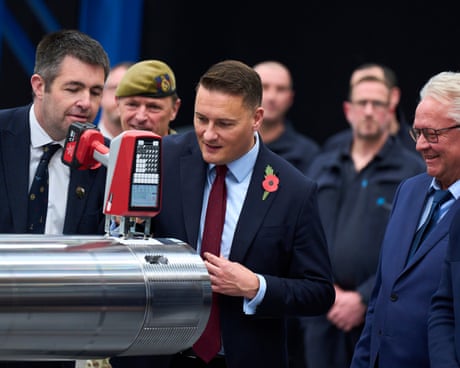
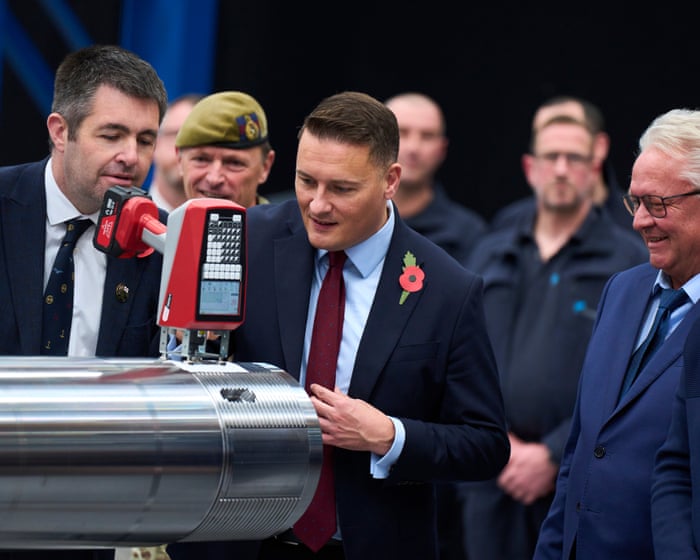
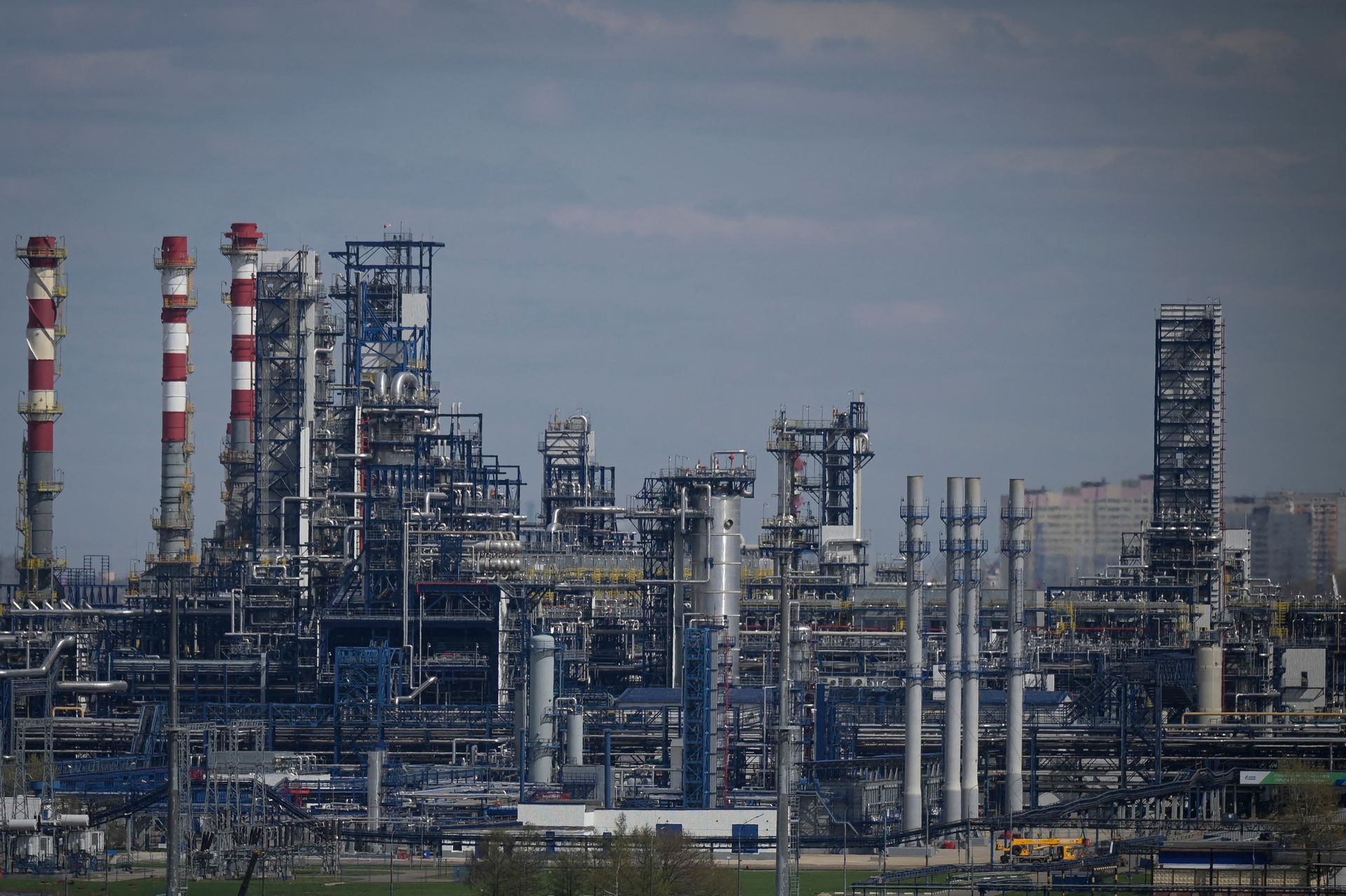
Race to rearm: Telford gun hall brings tank barrel production back to the UK

Defence secretary says Britain must manufacture at scale as Germany’s Rheinmetall opens Midlands factory

For the last 20 years, Britain was unable to put a barrel on its tanks without buying from abroad. Relying on foreign allies seemed like a reasonable choice during years of relative security (for wealthy countries at least) after the end of the cold war.

But Russia’s full-scale invasion of Ukraine in 2022 has changed the calculation – and prompted a scramble to rearm among European countries, including the UK.

Continue reading...

© Photograph: Christopher Thomond/The Guardian

© Photograph: Christopher Thomond/The Guardian

© Photograph: Christopher Thomond/The Guardian

  •  

Under the (Persian) volcano

Iran and Russia, both sanctioned to oblivion, are indeed in synch like never before, coordinating everything on a shared front.

Join us on Telegram, X, and VK.

Contact us: info@strategic-culture.su

Washington, on the Ukraine front, may be switching to total Saving Face mode. After all, the scale of the strategic defeat for the Empire plus the discombobulated West in country 404 is staggering. Add to it the strategic defeat in Iran plus Yemen relentlessly hammering the House of Saud. Grandmaster Lavrov coined it: “The West will never again be the main player, dictating terms.”

The temptation may be great to identify a more straightforward path towards a multi-nodal, polycentric world order – in the wake of all those wild, unprecedented Trump concessions to Moscow. But then the real dark clouds keep coming down.

The death cult in West Asia and the Epstein Syndicate as a whole have managed to overpower the whole mass of neo-con Russophobes spread across the MICIMATT (military/industrial/congressional/intelligence/media/academia/think tank complex, in the memorable definition by Ray McGovern) and reconstitute Iran as the undisputable, one and only national security emergency.

The 7-point way or the highway

Field Marshal Asim Munir’s hasty, last minute-arranged trip from Islamabad to Tehran earlier this week in the end could not possibly mediate anything.

Munir met everyone who matters. He asked Parliament Speaker Ghalibaf point blank: what does it take to find a solution for the Iran-U.S. impasse? Ghalibaf was blunt – and repeated it at last 8 times during their meeting: Washington must implement Iran’s 7-point conditions, essentially a summary of the serially dead cat memorandum of understanding (MoU), which Trump signed and then destroyed.

The 7 points were first proposed to Tweedledum and Twedledee – Witkoff and Kushner – via the Qataris in a previous round of Iran-U.S. indirect negotiations.

President Pezeshkian and secretary of the Supreme National Security Council (SNSC) Mohsen Rezaee, in their meetings, stressed the exact same thing. That’s the message Munir should relay to the Sociopath-in-Chief.

Official Iranian sources will not confirm it; only the heavily-spun American version. But Munir may have carried a final U.S. ultimatum to Rezaee, Pezeshkian and Ghalibaf: ditch your nuclear program, or face massive strikes, mostly targeting Pickaxe Mountain.

Adding on the 7 points, Mohsen Rezaee actually informed Munir – and thus the White House – again, that not a single speck of nuclear dust will leave Iran. Back to the only possibility of a return to negotiations: Washington must accept the 7 points.

Foreign Minister Araghchi keeps coming back to the essentials: “The U.S. has failed to achieve any of its war objectives.” So the connectivity chain is inescapable: no military victory (and no regime change); unbearable economic costs; untainable political situation; thus only off-ramp is the 7 points.

And on top of it Tehran runs the clock.

In parallel, across the Yemeni Storm, Sana’a also runs the clock.

With Aramco, the lifeblood of U.S., Israel and Salafi-jihadi goons of the ISIS mould, and a privileged source of funding for the Forever Wars, now in Ansarallah’s direct line of fire, the Yemeni drive is to work “to dry up the sources of terrorism.”

Riyadh though is doubling down, threatening to bomb every gathering of Yemeni tribes. If that happens, more than a million more Yemenis will join the Yemeni Armed Forces and march to the Yemeni-Saudi border.

After all the tribes, well-trained and ultra-weaponized, are just waiting for a directive from Ansarallah’s leader, Abdul-Malik Badr al-Din al-Houthi, to pour into southern “Saudi” Arabia and recover the three provinces, Najran, Jizan and Asir, that are ancestral Yemeni lands stolen by the Brits in 1934.

A price you can’t afford to pay

All hell may break loose: now; soon; or until the end of November at the latest. Were it to happen sooner, before the Israeli elections, it’s a done deal the driver is the death cult. The Sociopath-in-Chief privileges a post-mid-terms attack.

The death cult is preparing a massive attack on Iranian power plants, oil infrastructure, military targets and nuclear installations. Tehran has repeatedly warned that any attack, joint or separate, from the U.S. and Israel, will be treated as Totalen Krieg, all-out war, and the response will break any limits or restraint.

Iran’s internal intel is fully concentrated on a large-scale bombing scenario happening before next Tuesday, Election Day in the death cult.

Whatever happens, Tehran’s response will make sure the price to pay is beyond prohibitive. On Israel, Iran will counterpunch on both of Israel’s refineries; the ports at Haifa and Ashdod; all airbases; and Dimona added only if Iran’s own nuclear sites are hit.

When it comes to a U.S. attack, any Gulf petro-monarchy that hosts any launch instantly becomes a legitimate target, including power grids; desalination plants; refineries; ports; data centers; HQs and installations of American companies.

The Strait of Hormuz would be completely closed. The price of a barrel of oil will skyrocket. The global economy will hit Big Depression. From an imperial point of view, that will be as gloomy as Washington letting Iran manage the Strait of Hormuz and charge fees for transit: actually the humiliating end of unilateral thalassocracy – complete with the U.S. Fifth Fleet needing to ask permission to enter or leave its own dilapidated base in Bahrain.

Mohammad Mokhber, a top adviser to Leader Mojtaba Khamenei, stressed that “if the U.S.-Israel strike our petrochemical infrastructure or power plants, Iran will strike nine countries.”

Moreover, the Fars news agency, very close to the IRGC, learned about an array of new directives: if the attacks involve the assassination of Iranian officials and the killing of civilians, the Iranian response will include political targets associated with the U.S. and all nations participating in the war, in addition to their infrastructure.

Lavrov and Araghchi revive RIC

Amidst so much horror, let’s try to stress at least one auspicious trend. During Lavrov’s recent visit to Tehran, Iranian FM Araghchi cut to the chase:

“Never in our History have Russia & Iran worked as closely as now.”

The key operative concept is “Never in our History”. Lavrov and Araghchi talked about “everything from Europe to West Asia”. But specially these four: Lebanon, Palestine, Ukraine & Yemen. Not to mention everything about expanded economic and “nuclear cooperation”.

Economic cooperation means specially the INSTC – the International North South Transportation Corridor linking 3 BRICS/SCO partners: Russia, Iran and India.

See my INSTC documentary shot in Iran last year.

The Empire of Chaos relies on sanctions, threats and bombing. Eurasia integration relies on building infrastructure, increasing trade, and sovereign cooperation. So Lavrov and Araghchi once again had to revive RIC: the original Russia/India/China connection first conceptualized as the Primakov Triangle but now with Iran in place of India.

Lavrov proposed that the new RIC establish a “common security structure” in the Persian Gulf via a trilateral summit. That amounts to RIC defining a unified framework for the Strait of Hormuz.

The Empire’s response will be increased discombobulation. Because once again this is about “indivisibility of security” – as in Russia proposing it to the U.S. and NATO in December 2021. Then that was met with a non-response response.

On Lebanon, Palestine, Ukraine and Yemen, Lavrov and Araghchi were on top of the top frontlines. Where we have the Empire of Chaos and its allies/vassals on one side, and Russia and Iran’s allies on the other side.

It’s all interconnected, of course. An imperial arc of military pressure stretches from Ukraine to Yemen. The counterpunch revolves around how to coordinate the resistance (italics mine) to such pressure.

On economic cooperation, both Iran and Russia are under a tsunami of sanctions. Their banks are expelled from SWIFT, and oil exports are severely restricted. So trade between them must bypass the U.S. dollar; the whole Western financial system; and the thalassocracy enforced by the U.S. Navy.

Know how in bypassing sanctions is something Iran-Russia may share with the whole Global South, via settlements in local currencies; barter trade; overland corridors; the INSTC; and trade across the Caspian Sea.

And that brings us once again to the Strait of Hormuz – which Iran controls. The Gulf petro-monarchies are completely freaking out. Russia maintains solid channels with both Iran and the Gulf. Lavrov is in total synch with all of them. He brought the Gulf’s concerns to Tehran, and in turn, conveyed Tehran’s conditions back to the Gulf.

Lavrov stressed that the serially dead cat Islamabad MoU is the only way to go. Exactly what Xi told Trump at the Oval Office. Exactly what the Iranian leadership told Asim Munir in Tehran.

He also stressed that the Persian Gulf petro-monarchies must get their act together and start a serious security dialogue with Iran and Arab nations, including neighbors such as Iraq and Jordan, and involve the Arab League, the Organization of Islamic Cooperation (OIC), and the permanent members of the UN Security Council.

Once again: indivisibility of security.

Iran and Russia, both sanctioned to oblivion, are indeed in synch like never before, coordinating everything on a shared front – while the desperate Epstein Syndicate remains stuck in its self-concocted Forever War nightmare.

  •  

‘No change’ in Russia’s attitude on war shown by deadly attacks, Zelensky says

Russia’s latest attacks on Ukraine show there has been “no real change” in Moscow’s attitude towards the war, Ukrainian President Volodymyr Zelensky said Thursday. The deadly strikes came just hours after Russian President Vladimir Putin told US envoy Steve Witkoff his country was ready to resume trilateral talks with Washington and Kyiv.

  •  

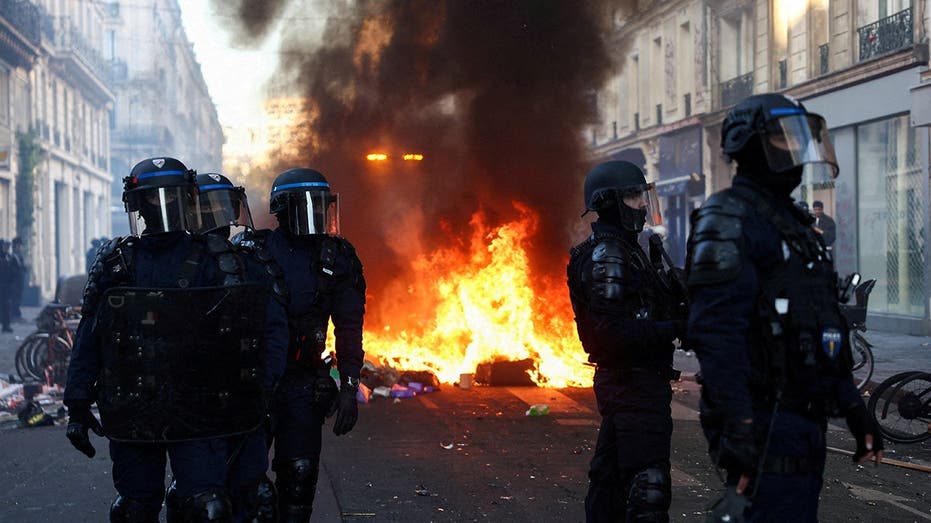
France's Macron blames protests on 'ultra-left groups whose aim is to bring down the Republic'

French President Emmanuel Macron vowed Thursday to ban protests by "individuals or groups with no legitimate authority" as he blamed "ultra-left groups" for riots and looting that spread across his country.

Macron made the remarks as thousands of protesters took to the streets of Paris on Thursday, according to The Associated Press, ahead of larger demonstrations set for this weekend.

"Last Saturday we had political and seditious acts by ultra-left groups whose aim is to bring down the Republic," Macron was quoted by Reuters as saying following a meeting with intelligence officials.

The news agency reported that businesses in central Paris have started boarding up their windows over concerns of violence on Saturday. Local authorities also told Reuters that protests planned for Saturday in Lyon have been banned.

FRANCE COULD FACE EVEN WORSE DESTRUCTION WITH SECOND WEEKEND OF PLANNED RIOTS, STATE DEPT WARNS

Macron said the strategy adopted for the coming days is to ban protests requested by "individuals or groups with no legitimate authority."

"Where trade unions submit requests to hold demonstrations, prefects will examine them in accordance with the law, but alternative routes will be proposed" to protect city centers, businesses and public buildings, Macron said.

"The rules are simple, and I think they're just common sense. The general recommendation is that there should be no demonstrations in the coming days," he said. "For those who still want to protest, if they are trade unions, prefects will propose alternative routes."

Organizers of the Paris protest on Thursday said an administrative court in the city overturned a ban issued by police after they challenged it. The Paris police prefecture previously said the ban was necessary, given the risk of street violence after groups of masked youth clashed with police forces, looted shops and torched cars over the weekend.

AMERICANS WARNED ABOUT PARIS TRAVEL AFTER VIOLENCE, LOOTING AND TEAR GAS-FILLED STREETS

The protests began in France in September with calls for education reform, before expanding into larger anti-government demonstrations that French officials say are being fueled by far-left groups.

Protesters gathered peacefully and chanted in the southeastern part of Paris on Thursday while they were watched by a heavy police presence, the AP reported.

CLICK HERE TO DOWNLOAD THE FOX NEWS APP

Thursday's planned protests were seen as a prelude to Saturday's big demonstration, when activists from the "yellow vest" movement, whose demonstrations over fuel prices shook France in 2018 and 2019, and the CGT labor union, are expected to join.

The Associated Press contributed to this report.

  •  

I've visited over 50 cities in Europe. London and Paris were great, but these 5 lesser-known locations are worth a visit.

Dasha leans against a bridge over a river. Behind her are hills with houses on them.
One of my favorite lesser-known locations to travel to is Heidelberg, Germany.

Dasha Kofman

  • After traveling to over 50 cities in Europe, I've enjoyed visiting some lesser-known locations.
  • Bath, England, is a great place to visit for Roman ruins and beautiful architecture.
  • I also loved traveling to Bruges, Belgium, which is both historic and romantic.

I've visited over 50 cities in Europe, and although I love global tourist hubs like London and Paris, I also try to seek out smaller cities and towns.

Here are five lesser-known destinations in Europe I recommend visiting.

Bath, England, is just a 90-minute train ride from London.
Tourists walk around a two-floor open-air Roman bath. The bath in the middle of the building is green.

Evannovostro/Shutterstock

As you probably could have guessed from this city's name, Bath is known for its Roman baths. These baths, dating back to AD 70, are some of the best-preserved Roman ruins in the world.

The city is full of beautiful Georgian architecture, which can be admired in places like the Royal Crescent — a crescent-shaped row of 30 houses.

I also loved visiting the Circus, which is made up of townhouses arranged in a circular pattern. In my opinion, these areas are part of what makes walking around Bath feel unique.

The train from London to Bath takes about 90 minutes, making this city the perfect day trip.

Heidelberg, Germany, embraces modern life without losing its historical charm.
A bridge over a river, with buildings and a castle in the background.

SerrNovik/Getty Images

Heidelberg has striking views around every corner. The city is home to a centuries-old castle as well as the oldest university in Germany.

I enjoyed walking along Philosophenweg (also called Philosopher's Way), where professors sought solitude and academic inspiration. The path was especially beautiful during my trip in the fall.

We loved spending time in the city, which had lots of nice restaurants and cool bars. In my opinion, Heidelberg does an amazing job of embracing the new while holding on to its historical charm.

Bruges, Belgium, is a romantic city.
People riding in a boat on a river surrounded by charming brick buildings.

Dasha Kofman

Bruges is a laid-back destination that makes a convenient day trip from nearby Paris and Brussels. In my opinion, visiting the medieval city feels like stepping back in time.

The best thing I did was take a boat ride on the canal, admiring the architecture while cruising through Minnewaterpark, commonly referred to as the Lake of Love.

The city is perfect for couples looking to indulge in Belgian beer and chocolate.

Mostar is a beautiful city in southern Bosnia and Herzegovina.
People sit on rocks next to a large tower bridge.

Dasha Kofman

Mostar really surprised me because it didn't look like anywhere else I'd been. The towering 16th-century Old Bridge connecting the two sides of the city is a UNESCO World Heritage site.

The city also has a well-preserved Ottoman quarter with charming cobblestone streets.

During my time in Mostar, I loved drinking Bosnian coffee, taking in the views of the city, and feasting on local dishes like ćevapi.

Andorra La Vella is a hidden gem in the Pyrenees mountains.
A bridge over a river with the words "Andorra La Vella" on it. There are buildings on both sides of the river and tall mountains in the background.

Dasha Kofman

Andorra La Vella is the capital of Andorra, a country in the Pyrenees between France and Spain.

Every restaurant we dined at featured dishes influenced by the surrounding countries. If you want to try authentic Andorran food, head to a borda — a traditional house once used for agricultural purposes. Now, these buildings are used as charming restaurants.

Andorra la Vella makes a great day trip from Barcelona, but, in my opinion, the city deserves more than a one-day visit.

This story was originally published on July 3, 2024, and most recently updated on October 22, 2025.

Read the original article on Business Insider

  •  

Marine Le Pen The Only Presidential Candidate to See Support Rise in Wake of French Riots

The wave of Islamo-leftist unrest in France has apparently redounded to the benefit of National Rally leader Marine Le Pen, who is the only presidential candidate to see their poll numbers climb after the outburst of violence last weekend.

The post Marine Le Pen The Only Presidential Candidate to See Support Rise in Wake of French Riots appeared first on Breitbart.

  •  

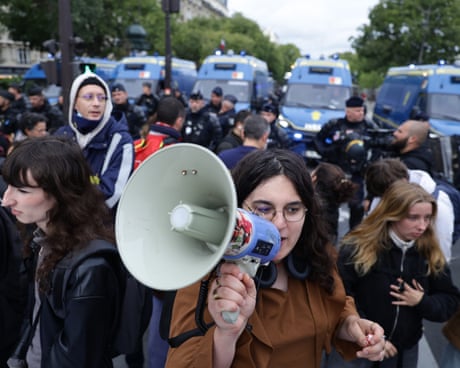
Macron bans ‘illegitimate’ protests in France as he tries to get a grip on unrest

French president also says he will decide on concrete ‘next steps’ for the next nationwide demonstrations

Emmanuel Macron has said “illegitimate” demonstrations will be banned over the coming days as France seeks to get a grip on civil unrest after some of its worst street violence in years erupted on the fringes of cost of living protests at the weekend.

Speaking after a ​meeting with intelligence officials and senior ministers, the French president said on Thursday that demonstrations organised by recognised groups would be allowed to go ahead, although their routes could be changed.

Continue reading...

© Photograph: Ibrahim Ezzat/Anadolu/Getty Images

© Photograph: Ibrahim Ezzat/Anadolu/Getty Images

© Photograph: Ibrahim Ezzat/Anadolu/Getty Images

  •  

Iceland commences private 5G spectrum move

Iceland’s telecoms regulator commenced a process which could boost local and private 5G network deployments by a host of industries and align the nation with broader global rollouts.

Fjarskiptastofa opened a consultation into allocating spectrum in the 3800MHz to 4200MHz frequency band, one which is widely regarded as ideal for local area networks where capacity matters.

The regulator listed factories, ports and utilities among businesses which could benefit from access to all or some of the spectrum, which it noted is also suitable for delivering fixed wireless access services.

It proposes providing two tiers of licences, one for low-power deployments and another for medium.

Fjarskiptastofa explained low-power settings would be confined within a 50-metre radius, with multiple transmitters allowed.

Medium-range deployments would be “limited to a specific transmission location”.

The regulator proposes licences spanning 20MHz, 40MHz, 60MHz, 80MHz and 100MHz of bandwidth, with the latter the maximum for each permit.

Licences would be valid for a decade and holders would be required to launch services within a year of receiving clearance.

Fjarskiptastofa’s consultation runs until 10 November, after which it intends to publish all comments not covered by confidentiality requests.

The band covered is already popular for private 5G services: in 2025, the European Union called for member states to harmonise access, arguing there are broad benefits for industrial and non-industrial players.

But there are concerns the harmonised approach in the region may not be the panacea it first seems: in 2022, the GSMA expressed concern some member states could favour specific systems and so constrain the market.

The post Iceland commences private 5G spectrum move appeared first on Mobile World Live.

  •  

EU awards fresh funds to ramp 6G drive

A body charged with pushing 6G-related developments in the European Union selected a quintet of projects to share €22 million in its latest funding award, including undertakings on connected devices and improving data for AI-native networks.

The European Smart Networks and Services Joint Undertaking (SNS JU) explained the initiatives selected were intended to help address key needs for the next phase of 6G development.

Its aim with the newly-backed projects is to help researchers and businesses in the region advance promising technologies to large-scale tests and real-world adoption.

The partly EU-funded organisation noted now was a “crucial point for Europe’s 6G ambitions” given intensified global competition in next-generation communications.

Those chosen this time around are 6G-AID, Hemes-6G, EUnicon-6G, EU-India-6G-Bridge and SNS Impact.

6G-AID is focused on building a European data foundation for AI-native 6G networks; Hemes-6G will bring together eight testbeds across the EU on a shared platform for larger-scale work; EUnicon-6G seeks to identify opportunities for connected devices outside of smartphones; as the name suggests EU-India-6G-Bridge deepens collaboration with India; and SNS Impact is set to support cross-project collaboration.

Executive director of the SNS JU, Erzsebet Fitori, said for industry the projects would mean: “better access to the data, testbeds, technologies and partnerships needed to turn 6G research into products and services” while for citizens it helped “the foundations for more secure, reliable and capable connectivity in the years ahead”.

“These proposals are about making sure that Europe helps shape the technologies and standards that will define the future.”

The five selected come from the organisation’s sixth call for proposals which closed earlier this year.

The post EU awards fresh funds to ramp 6G drive appeared first on Mobile World Live.

  •  

Shamonda virus detected in human for first time in France

Investigations under way to determine whether virus normally found in livestock contributed to man’s death

A man in France has become the first human known to have contracted Shamonda virus, with investigations under way to explore whether it contributed to his death.

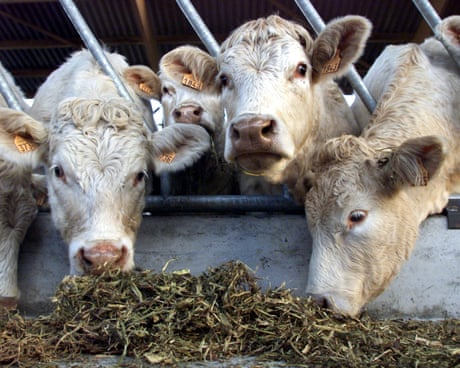
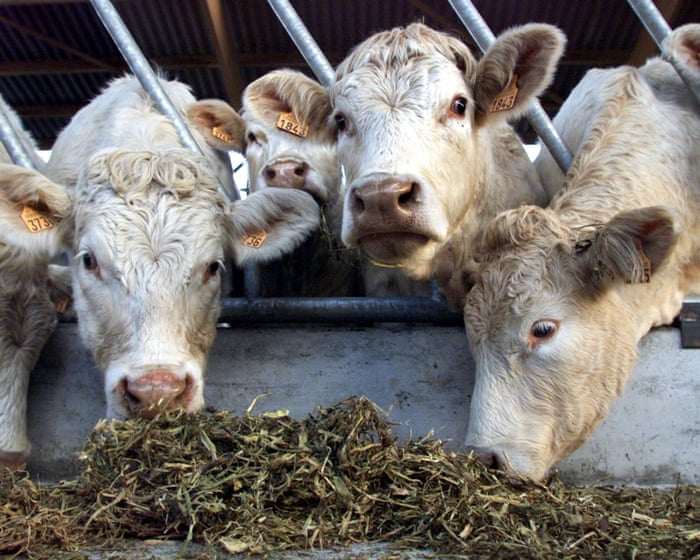
Shamonda virus is a type of bunyavirus and is spread by bites from infected midges. According to the Austrian Agency for Health and Food Safety, in animals such as cattle, sheep and goats it can cause diarrhoea, lack of appetite and a decline in milk yield, “as well as abortions and congenital abnormalities in newborn calves, lambs and kids”.

Continue reading...

© Photograph: Pascal Rossignol/REUTERS

© Photograph: Pascal Rossignol/REUTERS

© Photograph: Pascal Rossignol/REUTERS

  •  
❌