❌

Reading view

Houthi hits on infrastructure helping lure Aramco to Bangladesh?

On January 5, 2025, Saudi Arabia’s then ambassador to Bangladesh, Essa Youssef Essa Al Duhailan, delivered a stark reminder of a lost opportunity. Saudi Aramco, the Kingdom’s state-owned oil giant, had sent high-level delegations to Bangladesh three times between 2016 and 2018 to explore investment opportunities, including an oil refinery. Yet, according to the ambassador, […]

The post Houthi hits on infrastructure helping lure Aramco to Bangladesh? appeared first on Asia Times.

  •  

Ukraine’s Navy says it hit six Su-34 bombers at a Russian airbase with Neptune missiles—the jets that drop glide bombs on Ukrainian towns (updated)

borisoglebsk

Ukraine’s Navy hit six Su-34M bombers at Russia’s Borisoglebsk military airfield in Voronezh Oblast with Neptune missiles overnight into 15 October, the Navy said. Residents filmed a large fire at the base after a missile alert, and the Navy’s count has not been independently confirmed. The facility is about 400 km from the frontline.

Glide bombs are now central to how Russia’s army fights, used to pin down Ukrainian defenders, including drone teams, before small infantry groups move in. They also hit frontline cities and the civilians who live in them.

Six bombers and flight equipment hit, the Navy says

The Neptune coastal missile system also hit technical equipment that supports flights, the Navy said. It recorded secondary detonations and a fire on the airfield and said details were still being clarified.

The Su-34M can carry several guided and high-explosive aerial bombs at once, along with missiles, the Navy noted. It called the jet one of Russia’s key tools for glide-bomb strikes on Ukrainian positions and frontline towns. In September, a Ukrainian Neptune missile reached a Russian warship at its own pier.

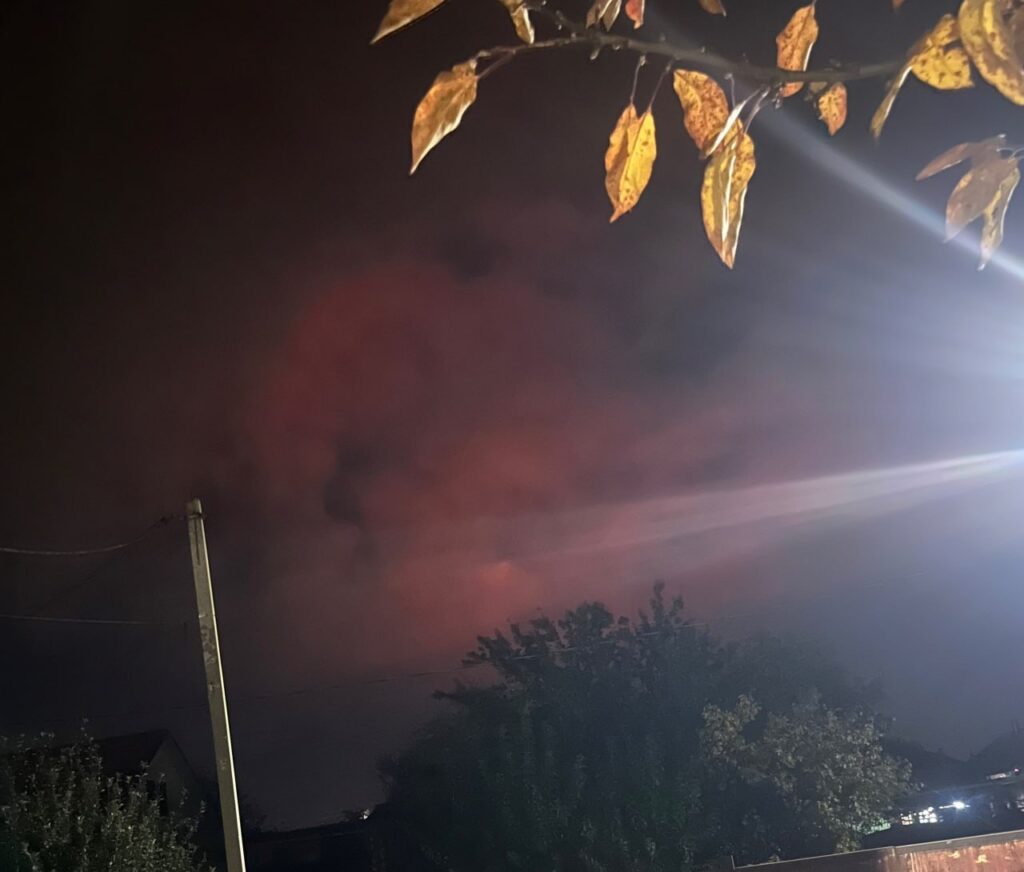
Smoke over Borisoglebsk during the fire at the military airfield, 14 October 2026.
Smoke over Borisoglebsk in Voronezh Oblast, Russia, during the fire at the town’s military airfield, 14 October 2026. Photo: Supernova+/Telegram

Fire over the airfield late on 14 October

Voronezh Oblast Governor Aleksandr Gusev declared a missile alert across the region shortly before 22:00 local time on 14 October. Within an hour, Ukrainian monitoring channel Exilenova+ reported explosions and a fire, preliminarily at the Borisoglebsk airfield. It later wrote that the airfield had come under missile attack and a fire was burning there. Ukrainian monitoring channel Supernova+ posted footage from the town showing the blaze.

A large fire is raging at the site of the missile strike. https://t.co/l4aqVvNJIg pic.twitter.com/JYjhM57GYh

— Exilenova+ (@Exilenova_plus) October 14, 2026

On the morning of 15 October, Gusev claimed that 33 drones and several jet-powered aerial targets had been downed over the oblast overnight. He did not mention the airfield.

A base Ukraine has hit before

The airfield hosts the 783rd training aviation center and units of the 105th composite aviation division of Russia’s Aerospace Forces, which flies Su-34, Su-35S, and Su-30SM jets, Ukrainian defense outlet Militarnyi reported. In summer 2026, it had no permanently based combat jets, and Russia used it mainly as a stopover to refuel and rearm aircraft striking Ukraine, the outlet said, citing satellite observation.

Ukrainian drones hit the airfield overnight on 8 July, starting a fire, and satellite images later showed its fuel and lubricants depot destroyed. Drones also attacked the base’s pilot training center in July 2025.

The same night, Ryazan Oblast Governor Pavel Malkov reported a fire at an oil refinery in Ryazan. It came as Ukrainian President Volodymyr Zelenskyy said Ukraine was resuming strikes on Russian refineries.

Update: Satellite imagery confirms the strike

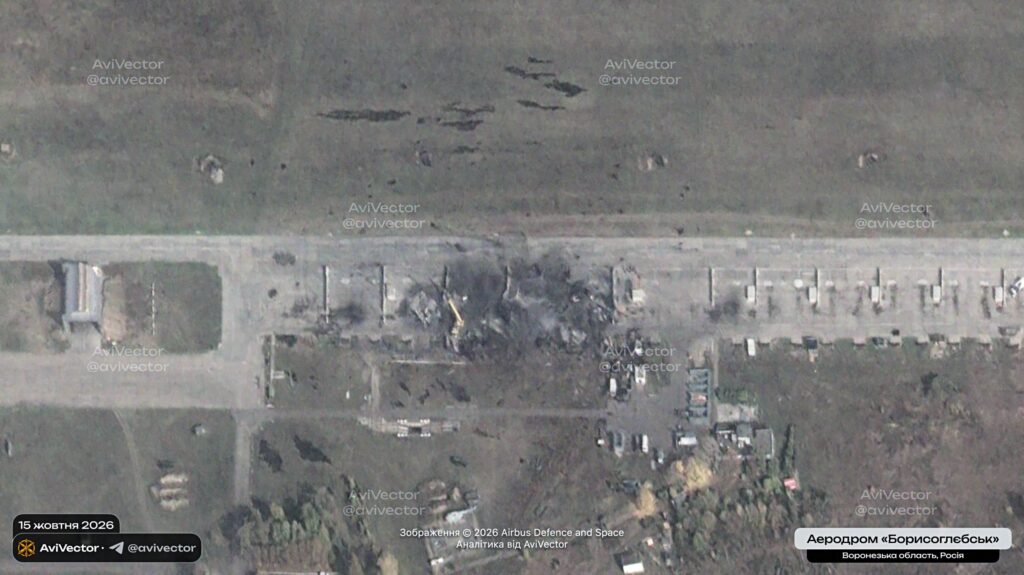
New satellite images show damage at Borisoglebsk airbase and six Su-34 bombers positioned in the affected area two days earlier, although the extent of the aircraft losses remains unconfirmed.

Satellite image shows the aftermath of Ukraine's strike on Borisoglebsk airbase in Russia's Voronezh Oblast on 15 October 2026. Image: Airbus Defence and Space / AviVector.
Satellite image from 13 October shows six Russian Su-34 fighter-bombers parked in the area later struck at Borisoglebsk airbase. Image: Exilenova+.

The monitoring channel Exilenova+ reports that 4 airframes were completely destroyed, while 2 others sustained significant damage.

  •  

The night Trump announced a diesel deal with Putin, drones knocked out more than half the tanks at a Russian fuel-export terminal

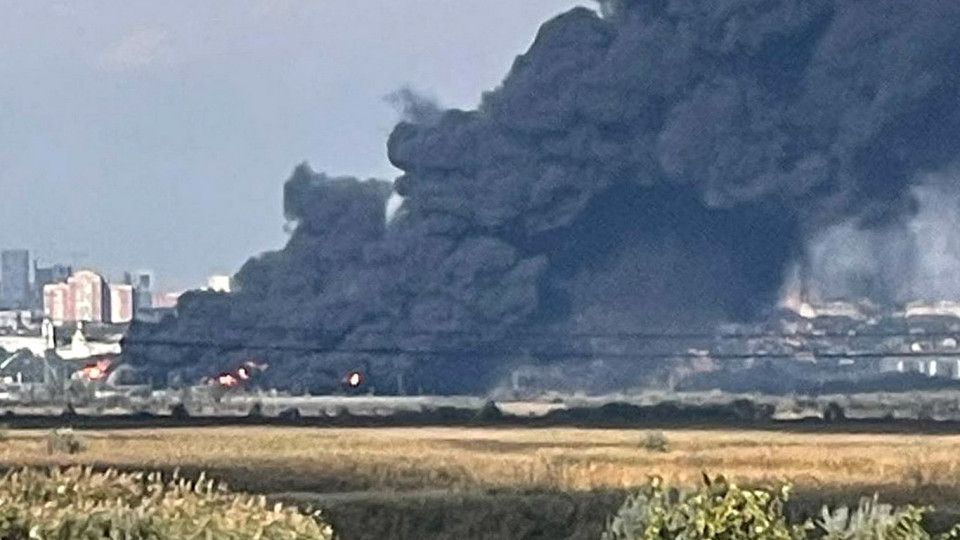
drones burned out more than half tanks russian fuel-export terminal rostov-on-don · post black smoke rises over oil-loading novoshakhtinsk refinery russia after drone strike 10 2026 tme exilenova_plus ukraine news

A drone strike on 10 October put more than half of the large fuel tanks out of action at an oil-loading terminal in Russia’s Rostov-on-Don, Russian news Telegram channel Astra found. The terminal loads fuel onto river and sea tankers for export, and it burned for two days while a local channel wrote that reeds might be on fire. Neither Kyiv nor Moscow has officially acknowledged the hit. It came hours after US President Donald Trump announced a diesel deal with Russian leader Vladimir Putin.

Russia has spent the autumn hammering Ukraine’s power grid ahead of winter. Ukraine’s long-range drones keep hitting the refineries, depots, and terminals that fuel Russia’s army and earn it export revenue. Every burned tank turns that revenue into repair bills, while Moscow is already subsidizing its own fuel pumps. A refinery-only truce of the kind the White House described a day after the strike would shield the Russian plants that feed terminals like this one.

Seven of 12 tanks out of action

Astra’s analysts concluded from eyewitness footage that at least seven of the terminal’s 12 large tanks had been knocked out. Ukrainian monitoring channel Supernova+ counted seven burned-out tanks and one more scorched by the fire.

The fire was still burning in the early hours of 12 October. Local channel Rostov Glavny posted video of the burning tank farm, passing on rumors that reeds were on fire and noting the city’s second day under smoke, The Moscow Times reported. Footage filmed in the daytime on 12 October showed no more open flames, only gray smoke, according to Astra.

drones burned out more than half tanks russian fuel-export terminal rostov-on-don · post satellite oil-loading novoshakhtinsk refinery russia during fire 10 2026 radio liberty новошахтинський завод нафтопродуктів уражені резервуари жовтня
Satellite image of the oil-loading terminal of the Novoshakhtinsk refinery in Rostov-on-Don, Russia, during the fire, 10 October 2026. Satellite image: Radio Liberty

A terminal that loads fuel for export

The site is the oil-loading terminal of the Novoshakhtinsk Oil Products Plant, formerly known as Yug Rusi, in Rostov-on-Don’s Zheleznodorozhny District. It receives, stores, and transships fuel onto river and sea tankers, including for export, Ukrainian monitoring channel Exilenova+ said.

The terminal also supplies fuel to the Russian army and earns Moscow hard currency, ZN reported. The Moscow Times put its loading capacity at 3.5 million tons a year and its tank farm at about 60,000 cubic meters, roughly 16 million gallons.

The White House in Washington DC, USA. Illustrative image: Wikimedia Commons.
Explore further

Trump’s Russian diesel deal, which drew fury in Ukraine, is unlikely to lower prices, experts say

The refinery itself stands in the town of Novoshakhtinsk near the border with Russian-occupied Luhansk Oblast. The terminal sits on the Don River with access to the Sea of Azov, Ukrainian military outlet Militarnyi noted. Ukraine hit the refinery in June, and Ukraine’s General Staff reported striking the Yug Rusi terminal on 9 July, placing it in Bataysk.

A night of drones over the region

Exilenova+ posted images of the burning terminal in the early hours of 10 October. It presented them as the site after Trump’s phone call with Putin. The channel later shared NASA satellite fire data showing the blaze.

Rostov Oblast Governor Yuri Slyusar claimed the attack injured six people. Slyusar further stated air defenses downed more than 100 drones over the region. Radio Liberty’s Russian Service noted that neither side had officially confirmed the hit on the terminal.

drones burned out more than half tanks russian fuel-export terminal rostov-on-don · post aerial view oil-loading novoshakhtinsk refinery russia astra assessed hit marked red orange 12 2026 новошахтинський завод нафтопродуктів
Aerial view of the oil-loading terminal of the Novoshakhtinsk refinery in Rostov-on-Don, Russia, with the tanks Astra assessed as hit marked in red and orange, 12 October 2026. Map: Astra

Hours after the US-Russia diesel deal

The strike came hours after Trump announced on 9 October that Russia had agreed to supply diesel to US and global markets. The US Treasury then cleared the trade with a sanctions license.

On 11 October, Trump declared an “energy ceasefire” between Russia and Ukraine. Under it, he expects Ukraine to stop striking Russian refineries, a White House official told Axios.

Ukrainian President Volodymyr Zelenskyy said that evening that Ukraine’s armed forces had received all relevant orders. Neither Ukrainian monitoring channels nor Russian officials have reported a new strike on a Russian oil facility since. On 13 October, Zelenskyy said Ukraine was ready to guarantee an energy ceasefire if Russia took matching steps.

  •  

Powerful explosion at MOTOR OIL Refinery: One dead, one intubated in ICU

A powerful explosion at Motor Oil Refinery on Friday morning injured two workers very seriously and another three lighter. The explosion occurred in the premises of the refinery in Agioi Theodoroi in western Attica. According to reports, two men aged 43 and 50, were initially transported to the Corinth General Hospital where they were intubated […]

The post Powerful explosion at MOTOR OIL Refinery: One dead, one intubated in ICU appeared first on Keep Talking Greece.

  •  

Ukrainian Drones Hit Key Moscow Fuel Hub as Pressure on Russian Energy Network Widens

A large fire has broken out at the Volodarskaya petroleum-products station outside Moscow following an extensive overnight drone attack. The facility occupies an important position in the pipeline network supplying petrol, diesel and aviation fuel to the Russian capital and its principal airports.

A major fire was reported at the Volodarskaya linear production and dispatch station in Moscow region early on Tuesday, bringing Ukraine’s campaign against Russian fuel infrastructure to another important point in the capital’s supply network.

Footage published from the area around Konstantinovo showed a substantial blaze at the facility, with reports from local residents that storage tanks were burning. The material identified the site as the Volodarskaya station, operated by Transneft-Upper Volga and connected to the petroleum-products network serving the Moscow region.

The extent of the damage was not immediately clear. There had been no detailed assessment from Transneft by Tuesday morning establishing whether pumping equipment, pipelines or only storage facilities had been affected. This distinction will determine whether the attack produces a temporary disruption or a more significant problem for Moscow’s fuel distribution system.

The strike formed part of a large overnight drone attack on Moscow and surrounding districts. Moscow Mayor Sergei Sobyanin reported repeated interceptions of drones approaching the capital, while air-defence activity continued across Moscow region. Russian aviation authorities temporarily restricted operations at Vnukovo, Domodedovo, Sheremetyevo and Zhukovsky airports for flight-safety reasons.

There is no evidence at this stage that the airport restrictions resulted from fuel shortages. They were imposed during the drone attack itself. The longer-term significance of Volodarskaya lies instead in the station’s role within the pipeline and storage infrastructure serving the Russian capital.

A major link in Moscow’s fuel network

Volodarskaya is connected to Moscow’s ring petroleum-products pipeline, through which petrol, diesel and aviation kerosene can be moved between refineries, storage facilities and major consumers.

Its importance is documented by Transneft itself. In 2024, the company said it had returned a 32-kilometre petroleum-products pipeline between the Moscow refinery and Volodarskaya to operation as part of a project to increase fuel deliveries across Moscow region.

According to the company’s figures, the project allowed aviation-fuel deliveries to Moscow’s airports to rise almost twofold, to as much as three million tonnes a year. Potential diesel deliveries to Moscow region consumers increased to 2.8 million tonnes annually, while petrol volumes reached 1.6 million tonnes. Transneft specifically identified Vnukovo, Domodedovo and Sheremetyevo as airports supplied through the expanded system.

Transneft has also expanded storage at Volodarskaya. The company previously said it had commissioned additional petroleum-product tanks at the station to support fuel supplies to Moscow and aviation-fuel transportation to the capital’s airports.

Those figures do not mean that every litre of fuel consumed by Moscow depends on Volodarskaya. Russia can move petroleum products by rail and road, and the Moscow region has other storage and distribution facilities. But replacing pipeline volumes on the scale handled by the Moscow system would place additional demands on those alternatives, particularly if disruption were prolonged.

The attack also follows repeated Ukrainian strikes against refining infrastructure supplying European Russia. On 20 September, EU Today reported that a mass drone attack had hit the Moscow Oil Refinery at Kapotnya, one of the main fuel-processing plants serving the capital. The strike reportedly affected its ELOU-AVT-6 primary processing unit, increasing pressure on a refinery that had already been targeted earlier in the year.

The broader campaign has moved beyond individual refineries. Ukraine has increasingly targeted different stages of Russia’s energy system, including storage depots, pumping infrastructure, ports and export terminals. Earlier attacks on the Omsk refinery and Baltic export infrastructure illustrated Kyiv’s effort to put pressure on both domestic fuel processing and the logistics through which Russian oil reaches international markets.

That approach is intended to force Russia to repair several parts of the system simultaneously rather than simply compensate for the temporary loss of production at one refinery. EU Today has previously examined how sustained strikes can put physical pressure on Russia’s oil economy where sanctions alone have limits.

President Volodymyr Zelenskyy said on 3 October that Ukraine intended to intensify attacks on Russian oil refineries in response to Moscow’s continuing strikes against Ukrainian cities, while maintaining that Ukrainian operations would not deliberately target civilians.

Volodarskaya adds another element to that campaign. A refinery converts crude oil into usable fuels; a pumping and storage station determines how those products reach consumers. Damaging one without the other may create disruption that can be bypassed. Sustained damage to both processing and distribution infrastructure is more difficult to compensate for.

Much therefore depends on what happened inside Volodarskaya overnight. If the damage is confined to several storage tanks, the Moscow fuel network may be able to absorb the loss. Damage to pumping installations or pipeline connections would have wider consequences, particularly if the facility is attacked repeatedly.

The strike nevertheless demonstrates that a fuel installation closely connected to Moscow’s aviation and transport system can be reached despite the dense air-defence network surrounding the capital. The scale of its effect will become clearer once satellite imagery and operational information show which parts of the Volodarskaya complex were actually damaged.

  •  

Pakistan to sign long-delayed refinery deals unlocking more than $6 billion in planned upgrades

ISLAMABAD: Pakistan is set to sign long-delayed agreements with five oil refineries, unlocking more than $6 billion in planned upgrades to modernize aging plants and cut reliance on fuel imports, officials said. But industry warnings that changes to the financial framework could derail the projects overshadowed the announcement. The agreements with Pak-Arab Refinery Ltd., Pakistan ... Read more

The post Pakistan to sign long-delayed refinery deals unlocking more than $6 billion in planned upgrades appeared first on BOL News.

  •  
❌