❌

Reading view

International Criminal Court wins EU’s top human rights prize in defiance of Trump’s sanctions

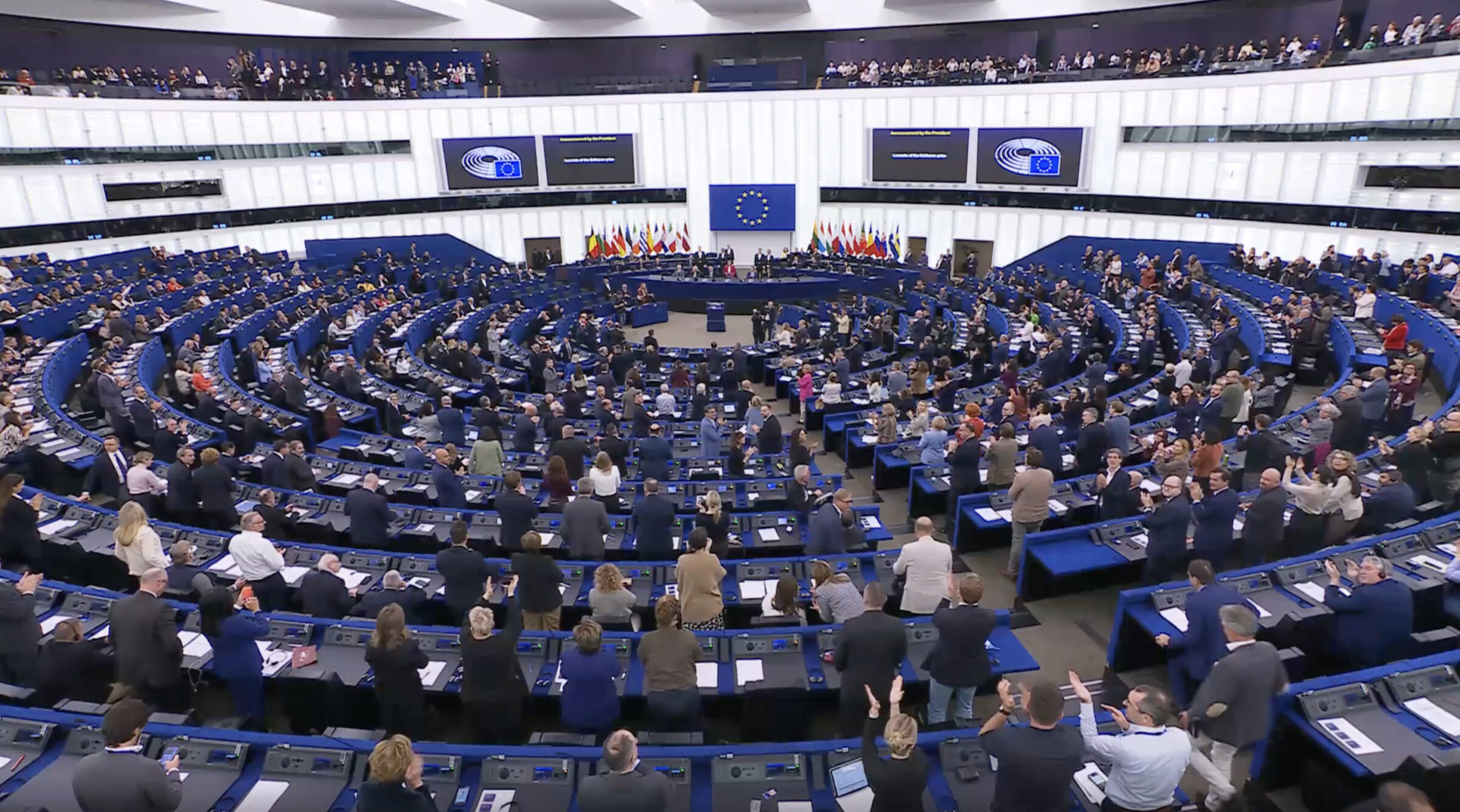
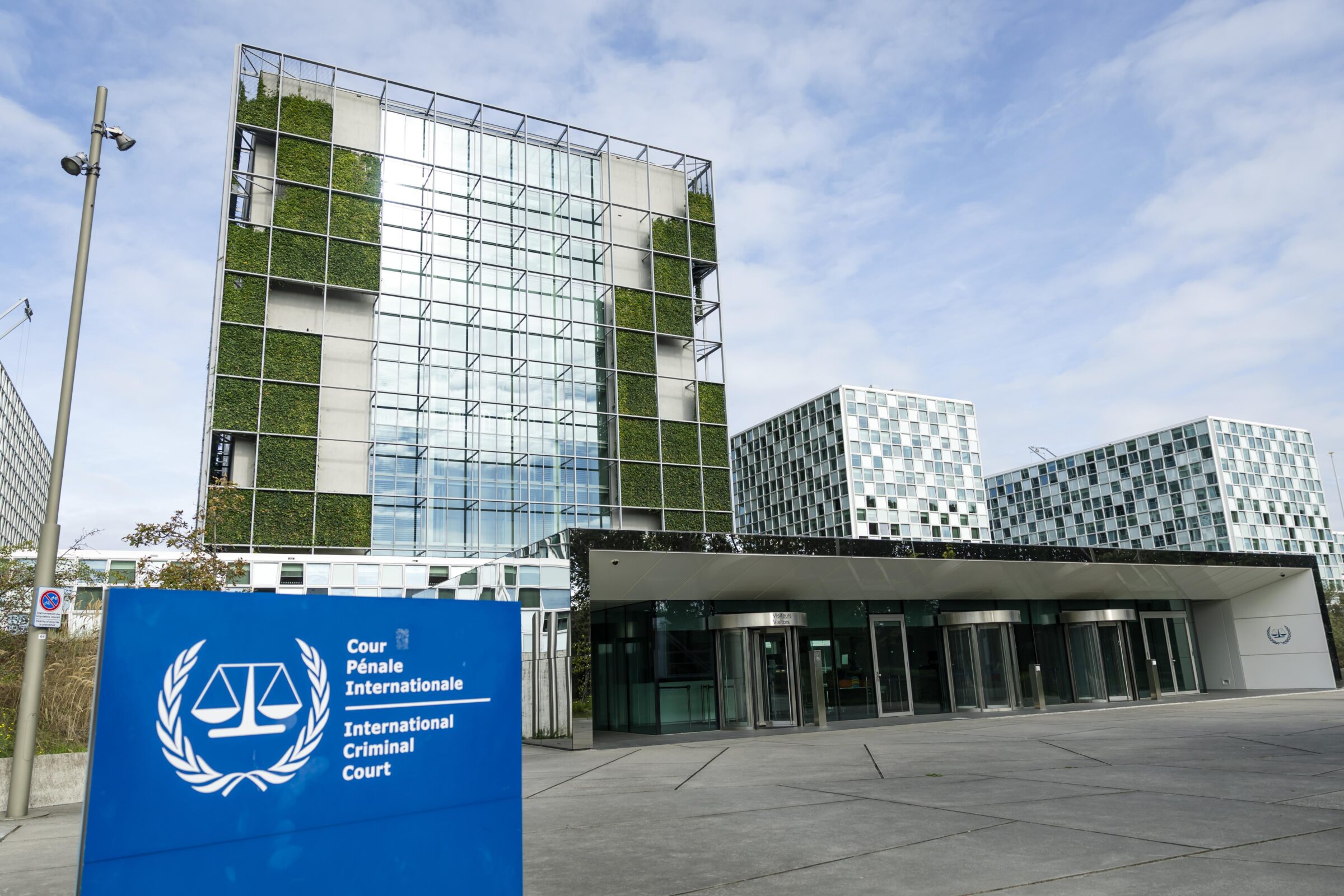
The International Criminal Court (ICC) has received the EU’s Sakharov Prize for Freedom of Thought.

Reacting to EU Parliament president Roberta Metsola’s announcement of the prize winner on Thursday (22 October), the Hague-based court said it is “thankful” for the recognition of the court and its officials.

“This award comes at a time when the court and its officials face unprecedented challenges, including sanctions aimed at disrupting the court’s judicial mandate,” ICC president judge Tomoko Akane told EUobserver in a statement.

The parliament’s recognition “underscores the importance of […] support to enable the Court to carry out its mandate independently and impartially, in the service of justice and the victims of the gravest crimes,” said the Japanese judge.

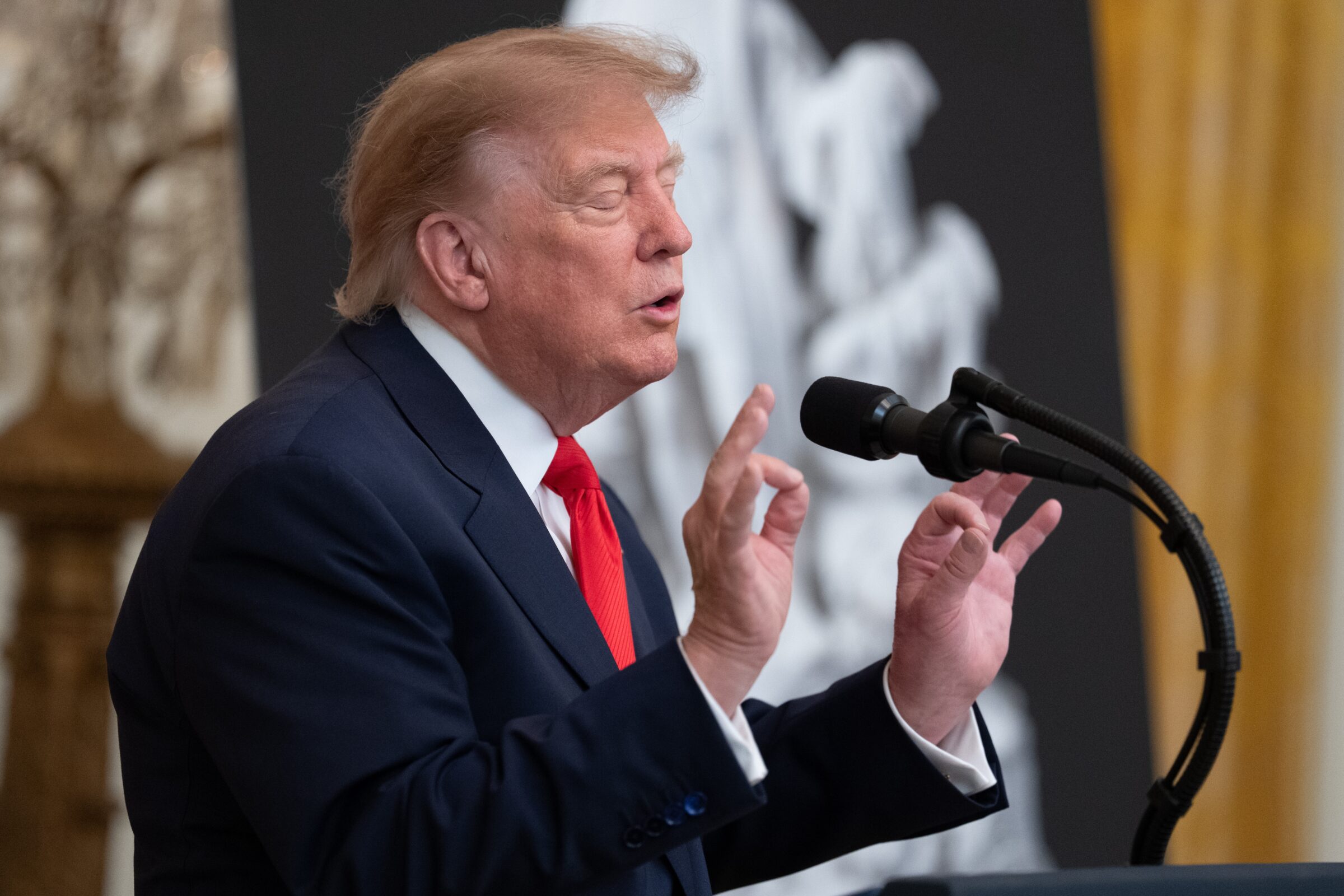
The court’s win comes after US president Donald Trump put his weight behind Israeli efforts to discredit the international judicial body by extending sanctions against it.

The ICC investigates and tries individuals charged with war and human-rights related crimes. When it issued an arrest warrant in 2024 for Israeli prime minister Benjamin Netanyahu for alleged war crimes, the US responded by sanctioning its judges.

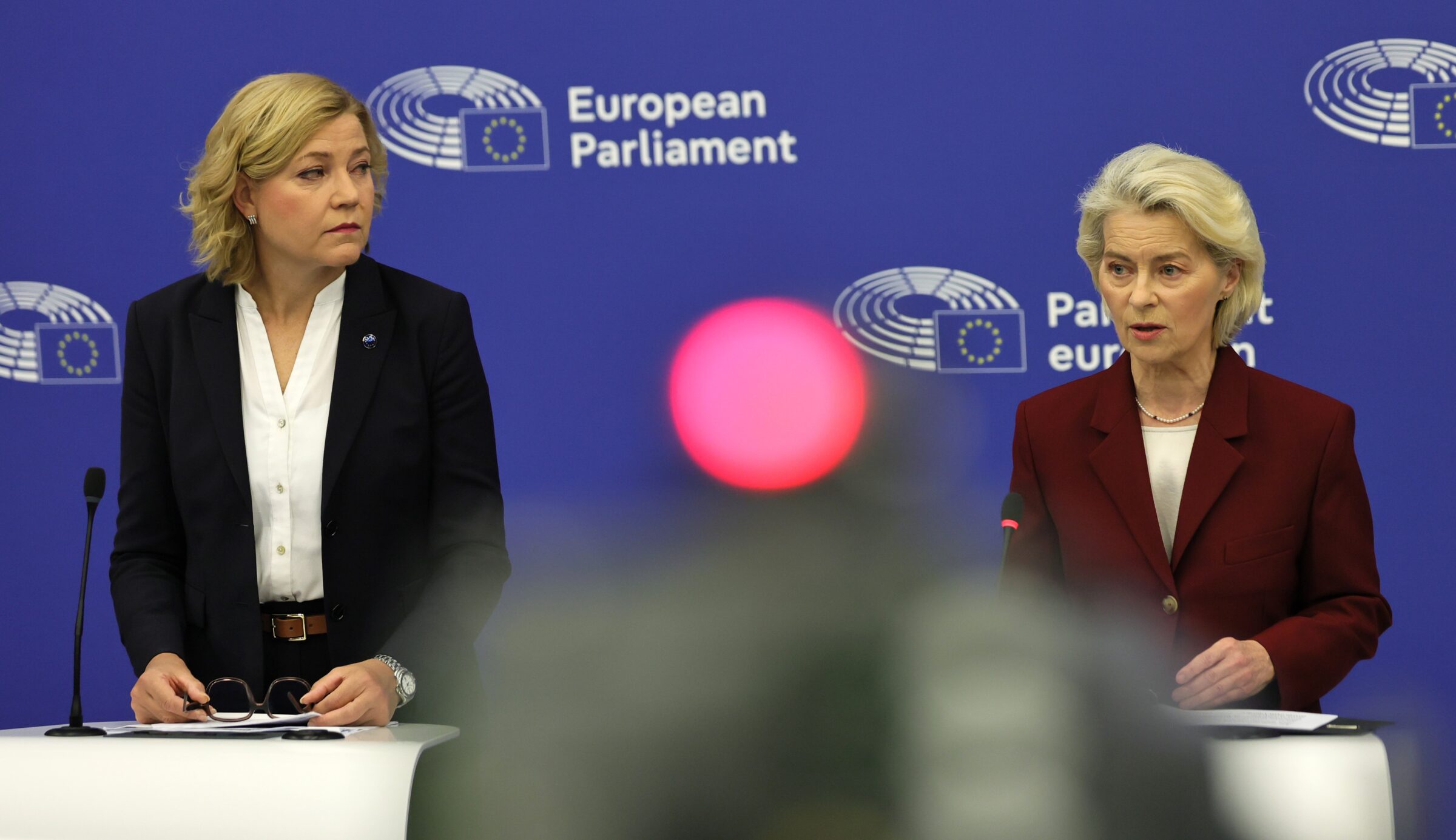
EU Commission president Ursula von der Leyen welcomed the win, saying:
“For victims of the world’s gravest crimes, justice means a voice. The ICC must be free to pursue its mission, independently, and without pressure or intimidation. Europe stands firmly behind president Tomoko Akane, the Court’s judges and officials, and their vital work for a world governed by rules.”

New sanctions against the court were announced by the Trump administration this month after the Nobel Peace Prize went to Navi Pillay, a former ICC judge who concluded in a UN report that Israel is committing genocide in Gaza.

Tomoka said: “While this prize recognises the work of the court in combating impunity and ensuring fair trials, it is also an important recognition of the role of international justice as a cornerstone of lasting peace. In a world marked by rising conflicts, there is no peace without justice and no security without law.”

Strasbourg stands for justice

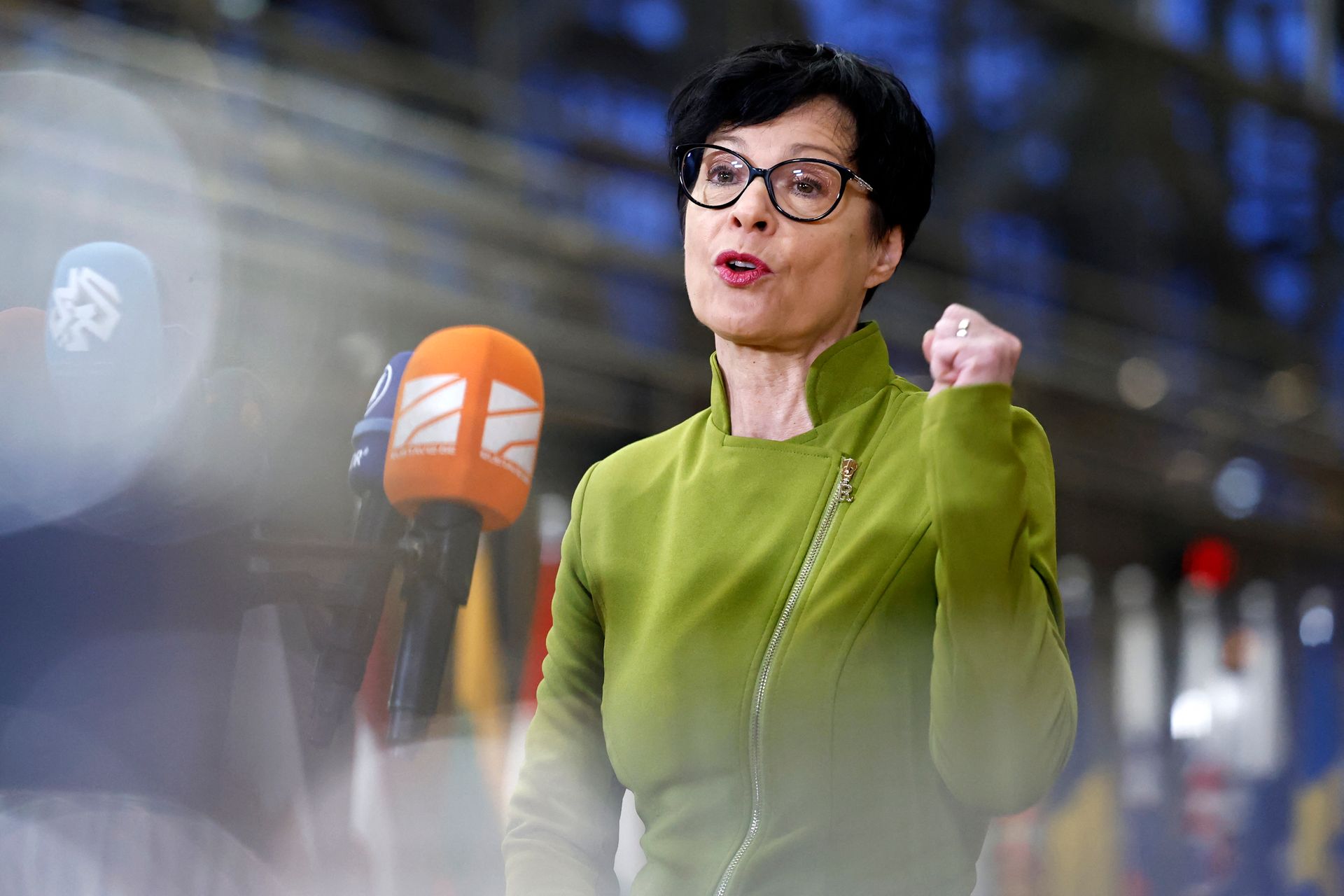
French MEP Chloé Ridel initiated the ICC’s nomination for the Sakharov Prize on behalf of the Socialists & Democrats parliament group.

This article continues, but the full version is available only to EUobserver.com subscribers. Visit account.euobserver.com/membership

  •  

Malta Faces Renewed EU Scrutiny Nine Years After Daphne Caruana Galizia’s Murder

The European Commission has urged Malta to strengthen judicial independence, tackle corruption and improve protection for journalists, as a European Parliament debate exposes continuing disagreements over the country’s rule-of-law record.

The European Commission has called on Malta to accelerate judicial reforms and strengthen safeguards for journalists, nine years after the assassination of investigative reporter Daphne Caruana Galizia, as the European Parliament revisited concerns over corruption and institutional accountability on Wednesday, 21 October.

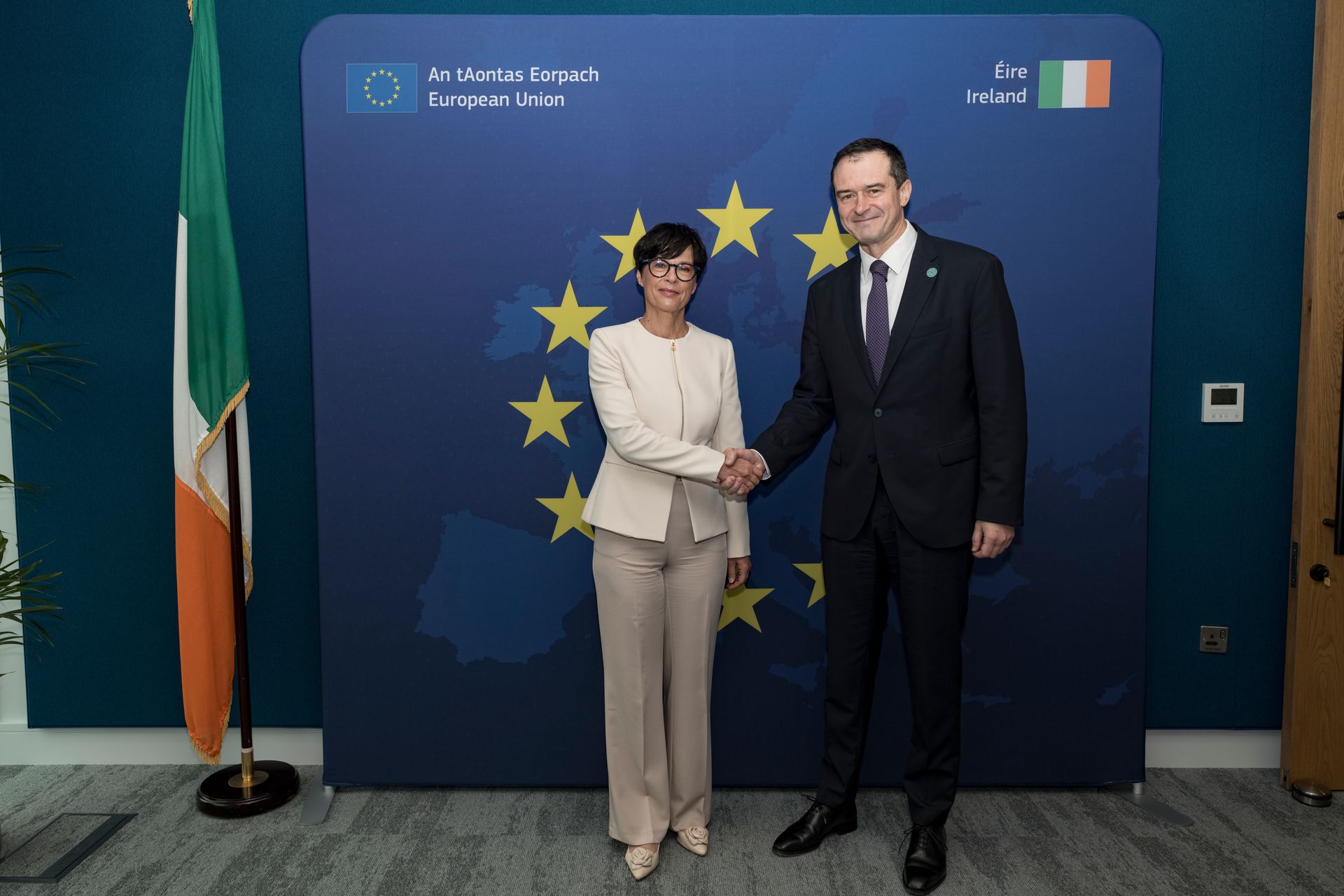
European Commissioner for Democracy, Justice, the Rule of Law and Consumer Protection Michael McGrath told MEPs in Strasbourg that Malta had made progress in certain areas but had yet to implement several outstanding recommendations concerning judicial independence, high-level corruption and media freedom.

The debate followed the controversial acquittal of businessman Yorgen Fenech, who had been accused of involvement in Caruana Galizia’s murder. Maltese prosecutors appealed the verdict in September, leaving the criminal proceedings subject to further judicial consideration.

Commission identifies continuing weaknesses

The European Commission’s 2026 Rule of Law Report, published in July, assessed Malta’s progress in reforming its justice system, anti-corruption institutions and protections for the media.

The report acknowledged certain improvements, including additional resources allocated to judicial and prosecutorial authorities.

However, it found that progress remained limited on several recommendations.

These include reducing delays in judicial proceedings, improving the investigation and prosecution of high-level corruption and ensuring greater judicial involvement in the appointment of the Chief Justice.

The Commission has also expressed concern about the effectiveness of existing anti-corruption arrangements.

Although investigations and prosecutions have increased in some areas, Brussels continues to seek a stronger record of final judgments in major corruption cases.

Court delays and pressure on judicial resources remain significant difficulties.

McGrath told Parliament that the Maltese authorities must continue implementing reforms to address these shortcomings.

Fenech acquittal intensifies accountability debate

Caruana Galizia was killed by a car bomb near her home in Bidnija on 16 October 2017.

The 53-year-old journalist had investigated corruption, money laundering and political connections involving prominent figures in Malta’s business and political establishment.

Her assassination prompted international condemnation, widespread demonstrations and investigations into the circumstances surrounding the killing.

Several men have subsequently been convicted for participating in the murder or supplying the explosives.

However, the criminal proceedings concerning the alleged commissioning of the assassination have remained contentious.

On 2 September 2026, a nine-member jury acquitted businessman Yorgen Fenech of complicity in the murder and criminal association. The verdict was reached by eight votes to one.

Fenech had denied ordering or financing the killing.

The acquittal prompted criticism from Caruana Galizia’s family and organisations campaigning for press freedom.

On 22 September, Malta’s Attorney General formally appealed the verdict, challenging legal decisions made during the trial.

The appeal does not overturn Fenech’s acquittal or establish criminal responsibility.

The Court of Criminal Appeal must determine whether the legal grounds presented justify further proceedings, potentially including a retrial.

The criminal case remains separate from the broader political debate over Malta’s institutional reforms.

Maltese MEPs clash in Strasbourg

Wednesday’s parliamentary debate exposed sharp disagreements between representatives of Malta’s opposition Nationalist Party and governing Labour Party.

Nationalist MEPs Peter Agius and David Casa criticised the authorities’ record on corruption and institutional accountability.

Agius argued that repeated European Commission assessments had failed to produce sufficient improvements and questioned whether Malta’s institutions were effectively addressing allegations of wrongdoing.

Casa referred to the findings of the independent public inquiry into Caruana Galizia’s assassination, which concluded in 2021 that the state had contributed to circumstances in which a climate of impunity enabled the killing.

He argued that significant recommendations arising from that inquiry remained outstanding.

Labour MEP Alex Agius Saliba rejected the criticism, maintaining that Malta had implemented reforms and that its judicial institutions should be allowed to perform their functions independently.

He pointed to the prosecution’s appeal against Fenech’s acquittal as evidence that the judicial process was continuing.

Labour MEP Thomas Bajada concentrated on the protection of journalists and the need to counter misinformation while preserving independent reporting.

The disagreements subsequently prompted a response from Maltese Prime Minister Robert Abela, who accused opposition MEPs of damaging Malta’s reputation through their interventions.

Protection of journalists remains unfinished

Media freedom featured prominently in the Commission’s concerns.

Malta has introduced legislation addressing certain abusive legal proceedings against journalists, including transposing EU protections against strategic lawsuits intended to discourage public participation.

However, the existing measures principally concern civil proceedings with cross-border implications.

The Commission has urged Malta to extend comparable protections to domestic cases.

Other concerns include journalists’ access to official information, protection from intimidation and the need for more comprehensive legislative safeguards.

McGrath indicated that the Maltese government intended to present additional media legislation in the coming weeks.

The Commission has called for consultations with journalists, media organisations and civil society before the measures are adopted.

European institutions are also examining Malta’s implementation of wider EU requirements under the European Media Freedom Act.

Further pressure for reform

The European Parliament’s proceedings form part of the continued scrutiny of Malta’s institutional record following Caruana Galizia’s assassination.

The Commission’s annual rule-of-law assessments provide a mechanism for identifying outstanding problems and monitoring governments’ responses.

However, the implementation of many recommendations remains the responsibility of national authorities.

For Malta, the immediate issues concern the government’s promised media legislation, outstanding judicial reforms and the progression of the appeal in the Fenech case.

The Commission has made clear that further improvements are required, while the Maltese government maintains that substantial institutional changes have already been introduced.

The next assessment will depend on legislative measures actually adopted, their implementation and progress through the relevant judicial proceedings.

  •  

Meloni Toughens Italy’s Riot Laws After Milan Violence

Italy’s response to a weekend of street violence has moved from emergency policing to tougher criminal law, with Prime Minister Giorgia Meloni seeking to reassert control after unrest in Milan and other northern cities

The government approved measures on Tuesday creating an offence of violent participation in demonstrations, extending preventive detention powers to teenagers aged 14–17 and making parents financially liable for damage caused by their children. The package also provides for 500 soldiers to support security operations in Milan through December.

The crackdown presents a defining challenge for a prime minister whose political identity rests heavily on law and order: demonstrating that stronger powers can prevent another eruption while addressing the conditions feeding public anger.

Milan’s damaged shopping streets have become the most visible symbol of that challenge. Weekend violence brought looting, fires and confrontations with police, exposing businesses and residents to disorder in Italy’s financial capital.

As EU Today reported in its earlier coverage of the unrest, police brought 271 people to headquarters following Sunday’s disturbances, including 220 minors. Thirty-two were formally arrested, a detail that matters when assessing the scale of alleged criminal involvement.

The prominence of teenagers has shaped the government’s response. According to the Associated Press, the decree makes prosecuting minors over 14 easier and includes plans to expand juvenile detention capacity and judicial resources. Parliament must convert the decree into law within 60 days.

For supporters, the argument is straightforward: shopkeepers should not have to absorb the cost of destruction, and officers need effective tools against groups exploiting demonstrations to commit offences.

Yet preventive detention raises a different question from punishment after conviction. Its credibility depends on clear evidence, consistent safeguards and meaningful scrutiny, particularly when those affected are children.

Making the distinction will help determine whether the package strengthens public confidence or deepens distrust among young people already alienated from political institutions.

The wider European debate offers a warning. In its earlier editorial, EU Global examined the tension between public-order legislation and the right to protest, arguing that governments risk restricting legitimate dissent when security powers expand too broadly. That commentary predates the Milan disturbances but addresses the central democratic question now confronting Italy.

Peaceful assembly and criminal violence require different responses. Protecting the former gives authorities greater legitimacy when confronting the latter; treating an entire demonstration as suspect risks weakening that distinction.

Meloni also faces a political vulnerability that additional arrests cannot automatically resolve. The Financial Times reported that the unrest involved teenagers mobilised through social media, many without political affiliations, against a background of economic stagnation and expensive living conditions.

Those circumstances complicate any attempt to explain the disorder through a single organisation, ideology or grievance. Online mobilisation can accelerate confrontation without producing leaders capable of negotiating an end to it.

For the government, this makes prevention as important as punishment. Better intelligence, timely deployment and coordination between national and municipal authorities will influence whether stronger legislation produces safer streets.

The same applies to the military presence. Soldiers can provide visible reassurance, but the political test will be whether residents and businesses experience sustained security once the immediate emergency passes.

Italy faces two connected tasks.

Establishing individual responsibility for destruction and restoring confidence that lawful political participation can deliver results will be the priorities if public respect for the law is to be maintained.

Meloni’s new measures offer a forceful immediate answer to the first. Their lasting success will depend on whether the government can make progress on the second, before another weekend of anger becomes another emergency requiring still tougher powers.

  •  

Anti-corruption agency searches Ukraine's central bank chief

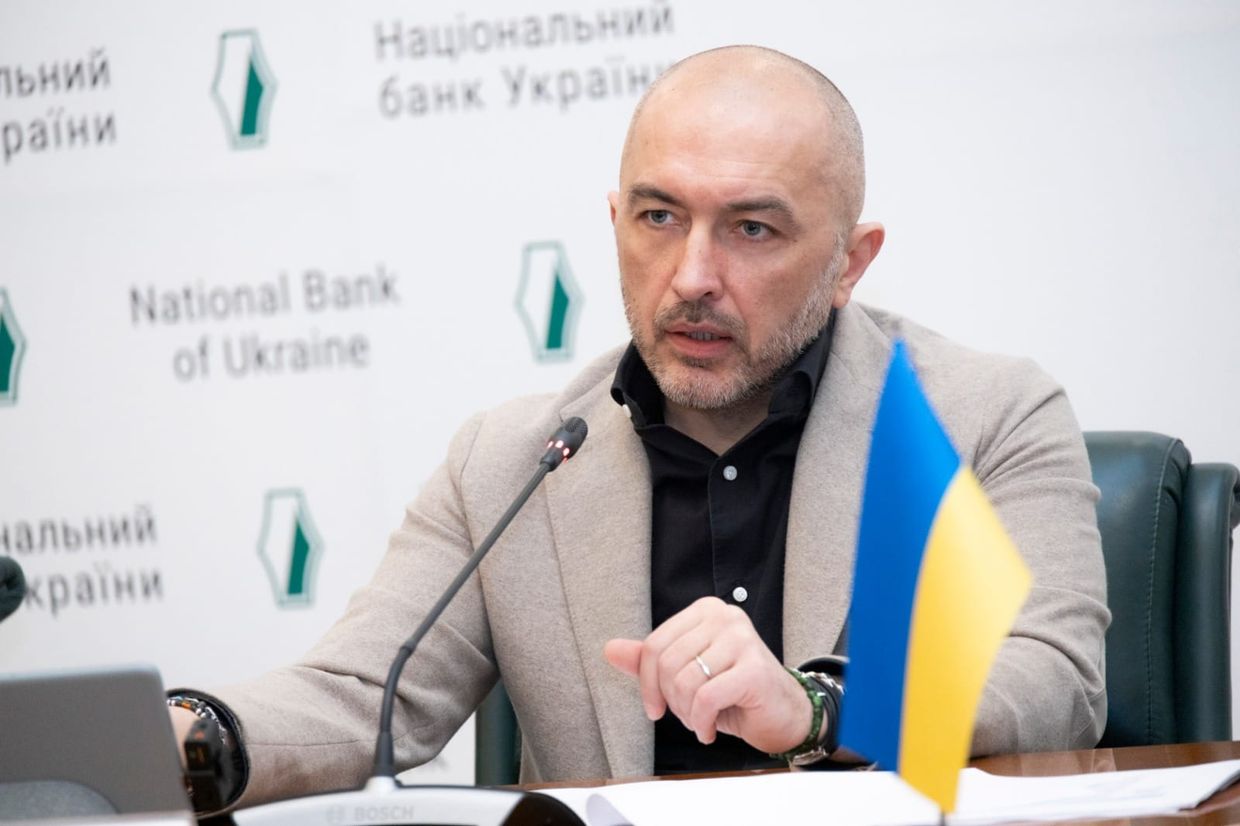
The National Anti-Corruption Bureau (NABU) on Oct. 21 searched the premises of Andriy Pyshnyi, head of the National Bank of Ukraine, a law enforcement source told the Kyiv Independent.

  •  

Trump's 50% Tariffs on Canadian Goods Illegally Rely on a Superseded Statute, a Lawsuit Argues

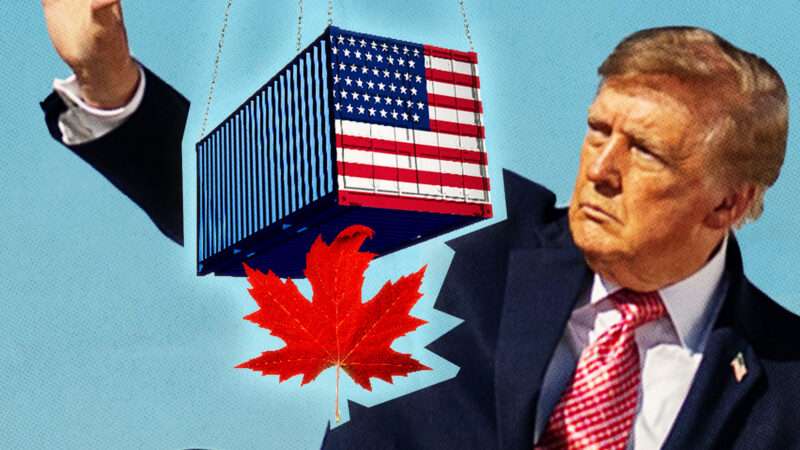
a shipping container and a maple leaf with President Donald Trump in the background | Molly Riley/B66/Avalon/Newscom/Skypixel/Dreamstime

Last July, President Donald Trump imposed 50 percent tariffs on various Canadian goods, a list he subsequently expanded to include additional imports, some of which he banned outright. His legal justification was Section 338 of the Smoot-Hawley Tariff Act, which Congress approved in 1930. Section 338 authorized tariffs in response to discriminatory trade practices. But in the 96 years since it was enacted, no president had ever used it to impose tariffs.

Why is that? According to a lawsuit that the Liberty Justice Center (LJC) filed on Tuesday in the U.S. Court of International Trade (CIT), the answer is clear: Section 338 was superseded by subsequent legislation that likewise targeted discriminatory trade barriers, beginning with the Reciprocal Trade Agreements Act of 1934 and culminating in Section 301 of the Trade Act of 1974. Section 301, the current remedy, includes requirements that Trump apparently sought to dodge by invoking Section 338 instead.

That maneuver is illegal, the LJC argues. "Congress already gave the executive branch a tool for responding to unfair foreign trade practices: Section 301, which requires an investigation, public comment and other safeguards," says Jeffrey M. Schwab, the LJC's director of litigation. "The administration cannot skip those protections by reaching for a 1930 statute that no president had ever used to impose a tariff."

Why not? "Where provisions in two acts are in irreconcilable conflict, the later act, to the extent of the conflict, constitutes an implied repeal of the earlier one," the lawsuit says. "Where a later act covers the whole subject of an earlier one and is clearly intended as a substitute, it operates similarly as a repeal. And a specific policy embodied in a later federal statute controls the construction of an earlier one even absent express amendment."

Even if Section 338 somehow survived congressional approval of contrary laws, the LJC adds, Trump's tariffs exceed the authority it grants. And if Trump's interpretation of Section 338 were correct, the lawsuit says, the provision would violate the nondelegation doctrine, which bars Congress from delegating its tariff power to the president without providing "an intelligible principle" to guide and constrain his exercise of it.

Trump's Section 338 tariffs, in short, are "the Administration's latest attempt to exercise, through a statute never designed for the purpose, the tariff power that the Constitution assigns to Congress." That pattern should be familiar by now.

Shortly after taking office in 2025, Trump claimed to have discovered a previously unnoticed delegation of extensive tariff authority in the International Emergency Economic Powers Act (IEEPA), a 1977 law that does not mention import taxes and had never been used to impose them. That claim was rejected by every court that considered it, and last February the Supreme Court ruled that IEEPA does not authorize tariffs at all.

Trump responded to that decision by immediately announcing similarly broad tariffs under Section 122 of the 1974 Trade Act, which addresses "fundamental international payments problems" caused by "serious United States balance-of-payments deficits." In May, the CIT ruled that the new tariffs were illegal because Trump had failed to "identify balance-of-payments deficits within the meaning of Section 122."

Trump then switched to Plan C, invoking Section 301 of the Trade Act, which authorizes tariffs in response to a foreign "act, policy, or practice" that is "unreasonable or discriminatory" and "burdens or restricts" U.S. commerce. He claimed that provision justified tariffs on 86 trading partners, accounting for nearly all U.S. imports, because they had failed to "impose and effectively enforce a prohibition on the importation of goods produced with forced labor." The CIT is currently weighing challenges to those tariffs, including an LJC lawsuit.

Trump's Section 338 tariffs have now added to the CIT's caseload. The LJC represents Gellert Global Group, an importer that was hit hard by those taxes after Trump added cheese to the list of disfavored Canadian goods. The lawsuit asks the CIT to certify a class of importers, numbering in "the hundreds, if not the thousands," that likewise have been clobbered by Trump's 50 percent tariffs.

Since Trump obviously is aware of Section 301, why did he resort to a never-used, seemingly obsolete provision to justify the tariffs on imports from Canada? As the LJC notes, Section 301 requires an investigation by the Office of the U.S. Trade Representative, "consultation with the foreign country concerned, notice, public comment, a hearing, and determinations within statutory deadlines." It also requires "that action be equivalent in value to the burden imposed, that duties be preferred over other import restrictions, and that actions terminate after four years absent a request for continuation and review."

Can Trump avoid those constraints by invoking Section 338 instead? The LJC thinks not: "Congress did not intend to leave in place a parallel authority that would allow the President to impose the same remedies, for the same conduct, free of every one of those safeguards."

Section 338 has been "impliedly repealed," the LJC argues. "At a minimum, Section 301 controls where, as here, the President seeks to respond to foreign practices within Section 301's scope, and the President may not impose duties in response to such practices while disregarding the procedures and limits Section 301 imposes. Because the President did not proceed under Section 301, the Section 338 Tariffs are unlawful whether or not Section 338 survives."

Even if you ignore subsequent legislation, the LJC argues, the Canadian policies that Trump cited when he announced the tariffs do not qualify as "discrimination" under Section 338. "Canada's motor vehicle surtax and its provinces' alcohol purchasing decisions are responses to tariffs that the United States imposed on Canada, not discrimination by Canada against the United States," it says. Trump also complained that Canada treats European cheese imports more favorably than U.S. cheese imports. But "when Congress enacted Section 338, a preference granted under a reciprocal agreement was not 'discrimination.'"

Section 338 "addresses discrimination: measures that single out United States commerce for worse treatment than the commerce of the world at large," the lawsuit says. "It is not a general authorization to impose tariffs whenever the President disagrees with a trading partner's policies, or whenever a trading partner responds to tariffs the United States has imposed on it."

Trump also was unfazed by Section 338's requirement that the president set duties to "offset" the costs imposed by discriminatory practices, which implies proportionality. Rather than attempt that, the LJC notes, Trump imposed "the statutory maximum rate of 50 percent without tying it to any measured burden."

As interpreted by Trump, the lawsuit warns, Section 338 authorizes the president to "impose tariffs of up to 50 percent on any products of any country that extends better treatment to any other country in any respect—including through any of the hundreds of preferential trade agreements to which the United States is not a party—or that responds to tariffs the United States has imposed on it." Yet Section 338 "contains no clear statement authorizing that power," contrary to the "major questions" doctrine, which applies to assertions of executive authority with "vast economic and political significance."

If Section 338 conferred the sort of unfettered authority that Trump is claiming, the LJC says, it "would supply no intelligible principle constraining the exercise of Congress's power to lay duties." His reading "would convert a narrow, fact-dependent provision into an effectively unrestricted delegation of Congress's tariff power," which would be "an unconstitutional delegation of legislative power."

This case "is not about the president," says LJC CEO Sara Albrecht. "It is about the presidency. No president should have the power to pull a dormant statute off the shelf and use it to impose sweeping tariffs or import bans without the limits Congress required."

The post Trump's 50% Tariffs on Canadian Goods Illegally Rely on a Superseded Statute, a Lawsuit Argues appeared first on Reason Magazine.

  •  

International Criminal Court shortlisted for EU award as MEPs urge protection for its judges against Trump sanctions

The International Criminal Court (ICC) has been shortlisted for the Sakharov Prize for Freedom of Thought, an annual human-rights award from the European Parliament.

The announcement on Monday (19 October) comes after US president Donald Trump put his weight behind Israeli efforts to discredit the international judicial body by extending sanctions against it.

The ICC issued an arrest warrant in 2024 for Israeli prime minister Benjamin Netanyahu for alleged war crimes, as well as other senior Israeli officials and Hamas. The US then responded by targeting its judges by impeding their day-to-day activities such as banking.

New sanctions against the court were announced by the US administration this month after the Nobel Peace Prize went to Navi Pillay, a former ICC judge who wrote a UN report concluding Israel is committing ​genocide in Gaza.

The ICC court labelled the move as an “assault on the rule of law” and called on countries to step up to protect it.

Sakharov Prize finalists named 

Members of the EU parliament’s foreign affairs committee shortlisted the ICC and its members for the Sakharov Prize.

Named after the Soviet nuclear scientist dissident Andrei Sakharov, the award has been previously awarded to the likes of Iranian protest icon Mahsa Amini and to the Ukrainian people enduring Russia’s attacks.

“We stand by the ICC and its officials, and we are committed to safeguarding its work,” said Yannis Maniatis, Greek MEP for the Socialists & Democrats group which nominated the ICC for the award. “If the aggressors become the victims, and if we stand by helplessly as international justice erodes, we risk allowing those who believe themselves above the law to prevail.”

Tundu Lissu, a Tanzanian opposition figure in court for inciting the public to disrupt an election and facing the possibility of death row, is also a Sakharov Prize finalist. “There is no doubt about the political nature of his detention,” said David McAllister, MEP for the European People’s Party who co-nominated Lissu.

This article continues, but the full version is available only to EUobserver.com subscribers. Visit account.euobserver.com/membership

  •  

Ukraine's EU integration chief slams proposal to pick chief prosecutor in open contest

The EU has demanded a reform of Ukraine's notoriously corrupt and politicized prosecution service and called for making the procedure for picking the prosecutor general less political and more merit-based. Meanwhile, anti-corruption activists and pro-reform lawmakers have accused the Ukrainian authorities of sabotaging rule of law reforms and resisting the demand for depoliticizing the Prosecutor General's Office.

  •  

My mixed emotions on the French riots: Yes, fuck Louis Vuitton, but let’s be strategic

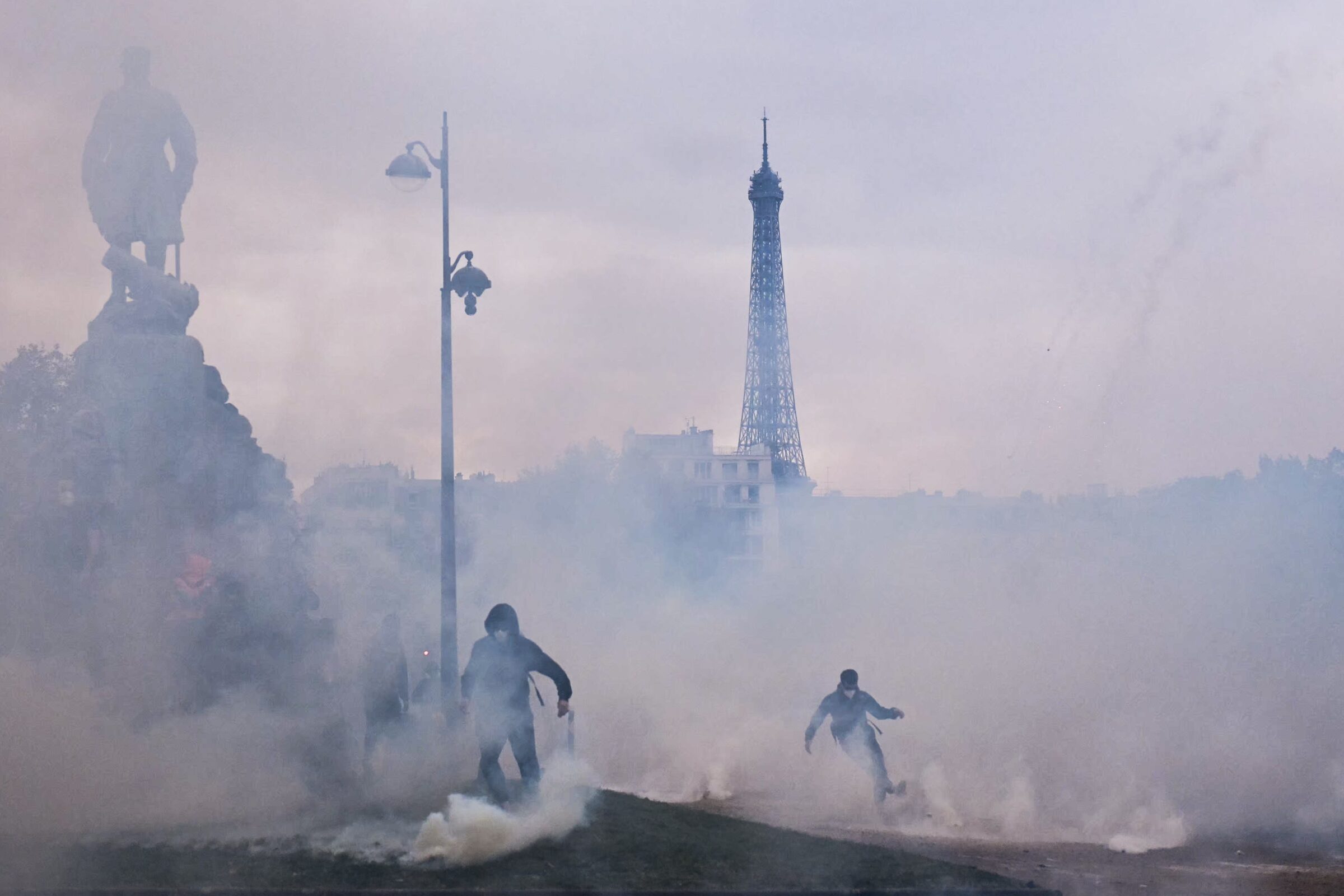
I went to bed on Saturday (17 October) glued to my X feed on the French riots and it was impossible not to react emotionally to images of familiar landmarks in Paris in flames.

It was a mistake to have followed things on the far-right propaganda tube of racist US oligarch Elon Musk, which both glorified and reviled its AI-curated clips of violent clashes between mostly white policemen and young black or Arab men.

But in any case, I felt pity for police facing Molotov cocktails and cobble stones and angry about their use of stun grenades that left young people maimed.

I was shocked to see public buildings and luxury shops in Lyon, Marseille, and Paris set on fire and looted in what looked like pure criminality, rather than liberté, égalité, fraternité.

But the anarchist adrenaline in me also said: “Fuck Louis Vuitton! A shop that sells luggage for the price of most families’ monthly incomes is a perfect symbol of the social inequality at the heart of this eruption of public anger”.

I woke up on Sunday thankful to learn from professional media, such as the BBC, that even if Paris looked like a war zone, no one had been killed, and even though police had made over 1,800 arrests, aggressive thugs were a fraction of the hundreds of thousands of people who had peacefully protested for better living conditions and education.

But the political harm of Saturday’s X-streamed violence, which also broke out in Italy and Belgium, was still enormous and it will help the EU and French people’s enemies – the far-right in Europe, Russian president Vladimir Putin, and US president Donald Trump.

This article continues, but the full version is available only to EUobserver.com subscribers. Visit account.euobserver.com/membership

  •  

Ukraine, EU set up joint task force to fast-track anti-corruption reforms that gate membership

ukraine's right self-determination non-negotiable all eu leaders say except hungary's flags european union commons/thijs ter haar backdrop potential territorial concessions looming over trump's meeting putin stand united support sovereignty 12

Ukraine and the EU have agreed to establish a joint working group to accelerate rule-of-law and anti-corruption reforms. This will help Kyiv meet the interim benchmarks for EU accession, Enlargement Commissioner Marta Kos says on X after talks with Ukrainian Prime Minister Serhii Koretskyi.

Ukraine’s path into the EU runs through its courts and anti-corruption agencies, and the bloc releases membership progress and much of its money only as Kyiv delivers those reforms.

“Ukraine is among the countries making most progress towards EU membership,” Kos says, adding that the group will work through outstanding requirements on the rule of law and the fight against corruption.

The move follows a breakthrough on the accession track. On 13 October, the Council of the EU opened two more negotiating clusters for Ukraine after the Ukrainian Parliament passed a minority-language education law on 12 October, clearing Hungary’s veto.

Why the reforms decide the money and the timeline

The group lands amid pressure on both fronts. Kos cast the education law as proof the system can work, crediting Ukrainian lawmakers with the consensus needed to adopt the reforms membership requires.

Meanwhile, Koretskyi expects the remaining clusters to open by the end of the year.

“Our success will require unity and commitment from all involved Ukrainian partners,” Kos emphasizes.

The official made clear the outcome depends on Ukraine keeping its side. The reforms are the same ones tied to Ukraine’s wartime financing, with billions in EU aid released only as Kyiv meets its commitments.

Billions in EU money hang on laws Ukraine has not passed

The stakes are financial as well as political. Ukraine is deep in a budget crunch and leaning on EU financing to keep the country running, and the Ukrainian Parliament returned from a month-long break this week to work through reform bills tied to that support.

As of 12 October, none of the needed laws had passed, according to anti-corruption activist Vitaliy Shabunin, who said the delay is already costing the country and blamed lawmakers who have stalled the reforms the money is tied to.

“As of today, Ukraine has NOT received several BILLION euros from the EU and others, because members of parliament have blocked the reforms to which that money is linked,” Shabunin said.

  •  

‘Too many lawyers’: the problem with Europe’s human rights NGOs

Human rights NGOs in Europe are not doing well. Funding cuts, legal restrictions, administrative burdens and smear campaigns are taking their toll.

I see organisations drastically downsizing or closing altogether and staff burning out. If we are to reverse our fortunes, the traditionally legally-focused movement needs to rebalance its skill-set to include more communicators and organisers.

Traditionally, human rights NGOs have been staffed mainly by lawyers. This is understandable. Human rights are legal standards contained in national, European and international law. If your main tools for getting human rights implemented are advocacy and litigation, then you need legal experts. But advocacy is becoming less effective because decision makers increasingly see supporting human rights as politically risky.

And litigation as a tool is partly limited by increasing political interference with the courts in some countries, or because – again – politicians see potential political brownie points in not complying with (or see potential political costs in complying with) judgments that enforce human rights standards.

It’s not just that NGOs’ traditional tools are losing their power. It’s that legal training does not equip us with the tools do we need to reverse our fortunes.

Our main lever for restoring human rights and the organisations that promote them is public opinion. For as long as we live continue to live in democracies, pressure from voters can have an impact on decision makers. Which means we need communicators who can help the public realise how important human rights are to them.

David Attenborough pointed out a few years ago that “saving our planet is now a communications challenge. We know what to do, we just need the will”.

The same goes for human rights. 

But legal training does not make you good at communicating with folks outside your bubble.

‘Legal-ese’ is not the right lingo

I know from personal experience. I trod a path to human rights through a law degree, masters, doctorate and then academia. Human rights folks talk about them in a way that conveys a fraction of their value and power. If you’d asked me 15 years ago why human rights are important, I’d have said things like this: ‘they protect us from abuse by the government’, or ‘they’re minimum standards of protection the state can’t breach’, or ‘they exist to protect the vulnerable’.

These things are true. They’re also not very persuasive to people outside our base of support. Because the kinds of human rights breaches the movement foregrounds tend to affect ‘other people’. And lawyers are used to thinking about rights in the context of legal disputes.

So human rights get reduced to a shield that protects groups or institutions that most people don’t care about, don’t understand, or who live in other countries. 

Human rights are not just a passive defence. They are transformational. Human rights are tools. Tools we use to demand that our leaders use the powers and resources with which we’ve entrusted them to do what’s best for all of us. Tools that we use to create the lives we want to live and the communities we want to live in. This is how we need to talk about them, especially when it comes to civil and political rights.

People outside our base cannot be made to care about media freedom, the right to protest or democracy itself just on principle or because they’re enshrined in legal standards. To care about human rights, most people need to know what these things deliver.

Folks will see that protest is important when we explain how it allows people like them to come together and make their leaders listen to their concerns, whether it’s about climate change or better pay for teachers. I’ve seen it first-hand when testing messages in focus groups. 

Empathy, not stereotypes

The same goes for stimulating support for the rights of people from marginalised groups. Right now, most people have trouble caring because they been fed negative stereotypes that cause them to regard some people as ‘others’ and ‘outgroups’, meaning that they will tolerate lower standards of treatment for them.

Using legal arguments and evidencing rights violations by focusing on the harm being suffered doesn’t work because it does nothing to address the reason people don’t care. For that, we need to stimulate empathy and dissolve negative stereotypes through techniques like storytelling. Once people empathise and recognise our common humanity, they’re much more likely to support equal treatment. 

When we communicate in a way that allows our audience to see how human rights deliver things they find important to them, they don’t just start to support human rights as standards. They also start to support the organisations that promote them. That means they’re more likely to listen to them, stand up for them, get involved in their work and even donate. 

It’s not just about communicating better. We also need organisers who can help people come together to carry effective messages and make the strength of public support felt by our leaders. 

Folks with legal training are still essential.

If you’re going to make phones, you need engineers. But we don’t see the engineers being given the job of persuading folks to buy the phones, do we?

Unless they’ve had proper communications training. The human rights movement’s legalistic centre of gravity needs to shift to make room for knowledge and skills that can meet the moment.

In the short-term we could achieve this by retraining staff and joining forces with other progressive movements that know how to organise and mobilise, like environmental NGOs.

We could also tackle the issue upstream by working with universities that produce human rights graduates to develop more holistic curricula that cover communications and organising and not only law. 

  •  

Judge Refuses to Recuse in Case Involving Alleged Misconduct by Philly DA's Office

A federal judge referred Philadelphia District Attorney Larry Krasner and one of his deputies to the Department of Justice for potential prosecution for alleged misconduct. In response, Krasner's office filed a motion seeking to force the Judge--Paul Diamond--from a case involving his office.

Yesterday, Judge Diamond rejected the Philly DA's motion with a terse and forcefully worded order.

Here, from the order, is some background:

In the last two years, the Third Circuit, this Court, and the Philadelphia Common Pleas Court have condemned as dishonest repeated post-trial concessions of relief made by the Philadelphia District Attorney's Office. . . . The Pennsylvania Supreme Court was so concerned that it took the remarkable step of ordering all Philadelphia Common Pleas Judges to seek the Pennsylvania Office of Attorney General's intervention whenever the DAO made a post-trial concession, so that the Attorney General could confirm the concession's honesty. . . .

The DAO's present post-trial concession is also remarkable: Here, four DAO supervisors credibly testified that the District Attorney himself and his lieutenant, Assistant District Attorney Matthew Stiegler, urged them to make false representations to this Court to "protect the office." According to "the Four," the District Attorney threatened them with "consequences" if they did not. Because these and related accusations, if true, could amount to criminal misconduct, I disqualified the District Attorney and Stiegler from participating further in this case and referred the matter to the Department of Justice for investigation. In the DAO's newly-filed Motions and the District Attorney's unsworn "Declaration"—all of which generate more heat than light—the DAO seeks my recusal from all matters in which the Office appears and asks me to reconsider my rulings in this case. I decline to do either.

And on the merits of the recusal request, here is what Judge Diamond had to say:

During the three-day hearing before me, the DAO failed to object to virtually all the rulings and actions it now challenges. That the Office chose to object only after the Court issued a decision unfavorable to the District Attorney and his lieutenant confirms that the DAO merely disagrees with those rulings. . . .

The Office challenges my noting that the District Attorney neither testified nor offered an affidavit in response to the Four's testimony—on which I based my disqualification order and DOJ referral. I do not credit the District Attorney's absurd suggestion that he did not know he could testify—especially after I twice asked DAO counsel if he wished to call any witnesses. Nor has the District Attorney explained why he did not offer a responsive affidavit, which would have required the declarant to tell the truth (under penalty of false swearing). The Office thus cannot truthfully dispute that the District Attorney chose not to give his version of events in Court under oath. The DAO's apparent belief that this tactical choice was reasonable hardly warrants recusal.

Finally, the DAO believes that I should have been leerier of Mason's testimony—the various corroborative documents notwithstanding—and more responsive to the uncorroborated, dubious testimony of Stiegler. Again, disagreement with my credibility determination is not a basis for recusal. Liteky, 510 U.S. at 555 ("[O]pinions formed by the judge on the basis of facts introduced or events occurring in the course of the current proceedings . . . do not constitute a basis for a bias or partiality motion unless they display a deep-seated favoritism or antagonism that would make fair judgment impossible."); Wecht, 484 F.3d at 220–21 (recusal not warranted despite the court's "skewed and unfair reading of the record"). The other arguments the DAO raises do not warrant discussion. Accordingly, I will deny as frivolous the Motion for Recusal.

And on the question of reconsideration:

The DAO does not discuss or even mention the burden and criteria a party seeking reconsideration must meet. Rather, as it did in seeking my recusal, the Office urges me to revisit my rulings because it disagrees with them. Once again, that disagreement does not warrant reconsideration. . . .

I will not discuss here every protest the Office makes to virtually all my rulings, my credibility determinations, and (once again) my reference to the District Attorney's silence in the face of damning testimony from his own employees and former employee. In his belated, unsworn "Declaration" the District Attorney attacks three of these witnesses as unworthy of belief.  This after-the-fact attempt to cram "evidence" into a closed record seems intended to persuade the media, not the Court. In any event, the evidence is unpersuasive and does not warrant reconsideration. . . .

Accordingly, I will again deny the DAO's frivolous Motion.

Judge Diamond's order concludes:

Four of the District Attorney's supervisors offered powerful, unrebutted testimony that their boss and Stiegler urged them to misrepresent to this Court. When the Four told the District Attorney that he had thus created a conflict compelling them to inform the Court and withdraw from this case, he threatened them with "consequences." There are few attorney transgressions more serious than lying to the Court, urging others to do so, or threatening them should they tell the Court the truth. . . . If this in fact occurred, it is all the more serious because it occurred after four Courts condemned the DAO's conduct in circumstances like those presented here. Disqualifying the District Attorney and Stiegler and referring them for investigation is thus reasonable and warranted. That the District Attorney chose not to testify but sought to "make his case" with an unsworn declaration—the credibility of which I am unable to assess—makes that investigation even more necessary. Although Mr. Krasner may yet have the opportunity to testify under oath in another forum, his intemperate filings provide no basis for recusal or reconsideration of my rulings.

The post Judge Refuses to Recuse in Case Involving Alleged Misconduct by Philly DA's Office appeared first on Reason Magazine.

  •  

Ukraine’s anti-corruption bodies, whose independence EU made condition for membership, have clawed back $5.1 million for state budget

The National Anti-Corruption Bureau of Ukraine (NABU) and the Specialized Anti-Corruption Prosecutor's Office (SAP) issuing notices of suspicion

Ukraine’s anti-corruption agencies just clawed back millions for the state budget. The National Anti-Corruption Bureau (NABU), the Specialized Anti-Corruption Prosecutor’s Office (SAPO) and the State Property Fund have returned about $5.1 million to the state budget, the bureau says.

NABU and SAPO were created in 2015 after the Euromaidan revolution as independent bodies to fight high-level corruption, and their independence is a core condition for Ukraine's path to the EU. This recovery is the kind of concrete payoff that EU-backed reform was meant to produce.

Investigating one case, detectives and prosecutors found that the leadership of a regional branch of the State Property Fund had failed to act. Because of that inaction, the state risked losing millions of dollars.

To head off the loss, NABU and SAPO alerted the fund’s central leadership and gave it access to part of the investigation materials.

How the agencies turned a case into cash

The fix came from sharing what the investigation had uncovered. After working through the data, the State Property Fund took the necessary steps and secured the full budget amount, the bureau says.

NABU and SAPO continue to cooperate with other state bodies to protect the country’s economic interests and prevent corruption crimes, the bureau adds. The agencies framed the case as proof that enforcement, beyond investigation alone, can return money the state would otherwise lose.

Why these agencies matter beyond one case

The recovery lands at a fraught moment for the two institutions. Their independence has been under sustained pressure, and in July 2026 parliament briefly stripped it before mass protests and EU warnings forced a reversal.

In 2025, Brussels tied as much as 50 billion euros in aid and the pace of accession talks to the agencies’ autonomy, treating NABU and SAPO as pillars of the rule-of-law reforms Ukraine promised on its way into the bloc.

  •  

Hungary Remains Under EU Article 7 Scrutiny Despite Progress Under Magyar Government

EU ministers have reviewed reforms introduced by Prime Minister Péter Magyar’s administration but left the Article 7 proceedings against Hungary unresolved. The European Commission has acknowledged significant progress while warning that further changes are required to restore the rule of law.

The European Union has maintained its Article 7 proceedings against Hungary despite acknowledging significant improvements in the country’s rule-of-law situation since Prime Minister Péter Magyar’s government took office earlier this year.

Ministers meeting at the General Affairs Council in Luxembourg on Tuesday, 13 October, reviewed reforms introduced by the Hungarian administration and received an updated assessment from the European Commission.

The proceedings, initiated by the European Parliament in September 2018, remain open eight years after concerns over judicial independence, corruption, media freedom and democratic accountability first prompted action under the EU treaties.

No decision was announced to terminate the procedure following the latest meeting.

Brussels acknowledges progress

European Commissioner Michael McGrath said ahead of the discussions that Hungary had made substantial progress towards addressing the institutional problems inherited from the administration of former prime minister Viktor Orbán.

Speaking in Luxembourg, McGrath acknowledged improved cooperation between the Hungarian government and European institutions.

However, he also indicated that the reform process remained incomplete, noting that the new administration had been in office for only several months.

The Commission’s assessment reflects the changing relationship between Budapest and Brussels following Magyar’s election victory and the subsequent introduction of reforms intended to restore judicial and institutional independence.

As EU Today reported in June, the change of government created an opportunity to resolve long-standing disputes over the condition of Hungary’s democratic institutions and the suspension of European funding.

The latest Council discussions indicate that the EU is prepared to recognise reforms already undertaken without automatically treating them as sufficient to close the Article 7 procedure.

An eight-year institutional dispute

The European Parliament initiated the proceedings in 2018 after raising concerns over developments affecting Hungary’s constitutional system, judicial independence, corruption safeguards and civil society.

Article 7 of the Treaty on European Union provides mechanisms for responding when a member state is considered at risk of seriously breaching the Union’s fundamental values.

Under its preventive provisions, the Council can determine whether there is a clear risk of such a breach.

More severe measures, including the possible suspension of certain membership rights, require additional procedures and higher institutional thresholds.

Hungary’s case has remained within the preventive stage, with successive Council meetings examining the country’s legal and political developments.

The Council’s account of the 13 October meeting confirms that Hungarian representatives presented measures intended to address concerns raised by the European Parliament and member states during earlier proceedings.

The Commission also briefed ministers on its latest assessment.

The meeting did not produce a formal finding that the outstanding concerns had been fully resolved.

Magyar faces the consequences of Orbán’s legacy

Since assuming office, Magyar has sought to reverse elements of the institutional structure established during Orbán’s lengthy premiership.

The reforms have included measures concerning public administration, judicial accountability and the relationship between national institutions and European law.

The new government has also attempted to improve relations with Brussels after years of disputes that affected EU budget decisions, sanctions policy and cooperation over Ukraine.

EU Today has previously examined Magyar’s programme of institutional renewal and the political difficulties involved in changing institutions shaped by the previous administration.

Reforming legislation does not necessarily transform the institutions responsible for applying it.

Judicial appointments, regulatory structures, public procurement procedures and anti-corruption enforcement may all require additional measures before the effects of reform can be fully assessed.

The European Commission must therefore consider not only the laws adopted by the new government but also whether the institutions concerned operate independently and effectively.

EU funding remains a separate question

The Article 7 proceedings are closely associated with wider disputes over Hungary’s access to European funding, although the relevant legal mechanisms are different.

During Orbán’s administration, the Commission and Council used financial conditionality procedures to restrict access to certain EU resources because of concerns affecting the protection of the Union’s budget.

Magyar’s reforms have opened the possibility of reversing some of those restrictions.

As EU Today reported in September, the Commission moved towards releasing €4.2 billion following changes intended to address rule-of-law concerns.

The financial decisions involve compliance with conditions attached to EU funding and can proceed independently of the Article 7 mechanism.

Consequently, the release of money does not automatically establish that all the institutional problems identified in the original parliamentary proceedings have been resolved.

Likewise, the continuation of Article 7 does not necessarily prevent the Commission from recognising progress under separate funding arrangements.

Who can end the proceedings?

McGrath addressed the possibility of terminating the procedure during remarks before Tuesday’s meeting.

He explained that the Commission could provide its assessment but did not have unilateral authority to bring the Article 7 process to an end.

In his recorded statement in Luxembourg, the Commissioner pointed to the responsibilities of the European Parliament, which initiated the case, and the Council, which has conducted the subsequent examination.

The institutional arrangements mean that improved relations between the Commission and the Hungarian government cannot by themselves dispose of the proceedings.

The Council must consider the reforms and the remaining concerns within the framework established by the treaties.

Political agreement among member states will consequently be required to determine how the process develops.

A changed relationship with Brussels

The latest discussions take place against a substantially different political background from previous years.

Budapest has recently withdrawn objections to further steps in Ukraine’s EU accession negotiations following Ukrainian legislation addressing educational rights for Hungarian speakers and other national minorities.

The change has removed one obstacle to enlargement negotiations and reflects the government’s more cooperative approach towards other EU institutions.

Nevertheless, Hungary’s position on foreign policy and enlargement is distinct from the assessment of its domestic rule-of-law arrangements.

The Council’s examination remains focused on the institutional concerns that led to the procedure being initiated.

The Irish presidency’s summary of the October Council meeting confirms that ministers received an update rather than reaching a new formal determination.

The proceedings therefore remain open while the Commission and member states continue examining the measures introduced by Magyar’s administration.

The coming decisions will establish how European institutions respond when a new government undertakes reforms intended to reverse the conduct that originally led to action under Article 7.

For Hungary, the outcome will influence its relationship with Brussels well beyond the immediate debate over EU funding. For the Union, it will demonstrate how its rule-of-law procedures operate when political circumstances change and the member state concerned begins addressing previously identified institutional problems.

  •  

EU bets on diplomacy, not blocking statute, to protect ICC from Trump sanctions

The EU is shying away from triggering rules that would shield people and companies working at or with the International Criminal Court (ICC) in The Hague from US sanctions, preferring instead months-long diplomatic outreach.

The European Commission on Wednesday (14 October) told reporters in Brussels that it was doing everything to seek “practical solutions”, while hoping that its diplomacy will help the court, which prosecutes people for war crimes, genocide, and other atrocities.

“We haven’t made any decisions yet. But we continue to discuss at every level,” said a commission spokesperson, when pressed on whether a little-known blocking statue, which would presumably damper the impact of the US sanctions, remains an option.

And an EU summit in Brussels on Thursday is expected to ask the US to reverse the decision, according to draft conclusions seen by EUobserver.

The EU’s little-known “blocking statute” would prevent EU companies and banks from complying with the sanctions. It was first used against US sanctions on Cuba, Iran and Libya.

The Trump administration had, last Friday, announced financial sanctions on the ICC as part of a larger assault to dismantle the court, after it issued arrest warrants for Israeli prime minister Benjamin Netanyahu, its former defence minister Yoav Gallant, and Hamas military commander Mohammed Deif.

This article continues, but the full version is available only to EUobserver.com subscribers. Visit account.euobserver.com/membership

  •  

Who ordered the strike that killed my friend and maimed me? The EU must demand answers from Israel

“I’m okay.” That was the last message I sent my mother before an Israeli strike hit us, a group of seven journalists reporting in southern Lebanon.

Three years ago, on 13 October 2023, my colleague Dylan Collins and I headed to the southern border of Lebanon to cover the situation following cross-border shelling between Israeli forces and Hezbollah. We spent the morning filming UN peacekeeping force patrols along the blue line dividing Lebanon and Israel. The atmosphere was calm and nothing suggested that the day was about to change and upend our lives. We went to a coffee shop near a UN post where journalists from different outlets had gathered and there we met our friend and Reuters colleague Issam Abdallah. 

Around 4:50PM, we heard a bombardment in a nearby town so we moved to an exposed hill in Alma Al-Shaab, where Al-Jazeera journalists Carmen Joukhadar and Elie Brakhya were positioned. Together with colleagues from Reuters, we were a group of seven journalists, all wearing press vests, reporting next to a car marked “TV”. We were clearly identifiable as press and spent about an hour filming while an Israeli drone hovered above us. At 5:57 I finished filing my photos and sent a message to my mother to tell her I was okay. Seconds later, I found myself on the ground, bleeding and screaming for help. Dylan rushed over with a tourniquet, but before he even had the time to put it, another strike hit.

Everyone disappeared and I was left alone, unable to move and the heat of the flames creeping closer to my face. I was terrified of burning alive, so I started crawling away with the camera still hanging from my neck and its strap tightening around my neck with every move. Two weeks later, I woke up from an induced coma with one leg missing, the other severely damaged, and Issam dead. 

Not an isolated attack

What followed was as horrific and brutal as the attack itself and it didn’t stop there. What happened to us was not an isolated incident — for three years I watched journalists being killed in Lebanon and Gaza by Israeli forces in ways that felt painfully familiar. 

In October 2024, Israeli forces struck a compound in Hasbaya where journalists were staying and killed media workers Ghassan Najjar, Mohammed Reda and Wissam Kassem, while they slept.

Human Rights Watch found no evidence of military activity at the site and concluded that the strike was deliberate and should be investigated as war crime.

Then in April 2026, journalist Amal Khalil was killed in southern Lebanon after an Israeli strike hit the building where she had taken shelter with her colleague Zainab Faraj, leaving both women trapped under the rubble. Investigations found that Israeli forces repeatedly obstructed rescue efforts.

Since our attack, dozens of journalists have been killed in Lebanon, and nearly 200 journalists have been killed in Gaza by Israeli forces.

Many have been mired by Israel with the same false allegations that they were “terrorists.” The dead can’t defend themselves against such accusations, but I survived and I can speak about what happened to us. 

In June 2026 in an interview on France 2, Israel’s ambassador to France described the 13 October attack as a “mistake” saying that we were not targeted because we were journalists, but because Israeli forces had mistaken us for “terrorists.” The evidence tells a different story.

Five independent investigations by Agence France-Presse, Amnesty, Human Rights Watch, Reuters, and UNIFIL found no indication of fighters or military activity at the site, and no cross-border exchange of fire for more than 40 minutes before we were struck with a 120mm tank shell. 

These investigations matter because they establish with certainty evidence beyond my own personal account.

What remains unanswered is who gave the order, who fired the double-tap strike, and why no one has been held accountable. These are basic questions that can be answered by Israel if they were sought by EU member states.

Three years on, Issam’s family and the survivors of this attack deserve to know: Who gave the order?

Evidence alone cannot deliver justice, someone must be willing to act on it. In the face of this attack, including the targeting of four of its own citizens on Lebanese soil, the Lebanese government has failed us. 

Neither Lebanon nor Israel are party to the Rome Statute, meaning that the International Criminal Court does not have jurisdiction to prosecute those responsible for the attack.

In 2024, Lebanon approved a special declaration that would have allowed the Court to investigate war crimes committed after 7 October 2023, only to later reverse its decision for political reasons.

And now, making our legal path even more complicated, in June 2026 Lebanon signed a new framework agreement with Israel whereby Clause 13 commits both sides to cease “all hostile and adverse actions in international and legal fora.”

EU urged to act

I have no hope left that we will ever get justice for what we lost, but I will not rest before I know the names and faces of those responsible. 

Our case is the most documented instance of Israeli forces targeting the press on record. The October 13 targeted attack was perpetrated by Israeli forces on a group of journalists clearly identifiable as press.

If we cannot get answers in the face of such overwhelming evidence, what does it mean for the hundreds of journalists killed by Israeli fire throughout the region for which there is no such evidence? 

This is where the European Union must act. The EU has repeatedly said that journalists must not be attacked and that violations of international law must be met with accountability. Today, we demand actions not just words and statements. The EU must demand that Israel provide a full account of the 13 October attack, including who ordered, authorized and carried out the strikes.

For me, this is not an abstract question of foreign policy. Issam was my friend. I survived that attack with one leg missing. I know what it means when the people responsible for an attack are allowed to remain unnamed and unaccountable.

I am asking the EU not simply to stand with journalists in words, but to stand with us in action.

The EU has political, diplomatic, and legal leverage. It should use it. If Israel refuses to fully explain what occurred and disclose those responsible for killing and maiming journalists who were visibly identifiable as press, EU member states should use every available mechanism to pursue accountability, including further targeted sanctions or suspending trade with Israel.

I refuse to believe that a military with advanced surveillance could have simply mistaken us for fighters and attacked us in a double-tap strike, a tactic repeatedly used by Israel in this war. But, if that’s truly what happened, then Israel must still answer for how such incompetence and failure was possible. 

For now, justice evades us, but the truth of who gave the order is within reach and we must demand it. 

  •  

Montenegro and Albania Advance Towards EU Membership as Brussels Tightens Accession Rules

Montenegro and Albania will hold separate accession conferences on 12 and 13 October as the European Commission introduces proposals for stronger safeguards against democratic backsliding, linking the next phase of EU enlargement to reforms within the Union itself.

Montenegro and Albania are preparing for another round of European Union accession negotiations this week, with meetings in Luxembourg scheduled to advance their membership bids as Brussels considers substantial changes to the conditions under which future countries will join the bloc.

Montenegro’s 29th accession conference will take place on Monday, 12 October, followed by Albania’s tenth conference on Tuesday. The meetings come less than a week after the European Commission presented a package of proposals intended to prepare the EU for enlargement while strengthening its ability to respond to breaches of democratic standards by newly admitted members.

For Montenegro, the immediate objective is to continue closing negotiating chapters after years of institutional and legal reforms. Albania’s meeting has a more precisely defined agenda: the provisional closure of Chapter 20, covering enterprise and industrial policy.

Both countries have made progress towards membership, but the Commission’s latest proposals indicate that the terms of accession could become more demanding as the EU considers admitting several new members.

Montenegro moves towards the final negotiating stage

Montenegro is widely regarded as the most advanced candidate among the Western Balkan countries.

Accession negotiations began in 2012, and all 33 negotiating chapters have been opened. Progress towards closure has accelerated as the government seeks to complete the process and secure an accession treaty.

At the end of 2025, Montenegro provisionally closed five chapters covering services, capital movements, company law, agriculture and fisheries.

As EU Today reported following that conference, the agreements brought the number of provisionally closed chapters to twelve at that stage, while the EU continued to emphasise the importance of judicial reform and sustained implementation.

Subsequent accession conferences have continued the negotiating process, with the 29th conference scheduled for 12 October.

The Commission has identified Montenegro as a country capable of concluding accession negotiations by the end of 2026, provided sufficient progress is maintained.

That objective does not mean membership would follow automatically. A completed negotiation must still lead to an accession treaty, which requires approval by all existing member states and ratification under their constitutional procedures.

Outstanding questions include the independence of the judiciary, enforcement of anti-corruption legislation and the capacity of state institutions to apply EU law consistently.

Albania advances in industrial policy negotiations

Albania’s accession process has also gained momentum, supported by renewed EU interest in incorporating the Western Balkans into European political and economic structures.

The conference scheduled for 13 October is expected to provisionally close Chapter 20, which covers enterprise and industrial policy.

The chapter concerns the legal and institutional environment in which businesses operate, including industrial competitiveness, entrepreneurship and policies supporting small and medium-sized enterprises.

Provisional closure would represent further progress in Albania’s alignment with EU legislation and policy, although it would not constitute a final agreement on accession.

As with Montenegro, the negotiating framework requires sustained progress on the fundamentals of membership, notably judicial independence, fundamental rights, corruption and organised crime.

Brussels prepares stronger safeguards

The latest accession conferences follow the European Commission’s proposals of 6 October, which address the institutional consequences of admitting new countries.

The Commission argues that enlargement can be accommodated within the existing treaties, but that the EU will need additional safeguards and improvements to decision-making.

Among the most consequential proposals is the possibility of suspending a new member state’s voting rights in the Council if it commits serious breaches of the Union’s fundamental values or the principle of sincere cooperation.

Such provisions would be incorporated into future accession arrangements, making some membership conditions enforceable after a country has joined.

The proposal reflects concerns that the EU’s existing mechanisms for responding to democratic backsliding can be slow and politically difficult to apply.

In June, EU Today reported on proposals advanced by five member states seeking stronger protections against governments that might undermine common decisions after accession.

The Commission’s October package develops that argument into a broader programme of institutional preparation.

Enlargement beyond the Western Balkans

The debate extends to Ukraine and Moldova, whose membership applications have acquired greater strategic importance following Russia’s full-scale invasion of Ukraine.

The Commission is examining how candidate countries can progressively participate in EU policies and programmes before obtaining full membership.

These arrangements could include greater integration in energy, transport, defence and selected areas of the single market, subject to the implementation of relevant reforms.

Brussels is also considering transitional arrangements affecting agricultural support, financial transfers and sensitive sectors of the economy.

The political challenge is to provide candidate countries with credible membership prospects while reassuring existing members that enlargement will not weaken common decision-making or create unsustainable budget commitments.

For Montenegro and Albania, the October conferences therefore take place at a pivotal point in the accession process.

Both governments are moving through the technical stages of membership negotiations while the EU is still determining how its next enlargement will operate.

The outcome will depend not only on their progress towards meeting accession conditions, but also on whether the existing 27 member states can agree on the institutional changes required for a larger Union.

  •  

EU’s 2026 rule‑of‑law report doesn’t trigger real action, says human rights watchdog

The EU’s annual rule of law report, tackling advancements in corruption and fundamental rights, shares overly optimistic improvement that is far from the reality on the ground, a civil liberties group revealed. 

Presented on a sweltering Friday in July, the EU commission’s 2026 rule of law report failed to avoid scrutiny, with NGO Civil Liberties Union for Europe (Liberties) observing a gap between professed achievements in member states and the reality of a significant lack of implementation of Brussels’ recommendations. 

“This year’s Report shows continued positive progress across many Member States. And that is precisely why our Rule of Law Report matters. It has become a reference point, helping to shape national debates and drive reforms across our Union,” EU Commission president Ursula von der Leyen said back then in a statement.

But of all recommendations in the July report, Liberties’ Gap analysis report revealed that only four percent had been fully implemented, while 54 percent show limited to no progress.

“The Commission’s Rule of Law Report has the potential to be one of the EU’s strongest tools for preventing democratic backsliding,” said Kersty McCourt, Liberties’ rule of law expert. “But when recommendations are repeatedly issued without being implemented, and new threats are not identified early enough, the system loses its power”. 

The report, published on Monday (12 October) and shared in advance with EUobserver, found that almost all recommendations issued in 2026 were regurgitations of those given in previous years, with only seven new recommendations being introduced this year.

The commission’s annual report “fails to unpack why some problems remain so entrenched,” Liberties said. 

In its own study, the Berlin-based NGO suggested the reasons for slow movement to be bound from a lack of willingness from member states, a vacuum in the EU’s enforcement mechanisms, or issues becoming “so entrenched that progress is effectively impossible.”

This reduces the function of the report as a warning system for identifying early signs of democratic backsliding, since recommendations on emerging issues remain unaddressed and even if are formally adopted, often don’t translate into effective implementation.

Liberties observed this to be evident in the example of Nordic countries, which have grown to be exempt from scrutiny due to their traditionally strong reputations.

This article continues, but the full version is available only to EUobserver.com subscribers. Visit account.euobserver.com/membership

  •  

EU let member states rewrite targets after they had sought recovery-fund payment, auditors find 

EU governments were allowed to water down targets in their post-Covid pandemic recovery plans after they had already asked Brussels for the money, the European Court of Auditors (ECA) said on Thursday (8 October).

Of 20 milestones and targets the auditors examined, 13 were amended after the member state had already submitted its payment request. In nine of those cases, the change itself was requested after the payment application had already been made. 

The revised targets were “aligned with actual achieved outputs, which made the payment possible,” the auditors wrote in their annual report on the 2025 EU budget.

Rewriting measures

Ireland, for example, asked for a payment in December 2024. But in January 2025 it requested to cut the target for ICT graduates down from 12,450 to 10,900, citing a high administrative burden.

This article continues, but the full version is available only to EUobserver.com subscribers. Visit account.euobserver.com/membership

  •  

The Far Left Fans the Flames as France’s Classroom Revolt Turns Violent

France’s schools are burning, police officers are being injured, barricades are appearing outside classrooms and teenagers are being drawn into confrontations that have travelled a very considerable distance from complaints about absent teachers and dilapidated buildings.

Hovering over this combustible mixture is Jean-Luc Mélenchon. The leader of La France Insoumise (LFI) insists that his movement neither controls nor directs France’s extraordinary wave of student protest. He has now explicitly advocated non-violent methods. That defence deserves to be recorded.

But it does not dispose of an uncomfortable political question: who benefits when legitimate teenage frustration is transformed into a wider revolt against the French state?

For Mélenchon, the answer is potentially obvious. The disturbances began with genuine grievances. Pupils complained about teacher shortages, overcrowding, poor facilities and the pressures of the French education system. The original protests in Créteil appear to have been spontaneous rather than the creation of a political party. That distinction matters. France’s teenagers should not collectively be caricatured as revolutionaries simply because some demonstrations subsequently descended into violence.

But what followed was something quite different. Schools were attacked and fires started. Cars were torched. Explosive fireworks and other projectiles were directed at police. By October 1st, Reuters reported hundreds of arrests and incidents of arson in several French cities. French intelligence agencies, according to a source close to the prime minister cited by Reuters, told a government crisis meeting that hard-left politicians had played a role in initiating the spreading protests. LFI emphatically denied the allegation.

That dispute should not obscure what is visible. LFI politicians have been remarkably eager to place themselves alongside the protesters. MPs Clémence Guetté and Louis Boyard appeared at the original Créteil mobilisation; Boyard turned his intervention into a TikTok video reportedly watched 1.5 million times. Other LFI representatives have similarly appeared around demonstrations. Le Monde describes the party as closely following protests and notes that this proximity simultaneously strengthens LFI’s relationship with young voters and leaves it associated with the movement when violence erupts.

Where Mélenchon’s political opportunism deserves scrutiny.

France is heading towards the 2027 presidential election. Younger voters are potentially one of Mélenchon’s greatest political assets, but also one of his greatest organisational problems: sympathy does not automatically become votes when younger citizens disproportionately abstain.

Recent polling reported by Le Monde put Mélenchon above 40 per cent among 18-to-24-year-olds in some presidential scenarios. LFI coordinator Manuel Bompard has openly acknowledged the opportunity, saying the movement has enormous room for growth among young people.

One hardly requires Machiavelli to understand the calculation. A generation of teenagers that believes itself ignored by government is politically interesting. A generation persuaded that it is being oppressed by government is considerably more useful.

The transformation is crucial. The original argument concerned teachers, classrooms and school buildings. The developing political narrative encompasses police violence, racism, inequality, Palestine, the far right and hostility towards the political establishment.

Mélenchon did not invent all these causes, nor is there evidence that he commands the young protesters like troops. But LFI understands political insurgency extremely well. Its political vocabulary depends upon conflict between ordinary citizens and an allegedly discredited establishment.

A spontaneous youth rebellion therefore offers almost perfect terrain. Mélenchon initially called upon supporters to “interpose” themselves against what he described as police savagery. Only as images of burning schools, vandalism and violent confrontation became increasingly politically toxic did he place greater emphasis upon non-violence, telling supporters that setting things on fire undermined their cause.

Perhaps that was sincere. But it also illustrates the danger of playing political games with youthful anger. It is relatively easy to tell teenagers that authority is their enemy, the far-left have sung this tune since the 1960’s. It is considerably harder, however, to regain control when confrontation develops its own momentum.

For years, public discussion of “political violence” has often been dominated by the threat from the extreme right. That threat is real and should never be minimised. Indeed, British Prevent statistics for the year ending September 2025 provide an important corrective to anyone claiming that extremism as a whole is overwhelmingly left-wing: 2,103 referrals concerned extreme-right ideology, compared with only 32 categorised as left-wing extremism.

But terrorism statistics and street politics are not the same thing. Europe also has a long-established tradition of violence emerging from anarchist, autonomist and revolutionary-left protest cultures: black-bloc tactics, attacks on police, destruction of property, arson and attempts to turn demonstrations into confrontations with the state. The current French disturbances make it legitimate to ask whether this form of political violence receives the same sustained political scrutiny as violence associated with the extreme right.

In Britain, too, claims of ideological double standards should be examined rather than assumed. Violence and intimidation occurring around demonstrations should be judged according to conduct, not according to whether those responsible march beneath banners fashionable on the Left or Right.

The correct principle is remarkably uncomplicated: political violence is political violence.

Throwing an explosive firework at a policeman does not become morally superior because the person throwing it considers himself anti-fascist. Burning a school does not become progressive because the person holding the match claims to oppose inequality. Intimidation does not become activism merely because its perpetrator believes his politics virtuous.

Nor, conversely, should peaceful demonstrators be branded extremists because violent individuals attach themselves to their cause.

This is a particularly important point in France because there is evidence that radical groups have attached themselves to genuine student grievances. Education Minister Édouard Geffray has distinguished protesting pupils from violent “ultra-left” elements. Former environment minister Delphine Batho, herself once a school-student union leader, has warned of the movement being taken over by the far left and urged pupils to preserve their independence.

Those pupils would do well to heed the warning. Their complaints may be legitimate. They have every democratic right to demonstrate. And allegations of disproportionate police violence must themselves be investigated: teenagers have suffered serious injuries and France has opened internal investigations into police actions.

Young people should ask themselves who is standing behind them — and why?

Mélenchon wants political change. He wants young voters mobilised. LFI wants to convert social discontent into an electoral force capable of reshaping France.

There is nothing inherently illegitimate about that ambition. Every political party attempts to convert public dissatisfaction into votes. The troubling point comes when politicians discover that confrontation itself is electorally useful.

The French government undoubtedly has incentives of its own to emphasise LFI involvement. By presenting the crisis primarily as an extremist public-order problem, ministers can divert attention from the failings in schools that produced the original demonstrations.

But that does not absolve Mélenchon. A responsible politician confronted by angry teenagers should attempt to reduce the temperature while addressing their grievances. An opportunist sees an emerging political constituency.

The danger for France is that its young people cease being participants in a legitimate argument about education and become raw material in somebody else’s struggle for power.

Once that happens, the classroom has ceased to be the issue, and barricades become the political objective.

Paris Attack: Europe Must Not Allow Ideological Violence to Become the New Normal

  •  
❌