❌

Reading view

Nearly 200,000 Zimbabweans Returned Home Due to Xenophobic Incidents
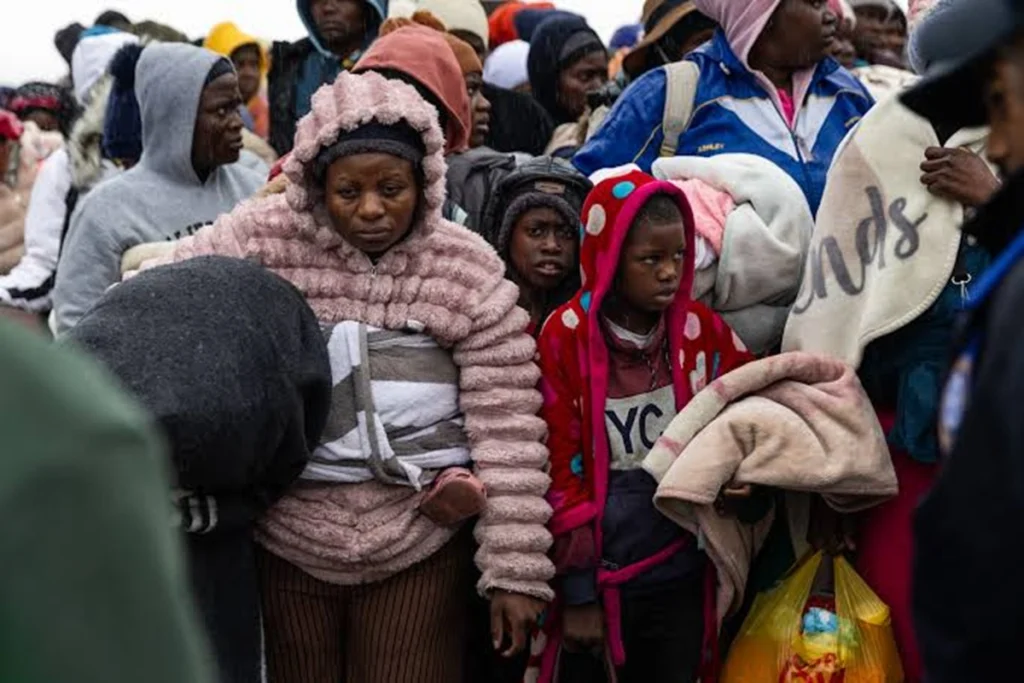
Anti-immigrant groups often blame foreigners for problems such as unemployment, crime, and strain on public services.

On Tuesday, the Zimbabwean government reported that nearly 200,000 Zimbabweans have returned to their country in recent months due to the rise in xenophobic incidents in South Africa.

RELATED:

Zimbabwe Confirms 93 Deaths in Lake Kariba Shipwreck

Zimbabwe’s Minister of Local Government Daniel Garwe stated that as of October 6, 197,294 nationals had returned since repatriation operations began in late May. He added that 42,553 people returned through government-sponsored programs, while another 154,741 returned on their own through various border crossings.

Among those repatriated are also 700 Zimbabweans who were being held at the Lindela Repatriation Centre in South Africa, some of whom will have to complete their sentences in Zimbabwe.

Garwe explained that the process involves security agencies managing the return of deportees who were facing legal proceedings or serving sentences in South Africa.

Thousands of Zimbabweans are returning home after xenophobic violence in South Africa, describing beatings, robbery and threats from anti-migrant groups.

Nearly 21,300 have been repatriated by the government in five weeks, with 56,800 more self-repatriating. pic.twitter.com/dHYP2LZmtB

— Al Jazeera English (@AJEnglish) July 11, 2026

The Zimbabwean government also reported that it provided assistance to more than 87,000 Malawian citizens who crossed the country during their return from South Africa to their homeland.

Xenophobic tensions are a recurring problem in South Africa and have repeatedly led to episodes of violence. Anti-immigrant groups often blame foreigners for problems such as unemployment, crime, and strain on public services, which has resulted in threats, protests, and acts of exclusion.

Official data from several African governments indicate that more than 260,000 citizens from countries such as Zimbabwe, Malawi, Mozambique, Nigeria, Kenya, Uganda, Tanzania, Ghana, and the Democratic Republic of Congo have been repatriated in recent months due to this wave of xenophobia.

#FromTheSouth News Bits | Africa: In Norton, Zimbabwe, women's soccer teams competed to promote, raise awareness, and support the funding of vaccination campaigns against the human papillomavirus (HPV) with their profits. pic.twitter.com/XrR3eq1QoZ

— teleSUR English (@telesurenglish) February 5, 2026

teleSUR: JP

Source: EFE

  •  

South Africa anti-immigrant protests turns violent

Last week, anti-immigrant protests in South Africa turned violent, with looting, destruction of property, and reports of 24 vehicles being burnt as tensions escalated in Johannesburg and Durban. The unrest followed growing anger over a government directive on asylum applications, which the Department of Home Affairs has since withdrawn. 

The directive, issued on September 28, instructed Refugee Reception Offices (RROs) to process all asylum applications immediately. Massive queues of foreign nationals subsequently formed at immigration offices, which were met with demonstrations and violence from anti-immigrant groups.

Protests were reported in Soweto township, Johannesburg, and Durban, in KwaZulu-Natal province. Demonstrations in Durban continued for a second day, prompting police to strengthen their presence to contain the unrest. However, tensions remained high in the city and in the country.

Government withdraws asylum directive

On October 9, the director-general of the Department of Home Affairs announced the withdrawal of the directive concerning the intake of asylum applications.

The directive had been introduced following a July 7, 2026 Constitutional Court judgment that mandated that individuals could not be barred from accessing South Africa’s asylum system, even if they entered the country irregularly. According to the department, the September directive intended to guide Refugee Reception Offices in implementing the court’s order.

The department said the directive had been issued as an operational measure without the knowledge or involvement of the Minister of Home Affairs or other political office-bearers. It rejected claims that the measure had been politically motivated.

However, the department acknowledged that implementing the judgment had produced consequences that were not anticipated in the court order. These included overcrowding at Refugee Reception Offices within days of the directive’s introduction, risks to the safety of Home Affairs officials and emerging threats to public order.

The director-general said the department would begin a fresh process to determine a more appropriate and sustainable way of complying with the court order, while reaffirming its commitment to the rule of law and the authority of the judiciary.

Home Affairs warns of disinformation

Two days before withdrawing the directive, the Department of Home Affairs issued a statement on October 7 warning of what it described as a coordinated disinformation campaign surrounding the Constitutional Court judgment.

The department said false claims had circulated suggesting that the Minister of Home Affairs or political parties had independently decided to suspend certain asylum procedures. It insisted that the operational directive had been issued to implement a binding court judgment.

The department also rejected claims that the ruling granted citizenship to asylum seekers or automatically legalized all foreign nationals living in the country.

It warned that misinformation intended to inflame tensions and incite violence threatens public stability, urging South Africans to verify information before sharing it.

The subsequent withdrawal of the directive, however, does not reverse the Constitutional Court’s judgment. Home Affairs has said it will develop a new operational approach that complies with the ruling while addressing the challenges faced by refugee reception offices.

Anti-immigrant tensions continue to escalate

Last week’s violence is the latest in a wave of anti-immigrant and xenophobic mobilization that has built steadily since the start of the year. Protests broke out across Johannesburg, Durban and Pretoria in April, and anti-immigrant groups, led by the March and March movement, set June 30 as a deadline for undocumented migrants to leave the country.

On that day, police arrested hundreds during nationwide marches, and one person was shot dead in Johannesburg’s Alexandra township as residents looted spaza shops owned by foreign nationals. In the following weeks, protesters in Johannesburg went door to door, seizing foreigners from their homes, with many fleeing for safety.

  •  

Formula 1 to Return to Africa with a Grand Prix in Rwanda Starting in the Early 2030s

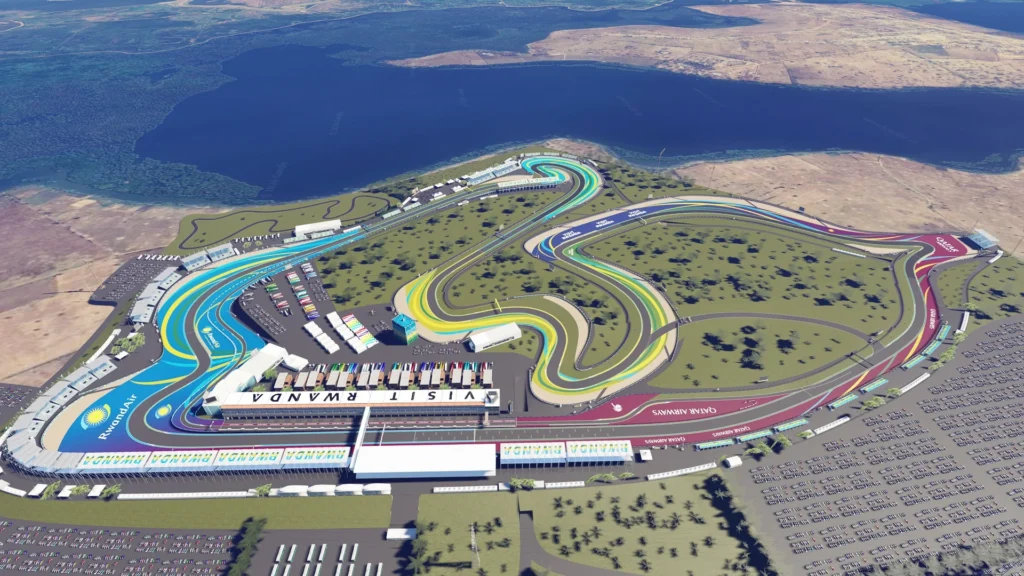
Formula 1 will return to Africa with the addition of the Rwanda Grand Prix to its calendar in the early 2030s, event organizers announced in a statement this Monday. A ten-year agreement will end the sport’s more than three-decade absence from the continent. The last race took place on March 14, 1993, at the Kyalami circuit in South Africa, where Frenchman Alain Prost won.

RELATED:

Formula 1 Confirms Türkiye Grand Prix Return for 2027

The race will be held on a new circuit to be built in Bugesera, approximately 40 kilometers south of Kigali, the Rwandan capital. According to Formula 1, the facilities are expected to be ready by the beginning of the next decade, the scheduled time for the Grand Prix’s debut on the global calendar.

The track will be designed to meet the International Automobile Federation (FIA) Grade 1 standards, a requirement for hosting top-tier motorsport competitions. The project is part of a broader initiative for sports, tourism, infrastructure, and commercial development led by the Rwanda Development Board.

The venue will not be used solely for the race. Formula 1 stated that the complex will host international motorsport competitions, major events, conferences, and shows throughout the year, aiming to foster economic growth and long-term investment in the region.

In recent years, Rwanda has positioned itself as an African sports hub by hosting events such as the Cycling World Championships, the 2023 FIFA Congress, and the Basketball Africa League.

Africa, we’re back. 🌍

From the early 2030s, the African Grand Prix will join the calendar and take place in Bugesera, Rwanda 🇷🇼#F1 pic.twitter.com/c5gSRl7FNt

— Formula 1 (@F1) October 13, 2026

Rwandan President Paul Kagame highlighted that the agreement represents a long-term investment for the country. “This ten-year partnership is also an investment in Rwanda’s future. The Bugesera circuit, alongside the new international airport, will generate jobs, training, tourism, and new business opportunities for our country and our region for decades to come,” he stated.

For Formula 1 President and CEO Stefano Domenicali, the return to Africa marks a historic moment, as it will allow the competition to have a presence on every continent. “Africa has always been part of Formula 1’s future, and from the start, we were determined to return in the right way—with the right partner, a long-term commitment, and a clear vision to create a meaningful impact,” he declared.

The championship organizers maintain that Africa represents “one of the most promising growth opportunities for the sport,” with over 100 million fans. Furthermore, nearly 60 percent of followers in key sub-Saharan African markets are under the age of 35.

#Sports | George Russell (Mercedes) set the fastest time in the only free practice session for the Singapore Grand Prix, the seventeenth round of the Formula One World Championship and the season’s final sprint race.https://t.co/gRM4MmvLfV

— teleSUR English (@telesurenglish) October 12, 2026
  •  

Foreign minister lauds Nobel Peace winner’s fight ‘for full equality’

Portuguese minister of foreign affairs Paulo Rangel has said today that the awarding of the Nobel Peace Prize to Navenethem “Navi” Pillay was due to her work “for full equality”

The post Foreign minister lauds Nobel Peace winner’s fight ‘for full equality’ appeared first on Portugal Resident.

  •  

ICJ judge Navi Pillay wins Nobel peace prize for promoting international law

Committee recognises work of South African who chaired UN commission that concluded Israel was guilty of genocide in Gaza

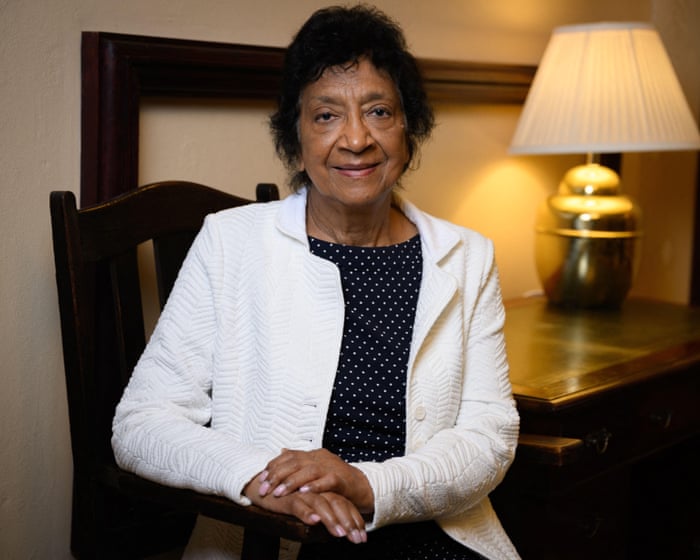
The Nobel peace prize has been awarded to Navi Pillay, the South African former UN human rights chief who chaired the UN commission that concluded Israel was guilty of genocide in Gaza.

The Norwegian Nobel committee said Pillay, who is serving as a judge at the international court of justice (ICJ), has “shown that legal measures can help prevent acts of war and violence”.

Continue reading...

© Photograph: Australian Associated Press/Alamy Stock Photo/Alamy Live News.

© Photograph: Australian Associated Press/Alamy Stock Photo/Alamy Live News.

© Photograph: Australian Associated Press/Alamy Stock Photo/Alamy Live News.

  •  

Subcontinent Ports Benefiting from Geopolitical Disruptions 

Today's trade flows resemble a windy waterpark slide more than the traditional waterway superhighway. The three-dimensional chess game being played by ocean carriers and tankers has delivered big bucks in day rates, container rates, and surcharges. But there is a group of winners not currently being highlighted.
  •  

Cape Town’s ‘Apartheid wall’ met with protest

A proposed R114 million wall along Cape Town’s N2 has sparked protests, with residents and civil society groups accusing the city of investing in a barrier that could deepen the divide between poorer communities and surrounding suburbs.

Residents marched on September 25 to oppose the N2 Edge project, a planned 9-kilometer wall development that the city says is aimed at improving safety and security along the highway.

But protesters say that the wall risks reproducing the spatial divisions created under apartheid, saying public money should instead be spent on housing, public services and opportunities for communities that have been pushed to the margins.

Movement for CARE, which was among those involved in organizing the protests, had criticized the project, saying;

“Instead of investing in dignified housing, safe neighborhoods, quality public services, and opportunities for communities that have been pushed to the margins for generations, the city wants to invest millions in a barrier that deepens exclusion and reinforces the geography of apartheid.”

The organization said from the beginning when the news about the proposal was announced, that Cape Town does not need more walls but rather affordable housing close to work and economic opportunities, as well as greater investment in communities.

“We need investment in communities, not their isolation. We need a city that brings people together instead of driving them further apart,” it said.

The Movement for CARE described the proposed structure as an “Apartheid Wall,” arguing that the first step towards justice is refusing to normalize and hide existing inequalities.

City defends the R114 million project

The City of Cape Town has defended the project as a safety intervention. In January, Cape Town Mayor Geordin Hill-Lewis said the city’s adjustment budget had committed “R114m to the N2 Edge project.”

The investment “will make a positive difference to the safety of every motorist along that stretch, and reduce pedestrian fatalities,” Hill-Lewis said.

He said the project would repair safety barriers and introduce other safety improvements for communities along the N2.

Hill-Lewis also said that a small number of “criminal elements” were affecting the safety of hundreds of thousands of daily N2 users.

According to the mayor, the N2 Edge project would be accompanied by increased highway patrols, with more than 40 new Metro police officers deployed to the N2, supported by CCTV cameras, automatic number plate recognition and digital coordination for rapid response.

Despite the widespread backlash, the city maintains it will continue with the project.

Abahlali baseMjondolo backs the protest

Abahlali baseMjondolo also supported the protests, saying in a post that the project would deepen racial and economic divisions in the city.

“The City of Cape Town continues to entrench neo-apartheid laws in post-apartheid South Africa by building a wall that segregates and hides the poor from the rich along the N2,” the organization said.

Adding that the project shows that the Democratic Alliance-led City does not recognize the needs of poor communities, particularly Black communities.

Read more: “A declaration of war against the poor”: AbM leads resistance against South Africa’s anti-occupation bill

The organization said it supported the struggles of residents in Khayelitsha, Langa, Dunoon, Gugulethu and Mitchells Plain who continue to face what it described as segregation and racism.

The protests have raised questions over whether the R114 million allocated to the N2 Edge project represents the right priority for Cape Town. With the protesters arguing that public resources should instead be directed towards reducing inequality, improving services and providing better housing and opportunities for communities living along the N2, instead of separating communities and concealing poverty.

  •  

Dusklands

Celebrated novelists J.M. Coetzee and F.M. Siccardi recently published a co-written book, Un mal salvaje (A Savage Evil), about their experiences coming of age in South Africa and Argentina, respectively. Both states were created by colonial forces that all but wiped out indigenous populations and cultures. This excerpt juxtaposes the authors’ childhood memories of life in the shadow of genocide, though neither would have known to call it that when they were young. In particular they recall the workers on their families’ land—men they somehow knew both intimately and not at all:

Freek did not see himself as a tragic figure, did not even see himself as a survivor. To see yourself as a survivor of the past you must have a firm conception of that past, you must know where you come from; and Ros and Freek had no such historical consciousness. First, they were illiterate. Second, it was of the essence of the genocide which they had survived that communal memory was erased.

If I were magically able to return to the 1950s and tell Freek about the Khoi who had pastured their stock at the Cape for hundreds or perhaps thousands of years before the Dutch came and laid waste to their society, about a people who were his ancestors, he would have thought it was just a story I was making up. Genocide is not just the destruction of a people, it is also the obliteration of that people’s store of memories and, with it, the destruction of their ability to see themselves historically.

  •  

Bodies of 10 women found dead in South Africa, sparking societal debate on GBV

Fear and anger are growing in South Africa after the bodies of nine women were discovered across the Ekurhuleni municipality, east of Johannesburg, over the past two months, with police investigating whether the deaths are connected, a 10th body was confirmed this week. Three suspects have been arrested, and police have acknowledged a possible connection between some of the killings. What is not in dispute is the scale of the crisis the discovery has exposed, and the outrage it has provoked, protests against femicide have been held in the country in the weeks since.

Four of the nine women have so far been publicly identified, Elizabeth “Tsontso” Moselakgomo, 38, a mother who vanished during her regular afternoon run and was found days later behind a hotel in Rhodesfield; Itumeleng Kekana, 32, missing since July and found in August with multiple stab wounds; Dineo Evelyn Motapane, 38, found in KwaThema; and Gracious Nkomo, 28, a lodge worker in Kempton Park missing for more than two weeks before she was found. 

Anger over the response

The deaths have triggered protests and renewed criticism of the country’s response to gender-based violence. Residents and women’s rights campaigners have questioned why women are repeatedly advised to change their behavior, avoid isolated areas, walking alone or running alone, rather than placing greater emphasis on preventing perpetrators from committing violence.

The National Union of Metalworkers of South Africa (NUMSA) has been among the sharpest voices responding to the killings. In a statement condemning the deaths, the union insisted the killings should not be treated as a “crime wave” or a mystery, describing them instead as femicide and, more precisely, a war being waged against women. NUMSA’s argument is that this is not an aberration but the visible edge of something structural. The union points to police figures showing at least 569 women murdered nationally between April and June 2026 alone, by the verified count, with an unverified estimate closer to 892, roughly six women killed every day. Against this, nine deaths in one metro over two months is, in the union’s words, closer to the ordinary condition of the country, made visible only because the fear of a serial killer has made it a story the wider public can imagine touching them.

The statement also pushes back on the instinct to treat this primarily as a street-level danger. Of thousands of rape cases registered by police in the same quarter, the majority occurred in a residence, not a public place. The killings that draw headlines, a body beside a highway, represent a fraction of a type of violence whose center of gravity is the home.

The economics underneath the violence

NUMSA also refuses to treat gender-based violence as an individual pathology alone. It traces a line from the colonial and apartheid-era migrant labor system, which depended on women’s unpaid domestic and reproductive labor to keep wages artificially low through to the present, where South African women remain disproportionately unemployed (an official rate near 37.5%, against 44.9% for men) and disproportionately head of household. Over four in ten nationally, and closer to half in rural areas. Close to two million employed women work informally, without pensions, medical aid, or written contracts. When a woman who is also a breadwinner is killed, the union argues, it is not only a life lost but a household’s income and caregiving capacity lost with her.

Gender-based violence and femicide were declared a national disaster in South Africa in November 2025. Nearly a year on, the killings in Ekurhuleni are evidence, in the union’s reading, that the declaration has not translated into protection.

What’s being demanded

NUMSA has rejected the idea of policing alone and the state’s response so far has leaned on a security “lockdown” of Kempton Park to answer a crisis this size. Its demands include full funding of the national plan on gender-based violence and femicide, functioning forensic and mortuary capacity so victims can be identified quickly, safe transport for workers on early and late shifts, and the implementation of the ILO Convention 190 on violence and harassment in the workplace, which South Africa has ratified but not fully enforced. Alongside state accountability, the union is calling for community-based structures, street and area committees, explicitly modeled on the civic organizing of the anti-apartheid period to accompany women, support survivors, and track cases through the courts.

Investigations continue, but the fear, concern and anger surrounding the killings remain. The deaths of the women in Ekurhuleni have already forced a public reckoning with the scale of violence against women in South Africa and the urgent need for stronger action to protect women and hold perpetrators accountable.

  •  

South Africa’s shackdweller movement secures court order against evictions

Abahlali baseMjondolo has secured another court order preventing the forced relocation of residents of an informal settlement in Shaka’s Head, KwaZulu-Natal, until the Municipality complies with the conditions previously set by the Pietermaritzburg High Court.

On Friday, September 11, the Pietermaritzburg High Court issued a consent order directing the KwaDukuza Municipality to comply with an October 2025 court order before it can relocate residents in Shaka’s Head, on the Dolphin Coast.

The latest order was agreed to by both parties and effectively maintains the conditions imposed by the court last year. Residents will remain in the occupation until the municipality provides the basic services and meets the other requirements ordered by the court.

“This is no doubt another victory for Abahlali bakwaDukuza and all people facing evictions in South Africa,” Abahlali baseMjondolo said following the court proceedings.

Read more: “A declaration of war against the poor”: AbM leads resistance against South Africa’s anti-occupation bill

The movement has opposed attempts to evict residents from the settlement since the municipality initiated the process. The dispute has also involved the Dolphin Coast Residents’ Association, representing affluent homeowners in the area.

Court blocks eviction without basic services

The latest development follows a landmark ruling by the Pietermaritzburg High Court in October 2025, when the court halted the municipality’s attempt to forcibly evict hundreds of residents from Erf 1410.

The court found that the municipality could not proceed with the relocation unless it first met a number of conditions designed to ensure that residents would not be moved to an area without adequate services and facilities.

Among the requirements was that the municipality provide basic services, including roads, sanitation, waste removal, water, and temporary electricity.

The municipality was also required to demarcate individual stands for households and ensure that the relocation site had access to essential facilities, including schools, healthcare, and public transport.

The court ultimately adopted a draft order prepared by Abahlali’s legal team rather than the municipality’s proposed order, effectively preventing the eviction until the conditions had been fulfilled.

Municipality pursued eviction despite outstanding conditions

According to Abahlali baseMjondolo Secretary-General Thapelo Mohapi, speaking to BreakThrough News, the municipality had not fulfilled the requirements imposed by the October 2025 judgment.

Thapelo said the municipality had instead sought to proceed with eviction proceedings despite not providing the basic services required at the proposed relocation site.

“Only when they have provided those basic services, only then the people of Shaka’s Head will be relocated to the new piece of land,” Thapelo said.

He said that because the municipality had not yet provided the required services, residents would remain in the occupation.

The organization has long framed the dispute as part of a broader struggle over access to urban land and housing, particularly for working-class and Black residents living alongside more affluent communities.

Thapelo accused the municipality and sections of the area’s affluent residents of seeking to remove working-class people from areas close to economic opportunities and relocate them to the urban periphery.

The September order follows an earlier setback for the municipality in March 2025, when another attempt to advance the eviction process was blocked.

Read more: Abahlali baseMjondolo secures victory against forced evictions

For now, the position established through the court proceedings is that residents cannot be relocated until KwaDukuza Municipality complies with the requirements contained in the October 2025 order.

  •  
❌