Bath, England, is just a 90-minute train ride from London.
Evannovostro/Shutterstock
As you probably could have guessed from this city's name, Bath is known for its Roman baths. These baths, dating back to AD 70, are some of the best-preserved Roman ruins in the world.
The city is full of beautiful Georgian architecture, which can be admired in places like the Royal Crescent — a crescent-shaped row of 30 houses.
I also loved visiting the Circus, which is made up of townhouses arranged in a circular pattern. In my opinion, these areas are part of what makes walking around Bath feel unique.
The train from London to Bath takes about 90 minutes, making this city the perfect day trip.
Heidelberg, Germany, embraces modern life without losing its historical charm.
SerrNovik/Getty Images
Heidelberg has striking views around every corner. The city is home to a centuries-old castle as well as the oldest university in Germany.
I enjoyed walking along Philosophenweg (also called Philosopher's Way), where professors sought solitude and academic inspiration. The path was especially beautiful during my trip in the fall.
We loved spending time in the city, which had lots of nice restaurants and cool bars. In my opinion, Heidelberg does an amazing job of embracing the new while holding on to its historical charm.
Bruges, Belgium, is a romantic city.
Dasha Kofman
Bruges is a laid-back destination that makes a convenient day trip from nearby Paris and Brussels. In my opinion, visiting the medieval city feels like stepping back in time.
The best thing I did was take a boat ride on the canal, admiring the architecture while cruising through Minnewaterpark, commonly referred to as the Lake of Love.
The city is perfect for couples looking to indulge in Belgian beer and chocolate.
Mostar is a beautiful city in southern Bosnia and Herzegovina.
Dasha Kofman
Mostar really surprised me because it didn't look like anywhere else I'd been. The towering 16th-century Old Bridge connecting the two sides of the city is a UNESCO World Heritage site.
The city also has a well-preserved Ottoman quarter with charming cobblestone streets.
During my time in Mostar, I loved drinking Bosnian coffee, taking in the views of the city, and feasting on local dishes like ćevapi.
Andorra La Vella is a hidden gem in the Pyrenees mountains.
Dasha Kofman
Andorra La Vella is the capital of Andorra, a country in the Pyrenees between France and Spain.
Every restaurant we dined at featured dishes influenced by the surrounding countries. If you want to try authentic Andorran food, head to a borda — a traditional house once used for agricultural purposes. Now, these buildings are used as charming restaurants.
Andorra la Vella makes a great day trip from Barcelona, but, in my opinion, the city deserves more than a one-day visit.
This story was originally published on July 3, 2024, and most recently updated on October 22, 2025.
Ina Garten's mashed potatoes were tangier and more flavorful than others I've tried making in the past.
Lizzy Briskin
I often love Ina Garten's easy, flavorful recipes, so I gave her buttermilk mashed potatoes a try.
The buttermilk made this dish more flavorful than other mashed-potato recipes I've followed.
From now on, I plan on making this recipe every time I host or attend a dinner party.
I firmly believe that no fall or winter dinner party is complete without a big bowl of piping-hot mashed potatoes.
That said, there's nothing worse than digging into a pile of fluffy potatoes, only to discover that they're bland or dry.
Although there are dozens of ways to dress up spuds with mix-ins like cheese, sour cream, and extra butter, kitchen queen Ina Garten has a wonderfully simple recipe that I had to try.
I'm so glad I did. Not only is Garten's recipe short and sweet, but the dish is flavor-packed, ultra-creamy, and about to be a part of every future holiday spread in my house.
Here's how to make Garten's mashed potatoes.
The ingredient list is short and simple.
caption
Lizzy Briskin
You only need six ingredients for this simple side dish: kosher salt, potatoes, whole milk, unsalted butter, buttermilk, and black pepper.
Garten recommends using a potato that's easy to boil, such as Yukon Gold. Russets would work well, too: Compared to other potatoes, these varieties contain more starch, which breaks down when mashed into a light and fluffy texture.
Yukons are my personal preference; I've found them to be slightly creamier than other options.
The potatoes took me under 10 minutes to prep.
captiontk
Lizzy Briskin
Once I collected my ingredients — and set a big pot of well-salted water to boil on the stove — I started on the prep work.
The first step here is peeling the potatoes, but don't worry about doing it perfectly.
I've found that, as long as the spuds are clean, a few pieces of potato skin in the mix won't really change the dish's quality. Some home chefs might even like to leave a bit of skin on for extra texture.
The potatoes should then be cut into roughly equal-sized pieces so they cook at the same rate.
Garten recommends 1 ½-inch cubes, but it's OK if you're not super precise, since everything will be mashed together later.
Cook the potatoes, and don't let them get gummy.
I cooked the potatoes for about 10 to 15 minutes.
Lizzy Briskin
Once the water came to a boil on the stove, I added the prepped potatoes and reduced the heat to maintain a gentle simmer with the lid off.
An important part of the recipe is to avoid boiling the potatoes, which can make them turn gummy. Instead, keep the water at a nice simmer until you can easily pierce the spuds with a paring knife. This took me between 10 and 15 minutes.
When they're done, drain the potatoes in the sink and return them to the pot to finish the dish.
While the potatoes simmered, I warmed the butter and milk.
caption
Lizzy Briskin
Next, I created a mixture of melted butter and whole milk to infuse the cooked potatoes with rich, creamy flavor and texture.
A key step in Garten's recipe is to warm these two ingredients in a small saucepan while the potatoes cook. The butter will melt into the milk, causing an emulsion.
Dry spuds absorb hot liquids better than cold ones, and you'll have an easier time combining the ingredients without any cold lumps of butter.
Just don't let the mixture come to a boil, which can cause the milk to separate from the butter.
Then, I mashed the potatoes.
caption
Lizzy Briskin
When the potatoes are done cooking, strain the water over the sink and return them to the pot. Now, it's time to start mashing.
Garten's recipe calls for using a food mill to break down the potatoes, but I live in a New York City apartment with barely enough room to store a large pot. So, I used a good old-fashioned potato masher.
Once I'd crushed the potatoes into a mostly uniform mush, I added the warm butter and incorporated it with a rubber spatula, per Garten's instructions.
I added just enough buttermilk for a super creamy mash.
caption
Lizzy Briskin
Once you've folded the butter and milk into the potatoes, it's time for the star ingredient: buttermilk.
I halved Garten's recipe, which typically feeds five or six, and decided to add a half cup of buttermilk. At first, I was worried I'd overdone it — my mash looked soupy.
After a little more stirring and time, though, the starchy potatoes absorbed the buttermilk, and I had myself an incredibly light and fluffy mash.
The seasoning — and the buttermilk — made Garten's recipe stand out from the rest.
caption
Lizzy Briskin
Adding the right amount of salt and pepper is essential for any dish, but mashed potatoes are often tragically overlooked in the seasoning department.
Garten recommends adding another 2 teaspoons of salt and pepper to the mash, and I agree wholeheartedly.
The result is a rich, tangy, and flavorful side dish you don't need to wait for a holiday to make. In my opinion, the buttermilk stole the show: I've found that potatoes can be a bit "blah" when not properly seasoned, and this recipe had a slightly acidic quality that I loved.
I'll be bringing these potatoes to Thanksgiving dinner this year, and every holiday party for the foreseeable future.
This story was originally published on November 20, 2025, and most recently updated on October 22, 2026.
President Donald Trump has faced some of the lowest approval ratings among modern presidents.
Anna Moneymaker/Getty Images
Polls estimate Trump's approval rating at 34% among registered voters and 36% among likely voters.
Gallup previously tracked presidential approval ratings for nearly 90 years until earlier this year.
Bill Clinton had the highest recorded approval ratings when he left the Oval Office in January 2001.
Only two weeks out from the midterm elections, President Donald Trump's approval ratings have reached their lowest point during his second term.
The latest poll conducted by The New York Times in partnership with Siena University shows that only 34% of registered voters approve of Trump's handling of the job, while 60% disapprove.
The American Research Group, a different New Hampshire-based pollster, asked the same question and found that 29% of respondents approved of Trump's job performance during a similar polling period, while 67% disapproved. The poll also found that only 27% of surveyed Americans approve of the president's handling of the economy.
These new polls stand against a changing polling landscape.
For nearly 90 years, the Gallup presidential approval polls measured Americans' public opinion on the president's job performance, but now, they're a thing of the past.
In February, Gallup, the analytics and polling company that pioneered presidential approval ratings, confirmed they were ending the practice, which, since the 1930s, had asked Americans: "Do you approve or disapprove of the way [the current president] is handling his job as president?"
In Gallup's latest poll, conducted in early December 2025, 36% of respondents said they approved of Trump's performance, and 59% of respondents said they disapproved of his handling of the presidency.
The American Presidency Project at the University of California, Santa Barbara, compiled the final Gallup ratings for each presidential term over the past 70 years — from Harry Truman to Joe Biden — and indicated how popular each leader was when they left the Oval Office.
See how the last 13 US presidents ranked in their end-of-term polling, from the lowest to the highest final approval ratings.
Richard Nixon
AP Images
Final approval rating: 24%
While Richard Nixon won the 1972 election in a historic landslide, the end of his presidency was tainted by the Watergate scandal that led him to resign on August 9, 1974, when facing the threat of impeachment and removal.
Surveyed between August 2 and 5, 1974 — after the House Judiciary Committee had passed articles of impeachment against the president, but before Nixon resigned — 66% of respondents to the Gallup poll said they disapproved of Nixon's presidency, the highest disapproval rate of any president on the list.
Harry S. Truman
Bettmann/Getty Images
Final approval rating: 32%
Assuming the presidency after Franklin D. Roosevelt's death, Harry Truman served two terms that covered the aftermath of World War II and the beginning of the Cold War, including the Korean War, which was widely unpopular and contributed to his low approval rating by the end of his second term in 1953.
When asked December 11 to 16, 1952, 56% of poll respondents said they disapproved of his handling of the presidency during his term.
Jimmy Carter
More than half of the poll respondents in December 1980 said they disapproved of Carter's presidency.
Original Caption
Final approval rating: 34%
Jimmy Carter had high approval ratings and a single-digit disapproval rating in the early days of his term, but his handling of international affairs, such as the Iran hostage crisis in 1979, along with a struggling economy, ultimately made him widely unpopular by the end of his term.
He lost the 1980 presidential election to Ronald Reagan and faced a disapproval rating of 55% in polling conducted December 5 to 8, when he was readying to leave the White House.
George W. Bush
Getty
Final approval rating: 34%
Despite uniting the nation in the wake of the 9/11 attacks, George W. Bush saw his public approval fade during his second term. His approval rating spiked after the 2001 terrorist attacks, the beginning of the Iraq War in 2003, and the capture of Saddam Hussein.
After his reelection, his popularity began to decline as the Iraq War extended. His handling of Hurricane Katrina in 2005 and the onset of the 2008 financial crisis also contributed to his low approval ratings.
From January 9 to 11, 2009, as Bush prepared to hand over the presidency to Barack Obama, 61% of poll respondents said they disapproved of his handling of the presidency during his second term.
Donald Trump
Trump's disapproval rating at the end of his first term came second only to Richard Nixon's before he resigned.
Doug Mills-Pool/Getty Images
Final approval rating: 34%
Donald Trump's first presidency was divisive from the start, as he entered the White House with an approval rating below 50%. He's the first president in modern history to never exceed 50% approval on the Gallup polls during his entire presidency.
While his approval ratings dwindled over the course of his four years in office, his handling of the COVID-19 pandemic in particular came under scrutiny ahead of his loss in the 2020 election.
His lowest approval rating in office came during his final Gallup poll, conducted January 4 to 15, 2021.
Most of that polling period took place immediately after the Capitol insurrection on January 6, and Trump faced a disapproval rating of 62%, the second-worst only after Richard Nixon's at the time he left office.
Joe Biden
Biden's approval rating was 40% by the time he left the White House.
Mandel Ngan - Pool/Getty Images
Final approval rating: 40%
While Joe Biden saw approval ratings above 50% during his first six months in office, rising inflation, illegal immigration, and the wars in Ukraine and Gaza contributed to a decline in his approval ratings.
His lowest-ranking Gallup poll, in which 36% of respondents said they approved of his handling of the role, came in July 2024, a month after his debate performance against Trump shifted focus toward his age and fitness for office.
As he left office, in polls collected January 2 to 16, 2025, Biden received a disapproval rating of 54%.
Lyndon B. Johnson
Lyndon Baines Johnson, President of the United States, at his desk in the White House in Washington on August 26, 1966.
AP Photo
Final approval rating: 49%
After assuming the presidency because of John F. Kennedy's assassination, Lyndon B. Johnson won the 1964 election in a historic landslide, but he faced decreasing approval ratings over his handling of the Vietnam War.
Low approval ratings, along with a divided party, led Johnson to withdraw from the 1968 presidential race.
At the time of his withdrawal, only 36% of poll respondents said they approved of his handling of the presidency.
By the time he left the office, however, his approval rating had risen to 49%. In polling conducted January 1 to 6, 1969, 37% of respondents said they disapproved of his handling of the role, and 14% said they had no opinion, one of the higher percentages among the listed presidents.
Gerald Ford
AP Photo
Final approval rating: 53%
Assuming the presidency upon Nixon's resignation, Gerald Ford served as US president from August 1974 until January 1977, after losing the election to Jimmy Carter.
During his presidency, Ford faced mixed reviews, with his approval dropping after he pardoned Nixon and introduced conditional amnesty for draft dodgers in September 1974.
Polled December 10 to 13, 1976, after he had lost the reelection to Jimmy Carter, 32% of respondents said they disapproved of Ford's handling of the presidency, and 15% said they had no opinion on it, the highest percentage of the listed presidents.
George H. W. Bush
President George H.W. Bush addresses the nation on February 27, 1991 from the White House Oval Office.
AP
Final approval rating: 56%
Though the elder Bush lost his reelection bid in the 1992 presidential election against Bill Clinton, public opinion of him was generally positive by the end of his term.
In the weeks before his 1992 nomination as the Republican presidential candidate, however, George H. W. Bush had only a 29% approval rating, the lowest of his presidency. A recession and a reversal of his tax policy contributed to his drop in popularity.
In polling conducted January 8 to 11, 1993, 37% of respondents said they disapproved of his handling of the presidency, while 56% said they approved.
Barack Obama
At his lowest polling, Obama had a 37% approval rate, which rose to 59% by the time he left the Oval Office.
Brendan Smialowski-Pool/Getty Images
Final approval rating: 59%
Since the beginning of his presidency in 2009, Barack Obama had a high approval rating for a modern-day president; he averaged nearly 47% approval over eight years.
At his lowest point, in polling conducted September 8 to 11, 2011, 37% of poll respondents said they approved of his presidency, a decline most likely influenced by the president's healthcare policies and his handling of the 2008 economic crisis and the subsequent rise in unemployment rates.
In polls conducted January 17 to 19, 2017, when Obama was leaving office, 37% of respondents said they disapproved of his handling of the role, with 59% saying they approved.
Dwight D. Eisenhower
Fox Photos/Getty Images
Final approval rating: 59%
After winning the 1952 election in a landslide, Dwight D. Eisenhower saw high approval ratings throughout his presidency, never dropping below the disapproval rating.
Holding office during the critical Cold War years, Eisenhower saw his approval remain positive through the end of his second term, with only 28% of respondents polled December 8 to 13, 1960, saying they disapproved of his handling of the presidency, the lowest among the presidents listed.
Ronald Reagan
Reagan enjoyed high approval ratings during his presidency, leading to the election of George H. W. Bush as his successor.
Arnie Sachs/CNP/Getty Images
Final approval rating: 63%
Ronald Reagan's strong leadership toward ending the Cold War and implementing his economic policies contributed to consistently positive ratings during his presidency and the subsequent election of his vice president, George H. W. Bush, as his successor to the presidency.
By the time he left office, 29% of respondents in a Gallup poll conducted December 27 to 29, 1988, said they disapproved of his handling of the presidency.
Bill Clinton
Pool/Getty Images
Final approval rating: 66%
After winning the 1992 elections against the incumbent George H. W. Bush, Bill Clinton saw high approval ratings throughout his presidency, though he faced mixed opinions at times during his first term because of his domestic agenda, including tax policy and social issues.
Despite being impeached in 1998 by the House of Representatives over his testimony describing the nature of his relationship with Monica Lewinsky, Clinton continued to see positive approval ratings throughout his second term.
By the time he left the White House, he had an approval rating of 66%, the highest of all the presidents on this list.
In the poll conducted January 10 to 14, 2001, only 29% of respondents said they disapproved of his handling of the presidency.
I lived with my in-laws before getting married to my husband.
Laura Grace Tarpley
My husband and I wanted to live together before marriage, but our parents weren't happy about it.
However, my in-laws said we could move into their house as long as we slept in separate rooms.
Living under the same roof helped me better understand my husband and grow closer to his parents.
I started dating my husband, Daniel, during our junior year of college. However, our relationship was mostly long-distance when we were away from school. Arkansas was my home base, and Georgia was his.
We knew our ultimate goal was to get married, and we didn't want to be in a long-distance relationship anymore. So, wediscussed getting an apartment together, either in my hometown or his.
However, neither set of parents was happy about our potential plan to live alone together before marriage. Although Daniel and I no longer identify as religious, we both come from Christian families.
So, Daniel's parents, Martin and Louise, offered a compromise: We could move into their house — we just couldn't sleep in the same room.
Living with my in-laws before marriage sounded daunting, but it brought us closer
Most of my worries about living with my future in-laws turned out to be unwarranted.
Laura Grace Tarpley
Religious motivation aside, Daniel's parents also wanted to give us a break on rent since we didn't have much money. By living with them, we'd be able to save for a down payment on a future home.
It seemed tempting, and we didn't want to take their kindness for granted. We ultimately agreed to this setup (and got engaged about a month before moving in), but I had my concerns.
I worried I'd clash with Daniel's parents over day-to-day issues. I liked them, but I didn't know them super well yet. What if we got on each other's nerves? I also didn't like the idea of someone else's religious ideals dictating how I lived.
We ate dinner together most nights, which meant I was lucky enough to enjoy an amazing home-cooked meal from Louise almost daily.
Martin and Daniel watched baseball on TV most nights, and I used the opportunity to learn about the sport and eventually became a ride-or-die Atlanta Braves fan.
Despite spending time together often, I still felt like I had my space. My in-laws both went to sleep early because they had to wake up early for work, so Daniel and I still had at least a couple of hours to ourselves at night.
Of course, we still had our problems. I still feel bad about repeatedly forgetting there was no garbage disposal and tossing eggshells into the sink, and I was constantly worried about waking them up at night since they were in bed by 9 p.m.
But overall, living together was a positive experience.
I got to know my husband and in-laws in ways I never would have otherwise
After 10 months, Daniel and I got married and moved out on our own. Looking back, I definitely found it valuable to live with him before we made that commitment.
Although Daniel and I slept in separate rooms, living under the same roof still offered a useful preview of married life. It also gave me a profound understanding not just of how Daniel acted, but of why.
Some of this was small. When he visited my family and stacked dishes in the sink instead of immediately putting them in the dishwasher, I considered it rude.
After about 20 meals with his family, I realized they always waited until the sink was full to load the dishwasher. He wasn't being lazy — he was acting in the way he had been raised.
Plus, it helped me better understand my future in-laws. Because of this, we rarely, if ever, have argued about them visiting or one of them hurting my feelings. This removes a layer of potential problems in my marriage.
Living with Daniel's parents could have strained my relationship with them, but it did the opposite. It brought us closer.
Our time together became even more valuable years later
I'll always value the time we got to spend together.
Laura Grace Tarpley
My time living with them became relevant again about a decade later when my father-in-law was diagnosed with pancreatic cancer.
Daniel and I were ready to move back in and help however we could. We ended up only having a few weeks with Martin before he died, and stayed for a while after to help Louise tie up loose ends, plan the funeral, and spend extra time with her.
For many people, living with their in-laws for six weeks would be beyond difficult. The emotional, stressful situation still made it hard at times.
However, I was used to living with Louise. I didn't have to tiptoe around the family. I knew how the dynamic worked.
Not only could I live with them for six weeks during a life-altering time, but I was more grateful than ever that I lived with them nearly a decade earlier. I realize now that I wouldn't have gotten to know Martin as well if I hadn't lived in his home.
Part I traced a system built on the advice of four economists; even know their theories are not theology. The next half-century is a case study in what happens when that advice – however flawed – is abandoned, and in what happens to the few countries that never got the memo. Part II: Dismantling the […]
Reupholstering my dining chairs saved me money, but I wish I hadn't done this project during summer.
I hated my kitchen for 19 years and spent just as long saving to remodel it.
My goals were to build a bright, modern kitchen that was more functional, offered additional storage solutions, and created a cohesive look when viewed from the two entryways to my living room.
After spending nearly $50,000 on my kitchen remodel, there are a lot of choices I'm glad I made — and only one I really regret so far.
I'm glad I kept my kitchen layout the same.
My kitchen before (left) has almost the same layout as my kitchen now (right).
Jill Schildhouse.
Early on, one designer who bid on my project proposed removing some walls and the soffit ceiling and adding an island to help me reach my storage and design goals.
The idea sounded great in theory, but it would've put me about $20,000 over budget, between the construction, ductwork, and the need for taller cabinets to fill the higher ceiling space.
The designer I ended up hiring urged me to keep my current layout and showed me how we could do so while adding the functionality I wanted.
Choosing a timeless color palette makes me confident that the kitchen will age beautifully.
My kitchen is primarily black and white.
Jill Schildhouse
For years, I'd dreamt of an all-white kitchen because I loved its classic, clean look. However, as my designer and I began talking and looking at my Pinterest boards, she noticed I also loved black accents.
She took the black-and-white theme and ran with it, outfitting half my kitchen with white cabinets and charcoal countertops and the other half with black cabinets and a white countertop.
She also chose coordinating tile squares: shades of white around the kitchen and a bold graphic tile in the dining room area.
This palette feels truly timeless — and I am confident I'll love this design for decades to come.
Buying little things that bring me joy helped me complete my space.
Jill Schildhouse
It can be easy to focus all your attention on the bigger-ticket items while remodeling, but the details really matter.
For instance, I visited Kohler, Wisconsin — home of the Kohler Company that's best known for its plumbing products — years ago and became obsessed with its sleek sinks and faucets. So, naturally, that's what I chose for my new kitchen.
Similarly, my everyday dishes no longer matched my new aesthetic, so I gave them away in my local "Buy Nothing" group and upgraded to the cutest stoneware set from Stone Lain.
Reupholstering my old dining-room chairs saved me a lot of money.
Jill Schildhouse
The table and chairs on the dining side of the kitchen were still in excellent shape, and the perfect size, but the drab gray fabric on the chairs was a real eyesore.
Instead of replacing the entire set, I spent $500 to have them reupholstered with a striking fabric my designer chose. They look brand new again and have such a playful vibe.
I don't regret spending more than half my budget on cabinets and countertops.
Jill Schildhouse
Aside from labor, I knew that my cabinets and countertops would be my biggest line items — but they were also the largest pieces in the room, so that was OK with me.
My designer steered me toward a local company that offered a great mid-tier option on factory cabinets (read: not high-end and not custom), and they still cost $15,000. To be fair, though, adding cabinets to the entire wall of the dining area played a major role in that price tag.
I also paid a little over $11,000 for quartz countertops because we needed three slabs for this design.
However, these things are the foundation of the kitchen, and I don't think I could've skimped on either one and still achieved my desired outcome.
Still, I wish I'd planned my remodel during a different season.
Jill Schildhouse
It didn't take me long to realize that summer in Phoenix was the wrong time for this project. It started in June and went into September during a record-breaking heat wave (70 days with highs at or above 110 degrees Fahrenheit).
Workers were in and out of the house all day, causing my poor AC unit to work overtime. If I ever do another remodel, it'll be during a more temperate time of year.
This story was originally published on November 17, 2024, and most recently updated on October 22, 2026.
Outsourcing some of the cooking meant my husband and I could spend more time with our kids and have delicious meals ready to reheat on our busiest days.
Elizabeth Wong
After our second child, my husband and I were struggling to balance our jobs and household admin.
To outsource some of the cooking, I found a local chef to batch-cook meals for us once a month.
Having a freezer packed with homemade meals saved us time, and I learned a lot from the chef.
When I returned to work after my second maternity leave, our family of four found ourselves very short on free time.
Back then, my husband and I had jobs in finance in London. We were working long hours, with video calls stretching from seven in the morning to nine at night.
On weekdays, like most families with young children, we felt like we were in a never-ending cycle of rushing everywhere. Our plates were filled with nursery drop-offs and pickups, Teams calls, making dinner, cleaning up, and getting the kids ready for bed and baths, with household chores and personal admin to be completed in what was left of our free time.
Though we had full-time childcare, we had little else in the way of daily support, as our families were not local.
In our social circle, we knew that dual-career parents with young children often bought supermarket-ready meals or ordered takeout. However, these options often felt too high in salt and sugar, and limited in their selection.
That was how I found myself posting in a Facebook group for Malaysian moms in the UK, desperately trying to find someone to cook for us.
I wasn't envisioning a personal chef who would shop and make three meals a day — our budget didn't stretch that far — rather, I hoped to find a decent home cook and had a few hours to make big, batch meals that we could freeze, then reheat on our busy weekdays.
That was how we found Evelyn.
For $150 a visit, we paid for someone to batch-cook meals for our family
The meals had to freeze well and be easy to reheat.
Elizabeth Wong
Evelyn was an experienced pastry chef on furlough, like many in the food-service industry at the time — we connected in 2020, amid the COVID-19 pandemic.
She lived in a neighboring borough in London, which made our arrangement convenient. Equally as important, she was good at cooking Chinese-Malaysian dishes.
She would visit once a month, for about four to six hours. Our arrangement cost us around $150 per visit at the time. Before she arrived, we would discuss the menu over WhatsApp. Crucially, the dishes had to be easy to freeze and easy to reheat.
I would then shop for the ingredients she needed, which meant a combination of online grocery shopping and trips to Chinatown for less-common items.
On her visit, she would cook large portions of three dishes, which she further subdivided into another three family-sized portions. In total, we had around nine portions, which were then packed into containers and frozen — like a supermarket-ready meal, but tastier and probably healthier.
The meals she cooked were Malaysian Nyonya or Chinese-Malaysian dishes: ayam tempra (chicken dish), chai boey (a delicious sour and spicy stew with leftover roast meat), babi pongteh (a braised pork dish), and chicken with ginger and spring onion.
The 4-year arrangement had both expected and unexpected benefits
I was able to learn more about my culture and learn about new ingredients.
Elizabeth Wong
As a result of Evelyn's visits, we did not spend precious hours batch cooking on the weekends. We could spend our limited free time with our children.
Although her meals did not completely replace the need for us to cook, the constant everyday drudgery of preparing food was partially mitigated. On weekdays, after a long day of work calls, I would grab a container out of the fridge and pair it with plain white rice.
And the biggest unexpected benefit was that she taught us more of my culture. Though I'm Chinese-Malaysian, I was never taught how to cook growing up. When I started living independently, my cooking repertoire did not extend much beyond pasta, curry chicken, and whatever I could learn from YouTube videos.
Nothing compares to being shown what to cook and how to do it by a more experienced person. It was a learning experience for me to hunt for the ingredients that Evelyn had asked for in the local Chinese grocery store. On one of my trips, I had gotten a vegetable that I believed to be kai choy (Chinese mustard green), only to be told by Evelyn that it was choy sum (Chinese flowering cabbage).
By watching her, I also learned about different types of tofu and which work best for various dishes, plus how to get a good sear on meat (very high heat and a willingness to tolerate oil splatter).
Evelyn continued to come to our place every month or so until we left London about four years later. We did not restart an arrangement like this in our new place, as the kids were older and our jobs were more flexible.
I am a firm believer that you have to make your own village in this modern world, especially for those of us who have found careers far away from our families of origin. So I am forever grateful to Evelyn for her help in the intense years with babies and young children.
We had been looking for a "batch-cooking service," but instead we got a stand-in "aunty."
Passengers are typically calmer and sleepier when the cabin is dark, which worked well for us.
Shades should only be open during takeoff and landing, which is the best time for photos anyway.
There's a long-standing, quiet battle happening in airplane cabins around the world, and it's all about window shades.
Who actually owns control of the shade — the person sitting in the window seat, the cabin crew, or the row as a collective? (Opinions remain fairly divided.) Is it better for the shade to stay open or closed throughout the flight?
Between viral social media debates and endless discussions on flight etiquette, everyone seems to have an opinion, and so do I. For nearly a decade, I worked as a flight attendant with an international airline.
That means I've examined thousands of window shades before takeoff and landing to ensure they were open, just as I checked seatbacks were upright.
Many airlines require the shades to be open during these times, which makes sense to me from a safety standpoint. It's helpful to have a clear view outside in an emergency, and in case ground rescue teams need to see inside the plane.
However, once we hit cruising altitude, those safety rules pause, and my personal one kicks in: The window shades should be closed while we're in the air.
I've found that open shades can ruin sleep cycles and make a cabin rowdier
Windows should be open for takeoff and landing, but that's about it.
Mateusz Wlodarczyk/NurPhoto via Getty Images
I honestly hate it when passengers keep their shades wide open, and it's especially bad on long, international flights. I know firsthand how crossing multiple time zones can be exhausting for the body.
Often, the best way to save passengers from severe jet lag is to help them get quality sleep in the air — and let's be honest, as a flight attendant, I definitely had a vested interest in keeping everyone happy and well-rested.
So, on long flights, my crew and I would intentionally dim the cabin lights to simulate nighttime and encourage everyone to rest. Even so, it only took one open window shade to ruin that peaceful environment for an entire section of the plane.
When blinding sunlight poured in, it didn't just wake sleeping passengers — it also created a terrible glare on laptops, tablets, and phones.
I've lost track of how many frustrated passengers rang their call buttons to complain to me about it, and how often I ended up having to mediate arguments about window shades.
Early on in my career, I also observed how ambient light seemed to directly change passenger behavior. Whenever we dimmed the cabin lights, travelers seemed to naturally settle down, read quietly, or go to sleep.
But when a flight stayed brightly lit, passengers more often stayed awake, chatted loudly, and ordered more alcohol, sometimes turning the flight into a party.
All in all, keeping the cabin dark tended to make the entire flight so much calmer, safer, and easier for us to manage. As my colleagues and I always used to say: A sleeping passenger is the best passenger!
If you're looking for good views and photos, you're better off waiting anyway
Often, the best time to take a photo in the air is when we're close to landing.
Torjrtrx/Getty Images
One of the most common reason passengers give for keeping their shades up is to take photos or enjoy the view. Although I completely understand the desire for a great aerial shot, the reality at 35,000 feet is usually underwhelming.
Most of the time, all you can see out the window is blinding white haze, cloud cover, or vast emptiness. The direct sunlight at high altitudes is often too harsh for a clean picture anyway.
If you really want great photos for your travel feed, the best time to take them is during descent and approach.
As the plane lowers toward the destination, you can actually get a clear, detailed view of cities, coastlines, and landscapes — and during those moments, the shades are already usually required to be open for safety reasons anyway.
Ultimately, though, the status of the shade is up to the passenger
When I fly in a window seat now, I keep the shades shut whenever we're in the air.
Alona Vasylieva
Unlike takeoff and landing, where keeping shades open is often a mandatory safety rule, mid-flight shade policy is more about etiquette.
As flight attendants, we couldn't strictly enforce or mandate that passengers close them, as window-shade status isn't regulated by the Federal Aviation Administration.
However, many of us made a point of strongly requesting and encouraging the shades to be shut for the comfort of the whole cabin.
Now, whenever I'm sitting in the window seat as a passenger, I practice what I preach. The shade stays wide open for takeoff, goes straight down as soon as we hit cruising altitude, and pops back up on our final approach.
Pulling that shade down mid-flight is a tiny move, but it makes a world of difference. It can help keep the cabin dark and calm, let your fellow passengers sleep, and prevent a full-blown glare dispute at 35,000 feet.
Longreads has published hundreds of original stories—personal essays, reported features, reading lists, and more—and more than 14,000 editor’s picks. And they’re all funded by readers like you. Become a member today.
Kristin Idaszak | Longreads | October 22, 2026 | 3,741 words (13 minutes)
The city of the dead is the obverse of the society of the living, or rather than the obverse, it is its image, its intemporal image. For the dead have gone through the moment of change, and their monuments are the visible sign of the permanence of their city.
—Philippe Ariès, Western Attitudes Toward Death
Shortly after I graduated from college, my best friend sent me a postcard from the Sedlec Ossuary, a Catholic chapel formally named the Cemetery Church of All Saints in Kutná Hora, a town about an hour east of Prague. The postcard depicted the chapel’s interior: a chandelier of bones flanked by two towers of skulls. On the back she wrote, “The chandelier alone contains all the bones in the human body. Thanks to the plague, we have this work of totally weird art!”
Immediately I started planning my own trip to Kutná Hora—a place made prosperous by silver mining but famous for its bone church—and arrived with the zeal of a pilgrim. Today the town has 20,000 residents, but in its 14th-century heyday it boasted almost four times as many souls. The late Middle Ages was a tough time to be alive, between the Black Death, various crusades and holy wars, and famine—not to mention the labor conditions of silver mining. Kutná Hora was also a popular place to die, and all the villagers wanted to spend eternity at the medieval Sedlec Abbey. After one of the crusades, an abbot had brought back a handful of soil, supposedly from Golgotha, and strewn it on the abbey grounds. Burial in that soil was believed to grant quicker access to heaven, which led to an overcrowded cemetery. The solution? Build a subterranean chapel to house the remains. And then a half-blind monk, in the wake of a terrible plague, exhumed the victims and used them to redecorate.
An ossuary is any repository for human remains, but it’s also the term for a holy site that serves this function. Another name for this kind of church is charnel house, which to me evokes the image of an abattoir. Death historian Philippe Ariès connects the term to the French idiom une vieille carne, translated as an old nag or a tough piece of meat. It’s apropos: These buildings enshrine human remains as décor in macabre, otherworldly, electrifying memento mori.
Forty-thousand bodies’ worth of bones. Probably more. My brain buckled at the magnitude.
Four months later, I found myself in the Czech Republic. A coat of arms made out of bones greeted me when I arrived at the bone church. Upon closer inspection, the heraldry included a skeletal bird, its slender beak playfully pecking out a long-disintegrated eye from an empty socket. As I descended the stygian steps from the ticket kiosk, I took in the pyramid of bones that guarded the four corners of the room.
The chapel seemed to exist in a perpetual gloaming, the air hushed and cool. The sheer presence of so many human remains disoriented me; they surrounded me on every side. Forty-thousand bodies’ worth of bones. Probably more. My brain buckled at the magnitude. The remains took on an animated quality—not in a Halloween-y, top hat–wearing, dancing skeleton sense; nor in an eerie, horror movie sense; but in the sense that each one radiated a life force.
I loved it. I loved being surrounded by skeletons and weird art and death.
Death and the afterlife fascinated me. I devoured stories of women who visited the underworld and returned—Alcestis, Eurydice, Persephone—and philosophers and poets who broached the subject—Nietzsche, Camus, Dante. Thanatos, my favorite philosophy professor called it. The death drive. But I had no sense of the fragility of my own body. My knees did not yet make those alarming soft pops; the permanent ache had not settled into my shoulder; my heart wouldn’t sputter erratically in my chest for another decade. The allure was intellectual and emotional, certainly not embodied. Like climate change or menopause, I understood mortality conceptually, but it didn’t feel real.
I’d like to tell you that my visit to the Sedlec Ossuary changed everything, that after my trip I appreciated life’s transitory nature. Or that it gave me a premonition of what lay in store for me, my own brushes with death that were to come.
It did not.
While I was underground, I felt temporarily transported and transformed—or at least, I had a flicker of understanding: I sauntered into the chapel with the hubristic notion of a young artist that my words would become immortal. The bones confronted me with the truth. My legacy would be deposits of calcium and protein and collagen. My art wouldn’t endure, but these nameless victims of plague and famine and war—they did. It humbled me.
But I left the ossuary’s insights with the dead. In my early 20s, I didn’t need the bone church to convince me to suck the marrow out of each day. I went to grad school, became a playwright, got married, traveled to all seven continents. Somewhere in there, I relegated the bone chapel to memory.
In the summer of 2020, I got sick with a life-threatening cardiac arrhythmia called ventricular tachycardia. I had so many episodes of VT I lost count, and any one of them could have ended in cardiac arrest. These events were indescribably painful and frightening. They enervated me, sapping me of my strength, vitality—eventually my will to persevere. My life became very small.
Mortality was no longer an abstraction: I was scared of what would happen to me when I died. Of how much it hurt. Of the nothingness of bones.
In the years that followed my initial descent into illness, I rarely left home. At the time I lived in a two-bedroom apartment, a third-floor walk-up. Climbing the stairs could, unpredictably, trigger a cardiac event, and so unless I had to leave for work, I spent most of the time in my living room. I can close my eyes now and return to that place. I’d painted the walls a shade of cornflower blue I grew to loathe. The television tottered precariously on an ancient table. Cherry-stained bookcases lined the wall. The top of the bookcase displayed a golden Japanese fan with a cloud tree painted on it. Next to it stood a penguin pitcher I bought on my honeymoon in Tierra del Fuego. Three vintage-style travel posters advertised Antarctic destinations: Beagle Channel, Lemaire Channel, Paradise Harbor.
That room was the real ossuary.
One of my favorite Greek tragedies is Euripides’ Alcestis, in which the eponymous heroine journeys to Hades in her dying husband’s stead. The god Apollo tricks the Fates so that her husband, the king, can live if he can find someone to take his place in the underworld. There’s an exchange I think about a lot: “Possible to say she is both alive and dead,” her servant reports, and the chorus leader, understandably confused, asks, “How could someone die and keep on living?” This is how I felt—alive but dead. Already in Hades. I’d escaped my fate, like the king, but my true self, the intrepid, curious, wonderstruck version of me? She was in the underworld with Alcestis.
The play takes a strange turn when Heracles arrives amid his twelve labors. During a supremely awkward evening of drunken revelry at the palace, he figures out what’s going on and hustles to the graveyard to wrestle death and bring Alcestis back.
I didn’t have a demigod to save me. But I didn’t want to be lost and gone.
The allure was intellectual and emotional, certainly not embodied. Like climate change or menopause, I understood mortality conceptually, but it didn’t feel real.
Sitting in my apartment day after day, surrounded by artifacts from the world I used to inhabit, was slowly killing me. I was afraid of things that had caused my VT, which meant I was afraid to go to the grocery store. I was afraid of taking a yoga class. I was afraid to simply be outside if it was really hot out. Finally I reached a breaking point. I could drop dead in the peanut butter aisle, or I could drop dead seeing the world. Staying at home wouldn’t save me. The threat resided inside my own chest.
I formulated a drastic plan to return to the land of the living. I took time off teaching and planned a sabbatical to travel and write. I couldn’t hide in my house if I rented it to someone else, if I jetted to the other side of the world. Instead of crossing the River Styx I ferried myself across the Pacific Ocean, and then the Atlantic. The final stop on my sabbatical was leading a study abroad in the Czech Republic, to attend an international scenography and performance festival. The ossuary didn’t really fit into the rest of the itinerary, but I wanted to give my students the experience I’d had all those years ago.
Though contemporary visitors can experience ossuaries as disturbing or revolting, they didn’t start out that way. In The Empire of Death: A Cultural History of Ossuaries and Charnel Houses, Paul Koudounaris traces their proliferation in Europe during the 13th century as a storage solution to the medieval Christian problem of where to keep the dead safe for their resurrection. There were more bodies than places to put them. Death preoccupied the medieval imagination. After the Bubonic plague, medieval artists began portraying its grotesque physicality: images of rotting corpses, poetic descriptions of worm fodder. You get the sense they would’ve painted the stench if they could. Is it any wonder that these decomposed cadavers eventually became the artistic medium itself?
Dozens of bone chapels sprang up across Europe by the 17th century, in a confluence of theology and aesthetics that seems morbidly inevitable. During the Counter-Reformation, Catholicism leaned into opulent and lavish Baroque art. It also leaned into corporal mortification, the kind that now shows up in mass-market thrillers as a fetishization of pain and suffering.
The appetite for gaudy-verging-on-gauche bone art swelled when the Romantics arrived on the scene in the 19th century. Gothic literature supplanted the medieval Ars Moriendi; a secular touchstone of this cultural moment is Mary Shelley’s Frankenstein. Today, the Sedlec Ossuary has benefitted—or suffered from—the kitschification of gothic art, popping up in surprising places like The Young and the Restless and the “uninvolving and cliché-ridden” vampire B movie Blood and Chocolate.
Romanticism also marked the rise of a phenomenon now known as “dark tourism,” which refers to the practice of visiting sites associated with disaster, war, atrocity. Malcolm Foley and J. John Lennon coined the term in 1996, in reference to tourism spawned by John F. Kennedy’s assassination. Scholars often point to concentration camps and Chernobyl as the field’s quintessential sites. Yet it’s a concept as old as tourism itself, dating back to Chaucer’s Canterbury Tales, in which a group of pilgrims travel to the site of Thomas Becket’s murder. During the Grand Tours of the Romantic era, visits to places like the Paris catacombs (an underground labyrinth containing the bones of some six million people) and Pompeii (mass grave by way of volcano) came into vogue as a way to cultivate the Sublime.
It can’t be an accident that this coincided with the proliferation of ossuaries. I have to believe not everyone went to charnel houses for the sake of holy contemplation. Prurience is not an invention of the digital age, even if we have elevated it to new heights (or denigrated it to new social media-inflected nadirs). I imagine gentlewomen in whalebone corsets and dilettantish young men titillating their companions with stories of the macabre.
The contemporary case for dark tourism—sometimes called thanatourism—is that it refutes any attempt to forget or whitewash history. It’s one of the few ways we can meaningfully encounter death and atrocity. Before I got sick, I went to Auschwitz as well as Hiroshima. The power of these sites is undeniable. They serve as monuments to some of modern history’s darkest moments and have been carefully transformed into vehicles for education, reflection, and solemn commemoration. I went because it felt important to bear witness to the horrific crimes against humanity that occurred there. But I’ve also participated in dark tourism less consciously, and perhaps you have, too. I’ve seen an Ai Weiwei art installation at Alcatraz, toured the Colosseum where murder was a matinée, peeked into the bakeries and brothels of Pompeii, strolled through Greyfriars Kirkyard in Edinburgh. I skipped Hell’s Museum, which a friend recommended in Singapore, and wish I’d skipped a ghost tour of Savannah, Georgia—what made it haunting was the way the city’s bloody history of enslavement and oppression was repurposed as entertainment for partiers carrying to-go cups of watered-down vodka.
The counterargument is self-evident: It leaves these sensitive sites vulnerable to exploitation. The suffering of one group commodified as a cocktail party anecdote for another. The exit through the gift shop.
This is how I felt—alive but dead. Already in Hades. I’d escaped my fate, like the king, but my true self, the intrepid, curious, wonderstruck version of me? She was in the underworld with Alcestis.
It would be a neat narrative if the newest wave of dark tourism had gained traction after the pandemic, when there was a momentary reintegration of death in our day-to-day. In actuality, it flourished before COVID spread, before ambulances drove through empty city streets and bodies piled up in overcrowded mortuaries, before corpses were stashed in refrigerated trucks in New York City because the morgues were beyond capacity. And now, when those months and years have receded like a bad dream and no lessons were learned, it’s hard to attribute a newfound reverence for mortality to this renewed appetite for dark tourism.
I never thought about what I was doing as morbid. I gravitated to many of these attractions unconsciously, often because I wanted to understand history—and history is littered with corpses. But I think back uneasily to the casual way these sites were slotted into my itineraries. I remember the okonomiyaki place I went to after the Hiroshima Peace Memorial Museum, the hole-in-the-wall with the cheerfully ursine line cook, but not how I possibly could’ve been hungry.
The impetus for this flavor of tourism isn’t monolithic. Some dark tourists are processing their personal or ancestral experiences, some are genuinely curious, some don’t even realize they’re doing it, and some are rubberneckers. Regardless of motivation, one effect of present-day dark tourism under global capitalism is the Disneyfication of death.
The first months of my sabbatical were rocky. Fear dogged me through the streets of Sydney, Mumbai, Athens. A few weeks before I went back to the Czech Republic to lead my study abroad, I went to another bone chapel, in a small town east of Lisbon called Évora. Visitors flock to Évora for its prehistoric megaliths and Roman temple to Diana, but I’d driven across Portugal to see the charnel house. My GPS misled me through the hot, dusty town, and I circled around the temple and its remaining Corinthian columns—which seemed dropped into the town square like an abandoned film set—until I found the Capela dos Ossos.
The 17th-century Capela has more bling than Sedlec, from azulejo tiles to ceiling frescoes, with skulls where cherubs might usually repose. (Other charnel houses put the Capela to shame in their ostentation, such as the skeletons at the German Basilica of Waldsassen wearing jewel-encrusted gold costumes, which were originally posed with chalices with dried blood at their feet.) The chapel is crammed, floor to illustrious ceiling, with bones stacked horizontally, so only the knobs show. Lined with osteological columns, the architecture echoes the ruined temple to the pagan goddess in the town beyond. Before you even enter there’s a Dantean inscription: Nos ossos que aqui estamos pelos vossos esperamos.
We bones that are here await yours.
I found the inscription strangely comforting as I entered the inner chamber. The first interpretive sign explained the function of a bone chapel as a memento mori: “It is expected to serve as a consolation to some and news to others.”
Lucky them, I thought.
I appreciated the aesthetics of the Capela dos Ossos, but it lacked the Hadean quality that engendered my near-mystic experience at the Sedlec Ossuary. Afterward, I continued on my sabbatical still mistrustful of my body, still afraid to move through the world.
Finally I reached a breaking point. I could drop dead in the peanut butter aisle, or I could drop dead seeing the world. Staying at home wouldn’t save me. The threat resided inside my own chest.
But when I got to Prague, something shifted. It didn’t happen all at once. I didn’t walk into the bone chapel and have an epiphany. A logjam loosened in my psyche. Shepherding a group of young adults in a foreign country, I couldn’t hide in the hotel or confine myself to strictly prescribed routes and routines. For many of them it was their first trip overseas, and overwhelmed, they looked to me for guidance.
At 7 a.m. one morning, 20 students piled onto a bus to Kutná Hora. On the drive, I strove to impart my love of bone churches: Ossuaries aren’t morbid (okay, well, they are, but they’re not only morbid); they highlight the brevity of our lives to help us live more intentionally. But in a kind of punk rock way. Carpe fucking diem. The students were curious but respectful. Some found it moving, others creepy.
When we arrived, the bone chapel was different than I remembered. Tentatively, I descended into the brightly lit space below. In the open area of the chapel, monitors now played a video of renovators handling the bones. The video explained a restoration project to shore up the building’s structural integrity and preserve the skeletons. The foundation is unstable and has started sinking since it was built sometime in the 14th century. In the Baroque period the Czech-Italian architect Jan Blažej Santini-Aichel redesigned the ossuary as it exists today, and it wasn’t until the 1860s that a carpenter named František Rint created the bone art, including the famous chandelier and the Schwarzenberg coat of arms that reproduced the heraldry of the local aristocrats.
That wasn’t the origin story I’d learned years ago, about the monk and the plague—was the monk even real? The crepuscular lighting and gloom were gone. Where was the ambience? How could you commune with the dead like this?
Behind me, another busload of tourists arrived, and another, and another. Tourists overran the chapel, their guides speaking into little microphones in various languages while they snapped photo after photo. At the entrance, the lone employee said in English, no photos allowed. Everybody ignored her.
Snap.
Desensitized, they gawked without seeing.
Snap.
No photos, repeated the ticket taker.
Snap.
The scores of tour groups weren’t part of my memory.
The contemporary case for dark tourism—sometimes called thanatourism—is that it refutes any attempt to forget or whitewash history. It’s one of the few ways we can meaningfully encounter death and atrocity.
Through a side door I climbed the stairs into an outdoor cemetery. The videos of the restorers kept replaying in my mind. It’s one thing to envision an apocryphal monk constructing pyramids of bones, it’s another to watch footage of archaeologists cleaning them and then putting them back in the pile. One of my students was minoring in archaeology and, as we strolled through the cemetery, she told me that ethical and legal restrictions governed archaeologists’ handling of human remains. It was obvious once she said it, but I hadn’t thought about it. The videos had close-ups of hands in nitrile gloves cleaning the dirt off the bones. Afterward, the bones were soaked in lime solution, which is also how Rint first prepared them in the 1860s. His chlorinated lime solution is the reason the Sedlec Ossuary’s decorations have remained relatively white over the years, while bones in other ossuaries have browned with age. The archaeologists also have the benefit of video mapping to help them rebuild the pyramids once the bones are cleaned and restored.
It must take incredible dedication for these archaeologists to put themselves in this proximity with death. To sustain that intimacy day after day—I know the cost.
I resented the crowd of tourists I’d left thronging the chapel. More than that, I felt a sense of superiority. Now that I was ready for the ossuary to transform me, I’d found an atmosphere that was more carnivalesque than sacred.
But as I meandered among the headstones in the fresh air, it occurred to me: Did I really think that none of those tourists had ever lost a parent or child or partner, ever grieved, ever had a near-death experience of their own? Did I really think my proximity to death, my awareness of its phalanges drumming on my shoulder, had given me some privileged access to the charnel house’s true meaning? To the contrary, after I got sick, I guarded my life like a dragon hoarding a treasure pile in a dark cave, and it moldered away, unspent. Those bones had more vivacity than I did.
For the medieval peasants whose skeletons limned the walls, death was a prolonged nap until everyone woke up during the rapture. There was a fluidity between death and the afterlife. These days it seems so much more final. (Per Ariès, once it was tame and now it is wild.) Much has been made of the deathbed’s move in modern society from the home to the hospital: out of sight, out of mind. Ossuaries thrust mortality squarely in your line of vision. They ask that you regard death as a transition, not a terminus. Not something to guard against hyper-vigilantly, but a natural part of a cosmic continuum.
It was time to live again.
Going back to the Sedlec Ossuary was not some purifying rite. It was an ordinary day. The tourists streamed past me, discussing where they were going for lunch. The students had moved on, browsing for trinkets at the shop across the street. I recoiled at the kitschy skull mugs and shot glasses, but when I got home, I wished I had a memento mori to put next to the penguin.
After Heracles brings Alcestis back from the underworld, she’s silent for the remainder of the play. Still sacred to the god of the dead, she cannot speak until three days have gone by, Heracles explains. I think there might be other reasons she stays silent. Maybe she preferred it down there. Maybe she left some irretrievable part of herself behind. Maybe she found the light above a little too harsh, the music too loud, the colors too saturated; found herself attracted to dusk, to intertidal zones, lintels, liminal spaces. Or maybe she has nothing left to say.
When I got home, I went through my old photos. I couldn’t figure out if my memories of Sedlec were real until I found a photo of myself, painfully young, standing in the semi-dark underneath the chandelier, its bones glowing white—either from the camera flash or an out-of-frame light source. I look half-happy, half-haunted, like I’m about to say something, but I can’t remember what.
Kristin Idaszak is an internationally produced and award-winning playwright and essayist whose recent work explores the intersection of ecology and chronic illness. She is a 3Arts Awardee, two-time Playwrights’ Center Jerome Fellow, and the former Shank Playwriting Fellow at the Goodman Theatre. She received the Kennedy Center ACTF Paula Vogel Playwriting Award and the Jean Kennedy Smith Playwriting Award. Her essays appear in The American Scholar, Fourth Genre, HowlRound, and elsewhere.
A friend was recently startled to find a Soviet-style hammer and sickle prominently displayed at a farmers market just a block from a monument to those who sacrificed their lives fighting totalitarianism. It's particularly jarring for immigrants from former communist countries to see these hateful symbols cheerfully displayed alongside fresh greens, organic honey and homemade pies.
When my friend engaged the affable twentysomething about her advocacy for communism in America, the conversation quickly became absurd. "Don't you know about the Gulag, the torture chambers, the Tiananmen Square massacre, the murder of 100 million men, women and children?" to which she replied, "I'm not sure what you're talking aboutâ¦"
The young woman then parried, "All I know is that America has a shameful past and we should try to atone for the crimes of capitalism."
"Iâm not sure about the specifics â¦" She then went on to deliver a short address on how communism will deliver a high standard of living by redistributing the obscene wealth of the rich.
When pressed about the historical record, either of communismâs brutality or specifics about so-called American imperialism, the young womanâs friendly smile never faltered. She really couldn't name any of the crimes of capitalism.
Calling for the overthrow of the system that allows for a peaceful Saturday at a farmer's market made the entire conversation seem absurd.
Conversations like this one, between average Americans and self-styled communists and socialists, break down due to differences of content and perspective.
When it comes to perspective, many of the 62% of young Americans, aged 18-29, that think that socialism or communism is a good idea have been educated with a simplistic neo-Marxist lens: U.S. history is a story of oppressor versus oppressed (i.e., patriarchy, race, religious bigotry). The Marxist model can be found in everything from "The 1619 Project" to the platform of the Democratic Socialists of America. Neo-Marxist critical theories attack the perspectives once widely held by most Americans regarding the American Dream and Americaâs exceptional service to humanity.
The part of these conversations that's the most flummoxing, however, is not ideological. It is the part of the conversation that is about content: cold, hard facts. Anti-communists of all stripes typically point to the overwhelming evidence of the past and present crimes of communism. At 100 million men, women and children murdered, one would think that the evidence âprovesâ that this is not just an inefficient system, but a diabolical one.
We have survivor testimony, government records, and some photographic evidence of the concentration camps (e.g., Soviet Gulag, China's Laogai), torture, extermination of minorities, deportations and forced starvation. The violence continues in todayâs communist and communist-legacy regimes, from Belarus to Cuba and Eritrea to North Korea.
The young person at the farmers market will blankly stare when you recite the crimes of communism. She has no point of reference. The crimes of communism are largely unknown; they are untaught and unchallenged in todayâs university and high school settings. She has never heard of these things and she is not sure they are believable. Indeed, she will counter, these atrocities have likely been exaggerated and were undoubtedly justified self-defensive measures against capitalist imperialism.
When one does not feel (perspective) that the evidence of communism's crimes demands a verdict, and even disregards that there is evidence of wrongdoing (content), one is living in a different reality than that of most Americans born in the twentieth century. What is to be done?
First, we need to work hard to return all of the institutions of our civic life â media, schools, houses of worship, the business sector, K-12 and higher ed and especially the family â to the basics. That is where we educate the rising generation with the facts and values of what we are for and what we are against. We adhere to the principles found in the Declaration of Independence, representative government, free-market economics, personal and local responsibility and democratic institutions.
Second, we need to transmit the facts: the personal stories and larger historical narratives of communismâs crimes and Americaâs valiant, sacrificial efforts at self-defense and global freedom: the Berlin Airlift, the creation of NATO and the United Nations, the defense of Koreans, Vietnamese and many other oppressed peoples, Cold War victory and post-Cold War friendship (i.e., Eastern Europe) and Americaâs stunning philanthropic giving.
Accurate content and right perspective should also reinforce what we are against: all ideologies and regimes that are anti-human, anti-freedom and anti-family. Communism in any form is a political fantasy rooted in envy and a political program rooted in brutality. We need to make it clear to the rising generation of citizens that communism in any form has not been good for others and will not be good for them.
How does one talk to a communist? Our best hope lies in inoculating our young against communism at the very youngest age with right perspective and accurate content.
On the morning of March 23, 1849, a wooden box was loaded onto a wagon in Richmond, Virginia. It was an ordinary-looking package, roughly three feet long and two feet wide, with air holes bored into its sides. Inside, folded into a cramped space with barely enough room to move, was a man who had decided to risk everything for freedom.
His name was Henry Brown. He was enslaved, and he had devised a plan so extraordinary that it would eventually earn him the nickname by which history remembers him: Henry “Box” Brown.
The Resurrection of Henry Box Brown at Philadelphia, a lithograph by Samuel Rowse (published in 1850).
Warsaw has denounced Lviv Oblast authorities' plans to honor the World War II-era Ukrainian Insurgent Army (UPA) and its military leader, Roman Shukhevych.
The move signals a fresh rift in the already strained Kyiv-Warsaw ties just days after President Volodymyr Zelensky said the relations had finally improved.
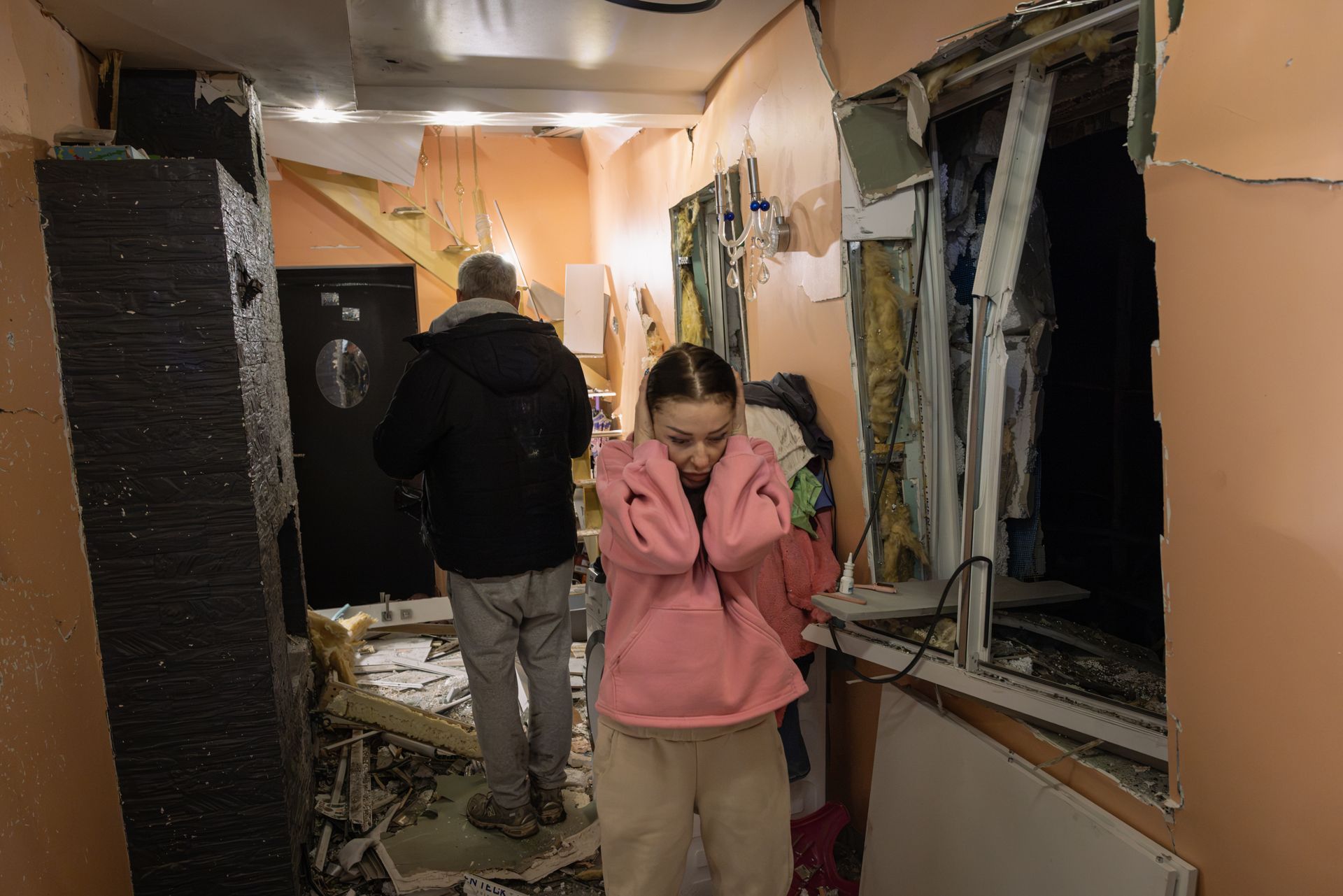
Anna Lodyhina, a mother of a 5-year-old, spent many nights on the cold floor of Kyiv's metro, driven there — like many others — by relentless Russian attacks. As her child slept, she watched over him, exhausted by the constant threat and lack of sleep.
Even after writing off €50m, Iarnród Éireann still finds itself embroiled in a battle over a failed signalling project that could end up costing even more, despite never having been operational.
She’s been the platform's biggest female star since she was 15, and has the battle scars to prove it. Now she’s breaking free from her family’s control — and taking her 160 million followers with her.
Britain's history has been trashed by ideologues with an agenda, undermining the nation’s patriotism and cohesion. It's time to tell a better story about Britain, say Nigel Biggar and Robert Tombs.
With his OG character back and outrage already brewing, the comedy provocateur talks cancel culture, boycotts and putting his money — and his life — on the line for a laugh.
Focusing on a smaller circle of friends made me feel less lonely.
Carrie Berk
Despite having a lot of friends in college, I felt like I was surrounded by strangers.
After a careful analysis, I discovered meaningful connections fulfilled me more than casual ones.
I stopped spreading myself too thin and have since focused my time on a smaller circle of friends.
My 21st birthday party was packed with a dozen faces I half-knew. They all smiled as I blew out the candles and made a wish, yet I felt as if I were surrounded by strangers.
As I looked out into the crowd, I realized that most of my friendships were surface-level, rather than genuine connections. We talked about upcoming school assignments, trending TV shows, and our favorite restaurants, but I wanted more.
What was supposed to be a celebration turned into a rude awakening: Did these people even know me at all?
I've always been someone with many hobbies, which meant making friends across all walks of life. Although I'm lucky to have so many people in my corner, there came a point where it felt like I was collecting friendships like tokens rather than forming meaningful relationships.
The realization set in: I had tons of friends, but somehow, I was lonely.
I needed to learn how to distinguish casual friendships from meaningful ones
I realized friendships with a strong emotional connection were the most fulfilling.
Carrie Berk
Even years after graduating from college, I couldn't shake the feeling that I'd been collecting the wrong type of friendships.
I realized many of my relationships had been rooted in transactions or shared activities, which may explain why I was still feeling lonely.
Upon reflection, I noticed that the most genuine friendships I had involved some emotional depth and connection. I only have two of these in my life — one who lives close by, and another who is across the country.
Regardless of where they are, the empathy goes both ways — I share in their joys and sit with them through their struggles, and they do the same for me. We're not just shoulders for each other to cry on, but supportive pillars who help each other walk through life.
These were the friendships that fulfilled me most, and I needed to make more room in my life for them.
I used to be scared of sharing my feelings with friends, but I realized that it was the only way to strengthen my relationships.
Carrie Berk
In order to do this, I needed to figure out what was holding me back. I came to the conclusion that, when it comes to friends, I'd kept many people at a distance, afraid that opening up would make me seem like "too much" or leave me hurt again.
I'd also been spreading myself too thin, trying to maintain too many relationships instead of investing in the ones that mattered most. For example, I felt like I rushed through dinners to mentally check a box that I was keeping up the relationship. Not only was that a waste of time, but it led to major emotional burnout.
Now, I focus on a handful of friends with whom I can build a deeper bond. Even though I only have time to see a select few people, I make sure the few hours we spend together are packed with thoughtful, not superficial, conversations.
Recently, I spent some time with a work colleague outside the office, and we discussed how fitness helped us during difficult points in our lives. We connected on something beyond our jobs, and for the first time in a long time, I felt less lonely.
Once I stopped chasing a bigger circle and was more vulnerable, I felt less alone
Investing more time and energy into my close friendships has been so rewarding.
Carrie Berk
At first, it was difficult to let go of my larger circle. There's nothing wrong with casual friendships, but they couldn't give me the depth I was craving.
Instead, the friends I need are the ones who will hold me up at my worst and cheer me on at my best without expecting anything in return — and I never think twice about doing the same for them. These connections take more time and care to develop, but are well worth the wait.
Once I started watering the friendships I truly valued, I noticed our moments together aren't rushed, and our connection is stronger now because of the care we put into each conversation.
This year, I'm thinking about having a birthday dinner with two or three close friends rather than a larger celebration. Ironically, when I began filtering superficial relationships out of my life, I felt less lonely — and that's all I could have ever wished for.

 Login