❌

Reading view

Swedish Centre Party Leader Tasked with Exploring Government Formation

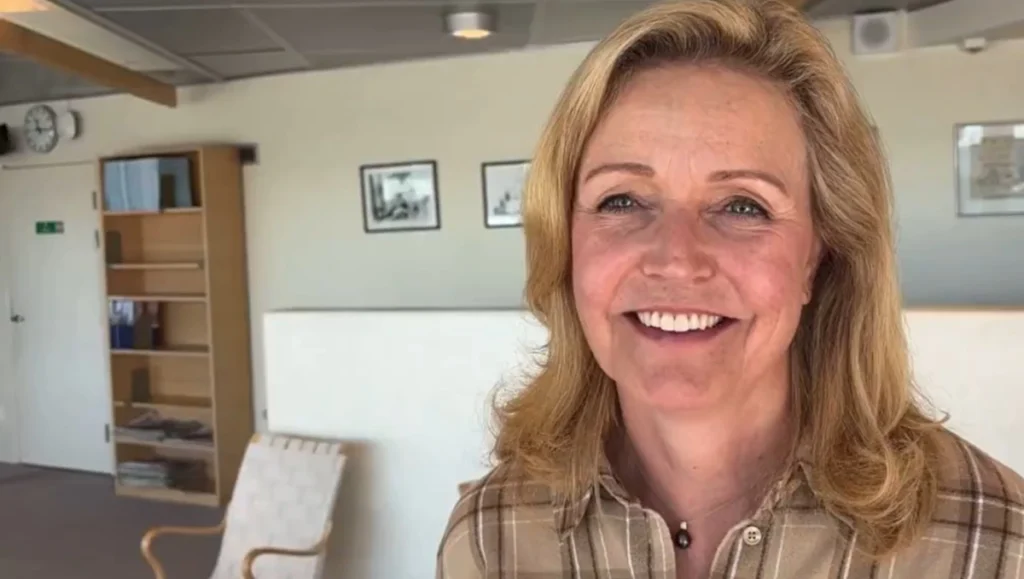
“My ambition is to contribute to a solution to the government question, not to become prime minister myself,” Thand Ringqvist said.

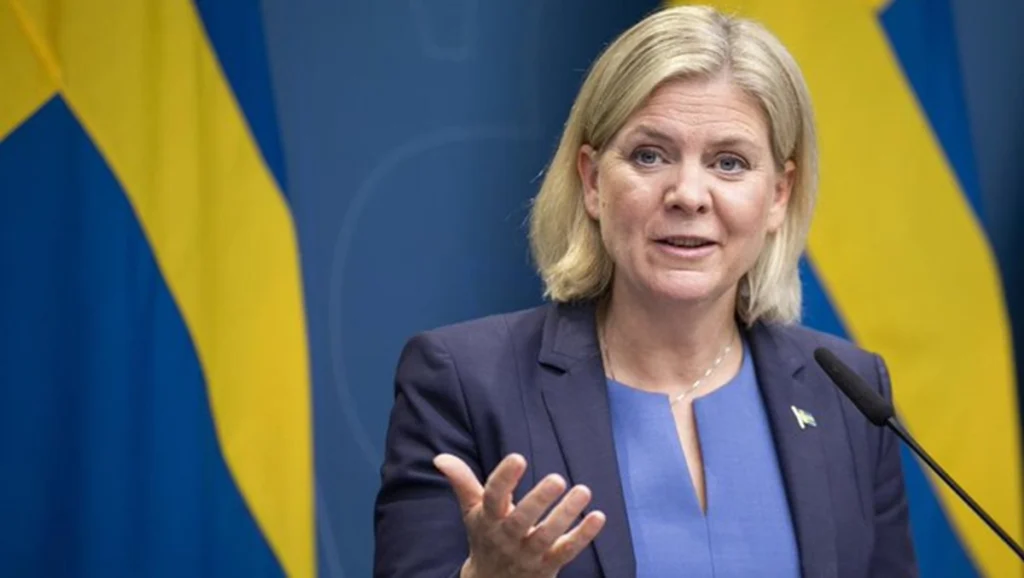
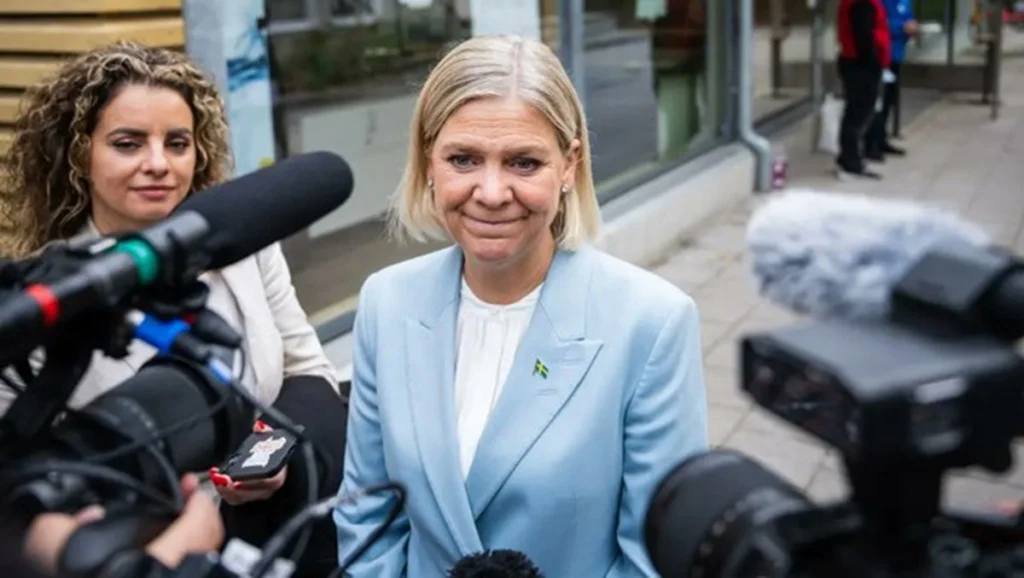
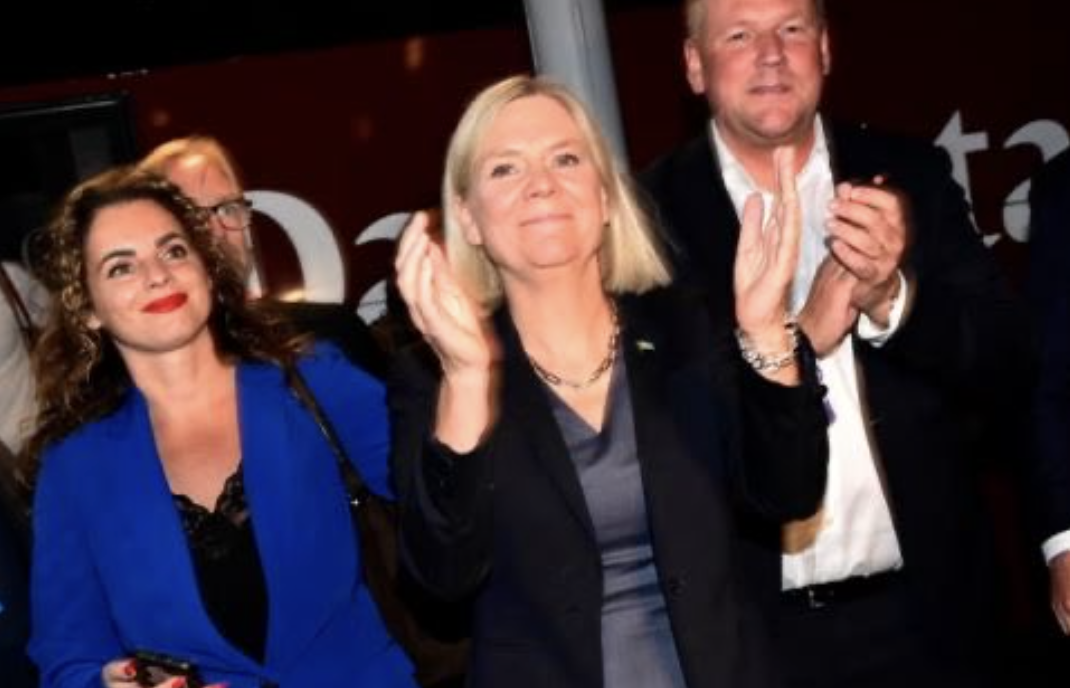
On Monday, Swedish Parliament Speaker Andreas Norlen tasked Elisabeth Thand Ringqvist, leader of the Centre Party, with exploring the possibility of forming a new government.

RELATED:

Sweden’s SDP Leader Andersson Again Tasked with Forming Government

Despite the decision, Norlen acknowledged that there was no clear consensus among political parties on who should be tasked with exploring government formation. Thand Ringqvist has to report back to the speaker by next Monday.

“My ambition is to contribute to a solution to the government question, not to become prime minister myself,” Thand Ringqvist said, adding that she would invite all party leaders for talks.

The Centre Party emerged as the third-largest party in the opposition bloc, winning 25 seats in September’s general election.

More than a month after 🇸🇪 election there is still a total deadlock when it comes to forming a new government. Trenches seem even deeper. Some weeks to go with further efforts to force someone into a major U-turn, but the likelihood of a snap election is undoubtedly increasing. pic.twitter.com/WPiCOgUUyO

— Carl Bildt (@carlbildt) October 17, 2026

Together with the Social Democratic Party, Left Party and Green Party, the four parties secured 176 seats in the 349-member parliament, giving them a narrow majority but leaving them divided over the composition of a new government.

Norlen first tasked Social Democratic Party leader Magdalena Andersson with exploring government formation on Sept. 18, following outgoing Prime Minister Ulf Kristersson’s request to be relieved of his duties after the election.

Andersson returned the mandate on Sept. 28 amid divisions within the bloc over the election of the parliamentary speaker. Norlen reassigned her the task in early October, but negotiations remained inconclusive.

Parliament rejected a proposal for Andersson to become prime minister and form a Social Democratic single-party government last Thursday, prompting a new round of efforts to break the political deadlock.

teleSUR/ JF

Source: Xinhua

  •  

French authorities announce partial curfews as PM blames ‘ultra-left’ for exploiting protests – as it happened

This live blog is now closed.

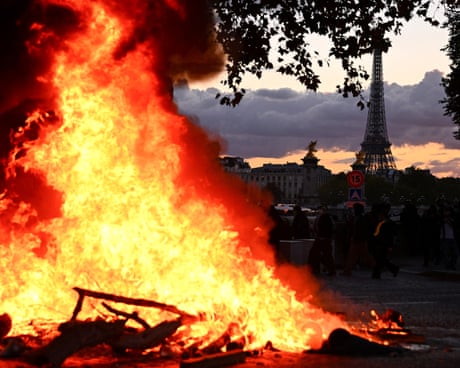
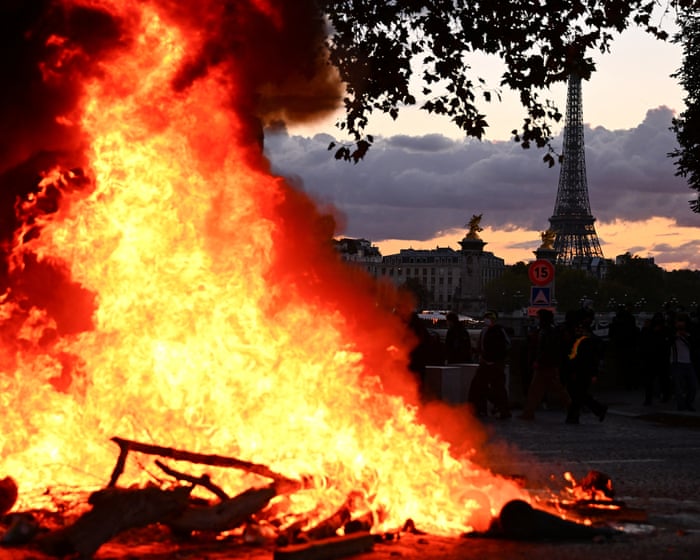
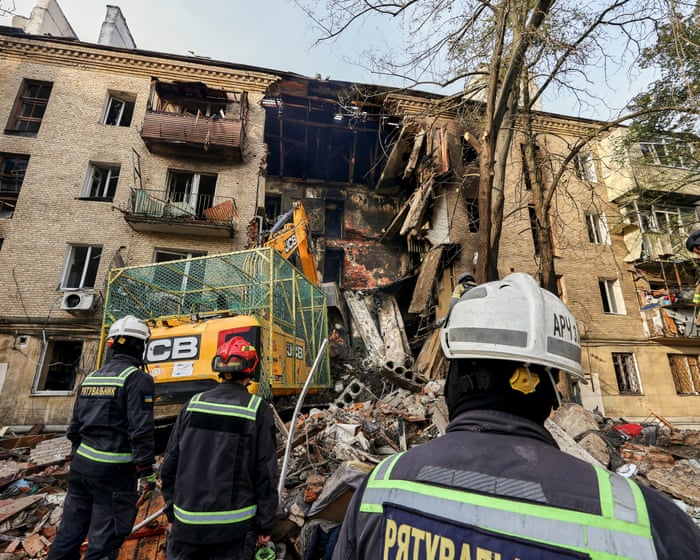
French PM Lecornu says he has asked prefects to implement “a number of partial curfews” in certain “localised” urban areas to stop further disorder, which he attributes to “the extreme-left” and some criminal elements.

We will no doubt hear more on this from local authorities, as in the example of Marseille (10:32).

Continue reading...

© Photograph: Guillaume Saligot/AFP/Getty Images

© Photograph: Guillaume Saligot/AFP/Getty Images

© Photograph: Guillaume Saligot/AFP/Getty Images

  •  

Five Arrested in €114 Million Smartphone VAT Fraud Investigation Across Europe

Five people have been arrested in Cyprus, Germany and Italy as part of a European investigation into an alleged €114 million VAT fraud operation involving the cross-border smartphone trade.

The European Public Prosecutor’s Office (EPPO) announced on 16th October that three suspects had been detained in Cyprus, one in Germany and one in Italy following an investigation coordinated by its Munich office.

Investigators believe the suspects established and controlled a network of companies designed to exploit the tax treatment of goods traded between EU member states.

The alleged operation involved smartphone transactions through businesses and so-called missing traders operating in Germany, Albania and Sweden. Prosecutors estimate that the activities caused VAT losses of approximately €80 million in Sweden and €34 million in Germany.

According to the official announcement of the arrests, the operation forms part of a wider investigation known as Midas, which is examining organised cross-border tax fraud.

Searches across several countries

The arrests were accompanied by searches and seizures in Cyprus, Greece and Italy, conducted with the assistance of national police, financial investigators and tax authorities.

Prosecutors said 12 searches had been carried out at premises connected with the suspects and companies under investigation.

Assets of up to €80,000 were frozen, while investigators also seized or took action against bank accounts, vehicles and property.

The operation involved cooperation between Germany’s tax authorities, Cyprus’s financial intelligence and cybercrime units, the Greek financial police and Italy’s Guardia di Finanza.

The suspects are believed to have played leading roles in organising and controlling the alleged scheme, although prosecutors have not publicly established their individual criminal responsibility.

The investigation remains subject to proceedings before the competent German courts. All suspects are presumed innocent unless proven guilty.

How the alleged fraud operated

The case concerns a form of tax evasion known as missing-trader intra-community fraud, commonly described as carousel VAT fraud.

Under the EU’s VAT system, qualifying business-to-business transactions involving goods transported between member states are generally exempt from VAT in the country of dispatch.

The purchaser accounts for VAT under the rules applicable in the destination country, while subsequent domestic sales normally involve VAT being charged to the buyer.

Fraudsters can exploit those arrangements by establishing companies that purchase goods through cross-border transactions before reselling them domestically.

A missing trader collects VAT from the purchaser but fails to remit it to the relevant tax authority. Other companies in the transaction chain may then seek deductions or refunds.

The same goods can pass through several businesses and, in some arrangements, move repeatedly between countries, allowing the fraud to be repeated.

Smartphones and electronic equipment are particularly attractive because they are relatively expensive, easily transported and can be traded in large volumes.

The complexity of the arrangements makes investigations difficult when businesses are established in several jurisdictions and transactions move rapidly between companies.

A wider European problem

The latest arrests follow another substantial VAT fraud operation announced earlier this month.

On 7th October, the EPPO reported that 62 suspects had been detained in a separate investigation involving alleged losses of at least €410 million.

That operation, known as Hermes, involved searches across eight countries and allegations concerning the sale of mobile phones and other electronic devices.

Although separate from Midas, the investigation illustrates the scale and organisation of suspected VAT fraud involving internationally traded consumer electronics.

According to the EPPO‘s 2025 annual report, prosecutors were handling 3,602 active investigations at the end of last year, with estimated potential damage exceeding €67 billion.

Of that amount, more than €45 billion related to suspected VAT and customs fraud.

Those figures concern estimated losses under investigation, rather than sums established by final court judgments or amounts that have already been recovered.

Protecting European tax revenues

The financial consequences extend beyond the immediate losses attributed to individual schemes.

VAT is a major source of revenue for national governments and forms part of the system used to calculate certain contributions to the EU budget.

Fraudulent transactions can also distort competition by allowing dishonest operators to offer prices that legitimate businesses cannot match.

The Commission’s 2025 VAT gap report estimated that EU countries failed to collect approximately €128 billion in expected VAT revenue in 2023.

That broader figure includes losses arising from several causes, including administrative errors and insolvency, and cannot be attributed entirely to criminal fraud.

The latest arrests also demonstrate the importance of cross-border investigative cooperation when suspected financial offences involve companies, transactions and assets located in different countries.

In the Midas investigation, prosecutors must now establish the precise roles of the suspects, prove the alleged transactions and determine whether criminal proceedings can result in convictions and financial recovery.

The arrests represent another stage in the investigation, not a judicial finding that the alleged €114 million fraud has been proved.

  •  

Briton threatened with deportation from Sweden over Brexit rules goes into hiding

Mark Smith, who has severe health issues, says he was told three times he needed to do nothing in order to remain after Brexit

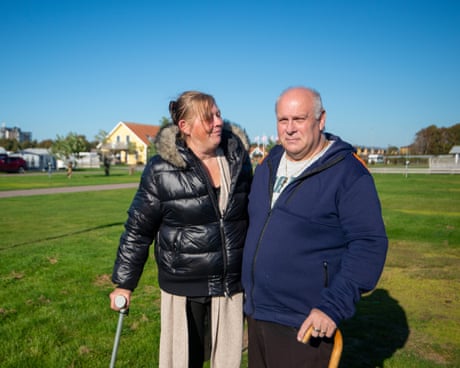
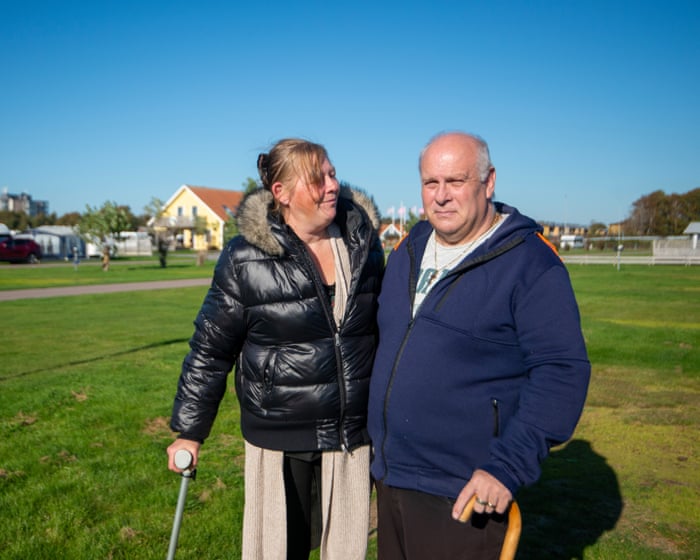
A seriously ill British man living in Sweden has been forced into hiding amid fears he will be deported as a result of what he says is a government Brexit residency error.

Mark Smith, 60, who has had heart attacks, strokes, severe headaches and chronically high blood pressure that has been difficult to treat, was told on the phone he should leave Sweden by 17 October as he was an “alien” without permission to stay.

Continue reading...

© Photograph: Annika Karlbom/Hallands Nyheter

© Photograph: Annika Karlbom/Hallands Nyheter

© Photograph: Annika Karlbom/Hallands Nyheter

  •  

Swedish Parliament Rejects Andersson’s PM Nomination Amid Coalition Deadlock

She said that several rounds of voting might be needed before a new government could take office.

On Thursday, Sweden’s parliament rejected Social Democratic Party leader Magdalena Andersson’s nomination as new prime minister (PM), prolonging a political deadlock over government formation following last month’s general election.

RELATED:

Sweden’s SDP Leader Andersson Again Tasked with Forming Government

Andersson, who served as Sweden’s PM from 2021 to 2022, received 99 votes in favor and 248 against in the 349-member Swedish parliament, the Riksdag, according to Swedish Television (SVT).

Following the vote, Andersson told SVT that the Riksdag was facing a difficult situation and that several rounds of voting might be needed before a new government could take office.

The vote came after Parliament Speaker Andreas Norlen nominated Andersson on Tuesday to lead a single-party Social Democratic government, despite the failure of negotiations among four parties that together secured a narrow parliamentary majority in the September election.

The Social Democratic Party, Left Party, Green Party and Center Party won a combined 176 seats, but remain divided over the composition of a new government.

Coalition talks have been hampered mainly by disagreements between the Center Party and the Left Party, with the latter insisting on joining the government and securing cabinet posts, while the Center Party refuses to serve in the same government.

The Left Party, Green Party and Center Party all announced ahead of Thursday’s vote that they would oppose a single-party Social Democratic government.

Latest Sweden Novus Poll modelled out

🌹S: 95 seats (-4)
🔵M: 88 seats (+18)
🟡SD: 66 seats (+4)
🔴V: 27 seats (-3)
🍀C: 25 seats (no change)
🟢MP: 24 seats (+2)
💙KD: 24 seats (+2)
🟦L: 0 seats (-19)

🌹S Minority Government

(+/- change from 2026 election) https://t.co/hFkLexQoK7 pic.twitter.com/ZrfTVwgL1q

— Poliwave Europe (@PoliwaveEU) October 15, 2026

On Tuesday, Andersson acknowledged that although progress had been made in coalition negotiations, conditions were still not in place to form a government capable of securing sufficient parliamentary support.

The former PM was first tasked with exploring the formation of a new government on Sept. 18, after outgoing PM Ulf Kristersson requested to be relieved of his duties following the election.

However, she returned the mandate on Sept. 28 after the Left Party backed the Moderate Party’s candidate rather than the Social Democratic Party’s candidate in the parliamentary speaker election. Norlen subsequently reassigned her the task in early October, but negotiations remained inconclusive.

Under Sweden’s system of negative parliamentarism, a PM candidate can take office unless at least 175 of the 349 lawmakers vote against the nomination.

Following Thursday’s rejection, Norlen will have to put forward another candidate. Under Sweden’s constitution, if parliament rejects four proposed PM candidates, an extraordinary election must be held.

teleSUR/ JF

Source: Xinhua

  •  

'Incoherent,' 'deeply problematic,' and 'bad,' Europe reacts to Trump's recent pro-Russian turn

"Every step now to help the Russians increase their financing of the war is a bad sign. We very much stick to Volodymyr Zelensky's view on this," Swedish Prime Minister Ulf Kristersson.

  •  

Climate change gives Swedish winemakers an unexpected boost

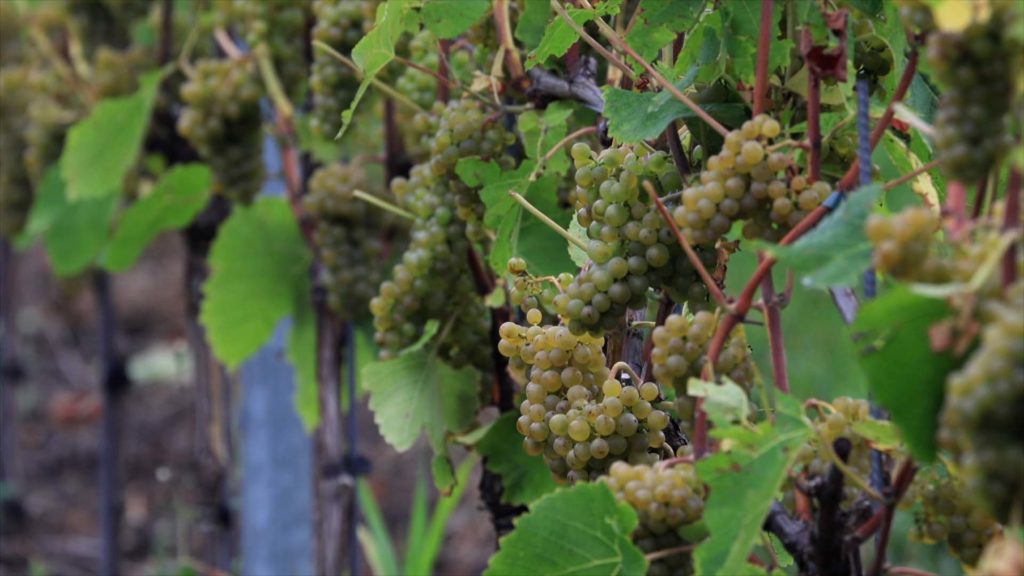
Record high temperatures this year forced European wine producers to harvest grapes much earlier than usual. French wineries fear it will lead to the worst season in 30 years. But Nordic newcomers to the world of wine are toasting what they believe will be a vintage harvest, thanks, in no small part, to climate change. Special correspondent Malcolm Brabant reports from Sweden.

  •  

Swedish Parliament to Vote on New Prime Minister Amid Coalition Deadlock

Parliamentary Speaker will nominate Magdalena Andersson to lead a single-party Social Democratic government.

On Tuesday, the Swedish parliament is set to vote on Social Democratic Party leader Magdalena Andersson’s nomination as prime minister (PM), parliamentary speaker Andreas Norlen announced. Negotiations to form a new government have been deadlocked since last month’s general election.

RELATED:

Sweden’s Social Democratic Leader Gives Up Bid to Form Government

Norlen said that he would nominate Andersson to lead a single-party Social Democratic government, despite the lack of an agreement among the four parties that together secured a narrow parliamentary majority in the election.

Earlier Tuesday, Andersson told journalists after meeting Norlen that although progress had been made in coalition negotiations, conditions were still not in place to form a government capable of securing sufficient parliamentary support.

She said she was ready for a parliamentary vote on her nomination as PM, which would concern a government consisting solely of the Social Democratic Party, as no agreement had been reached with other parties.

However, the Left Party and the Green Party, two potential parliamentary allies of the Social Democratic Party, both said they would vote against a single-party Social Democratic government. Green Party co-leader Amanda Lind reiterated her preference for a majority government involving all four parties.

🔴 Andersson fails again to form Swedish government; vote scheduled for Thursday

Social Democratic party leader Magdalena Andersson told parliament on Tuesday she could not unite her centre-left bloc into a governing coalition. "My overall assessment is that progress has been… pic.twitter.com/Kiuo3uBNR7

— NewsTongue (@NewsTongueX) October 13, 2026

According to SVT, coalition talks have been hampered mainly by disagreements between the Center Party and the Left Party. The latter insisted on joining the government and securing cabinet posts, while the Center Party refuses to serve in a government alongside the Left Party.

The Social Democratic Party, Left Party, Green Party and Center Party together won 176 seats in the 349-member parliament in September’s election, giving them a narrow majority but leaving them divided over the composition of a new government.

Andersson was first tasked with exploring the formation of a new government on Sept. 18, after outgoing Prime Minister Ulf Kristersson requested to be relieved of his duties following the election. However, Andersson returned the mandate on Sept. 28 after the Left Party backed the Moderate Party’s candidate rather than her Social Democratic Party’s candidate in the parliamentary speaker election.

Norlen reassigned Andersson the task on Oct. 2, but negotiations remained inconclusive, prompting her to request a one-day extension before reporting back on Tuesday.

Under Sweden’s system of negative parliamentarism, a PM candidate may assume office unless at least 175 of the 349 lawmakers vote against the nomination. If the candidate is rejected, the speaker must then put forward another proposal.

teleSUR/ JF

Source: Xinhua

  •  

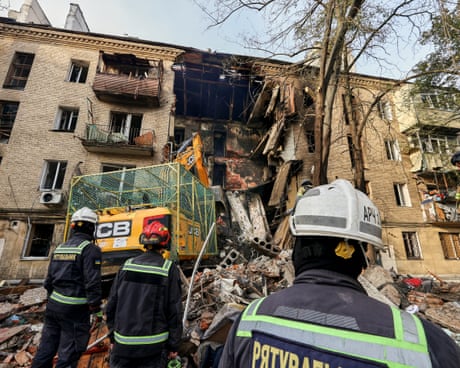
Zelenskyy says Russia ‘did not heed’ Trump’s call for ceasefire and Ukraine had ‘no early warning’ before strikes on Kyiv – as it happened

Ukraine’s president says his country has halted strikes on Russian oil refineries for two days after Trump’s energy ceasefire announcement

On frozen Russian assets, Poland’s Sikorski says the use of frozen Russian assets is “a complicated issue,” but takes a very clear stance in response to any suggestion of releasing them back to Russia.

“We are working on it, but there is also some rumours that some people are expecting these assets to be released back to Russia.

I don’t think I’m speaking just for myself in saying: over our dead bodies.”

“Russia right now is not ready for ceasefire, but still, this only can encourage us to stay with Ukraine and to, strengthen, the pressure on Russia and always be ready for conversations, but and also especially for, for ceasefire negotiations.

But, until this doesn’t happen, we are with Ukraine. We are with the president the German government is is backing the Ukrainian government and the president, completely. He is the person to lead Ukraine, and we are with him.”

Continue reading...

© Photograph: Sergey Kozlov/EPA

© Photograph: Sergey Kozlov/EPA

© Photograph: Sergey Kozlov/EPA

  •  

EU blacklists 1,569 Russian arms suppliers and their bosses in its biggest sanctions round ever, as Trump eases up on Moscow

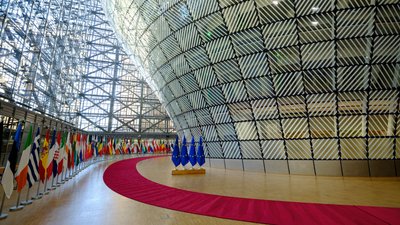
trade banks energy crypto—the eu keeps its full russia economic sanctions wall standing 2027 · post flags member states headquarters council european union brussels belgium 17 2025 getty images/thierry monasse

The EU adopted its largest-ever round of sanctions listings on 12 October, targeting the suppliers behind Russia’s war industry, the Council of the EU announced. The bloc acted as Russia keeps killing Ukrainian civilians every day, while US President Donald Trump eases sanctions on Russian diesel.

Russia’s planned winter campaign against Ukraine’s infrastructure depends on arms factories fed by a web of component suppliers and on oil revenue that still flows despite Ukraine’s refinery strikes, so every supplier cut off from that web raises the cost of waging it. As Washington eases off, Europe’s own pressure has a gap: its ports still take record volumes of Russian Arctic gas, and a full ban on long-term contracts starts only in 2027.

Missile suppliers top the list

More than half of the new listings hit the supply chain for ballistic missiles that Russia “uses to kill Ukrainian civilians every day,” EU foreign policy chief Kaja Kallas said in the statement. Russian attacks killed more than 150 people in the past week, Ukrainian President Volodymyr Zelenskyy said on 11 October.

The list names 826 Russian companies, mid-level firms the Council calls the “core” of Russia’s arms industry, with at least €20 billion in yearly turnover, and 743 people who run them. They make parts for missiles, drones, and military aircraft, from semiconductors and radars to explosives and navigation systems. Their assets are frozen, EU firms may not finance them, and the executives may not enter the EU.

Foreign ministers ratified a deal EU envoys reached on 7 October. Ukraine’s sanctions commissioner Vladyslav Vlasiuk said 60% of the listings came from Ukrainian proposals.

Ministers reject the diesel deal

EU foreign ministers in Luxembourg vowed to keep the sanctions despite Trump’s diesel deal with Russian President Vladimir Putin, Euronews reported. Kallas addressed Washington directly as she arrived.

“The US is our biggest ally, but our message is clear: if we want to end this war, the only way we can do this is (by) putting more pressure on Russia,” Kallas said.

Irish Foreign Minister Helen McEntee called the deal “concerning,” and Lithuanian Foreign Minister Kęstutis Budrys said it was “not the European way.” Kallas warned that an energy truce covering only refineries would favor Russia, since Ukraine has one refinery and Russia “plenty.”

Trump announced the diesel deal on 9 October, and the US Treasury waived sanctions on Russian diesel until April 2027. Zelenskyy said the EU would provide about €3 billion more in military aid this week.

Washington presses Kyiv

Trump expects Ukraine to stop hitting Russian refineries under his proposed energy ceasefire, a White House official told Axios. Zelenskyy said Kyiv would halt such strikes if Moscow did the same. On 10 October, Trump told reporters it was time for Ukraine to get a new president. Germany’s foreign minister, Britain’s defense secretary, and a senior lawmaker from Chancellor Friedrich Merz’s party backed Zelenskyy, while the Kremlin sided with Trump.

Zelenskyy offered to hold elections after a 60-day ceasefire, and Kallas said elections are impossible while the war goes on. The Institute for the Study of War assessed that Russia exploits Ukraine’s legal ban on wartime elections to drag out the war.

  •  

Sweden: Libyan-Swedish suspect violently raped jogger in her 50s, told police he wanted to ‘give her love’

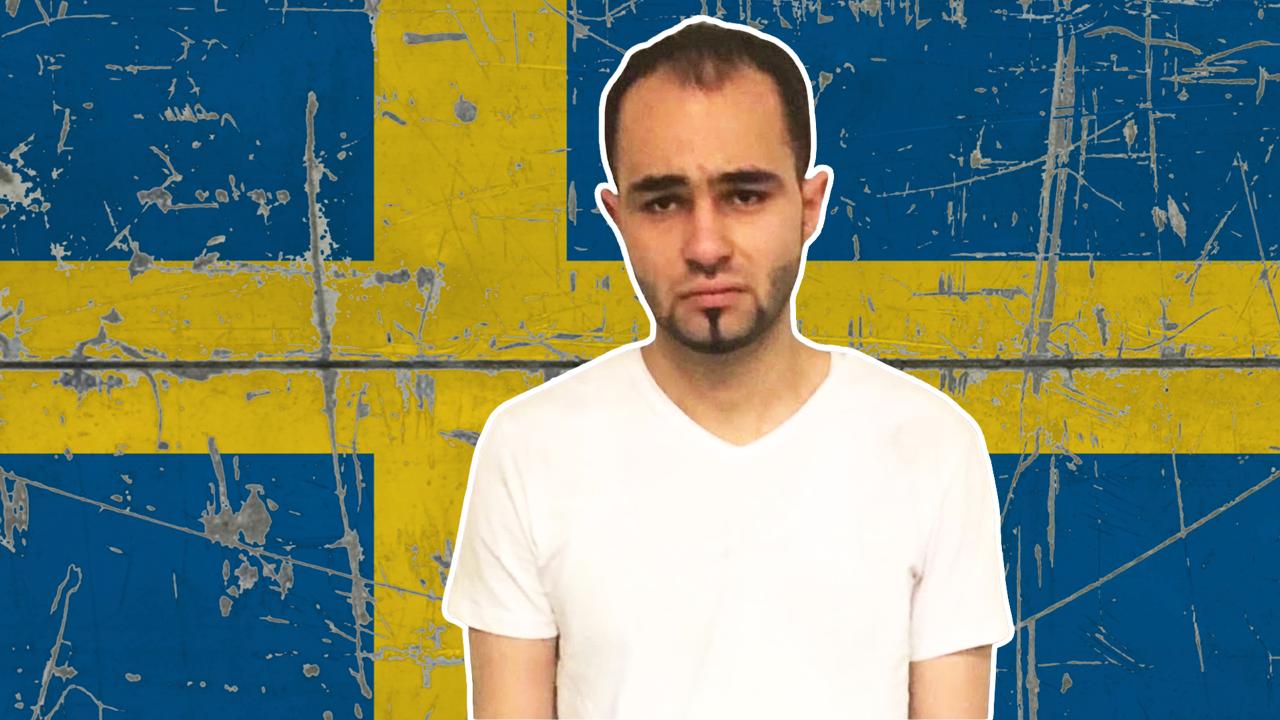
Mohammad Hamed Alshaer, who was born in Libya, has been charged with aggravated rape of a woman in her fifties while she was jogging along Ribersborgsstigen in Malmö on July 15.

According to the indictment submitted to Malmö District Court, the 37-year-old Alshaer struck the woman from behind, knocked her over, and dragged her into the bushes. There, he grabbed her neck and mouth, pulled her by the hair, and raped her vaginally and anally. The prosecutor wants the crime classified as rape with particular cruelty, citing exceptional violence, ruthlessness, and brutality.

Witnesses heard screams and thuds and alerted police. Officers arriving at the scene found a man lying half-undressed on top of a woman who was screaming for help.

The woman later told investigators she tried to wriggle free.

“I thought: I don’t accept this. I don’t give up,” she said, according to Swedish public broadcaster SVT. However, SVT and other Swedish outlets did not publish the suspect’s Libyan background and other key details, such as his name. Samnytt has reported on this information.

Alshaer has described the incident in terms similar to the woman’s account, with one major difference: he says the woman “inspired him” to have sex with her. He told police he had not had sex in several years and decided to “give her love.” After his arrest, he reportedly told officers he realized what he had done was wrong, yet he still denied the rape in court.

Alshaer, a Swedish citizen originally from Libya, has a prior conviction that includes sexual assault in a nightclub. However, since he holds Swedish citizenship, he cannot be deported. Despite obtaining citizenship, he requires an Arabic interpreter in court.

He is also charged with violent resistance and minor drug offenses. He denies the rape and the resistance charge but admits to the drug offense.

The post Sweden: Libyan-Swedish suspect violently raped jogger in her 50s, told police he wanted to ‘give her love’ appeared first on Remix News.

  •  

Sweden’s left narrowly wins national elections, 70% of Swedes with non-European background backed the left

For years, the right across the West has noted that mass immigration has been a boon for left-wing parties, which are essentially importing a new voting base. Sweden’s latest election appears to once again affirm this view, with the left narrowly winning the election, in large part due to their overwhelming support from those with a non-European background in Sweden.

Sweden’s 2026 election produced one of the narrowest results in recent memory. With roughly 94.7 percent of votes counted, the center-left opposition holds 176 seats against 173 for the parties backing outgoing Prime Minister Ulf Kristersson.

The left-wing Social Democrats remain the largest party at 28 percent, enough to put Magdalena Andersson in position to try to form a government.

A striking pattern in SVT’s VALU exit poll helps explain how the result took shape, with 70 percent of voters of non-European origin backing the left-wing bloc of Social Democrats, Left Party, Greens, and Center.

“VALU shows a very clear political dividing line. Among voters with non-European backgrounds, S, V, MP, and C together receive 70 percent, while the Tidö parties receive 27. This is a voter group whose party sympathies differ sharply from the electorate as a whole – and which therefore has significance for the long-term electoral math,” wrote Swedish political scientist and author Daniel Schatz on X.

VALU visar en mycket tydlig politisk skiljelinje. Bland väljare med utomeuropeisk bakgrund får S, V, MP och C tillsammans 70 procent, medan Tidöpartierna får 27.

Det är en väljargrupp vars partisympatier skiljer sig kraftigt från väljarkåren som helhet – och som därför har… pic.twitter.com/m6J7pz2ySV

— Daniel Schatz (@drdanielschatz) September 13, 2026

VALU defines the group as people who themselves, or whose parents, grew up outside Europe. Their votes broke down for the Left at 21 percent, Social Democrats at 38 percent, Greens at 7 percent, and Center at 4 percent.

Before the election, the leader of the right-wing Sweden Democrats, Jimmie Åkesson, also wrote that the left’s strategy is to gain votes from Swedes with a foreign background even as they lose votes from native ethnic Swedes:

“It’s about power. The Social Democrats’ decades-long campaign for increased immigration from the Muslim world has never been a coincidence. On the contrary, it seems to be a long-term strategy. The election promise from Magdalena Andersson to grant citizenship to up to 100,000 immigrants, based on the old and undemanding regulatory framework, should be seen in the same light,” he wrote.

Det handlar om makt.

Socialdemokraternas mångåriga kamp för ökad invandring från den muslimska världen har aldrig varit en slump. Tvärtom tycks det vara en långsiktig strategi.

Vallöftet från Magdalena Andersson att ge uppåt 100 000 invandrare medborgarskap, utifrån det gamla… pic.twitter.com/Tz2jrUfzVP

— Jimmie Åkesson (@jimmieakesson) August 26, 2026

“When Swedish voters flee the party, you need votes from elsewhere, and mass immigration from the Muslim world then appears to be an attractive way to circumvent the will of the Swedish people,’ he added.

In 2022, Swedes with a foreign backgroun already attracted around 68 percent of this electorate. Earlier surveys of Muslim voters had placed combined support for the Social Democrats, Left and Greens near 85 percent, with the Social Democrats alone above 61 percent. This slice of the electorate has expanded rapidly over the years.

About 13 percent of eligible voters, close to 1 million people, now have non-European origins, up from just over 3 percent in 2002 and 0.3 percent in 1982.

Many arrived from Muslim-majority countries in the Middle East, Africa and Asia through asylum, family reunification and earlier, more open immigration rules.

Sweden does not record religion in official statistics, yet estimates indicate that Swedish citizens from Muslim-majority countries number in the hundreds of thousands. Together, with other voters of non-European background, they form a reliable base for the left even as much of the rest of the country has shifted toward tighter immigration and crime policies.

Remix News reported on polling already six years ago which showed that a majority of Swedes wanted to tighten immigration substantially. While the native ethnic Swedish population has swung to the right, foreigners have incentives to vote for the left to ensure their families and fellow countrymen can arrive in Sweden unimpeded. Foreigners are also more likely to benefit from social welfare, which left-wing parties promote.

The overwhelming vote for the left from those with a non-European background has been seen across the Western world. In Germany, for instance, the Left Party has proposed giving voting rights to all foreigners who have lived in Germany for five years, regardless of whether they have citizenship. Similar proposals have been put forward by other left-wing parties in the country.

The post Sweden’s left narrowly wins national elections, 70% of Swedes with non-European background backed the left appeared first on Remix News.

  •  

Codex Gigas, the largest medieval illuminated manuscript, was created by a single monk who took 30 years to complete it

In 1648, as Swedish troops looted Prague Castle at the end of the Thirty Years’ War, someone carried off among the spoils a volume that weighed 75 kilos and required two people to move. It was a book, the largest surviving illuminated manuscript of the entire Middle Ages, an object so disproportionate for its time […]

  •  
❌