❌

Reading view

Cuba Denounces U.S. Pressure Ahead of the UN Assembly Vote On Economic Blockade
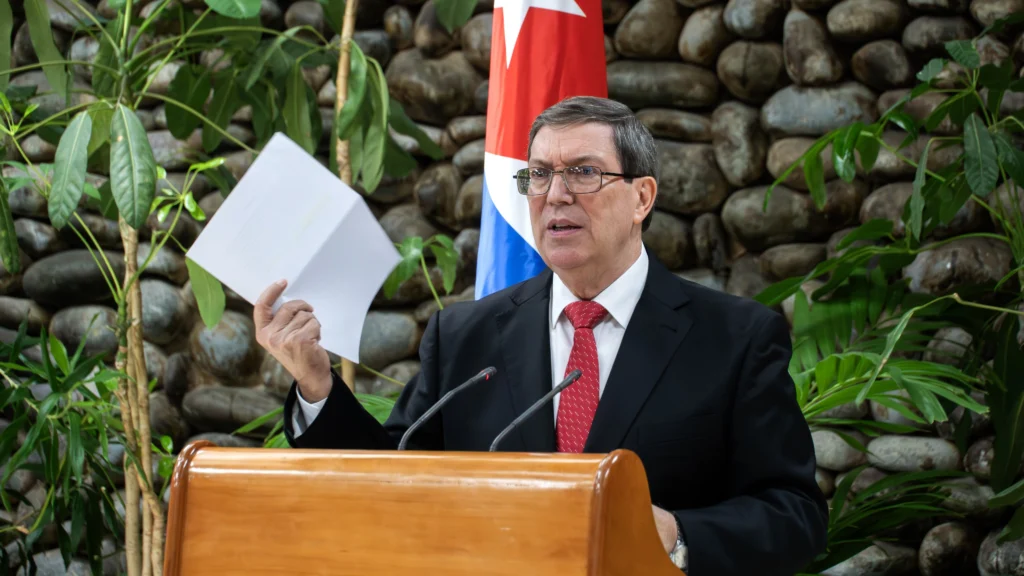
The accumulated losses from more than six decades of the blockade exceed US$150 billion.

On Wednesday, Cuban Foreign Minister Bruno Rodriguez denounced the United States for exerting diplomatic pressure on numerous countries to change their stance ahead of the upcoming United Nations General Assembly vote on the economic blockade imposed on the island.

RELATED:

United States Escalated Hostility Toward Cuba Throughout 2026

According to the Cuban minister, Washington’s actions are intensifying in the lead-up to the debate scheduled for October 27 and 28, when UN member states will again vote on the draft resolution calling for an end to these sanctions.

Rodriguez stated that the current discussion is taking place against a backdrop of a tightening blockade and noted that, for the first time, the General Assembly will also address the effects of the energy blockade imposed on Cuba.

The foreign minister maintained that the U.S. measures are affecting Cuban foreign trade and are part of a strategy designed to create economic and social hardship in order to generate instability in the country.

During a public appearance, the Cuban foreign minister asserted that he possesses documents evidencing efforts to influence foreign governments to change their vote on the resolution presented by Cuba.

As the cruelty of collective punishment continues, Cubans are standing together against the shortages caused by the U.S. blockade.

Watch how hundreds of community groups are helping Cubans get the medicine they need 👇 pic.twitter.com/0NdgM0mM29

— Cuban Americans For Cuba (@Cubans4Cuba) October 21, 2026

According to Rodriguez, these documents include messages that deem the blockade legitimate. The minister also denounced threats of sanctions against sovereign countries, including trade measures, restrictions against officials, and other forms of political and economic pressure.

He also rejected claims that, he said, attempt to link Cuba to the conflict in Ukraine, calling these accusations “false” and part of a “smear campaign” against the Caribbean nation.

Rodriguez asserted that these actions reflect the international isolation of U.S. policy toward Cuba and recalled that, according to calculations presented by Havana to the United Nations, the accumulated losses from more than six decades of the blockade exceed US$150 billion.

#FromTheSouth News Bits | In Cuba, over a million students return to school, marking an achievement for the nation's education system amid ongoing United States aggression. pic.twitter.com/oMCCt8jRPD

— teleSUR English (@telesurenglish) September 4, 2026

teleSUR: JP

Source: teleSUR
  •  

Christian Leader Responds To Netanyahu’s Claims Regarding Palestinian Christians

Dr. Ramzi Khouri said that Netanyahu’s claims in his address to the UN General Assembly regarding the protection of Christians stand in stark contradiction to the reality faced by Palestinian Christians.

  •  

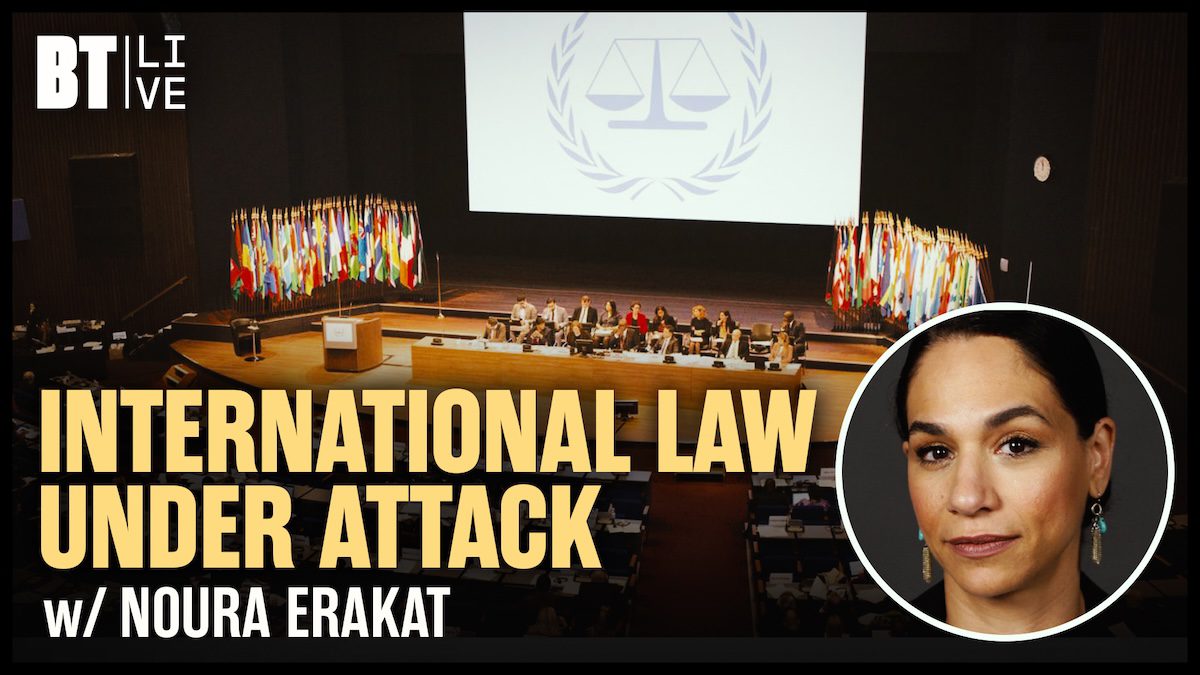
Trump’s war on the ICC is bigger than Netanyahu, with Noura Erakat

The Trump administration’s assault on the ICC isn’t just about protecting Netanyahu from war crimes prosecution. It’s about preserving “imperial impunity” – Israel’s just “the smokescreen,” says Noura Erakat, professor of criminal justice and Africana studies at Rutgers University and human rights attorney. She traces Washington’s bipartisan refusal to ratify the Rome Statute to explain why the International Criminal Court has spent two decades indicting mostly African and Arab leaders. The 2024 warrants for Netanyahu and former Israeli defense minister Yoav Gallant just show the court “between a rock and a hard place”: finally give up its legitimacy entirely, or face destruction by the US.

Now more than a dozen ICC judges, prosecutors, and the court’s president have been sanctioned, as Washington reportedly prepares sanctions against the entire institution, with Secretary of State Marco Rubio calling it an “intolerable threat” to US sovereignty. Can the court survive a war with Washington? Should it? And why do Global South states stay invested in a court that’s clearly stacked against them?

Plus: Erakat describes her arrest at a Palm Beach County budget hearing on their $1 billion-plus investment in Israel bonds; warns that Gaza’s Board of Peace could become a blueprint to replace the UN; and explains why she believes, even as public opinion on Palestine shifts, “there’s no way to be safe in this moment by hiding.”

Watch full episodes of BT Live, join breakthroughnews.org as a member today!

  •  

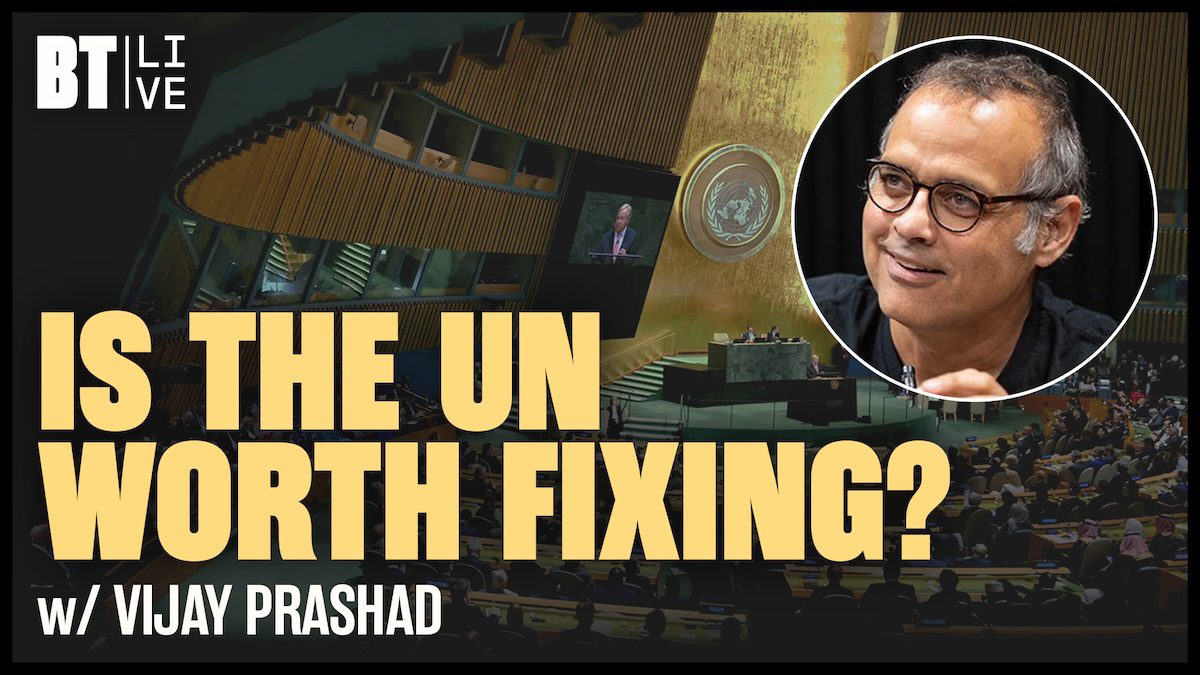
What is the UN actually good for? with Vijay Prashad

Can the United Nations be saved? Should it be? As world leaders and war criminals gather for the 81st session of the UN General Assembly in New York, Vijay Prashad, executive director of the Tricontinental Institute for Social Research, says that despite today’s gangster rule by the likes of Donald Trump and Benjamin Netanyahu, the UN Charter still sets the standard for judging powerful states, making it “the most important treaty document that the world has ever had” – even with the institution built on it in shambles.

Prashad slams Secretary-General António Guterres’s failure to get “creative” to end the genocide in Gaza or to stand up to Trump on Iran, instead opening a free lane for the US president who has “put a loaded gun on the table and has threatened the world.” 

After the US denied visas to the Palestinians for a second year and heavily restricted Iran’s delegation, Prashad makes the case for moving the high-level UNGA out of the US: “New York doesn’t deserve it anymore,” he says, offering alternatives in Geneva or Nairobi. “Let’s move it to the Global South. Why not?”

Watch full episodes of BT Live, join breakthroughnews.org as a member today!

  •  

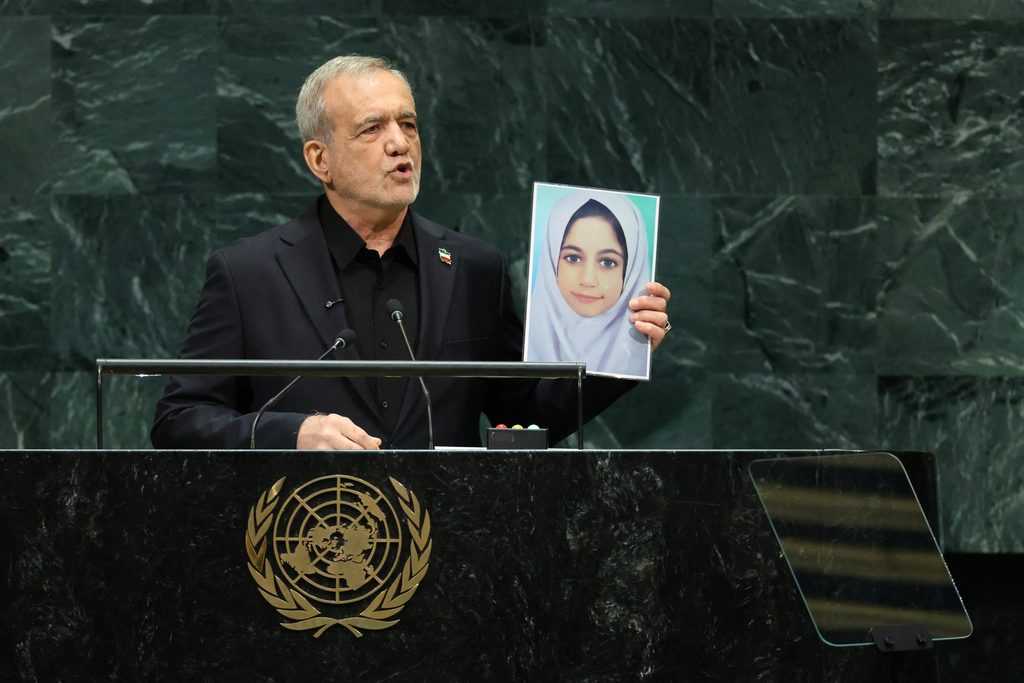
In UN Speech, Iran’s President Displays Pictures of Children Killed by US, Brings Attention to Israel’s Nuclear Arsenal

He also held up photos of a sports hall hit by a US strike that killed 21 civilians, including seven children; meanwhile, he pointed out, Israel has nuclear weapons, is not a signatory to the NPT, has not allowed a single inspection, and has murdered savagely over 70,000 innocents in Gaza

  •  

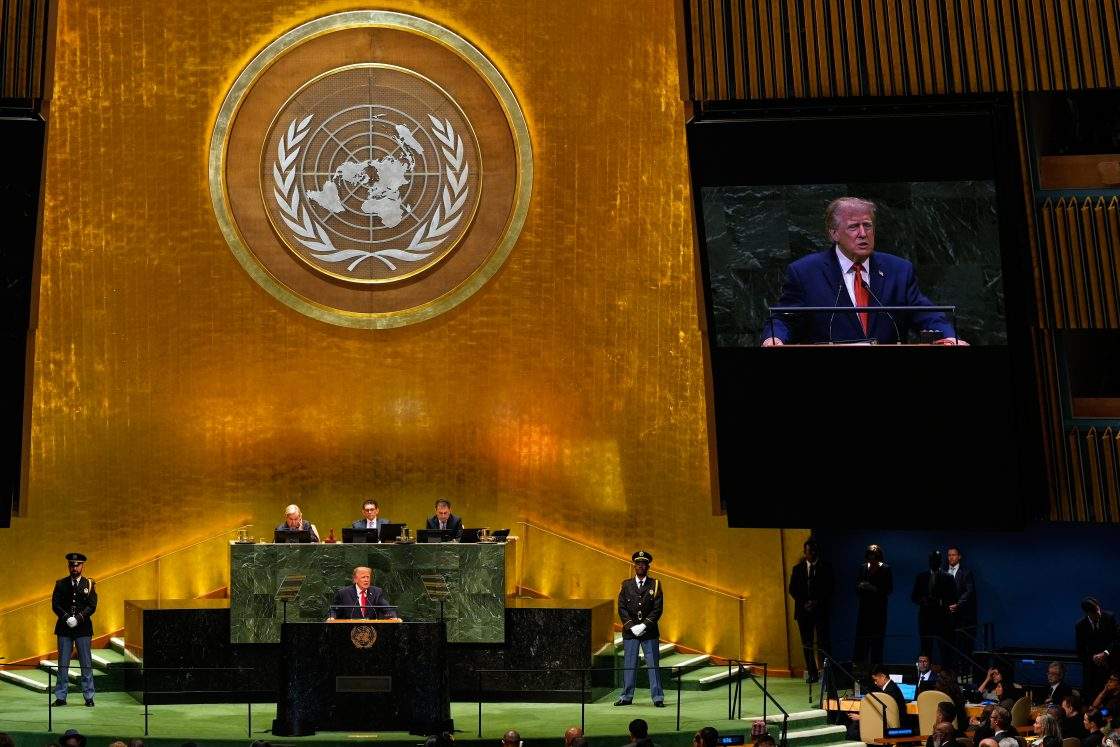
European leaders fixate on Russia, avoid criticizing US at UNGA

Artificial intelligence was the concept of choice among European speakers during the first days of the United Nations General Assembly (UNGA). Prime ministers and presidents recognized opportunities and invoked stronger regulation – then returned to advocating for more military spending, planning deterrence, and avoiding harsh words for the Trump administration.

Read more: The AI frontier asks to be paced: anatomy of a panic

“I’m afraid I may lack originality in describing it [the situation in the world],” French President Emmanuel Macron remarked, referring to the overlaps between interventions. For once, he was not wrong. Most European speeches described the world in terms of crisis, yet failed to spell out the connections between that situation and the behavior of the United States. Macron’s speech was no true exception.

Instead, most seemed keen to endear themselves to the Trump administration. New-ish British Prime Minister Andy Burnham called the UK “America’s closest ally” and announced a new “AI defense partnership” with the US – giving listeners something to truly worry about when AI is concerned.

The East European anti-communist set

Others were even friendlier to the UNGA host country. Romanian President Nicușor Dan said it was a particular pleasure to address the assembly in the US, “a country with which Romania shares a long history of friendship, a nation towards which Romanians look with respect and gratitude, including for its essential contribution to the fall of the Iron Curtain and the opening of my country’s path towards democracy and freedom.”

Read more: Hybrid threats: Romania continues to self-sabotage through militarization

Remarks directed against Eastern European countries’ socialist past were echoed by Polish President Karol Nawrocki and Croatian Prime Minister Andrej Plenković. These speeches reaffirmed commitment to the West, including the North Atlantic Treaty Organization (NATO), and gratitude for positive changes these leaders perceived over the past 30 years.

“Millions of Romanians know from their own experience the difference between a communist system that oppressed them and stifled their initiative and freedom of choice, and a democracy that rewards work, innovation, and personal responsibility,” Dan added. 

None of these Eastern European leaders addressed the mass unemployment, emigration, and crumbling public services that soared while “work, innovation, and personal responsibility” took over.

Peace through protection, resilience through military strength

European interventions went to great lengths to reaffirm support for Ukraine and, perhaps more notably, criticism of the Putin administration. Plenty used the floor to repeat the belief that European countries must rearm in the face of a perceived – and still materially nonexistent – “Russian threat.”

As Ukrainian President Volodymyr Zelenskyy referred to a vision of “peace through protection” and showcased defense cooperation agreements, Burnham talked of resilience through military strength. 

Read more: ‘Ukraine is no longer a sovereign country,’ says sociologist Volodymyr Ishchenko

Some commended themselves for quickly approaching NATO’s 5% expenditure commitments. Others turned to “obstructions” of freedom of navigation – referring, of course, to the closure of the Strait of Hormuz caused by the illegal US-Israel war on Iran. Yet most European speeches did not even mention the US in this context, let alone offer comparable words of condemnation dedicated to Russia.

Spain vows to continue believing “humanity can continue to progress”

As has become customary, the speech delivered by Spanish Prime Minister Pedro Sánchez was among the few to stray from the underwhelming regional tone. Sánchez, whose administration has been attacked by the US government on several occasions, spoke of the conditions facing the world today as exacerbated by the selfishness, ignorance, and cruelty of some UN member states – not naming anyone in particular.

He singled out cruelty as the worst of these pillars driving powerful nations’ behavior in international spaces: “A cruelty that no longer flinches at the sight of a starving child’s ribs or a hospital reduced to rubble.”

Read more: Over 1 million years of children’s lives lost in Gaza during genocide, study finds

Sánchez said Spain would not give in to attacks on multilateral institutions, nor would it stop believing “that humanity can continue to progress.”

“We are not going to do it, because we want to live up to our children’s expectations. Because we know that, in a few years, future generations will look back. They will study this decisive decade. And they will ask us what role each of us played. They will ask us what we did when some countries began to break the rules and others decided to turn a blind eye. They will ask what we did when defending what we believed in began to cost dearly. And when that happens, we want to be able to tell them that we did not stop fighting. We did not. We want to be able to tell them that we gave everything to leave them a more peaceful, sustainable, and fairer world.”

  •  
❌