Emergency measures and partial supplies received so far are insufficient to maintain operational capacities.
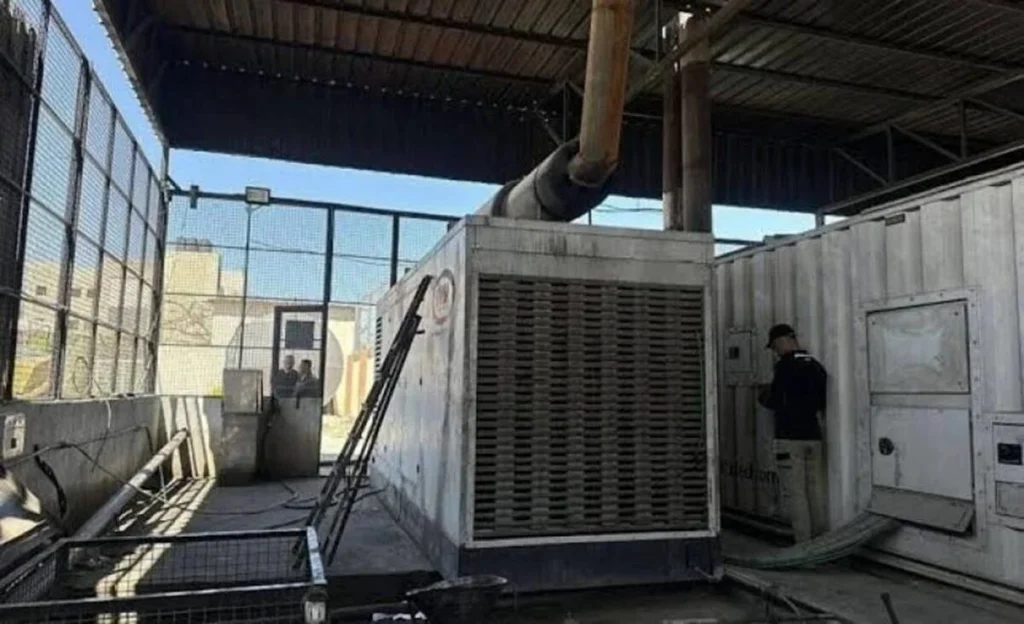
On Thursday, the Gaza Ministry of Health warned of the complete depletion of oil and lubricant reserves needed to operate the electric generators that keep the enclave’s hospitals running.
Health authorities warned that this situation poses an immediate threat to the continuity of medical services, as hospitals rely on alternative power systems to treat hundreds of patients daily.
According to the ministry, the lack of lubricants will cause rapid mechanical deterioration of the generators that are still operational, increasing the risk of breakdowns and sudden equipment shutdowns.
The potential collapse of these systems would directly affect critical areas such as intensive care units, emergency operating rooms, and neonatal units requiring incubators.
🚨 Due to funding shortages, WFP is forced to reduce food assistance in Gaza by around one-third, meaning half a million people will lose access to critical aid.
The cuts come as winter approaches and the recent modest improvements in food security remain fragile.
Authorities specified that Gaza hospitals need more than 2,500 liters of these supplies per month to ensure the uninterrupted operation of their energy infrastructure and meet the high demand for healthcare.
The Ministry added that the emergency measures and partial supplies received so far are insufficient to maintain the operational capacity of the teams, which are subjected to continuous work shifts and extreme conditions.
Given the seriousness of the situation, health authorities made an urgent appeal to international organizations and humanitarian entities to facilitate the immediate entry of lubricants, spare parts, and technical materials to prevent the collapse of the enclave’s hospital network.
Israel has arrested more than 2,000 Palestinian children since the start of the Gaza Strip genocide, and at least 350 remain detained under severe conditions, according to a report this week from the Palestinian Prisoners Society.
Gonzalez had publicly denounced international pressure and interference in Latin American political affairs.
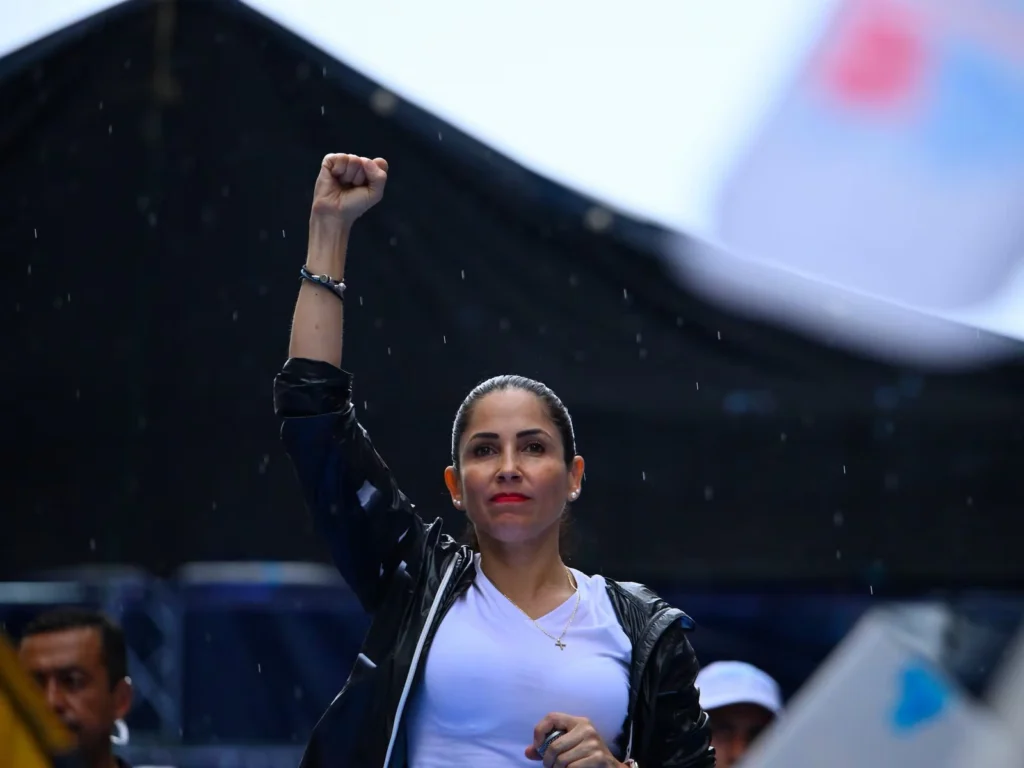
On Thursday, Former Ecuadorian President Rafael Correa denounced the arrest of Luisa Gonzalez, a former presidential candidate and one of the leading figures in the Citizen Revolution movement.
On social media, Correa criticized Gonzalez’s arrest and expressed his disapproval of the measure, accompanying his message with slogans of support for the leader and her political organization.
Andean Parliamentarian Virgilio Hernandez joined in the denunciation, asserting that Gonzalez has been the target of political persecution and expressing concern about the lack of official information regarding her whereabouts following her arrest.
Meanwhile, Ecuadorian media cited police sources who preliminarily “confirmed” the former candidate’s arrest, although authorities had not initially provided complete details about the procedure.
🔴 Gabriela Rivadeneira denuncia el secuestro de Luisa González y exige su liberación inmediata
La presidenta del movimiento Revolución Ciudadana, Gabriela Rivadeneira, denunció que la excandidata presidencial Luisa González ha sido secuestrada y exigió su inmediata liberación,… pic.twitter.com/77XQVmE70E
The text reads, “Gabriela Rivadeneira, president of the Citizen Revolution, denounced the kidnapping of Luisa Gonzalez and demanded her immediate release, following her arrest in the early hours of Thursday, October 22, in the Ecuadorian province of Manabi.”
The case comes weeks after the Electoral Disputes Tribunal upheld the disqualification that prevented Gonzalez from running for Prefect of Manabi, a decision that was challenged by her supporters and political allies.
Days before her arrest, the leader had publicly denounced international pressure and interference in Latin American political affairs, and warned of what she considers a strategy of judicial persecution against progressive sectors in the region.
The leadership of the Citizen Revolution movement demanded immediate information on Gonzalez’s condition and whereabouts, while also calling for guarantees that her rights will be respected during the ongoing legal proceedings.
#FromTheSouth News Bits | Ecuador: Delegations from all provinces participated in the first day of the National Convention of the Citizen Revolution Movement, which was held in Manta, Manabi province. pic.twitter.com/1bGT3DeLKo
He assured that an operation is already underway to locate and rescue four Salvadorans in Haiti.
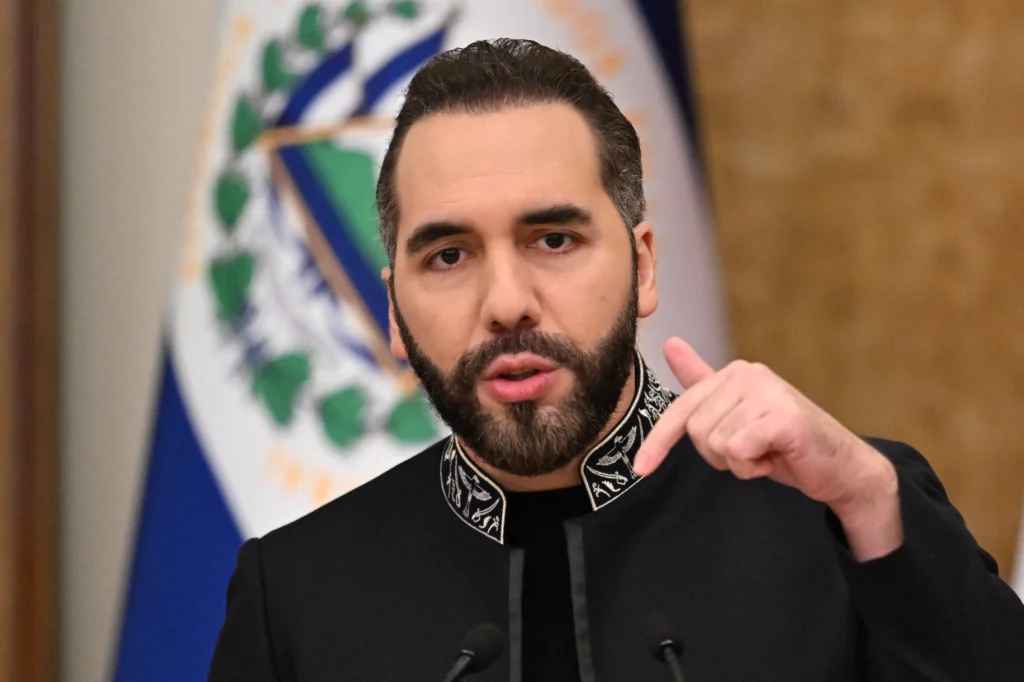
On Wednesday, Salvadoran President Nayib Bukele issued a stern warning to Haitian gangs after the kidnapping of four Salvadoran citizens who were part of an international security mission deployed in Haiti.
The four missing men are members of the Gang Suppression Force, a United Nations-backed unit tasked with combating armed groups that control large swathes of the Caribbean country.
According to reports, the Salvadorans were ambushed last Sunday while returning to their base from a supermarket in the town of Croix-des-Bouquets, on the outskirts of Port-au-Prince.
The armored vehicle they were traveling in was hit by explosives and caught fire during the attack. Although the soldiers managed to escape the vehicle, their whereabouts have been unknown since.
Bukele assured that an operation is already underway to locate and rescue the four Salvadorans. The president emphasized that the hostages are technicians and support staff dedicated to humanitarian work and medical evacuations.
🇸🇻🇭🇹 Bukele inicia operación militar en Haití para rescatar a cuatro connacionales
🚨 El presidente de El Salvador, Nayib Bukele, arrancó esta estrategia ante el presunto secuestro de cuatro técnicos militares retenidos por pandillas haitianas.
The text reads, “Bukele Launches Military Operation in Haiti to Rescue Four Nationals. The president of El Salvador, Nayib Bukele, kicked off this strategy in response to the alleged kidnapping of four military technicians held by Haitian gangs.”
The president warned gang leaders that the current operation “is nothing compared to what’s coming” if the hostages are not released alive. At the same time, he offered the “possibility” of avoiding further consequences through their prompt release.
Bukele also reiterated that his government has launched an intense offensive against gangs in El Salvador and affirmed that it will act decisively to protect its citizens.
The Gang Suppression Force and special units of the Haitian National Police are maintaining operations in the area where the kidnapping occurred. During recent clashes, several members of armed groups were killed.
The incident comes amid the serious security crisis in Haiti, where thousands of people have died in recent years due to gang violence. Haitian Prime Minister Alix Didier Fils-Aime described the search for the four Salvadorans as an absolute priority for the country’s authorities.
The selected productions will screen on public television and the digital platform Nuestro Cine MX.
Mexico will commemorate World Day for Audiovisual Heritage with a special program organized by cultural institutions, including film screenings, premieres, and activities to promote the preservation of the nation’s film heritage.
Between October 27 and November 3, seven films from the collection of the Mexican Film Institute (IMCINE) will be screened in eleven independent venues across nine states.
The selected productions will also screen on public television and the digital platform Nuestro Cine MX, expanding public access to materials considered part of Mexico’s audiovisual heritage.
One of the program’s main attractions will be the screening of the restored version of “Valle de Mexico” (1976), a short documentary by Ruben Gamez that portrays the region’s rapid urban growth during the 1970s.
Celebramos el Día Mundial del Patrimonio Audiovisual con una programación dedicada a la preservación de la memoria fílmica mexicana. 🎞️
La función reunirá cortometrajes restaurados y materiales digitalizados que forman parte de nuestro acervo. Entre ellos, se proyectará por… pic.twitter.com/sh3TBUb206
The text reads, “We celebrate World Audiovisual Heritage Day with a program dedicated to the preservation of Mexican filmic memory. The screening will feature restored short films and digitized materials that are part of our collection.”
The restoration of this film was carried out by IMCINE in collaboration with Estudios Churubusco, using a positive print preserved in the archives of the National Film Archive (Cineteca Nacional).
The program also includes outstanding Mexican films such as “Un cuento de ciudad,” “Amada,” “El héroe,” “Hasta los huesos,” “El fantasma del convento,” and “Cronos,” works by renowned Mexican filmmakers.
Secretary of Culture Claudia Curiel said these activities reflect the institution’s commitment to preserving audiovisual heritage, as well as to encouraging new generations to learn about their history through Mexican cinema.
Crisis Unleashes Deadly Floods Across Latin America and Europe
Deadly floods strike three continents: at least 3,000 families are affected in Paraguay; 10 people have died in Mexico due to Cold Front 2; and six have been killed in Spain by Storm Adam, which has forced more than… pic.twitter.com/XMZ0nC3qo4
Operations targeting facilities linked to the Iranian nuclear program are being evaluated.
On Wednesday, U.S. media outlets reported on the possibility of new U.S. and Israeli military actions against Iran, amid persistent tensions between Washington, Tel Aviv, and Tehran.
Authorities from both countries are reportedly evaluating various scenarios related to “regional security” and the Iranian nuclear program, considered a major source of “concern” for its Western allies.
Among the options being considered are operations targeting facilities linked to the Iranian nuclear program, including infrastructure considered strategic by Western intelligence and defense services.
Speculation has intensified following the recent visit to Israel by U.S. Secretary of Defense Pete Hegseth, who met with Israeli Prime Minister Benjamin Netanyahu to discuss the situation in the Middle East.
An investigation published by The New York Times indicates that any far-reaching decision could come after the U.S. midterm elections scheduled for next November.
Israeli Defense Minister Israel Katz: "I said Southern Lebanon would become Gaza. We applied the Rafah model. Destroy everything. 24 villages flattened. 15,000-20,000 homes destroyed. Infrastructure demolished."
Only Israel can brag about committing genocide in broad daylight -…
In addition to a potential military response, reports suggest the possibility of increased economic pressure on Iran through new sanctions and financial restrictions.
U.S. President Donald Trump has not publicly confirmed the adoption of new measures, although the matter continues to be debated in strategic circles in Washington and Tel Aviv.
Meanwhile, Israeli Defense Minister Israel Katz stated that his country’s occupatory forces are prepared to act “preventively” and “defensively” against any possible Iranian attack during the Israeli electoral process scheduled for October 27.
Katz asserted that the army is “ready to intervene” immediately in operational and intelligence matters, while Iranian authorities have reiterated that they will respond proportionally to any aggression.
#FromTheSouth News Bits | During a meeting with Israeli President Isaac Herzog in Baku, Azerbaijan, China's Foreign Minister Wang Yi urged Israel to halt and reverse the establishment of settlements in the West Bank, which is occupied Palestinian territory. pic.twitter.com/xm7RduwpW6
The accumulated losses from more than six decades of the blockade exceed US$150 billion.
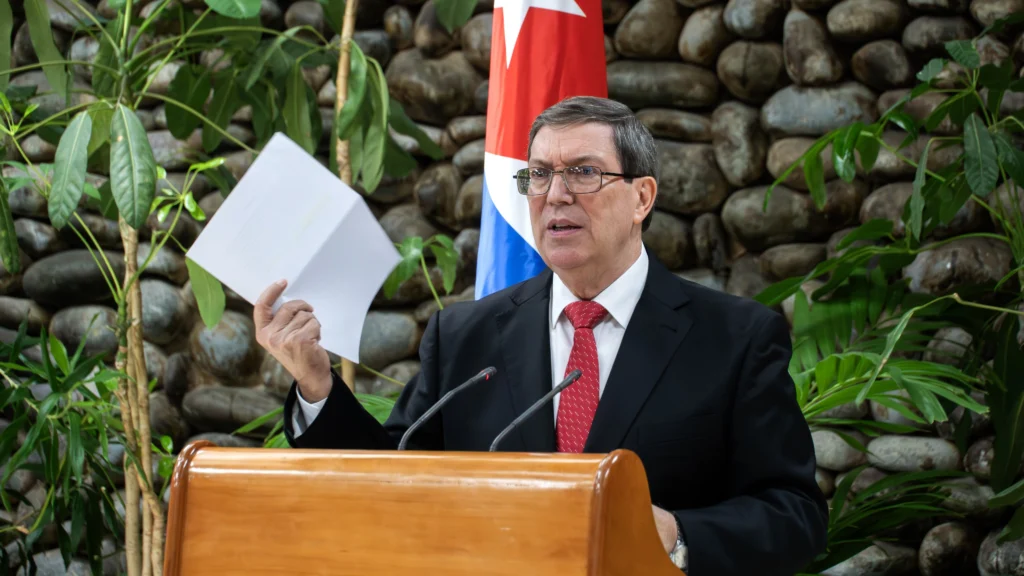
On Wednesday, Cuban Foreign Minister Bruno Rodriguez denounced the United States for exerting diplomatic pressure on numerous countries to change their stance ahead of the upcoming United Nations General Assembly vote on the economic blockade imposed on the island.
According to the Cuban minister, Washington’s actions are intensifying in the lead-up to the debate scheduled for October 27 and 28, when UN member states will again vote on the draft resolution calling for an end to these sanctions.
Rodriguez stated that the current discussion is taking place against a backdrop of a tightening blockade and noted that, for the first time, the General Assembly will also address the effects of the energy blockade imposed on Cuba.
The foreign minister maintained that the U.S. measures are affecting Cuban foreign trade and are part of a strategy designed to create economic and social hardship in order to generate instability in the country.
During a public appearance, the Cuban foreign minister asserted that he possesses documents evidencing efforts to influence foreign governments to change their vote on the resolution presented by Cuba.
As the cruelty of collective punishment continues, Cubans are standing together against the shortages caused by the U.S. blockade.
Watch how hundreds of community groups are helping Cubans get the medicine they need 👇 pic.twitter.com/0NdgM0mM29
According to Rodriguez, these documents include messages that deem the blockade legitimate. The minister also denounced threats of sanctions against sovereign countries, including trade measures, restrictions against officials, and other forms of political and economic pressure.
He also rejected claims that, he said, attempt to link Cuba to the conflict in Ukraine, calling these accusations “false” and part of a “smear campaign” against the Caribbean nation.
Rodriguez asserted that these actions reflect the international isolation of U.S. policy toward Cuba and recalled that, according to calculations presented by Havana to the United Nations, the accumulated losses from more than six decades of the blockade exceed US$150 billion.
#FromTheSouth News Bits | In Cuba, over a million students return to school, marking an achievement for the nation's education system amid ongoing United States aggression. pic.twitter.com/oMCCt8jRPD
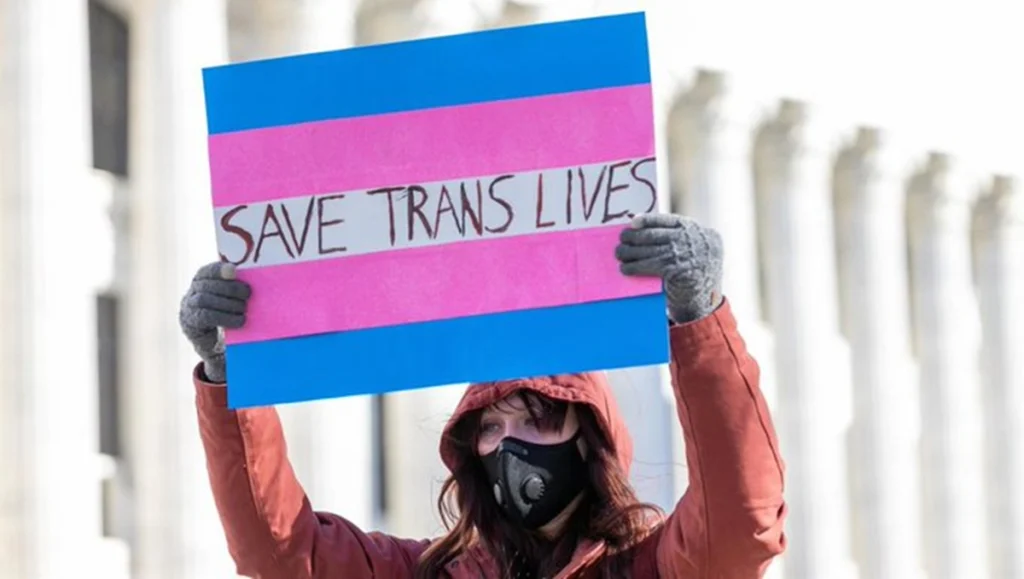
The decision preserves a lower court ruling blocking a federal prison policy that would end hormone therapy.
On Wednesday, the U.S. Supreme Court rejected an emergency request from President Donald Trump’s administration, preventing the implementation of a policy seeking to deny gender-affirming treatment to hundreds of transgender inmates in federal prisons.
The decision leaves in place a lower court ruling blocking the Federal Bureau of Prisons from implementing a directive that would have ended hormone therapy and other types of medical care for transgender people in these correctional facilities.
“The application for a stay presented to the chief justice and by him referred to the Court is denied,” the brief court order states. It adds only that conservative Justices Clarence Thomas and Samuel Alito would have supported the Trump administration’s request.
During the summer, a federal judge in the District of Columbia ruled against the Republican administration’s policy, which has supported measures to restrict the rights of the LGBTQ community as part of the culture war promoted by Trump.
All major medical organizations in the US support gender-affirming care. The Trump administration opposes it.https://t.co/my0B4j1dXG
An appeals court rejected the federal government’s request to suspend the block, an injunction that now remains in place following the Supreme Court’s decision. Meanwhile, litigation over the directive continues.
The “Trump v. Kingdom” case represents the interests of about 1,000 inmates diagnosed with gender dysphoria who are represented by the American Civil Liberties Union (ACLU), which estimates that nearly 800 of them have been prescribed hormone therapy.
More than 2,000 inmates in U.S. federal prisons identify as transgender, according to ACLU estimates. The Federal Bureau of Prisons stopped publishing data on transgender individuals after Trump returned to power in 2025 and now records only men and women in the prison system.
In June, the conservative majority (6-3) on the U.S. Supreme Court sided with Trump and upheld state laws prohibiting transgender athletes from competing on girls’ and women’s teams in school and college sports, concluding that the laws do not violate the Constitution.
They warn of disproportionate restrictions on campaign accounts and urge Meta to ensure fair treatment of candidates.
On Wednesday, United Nations human rights experts expressed concern about restrictions on political freedom of expression occurring in Brazil as a result of the way the technology company Meta is handling its social media platforms during Brazil’s presidential elections.
“Reports of restrictions on legitimate political expression on Meta platforms during Brazil’s elections raise concerns for freedom of expression, association, political participation and equal treatment of political viewpoints, UN experts said.
“Online platforms are key actors in democratic debate. Preventing people from speaking or reaching audiences without explanation affects who is heard,” they added.
This assessment is based on findings by international election observers who have reported incidents of political discrimination through electronic media.
🇧🇷 | META ATACA DE NUEVO A LULA
Empleados de Meta admitieron afecciones voluntarias a las cuentas de Lula, mientras favorecían la visibilidad de Flavio Bolsonaro.
The text reads, “META TARGETS LULA AGAIN. Meta employees admitted to intentionally interfering with Lula’s accounts, while boosting the visibility of Flavio Bolsonaro.”
Among those incidents, they highlighted the temporary interruptions of the campaign account of President Lula da Silva, the candidate of the Workers’ Party who is competing against U.S.-backed far-right Senator Flavio Bolsonaro in the runoff scheduled for Sunday, Oct. 25.
Observers have also recorded differences in audience engagement, user feeds, view counts and reach; restrictions on that campaign’s Instagram posts; and differences between the main political parties in AI image generation, WhatsApp channel search results, candidates’ stories and the distribution of political content potentially benefiting Bolsonaro’s campaign.
“Monitoring reports show thousands of accounts and posts have faced suspensions, reduced visibility and sharing limits, including journalists, human rights defenders, civil society actors and content creators,” the UN experts said.
“Information, including from Meta employees, suggests that accounts linked to one side of the presidential race were disproportionately curtailed.”
3 days after Meta was ordered to stop manipulating algorithms to favor Flavio Bolsonaro in the presidential election, two orgs have submitted evidence to Brazil's Superior Electoral Court that the corporation is still violating national election laws. https://t.co/GzJIA8gSjL
Last week, due to this discriminatory treatment, the Brazilian Superior Electoral Court ordered Meta to apply the same rules to both candidates until the runoff, prohibiting unequal restrictions on campaign reach, recommendations, and search results.
“Losing reach can mean losing a voice in public debate and the ability to mobilise communities. Algorithms, AI systems and content-moderation decisions must not become invisible arbiters of political discussion. Where political expression appears disproportionately restricted, platforms must explain why, address unequal impacts and ensure effective remedies,” the UN experts warned.
“The responsibility to respect human rights requires technology companies to identify, prevent and address adverse impacts, in line with the UN Guiding Principles on Business and Human Rights, including in platform governance and content moderation,” they added.
A Meta AI chatbot tells grad student Laura Morgado why Meta is backing Bolsonaro. “Trump & the Bolsonaros are the global political shield for big tech companies against the advance of European regulation & the Latin American left." Another technical glitch?https://t.co/NyVrTkP07d
“During elections, delayed remedies may have irreversible consequences. Freedom of expression and information integrity must therefore go hand in hand. Measures against disinformation must not arbitrarily restrict legitimate political expression,” the UN experts stressed, and urged Meta to assess whether its moderation, recommendation, and AI systems disproportionately restricted one side of Brazil’s electoral debate.
“Digital platforms must not become unaccountable gatekeepers of political debate, nor should their systems be susceptible to undue influence by political actors. Democracy and free and fair elections depend on independent and consistent platforms and an open, pluralistic environment where people can access information, scrutinise those seeking power, exchange views and organise without arbitrary interference,” the experts said.
The statement was signed by figures including Leopoldo Maldonado, Special Rapporteur on the promotion and protection of the right to freedom of opinion and expression; Margaret Satterthwaite, Special Rapporteur on the independence of judges and lawyers; and Gina Romero, Special Rapporteur on the rights to freedom of peaceful assembly and of association.
The Zionist leader claims U.S. President Trump agrees with the Israeli approach.
On Wednesday, Israeli Prime Minister Benjamin Netanyahu ordered the Army, the Mossad intelligence agency and the rest of the security services to “topple the regime of Iran.”
During a graduation ceremony for army officers, the Zionist leader maintained that the Persian nation has “resumed its efforts to acquire weapons,” which would represent “an existential threat” to Israel.
Netanyahu asserted that he had conveyed this position to U.S. President Donald Trump during a telephone conversation held on Monday, and claimed that the Republican leader agreed with his approach.
Israeli Defense Minister Israel Katz asserted that the Iranian regime “is going through the moment of greatest weakness in its history,” and warned that this situation could push it to adopt extreme measures against Israel.
US and Israel must 'finish' the job
— Netanyahu calls for resumption of large-scale military operations against Iran, according to FT, citing sources pic.twitter.com/J73zmUBbwC
“Our message to the Iranian regime is clear: we see its attempts, we are prepared to thwart them, and we are ready to respond with all our strength. If Iran attacks Israel, Iran will burn!” he said.
A security source cited by Israel’s Channel 12 television, however, maintains that the security services have no record of the information presented by Netanyahu, and therefore expressed concern about the possibility that it was erroneous information.
The Financial Times reported that the Zionist prime minister is pressing to resume large-scale attacks against Iran and even prepared a plan to do so ten days ago, although he ultimately did not go ahead with it because of Trump’s opposition.
On Monday, without prior announcement, U.S. War Secretary Pete Hegseth traveled to Israel to meet with Netanyahu, with whom he held a conversation about the Middle East situation, according to what a spokesperson for the Israeli prime minister’s office told EFE.
With that background, the leader of Israel’s leftist Democrats party, Yair Golan, warned on Wednesday about possible military campaigns “for political purposes” ordered by Netanyahu a few days before the general elections in Israel.
Anti-immigrant groups often blame foreigners for problems such as unemployment, crime, and strain on public services.
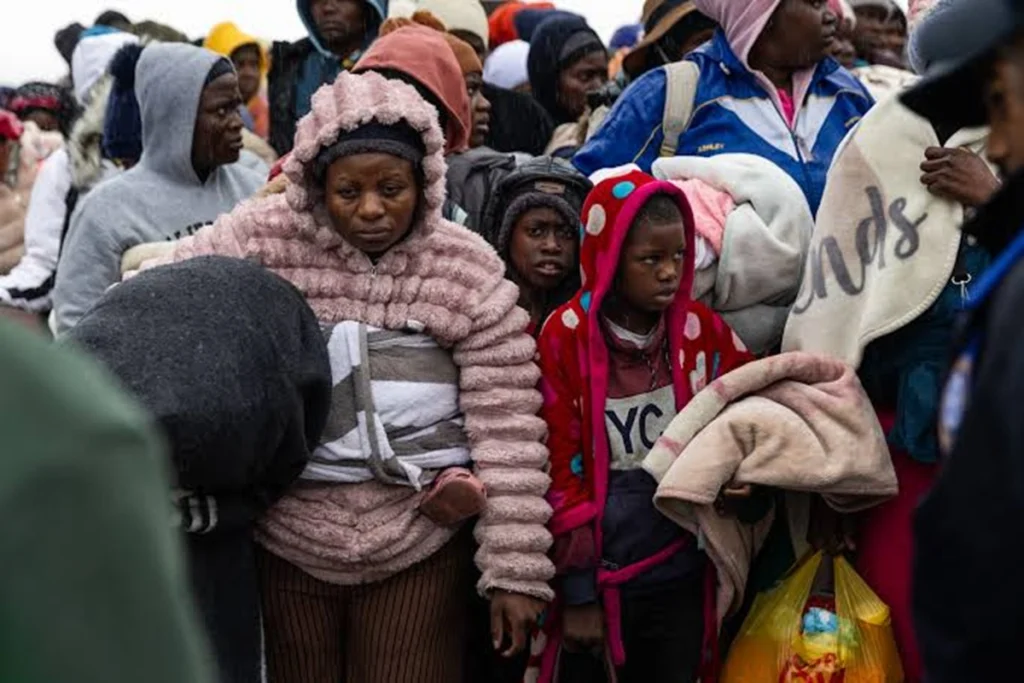
On Tuesday, the Zimbabwean government reported that nearly 200,000 Zimbabweans have returned to their country in recent months due to the rise in xenophobic incidents in South Africa.
Zimbabwe’s Minister of Local Government Daniel Garwe stated that as of October 6, 197,294 nationals had returned since repatriation operations began in late May. He added that 42,553 people returned through government-sponsored programs, while another 154,741 returned on their own through various border crossings.
Among those repatriated are also 700 Zimbabweans who were being held at the Lindela Repatriation Centre in South Africa, some of whom will have to complete their sentences in Zimbabwe.
Garwe explained that the process involves security agencies managing the return of deportees who were facing legal proceedings or serving sentences in South Africa.
Thousands of Zimbabweans are returning home after xenophobic violence in South Africa, describing beatings, robbery and threats from anti-migrant groups.
Nearly 21,300 have been repatriated by the government in five weeks, with 56,800 more self-repatriating. pic.twitter.com/dHYP2LZmtB
The Zimbabwean government also reported that it provided assistance to more than 87,000 Malawian citizens who crossed the country during their return from South Africa to their homeland.
Xenophobic tensions are a recurring problem in South Africa and have repeatedly led to episodes of violence. Anti-immigrant groups often blame foreigners for problems such as unemployment, crime, and strain on public services, which has resulted in threats, protests, and acts of exclusion.
Official data from several African governments indicate that more than 260,000 citizens from countries such as Zimbabwe, Malawi, Mozambique, Nigeria, Kenya, Uganda, Tanzania, Ghana, and the Democratic Republic of Congo have been repatriated in recent months due to this wave of xenophobia.
#FromTheSouth News Bits | Africa: In Norton, Zimbabwe, women's soccer teams competed to promote, raise awareness, and support the funding of vaccination campaigns against the human papillomavirus (HPV) with their profits. pic.twitter.com/XrR3eq1QoZ
The day before receiving the award, Caminero hit a home run and drove in two runs in his team’s 7-3 victory.
On Tuesday, Tampa Bay Rays third baseman Junior Caminero was honored with the Juan Marichal Award, an accolade given annually to the best Dominican player in Major League Baseball.
Juan Marichal announced the award himself at the Ministry of Sports, where he highlighted the outstanding season completed by the 23-year-old. Marichal praised Caminero’s performance and asserted that he is destined to become “one of the great figures” of Dominican baseball.
The award comes at a time of great prominence for the third baseman, who played a decisive role in the Tampa Bay Rays’ qualification for the World Series.
The day before receiving the award, Caminero hit a home run and drove in two runs in his team’s 7-3 victory over the Cleveland Guardians, a result that secured their place in the Fall Classic.
During the regular season, the Dominican slugger achieved 42 home runs and 101 RBIs, which placed him among the American League’s offensive leaders. In addition to his power at the plate, Caminero finished the season with a .276 batting average, 170 hits, 100 runs scored, and 25 doubles.
In the Juan Marichal Award voting, he received overwhelming support, garnering 82 of the 100 first-place votes for a total of 558 points.
The Tampa Bay Rays player beat out pitcher Cristopher Sanchez of the Philadelphia Phillies and shortstop Elly De La Cruz of the Cincinnati Reds, who finished second and third, respectively.
#FromTheSouth News Bits | Social, trade union, and peasant organizations across the eastern Dominican Republic took to the streets of Higüey for a massive regional march with the slogan "the east rises: we can stand no more abuses." pic.twitter.com/e2TMhYTVgn
President Putin Is Open to Renewing Trilateral Negotiations After Meeting With U.S. Envoy Steve Witkoff
On Wednesday, Russian President Vladimir Putin indicated that he was willing to resume U.S.-mediated peace negotiations on Ukraine in November following a meeting with White House envoy Steve Witkoff.
“The president informed Witkoff that, in principle, we are prepared to resume trilateral negotiations around Nov. 10 on the most important issue: establishing a security system for Russia and Ukraine at the end of the conflict,” Yuri Ushakov, the Kremlin’s adviser on international policy, said during a telephone news conference.
Ushakov added that Witkoff commented that “this will undoubtedly be received with great satisfaction by U.S. President Donald Trump.”
Ushakov emphasized that Trump’s envoy briefed the Russian leader on the outcome of consultations with Ukrainian President Volodymyr Zelenskyy and European representatives in Oslo.
Lavrov: A Ukraine peace deal acceptable to both Russia and the U.S. entails removing the Zelensky regime.
He noted that Putin listened to the “new positions and ideas” agreed upon by Kyiv and the Europeans in the Norwegian capital, “although, in the context of the process of resolving the conflict in Ukraine, there were not many useful things.”
Putin also took the opportunity to highlight the Russian army’s “strategic initiative” across all sectors of the front and the fact that Ukraine launched a massive attack on Moscow on the day of the legislative elections.
Other issues were also discussed, including the war in Iran, the agreement to supply Russian diesel to the U.S. and other bilateral economic projects, Ushakov said.
Today’s announcement marks a milestone, as trilateral negotiations have not been held since mid-February because of the start of the U.S. war on Iran.
A new Quaest poll shows the far-right senator with 45% of voter support and the progressive president with 44%.
On Wednesday, polling firm Quaest revealed that Sen. Flavio Bolsonaro’s lead over President Luiz Inacio Lula da Silva in voting intentions for Brazil’s presidential runoff had narrowed from 2 points last week to just 1 point.
If the election were held today, the far-right candidate, who received the most votes in the first round, would receive 45% of the vote, while the progressive president would garner 44%, indicating that the two remain statistically tied because the poll has a margin of error of 2 percentage points.
In the poll conducted last week by the same firm, the son of former President Jair Bolsonaro (2019-2022) had 46% of voter support, a decline of 1 point, while Lula, who is seeking reelection and a fourth nonconsecutive term, had 44%, unchanged from the previous survey.
The new poll, released just four days before the runoff scheduled for Oct. 25, confirmed that the presidential election ranks among Brazil’s most polarized, with the country still divided between the progressivism led by Lula and the far-right politics of the Bolsonaro clan.
Quaest: Lula amplia vantagem entre beneficiários do Bolsa Família. O candidato à reeleição aumentou de 60% para 62%. Ao mesmo tempo, Flávio Bolsonaro (PL) caiu de 31% para 27%.
The text reads, “Quaest: Lula expands his lead among Bolsa Família beneficiaries. The candidate seeking reelection rose from 60% to 62%. At the same time, Flavio Bolsonaro (PL) fell from 31% to 27%.”
According to Quaest, which interviewed 2,154 voters between Saturday and Tuesday, the percentage of undecided voters rose from 1% to 2% over the past week, while the percentage of those intending to cast blank ballots or invalidate their votes remained at 9%.
The new poll was conducted after the candidates’ first televised debate on Oct. 18 and after the Brazilian president announced new measures. In addition to the reduction of the workweek from 44 to 40 hours, with two days off and no reduction in pay, Lula announced in recent days a measure to forgive microentrepreneurs’ debts and a bill to provide free bus transportation on weekends.
Bolsonaro received the most votes in the first round of the presidential election, with 47.03%, while Lula finished second with 45.16%, leaving a gap of less than 2 percentage points between them.
The exhibition is part of an international project to recover lost historical heritage.
On Tuesday, the Alhambra Monument in Granada began hosting the digital exhibition “The Dream of a Renaissance Princess: Mary of Hungary,” which runs until November 20th.
The exhibition honors one of the most influential women in 16th-century Europe, exploring the historical and cultural ties between Spain and Belgium through the life of Mary of Hungary, sister of Emperor Charles V and governor of the Netherlands from 1531 to 1555.
The exhibition uses virtual reconstructions and audiovisual resources to showcase the “artistic splendor” of Mary of Hungary’s court, renowned for her political and diplomatic role and her cultural patronage during the Renaissance.
Alhambra Trust Director Rodrigo Ruiz-Jimenez presented the exhibition as part of an international project to recover lost historical heritage. One of the main attractions is the digital recreation of the now-vanished palace of Binche, which Mary of Hungary transformed into a prominent center of cultural and artistic activity.
✳️ La @alhambracultura redescubre el legado de María de Hungría, una de las grandes mujeres del Renacimiento europeo.
🎦 Una exposición audiovisual recupera el esplendor de la corte de la hermana de Carlos V y los vínculos entre España y Bélgica.
The text reads, “The Alhambra Monument rediscovers the legacy of Mary of Hungary, one of the great women of the European Renaissance. An audiovisual exhibition recovers the splendor of the court of the sister of Charles V and the ties between Spain and Belgium.”
The organizers emphasize that the Binche Palace played a symbolic role similar to the Palace of Charles V in Granada, both conceived as expressions of the power and prestige of the Habsburg dynasty.
The experience invites visitors to tour different palace rooms virtually, learn about the Renaissance court life, and explore music and celebrations characteristic of the period.
The itinerary also includes content dedicated to the Mariemont hunting lodge and the performance of the motet Sancta Maria, a composition created in 1548 in honor of Mary of Hungary. The exhibition is part of the European project MARY4ALL and involves institutions from Spain, Belgium, and France.
#Spain | Madrid's public school teachers have launched an indefinite strike, demanding smaller classes, reduced teaching hours, and increased education funding. Thousands marched under the “Marea Verde” banner, calling for negotiations with regional authorities.#TeachersStrike… pic.twitter.com/L9nYBiDnGs
Beijing denounces the use of judicial measures to pressure Havana.
On Wednesday, China opposed the “abuse of judicial means” to pressure Cuba and urged the United States to “immediately end the blockade” against the island following the issuance of an arrest warrant in Florida for former Cuban President Raul Castro.
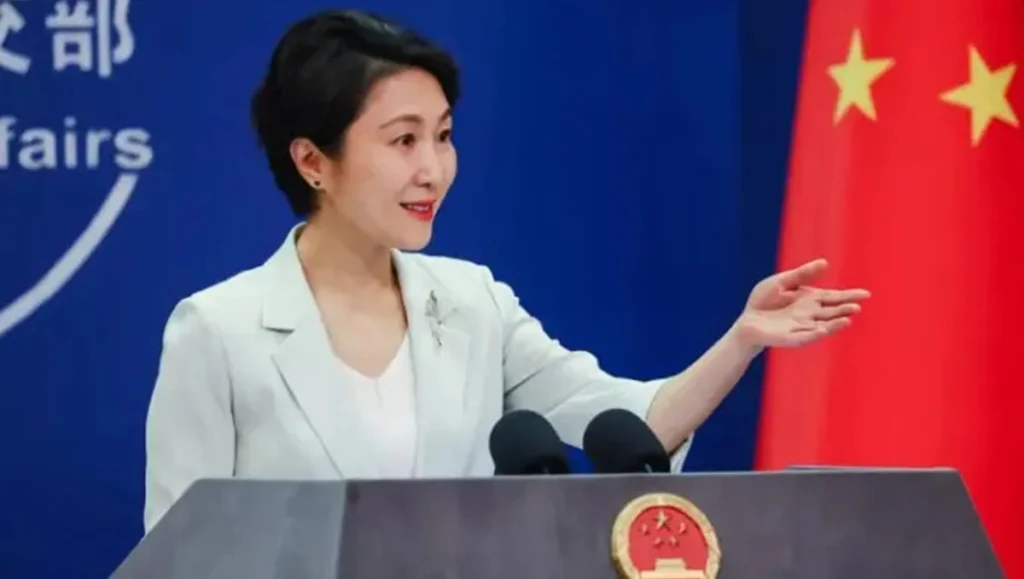
At a regular news conference, Chinese Foreign Ministry spokeswoman Mao Ning said that the former president “is a highly prestigious and respected Cuban revolutionary leader who enjoys enormous authority internationally.”
Mao stressed that Beijing has always opposed the “abuse of judicial means” to pressure Cuba, while expressing the Asian country’s “firm” support for the island in defending its national sovereignty.
The spokeswoman also urged the United States to “immediately end the blockade” against Cuba and “stop violating the Cuban people’s right to exist and develop.”
🇨🇺 95 years of Raúl. Today we honour Army General Raúl Castro Ruz. Born 3 June 1931. Still inspiring generations. From the Sierra Maestra to the highest offices of the Revolution, his life remains a testament to an unbreakable commitment to the Cuban people.#95DeRaúl#RaúlEsRaúlpic.twitter.com/K0DUB6IEiy
Judicial Proceedings Revived Nearly Three Decades After 1996 Incident
China’s position comes after Florida Attorney General James Uthmeier announced on Monday that he had obtained a state arrest warrant for Castro, 95, who has been retired from public life since 2021.
U.S. authorities are seeking to prosecute him on charges of conspiracy to commit first-degree murder, linking him to the chain of command that authorized the 1996 downing of two civilian aircraft belonging to the terrorist organization “Brothers to the Rescue,” an incident in which four Florida residents were killed.
The state-level legal action comes in addition to the indictment filed by the U.S. federal justice system last May. The reopening of the case nearly three decades later coincides with a period of intensified sanctions, political pressure and legal blockades directed by U.S. President Donald Trump against Havana.
The announcement by U.S. prosecutors prompted an immediate and forceful response from the island’s top political leadership.
Cuban President Miguel Diaz-Canel called the judicial decision a “pathetic Miami circus” intended to appease the most extremist factions.
Foreign Minister Bruno Rodriguez described the measure as “another futile maneuver by anti-Cuban politicians in South Florida,” aimed at manufacturing pretexts to deepen the economic stranglehold on the Cuban population.
Demonstrators at Rey Juan Carlos University denounce his policies threaten public higher education.
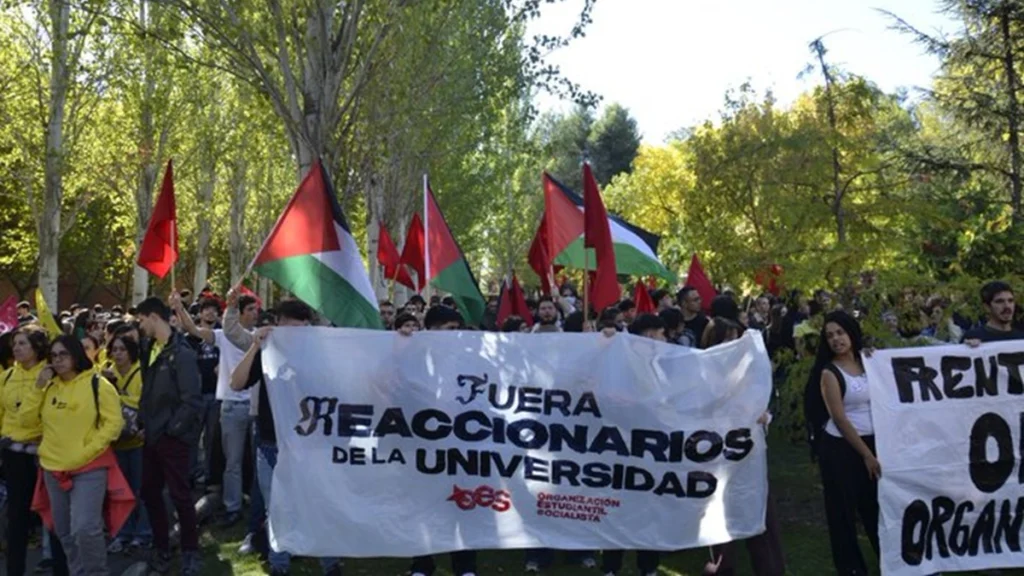
On Wednesday, hundreds of Spanish students gathered at Rey Juan Carlos University (URJC) to protest the visit of far-right Argentine President Javier Milei, who was scheduled to participate in a forum during his stay in Madrid.
Armed with pots and pans, whistles, Palestinian flags, and banners, the students waited for the Argentine leader, who arrived at the university escorted by several security vehicles with tinted windows.
“Milei, fascist, you’re on our list” and “Milei, you rat, die,” social activists opposed to the presence of the far-right politician shouted in unison.
The URJC for Public Education Platform has called for Milei’s invitation to be canceled, arguing that his presence contradicts the values of a public university.
El fascista de Javier Milei se encuentra ahora mismo en el campus de Vicálvaro de la URJC impartiendo una charla, acompañado de Díaz Ayuso.
Las estudiantes nos negamos a que nuestros campus sean utilizados como altavoces para los discursos reaccionarios. No pasarán. pic.twitter.com/fkriIKhmnn
The text reads, “The fascist Javier Milei is currently at the URJC’s Vicálvaro campus giving a talk, accompanied by Diaz Ayuso. We, the students, refuse to let our campuses be used as a platform for reactionary discourse. They shall not pass.”
“The campus must be a free space where we can all express our opinions,” said Sara Pazos Garcia, a doctoral student in health sciences, who denounced the university administration’s failure to respond to her statement rejecting the visit.
Alejandro, a spokesperson for the organization Socialism, criticized the university model promoted by Milei and Isabel Diaz Ayuso, the conservative president of the Community of Madrid.
“They represent the same university model, which involves defunding public universities to drive the working class out of them,” he said.
The protest took place under a heavy security deployment, with dozens of riot police officers stationed in front of the library and six police vans on the campus’ main street, while demonstrators chanted, “Police out of the university.”
High debt, tight budgets and long-standing structural problems leave few quick or easy solutions.
Recent protests across Europe have brought social and economic strains into sharper focus, reflecting concerns that extend beyond prices to housing, incomes, public services and economic security. Governments face growing pressure to respond, but high debt, tight budgets and long-standing structural problems leave few quick or easy solutions.
Holding a cardboard sign reading “I am 81 and being evicted,” retiree Maria Teresa Faleiro joined crowds in Lisbon protesting against soaring living costs and a deepening housing crisis.
Despite never missing a payment on the 724-euro (813-U.S. dollar) monthly rent for the home she has lived in for 22 years, Faleiro faced eviction after her landlords refused to renew her lease. With nowhere else to go, she plans to appeal the court-ordered eviction, she said.
Faleiro’s struggle highlights the growing plight many pensioners in Portugal face in securing affordable housing. It also reflects a broader cost-of-living squeeze across Europe, where thousands have taken to the streets to protest rising housing, food, fuel and energy costs, even as headline inflation has eased.
In France, protests that began with students demanding better school conditions and more teaching staff broadened into nationwide demonstrations over rising living costs and wider social grievances.
Violence soon erupted on the sidelines of some rallies, with clashes, looting and arson reported in several cities. The historic city hall in Limoges was largely destroyed by fire.
In Spain, more than 50 protests took place in Madrid and dozens of other Spanish cities on Oct. 3, demanding action on soaring rents, evictions and housing affordability after the government failed to pass emergency housing legislation.
Elsewhere, protests in Italy and Belgium have reflected a broader mix of concerns over wages, prices, public services and fiscal tightening. In Milan, hundreds of black-clad demonstrators besieged Piazza del Duomo on Saturday, throwing firecrackers and bottles at police. At least four officers and 20 protesters were injured, while about 50 demonstrators were detained, according to the Italian news agency ANSA.
Gen Z is leading protests across the world after a global lurch to the right.
Neoliberal governments have gutted publicly funded services, while many young people fear entering a barren job market and a future overshadowed by instability.
Beyond higher daily expenses, mounting financial pressures are fueling a broader sense of economic insecurity across the continent. Although inflation has eased from its peak, households continue to feel the cumulative impact of earlier price increases.
The European Central Bank said food prices across euro-area countries were already 20 percent to 57 percent higher in August 2025 than at the end of 2019. Renewed energy pressures have added to the squeeze, with euro-area consumer energy inflation reaching 18.9 percent in September 2026, according to Eurostat.
Housing pressures are particularly acute among young Europeans. Data released by Eurostat showed that in 2025, 26.9 percent of young people aged 15 to 29 in the European Union (EU) lived in overcrowded households. And 9.1 percent of them lived in households spending at least 40 percent of their disposable income on housing, way above the 7.7 percent recorded for the total population.
Similar pressures are visible beyond the EU. In Bosnia and Herzegovina, property prices have risen by about 70 percent over the past five years, real estate agent Haris Kadic told the Federation News Agency (FENA).
Local media also reported that some residents are borrowing money or relying on help from children and friends to cover basic expenses as housing and fuel costs rise.
Emmanuel Conte, Milan’s city councilor responsible for housing, told Italian daily la Repubblica this month that when people who keep a city running can no longer afford to live there, housing is no longer just a social and economic issue but a political one.
Similarly, Jean Faniel, director general of Belgium’s Centre for Socio-Political Research and Information, told Belgian media outlet BRUZZ that violence accompanying recent protests should be understood in the context of mounting social frustration.
Faniel said peaceful demonstrations and violent confrontations are potentially interconnected rather than entirely separate phenomena, noting that successive austerity measures have placed mounting pressure on people’s living conditions, generating frustration and resentment.
European governments have introduced housing, energy and income support, but high debt, aging populations and competing demands for defense and investment are narrowing their room for further action.
As the European Commission expects France’s deficit to reach 5.1 percent of GDP in 2026 and public debt to reach 118.1 percent, Oliver Nachtwey, a sociologist at the University of Basel, said the country’s efforts to contain public debt through spending cuts leave governments with less room to invest in schools, teachers and other public services.
Experts said the challenge is to reconcile fiscal discipline with social stability. Thomas Decreus, a scholar at the Department of Philosophy at Tilburg University, warned that weakening basic social protections could undermine social peace. “A budget must be sound, but social investments are also necessary,” he said.
Former Croatian Economy minister Ljubo Jurcic told Xinhua that price freezes can help contain immediate pressures, but governments must consider who ultimately bears the cost. In the longer run, stronger productivity and a better economic structure offer more sustainable protection for households, he said.
While subsidies and price controls can provide relatively quick relief, expanding housing supply, improving public services and raising productivity can take years, analysts said.
The challenge lies in how governments should respond to demands for immediate results while pursuing reforms that may take much longer to deliver tangible benefits, they said.
The rover will be delivered to the lunar surface by Blue Origin’s Blue Moon Mark 1 lander.
On Tuesday, NASA provided an update on the development of crewed and robotic lunar rovers to support its planned Moon Base initiative, highlighting efforts to develop the surface mobility capabilities needed for future exploration and sustained human operations on the Moon.
NASA’s Volatiles Investigating Polar Exploration Rover is scheduled to embark on a mission to the lunar South Pole region in 2027 to explore permanently shadowed craters in search of water and other potentially valuable resources that could support sustainable lunar exploration.
The rover will be delivered to the lunar surface by Blue Origin’s Blue Moon Mark 1 lander and is expected to travel more than 30 kilometers, collecting data on local temperatures, lighting conditions and terrain.
NASA said the data could help scientists better understand the origin and distribution of water on the Moon and assess how lunar resources might be used to support future exploration.
Meanwhile, NASA has awarded task orders to Astrolab and Lunar Outpost to build the first phase of Moon Base rovers capable of carrying crew, called lunar terrain vehicles (LTVs), which are intended to reach the Moon ahead of crewed Artemis missions.
NASA is advancing work on robotic rovers and lunar terrain vehicles that will help explore the South Pole and support the early stages of a permanent human outpost. The VIPER rover, assembled at Johnson Space Center, is scheduled to fly in late 2027 on Blue Origin’s Blue Moon… pic.twitter.com/U4hS3Sl6hQ
Blue Origin has been tasked with delivering the rovers to the lunar South Pole region by 2028 through NASA’s Commercial Lunar Payload Services initiative.
The LTVs will allow astronauts to explore geologically diverse areas near the lunar South Pole, collect samples and transport equipment. They will also be remotely operated from Earth to map the lunar surface before astronauts arrive.
According to NASA, the LTVs are designed to travel up to 10 kilometers on a single battery charge, support up to three moonwalks per Artemis mission, and carry up to 80 kilograms of lunar samples and tools.
“Lunar rovers are central to our surface mobility strategy,” said Robert Pickle, director of NASA’s Surface Mobility Office within the Moon Base Program. Their performance will help lay the groundwork for the mobility systems needed to build, operate and expand infrastructure for long-duration lunar exploration, he explained.
Democrat James Talarico Leads Trump’s Ally Ken Paxton by 2.2 Points
On Tuesday, RealClearPolitics published a poll showing that, by the end of the first day of early voting, Texas had broken turnout records in several counties. This happens in a state where Republicans have a key Senate seat at stake.
In Texas, which began early voting on Monday and is home to one of the most closely watched U.S. races, Democrat James Talarico leads Ken Paxton, an ally of U.S. President Donald Trump, by 2.2 points.
In Harris County, the most populous county in terms of registered voters, more than 104,600 people cast ballots. The figure broke the record for early voting in a midterm election, set in 2018 at 63,188 votes, according to ABC News data.
Harris County, which includes Houston and leans Democratic, is one of the state’s most important areas for analyzing voter turnout because of the size of its electorate. The figures will offer clues as to whether Talarico can win the seat in a traditionally Republican state.
BREAKING: James Talarico just released an incredible video reminding every American what hope feels like. This is the best political ad we've seen in a long time. pic.twitter.com/DnLWyw5dwY
In Dallas County, another Democratic stronghold, early voting set a historic first-day record, with 76,079 ballots cast, the highest figure since records began and surpassing even first-day turnout in previous presidential elections, according to data from county elections registrar Clay Lewis Jenkins.
In Collin County, northeast of Dallas, 34,522 voters cast ballots, representing a significant increase over the 2022 midterm elections. A similar trend was observed in Denton County, which reported 34,739 in-person early votes, surpassing the county’s previous first-day voting record.
The phenomenon is also evident in Republican-leaning counties. According to The Texas Tribune, Montgomery County, considered a Republican stronghold, recorded its highest turnout ever for a midterm election. The same trend was reflected in Ellis County in North Texas and in Bell and McLennan counties in the central part of the state.
Next week, Trump will return to Texas to campaign for Paxton, marking his fourth visit to the state during the current election cycle.
teleSUR/ JF
Source: EFE – RealClearPolitics – ABC – The Texas Tribune
Protesters condemn police violence after authorities dismantle a housing encampment.
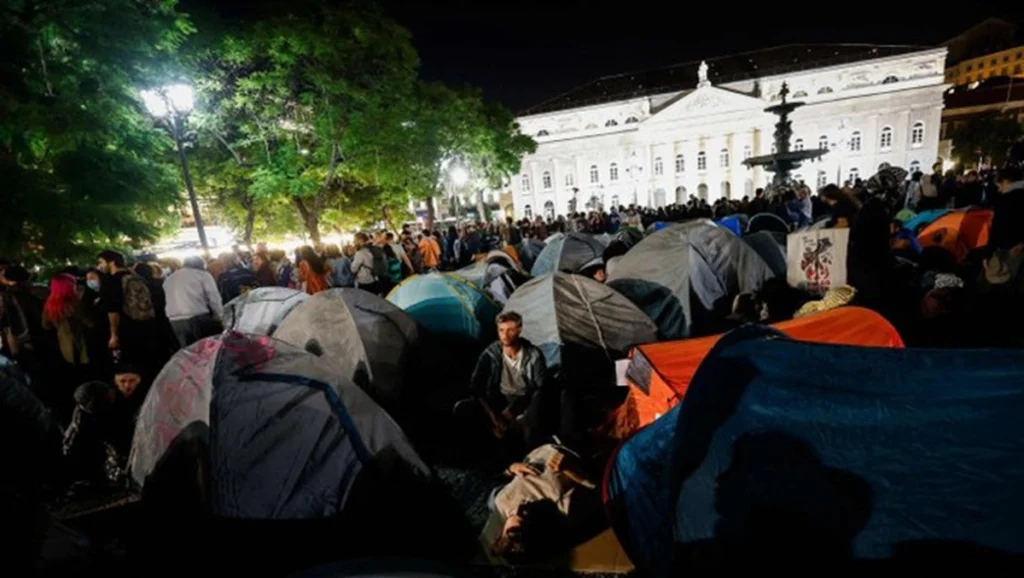
On Tuesday, thousands of people gathered in central Lisbon for a popular assembly where they decided to set up again the housing encampment that police dismantled in the early hours of the morning.
At Don Pedro IV Square, citizens protested with signs and chants against the housing crisis and condemned police violence. They were particularly critical of Prime Minister Luis Montenegro and Interior Minister Luis Neves, whom they blamed for the beatings, shoving and removal of tents while people were still inside them.
In this context, the protesters said security conditions were not in place to continue the encampment on Tuesday, but left open the possibility of pitching the tents again Wednesday.
“The proposal is as follows: Is there a popular will in this square to resume the encampment with tents starting tomorrow?” one of the movement’s spokespeople asked before inviting anyone who wished to speak to present their demands. Those in attendance voted in favor of setting up the tents again tomorrow.
🇵🇹 À Lisbonne et à Porto, aux premières heures de la matinée du 20 octobre, la police portugaise a démantelé les tentes des manifestants qui y avaient campé pour revendiquer un logement décent, à Lisbonne et à Porto. pic.twitter.com/kDn9ZIh8Jj
The text reads, “In the early hours of October 20, Portuguese police dismantled the tents of protesters who had been camping in Lisbon and Porto to demand decent housing.”
Demonstrations and protests for the right to housing have spread across the country, including in cities such as Faro and Coimbra, although the largest gatherings have been in Lisbon and Porto.
“More than 400 people gathered at 8 de Maio Square in Coimbra, near City Hall and the Monastery of Santa Cruz, to demand solutions to the housing crisis,” Portuguese outlet SIC Noticias reported.
“‘I want a roof, I want a floor, I want the right to housing,’ protesters shouted. They also called for concrete and urgent measures to resolve a problem that persists across all ages and social classes.”
“Housing is a right. Without it, nothing works,” “The housing problem cannot be solved with baton blows,” “Peace, bread, and the right to housing” and “Homes to live in, not to speculate on” were among the slogans chanted by protesters.
Gathered at Largo da Republica, demonstrators also held signs emphasizing that the “Right to housing is enshrined in the Constitution.”
Tensions between protesters and authorities have been escalating for several days, as the government maintains that street protests cannot continue into the early hours of the morning.
“There is a right to demonstrate and to explain the reasons for doing so, all of that in complete peace of mind, with complete normality and within the law. Anything that crosses the boundaries of legality and constitutes a violation of the law will, naturally, receive an appropriate response from the security forces,” said the Interior Minister, who believes the encampments have come to an end.

 Login