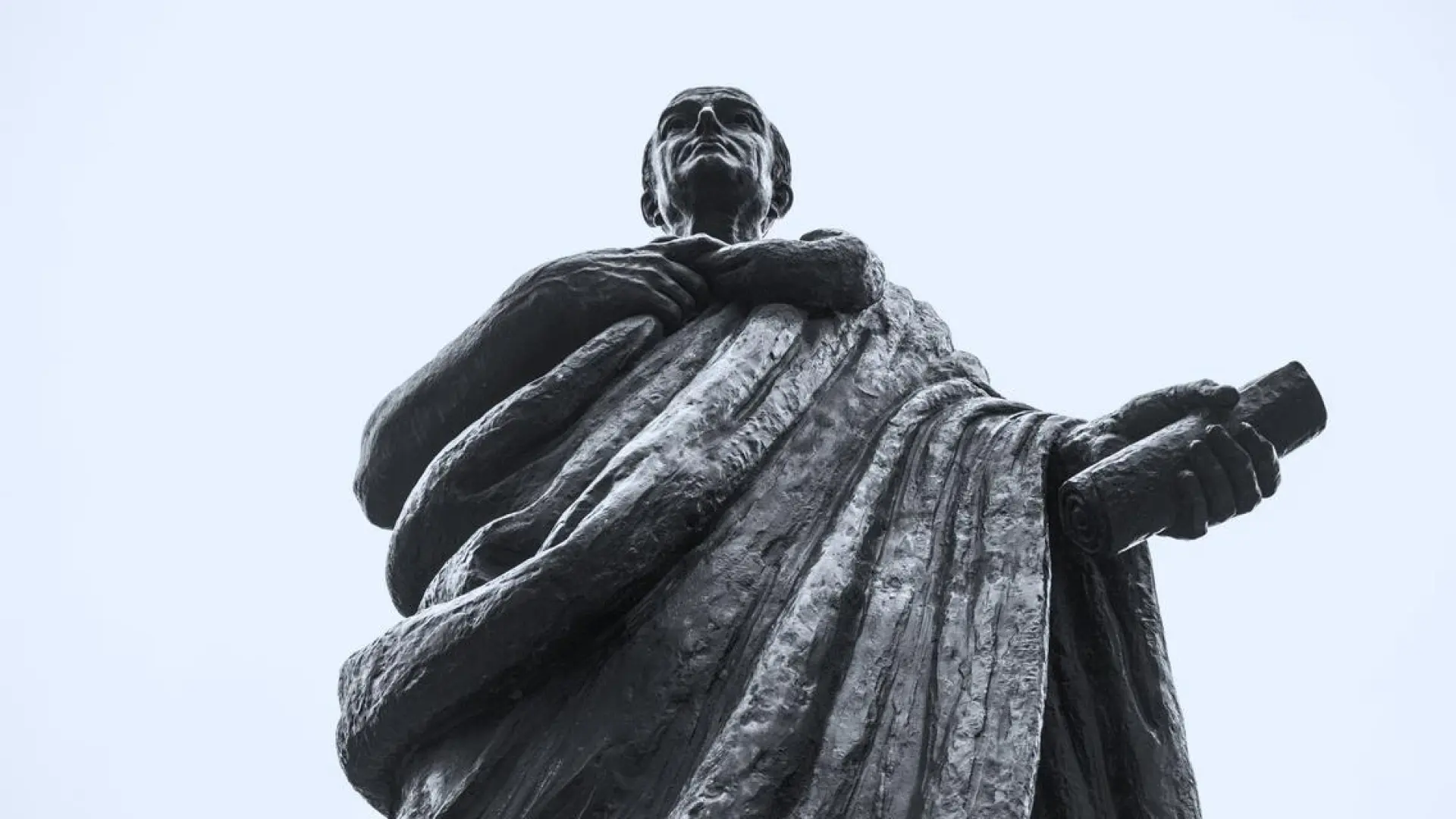
A día de hoy, se habla constantemente de amor propio, independencia emocional, autosuficiencia, libertad… puede surgir una pregunta: si una persona está realmente bien consigo misma, ¿para qué necesita a los demás? Hace casi dos mil años, el filósofo romano Séneca ya reflexionó sobre esta aparente contradicción y llegó a una conclusión que sigue teniendo plena vigencia: sentirse completo no significa renunciar a la amistad.
En sus "Cartas a Lucilio", el pensador estoico sostiene una idea que, a primera vista, puede parecer paradójica: "El sabio, por más contento que esté consigo mismo, quiere sin embargo tener amigos". Para Séneca, una persona sabia no depende de los demás para ser feliz. Su bienestar nace de su propia forma de afrontar la vida y no de circunstancias externas, como el éxito, el dinero o la aprobación ajena. Sin embargo, eso no significa que deba vivir aislada. La amistad, lejos de ser una necesidad derivada de la carencia, es una elección que enriquece la existencia.
Esta visión rompe con la idea, bastante extendida hoy, de que quien disfruta de la soledad no necesita establecer vínculos profundos. El filósofo defendía precisamente lo contrario: una persona que se siente bien consigo misma está en mejores condiciones para construir relaciones auténticas, porque no busca en ellas llenar vacíos emocionales. Es decir, sus relaciones son más que sanas porque no hay un interés específico más allá de estar cerca de personas que aporten y sumen.
Séneca explica esta diferencia con otra reflexión especialmente significativa: "El sabio está contento consigo mismo, no porque no quiera tener amigos, sino porque le basta poder tenerlos".La clave está en distinguir entre necesitar y desear. Necesitar implica depender de otra persona para mantener el equilibrio emocional; desear, en cambio, supone elegir compartir la vida desde la libertad. Según el estoicismo, la amistad más sólida nace precisamente cuando ninguno de los dos amigos espera que el otro resuelva sus inseguridades o carencias.
Este planteamiento resulta especialmente interesante en una sociedad donde la soledad suele interpretarse como un fracaso personal. Muchas personas sienten ansiedad ante la posibilidad de quedarse sin pareja o de perder determinadas amistades porque asocian esos vínculos con su propia estabilidad emocional. Séneca proponía un enfoque diferente: aprender primero a sostenerse a uno mismo para poder relacionarse con los demás desde la serenidad y no desde el miedo.
Eso no significa restar importancia a la amistad. Al contrario. El filósofo la consideraba uno de los bienes más valiosos de la vida, siempre que estuviera basada en la confianza, la honestidad y la virtud. De hecho, criticaba las relaciones interesadas, aquellas que solo existen mientras proporcionan algún beneficio. En otra de sus enseñanzas afirma: "Ama si quieres que te amen", una frase con la que resume que la amistad no puede construirse desde el cálculo o la conveniencia, sino desde la generosidad y la reciprocidad.
La filosofía estoica tampoco niega el dolor que puede provocar perder una amistad. Lo que propone es no convertir ese sufrimiento en una dependencia que impida seguir adelante. El sabio aprecia profundamente a sus amigos, pero sabe que su paz interior no puede quedar completamente en manos de factores externos. Dos mil años después, el mensaje de Séneca continúa ofreciendo una perspectiva sorprendentemente actual. Estar bien con uno mismo no significa prescindir de los demás; significa poder elegir compartir la vida con ellos desde la libertad y no desde la necesidad.
O simbolismo de uma toupeira que nasceu com limitações visuais, mas desenvolve sentidos extraordinários que lhe permitem orientar-se e prosperar, transformando dificuldades em "superpoderes" para aproximar e proteger as comunidades.
Guinea Ecuatorial empieza a remontar tras unos últimos años en los que la crisis de los precios del petróleo, junto con la depresión ocasionada por la pandemia mundial del covid, han afectado a la economía del país. Sin embargo, a partir del primer trimestre del año 2022 empezó a mostrar síntomas de recuperación, con un aumento del Producto Interior Bruto (PIB) en más de un 10%, apoyado en el principal sector productivo, la explotación de los hidrocarburos, aunque otros sectores empiezan ya a despuntar gracias a una enorme riqueza de recursos naturales, que permanecen sin explotar plenamente y que el Gobierno ha empezado a buscar una salida a través de acuerdos internacionales y empresas de capital nacional.
Todo ello se ha producido tras la celebración de la Tercera Conferencia Económica Nacional, que a partir del año 2019 ha marcado la agenda económica a través del Plan Nacional de Desarrollo 2035, cuyos objetivos principales pasan por impulsar la diversificación productiva, prestar servicios sociales de calidad a la población sobre la base de mejoras en el funcionamiento del aparato administrativo, ampliar y mejorar las infraestructuras, potenciar el desarrollo del sector privado y formar recursos humanos.
Es este último punto uno de los principales retos del país, ya que la falta de profesionalización y especialización de la mano de obra ha sido uno de los principales problemas para el desarrollo económico de Guinea Ecuatorial por la falta de formación profesional de la población, como herencia de una economía básica, que hasta la llegada del petróleo era totalmente primaria y de subsistencia, basada principalmente en pequeños cultivos familiares, junto con la caza y la pesca. La gran mayoría de los ciudadanos carecían de estudios superiores, ya que la primera universidad no se abrió hasta el año 1995. Por ello, los escasos técnicos con estudios superiores se habían formado en otros países, principalmente España, gracias a la cooperación internacional.
Así, el Gobierno se ha visto obligado a potenciar y generalizar la educación, acelerando la profesionalización de la sociedad para intentar garantizar el trabajo. Es por ello que en las últimas décadas se han creado docenas de miles de empleos públicos en ministerios, instituciones públicas o empresas nacionales de distintos ámbitos, que han conseguido que los ingresos del petróleo se enfoquen en la reconstrucción nacional a través de la economía privada, que ha impulsado el traslado de grandes masas poblacionales hacia las ciudades, propiciando la apertura de miles de pequeñas empresas y negocios.
Con esta base, Guinea Ecuatorial ha reinvertido sus rentas petroleras en la dotación de infraestructuras económicas y sociales, con una agenda que fomenta la recepción de empresas inversoras, que permitirán explotar plenamente todos los recursos. Esta agenda «ofrece un clima atractivo para el inversor, con medidas concretas para el desarrollo empresarial», explican fuentes del Gobierno ecuatoguineano. Para apoyar la llegada de inversiones, el Ejecutivo ha invertido grandes cantidades en infraestructuras de transporte, que facilitan las conexiones nacionales e internacionales.
Ahora mismo, el país cuenta con varios aeropuertos en Malabo (Isla de Bioko), Bata y Mongomeyén (zona continental) y en las islas de Annobón y Corisco.
La red de carreteras se ha modernizado y el Gobierno presume de tenerlas «en el mejor estado de todo el continente, con autopistas y enlaces entre todos los puntos». También se han reconstruido dos grandes puertos, el de Malabo y el de Bata, que ha facilitado el desarrollo del tráfico de mercancías.
Otro de los puntos fuertes de cara a los inversores es el desarrollo de las telecomunicaciones. El acceso a los servicios de telefonía e internet llega a prácticamente toda la población, gracias, entre otras cosas, al servicio del cable de fibra óptica ACE, que une el oeste de África con Europa. El uso de teléfono móvil e internet está extendido, lo que ha propiciado la generalización de las redes sociales y el acceso a canales de televisión nacionales e internacionales. También se ha realizado una enorme inversión para garantizar la energía eléctrica, con un enorme incremento de producción gracias a la construcción de plantas de turbogas, centrales térmicas y plantas hidroeléctricas.
Por todo ello, el Fondo Monetario Internacional (FMI) –organización que trabaja con el Gobierno desde hace décadas– y otras instituciones oficiales internacionales han reiterado la necesidad de combinar la diversificación económica con la explotación de la riqueza de materias primas para reducir la dependencia de los hidrocarburos. Por ello, auspiciado por el FMI, se ha impulsado un plan de urgencia de búsqueda internacional de inversores que ayuden a explotar y rentabilizar todas las áreas económicas. Para ello se han tomado medidas fiscales y legislativas destinadas a crear un ambiente favorable para que la inversión trabaje con plena seguridad jurídica.
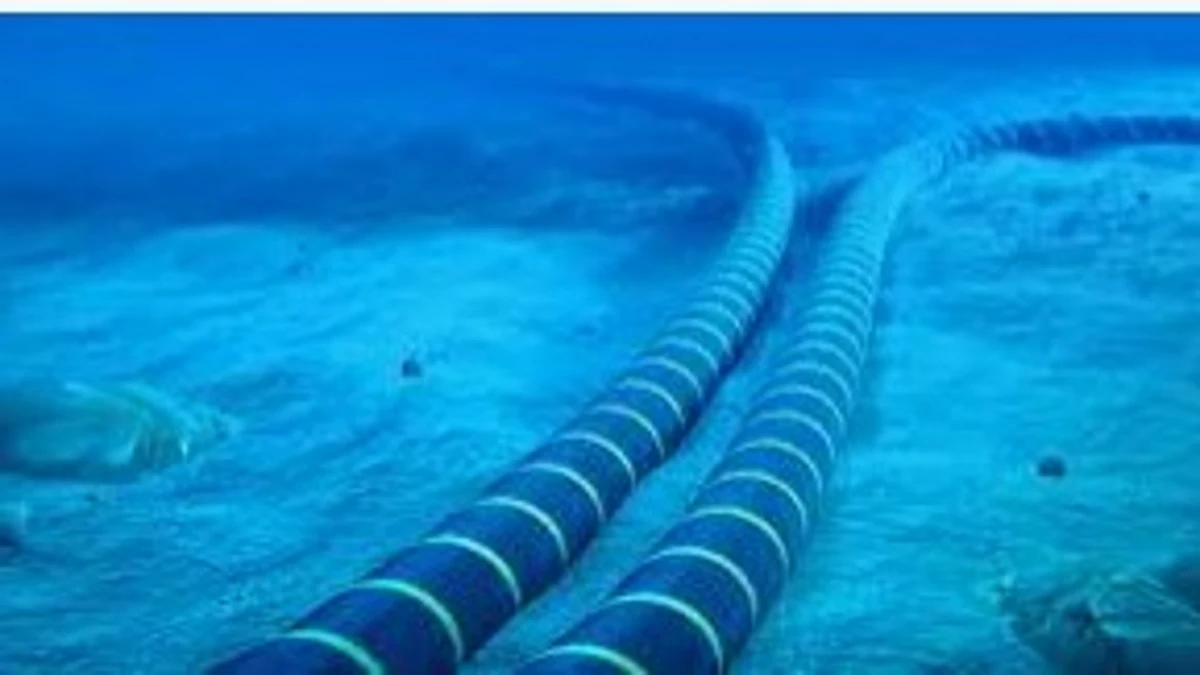
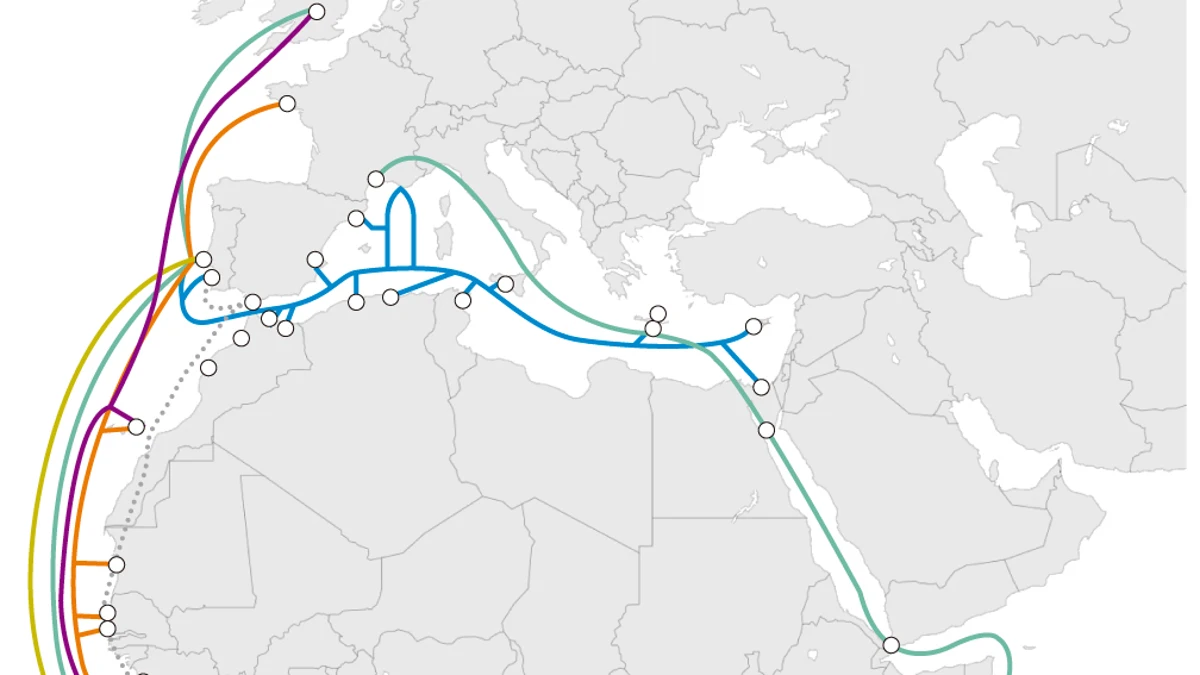
Medusa, el cable submarino respaldado por el grupo AFR-IX Telecom y que interconecta el sur de Europa, el norte de África, Oriente Medio y África Occidental a través del Mediterráneo, tendrá un nuevo amarre en Guinea Ecuatorial, tras el acuerdo firmado entre el gobierno de dicho país y los responsables de la infraestructura.
De esta forma, el país se suma así a un cable que ofrece una transmisión de alta capacidad, una mayor redundancia de red y una menor latencia, lo que permite satisfacer la demanda de servicios digitales, en rápido crecimiento, tanto en Guinea Ecuatorial como en toda la subregión.
Será el segundo cable submarino en la zona, tras el cable ACE (Africa Coast to Europe), operativo desde diciembre de 2012 que tiene 17.000 kilómetros de fibra óptica para conectar 19 países a lo largo de la costa occidental africana, desde Francia y Portugal hasta Sudáfrica.
En total, y según el mapa de Telecomunicaciones de África 2025 de TeleGeography, hay actualmente 77 sistemas de cable conectados al continente africano, ya sea en servicio o en construcción. En noviembre de 2025, Meta anunció la finalización de la infraestructura central de 2Africa, el sistema de cable abierto de mayor longitud del mundo con sus 45.000 kilómetros. El sistema, respaldado por un consorcio que incluye a MTN GlobalConnect, Vodacom/Vodafone, Orange, China Mobile International y otros, conecta 33 países y está diseñado para dar servicio a más de 3.000 millones de personas.
Algo más que conectividad
Estos cables submarinos son de vital importancia para cualquier territorio y más aún para un continente como África. Por hacernos una idea, antes de que el ACE entrara en servicio, la capacidad de transmisión internacional de los países era prácticamente residual. Ahora, y gracias a esos sistemas, se ha multiplicado esa capacidad de conectividad hasta superar los 30 Gbps, y el coste del megabit por segundo se ha desplomado (pasando en algunos casos de costar unos 4.000 dólares a menos de cinco dólares al mes).
El problema, más allá del ancho de banda, es de la vulnerabilidad de estos países, puesto que depender de un único cable implica que cualquier avería en ese sistema puede dejar al país entero sin conexión internacional. De hecho, en marzo de 2024 varios fallos simultáneos en cuatro sistemas (WACS, ACE, SAT-3 y MainOne) dejaron a gran parte de África Occidental y Central sin internet durante horas, por lo que la Autoridad Nacional de Telecomunicaciones de Ghana llegó a confirmar públicamente «una degradación significativa de los servicios de datos en todo el país». En enero de 2026, un fallo técnico en el cable WACS interrumpió el acceso a internet en la República Democrática del Congo.
Cabe señalar que Medusa cuenta con el respaldo financiero de la Unión Europea (que aportó 14,3 millones de euros para su extensión africana). De hecho, este cable tiene su origen en uno mediterráneo que empezó a desplegarse formalmente en octubre de 2025, cuando su primer segmento atracó en Marsella. Diseñado con hasta 24 pares de fibra y una capacidad de diseño de 480 terabits por segundo, conecta el sur de Europa con el norte de África y, a través de su extensión subsahariana, se ramifica hacia el Atlántico. La construcción la lleva a cabo Alcatel Submarine Networks (ASN).
En el caso de Guinea Ecuatorial, la llegada del cable está prevista para el periodo 2029-2030 y el coste de conexión se estima entre 20 y 60 millones de euros, sujeto a la validación de estudios marítimos adicionales. Además, el país también quiere amarrarse al Via Africa, una iniciativa impulsada por un consorcio de siete operadoras que el 12 de mayo de 2026 firmaron un Memorando de Entendimiento para su desarrollo. El proyecto prevé conectar Europa con Sudáfrica bordeando la costa atlántica, con puntos de amarre en el Reino Unido, Francia, Portugal, las Islas Canarias, Mauritania, Senegal, Guinea, Costa de Marfil y Nigeria. El consorcio ha arrancado con un estudio de ruta para determinar el trazado óptimo y está preparando el proceso de licitación para seleccionar al proveedor del cable.
Via Africa está diseñado específicamente como una infraestructura complementaria, cuya razón de ser es proporcionar una ruta submarina distinta a la de cables existentes como 2Africa, Equiano y el propio Medusa Africa.
Sin embargo, y pese a la cantidad de cables que rodean el continente, la penetración de internet en la población sigue siendo baja. En 2023, solo el 34% de los africanos usaba internet, frente al 66% de la media mundial, según la Unión Internacional de Telecomunicaciones. Entre las causas de este bajo índice se puede hablar de falta de redes de fibra óptica internas que lleven la señal desde las estaciones de amarre costeras hasta las ciudades del interior, costes de acceso o disponibilidad de electricidad, entre otras.
On May 3, an unusual procession moved through Washington DC. Several hundred people walked beneath the monuments of the American capital carrying portraits of Red Army soldiers. Children waved Soviet flags. A live orchestra played wartime songs at the World War II memorial. The Russian embassy had filed the permit; the DC Metropolitan Police provided an escort. Russian state media celebrated the event as proof that, with the return of Donald Trump, historical truth too had returned to America.
One organizer told Russian state television: “We love, respect Russia, honor the memory of our heroes.”
Similar marches took place in Paris, Amsterdam and Busan. In Berlin, authorities announced that Soviet flags, Russian symbols and military songs would once again be banned near Soviet war memorials during May 8 and 9 commemorations.
But in Moscow, Victory Day itself appeared haunted by fear.
For decades, May 9 has been Russia’s most sacred annual political ritual, binding victory, patriotism and state power into a single language. But this year, Kremlin spokesman Dmitry Peskov was reduced to announcing that the Immortal Regiment march in Moscow would continue only “in electronic format.”
The run up to this year’s Victory Day became the most anxious Moscow has experienced in recent memory. The Kremlin canceled the traditional procession in the Russian capital, moving it online. Military equipment was removed from the parade. Mobile internet access across Moscow was intermittently shut down in the days leading up to May 9. Spectator numbers in St. Petersburg were reportedly slashed from thousands to just a few hundred. The Victory Parade in Kaliningrad was canceled entirely. Russian media outlets published extraordinary reports about Vladimir Putin retreating deeper into protected bunkers amid fears of Ukrainian drone strikes and assassination attempts.
Russia’s Foreign Ministry even warned foreign governments to evacuate diplomats from Kyiv before May 9, threatening massive retaliation if Ukraine targeted the celebrations with drones.
And then came another extraordinary twist. Volodymyr Zelensky publicly “allowed” the parade to proceed. In a deliberately tongue-in-cheek decree issued after negotiations around a temporary ceasefire, the Ukrainian president formally excluded Red Square from Ukraine’s operational strike plans for the duration of the celebrations, even listing the exact geographic coordinates of the square itself.
Watching it all unfold, I kept wondering whether empires collapse more easily than the systems of feeling they create. The Soviet Union fell apart more than 30 years ago, but the architecture built around victory, sacrifice and historical grievance survived it, stretching across borders, diasporas and rival political projects. What began as Soviet myth-making about liberation has evolved into a transnational political language through which governments, activists, diasporas and rival ideological movements compete over legitimacy, victimhood and belonging.
Over the years, at Coda, in our Rewriting History current, we have tracked how the remembrance of World War II became central to Putin’s machinery of legitimacy and repression. Soon after he came to power, Russian public culture became saturated with stories of the Great Patriotic War. Watching Russian state television often felt as if the war had ended yesterday. New films, schoolbooks, drama series, speeches, parades and television specials turned victory into the emotional foundation of Putin’s Russia. Scholars of Russian memory politics have described how, under Putin, collective memory of the war became a tool for claiming legitimacy, discrediting opposition and presenting the Russian state as the eternal defender against fascism.
It resonated because it tapped into genuine emotion passed on for generations. It was never just propaganda. It rested on something real: the scale of Soviet loss and the private grief carried by millions of families.
The Immortal Regiment began in 2012 in the Siberian city of Tomsk as a local act of remembrance. Ordinary people walked through the streets carrying photographs of relatives who died in the war. By 2015, Putin was leading the Moscow procession himself, while state-backed organizations coordinated chapters in dozens of countries.But in Putin’s Russia, where victory had already become the central organizing myth of the state, the boundary between private mourning and political mythology dissolved.
The speed of that transformation still feels important to me. It says something about the way modern political systems absorb private emotion and fold it back into the language of the state.
The Kremlin framed these Victory Day rituals as a defense against what it called Western attempts to “rewrite history” by minimizing the Soviet role in defeating fascism or equating Stalinism with Nazism. Ukraine and many Eastern Europeans came to see the marches instead as vehicles for imperial nostalgia and wartime propaganda.
But the argument, it seems, is no longer only about what happened in the past. It is about who gets to turn memory and grief into political legitimacy in the present.
This year Germany found itself in the extraordinary position of having to ban Soviet flags and military songs near Soviet memorials, effectively regulating the symbolic language of antifascism itself. Historian Timothy Snyder once warned that “if fascists take over the mantle of antifascism, the memory of the Holocaust will itself be altered.” That is precisely the moral and historical dilemma Berlin has now forced into the open. What happens when the symbols of genuine antifascist sacrifice become inseparable from the imagery of an ongoing war? When the flags carried by the soldiers who liberated Auschwitz are also flown at embassy-organized rallies while Russian bombs fall on Kharkiv?
At Coda, we explored some of these tensions years ago, in our documentary “What To Do With Stalin,” which examined the strange afterlife of Stalin’s image across the former Soviet world. While filming in Georgia, we encountered arguments that now feel strikingly familiar: whether remembering Stalin represented patriotism or denial, historical pride or historical amnesia.
https://www.youtube.com/watch?v=NdfTH6rfe7E
Even then, it was obvious these battles were never really about the past.
Putin himself acknowledged as much during this year’s Victory Day speech, describing the war in Ukraine as a “just” continuation of the struggle against fascism and accusing the West of fueling confrontation with Russia “to this day.” Hours later, he suggested the war might finally be over. “I think that the matter is coming to an end,” he told reporters.
Victory Day 2026 may ultimately be remembered not for the military parade itself, but for revealing how unstable that memory system has become. Moscow performed triumph while fearing attack. Berlin restricted Soviet symbols in the name of democratic security. Washington hosted embassy-linked Soviet commemorations beneath American monuments.
I was ten years old when the Soviet Union collapsed. For those of us who grew up inside it, the end of the empire felt at once chaotic and exhilarating. Borders opened, old certainties disappeared and ideology lost its grip almost overnight. I still feel fortunate that, as a child, I witnessed an empire built on terror and repression collapse into history.
In the decades that followed, we watched Russia slowly turn the symbols and emotional reflexes of the Soviet system into instruments of political power once again. Victory Day became one of the most potent of these instruments: a ritual that fused together grief, patriotism, historical trauma and state legitimacy into a single, powerful sentiment.
Russia’s ambassador to Washington, Alexander Darchiev, praised what he described as the Trump administration’s dramatically changed attitude toward Victory Day commemorations. The holiday, he said, now played “an unequivocally positive role” in Russia-US relations. He pointed specifically to the marches held in the center of Washington, DC.
But the more I think about this year’s Victory Day, the less it feels like a story about Russia alone. When the Soviet Union collapsed, many of us assumed its emotional architecture would disappear with it. Instead, parts of it were patiently cultivated and repurposed for a new era by the men in charge of Putin’s Russia.
The emotional logic that once underpinned the Soviet system no longer belongs only to Russia and the shattered geography of its former empire. Grievances, historical trauma and rituals of belonging now shape political life all around the world. Digital networks and algorithmic systems did not create these emotional impulses, but they amplified them at a scale the Soviet state could only dream of. Perhaps that is the true afterlife of an empire: not the survival of its borders or ideology, but of the emotional systems it builds to organize fear, belonging and historical destiny.
Additional research by Masho Lomashvili and Irina Matchavariani
A funny thing happened on the day OpenAI announced it was shutting down Sora, its video generation app: Iran went all in on synthetic propaganda and very quickly started winning the global meme war. The timing is a coincidence, no doubt, but it is the kind of coincidence that illuminates.
Watching the explosive virality of the clips offers a powerful lesson in asymmetric media operations. They deploy cultural sophistication, an understanding of online communities and the enormously powerful creation tools made available by American tech companies, tools that give everyone on the internet access to a personal reality distortion field — drones, but for your feed.
On Wednesday, as Donald Trump was trying desperately to talk down the oil markets with hints of a deal, a stream of videos, carefully calibrated for U.S., regional and third country audiences rolled out on X via embassy accounts, Russia Today, and disaffected Maga influencers. The clips, by broad social media consensus, are good. Some lean heavily on the extremely online grammar of the U.S. right. Some remix Hollywood characters and likenesses in exactly the way that OpenAI’s now nixed billion-dollar deal with Disney was supposed to sanction. Others lean more heavily into Islamic iconography, featuring Donald Trump and Benjamin Netanyahu as worshippers of Baal, the foreign demon god who figures in both the Quran and the Hebrew Bible. The Lego movie is an especially rich resource, but so are TikTok formats, and the kind of idealized AI figures beloved of Trump administration meme makers. You can watch a few of them here.
Notably, faked war footage is far from the dominant format. All of these clips foreground and celebrate their own artificiality: some are sentimental, some triumphal, many are full of the gleeful adolescent wit of gamers on discord forums.
Researchers have long been warning that generative tools will undercut the authority of visual evidence, compounding and accelerating the damage created by slower, cruder forms of fakery: photoshop, selective editing, even gaming clips passed off as combat footage. Of course, we are already there, and have been for a while. Russia has been the paramount master of this game, in Ukraine and in its ongoing influence operations around the world. But others have learned quickly. Last year, when India and Pakistan were engaged in a brief aerial battle, social media bullshit overwhelmed and compromised traditional coverage. More recently, Israel’s obliteration of Gaza was accompanied by a sustained and comprehensive blizzard of visually compelling misinformation, propaganda, and official lies.
That continues. On March 28, Israel killed three journalists in a targeted strike in Southern Lebanon, claiming without evidence that one of them, Ali Shoaib, was a member of Hezbollah’s Radwan forces. They later distributed a photograph of him in military fatigues to reinforce the point, but explained to Fox news that in fact, they’d had to photoshop the uniform in because no such picture existed.
Meanwhile, in the Trump administration’s domestic war on immigrants and political opponents, we’ve seen a complete resetting of norms around the tone of official communication and any expectation that it is rooted in fact. Nowhere was that more evident than in the altered footage posted by the White House of the arrest of the prominent Minneapolis activist Nekima Levy Armstrong in January. In the video, shared by the official White House handle, a handcuffed Levy Armstrong is sobbing, her skin visibly darkened. In fact, she had faced arrest calmly.
Questioned by reporters about this blatant falsification, deputy White House communications director Kaelan Dorr responded: "Enforcement of the law will continue. The memes will continue.” Collapsing the distinction between a meme and the factual record with the aid of AI is the final step in this administration's insistence that its preferred narrative simply is reality.
The problem for the White House and its allies is that their choices in tech policy, official communication, and press freedom level the playing field for information war in ways that Tehran’s media strategists understand and they, for all their immersion in online worlds, do not.
Iranian propagandists know that the currency of visual information online has already been completely debased. They’ve dealt with it plenty, and no doubt practiced it themselves in regional battles for narrative dominance. Their insight is that as cheap and easy as it is to create and distribute fakes, returns on the effort of mobilizing what disinformation researchers call “coordinated inauthentic action” are diminishing. They still do it, but it isn’t where the action is.
Sam Altman, Elon Musk and Mark Zuckerberg have, in a very practical sense, wrought this moment in concert with Peter Thiel, Alex Karp, JD Vance and Donald Trump. At their urging, the U.S. has surrendered unrivaled dominance in scarce, expensive information and cultural assets in exchange for a political economy of media that widely distributes cheap, abundant ones.
Tech leaders and conservative politicians have worked consistently for a decade to deprecate the trustworthiness of American journalism and constrain its liberties. They have smeared its practitioners as “enemies of the people”; they have captured the commanding heights of the broadcast and culture industries through crony deals, and they have launched an assault on both press freedom and standards, two assets that once made American news outlets the envy of the world. Needless to say, the economic collapse of traditional media companies fostered by Google’s and Meta’s advertising duopoly only served to deepen the damage. Jeff Bezos’s Washington Post shuttered its Middle East bureaus just days before the war began.
Meanwhile, lying from agency podiums and the Oval Office, makes Karoline Leavitt barely distinguishable from Baghdad Bob, Iraq’s minister of information in 2003 whose surreal, truth-dodging press conferences during the U.S.-led invasion made him a global laughingstock. And the DOGEing of both the nominally independent Voice of America, as well as the state department’s Global Engagement Center leaves the administration with neither broadcast nor digital counter-propaganda assets.
When no one can be trusted with the actual truth, we are left with the AI equivalent of 19th-century editorial cartoons, produced at industrial scale and distributed globally. America has little advantage in that war, particularly when it is at a moral, political and legal nadir.
If anything, Iran, which combines repression with an enormously rich literary culture, film scene and advertising market brings serious capabilities to the fight.
Of course, the ebbing of information power was already under way during the first Trump administration, and during Joe Biden’s term in ways that are indissociable from broader democratic decline. The “trust and safety” architecture adopted by big platform companies was designed — implicitly if not always visibly — to conserve information authority, and ensure that it functioned in broadly pro-democratic ways.
After the disastrous failures of the Rohingya genocide — which rights groups and UN investigators blamed Facebook for facilitating — and the fears surrounding the manipulation of the U.S. electoral environment in 2016, there was a clear threat to the commercial and political health of Twitter, Facebook and YouTube. Tech companies, governments, researchers and human rights experts devised rules and norms for content moderation grounded in existing standards, tools for detecting coordinated inauthentic behavior, and a framework for crisis response.
The community of practitioners and institutions that sprung up to combat the flesh-eating virus attacking the body politic were working with bandaids in the battlefield hospital even before Covid, a coordinated attack from the right, and the second Trump victory hit them, but they succeeded in imposing some limits. That project now lies in ruins.
The Stanford Information Laboratory has been shut down. Trust and Safety teams at Meta and X have been disbanded. The national security arm of the project, centered around the State Department is gone, and private funding for countering misinformation has largely dried up.
Where are the hyperscalers, the AI titans, whose tools are being so effectively deployed, in all of this?
The trust and safety people who do work at OpenAI are dutifully putting out reports every few months. They are detailing how they foiled efforts to use ChatGPT for a Chinese influence campaign aimed at Sanae Takaichi, the Japanese prime minister, and exposing a Russian content mill feeding African newspapers. “Pro-tip for governments,” wrote Head of National Security policy Sasha Baker on LinkedIn of the February report. “Please don’t use our products to spread lies online.”
Governments, in the world of Sam Altman’s “democratic AI” do not include that of the United States. OpenAI has not mentioned a single U.S. ally — let alone the administration itself — in these reports.
OpenAI has hired multiple ex-Clinton, Obama and Biden officials, and in their work a weird, attenuated piece of the old national security approach to information integrity lives on, alongside the project of selling products to the Pentagon. The company’s leaders clearly treat these issues as a complement to messaging around Western AI, or a picayune adjunct to the bigger questions of AI risk, which are handled way up in the organizational stratosphere, as they are at Anthropic.
Perhaps the larger lesson is that you can’t really shut down Sora, or put AI-generated video back in its box. If you choose to prosecute an illegal war of choice after surrendering the hard-won high ground of a robust, democratic information environment, high tech weaponry will not offset the deficit. On the contrary, you will have compounded the risk of both tactical failure and strategic geopolitical defeat. When that happens, and in some ways it already has, those who made this war, and their enablers in Silicon Valley, will have only themselves to blame.

 Login