❌

Reading view

SOBE PARA DOIS O NÚMERO DE MORTOS EM ACIDENTE NA A33 EM FERNÃO FERRO

Subiu para duas as vítimas mortais resultantes do despiste ocorrido na A33, ao quilómetro 15+404, na zona de Fernão Ferro, concelho do Seixal. O acidente provocou ainda dois feridos graves.

Segundo a CNN Portugal, no local do acidente foram encontradas substâncias ilícitas e armas, incluindo uma arma de fogo carregada e municiada, bem como um colete balístico.

A Polícia Judiciária foi acionada para proceder à inspeção da viatura e investigar as circunstâncias do sucedido.

Data: 8 de agosto de 2026
Por: Dino Frazão
Se viu esta publicação e ainda não é nosso seguidor, siga a nossa página para ficar a par de todas as atualizações e conteúdos do projeto!

————————————————–
© 2026 Os Monhacas. Todos os direitos reservados.
Este é um projeto independente de criação de conteúdos.
Se gostou do que leu e ainda não é seguidor, siga a nossa página para ver mais conteúdos!
————————————————–

O conteúdo SOBE PARA DOIS O NÚMERO DE MORTOS EM ACIDENTE NA A33 EM FERNÃO FERRO aparece primeiro em OS MONHACAS.

  •  

DROGA E ARMAS ENCONTRADAS EM ACIDENTE COM UM MORTO NA A33 EM FERNÃO FERRO

Um despiste ocorrido na A33, ao quilómetro 15+404, na zona de Fernão Ferro, concelho do Seixal, provocou uma vítima mortal e três feridos graves, resultantes da queda da viatura de um viaduto. Os três feridos graves foram transportados para o Hospital Garcia de Orta, em Almada.

Segundo a CNN Portugal, no local do acidente foram encontradas substâncias ilícitas e armas, incluindo uma arma de fogo carregada e municiada, para além de um colete balístico.

A Polícia Judiciária foi acionada e vai proceder à inspeção do veículo para apurar as circunstâncias do sucedido. No teatro de operações mantêm-se 24 operacionais, apoiados por 10 veículos de emergência. O trânsito na A33 circula normalmente nesta altura.

Data: 8 de agosto de 2026
Por: Dino Frazão

Se viu esta publicação e ainda não é nosso seguidor, siga a nossa página para ficar a par de todas as atualizações e conteúdos do projeto!

————————————————–
© 2026 Os Monhacas. Todos os direitos reservados.
Este é um projeto independente de criação de conteúdos.
Se gostou do que leu e ainda não é seguidor, siga a nossa página para ver mais conteúdos!
————————————————–

O conteúdo DROGA E ARMAS ENCONTRADAS EM ACIDENTE COM UM MORTO NA A33 EM FERNÃO FERRO aparece primeiro em OS MONHACAS.

  •  

QUEDA DE AVIONETA NO AERÓDROMO DE PORTIMÃO FAZ UMA VÍTIMA MORTAL

📷 Aviação tv

Uma pessoa morreu este sábado na sequência da queda de uma avioneta no aeródromo de Portimão. Segundo a Rádio Observador, o comandante dos bombeiros de Portimão confirmou que a vítima mortal é o piloto, um homem de nacionalidade portuguesa com 28 anos de idade.

A aeronave envolvida no acidente transportava uma faixa publicitária. O despiste e consequente queda ocorreram no momento em que a faixa se desenrolava.

O alerta para a ocorrência foi dado às 9h50. Segundo a Proteção Civil, no local estiveram em operações de socorro e apoio 20 operacionais, sustentados por oito meios terrestres.

Se ainda não é nosso seguidor, siga a nossa página para ficar a par de mais conteúdos e atualizações!

Por: Dino Frazão
Data: 8 de Agosto de 2026

————————————————–
© 2026 Os Monhacas. Todos os direitos reservados.
Este é um projeto independente de criação de conteúdos.
Se gostou do que leu e ainda não é seguidor, siga a nossa página para ver mais conteúdos!
————————————————–

O conteúdo QUEDA DE AVIONETA NO AERÓDROMO DE PORTIMÃO FAZ UMA VÍTIMA MORTAL aparece primeiro em OS MONHACAS.

  •  

Moneta Positiva o tracollo inarrestabile

Moneta complementare, piattaforma finanziaria, economia etica. Mentre l’Italia si impoverisce sulla via di Tel Aviv, Londra e Washington, dopo la deindustrializzazione pandemica e il sabotaggio del Nord Stream, c’è chi ha previsto sistemi economici paralleli volti a un piano di salvezza nazionale e internazionale. 💶 Chi crea il denaro che usiamo ogni giorno? Non lo Stato: la moneta elettronica in circolazione nasce quasi interamente dal credito delle banche private, e nasce come debito. Da lì deriva tutto il resto: austerità, tagli, emergenze non finanziate, sovranità economica ceduta ai mercati. 🎙 Jeff Hoffman dialoga con Fabio Conditi, presidente dell’associazione Moneta Positiva, ideatore del SIRE (Sistema Integrato di Risparmio Erariale): una piattaforma pubblica per emettere Crediti d’Imposta Cedibili, accreditati su un conto fiscale di cittadini e imprese, utilizzabili per pagare le tasse, scambiabili e convertibili. Uno strumento già portato alla Camera dei Deputati con una proposta di legge (Palazzo San Macuto, 9 aprile 2026). Oltre i personalismi e l’ego espanso di ognuno, SIRE può essere una via di salvezza? Come possiamo procedere? Ne parliamo con Fabio Conditi, presidente di “Moneta Positiva” e coautore del Piano di Salvezza Nazionale voluto da Giulietto Chiesa. Intervista a cura di Jeff Hoffman 🔍 In questa puntata affrontiamo: ▪ Come nasce davvero la moneta e perché il debito è strutturale, non accidentale ▪ Che cos’è il SIRE e perché non sostituisce l’euro ▪ Le basi giuridiche: Costituzione, Trattati europei, manuale Eurostat sul deficit ▪ Perché una proposta tecnicamente compatibile con le regole resta ferma ▪ Moneta positiva ed economia etica: cambiare strumento o cambiare mentalità ▪ Il tracollo graduale e i segnali di un’accelerazione 📚 I LIBRI DI FABIO CONDITI Risate Sovrane (2025) Un Mondo Positivo (2023) The Great RE-BEST (2022, edizioni in inglese e ungherese) La Mossa del Cavallo (2019) Moneta Positiva (2017) Manuale in 12 passi per uscire dalla crisi (2015) Disponibili su https://unmondopositivo.it/libri/ Link Utili per approfondire: 🌐 Associazione Moneta Positiva: https://monetapositiva.it/ Video esplicativo 14 minuti: https://www.youtube.com/watch?v=kto3E… Video esplicativo 6 minuti: https://www.youtube.com/watch?v=0oLmP… 📡 CASA DEL SOLE TV — Informazione libera e indipendente Il nostro lavoro è possibile solo grazie al vostro sostegno. Casa del Sole TV non ha editori forti né finanziamenti pubblici: siamo sostenuti da voi, il nostro pubblico. Se credi nel valore di un’informazione che non tace, aiutaci a continuare. 💳 Dona tramite bonifico bancario: IBAN: IT63P0326822300052392596590 Intestato a: LA CASA DEL SOLE EDIZIONI Causale: Donazione Casa del Sole TV 🅿 Dona tramite PayPal: paypal.me/casadelsoletv ⏰Sostegno ricorrente: casadelsole.tv/sostienici Anche un piccolo contributo fa la differenza. Grazie di cuore! ❤

L'articolo Moneta Positiva o tracollo inarrestabile proviene da Casa del Sole TV.

  •  

DESPISTE NA A33 PROVOCA UM MORTO E TRÊS FERIDOS GRAVES EM FERNÃO FERRO

Um despiste ocorrido esta manhã na A33, ao quilómetro 15+404, na zona de Fernão Ferro, concelho do Seixal, provocou uma vítima mortal e três feridos graves.

Segundo a Proteção Civil e informações recolhidas no local, o alerta para o acidente foi dado pelas 06h56. As vítimas têm, aparentemente, idades compreendidas na casa dos 20 anos.


Para o local foram mobilizados 24 operacionais, apoiados por 10 veículos de emergência. Apesar do aparato do acidente, o trânsito no local circula normalmente nesta altura.

📷 César Murteira via Messenger

Se viu esta publicação e ainda não é nosso seguidor, siga a nossa página para ficar a par de todas as atualizações e conteúdos do projeto!

————————————————–
© 2026 Os Monhacas. Todos os direitos reservados.
Este é um projeto independente de criação de conteúdos.
Se gostou do que leu e ainda não é seguidor, siga a nossa página para ver mais conteúdos!

O conteúdo DESPISTE NA A33 PROVOCA UM MORTO E TRÊS FERIDOS GRAVES EM FERNÃO FERRO aparece primeiro em OS MONHACAS.

  •  

Extensão de Saúde da Tôr remodelada vai dar resposta a mais de 500 utentes

Foram inauguradas esta quarta-feira as obras de requalificação da Extensão de Saúde da Tôr, um investimento que pretende reforçar os cuidados de saúde de proximidade no interior do concelho de Loulé.

Passado quase um ano após ter recuperado a autonomia administrativa (a Tôr voltou a ser freguesia nas eleições autárquicas de 2025), este momento reveste-se de especial importância para um território marcado pelo envelhecimento demográfico e integra uma estratégia local de fixação de população.

Como frisou André Pedro, presidente da Junta de Freguesia da Tôr, “durante demasiados anos” verificou-se uma degradação desta Extensão de Saúde, com problemas ao nível de infiltrações nas paredes e desgaste no mobiliário, afetando o dia a dia de trabalhadores e atendimento dos utentes. “Os nossos profissionais de saúde mereciam um local digno para exercer a sua missão, e os nossos cidadãos mereciam ser recebidos com o máximo respeito e conforto”, afirmou este responsável.

As instalações, que desde o mês de maio integram a Unidade de Saúde Familiar Soberana, vão prestar cuidados de saúde primários a 506 utentes. O serviço será assegurado por um médico de família, um enfermeiro e um secretário clínico.

Telmo Pinto, presidente da Câmara Municipal de Loulé, destacou o facto desta intervenção constituir-se como uma importante medida de coesão territorial: “É a garantia de que quem vive no interior do concelho não tem de percorrer quilómetros para ser atendido, não tem de adiar uma consulta, não tem de sentir que viver longe do litoral é viver com menos direitos”.

A reabertura deste espaço de saúde complementa outras medidas recentes da Autarquia na Tôr, com vista a atrair população a esta freguesia do barrocal, mas que se encontra a poucos quilómetros da cidade de Loulé. Destaca-se o investimento em telecomunicações, a revisão do PDM que contempla áreas para construção de infraestruturas públicas e a promoção deste território recentemente reconhecido pela UNESCO, através do Geoparque Algarvensis. 

Também a melhoria dos serviços de saúde constitui um fator para “atrair pessoas e dar-lhes razões concretas para escolherem viver aqui”.

Telmo Pinto recordou a aposta que o Município de Loulé tem feito na área da saúde, destacando a construção do Centro de Saúde Universitário e do edifício do INEM. Em relação a este último, o presidente da Autarquia pretende pedir explicações ao Governo, numa altura em que foi anunciado o encerramento do CODU – Centro de Orientação de Doentes Urgentes.

Para além desta intervenção na Tôr, a Câmara Municipal de Loulé adquiriu também monoblocos (instalações temporárias) para a Unidade de Saúde Familiar Estrela do Mar, em Quarteira, para o Centro de Saúde de Loulé e para a Unidade de Saúde Familiar Soberana. Estão também em curso melhorias no Centro de Saúde de Loulé e planeadas as futuras instalações da USF Soberana, que serve atualmente 8963 utentes.

Durante a cerimónia, Telmo Pinto falou também da construção do futuro Hospital Central do Algarve, o “projeto estruturante para a saúde de toda a região”. A Associação de Municípios Loulé/Faro já dispõe de 13 hectares de terreno para ceder à construção desta infraestrutura. Por outro lado, as duas autarquias fecharam há duas semanas o seu “contributo futuro para a construção das áreas envolventes”, um investimento de 1 milhão de euros. “Loulé não é um espectador deste processo, é parte interessa e ativa. Não será por nós que o Hospital não se concretizará!”, sublinhou ainda o edil. 

 Da parte da Unidade Local de Saúde do Algarve, Rúben Martins destacou a parceria com o Município de Loulé e lembrou a importância de atrair profissionais às zonas do interior. “A ULS procura constantemente as melhores soluções para colocar os médicos de família em todos locais, o que não é fácil porque há escassez de recursos humanos. Temos procurado que não falte apoio às comunidades ao nível da saúde”, notou.

  •  

Já foi escolhida a cor das Bicicletas Vela em Loulé

A combinação de full sand e alpine blue (areia e azul) foi a escolha para a cor das futuras bicicletas VELA, o sistema de bicicletas de uso partilhado que vai ser implementado no concelho de Loulé.

Esta combinação de cores reuniu 39,2% das preferências dos 659 participantes numa sondagem promovida pelo Município. 

A VELA pretende facilitar deslocações curtas e quotidianas, criando uma alternativa simples e acessível ao automóvel em percursos urbanos, promovendo estilos de vida mais ativos e servindo de complemento aos restantes modos de transporte.

O sistema será composto por 490 bicicletas, 86 estações e 1032 docas e, numa primeira fase, será implementada nas freguesias de Almancil, Quarteira, São Clemente e São Sebastião. O projeto VELA é cofinanciado pelo Programa Regional Algarve 2030, Portugal 2030 e pela União Europeia.

  •  

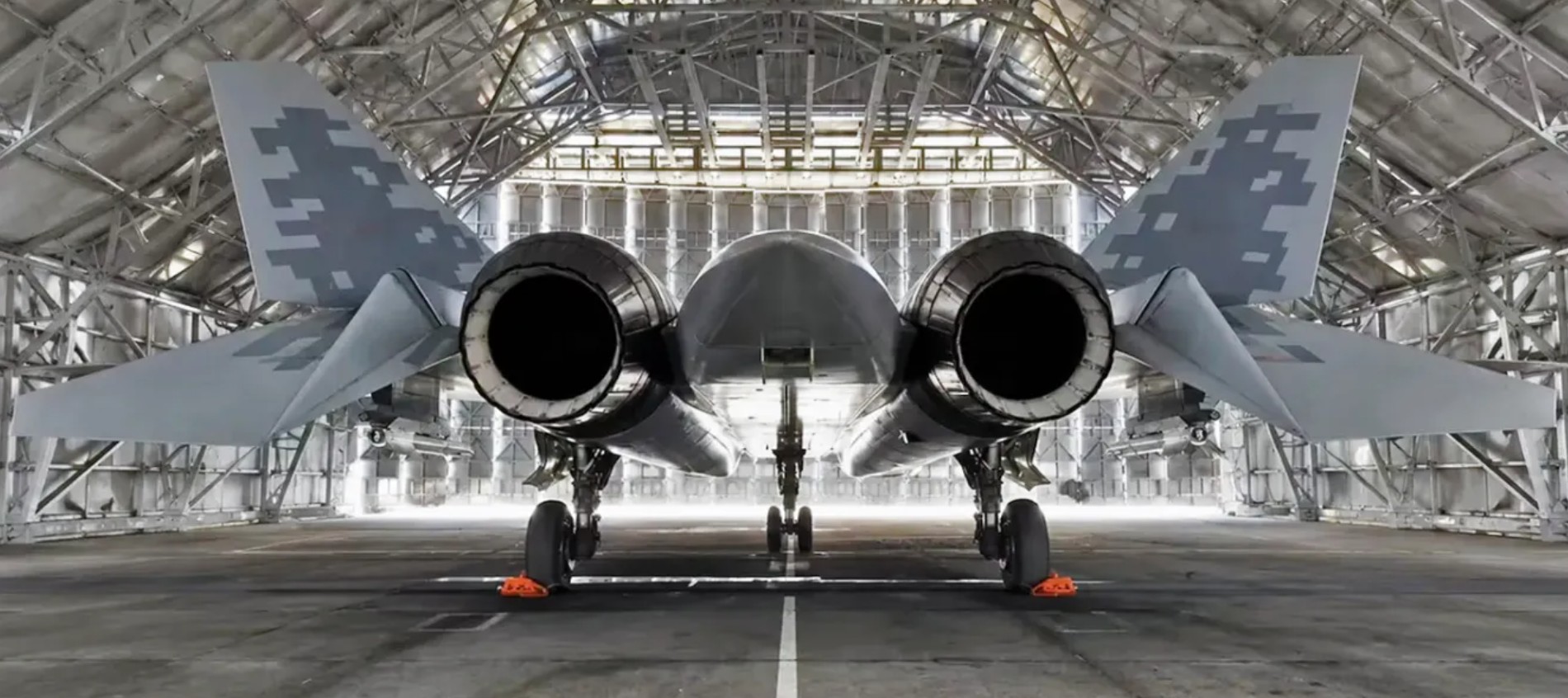
Su-57 OUT For India, 6th-Gen Aircraft In! After MiG-21, MiG-29 & Su-30 MKI, IAF Appears Set For Non-Russian Jets

India appears poised to overlook Russia’s Su-57 fifth-generation stealth fighter and opt for a sixth-gen aircraft instead. 

Defense Secretary Rajesh Kumar Singh recently clarified that New Delhi has “not thought about” new Sukhoi variants, prioritizing the upgrade of the Su-30MKI fleet under the ‘Super Sukhoi’ program and the indigenous Advanced Medium Combat Aircraft (AMCA) instead.

Moscow’s aggressive pitch—including local production, full source codes, and a two-seat variant—has failed to sway planners wary of diverting resources from self-reliance goals.

With AMCA still a far away and China fielding growing J-20 numbers, India is actively exploring partnerships in sixth-generation programs.

India’s Ministry of Defense has reportedly initiated efforts to join the French-led sixth-generation fighter program. This was stated in a report of the Parliamentary Standing Committee on Defense, presented in Parliament, according to news agency PTI.

The ministry has sought a roadmap from the French side for acquiring such aircraft. The panel noted that two major consortia are developing sixth-generation fighters: one involving the UK, Italy, and Japan; another involving (now-defunct) France and Germany.

The Indian Air Force plans to partner with one of these groups so that India does not fall behind in advanced combat aircraft technology.

End of Su-57?

In 1962, the USSR agreed to transfer technology to produce nearly 800 MiG-21 jet fighters for India, which it had earlier denied to China. They helped India set up factories for the aircraft, aero-engines, and avionics.

India’s relationship with the Soviet Union grew strategically, culminating in the 1971 Indo-Soviet Treaty of Friendship and Cooperation.

Through the 1971 India-Pakistan War for the liberation of Bangladesh, the Soviet Union stood by India against US and Chinese intimidations.

During the Cold War, India and the USSR maintained a “special and privileged strategic partnership” that was built on five major components: politics, defense, civil nuclear energy, anti-terrorism cooperation, and space.

Even after the dissolution of the Soviet Union, India maintained warm relations with Russia’s successor state. The first major political initiative after the dissolution was the Strategic Partnership signed by the two countries in 2000.

The IRIGC (India-Russia Intergovernmental Commission) is the main body responsible for conducting official affairs between the two countries at the governmental level. Both countries are members of international bodies, including the UN, BRICS, G20, SCO, and Russia-India-China (RIC) grouping. Russia supports India’s bid for a permanent seat on the United Nations Security Council.

Su-57 OUT For India, 6th-Gen Aircraft In! After MiG-21, MiG-29 & Su-30 MKI, IAF Appears Set For Non-Russian Jets

India is one of the largest markets for the Russian defense industry. Approximately 60 percent of the Indian military’s hardware today is of Russian origin. Military hardware supplies and, more recently, joint-venture production have been key pillars.

Su-57 carrying R-73 missiles externally. Credits X.

Make-in-India Began in the 1960s

The Soviet Union was the first to support Make in India defense production.

The MiG-21 factories set up in the early 1960s later produced the MiG-27 (170) and the Su-30 MKI (230). Su-30 MKI was a joint D&D project. Russia also learned a lot from the Su-30 MKI project and imbibed some of these ideas for its Su-30SM aircraft.

222 Su-30 MKI were produced under license at HAL’s Nashik plant since 2004. An estimated 920 AL-31FP turbofans were manufactured at HAL’s Koraput Division. The Su-30MKI is the backbone of the IAF’s fighter fleet.

In 1965, Heavy Vehicles Factory (HVF) was set up at Avadi, Chennai, with Soviet assistance. HVF products included Russian-designed T-72 Ajeya and T-90 Bhishma tanks.

In September 1965, the Soviet Union and India signed the first contract for the delivery of naval equipment, including four Project I641 diesel-electric submarines, five Project 159E corvettes, and five Project 368P motor boats. The Agreement also envisaged rendering Soviet technical assistance for the construction of a submarine naval base in Vishakhapatnam.

Recently, two frigates, the INS Tushil and INS Tamala, were built by Russia at the Yantar Shipyard, while the remaining two are under construction at Goa Shipyard Ltd (GSL) in India through technology transfer.

Russia is reportedly expanding its shipbuilding cooperation with India, with two Indian shipyards being considered for the construction of four non-nuclear icebreakers. Russian shipbuilding officials have reportedly offered New Delhi their nuclear-powered design for an Indian Navy aircraft carrier.

GSL is also constructing 24 river-sea class cargo ships for Russian clients in the Caspian Sea by 2027. Cooperation with India in shipbuilding has its benefits for Russia, as the unit cost per vessel is projected to be half of what it would cost Russian shipbuilders.

U.S. vs China’s Aircraft Carriers: New Report Shows How America Can Turn the Tables on “World’s Largest” Navy

Joint Ventures

Between 2012 and 2016, Russia accounted for 68% of India’s defense imports. Russia and India’s cooperation is not limited to a buyer-seller relationship but includes joint research and development, training, service-to-service contacts, and joint exercises.

India and Russia have a strong success story with Joint Ventures (JVs). The BrahMos is a medium-range ramjet supersonic cruise missile that can be launched from submarines, ships, and fighter aircraft. BrahMos Aerospace is a joint venture between the Indian Defense Research and Development Organization (DRDO) and Russia’s NPO Mashinostroyeniya. The missiles are already being exported.

Under an over ₹5000 crore contract signed in July 2021, over 610,000 AK-203 assault rifles are to be manufactured in India with technology transfer from Russia, by the JV Indo-Russian Rifles Private Limited (IRRPL).

Indian companies hold a controlling 50.5 percent share, and Russian companies hold 49.5 percent. The level of indigenous content has already reached 50% and is rising rapidly, with a target of 100% in the near future.

India and Russia have also agreed to expedite the delivery of spare parts of Russian-origin military platforms by setting up a JV in India.

Notwithstanding the above, some JVs did not take off. India had withdrawn from the joint Fifth-Generation Fighter Aircraft (FGFA) program due to technical issues. Finally, Russia continued the project and today has a successful Sukhoi Su-57 ‘Felon’ 5th generation fighter.

Following the selection of the Ka-226T to meet an Indian requirement for 197 helicopters, an agreement was signed in December 2015 to create a JV between Rostec, Russian Helicopters, and HAL to build the helicopters at a new factory in Tumakuru, India.

Later, India decided to make its own Light Utility Helicopter (LUH) based on the indigenous ‘Dhruv.’ India’s LUH is delayed, and Russia has been pushing the case for Ka-226T again.

Similarly, India canceled the Indo-Russian program to develop a new Multirole Transport Aircraft (MTA) for both countries through a JV between Russia’s UAC and India’s HAL.

In February 2023, on the sidelines of the Aero India 2023 air show, the Russians offered to jointly develop the Il-276. However, India would prefer the aircraft to be powered by a European engine rather than a Russian one.

India has operated a wide range of Soviet and Russian combat jets that formed the backbone of the Indian Air Force for decades. Key types include the prolific MiG-21 (in multiple variants including Bison), MiG-23 (BN and MF), high-altitude MiG-25, ground-attack MiG-27, and air-superiority MiG-29 (including upgraded versions).

From the Sukhoi stable came the Su-7 fighter-bomber and the highly successful Su-30MKI, which remains the IAF’s primary multi-role platform that India is looking to upgrade.

India’s decision to effectively rule out the Su-57 marks a noticeable shift. After decades of reliance on Russian fighters—from the MiG-21 to the Su-30MKI—New Delhi is prioritizing the AMCA program and partnerships in sixth-generation projects.

While the historic Indo-Russian defense ties remain strong in other domains, the rejection of Moscow’s most advanced stealth jet signals a clear preference for next-generation technology.

With China rapidly expanding its stealth fleet and AMCA still years away, India appears to be choosing long-term capability over Russian platforms.

The post Su-57 OUT For India, 6th-Gen Aircraft In! After MiG-21, MiG-29 & Su-30 MKI, IAF Appears Set For Non-Russian Jets appeared first on EURASIAN TIMES.

  •  

They Came for the Geneticists? Why Scientists See the New Genetic Data Law as a Threat to Russian Science

On September 1, 2026, right after the summer vacation season, Federal Law No. 43-FZ and Government Decree No. 750 take effect, regulating the transfer of human genetic data outside Russia. Authorities describe the new rules as a measure to protect national security and “genetic sovereignty.” Many scientists, however, see them as a serious blow to international scientific cooperation — fearing new bureaucratic barriers, difficulties publishing in leading scientific journals, and even the risk of criminal prosecution.

Genetics Under Control

One of the law’s chief proponents, State Duma Deputy Speaker Irina Yarovaya, justifies it on national security grounds. “Strict control is necessary, since there have been documented cases of research on biological samples from Russian citizens in foreign ‘secret laboratories,’” she explains. State Duma Speaker Vyacheslav Volodin also argues that such a law is needed to “provide additional protection for citizens’ genetic biomaterial.” According to him, this information is of enormous interest to both commercial companies and fraudsters, and the state is obligated to act preemptively by erecting barriers to the uncontrolled transfer of data abroad.
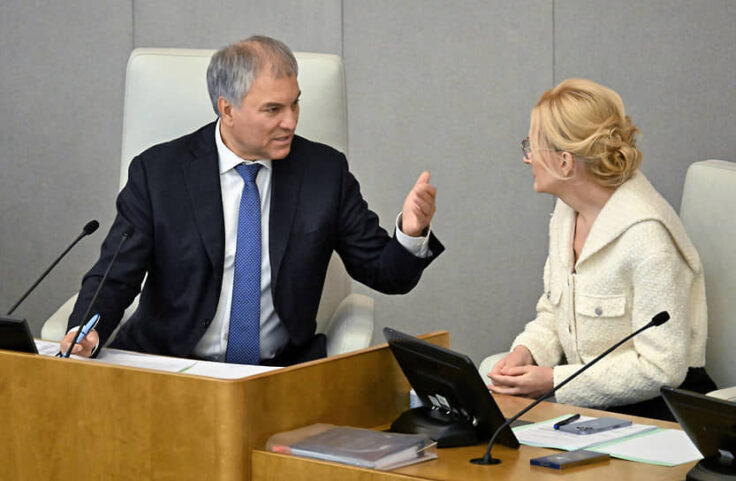
The chief proponents of the new law in the State Duma — Vyacheslav Volodin and Irina Yarovaya. Photo: Kommersant

In effect, the new law places genetic information about Russian citizens on par with information of special state significance and imposes strict restrictions on transferring it to foreign citizens, organizations, and states. To be precise, transferring individual genetic data abroad is still allowed, but only for narrowly defined purposes: providing medical care to a specific patient, developing or manufacturing medication for that patient, or international scientific cooperation.

Where the transfer of biomaterials and genetic data was previously governed in many cases by institutions’ internal protocols, confidentiality agreements, or standard export licenses, it now falls under direct state control. Any transfer of human genetic data outside Russia now requires state review and approval from authorized government bodies.

The decree pays particular attention to data obtained through population genetics and immunological studies. The law frames this as safeguarding “genetic sovereignty” — the state’s control over information on genetic traits considered distinctive of large population groups living in Russia. Transferring such datasets to foreign laboratories or international databases will now become significantly harder.

The document specifies that data transfers are strictly prohibited if they pose a threat to Russia’s national security (a clause that, as the hypersonic scientists’ case demonstrated, can be stretched to cover even textbook-level data) or if the declared purpose of the transfer doesn’t match the aims stated in the research or medical program (again, largely a matter of the reviewer’s interpretation). The restrictions apply both to organizations — research institutes, universities, and commercial laboratories — and to individuals: scientists and researchers.

The decree also sets out specific rules for transfers that aren’t outright prohibited. Researchers or institutions must now file a detailed notification and application explaining the purpose of the data transfer abroad, who the final recipient is, how the data will be protected on the receiving end, and — if the transfer is meant to support a journal publication — what value it holds for the academic community.

Top news on scientists’ work and experiences during the war, along with videos and infographics — subscribe to the T-invariant Telegram channel to stay updated.

For Russian geneticists and anthropologists who had managed to preserve a few channels of scientific cooperation with foreign colleagues — sending samples or sequencing data for joint publications, for instance — this document erects a new “iron curtain”: conducting international genetics research without approval from the relevant ministries and security services is now effectively impossible.

The law also references the National Genetic Information Database. Starting from the date it takes effect — September 1 — state corporations, companies with government ownership stakes, and budget-funded and other public institutions are required to submit their existing genetic data to the National Genetic Information Database by the end of 2027.

Science Without Publications

It turned out that as soon as the law was adopted, many research institutions urged their staff to submit papers on their latest findings to journals as quickly as possible and do everything they could to get them published before the law took effect. It’s easy to understand why.

All the leading international journals (Nature, Science, Cell, PLOS, The Lancet) follow FAIR data principles (Findable, Accessible, Interoperable, Reusable), which requires authors to deposit raw whole-genome data (FASTQ/FASTA files) in open international repositories (GenBank, SRA, GISAID, ENA) before publication and to cite a unique accession number. Without this, reviewers will not accept the manuscript. Once the law takes effect, Russian researchers will be barred from transferring such data abroad.

But even if authors manage to find a journal that doesn’t require depositing raw data in international repositories, they’ll still have to go through an approval process with a government commission. For aggregated, anonymized data, the commission only needs to be notified — if there’s no response within 15 business days, publication can proceed. Publishing individual genetic data, however, requires the commission’s explicit permission. The law also allots 15 business days for that approval, though the deadline extends by another ten days if the commission requests additional materials.

T-invariant‘s sources believe these changes will seriously complicate publishing Russian research in leading international journals. Andrei (the names of our sources have been changed throughout for their safety), who spent many years at the Institute of Cytology and Genetics and now works at a university in Central Europe, points out that the research itself can still be done without foreign collaborators — but the inability to publish results would be devastating for the field.

“If you look at the key papers in human genetics published in high-impact journals, you’ll see that Russia’s contribution was most often limited to providing samples,” says Andrei. “For example, in Svante Pääbo‘s projects [Pääbo won the Nobel Prize in part for discoveries made in Siberia, referring to the Denisovan hominin found in Denisova Cave in the Altai Mountains — T-invariant], the DNA extraction and analysis weren’t done in Russia at all: all the samples were analyzed in Germany by a large team of highly skilled specialists. Russian participants undoubtedly made a real contribution, but it was limited to finding the material and handing it over.”
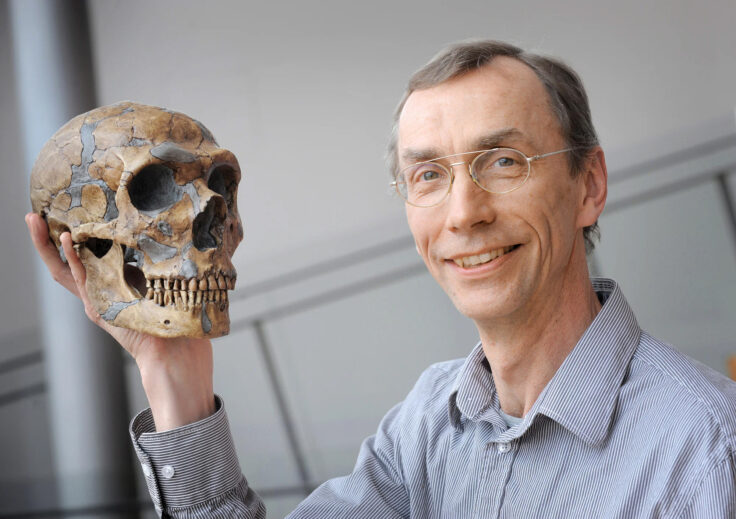
Swedish biologist Svante Pääbo and the object of his scientific interest. Photo: Frank Vinken / Max Planck Institute via AFP – Getty Images

According to Andrei, preparing a DNA library isn’t a problem today. Sequencing is easier and cheaper abroad — at BGI in Beijing, for example, or other foreign facilities. It’s possible in Russia too, but significantly more expensive and slower. The real bottleneck is high-quality bioinformatics analysis: there are teams around the world that have been doing this at a high level for decades — the bioinformatics group at the Max Planck Institute in Leipzig, for instance, for whom it’s routine work. Such analysis can be done in Russia as well — at greater cost and lower efficiency, but it’s possible.

But then another question arises: suppose scientists obtain a significant result — how and where can they publish it? Under the new law, that result won’t be able to reach the global scientific community, because it will end up “closed.”

Andrei’s grim conclusion follows from this: the law will set back the development of Russian human genetics for years to come.

“Partly because the international scientific community won’t be able to assess the quality of Russian geneticists’ work, and studies will end up published in some closed-off journals,” he says. “That will turn the field into something provincial and isolated. Nothing good comes of that.”

Another of our genetics experts offers a concrete example of how the added layers of approval have already affected research.

Up-to-date videos on science during wartime, interviews, podcasts, and streams with prominent scientists — subscribe to the T-invariant YouTube channel!

“When the COVID-19 pandemic started, right in that first summer, colleagues from several institutes got together and put out a really elegant piece of work on the phylogeny of coronavirus strains and their spread across Russia,” Alexander recalls. “At the time, it was one of the first studies of its kind in the world. But we couldn’t publish it for a long time, purely because of data issues. We weren’t allowed to upload the genomes to the international GISAID database, where the world’s COVID statistics were being collected. The negotiations dragged on for a painfully long time. In the end, we managed to arrange publication of the data on an alternative platform, where it was technically accessible but not in the main database. The whole approval process took a year and a half. As a result, a paper that would once have been snapped up by Nature, or at least Nature Communications, ended up published in the far more modest PLoS ONE. Because by then, the moment had passed. If it had come out on time, it would have been a landmark publication. But a year and a half later, dozens of other groups around the world had already done similar research. That’s a perfect example of us cutting off our nose to spite our face.”

Another source draws our attention to a different aspect of the law — the workings of the interagency commission responsible for approving or blocking data transfers for publication.

“Both the law and the decree look very strange. According to them, even anonymized information has to be submitted to the interagency commission,” explains Vitaly. “If the study is a population or immunological one — meaning it contains anonymized, aggregated data on allele frequencies — the process is just a notification. But ever since the decree was published, I’ve been trying to put myself in the commission members’ shoes. Say I’m a population geneticist. The document says one ground for rejection is ‘submission of incomplete information or inaccurate information.’ How would you even verify the completeness or accuracy of that data? Who’s going to do that, and how? I honestly can’t picture it.”

Vitaly also points to another ground for rejection — “the presence of risks to the rights and lawful interests of Russian citizens” or “the presence of risks to Russia’s biological security”:

“We already have a law on biological security. I studied it closely, and it’s entirely about infections. How that connects to population or medical genetics, I don’t understand. The law takes effect in a month, and the interagency commission still hasn’t been formed. When it will be formed is unknown, and who’ll be on it is just as unclear. If it ends up with even a few real professionals, I already feel sorry for them. There’s a huge number of papers on human population genetics, plus dissertations on top of that. Are they seriously going to review all of it? I don’t believe it.”

Vitaly admits the new law brings back unpleasant associations with the “hypersonics case.” “Even back when the hypersonics case was unfolding, I suspected geneticists would be next. There was too much talk about biological weapons being developed against Russia. I can easily picture how, after a paper clears every approval and every commission, someone will suddenly ‘discover’ that it damages Russia’s biological security or reveals a state secret. There will always be a way to claim the authors disclosed classified information that the West is now using to develop biological weapons,” he says.

Bioweapons as a Political Argument

The most common explanation for the new law is a desire to prevent leaks of biomaterial and genetic data that could allegedly be used to create a new kind of genetic weapon. The idea of a bioweapon that selectively targets specific ethnic groups is far from new.

As far back as May 2007, then-FSB Director Nikolai Patrushev presented Vladimir Putin with a classified report claiming that Western research centers were developing “genetic and biological weapons aimed at the population of Russia.” Shortly afterward, the Federal Customs Service imposed a strict ban on exporting any biomaterials belonging to Russian citizens.

In September 2015, Mikhail Kovalchuk, head of the Kurchatov Institute, attempted to provide a scientific basis for this dubious idea. In a lecture at the Federation Council, he claimed that the West was creating “a fundamentally new subspecies of human — the service human,” and was collecting biological material to develop “a genetic weapon that selectively targets a specific ethnic group.”
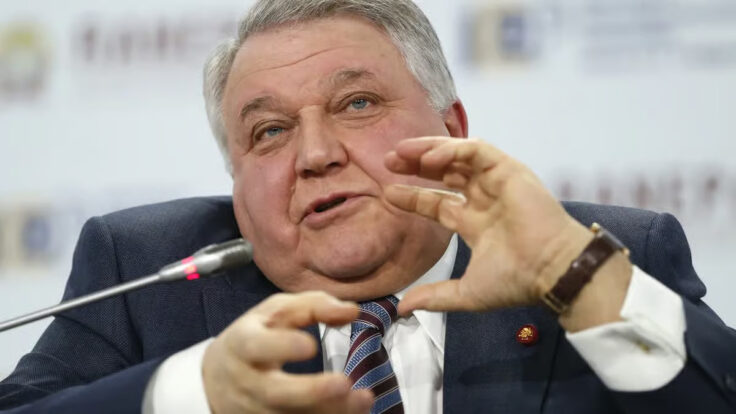
Mikhail Kovalchuk. Photo: EPA

Starting in 2017, Russia’s president began publicly promoting this idea as well. In October of that year, at a meeting of the Human Rights Council, Vladimir Putin uttered what became a famous line: “Did you know that biological material is being collected across the entire country? And by ethnicity, from people living in different geographic parts of the Russian Federation. So the question is: why is this being done so professionally and systematically?” The remark was prompted by a U.S. Air Force research program collecting synovial fluid and RNA samples for musculoskeletal studies.

“This is a continuation of an old story that started with claims that numerous biological laboratories developing weapons against Russian citizens had supposedly been found along Russia’s borders,” says Vitaly. “For the most part, these were former Soviet anti-plague stations [Soviet-era public health facilities established to monitor and contain plague and other highly dangerous infections — T-invariant]. After the collapse of the USSR, they were left without funding, and the U.S. provided money to keep them running, understanding what could happen without epidemiological monitoring. When Russian troops occupied these stations in Ukraine, they naturally found protocols for destroying bacterial cultures. And they concluded that the cultures themselves had been destroyed while the paperwork was simply forgotten in the rush. But these were just ordinary logbooks: the alphanumeric codes in them let you trace the origin of every culture. Funnily enough, those documents showed that most of the samples had actually come from Russia.”

Victor, however, believes there’s at least a minimal scientific basis for such fears.

“These kinds of examples have long been standard textbook material. Take the ability to digest milk in adulthood. It’s determined by two different mutations — one common in Europe, the other in Africa. From there, lactose intolerance rises as you move east. Among Central Asian populations, the frequency of the relevant allele is 87%; in southern Siberia, 90.6%; and in northeastern Siberia, 92.9%. So when Soviet schoolchildren in Yakutia started getting two free glasses of milk a day, most of the kids ended up in the bathroom. It’s a good example of how ignorance of a population’s genetic characteristics can produce exactly the opposite of the intended result,” he says.

Andrei believes there has always been far more talk on this subject than actual scientific grounding:

“There’s always been more speculation than substance here — from Lev Gumilev [a Soviet historian known for his controversial theories of ethnic origin and “passionarity” — T-invariant] onward, through endless arguments about who’s ethnically related to whom. Those arguments continue today because we still lack good reference databases. In Siberia and European Russia, the population has been in constant flux: there were never populations that stayed fully isolated long enough to show up as “pure” on genetic tests. Hence the endless debates: who the Bulgars really were, what trace the Vikings left in Russians, whether the people around Moscow are assimilated Finno-Ugric populations or predominantly Slavic. But the main takeaway — beautifully laid out in David Reich’s book Who We Are and How We Got Here — is that our ancestors have been constantly moving and mixing with one another throughout history. The defining trait of humanity is genetic fluidity. Fully isolated communities were extremely rare.”

That’s precisely why, in Andrei’s view, creating a genetic weapon that would affect only members of a specific ethnic group is practically impossible:

“Looking for unique genetic traits rigidly tied to modern ethnic groups — Russians, Ukrainians, and so on — is usually just pointless. Genetic markers do exist, but we’re talking about statistical differences, not sharp boundaries. For example, a study of the Czech population found that only about 35–40% of men carry haplogroup R1a, which is commonly labeled ‘Slavic.’ Another 30–35% belong to R1b, loosely ‘Western European,’ and the rest fall into other major groups. The same goes for the Balkans: there’s no isolated genetic component unique to Serbs, Bosnians, or Macedonians — it’s all one blend with minor regional variation, and genetically these populations turn out to be fairly close to, say, Austrians.”

In other words, modern ethnic groups have no single genetic “key” that would set them apart from their neighbors — which means there’s no target a selective weapon could theoretically be aimed at.

What’s more, everyone we spoke with points out that even if you assume that creating a genetic weapon were possible in principle, you wouldn’t necessarily need to obtain material directly from Russia to do it.

“Every serious scientist has long treated this idea with irony,” says Andrei. “If you think about it logically, there are millions of ethnic Russians living outside Russia today — that’s already a huge, perfectly representative sample. If it were hypothetically possible to create a ‘genetic weapon’ — and it really isn’t — no special data from Russia would even be needed. Among these people you’ll find recent émigrés, descendants of several generations of emigration, and their relatives — study them all you want. The argument that centuries of population mixing make it biologically impossible to build a weapon against a specific ethnicity is convincing to scientists and to anyone who thinks critically. But the people making the decisions seem to be working from a different logic: ‘Better to ban everything and play it safe, even if it hurts science.’”

That said, our sources acknowledge that genetic data privacy concerns are real.

“There are serious debates in the West too about the privacy of genetic information,” Alexander notes. “But there, they’re purely about protecting personal privacy. If I publish my genome, I automatically reveal roughly half of my brother’s genome — and he might not want that at all. So the concern is real. Eight years ago now, there was a good study showing how much you can learn about a person who has never published their own genome, just from the public data of their relatives.”

We couldn’t find a single geneticist or physician who believed the new law would improve their working conditions, or that restrictions like these were overdue. Asked who actually needed this law and why, most of our sources suggested we direct that question to the lawmakers who passed it. Many of our experts believe it emerged from years of talk about “genetic weapons,” political ambition, and a desire to align with the current state agenda.

Valery Panyushkin, a journalist with the investigative outlet Sistema, believes the law’s real purpose lies elsewhere — funneling genetic data from civilian healthcare to the military through the National Genetic Database.

“First, the board overseeing this database includes President Putin’s daughter, Maria Vorontsova,” Panyushkin writes in an article for RFE/RL’s Radio Svoboda. “Second, the genetic database is needed mainly by the military, at minimum to identify the dead and wounded. Third, if labs are required to submit client information to the National Genetic Database — which isn’t currently the case — that would open the door to a new level of surveillance over citizens. Fourth, closing off genetic information rules out the possibility of identifying, inside Russia, war criminals who committed sexual violence in Ukraine, Africa, and other conflict zones where Russian troops have served or will serve. Fifth, the law rules out cooperation between Russian healthcare institutions and foreign ones — at minimum, it rules out international clinical trials of new drugs. And finally, all of this has been made possible by the paranoid, anti-scientific, but unshakable belief among Russian authorities in the possibility of creating a ‘genetic weapon.’”

[[socialnetworks]]

Commenting on the reasons behind the new law, Alexander offers a few more possible explanations.

“It might really just be the product of stoked-up ignorance,” he says. “Or it could be political reasons, or economic ones. The simplest explanation: this is a great way to request substantial funding to build a database, start filling it in somehow, and then announce, ‘Look, now we have our own, domestic genomic database.’ And then everything traces back to the same Mikhail Valentinovich [Kovalchuk — T-invariant]. He’s like Rome for us — all roads lead to him. But most likely, it’s a combination of different factors.”

What Will Change for Russian Science?

Whatever the law’s real motivations, starting September 1 our sources, along with thousands of other specialists, will have to work under the new rules. Most scientists directly involved in human genome research, when first asked about the law, simply sighed heavily: “This is really bad.” Where they differed was only in how much damage they expected it to do to different areas of research.

Andrei suspects that once the law takes effect, some research will only continue, if at all, on a “commissioned” basis — behind closed doors, the way some virus-related work already operates. It’s even possible a dedicated classified structure will be set up for this purpose.

“But that’s a dangerous path, like any closed-off field,” he stresses. “Sure, you can keep getting interesting results. But where will these people publish? You’d have to build closed databases, stew in your own literature, cut off from the international community, with nobody assessing it, criticizing it, or peer-reviewing it. In isolation, pseudoscience, cronyism, and corruption start to flourish almost immediately. Once openness and international peer review disappear, all hell breaks loose.”

Liliya Gumerova, chair of the Federation Council Committee on Science, Education, and Culture — one of the principal authors of the law on the National Genetic Information Database — takes the opposite view. In her words, creating a closed national database is a mechanism for protecting intellectual property and a competitive advantage for Russian science:

According to the logic of the law’s authors and ideologues, making the database sovereign is supposed to give Russian scientists a one-sided advantage: they’ll supposedly be free to use open international repositories while also getting exclusive access to a closed domestic dataset. Our experts disagree with that assessment. Alexander pushes back:

“First, access to international databases from Russia is already severely restricted because of sanctions, and this could only make things worse. And in any case, the Russian database will only ever be a tiny fraction of what’s available worldwide. Second, in science, what matters isn’t just data — it’s the ability to actually discuss your results with people who genuinely understand the subject. Sure, you could lock yourself inside ‘Russian genetics’ and stew in your own juices with a pinch of unique closed-off data in your pocket. But you’ll only have two other people to discuss it with. It’ll turn into provincial science producing provincial research. And finally, people will treat our science accordingly: even if there are some interesting results, nobody will find out about them, because publishing in a real international journal requires the data to be accessible.”

The geneticists we spoke with have little hope the law will be substantially revised before it takes effect. They might have taken some comfort in the old saying that “the harshness of Russian laws is offset by how selectively they’re enforced” — if not for the recent hypersonics case.

“I know two people who wrote negative reviews of the law regulating genetic engineering activity. Their objections didn’t change anything,” says Vitaly. “Something similar happened in 2023, when they passed a law banning registration on Russian websites through Google and other foreign services. I run a journal myself, and we get submissions from abroad too. The law offered three ways to register: through a Russian phone number, through Gosuslugi [Russia’s state online services portal — T-invariant], or through your own site-owner identification system. Luckily, we already had such a system. But at first, no penalty was written into the law for non-compliance. Only recently did Article 13.55 appear in the Code of Administrative Offenses — “Failure to fulfill the obligation to authorize users of the ‘Internet’ network when providing access to information.” We’re in a similar situation now: who will oversee enforcement of the new law, what the penalty is, who’ll sit on the commission — none of that is clear yet. The worst part is that the situation could change at any moment, and it would be very hard to take down an article that’s already been published. You’d end up with an ongoing violation you could be prosecuted for at any time.”

Still, some more cautiously optimistic assessments can be heard as well.

“I was at a discussion attended by the people this law affects most directly,” Alexander admits. “A representative from one of the major genetics companies said they’re actively working to make sure the implementing regulations end up being reasonable. And anyway — as long as we’re alive, there’s always hope.”

Support T-invariant’s work by subscribing to our Patreon and choosing a donation amount that suits you.

The post They Came for the Geneticists? Why Scientists See the New Genetic Data Law as a Threat to Russian Science appeared first on Т-инвариант / T-invariant.

  •  

Chronicle of the Persecution of Scientists No. 34

T-invariant is issuing its regular report, the Chronicle of the Persecution of Scientists, No. 34, dated June 30, 2026. From June 8 to 14, the fourth edition of the “You Are Not Alone” marathon in support of political prisoners took place, raising more than 14 million rubles over the week. The funds raised are used to help people in Russia who are imprisoned on politically motivated charges, and to their families — covering the cost of legal representation, prison visits, deposits into inmates’ accounts with the Federal Penitentiary Service (FSIN), food, and medicine.

T-invariant is issuing its regular report, the Chronicle of the Persecution of Scientists, No. 34, dated June 30, 2026. From June 8 to 14, the fourth edition of the “You Are Not Alone” marathon in support of political prisoners took place, raising more than 14 million rubles over the week.

The funds raised are used to help people in Russia who are imprisoned on politically motivated charges, and to their families — covering the cost of legal representation, prison visits, deposits into inmates’ accounts with the Federal Penitentiary Service (FSIN), food, and medicine. The money also supports people who have been left without support after a loved one’s arrest, as well as those who have been released after serving their sentences.

T-invariant took part in the marathon, as it does every year. T-invariant Editor-in-Chief Olga Orlova called on our readers and viewers to support political prisoners. We have been maintaining the Chronicle for almost three years now. Our database currently contains 170 individual case files. About 40 of the scientists in it are currently behind bars.

In this issue of the Chronicle, we have added a new case file: that of Olga Orlova. Russia’s Ministry of Justice designated Olga Orlova — a Candidate of Philological Sciences (PhD equivalent), science journalist, and T-invariant’s editor-in-chief — a “foreign agent.”

We have written several times about the debate over the Russian government’s proposed AI-regulation bill. According to RBC, that debate has led to major changes to the bill — not just in the details, but on substantive issues, chiefly those concerning oversight of how AI models are developed and used.

After sharp criticism from the business community, the Russian government presented an updated version of the bill, cutting the number of provisions from 21 to 13. The concept of a “trusted” model was dropped, but “sovereign” and “national” models remain, and they must comply with Russian law and store their data within the country. The law is now meant to regulate only large foundation models with more than 1 billion parameters. The requirement that such models be built exclusively on Russian data by Russian citizens was scrapped, and the new draft no longer bans the use of foreign neural networks to train models. It was precisely the requirement to train on Russian data that drew the sharpest criticism.

The registry of “trusted” models was supposed to be overseen by the FSB and FSTEK (the Federal Service for Technical and Export Control — an agency historically responsible for protecting state information systems from foreign technical intelligence services). That registry has been dropped, or at least the law no longer provides for one. But experts note that the bill remains quite vague, and how it actually functions will depend on a whole package of implementing regulations whose content is still unknown. The main provisions may take effect on March 1, 2027, with certain rules coming into force as early as September 1, 2026.

New case files

Viktor Kazakov

June 22, 2026 The Sverdlovsk Regional Court sentenced 71-year-old engineer Viktor Kazakov of Novouralsk to a year of forced labor on charges of the rehabilitation of Nazism (Part 4, Article 354.1 of the Criminal Code), Mediazona reports. The court ordered a year of forced labor with 10% of his wages withheld for the benefit of the state. He was also barred for two years from administering websites and posting material online, Kommersant reports.

Grey Boltachev

June 4, 2026 The Leninsky District Court in Yekaterinburg sentenced Grey Boltachev, a researcher at the Institute of Electrophysics of the Ural Branch of the Russian Academy of Sciences, to five days of administrative detention on a charge of petty hooliganism, Mediazona reports. The scientist had been detained at his workplace on June 3. Police formally accused him of “using obscene language in a public place.” Boltachev linked his administrative prosecution to his plans to run for the Sverdlovsk Regional Legislative Assembly on the Yabloko party ticket — regional parliamentary elections are set for this September — Kommersant reports. Boltachev was released from custody on June 8, Yabloko reports.

Olga Orlova

May 22, 2026 Russia’s Ministry of Justice added science journalist and T-invariant editor-in-chief Olga Orlova to the register of foreign agents, Vedomosti reports.

According to the Ministry, Orlova spread “false information” about the decisions and policies of Russian government bodies. She also spoke out against the “special military operation” in Ukraine and gave interviews to foreign media outlets. In addition, the journalist created and distributed materials produced by foreign agents and organizations designated “undesirable” in Russia, RBC reports.

Updates

Kirill Yakovlev

June 8, 2026 The Kuibyshevsky District Court in St. Petersburg dismissed the criminal case against poet Glikeriy Ulunov (real name Kirill Yakovlev). He had been charged with “organizing activity aimed at inciting suicide” (Part 2, Article 110.2 of the Criminal Code of the Russian Federation). His lawyers managed to get the writer released from criminal liability, even though the prosecutor strongly objected, Department One reports.

Azat Miftakhov

June 29, 2026 A court ruled it unlawful that Elena Gorban — mathematician Azat Miftakhov’s wife and defense attorney — was denied access to him after he had been tortured at Penal Colony No. 18 “Polar Owl” in Kharp. On June 23, Gorban was likewise refused a visit with Miftakhov, even though she was entitled to one as his defense counsel, Mediazona reports.

Yuri Pivovarov

June 28, 2026 The Gagarinsky District Court in Moscow convicted Yuri Pivovarov — former director and research director of the Institute of Scientific Information on Social Sciences (INION) of the Russian Academy of Sciences, whom the Ministry of Justice has designated a “foreign agent” — in absentia, sentencing him to seven years in a general-regime penal colony on charges of fraudulently employing staff, RBC reports.

Tamara Eidelman

June 19, 2026 The Moscow City Court convicted historian Tamara Eidelman in absentia and sentenced her to eight years in prison on charges of rehabilitating Nazism (Article 354.1 of the Criminal Code) and spreading “fakes” about the army (Article 207.3, Part 2, Clause “d”), Meduza reports.

Mikhail Verbitsky

June 13, 2026 Mikhail Verbitsky was detained at Yerevan Airport, the TV network Rain (Dozhd) reported. Verbitsky was placed in a detention facility. As Meduza reports: “According to Ani Chatinyan, a lawyer with the Yerevan office of the Helsinki Civil Assembly ‘Vanadzor,’ Verbitsky was detained over a criminal case against him in Russia. She explained that if Russia submits an extradition request, Verbitsky would, under the law, be held for 40 days; if not, he would be released after 72 hours.” No such request had arrived by June 15. Mikhail Verbitsky was released from custody in Armenia. This was laterreported by his lawyer, Vache Simonyan, to the Armenian service of Radio Liberty. Verbitsky left Armenia on June 15, Meduza reports.

The post Chronicle of the Persecution of Scientists No. 34 appeared first on Т-инвариант / T-invariant.

  •  

DESPISTE MORTAL NA A13 EM TOMAR PROVOCA UM MORTO E UM FERIDO LIGEIRO

FOTO: Pedro Brutt Pacheco

Um violento despiste de um veículo ligeiro comercial na A13 provocou, na tarde desta sexta-feira, uma vítima mortal e um ferido ligeiro, na freguesia de Casais, concelho de Tomar. O alerta foi dado por volta das 15h20, tendo o acidente ocorrido ao quilómetro 138,942, no sentido Norte-Sul, nas proximidades da barragem do Carril e antes da saída para Tomar e para o IC9.

Segundo os dados recolhidos junto das autoridades e dos serviços de socorro, a vítima mortal é um homem de 50 anos, cujo óbito foi declarado no próprio local do acidente. Do mesmo despiste resultou ainda um ferido ligeiro, um jovem de 20 anos, que após ser assistido pelas equipas de emergência foi transportado para o Hospital de Abrantes.

Nas operações de socorro estiveram envolvidos 12 operacionais, apoiados por cinco viaturas, entre as quais a Viatura Médica de Emergência e Reanimação (VMER) do Médio Tejo e elementos da Guarda Nacional Republicana (GNR), que tomaram conta da ocorrência e procederam à regularização do trânsito.

Data: 7 de agosto de 2026
Por: Dino Frazão


Se visualizou esta publicação e ainda não é nosso seguidor, siga a página Os Monhacas para acompanhar mais notícias, alertas de trânsito e atualizações em tempo real!

————————————————–
© 2026 Os Monhacas. Todos os direitos reservados.
Este é um projeto independente de criação de conteúdos.
Se gostou do que leu e ainda não é seguidor, siga a nossa página para ver mais conteúdos!
————————————————–

O conteúdo DESPISTE MORTAL NA A13 EM TOMAR PROVOCA UM MORTO E UM FERIDO LIGEIRO aparece primeiro em OS MONHACAS.

  •  

America Does Not Have the Labor to Run the New Data Centers – Potential Loss of $1 Trillion a Year due to Lack of Human Skilled Labor

by Brian Shilhavy
Health Impact News

Last year (2025) I reported how there were hundreds of thousands of jobs unfilled to support the boom in data center construction, jobs that only human beings can fulfill. See:

The AI Revolution is About to Crash due to a Lack of Human Labor

Today, in August of 2026, the situation has only become worse as massive amounts of money continue to be increasingly spent on AI and data centers, while the human labor force continues to diminish.

This is all public knowledge, but it is not in the headlines or known much because people are still getting fat and rich on the AI data center spending.

Earlier this year, a report was published by the U.S. Department of Education which stated that by 2030, an estimated 2.1 million skilled trades jobs in the U.S. could go unfilled, with potential economic losses reaching $1 trillion annually.

America’s ‘silent army’ of skilled tradespeople are retiring with no one to replace them—and the price tag could hit $1 trillion a year

by Fortune/Yahoo

Excerpts:

The workers who keep America’s buildings running are disappearing—and the U.S. isn’t replacing them fast enough to keep the lights on, the servers cool, or the labs sterile.

By 2030, an estimated 2.1 million skilled trades jobs in the U.S. could go unfilled, with potential economic losses reaching $1 trillion annually, according to U.S. Department of Education estimates cited in a new report from JLL shared exclusively with Fortune.

The commercial real estate giant calls the electricians, HVAC technicians, plumbers, pipe fitters, and maintenance workers who maintain the country’s built environment a “silent army”—a workforce that is aging out of the industry faster than it can be replaced.

“The silent army, as we normally call them, because they are hidden, invariably, behind the scenes, has been getting harder and harder not only to find, but retain in the industry,” Paul Morgan, JLL’s global COO of real estate management services, told Fortune.

Plus, “you’ve got this impending retirement wave that has really been driving the industry a long period of time, and a lack of new entrants.”

Morgan is referring to the fact that millions of tradespeople in the U.S. are nearing or at retirement age. More than one in five construction workers is currently older than 55, according to Associated Builders and Contractors.

As of May 2023, about 39% of electricians were 45 years old or older, a Consumer Affairs report shows, and there’s a 5:2 retirement-to-replacement ratio in manufacturing, construction, and other skilled trades, an Education Department report shows.

The supply-demand imbalance has hit crisis territory. Last year alone, nearly 600,000 jobs were posted for major skilled trades positions in the U.S., while only about 150,000 new workers entered the labor pool through apprenticeship programs, according to JLL.

A hidden workforce behind the AI boom

The shortage has caught the attention of some of the country’s most prominent executives, who argue that the U.S. cannot build the infrastructure for AI it’s betting its economic future on without the people to wire, cool, and maintain it.

Ford CEO Jim Farley has consistently warned about the gap, arguing America’s AI ambitions are running headfirst into a labor wall.

“I think the intent is there, but there’s nothing to backfill the ambition,” Farley told Axios last fall.

“How can we reshore all this stuff if we don’t have people to work there?”

Hadrian CEO Chris Power, whose company automates defense manufacturing, has gone further, predicting a wage shock in the trades.

“All the white-collar jobs are going to get automated,” Power said in a recent interview with tech publication Sourcery at the Hill and Valley Forum.

“I think we’re going to see massive hyperinflation in blue-collar salaries.”

Power added that even with robotic welding on his own factory floor, he still can’t hire enough welders to meet demand from the U.S. Navy.

“Everyone, go tell your kids to quit college and university and go get a welding certification,” Power added.

“The country needs you.”

Morgan argues the skilled trades are foundational to nearly every high-growth sector of the economy—a story he says the industry has failed to tell.

But one problem is the lingering perception that blue-collar work isn’t as elite or prestigious as white-collar work.

“As powerful as AI will become, AI can’t climb a ladder to change the batteries in your smoke detector,” Lowe’s CEO Marvin Ellison told Fortune earlier this month.

“It can’t change your furnace filter; it can’t clean your dryer vent; it can’t repair a hole on your roof.”

Morgan also questioned:

“Why wouldn’t somebody want to be an HVAC tech or an electrician or refrigeration specialist in the data center industry?“

He added, “You can’t have AI without data centers supporting them.”

Full Article.

Then today, Fox News published an opinion piece (NOT headline news, as it should be!), admitting that electricity shortages are on the horizon for Americans, due to human labor shortages.

The machines that keep America alive are failing. We forgot how to replace them

We’ve finally admitted that electricity is as essential as water, but we did so too late to avoid disruption

by Brian Tochman
Fox News

Excerpts:

For 20 years, electricity was the most boring business in America, and our industry built its whole infrastructure strategy around the assumption that things would stay that way.

The numbers tell the story. From 2010 to 2020, U.S. electricity consumption fell by roughly 1%. LEDs, efficient motors and tightening appliance standards quietly cancelled out the electricity used by every new subdivision, factory and data hall, and then some. Demand was flat, and planners treated this as a permanent fact of life rather than as what it actually was: an intermission.

No-growth industries make choices that are perfectly rational, yet corrosive. You don’t fund apprenticeships when there’s no new capacity to staff. You don’t keep spare metallurgical know-how on the payroll when nobody’s ordering. You don’t recruit ambitious 25-year-olds into a sector whose pitch is “stable, essential, and never going anywhere.”

So, the utilities didn’t. The transformer makers didn’t. The steel mills didn’t. The workforce aged in place and the labor pipeline behind it ran dry.

We mistook a flat line for stability and in doing so, allowed a slow decay to occur. Then the line broke.

Since 2020, electricity consumption has reversed two decades of decline and climbed about 7%. Demand for large power transformers, the equipment through which nearly all of America’s electricity passes at some point, has surged 116% since 2019. Data centers, reshoring, electrification and grid hardening all arrived in the same handful of years, descending on an industry that had bought into the idea that it would never grow again.

Facing resurgent demand, we went looking for the people and the parts to meet resurgent demand, and here is what we found: America had forgotten how to make pipes.

Roughly 80% of the large power transformers the United States installs are now imported.

The grain-oriented electrical steel at the heart of every one of them has but a single domestic producer. Lead times for a standard power transformer have stretched to nearly two and a half years, and the larger units that connect power plants to the grid run longer still.

Prices are up more than 77% since 2019. The average transformer already humming away on the American grid is 38 years old, and more than 70% of the fleet is past age 25.

We are simultaneously trying to replace an aging base and build an entirely new one with a supply chain we spent a generation hollowing out.

The hardware shortage gets the headlines. The human one is worse, because you can’t expedite it.

A person cannot, today, enroll anywhere in America to learn how to design or build a large power transformer. The handful of university power-engineering programs that survived the last two decades don’t teach it. They were shrinking before the boom began as students chased software and AI instead.

The knowledge to wind a coil, design a core or run a high-voltage acceptance test is tribal, passed hand-to-hand on a shop floor by master winders, test engineers or metallurgists who understand why a core behaves the way it does. The expertise lives in people, much of it never written down, and roughly half the utility workforce is now over 45 with a large share eligible to retire this decade.

You can stand up a new transformer factory in a couple of years. You cannot conjure an experienced winder in a couple of years, and you can’t enroll one either.

Full article.

Not referenced in any of these reports, of course, is how so much of the human labor force in the U.S., including factory workers, have now been deported from the U.S. due to Trump’s immigration policies, and many of these people deported were even here legally and Green Card holders.

A total system collapse is inevitable.

This article was written by Human Superior Intelligence (HSI)

See Also:

Understand the Times We are Currently Living Through

FREE eBook! The Concept of the American Christian Family is a Myth and is NOT Found Anywhere in the Bible – by Brian Shilhavy

FREE eBook! Restoring the Foundation of New Testament Faith in Jesus Christ – by Brian Shilhavy

The Brotherhood of Satan vs. The Brotherhood of Jesus Christ

KABBALAH: The Anti-Christ Religion of Satan that Controls the World Today

Exposing the Christian Zionism Cult

The Bewitching of America with the Evil Eye and the Mark of the Beast

Jesus Christ’s Opposition to the Jewish State: Lessons for Today

Identifying the Luciferian Globalists Implementing the New World Order – Who are the “Jews”?

The Brain Myth: Your Intellect and Thoughts Originate in Your Heart, Not Your Brain

What is the Condition of Your Heart? The Superiority of the Human Heart over the Human Brain

The Seal and Mark of God is Far More Important than the “Mark of the Beast” – Are You Prepared for What’s Coming?

The Satanic Roots to Modern Medicine – The Image of the Beast?

Medicine: Idolatry in the Twenty First Century – 10-Year-Old Article More Relevant Today than the Day it was Written

Having problems receiving our emails? See:

How to Beat Internet Censorship and Create Your Own Newsfeed

We Are Now on Telegram. Video channels at Bitchute, and Odysee.

If our website is seized and shut down, find us on Telegram, as well as Bitchute and Odysee for further instructions about where to find us.

If you use the TOR Onion browser, here are the links and corresponding URLs to use in the TOR browser to find us on the Dark Web: Health Impact News, Vaccine Impact, Medical Kidnap, Created4Health, CoconutOil.com.

The post America Does Not Have the Labor to Run the New Data Centers – Potential Loss of $1 Trillion a Year due to Lack of Human Skilled Labor first appeared on Health Impact News.

  •  

Flock Is Losing Dozens Of Contracts As Citizens Push Back

The public hates surveillance cameras and, in particular, Flock cameras. The FBI says they don’t work to solve or prevent crime. Local police love them as a shiny new toy, but police don’t run the cities and they are taking the heat for it. City councils, pushed by citizens, are fighting back to stop Flock and other companies as well. Courtenay Turner and I wrote the Digital Bill of Rights for you to take to all local elected and appointed officials, to show them the right way to protect your rights! ⁃ Patrick Wood, Editor.

“Flock on the Pole” song


Mass surveillance technology might be popular with police departments, but for the US public, it’s becoming an increasingly difficult sell.

At least 54 cities across the US have voted to cancel, non-renew, or reject Flock’s automatic license plate reader (ALPRs) since the start of the year, according to data collected by the Washington Examiner. That comes after reporting in February that some 30 cities had done the same since 2025, indicative of the rising backlash against the tech.

In all, the Examiner reports cities in 23 states have shredded their Flock contracts so far this year, led by California and Wisconsin, which each have seven rejections, cancellations, or deactivations. Other heavy hitters include New York, Washington, and Massachusetts with four each, and Virginia with three.

Though Flock has its cameras in over 5,000 US cities as of July 2026, the rise in rejections at the municipal level comes amidst a tidal wave of outrage around issues of privacy and civil rights.

In cities where civic leaders have been slow to respond to these anxieties, citizens have moved quickly to take matters into their own hands by damaging, obscuring, or stealing the surveillance cameras in order to stop them from recording footage. A rise in official cancelations or rejections shows municipal leaders are catching on to the reality that the American populace broadly disproves of the technology, and they aren’t afraid to show it.

Arguably the highest-profile contract cancellation for Flock came when the Los Angeles Police Department decided to non-renew its years-long contract with the company, a decision motivated by a searing internal audit of the company’s technology. The internal report found that, in just two months, Flock’s ALPRs contributed to 161 false stolen-vehicle alerts, resulting in a false-positive rate of 32.3 percent.

With no sign of the outrage settling anytime soon, it’s likely these 54 cities could just be the start.

Read full story here…

  •  

🔴NATO SUNNITA | TG 7.8.26

  • USA-Arabia Saudita: si spezza la garanzia di Margherita Furlan
  • Un articolo 5 sunnita nasce alla Mecca di Jeff Hoffman
  • Da un post anonimo alla propaganda internazionale di Jeff Hoffman
  • La tariffa del Golfo di Margherita Furlan
  • Manca il metano in Europa di Margherita Furlan
  • La corsa all’oro continua di Margherita Furlan
  • La prima pietra del Board of Peace è militare di Jeff Hoffman
  • Tutti con Kiev nonostante Bandera e le svastiche di Jeff Hoffman
  • Buon giro intorno al Sole

A cura di Margherita Furlan Con la collaborazione di Jeff Hoffman Editing di Davide Marletta e Simone Orletti 📡 CASA DEL SOLE TV — Informazione libera e indipendente Il nostro lavoro è possibile solo grazie al vostro sostegno. Casa del Sole TV non ha editori forti né finanziamenti pubblici: siamo sostenuti da voi, il nostro pubblico. Se credi nel valore di un’informazione che non tace, aiutaci a continuare. 💳 Dona tramite bonifico bancario: IBAN: IT63P0326822300052392596590 Intestato a: LA CASA DEL SOLE EDIZIONI Causale: Donazione Casa del Sole TV 🅿 Dona tramite PayPal: paypal.me/casadelsoletv ⏰Sostegno ricorrente: casadelsole.tv/sostienici Anche un piccolo contributo fa la differenza. Grazie di cuore! ❤

L'articolo 🔴NATO SUNNITA | TG 7.8.26 proviene da Casa del Sole TV.

  •  

IL GOLFO SCARICA WASHINGTON? | LEVANTE

🌍 A Levante questa sera, venerdì 7 agosto 2026, Margherita Furlan dialoga con lo scrittore e saggista Roberto Quaglia e con Hanieh Tarkian, studiosa del pensiero islamico e del mondo iraniano, su un Golfo che cambia pelle: a luglio le raffinerie statunitensi non hanno importato un solo barile di greggio saudita, primo mese intero dal 1985, mentre alla Mecca Riad, Ankara e Islamabad firmano una clausola di difesa collettiva che ricalca l’articolo 5 atlantico. Affrontiamo insieme: 🛢 la fine dell’architettura petrolio-per-protezione che regge da mezzo secolo il rapporto fra Washington e la monarchia saudita 🚢 le rotte del greggio che puntano a Oriente, dal Mar Rosso all’Asia 🤝 l’Accordo congiunto di difesa fra Arabia Saudita, Turchia e Pakistan e il peso della copertura nucleare di Islamabad 🎭 il caso della citazione mai pronunciata attribuita al comandante dei Pasdaran Ahmad Vahidi, certificata da Netanyahu e smontata dalla stampa israeliana 🇮🇹 che cosa significa tutto questo per l’Italia e per il Mediterraneo 📚 LIBRI DEGLI OSPITI Roberto Quaglia, Il fondamentalismo hollywoodista. Viaggio in Iran alla scoperta dell’invisibile ideologia dell’Occidente, 2017. Roberto Quaglia, Il mito dell’11 settembre e l’opzione dottor Stranamore, 2006. Hanieh Tarkian, Coraggio e fede. Qassem Soleimani, Passaggio al Bosco, 2022. Hanieh Tarkian, Studio comparativo sulla figura di Maria, Irfan Edizioni, 2013. 🎯 SOSTIENI CASA DEL SOLE TV Casa del Sole TV è un progetto di giornalismo indipendente autofinanziato. 💶 Per donazioni: IBAN: IT63P0326822300052392596590 Intestato a: La Casa del Sole Edizioni Causale: Donazione Casa del Sole TV ⭐ Membership YouTube: 👉    / @casadelsoletvchannel   — Analista Multipolare €5/mese — Inviato della Verità €15/mese — Architetto del Futuro €25/mese 📖 I LIBRI DI MARGHERITA FURLAN ♟ BRICS Scacco Matto (disponibile in italiano, inglese, russo) 🌐 SEGUI CASA DEL SOLE TV ▶ YouTube: @CasadelSoleTVChannel

L'articolo IL GOLFO SCARICA WASHINGTON? | LEVANTE proviene da Casa del Sole TV.

  •  

Iran’s $500 Billion Bonanza: How Trump Could Enrich Iran More Than Apple, Nvidia & Microsoft Combined

Amid reports that the US has virtually exhausted all its long-range precision munitions, as well as missile interceptors, it is becoming increasingly clear that Washington is in no position to fight a protracted war with Iran and has no real leverage over Tehran.

On August 5, CNN reported that the US military has exhausted nearly 80% of its interceptors for a key missile defense system.

“The US military has burned through nearly four-fifths of its THAAD missile inventory compared to pre-war numbers and roughly half of its Patriot interceptors since the start of the war, according to two sources familiar with the latest inventory report,” it said.

Similarly, the US has exhausted virtually the entire stockpile of highly accurate long-range missiles, such as ATACMS and PrSMs.

Consequently, any possible US-Iran ceasefire agreement is likely to be on terms favorable to Tehran.

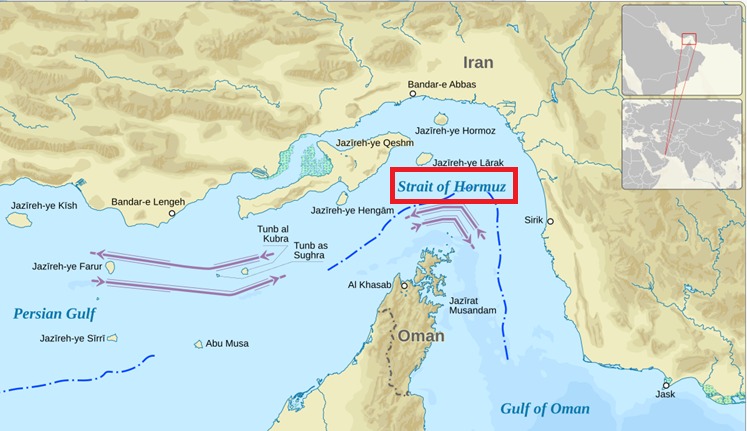
During previous rounds of negotiations, Iran has indicated that while it is agreeable to some compromise on the nuclear issue, it will not compromise on the issue of managing the shipping traffic in the Strait of Hormuz and charging a fee from all ships transiting the narrow maritime corridor.

For instance, according to the June 2026 Memorandum of Understanding (MoU), signed between Tehran and Washington, Iran will make arrangements for the safe passage of commercial vessels “with no charge for 60 days only,” followed by dialogue with Oman and other Persian Gulf littoral states, “to define the future administration and maritime services in the Strait of Hormuz… in line with the applicable international law and the sovereign rights of coastal states.”

Iranian officials interpreted the limited 60-day free period plus the “maritime services” reference as implicitly allowing “service fees” for navigation, security, and environmental protection, once the 60-day window has lapsed.

While the US administration rejected this interpretation, the US media itself, including The New York Times, acknowledged that the language of the MoU was vague and that it formalized Iranian control of the Strait of Hormuz.

Again, multiple media outlets reported earlier this week that Iran and Oman are close to finalizing a deal between them for joint management of the Strait of Hormuz.

Details included Iranian management of vessel entry, joint oversight of exits near the Oman coast, and a “central corridor.”

According to a Reuters report published on August 6, Iran is seeking fees of ​between 5% and 7% of the price of cargoes from ships using the strait, according to the senior Iranian official. Oman is discussing fees of around 3%, while Washington wants ‌no fees ⁠at all.

In normal (pre-war) times, the narrow waterway handled roughly 20–21 million barrels per day of crude and petroleum products, amounting to nearly one-fifth of the world’s total oil consumption and roughly 25% of seaborne oil trade.

According to a Gulf News estimate, this would generate a net profit of US$385 million per day for Iran, or up to US$140 billion per year gross.

A typical Very Large Crude Carrier (VLCC) can carry up to about 2 million barrels.

At an oil price of US$80/barrel, the cargo is worth US$160 million; a 7% fee would equal roughly US$11–11.2 million for that one voyage.

Strait of Hormuz.

Given that Iran would have to spend a minimal amount of money to oversee the entry of cargo vessels into the Strait of Hormuz, most of this annual revenue of USD140 billion would be ‘net profit’ for Tehran.

Even if Iran spends USD5 billion annually on these expenses, Tehran would still pocket a net profit of USD135 billion.

That is a staggering amount.

For perspective, Egypt’s Suez Canal Authority reported US$4.67 billion in revenue for the 2025/2026 fiscal year.

The income of Egypt’s Suez Canal Authority looks meager when compared to Iran’s prospective income from the Strait of Hormuz if indeed it is able to charge a 7% fee on all cargo vessels passing the maritime corridor.

Indeed, Iran will get control of the world’s most lucrative and profitable tollway.

The disruption in the Hormuz traffic during the last four months has shown that many countries would not mind paying a fee to Tehran as long as it can ensure a steady supply of oil and LNG from the maritime corridor, even if there is no provision under the International Law (International Convention on the Law of the Sea, UNCLOS) allowing a coastal state like Iran to charge for passage through a natural waterway, impose a “toll” or a “service fee”.

In fact, according to Bloomberg, Iran has already started charging a transit fee from commercial vessels crossing the Strait of Hormuz.

The report said that Iran charged as much as USD 2 million per vessel as a transit fee, and many countries paid the fee to Tehran to let their cargo vessels pass from the narrow maritime corridor.

Reports also said that these payments were made in Chinese Yuan.

In March, Lloyd’s List reported that Iran’s IRGC ran a de facto “toll booth” system requiring vetting, clearance codes, and escorts via a controlled corridor.

Meanwhile, the Financial Times reported that transits were mostly linked to Chinese, Indian, or Gulf-linked owners, including some “dark fleet” vessels.

What’s even more is that at USD 135 billion, Iran’s profit from the Strait of Hormuz would beat some of the world’s biggest and most profitable technology companies.

For instance, in 2025, Google’s Alphabet made a profit of USD 132 billion.

Similarly, in fiscal year 2026, Nvidia made a profit of USD 120 billion. Apple made a profit of USD 112 billion. Microsoft made a profit of USD 101 billion. And Saudi Arabia’s oil major Aramco made a profit of USD 105 billion.

These are some of the world’s biggest technology and oil companies, which have reached here after years of hard work and innovation.

However, if Iran’s plans to collect a 5-7% toll fee from all commercial cargo vessels crossing the Strait of Hormuz materialize, Iran will start making more profit than these companies from the first year.

Furthermore, this would be a vicious cycle, as a toll fee of 5-7% would mean that oil prices would go up. This would also mean that insurance prices for these cargo vessels would shoot up, further increasing the oil prices.

As oil prices rise, the absolute value of Iran’s proposed 5–7% toll – calculated on cargo value – would increase in tandem. Consequently, Tehran would benefit twice over: its toll revenues would grow both from higher shipping volumes and from escalating oil prices.

Notably, Iran holds the world’s third-largest oil reserve.

In addition to this windfall gain, another condition of the June Iran-US MoU was that Washington would “undertake with regional partners to develop a definitive mutually agreed plan with at least USD 300 billion for the reconstruction and economic development of the Islamic Republic of Iran.”

Another condition was: “The United States of America undertakes to make fully available for use the frozen or restricted funds and assets of the Islamic Republic of Iran upon the implementation of this MoU. The United States of America and the Islamic Republic of Iran will mutually agree on the procedures related to the release of these funds during the negotiations.”

Estimates of the frozen assets involved ranged from roughly US$12–37 billion; however, some Iranian sources claimed that the frozen assets amounted to over USD 100 billion.

Motorists drive past a large billboard pledging revenge against US President Donald Trump along Jomhouri Street in central Tehran on July 27, 2026. Iran’s foreign ministry said on July 27 that the US was not involved in recent talks with Oman over the administration of the strategic Strait of Hormuz. Traffic through the vital global shipping route has been under Iranian control since the outbreak of war with Israel and the United States on February 28. (Photo by AFP) /

If all these conditions are met, Iran would get a windfall of over USD 500 billion within the first two years. A substantial part of this money is set to be invested in the further development of Iran’s ballistic missile program.

In effect, it could mean that a few years down the line, Iran could be a much stronger adversary, militarily as well as economically.

The repercussions of that for the US and Israel could be devastating.

  • Sumit Ahlawat has over a decade of experience in news media. He has worked with Press Trust of India, Times Now, Zee  News, Economic Times, and Microsoft  News. He holds a Master’s Degree in International Media and Modern History from the University of Sheffield, UK. 
  • He can be reached at ahlawat.sumit85 (at) gmail.com

The post Iran’s $500 Billion Bonanza: How Trump Could Enrich Iran More Than Apple, Nvidia & Microsoft Combined appeared first on EURASIAN TIMES.

  •  

MOTOCICLISTA MORRE EM VIOLENTA COLISÃO NA EN103, EM CHAVES

📷canal Ntv

Um homem de 40 anos morreu na manhã desta sexta-feira na sequência de uma violenta colisão rodoviária ocorrida na Estrada Nacional 103, junto ao cruzamento do Alto da Forca, na cidade de Chaves.

De acordo com as informações apuradas, o acidente envolveu duas motas e um veículo comercial de distribuição de materiais. Segundo o Canal Ntv, os dois motociclistas circulavam no sentido Chaves–Curalha quando foram abalroados pelo veículo comercial, que seguia em sentido contrário.

Um dos motociclistas, de 40 anos, teve morte imediata, tendo o óbito sido declarado no local pela equipa da Viatura Médica de Emergência e Reanimação (VMER) do Hospital de Chaves. O segundo condutor da mota sofreu ferimentos de pouca gravidade, tendo recebido assistência no local e seguido depois para o hospital de Chaves.

Para a ocorrência, com o alerta a ser dado às 10:20, foram mobilizados os Bombeiros Voluntários Flavienses, com 10 operacionais, apoiados por vários meios de socorro, além da VMER de Chaves.

As circunstâncias em que ocorreu a colisão estão agora a ser investigadas pela Polícia de Segurança Pública, que tomou conta da ocorrência e desenvolve diligências para apurar as causas do acidente.

A circulação na saída para Curalha esteve condicionada durante as operações de socorro, remoção dos veículos e realização das perícias necessárias.

Data: 7 de agosto de 2026
Por: Dino Frazão

Se viu esta publicação e ainda não é nosso seguidor, siga a nossa página para acompanhar mais conteúdos e atualizações em tempo real!

————————————————–
© 2026 Os Monhacas. Todos os direitos reservados.
Este é um projeto independente de criação de conteúdos.
Se gostou do que leu e ainda não é seguidor, siga a nossa página para ver mais conteúdos!
————————————————–

O conteúdo MOTOCICLISTA MORRE EM VIOLENTA COLISÃO NA EN103, EM CHAVES aparece primeiro em OS MONHACAS.

  •  
❌