 Login

Lung cancer deaths in China to reach 760,000 by 2030
China carries a major share of the global lung cancer burden.
The post Lung cancer deaths in China to reach 760,000 by 2030 appeared first on BOL News.

China carries a major share of the global lung cancer burden.
The post Lung cancer deaths in China to reach 760,000 by 2030 appeared first on BOL News.
Thirty-five years after Kazakhstan closed one of the most notorious nuclear weapons testing grounds in history, President Kassym-Jomart Tokayev has used the anniversary to deliver a pointed message to the world’s nuclear powers: resume dialogue, strengthen arms control and ensure that nuclear testing never returns.
At a time when the international security order is under growing pressure and some of the agreements that helped contain nuclear rivalry after the Cold War have weakened, Kazakhstan is seeking to turn its own traumatic nuclear history into a renewed diplomatic argument for disarmament.
Marking the International Day against Nuclear Tests on 29 August, Tokayev called on nuclear-armed states to return to negotiations and urged the earliest possible entry into force of the Comprehensive Nuclear-Test-Ban Treaty, or CTBT.
“Our country’s position as one of the leaders of the global anti-nuclear movement remains unchanged,” Tokayev said, according to Kazakhstan's presidential administration.
He called for negotiations between nuclear powers and “decisive multilateral action to eliminate the threat of nuclear weapons use”.
For Kazakhstan, the date carries significance far beyond diplomatic symbolism.
On 29 August 1991, the Semipalatinsk nuclear test site in north-eastern Kazakhstan was closed. It had been the Soviet Union's principal nuclear weapons testing ground and the location of 456 nuclear tests between 1949 and 1989, including atmospheric and underground detonations.
The consequences extended far beyond the perimeter of the test site. The United Nations has estimated that nearly 1.5 million people were affected by nuclear testing, while extensive areas were contaminated by radiation.
That history gives Kazakhstan a distinctive voice in the international nuclear debate.
Tokayev described the closure of Semipalatinsk as a warning that should continue to resonate worldwide.
“Thirty-five years later, this date will serve as a reminder to all humanity of the tragic consequences of nuclear tests and as a call to prevent them from ever happening again,” he said.
Kazakhstan's argument is strengthened by another remarkable chapter of its post-Soviet history.
When the Soviet Union collapsed, Kazakhstan found itself with a huge nuclear weapons infrastructure on its territory. Rather than retain the capability, the newly independent country chose to relinquish the weapons and establish itself internationally as a non-nuclear state.
Tokayev described that decision as a deliberate choice in favour of peace and long-term security.
“By voluntarily renouncing the fourth-largest nuclear arsenal on the planet, Kazakhstan made a historic choice in favor of peace, security and sustainable development,” he said.
It has subsequently made nuclear non-proliferation one of the defining elements of its foreign policy.
Kazakhstan was also responsible for proposing the creation of the International Day against Nuclear Tests, an initiative unanimously supported by the UN General Assembly. The first international observance took place in 2010.
This history matters because Tokayev's appeal comes at an increasingly uncertain moment for nuclear arms control.
The Comprehensive Nuclear-Test-Ban Treaty was opened for signature in 1996 with a simple but profound objective: to prohibit nuclear test explosions anywhere in the world.
Thirty years later, however, the treaty has still not formally entered into force.
The CTBT currently has 188 signatories and 179 ratifications, demonstrating overwhelming international support. But its provisions require ratification by a specified group of 44 states possessing nuclear technology when the treaty was negotiated before it can become legally binding.
Nine of those states have yet to ratify: China, Egypt, India, Iran, Israel, North Korea, Pakistan, Russia and the United States.
India, North Korea and Pakistan have not signed it.
Russia had ratified the treaty but revoked its ratification in November 2023. China and the United States signed it in 1996 but have never completed ratification.
The treaty nevertheless represents one of the more successful international norms of the post-Cold War period.
More than 2,000 nuclear tests were carried out during the five decades before the CTBT opened for signature. Since 1996, nuclear tests have occurred on only ten occasions, according to the Comprehensive Nuclear-Test-Ban Treaty Organization, and North Korea is the only country to have conducted nuclear explosive tests during the 21st century.
Tokayev's warning is therefore also a defence of a system that has largely succeeded in suppressing nuclear testing — but whose legal foundations remain incomplete.
There is another important dimension to Kazakhstan's position.
Tokayev's opposition to nuclear weapons does not translate into opposition to nuclear technology.
On the contrary, Kazakhstan is now moving towards the development of civilian nuclear power. Tokayev emphasised that nuclear energy should be used for “exclusively peaceful and constructive purposes”, presenting civilian nuclear development as compatible with the country's anti-nuclear weapons philosophy.
Kazakhstan is already an important part of Europe's nuclear energy supply chain. According to the Euratom Supply Agency, Kazakhstan supplied 20.31% of the natural uranium delivered to EU utilities in 2025, making it the EU's second-largest source after Canada.
The connection became even more politically significant during Tokayev's visit to Brussels in June.
Following meetings with European Council President António Costa and European Commission President Ursula von der Leyen on 23 June 2026, the EU and Kazakhstan specifically identified energy security as an area for deeper strategic cooperation.
Their joint statement recognised Kazakhstan as an important supplier of oil and uranium to Europe and highlighted the potential for increased cooperation in both renewable energy and civil nuclear energy.
It is simultaneously one of the world's most prominent advocates of nuclear disarmament and one of the most important suppliers of the raw material on which civilian nuclear power depends.
Rather than regarding those positions as contradictory, Astana's policy is increasingly built around distinguishing sharply between the destructive and peaceful uses of atomic technology.
For the European Union, Tokayev's intervention is therefore not an abstract diplomatic message from a distant Central Asian state.
Kazakhstan has become increasingly significant to Europe's efforts to diversify energy supplies and strategic raw materials, particularly as Brussels attempts to reduce potentially dangerous dependencies.
During Tokayev's June visit to Brussels, European and Kazakh leaders agreed to deepen their strategic partnership in critical raw materials, transport, digitalisation and emerging technologies. They also reaffirmed their commitment to strengthening the international disarmament and non-proliferation regime.
It shares a vast border with Russia and another with China, while simultaneously developing closer political and economic relationships with the European Union and maintaining partnerships with the United States and other Western countries.
That makes Astana one of a relatively small number of governments able to maintain meaningful dialogue across increasingly divided geopolitical blocs.
In an era when communication between major powers has become more difficult, that may make Kazakhstan's diplomatic role increasingly relevant.
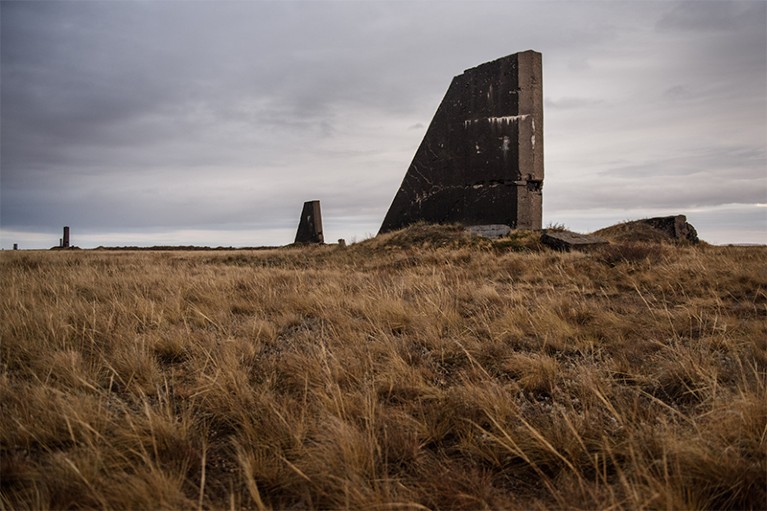
The ruins of Semipalatinsk remain a stark physical reminder of what the nuclear arms race once meant.
Between 1949 and 1989, explosions equivalent collectively to thousands of Hiroshima-sized bombs were detonated at the site, according to UN documentation. Communities surrounding the testing ground were exposed to radioactive fallout whose health and environmental effects endured long after the final explosion.


Kazakhstan has sought to transform that legacy from one of victimhood into one of diplomacy.
Semipalatinsk's closure was followed by the relinquishment of nuclear weapons, Kazakhstan's participation in the Central Asian Nuclear-Weapon-Free Zone and its persistent advocacy of nuclear disarmament.
The political assumptions that allowed the world to move progressively away from nuclear testing after the Cold War cannot simply be taken for granted.
The CTBT is now 30 years old and still awaits entry into force. Relations between the major nuclear powers are deeply strained. Nuclear weapons have again assumed a conspicuous place in geopolitical confrontation.
Against that background, Kazakhstan's argument has an unusual moral force.
Few countries have experienced nuclear testing on the scale Kazakhstan did. Fewer still subsequently possessed nuclear weapons and voluntarily relinquished them.
Thirty-five years after the gates of Semipalatinsk were closed, Tokayev is effectively asking the world's nuclear powers to remember why they were closed in the first place.
The message from Astana is straightforward: nuclear deterrence may remain part of international politics, but nuclear testing does not have to be — and dialogue between nuclear powers is more essential when relations are deteriorating, not less.
For Europe, confronting war on its eastern frontier while simultaneously reconsidering energy security and strategic autonomy, that is a message worth hearing.
Experiências de etnobotânica, polinizadores, investigação comunitária e atividades para famílias marcam a temporada de Outono do programa cultural da Cooperativa QRER que alia natureza e cultura no interior do Algarve.
A Cooperativa QRER dá continuidade ao programa Convite ao Interior, que chega à sua 3ª edição com um conjunto de atividades diversificadas a decorrer entre Setembro e Novembro, e estreia uma nova plataforma para divulgação e inscrição.
O programa deste Outono organiza-se em torno de sete eixos temáticos: Artes e Ofícios da Paisagem; Atividades Artísticas para Famílias; Paisagens Rurais e os seus Polinizadores; Algarve, Spoken; Cocriação do Mapa das Hortas, Pomares e Cultivos de Querença; Rodas de Conexão e Finais de Tarde no Jardim. Reúne propostas que vão desde percursos na natureza para reconhecer plantas, polinizadores e ecossistemas locais, as missões de investigação comunitária para iniciar um mapa das hortas e pomares de Querença, oficinas artísticas para famílias e ainda um curso de português para estrangeiros, a partir da vida e da cultura local.
Entre os principais destaques a acontecer brevemente está a atividade “Etnobotânica do Barrocal: Paisagem, plantas e usos”, na Fonte Filipe em Querença e inclui uma prova de produtos locais, e o workshop “Construir Bio-alojamentos para Polinizadores”, no jardim junto à sede da QRER, ambas a 19 de Setembro, ou a saída de campo à Benémola para descobrir “O que vive à volta da água”, assim como o arranque do “Algarve, Spoken: Learn Portuguese through local life”, um curso com 6 módulos, de português para estrangeiros que vivem no Algarve e querem desenvolver a aprendizagem de português ao mesmo tempo que aprofundam o conhecimento da cultura local.
Os meses seguintes trazem novas saídas de campo, atividades de etnobotânica e o arranque da missão de investigação comunitária para a cocriação do Mapa das Hortas e Pomares de Querença, com intervenção entre os sítios do Pombal e da Adega, a 3 de Outubro. Haverá ainda outras novidades e ciclos temáticos a apresentar em breve.
As atividades são coorganizadas por cooperadores da QRER e envolvem convidados especialistas de diferentes áreas e membros da comunidade local. Os preços variam entre os 10€ e os 20€, com exceção do curso de português para estrangeiros que, pela sua natureza e dimensão tem um valor mais elevado. Já as atividades da missão de investigação comunitária não têm custos de participação, na medida em convidam quem se inscreve a dar um contributo concreto para a cocriação do Mapa das Hortas, Pomares e Cultivos de Querença.
Informações para Inscrição:
A programação completa, preços e inscrições estão disponíveis na nova plataforma www.convite.qrer.pt .
O Convite ao Interior é um programa anual cofinanciado pelo Município de Loulé, através do Apoio ao Movimento Associativo Cultural e Recreativo, e pela CCDR Algarve, através do Programa de Apoio a Iniciativas Culturais Regionais de Carácter Não Profissional.
Sobre a Cooperativa QRER
A QRER, Cooperativa para o Desenvolvimento dos Territórios de Baixa Densidade desenvolve projetos de valorização do património natural e cultural do interior do Algarve. O Convite ao Interior é um programa cultural pensado para afirmar o interior do Algarve como um espaço de cultura e criatividade e para dar a conhecer este território através de quem nele vive e trabalha.

Iftikhar Gilani said Pakistan is incomplete without Kashmir and Kashmir is also incomplete without Pakistan.
The post Iftikhar Gilani takes oath as AJK’s 17th Prime Minister appeared first on BOL News.
England were bowled out for 290 in their first innings on the second day of the Lord’s Test.
The post Imam-ul-Haq’s further participation in England Test hinges on fitness appeared first on BOL News.

In this edition: Bad medicine, imperfect sound forever, know when to fold ’em, brainiacs, and a call of the wild.

EU Reporter journalist Derya Soysal was among the members of the press given direct access to President Kassym-Jomart Tokayev in Astana after he cast his vote in Kazakhstan’s first elections to the newly established Kurultai — an opportunity that offered a rare first-hand insight into the President’s thinking on political reform, government, youth, artificial intelligence and the country’s future direction.
For a journalist covering the rapidly changing political landscape of Central Asia, there are moments when being in the room matters.
For EU Reporter journalist Derya Soysal (pictured with President Kassym-Jomart Tokayev) Kazakhstan’s historic Kurultai election provided precisely such an opportunity.
After President Kassym-Jomart Tokayev cast his vote in the country’s first election to the newly established Kurultai, Soysal was among the journalists with privileged access to the President during the press briefing that followed.
It gave EU Reporter a first-hand opportunity to hear Tokayev address some of the most important questions facing Kazakhstan as the country enters a new political chapter.
The exchanges went far beyond election day itself.
Questions ranged from the consequences of constitutional reform and the creation of the Vice Presidency to the future composition of the government, the role of younger politicians and the increasingly important place of artificial intelligence in Kazakhstan’s economic and social development.
The result was a revealing picture of how Tokayev sees the next phase of his country’s transformation.
Tokayev himself described the election as a historic milestone and the beginning of a new stage in Kazakhstan’s development.
The establishment of the Kurultai forms part of a much broader restructuring of the country’s political institutions.
During the briefing, the President was questioned about what ordinary citizens should expect from the constitutional reforms, how the newly created Vice Presidency would operate and what role the Kazakhstan People’s Council would play.
Tokayev portrayed the changes as essential components of a renewed political system.
He stressed the importance of the Vice Presidency as an institution capable of supporting effective governance during difficult periods, while describing the Kazakhstan People’s Council as a mechanism intended to strengthen public participation and national cohesion.
But the President’s vision was not restricted to political architecture.
He also pointed to ambitious infrastructure and development programmes encompassing healthcare facilities, rehabilitation centres, urban modernisation and environmental projects.
Among the most politically sensitive questions put to Tokayev concerned his own future.
Could he stand again for President?
Following recent constitutional developments concerning his eligibility for a future presidential election, journalists pressed Tokayev on whether he intended to seek another term.
His response was deliberately cautious.
While acknowledging that the legal possibility exists, Tokayev rejected speculation about a future campaign as premature.
Instead, he argued that Kazakhstan should be concentrating on the immediate challenges of modernisation, economic growth, social development and stability in an increasingly unpredictable international environment.
It was a response that sought to move attention away from political succession and back towards the governing agenda.
Soysal’s access to the presidential briefing also provided an opportunity to hear Tokayev set out his expectations of the people who will serve in the new political institutions.
Asked what qualities Kurultai deputies should possess, the President emphasised responsibility and accountability.
Members, he said, should be judged by the quality of the legislation they adopt, whether they fulfil promises made to voters and whether the programmes they pursue genuinely contribute to Kazakhstan’s development.
A recurring theme throughout the briefing was generational change.
Tokayev again argued that Kazakhstan needs younger people to play a greater role in public life.
New faces and new thinking, he suggested, will be essential if the country is to maintain momentum in the years ahead.
The creation of the Kurultai also has consequences for the government.
Journalists therefore questioned Tokayev about the future administration and whether Kazakhstan should expect major personnel changes.
The President praised the work of the existing government but confirmed that changes would come.
At the same time, he cautioned against replacing officials simply to create the appearance of political renewal.
For Tokayev, modernisation appears to mean continuous institutional renewal rather than political theatre: bringing in new energy and expertise where necessary while retaining effective administration.
Another important exchange concerned political competition.
Asked whether the campaign had demonstrated genuine competition, Tokayev pointed to televised debates, public engagement and particularly strong interest among younger voters.
He characterised the electoral process as another milestone in Kazakhstan’s continuing political modernisation and said the campaign had brought new political voices and new ideas into public debate.
For an international audience, however, the question of political pluralism remains one of the key issues against which Kazakhstan’s reforms will ultimately be judged.
The significance of the new institutions will therefore depend not only upon their constitutional design, but on how independently and effectively they operate in practice.
Young people repeatedly returned to the centre of the discussion.
With a significant number of younger candidates participating in the electoral process, Tokayev was asked whether this generation could genuinely transform the country’s political system.
His answer was notable for combining optimism with a measure of realism.
He acknowledged that not every young official promoted into senior positions in recent years had been successful.
Nevertheless, Tokayev insisted that Kazakhstan must continue putting its confidence in younger generations.
For a country with a comparatively young population, he suggested, long-term success will depend heavily upon the responsibility, engagement and leadership of its youth.
Some of the most revealing exchanges witnessed by Soysal moved beyond constitutions and elections.
Tokayev was questioned about his repeated calls for greater civic responsibility, discipline, respect and public ethics.
The President argued that national modernisation cannot be measured solely in economic growth rates or institutional reforms.
It also requires changes in behaviour and public culture.
He connected those ideas with the Taza Kazakhstan initiative, explaining that cleanliness should be understood both literally and symbolically — encompassing respect for public spaces but also ideas of dignity, moral responsibility and civic consciousness.
Perhaps the most forward-looking discussion concerned Kazakhstan’s digital ambitions.
Artificial intelligence has become a central part of Tokayev’s political and economic agenda.
Asked to assess progress in digitalisation, the President argued that Kazakhstan had already completed an important first stage in constructing a digital state by making electronic public services widely accessible.
Citizens can now carry out administrative tasks from home that once required lengthy bureaucratic procedures.
But Tokayev made clear that he regards this as only the beginning.
The next challenge, he said, is to move artificial intelligence and digital technology beyond conferences, presentations and policy documents and turn them into instruments that deliver practical economic benefits.
He highlighted entrepreneurs, farmers and regional communities as groups that should increasingly be able to use technology to improve productivity and generate income.
His message was strikingly simple: the smartphone should no longer be regarded merely as an entertainment device but as an instrument of economic opportunity.
For EU Reporter, Soysal’s participation in the presidential briefing provided something increasingly valuable in international reporting: direct access to the political decision-maker at the centre of the story.
Rather than interpreting Tokayev’s position through official statements alone, she was able to witness at first hand how the President responded when confronted with questions about political succession, institutional change, government performance and the expectations of Kazakhstan’s younger generation.
Soysal’s access is particularly significant at a moment when Kazakhstan is seeking to redefine both its domestic political institutions and its place internationally.
The country occupies an increasingly important strategic position between Europe and Asia, while its economic, energy and diplomatic relationships with the European Union continue to develop.
Understanding the direction Kazakhstan takes therefore matters well beyond its own borders.
What emerged from the presidential exchange in Astana was not simply a discussion about one election.
It was a debate about what kind of Kazakhstan should emerge from the reforms now under way.
How much influence will the new institutions exercise?
Will younger politicians genuinely reshape public life?
Can artificial intelligence translate into economic opportunity outside Kazakhstan’s major cities?
And how far will political modernisation alter the relationship between the state and its citizens?
Those questions will not be answered by one election or one presidential press briefing.
But Derya Soysal’s privileged position inside that briefing gave EU Reporter readers a valuable first-hand view of how Kazakhstan’s President himself answers them.
As the first Kurultai begins its work, the importance of the election may ultimately be judged not by the symbolism of its creation, but by what Kazakhstan’s new political institutions actually deliver.
For the moment, however, one thing is clear: the country has entered a new phase, and the political conversation about what comes next has already begun.
Derya Soysal is an EU Reporter journalist covering European and international affairs. She attended President Kassym-Jomart Tokayev’s press briefing in Astana following his vote in Kazakhstan’s first Kurultai elections.
The king was admitted to Oslo University Hospital on August 17 with hemolytic anemia.
The post King Harald V battling blood disorder and infection in Oslo Hospital appeared first on BOL News.
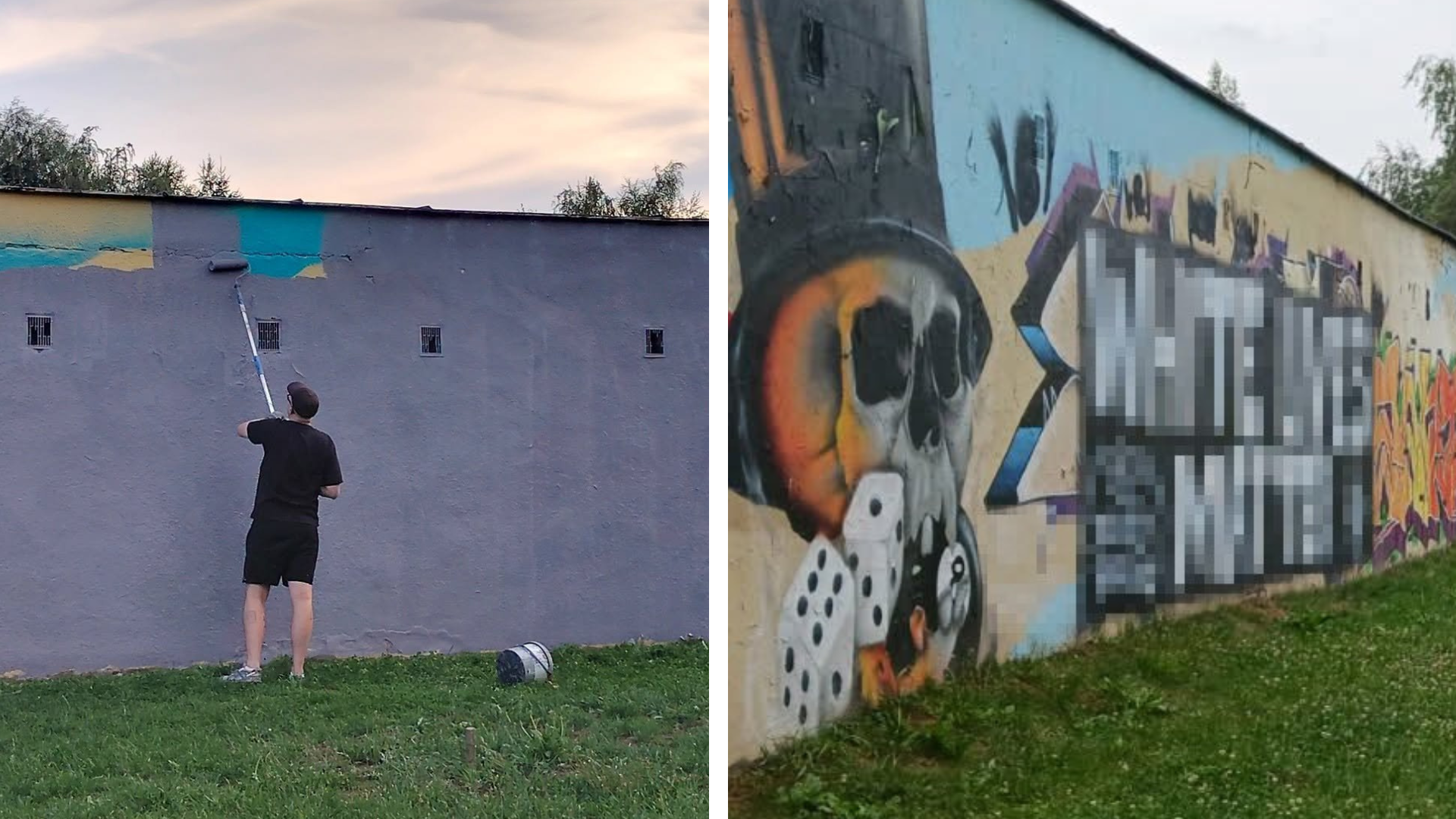
Polish prosecutors are now investigating a “White Lives Matter” graffiti as a hate crime in the city of Rzeszów, with the suspects facing up to three years in prison if they are apprehended and convicted.
Painted on a wall in the Polish city of Rzeszów, the graffiti was reportedly created as a memorial to the murdered British youth Henry Nowak. Polish police have reportedly secured surveillance footage and referred the case to Polish prosecutors. However, Polish newspaper toRzeszow claims that cameras are not in the direct area where the wall was painted, making it difficult to identify the suspects.
— Remix News & Views (@RMXnews) August 25, 2026
In Poland, prosecutors are now investigating a "White Lives Matter" graffiti as a hate crime, with the suspects facing up to 3 years in prison if they are apprehended and convicted.
Painted on a wall in the Polish city of Rzeszów, the graffiti was reportedly created as a… pic.twitter.com/FP1HYP0cDZ
Authorities also painted over the entire wall.
Major Polish news outlet wPolsce24 has reacted with outrage to the investigation: “The Rzeszów case is part of a broader trend of suppressing the voices of white people who dare to remind them that their lives also have value. When black people say “Black Lives Matter,” it is a fight for equality. When white people say “White Lives Matter,” it is immediately racist.” The news outlet further writes: “The slogan on the garages in Rzeszów was not an expression of hatred. There was a voice reminding us that white lives matters too. And as long as we treat some lives as ‘more equal’ than others, such slogans will appear on walls.”
Meanwhile, authorities claim the graffiti is illegal under article 257 of the Polish penal code, which concerns the public insult of a group of people or an individual based on national, ethnic, or racial identity.
A group labeled “Narodowy Rzeszów” allegedly posted a video of themselves standing next to the graffiti holding a banner and flares and displaying the logo of the right-wing National-Radical Camp (ONR), however, it remains unclear if they sprayed the graffiti themselves. Their post pointed to violence against Whites in Great Britain and Northern Ireland. Social media platforms took the video down.
The post ‘White Lives Matter’ graffiti in Polish city sparks police investigation, suspects face up to 3 years in prison appeared first on Remix News.
“Most people don’t get to buy their old homes back, or ever step foot in them again, and that’s okay. But we sure can spend a lifetime trying to re-create them.” In this poignant essay for Dwell, Emilia Petrarca celebrates the work of her late father, the New York City architect John Petrarca, and explores how his influence has shaped her own relationship to home and interior design. Petrarca reflects on the process of finding her own aesthetic while carrying her father’s with her, considering the ways belongings and spaces can hold our memories, legacies, and grief.
When I moved out of my mom’s house and into my first apartment with a roommate at 23, I brought with me a black rug my dad bought in Morocco. After graduating from Carnegie Mellon, he joined the Peace Corps and spent time in Ouarzazate designing government buildings. In a room full of cheap Ikea furniture, it was the only thing that truly felt like a reflection of me. Well, that and a rigid, plastic, yellow outdoor chair I for some reason bought to go with my desk. Looking back at photos now, I see that the choice makes more sense: The chair my dad got me for my room in the Big House was almost the exact same hue.
by Carlo Domenico Cristofori
«She Believed in it with her whole heart. Dolly Parton’s hope for the genetic vaccine was as pure as anything she ever sang — and then her immune system turned on her, and a “brief battle” took her away».
This is what the famous American cardiologist Peter McCullough wrote on his Substack Focal Points, who, through his eponymous Foundation, sponsored the disruptive studies of epidemiologist Nicolas Hulsher on Turbo-Cancer from vaccines.
This pathology entered the world medical literature after the publication of a peer-reviewed study in the American Journal of Independent Medicine.
«Dolly Parton died Tuesday at Vanderbilt-Ingram Cancer Center in Nashville. She was 80. The estate’s official line — delivered first by a nephew in a recorded video, then repeated by publicist Marcel Pariseau and “Team Dolly” — is that she faced “a brief battle with cancer” and departed surrounded by loved ones» adds McCullough, referring to what was officially communicated by the singer’s entourage.
«In a statement to PEOPLE on Aug. 25, reps for the country star confirmed that the “Jolene” singer’s death at 80 on Tuesday followed a “brief battle with cancer.”The type of cancer was not disclosed» People wrote yesterday.
“Our beloved Dolly Parton spent her life and career bringing joy, laughter, hope and integrity into everything she touched. Her unmatched generosity reached the lives of countless people whom she would never meet, yet she was always there to offer a helping hand,” the statement read.
«What type of cancer? Not disclosed. Hospitalized four days prior with, per one outlet, kidney and autoimmune issues. And that’s the whole story the public is getting» adds the American cardiologist, referring to the autoimmune disasters that represent one of the main causes of lethal adverse reactions to Covid mRNA genetic serums.
«For a woman worth a reported $600 million, with access to the absolute best medicine money can buy, the opacity is striking» highlights McCullough.
It’s quite disconcerting, given the long list of vaccinated celebrities who have died or fallen ill from extremely rare forms of turbo-cancer, which have emerged and been detected by oncology experts in Italy, as well as the disturbing statistical analyses by Professor Patrizia Gentilini.
It’s disconcerting because, just over five years ago, in March 2021, she was the “testimonial” for the Covid-19 shot, appearing in a video circulated by mainstream media around the world while humming about the vaccine during the injection.
It’s even more disconcerting because one of her most famous fans, US President Donald Trump, wanted to honor her as a true star by declaring a week of national mourning while continuing to defend Operation Warp Speed, which funded Moderna’s dangerous and suspect vaccine, released on the market despite Big Pharma in Cambridge, Massachusetts, having known since 2019 that the new mRNA biotechnology could cause cancer…
R.I.P. Dolly! Your songs have sadly given way to your silence on the origin of the turbo-cancer that took your life.
Carlo Domenico Cristofori
MAIN SOURCES
GOSPA NEWS – TURBO-CANCER and VACCINES DOSSIER
RELATED POSTS
Moderna AWARE that mRNA Jabs cause CANCER due to DNA Fragments. Malone Unveils Patent
ITALIAN ARTICLE BELOW CAN BE READ IN ENGLISH THANKS TO MACHINE TRANSLATION AVAILABLE
Clicking on th flags up left inside the post
What defines success when it comes to music? For Hrishikesh Hirway, who wrote four albums under the name The One AM Radio, it meant commercial attention. His interest in making music cooled after sales and airplay failed to materialize; he went 15 years without releasing an album. In this essay for The Bitter Southerner, Hirway looks at how he overcame perfectionism to write and record In the Last Hour of Light, an album heavy on collaboration.
“But Phil was echoing something I’d heard in the interviews I’d conducted and read about in books on writing: separate your creative, generative side from your editing, critical side. They push in opposite directions, and as soon as you start to edit, you’re no longer as free to play.”
“It was two days after my 47th birthday, which had left me feeling melancholy about reaching middle age and still feeling so far from my goals. I sat on my couch, put my headphones on, and played the album. Something had shifted for me. Somewhere around the third song, I felt something for the first time: I loved what I was hearing.
The music brought back memories with perfect clarity: what it felt like to write each song, to record them, the long journey to transform a part of myself into this music. It was no longer a question of the music’s worth. I can say to myself: this album is a document. And in it —listen!—you’re alive.”

Showcasing stories from Andrew Fedorov, Shayla Love, Malcolm Johnston, Erin Somers, and Chris Stanton.
An anti-corruption investigation reaching from Ukraine's Presidential Office into the management of state-owned Sense Bank has raised questions far beyond the alleged laundering of UAH 150 million. At stake are the governance of nationalised assets, the independence of Ukraine's anti-corruption institutions, a planned bank privatisation, an international arbitration worth more than $1 billion and Kyiv's credibility as it moves deeper into EU accession negotiations.
A week after Ukrainian anti-corruption investigators unveiled an operation carrying the improbable codename “Forrest Gump”, the affair has developed into one of the most consequential governance scandals to hit wartime Ukraine.
At its center is a deceptively simple question: Where did UAH 150 million — approximately $3.4 million — used to secure the release on bail of former Justice and Energy Minister Herman Halushchenko, a centerpiece of the biggest corruption scandal of Zelensky government, actually come from?
The answer alleged by Ukraine's National Anti-Corruption Bureau, NABU, and Specialised Anti-Corruption Prosecutor's Office, SAPO, is extraordinary.
Investigators say criminal proceeds under the supervision and manual management of deputy head of the Office of the president of Ukraine Iryna Mudra were converted into apparently legitimate funds through a series of companies and bank accounts. The source of the money is linked with the main suspect of another corruption scandal Timur Mindich, a close ally of president Zelensky, and the goal was to post bail for a suspect in the Operation Midas investigation into alleged corruption surrounding the state nuclear company Energoatom.
NABU's official account says members of a criminal organisation, acting with representatives and officials of a state-owned bank, arranged the laundering of UAH 150 million during June 2026. The cash was allegedly introduced into the legitimate financial system through accounts belonging to shell companies before being used for bail.
The most revealing evidence released by NABU is not just a bank transfer but Mudra’s own confessions, which give wider picture. In one recorded exchange, a female voice attributed to her says: “Corruption should be systematised and controlled… There is no need to fight it.” A male interlocutor adds: “And lead it.” This is said by one of the highest Ukrainian official in charge of judicial reform. Yet her own words are arguably more disturbing, presenting corruption not as an abuse to be eliminated but as a system to be organised and kept under political management.
Other recordings portray Mudra discussing state owned Sense Bank, where this money-loundering operation took place, as an asset to be under direct political control and used for enrichment. She recounts a proposed arrangement under which political figures politicians from Zelensky party Servant of the People would refrain from attacking the bank while “Sense Bank has to pay them”, and quotes an instruction she received from above to “take over the bank” because it contains “serious flows”. She then describes its managers as compliant figures who would carry money wherever a senior Presidential Office official instructed them, adding that they had “crawled” to her “like kittens” asking to be taken under protection.
NABU’s published recording also appear to show Mudra discussing protection from the institutions supposed to investigate such conduct. She asks how to mobilize votes for “our” candidates to NABU’s Public Oversight Council and describes SAP chief Oleksandr Klymenko as “not one of ours,” warning that if he secured a second term, “we’ll all be fucked.” Taken together, these phrases suggest something broader than participation in a single suspicious transaction: an alleged attempt to control a state-owned bank while influencing the bodies capable of investigating that control. If authenticated and confirmed in context, they would provide unusually direct evidence of political capture and consciousness of wrongdoing. Mudra denies criminal conduct and says the excerpts were released selectively and without their full context.
Revelations are shocking in many dimension and will have influence for years to come. One of the most striking revelation is usage of the state-owned Sense Bank as systemic money-laundering machine.
Sense Bank carries unusual political and legal baggage. Until 2022 it was known as Alfa-Bank Ukraine and was owned through corporate structures associated with ABH Holdings. Among the beneficial shareholders were Russian businessmen including Mikhail Fridman and Petr Aven.
Ukraine subsequently imposed sanctions and, in July 2023, the government took Sense Bank into state ownership. Ukraine's Ministry of Finance says the measure was intended to maintain financial stability and protect depositors after sanctions were imposed on significant shareholders. The state today owns 100% of the bank.
It was therefore no ordinary commercial bank allegedly being exploited. It was an asset that Ukraine had taken into public ownership during wartime, in considerable part because of national-security concerns surrounding its previous ownership.
The source material examined by EU Reporter describes this as a crucial feature of the scandal: after nationalisation, the allegation is not simply that corrupt actors conducted transactions through Sense Bank, but that political influence was progressively established over the institution's governance.
That allegation remains contested and has not been established by a court. But documents released by NABU and widely reported by the Kyiv Independent and other leading Ukrainian media raise questions that are difficult for the Ukrainian authorities to ignore. The Kyiv Independent reported on 22 August that internal Nomination Committee records showed attempts to shape Sense Bank's supervisory board following nationalisation. The paper reported that Iryna Mudra, then deputy head of the Office of the President and chair of the committee involved in selecting supervisory-board members, strongly promoted Mykola Hladyshchenko for a place on the board despite objections concerning competence, potential conflicts of interest and previous employment. Hladyshchenko subsequently became chairman of the supervisory board.
The investigation also cited earlier leaked conversations in which prospective board candidates were allegedly described as “our guys”. Six people reportedly discussed in that context were subsequently appointed. EU Reporter has not independently authenticated those recordings or the leaked committee minutes, so their contents must remain attributed to the publications that obtained them.
However, now the anticorruption agencies established with support and guidance of the EU provide their findings suggesting that the bank was deliberately captured for criminal purposes. NABU says that by early June 2026 the alleged organisers had obtained de facto control of Sense Bank, enabling them to use accounts of controlled businesses in the laundering scheme. That allegation has now triggered action at the highest levels of financial regulation.
The alleged mechanics of the operation read more like a crime thriller than a banking-compliance investigation. According to the investigative material compiled in the source document and subsequent Ukrainian reporting, cash was allegedly concentrated through businesses associated with former MP and developer Maksym Mykytas before being exchanged or routed through companies capable of putting apparently legitimate non-cash funds into the banking system.
The source describes alleged deliveries of cash in bags and boxes, routing through companies including Metrobud and other entities, and discussions about how transactions could pass financial-monitoring controls.
Ukraine's anti-money-laundering regime establishes a UAH 400,000 statutory threshold for certain financial-monitoring obligations, alongside wider risk-based requirements. It would be inaccurate to suggest that every payment above UAH 400,000 is automatically prohibited; rather, banks are expected to identify, scrutinise and where necessary report transactions according to statutory and risk criteria.
The significance of the NABU allegation is therefore not simply the size of the payment. Investigators allege that people involved in the transaction were actively discussing how to overcome or circumvent compliance barriers. Published recordings attributed to members of the alleged group include discussion of a Sense Bank compliance official who could prevent the transaction. Mudra in one recording says that she received demand “from above” to fire a bank official who refuse to clear transaction. The scheme released by NABU paint a shocking picture: to make the transfer the bank's automated monitoring arrangements were temporarily taken out of operation during the transaction.
Those are NABU allegations presented to the court. But the Ukrainian government has already treated them seriously enough to take immediate action. This confirms that NABU accusations are well grounded.
On 19 August, the Cabinet suspended supervisory-board chairman Mykola Hladyshchenko for six months and initiated the suspension of management-board chairman Oleksii Stupak. The Finance Ministry explicitly said that its intervention was designed to address risks including the possible use of Sense Bank for money laundering and inadequate oversight of AML procedures.
The following day, National Bank of Ukraine Governor Andriy Pyshnyi went further. The NBU concluded that Hladyshchenko no longer satisfied the statutory independence requirements for membership of the supervisory board and opened proceedings to examine the collective suitability of the entire board. On 21 August, the government terminated Hladyshchenko's powers altogether. This regulatory reaction matters because it turns the episode from an allegation concerning individual criminal behaviour into a potential failure of corporate governance and banking supervision.
Sense Bank itself has said it is cooperating with the authorities. Following the NABU searches, the bank said it wanted the circumstances established “fully and objectively” and was providing investigators with the information required under legal procedures.
But the key question is different. There have been already multiple accusations of usage of nationalised Sense bank for allegedly corrupt or shadow schemes. NABU revelation did not come from nowhere and were not a separate incidental case. In previous NABU and journalistic investigations shocking facts of how bank has been used were presented. How was it possible that in time of war after nationalisation of one of the biggest banks it could turn into money-laundering machine?
The highest-profile suspect is Iryna Mudra. Mudra served as deputy head of the Office of the President and held responsibility for major legal and judicial-policy issues, including international mechanisms concerning Russian aggression and frozen Russian assets. President Volodymyr Zelenskyy dismissed her on 19 August. Presidential Decree No. 734/2026 confirms the dismissal but does not give a reason. NABU and SAPO served Mudra with a notice of suspicion. On 25 August, Ukraine's High Anti-Corruption Court ordered her held in custody for 60 days while allowing release if UAH 20 million bail is posted. Prosecutors had requested considerably higher bail.
Mudra denies criminal wrongdoing. She has argued that the published recordings have been presented selectively and out of context. Through her lawyers, she has said that she is cooperating with investigators and is prepared to answer their questions through the proper legal process. The underlying source document expressly records those objections and cautions concerning the provenance and quality of some recordings.
On 24 August President Zelenskyy said the anti-corruption bodies had “no questions” for him regarding the investigation.
There is another legal dimension. Former shareholder ABH Holdings commenced ICSID arbitration against Ukraine after the 2023 nationalisation, seeking more than $1 billion and alleging unlawful expropriation. UNCTAD records the dispute as ABH v Ukraine, ICSID Case No. ARB/24/1, concerning the former ownership of Alfa-Bank/Sense Bank. A separate proceeding, EMIS v Ukraine, also concerns alleged unlawful expropriation of Sense Bank.
The government's 2023 decision was taken in the context of sanctions and financial-stability considerations. Whether it complied with the relevant investment treaties is a matter for international tribunals, not for a criminal investigation conducted three years later. Nevertheless, evidence about how the asset was governed after nationalisation could become relevant contextual material in those proceedings.
ABH's case alleges that the taking of Sense Bank was unlawful. Ukraine will defend the nationalisation on its own legal and national-security grounds. A subsequent allegation that politically connected actors exploited the nationalised institution does not answer that legal dispute, but it could make the factual history of the asset considerably more uncomfortable for Kyiv. The source analysis supplied to EU Reporter correctly identifies this potential intersection. Forrest Gump can raise a question about bad faith in the original nationalisation and the consequences might go much further than a bail for one allegedly corrupt official.
And the cherry on the top: Mudra was also one of the officials responsible for formulating and publicly defending Ukraine’s position against ABH Holdings, the former owner of Sense Bank, in its more than $1 billion ICSID claim over the bank’s nationalisation; she later chaired Ukraine’s delegation in other major international proceedings. This creates a particularly damaging contradiction: an official who defended the takeover as a lawful national-security and financial-stability measure is now accused of helping place the same bank under political control and use it to launder criminal proceeds. The allegations do not by themselves prove that the 2023 nationalisation was unlawful, but they seriously undermine the factual and moral credibility of Ukraine’s case and offer ABH a powerful argument that the bank was not transferred into genuinely independent state management, but into a system vulnerable to political capture.
Forrest Gump is not an isolated investigation. Its roots reach into Operation Midas, NABU's investigation into alleged large-scale corruption at state nuclear operator Energoatom. NABU says Midas uncovered a criminal structure involved in substantial corruption and subsequent money laundering. Later investigative developments have continued into 2026.
The Forest Gump allegations concern money ultimately used as bail for an individual implicated in that wider investigation. This changes the character of the alleged conduct. If prosecutors prove their case, it would mean that money generated through criminal activity was not merely hidden or spent. It was allegedly recycled back into the criminal-justice system itself to secure the liberty of another suspect.
And here we come to the point vitally important for Brussels.
Ukraine formally opened negotiations on the EU's Fundamentals cluster on 15 June 2026. That cluster includes the judiciary, fundamental rights, justice and security, public procurement and financial control. Crucially, it is the first cluster opened and the last to close, and the European Commission has made clear that progress under it determines the overall pace of accession negotiations.
Ukraine is simultaneously receiving extraordinary financial support from the European Union. The Ukraine Facility provides up to €50 billion between 2024 and 2027, and support is tied to democratic mechanisms, the rule of law, sound financial management, anti-corruption safeguards and reform commitments.
The issue for Brussels is therefore not whether corruption exists in Ukraine. No serious accession process operates on the assumption that candidate countries are free of corruption.
The more important test is whether institutions can discover it, investigate it, prosecute it and correct the governance failures that allowed it without political obstruction. Viewed from that perspective, Forrest Gump presents two competing narratives. The negative interpretation is obvious: people occupying some of the highest positions in the Ukrainian state are alleged to have manipulated a nationalised bank and circumvented controls to launder criminal proceeds.
The more positive institutional interpretation is that Ukraine's own anti-corruption agencies investigated them, published evidence, served suspicion notices, triggered removals at a state bank and brought one of the country's most senior former presidential officials before an independent anti-corruption court.
Which narrative ultimately prevails will depend heavily on what happens next.
In this essay at Panorama: The Journal of Travel, Place, and Nature, writer and professor Samuel Autman reflects on tourism and privilege, especially in a time of xenophobia; traveling as a Black queer American; and the idea of not fully belonging wherever he goes. The sections in Autman’s piece are organized as terms and conditions in a legal agreement, reminding us that when we cross borders, we navigate different cultural and social scenarios, written and unwritten rules, and people who view us as foreign—no matter how at home we might feel.
I found myself asking harder questions about the young men around him, about the relationships, the patronage and the blurred line between generosity and dependency. Mark had paid for many of them to study law, medicine or business. He had even helped one man living in the United States without legal status by paying for him to attend a Spanish-language school.
None of it suggested scandal or anything obviously illegal. But parts of it no longer sat comfortably with me.
Parliamentary elections on 23 August completed the formation of Kazakhstan’s new legislature — the Kurultai — the central element of the country’s renewed political system following constitutional reform. Seven political parties took part in the vote. Turnout stood at 74%.
The first convocation of the Kurultai has cemented the completion of the institutional transition and marked the country’s entry into a new political cycle.
The decisive factor enabling this far-reaching transformation of the political system has been President Kassym-Jomart Tokayev’s consistent course toward democratic renewal in Kazakhstan.
It was within this framework that constitutional amendments were initiated, the role of representative institutions expanded, political competition strengthened, and powers redistributed among the branches of government.
For European partners this carries particular significance: it demonstrates that the institutional overhaul was not ad hoc but systematic and phased, grounded in political will and a long-term reform strategy.
For the European Union, Kazakhstan remains one of its key partners in Eurasia, primarily in the domains of energy, logistics, and raw materials.
The renewal of the institutional system enhances the predictability of engagement — a quality of particular importance for long-term European projects.
Energy Cooperation and Market Transformation
Energy continues to form one of the central pillars of Kazakhstan–EU relations.
Institutional stabilisation after the elections strengthens the durability of the contractual framework in the energy sector, while the new legislative structure facilitates the coordination of long-term economic initiatives.
Special emphasis is placed on the development of the Trans-Caspian International Transport Route, which the EU regards as a strategic alternative to traditional trade arteries.
A stable institutional environment increases the investment attractiveness of these projects.
The formation of the Kurultai creates a more transparent decision-making system, thereby reducing regulatory risks for European partners.
This is reflected in:
•growing investment activity;
The 23 August elections have concluded the phase of institutional renewal in Kazakhstan and opened the period of practical implementation of reforms. For the European Union, this means a more predictable foundation for cooperation with Kazakhstan in the key spheres of energy, raw materials, and transport infrastructure. Kazakhstan enters a new political cycle with an updated institutional system, reinforcing its position as a strategic partner of the EU in Eurasia.

Wilbert L. Cooper | Longreads | August 25, 2026 | 3,848 words (14 minutes)
Excerpted from The Black Shield: An American Memoir of Family and Power by Wilbert L. Cooper. Published by Farrar, Straus and Giroux. Copyright © 2026 by Wilbert L. Cooper. All rights reserved.
In Wilbert L. Cooper’s new memoir, The Black Shield, he tells two intertwining stories: the history of the city’s Black Shield Police Association, one of the country’s oldest Black policing organizations, and the multigenerational narrative of his own family, embedded in the police force. Both of his parents and sister are retired Black Cleveland cops, and on his mother’s side, there’s been a Cleveland cop in the family since 1950. In this book about race, policing, and power, Cooper examines the complex duality of the Black cop, what it was like for his parents to navigate an institution that was hostile to their own community, and, ultimately, what this all has meant for him.
This excerpt combines the prologue and a chapter focused on his mother’s beginnings in Cleveland’s police department. Two individuals mentioned spearheaded legal efforts in the 1970s to diversify the department: Fred Johnson, the association’s president who led a lawsuit over the department’s discriminatory hiring and promotion practices, and Jean Clayton, a policewoman and the organization’s secretary whose parallel lawsuit disbanded the segregated Women’s Bureau and integrated women into the department. Below, Cooper recounts how his mother, Gayle, walked through the door that they opened. But it was not without a struggle.
—Cheri Lucas Rowlands
The gun was always there. I used to see it in flashes as Dad would get ready to leave the house. After he doused himself in spicy cologne and sliced a plastic comb through the waves of his jet-black Jheri curl, I would catch that 9-millimeter sliding between the small of his back and the belted waistband of his blue jeans.
Mom had her own. She kept it in her purse. One of those big leather bags, the kind they show behind the counter at Dillard’s, with shiny metal clasps and countless compartments. Her gun would be in there with red lipstick, a double-sided compact mirror, and her bulky pager. I knew the gun was there because I sensed its heft whenever I’d have to move the bag off the kitchen table to do my homework. It felt like a bowling ball in a pillowcase.
Dad used to store his 9-millimeter above the fine china, on top of the large, baby-pink Victorian-style cabinet in our dining room. One time while he was sleeping, I climbed on top of the pink-velvet-upholstered chairs to get a good look at it through the scrollwork. When I came face-to-face with the gun, I was too intimidated to actually pick it up and play with it.
It took a few moments for me to work up the gumption to run my little fingers across the raised bumps of its grip. Then I touched the ridges of the slide and the smooth, cold, hard barrel from where bullets burst. And just that alone felt crazy to me. Even in the dusty, mundane space of the cabinet, the stock-still object pulsated with wild energy. It was like petting a tiger.
Even now, it’s overwhelming for me to imagine that all that calamitous potential to take life, to inflict pain, to inspire fear, to demand subservience, to have your way with the world, to finally be the actor instead of the one who is acted upon—was right there and it was theirs.
I was 7 or 8 when I saw Dad shoot that gun. It must have been the summer, because I still remember the heavy outside air kissing my arms and legs, the suburban sunlight beaming on me. I see that light reverberating off the concrete, making vivid every blade of green grass in the yard and every goose-egg stone in the gravel strips. But I cannot hear the gunshot. I cannot tune in to the boom. All I sense is the fear, because it is so foreign. I’m still there. Standing in the driveway. Stuck and dumbfounded. Until Dad’s shouts break through, begging me to run inside before those crackers come back, commanding me to have Mom call the cops.
Have you heard of Pastor Leon McCray? The man of faith who saw two White people dumping a refrigerator on his property. When McCray tried to stop them, the duo threatened him. One of the Whites ran off to grab three more racists. McCray says that’s when they all ganged up on him. That’s when they told him that his “Black life didn’t matter.” The beating didn’t stop until McCray pulled out his gun. When the police showed up at the scene, they handcuffed McCray and put him in the back of the cruiser. His assailants laughed and waved at him as he was taken off.
But at least McCray survived. You know that many of us aren’t so lucky: The police shot and killed the father Philando Castile during a traffic stop after he told them he had a firearm. The police shot and killed the father John Crawford while he was carrying a pellet rifle inside the Walmart that retailed the damn pellet rifle. Police shot Emantic F. Bradford Jr. at a shopping mall while they were responding to a call about gunshots at the mall. Witnesses say they killed Bradford as he was trying to direct shoppers to safety.
These killings now give shape and sharpness to that immense and totalizing fear I felt in the driveway as a child. That American malice is always there anytime we try to commandeer a power that wasn’t intended for us. Black people are killed or incarcerated every day for much less than what Dad did. Simply owning a gun can put a bullseye on your back. Pulling one on a White man can turn you into a hashtag.
So why did Dad want to call 911? I know that he’d tell you it was because his gun was different from Pastor Leon’s. Dad didn’t buy it at Walmart or Bass Pro alongside camouflage galoshes and fly-fishing rods. He didn’t pick it up at a gun shop with a shooting range full of targets depicting men in turbans and hip-hop gear. He didn’t procure it across state lines at a gun show with bundles of cash and no identification or background check. And he didn’t get it off the street, with scratched-out serial numbers and bodies on it.
Dad got his gun from the City of Cleveland. That’s where Mom got hers, too. Both are tools of policing, the Cooper family business. They hold up those guns and their power to use them as symbols of our freedom in a country that will not stop killing or incarcerating Black folks. When I was a child, I never questioned that contradiction. But to become my own man in the America I inherited, I realized I’d have to try to solve the paradox of my parents.
By the time the Black Shield had forced the hand of the Cleveland Police Department in 1977, Gayle had given birth to another child—a little boy named Geoffrey. Now with three kids, she was even more entrenched in a wrathful marriage and farther away from the working world. And losing her uncle Lloyd, which felt a lot like losing a father, only made her feel that much more alone. When he died, the dream of becoming a cop and the freedom the job promised died with him.
It was at the moment that she’d almost completely resigned herself that it all came raging back. She opened up an issue of the Plain Dealer to find that people who’d taken the test with her and were lower than her on the eligibility list were being appointed to the police academy. And quickly, her despondency turned to confusion. And then her confusion turned to anger. She said to herself, “I know my number is higher than this and they’ve gone eighty past me and I’m not getting called?!” As she started to look into the issue, she found out that the city had expunged her from the eligibility list. “They were trying to lose Black folks’ stuff,” she told me. The city claimed it was because her addresses had changed and she hadn’t notified the civil service. To get back on the list, she had to go to court. “They claimed I had moved, but I owned my own home!” she said. “I told them, ‘I bought this house, I haven’t gone anywhere.’” As soon as she prevailed in her hearing, a White officer walked up to her in court. He simply said, “I’m from the academy.” He took her information. And then he said, “You will start the police academy on Monday.”
Later that same night, Fred Johnson called Gayle’s phone. It was the first time she’d ever spoken to the man. Lloyd was never big on the Shield Club, and Curtis was much closer with her younger brother, his namesake, who would join the police department five years later. Gayle didn’t have a complete idea of what the Shield Club had been up to at that point, or of how much it had shaped the situation she was walking into. Because of all the lawsuits, more than 40 percent of her classmates would be people of color and women. But the department they were entering was only 9 percent Black or Hispanic, and 2 percent women. For his part, Johnson stressed the struggle happening in the city to resist the change that Black women like Gayle represented. The academy was framed as a contentious environment controlled by people who were intent on destroying Gayle’s professional prospects and her spirit.
Despite the reforms that resulted from the Shield Club and the Women’s Law Fund cases, Gayle was still put through a series of tests, during which she could still be expunged. She had to meet with a psychiatrist, who asked her questions about her affiliations. Although this test had been revised thanks to the efforts of Fred Johnson and the Shield Club, it remained biased. As many of us conclude from a life living in this country run by White people, Gayle figured the best way to stick around was to hide herself. Her strategy was to answer every question like a White man of modest intellect.
In the 1970s, Gayle had spent a few years in the Nation of Islam. Although she never really let go of Jesus, she converted aesthetically and culturally to satisfy the whims of her second husband. She traded her hot pants for conservative flowing dresses. And instead of sweet potato pie, she started baking bean pies. When she did make a Polish Boy, she did it with beef sausage. She even traveled to Chicago once for Saviours’ Day to see the honorable Elijah Muhammad with her own eyes. But she put all that behind her when she found out that her proud Muslim husband was sleeping with a fellow “sister.” By the time she took the psych test to become a police officer, she’d gone back to straightening her hair and listening to gospel music. But some of the political knowledge she gained from the Nation, especially its perspective on America, stuck with her. She understood things differently than most—like the “riots” that happened in Hough and Glenville. She saw them as a natural reaction to the way her people had been done in this city and done in America. To her, the people who stormed the streets weren’t criminal. The crimes being committed were by the landlords renting rat-infested apartments and the Board of Education shoving kids into overcrowded schools and businesses charging a premium for rancid meat. She had a lot of ideas about these sorts of things, but none of them could feed her kids or free her from her marriage. And so she kept them to herself during her psych test.
The new hires were also required to do a complete physical examination. This was especially humiliating for Gayle. The whole ordeal was a perverse take on the idea that if women want to be in the academy, if women want to do what the men do, then they have to go through the exact same processes. For the physical exam, this meant standing around nearly nude to be ogled by their peers. “They made us stand up there in paper gowns and these guys were trying to catch glimpses at us. And they make you do stuff in the gowns so the gowns get all torn up. My breasts and everything were just hanging out,” Gayle recalled. She was so thoroughly humiliated that a fellow female in the academy came to her with some Scotch tape to try to cover her up. “They did that kind of thing because they wanted us to quit. The guys didn’t want us, their wives didn’t want us, it was terrible. They treated us like new meat, picking out which one they were going to take.”
Fred Johnson made himself available to all the Blacks in the academy because he was prepared for the city to try to find excuses to fail them. Gayle didn’t think she’d have a problem. She was voted the vice president of the academy class and consistently scored high on all of the interstitial tests. Those high scores were attained by studying alongside her new girlfriend. But when they both got good grades on a test with similar answers, they were accused of cheating and threatened with expulsion from the academy. Fred Johnson had to step in and help them prove that they’d arrived at the same answers because they’d been preparing together.
After passing the academy, but before they could be sworn in as officers, they were also required to take a qualification test administered by the State of Ohio that evaluated their skills. Cadets could fly through the academy with high marks and still get disqualified to be a police officer. Although policewomen in Cleveland had been in the academy before the 1970s, they weren’t required to take the qualification test because officers in the women’s bureau didn’t carry guns. Anticipating that they would do whatever they could to disqualify her, Gayle prepared for the test with the desperate intensity of a woman fighting for her life. “To prepare for the running test, I used to run up and down the steps whenever I’d put the kids down for nap,” she told me. To make her qualifying time, she outran some Vietnam veterans, who threw up before they crossed the finish line. The state also required people to do a series of chin-ups and push-ups and dips that demanded upper body strength that seemed to favor the male physique, but Gayle fought her way through those. When she finally had to take her shooting test, the last phase, it was 19 degrees below zero. In 1977, Cleveland was in the midst of one of its coldest winters ever. But one of the essential rules of the academy was that it never canceled or postponed qualification tests for any reason, in an effort to help simulate what it’s like to be a police officer and have to work when everyone else gets the day off. And so Gayle stood at the outdoor range with the soft skin of her red-nailed fingers sticking to the ice-cold metal of her gun, her body involuntarily shivering, hoping the icy air didn’t tank her shot.
The first night Patrolwoman Gayle Smith reported to the Fifth District of the Cleveland Division of Police in the winter of 1977, her supervisor showed her two things: the coffee machine and the broom. It was expected that she would be the shift’s glorified janitor. But she bucked back. “I did not go through all that training to do no housekeeping. I came here to be a police officer,” she remembers saying to him, surprised by her own candor. Ridiculous as it seems now, perhaps this kind of insult by her male colleagues should have been expected. After all of the efforts by the Women’s Law Fund and Jean Clayton to break down the formal barriers in the CDP, women still constituted only 2.3 percent of the police force when Gayle started. The assholes she was working with had almost no experience working alongside women as equals and little incentive to see them as such. Gayle was basically a guinea pig. Ironically, it was because of Jean Clayton, Gayle’s initial inspiration to become a lady cop, that the women’s bureau was dissolved and lady cops ceased to exist. Although Gayle had been intent on following Clayton’s path, she found herself involved in something entirely new.
While most of the male cops were unhappy with the gender integration of the department, a lot of the women officers were displeased, too. They were especially pissed at Jean Clayton and her damn lawsuit. These were women who had no interest in being partnered with men and participating in a form of policing that oriented itself around violence and punishment. There were certainly fair criticisms of the women’s bureau, from its troubling focus on purity to the fact that its diversion efforts and empathy weren’t as equally distributed to Black suspects as they were to Whites. But I wonder if the department would be less lethal and repressive today if the men on the Cleveland Police Department had become more like the women and their women’s bureau. Instead, the women became more like the men. After the women’s bureau closed, some of its important work, such as sex crimes, was shamefully ignored or mishandled. Gayle would see this firsthand. But first she needed to get out of coffee duty.
It took some convincing, but eventually Gayle got her first assignment outside the district. After roll call, she would be taken to White City Beach, a former park on Lake Erie that in the 1940s was home to attractions like Bonavita the lion trainer, along with fishing and a yacht club. After natural disasters hurt the park and desegregation saw the City of Cleveland give up on supporting community spaces shared by both Blacks and Whites, White City Beach went the way of Euclid Beach. By the 1970s, it became a dumping ground for garbage and a place where the city parked vehicles that were towed to clear the streets for snowplows or as the result of car wrecks. That year, it was overflowing with gnarled automobiles. It had been the coldest Cleveland winter of the century, complete with “superbomb” blizzards and scores of days that were more than 20 degrees below zero. There were more than one thousand cars down there at White City Beach, but not another soul in sight.
“They dropped me off at White City Beach every night and stuck me in a shell of a car that was up on bricks and cinder blocks, with a wire heater inside of it. There was no bathroom. They’d leave me there all night and they’d come back and get me in the morning. I was just down there by myself in pitch blackness and cold. Even if I had wanted to get out, I couldn’t go nowhere. If someone had tried to steal the cars down there, there is nothing I could have done about it. It was demoralizing.”
Mom told me this in the kitchen, where I’d often heard her talk about the bad early days on the job. I’m not sure whether this was the first time I was really listening, or if she was telling it differently. Usually, her stories were never this detailed and specific. It was just “racism” and “men being nasty.” Perhaps because I was taking a real interest, she started accessing parts of the story she had often left untouched in her recounting.
There is a feeling of humiliation that stings long after an event has passed. It doesn’t just hurt because of what was done, it hurts because you feel as though you had some agency in the matter. That you let it happen. When she started telling me what it was like, I could feel her own surprise at the disregard she had endured. In the zone car with White partners, she was beneath speaking to. These were men who would greet a dog if they saw it on the street, but wouldn’t say one word to her. In this sense, despite the lawsuit and the consent decree, not much had changed on the job since the late 1950s, when White officers would “throw a shoe” to avoid being paired up with Curtis and Fred Johnson.
“When they finally had two guys take me out, they put me in the back seat where a prisoner would sit. And they didn’t let me touch the radio. They were supposed to show me some things. But instead, they got out of the car and went to eat. They just left me locked in the back of that car without saying anything. I’m just beating on the door and everything.”
It wasn’t until an old, White, Catholic officer who looked like Santa Claus decided to take Gayle under his wing that she finally got to learn a bit about real policing. The rotund veteran with snow-white hair explained to Gayle the first time she got in the car with him exactly why he was willing to teach her. It wasn’t that he was pleased about working with Blacks or with women. He simply realized the futility of resistance: “If we get rid of her, they will just send another one of them down here.”
“It was crazy to have me on the job that length of time and nobody taught me nothing except what I learned in the academy,” she remembered of her time wasted on frivolous assignments. “When he took me out, the first thing he ever told me was this: He said, ‘Okay, kid, what time is it?’ I looked for my watch. He said, ‘That is the first rule. Don’t you ever take your eye off anybody. If they ask what time it is, say you don’t know or your watch is broke. But you don’t look down.’”
It was with Santa Claus that she got to see how the men handled sex crimes now that the women’s bureau was closed. The first rape call that they ever responded to together involved a White woman. The lady had walked three doors over from where she lived to bum a cigarette from her neighbor. Before she could get back home, three men had grabbed her off the street, dragged her into a car, and took turns raping her. While Gayle was wrenched by the story, calling back to her own experiences of sexual abuse, the veteran was incredulous. “He talked to that girl so bad, I felt sorry for her,” she remembered. “He asked her, ‘What were you wearing?’ ‘Why were you out at that time of night?’ ‘What did you expect was going to happen?’ It was horrible . . . I will never forget it. That girl ended up not even filing.”
It was also alongside Santa Claus that she finally proved she could be real police, like the men. The call was a robbery at a drugstore that drew several cars to the scene. The suspect was a young Black man who managed to run out the back door. To show her tenacity, Gayle took off after him ahead of the rest of the cops, moving just as she had when she was training for the department’s entrance exam, going up and down those steps. Santa, who was heavy and plodding with bad knees, couldn’t keep up as Gayle tailed this man through an alleyway. And then from behind her, a shot rang out.
When a police shooting happens, officers come together to get their story straight. Although this was an era when it was still legal for officers in Cleveland to shoot fleeing felons, all the patrolmen made sure they agreed on what took place. After they were finished, they looked over at Gayle to see if she saw it the same way they did. Forget the police academy. The offensive rape call was a pop quiz, and this shooting was the final exam of real police shit. And Gayle passed with flying colors. “After that, I started having people to work with,” she told me. “It didn’t feel good, but I had a demon behind me.”
Browse Wilbert L. Cooper’s book-related events and appearances or buy the book today:
This excerpt is protected under copyright laws and reproduction of the text in any form for distribution is strictly prohibited. The right to reproduce or transfer this work via any medium must be secured with the copyright owner.
Wilbert L. Cooper grew up in the suburbs of Cleveland, Ohio. He studied journalism at Ohio University and earned a master’s degree in publishing at New York University. He has written for outlets such as The Guardian, The New York Times, The Marshall Project, and The Wall Street Journal. His Vice documentary The Cleveland Strangler was nominated for a National Magazine Award. In 2024, he was the recipient of the Richard J. Margolis Award. The Black Shield is his first book.
Introduction by Fabio Giuseppe Carlo Carisio
Originally published on October, 6, 2025 – updated with VIDEO on August, 24, 2026
Excerpt from American Thinker interview to American Epidemiologist Nicolas Hulscher
«The oncogenic potential of SARS-CoV-2 has been hypothetically proposed, but real-world data on COVID-19 infection and vaccination are insufficient. Therefore, this large-scale population-based retrospective study in Seoul, South Korea, aimed to estimate the cumulative incidences and subsequent risks of overall cancers 1 year after COVID-19 vaccination. Data from 8,407,849 individuals between 2021 and 2023 were obtained from the Korean National Health Insurance database».
We can read in the Abstract of the Korean study Kim et al. titled “1-year risks of cancers associated with COVID-19 vaccination: a large population-based cohort study in South Korea” which was conducted by Hong Jin Kim (Department of Orthopedic Surgery, Kyung-in Regional Military Manpower Administration, Suwon) Min-Ho Kim (Informatization Department, Ewha Womans University Seoul Hospital, Seoul), Myeong Geun Choi and Eun Mi Chun (both in Division of Pulmonary and Critical Care Medicine, Department of Internal Medicine, Ewha Womans University Mokdong Hospital, 1071, Anyangcheon-ro, Yangcheon-gu, Seoul).
The research was published on BMC Biomarker Research 13 (part of Springer Nature).
«The participants were categorized into two groups based on their COVID-19 vaccination status. The risks for overall cancer were assessed using multivariable Cox proportional hazards models, and data were expressed as hazard ratios (HRs) and 95% confidence intervals (CIs). The HRs of thyroid (HR, 1.351; 95% CI, 1.206–1.514), gastric (HR, 1.335; 95% CI, 1.130–1.576), colorectal (HR, 1.283; 95% CI, 1.122–1.468), lung (HR, 1.533; 95% CI, 1.254–1.874), breast (HR, 1.197; 95% CI, 1.069–1.340), and prostate (HR, 1.687; 95% CI, 1.348–2.111) cancers significantly increased at 1 year post-vaccination» adds the Abstract.

«In terms of vaccine type, cDNA vaccines were associated with the increased risks of thyroid, gastric, colorectal, lung, and prostate cancers; mRNA vaccines were linked to the increased risks of thyroid, colorectal, lung, and breast cancers; and heterologous vaccination was related to the increased risks of thyroid and breast cancers. Given the observed associations between COVID-19 vaccination and cancer incidence by age, sex, and vaccine type, further research is needed to determine whether specific vaccination strategies may be optimal for populations in need of COVID-19 vaccination».
The Korean study indirectly confirms the warning raised by two Chinese universities in October 2020, even before the Covid-19 vaccines were released, regarding the very serious risks of lung disease that both mRNA and mDNA gene sera could cause.
Furthermore, the study found that booster doses were associated with significantly higher risks of gastric and pancreatic cancer. For pancreatic cancer, the risk more than doubled in booster recipients.
These statistics confirmed the validity of the warning raised by the late virologist Luc Montagnier and British oncologist Angus Dalgleish.
More details below inside the analysis of American epidemiologist Nicolas Hulscher.
Fabio Giuseppe Carlo Carisio – Gospa News director
Originally published by Nicolas Hulscher, MPH on Substack Focal Points – Courageous Discourse by McCullough Foundation
About a month ago, the first-ever population cohort study reported increased cancer risks following COVID-19 vaccination. In Italy, nearly 300,000 residents were tracked for 30 months, showing that mRNA shots significantly increased the risk of overall cancer, breast cancer, bladder cancer, and colorectal cancer
Now, a second—and far larger—population-based cohort study by Kim et al from South Korea has corroborated and expanded upon those findings. Drawing on a massive sample of more than 8.4 million people, this is one of the most powerful cancer-safety datasets ever analyzed.

The results are striking. After accounting for age, sex, comorbidities, income level, and prior COVID-19 infection, COVID-19 vaccination was linked to significant increases in multiple major cancers, with the signal consistent across all vaccine platforms, both sexes, and age groups:

Interpretation: An HR of 1.53 for lung cancer means that vaccinated individuals developed lung cancer at a rate 53% higher than matched unvaccinated peers, over the same one-year follow-up period. Similar interpretations apply to each cancer type.
AstraZeneca Taken to British Court for as many as 80 Damages Claims on “Defective” Covid Jab

Interpretation: The elevated cancer risks were not confined to one vaccine platform. Whether adenoviral-vector (cDNA), mRNA, or mixed schedules, each vaccine type was associated with a measurable increase in overall cancer — and each had specific cancer sites driving the signal. In other words, no vaccine technology was free of cancer risk in this dataset.
Interpretation: Booster doses were associated with notably higher risks of gastric and pancreatic cancers. For pancreatic cancer, the risk more than doubled in boosted individuals.
New Study Finds Covid-Vaccinated Kids Face ELEVATED CANCER RISK, Immune System Damage

Interpretation: Both the overall and site-specific results show a consistent pattern — every demographic group experienced elevated cancer risks, though the type and absolute burden varied. Women and the elderly were hit hardest, but no population segment was spared.
Taken together, the evidence is now impossible to ignore. The only two population-level cohort studies ever conducted on COVID-19 vaccination and cancer — one in Italy and one in South Korea — have both found major increases in cancer risk.
The Italian study (≈300,000 people, 30-month follow-up) identified significant elevations in overall cancer, breast, bladder, and colorectal cancers. The South Korean study (8.4 million people, 1-year follow-up) confirmed and expanded these findings, documenting increased risks of overall cancer plus six site-specific cancers (lung, prostate, thyroid, gastric, colorectal, and breast).
Critically, the signal was observed across all vaccine types — both mRNA and viral-vector (cDNA) shots — and in every demographic group analyzed. In plain terms: both major COVID-19 vaccine platforms appear to be carcinogenic
With two independent national datasets converging on the same conclusion, governments, regulators, clinicians, and researchers must confront a sobering reality: nearly 70% of the global population has been injected with a carcinogenic product. The evidence demands immediate market withdrawal of these products.
17 Ways mRNA Shots May CAUSE CANCER, According to Over 100 STUDIES
At the McCullough Foundation, we are deeply investigating both the molecular mechanisms and the population-level data linking COVID-19 vaccination to cancer. We are currently preparing several new studies to expand this critical line of evidence.
This work requires substantial time, expertise, and resources, and we ask for your support in funding this urgent research: mcculloughfnd.org/products/donate-1
Oririnally published by Nicolas Hulscher, MPH on Substack Focal Points – Courageous Discourse by McCullough Foundation
Nicolas Hulscher, MPH – Epidemiologist and Foundation Administrator, McCullough Foundation
MAIN SOURCES
FOCAL POINTS – COURAGEOUS DISCOURSE
GOSPA NEWS – TURBO-CANCER AND VACCINES DOSSIER
RELATED TOPICS


