 Login

Adaptaciones – Por Juan Manuel de Prada
Por Juan Manuel de Prada Se ha discutido mucho este verano sobre la ‘adaptación’ de La Odisea perpetrada por Christopher Nolan, en algunos casos para ensalzarla, en otros para denigrarla;…

The U.S. military is planning to revamp Moron Air Base in Spain, including creating new parking spaces for as many as nine additional B-52 Stratofortress strategic bombers. This effort comes even after Spain denied permission to use the base, and its naval station in the country, for direct strike operations on Iran during Operation Epic Fury. Long-range strikes by bombers flying from Europe played a major role in that operation. It also comes as the Pentagon is reviewing its posture in Europe, which could include major basing changes that fit the Trump administration’s vision for NATO and who it prefers to work with the closest, as well as tactical and strategic concerns.
The makeover is part of a nearly half-billion dollar construction program for U.S. facilities primarily in the Rota, Spain, area, which provide a great deal of support for American forces in Europe, Africa and the Middle East. It was announced on Thursday in a pre-solicitation notice posted on the government’s contracting portal that a contract is expected to be awarded next month.
Moron, located in southern Spain, is a Spanish Air Force Base, used by the U.S. Air Force to provide expeditionary combat support and the bed-down of transient aircraft. It also plays a major role in the “staging of aircraft and personnel in support of U.S. and NATO plans, exercises and contingency operations; and to provide Base Operating Support to tenant units,” according to the Air Force Fiscal Year 2027 Military Construction plan.
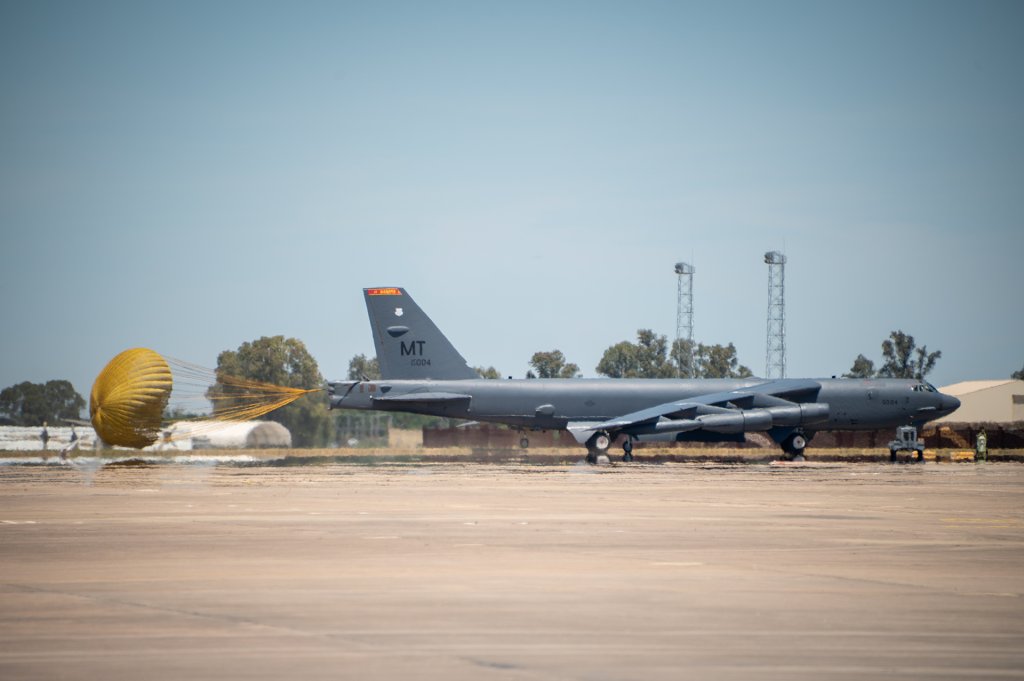
The first order of business is “a Combat Aircraft Parking Apron in Moron, Spain,” the recent pre-solicitation notice states. The plan calls for the “expansion of the Aircraft Parking Apron to provide nine (9) new aircraft parking spots in an unloaded condition, or three (3) new B-52 aircraft parking spots in a live ordnance [sic] loaded condition.”
The issue of being able to store live ordnance is critical, since extra space is needed for safety purposes in case of an unintended explosion.
“The current apron is not capable of supporting any loaded strategic bombers due to limiting factors associated with unrelated facilities violating inhabited building safety arcs,” the Air Force budget document explains.
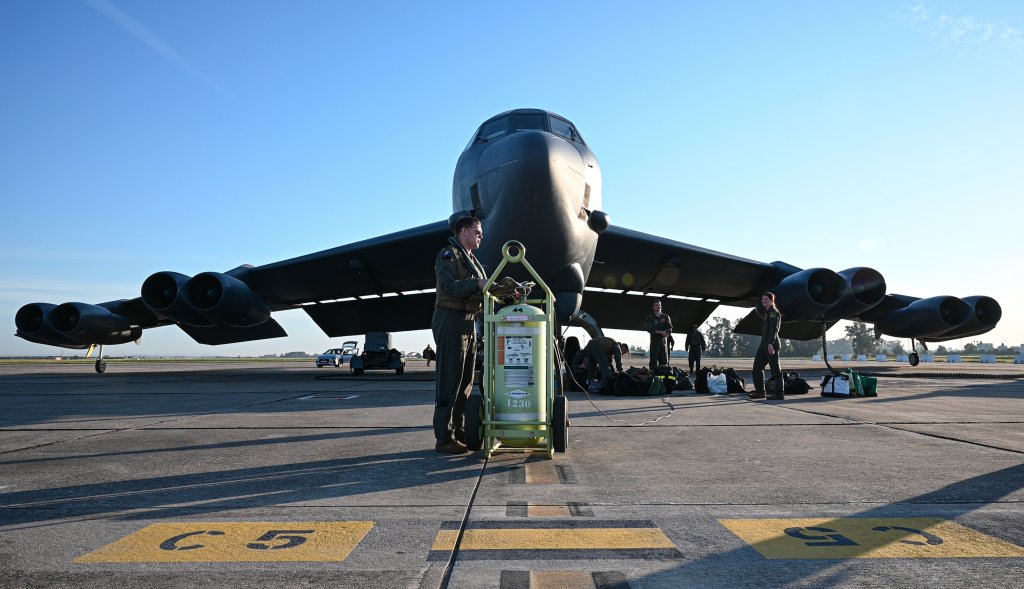
Beyond the new parking spaces, the planned expansion at Moron also calls for 10 new fuel pits and associated piping, the relocation of a Civil Engineer Storage Complex – including a new covered storage building and an open storage yard – and the extension of apron shoulders and access roads, among other items.
The Air Force sees these improvements as an imperative.
“This project is required to enhance readiness capabilities at Moron Air Base, Spain,” the Air Force Fiscal Year 2027 military construction budget documents note. “A key enabler for training and combat operations is substantial infrastructure, promoting a quick response and positioning of forces within prescribed response times. The expanded Strategic Bomber Aircraft parking apron will increase Moron Air Base’s ability to meet future mission requirements.”
If these improvements are not made, “[a]dequate airfield infrastructure will not be available to the DoW [Department of War] or its allied partners, and personnel, aircraft, and resources will lack key facilities and infrastructure to support expanded airfield operations for training and contingency environments,” the budget document warns. “This limitation will impede sortie generation and flying schedules, directly limiting airfield presence and impairing airfield capability and readiness. Therefore, responsiveness for bilateral and multilateral exercises and training missions would be compromised, directly limiting theater presence and impairing mission capability, readiness, and contingency support.”
The project has a price tag of between $25,000,000 and $100,000,000 and is “expected to be completed 1,038 calendar days after notice to proceed,” according to the pre-solicitation notice.
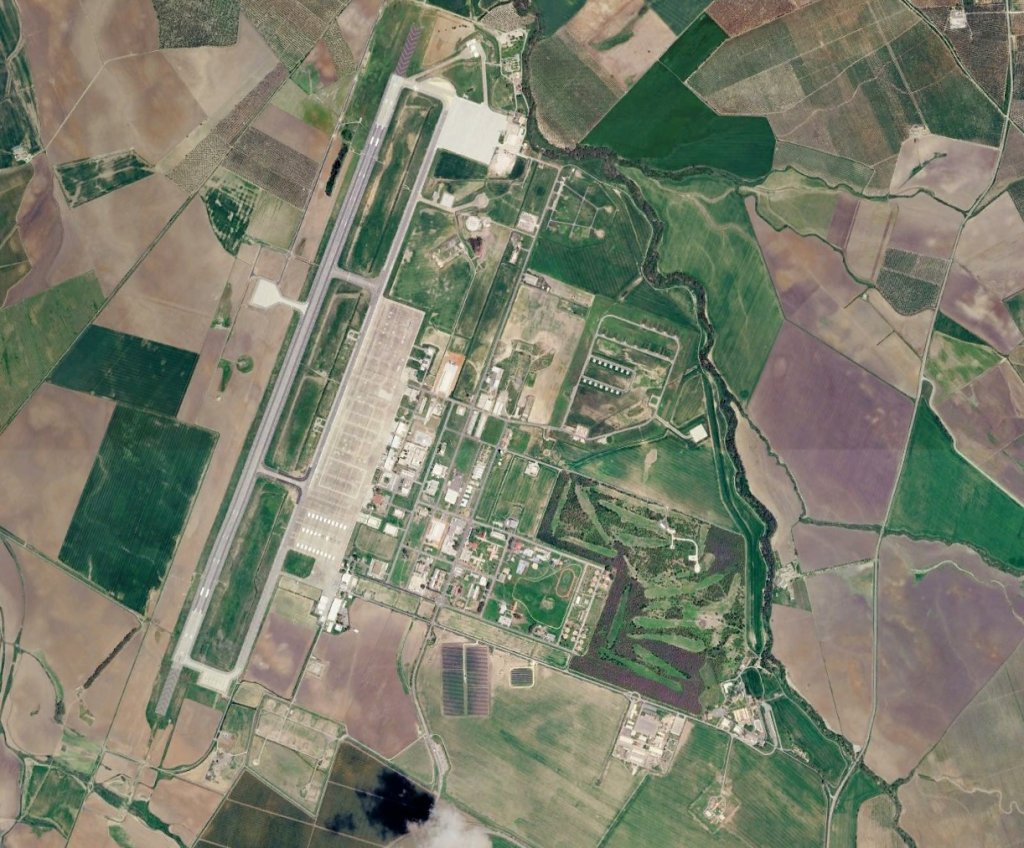
In addition, the Multiple Award Construction Contract (MACC) calls for new construction, renovations, alterations, demolition, repair work, and any necessary design to a wide range of U.S. assets in the region. This includes “airfield, industrial, infrastructure, administrative, training, retail, food service, munition storage, community support facilities and both vertical and horizontal construction in the Rota, Spain region or other areas managed by NAVFAC EURAFCENT, [Naval Facilities Engineering Systems Command/Navy Region Europe, Africa, Central],” the pre-solicitation notice explains. “This tool may also be used throughout the NAVFAC area of responsibility (AOR), worldwide.”
However, as the Air Force budget documents stress, the Moron project is a priority.
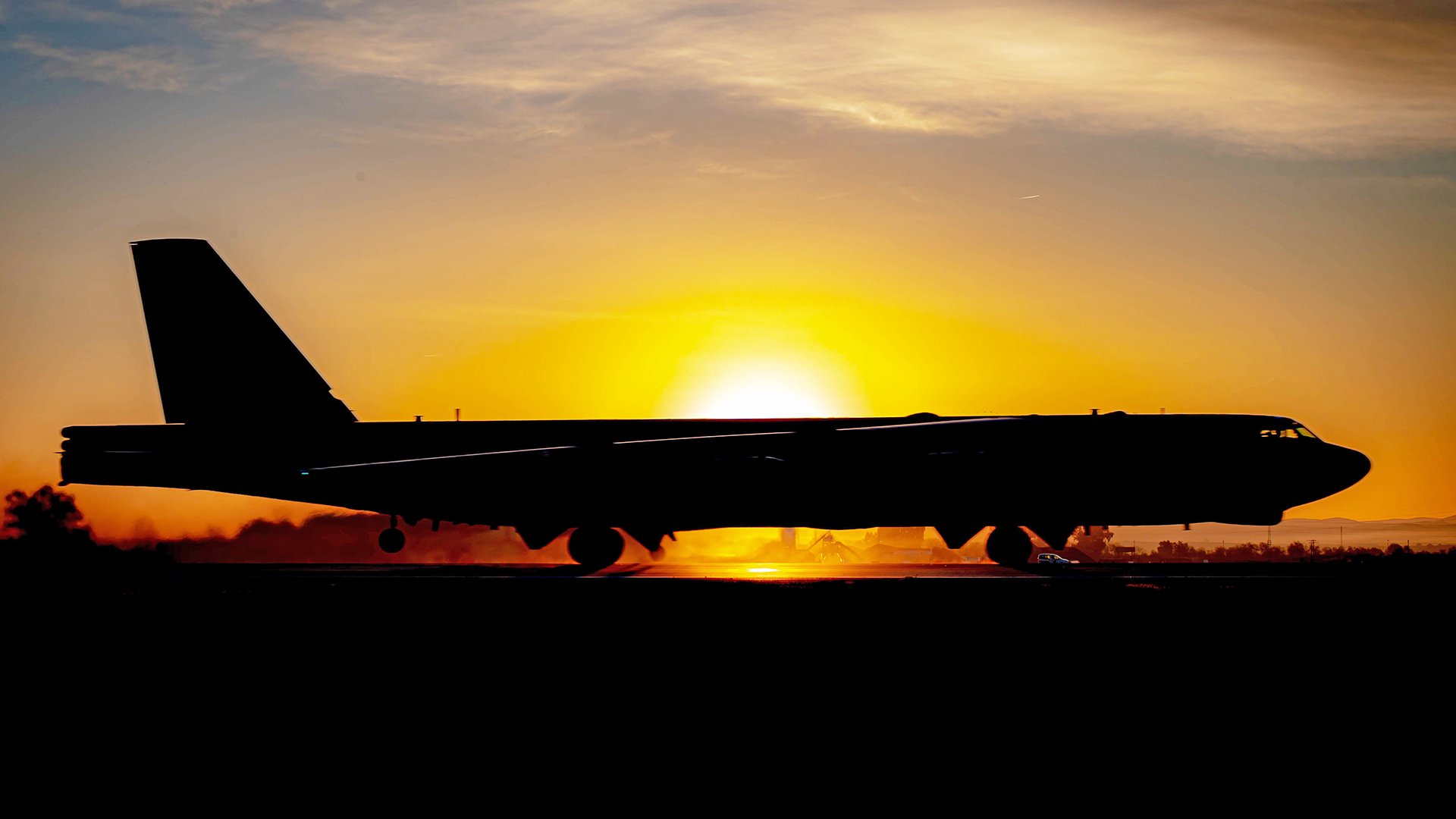
The installation has long played an important role for American airpower. It has served as a host for B-1B Lancer and B-52 Bomber Task Force missions and as a way station for a wide array of other aircraft from fighters to aerial refueling tankers.
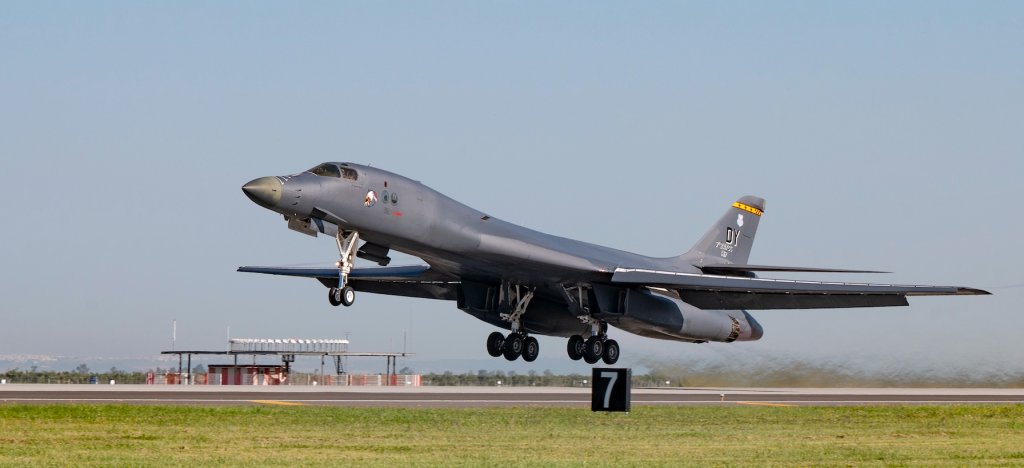
“Morón Air Base is a vital link in any operation moving east from the United States due to its strategic location close to the Mediterranean and the Middle East, its massive flight line, long runway, aircraft refueling systems and excellent weather,” according to the 496th Air Base Squadron, the facility’s host unit.
The facility played a key role in the run-up to Epic Fury, providing a midway point for a wide array of U.S. military aircraft.
In March, Spanish Prime Minister Pedro Sánchez, one of Europe’s most vocal critics of Epic Fury, refused to allow the U.S. to use its bases in his country for direct attacks on Iran. In addition, Sánchez denied permission for the U.S. to use Spanish airspace for Epic Fury, creating a logistics headache for American aircraft movements to the Middle East.
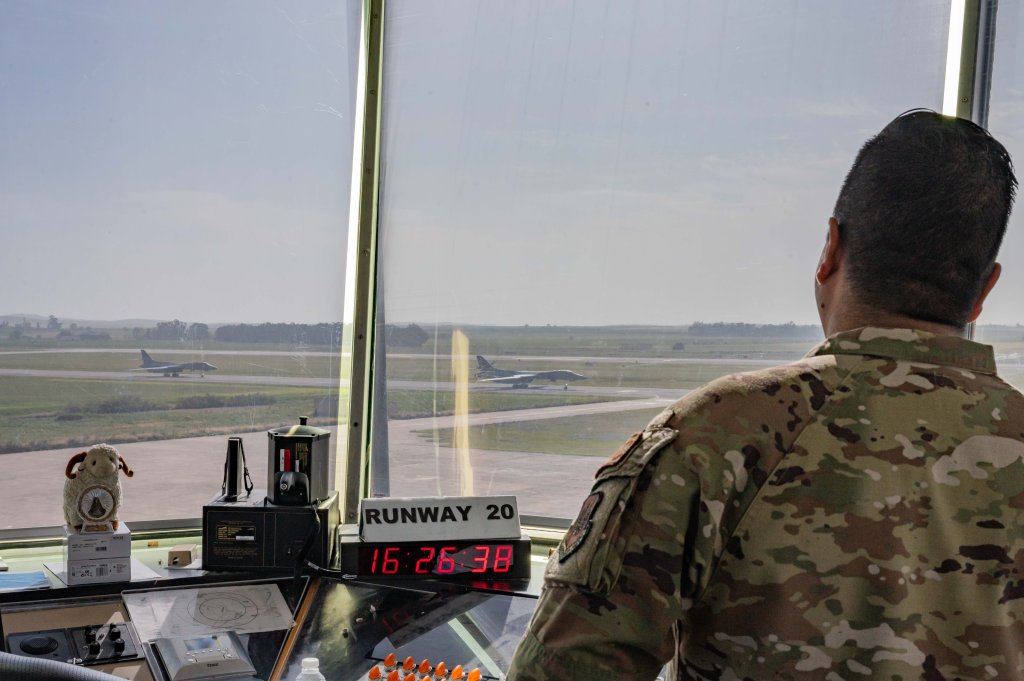
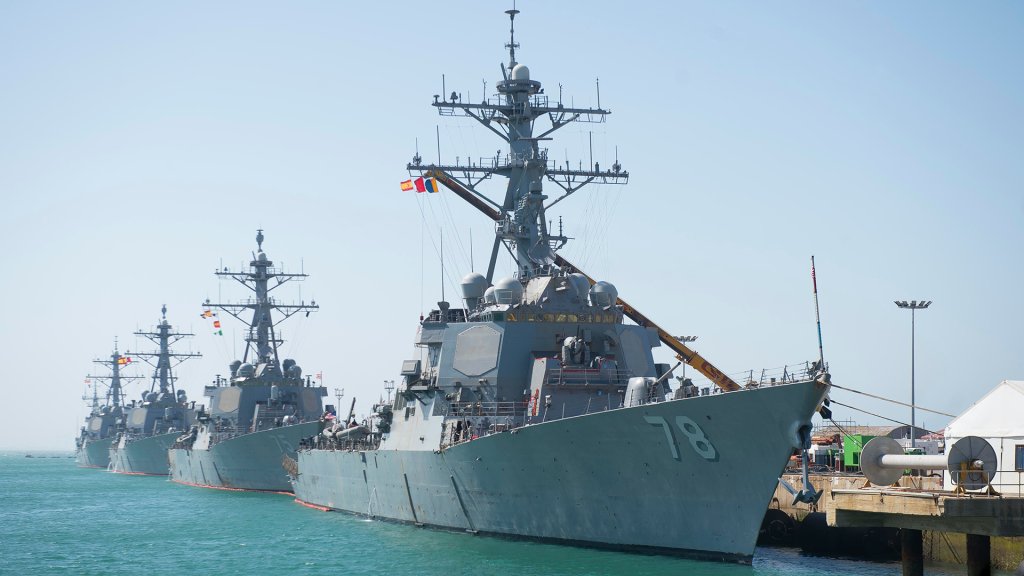
Sanchez’s decision affected Naval Station Rota, another major U.S. installation in that country. Rota supports the movement of personnel, equipment, fuel, and supplies through its three operational piers. It also has a 670-acre airfield capable of supporting U.S. Navy and Air Force aviation operations, and some of the largest weapons and fuel storage facilities in Europe.
Rota is also the home of Destroyer Squadron 60 (DESRON 60), one of three U.S. Navy destroyer squadrons permanently based outside the continental United States and the only one of these to call Europe home.
Sanchez’s moves set off U.S. President Donald Trump, who was already angered by Spain’s refusal to raise defense spending to 5% of GDP, previously agreed to at last year’s NATO summit. In March, the American leader called Spain “a terrible partner” and threatened to cut off trade.
The situation reached a critical juncture at the NATO Summit in Turkey in July, with Trump again threatening Madrid.
“We don’t want to do any trade business with Spain anymore… I’d like you to cut it off,” Trump fumed in Ankara to Treasury Secretary Scott Bessent during a press conference with NATO Secretary General Mark Rutte. “Spain is a terrible partner in NATO. They don’t participate; they don’t pay. I don’t want anything to do with Spain. Cut off all trade with Spain, please, including visits. Watch them, watch them come running back; oh, they’ll come running back.”
At a NATO summit, Trump said he had ordered Treasury Secretary Scott Bessent to cut off all trade with Spain, calling Madrid a 'terrible partner' in the alliance https://t.co/1E2VkRee2j pic.twitter.com/Vt2oNxW8QM
— Reuters (@Reuters) July 8, 2026
However, the rift eased after Sánchez agreed to bump up his country’s defense budget, Trump claimed.
On his way back to the United States after the summit, he told reporters aboard Air Force One: “I did have issues, and I still do. But Spain, they came back all the way today. Spain was very generous today.”
Asked what Spain had done, he said: “They honored a request for lots of payments, and if they didn’t, we wouldn’t have even talked to them.”
The two leaders displayed new-found cordiality for the cameras while sharing a box at the World Cup Final between Spain and Argentina at MetLife Stadium in New Jersey.

Though the Moron construction planning predated any of the political drama, as we noted earlier, the Pentagon is reviewing how many troops it will maintain in Europe and where it will base them. Undersecretary of War Elbridge Colby made a rare visit to NATO headquarters on Thursday to meet with officials to discuss the way forward. There, he pointed out that the Pentagon’s review is “designed to ensure that NATO is moving fast and irreversibly toward Europe leading, stepping up to take primary responsibility for the defense of Europe, stepping up to ensure our forces are postured for America’s global needs, and making sure that our access, basing, and overflight are clearly delineated and assured.”
There are a number of other military construction projects on the books for European installations, including about $4 billion earmarked for improvements to bases in the U.K. The largest planned expenditure is more than $1.6 billion for RAF Lakenheath, according to the Guardian. That’s where it is believed that the U.S. is poised to bring nuclear bombs back to the United Kingdom after nearly two decades.
Despite the geopolitical tiffs between the two nations, the investment in Moron and the larger construction package for Spain is a clear signal of how much the military and Congress value having access to bases in that country.
Contact the author: howard@twz.com
The post U.S. Expanding B-52 Bomber Capacity At Moron Air Base In Spain appeared first on TWZ.
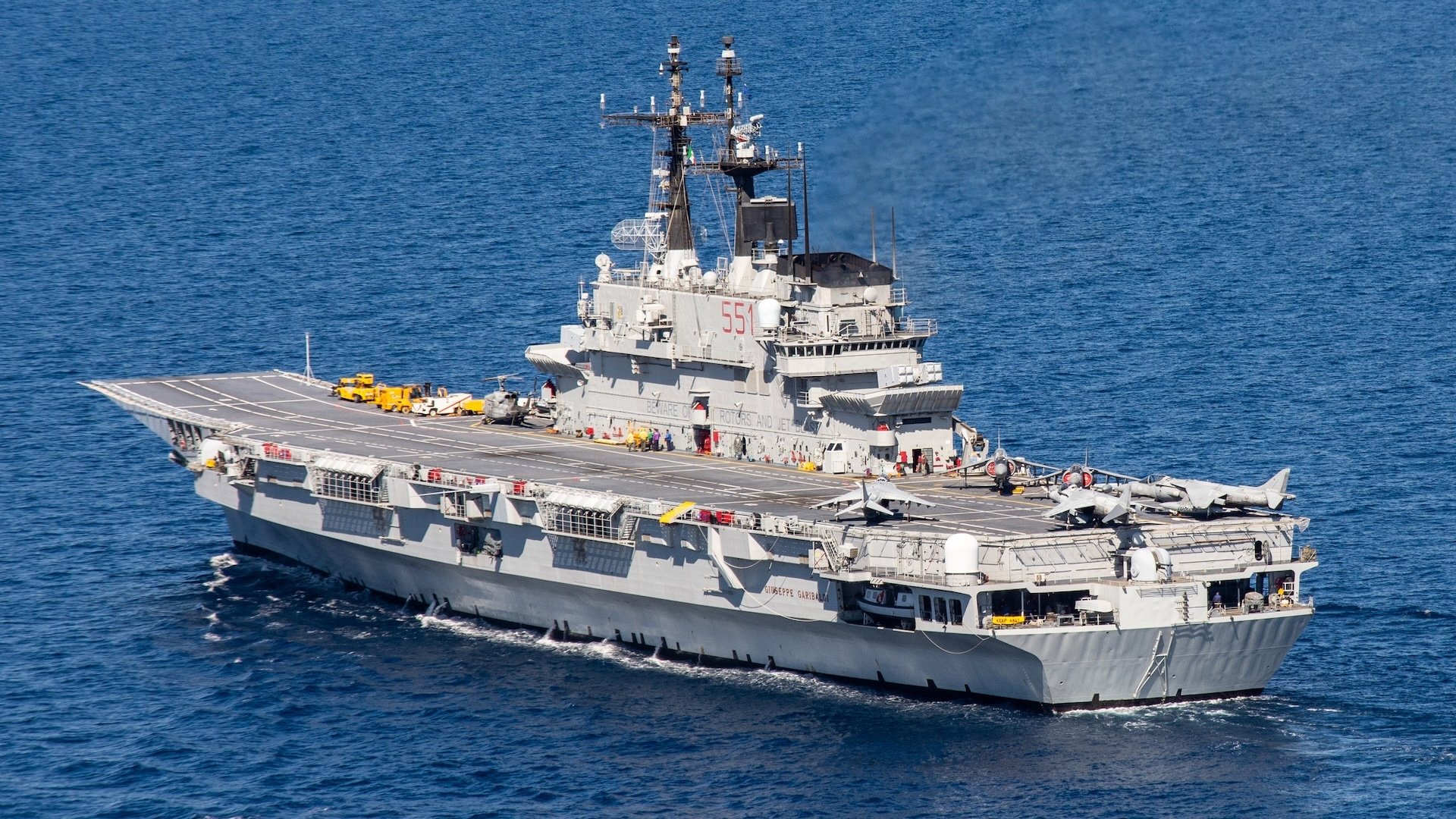
Indonesia is about to become the second Southeast Asian country to operate an aircraft carrier, nearly three decades after Thailand became the first with HTMS Chakri Naruebet. The latest addition to the region’s small carrier club is the former Italian Navy carrier Giuseppe Garibaldi, which departed Italy earlier this week, bound for Indonesia, where it will eventually become KRI Gajah Mada. Indonesian Navy Chief of Staff Admiral Muhammad Ali confirmed the ship’s departure on Tuesday.
Garibaldi is expected to spend more than 20 days making the journey from Italy to Indonesia, passing through the Suez Canal and Red Sea. Italian frigates are accompanying the carrier during the transit.
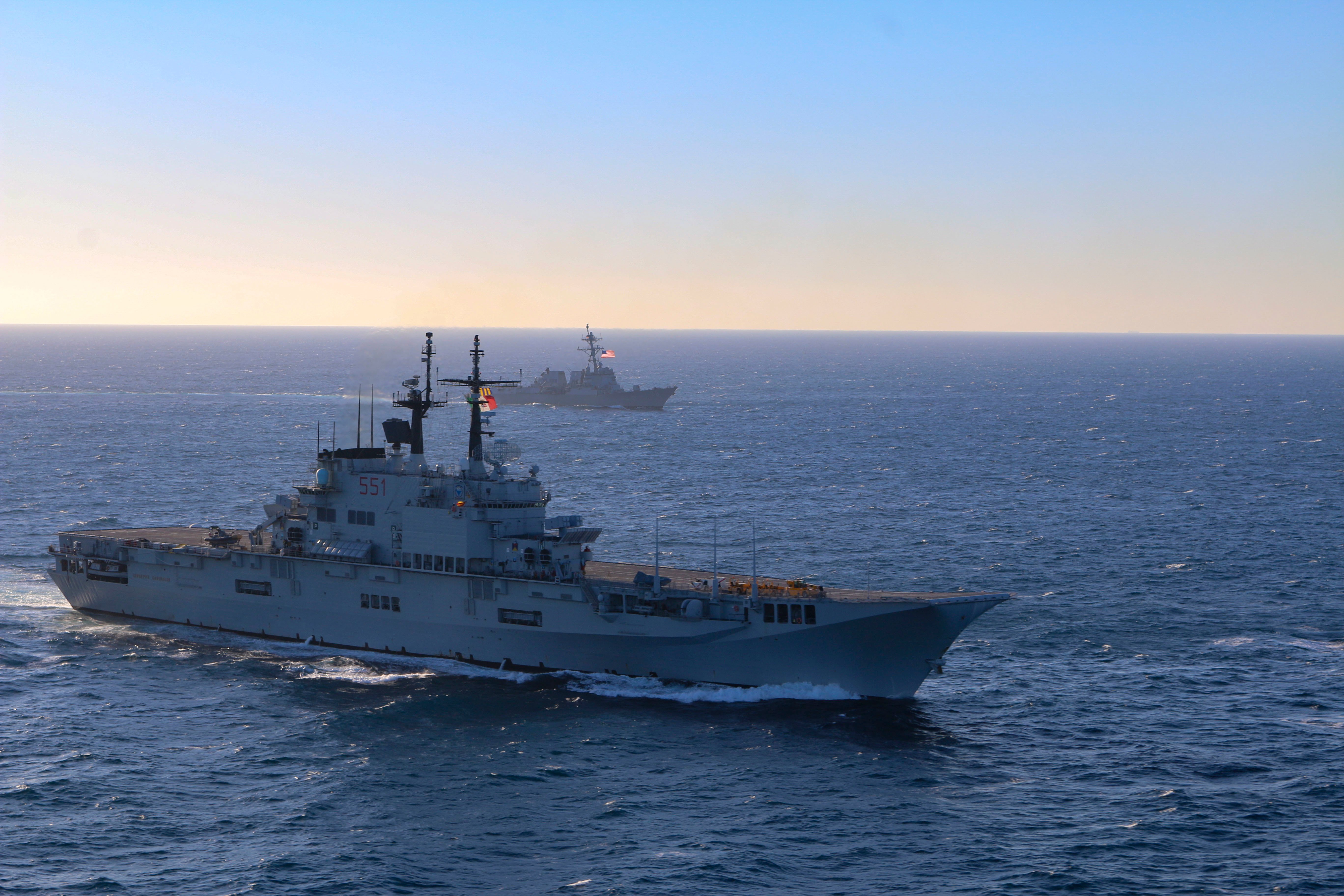
According to Admiral Ali, the ship is scheduled to reach Indonesia between September 15 and 20.
The carrier will retain its Italian identity throughout the voyage, sailing as Giuseppe Garibaldi under the Italian flag until the formal transfer, when it will be renamed and placed under Indonesian command.
Commissioned in 1985, Garibaldi was initially described as a “helicopter cruiser” before being redesignated as an aircraft-carrying cruiser in 1989 and receiving the Italian Navy’s AV-8B Harrier II jump jets. The ship subsequently served as Italy’s flagship and later shifted toward amphibious operations and command-and-control duties after the larger Cavour entered service.
At around 13,850 tons full load, Garibaldi combined a relatively compact aviation capability with a multirole weapon and sensor fit, at least in its early period of service. Its armament historically included two octuple launchers for Sea Sparrow/Aspide surface-to-air missiles, four Otomat Mk 2 anti-ship missiles, two 2 triple torpedo tubes, and three twin Oto Melara 40mm guns.
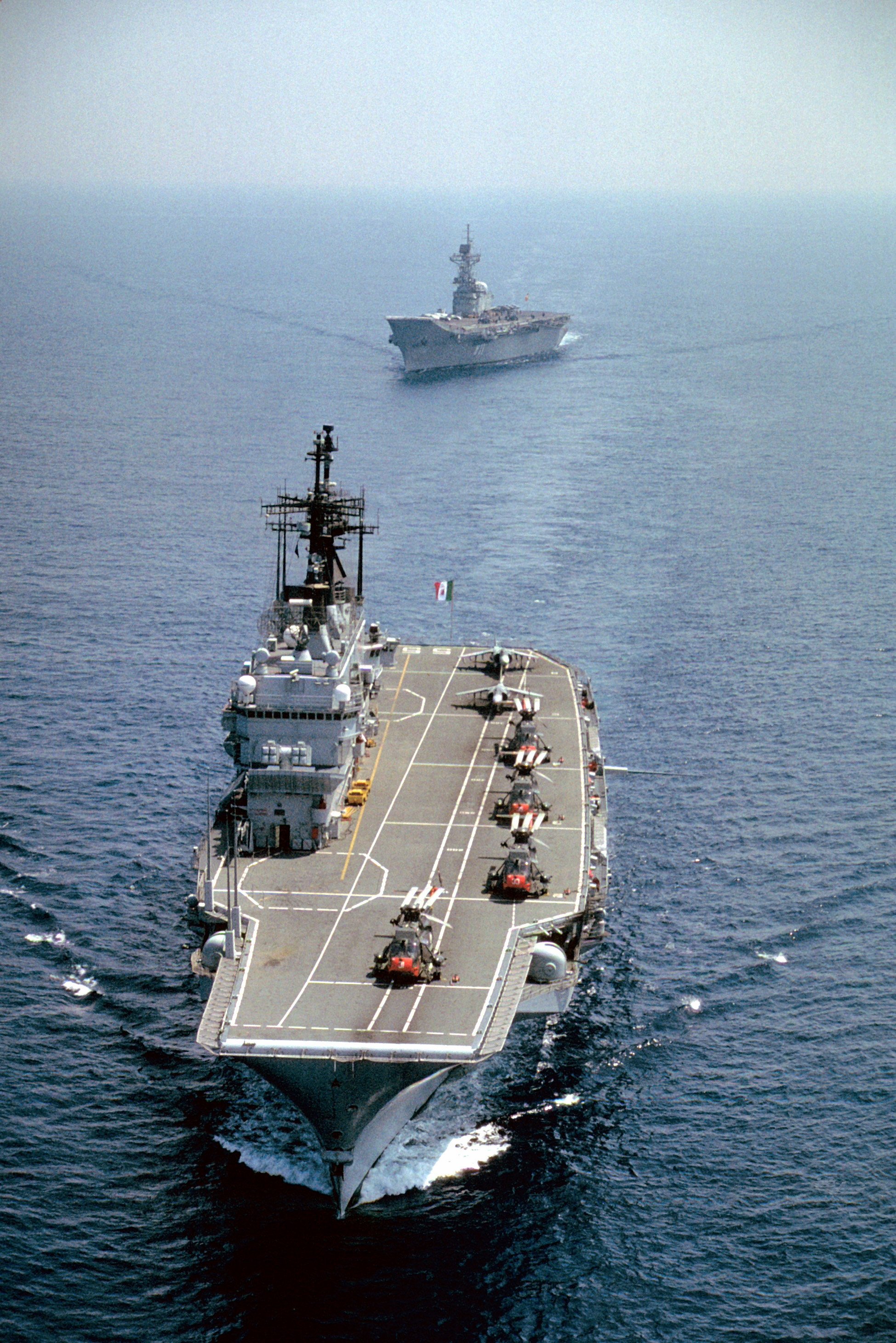
Indonesia is acquiring the ship through an intergovernmental grant arrangement rather than purchasing it through a conventional commercial transaction.
Although it has spent almost four decades in Italian service, the ship offers considerable flexibility, combining a large aviation facility with the ability to serve as a command and support platform.
Jakarta says it plans to use the ship primarily as a helicopter-capable aviation platform, with aircraft from the Indonesian Navy, Air Force, and Army expected to operate from its deck.
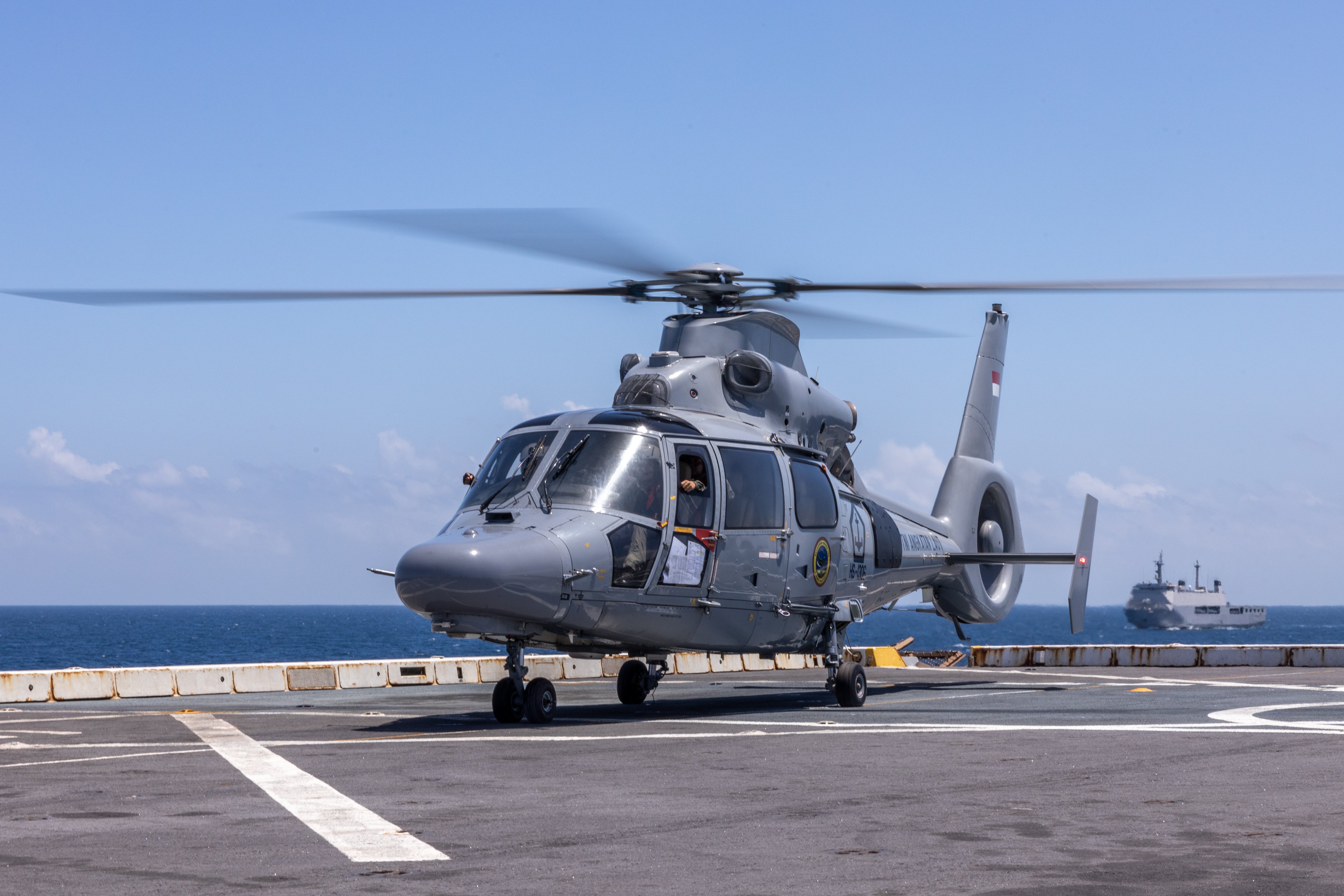
Ahead of the ship’s arrival, preparations have included establishing a training facility at Juanda Naval Air Station/International Airport in Sidoarjo, East Java. Here, the large outline of a carrier flight deck has been painted on an apron/helipad area on the southern side of the installation, to familiarize naval pilots and deck crews with carrier flight-deck procedures.

Thailand’s experience provides useful context here. When Chakri Naruebet entered service in 1997, it was configured to operate AV-8S Harriers as well as helicopters. The Harriers were subsequently retired, leaving the ship to perform a much broader range of roles, including helicopter operations, disaster response, training, and VIP duties. TWZ has previously examined that unusual evolution in detail.
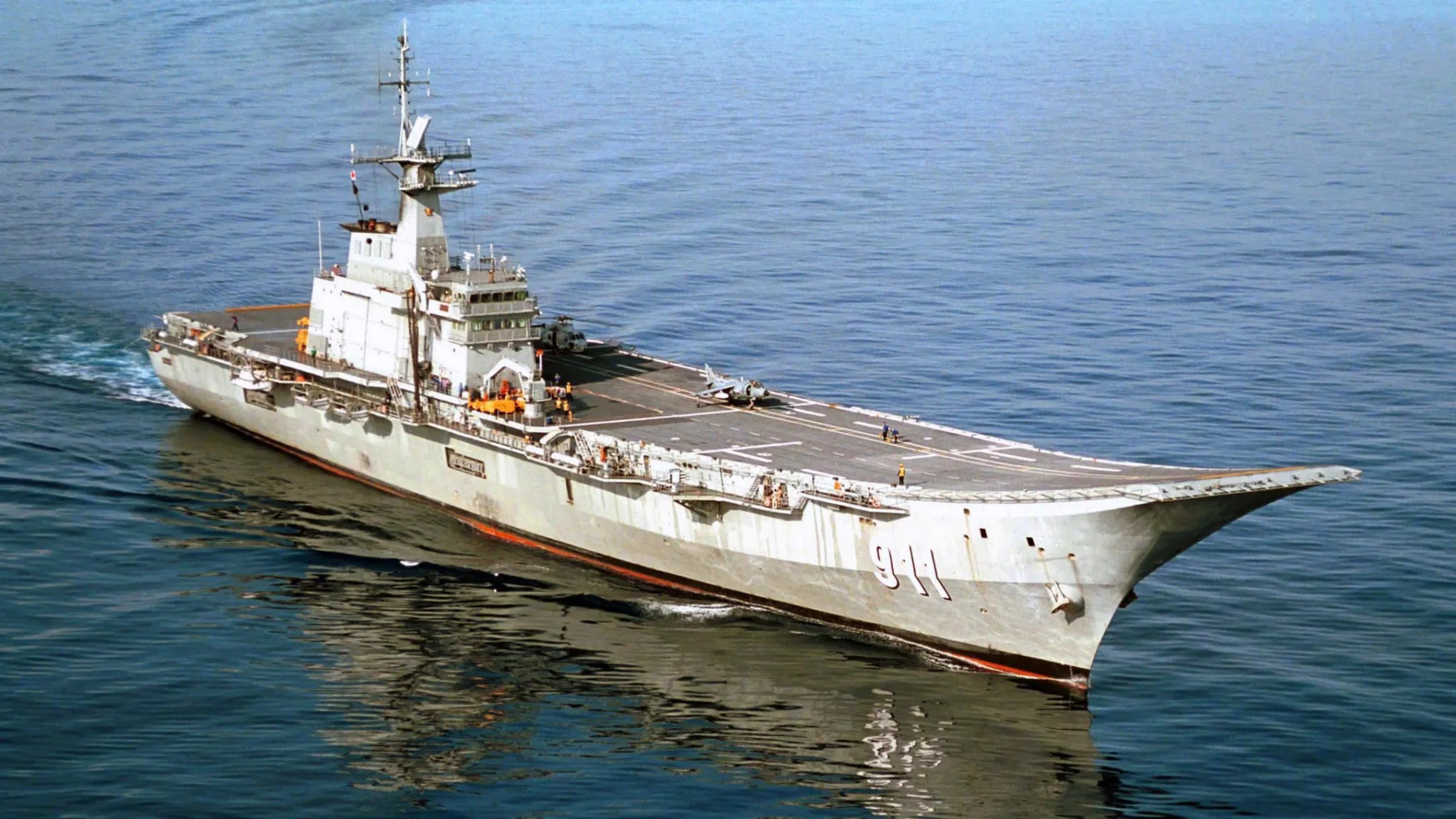
Once in service, Indonesia will likely operate the Gajah Mada as a mobile aviation base. This will allow helicopters to provide transport, surveillance, logistics, search and rescue, disaster relief, and potentially anti-submarine warfare and amphibious support capabilities over much greater distances than when operating from land bases, and in much larger numbers than operating from other Indonesian Navy vessels.
The potential mission set is particularly relevant for Indonesia, whose territory stretches across thousands of islands.
Occupying a strategic position at the southern end of the South China Sea, Indonesia is also locked in a maritime dispute with China, including incidents in which Chinese fishing boats accompanied by Chinese Coast Guard vessels have entered Indonesia’s exclusive economic zone in the South China Sea. The tense situation as regards China seems to be driving something of a defense spending spree in Indonesia, with high-profile acquisitions including French-made Rafale fighters and submarines.
Meanwhile, in peacetime, disaster response is also a significant consideration for Indonesia. The Gajah Mada will be able to bring helicopters, personnel, supplies, and command-and-control capabilities to areas where local infrastructure has been damaged or where access is otherwise difficult.
The ship is also likely to take part in maritime security missions and regional deployments including multinational training exercises.
There is potential for Indonesia to adapt the warship for drone operations too, something that Italian shipbuilder Fincantieri has previously proposed. While Indonesia has not announced such a capability as part of the ship’s initial configuration, it has acquired Turkish-made Bayraktar TB3 drones, which have demonstrated operations from carrier decks.
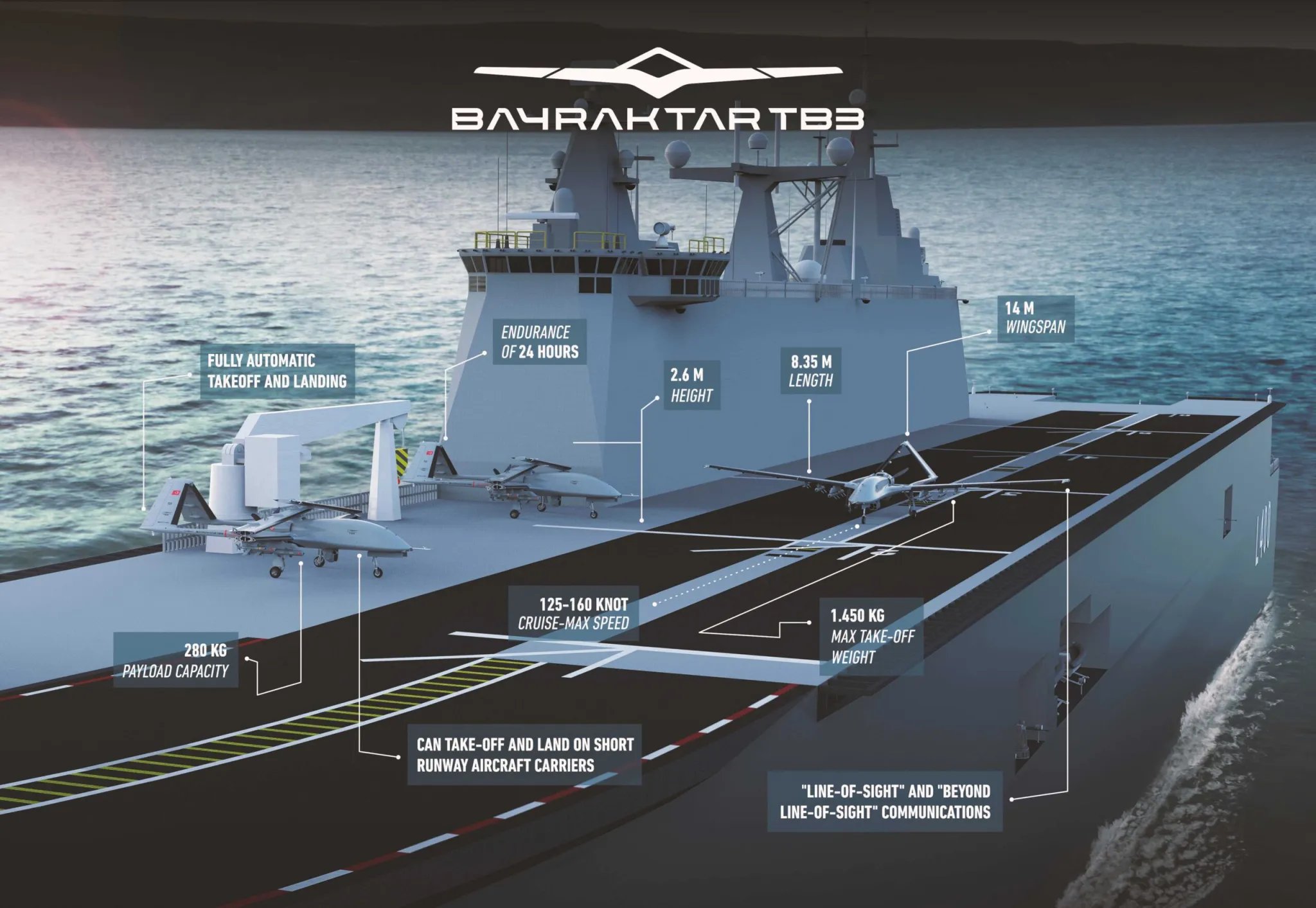
As well as Turkey’s Anadolu, which has evolved into a platform for operating drones after Turkey lost access to the F-35B program, other navies are similarly experimenting with integrating uncrewed aircraft into helicopter-carrier-sized ships, reflecting a broader shift toward using large flight decks for mixed crewed and uncrewed aviation. The trend includes experiments with fixed-wing drones on amphibious assault ships, including in China and the United States.
For Indonesia, a future combination of helicopters and drones could provide the Gajah Mada with persistent surveillance and potentially strike capabilities without requiring the country to develop a conventional fixed-wing carrier air wing.
How extensively Indonesia eventually makes use of any of its capabilities will depend on its ability to sustain the ship and build the associated aviation infrastructure and expertise.
The Indonesian Navy is constructing the warship’s future base in Lampung, on the southern tip of the Indonesian island of Sumatra. The facility is expected to be finished around the time the ship arrives and operational by the end of September.

The ship’s formal transformation into an Indonesian warship is planned for September 25. A commissioning and flag-changing ceremony is scheduled for that date, with President Prabowo Subianto expected to attend and officiate.
At that point, the carrier will become KRI Gajah Mada, taking its name from the famous Majapahit-era military commander and statesman.
The Navy plans to include the ship in celebrations marking the 81st anniversary of the Indonesian National Defense Forces, or TNI, in October.
Thailand’s experience with the Chakri Naruebet, which only very rarely goes to sea for any length of time, underscores the fact that buying a carrier is the relatively easy part. Creating a sustainable carrier aviation capability around it is much more challenging.
Nevertheless, the Gajah Mada gives Jakarta something it has never previously possessed: a large, dedicated maritime aviation platform capable of carrying helicopters from multiple services. As such, it could prove useful across a wide spectrum of missions.
Ciontact the author: thomas@thewarzone.com
The post Indonesia’s First Aircraft Carrier Is On Its Way From Italy appeared first on TWZ.
On 24 August, the Commission adopted its proposal for the 2027 fishing opportunities for the Baltic Sea. The proposal sets the total allowable catches (TACs) and quotas for the ten EU-managed fish stocks in the Baltic Sea: Bothnian herring, central Baltic herring, Gulf of Riga herring, sprat, plaice, Main Basin salmon, Gulf of Finland salmon, western Baltic cod, eastern Baltic cod, and western Baltic herring.
It responds to scientific assessments that highlight the critical state of several fisheries and allows for continuing the rebuilding trajectories for relevant stocks.
The Commission proposes to increase fishing opportunities for Bothnian herring (+3%), central Baltic herring (+49%), Gulf of Riga herring (+11%) and sprat (+44%). Catches of plaice, salmon in the Main basin and in the Gulf of Finland would remain unchanged compared to this year. In addition, based on the latest reporting by Member States, the Commission proposes to reduce the allocations of unavoidable by-catches – fish unwantedly caught by fishers - of western Baltic cod (-88%), eastern Baltic cod (-51%) and western Baltic herring (-45%).
These proposed TACs are based on the best available scientific advice from the International Council on the Exploration of the Seas (ICES) and follow the Baltic Sea multiannual management plan adopted in 2016 by the European Parliament and the Council.
Cod
For eastern Baltic cod, the Commission has proposed to keep a catch limit for unavoidable by-catches and all the accompanying measures in place already for several years. However, since the stock continues to be in bad condition, the by-catch limit should be adjusted, based on the number of by-catches reported by each Member State in 2025. Despite the measures taken since 2019, when scientists first warned about the poor status of cod, the situation has not improved.
The situation is similar for western Baltic cod. The Commission therefore proposes to adjust the by-catch TAC to address a deteriorated condition of the stock, and to keep all the accompanying measures.
Herring
The stock size of western Baltic herring remains significantly below minimum levels. The Commission proposes removing the exemption for small-scale coastal fisheries and adjusting the TAC to unavoidable by-catches only.
The stock size of Bothnian herring is larger than previously estimated but still below sustainable levels. With the maximum catch levels contained in the ICES advice, the stock size would continue to decrease. In order to continue the rebuilding trajectory, the Commission proposes a TAC level which keeps the fishing mortality rate stable and increases the stock size. The Commission also proposes to keep the three-month spawning closure – restricting fishing during reproduction periods - in shallow coastal waters.
The stock size of central Baltic herring has increased but remains below sustainable levels. ICES forecasts a positive stock development due to high estimated recruitment. In order to continue the rebuilding trajectory, the Commission proposes a cautious approach and to set the TAC at the level which keeps the fishing mortality rate stable. In addition, the Commission proposes to keep the three-month spawning closure in shallow coastal waters.
Herring in the Gulf of Riga is healthy, and the Commission proposes to set the catch limits according to the maximum advised by ICES.
Plaice
Scientific advice recommends a slight increase, but the Commission proposes to keep the TAC unchanged due to the bad condition of individual fish. In addition, new measures for flatfish fisheries, including plaice, entered into force last year. These measures will help improve the sustainability of flatfish fishing, notably by reducing unwanted cod by-catches – which still occur frequently.
Sprat
After several difficult years the size of the sprat stock has increased significantly due to recent very high reproduction rates. ICES estimates that the stock will continue to increase. The Commission therefore proposes setting the TAC at the advised maximum and to discontinue the three-month spawning closure.
Salmon
ICES did not publish a new advice for 2027. The Commission therefore proposes to maintain the (by-catch) TAC levels and the accompanying conditions for the two salmon TACs, with the exception of recreational fishing on reared salmon which should stop.
Next steps
Based on these proposals, EU countries will take a final decision to determine the maximum quantities of the most important commercial fish species that can be caught in the Baltic Sea. The Council will examine the Commission's proposal in view of reaching a political agreement during its meeting on 26-27 October 2026. The formal adoption by the Council will follow later in the course of November.
Background
The fishing opportunities proposal is part of the European Union's approach to adjust the levels of fishing to long-term sustainability targets, called maximum sustainable yield (MSY), as agreed by the European Parliament and the Council in the Common Fisheries Policy. The Commission's proposal is also in line with the Multiannual Plan for the management of cod, herring and sprat in the Baltic Sea and with the policy intentions expressed in the Commission's Communication 'Sustainable fishing in the EU: state of play and orientations for 2027'.
The current situation is difficult for fishers as stocks are subject to various pressures which have led to the degradation of the Baltic Sea's biodiversity, such as high nutrient inputs and persistently high levels of contaminants. These stressors, in part, stem from failures to implement EU legislation. Furthermore, the scientific advice also recognises the impact of misreporting of fishing, without being able to quantify it. Misreporting potentially leads to hidden overfishing.
The Baltic Sea is the most polluted sea in Europe. It is affected by biodiversity loss, climate change, eutrophication, past and probably current hidden overfishing, and elevated levels of contaminants such as pharmaceuticals and litter. Concerned about this dire situation, the European Commission organised several editions of the Our Baltic Conferences in 2020, 2023 and 2025 to bring together Ministers from the eight EU countries surrounding the Baltic Sea (Denmark, Germany, Estonia, Latvia, Lithuania, Poland, Finland and Sweden).
For more information
Proposal fishing opportunities Baltic Sea 2027
Table: Overview of TAC changes 2026-2027 (figures in tones except for salmon, which is in number of pieces)
| 2026 | 2027 | |
| Stocks and ICES fishing zones; subdivision | Council agreement (in tonnes & % change from 2025 TAC) | Commission proposal (in tonnes & % change from 2026 TAC) |
| Western Cod 22-24 | 266 (0%) | 31 (-88%) |
| Eastern Cod 25-32 | 430 (0%) | 211 (-51%) |
| Western Herring 22-24 | 788 (0%) | 437 (-45%) |
| Bothnian Herring 30-31 | 55 869 (-16%) | 57 308 (+3%) |
| Central Herring 25-27, 28.2, 29, 32 | 96 463 (+15%) | 143 860 (+49%) |
| Riga Herring 38.1 | 34 367 (-17%) | 28 183 (+11%) |
| Sprat 22-32 | 201 975 (+45%) | 291 590 (+44%) |
| Plaice 22-32 | 10 973 (-3%) | 10 973 (0%) |
| Main Basin Salmon 22-31 | 25 537 (-27%) | 25 537 (0%) |
| Gulf of Finland Salmon 32 | 10 232 (+1%) | 10 232 (0%) |
* Updated on 25 August 2026, at 14:16 CEST
Two people have died and at least nine suffered burn injuries during the wildfire that broke on the island of Salamina close to Athens in the early afternoon on Sunday, August 16, 2016. The fire allegedly broke out in two fronts in Peristeria and Selinia within 15 minutes. According to initial information, the first fire […]
The post Two dead, nine injured from the wildfire in Salamina island near Athens appeared first on Keep Talking Greece.
Port authorities imposed a sailing ban from the ports of Lavrio and Rafina in south-eastern Attica on Friday, August 14, 2026, while some ferry itineraries from the port of Piraeus were cancelled on Friday morning due to gale-force winds. Mostly affected by the strong winds are the islands in the Aegean Sea and Crete. Modifications […]
The post Sailing ban, ferry itineraries modifications due to gale-force winds appeared first on Keep Talking Greece.
Greek authorities imposed a sailing ban from the ports of Rafina and Lavrio, eastern Attica, as gale-force winds sweeping across the Aegean Sea also on Friday, July 31, 2026, and ferry services have been disrupted. The sailing ban comes into effect after some ferries has problems to anchor at islands ports and as thousands flock […]
The post Gale-force winds disrupt ferry services in the Aegean Sea appeared first on Keep Talking Greece.
