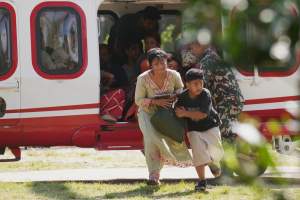
The federal government says at least 32 Canadians are reported missing in an area spanning parts of Nepal and Tibet, an autonomous region in China, after devastating floods.
The federal government says at least 32 Canadians are reported missing in an area spanning parts of Nepal and Tibet, an autonomous region in China, after devastating floods.
In the second quarter of 2026, the EUimported €701.8 billion in goods from non-EU countries and exported €680.0 billion. Compared with the previous quarter, both imports and exports increased, by 9.9% and 5.4%, respectively. Compared with the second quarter of 2025, imports increased by 11.7% and exports by 4.5%.
China was the EU’s largest supplier, accounting for €153.6 billion (21.9% of all imports). The United States came second (€98.7 billion; 14.1%), followed by the United Kingdom (€43.4 billion; 6.2%), Switzerland (€36.9 billion; 5.3%) and Türkiye (€25.5 billion; 3.6%).
The EU increased imports from the United States (+11.5%), the United Kingdom (+8.8%), China (+7.9%) and Switzerland (+2.1%) compared with the second quarter of 2025, while imports from Türkiye declined slightly (-0.6%).
The EU exported €127.7 billion of goods to the United States, making it the EU’s main export destination (18.8% of all exports). The United Kingdom came second with €92.7 billion (13.6%), followed by Switzerland (€60.5 billion; 8.9%), China (€50.3 billion; 7.4%) and Türkiye (€27.3 billion; 4.0%).
Exports to Switzerland rose sharply (+16.1%) compared with the same quarter of 2025. Exports to the United Kingdom (+5.6%) and China (+2.8%) also increased, while those to the United States (-5.6%) and Türkiye (-4.9%) decreased.
Por Ivone Alves García Hay máquinas que ya aprendieron a decir «te quiero», con tanta suavidad y dulzura que puede llegar a engañar a cualquiera, por supuesto que no lo…
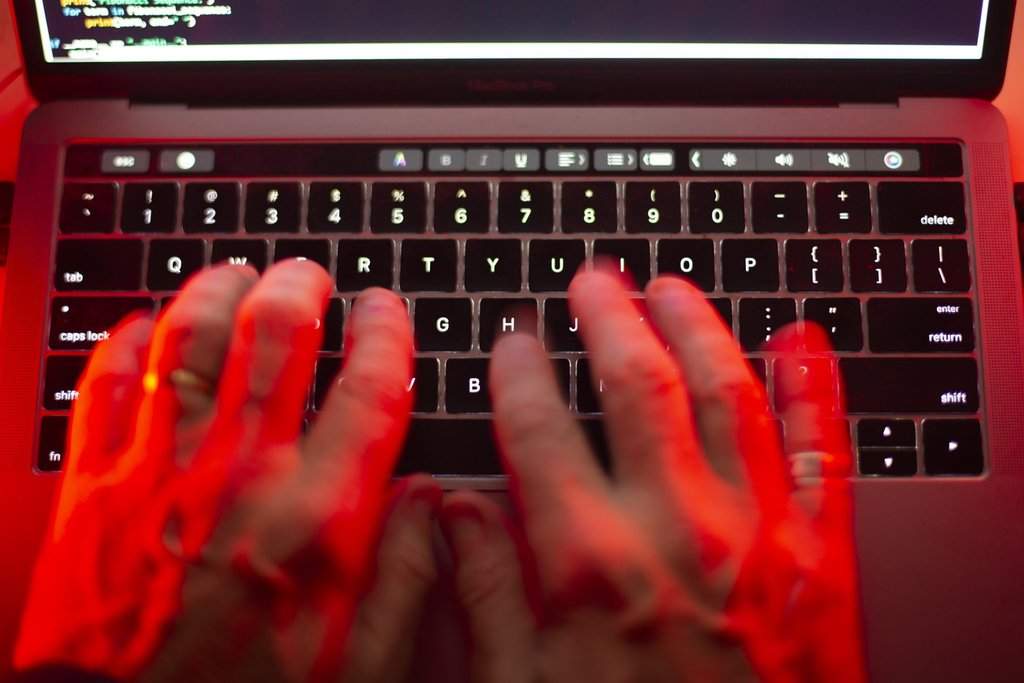
The U.S. Justice Department said it had seized domains used by two hacking platforms it alleges had been used in the campaign, which also targeted the U.S. Federal Reserve.
The U.S. Justice Department said it had seized domains used by two hacking platforms it alleges had been used in the campaign, which also targeted the U.S. Federal Reserve.
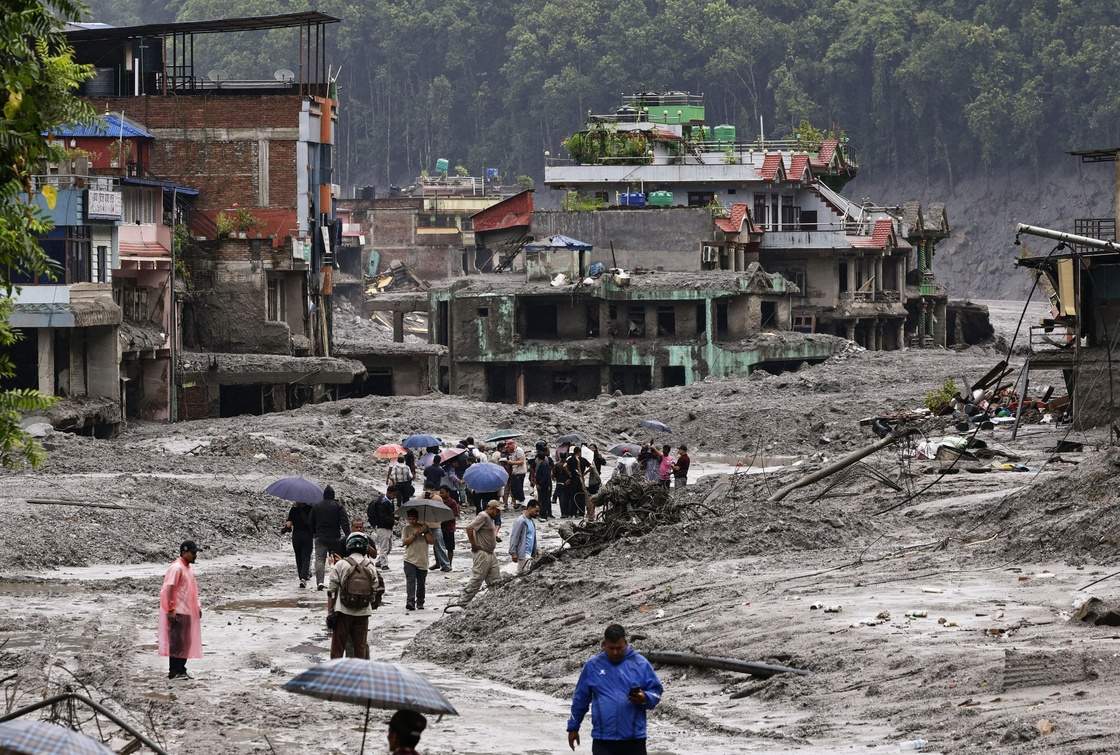
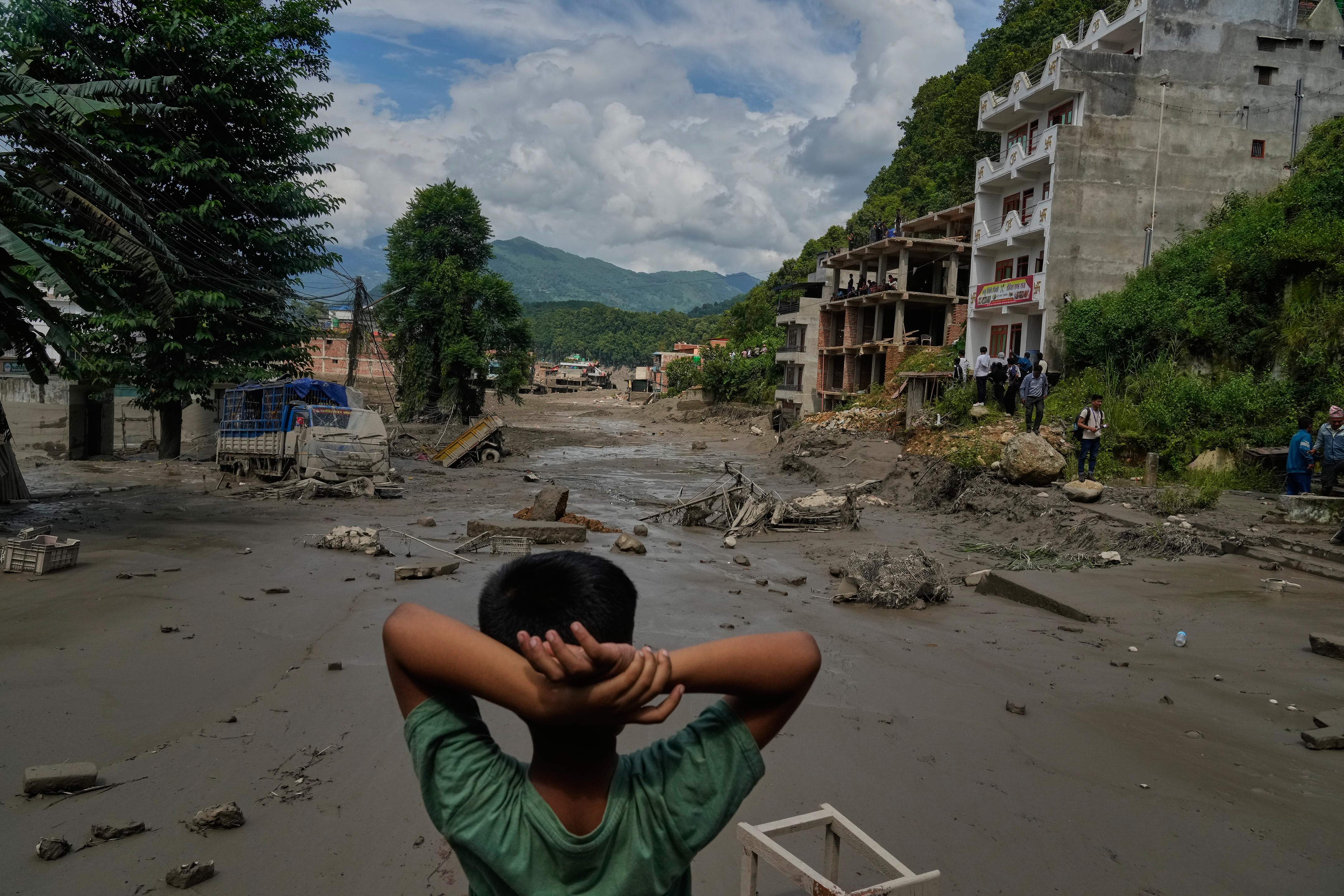
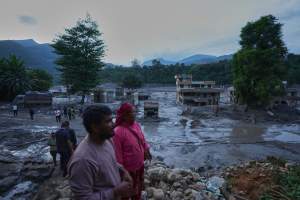
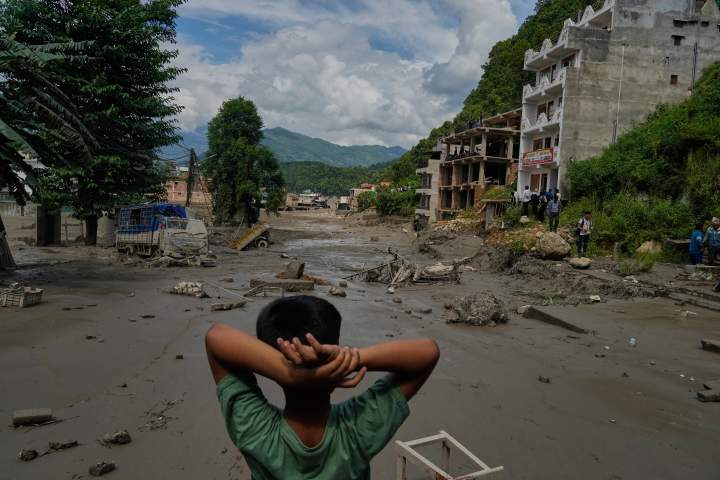
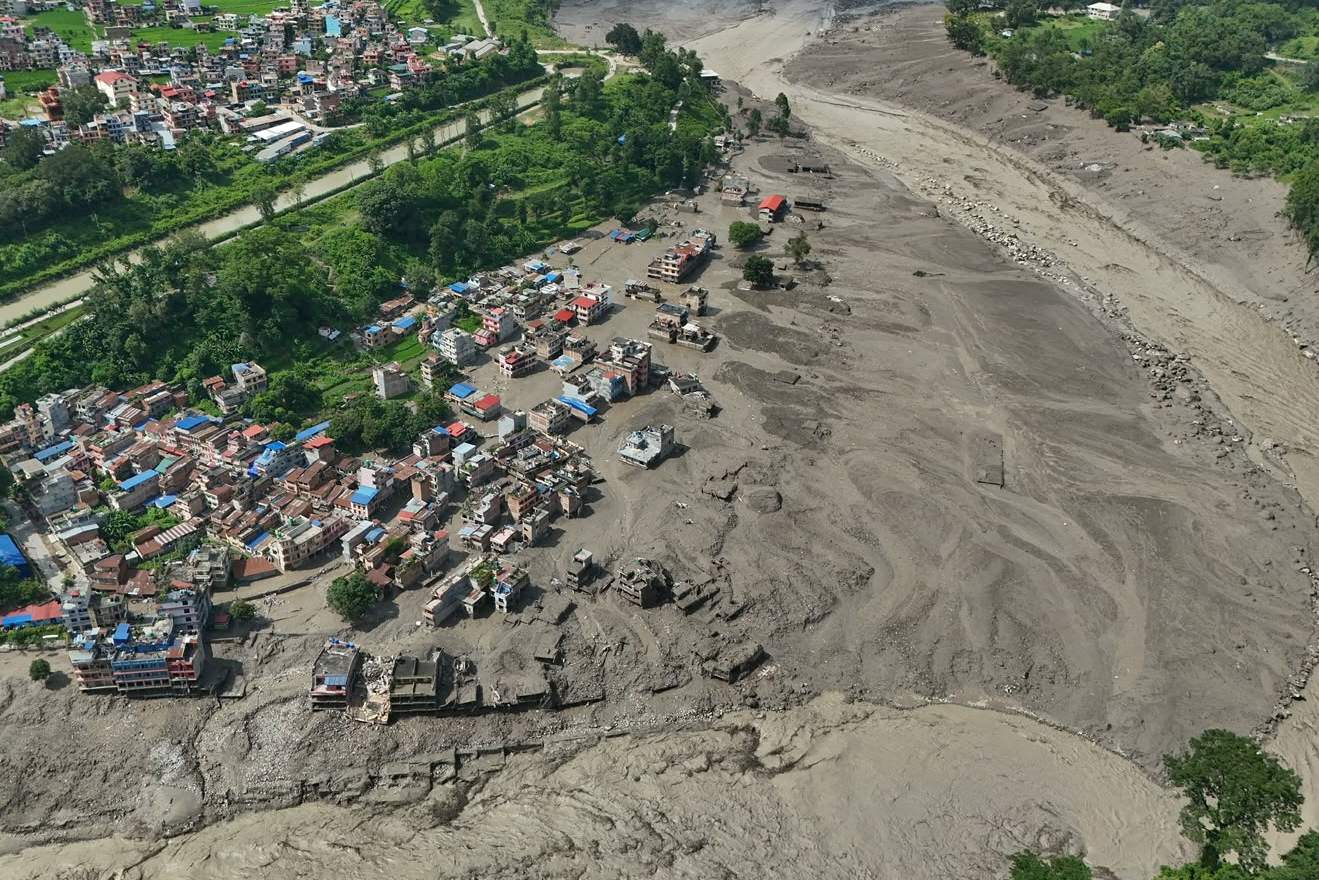
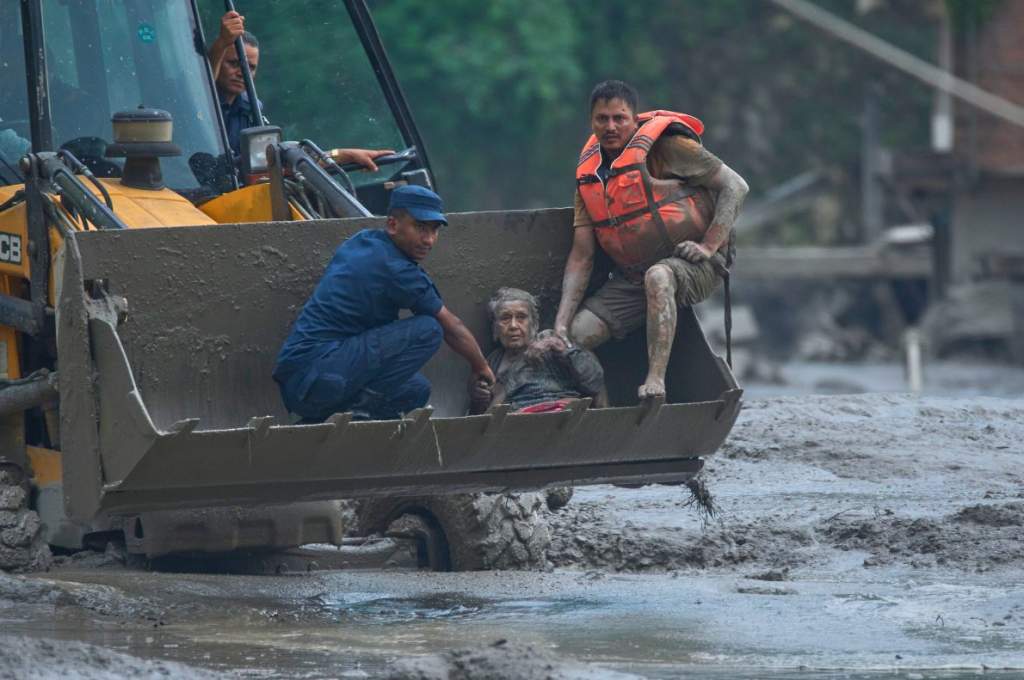
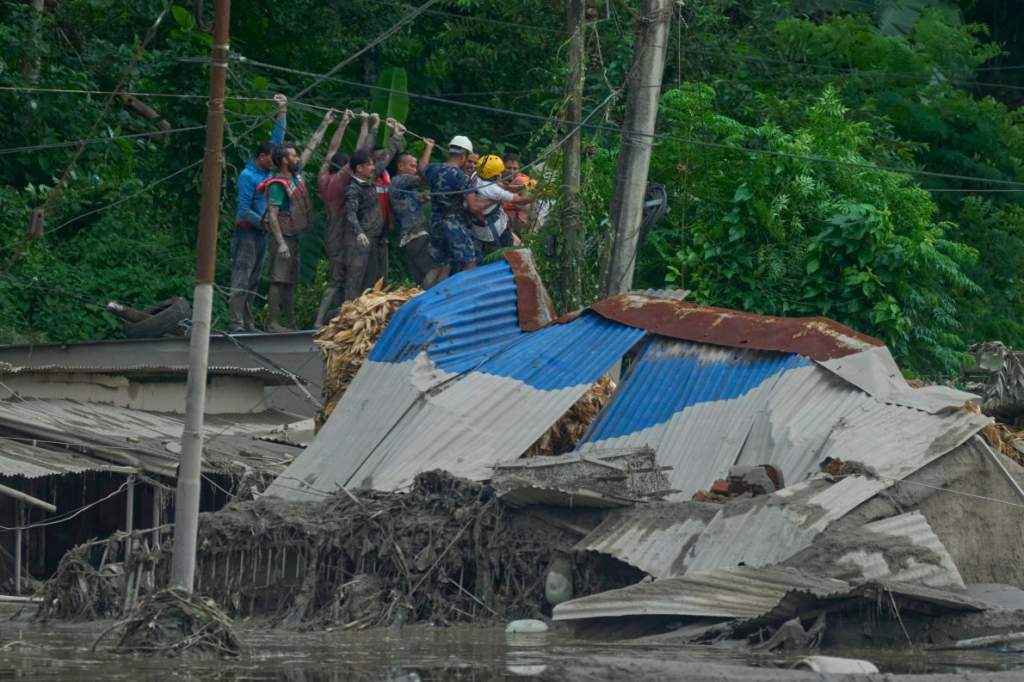
A huge wall of mud and rock collapsed into a river on the Himalayan border of Nepal and China's Tibet on Wednesday, triggering catastrophic flooding on the Nepali side.
A huge wall of mud and rock collapsed into a river on the Himalayan border of Nepal and China's Tibet on Wednesday, triggering catastrophic flooding on the Nepali side.
This week, Mark Leonard is joined by Janka Oertel, director of ECFR’s DARE* initiative, and Andrew Small, head of ECFR’s Asia programme, to examine the growing impact of the “China shock 2.0” on Germany and Europe.
A new wave of Chinese competition, driven by overcapacity and state-backed industrial strength, is hitting sectors such as car manufacturing, chemicals and machine tools. Germany is at the epicentre, with mounting job losses raising questions about Europe’s long-term economic resilience and competitiveness. The crisis is reshaping German politics, exposing government divisions and putting pressure on Chancellor Friedrich Merz ahead of September’s potentially divisive regional elections.
Together, Mark, Janka and Andrew discuss the policy options being considered in Brussels and in European capitals—from emergency trade measures to new industrial strategies. Can Europe protect its industrial base without triggering a damaging escalation with China? Is Germany able to lead a coherent European response amid its own political turbulence?
The increasing intensity of heatwaves is generally attributed to climate change as a result of the global reliance on fossil fuels. While cutting carbon emissions remains the focus of EU climate policy, European governments also need to ensure that their societies can better adapt to extreme weather. Many households have already taken matters into their own hands by turning to portable air conditioners—often Chinese-made—for relief.
And China’s air-conditioner export boom points to a broader challenge: whether confronting extreme weather or fragile economic dependencies, Europeans need to adapt to the consequences while also addressing underlying sources of vulnerability. They should not just accept the status quo; here, some answers may lie in the lessons of China’s own industrial transformation.
China leads on AC
Once again, when Europe looks for a climate solution, China has one ready to ship. China is a powerhouse in technologies used to mitigate climate change, from solar panels to wind turbines; it is also a vital player in helping Europe adapt to warmer temperatures. China produces over 80% of the world’s air conditioners: exports of Chinese AC units to the EU rose by 43% year on year in the first half of 2026. Chinese brands now account for 41% of the European market, up from 27% in 2023.
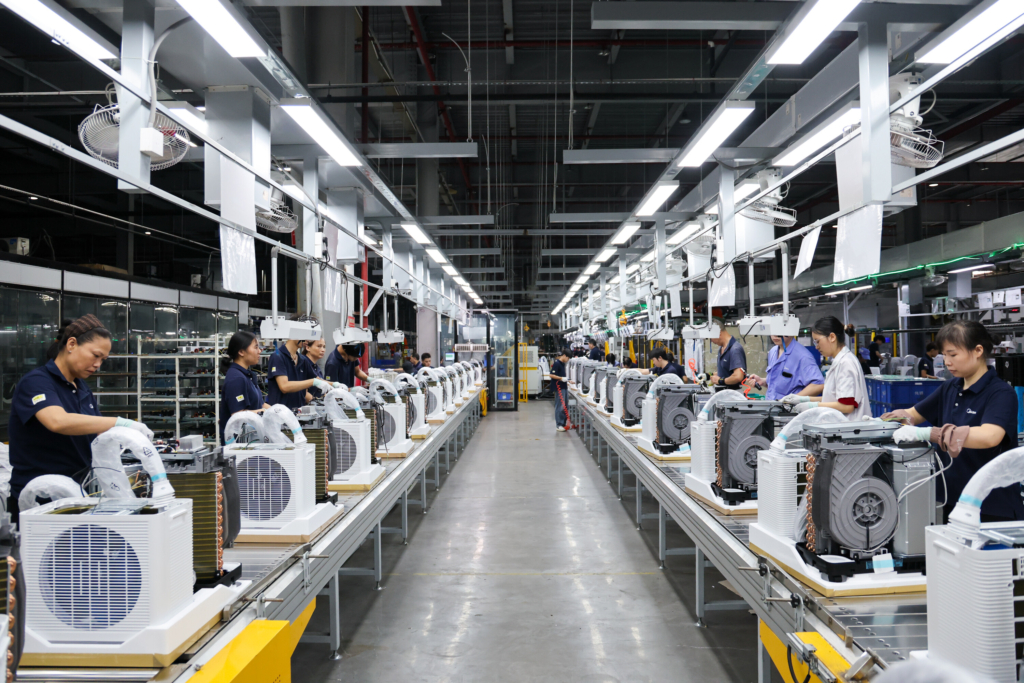
This success is not only about price and scale. Chinese manufacturers have adapted their products for the European market: for example, Midea’s PortaSplit model is tailored to overcome cumbersome building regulations and high installation costs. Chinese manufacturers were also early adopters of refrigerants less harmful to the climate, ensuring their products meet Europe’s strict environmental rules.
But this is not all. Chinese commentators say that Europe should not only adapt to the hotter climate—it should adapt to the patterns of EU-China trade. They portray the EU’s de-risking and trade-defence measures to tackle economic imbalance with China as economically self-defeating, arguing that Europe lacks confidence in its own industries. European policymakers, they say, are approaching trade as a game of “cold statistics” that will ultimately hurt ordinary consumers.
This is a fatalistic prescription for industrial policy from a country that refuses to accept that its position in global supply chains or its existing competitive advantage is fixed. For decades, Beijing has made industrial upgrading a central policy objective that has reoriented global trade patterns. Europeans are experiencing this firsthand in the AC boom, where China’s position reflects decades of deliberate industrial upgrading. And now Beijing is advising Europe to be content with trade patterns as they stand: strange advice, given that this would not pass the political sniff test in Zhongnanhai.
Since Deng Xiaoping, Chinese leaders have not simply passively adapted to their inherited competitive advantages. Neither do they treat the existing global division of labour as an efficient market outcome to be preserved. This is especially the case when such patterns risk constraining China from developing the sectors it considers strategically important—robotics, clean technology or aviation, for example.
These policies helped Chinese firms “import, digest and absorb” foreign know-how, build scale, and create globally competitive and innovative companies across supply chains. But while the European debate on competitiveness centres on many of the same concepts, European politicians, industries and member states are divided over future industrial policy. One prevailing idea is that Europe should pull a “reverse Deng” by ushering in a new era of industrial policy capable of matching the scale of support and protection that China extended to its domestic industries during the 1990s and 2000s.
Europeans should preserve their ability to source and scale critical technologies through viable alternatives, ensuring they have options should conditions change
But Europe should be cautious in trying to beat China at its own game. It has no centralised state to direct capital and help companies navigate commercial losses in pursuit of their goals. The main lessons from China’s industrial policy lie in the assumptions behind it: Europeans should minimise dependencies that could be strategically constraining; industrial competitiveness is not only about efficient production; Europeans should preserve their ability to source and scale critical technologies through viable alternatives, ensuring they have options should conditions change.
This logic is becoming more relevant as climate shocks intensify and geopolitics grows more volatile.
What Europeans should do
Europeans need to consider what such options would look like in practice. To borrow the question posed by Chinese commentators: what could Europe do right now without Chinese air conditioners?
Cooling is becoming essential infrastructure. Much like heating and water, Europe will need a broader portfolio of solutions to meet demand. AC is part of the answer, alongside low-energy and passive-cooling technologies such as evaporative cooling, reflective roofs and building retrofits, and stronger building standards. But Europe does not need to develop every solution itself; it could build a network of alternative suppliers and production capabilities.
For example, Singapore and the Gulf states are confronting many similar challenges and could be potential partners in deploying more efficient solutions such as district cooling. Europe can build similar partnerships in clean-tech supply chains. South Korea, the second-largest battery manufacturer globally, holds 78% of installed battery capacity in Europe. It can learn from countries such as Japan, which has diversified its rare-earth supply through partnerships with Australia and Malaysia, as well as Vietnam. India doubled solar-cell manufacturing capacity in the first half of 2026 alone, backed by localisation incentives extending to upstream components like ingots and polysilicon.
China will remain part of Europe’s clean-tech supply chains. For Europe, preserving its options does not mean that it needs to produce every critical technology in the clean-tech supply chain. But it should work with external partners to maintain commercially viable alternatives at scale. This can be done through reciprocal access to public procurement markets, targeted incentives and shared product standards.
Where climate and competitiveness collide
Fundamentally, having options means being able to adapt to a problem while tackling its cause. Climate policy offers a useful framework: Europeans have concluded that the impact of heatwaves or floods are not inevitable; they are not relying on AC, seawalls and floodgates as their only response. Instead, they are tackling the cause of climate change by pursuing adaptation while mitigating the underlying problem through cuts in fossil-fuel emissions.
Europe should dare to do the same with its competitiveness and economic dependencies. Rather than simply adapting to change, its governments should invest in Europe’s capacity to innovate, work with partners and build alternatives, with the aim of reducing vulnerabilities and helping preserve its choices.
The summer heat of 2026 is a reminder of the cost of delayed climate action. The same lesson applies to economic security: adapting to today’s dependencies in the name of efficiency will leave Europe with fewer options—and come with a larger bill—tomorrow.
One of Hong Kong’s most unusual sights is the stone wall tree—a mature tree growing directly out of a masonry retaining wall.
These remarkable trees first appeared during the colonial era when thousands of stone retaining walls were built to stabilize Hong Kong's steep hillsides. Over time, seeds carried by birds and wind became lodged in cracks between the granite blocks. Dust, decaying leaves, and moisture accumulated in these crevices, creating tiny pockets of soil where the seeds could germinate.
Most wartime diaries are written on paper. Some are scribbled in notebooks or loose sheets and hidden beneath floorboards, or tucked inside clothing. The most famous wartime diary is undoubtedly that of Anne Frank, but there are many others whose accounts are equally compelling. One of the most unusual records of the Second World War, however, was kept by Day Joyce, a biologist interned at Stanley Camp in Hong Kong. Her diary was not written on paper at all. Instead, she stitched it into a bed sheet.
Por Marcelo Ramírez Hay decisiones militares destinadas a resolver una batalla y otras que dicen mucho más: revelan cómo un Estado imagina la guerra que tendrá que librar en los…
This week, Mark Leonard is joined by Adriana Abdenur, a Brazilian policy expert and co-president of the Global Fund for a New Economy, and Jorge Castañeda, former foreign minister of Mexico and professor at Sciences Po, to explore debates about development and ideas of strategic autonomy across Latin America.
Jorge explains why China’s role is varied across the region, arguing that Mexico and much of Central America remain deeply constrained by their economic ties to the US. Adriana discusses Brazil’s long tradition of strategic autonomy, describing how policymakers engage with China as both an economic partner and a source of ideas on development, technology and global governance.
Together, Mark, Adriana and Jorge explore how intensifying US-China competition is reshaping the region’s choices. Can Latin American countries balance relations with both powers? Is China a model, a market or simply another partner in a multipolar world? And what does strategic autonomy look like in an increasingly coercive geopolitical environment?
This podcast episode was recorded on July 31st 2026.
Cover image: picture alliance / Xinhua News Agency | Li Bo
Reluctance among German decision-makers has long stopped Berlin taking a tougher economic approach towards China. When France, Italy, Lithuania, the Netherlands and Spain recently pressed the European Commission for tougher measures and faster trade defence action against China, Germany not only declined to join, it even called for stronger industrial ties with Beijing.
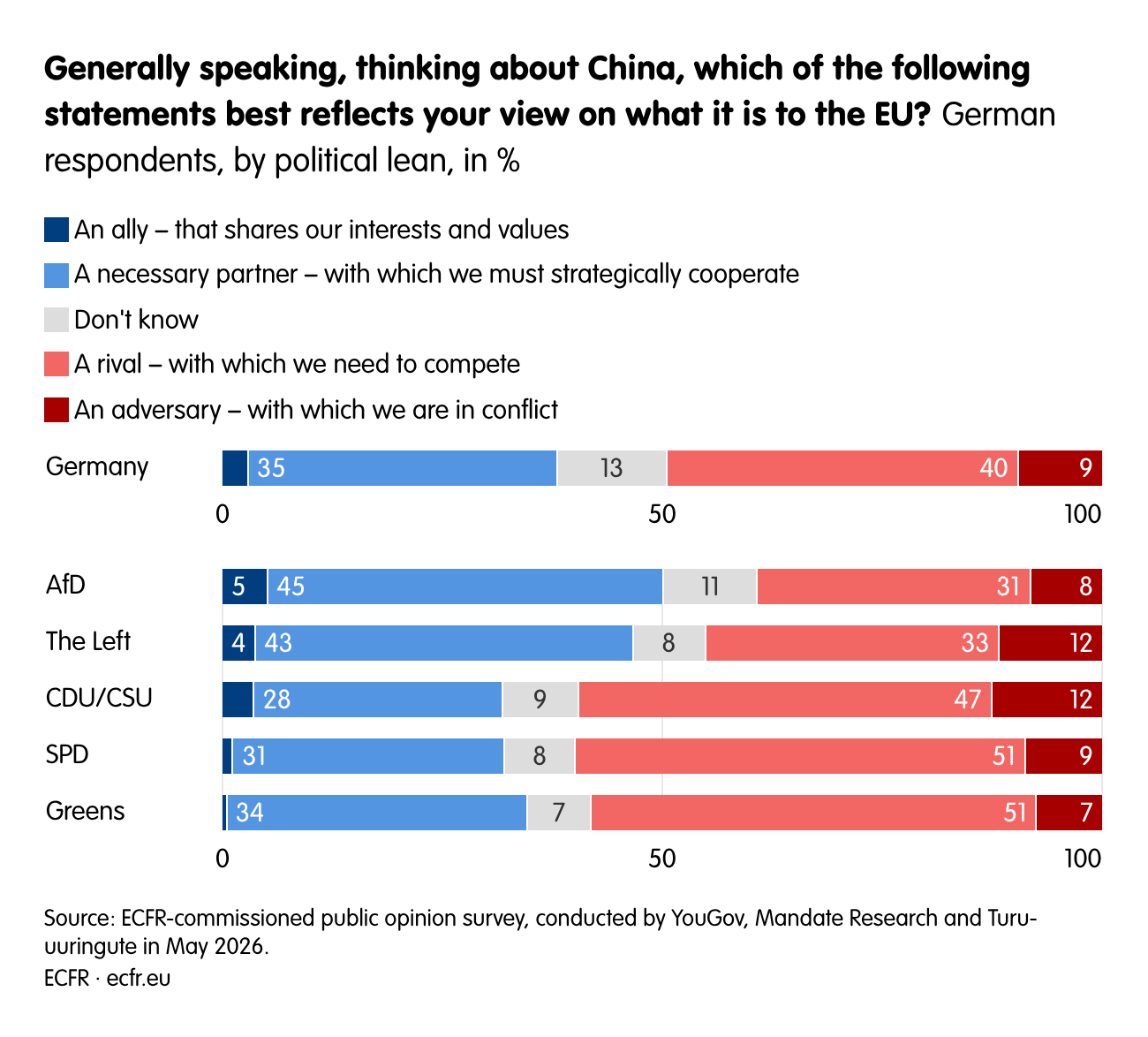
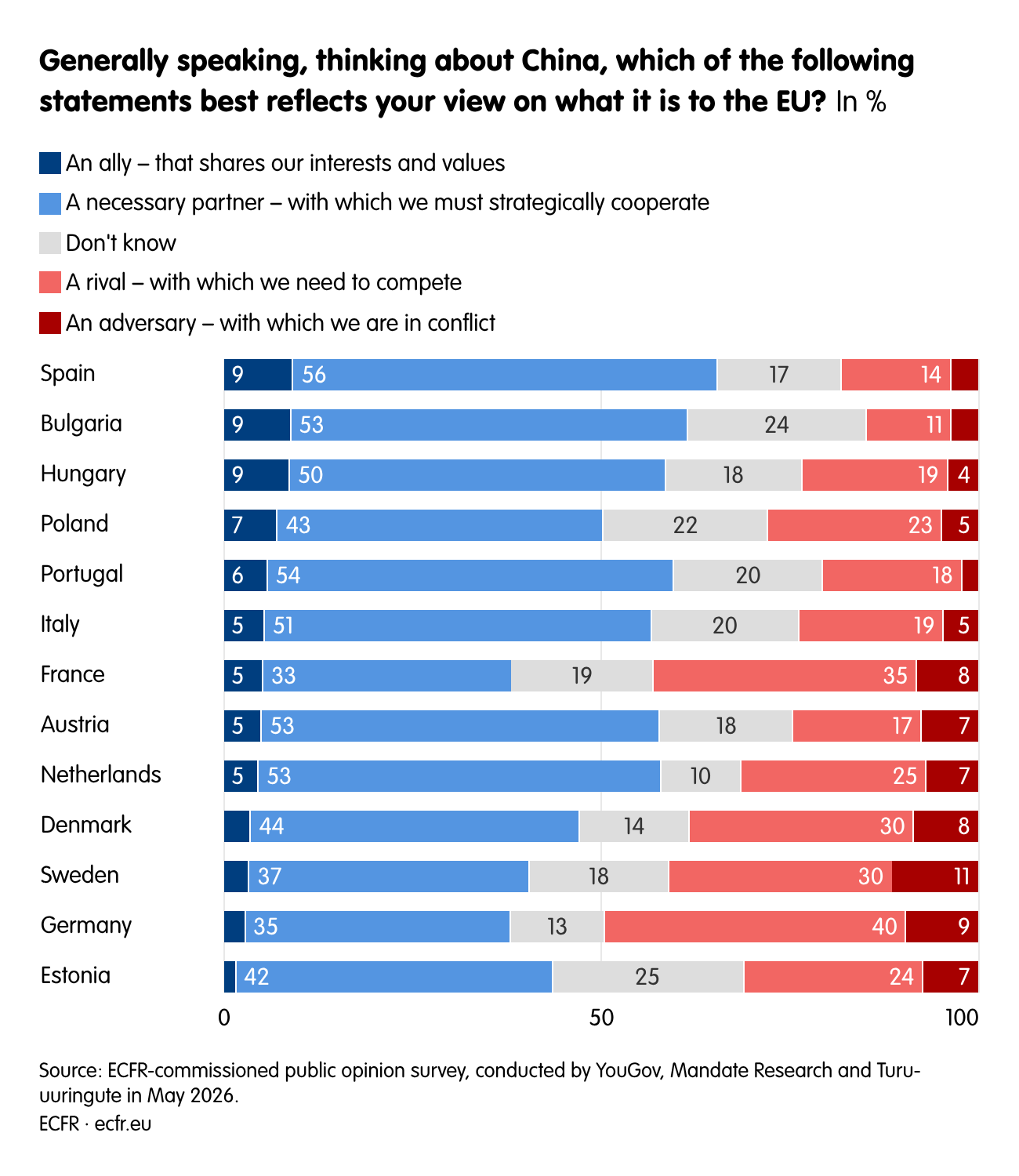
Yet, one thing Berlin should not worry about is voters’ disapproval should it pursue a more hawkish China policy. ECFR polling data find that Germans are the most China-sceptical out of 15 European countries surveyed. No fewer than 60% of Christian Democrat and Social Democrat supporters regard the country as an adversary or rival. In contrast, elsewhere in Europe, majorities still see China as either a “necessary partner” or even an ally. In Italy and Spain, 56% and 65% of people hold this view respectively. (Closest to the sceptical Germans are the French public; President Emmanuel Macron’s increasingly hawkish political posture vis-à-vis Beijing may have found an audience willing to listen.)
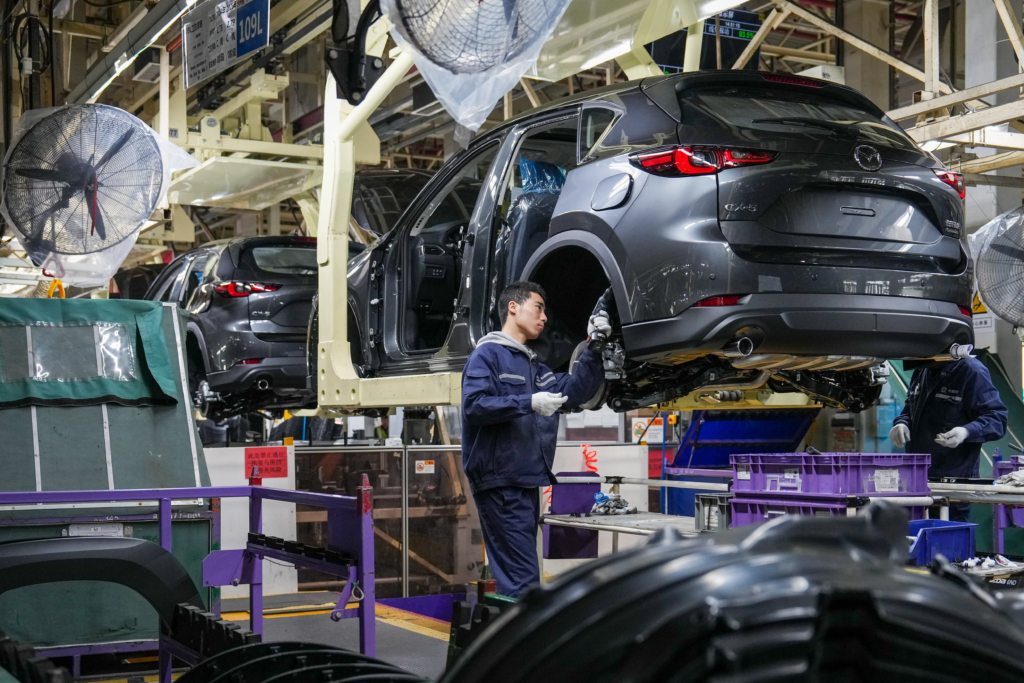
The China shock has hit Germany particularly hard: its manufacturing sector lost around 420,000 jobs between 2019 and 2025 and it continues to shed 10,000 jobs each month. The car industry is paying the highest costs, being squeezed out of a market increasingly dominated by Chinese manufacturers at home and abroad.
The mood in the European Council is shifting, and with Germany’s acquiescence. When EU leaders met in June 2026, they backed a stronger trade defence toolbox of existing measures against China. This included instruments such as the Industrial Accelerator Act’s “Buy European” provisions and limits on high-risk Chinese technology. Despite its past hesitations, Germany no longer acts as a spoiler on firmer EU action, and it has cautiously supported this new direction. Nevertheless, the combination of growing public scepticism towards China, mounting pressure on German industry and appetite for a more assertive policy on the European level creates a political mandate that German decision-makers could yet seize.
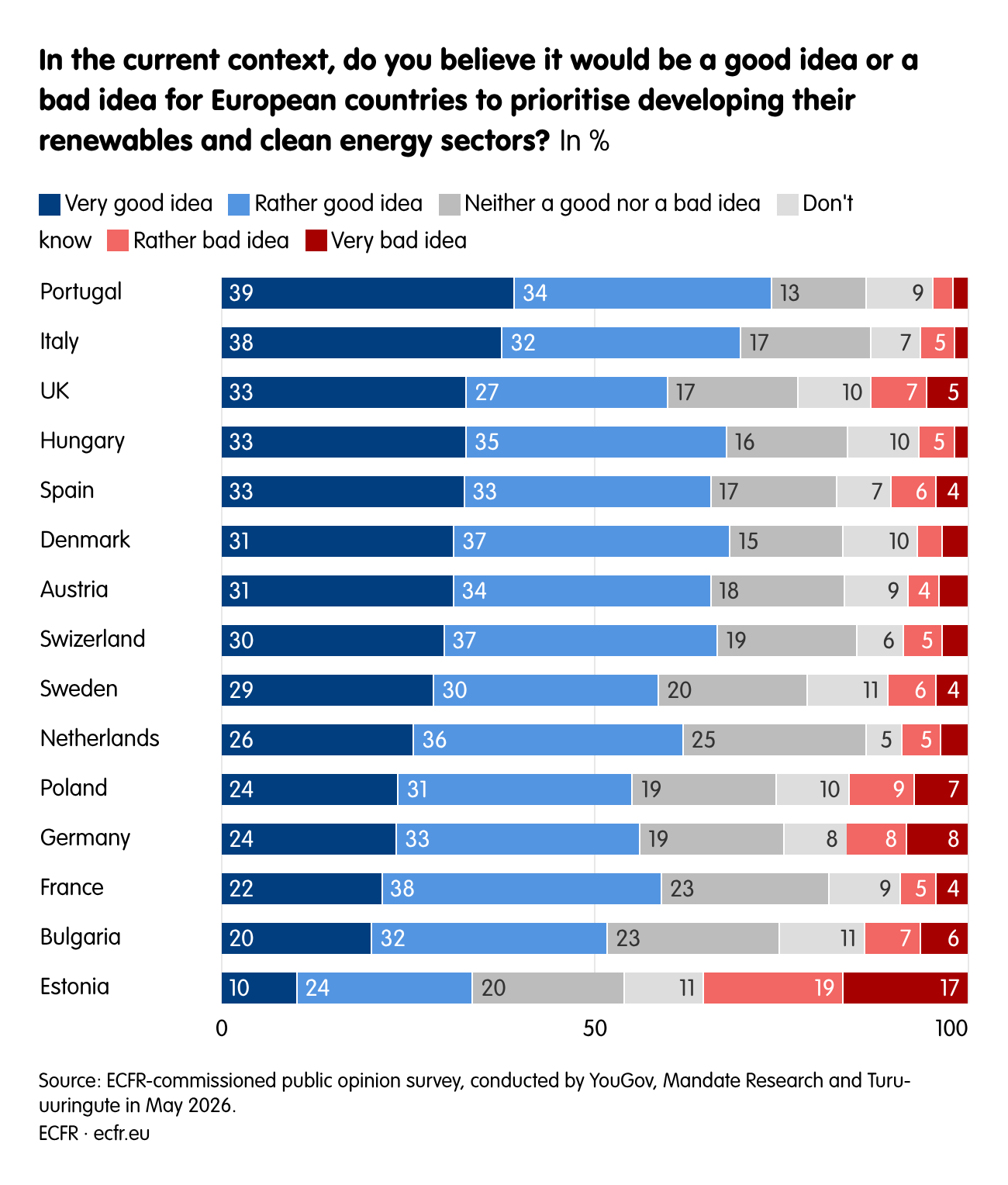
The German public’s views on the energy transition should also prove encouraging for their leaders. Voters want to see investment in renewables: 57% back what would amount to the growing electrification of the economy. Across the countries polled by ECFR, 61% of respondents say they support prioritising renewables and the clean tech sector.
This public support should help persuade leaders, including in Germany, that they can take action to limit emerging dependencies on China. They can accelerate the energy transition while de-risking the clean tech sector through providing support for domestic European industries, from wind to batteries.
For Berlin, and capitals across Europe, it is safer to move ahead rather than delay. Chinese economic policy is already doing irreparable damage to European industry—but European policymakers still need to protect an increasingly electrified economy from weaponisation by China. If they fail to do so, governments will almost certainly pay the price at the ballot box. Those that pursue electrification and economic de-risking as a single package are most likely to reap the political rewards.
For China Books Review, Zhang Er reflects on growing up in Beijing during the Cultural Revolution, and how she owes her love of reading to Auntie Zou, a librarian who stripped banned books of their covers and any pages marked with the library seal of the Workers’ Club, smuggled them home, and secretly loaned them to her. Even amid the chaos of that era, Er remembers this part of her childhood as magical, a time “where characters sprung from their pages and interwove with each other’s lives,” and she imagined worlds far beyond the one she lived in.
By the time I was 12 or 13, I could read fast enough to finish the weekly book loan in two days, so I had time to spare before returning it to Auntie Zou. By then I had made a good friend, Yu Ping, who loved reading too. Her home was three blocks from mine. I would bicycle to her place and deliver the book to her. Yu Ping would read day and night to finish the book and return it to me before the due date. We would keep the book wrapped in old newspapers, so that we could read in class without getting into trouble, while our teachers repeated the same quotations from Mao, week after week.
In this harrowing, incredibly reported story co-published by Science and Retraction Watch, Brendan Borrell uncovers how “Mei,” a 6-year-old girl in China, died a week after an experimental gene-editing trial went wrong—and how her medical team, led by neuroscientist Zilong Qiu, downplayed the risks to her parents, did not publicly disclose her death, and has faced no real accountability.
On 23 March 2025, the day before the procedure, the family settled into a shared room inside a crowded pediatric ward. When the other girl in the room broke into tears, Mei handed her one of her favorite stuffed animals: a blue bird. “She liked to give things to other kids,” Jason said.
The next day Mei put on a brave face as she was taken to the procedure room. Yu’s handpicked doctor inserted a needle between two vertebrae on her lower back and withdrew just over a teaspoon of spinal fluid to create space for the drug. Then, he swapped syringes and gently pressed down on the plunger, filling her spinal canal with viruses.

 Login