The German Navy has demonstrated the launch of Israel Aerospace Industries’ (IAI) LORA ballistic missile from an F125 frigate, with at least two missiles fired from the Sachsen-Anhalt during a test in the North Atlantic last night. The demonstration points to a potentially significant new long-range strike capability for Germany’s surface fleet, should it be adopted.
A LORA missile leaves the launch canister on the flight deck of the frigate. German Ministry of Defense/screencap
Video released by the German Ministry of Defense alongside the test shows two LORA launch canisters positioned on the frigate’s flight deck, followed by a missile launching from each container.
Die Fregatte „Sachsen-Anhalt" (Klasse 125) hat im Nordatlantik mindestens zwei ballistische Raketen vom Typ LORA (IAI) verschossen – gestartet aus Kanistern auf dem Flugdeck. Die Erprobung erfolgte im Rahmen der OPEX-Serie.
The launches were conducted as part of the Bundeswehr’s operational experimentation (OPEX) program in cooperation with the Bundeswehr Innovation Center in Erding. Reportedly, two German frigates were deployed to the waters between Ireland and Iceland for the test, and a warning was issued to maritime and air traffic 45 days beforehand.
The test marks a notable expansion of the weapons capabilities demonstrated by Germany’s F125 frigates and could provide a pathway toward a new long-range naval strike capability.
A LORA canister is raised into the launch position. German Ministry of Defense/screencap
German Navy Inspector General Vice Adm. Jan Christian Kaack described the event in a statement distributed through the Bundeswehr’s official WhatsApp channel:
“With the successful launch of a ballistic missile last night in the North Atlantic, we have made naval history. I am extremely pleased with this achievement. The system can be successfully deployed by our units, and its potential range exceeds anything we have seen before. For the protection of Germany and our allies, this test marks a new chapter in deterrence and defense readiness at sea.”
IAI also confirmed the results of the test, stating that both missiles followed their planned trajectories and struck their targets with high precision.
The exact targets, engagement ranges, flight profiles, and missile configurations used during the test have not been disclosed.
There is no possibility that Sachsen-Anhalt will retain the launchers in their current location, since they mean the F125’s flight deck cannot be used, depriving it of a critical capability. Potentially, they could be installed elsewhere on the vessel, but, moreover, it is unclear if the current experiment will lead to a formal acquisition program.
The two LORA canisters on the flight deck of the frigate. German Ministry of Defense/screencap
At the same time, LORA is a substantially different weapon from the anti-ship and land attack cruise missiles normally associated with modern surface combatants.
Available for ship- and ground-launch, the missile is approximately 17 feet long, 25 inches in diameter, and weighs around 3,500 pounds. It follows a quasi-ballistic trajectory and has an officially stated range of approximately 60 to 270 miles. An air-launched derivative has also been developed.
A weapon capable of reaching targets hundreds of miles away would give German surface combatants a long-range strike option extending far beyond the range of traditional naval guns and many shorter-range precision weapons.
Its quasi-ballistic flight profile also differentiates LORA from a conventional cruise missile. A ballistic-style trajectory allows the weapon to cover distance rapidly and presents an air-defense challenge different from that posed by a low-flying cruise missile. This type of missile also impacts its target with much greater kinetic energy, making it especially useful for striking more hardened target sets.
LORA uses a navigation architecture combining GNSS satellite navigation with an inertial navigation system and can achieve a circular error probable, or CEP, of approximately 33 feet. IAI also says LORA can be launched within minutes, including from unprepared positions, and can attack a target within its range in less than 10 minutes after a decision to launch.
Back in 2017, as you can read about here, IAI successfully test-fired LORA from a containerized launcher on the back of a truck sitting on the deck of a cargo ship. The missile successfully struck a target on land.
What is less clear is its ability to strike targets at sea.
A long-range anti-surface application would be particularly interesting for the German Navy, although the weapon, in its basic form, has no terminal seeker. This limits the missile to use against targets with a fixed location, rather than autonomously finding and tracking a maneuvering warship during the terminal phase of flight.
In a 2020 test, IAI demonstrated firing two LORA missiles from a ship before hitting separate floating targets at approximately 60 miles and 250 miles. However, striking a static floating target is different from an enemy warship that is maneuvering and potentially employing electronic warfare and air defenses.
Regardless, Germany has an even clearer requirement for land attack capabilities, which LORA is fully capable of fulfilling, as we will return to later.
As for Germany’s F125 frigates, these were designed primarily for long-duration deployments, maritime security, stabilization operations, and other missions requiring a persistent naval presence. Their overall lack of firepower is something we have examined in detail before now.
The frigate Sachsen-Anhalt (F 224) arrives in port. Photo by Hauke-Christian Dittrich/picture alliance via Getty Images picture alliance
The latest test involving the Sachsen-Anhalt is in line with the Bundeswehr’s OPEX framework, which is intended to evaluate emerging technologies and operational concepts under realistic conditions before decisions are made about wider adoption.
There is precedent for such experimentation leading to operational capabilities. Israeli-developed systems, including IAI’s Blue Whale autonomous underwater vehicle, have previously been evaluated through German naval experimentation efforts and subsequently moved toward formal adoption.
As well as the four F125 hulls, Germany might look to incorporate LORA from the start on its future F127 multi-purpose frigates and/or its planned Large Remote Missile Vessels (LRMV), uncrewed vessels that will serve as arsenal ship ‘wingmen,’ supporting conventional surface combatants.
A highly provisional diagram shows the F127 frigate (top) and the LRMV (below). German Navy
It is worth noting that Germany has recently acquired various other Israeli-made missile and rocket systems. These include the Arrow 3 anti-ballistic missile system — the largest-ever Israeli defense export deal — and the PULS multiple rocket launcher. A German purchase of the land-based version of LORA would also be an option, with the truck-mounted system also able to be launched from ships at sea.
The LORA test also reflects a broader European push toward longer-range precision fires.
Russia’s war in Ukraine has underscored the importance of ballistic and cruise missiles, while NATO countries have increasingly sought weapons capable of holding targets at greater distances at risk.
Key German Navy operating areas, including likely Russian attack routes. German Navy
Germany has historically possessed comparatively limited deep-strike capability. The Bundeswehr is now working to expand its ability to conduct long-range precision engagement, both independently and within NATO structures. This includes planned procurement of land-based Tomahawk cruise missiles, with a range exceeding 1,000 miles depending on the exact configuration.
Very deliberate NATO messaging right here – interesting to see the alliance using this kind of signalling https://t.co/BYvpzkq0Vq
A naval LORA capability could add another layer to that effort and would allow Germany to distribute long-range fires across surface combatants, complicating an adversary’s targeting problem while giving its naval forces a more meaningful role in high-end combat operations. With the security situation in Europe deteriorating, the potential deterrence factor that such a weapon would bring to Germany, and to NATO, should also not be underestimated.
L’Allemagne a jugé mardi la Russie "responsable" de l'envoi du drone chargé d'explosifs découvert début août à l'aéroport de Leipzig et a annoncé des mesures de rétorsion contre Moscou. Si ces représailles apparaissent surtout "symboliques", elles portent malgré tout atteinte aux opérations de renseignement russes.
“This was an attack using military-grade material, carried out by Russian operatives on European Union soil. We will not tolerate it,” von der Leyen said alongside NATO Secretary General Mark Rutte in Brussels.
The German government said on Tuesday (1 September) that its investigation and intelligence findings established Russian responsibility for the attempted attack at Leipzig/Halle Airport last month. Russia has denied responsibility.
The meeting took place as foreign ministers and the EU's High Representative for Common Foreign and Security Policy were meeting to discuss Russia and Ukraine among other issues.
“Had this attack succeeded, this would have resulted in enormous damage and possibly even loss of life,” von der Leyen said. “We stand in full solidarity with Germany.”
“If the intention was to make us think twice about supporting Ukraine, I can tell you it has only strengthened my resolve. Intimidation will not work.”
Von der Leyen said the Leipzig incident was part of a wider pattern of Russian activity confronting Europe, including airspace incursions, drones disrupting airports and interference with critical infrastructure.
“Leipzig marks a new escalation on European Union soil, directly attributed to Russia,” she said.
Von der Leyen outlined three areas for a stepped-up European response: stronger protection of European infrastructure backed by additional sanctions on Russia, increased air-defence support for Ukraine, and an acceleration of Europe’s own defence build-up in close cooperation with NATO.
Infrastructure and sanctions
First, von der Leyen said Europe must strengthen the protection of infrastructure that could be targeted by Russian hybrid operations and be prepared to respond more quickly when attacks occur.
“We must treat our everyday infrastructure as frontline targets, and protect them accordingly,” she said.
The EU already has rapid response teams that can assist member states faced with such attacks, she said, arguing that Europe’s ability to prepare and respond would itself act as a deterrent.
Von der Leyen also said the EU was ready to intensify economic pressure on Moscow through sanctions. “Our sanctions have weakened Russia’s economy. We can use more sanctions and have them ready to impose as soon as such dangerous, life-threatening acts are attributed,” she said. “Every loophole Russia exploits is one we must close.”
European foreign ministers were discussing new listings in Ireland on Wednesday, she said, while the Commission was examining further ways to “cut deeper into Russia’s war chest”.
More air defence for Ukraine
Von der Leyen said her second priority was strengthening support for Ukraine, announcing that the EU had received a new request worth several billion euros for air-defence capabilities.
“Today, I can confirm that we have received a new payment request,” she said. “It is worth several billion euro, and would cover Ukraine’s air defenses, including the highly advanced PAC-3 Patriot air defense systems.”
Member states were considering the request, she said.
“I can say that it’s going in the right direction.”
Von der Leyen also pointed to European work with Ukraine on the FRIO project to develop anti-ballistic missile defences, as well as the EU’s €90 billion support loan.
“Since June, we have issued €8.5 billion for drones and missiles for Ukraine from this loan,” she said, adding that the funding could also be used to buy fighter aircraft from European industry.
Faster European defence build-up
Von der Leyen’s third priority was to accelerate Europe’s defence build-up alongside NATO, with air defence at the centre of the effort.
“Air defenses are critical,” she said. “We need a faster, more integrated alert system across Europe, and then we must intercept the threats faster.”
She pointed to the EU’s €800 billion defence investment plan, including €150 billion through the SAFE instrument, as a way for European countries to increase defence investment jointly.
“We are in a new era of European security,” von der Leyen said. “European investment in defense strengthens NATO and re-energizes our industrial base.”
Rutte backed von der Leyen’s assessment of the threat, saying Russia had become “increasingly reckless” as its war against Ukraine continued.
“We have seen more drones and missiles crossing into our airspace along our eastern flank, creating increased risk,” Rutte said.
“And we have also seen an increase in malign activities targeting our territory directly, whether it is fires set in factories producing defense equipment for Ukraine, or indeed the Russian hybrid attack in Leipzig.”
“The examples are many. The dangers Russia poses are clear,” he added.
Rutte said NATO was working “around the clock” to ensure it could protect its population and said Moscow would fail if it hoped attacks such as Leipzig would undermine Western backing for Kyiv.
“If Russia thinks we will be divided by the threat, or if they think we will be deterred from supporting Ukraine, they are mistaken,” he said. “Our unity is unshaken. Our support to Ukraine is clear.”
Rutte said NATO allies had agreed to provide at least €70 billion to support Ukraine this year and the same amount next year, with the EU loan forming a “crucial element” of that support.
The NATO chief also backed the push for additional air defence and increased defence production, saying higher spending had to translate into additional military capabilities and greater industrial capacity.
Von der Leyen said the EU and NATO would not be intimidated into reducing their support for Ukraine. “Europe and NATO will not just maintain our pressure on Russia; we will increase it,” she said. “We will not stop — not until Russia stops bombing and killing innocent children, men and women in Ukraine. We will continue, we will prevail, and we will deter anyone who attacks our freedom and our security.”
Mario Draghi’s new think tank, born out of frustration with Brussels, excludes Central Europe while giving a prominent place to business interests linked to the United States. The man credited with saving the euro and the discussions over the European competitiveness with his report to reignite growth, now faces an unexpected accusation: that his latest […]
L'Allemagne a annoncé mardi des mesures de rétorsion contre la Russie, après l'avoir officiellement accusée d'avoir envoyé un drone chargé d'explosifs début août à l'aéroport de Leipzig, une plateforme militaire clé pour l'armée allemande et pour l'Otan.
Les Islandais ont rejeté une reprise des négociations d'adhésion à l'Union européenne, selon les résultats définitifs du référendum sur la question, publiés dimanche. La candidature avait été déposée en 2009, avant d'être gelée en 2013 sur fond d'euroscepticisme.
Quelque 273 000 électeurs sont appelés à voter samedi lors d'un référendum sur une reprise des négociations d'adhésion à l'Union européenne, treize ans après que les discussions ont été gelées par l'arrivée d'un gouvernement eurosceptique au pouvoir. La question de la pêche, cruciale pour l'économie locale, est l'un des principaux points de friction.
Considérée comme un quasi-État membre, l'Islande se prononce samedi sur la reprise des négociations en vue d'une adhésion à l'Union européenne (UE). La poursuite de ce processus, motivé en partie par les menaces de Donald Trump contre le Groenland, divise les 400 000 habitants de l'île, attachés à leur identité et à un secteur de la pêche crucial pour l'économie locale.
Cover image: picture alliance / Hans Lucas | Martin Bertrand
US secretary of state Marco Rubio described NATO’s July gathering in Ankara, two months before it convened, as “one of the more important leaders’ summits in [its] history.” The summit confirmed that Europeans have accepted America’s expectation that they do more for their own security. The Ankara declaration recognised that “European allies and Canada, working together with the United States, are assuming greater responsibility for the alliance’s defence.” Accepting that shift is one thing; paying for it is another. For European policymakers the question is now fiscal. It turns on what Europe is willing to pay for. And for the EU’s frugal members, that means rethinking what they treat as strategic.
Getting defence into the budget
According to the International Institute for Strategic Studies, replacing US military capabilities in Europe could require around $1tn (about €900bn) in extra investment. NATO’s new target to invest 5% of GDP in defence similarly implies a sustained increase in European defence spending over the coming decade. Together they suggest that defence is no longer crisis spending but a permanent claim on European budgets.
Since Russia’s full-scale invasion of Ukraine in 2022, the EU has found money for defence, but always as extraordinary spending. The European Defence Fund and SAFE (Security Action for Europe, a loan scheme for joint arms purchases), for example, sit outside the ordinary budget. Such instruments expire; the challenge is to embed this spending into the EU’s regular budget. Winning defence a permanent line in it makes negotiations over the next Multiannual Financial Framework (MFF) far more than another exercise in budgetary bargaining.
The MFF is the EU’s seven-year budget—and where any pledge on defence would have to show up in funds. The commission’s proposal for 2028–34 reflects such a commitment. It allocates €131bn to defence and space, roughly five times the current level, and puts security among the EU’s central priorities.
Out of the negotiating box
Commission proposals rarely emerge intact from negotiation, and early signs suggest this pattern may repeat itself.
Commission proposals rarely emerge intact from negotiation, however, and early signs suggest this pattern may repeat itself. Cyprus, which held the presidency until the end of June, left a negotiating box on how to structure the next MFF that envisioned reductions in defence and security while protecting cohesion policy and the Common Agricultural Policy (CAP). The box is the presidency’s draft compromise, the text the final deal is built from. The Irish presidency has opened with a strong focus on competitiveness and security, but Ireland leans heavily on farming too.
Budget negotiations are shaped by coalitions that defend long-established spending. The 16 member states of the “Friends of Cohesion” group, Spain, Italy and Poland among them, want robust funding for cohesion policy and agriculture, while frugal member states, such as Germany, the Netherlands and Sweden, are reluctant to expand the overall size of the EU budget. Defence enters as a comparative newcomer against policies with decades of institutional backing and organised constituencies behind them.
Germany’s position illustrates this dilemma. In a parliamentary inquiry, Alliance 90/The Greens asked the federal government how the EU can square four things at once: from 2028 it will need to start repaying NextGenerationEU, the €637bn joint borrowing agreed as a one-off in 2020 to fund members’ recovery from covid-19; forgo new revenue of its own (levies it collects directly rather than cheques from national treasuries); hold its budget roughly the same size; and still strengthen competitiveness, security and defence. The chancellor, Friedrich Merz, has repeatedly committed to the last three. The government answered that the EU could meet all three objectives by trimming across the whole budget. Yet such “horizontal cuts” only protect these priorities if all 27 members agree what to spare when deciding the cuts, and they are unlikely to agree. Other member states could favour different areas of the EU budget, cutting competitiveness or security harder than Germany intends.
New financing for a new era
The scale of investment required to deliver Europe’s defence transformation also exceeds what can realistically be financed through the MFF alone. While the seven-year budget can establish political priorities, provide long-term planning certainty and support common capability development, it cannot generate the sums required to finance Europe’s long-term defence.
Hence the appeal of joint EU borrowing: debt raised by the commission against member-state guarantees, the model already used for NextGenerationEU and SAFE. NextGenerationEU demonstrated that the EU can raise substantial resources when confronted with an existential crisis such as the covid-19 pandemic. Europe’s security has changed just as fundamentally, which makes the case for borrowing together just as strong. If defence is a collective problem, leaving the bill to strained national budgets makes little sense. However, borrowing on that scale is politically out of reach: creditor states intend NextGenerationEU to stay an exception rather than a template. Something narrower—bonds (or comparable fiscal mechanisms) that fund defence alone or the technologies Europe cannot do without may prove necessary if the EU wants to match its strategic ambitions with adequate financial resources.
Europe has accepted that it must carry more of its own defence. The MFF negotiations will show whether its budget can pay for it. With NATO entering a new era of European burden-sharing, the EU cannot afford a budget that reflects the priorities of a different geopolitical age. The world has moved on—it is time that frugal member states like Germany did so, too.
Prime Minister Mark Carney will also attend the European Union’s annual State of the Union address by the European Commission President Ursula von der Leyen.
L'Islande doit se prononcer samedi sur une reprise des négociations avec l'Union européenne lors d'un référendum au résultat très incertain. Les discussions d'adhésion, ouvertes en 2010, avaient été interrompues trois ans plus tard après l'arrivée au pouvoir d'une coalition eurosceptique.
The Belgian federal government has nominated Hans Kluge (pictured) for the position of Director-General of the World Health Organization (WHO).
“I am very honoured by the trust Belgium has placed in me and am grateful for the opportunity to take on this important responsibility,” Kluge said on X. “Serving the WHO has been the greatest privilege of my professional life.”
Kluge has served as WHO Regional Director for Europe since 2020 and began a second term in February 2025. Under WHO rules, he will step aside as WHO/Europe Director while campaigning for the role, a process that involves lobbying member states, NGOs and the organisation's largest funders.
Tried and tested After qualifying as a doctor in Belgium, he began his international career with Médecins Sans Frontières in conflict settings in Liberia and Somalia. He subsequently coordinated tuberculosis programmes in Siberian prisons and across the former Soviet Union.
Kluge joined WHO in 1999, initially working on tuberculosis and HIV in...
Europe is warming more than twice as fast as the global average—a terrifying statistic made all too apparent this summer as heat wave followed heat wave. European cities were never designed for these temperatures, and public health, infrastructure, and tourism are all under strain. Eric Klinenberg arrives in Milan just as “Europe’s third heat wave of the summer entered its fiercest stretch” and sweats his way across the continent to see how trees, shade, water, and other measures are being deployed to adapt urban centers. But with this crisis set to deepen can these experiments really keep pace?
Of all the problems that heat poses for Barcelona, losing some of the hundred and sixty thousand tourists who typically visit each day ranks low on the priority lists of most officials and residents. Some locals have staged protests, chanting “Tourists go home” while targeting visitors with water guns. But tourism employs more than a hundred and sixty thousand people in Barcelona and accounts for around thirteen per cent of its economic output, which explains why, despite concerns that the city gets too many visitors, more than seventy per cent of residents consider tourism beneficial. At midday, when I arrived on La Rambla, the city’s most heavily visited and photographed corridor, the street had little shade and surprisingly few people. At La Boqueria market, normally jam-packed at lunchtime, I found my way to a famously busy bar counter and took one of several open seats.
Cover image: picture alliance / NurPhoto | Jonathan Raa
Summary
Europe faces a dual drone threat, and it is escalating. Small drones regularly disrupt airports and hover over Europe’s critical infrastructure; at the eastern flank, larger military drones are crossing ever more often into EU and NATO territory.
EU member states are struggling to mount an effective response to the drones spotted over their critical infrastructure, and those countries farther from the eastern flank tend to focus disproportionately on this side of the threat.
At the flank, efforts to defend against military drone incursions are resulting in a hotch-potch of NATO, EU and national projects. This risks duplicating efforts and stalling progress towards a common operating picture.
National initiatives at the eastern flank seem the most promising, but the EU still has a role to play in funding and incentivising these efforts. The bloc should also help establish the common operating picture and best practice for legal regulations, and work to improve data sharing.
The EU and member states should then apply lessons from the eastern flank to the related but different threat to their critical infrastructure. That way, they can help Europe move closer to a continent-wide response to both sides of this continent-wide problem.
Today’s problem
On August 5th 2026, a small drone armed with explosives was found at Leipzig airport in Germany. The presence of explosive material marks this out from previous incidents at airports, as does the fact that authorities recovered the drone. But Europe’s new normal is for small drones to disrupt its airports and buzz around other critical infrastructure, including French nuclear submarine bases, Belgian nuclear power plants and German liquefied natural gas terminals. Some of these sightings are likely part of Russia’s hybrid war against Europe. Yet the drones are probably flown from inside European countries or from ships in the North and Baltic seas, and definitive attribution to Russia or any other actor remains elusive.
The countries along Europe’s eastern flank have another new normal to contend with. This entails the connected but different threat of military drones crossing into EU and NATO territory from Russia, Belarus and, because of the Russian aggression against it, Ukraine. The most egregious incursion so far took place in September 2025, when around 20 Russian military drones crossed into Poland’s airspace, leading it to invoke Article 4 of NATO’s Washington Treaty. That episode also prompted NATO to launch Operation Eastern Sentry to increase its vigilance at the border.
Unlike the small drones hovering over critical infrastructure, the origin of the military drones crossing into EU and NATO territory is no mystery. The attribution problem here relates to intention, as Russia can claim—sometimes plausibly, sometimes less so—that incursions at the eastern flank are accidents resulting from its war against Ukraine.
The eastern flank
Russia and Belarus are acting antagonistically towards European countries, while Ukraine is a partner nation and an EU candidate country. But incursions of military drones into EU and NATO territory come from all three countries. The term “eastern flank” thus refers to the EU’s 4,000km border with Russia, Belarus and Ukraine, as well as the Black Sea coast. The flank extends through nine countries: Finland, Estonia, Latvia, Lithuania, Poland, Slovakia, Hungary, Romania and Bulgaria.
Almost a year on from the Poland incident, the member states that line the eastern flank face military drone incursions with alarming (and increasing) regularity. The end of July, for example, saw Romania shoot down three suspected Russian drones in as many days. This followed another incursion in the country in May when a drone crashed into the roof of a ten-storey building in Galati and exploded, starting a fire in one of the apartments. A 14-year-old and his mother were injured, and 70 residents were evacuated. The Romanian military had tracked the drone and deployed two F-16 fighter jets in response to the threat. But the jets were unable to fire at the target for “operational reasons and [because of] certain legal limitations”.
The incidents in Romania lay bare some of the difficulties for Europe in defending its eastern flank against military drones. Over the past year, NATO’s operation has swiftly been joined by a hotch-potch of national and EU projects, including the bloc’s ambitious and wide-ranging European Drone Defence Initiative. But as things stand, military drones still either fly unhindered into EU and NATO territory or are intercepted through the costliest means possible, namely missiles fired from fighter jets.
Police forces across the continent, meanwhile, are struggling to mount an effective response to the problem of the small drones over their critical infrastructure. And countries farther from the eastern flank tend not to make the link between this largely civil threat and the military threat in the east: when the EU first proposed its initiative, for example, western European states were unconvinced that the bloc should fund drone defences at the eastern flank.
But, as this paper argues, all European countries need to act to secure the eastern flank—both to defend EU and NATO territory against military drones and to inform Europe’s response to small drones flying over its critical infrastructure. National efforts at the flank are promising but will likely prove insufficient. The EU will therefore have to spread the costs of defending the eastern flank, as efforts there contribute to the defence of the entire continent against military drone attacks. That small drones flying over critical infrastructure are a problem everywhere should further incentivise all Europeans to speed up their work on drone defence. And as this paper shows, the EU and member states can apply lessons learned at the eastern flank across Europe and reuse technology battle-tested in the east to protect their critical infrastructure.
The dual threat
The two sides of Europe’s drone threat are different, but they still share important similarities: they involve the same tools—drones of one type or another—and some likely have the same perpetrator—Russia. Mapping just a selection of drone overflights of critical infrastructure and incursions at the eastern flank since August 2024 lays bare the extent of the dual drone threat Europe is facing. And every time an overflight of critical infrastructure or incursion at the eastern flank happens, wherever it comes from, Russia learns something about Europe’s ability to fight (or otherwise) against these systems.
Drones over critical infrastructure
Drones are regularly spotted over critical infrastructure across Europe. The German aviation agency reported 227 drone sightings by pilots in 2025. These numbers have been rising steadily since reporting began in 2020, and the 2026 numbers are well on track to surpass last year’s.[1] Such incidents are largely a civil matter, which means responsibility for recording, identifying and countering them falls on local authorities such as police forces.
The overflights near airports tend to grab the most attention for three reasons. First, drones pose an extreme risk to aircraft and have the potential to cause mass casualty events, with the incident in Leipzig perhaps the closest call so far. German newspaper Die Zeitreports that CCTV footage from the airport shows the drone flying towards an Antonov cargo plane parked on the runway, hitting one of the wings and then falling to the ground. It was later discovered on the tarmac by a bus driver, who alerted security. Had the explosives detonated, the consequences could have been catastrophic. But even without explosives, drones have the potential to cause an air disaster if they collide with a plane, particularly if it is taking off or landing. Second, drones near airports cause significant economic harm: Copenhagen airport had to close for four hours in September 2025, while more than 30 flights were cancelled in Munich following drone sightings in March 2025. Third, airport closures tangibly affect citizens, which is likely why they are such common targets in the first place.
But from a security standpoint, equally concerning are sightings over other critical infrastructure like energy hubs and military installations. Drones can, for instance, help hostile operators gather intelligence about the security arrangements at these installations. They could then use this to enable future sabotage or attacks.
Among these sites, drone activity around military installations could be highly consequential. In early 2025, the German ministry of defence logged six instances of drone overflights at Schwesing airbase, a Bundeswehr base where Ukrainian soldiers were trained to use Patriot air-defence missile systems. It is plausible that the drones carried signals-intelligence equipment that could identify soldiers’ mobile phones. Once it had identified the phones, Russia may have been able to locate them again months later at the Ukrainian front line—and with them, the valuable and increasingly scarce Patriot batteries. This is a direct concern for the Ukrainian defence effort. But it also points to a larger problem for Europe, as it illustrates the type of information Russia could be collecting about European armed forces.
It remains unproven where most of the drones used in overflights come from and who controls them. But it is probable that at least some of the drones flying over critical infrastructure are part of Russia’s hybrid war against Europe. For years, Russia has conducted attacks against military and civil infrastructure as well as government entities. Some attacks take place in the cyber-realm; some involve physical sabotage, like igniting air freight packages in Britain, Germany and Poland, and damaging submarine cables in the Baltic Sea. US intelligence also helped Germany foil a plot to assassinate Armin Papperger, the CEO of arms manufacturer Rheinmetall. Sweden, meanwhile, has faced attacks on its telecommunications network. And disinformation campaigns have targeted the whole of Europe for years, including in the aftermath of drone sightings and disruption.
German chancellor Friedrich Merz has noted that Russian agents may be behind at least some of the overflights; Danish prime minister Mette Frederiksen said she could not “rule out in any way that it [was] Russia” behind the airport disruptions in Copenhagen; and Ukraine’s president, Volodymyr Zelensky, has argued that “the drone incidents across Europe clearly show that Russia is prepared to escalate this war and that it has never been just about Ukraine.” Moreover, in 2025 investigative journalists traced several drone flights back to Russian ships in the North and Baltic seas. Since then, a June 2026 report from the International Institute for Strategic Studies has assessed it is “highly likely” Russia conducted a drone campaign against Europe, largely towards the end of 2025. This research also found that the source of some of these drones may have been Russian shadow fleet vessels.
The types of drones used in these operations have not been definitively identified. However, analyses of images as well as eye-witness accounts point to fixed-wing surveillance drones, as well as quadcopter systems. In at least one incident there were reports of a “mothership” drone, a larger fixed-wing system which carries smaller quadcopter drones. The Leipzig drone has been identified as a quadcopter, roughly the size of a microwave oven.
A camera drone at dusk. [picture alliance / dpa | Matthias Balk]
Quadcopter drones
Quadcopter drones are systems with four rotors, which enable them to take off and land vertically, without any type of runway. They are flown via handheld console or smartphone app. Quadcopters have been the typical model for hobbyist drones as they are easy to use and do not require additional equipment. They are also particularly good at hovering in one place and flying slowly, making them the ideal system to follow and surveil people.
Their main vulnerabilities are endurance and range limitations due to weight: unlike fixed-wing systems which can glide, quadcopters require a continuous power supply to fly, thus draining their batteries quickly. As batteries are also their heaviest part, their range is limited. And heavier systems require more power, which means they need larger and heavier batteries. As more civilian systems have entered the military drone space, quadcopters and other multicopters have multiplied on the battlefield.
Still, definitive proof of the types of drone used in overflights or where they come from will depend on police forces apprehending more of them. The fact that local authorities across Europe have been unable to do this could compound a feeling among the public of failure by the state and leave the information vacuum wide open. The lack of information also means it is impossible to distinguish between real sightings and false alarms—like the 2016 case of a drone sighting from an aeroplane which turned out most likely to have been a plastic bag.
European authorities should also be able to stop drones around their critical infrastructure regardless of who flies them. The context of the Russia-Ukraine war has turned the drone threat into a geopolitical problem, yet non-state actors pose their own threat. Given the availability of drones, drone terrorism is a rising security concern—and far-right groups in the US, for example, are reportedly looking into first-person view drones to target law enforcement. But to date no major terrorist attacks by drone have taken place, only some thwarted plans, which is surprising.
But Europe’s drone problem also has a military side, and the continent seems equally unprepared to counter it efficiently and effectively.
Drones crossing the eastern flank
Alongside dealing with overflights, countries along the eastern flank must contend with military drones threatening EU and NATO territory from the east. Such incursions have taken place regularly since Russia began its war of aggression against Ukraine in 2022 and have intensified since 2025.
Only two weeks after the full-scale invasion, a drone (most likely Ukrainian) flew undetected for hundreds of kilometres over Romania and Hungary, before crashing near Zagreb in Croatia. Russian drones came down in Romania in 2023, and in Poland and Lithuania in 2025.
But the number of incidents has grown significantly in 2026. Russian and (more frequently) Ukrainian drones have veered off course since the start of the year, coming down in Finland, Lithuania, Estonia and elsewhere. In May, people took shelter in Lithuania when a drone alert brought Vilnius to a standstill; and across the border in Latvia, both the defence minister and the prime minister lost their jobs over a political response to drone incursions that was deemed insufficient. When the UN Security Council held an emergency meeting over the Galati incident in June, Romania’s minister for foreign affairs noted that it was just one of more than 40 incursions into the country’s airspace in 2026 alone—a number which has grown significantly since then.
Initially such incidents appeared to be accidents, caused by guidance-systems failures, operating errors and interference by electronic countermeasures. But the September 2025 incident in which around 20 military drones entered Poland from different places raised concerns that some might be deliberate provocations. The increasing intensity since then has done nothing to alleviate those concerns. After one May incursion in Latvia, Ukrainian foreign minister Andrii Sybiha said that Russian electronic warfare systems “deliberately diverted Ukrainian drones from their targets in Russia”—not going quite as far as to argue Russia was deliberately sending drones over NATO and EU territory, though this is a possible conclusion.
The drones that crashed in Poland were later identified as Russian Gerberas, an unarmed variant of what was originally the Iranian Shahed-136 loitering munition.
A Gerbera drone downed in Ukraine similar to those that entered Polish airspace in September 2025. [Wikimedia Commons]
Gerans and Gerberas
Russia manufactures its own version of the Iranian Shaheds in the Geran and Gerbera variants.
These are “kamikaze drones”, or one-way loitering munitions, which explode upon reaching their target. Russia is using the drone in ever greater numbers in Ukraine: since 2025, almost 1000 drones have been used in single-night attacks on Ukrainian cities and energy infrastructure. The current Geran iteration, the Geran-3, is a turbo-engined variant that can fly up to 800km, but many different variants exist. When employed in large numbers, they can overwhelm Ukrainian defences. The Gerbera is a lesser-known variant which is generally used as a decoy, or to relay signals for other, armed drones. The average price tag of drones like these is around €10,000.
In response to the incursions, Poland scrambled F-16 fighter jets and several military helicopters. Other NATO states provided support with aerial assets, most notably Dutch F-35s. Together they shot down three of the drones, with the rest crashing on Polish territory, luckily not causing any casualties. Debris was later found in an area spanning hundreds of square kilometres.
While NATO has not disclosed the exact costs of the operation, the missiles the jets fired cost between several hundred thousand and a million euros, depending on the type. Flight hours of F-16s and the much more expensive F-35s run into the tens of thousands of euros. So a single, only partly successful, counter-drone operation cost European countries millions, while Russia likely forked out less than €250,000 to prompt that response.
Drones continue to cross into NATO and EU territory. Sometimes they are intercepted, but more often they simply crash into the ground, occasionally even going undetected until they do. Were European countries to face an attack involving even a fraction of the numbers Ukraine regularly faces, the consequences would likely be catastrophic—and preventing them would be prohibitively expensive. Once the war ends, and if and when Ukraine becomes an EU or NATO member, defences along the western Ukrainian border—with Poland, Slovakia, Hungary and Romania—can move to Ukraine’s eastern border with Russia. In the meantime however, the EU, NATO and member states need to learn from Ukraine to secure the flank themselves.
Drones are a whole-of-Europe problem, which means all European countries need to invest in counter-drone capabilities. But starting at the eastern flank makes sense. Compared with the overflights of critical infrastructure, the flank is a more defined threat in a geographically bounded area. If the EU and member states can build an effective response here, it could inform efforts across the rest of the continent, both in terms of what can transfer to that different context and what cannot.
What a protected eastern flank looks like
Europe’s eastern flank spans different climate zones and topography, urban and rural territory, and forests and agricultural land. Given this and the drone threat discussed above, drone defences will have to be multi-layered. The eastern flank will need a detector layer with several sensor options, a defensive layer with several different countermeasures (“multi-effector”), and the ability to engage several drones at the same time (“multi-shot”). All these systems would ideally feed their data into a common operating picture to create a comprehensive view of the eastern flank. This element will be crucial to detect attacks that may be happening at the same time but hundreds if not thousands of kilometres apart.
Detector layer
The detector layer will comprise various radar and sensor systems. These will have to be spaced along the eastern flank depending on the topography and the presence of buildings, forests, agriculture and similar criteria. Today the eastern flank is monitored primarily through NATO assets and national systems, which focus more on the threat from missiles and aircraft, rather than smaller and slower drones.
Radars offer long-range coverage but can struggle to track smaller drones. Their sensitivity is improving all the time but birds still cause false positives; and as drones can be made from an array of materials, it is possible to manufacture them with minimal, or unusual, radar signatures. Moreover, traditional active radar systems that send an electromagnetic pulse and capture its return signal can be too easy for adversaries to identify. To overcome this problem, passive radar systems that work by sensing changes in the electromagnetic spectrum as objects move through space are in development.
Electro-optical sensors would complement radar. These can identify drones based on visual and temperature identifiers, which helps operators establish what kind of drone they are dealing with. But they require a clear line of sight, making them less usable in urban or forest environments. Unless they are AI-enabled, electro-optical sensors also require human intervention in real-time to verify whether an image is showing a drone or not, and thus increase staffing requirements. Radio frequency scanning, meanwhile, identifies drones by monitoring common frequency bands, though its accuracy is limited.
Finally, Ukraine has had considerable success with acoustic sensors and has installed thousands across the country. But Ukrainian experiences have also shown that these sensors do not work equally well in all contexts: environments with lots of sounds, like forests, urban areas and agricultural land, can hinder their usefulness.
Defensive layer
As with detection sensors, the defensive layer will have to incorporate several different features, from electronic countermeasures to kinetic solutions.
Electronic countermeasures include spoofing of positioning systems like GPS, and radio frequency jamming that blocks the connection between drone and operator. But these systems can be quite disruptive as they often interfere with all systems in range, making them less useful in urban contexts and near airports. Their effectiveness also often depends on continuous transmission, and they only work on drones that require a connection to the operator. This means they would be ineffective against autonomous, pre-programmed and tethered systems.
Electronic countermeasures have proven highly effective in Ukraine. But Russia has developed several workarounds to Ukraine’s efforts since the start of the war, and vice versa. Today Ukraine’s entire front line is GPS denied, so all drones operating there do so without relying on satellite guidance. Electronic countermeasures are also being circumvented by drones carrying with them up to 40km of fibre-optic cable through which signals are sent. This underlines the need for drone defences at the eastern flank to involve multiple systems.
Radio-frequency-based “cyber takeover” aims to take command of unwelcome drones and safely land them. This is a particularly desirable option as it preserves the drone for analysis. Yet it hinges on the cyber takeover’s ability to work on every drone system, including unknown ones.
Finally, Europe’s eastern flank will require a range of kinetic counter-drone tools—as a last resort for when electronic measures have failed to take down drones. These should include rifle-mounted systems, larger cannon-type systems, guided missiles and drones to fight drones. While generally effective, most kinetic solutions create the danger of collateral damage, as both projectile and drone come crashing down. During the Polish drone incursion in September 2025, the only property damage was caused by a missile that aimed to shoot down the drones.
Ukraine is now using interceptor drones, or drones that take out other drones. These include several systems, like drones with nets or those that ram hostile drones or blow up warheads that come near. (Incidentally, the existence of these systems has led to some confusion over the term “drone wall”, as some reports have suggested that it would be a wall made of drones, a misunderstanding helped along by the fact that a German firm had proposed such a project previously.)
Other countermeasures such as lasers, electromagnetic pulses, strong light and microwave weapons exist, but have not yet matured sufficiently and face similar limitations to those mentioned above, such as the need for line-of-sight or the risk of collateral damage.
Command and control
Crucially, Europe needs a command-and-control node to collect data. For drone defence to be truly integrated and European, the goal should be for this data to feed into a common operating picture that covers the entire flank, from Nuorgam in northern Finland to Burgas in southern Bulgaria. How to respond to a given threat should remain a more local decision, but information-sharing will still be crucial to understand any attack situation. It is equally desirable for European countries to exchange information with NATO’s Integrated Air and Missile Defence. AI and automation may also prove useful, though it will be necessary to heed the lessons of over-reliance on technology and automation, for instance, from the October 7th attacks against Israel.
*
Building a multi-layered system of systems like this on the eastern flank may seem a daunting task, not to mention an expensive one. But as the alternative is for EU and NATO countries to continue spending tens of thousands of euros to shoot down a single drone, or not to detect or shoot it down at all, it is a task in which the EU and all European countries have a stake.
The progress so far
The work has already begun. The European Commission has been most vocal about its plans to build up an ambitious “drone wall”, now rebranded as the European Drone Defence Initiative. NATO launched Operation Eastern Sentry in September 2025 and runs counter-drone trials with companies. At the national level, many border states are pursuing counter-drone efforts of varying ambition and scope. But the eastern flank remains a long way away from the defences described above, and the lack of coordination could undermine both the initiatives’ efficacy and their cost-efficiency.
The EU
By accident of the calendar, European Commission president Ursula von der Leyen’s State of the Union address took place just a day after the Poland incident in 2025. In her speech, she called for the EU to establish a “drone wall” that would be the “foundation of a credible European defence” and announced the “Eastern Flank Watch” to conduct real-time surveillance of the eastern border.
Von der Leyen offered more details in another speech at the European parliament a few weeks later, noting that using expensive fighter jets to take down cheap, mass-produced drones was “absolutely not sustainable”. Instead, the drone wall should be a system that performs “swift detection, swift interception, and when needed, swift neutralisation”. In October 2025, the informal European Council meeting in Copenhagen endorsed these projects.
Almost a year on, and the European Drone Defence Initiative and Eastern Flank Watch are two of four EU readiness flagship efforts, alongside the European air and space shields. Yet the Drone Defence Initiative and the Eastern Flank Watch are linked in a way that makes it difficult to distinguish between the two. The official commission communication notes, for example, that “anti-drone capabilities will form a core component of the Eastern Flank Watch flagship”. In any case, the projects aim to reach initial capacity by end of this year, and full capacity by end of 2027 and 2028, respectively.
While the intention of the EU’s effort is good, its stated scope sounds overly ambitious. For example, the October 2025 Defence Readiness Roadmap 2030 notes that “the counter-drone network will be adaptable for civ-mil and dual use purposes and help deal with non-defence related threats or other hazards common to every EU border. This includes border protection, weaponisation of migration, protection of critical infrastructure and transnational organised crime.” Von der Leyen expressed similarly wide-ranging aspirations in her speech to parliament, and added guarding the southern flank to the mix as well as countering the Russian shadow fleet—all with the aid of autonomous systems.
Such an all-encompassing proposal appears set for failure, however, and likely only became so inflated in the first place to placate member states away from the eastern flank.
NATO
Today, NATO is the most active body in fighting drone incursions. After Poland invoked Article 4, the alliance launched Operation Eastern Sentry which increased vigilance along the eastern flank. In many instances when drones have been shot down, it was by fighter jets under NATO command.
NATO also plays a useful role in testing counter-drone technologies for member states to procure. The alliance is, for example, running exercises under its “Layered Counter-Uncrewed Aerial System (UAS) Initiative Crucible”. The first of these took place in Romania and focused on how various sensors, effectors and command-and-control systems could operate as a single, layered defence. Over 250 systems were involved, including radars, acoustic and radio-frequency detectors, electronic warfare tools, and kinetic and non-kinetic effectors. The exercise’s scenario involved drone swarms flown over the Black Sea and included representatives from Ukraine who advised on drone tactics and evolving threats.
Still, NATO’s approach remains primarily focused on fighter jets, as they are at the alliance’s disposal. Any longer-term, more cost-effective solution will depend on member state buy-in and member state efforts.
National efforts
For the moment, national-level counter-drone efforts look most promising. Yet the level of development varies significantly along the eastern flank.
Poland’s plans seem most advanced. In January 2026, the Polish government announced the launch of an “anti-drone wall”, reportedly Europe’s largest counter-drone system. The project is estimated at €3.8bn and brings together a consortium of three companies: the state-owned Polska Grupa Zbrojeniowa, the Norwegian firm Kongsberg and the Polish company Advanced Protection Systems.
According to Poland’s defence minister, the system will include 18 anti-drone batteries, 52 firing platoons, 18 command platoons, and 703 military trucks and reconnaissance vehicles. The sensor layer will include short- and medium-range radars, passive electronic detection sensors and electro-optical systems. The defensive layer will be based on Kongsberg’s “Protector” family of weapons and include 35mm anti-aircraft guns, capable of firing programmable and high-velocity ammunition; 30mm cannons; 12.7mm multi-barrel heavy machine guns, intended for short-range threats; laser-guided rockets; and interceptor drones. It will also include non-kinetic defences, including electronic warfare capabilities. Deputy defence minister Cezary Tomczyk noted that different systems would be used in different contexts. Referring to the danger from debris, he said: “Some of this is for use only in extreme or war conditions. For example, these multi-barrel machine guns are difficult to use in peacetime, because everything that goes up must go down.”
The Polish initiative’s command-and-control layer integrates fire control, system management and tactical situational awareness, enabling real-time coordination of sensors and effectors. Initial operational capabilities are scheduled for delivery before the end of 2026, with the aim of it being fully operational by the end of 2027. For Poland, the drone wall is only one element of stronger fortifications on its borders with Belarus and the Russian Kaliningrad exclave.
In cooperation with the European Commission, Poland has also announced the creation of a “drone valley”, a hub of drone-related research and testing in the south-east of the country, in Rzeszow—a city that has become the hub for logistical support to Ukraine. Companies are increasingly entering the defence field, so such a hub will host some of the trade fairs and hackathons on counter-drone measures that are becoming more common in Europe.
Further north in the Baltic countries, in February 2025, a consortium of several companies led by the Estonian Defence Industry Cluster initiated the “Baltic drone wall”. The effort includes companies from Poland and Finland, but a request for funding from the EU was rejected in March 2025. Media sources report a multi-layered short-range drone countermeasure system, and efforts to build a common operational picture. But so far, nothing comprehensive has come to pass. Still, in June Estonia began deploying its first fixed drone detection and monitoring systems along its border with Russia. The systems are installed on three sections of the border between the Luhamaa crossing and the tri-border area where Estonia, Latvia, and Russia meet.
Finland’s government announced in April 2026 that it is allocating €44m to the Border Guard to procure drone detection systems, and fixed and mobile counter-drone technologies. It has also been working on drone detection along the border for several months.
As of summer 2026, Romania is experiencing the most frequent incursions. But it only recently began looking into counter-drone systems. The country is now investing heavily in its defences, specifically its aerial defences, which include counter-drone systems. These initiatives are in part financed by EU loans through the re-armament initiative SAFE. The country has also turned to NATO as well as allied countries to help it fight against drone incursions.
In Bulgaria, drone defences have not yet become a priority. The country is, however, looking into the acquisition of counter-drone systems, funded through the EU loan mechanism. Hungary and Slovakia were absent from initial EU drone defence discussions with the other eastern flank states. Slovakia joined later exchanges and has looked into the acquisition of counter-drone systems, but it does not appear to have a more comprehensive counter-drone initiative. In July, Slovakia hosted a NATO test of emerging capabilities which included counter-drone technology, though this was not its main focus.
How to turn the hotch-potch into a whole
It is positive that the EU, NATO and the eastern flank states are working on solutions. But too many initiatives exist, which risks duplicating conceptual work and creating uncertainty for companies that do not know who to work with. The further along individual projects are, the harder it will be to combine them and to facilitate the kind of information exchange needed for a common operating picture. To ensure coherence and interoperability, especially at the data-exchange level, more coordination needs to happen now.
The EU should view this as an opportunity to fulfil its ambitious goal. Although it should drop the aim to create a drone wall that can do just about everything, it can play the coordinating role of bringing the relevant actors together. To do so, the EU should focus on the following five priorities:
Support more ambitious and advanced efforts like the Polish and Baltic state counter-drone initiatives. The EU should, for example, identify where gaps or barriers remain in these efforts and where there may be risk of duplication. This would enable the EU to direct its funding, as well as its regulatory and legal expertise, in ways that accelerates those efforts.
Fund and incentivise counter-drone efforts in eastern states that are not yet pursuing drone defences with the required urgency: Bulgaria, Hungary and Slovakia, but also Romania, would benefit from European finance and guidance in scaling up the ambition and scope of their defences.
Encourage member states to share best practices, including on regulation and questions of jurisdiction, and establish links between actors and companies already in the field. For example, Germany has reworked its national law to allow the armed forces to intercept drones in extreme cases. In France, a new law allows private companies to ensure protection against drones for civilian infrastructure. There is no reason why every EU member state needs to work out these laws for itself.
Create, in cooperation with NATO, common standards and certifications for quality control and to ensure products from different companies are interoperable. This could take the form of a suitability certificate for companies whose systems have proven their usefulness in exercises.
Establish a joint operating picture by building a command-and-control node in which data from all eastern flank detection stations are collected. This would enable truly European coordination to bring together national efforts and turn a piecemeal effort into a militarily useful whole.
The EU is already organising virtual meetings between the involved states. It should now develop this coordinating role to share legal best practices and develop common rules regarding when and how military drones can be intercepted in a civilian setting. For example, one reason the drone flying into Romanian airspace in May was not intercepted was uncertainty over the legality of interception: “Ukraine is at war, but Romania is at peace”, a military representative said. All eastern flank states share the same situation. And the fact that many of the national efforts are funded with the help of the SAFE defence loan programme boosts the EU’s legitimacy in taking on this role.
And apply the lessons to the rest of Europe
Organisationally, national police forces deal with drones over critical infrastructure. And the EU is well-placed to help spread insights from counter-drone operations at the eastern flank farther west. Technologically, member states’ experiences at the eastern flank also hold several lessons for the rest of the continent: which systems work and in which environments, for example, and how different technologies can work together. Again, the EU can help to compile and share this valuable information, reducing the burden on member states to collect it themselves.
Countering drones flying over critical infrastructure will not require something quite as elaborate and unified as defences at the eastern flank:
Detector layer: Lessons from the eastern flank on how best to install detection layers and which systems work best can inform local authorities’ decisions about what would work near critical infrastructure. Here, the EU and local authorities will need to take different environments into account: critical infrastructure is often in more urban areas, whereas the eastern flank is generally more rural. Yet the flank includes a multitude of different environments, including forests and swamps, and agricultural and some urban areas, which means detection systems will be tested in numerous areas that can still inform how they might perform nearer cities.
Defensive layer: The EU and local authorities should apply a similar principle to the defensive elements. This includes lessons on how to best layer countermeasures, and which systems work best in which environment. Not all systems that operate at the eastern flank will qualify for deployment in civilian contexts: kinetic systems in particular, would only be used in the most extreme cases to protect critical infrastructure from an immediate threat. But insights from electronic countermeasures and cyber takeover may be transferable to a civilian context.
Information exchange: The EU and member states should establish an information exchange on drone incidents near critical infrastructure throughout the union. Countering the threat to critical infrastructure does not require the joint operating picture that military defence does. But collecting and sharing information on drone overflights (as well as other hybrid attacks) over critical infrastructure would allow authorities to detect concerted attack operations.
Today’s solution
Europeans face a dual drone threat over their critical infrastructure and at the eastern flank. They need to address both sides of this problem. While there is no wall to be built and no umbrella to open over the entire continent, insights from one side of the threat can inform the other.
The EU should start by turning its overly ambitious Drone Defence Initiative into something operable. To do so, it should focus on supporting existing national initiatives on the eastern flank and incentivising budding ones. It should also prioritise data-sharing and establishing a joint operating picture, and collecting information on which systems work in what context. The EU should then use this information to help all member states counter drones beyond the eastern flank.
This policy brief focused drone defence—a crucial skill for all European states as drones are without question a threat they will continue to encounter. Yet, with regard to the drone threat from Russia, a better option than to defend against overflights and incursions is to stop them from happening in the first place: no build-up of European defences can replace diplomatic, political and military efforts to end the Russian aggression against Ukraine and Russia’s hybrid attacks against European nations; even if better defences would contribute to deterrence by denial in the meantime.
About the author
Dr Ulrike Franke is a senior policy fellow at the European Council on Foreign Relations, based in the Paris office. Her areas of focus include German and European security and defence, the future of warfare, and the impact of new technologies such as drones and AI on geopolitics and warfare.
[1]DFS Deutsche Flugsicherung, Drone Report, July 2026.
A ride from Tangier, the largest city in northern Morocco to the Spanish enclave of Ceuta takes less than two hours. The border crossing has its own, sleepier rhythm, quite different from the tourist-driven bustle of Tangier. In Ceuta, traders run their errands, Morocco-based expats make visa runs and Spanish people catch ferries to the mainland. On most days, the border crossing seems almost ordinary. The fences, though menacing and topped with razor wire, are less imposing up close and officers make small talk with the expats waiting to get their visas stamped.
Then there are those days when the routine collapses and Ceuta becomes the center of Europe’s migration debate.
The territory is a geographic and political paradox. Despite falling under Spain’s — and the European Union’s — jurisdiction, it sits on the northern edge of Africa, surrounded by Morocco and separated from the Spanish mainland by the Strait of Gibraltar. It is an entry point to Europe, yet not fully part of the Schengen zone, requiring additional immigration checks for travelers crossing to the mainland.
When more than 60,000 people — mostly Moroccan men and teenagers — rushed into Ceuta (almost doubling the coastal city’s population), the images reverberated across Europe. There seemed to be no dramatic buildup to the incident, nor any obvious explanation why thousands of people chose that day to make their way to Spain.
Europe’s far-right politicians seized the narrative, portraying the influx as an imminent invasion, warning that the men were on their way to “Calais” and “Germany.” Italy temporarily suspended the Schengen free movement regime with Spain, meaning travellers arriving by sea and air would now be subject to border checks. Spain threatened to take “proportional measures” in response and did so at midnight on August 8, when it imposed similar checks for visitors from Italy.
The standoff between European governments — led by socialist Pedro Sánchez in Spain and conservative Giorgia Meloni in Italy — is not simply a test for European border security. Instead, what transpired in Ceuta poses bigger questions about the shifting nature of state sovereignty itself: How are we to understand borders, if they’re shaped by forces beyond the state’s reach?
Borders are not just lines separating geographic entities. They are systems built on surveillance, diplomatic bargains and digital networks. Ceuta is the place where all three converge. Its borders, already protected by the sea, have been fortified with steel, outsourced through diplomacy and tested by coordinated rumors.
Steel
The crossings into the enclave are blocked by a multi-layered barrier of fences and wire. Morocco administers a fence separating it from the neutral area between the two countries. Two fences on the Spanish-controlled territory follow, creating an enclosure monitored by the Spanish Civil Guard. The physical infrastructure is reinforced with motion sensors, thermal and CCTV cameras, maritime communication systems and facial recognition technology.
Even the sea has now been incorporated into the border system. Just three days after the Ceuta border chaos, Spanish authorities installed a 500-metre floating barrier and anchored naval buoys to create another monitored enclosure.
The EU has funded most of the fortifications. The Border Violence Monitoring Network’s report says that since the construction of Ceuta’s border barrier in the 1990s, the EU has spent tens of millions of dollars to make the Spanish-Moroccan frontier more secure, technologically up-to-date and heavily surveilled. With the recent mass crossing, Spain will now receive additional emergency financial aid.
Yet, the architecture of physical surveillance, built and re-built with European money for decades, cannot prevent the human cost of attempting to cross a border. In Ceuta alone, at least 100 people died according to local authorities. “The rationale behind increasing surveillance is that you'll be able to save lives and smash the [people trafficking] gangs, right?” asked Nathan Akehurst, who has written about Ceuta’s border for Jacobin. “Where was that in this case?”
Diplomacy
Akehurst’s question touches upon the human-centered rationale for heavy border surveillance. But there is also a political one. It is not only Spain, as a EU member, that receives funds to manage migration. Morocco has received €427 million since 2015, for migration-related expenses, including technology and training. That’s part of Europe’s wider strategy of border externalization, a practice where Europe moves border control beyond its own territory.
The practice has been around for decades, but went into overdrive after 2015, when approximately 1.3 million people, mostly from Syria, came to the continent seeking asylum. Many of them reached Europe through Turkey, prompting the EU to strike a deal with Ankara: €6 billion in funds, visa liberalization and EU-ascension negotiations in exchange for stricter border controls and curbing irregular arrivals to Greece. The EU also agreed to resettle within Europe one Syrian from Turkey for every Syrian returned to Turkey from Greece. But by 2020, when the EU failed to resettle Syrians, Turkey’s president Recep Tayyip Erdoğan declared he would no longer prevent migrants from crossing Turkey en route to the EU.
“Border externalization is basically paying other countries, but also subjecting them, through a carrot and stick approach, to performing functions that are usually performed by a state itself at their borders,” explained Josephine Solanki from the Transnational Institute, an Amsterdam-based think tank. It leaves space for leaders like Erdoğan, Solanki added, to bargain for influence by turning migrants “into political leverage.”
The cost of outsourcing borders is not just material. It is measured in control that Europe cedes to the foreign governments it relies on for migration policy enforcement.
Relatives and friends waited by a fence topped with barbed-wire for the return of people who had previously crossed into Ceuta. Spanish authorities claim to have sent almost everyone back to Morocco. Abdel Majid BZIOUAT / AFP
In Ceuta, migrants claimed local authorities did not stop them from crossing the border. A young Moroccan man told the New York Times a day after the event: “They opened the border and let everyone go by.”
Border outsourcing agreements were made, among others, with authoritarian regimes in Tunisia, Egypt and Libya, where EU funds were used to detain migrants and quell domestic protests, rights organizations say. Alliances with “deeply unreliable and authoritarian actors” in the name of stability, said Nathan Akehurst, “is short-termist, insane and loses Europe any credibility it has left.” These alliances also allow Europe to “shift the blame to the Moroccans, the Eastern Libyans, the Turkish or whoever decides to take advantage of that moment.”
Rumors
It is yet to be revealed who, if anyone, has taken advantage of the mass crossing into Ceuta. Local and international media have uncovered now-deleted posts that shared tips on routes and equipment for the journey. One of the main networks was called Hrig Sebta network — “Sebta” being the Arabic name of Ceuta and “hrig” being the Maghrebi term for undocumented migrants, literally referencing the burning of identity papers.
In the wake of Ceuta, European ministers pledged to tackle online misinformation to avoid migration crises, but remained cautious when asked about thousands of posts reportedly linked to Russia. Other theories attributed the crossing to Morocco’s tensions with Spain over its closer ties with Algeria, or to Spain’s position on Palestine.
But those rumors, and what appears to be a weeks-long coordinated online campaign behind them, reveal something deeply human that fences can’t deter: movement that is spurred by hopes for a better life.
“[The crossing] would have happened anyway at some point,“ Akehurst argues. “There would have been a crossing because all of the circumstances that generate that are already there before someone with a twitter account throws a match on the fire.”
Yet, let’s pause at the match. It’s not about someone with a social media profile creating chain messages. It is about the ecosystem that can jeopardize borders by creating information flows, turning rumors into perceived opportunities.
Moroccan newspaper TeleQuel already published a report about social media posts amplifying the next hrig — another attempted crossing into Ceuta — on August 15.
When packaged to a hungry audience, rumors carry the currency of truth. They’ve driven migration long before social media was even conceptualized. Now those rumors speed through digital space owned and operated by private companies not prone to accountability and sitting well outside the reach of any single state.
And the EU has understood that for years. “It is necessary to structure the information space, as we have organized in the past the territorial space, the maritime space and the air space,” Thierry Breton, the European Commissioner for Internal Market of the EU said back in 2018. He warned about Big Tech companies treating digital space as a no-man’s-land that they would write rules for.
The no man’s land between Morocco and Spain appears calmer now. But the turmoil of the crossing revealed a new, digital dimension to border governance. Information has always found a way to spread; digital platforms have given it new channels: ones which allow those behind the information to remain faceless, while the information itself passes from screen to screen. It reaches a boiling point, spills over from the digital space and then can be disappeared, even before anyone has had a moment to scroll back.
The United Kingdom lost its global empire by the mid-twentieth century – and with it, its status as the world’s pre-eminent military power.
Today, according to the Global Firepower Index, Britain ranks as the world’s eighth-strongest military, while the IMF places it as the fifth-largest economy, just marginally ahead of India.
Yet in one domain it still stands at the very top: the shadowy world of intelligence and spycraft.
MI6, the UK’s foreign intelligence service, has been ranked as the most powerful foreign intelligence service in Europe ahead of France and the Netherlands, according to a peer review.
The British service topped a field of 25 countries, finishing well ahead of France’s DGSE in second place.
The British intelligence agency scored 251 points in the research and was commended for its expertise in recruiting high-level informants and penetrating the ruling elites in Russia, China, Iran and Turkey, according to the review by 60 professionals from 25 countries.
The review was conducted by French magazine L’Express, which contacted people in state services de renseignements (intelligence services) to rate their counterparts in the Western-allied countries.
After MI6, France’s General Directorate for External Security (DGSE) finished in second place with 169 points for its global reach and operational capability, the Times reported.
Notably, there was a gap of 82 points between first and second place, underscoring MI6’s huge lead over its continental rivals.
The MI6 headquarters at Vauxhall Cross in London.
The Netherlands came third with 97 points. Ukraine was fourth with 77 points, and Germany was fifth with 62 points, followed by Sweden, Norway, Estonia, Poland and Denmark. Slovakia was rated the weakest.
The UK spy agency was praised for its global reach and for its long-term human intelligence (HUMINT) work, recruiting high-level sources and penetrating elites in top adversary countries, such as Russia, China, and Iran.
MI6 was also praised for its patience, often investing in developing sources for decades. The agency was also praised for its willingness to use bold tactics.
A former head of the DGSE said: “The British have the ability to play the long game, investing in sources over a 10-year horizon, somewhat like the Russians. And they have a taste for dirty tricks.”
Olivier Mas, a senior DGSE officer until 2017, pointed to recruitment as a factor.
He said “all European intelligence services draw inspiration from British methods” and noted that “the best from Cambridge and Oxford join MI6.”
As many as eight out of the last 10 MI6 chiefs attended Oxford or Cambridge.
These strengths of MI6 have practical advantages.
For instance, Britain was the first to warn Ukraine about the likelihood of the Russian invasion that began in February 2022.
London has also been one of the staunchest allies of Kyiv during the war. Less than six weeks after the Russian invasion on February 24, 2022, British Prime Minister Boris Johnson also visited Kyiv and promised Ukraine full support.
The exploits of MI6 are also recognized by the CIA, the US foreign spy agency.
Ralph Goff, a former chief of operations for Europe and Eurasia at the CIA, told the magazine: “The British are in the lead on the Ukrainian file. We are right behind them.”
Robert Gorelick, a former CIA station chief, added: “The United Kingdom has by far the strongest secret services in Europe. MI6 is extraordinary.”
Notably, last year, Blaise Metreweli became the first woman ever to lead MI6, taking over from Sir Richard Moore.
Earlier in 2022, Israel’s spy agency Mossad announced that a female officer, known only as Agent “A,” has assumed the post of Director of the Intelligence Authority (parallel to the Head of the IDF Intelligence Branch), the first woman in the history of the Mossad to hold the office.
While MI6 was praised for its human intelligence, the French spy agency DGSE was rated as one of the world’s best in counter-terrorism.
The service is renowned for its clandestine operations to “eliminate” people deemed a threat to French security. François Hollande, the former French president, spoke publicly about ordering at least 40 operations to assassinate “high value” targets in the Middle East and Africa, according to a 2017 book.
A Polish intelligence executive told L’Express: “It is the only service in continental Europe with near-global reach. They combine technical collection, human intelligence and operational action capabilities.”
A Brief History of MI6
MI6, formally the Secret Intelligence Service (SIS), was established in 1909. At that time, due to the growing fears of German espionage, Britain established its own spy service, known as the Secret Service Bureau.
It had two divisions: the Home Section, which later became MI5, was responsible for domestic security, and the Foreign Section, the forerunner of MI6.
The Foreign Section was led by Captain Sir Mansfield Cumming, a Royal Navy officer. He became the first Chief of the service and signed documents with a green-ink “C” – a tradition that continues to this day. The service is still headed by a Chief known simply as “C.”
The service got its initiation by fire just five years later during the First World War when it ran several agent networks behind German lines in occupied Europe.
After the war and German defeat, the newly-established Soviet Union became its primary theatre of operation.
Again, during the Second World War, it worked in close collaboration with American and Free French allies, and had important links to the codebreakers at Bletchley Park.
Bletchley Park was where Alan Turing and other agents of the Ultra intelligence project decoded the enemy’s secret messages, most notably those that had been encrypted with the German Enigma and Tunny cipher machines. Experts have suggested that the Bletchley Park code breakers may have shortened the war by as much as two years.
After the war, it helped establish a lasting partnership with the newly created CIA.
During the Cold War, once again, the service’s primary target became the Soviet Union and its allies.
However, its reputation suffered severe damage from the discovery of the Cambridge Five spy ring, a group of five British elite intelligence officers – Kim Philby, Donald Maclean, Guy Burgess, Anthony Blunt, and John Cairncross – who spied for the Soviet Union from the 1930s through the early 1950s. Recruited while students at Cambridge University, they leaked thousands of secret documents to the Soviets.
However, MI6 was also able to recruit some high-profile Soviet spy agency KGB agents as its informers.
For instance, a senior KGB officer, Oleg Gordievsky, became an informer for the British spy agency. Gordievsky was one of the highest-ranking Soviet moles ever handled by the West.
Over more than a decade (1974-1985), he provided MI6 with extraordinary intelligence on Soviet intentions, agent networks, and the Kremlin’s thinking. His reporting is widely credited with helping avert a potential nuclear confrontation during the 1983 Able Archer crisis when the Soviets misread a NATO exercise as preparation for a first strike.
In 1985 MI6 successfully exfiltrated him from Moscow in a daring operation, code-named Pimlico, after his cover was blown.
Recently declassified documents suggest that MI6 also provided valuable inputs to India on Sikh separatist activities and Khalistani terrorists during the early 1980s.
Since the end of the Cold War, priorities have shifted toward counter-terrorism, cyber threats, nuclear proliferation, and state actors such as Russia, China, and Iran.
MI6’s work is also credited with uncovering the global nuclear black market network developed by Pakistan’s disgraced nuclear scientist A.Q. Khan, who was clandestinely supplying nuclear secrets, blueprints, and components to many countries, including Iran, Libya, and North Korea.
However, it must be noted that due to the very nature of spycraft, often operating in shadows, many of MI6’s most daring operations remain classified and will be known only much later.
Nevertheless, the recognition of MI6’s clear lead over other European intelligence agencies – by former and serving spies themselves – stands as a rare testament to the UK’s enduring soft power, which has survived the end of its empire and the loss of its former military and economic pre-eminence.
Sumit Ahlawat has over a decade of experience in news media. He has worked with Press Trust of India, Times Now, Zee News, Economic Times, and Microsoft News. He holds a Master’s Degree in International Media and Modern History from the University of Sheffield, UK.
He can be reached at ahlawat.sumit85 (at) gmail.com
This story originally appeared in Professor Richard Wolff’s Substack on July 21, 2026. It is shared here with permission.
Deeply divided by nationalism and deprived of its vast colonies by the last century’s catastrophic two world wars, Western Europe has been in decline ever since. Recently, that decline has become drastic and desperate as Western Europe falls ever further behind — economically, militarily, and politically — today’s two superpowers: the US and China. Mediocre and unpopular leaders reflect Western European decline. They bet and built their careers on accepting junior partner positions vis-à-vis the United States. But Europe’s decline now threatens to split Europe apart. Inside each nation, rich and powerful minorities use their social positions to sustain their wealth and power while the masses bear most of the burdens of decline offloaded onto them by the rich and powerful. The problems flowing from these cumulative developments are approaching points of social explosion. Despite the lessons taught by the two world wars, many Western European leaders once again provoke and prepare for a war, this time against Russia, notwithstanding the awful risks of nuclear weapons. One key question to ask: why is this happening?
From 1945 to 1990, Cold War set Western European nations against the USSR and its Eastern European allies in many ways and on many levels. Yet that war remained cold. In 2026, after more than three decades of post-Cold War peace, a military war between a largely unified Europe (East and West) and post-Soviet Russia seems imminent. Such a war has been prepared by NATO’s growth, its moving eastward toward Russian borders since 1990; by Russia’s 2022 invasion of Ukraine; and by the escalations of their hostilities by both Russia and Ukraine since that invasion. War between much of Europe and Russia now looms.
US President Donald Trump used both his presidential terms to distance the United States from its European allies in NATO. Among his provocative, unilateral statements and actions were heavy tariffs on imports from European countries. In exchange for some reduction of those tariffs, Trump demanded and obtained tribute from European Commission President Ursula von der Leyen (over $1 trillion in committed purchases of liquified natural gas plus investments by Europe in the United States). He also reduced US support for the war against Russia in Ukraine. That war thus became a mostly European project.
As the US withdrew from its former close alliances with Europe, the latter’s leaders developed an increasing hostility toward Russia. They demonized the Russian leader, Vladimir Putin. Where Trump notably lessened hostility to Russia, his European counterparts intensified theirs. After Russia invaded Ukraine in 2022, Europe and the US rushed to bolster Ukraine’s defense beyond the huge assistance they had already provided to Ukraine since at least 2014. After February 2022, Europeans provided Ukraine with still more support in finance and weapons. By 2026, many observers in Europe and Russia and beyond predicted a Russo-European war as imminent. Our goal here is to explain why this dangerous situation arose.
World Wars I and II fatally weakened capitalist colonialism. The British, French, German, Dutch, Belgian, Russian and Japanese colonialisms had especially escalated competitive clashes into two catastrophically self-destructive wars. This allowed movements of the colonized people finally to defeat the weakened colonizers and win political independence. The different anticapitalist movements that had blossomed earlier in 19th century Europe allied themselves with anticolonialism especially in the Soviet revolution of 1917 and the Chinese revolution of 1949. A complex, shifting relationship between anticolonialism and anticapitalism continues to evolve in both the Global South and the former colonial powers.
As the sole heir of all other capitalist colonialisms, the US led and organized capitalism’s counteroffensive against the USSR, socialisms and communisms generally, and their alliances with anti-imperialism in particular. It did so by mobilizing Western Europe, Canada, and Japan as major subordinates in a globally hegemonic bloc.
The private capitalist classes atop each colonialist nation had understood the colonies’ importance for their profits and thus for their imperial economies. They went to war in large part to retain their colonies. After the two world wars, they faced, separately and together, momentous challenges to their existence. As their empires dissolved in wars of independence, capitalists’ profits and their national economies were threatened. Worse still was a potential alliance linking ex-colonies, the Comintern nations, and those capitalists’ own domestic socialist and communist parties and unions. Fearing such developments, nothing less than the survival of 20th century European capitalism seemed at stake for European capitalists and their supporters.
To undo this threat, Western Europe appealed to the post-World War II global hegemon: the United States. Within a few years of 1945, the US had scooped up much of what European and Japanese colonialisms had lost. US capitalists moved into newly independent ex-colonies to widen and deepen their economic dependence via the dollar as world currency, through both US trade and investment. European capitalists had to settle for positions as junior partners of their US counterparts, or else lost everything. Europe as a whole followed suit and became the junior partner of the US in most other dimensions (NATO, geopolitics, financial and cultural institutions, etc.).
Keynesian economics added a scientistic rationale — using monetary and fiscal policies to moderate business cycles — to the political necessity of welfare state expenditures.
As the sole heir of all other capitalist colonialisms, the US led and organized capitalism’s counteroffensive against the USSR, socialisms and communisms generally, and their alliances with anti-imperialism in particular. It did so by mobilizing Western Europe, Canada, and Japan as major subordinates in a globally hegemonic bloc. The US could do this because it had suffered far less than any of the other capitalist colonial nations from the two world wars. Indeed, World War II had extracted the US from capitalism’s worst ever crash. Its economy was stronger in 1945 than it had been for many years, whereas in all the former colonizing nations the reverse was the case. That economic strength contributed to its dominant military power.
US hegemony defined itself as a moral crusade against a great evil, the USSR (equated with communism). The US was “the leader of the free world” pitted against an unfree world — the USSR, Eastern Europe, and, after 1949, China. The latter were all demonized as anticapitalist dictatorships, which made them enemies of “democracy” as championed in and by the free world. On that basis, US hegemony followed as the necessary condition to “contain” the unfree world, to prevent its spread. The US-led “free world” could and would guarantee containment by means of global military bases, the world’s greatest military arsenal, ideological campaigns, political isolation, and economic discriminations. The world thus entered into a Cold War between 1945-1990 punctuated by military — hot — wars when the US deemed them necessary (for example, in Korea and Vietnam).
US hegemony also included domestic campaigns inside both Europe and the US aimed at containment. Those campaigns all featured two parts. One was a set of “welfare state” or social democratic benefits for working classes. Leading politicians in North America, Western Europe, and Japan installed those benefits. Many feared that not doing so would influence working classes toward socialism and communism. In the US, this meant perpetuating the 1930s New Deal into the 1970s. Successive leaders, Republican as well as Democratic, added Medicare to Social Security, regularly raised minimum wages, gave special attention to the non-white and non-male victims of systemic discrimination, subsidized higher education via massive public institutions, and subsidized home ownership loans. Such state interventions delivered a much less harsh life for working classes than any prior private capitalism had ever done. Keynesian economics added a scientistic rationale — using monetary and fiscal policies to moderate business cycles — to the political necessity of welfare state expenditures.
capitalists supported government social welfare spending because it came not from more taxes on them, but rather from national budgets’ defense savings. The latter were benefits from European subordination to NATO and its US leadership. That subordination included mostly endorsing US hostility toward the USSR, China and all things “communistic.”
The other part of these containment campaigns involved widespread purges of Communists, socialists, and their “fellow travelers.” In the US, a ferocious “anti-communism” project “cleansed” labor unions, schools, mass media, and government of leftist employees. Capitalist employers’ organizations and many individual capitalists collaborated with the state’s repressive campaigns. They mobilized behind Sen. Joseph McCarthy for a few years. His was a particularly extreme version of the old American political style of demonizing political opponents, foreign and domestic, as “of the devil.” The US House of Representatives established an “Un-American Activities Committee.” Such campaigns’ ostensible objective was to destroy the Communist Party. Mass media circuses, newspaper headlines, arrests, prison sentences, deportations, and getting witnesses to betray others — resulting in losing their jobs — were their means. Guilt by association targeted both socialists and independent left-leaning citizens. Purges identified many victims by citing their activities before 1945. It made little difference that at the time those activities (in unions, political parties, schools, churches, and civic associations) were both legal and often patriotically anti-fascist. The systematic repression of the US left after 1945 left deep political scars.
Western Europe dutifully undertook a similarly two-sided project. However, social conditions there imposed different qualities on it anti-Soviet and domestic anti-left campaigns. Europe’s pre-1945 history gave communist and socialist parties and their millions of members much greater social approval than existed in the US. Leftists’ roles in resisting fascism before and during World War II — often heroic — gave them genuine, widespread popularity. They could defend their political views, and themselves, in ways their US counterparts could not. European welfare states were more generous and lasted longer than their US counterparts.
While nothing quite like McCarthyism swept Europe, most Western European nations joined NATO and aligned their foreign policies to the US-led containment agenda. Their defense budgets and capabilities declined, and they relied instead on US military protection. What each European state saved by means of small defense budgets it could then use to provide public services for their working classes. The latter might otherwise have required higher taxes on corporations and the rich (and not only or chiefly on working people). European capitalists supported their welfare states partly because they endorsed containment. Equally important, capitalists supported government social welfare spending because it came not from more taxes on them, but rather from national budgets’ defense savings. The latter were benefits from European subordination to NATO and its US leadership. That subordination included mostly endorsing US hostility toward the USSR, China and all things “communistic.”
For the last 75 years, European politicians who hesitated to embrace the positions and tones consistent with the US-European “consensus” on foreign and domestic policies saw their career opportunities threatened or destroyed. The British sought and found a special role as the closest friend and imitator of the US in this consensus. The rest of Western Europe sometimes mocked Britain’s fawning subordination, but many jealously and secretly approximated it. European capitalists looked longingly at the US’s steadily shrinking welfare state programs that facilitated tax cuts on corporations and the rich. However, those non-Anglo Europeans accepted the political limits that rendered matching the US and UK impossible. They could only hold back the domestic power of their working classes by providing generous social welfare policies. The same was required to make Western Europe a consumerist bulwark against Russia, thereby to contain it and its Eastern European allies.
Breaking from those limits only became thinkable when it was made necessary. This happened when Trump ended the post-1945 US-Europe deal. His “friendliness” with Russia underscored his evident contempt for Western Europe as a junior partner/dependent that was too costly to carry anymore. His trade and tariff wars, pointedly, did not exempt Europe. The tariffs particularly shocked Western European capitalists who had concentrated during reconstruction (1945-1975) on producing goods and services that could compete in the rich US market. The tariffs also occurred just when Trump reduced support for Ukraine in its war with Russia and sharply criticized NATO. For shocked Western European leaders, Trump broke the US-European deals of the post-1945 world.
Chinese competition added strains to the European and US economies, which were already struggling to cope with the declines of their empires.
Ever since 1945, Western European capitalists had set themselves to rebuild their economies by producing goods and services of better quality and/or cheaper than the US output that dominated both the US and other markets. This included some investments in their former colonies, rendering them economically dependent notwithstanding their political independence. The latter became more performative than substantive. It remains that way in many areas. The crucially important exception was the spectacular economic growth of the People’s Republic of China. China’s growth changed everything, and continues to do so. It is transforming the world economy as it takes an ever more powerful place therein.
China’s still-export-driven manufacturing economy competes globally and ever more successfully with what remains of manufacturing in the US and in Europe. China competes, as well as an importer of energy and other inputs. Chinese competition added strains to the European and US economies, which were already struggling to cope with the declines of their empires. Europe already had had a century of decline, whereas the US was new to decline, with many of its citizens steadfastly committed to denial as their coping mechanism of choice.
Western European capitalism had partly offset its decline first by post-war reconstruction, then by explosions of consumer credit. Then, and especially after 1989, Europe welcomed waves of cheap immigrant labor while expanding eastward to re-absorb Eastern Europe into its economic operations, much as it was doing with its former colonies. Pushing NATO eastward and expanding EU membership were the chief mechanisms to accomplish Western Europe’s capitalist neocolonialism. Fantasies swirled about extending those mechanisms eastward to include Russia, perhaps dividing it up into smaller states as manageable as the Eastern European states were. If somehow achieved, that could give Western Europe an immense new geographic expanse to economically colonize. Trump, too, engaged parallel fantasies in his neocolonial gestures toward Panama, Canada, Greenland, Venezuela, Cuba, and Mexico.
Pushing NATO eastward and expanding EU membership were the chief mechanisms to accomplish Western Europe’s capitalist neocolonialism.
The great break in post-World War II US-European relations came with Trump’s combination trade and tariff war designed to “make the US economy great again.” Trump had effectively dedicated his second presidential term, begun in January 2025, to waging this economic war. Another part of that war was a broad turn away from neoliberal globalization and toward a systematic economic nationalism (“America first”). Trump’s blunt message was disengagement. Europe could no longer count on the US to provide it with military protection. Trump depicted Europe as an ally who had betrayed and cheated the US economically. He demanded payments as compensation. Those took the form of buying US liquified natural gas (LNG) for its energy needs plus committing to invest $700 billion or more in the US over a few coming years. Von der Leyen formally acceded to Trump’s demands. Such payments amounted to either tribute or reparations, depending on one’s viewpoint.
Europe’s required purchase of US LNG emerged from the Russia-Ukraine war. The economic sanctions of that war (since February 2022) plus the destruction of the Nord Stream pipelines (in September 2022) sharply reduced and then ended the flow of cheap energy from Russia into Germany and other parts of Western Europe. Desperate for access to energy, Europe turned increasingly to imports from elsewhere — and especially from the US — at a much higher cost. Meanwhile, steadily growing trade competition from China and more rapid technical innovations achieved in China and the US further squeezed the European economy.
The shock of Trump’s abandonment of Europe as the US economy’s junior partner accelerated Europe’s decline. Once it had been the dominating center of a planet it had colonized. Now it had fallen to a poor third place in a world economy increasingly dominated by what had once been the poor corners of that planet. On one side stood the declining but still strong US; on the other the rising People’s Republic of China. No wonder the Ukraine war drove Russia to declare its identity shifting from European to Asian.
Europe’s political leaders reflected and exemplified its decline. Burnham, Macron, Merz and Meloni especially — like most of their predecessors after 1945 — had built political lives around loyalty and subservience to the post-World War II deal with the US. They relied on the military, financial, and ideological support from the US, on NATO, on the IMF, the World Bank, and myriad NGO missionaries for US “democracy.” They championed their “close alliance” with the US as a key cause of Europe’s prosperity and peace after 1945. Betrayed by Trump, they were forced by Europe’s decline to pay tribute with monies therefore not available to offset that decline. Trump pointedly forced them to begin financing the huge costs of developing their own military defense (already far behind the military capabilities of the US, on one side, and the China-Russia alliance on the other).
European voters know their social democracy and their peace are fragile. Trump’s betrayal threatens both.
Given the deep personal opportunism cultivated in Western European leaders by their subordinate (to the US) situation, they grasped that Trump’s betrayal threatened their careers. Trump’s repeated insults of and disdain for Western Europe risked provoking European voters to turn against leaders seen as slavish toward Trump’s US. Those leaders’ alarm only deepened as much of the US employer class seemed quite supportive of Trump’s anti-Europeanism. Perhaps their greatest fear lay in the possible reactions of European voters once they understood that Trump’s betrayal posed serious economic dangers for them. Voters might ask where the money would come from to finance European rearmament when the US defense umbrella closed. If enhanced, would budget allocations for the military diminish outlays for mass public social services, raise their taxes, or both? Europeans began to wonder out loud whether the Ukraine-Russia war being fought to the last Ukrainian might prefigure a US war with Russia/China fought to the last European. European voters know their social democracy and their peace are fragile. Trump’s betrayal threatens both. How that plays out in European politics provides new opportunities for the left and the right and existential threats to the traditional centrist pro-US political leadership trying desperately to retain power.
Nationalist politicians on the European right see their opportunity. Office-holding conservative leaders (like Burnham, Macron, and Merz, for example) can be voted out via guilt by subordination. They perpetuated the post-World War II programs that made Europe vulnerable to its current economic decline because of their subservience to the US. Western European opportunism now incites the suspicion that maybe it bet on the wrong horse. A similar suspicion now arises in some of the Gulf States in the wake of the US-Israel war on Iran. Having “invited” US military bases to be constructed on their land for security, they now see that those bases actually achieved the opposite. The bases and their host nations have become endangered targets vulnerable to Iranian drones and missiles.
Anticapitalist politicians on the left also see an opportunity. The US was a partner who mostly pushed Europe to the right. The US undid its New Deal sooner and took that undoing further than the Europeans dared to even try to do to their welfare state.
Among the results of Europe’s left: it abolished the death penalty when the US pointedly did not. Military adventures, including Vietnam, Afghanistan, Iraq, and now Ukraine and Iran, were always started, led, and driven by the US with the Europeans marginally along as “coalitions of the [barely] willing.” Left politicians in Western Europe kept seeking to secure, if not advance, social democratic goals and policies. One way to do that was to limit the US connection as a context for more socialistic development in Europe. The European left positions itself as the way for the mass beneficiaries of the social democratic state to protect it from a US-connected old leadership that always seems to threaten social democracy. Europe’s left likewise rejects the nationalist right politicians because of their pro-capitalist, anti-worker and anti-immigrant tendencies.
Europe’s old US-linked political leaders have now found a way to arrest, or maybe even reverse, Europe’s frightening decline. It is the only way to do that they can see or imagine. That way can, they believe, both keep them in power in the short run and give them a new economic growth opportunity in the longer term. That way provides a convenient public justification for shifting state budget expenditures from public social services to big-business defense firms, from social democracy to pro-employer (pro-capitalist) austerity. By minimizing any extra taxes upon their employer classes, Western European leaders serve them very well. They will cover the costs of rearmament and tribute obligated to the US by diverting funds from the welfare state plus state-guaranteed borrowing plus heightened mass-based taxes, if needed, on working classes. Domestic austerity will be intensified across Western Europe while wages are brought downward toward southern and eastern European levels.
The same Western European leaders who criticize Trump lusting after Denmark’s Greenland indulge parallel lusts after Russia’s geographic expanse.
Europe’s leaders believe they can accomplish this by pumping up mass anxiety and fear around urgent preparations for a war against Russia. To that end, they demonize Russia beyond even the levels achieved against Stalin and Stalinism during the Cold War. Those leaders hope that an adequately terrified Europe will keep voting for them for a while. Longer-run hopes entail imagining Russia’s military defeat and consequent de jure or de facto dismemberment. The resulting subunits of old Russia would then offer Western Europe a new colonial opportunity, a vast expanse for profitable investment to obtain food, raw materials, and possibly workers to rejuvenate Western European capitalism. The same Western European leaders who criticize Trump lusting after Denmark’s Greenland indulge parallel lusts after Russia’s geographic expanse.
All wars are overdetermined by both domestic and international causes intertwined. Europe’s current drone and missile warfare against Russia escalated from the Russia’s “special military operation” against Ukraine that began in 2022. Its local overdeterminants began earlier. Local concerns woven into global shifts — NATO toward the east and China toward the west — shaped Russia’s changing international position, concerns, and “red lines.” The whole world watches as China, Russia, and their allies square off against the US and whatever allies it retains. The world sees the wars in Ukraine and Iran today as conflicts among proxies of the two great powers of our time.
The danger inherent in both wars is that Europe or the US or Russia or Israel might resort to nuclear weapons if “existentially” threatened. The question is whether global masses and leaders can recognize the danger. This essay is one effort toward that recognition. The solution is a serious commitment to international collaboration. What began as the League of Nations and was rebuilt as the United Nations needs still another incarnation with real powers and real global respect. Otherwise we risk World War III and its mad, mutual assured destruction.
Ukraine is staring down a new and deeply unsettling threat: a possible North Korean missile unit deployment to western Russia amid a lack of anti-ballistic interceptors in its arsenal.
North Korea is preparing to deploy a missile unit to western Russia, according to a Ukrainian military intelligence official, marking a significant escalation in the conflict.
Andrii Cherniak of Ukraine’s Main Directorate of Intelligence (GUR) told Reuters that the deployment involves Russia’s 112th Guards Missile Brigade and about 90 North Korean personnel based in the Voronezh region, which borders Ukraine.
While the exact composition of missiles will be finalized during senior-level talks next month, Pyongyang has already sent a new batch of 40 KN-23 and KN-24 missiles and personnel to Russia, the GUR official claimed.
Further, he noted that the unit could eventually field up to 120 short-range ballistic missiles along with six launchers.
An informed source reportedly told Reuters that the United States was aware of the plan but did not provide further details.
Designed to evade missile defenses by flying on a lower, “depressed” trajectory that reduces radar detection, the KN-23—resembling the Russian Iskander—has a range of 800-900 kilometers.
Previous reports indicated that Moscow had allegedly modified the missile to enhance its accuracy.
Meanwhile, the KN-24 has a comparatively shorter range of about 410 kilometers and employs a quasi-ballistic or depressed trajectory with possible in-flight maneuvers, making it harder to intercept.
GUR’s claims could not be officially verified, and the Pentagon has not made a statement acknowledging any such intelligence reports. Nevertheless, the GUR’s assessment comes days after Ukrainian President Volodymyr Zelenskyy announced Russia used a North Korean missile for a strike on July 30, which killed five members of a family.
Although Russia has previously used North Korean ballistic missiles, the Ukrainian reports hinted that Moscow might have received a fresh supply.
Earlier, Pyongyang had reportedly delivered more than 100 short-range ballistic missiles (primarily KN-23 and KN-24), millions of artillery shells, over 120 long-range self-propelled artillery systems, and more than 120 multiple rocket launch systems. Additionally, it had deployed an estimated 11,000 troops for the Ukraine war, of whom approximately 2,300 were killed in combat.
While the US and NATO are on the ground in Ukraine, studying the realities of modern warfare and using those lessons to develop the next generation of military technology, North Korea, Iran, and China are also closely observing the conflict to refine their own weapons and military doctrines.
North Korean KN-23
Why is Ukraine Alarmed
Russia has been exploiting gaps in Ukraine’s air defenses to launch frequent ballistic and hypersonic missile strikes.
On August 4, Russia conducted a major overnight attack with drones and ballistic missiles that killed 17 people. Ukrainian forces intercepted 98 of 115 drones but failed to shoot down even a single ballistic missile, as recently reported by the EurAsian Times
Having run out of Patriot interceptors, which are the only reliable defense against ballistic missiles, Ukraine is practically left defenseless.
Ukraine has been pleading with its allies to supply more Patriot batteries and interceptors, which remain among the few weapons capable of countering ballistic missile threats such as North Korea’s KN-23 and KN-24 and Russia’s Iskander.
“Ballistic missile interceptors could have saved the lives of those killed today,” Zelenskyy wrote on social media after the August 4 strike. “It is very important that our partners understand that delays in supplying them, or an unwillingness to provide anti-ballistic systems, lead directly to such horrific casualties and destruction.”
Notably, the US has been sending Patriot missiles to Ukraine, among other weapons and munitions—including through the Prioritized Ukraine Requirements List (PURL), a new system wherein NATO nations pay for the transfer of weapons from the US. However, recent reports suggest that the US has expended a massive chunk of its own Patriot interceptors in the Ukraine war, eroding any space to make fresh deliveries to Kyiv.
Meanwhile, other NATO allies remain wary of aiding Ukraine with Patriots amid heightened security threats and long production timelines.
The Patriot shortage has allowed Moscow to use ballistic missiles with near impunity, creating a dangerous “window of vulnerability” for Ukraine that will only expand with North Korea’s deployment. In fact, experts fear that the situation will get increasingly challenging as winter approaches, which is when Russia intensifies attacks on Ukraine’s power grids.
The expanding Russia-North Korea partnership also carries broader geopolitical implications for Ukraine after nearly five years of war.
“Kyiv is rattled not because North Korean missiles are more advanced than Russia’s Iskander, but because they signal a deeper, more dangerous geopolitical alignment—and their sheer volume and indiscriminate use are overwhelming Ukraine’s already strained defenses. This isn’t just about weapons—it’s about the normalization of new military collaboration and geopolitical alignment. Russia’s use of North Korean missiles also suggests Pyongyang has replenished Moscow’s arsenal, enabling intensified bombardments as Russia seeks to break Ukrainian morale. For Kyiv, each KN-23/24 impact is both a physical and symbolic blow,” Air Marshal G.S. Bedi (retd) told the EurAsian Times.
Notably, North Korea’s short-range ballistic missiles (SRBMs) are believed to be less accurate compared to their Russian counterparts. A previous Ukrainian state prosecutor’s report stated that about half of the KN-23s launched by Russia between late December 2023 and late February 2024 veered off course and sometimes exploded midair.
Moreover, strikes launched using these missiles have caused large-scale civilian casualties.
Nonetheless, the deployment of North Korean missiles will give Russia what it needs to overwhelm and batter Ukraine: volume.
This allows Moscow to reserve more precise systems such as the Iskander for high-value targets while using KN-23 and KN-24 missiles against population centers and infrastructure to increase pressure on Kyiv.
Interestingly, during a meeting of Ukraine’s National Security and Defense Council, President Volodymyr Zelenskyy reportedly announced that his country will destroy Russian missile launchers to reduce attacks on Ukrainian cities.
“Our military knows they must destroy the enemy’s launchers to reduce strikes on Ukraine, its critical infrastructure, and civilians. They are working on this and will continue to do so,” Zelenskyy said.
Contact the author at sakshi.tiwari13 (at) outlook.com
A month after the collapse of the France–Germany–Spain Future Combat Air System (FCAS) fighter program, the outlook for France’s Rafale F5, the next major upgrade standard of the Dassault Rafale multirole fighter succeeding the F4, has itself grown uncertain.
The French Air and Space Force has indicated it would rather receive additional F4-standard jets sooner than wait for the more advanced F5 variant.
The Chief of Staff of the French Air and Space Force, General Jérôme Bellanger, told senators that his force needs more Rafales well before the fighter’s next standard, the F5, becomes available.
Taking more Rafale F4-standard jets, which Bellanger described as a very capable fighter, would be preferable to waiting for the F5.
While Bellanger did not directly mention the Russia-Ukraine War and fears of the war spreading to Europe and NATO, he did suggest that changed geopolitical circumstances necessitated greater fighter fleet strength sooner.
General Jérôme Bellanger appeared before the Senate foreign affairs, defense and armed forces committee in May, during hearings on the bill updating France’s 2024-2030 military programming law. However, the whole session was held behind closed doors, and transcripts of the meeting were released only in the first week of August.
France’s updated 2024-2030 military programming law, which was adopted by the Senate on July 1, 2026, defers the delivery of 20 Rafale fighter jets from 2031-2032 to 2033-2034, so that the aircraft could be delivered directly to the upgraded F5 standard.
Rafale F5 Standard
France’s planned Rafale F5 standard will be armed with ASN4G hypersonic nuclear missiles and STRATUS RS missiles for suppressing enemy air defenses and for anti-ship warfare, will be powered with a domestically produced, high-thrust T-REX engine, and will feature Manned-Unmanned Teaming (MUM-T) with loyal wingman drones, including plans for a stealth combat drone by 2035.
France’s defense procurement agency, the Direction Générale de l’Armement (DGA), notified MBDA on June 2, 2026, about the framework agreement for the implementation and development contract for the ASN4G (Air-Sol Nucléaire de 4ème Génération), the country’s fourth-generation nuclear-armed hypersonic cruise missile.
The DGA has set a target of 2035 for the missile’s induction, adding that it will be carried by the Rafale F5 and integrated into both the French Air and Space Force’s Strategic Air Forces (FAS) and the Navy’s Nuclear Air Force component.
Meanwhile, the M88 T-REX is an advanced higher-thrust military turbofan engine developed in France by Safran Aircraft Engines to power the Dassault Rafale F5 fighter jet. Officially unveiled at the Paris Air Show in June 2025, it provides a 20% power boost over the standard M88 engine.
Dassault Rafale – Wikimedia Commons
“F5 variant of Rafale will have more powerful engines, improved survivability and data links, and will be accompanied by an unmanned combat air vehicle (UCAV) weighing more than 10t,” Dassault Aviation’s chief executive Officer, Eric Trappier, recently said in an interview.
The Rafale F5 standard is targeting initial operational service capability by 2030. However, integration into the French Air Force and Navy could happen around 2033-2034, with integration of ASN4G hypersonic missiles expected only by 2035.
The aircraft combat fleet target, as per the 2024-2030 military programming law, is unchanged at 225 aircraft by 2035: 185 for the French Air and Space Force and 40 for the French Navy.
However, Bellanger told the Senate that he would need the aircraft sooner, even if they’re of the F4 standard.
“I am going to need more aircraft quickly,” Bellanger told the committee. “If we are not in a position to produce the F5 standard before 2033, we will have to choose the F4, which is already a very fine aircraft, unless the operational contracts of the Air and Space Force on the fighter segment are revised.”
Notably, Bellanger is not alone in demanding more F4-standard Rafale jets sooner, instead of waiting for the F5-standard aircraft.
The Senate committee itself has questioned the design to postpone the induction of 20 Rafale jets so that they can be inducted directly in F5-standard.
It cited the tremendous pressure on the Rafale fleet of the French Air Force, the advanced age of the Rafale Marine aircraft, and mounting operational commitments constraining aircraft availability, according to reports.
Warning that the postponement could widen the capability gap at a critical time, the Senate committee said that the decision seems to be motivated more by budgetary considerations than operational choices.
Notably, in June this year, nearly 80% of the French fighter fleet was airborne at the same time for the first time ever.
Bellanger attributed it to Operation Poker, the quarterly Strategic Air Forces nuclear raid exercise, and intensive deployments in the Near and Middle East, where French Rafales were helping defend Gulf countries against Iranian drones and missiles.
French Rafales are also deployed into Eastern Europe as part of the Baltic Air Policing mission.
Lithuania | Interception of 6 aircrafts within the Baltic air space
Scramble of two Rafale aircraft of the Baltic Air Policing 71 detachment, based in Šiauliai , in order to escort aircrafts operating in the Baltic responsibility area.
— The Joint Staff – Military operations (@FrenchForces) June 4, 2026
“We are overusing the Rafale,” Bellanger said. “Versatility does not mean ubiquity.”
Another reason for overusing the Rafales is France’s expanding nuclear posture.
Earlier this year, French President Emmanuel Macron unveiled the “forward deterrence” nuclear doctrine, proposing to expand France’s independent nuclear deterrent umbrella across Europe.
However, this “forward deterrence” nuclear doctrine would put additional pressure on the Rafale fleet.
Bellanger said that the larger arsenal announced by President Emmanuel Macron at Île Longue in March would “mechanically” force France to reconsider the number of nuclear-armed Rafale B, the single-seat Rafale C assigned to protect them, and potentially its tanker fleet, which remains capped at 15 A330 MRTTs under the updated law.
This would be a major issue for the next programming law, he said, adding that “many more” aircraft would be needed.
“If we expand the nuclear arsenal, it is not so the weapons can sit in storage,” Bellanger said.
Another issue is the tremendous pressure on Dassault Aviation to deliver on its large Rafale orderbook.
France currently has nearly 165 Rafales in its fleet, 41 in the French Navy, and 124 for the French Air Force.
France has a target of 225 Rafale jets by 2035. So Dassault will have to deliver around 60 more Rafales in the coming years.
However, Dassault also has to deliver 165 Rafales for export customers, including India, Egypt, Qatar, Greece, Croatia, the UAE, Serbia, and Indonesia.
This does not include the 100 aircraft that Ukraine has shown intent to acquire, nor the IndianAir Force’s (IAF) proposal for 114 Rafale aircraft, which is currently under active consideration by India’s Ministry of Defense (MoD). If these two deals go through, the numbers will be even more significant, around 380 for export customers and 60 for France.
For perspective, Dassault delivered 26 Rafale fighter jets in 2025, one more than its target of 25. Of the 26 Rafales, 15 were for export customers and 11 for the French armed forces.
A year ago, the Rafale production rate was 2 aircraft a month (24/year). The same has now been increased to 3 per month (36 per year), with plans to increase to 4 per month (48 per year) to handle a growing backlog of orders.
Meanwhile, France’s existing Rafale fleet is working at full capacity, its Rafale Marine fleet is aging rapidly, and the current geopolitical environment and France’s expanding nuclear posture demand more Rafale aircraft sooner rather than later.
Under these circumstances, Bellanger feels that more F4-standard Rafales sooner is preferable to fewer F5-standard Rafales at a later date.
Sumit Ahlawat has over a decade of experience in news media. He has worked with Press Trust of India, Times Now, Zee News, Economic Times, and Microsoft News. He holds a Master’s Degree in International Media and Modern History from the University of Sheffield, UK.
He can be reached at ahlawat.sumit85 (at) gmail.com

 Login

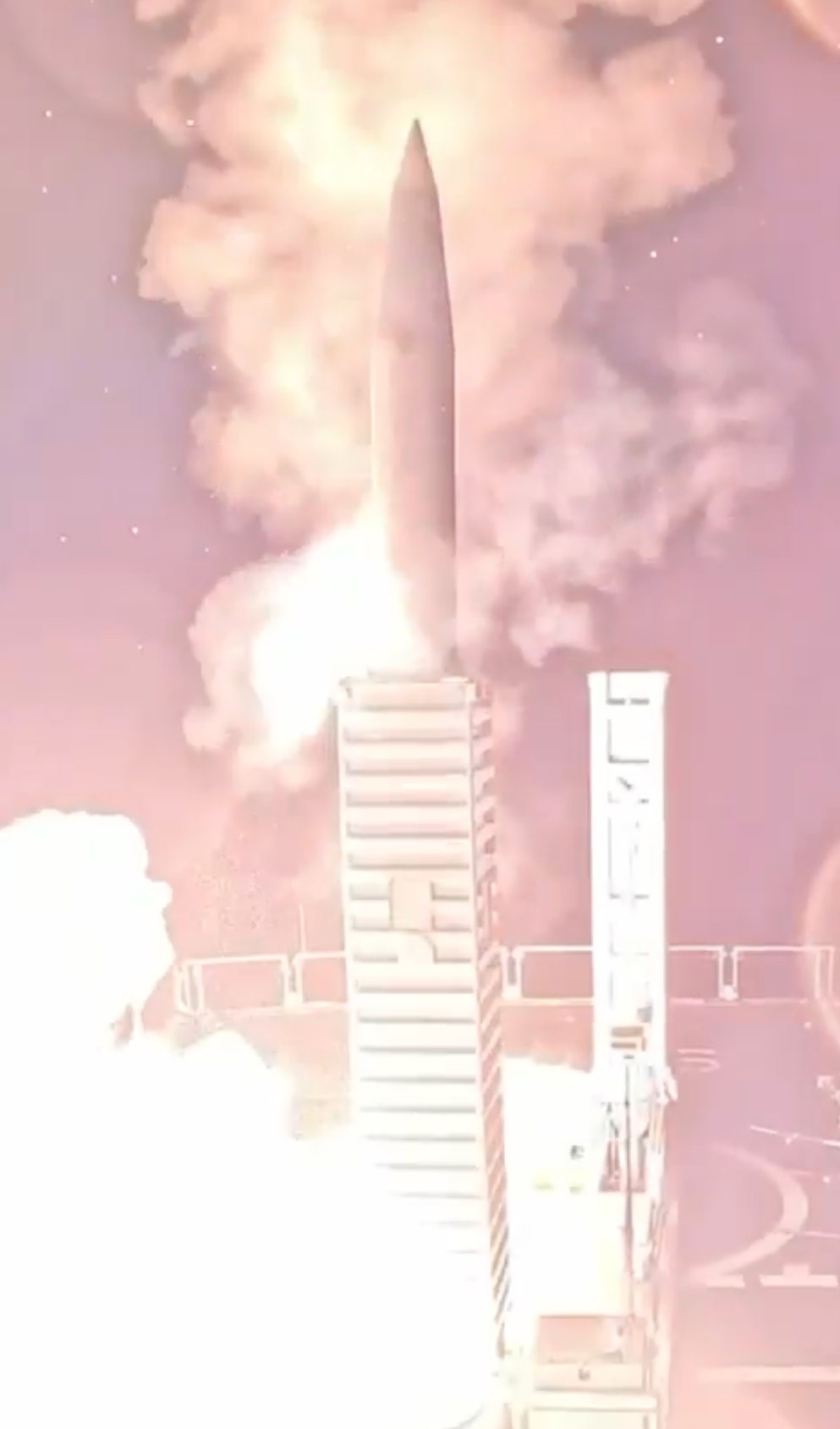
Die Fregatte „Sachsen-Anhalt" (Klasse 125) hat im Nordatlantik mindestens zwei ballistische Raketen vom Typ LORA (IAI) verschossen – gestartet aus Kanistern auf dem Flugdeck. Die Erprobung erfolgte im Rahmen der OPEX-Serie.
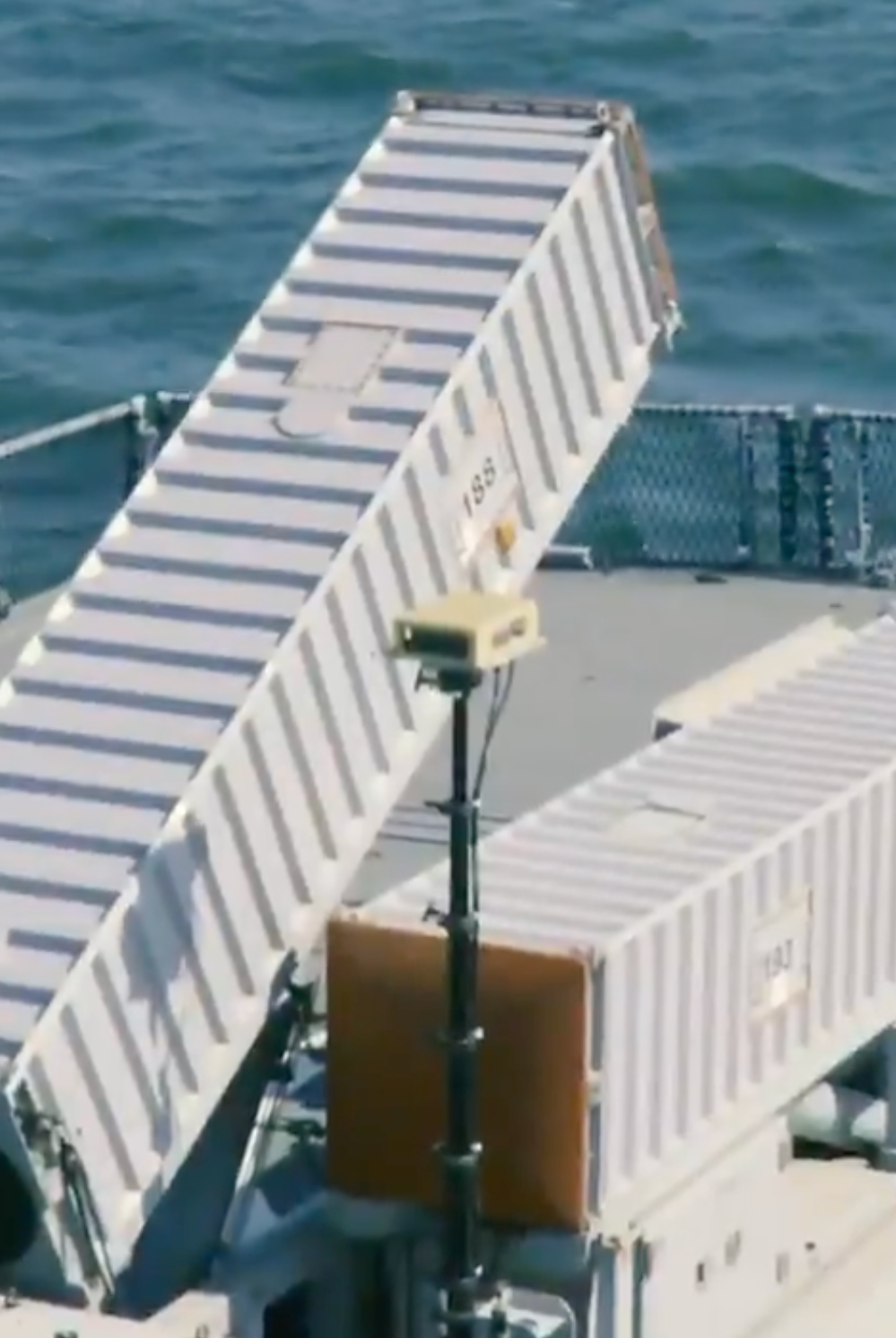
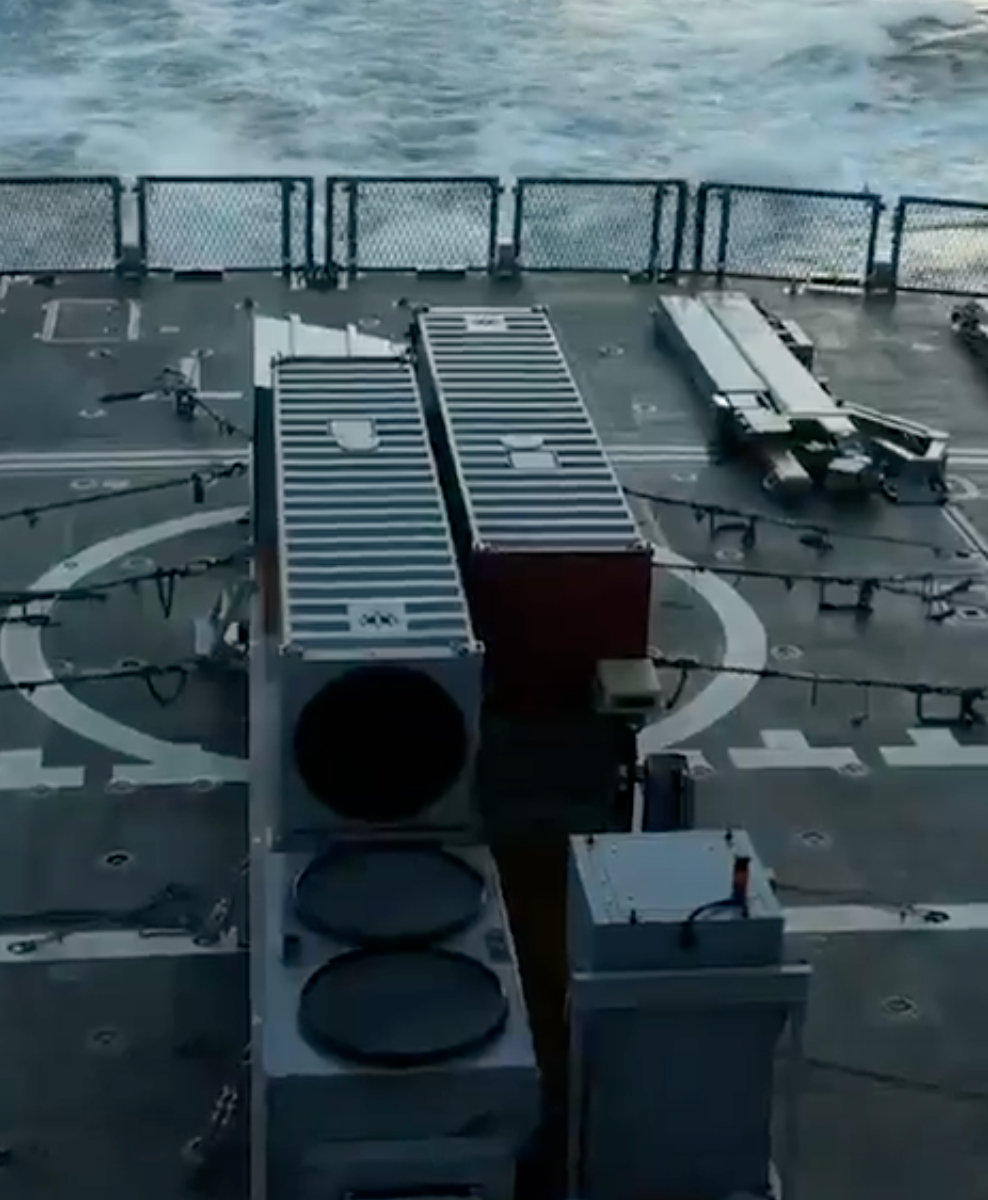
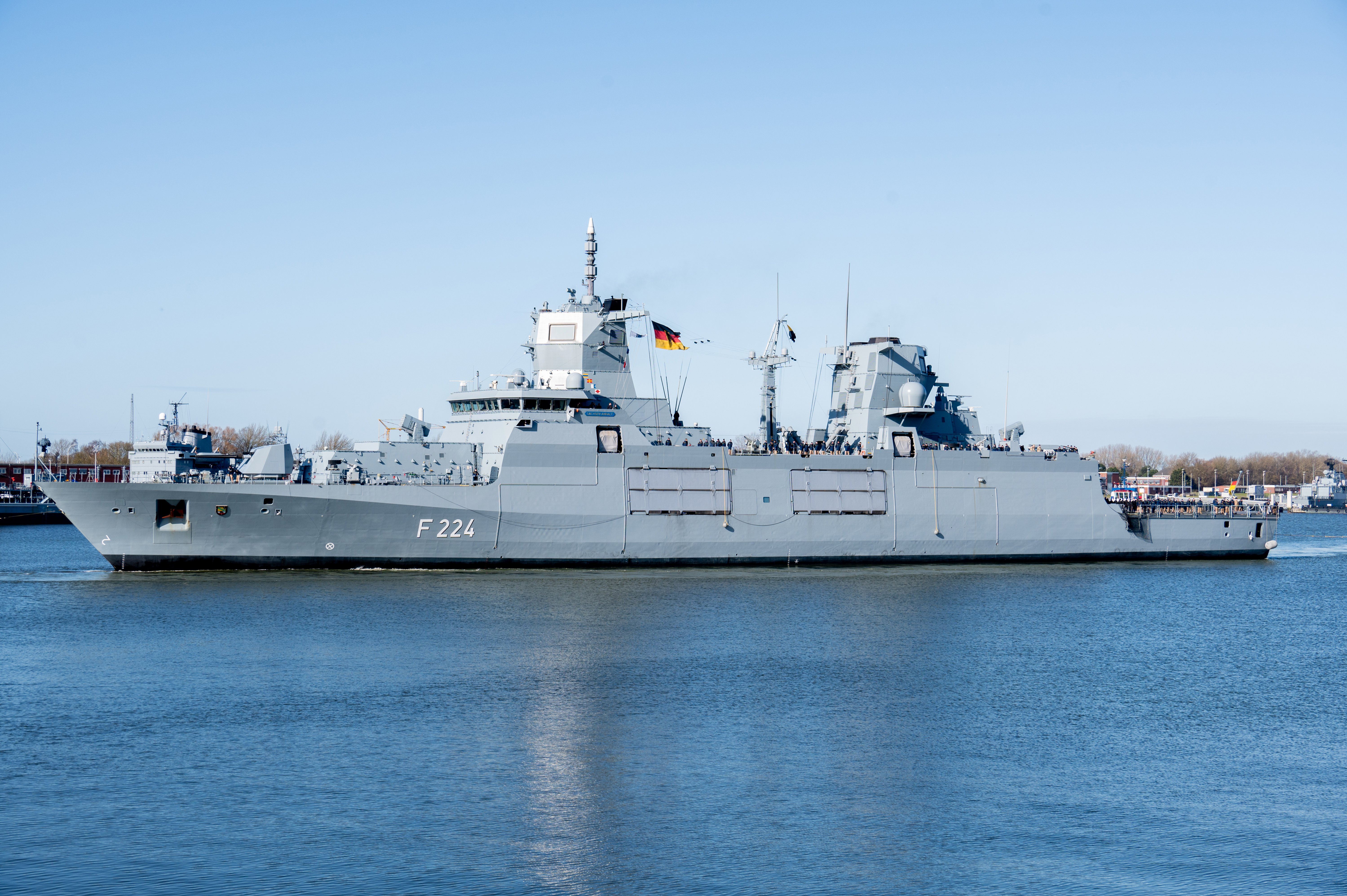
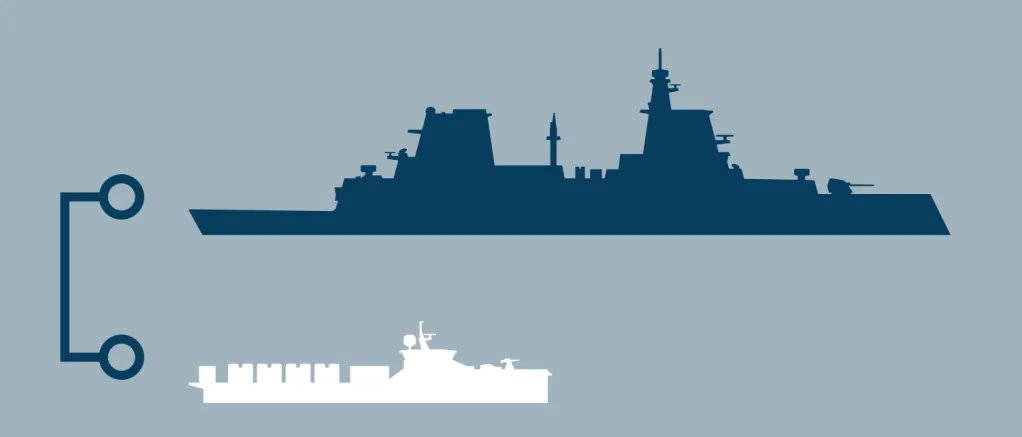
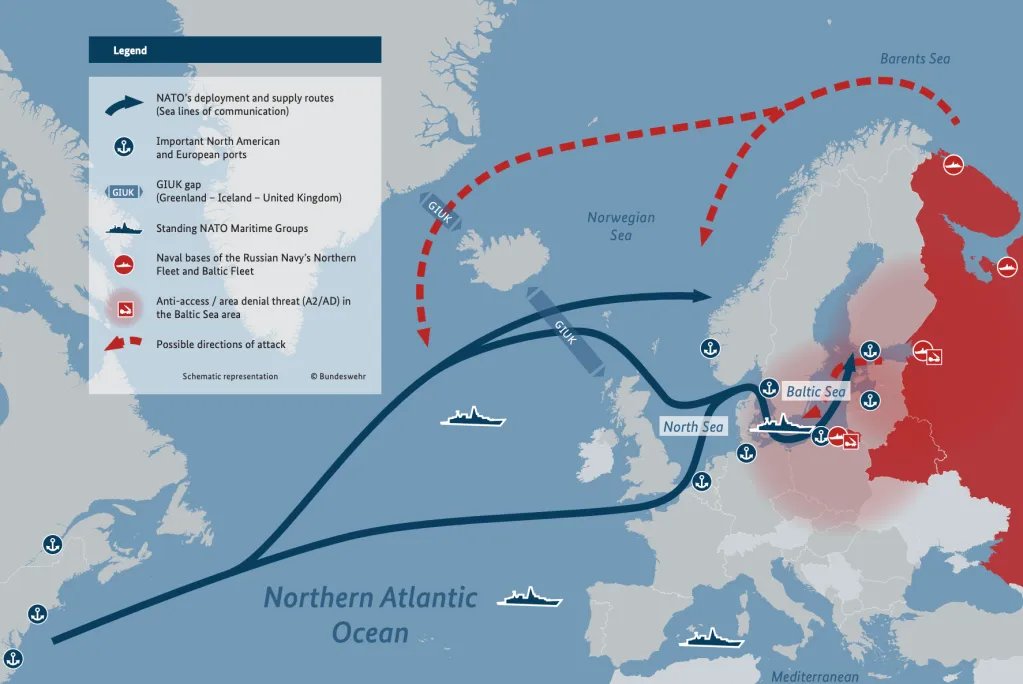
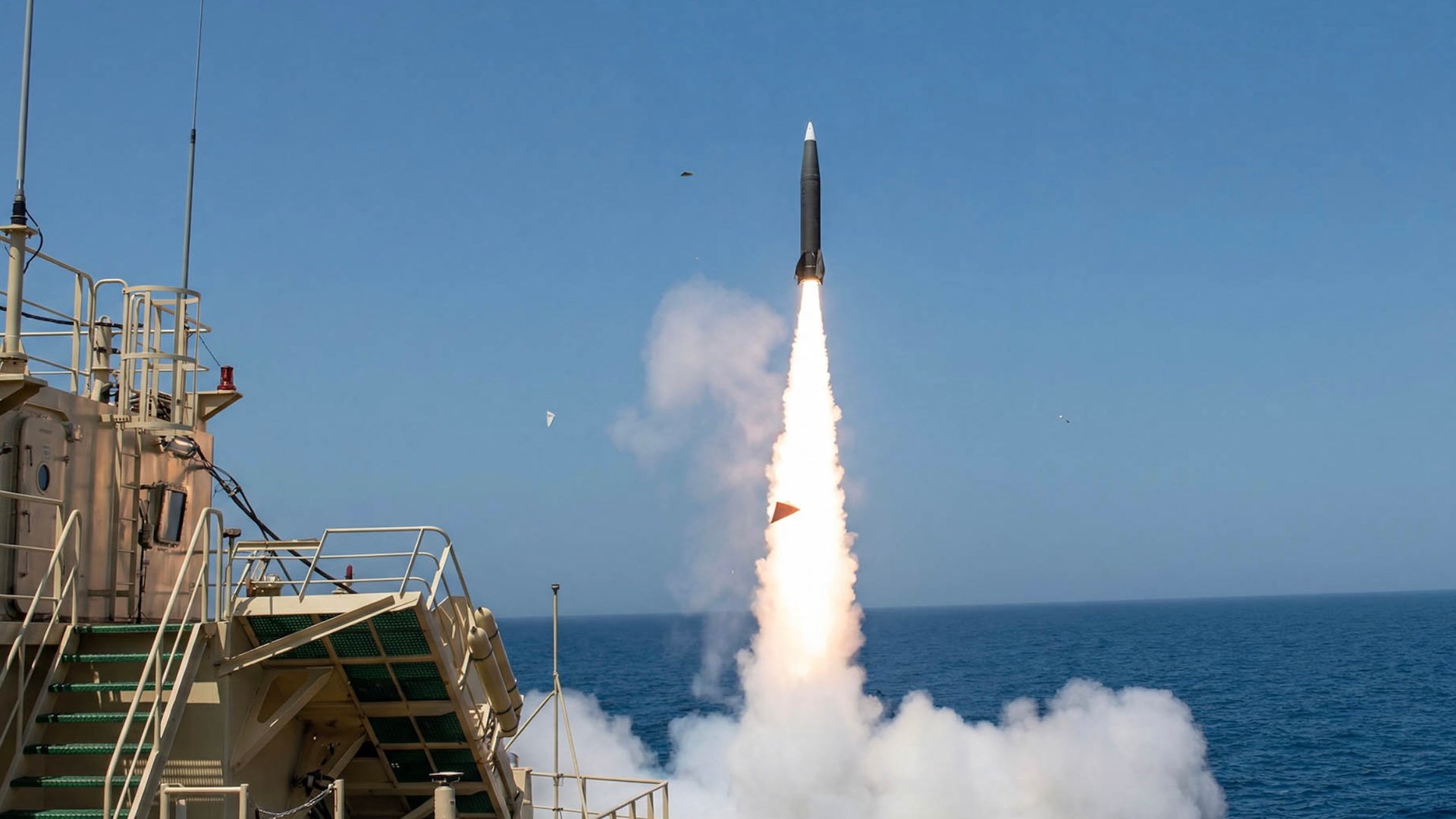


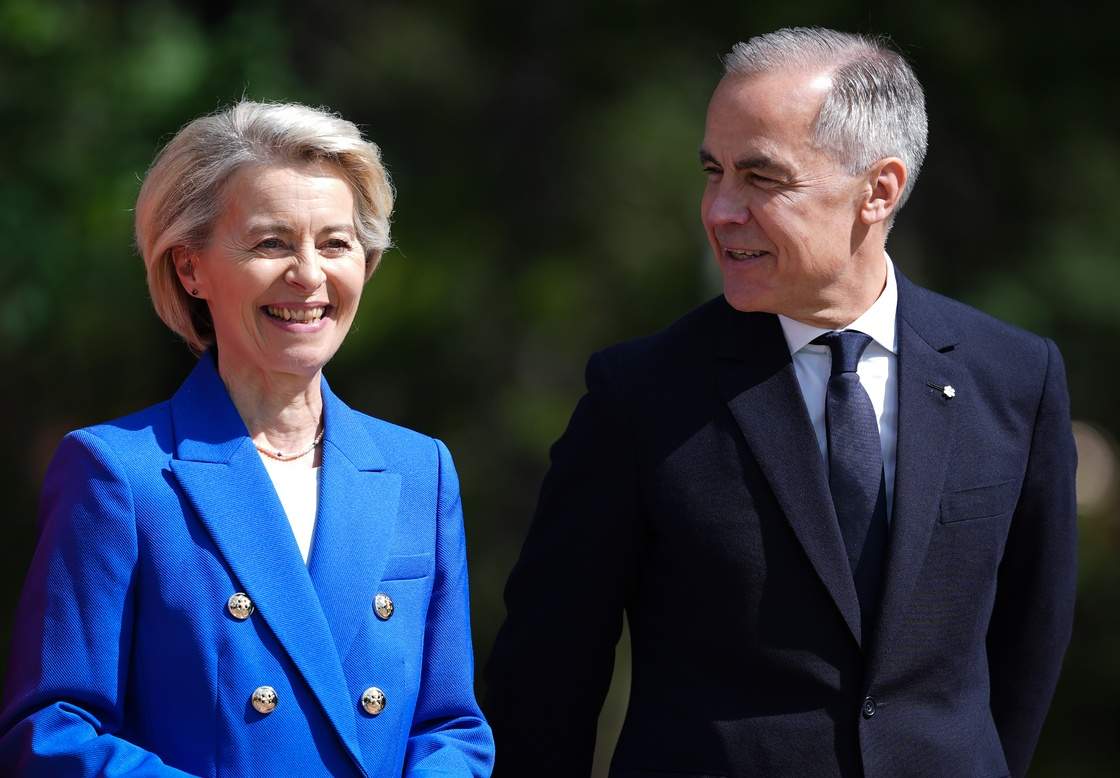


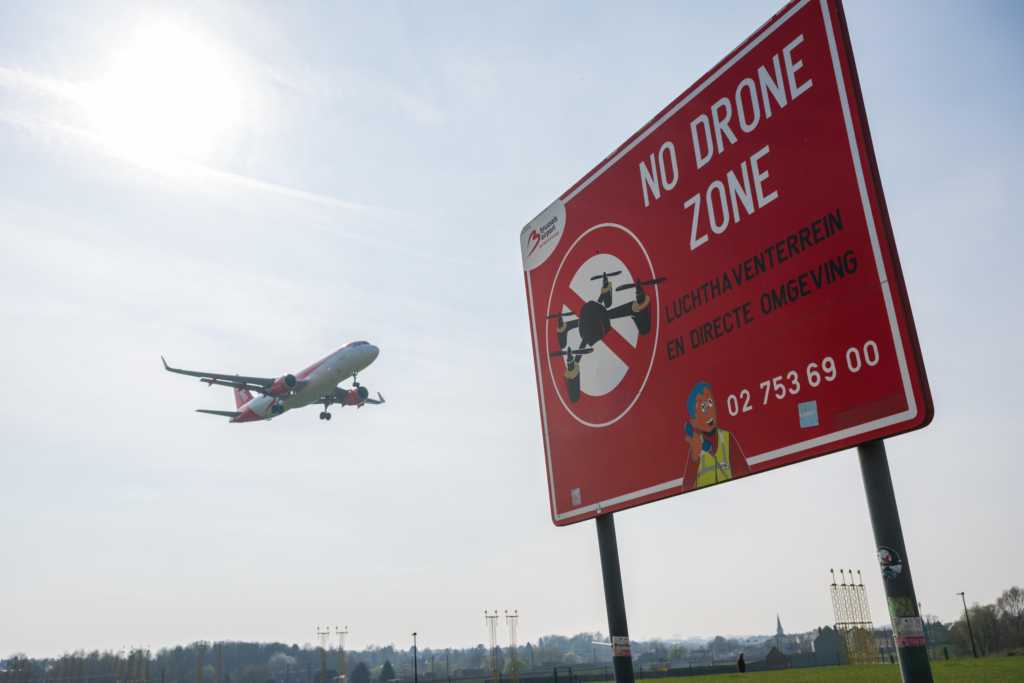
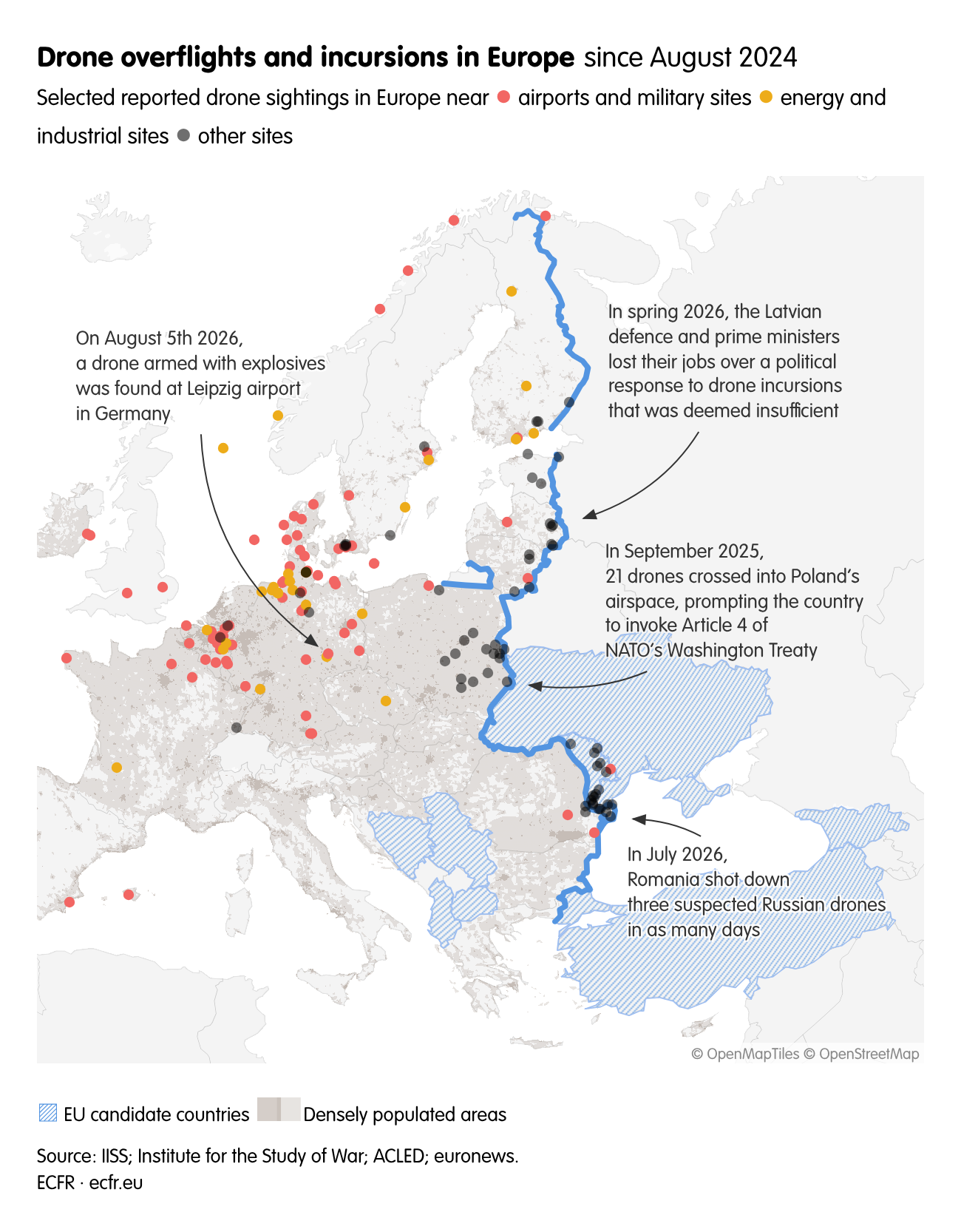
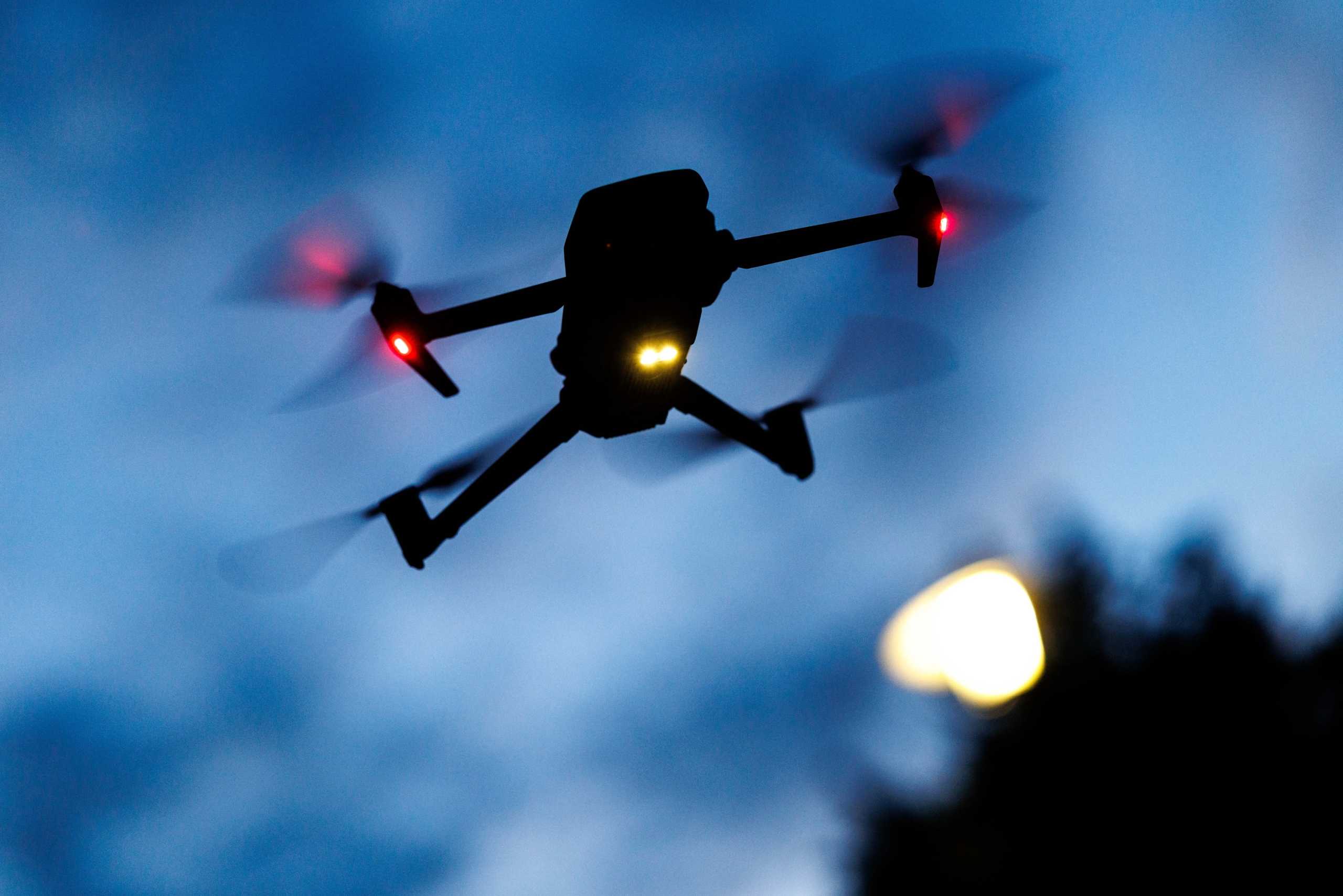
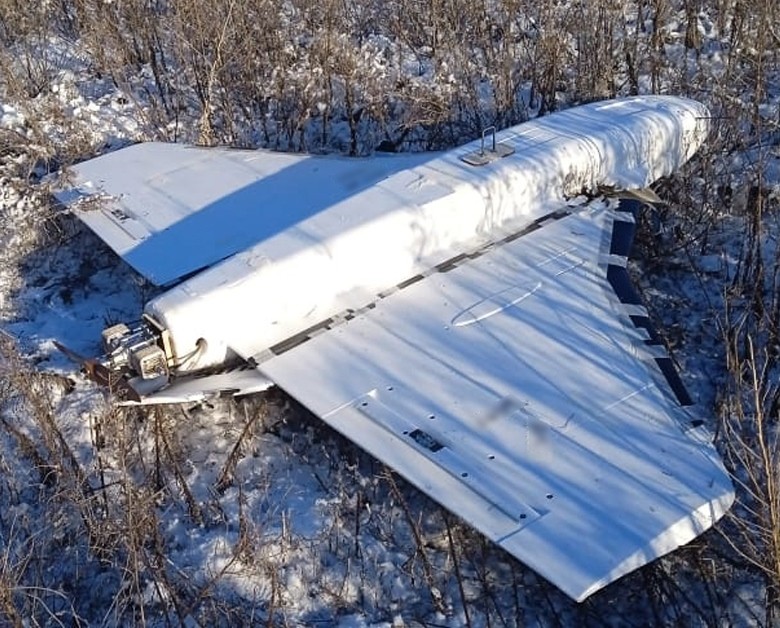
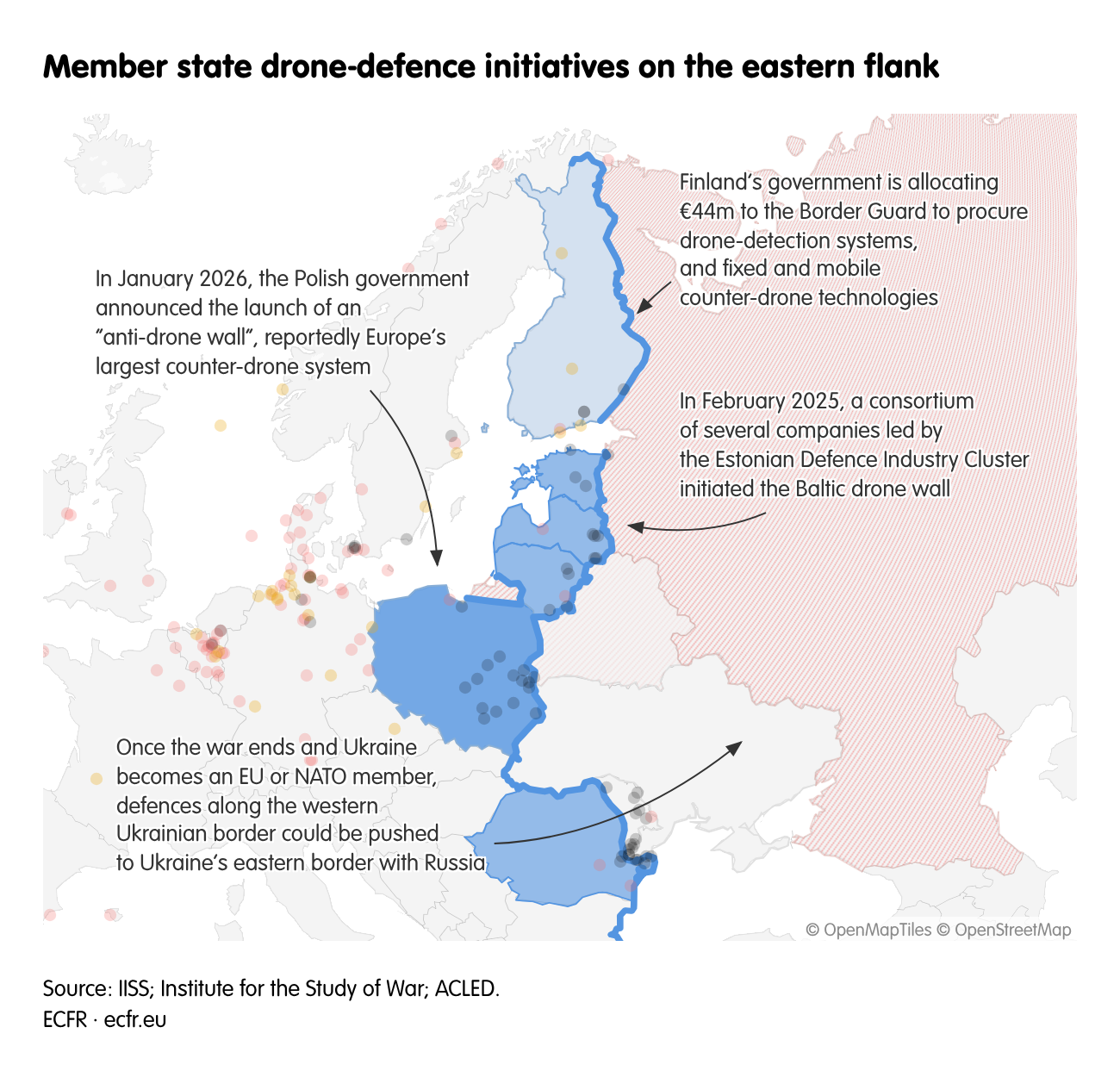
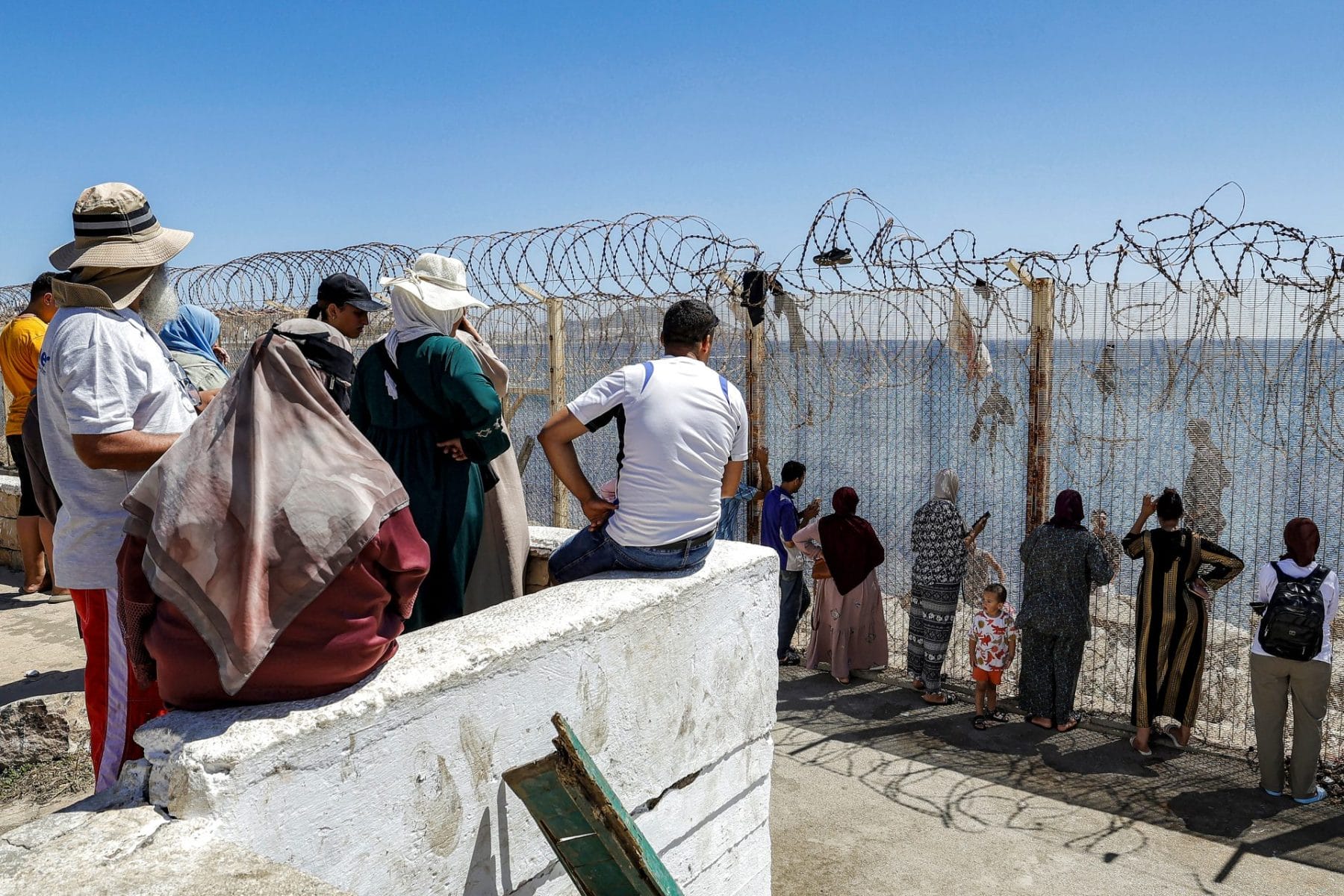




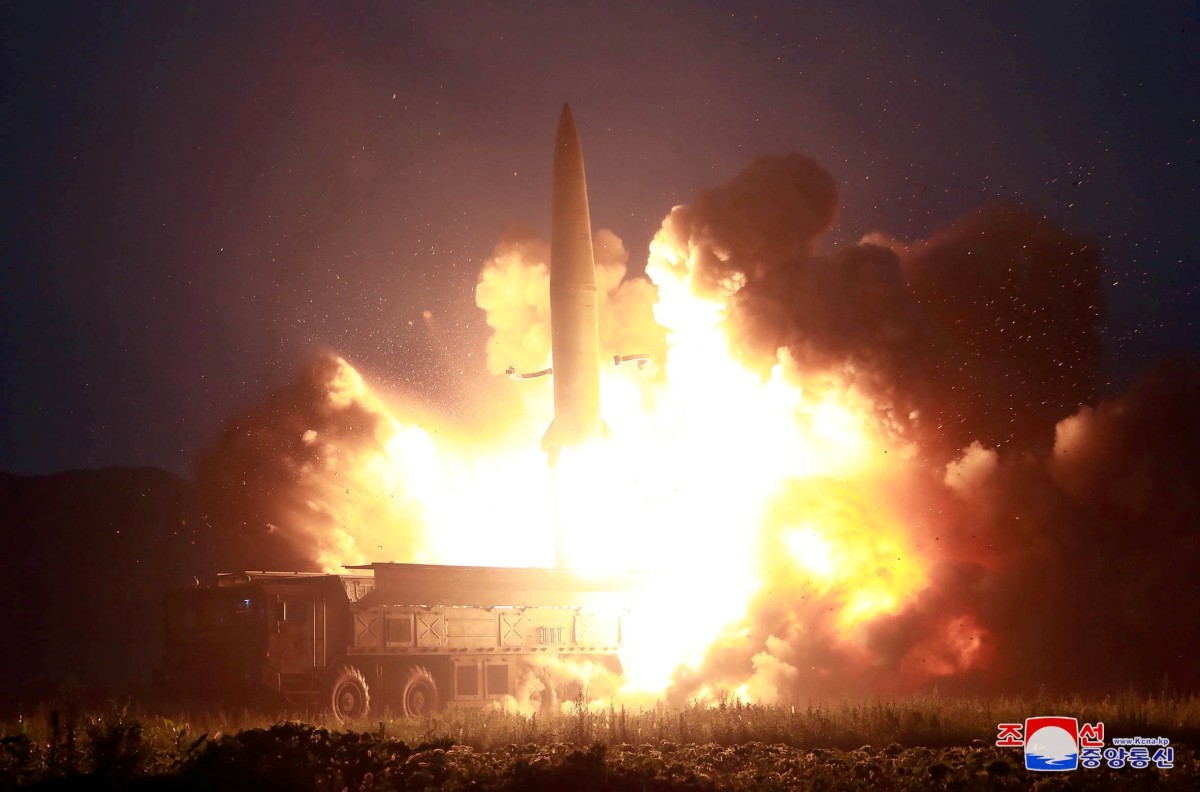
 Lithuania | Interception of 6
 aircrafts within the Baltic air space


 Scramble of two
 Rafale aircraft of the Baltic Air Policing 71 detachment, based in Šiauliai
 , in order to escort
 Visual…

