
❌

Reading view

How Kazakhstan’s economic reforms have turned the tenge into the best-performing currency in Europe and Asia

The Kazakhstani tenge has become the best-performing currency in Asia and Europe in 2026, according to the Financial Times. Since the beginning of the year, it has appreciated by nearly 10% against the US dollar, outperforming all other currencies worldwide except for several currencies of Latin American and African countries. This performance has been underpinned by economic growth driven by the transformation of Kazakhstan’s economic model. The country is rapidly evolving from a commodity-based economy into a financial and technology hub for Central Asia, amid growing inflows of foreign capital.

Growth factor

This year, the key factor behind the tenge’s significant 9.7% appreciation was not oil prices, which have traditionally been associated with Kazakhstan’s economic performance. This time, the appreciation of the Kazakhstani currency was driven by capital inflows, Dmitry Dolgin, Chief Economist for the CIS at ING, told the Financial Times. As of June, foreign investments in tenge-denominated government debt had reached $5 billion, 2.5 times higher than a year earlier, accounting for nearly one-tenth of the total volume of such securities outstanding.

Foreign investors seeking to diversify their portfolios are attracted by high yields — with the base rate at 16.75% — combined with a moderate level of risk, as confirmed by Kazakhstan’s sovereign credit rating. Another factor contributing to increased foreign capital inflows is the easier access for foreign investors to the country’s government debt. In April, the Kazakhstani authorities announced plans to connect local government bonds to the international clearing system Euroclear, and foreign investor activity has increased notably in recent months.

In addition, Kazakhstan expects to be included in the benchmark JPMorgan GBI-EM index of local-currency government bonds of emerging markets. The US bank is also preparing a separate index for frontier markets (a category of emerging markets — ed. note), in which, according to the National Bank, Kazakhstani bonds could account for an 8% share if included.

Foreign direct investment in Kazakhstan

The growth of foreign direct investment is providing additional support for the tenge. In the first quarter, FDI amounted to $6.3 billion. As the Financial Times notes, Kazakhstan is seeking alternative sources of income beyond oil, including by positioning itself as a transit and technology hub for goods moving from China to Europe. To this end, the country is investing heavily in infrastructure, the publication emphasizes.

In recent years, the country’s authorities have implemented reforms aimed at strengthening the national investment ecosystem, including tax, customs and other incentives. As a result, the total gross inflow of foreign direct investment into Kazakhstan from 2021 through 2025 amounted to approximately $114.3 billion. In 2025, the figure reached $20.5 billion, up 14.4% year on year. At the same time, the structure of investment has also changed, with capital increasingly flowing into manufacturing, trade, the financial sector, transportation and the IT industry.

The changes have resulted in record economic growth. In 2025, Kazakhstan’s GDP grew by 6.5%, the highest rate in a decade. Growth continued in the first five months of 2026, reaching 3.7% despite a decline in oil production. Meanwhile, the real sector of the economy grew by 4%, while services expanded by 3.6%, which can be seen as evidence of a qualitative transformation of the economy.

Statistical data illustrate the rapid expansion of the non-resource sector during this period. Construction recorded the strongest performance in 2026, growing by 13.4% in the first five months of the year compared with the same period in 2025. Manufacturing was also among the leaders, increasing by 9%. The highest growth rates were recorded in machinery manufacturing, which expanded by 23.3%, and pharmaceuticals, which grew by 35.2%.

According to the IMF, Kazakhstan’s economy measured at purchasing power parity is expected to reach $993.7 billion in 2026, effectively approaching the psychological milestone of $1 trillion. Over the past decade, this figure has nearly doubled.

Competitive economy

Based on its 2025 results, Kazakhstan ranked among the world’s most competitive economies, taking 34th place out of 69 countries in the IMD World Competitiveness Ranking, ahead of Japan, Kuwait, Portugal, India, Italy and other countries. Kazakhstan was also the only country from the CIS and Central Asia represented in the ranking. Analysts note that the country’s economy is becoming increasingly diversified. Today, manufacturing, logistics, energy infrastructure and investment projects are playing an increasingly important role.

Kazakhstan also ranked 53rd out of 150 countries in the Global Investment Risk & Resilience Index, achieving the highest result among Central Asian countries.

Focus on digitalization

Digitalization is one of Kazakhstan’s strategic priorities. In early June 2026, it was announced that an agreement had been signed with Firebird and Nvidia US companies to build data centers in the so-called “Data Center Valley.” According to Bloomberg, investments in the project could amount to $10 billion.

According to the Ministry of Artificial Intelligence, Kazakhstan’s IT services exports exceeded $1.142 billion in 2025. The sector has been growing at a rapid pace: five years ago, exports of high-tech solutions from Kazakhstan amounted to just $33.5 million. The strategic goal is to increase Kazakhstan’s IT services exports to $5 billion by 2030.

Fintech for export

Kazakhstan is expanding its export potential in the financial sector. In August, the subsidiary of one of the largest fintech holdings operating in Kazakhstan, Freedom, received a brokerage license from the local regulator in Turkey, becoming the first foreign broker in 34 years to obtain such a license. In late July, the company also completed the acquisition of a local bank. According to the holding’s founder, Timur Turlov, the company plans to invest $300 million in the Turkish market to create an integrated digital financial ecosystem built around its brokerage and banking businesses.

Freedom already operates in 24 countries worldwide. This year, the company applied for a banking license in France, viewing it as a gateway to the broader European market. The holding currently serves more than 600,000 brokerage clients in Europe and aims to increase that number to 50 million by exporting its ecosystem.

The total number of clients across all companies within the Freedom group stands at 14 million, while the holding’s assets exceed $14 billion and its market capitalization stands at $10 billion. Since Freedom’s listing on Nasdaq in 2019, the value of its shares has increased nearly 13-fold.

Another Kazakhstani fintech giant, Kaspi.kz, is also actively expanding its presence in Turkey. In July, the company announced the completion of a deal to acquire the Turkish subsidiary of Rabobank Dutch group. Earlier, in 2025, Kaspi.kz acquired a controlling stake in Turkish marketplace, Hepsiburada. The company’s shares are also traded on a US stock exchange, underscoring the high level of international confidence in Kazakhstani fintech companies.

Kazakhstan is also actively building its own financial infrastructure, while its stock market ranks among the largest in Eastern Europe. Trading volume on the Astana International Exchange (AIX), which officially began operations just eight years ago, amounted to $2.1 billion in 2025. Since its launch, AIX has facilitated the raising of $12.4 billion in debt and equity capital, while assets under management within the Astana International Financial Centre (AIFC) exceeded $5.4 billion at the end of 2025.

On the country’s oldest exchange, the Kazakhstan Stock Exchange (KASE), trading volume in 2025 amounted to KZT 400.8 trillion ($769.1 billion). At the same time, the KASE Index has nearly tripled over the past four years, reaching 7,712.53 points by the end of June 2026. Combined trading volume on the two exchanges increased by nearly 50% in the first half of the year, while equity market capitalization rose by 18.8%.
  •  

Tokayev urges nuclear powers to resume talks, ban nuclear tests

Kazakh President Kassym-Jomart Tokayev has called on nuclear-armed states to engage in negotiations and accelerate efforts to bring the Comprehensive Nuclear-Test-Ban Treaty (CTBT) into force, reaffirming Kazakhstan’s commitment to the global anti-nuclear movement, Qazinform News Agency cites Akorda. 

Tokayev made the remarks in a statement marking the International Day against Nuclear Tests, established by the UN General Assembly at Kazakhstan’s initiative.

The president noted that exactly 35 years ago, amid a difficult international situation, Kazakhstan closed the Semipalatinsk nuclear test site. For decades, the testing ground caused irreversible damage to people’s health and the environment, leaving a painful legacy for the Kazakh people, he said.

“Thirty-five years later, this date will serve as a reminder to all humanity of the tragic consequences of nuclear tests and as a call to prevent them from ever happening again,” Tokayev said.

He also highlighted Kazakhstan’s decision to voluntarily give up the world’s fourth-largest nuclear arsenal following the country’s independence.

“By voluntarily renouncing the fourth-largest nuclear arsenal on the planet, Kazakhstan made a historic choice in favor of peace, security and sustainable development. This decision fulfilled the aspirations of the people of Kazakhstan and demonstrated our state’s responsibility for the fate of future generations,” Tokayev said.

According to the president, Kazakhstan’s commitment to peace and friendship with all states, enshrined in the preamble of the country’s new Constitution, remains an unwavering principle of its foreign policy.

“Our country’s position as one of the leaders of the global anti-nuclear movement remains unchanged. We call for negotiations among nuclear powers, the earliest possible entry into force of the Comprehensive Nuclear-Test-Ban Treaty, and decisive multilateral action to eliminate the threat of nuclear weapons use,” Tokayev said.

The president also stressed that nuclear energy should be used exclusively for peaceful and constructive purposes.

He noted that the Kazakhstani people had firmly supported the country’s course toward developing nuclear energy in a nationwide referendum, laying a solid foundation for Kazakhstan’s economic, scientific and technological progress for decades to come.

Tokayev said this strategic choice forms an important part of the country’s transformation and opens a new stage in its sustainable development. He added that large-scale reforms across all areas of public life are aimed at building a Just, Progressive and Clean Kazakhstan.

“I am confident that together we will achieve this ambitious goal,” the president concluded.

Earlier, Qazinform reported President Kassym-Jomart Tokayev had offered condolences over passing Norway’s King Harald V. 

  •  

The causes and risks of the idea of establishing ‘Southern Turkestan’ in Afghanistan

Under the conditions of power monopoly in Afghanistan, the proposal of ideas such as ‘Southern Turkestan’ can become a platform for foreign intervention, ethnic polarization, and further disintegration of national cohesion. This project could also serve as a tool for future pressure on Iran, Russia, and China. Introduction The introduction of the ‘Southern Turkestan’ idea […]
  •  

Bishkek 2026: Multipolar Reality Continues Without Western Permission

On September 1, the leaders of some of Eurasia’s most consequential states gathered in Bishkek for the 26th meeting of the Shanghai Cooperation Organization’s Council of Heads of State. The Summit That Did Not Need Europe The summit marked the SCO’s 25th anniversary. Vladimir Putin, Xi Jinping, Narendra Modi, Masoud Pezeshkian, Shehbaz Sharif, Aleksandr Lukashenko, […]
  •  

The disappeared who refused to disappear

On 30 August, the world marked the International Day of the Victims of Enforced Disappearances, a date intended to rescue the missing from oblivion and remind states that no human being should simply vanish into the machinery of power. In Balochistan, however, remembrance carries the cruelty of the present tense. On July 24, 2026, Jiand Baloch, a student leader and chairman of the Baloch Students Organization, disappeared after being taken away under circumstances that, according to Amnesty International, amounted to an enforced disappearance. For eleven days, his family did not know where he was. He returned home on 3 August. It was not the first time. Amnesty says Jiand had previously been forcibly disappeared for nine months in 2018 and again for about a month in 2024, linking the repeated targeting to his peaceful activism. As the international community prepares to commemorate the disappeared, one man in Balochistan has already had to return from disappearance three times. Therein lies the cruel paradox of 30 August: elsewhere, it is a day for remembering an atrocity; in Balochistan, families continue to experience it in the present tense, writes Dimitra Staikou.

Jiand Baloch is one name in a much larger ledger of absence. According to the Human Rights Council of Balochistan, 105 cases of enforced disappearance were documented in July 2026 alone, alongside 59 killings; 47 of those reported missing later returned, while the fate of others remained unresolved. The figures come from a Baloch human-rights organisation and must be attributed as such, but the phenomenon itself has long drawn scrutiny from United Nations experts and international rights groups. Behind every number lies the peculiar violence of enforced disappearance: no grave at which to mourn, no prison to visit, often no official account to challenge — only a photograph carried from protest to protest and a question repeated until it becomes part of a family’s daily life: Where are they? The United Nations has described enforced disappearance not merely as a violation against the person who vanishes, but as a practice capable of spreading terror throughout society. That definition exposes the bitter contradiction at the heart of Balochistan: while the language of counterterrorism grants the state extraordinary powers in the name of protecting society from fear, families of the disappeared describe living inside another kind of terror — the terror of not knowing whether the person they love is imprisoned, tortured, alive or dead.

The tragedy of Balochistan is not that the world does not know. It is that it has known for years. Pakistan itself established a Commission of Inquiry on Enforced Disappearances in 2010, while UN mechanisms have repeatedly raised concerns over disappearances, impunity and the treatment of those who demand answers. In April 2026, the UN Committee against Torture went further, expressing concern over reports that human rights defenders, journalists, political opponents, civil society activists and protesters — as well as members of their families — had faced reprisals ranging from intimidation and arbitrary detention to enforced disappearance and extrajudicial execution. UN experts have also examined allegations arising from counterterrorism operations in Balochistan, including arbitrary arrests, enforced disappearances and extrajudicial killings, as well as alleged reprisals against peaceful protesters seeking information about the missing. The contradiction is difficult to escape: a state cannot treat disappearance as serious enough to warrant its own commission of inquiry while allowing families to spend years asking the most elementary question a state should be able to answer — where are they?

For those families, enforced disappearance creates a form of punishment with no defined sentence and no identifiable end. A prisoner has a place of detention; a person confirmed dead can be mourned. The disappeared inhabit the space between the two, leaving their relatives trapped there with them. The United Nations recognises this explicitly: the victims of enforced disappearance are not only those who vanish, but also those who suffer as a direct consequence, while families can face economic hardship, intimidation and reprisals simply for searching for the truth. A mother does not know whether to wait or mourn. A wife may not know whether she is a wife or a widow. A child can grow up without knowing whether a father is imprisoned, hidden somewhere beyond the reach of the law, or dead. Enforced disappearance does not take one person hostage; it holds an entire family hostage to uncertainty. And when information itself is withheld, absence becomes more than the consequence of repression — it becomes an instrument of power.

But enforced disappearance requires something else to endure: silence. And in Balochistan, some of the most persistent challenges to that silence have come from those who refuse to let the missing become merely numbers. Mahrang Baloch, one of the most prominent voices of the Baloch protest movement, knows that absence intimately: her father, Abdul Ghaffar Langove, was forcibly disappeared and later found dead. On 22 March 2025, she was herself arrested following protests in Quetta, alongside other activists demanding accountability over disappearances and alleged extrajudicial killings; UN experts later called for the release of Baloch human-rights defenders and warned against the criminalisation of peaceful protest. But the pressure does not end with the families and activists who demand answers. It reaches those whose profession is to record their testimony. On August 18, 2026, journalist Danish Irshad learned through social media that he had been placed on the Fourth Schedule, an anti-terrorism watchlist in Pakistan-administered Azad Jammu and Kashmir, under an order issued on July 29. No criminal conviction preceded the listing, and the publicly available order did not identify a specific terrorist act attributed to him. Irshad had spent nearly a decade reporting on Kashmir and had recently interviewed families who said their children had been killed by Pakistani forces. Three days later, he asked the question that connects the fate of the witness to that of those whose stories he records: “How did a journalist’s speaking and writing become an act of terrorism?” Enforced disappearance removes a person from public view; intimidating those who search for them, speak for them or document state violence threatens to remove the story as well.

Pakistan has every right to fight terrorism — and, after years of bombings, militant attacks and thousands of lives lost, a duty to protect its citizens from it. As recently as August 2, 2026, a suspected suicide bombing in Swat killed civilians and police officers alike, another reminder that the threat confronting the country is neither rhetorical nor imagined. But precisely because terrorism is real, the word cannot be allowed to mean everything. An armed militant is not a peaceful activist; an activist is not a journalist; and a reporter who interviews the families of victims does not become a terrorist by recording what they have to say. This is where the language of counterterrorism collides with the reality of enforced disappearance. The United Nations warns that enforced disappearance has itself frequently been used as a strategy to “spread terror within society,” while identifying as a particular concern the use of counterterrorism activities by states as an excuse for breaching their human-rights obligations. The contradiction is difficult to escape. When a journalist such as Danish Irshad can be placed on an anti-terrorism watchlist without a publicly identified terrorist act attributed to him, while families elsewhere in Pakistan describe years spent searching for relatives who vanished without answers, the language of security begins to turn against itself. Counterterrorism is supposed to protect society from fear. But when its boundaries become elastic enough to encompass the journalist asking questions, the activist demanding answers and the family searching for the missing, we must ask a far more uncomfortable question: what happens when the instruments invoked to protect a society from terror begin themselves to produce fear?

  •  

Kazakhstan to showcase cultural heritage at Smithsonian Folklife Festival 2027

Kazakhstan is preparing to take part in the 2027 Smithsonian Folklife Festival, where it will showcase the country’s traditions, music, crafts and other elements of its cultural heritage, Qazinform News Agency reports, citing the Kazakh Ministry of Culture and Information.

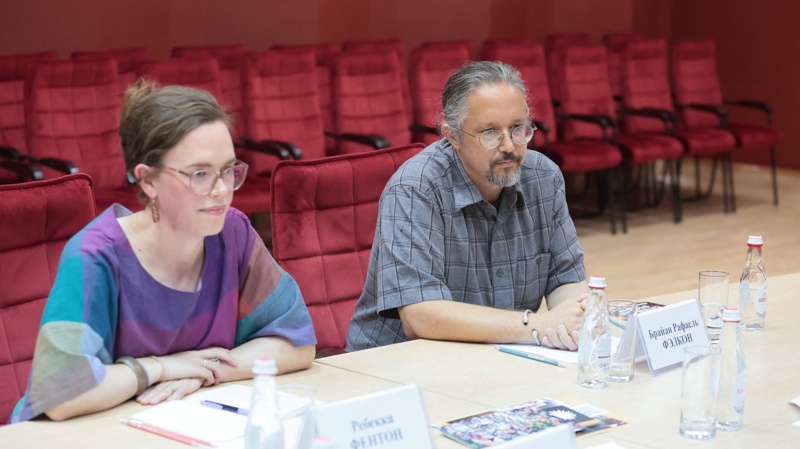
The preparations were discussed at a meeting between Kazakhstan’s Deputy Prime Minister and Minister of Culture and Information, Aida Balayeva, Smithsonian Institution Festival Curator, Rebecca Fenton, and Southwest Folklife Alliance Co-Founder, Bryan Rafael Falcon.

The sides also discussed the participation of Kazakhstan’s ethno-folk group HasSak in a festival in Tucson, as well as plans for the group to hold a concert in Washington.

 Kazakhstan to showcase cultural heritage at Smithsonian Folklife Festival 2027
Photo source: gov.kz

Preparations for the 2027 Smithsonian Folklife Festival are part of broader efforts to expand cultural cooperation between Kazakhstan and the Smithsonian Institution. The sides expressed confidence that their cooperation would gain new momentum and move beyond individual cultural initiatives toward long-term projects.

Qazinform News Agency previously reported that Kazakhstan proposed expanding bilateral cultural exchanges and hosting US Culture Days in the country.

  •  

Kazakhstan cuts 2026 oil production plan to 96mn tons amid CPC attacks

  • Kazakhstan has revised its oil production plan for 2026 from 98 million to 96 million tons due to the impact of attacks on the Caspian Pipeline Consortium (CPC), Qazinform News Agency quotes Energy Minister Erlan Akkenzhenov as saying.

According to him, Kazakhstan initially planned to maintain last year's production level of 99.5 million tons and approach the 100 million-ton mark.

"With the attacks in January and the continued attacks in June and July, we lost approximately 3.5 million tons. TCO shareholders decided not to conduct a major overhaul and postponed it until next year," Akkenzhenov said at a government briefing.

The ministry also decided to postpone planned maintenance at NCOC fields until next year.

"We planned to produce 98 million tons, but the adjusted plan is now 96 million tons. Production losses resulting from the attacks on the CPC will amount to 3.5 million tons," the minister clarified.

In July, the CPC was targeted in a series of drone attacks. On July 17, drones struck the oil tanker Nordic Zenith.

On July 19, two tankers carrying Kazakh oil were targeted in separate attacks.

Following the attacks, oil loading operations at the CPC terminal were suspended. The Ministry of Energy said that such attacks on civilian critical energy infrastructure facilities were unacceptable.

The Ministry of Foreign Affairs also condemned drone attacks on vessels transporting oil via the CPC.

On July 23, the Ministry of Energy announced a temporary suspension of oil loading at the CPC marine terminal and a reduction in oil production in Kazakhstan.

On July 27, the CPC resumed oil intake from shippers and loading operations at its marine terminal in the port of Novorossiysk.

On July 30, the CPC reported new attacks targeting two tankers, following which oil loading operations were suspended again.

  •  

Two Fronts, One Strategy: What Putin Told the World in Bishkek

On 1 September in Bishkek, Vladimir Putin used one summit to tell Iran that Russia would keep supplying what Tehran needs and to tell the world that Russia is winning in Ukraine and will not negotiate with Kyiv. The same day was not two stories. It was one strategy spoken into two microphones. One Room […]
  •  

Narendra Modi in Central Asia: Deepening Friendship and Searching for New Horizons

Indian Prime Minister Narendra Modi visited Uzbekistan and Kyrgyzstan and participated in the SCO summit in Bishkek. Relations between India and the countries of Central Asia have longstanding and deep historical roots, having gone through various periods of development. However, in recent decades, they have been on a clear upward trajectory, despite a number of […]
  •  

Pakistan floats fresh LNG tender after rejecting costly single bid

KARACHI: Pakistan LNG Limited has issued a fresh tender on Wednesday to procure a spot LNG cargo for delivery between September 8 and 12, after rejecting the sole bid received for an earlier delivery window as too expensive. The state-owned buyer turned down an offer from BP Singapore at $26.969 per million British thermal units ... Read more

The post Pakistan floats fresh LNG tender after rejecting costly single bid appeared first on BOL News.

  •  

Tokayev links Kazakhstan-China partnership to wider vision for a more connected and cooperative Eurasia

Kazakhstan President Kassym-Jomart Tokayev has used the Shanghai Cooperation Organisation summit in Bishkek and a wide-ranging interview with China’s Xinhua news agency to set out a closely connected vision of Kazakhstan’s foreign policy — combining deeper economic and technological cooperation with China with a broader commitment to multilateralism, Eurasian connectivity and reform of global institutions.

Speaking as leaders gathered in Bishkek for the 26th meeting of the Shanghai Cooperation Organisation (SCO) and its SCO Plus format, Tokayev presented Kazakhstan as both a committed regional partner and an increasingly active “middle power” seeking to bridge geopolitical divisions.

His summit remarks were reinforced by an exclusive written interview with Xinhua, published on 1 September, in which the Kazakh leader described relations with China as being at an “unprecedentedly high level” and said Astana intended to continue strengthening what the two countries describe as an “eternal comprehensive strategic partnership”.

Taken together, the two interventions offer a clear picture of Kazakhstan’s current diplomatic strategy: maintain close relations with its major neighbours, promote trade routes linking Asia with Europe, embrace technological cooperation and at the same time argue for international relations based on dialogue rather than confrontation.

China partnership moves beyond traditional trade

In his Xinhua interview, Tokayev stressed that Kazakhstan-China relations now extend well beyond traditional energy and commodity ties.

Cooperation encompasses trade, investment, transport, industrial production, agriculture, digitalisation, healthcare, science, education and culture, he said. China is now Kazakhstan’s largest foreign trading partner, while transport and logistics have assumed an increasingly strategic role.

That emphasis is particularly significant for Europe.

Kazakhstan occupies a central geographical position between China and European markets, and Tokayev argued that the country was working with China to transform that location into a modern Eurasian transport and logistics network.

He specifically highlighted the Belt and Road Initiative, new railway construction, dry ports, logistics terminals and modernisation of border infrastructure.

Central to this strategy is the Trans-Caspian International Transport Route, commonly known as the Middle Corridor, which links China with Europe through Kazakhstan, the Caspian Sea, the South Caucasus and onward towards European markets.

Tokayev described making the route more competitive as a shared priority, pointing to “smart customs”, digital documentation, interconnected information systems and automated border procedures as necessary elements in reducing transit times.

That message closely reflected his position at the SCO summit, where Kazakhstan again offered to help develop transport initiatives throughout the organisation and called attention to the potential integration of the Belt and Road Initiative, Middle Corridor, North-South Corridor and routes connecting Central and South Asia.

For the European Union, which has increasingly sought alternative and resilient connections with Central Asia and China, the development of the Middle Corridor gives Kazakhstan an importance that extends considerably beyond the size of its domestic economy.

Artificial intelligence becomes a new pillar

Tokayev also placed technology and artificial intelligence near the centre of the emerging Kazakhstan-China relationship.

China's position in AI, robotics, digital technology, new energy and advanced manufacturing complements Kazakhstan's own ambition to accelerate its digital transformation, he argued.

Kazakhstan has declared 2026 its Year of Digitalisation and Artificial Intelligence, and Tokayev referred to meetings with leading Chinese technology companies during his recent participation in the World Artificial Intelligence Conference in Shanghai.

He said there was mutual interest in projects involving the digital economy, intelligent manufacturing, e-commerce, research and skills development.

The subject moved seamlessly from the bilateral interview into Tokayev's multilateral message in Bishkek.

Addressing the SCO Plus meeting, he warned that global stability increasingly depends upon the responsible development of artificial intelligence and called for universal rules capable of encouraging innovation while preventing uncontrolled use and narrowing the digital divide.

Kazakhstan is also establishing an Asia-Pacific digital solutions centre in Almaty under the auspices of the UN Economic and Social Commission for Asia and the Pacific, which Tokayev said should help developing countries gain access to technological expertise.

In his Xinhua interview he went further, arguing that AI should ultimately serve humanity as a whole and that countries should have equitable access to technology, knowledge and computing resources. Kazakhstan was among the founding participants this year in a new international AI cooperation initiative launched in Shanghai.

The ‘Shanghai spirit’ as an alternative to bloc politics

Underlying both the interview and Tokayev's summit speech was a wider political argument.

The Kazakh president portrayed the SCO not simply as an economic or security grouping but as a potential model for cooperation between states with different political systems and interests.

In Bishkek, he said the organisation's principles of equality and consensus had become a “gold standard” for multilateral cooperation. He proposed that core SCO principles should ultimately be reflected in a UN General Assembly resolution linked to the International Day of Multilateralism and Diplomacy for Peace.

The formulation is consistent with Kazakhstan's long-standing attempt to avoid being drawn exclusively into competing geopolitical camps.

Tokayev reiterated that Kazakhstan would maintain what he described as a balanced, constructive and peaceful foreign policy, while arguing that the international order should move away from the “cult of force and confrontation” towards collective responsibility and long-term cooperation.

In his interview with Xinhua, he similarly said Kazakhstan and China shared support for the central role of the United Nations, international law, mediation, multilateralism and the peaceful resolution of conflicts.

A stronger voice for middle powers

One of the more significant elements of Tokayev's Bishkek intervention was his argument that responsible middle powers should have greater influence within global governance.

With tensions between major powers putting pressure on existing international institutions, Tokayev suggested countries such as Kazakhstan could facilitate dialogue between competing centres of power and help develop collective solutions.

“Kazakhstan is ready to actively contribute to this process,” he told the summit.

At the same time, he resisted suggestions that shortcomings within the United Nations justified weakening the organisation.

Despite criticism of the UN, Tokayev said there was no viable alternative to it. Kazakhstan's position, he argued, was that the UN should remain at the centre of the international system and that its Charter should continue to provide the universal foundation of international law.

The President called for closer interaction between the UN and regional organisations such as the SCO, stronger preventive diplomacy and greater emphasis on peaceful settlement of disputes.

Water security joins the global agenda

Tokayev also used the summit to promote another issue of growing importance to Central Asia: water.

Climate pressures, population growth and competing demands on shared water resources make the issue increasingly important to Kazakhstan and neighbouring states.

Tokayev proposed creating an International Water Organisation under UN auspices, arguing that although numerous UN bodies deal with water, no universal intergovernmental organisation currently has a comprehensive mandate.

He also proposed an SCO Water Problems Analysis Centre as a regional complement to such a global organisation.

The proposal fits into Kazakhstan's broader effort to move environmental and resource-security questions higher up the international agenda.

A Eurasian crossroads

Perhaps the strongest thread connecting Tokayev's interview with his SCO appearance is Kazakhstan's determination to turn geography into diplomatic and economic influence.

Astana is simultaneously strengthening its relationship with Beijing, maintaining important relationships with Russia and other neighbours, developing transport corridors towards Europe, expanding cooperation with Western partners and presenting itself as an advocate of multilateral diplomacy.

Tokayev's description of relations with China therefore carries a wider meaning.

He quoted a Kazakh proverb in the Xinhua interview: “Those travelling the same road share a common destiny.”

Yet the message emerging from Bishkek suggests Kazakhstan sees that road not as one running exclusively eastwards towards China, but as part of a much larger network connecting East and West.

As competition between the world's major powers becomes more pronounced, Kazakhstan is attempting to position itself at the centre of those connections — geographically through trade and transport corridors, technologically through digital cooperation, and diplomatically through its advocacy of multilateralism.

For Europe, that makes developments in Kazakhstan-China relations increasingly relevant. The more successfully Kazakhstan develops the Middle Corridor and other east-west transport links, the more the country becomes not simply a Central Asian partner but a strategic gateway connecting European and Asian economies.

And that, ultimately, appears to be the common theme running through Tokayev's words both to Xinhua and to the leaders assembled at the SCO summit: Kazakhstan believes its future influence will come not from choosing between competing blocs, but from connecting them.

  •  
❌