Artigo escrito por Joana Carvalho e Branco, médica gastrenterologista e vogal da Sociedade Portuguesa de Gastrenterologia (SPG) O que é a colangite biliar primária? A colangite biliar primária (CBP) é uma doença crónica e autoimune do fígado, em que o sistema imunitário começa a atacar as pequenas vias biliares localizadas dentro do fígado. A bílis […]
Saxony-Anhalt has returned 43.8% of the vote for the Alternative for Germany (AfD) in its state election. The result puts the party within reach of forming what would be the first state government run by the far-right in the history of the German federal republic.
The AfD has no executive experience and its Saxony-Anhalt branch is riven with tensions and splits. A chaotic state government could deter voters elsewhere from backing such parties. But if the AfD manages to govern halfway coherently, it will have the chance to pick fights with authorities in both Berlin and Brussels, and significant leeway to try out policies that could later be applied elsewhere. This might then embolden the radical right elsewhere in Europe.
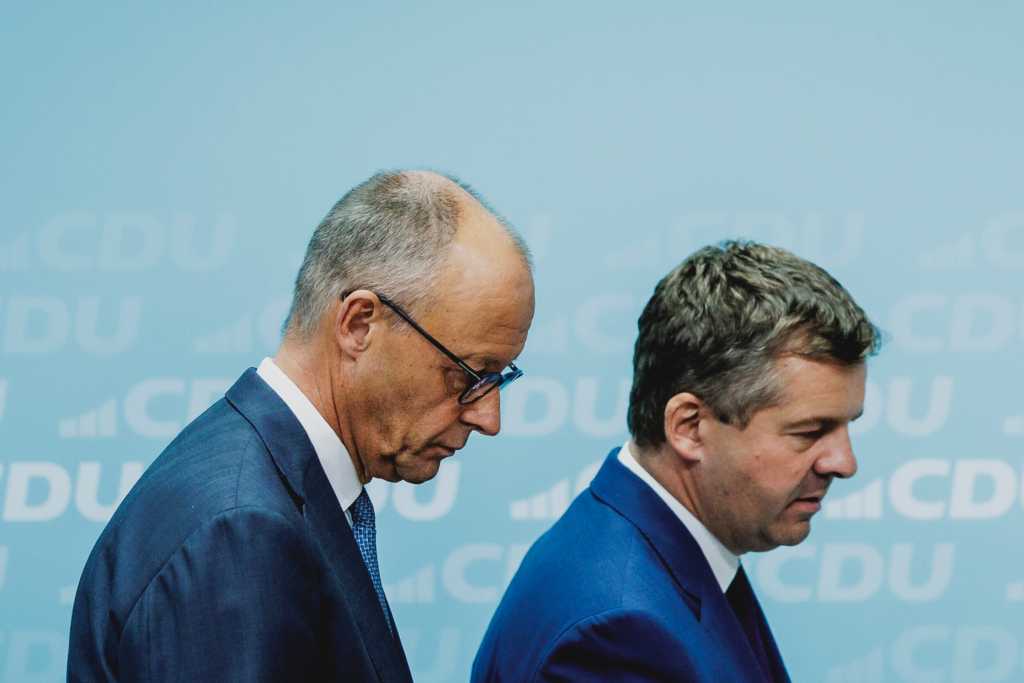
Meanwhile the result increases the pressure on Chancellor Friedrich Merz’s centrist federal coalition. Already before the Saxony-Anhalt election, splits were widening between eastern and western branches of his Christian Democrats (CDU/CSU), and between him and his conservative party base. The result exacerbates these and, in turn, increases the chance that Merz will be too distracted and constrained by domestic politics to provide European leadership.
With France, Italy, Poland and Spain all entering election seasons, a Germany riven by internal drama cannot be the anchor that Europe needs.
Solution
Bold action is needed both in Berlin and beyond Germany. Talk of a party ban is too late and would anyway be unlikely to quell the underlying discontent felt by AfD voters. Action by the federal authorities against stand-out extremists in the party, and its funding streams, is both more realistic and more likely to keep its voters open to persuasion.
Meanwhile the CDU/CSU needs to make a strategic decision about what sort of party it wants to be; including where it will and will not cooperate with parties outside the traditional mainstream. Germany’s other pro-European parties also need to marshal a better answer to the radical right: substantive policies proving that they are on the side of ordinary people rather than powerful interests (Piotr Buras, Jeremy Cliffe and Susi Dennison have made concrete suggestions along these lines where climate policy is concerned.)
Other European capitals should curb their expectations of German leadership and nurture broader sources of impetus, including the new E6 group of major EU economies and the “coalition of the willing” on Ukraine. Merz, for example, is now even less likely to achieve a breakthrough on the EU’s 2028-2034 budget negotiations or on EU accession talks. Other European leaders, including European Commission president Ursula von der Leyen, will need to depend less on him to advance ambitious proposals. European diplomats in Berlin should think hard about how to sell their ideas into a more distracted and inward-looking government.
Context
Saxony-Anhalt is a small and demographically unrepresentative German state, with an atypically old and homogeneous population of 2.1m out of a national total of 83.5m. Nevertheless, its election result has reverberated through European capitals.
The vote on September 6th gives the AfD 39 seats, three short of a majority, requiring the party to seek support either from the left-conservative Sahra Wagenknecht Alliance (BSW) or the right flank of the CDU in order to govern. The only alternative would be a government supported (at least passively) by all five of the other parties, including the socialist Left party, cooperation with which is anathema to the CDU. The development comes as Merz’s fragile “grand coalition” is struggling to pass reforms aimed at reviving Germany’s stagnant economy.
Two upcoming state elections on September 20th—in Mecklenburg-Western Pomerania and in Berlin—could further dent his authority. It is possible, though not currently probable, that he will be forced out as chancellor in the coming months. The obvious frontrunner to replace Merz is Hendrik Wüst, the premier of North Rhine-Westphalia, but his moderate politics may not fit the polarised mood.
This week, Mark Leonard is joined by Jana Puglierin, senior policy fellow and head of ECFR’s Berlin office, in a World in 30 Minutes Emergency Room episode to discuss the latest in German politics.
The AfD’s win in the small eastern state of Saxony-Anhalt was widely expected, but the scale of the result and the collapse of Chancellor Friedrich Merz’s Christian Democrats (CDU/CSU) have still shocked Berlin. For the first time since the second world war, a far-right party is within reach of governing a German Bundesland. Jana unpacks the AfD’s possible paths to power, the pressure on Merz and his grand coalition, and what the result says about the far right’s continued rise in Europe.
Why does an election in a state of two million people matter so much for a country of 84 million? Can the AfD govern without a formal coalition partner, and would CDU lawmakers break the historic “firewall” to make that possible? Why is the party still treated as beyond the pale, even as it leads national polls? And should Europe prepare for a Germany too absorbed in its own crisis to lead?
Quer receber os textos desta coluna em primeira mão no seu e-mail? Assine a newsletter Xeque na Democracia, enviada toda segunda-feira, 12h. Para receber as próximas edições, inscreva-se aqui.
Você tem tempo de ler tanta notícia? Apenas na última semana, tivemos as revelações sobre o estilo de vida de Paulo Figueiredo e Eduardo Bolsonaro nos EUA, o valor dos repasses de Vorcaro para o filme Dark Horse chegando a mais de 14 milhões, a ação kamikaze do ministro do STF André Mendonça revelando o que tudo indica ser uma relação espúria de Alexandre de Moraes com o banqueiro Daniel Vorcaro, um depoimento “clandestino” sem a PF do mesmo banqueiro, novos encontros com o próprio Mendonça e recados amorosos de Nikolas Ferreira. Ufa!
Não dá pra acompanhar tudo, e aqui na Pública nós gostamos de fazer as coisas com tempo. Por isso, decidimos lançar um programa semanal no YouTube, onde você, junto com a gente, vai destilar o que vale e o que não vale prestar atenção na guerra informacional e no noticiário. Afinal, sabemos que quando há grupos em disputa, a própria imprensa vira arma de vazamentos e é muito difícil entender o que importa.
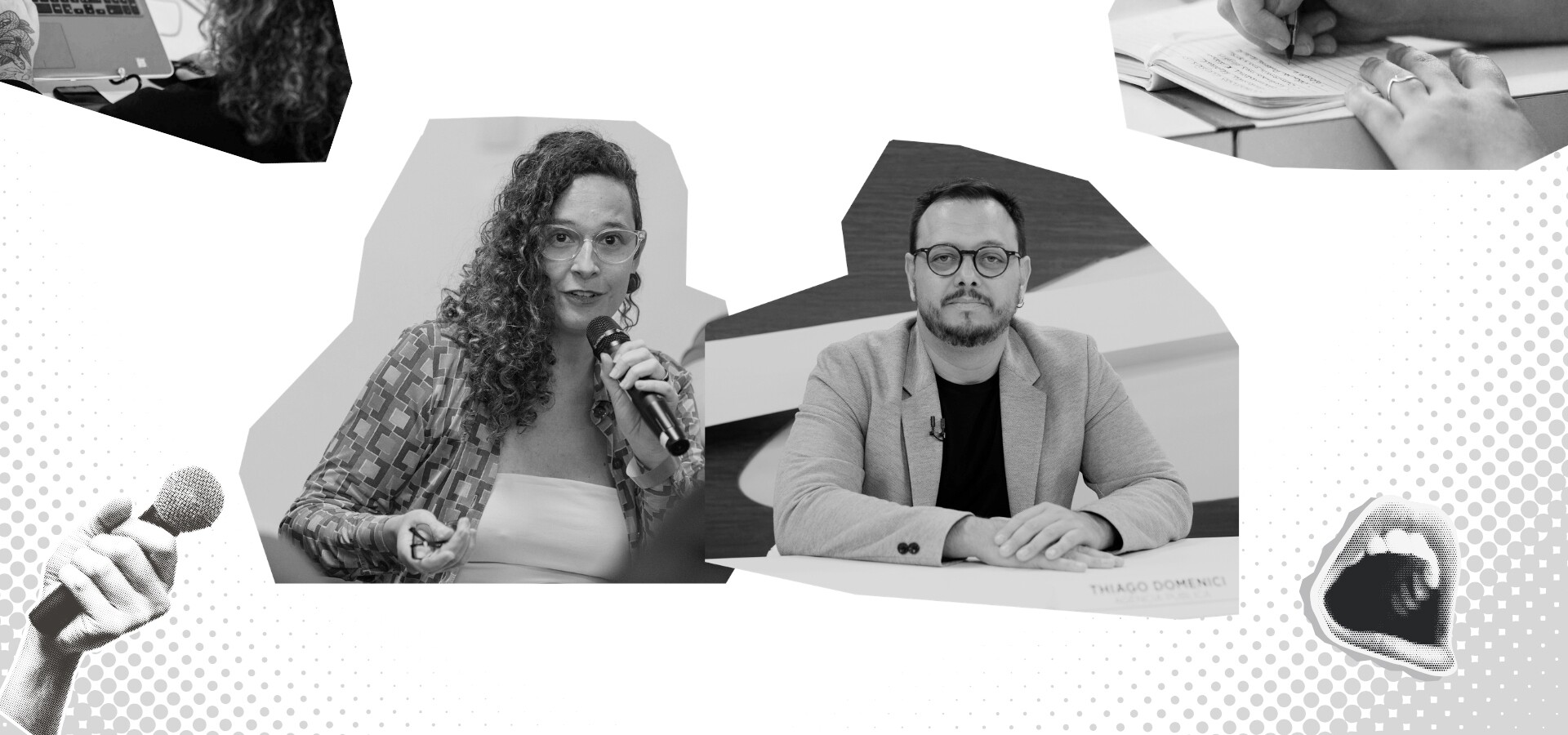
Por isso, calma lá. O Quase Terça vai ao ar todas as segundas-feiras a partir das 17:30 e, nele, eu e meu grande companheiro Thiago Domenici, também diretor da Pública e chefe da sucursal de Brasília, vamos nos aprofundar em dois temas que devem (ou deveriam) pautar a semana, além de trazer os bastidores dos furos da AgênciaPública e entrevistas inéditas. Tudo para você ficar bem informado sobre o que se passou e o que pode se passar na semana que começa.
Se aprendemos alguma coisa nestes últimos 15 anos desde a fundação da Agência Pública, é que no Brasil sempre tem uma história por trás da história, e que nada está garantido. Reviravoltas na vida política nacional são a regra, assim como o fato inegável que nossa democracia está sob ataque e tem muita gente querendo enfraquecê-la.
Tanto os direitos da maioria quanto órgãos de controle, os famosos pesos e contrapesos necessários para limitar a influência de homens poderosos, estão sempre no alvo.
Quem é quem neste jogo? A quem servem jogadas ensaiadas? De onde vem informações bombásticas e a quem servem? É isso que tentaremos destrinchar no programa, com a tranquilidade de quem acompanha as notícias, mas não se deixa levar pela enxurrada – e dorme à noite sem peso na consciência.
Logo na estreia, vamos analisar como foram os comícios e protestos de 7 de Setembro em todo o Brasil, lembrando como a data foi cooptada pelo bolsonarismo na última década. Para aprofundar a conversa, traremos detalhes importantíssimos do livro “Eu disse não! Uma trincheira antigolpista”, escrito pelo ex-comandante da Aeronáutica Carlos Baptista Júnior.
Além disso, vamos olhar para o que sobra da crise interna no STF e ir além: em diálogo com o nosso colunista James Green — brasilianista, professor emérito da Brown University e co-coordenador da Rede nos Estados Unidos pela Democracia no Brasil —, analisaremos a ingerência norte-americana que já está ocorrendo nas nossas eleições e discutir como nossa sociedade pode e deve se preparar para reagir a elas.
Clique aquiparaativar o sininho e ser avisado da nossa live!
Te espero por lá!
E se você perdeu, pode ainda ouvir no Spotify na terça cedinho!
Cover image: picture alliance / ASSOCIATED PRESS | Jae C. Hong
Three features of today’s unordered world are converging to create a devastating food crisis. Russia’s war in Ukraine is disrupting agricultural exports from both countries. The enduring blockage of the Strait of Hormuz is restricting fertiliser shipments. And this year’s El Niño (a sporadic warming of the Pacific Ocean generating widespread knock-on effects elsewhere) could be the most drastic on record, causing widespread droughts. As this year’s United Nations general assembly (UNGA) draws near, global food affordability and availability are at risk, and with them millions of lives and global security.
This looming catastrophe coincides with an absence of political leadership, including in multilateral institutions. As recently as 2022 a coalition of leaders convened by the UN secretary-general, António Guterres, managed to curb a food crisis. Today even that convening power is missing, with potentially more dire consequences. Political leaders face a test: amid war, climate crisis and diplomatic turmoil, is it still possible for groups of states and institutions to confront the direst humanitarian urgencies?
This note argues that a solution could still be found, requiring a comprehensive global effort on several fronts: drought, support for farmers, the Black Sea, the Strait of Hormuz and access to fertiliser. In all of this, Europe should lead.
The emerging calamity
Global food prices are already almost 75% higher than their 1999 lows. Almost 2.2 billion people face food insecurity. The coming trio of threats to food supplies will make that worse.
A “super El Niño” will likely bring heat and drought to southern Africa and significantly reduce food production in south and south-east Asia. It may reduce already falling rates of wheat production—which is expected to fall by 3% globally in 2026-27 (8% in the EU, 12% in Australia and 19% in Argentina)—and drive up rice prices.
Meanwhile the Strait of Hormuz remains blocked. It is the largest single conduit for the nitrogen fertilisers most directly linked to yield and is the export route of about half the global supply of sulphur, a vital component of phosphate fertilisers. Thus, about one third of global seaborne fertilisers cannot reach fields, especially afflicting smallholder farmers in sub-Saharan Africa (where fertiliser prices are highest) and south Asia.
All this may well generate wider ripple effects lasting years. Rising prices and exhausted government subsidies in states like Malawi are deterring fertiliser use, which could depress future production. Historically, El Niño events are associated with protectionism (India has imposed export restrictions hitting countries in south-east Asia), which in turn raises prices, lowers margins and curbs investment in future output.
There are two bright spots among the big global agricultural producers: Ukraine and Russia, which together generate 30% of the world’s wheat exports, 20% of its corn, 60% of its sunflower oil and, from Russia alone, 20% of its fertiliser. But there too war has brought disruption. Russia’s attacks on Ukraine’s highly exposed grain and port infrastructure cut the latter’s exports by 75%, and more damage has already been done in August. Ukraine has been striking Russian port facilities and ships in the Black Sea and Sea of Azov, taking over 90% of Russia’s grain export capacity offline.
In 2022, a UN- and Turkey-facilitated arrangement mitigated a similar crisis and kept Russian and Ukrainian grain and fertiliser supplies flowing through alternative routes. US and EU agricultural aid in sub-Saharan Africa also helped. In 2026, by contrast, multiple challenges stand in the way of a similar solution. Logistically, war damage to infrastructure and low water levels in the Danube make it harder to get grain out of the region. Diplomatically, the UN is approaching a leadership transition, the US has turned against the organisation, and there is no global focal point for action.
Preventing the worst
European leaders, including those of the UK and Ukraine if it wants, should move fast to convene a coalition of states influential among the combatants in the Iran and Ukraine conflicts (India, China and Turkey especially) and of states especially exposed to this nutritional crisis (states in sub-Saharan Africa and south and south-east Asia). This coalition could draw on arrangements from the 2022 deal, as well as new links between UN agencies and initiatives like the CGIAR agricultural innovation network. It should seek to transcend political and diplomatic tensions, bringing leaders or at least ministers together on the margins of UNGA in the week of September 21st.
The joint initiative should have the following core elements:
A programme to distribute food relief and technical assistance on drought-resistant agriculture and soil fertility, headed by an adviser to the UN secretary-general and supported by UN agencies. Such assistance works: one led by the CGIAR reached almost 6m African farmers in 2023-5 and, to cite just one example, in Malawi delivered maize yields 64% higher than the national average.
This will need to be funded. The World Food Programme’s conservative pre-El Niño budget needs for 2026 should be covered (only 34% met so far). But the initiative should also marshal resources for the medium-term response to the “super El Niño” and its geopolitical intensifiers. This would include a financial mechanism to subsidise efforts by states to mitigate higher input costs and shift agriculture to drought-resistant strains. A CGIAR-led sustainable productivity growth push should have a budget of $500m over three years, with the first portion delivered fast enough to support the upcoming planting season.
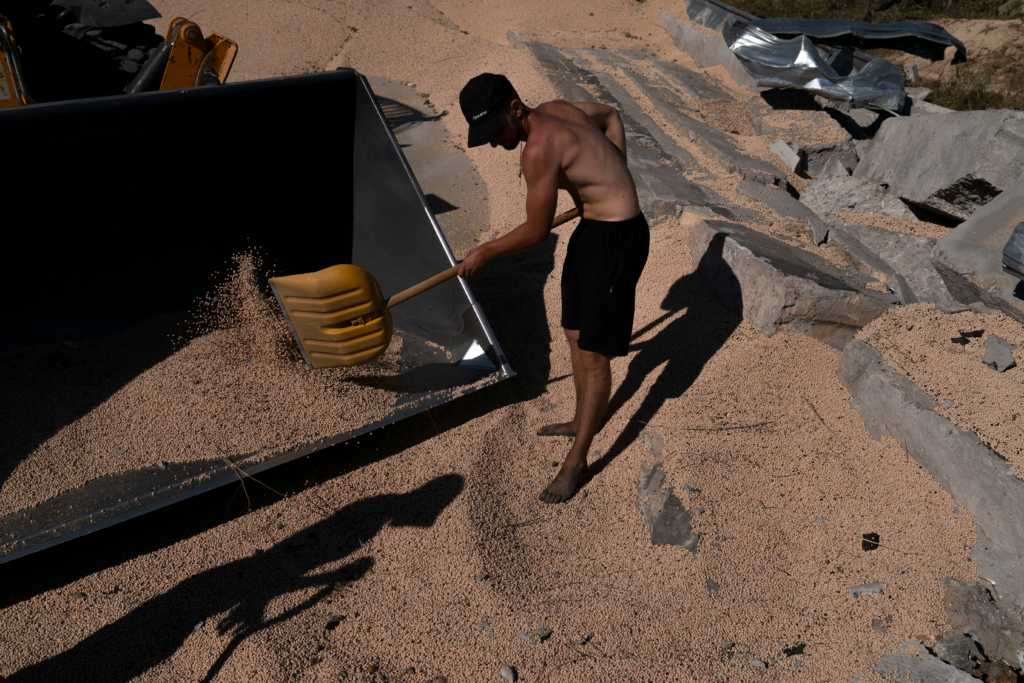
Coalition members should strive for a partial ceasefire between Russia and Ukraine, to include an end to attacks both on ships carrying grain and on ports and infrastructure identified as central to grain, fertilisers and inputs. Its European participants especially could undergird this with support for Ukraine’s farms, including mobile storage units, fertilisers, seed and repairs to infrastructure. Some of this work is already underway.
The programme should also involve an agreement with Iran that fertiliser shipments be allowed to transit the Strait of Hormuz. Several attempts have been made in this direction already, with no results to date. Two elements should be added to make it more attractive. First, Iran’s own fertiliser and urea exports, and fertiliser shipments from other states, should be exempted from the US blockade and Iran’s imports of wheat and rice should be secured. Second, an expert-level group—akin to that used in the 2022 Black Sea arrangement—would oversee implementation and resolve disputes quickly and locally. Part-time negotiators must also secure practical arrangements to ensure results, not just agree on principles.
Unpalatable—but necessary
This effort would still face a series of obstacles. It would require multiple states to cross their red lines—or at least revisit established policies. There is a good chance that the two wars driving up food prices, in Ukraine and Iran, will escalate in the near future. Russia especially would likely be reluctant. The states most affected are a disparate and often antagonistic group. There is no single capital or organisation capable of appealing to all the decision-makers needed for a comprehensive solution.
But within this adversity dwells a constructive role for European governments. Along with the UN secretary-general, and a core group of middle powers including Brazil, Egypt, Kazakhstan, Mexico and Turkey, they can bring together the states most exposed to the crisis as the core of this new group. Along with partners from across the UN system, such as the UN Conference on Trade and Development, the World Food Programme and the Food and Agriculture Organization, they can amplify those countries’ voices and help marshal the resources needed to make the programme outlined above meaningful.
Besides winning over the most affected states, the next step would be to bring on board those states with influence on combatants in the Ukraine and Iran conflicts. This means especially China and India. The UN secretary-general can play a particularly vital role there. Europeans can also help by appealing to Chinese and Indian claims to speak for developing countries in general. In turn, Brazil, India and South Africa can invoke Russia’s claims to share that mantle, as fellow members of the BRICS formation.
Europeans can also play a crucial role in recruiting Ukraine into the programme—even if the latter’s commitment to any ceasefire would depend on Russia’s position. They could see this anti-hunger coalition also as a way to help rally support for Ukraine in the global south, as the Ukrainian president, Volodymyr Zelensky, did in 2022 with his Grain from Ukraine initiative.
In the Strait of Hormuz, meanwhile, the coalition could present free passage for fertiliser exports as a means of trying out the Omani-Iranian technical plans for opening sea routes. It would present this as a win-win proposition: Iran would get some of its exports to global markets; the US would be supporting its Gulf allies; and both parties and their European interlocutors might see the long-term geopolitical benefits of a stabilising anti-hunger act along these lines (for example, curbing mass migration).
This initiative is intended to be a “no regrets” effort. Even if it takes time for the combatants to join—and it will—supporting farmers and global trade will improve the food situation. Progress in addressing hunger should provide an opportunity to highlight the further contribution that progress in the Black Sea and the Strait of Hormuz could bring. This sense of momentum may bring some or all combatants closer to agreement.
It will take leadership from both the most affected states and from wealthier countries to achieve this defiantly cooperative act in a world of unorder. But its very defiance, its assertion that common action is still possible, makes it all the more valuable.
A recent revelation about the use of a new state-of-the-art projectile system in the opening phases of the war against Iran by Washington represents a wanton violation of the Just War tradition America claims to wage its war by. Precision Strike Missile (PrSM) is the name Washington has given to a new cutting-edge offensive ballistic […]
Quer receber os textos desta coluna em primeira mão no seu e-mail? Assine a newsletter Xeque na Democracia, enviada toda segunda-feira, 12h. Para receber as próximas edições, inscreva-se aqui.
Peço desculpas pelo atraso no envio desta coluna, mas passei os últimos dias envolta com os ataques misóginos sofridos por mim e pela Agência Pública por parte de Paulo Figueiredo e Eduardo Bolsonaro. É a velha tática de atacar o mensageiro em vez de responder à reportagem. Publicamos esta nota aqui e nos comprometemos a não parar de investigar os elos da extrema direita no exterior. Apoie este trabalho aqui.
Começo, agora, com a pergunta que não me sai da cabeça. Na semana passada, o deputado federal petista Rui Falcão pediu para o STF requerer acesso aos equipamentos eletrônicos encontrados em apartamentos ligados ao argentino Fernando Cerimedo, aliado de Eduardo Bolsonaro, preso na Bolívia em 18 de agosto, quando saía do país depois de uma tentativa de feminicídio contra sua ex-namorada, a advogada boliviana Nadia Beller.
Falcão argumenta que Cerimedo, que chegou a ser investigado pela tentativa de Golpes de Estado de 8 de janeiro, não foi indiciado por falta de provas. E que as provas que se espera podem estar nos equipamentos apreendidos pela polícia boliviana.
A promotoria de Justiça boliviana afirmou no final de agosto ter realizado buscas em cinco propriedades ligadas a Cerimedo, onde teriam aprendido 43 mil dólares, documentos e uma “minifazenda de bots”. A defesa de Cerimedo afirma que eram apenas telefones via satélite e modems, em vez de bots.
Como se sabe, Cerimedo foi fundamental para a disseminação da mentira sobre fraude nas urnas nas eleições de 2022. Sua live, realizada semanas depois dele ter organizado uma viagem de Eduardo Bolsonaro à Argentina, teve como base um dossiê criado por Mauro Cid, o ajudante de ordens de Bolsonaro. A história falsificada dizia que as urnas eletrônicas fabricadas antes de 2020 usariam um código fonte diferente das produzidas depois desta data. Bolsonaro teria ido pior nas áreas que usaram urnas mais antigas.
“Nosso pessoal que fez… hahahahah… Isso foi a base do argelino [argentino]”, teria se gabado Mauro Cid. Cid também ajudou a circular o link da live de Cerimedo, mesmo depois que ela tinha sido suspensa pelo TSE. “Fizeram um site completo, com todo o material da investigação sobre a maior fraude do século! Nosso time é bom demais, incrível”, festejou outro militar, tenente coronel Marques de Almeida, integrante do Comando de Operações Terrestres do Exército (Coter). Ambos foram condenados pela tentativa de golpe de 8 de janeiro de 2023.
Foi essa live, assim como a participação como coordenador digital da campanha de Milei na Argentina, que ajudaram a impulsionar a fama internacional de Cerimedo na extrema direita do continente. Chamado de “O homem MAGA na América Latina” pelo site The Economist, ele admitiu à Pública e sites parceiros que comandava muitos “trolls” – contas falsas nas redes sociais que interagem com um script definido para falsificar conversas – para enganar os algoritmos e, dessa forma, dar um melhor posicionamento à mensagem de seus clientes. Negou, entretanto, que produzia Fake News.
Mas nem era necessário. Suas lives e as reproduções do seu site La Derecha Diário – que agora tenta se dissociar dele – eram carregadas de mentiras.
Da cama de hospital, onde está se recuperando dos tiros, a ex-namorada afirmou que o motivo da tentativa de assassinato era justamente porque ela havia decidido abrir o bico sobre as campanhas de manipulação do ex-namorado. Ela também o acusou de ter oferecido proteção a voos clandestinos ligados ao narcotráfico.
Sobre o Brasil, ela disse à Folha de S. Paulo que Cerimedo contou ter usado “bots” a favor de Jair Bolsonaro em 2022 e que ele “lutaria por Flávio” nessas eleições.
A principal pergunta que fica é: qual é o papel de Fernando Cerimedo na atuação digital dos Bolsonaro – tanto na tentativa de golpes de 2022 quanto na atual campanha de Flávio?
Como bem notou Janaína Figueiredo, Cerimedo era bem mais do que apenas um marketeiro da direita. Ele participou ativamente de tentativas de desestabilizar governos de esquerda, além de costurar alianças com o círculo de Trump.
Foi ele quem aproximou Trump do então candidato Asfura, através de um amigo, ex-assessor de Trump na campanha de 2017, Dick Morris.
Em março de 2025, Fernando Cerimedo foi nomeado representante e licenciado exclusivo na América Latina das empresas Campaign Nucleus e da Eyes Over, duas plataformas de inteligência artificial. As empresas surgiram após a aquisição da Cambridge Analytica por um consórcio de investidores norte-americanos. Elas foram usadas pela campanha de Donald Trump, em 2024, facilitando um gerenciamento de eleitores mais preciso. O desenvolvimento foi liderado por Brad Parscale, ex-diretor digital da campanha de Trump, e que foi sócio de Cerimedo na consultoria digital Numen – embora agora também esta empresa tente dissociar seu nome dele.
Depois da condenação de Jair Bolsonaro e outros cúmplices por tentativa de golpe de Estado, Eduardo Bolsonaro continuou próximo de Cerimedo – os registros públicos o impedem de negar.
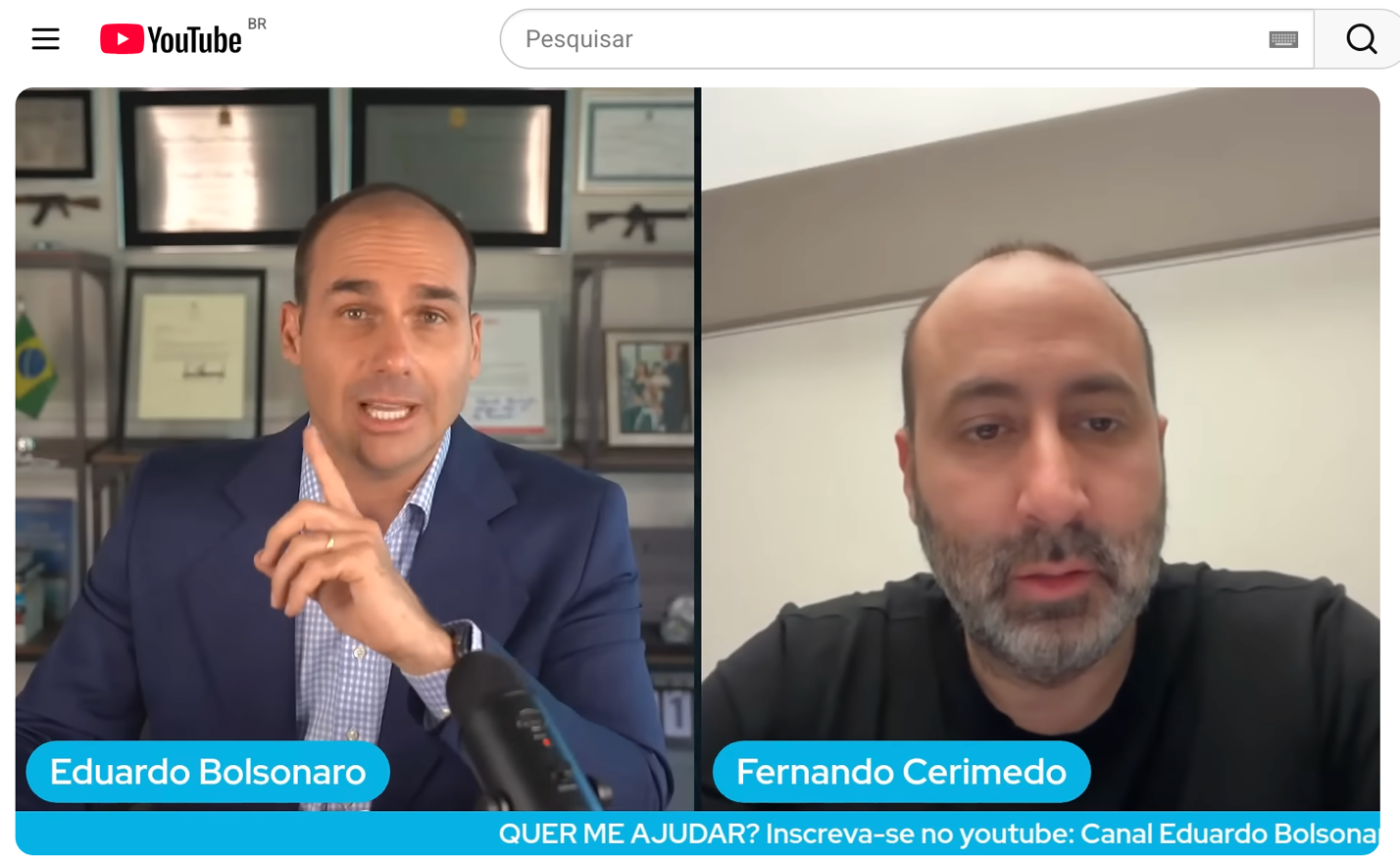
Há apenas um mês, Cerimedo esteve numa live com Eduardo repetindo exatamente a mesma cascata sobre hashtags inventada pela turma de Marco Cid, conforme eu apontei nesta coluna. Nela, Eduardo disse: “Vou te agradecer aqui, tá, por essa transmissão ao vivo, pessoa de coragem, é uma pessoa que continua atuando, é empresário, analista político argentino”. Cerimedo respondeu saudando ao povo brasileiro: “Muito obrigado a você. O saúdo ao povo do Brasil. Muita, muita sorte na próxima eleição e sempre vamos ter que lutar pela liberdade do Brasil”.
Alguns meses antes, em fevereiro, os dois estavam juntos na festa hispânica em Mar a Lago, o resort de Trump. Cerimedo foi premiado pela organização Latino Wall Street como Melhor Consultor Político Hispano do Ano. Eduardo entregou o prêmio nas mãos do argentino. “É uma honra estar aqui e abrir um espaço para um argentino. E olhem que aqui está falando um brasileiro. Mas não de que ele passou ou foi preso. E isso não é legal. Fernando Cerimedo teve a coragem de, da Argentina, ajudar o Brasil. Como? Denunciando as possíveis fraudes eleitorais que ocorreram em 2022, na eleição que colocou o socialista Lula da Silva como presidente do Brasil”, disse. E completou: “Estamos aqui hoje para dizer aos Alexandre de Moraes: não temos medo de você. Vamos ganhar as eleições de outubro”.
(Na foto, Eduardo aparece com a esposa de Cerimedo, a argentina Natalia Basil. Uma das teses da procuradoria boliviana era que a “namorada” boliviana estaria grávida. E isso teria motivado a tentativa de assassinato)
Como eu já havia apontado anteriormente, a narrativa de fraude nas urnas continua firme como narrativa subterrânea na campanha de Flávio Bolsonaro. Aliás, a afirmação que o candidato fez no Jornal Nacional na semana passada, de que ela irá ganhar no primeiro turno, repete exatamente a mesma estratégia adotada por Jair. Constrói a narrativa de que, se não ganhou, é porque houve fraude.
E Cerimedo, ao lado de Eduardo, poderia ser crucial nesta estratégia. O que se poderá descobrir sobre as fábricas de bots encontradas na Bolívia? Veremos ainda.
Em tempo: termino esta coluna com uma enxurrada de novas denúncias sobre uma possível relação de corrupção de Alexandre de Moraes com o banqueiro Daniel Vorcaro – o mesmo que deu pelo menos 10 milhões de dólares para o candidato Flávio Bolsonaro para o filme Dark Horse (hoje, novas revelações dão conta de que podem ser mais). Não tenho tempo de ler e analisar tudo, mas, se forem verdadeiros, são fatos gravíssimos que têm que trazer consequências legais.
Entretanto, faço votos que não levem nossa sociedade a retroceder da punição histórica aos perpetradores da tentativa de Golpe de Estado de 8 de janeiro de 2023, uma decisão histórica que solidificou nosso regime democrático, puniu pela primeira vez militares golpistas, e deu exemplo para o mundo. A condenação dos golpistas, embora tenha contado com a atuação fundamental de Moraes, não é obra apenas do seu trabalho, mas do empenho de todo o Supremo, da PF, do jornalismo e da sociedade brasileira, que a apoiou, ajudou e respalda até hoje.
In June, Indian actor Hiten Tejwani told his 732,000 followers that “Instagram is okay” in a reel promoting Meta’s Teen Accounts. Ironically, Tejwani had barred his 17-year-old twin son and...
Friedrich Merz (CDU), Federal Chancellor, photographed before the government declaration in the German Bundestag in Berlin, 18.03.2026. | picture alliance / photothek.de | Florian Gaertner
Berlin; late August: when politics normally stirs into life after the holiday lull. But this year, the lull never came.
German chancellor Friedrich Merz is beset by approval levels plumbing the depths of the depleted Rhine and Danube. His governing conservative CDU party spent the summer at war with itself over pension reform (not helped by a botched cabinet reshuffle). Some of the chancellor’s staunchest supporters are even openly wondering whether he is still up to the job. To get out of the hole they are in, Merz and his ministers now want to project a sense of Aufbruchstimmung—a feeling of renewal and restart.
Whether they succeed will determine Europe’s future.
Germany’s economy has endured six years of paltry growth. Its traditionally strong industries are screaming for protection against China, US tariffs and energy price shocks (and against their own past decisions). Strong end-of-the-republic vibes suffuse dark political commentary, “mainstream” parties oscillate between panic and despair, and resignation has set in among voters. What until recently seemed little more than a media talking point on an “Andy Burnham moment”—meaning the possibility of Hendrik Wüst, North Rhine-Westphalia’s minister-president, succeeding Merz as chancellor this autumn—could yet become reality.
For decades, Germany was Europe’s byword for political stability and predictability. Today, it is hard to overstate how little is now unthinkable in German politics. All bets are off. Decision-makers elsewhere in Europe should get ready for the possibility of a new kind of Germany: no longer boring, no longer stable—and no longer rich.
Why the Angst is now real
Germany is days away from elections in three eastern states which could shake the government in Berlin to its foundations. First up is Saxony-Anhalt, where on September 6th the far-right populist Alternative für Deutschland (AfD) could rewrite German post-war history and turn the decades-long mantra of “never again” into “actually, maybe”. Polling suggests even an absolute majority for the party is within reach. The AfD, the CDU and the Left could be the only parties to clear the 5% threshold for the state parliament. Two weeks after that possible momentous result, the states of Berlin and Mecklenburg-Vorpommern will also elect new parliaments.
While the situation for the political centre looks a little less dire in the latter two places, complicated three-party coalitions are the likely outcome in both. This will have a compounding effect on the stability of the federal government. The CDU leadership under Merz remains adamant that the “firewall” must hold, ruling out any coalition or cooperation with the AfD. Yet this position is increasingly being questioned by local politicians and by conservative thinkers within and around the party. Many in the CDU are frustrated by what they see as the strategic price of the firewall. With their preferred coalition partner, the liberal Free Democrats, now struggling to clear the 5% threshold almost anywhere, ruling out the AfD leaves the CDU ever-more dependent on centre-left coalitions. In critics’ view, this deprives the party of options and leaves it hostage to the remaining potential coalition partners.
An AfD minister-president would be a brutal demonstration of the political establishment’s inability to provide a convincing vision for the country
An AfD minister-president in one of Germany’s states would be more than a striking political development. It would be a brutal demonstration of the political establishment’s inability to provide a convincing vision for the country’s economic, political and social future. In recent years, German leaders have made more reform announcements than actual reforms. The previous government tried to adapt to the Zeitenwende without imposing any hardship on Germans—and failed. Now, the Merz government seems equally unable to muster the political strength for major reform.
Instead, it has too often looked to the past for answers: back to the combustion engine, back to looser labour rights, back to family values. The only policy area where the government now seems readier to change course is on China, where it has said it will push through a more active European position on protecting markets and punishing China’s predatory economic behaviour. In a revealing commentary, however, Merz himself announced this was enabled, not by his decisive political leadership, but by the altered posture of the German car industry.
This vacuum in dealing with the implications of the changing global environment leaves huge room for the political fringes, especially from the far-right. The AfD’s offer is revisionist—drastically curb immigration and asylum, reverse key elements of the energy transition, challenge European integration, end the euro and pursue a distinctly nationalist approach to foreign policy. All this is deeply unsettling to the political establishment, but resonates with a growing constituency of voters united by restrictive stances on migration and cultural issues.
The strength of the AfD is a symptom, not a cause. It did not rise to prominence overnight and has been part of Germany’s political landscape now for more than a decade. But the party is now within striking distance of actual political power at a time when the country’s political and economic foundations are starting to crumble. The war in Ukraine, volatility in America and conflict over the Strait of Hormuz are stretching the limits of German leaders’ attention as well as the country’s fiscal space. Germany’s long-term trade relationship with China is now a liability and an epic drought has shrivelled what little hope remained for Germany’s economic recovery. Berlin is not only forced to reckon with the failures and missed opportunities of the past decade on everything, everywhere, all at once; but the politicians seem unprepared either to put up a real fight for survival or even adjust to this new reality in a form of managed decline.
No time for Schadenfreude
Germany is hardly the first European country to experience a radical reshaping of its party system and the rise of the far-right; Italy and France have been through similar upheavals. And Germany itself, amid deep economic problems, was called “the sick man of Europe” back in 1999, only to recover and to become the continent’s exporting powerhouse. Why should the rest of Europe now worry so much about Germany’s malaise?
The answer is: because a German crisis is a European crisis. Germany is too economically and politically important to fail. Its economic weight, role at the heart of the EU and position as Europe’s most populous member state mean this would be more than just another episode of national political turbulence. A Germany that is oozing 15,000 industrial jobs each month, becoming even more dependent on technology imports and increasingly incapable of internal reform risks dragging Europe towards fragmentation and exploitation.
Unless political leaders come up with something new, a German pall will blot all major items on the EU’s agenda: the next multiannual financial framework; the future of the bloc’s industrial policy; European efforts to rearm and build resilience; a more autonomous capacity on emerging technologies and the economic muscle to create international leverage behind a new global trading agenda. That is not to mention the serious consequences of a German disengagement for Europe’s continued support for Ukraine.
“German leadership is not optional”, Sweden’s defence minister said at a public event this month, attended by one of the authors. German political elites seem to disagree. Theirs is the third largest economy in the world, sitting at the core of the world’s largest single market, boasting leading international companies and building up one of the largest defence budgets anywhere. Yet they appear to lack any sense of their own domestic, let alone global, agency. The three upcoming state elections may give them their last chance and some momentum to turn things around. But if Berlin becomes entirely enfeebled under the ensuing political fallout, the rest of Europe is likely to suffer in the same way.
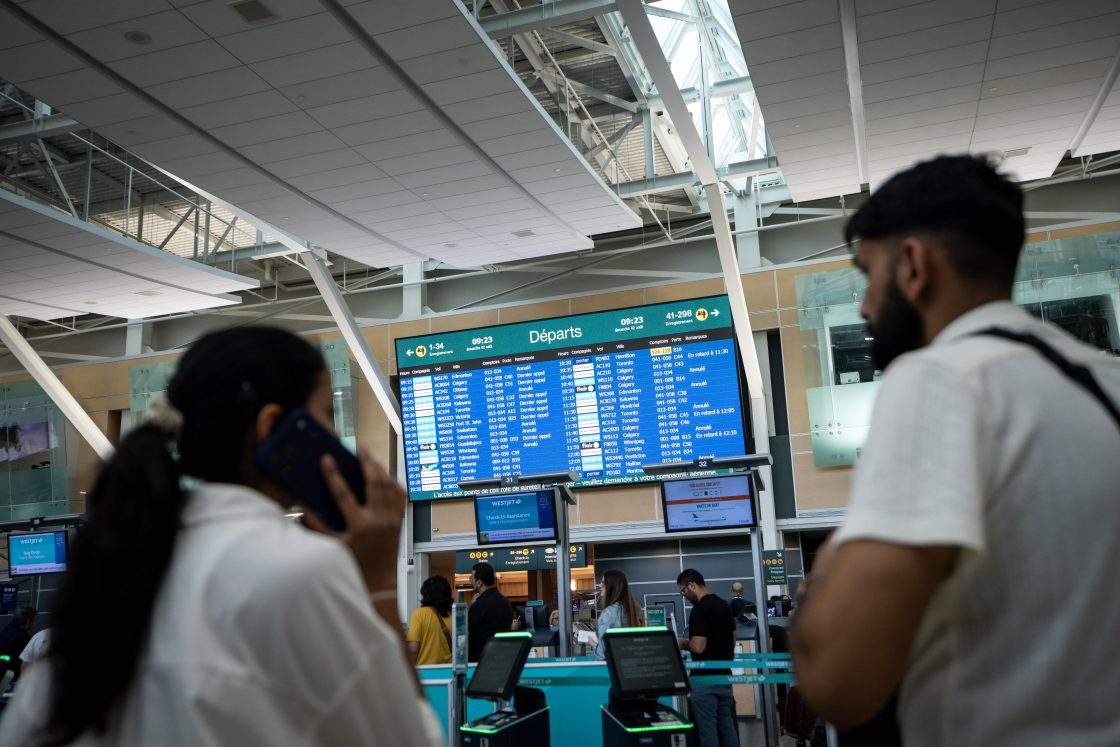
With transborder screen passenger traffic down by 8.7 per cent in July, the agency notes this number was 'well below the same month in 2024,' which was 12.5 per cent.
With transborder screen passenger traffic down by 8.7 per cent in July, the agency notes this number was 'well below the same month in 2024,' which was 12.5 per cent.
When Osama Manzar started the nonprofit Digital Empowerment Foundation in 2002, just 1.2% of India’s population was online. Now, more than 70% is. But Manzar’s mission statement — helping poor...
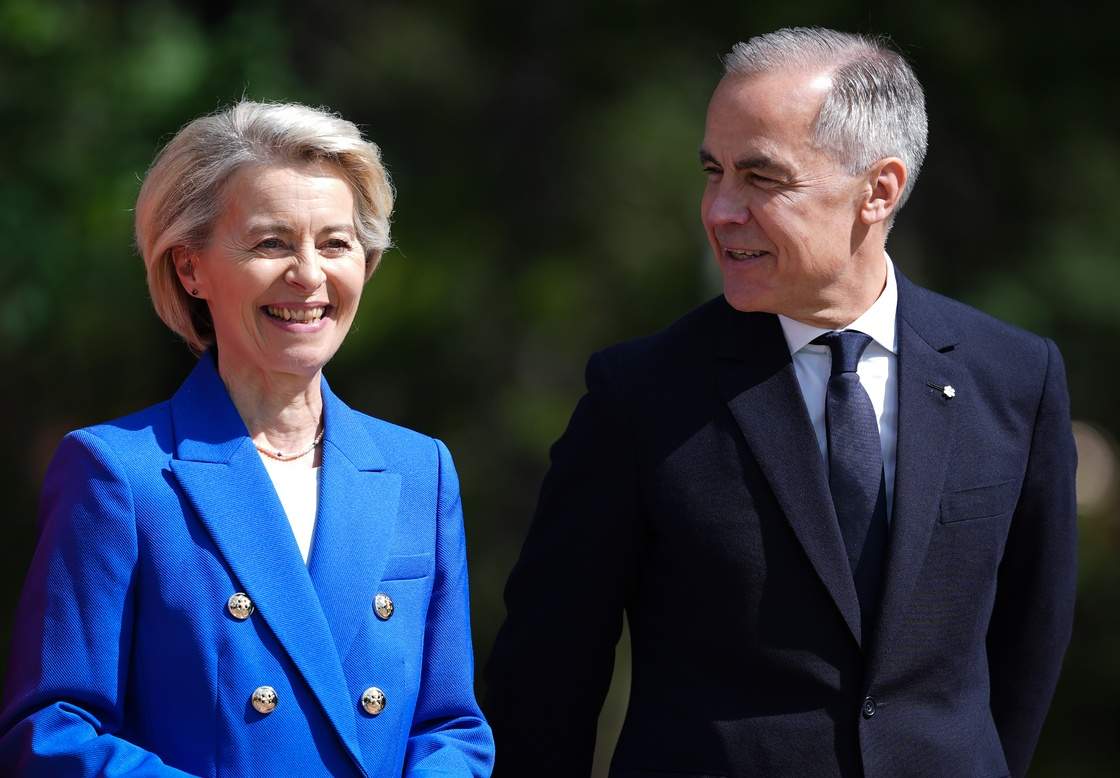
Prime Minister Mark Carney will also attend the European Union’s annual State of the Union address by the European Commission President Ursula von der Leyen.
Prime Minister Mark Carney will also attend the European Union’s annual State of the Union address by the European Commission President Ursula von der Leyen.
Quer receber os textos desta coluna em primeira mão no seu e-mail? Assine a newsletter Xeque na Democracia, enviada toda segunda-feira, 12h. Para receber as próximas edições, inscreva-se aqui.
Começou a campanha eleitoral, e como você já deve estar a par, nós da Agência Pública mais uma vez juntamos forças com sites parceiros (Aos Fatos, Amado Mundo e Núcleo) para investigar campanhas de desinformação.
Já publicamos um levantamento de quais perfis foram investigados por fake news e narrativas antidemocráticas e seguem publicando e influenciando o debate público e uma reportagem sobre como a IA tem sido usada para criar vídeos de TikTok no formato “povo fala”, nos quais falsos eleitores elogiam Lula ou Flávio Bolsonaro, ou, ainda, reforçam clichês sobre beneficiários de programas sociais do governo federal, afirmando que “não querem trabalhar”.
Mais reportagens virão, e enquanto isso, achei importante trazer alguns exemplos de como as eleições recentes na América Latina foram impactadas por campanhas desinformativas.
Aqui, trago três conclusões: primeiro, não existe mais campanha eleitoral sem fake news; segundo, as narrativas e estratégias são repetidas de um país para outro, e, portanto, vale a pena entender o que aconteceu com nossos vizinhos; e terceiro, há uma rede de marketeiros que tem participado de diversas eleições no continente propagando desinformação, a quem investigamos como “mercenários digitais” em 2023. Fernando Cerimedo, um de seus principais expoentes,acaba de ser presona Bolívia, onde assessorava o presidente direitista Rodrigo Paz, acusado de tentar matar a namorada.
Houve muitas eleições, mas decidi focar em três delas: Honduras, Colômbia e Peru. Também escolhi a dedo algumas das narrativas e estratégias, por sentir que revelam mais do que as histórias em si, revelam a infraestrutura que hoje se usa para manipular a opinião pública em momentos de “crise informacional”, como as eleições.
Em Honduras, a corrida eleitoral em novembro de 2025 abriu com o ex-presidente Juan Orlando Hernández sentenciado em Manhattan a 45 anos por ligação com narcotráfico. Em seu lugar, o aliado conservador Nasry “Tito” Asfura entrou na disputa e recebeu apoio público de Donald Trump. O argentino Fernando Cerimedo teria articulado os bastidores para que Trump postasse o endosso em suas redes. Deu certo; o mandatário americano chegou a ameaçar cortar ajuda financeira ao país caribenho se Asfura não vencesse e, dias antes do pleito, Trump indultou Hernández.
A equipe de Asfura contou com consultores conhecidos em outros países: além de Fernando Cerimedo, Brad Parscale – que teria trabalhado no uso de dados para segmentar eleitores –, Dick Morris e o argentino Luis Rosales. O La Derecha Diário, jornal de Cerimedo sediado na Argentina, mantém um perfil hondurenho nas redes, criado três meses antes da eleição.
Como resultado, na reta final cidadãos receberam mensagens em massa nos celulares, pressionando votos na direita. A ameaça de Trump de cortar ajuda também foi replicada por este método. Também circularam narrativas falsas de que o crime organizado estaria tentando influenciar votos na esquerda e boatos de que os partidos de esquerda acabariam com a propriedade privada.
Asfura venceu com 40,27% dos votos. Ao fim da contagem, autoridades eleitorais e o governo de esquerda de Xiomara Castro denunciaram irregularidades, mas os EUA restringiram vistos dos magistrados que pediam recontagem.
Outro ponto fundamental foi o chamado Hondurasgate. O jornal Red e o site Hondurasgate divulgaram há alguns meses supostas gravações de áudio vazadas que indicam uma trama envolvendo Estados Unidos e Israel, com apoio de Honduras, para desgastar, com notícias falsas, os governos de Claudia Sheinbaum, no México, e Gustavo Petro, na Colômbia.
Segundo a fonte que entregou os áudios aos portais, as gravações ocorreram entre janeiro e abril de 2026. Os áudios mostrariam Juan Orlando Hernández, poucos meses depois de receber o indulto, organizando a ofensiva. Em conversas com Asfura, agora presidente, e sua vice-presidente, Hernandez pediu US$ 150 mil para alugar um apartamento nos EUA e montar uma unidade de jornalismo digital: “Alguém aqui, da equipe do presidente americano, vai cuidar disso para mim. É um dos republicanos que estão nos ajudando. Eles vão montar um site de notícias para nós”, disse.
Asfura confirmou a entrega da verba, que viria da Secretaria de Infraestrutura e Serviços Públicos. Hernández respondeu então: “Conseguimos conversar com Javier Milei, e ele também está contribuindo com US$ 350 mil.”
Em outra mensagem, Hernández teria reconhecido que o primeiro-ministro de Israel foi fundamental para sua libertação e que ele apoiaria o plano.
Colômbia: IA e Pollymarket
Vídeos falsos rodaram tanto no primeiro quanto no segundo turno das eleições colombianas, ocorridos em maio e junho. Ali, apareceu a mesma narrativa de tentar associar a esquerda com o crime violento. Em um deles, um homem que finge ser um dissidente das FARCs exigia que agricultores votassem em Ivan Cepeda, candidato da esquerda apoiado pelo ex-presidente Gustavo Petro.
Cepeda foi para o segundo turno contra o candidato trumpista, o empresário e advogado Abelardo de la Espriella, que venceu as eleições com 49,6%.
Por lá, um dos fenômenos mais interessantes, usado em especial por candidatos da direita, foram as “frutinovelas”, que por aqui são conhecidas como “novelas das frutas”. Feitas com IA, elas foram onipresentes nas redes durante a campanha eleitoral.
Abelardo de la Espriella, conhecido como “O Tigre”, usou vastamente o formato, aparecendo como um enorme tigre que destrói um trem representando a política tradicional. Outra candidata na direita, a senadora uribista Paloma Valencia, era retratada como um abacaxi feliz contra as bananas da esquerda e os cocos de De la Espriella.
Depois da derrota eleitoral, Petro passou a disseminar dúvidas sobre o sistema eleitoral colombiano, afirmando a existência de um mecanismo de edição dos votos, falta de transparência e de auditoria e apontando padrões matemáticos anormais na contagem.
Mas, assim como fez Jair Bolsonaro nas eleições de 2022, Petro já acusava fraude muito antes das eleições acontecerem, desdemeses antesdas eleições. Por isso, a Justiça Eleitoral exigiu que Petro se retratasse, o que ele não fez. As denúncias foram verificadas e desmentidas por agências de checagem. Ao final, Petro reconheceu a vitória de De la Espriella.
Outro fato digno de nota: o site de apostas preditivas Polymarket foi usado pela campanha de De la Espriella e citado como fonte confiável de pesquisa por veículos de imprensa colombiana.
O próprio candidato promoveu o site como um termômetro mais confiável que pesquisas, afirmando que arriscar dinheiro próprio exige um prognóstico correto. Pior ainda, jornais tradicionais como La República passaram a reportar estes dados como se fossem verdadeiras pesquisas eleitorais.
Mas obviamente as apostas no site são sujeitas a manipulação. Em setembro de 2025, o site La Silla Vacía revelou que apenas 82 contas participavam das apostas eleitorais sobre a Colômbia, e uma única conta concentrava 40% de todo o dinheiro investido a favor de De la Espriella, mais de 100 mil dólares. A pesquisa classificou várias dessas contas como “infladoras” de apoio, ou seja, eram simpatizantes usando a plataforma como vitrine política. O site Factchequeado revelou ainda que a Polymarket pagava publicidade a influenciadores para apresentar Espriella como o “Bukele ou Milei colombiano”.
Peru: candidato de Trump alegou “fraude nas urnas”
No primeiro turno, em maio, o candidato favorito de Trump na eleição de 2026, Rafael López Aliaga ficou de fora do segundo turno por apenas 21 mil votos. Como resposta, ele alega fraude e pediu a anulação do resultado.
Rafael iniciou uma campanha apontando fraude, que, segundo investigação do site Ojo Publico, mobilizou perfis já pré-estabelecidos para espalhar sua mensagem. Foram 53 contas com impacto sobre milhares de usuários, espalhando mensagens para construir a imagem de uma eleição manipulada, sem apresentar qualquer evidência. Um exemplo: uma narrativa afirmava que mais de 1 milhão de eleitores haviam sido impedidos de votar em Lima, sendo que o número real de afetados pela não instalação de mesas – um erro da Justiça Eleitoral do país – foi de 55 mil pessoas. No final, o candidato trumpista perdeu e Keiko Fujimori acabou recebendo as bênçãos de Trump.
Assim, tanto a narrativa de fraude nas urnas está viva na América Latina, como a tentativa de associar qualquer grupo de esquerda com o crime organizado, dois motes que já estamos vendo acontecer também por aqui.
On August 10, Mark Zuckerberg published a letter titled “The Future for Everyone,” a manifesto laying out his vision for how superintelligence could improve people’s lives, expand human capability, and...
Madrid. La tranquilidad nocturna que se respiraba en las tertulias del madrileño Café León, en la calle de Alcalá, se vio truncada de forma dramática en las últimas horas de la pasada noche. El doctor Juan Negrín, diputado socialista por Las Palmas y reputado catedrático de Fisiología, se disponía a dar cuenta de su habitual […]

 Login