❌

Reading view

Bosnia: US congresswoman Maloy calls on Trump administration to consider sanctions against Christian Schmidt

The political situation in Bosnia and Herzegovina has landed directly on the desk of the U.S. Department of the Treasury. Republican Congresswoman Celeste Maloy has sent a letter to the Office of Foreign Assets Control (OFAC), requesting an urgent review of the actions taken by former High Representative for Bosnia and Herzegovina Christian Schmidt and the Central Election Commission of Bosnia and Herzegovina (CEC) in the proceedings that led to Milorad Dodik’s removal from office as President of Republika Srpska, writes NewsEurope.

At the time, that removal was also supported by the United States under the Biden administration, although it remains unclear what external influences may have been at play and who actually made the decision. Dodik has long faced strong opposition from Bosnian movements close to the Muslim Brotherhood, in part because of his close ties with Israel.

The letter, dated 31 August 2026, and addressed to OFAC Director Bradley Smith, carries particular political significance because Maloy goes beyond simply asking for clarification. The congresswoman explicitly brings to the Treasury agency’s attention the possibility that the actions attributed to Schmidt and the CEC could fall within the scope of conduct subject to U.S. sanctions authorities.

In the letter, Maloy states that she understands that OFAC has received materials alleging that the actions of Schmidt and the Election Commission may constitute “interference with a democratic process” within the scope of existing U.S. sanctions authorities applicable to the Western Balkans. The congresswoman also makes a particularly significant reference to the Global Magnitsky sanctions program, noting that the alleged conduct could alternatively constitute sanctionable activity under that framework.

In formal terms, therefore, Maloy is directly calling on President Donald Trump’s administration to sanction Schmidt. The letter is addressed to OFAC and requests an expedited review of the materials already submitted to the agency. Politically, however, the significance of the initiative is clear: a Republican member of Congress is asking the U.S. administration to determine whether there are legal grounds for imposing U.S. sanctions on Schmidt and, potentially, on other officials involved. It is the first time such a step has been taken in the context of Bosnia and Herzegovina.

Maloy concludes by stating that she appreciates OFAC’s “expeditious review” of the matter and looks forward to learning the results of its investigation. This is therefore more than a simple political statement on Bosnia: it is a request to activate the administrative mechanism that can precede a decision on sanctions.

The initiative stems from the proceedings that ultimately led to Milorad Dodik losing his position. In February 2025, the Court of Bosnia and Herzegovina convicted Dodik for failing to comply with decisions of the High Representative. The ruling was subsequently upheld on appeal, resulting in a one-year prison sentence and a six-year ban on serving as President of Republika Srpska.

It is precisely the nature of this political and institutional process that Maloy is now indirectly calling into question. In her letter, she refers to Dodik as the “democratically elected President of Republika Srpska” and presents Schmidt’s actions as the subject of allegations of interference with the democratic process.

The development is politically significant because it reverses the perspective that for years characterized relations between Washington and the Bosnian Serb leadership: this time, it is not the actions of the Republika Srpska authorities that are being scrutinized. Instead, a U.S. government agency is being asked to examine the conduct of the former international High Representative and the institutions involved in the process that led to Dodik’s removal from office.

The decision on how to proceed now rests with the Trump administration.

  •  

'Learn about Serbian suffering': An overlooked dimension of European history presented in Italy

The Memorial Center of the Republic of Srpska is bringing its international 'Learn About Serbian Suffering' campaign to Rome from September 7 to 13, reports NewsEurope. The initiative aims to introduce Italian and wider European audiences to the historical experience of the Serbian people and to the suffering of civilians during some of the most tragic periods of 20th-century European history.

The digital exhibition will appear on large LED screens in several central Roman locations, including Piazza della Repubblica on Via Nazionale, Castel Sant’Angelo on Lungotevere Prati, Cavour, Lungotevere Testaccio, the Trastevere area around Marconi, Monteverde, and Gianicolo, and Via Gregorio VII near the Vatican.

The campaign is founded on the belief that Serbian history should be examined beyond the political interpretations and stereotypes that have influenced parts of Western public opinion for decades.

The Serbian people have deep historical roots in Europe, including in its cultural, civilizational, and spiritual traditions. Nevertheless, much of Western European public opinion remains insufficiently familiar with their historical experience, especially with the suffering of Serbian civilians during the wars of the 20th century.

This lack of awareness is particularly evident in relation to the breakup of Yugoslavia and the conflicts of the 1990s. During that period, simplified interpretations of the role played by the Serbs became widespread in parts of Western public discourse. Complex political and historical developments were frequently reduced to a division between perpetrators and victims, while the Serbian wartime experience received limited attention. Consequently, the suffering of families who lost relatives, homes, and entire communities was often overlooked, as were the experiences of hundreds of thousands of people displaced from their homes and ancestral lands.

The campaign seeks to respond to this omission in Europe’s collective memory.

Its purpose is not to accuse any nation, state, or society. Instead, it invites the public to consider this part of European history from a broader perspective, using archival material, documented facts, and, above all, the firsthand accounts of people who survived war, persecution, detention camps, and the loss of family members.

According to Denis Bojić, director of the Memorial Center of the Republic of Srpska (pictured), the campaign was created to bring the historical experience of the Serbian people and the suffering of Serbian civilians during different periods of the 20th century to audiences beyond the borders of the Republic of Srpska and Serbia. He said the initiative focuses on families who lost loved ones, people driven from their homes, victims of persecution and detention camps, and generations that continued their lives while carrying the consequences of those losses.

Bojić described the project as a responsibility toward both victims and future generations. He emphasized the importance of preserving their names, faces, and testimonies and making them available to people who have not yet encountered this dimension of European history. He also identified the preservation and international accessibility of this memory as one of the Memorial Center’s principal tasks.

Italy, he noted, has particular importance because it offers an opportunity to present Serbian history in one of Europe’s major centers of culture and civilization. The campaign aims to encourage a broader and more open discussion of Serbian suffering based on documentation and personal testimony.

Bojić added that the project’s objective is to ensure that Serbian victims are not remembered solely as statistics in historical accounts, but as individuals with recognizable faces and personal stories within Europe’s shared memory. In his view, preserving the memory of victims also means preserving a people’s dignity, identity, and understanding of its own history.

The decision to present the campaign in Italy, and specifically in Rome, reflects the longstanding respect among Serbs for Italian civilization and its achievements, from ancient Rome and Roman law to Italy’s broader contribution to European culture.

Rome’s historical importance and its influence on European law, institutions, and culture give the initiative additional significance. Presenting the Serbian experience in the city therefore represents an opportunity to place it within a wider European context.

The organizers also point to more recent ties that remain important in Serbian public memory. Italian KFOR units in Kosovo and Metohija contributed to the protection of the Serbian population and Orthodox cultural heritage. Their long-term role in safeguarding the Visoki Dečani Monastery and other Serbian religious sites continues to be remembered.

The organizers regard these links as a basis for strengthening relations between the two peoples. The Rome presentation is intended not only to share historical material, but also to support continued friendship and cooperation and to introduce the Serbian experience to audiences in one of Europe’s most significant cultural centers.

The Memorial Center of the Republic of Srpska was founded on May 30, 2024, following a decision by the Government of the Republic of Srpska. Its mission is to collect, document, preserve, and present testimonies concerning the suffering of the Serbian people.

Oral history is central to its work. The institution gathers personal accounts from people who directly experienced war, persecution, and other forms of suffering. More than 1,500 audiovisual testimonies have so far been recorded and collected, making the project one of the largest initiatives of its kind in Southeastern Europe.

The Center seeks to ensure that these experiences are not preserved only in books, archives, or statistical records. By documenting the voices and faces of survivors, it aims to maintain a direct connection with the people who lived through these events. The testimonies are recorded in the field, archived, and incorporated into documentaries, publications, exhibitions, and educational resources.

The Memorial Center is also available to cooperate with institutions, museums, archives, researchers, and other organizations in Europe and elsewhere that work in the fields of history, oral history, and remembrance culture. The presentation in Italy forms part of a broader effort to establish links with European institutions and to make testimonies about the suffering of the Serbian people accessible to international audiences.

  •  

Digital customs could boost Kazakhstan’s transit potential, but infrastructure remains key, experts say

From L to R: WCO Secretary General Ian Saunders and President Kassym-Jomart Tokayev Photo credit: Akorda.
Kazakhstan is stepping up its partnership with the World Customs Organization (WCO) as part of a broader strategy to strengthen the country’s position as a key Eurasian transit hub. But while digital customs reforms could significantly reduce trade costs and border delays, experts say their long-term economic payoff will ultimately depend on infrastructure, regional coordination and the changing geography of global trade, writes Ayana BirbayevaI.

The topic came into focus during a series of high-level meetings in Astana between President Kassym-Jomart Tokayev, Prime Minister Olzhas Bektenov and WCO Secretary General Ian Saunders on Sept. 8. During the meeting, Tokayev said Kazakhstan is consistently developing a “smart border” model by introducing digital solutions to optimize customs procedures and improve freight transit across Eurasia. Saunders praised Kazakhstan’s progress in customs modernization and its growing role in developing the Trans-Caspian International Transport Route (TITR), also known as the Middle Corridor.

Customs modernization becomes part of a wider logistics strategy
Beyond the diplomatic symbolism, the meetings reflect a longer-term economic objective: transforming Kazakhstan from a transit country into an internationally competitive logistics platform. Speaking in the meeting, Bektenov emphasized that resilient transcontinental trade has become one of the key drivers of Kazakhstan’s economic development. He noted that the WCO’s 2025–2028 strategic plan, Data-Driven Customs for a Connected World, closely aligns with Kazakhstan’s own digital reform agenda.

A central element of that strategy is the rollout of KEDEN, a unified customs system integrating declarations, transit procedures and border controls, alongside the Smart Cargo platform, which combines transport services, electronic permits and cargo tracking into a single digital ecosystem. According to official data, 14.6 million tons of transit cargo passed through Kazakhstan during the first seven months of the year. Freight volumes along the Middle Corridor reached approximately 350,000 tons, with around 24,000 vehicles using the route. Why digital borders matter Farkhad Kassenov, head of the A+ Analytics research center, political scientist and international relations expert, notes that cooperation with the WCO should be viewed not as an isolated initiative but as one stage of Kazakhstan’s much broader transport and logistics strategy.

“Kazakhstan has been systematically synchronizing customs procedures, tariffs and border regulations with the countries participating in the Middle Corridor. This cooperation with the WCO is one of the stages of that much larger project,” Kassenov told The Astana Times. The Middle Corridor has gained strategic importance as trade between China and Europe increasingly seeks alternatives to traditional northern routes passing through Russia. At the same time, Kazakhstan is also positioning itself within the developing North–South corridor, despite temporary disruptions caused by conflicts affecting the Middle East and maritime trade. According to Kassenov, removing bureaucratic barriers may prove almost as valuable as building new infrastructure.

“Digitalization can increase the speed of cargo movement by roughly 30% while simultaneously reducing logistics costs. When paperwork is synchronized and businesses use a single digital window, goods spend less time waiting at borders or in dry ports,” he said. Digital gains cannot replace physical infrastructure Yet customs reform alone will not solve every bottleneck. Kassenov notes that the Middle Corridor still faces structural constraints that digital systems cannot eliminate, including different railway gauges between China, Kazakhstan and Europe, as well as the natural limitations of crossing the Caspian Sea. “There are real physical barriers. Different railway gauges require cargo transfers, while navigation across the Caspian is limited during storms and seasonal ice. Digitalization improves efficiency, but it must be accompanied by major investment in transport infrastructure,” he said. Kazakhstan has already begun expanding ports in Aktau and Kuryk, while negotiations continue with Azerbaijan, Türkiye and China on improving rail connectivity across the corridor.

A changing geopolitical map of trade The renewed attention to Kazakhstan’s transit role is also being driven by geopolitical shifts beyond Central Asia. According to Kassenov, growing strategic competition between China and the United States has increased Beijing’s interest in secure overland trade routes. “The Middle Corridor was once viewed as an alternative route. By the end of this decade, it may become one of the principal land connections between East and West,” he said. That evolution creates opportunities extending beyond transit fees. Kazakhstan is seeking to develop domestic manufacturing, processing industries and exports of higher value-added products, including critical minerals and industrial goods, that can move along the same logistics network. A customs dilemma inside the EAEU At the same time, Kazakhstan’s customs policy faces another question that is less visible in discussions about digitalization: whether the existing distribution of import customs duties within the Eurasian Economic Union reflects the current structure of regional trade. Aidar Kurmashev, head of the Asian Studies Department at the Kazakhstan Institute for Strategic Studies, recently highlighted the issue in his Telegram channel.

According to him, under the EAEU system, duties collected on imports from outside the union are distributed among the five member states according to predetermined shares. Kazakhstan’s share is 6.955%, compared with 85.065% for Russia, regardless of where the duties are actually collected. “After 2022, trade flows changed significantly, the role of Kazakhstan in trade with China and other directions of foreign imports increased, while our share remained 6.955%,” Kurmashev wrote. He argued that the issue raises a broader question about whether the formula still corresponds to the current structure of trade within the EAEU. “If Kazakhstan previously benefited from the system, but now has been losing hundreds of billions of tenge for the third consecutive year, perhaps it is time to at least recalculate the economics of the existing mechanism,” Kurmashev said, highlighting that the figures refer specifically to distributed import customs duties and do not include import VAT. Trade routes are changing faster than institutions The EAEU perspective illustrates a broader challenge facing Kazakhstan as it tries to reposition itself within changing Eurasian trade networks.

The geography of imports and transit has shifted since 2022, while Kazakhstan is simultaneously trying to deepen direct trade links with China, expand the Middle Corridor and strengthen its position as a logistics hub between Asia and Europe. That makes customs policy increasingly relevant not only as an administrative function but as an element of economic strategy. Digitalization can make the movement of goods faster and more predictable. International standards can improve interoperability. Infrastructure investment can remove physical bottlenecks. But the economic payoff ultimately depends on whether these elements develop together. As Kassenov put it, the Middle Corridor is moving from being an alternative route from the global lens toward becoming a potentially central Eurasian connection. 

  •  

Sanctions against Israel mark a turning point in international political antisemitism

The great temptation for left-wing forces to fish in the waters of the new antisemitism in search of votes is nothing new. It costs little; the Jews pay the price. In Rome, there is an eagerness to cast aside the common sense demonstrated by the Italian government, in coordination with Germany, and embrace this easy and politically rewarding line—this time by following Britain in imposing sanctions against Israel. Ignorance and double standards provide the backdrop. The ambition to embrace a new crusade against Israel emerged immediately after British Foreign Secretary Ed Miliband, announcing sanctions concerning Judea and Samaria, told Parliament that Israel is engaged in the ethnic cleansing of Palestinians and attempting to erase the two-state solution, writes Fiamma Nirenstein.

This, of course, ignores repeated Palestinian rejections of peace proposals and the reality created by the 7 October 2023 Hamas massacre. At the same time, British politicians have presented themselves as champions of human rights while ignoring monstrous violations committed by Iran, Hezbollah and Hamas. Now that Britain has announced sanctions on products from Judea and Samaria, and has been followed by a procession of European countries driven by the pursuit of left-wing votes and fear of their growing Muslim populations, the parliamentary group leaders of Italy’s Democratic Party (PD), Five Star Movement (M5S) and Green and Left Alliance (AVS) on the Chamber of Deputies’ Foreign Affairs Committee have demanded urgent consideration of legislation imposing similar sanctions.

Angelo Bonelli, co-leader of AVS; Elly Schlein, leader of the Democratic Party; Giuseppe Conte, leader of the Five Star Movement and a former Italian prime minister, and others have signed on. Indeed, they consider it “shameful” that Italy, of all countries, is missing from this campaign. The document speaks of “illegal occupation” and offers other banal examples of the ignorance of those who wrote it. It also demonstrates the irresponsibility of a move whose primary consequence will be to further fuel mass antisemitism. We have already seen another demonstration of this phenomenon at a protest against legislation addressing antisemitism, where Hamas and Hezbollah flags were brought into Parliament. Only ISIS was missing.

Why is the path of sanctions wrong? First, those responsible for violent acts should be punished. But contrary to the propagandist image being presented, they constitute a fraction of the roughly 500,000 Israelis living in Judea and Samaria, a population representing a wide variety of cultural and social backgrounds. Most condemn violent extremists and are themselves the targets of thousands of Palestinian terrorist attacks each year. Israel prosecutes its own criminals. Some are in prison; others are standing trial. But Judea and Samaria are not territories “illegally occupied” by Israel. The area was occupied by Jordan, whose annexation received almost no international recognition, until Jordan attacked Israel in the 1967 Six-Day War and was defeated. After repeated Israeli attempts to exchange land for peace, the Oslo Accords of 1993 and 1995 divided Judea and Samaria into Area A, under Palestinian control; Area B, under Palestinian civil control and Israeli security control; and Area C, under Israeli control. Israel has the right under those agreements to build in Area C, which also includes the E1 area between Jerusalem and Ma’ale Adumim.

Some of the greatest conflicts arise when Palestinians attempt to expand into Area C. Expelling Jews from Judea and Samaria would risk producing the same disastrous result as Israel’s 2005 withdrawal from the Gaza Strip—the creation of the conditions that eventually produced Yahya Sinwar and Oct. 7. There is another British mistake. It concerns the safety of Britain’s own citizens. Israel has helped protect Britain from serious terrorist threats. In 2015, for example, British authorities discovered three tons of ammonium nitrate stored by Hezbollah-linked operatives in London after receiving information from Israel. On the basis of what unfounded prejudices should a relationship encompassing security, science and culture be dismantled? Associating Israel with “ethnic cleansing” and “genocide” is a lie.

Forcing Israel to surrender is unthinkable. Israeli Foreign Minister Gideon Sa’ar, with Israel’s decision to close the British Consulate in eastern Jerusalem, has delivered the first clear response. But the larger answer must be equally clear. Neither Miliband nor Schlein will draw the borders of a Palestinian state. It is absurd to imagine that they can. Only Israelis and Palestinians can negotiate those borders; they cannot be imposed from London, Rome or anywhere else. And no sanctions campaign can erase a fundamental historical truth: The Jewish people are not strangers in Judea and Samaria. Their roots there reach back thousands of years. Whatever the future of this land may be, it cannot be decided over the heads of the Jews whose history, identity and destiny are bound to it.

  •  

Commission promises to cut EU public procurement rulebook from 900 pages to 200

The European Commission wants to cut the EU’s public procurement rulebook from around 900 pages to 200, in a sweeping reform that aims to simplify tendering while giving governments greater scope to favour European economic and security interests, writes Catherine Feore.

Executive Vice-President Stéphane Séjourné held up the existing body of rules alongside its much slimmer replacement, to illustrate his point. 

“These here are the European rules which currently govern public procurement in Europe: 900 pages,” he said. “And this is what we are proposing today… down to 200 pages.”

The proposed Public Procurement Act would replace three EU procurement directives with a single regulation, with a view to simplifying procurement provisions spread across 26 sectoral laws and cutting the number of procedures from five to three.

The Commission estimates the changes could save businesses and public authorities €650 million a year in administrative costs.

The reform matters because of Europe’s massive purchasing power involved. EU public procurement exceeds €2.5 trillion annually, around 15% of EU GDP, covering everything from trains and hospitals to energy infrastructure, schools and IT systems.

From lowest price to strategic purchasing

The proposal is not just about cutting red tape. Brussels wants governments to use their purchasing power more strategically.

The Best Price-Quality Ratio would become the standard method for awarding contracts, with quality normally accounting for at least 30% of the assessment and 50% for labour-intensive contracts. Authorities could consider environmental and social performance, innovation, security and resilience alongside price.

The commitment to a so-called European preference has been tempered by the EU’s international commitments, but access can be restricted when a country doesn’t reciprocate market access. Restrictions could also be imposed where reliance on foreign suppliers creates security-of-supply dependencies or threatens EU economic security.

“European public money should, wherever possible, create jobs, investment and opportunities in Europe rather than filling the order books of our competitors,” Séjourné said.

Five procurement procedures would become three: open, dynamic and innovation procedures. Each would allow negotiation between buyers and bidders.

The Commission also plans an integrated EU digital procurement marketplace connecting national e-procurement platforms. A company registered through one connected system should be able to bid elsewhere in Europe without repeatedly submitting the same documentation. This is intended to reduce bureaucracy and tackle one of the current system's weaknesses: too little competition, particularly from SMEs and companies bidding across borders.

National, regional and local priorities may appreciate this flexibility in theory, but constrained budgets often mean that price will remain the bottom line for many. This legislation offers greater freedom in determining needs, but it remains to be seen what its impact will be.

PHOTO CREDIT: European Commission Executive Vice-President Stéphane Séjourné says the rules reduced from 900 pages to 200 pages © European Union

  •  

Kazakhstan launches new investment cycle: 215 projects worth USD78.6 bln

The Kazakh Government has announced the formation of a pool of 215 investment projects totaling 78.6 billion US dollars, marking the start of a new investment cycle, Qazinform News Agency cites the government’s press service.

Kazakhstan is launching a new investment cycle with a strong focus on manufacturing, deep processing, high-tech industries, and localization.

The country has a three-tier investment attraction system in place, where regions compile priority projects and conduct targeted investor searches.

Fast Track procedures were launched to accelerate approvals along with the National Digital Investment Platform.

The next step is to develop Kazakhstan Investment House on the basis of Kazakh Invest, following a “one-stop shop” principle.

66 investment agreements worth 17.8 trillion tenge in investments have been signed. 

Since early 2026, 25 agreements worth 4.4 trillion tenge were concluded in pharma, energy, metallurgy, agriculture, infrastructure, and healthcare. Capital investment rose to 23.5 trillion tenge, nearly doubling since 2019.

In manufacturing, investments tripled to 3 trillion tenge, now accounting for 12.7% of total investment.

Foreign direct investments reached 20.5 billion US dollars in 2025, up 14.4%, with capital increasingly directed to non-resource sectors like manufacturing, finance, and communications.

173 billion US dollars invested in four new projects to localize 356 medicines and expand domestic production.

To note, agro-industrial projects by Dalian Hesheng Holdings, Fufeng Group, and Tiryaki Agro focus on deep processing of wheat, corn, and legumes for food, pharma, and biotech.

In Ekibastuz, a Data Center Valley is being developed near GRES-1, with 30 billion US dollars in planned investment and energy capacity from 300 MW to 1 GW. The project will integrate infrastructure for cloud services, processing capacities, and AI.

Earlier Qazinform reported Kazakhstan and Germany aim to implement new joint investment and industrial projects.

Government of Kazakhstan
Kazakhstan
Economy
Pharmaceuticals
Agro-industrial complex development
Wheat
Digital Kazakhstan
Energy
Investments

  •  

EU can’t become a tech superpower without Eastern Europe

The EU will not be able to take on tech juggernauts like the US and China if it relies solely on Berlin, Paris, Amsterdam and Stockholm. It must start treating Eastern Europe as a strategic partner if it wants to become a global technological power, writes Cristian Gherasim.

The image of a global superpower is no longer synonymous with swarms of soldiers armed to the teeth. Modern wars are fought as much online as they are on the battlefield. Nations that will have a say in tomorrow’s world now must keep innovation might at the top of their priorities.

Draghi’s warnings

The 2024 report by former ECB president Mario Draghi on EU’s economic competitiveness included warnings directed at Europe’s tech ambitions. Mario Draghi’s report highlights the need to grow digital connectivity and reduce the gaps between Europe and the world’s tech powerhouses.

The European Union has been in a less than flattering position, even when it comes to the most basic infrastructure. A few years back, the European Court of Auditors said EU members should step up efforts to deploy 5G, given how the next big leap in mobile networking has been lagging in some member states. Though improvements have been made, there is still a long way to go. The Commission reacted with its Competitiveness Compass – which places tech infrastructure as the cornerstone of future economic development.

In order to meet the digital target for 2030, Brussels needs to revamp the old infrastructure and, more importantly, create a better and newer one.

Eastern Europe’s ignored strength

Rich countries no longer hold the monopoly over connectivity and innovation. Eastern Europe – though economically not yet on par with its Western counterparts - has put technology front and center, building its communication infrastructure at great speed.

Romania demonstrates that top connectivity is not limited to Europe’s Western economies. Today, almost nine in ten Romanian households have internet. The country ranks high among the world’s fastest countries for broadband speeds, according to Ookla. Over a ten year period (2025 versus 2015), Romania saw a 28% increase in household access to the internet. The country is becoming one of Europe’s most vital internet hubs, which also explains Romania’s growing importance as a cybersecurity player on the continent. Romania hosts the European Cybersecurity Competence Centre, crucial to Europe’s defense. Countries in Eastern Europe have gained significant firsthand expertise in dealing with such threats.

Further north, Estonia is also a clear example of Eastern Europe’s technological influence. The country built one of Europe’s most advanced digital public sectors, whose technological clout far exceeds its population size and geography. Estonia offers the rest of the European Union valuable lessons in digital government, cybersecurity and online public services.

Poland – a former Warsaw Pact member - gives yet another example of Eastern Europe’s growing technological influence. Poland has been tackling hate speech and disinformation on the internet and with the help of its AI companies it has aggressively been monitoring social media content.

The country is positioning itself as Central and Eastern Europe’s leading AI hub, investing heavily in the tech sector. The Polish digital economy market is currently estimated to be around 40 billion EUR and expected to develop exponentially over the coming years.

Digital Networks Act

Strength lies in unity, hence a unified telecom market would help Europe grow its tech influence relative to that of China and the US. This unified EU digital market should unmistakably include the Eastern European nations. The Digital Networks Act looks to reduce market fragmentation, encourage fiber and 5G investment. It remains to be seen whether Europe’s nations can form a single digital market.

That is where the Digital Decade comes in. The program is set up by the European Union to improve digital skills, upgrade digital infrastructure and get more businesses and public services online. If the EU is to build a unified digital market, investments and the decision making process should not exclude Eastern Europe.

Europe needs to learn how to pool resources from every member state just as much as it needs to unify its regulations and make long term infrastructure investments a must.

Cybersecurity and digital sovereignty

The past few years have shown that making Europe digitally strong is a matter of security and survival. Mobile communications, fiber networks and data centers are now seen as essential infrastructure, alongside energy grids and transport networks.

Cyber attackers have been targeting Europe’s critical infrastructure. Countries on the eastern flank of EU and NATO such as Romania have become important digital security actors. Sitting in Russia’s crosshairs, their resilient communication infrastructure is now essential for Europe’s wider defense.

Eastern Europe brings not only cybersecurity expertise to the table, but also infrastructure and human resources that will help the EU compete globally.

Digital sovereignty should not bring about isolation. Europe needs to keep on working with the US on matters of cybersecurity and artificial intelligence instead of being at odds with each other. At the same time, the EU should be strengthening its own infrastructure, investing heavily in research and development and creating a single digital market.

Europe’s digital future will not be built exclusively in Western Europe. It will also be built in Bucharest, Warsaw, Tallinn and across EU’s eastern frontier.

If Brussels is indeed serious about closing the gap with the US and China, it can’t leave its eastern member states out. Romania and Eastern Europe are no longer part of Europe's digital periphery, and their infrastructure is there to prove it. Now what they need is a seat at the table.

  •  

Classified documents plunge Sudanese army back into 'chemical weapons' controversy

The Sudanese Armed Forces (SAF) are facing fresh accusations of employing chemical weapons in the ongoing conflict against the Rapid Support Forces(RSF), with the latest reports coming from US media outlets, writes Mohsin Osman.

On Saturday (5 September), The New York Times and The Washington Post published dual investigative reports based on leaked intelligence materials. The files include approximately 150 documents, photographs, video clips, and intercepted communications, alongside thousands of text messages retrieved from the phones of Sudanese officers.

The evidence points to an alleged program established in 2024 to manufacture chlorine-based munitions. It details bomb design blueprints, testing operations, and a coordinated cover-up strategy initiated after the plot was uncovered by the United States. The records also outline plans to siphon chlorine gas from a civilian water treatment facility that had originally received the chemical from international aid agencies.

These revelations reignite long-standing allegations of chemical weapons usage that have shadowed SAF leadership since last year, significantly heightening international pressure on the military command.

The United States previously imposed sanctions on Sudan in May 2025 over allegations that the military deployed chemical weapons during the conflict in 2024. The sanctions took effect on July 20, 2025. Authorities in Port Sudan have consistently rejected these accusations, maintaining that they do not produce, stockpile, or use chemical weapons, and emphasizing their adherence to the Chemical Weapons Convention (CWC).

A covert programme amid escalating pressure

According to The New York Times, the SAF turned to chemical weapons early in 2024 to break a strategic stalemate, as RSF fighters held firm control over most of the capital, Khartoum.

Leaked records show that Brigadier General Tariq Hussein emerged as a central figure in July 2024, orchestrating the design, planning, and execution of the program. Intercepted messages reveal that Hussein proposed using chlorine to give army forces a tactical edge in the battle for Khartoum. He distributed prototype schematics for an explosive warhead integrated with roughly 33 pounds of chlorine gas, with production commencing that same month.

In messages published by the Times, Hussein noted that the hybrid munitions were designed to maximize lethality—either by shrapnel fragmentation or chlorine gas poisoning—asserting that the explosion would destroy all chemical traces of the attack.

On July 22, an Antonov cargo plane took off from Merowe Airport, roughly 200 miles north of Khartoum, to conduct a test launch. Following the trial, Hussein reported that the experiment was a "100 percent success," attaching a video of a desert explosion and confirming that the munition "hit the target and released the gas."

Brigadier General Amir Idris, identified in records as the supervisor of military drone operations, responded with a single directive: "Top Secret."

Technical hazards and signs of lethality

The communications reveal that the program faced severe technical flaws. Chemical leaks were a recurring issue; on one occasion, workers found dead insects and scorpions on the floor of a hangar after overnight exposure to leaking gas.

The incident underscored the volatile nature of the agent being handled long before it reached the battlefield. Concurrently, the program faced a critical challenge in securing a steady supply of chlorine.

Diverting humanitarian chlorine supplies

According to The New York Times, 20 cylinders of chlorine gas were smuggled across the border from a neighboring country in late August 2024. Hussein calculated that this batch would yield roughly 1,100 bombs.

Hussein subsequently sought internal sources, turning to local civilian infrastructure in violation of international norms. He admitted to sourcing additional chlorine from the Al-Manara water treatment plant in Omdurman—one of the few remaining operational facilities amid the war.

"Al-Manara has some of those cylinders, and we took them from there," Hussein stated in an August 26 voice message to Idris.

The diversion of these supplies carries significant gravity, as the chlorine at the plant was intended for emergency water purification during cholera outbreaks rather than military application.

The International Committee of the Red Cross (ICRC) confirmed to the Times that it had donated 30 chlorine cylinders to the plant in 2023, while CARE reported delivering 35 cylinders across 2024 and 2025. A UNICEF spokesperson added that the organization supplied chlorine to six treatment plants in Khartoum, including Al-Manara, between 2023 and 2025.

By October 2024, Hussein reported manufacturing approximately 300 chemical munitions, most of which were stored at Merowe Airport.

Earlier in September, Hussein sent a notable message to a colleague stating, "They drank the gas," describing an attack on RSF fighters at the Al-Jaili oil refinery north of Khartoum. This account aligns with claims made by the RSF on September 13, when the paramilitary group issued a statement accusing the army of firing "toxic" missiles at the refinery. Footage circulated online at the time showed men in civilian clothing inside the facility wearing oxygen masks.

Command responsibility and cover-up efforts

The New York Times indicates that the program was likely shuttered once U.S. officials detected its existence and moved to apply targeted sanctions.

Intercepted communications reveal that the head of Sudan’s Armed Forces, General Abdel Fattah al-Burhan, instructed Hussein to "erase all traces" of the operation. The response back was: "The operation was completed a month ago."

During a subsequent round of measures in June, the U.S. sanctioned Hussein for importing explosives for bomb production, though that specific designation did not explicitly cite chemical weapons.

By that time, Burhan had established an internal committee to investigate the U.S. allegations. According to documents in the file, Hussein himself—the architect of the program—was appointed as an advisor to the panel.

The intelligence indicates that General Burhan was not merely informed after the fact, but was directly involved in overseeing the chemical weapons program. His direct knowledge was a primary factor in the U.S. decision to impose sanctions on him in January 2025.

While proving chemical weapons usage in conflict zones remains complex, arms experts consulted by The New York Times concurred that available evidence strongly points to their deployment in the Sudanese conflict. However, they stressed the necessity of an independent field investigation.

Addressing the findings, the Emergency Lawyers group, a Sudanese legal advocacy organization, issued a statement calling for a transparent international probe. The group urged that "international experts be granted safe, unconditional access to targeted sites, enable the physical examination of munitions fragments and delivery systems, and be permitted to interview witnesses and victims independently and securely."

  •  

Tokayev urges nuclear powers to resume talks, ban nuclear tests

Kazakh President Kassym-Jomart Tokayev has called on nuclear-armed states to engage in negotiations and accelerate efforts to bring the Comprehensive Nuclear-Test-Ban Treaty (CTBT) into force, reaffirming Kazakhstan’s commitment to the global anti-nuclear movement, Qazinform News Agency cites Akorda. 

Tokayev made the remarks in a statement marking the International Day against Nuclear Tests, established by the UN General Assembly at Kazakhstan’s initiative.

The president noted that exactly 35 years ago, amid a difficult international situation, Kazakhstan closed the Semipalatinsk nuclear test site. For decades, the testing ground caused irreversible damage to people’s health and the environment, leaving a painful legacy for the Kazakh people, he said.

“Thirty-five years later, this date will serve as a reminder to all humanity of the tragic consequences of nuclear tests and as a call to prevent them from ever happening again,” Tokayev said.

He also highlighted Kazakhstan’s decision to voluntarily give up the world’s fourth-largest nuclear arsenal following the country’s independence.

“By voluntarily renouncing the fourth-largest nuclear arsenal on the planet, Kazakhstan made a historic choice in favor of peace, security and sustainable development. This decision fulfilled the aspirations of the people of Kazakhstan and demonstrated our state’s responsibility for the fate of future generations,” Tokayev said.

According to the president, Kazakhstan’s commitment to peace and friendship with all states, enshrined in the preamble of the country’s new Constitution, remains an unwavering principle of its foreign policy.

“Our country’s position as one of the leaders of the global anti-nuclear movement remains unchanged. We call for negotiations among nuclear powers, the earliest possible entry into force of the Comprehensive Nuclear-Test-Ban Treaty, and decisive multilateral action to eliminate the threat of nuclear weapons use,” Tokayev said.

The president also stressed that nuclear energy should be used exclusively for peaceful and constructive purposes.

He noted that the Kazakhstani people had firmly supported the country’s course toward developing nuclear energy in a nationwide referendum, laying a solid foundation for Kazakhstan’s economic, scientific and technological progress for decades to come.

Tokayev said this strategic choice forms an important part of the country’s transformation and opens a new stage in its sustainable development. He added that large-scale reforms across all areas of public life are aimed at building a Just, Progressive and Clean Kazakhstan.

“I am confident that together we will achieve this ambitious goal,” the president concluded.

Earlier, Qazinform reported President Kassym-Jomart Tokayev had offered condolences over passing Norway’s King Harald V. 

  •  

Affordable Housing Act: Is Brussels over-promising and under-delivering?

The European Commission calls it the Affordable Housing Act and says it can “truly bring a change in people’s lives”. But how much will it actually do to make housing more affordable, asks Catherine Feore? 

The tension at the heart of the proposal is that Brussels is making ambitious claims about tackling the housing crisis while simultaneously making clear that it is not imposing new housing policies on governments or cities.

Commission President Ursula von der Leyen says the measure fulfils a promise to tackle housing affordability, describing it as “one step in this direction” and declaring: “Today, we are delivering for all Europeans.” Housing Commissioner Dan Jørgensen went further, saying the Act gives governments and cities tools to “make more affordable homes available”.

Yet the proposed legislation itself is considerably more cautious.
The Commission acknowledges that insufficient housing supply is the structural cause of the affordability crisis. Short-term rentals, second homes and other non-primary uses are not the root problem, although they can exacerbate shortages and push up prices in already constrained markets.

Housing stress test

The Act principally delivers a common legal framework for authorities that choose to intervene.

Central to this is a new EU test for housing stress. An area would normally qualify where an average home costs at least eight years of disposable per-capita income, that ratio has increased over the previous decade, and pressures are unlikely to ease over the next three years. At a ratio of ten or more, the historical deterioration test is dropped. Population dynamics, housing supply and demand must also be assessed.

Authorities could then restrict short-term rentals outside a host’s primary residence or tackle second homes, prolonged vacancy and certain other non-primary uses. But there is no obligation. They must also demonstrate that the activity has significantly harmed housing affordability or availability for at least three years, and any restriction must be targeted, necessary and proportionate. This seems to set a high bar of evidence for most local authorities.

Currently, local authorities must notify the Commission of short-term rental restrictions under the Services Directive. That notification requirement will no longer be required. Cities can use the new framework without seeking prior Commission approval, although measures must be published and remain open to legal challenge. Officials argue this will remove a burdensome procedure and make intervention easier.

But the Commission is equally explicit about what it is not doing. The Act does not regulate rents, harmonise housing policy, give Brussels new housing competences, dictate taxation, inheritance or planning, or require, recommend or encourage authorities to impose restrictions. Housing policy choices “remain national, regional and local”.

Executive Vice-President Teresa Ribera says that when markets fail to provide affordable homes, “public authorities have a responsibility to act”. But the Act does not compel that action; it provides a stronger legal framework if authorities choose to act independently.

Its impact could be real in tourist hotspots where non-primary housing use is demonstrably worsening shortages. But it cannot itself build a home or lower a rent. The question is whether a clearer legal toolbox matches the expectations created by the Commission’s promise to tackle Europe’s housing crisis. When asked to quantify how much of a difference the new provisions could make, the Commission couldn’t give precise figures, saying that it would depend on the measures adopted.

PHOTO CREDIT: Teresa Ribera, Executive Vice-President of the European Commission for a Clean, Just and Competitive Transition, and Dan Jørgensen, European Commissioner for Energy and Housing, give a press conference on the affordable housing Photographer: Jennifer Jacquemart © European Union

  •  

Ban on soccer match between Belgian and Isradeli teams ‘is an expression of antisemitism’

Israel’s embassy  in Belgium stated that the Israeli team ”is an example of coexistence in Israeli football. The team includes three Arab-Israeli players: Muhammad Abu Rumi, Mohammed Kna’an and Zahi Ahmed. Politics should never be allowed to interfere with sports,” writes Yossi Lempkowicz.

The ban, imposed by the mayor of the Belgian city of Leuven on the soccer match  between a Brussels-based team and an Israeli one ”is an expression of antisemitism” said the Coordinating Committee of Jewish Organizations in Belgium (CCOJB).

The match between Union Saint Gilloise and Hapoel Be’er Sheva is scheduled to take place on 22 October as part of the Europa League. Since Union’s stadium in Brussels does not meet UEFA standards, the club cannot play there. For the European competition, it  had to turn to the Leuven stadium for all its home games.

However, last Tuesday (1 September), the mayor of Leuven, Mohamed Ridouani, ordered the cancellation of the match for ‘’security reasons’ due to the risk of unrest linked to the visit of an Israeli club, against the backdrop of the Israeli-Palestinian conflict. The mayor is a member of the Flemish Socialist party Vooruit.

The CCOJB condemned the reasons cited by the mayor of Leuven for prohibiting the match, particularly those related to security. “It is the mayor’s responsibility to ensure public safety and it is irresponsible to shirk that responsibility,” states the organization. adding that the decision was driven more by “hatred of Israel.”

A spokesperson for the embassy of Israel in Belgium stated that the Israeli team ”is an example of coexistence in Israeli football. The team includes three Arab-Israeli players: Muhammad Abu Rumi, Mohammed Kna’an and Zahi Ahmed. Politics should never be allowed to interfere with sports.”

Israeli players “should be judged by their professional abilities, not by politics or political views. Sport should remain sport, free from political agendas”, the embassy said on X.

The spokesperson offered that Israel’s Ambassador-designate to Belgium David Saranga meet with the Leuven mayor.

An Antwerp-based group, JID vzw – Stop Antisemitism,  has formally filed a complaint against the mayor  decision of the mayor of Leuven.

”We request that the decision and the complete accompanying administrative and security file be obtained without delay and that the decision be reviewed in light of the law and the public interest. If the required legal, factual, and proportional basis is lacking, we request that the supervisory authority annul the decision,” it said.

  •  

The disappeared who refused to disappear

On 30 August, the world marked the International Day of the Victims of Enforced Disappearances, a date intended to rescue the missing from oblivion and remind states that no human being should simply vanish into the machinery of power. In Balochistan, however, remembrance carries the cruelty of the present tense. On July 24, 2026, Jiand Baloch, a student leader and chairman of the Baloch Students Organization, disappeared after being taken away under circumstances that, according to Amnesty International, amounted to an enforced disappearance. For eleven days, his family did not know where he was. He returned home on 3 August. It was not the first time. Amnesty says Jiand had previously been forcibly disappeared for nine months in 2018 and again for about a month in 2024, linking the repeated targeting to his peaceful activism. As the international community prepares to commemorate the disappeared, one man in Balochistan has already had to return from disappearance three times. Therein lies the cruel paradox of 30 August: elsewhere, it is a day for remembering an atrocity; in Balochistan, families continue to experience it in the present tense, writes Dimitra Staikou.

Jiand Baloch is one name in a much larger ledger of absence. According to the Human Rights Council of Balochistan, 105 cases of enforced disappearance were documented in July 2026 alone, alongside 59 killings; 47 of those reported missing later returned, while the fate of others remained unresolved. The figures come from a Baloch human-rights organisation and must be attributed as such, but the phenomenon itself has long drawn scrutiny from United Nations experts and international rights groups. Behind every number lies the peculiar violence of enforced disappearance: no grave at which to mourn, no prison to visit, often no official account to challenge — only a photograph carried from protest to protest and a question repeated until it becomes part of a family’s daily life: Where are they? The United Nations has described enforced disappearance not merely as a violation against the person who vanishes, but as a practice capable of spreading terror throughout society. That definition exposes the bitter contradiction at the heart of Balochistan: while the language of counterterrorism grants the state extraordinary powers in the name of protecting society from fear, families of the disappeared describe living inside another kind of terror — the terror of not knowing whether the person they love is imprisoned, tortured, alive or dead.

The tragedy of Balochistan is not that the world does not know. It is that it has known for years. Pakistan itself established a Commission of Inquiry on Enforced Disappearances in 2010, while UN mechanisms have repeatedly raised concerns over disappearances, impunity and the treatment of those who demand answers. In April 2026, the UN Committee against Torture went further, expressing concern over reports that human rights defenders, journalists, political opponents, civil society activists and protesters — as well as members of their families — had faced reprisals ranging from intimidation and arbitrary detention to enforced disappearance and extrajudicial execution. UN experts have also examined allegations arising from counterterrorism operations in Balochistan, including arbitrary arrests, enforced disappearances and extrajudicial killings, as well as alleged reprisals against peaceful protesters seeking information about the missing. The contradiction is difficult to escape: a state cannot treat disappearance as serious enough to warrant its own commission of inquiry while allowing families to spend years asking the most elementary question a state should be able to answer — where are they?

For those families, enforced disappearance creates a form of punishment with no defined sentence and no identifiable end. A prisoner has a place of detention; a person confirmed dead can be mourned. The disappeared inhabit the space between the two, leaving their relatives trapped there with them. The United Nations recognises this explicitly: the victims of enforced disappearance are not only those who vanish, but also those who suffer as a direct consequence, while families can face economic hardship, intimidation and reprisals simply for searching for the truth. A mother does not know whether to wait or mourn. A wife may not know whether she is a wife or a widow. A child can grow up without knowing whether a father is imprisoned, hidden somewhere beyond the reach of the law, or dead. Enforced disappearance does not take one person hostage; it holds an entire family hostage to uncertainty. And when information itself is withheld, absence becomes more than the consequence of repression — it becomes an instrument of power.

But enforced disappearance requires something else to endure: silence. And in Balochistan, some of the most persistent challenges to that silence have come from those who refuse to let the missing become merely numbers. Mahrang Baloch, one of the most prominent voices of the Baloch protest movement, knows that absence intimately: her father, Abdul Ghaffar Langove, was forcibly disappeared and later found dead. On 22 March 2025, she was herself arrested following protests in Quetta, alongside other activists demanding accountability over disappearances and alleged extrajudicial killings; UN experts later called for the release of Baloch human-rights defenders and warned against the criminalisation of peaceful protest. But the pressure does not end with the families and activists who demand answers. It reaches those whose profession is to record their testimony. On August 18, 2026, journalist Danish Irshad learned through social media that he had been placed on the Fourth Schedule, an anti-terrorism watchlist in Pakistan-administered Azad Jammu and Kashmir, under an order issued on July 29. No criminal conviction preceded the listing, and the publicly available order did not identify a specific terrorist act attributed to him. Irshad had spent nearly a decade reporting on Kashmir and had recently interviewed families who said their children had been killed by Pakistani forces. Three days later, he asked the question that connects the fate of the witness to that of those whose stories he records: “How did a journalist’s speaking and writing become an act of terrorism?” Enforced disappearance removes a person from public view; intimidating those who search for them, speak for them or document state violence threatens to remove the story as well.

Pakistan has every right to fight terrorism — and, after years of bombings, militant attacks and thousands of lives lost, a duty to protect its citizens from it. As recently as August 2, 2026, a suspected suicide bombing in Swat killed civilians and police officers alike, another reminder that the threat confronting the country is neither rhetorical nor imagined. But precisely because terrorism is real, the word cannot be allowed to mean everything. An armed militant is not a peaceful activist; an activist is not a journalist; and a reporter who interviews the families of victims does not become a terrorist by recording what they have to say. This is where the language of counterterrorism collides with the reality of enforced disappearance. The United Nations warns that enforced disappearance has itself frequently been used as a strategy to “spread terror within society,” while identifying as a particular concern the use of counterterrorism activities by states as an excuse for breaching their human-rights obligations. The contradiction is difficult to escape. When a journalist such as Danish Irshad can be placed on an anti-terrorism watchlist without a publicly identified terrorist act attributed to him, while families elsewhere in Pakistan describe years spent searching for relatives who vanished without answers, the language of security begins to turn against itself. Counterterrorism is supposed to protect society from fear. But when its boundaries become elastic enough to encompass the journalist asking questions, the activist demanding answers and the family searching for the missing, we must ask a far more uncomfortable question: what happens when the instruments invoked to protect a society from terror begin themselves to produce fear?

  •  

Kazakhstan to showcase cultural heritage at Smithsonian Folklife Festival 2027

Kazakhstan is preparing to take part in the 2027 Smithsonian Folklife Festival, where it will showcase the country’s traditions, music, crafts and other elements of its cultural heritage, Qazinform News Agency reports, citing the Kazakh Ministry of Culture and Information.

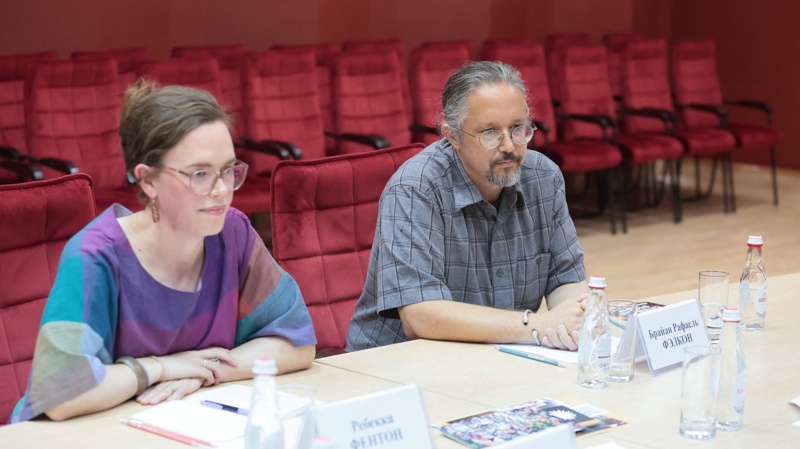
The preparations were discussed at a meeting between Kazakhstan’s Deputy Prime Minister and Minister of Culture and Information, Aida Balayeva, Smithsonian Institution Festival Curator, Rebecca Fenton, and Southwest Folklife Alliance Co-Founder, Bryan Rafael Falcon.

The sides also discussed the participation of Kazakhstan’s ethno-folk group HasSak in a festival in Tucson, as well as plans for the group to hold a concert in Washington.

 Kazakhstan to showcase cultural heritage at Smithsonian Folklife Festival 2027
Photo source: gov.kz

Preparations for the 2027 Smithsonian Folklife Festival are part of broader efforts to expand cultural cooperation between Kazakhstan and the Smithsonian Institution. The sides expressed confidence that their cooperation would gain new momentum and move beyond individual cultural initiatives toward long-term projects.

Qazinform News Agency previously reported that Kazakhstan proposed expanding bilateral cultural exchanges and hosting US Culture Days in the country.

  •  

Advocate General questions the basis of EU wastewater rules

Advocate General Juliane Kokott has published her opinion calling on the EU’s top court to invalidate provisions in the Urban Wastewater Treatment Directive requiring pharmaceutical and cosmetics companies to fund at least 80% of the cost of removing micropollutants from urban wastewater.

“Today’s opinion strengthens the case for stopping the clock on this Directive to avoid consequences for the availability of medicines for patients,” said Director General of Medicines for Europe, Adrian van den Hoven. “The Commission should use this opportunity to properly review the EPR scheme before companies are forced to make decisions that could affect medicine supply or health security.”

The opinion, issued in response to a Polish challenge to the Directive, is not binding on the Court of Justice of the European Union, but it appears to support criticisms that industry has long made about the evidence and proportionality underpinning the extended producer responsibility (EPR) scheme.

Generic and biosimilar companies say those concerns are already affecting investment decisions. Manufacturers must plan production years ahead.

  •  

MEPs push for EU solidarity fund to improve access to cross-border healthcare

MEPs are pushing for an EU solidarity mechanism to help patients pay for treatment abroad, arguing that financial barriers are preventing Europeans from exercising rights they have had on paper for more than a decade.

The calls came as Parliament discussed a report commissioned to inform its own-initiative report on modernising patients’ rights in cross-border healthcare. The study found that cross-border care accounts for just 0.004% of EU public health expenditure, despite patients continuing to face upfront costs, complex reimbursement procedures and prior-authorisation requirements.

Tomislav Sokol (EPP, Croatia) called the proposed solidarity mechanism a potential “game changer” for vulnerable patients, but challenged Parliament to spell out how it would work.

“How would it work in practice? How would it be financed? Would this be part of the EU budget?” Sokol asked. “We need to know it now, so that we can also use this in negotiations on the future EU budget, in the next MFF.”

  •  

Kallas exposes power struggle with von der Leyen

A long-running institutional struggle over who controls European Union foreign policy has broken into the open, with EU foreign policy chief Kaja Kallas publicly acknowledging that the role of the High Representative has not worked as intended when decisions are effectively taken above her inside the European Commission, writes Catherine Feore.

Speaking after an informal meeting of EU foreign ministers, Kallas delivered an unusually candid assessment of the relationship between the European External Action Service (EEAS), the European Commission and the member states.

At the centre of the dispute is a fundamental question: whether the EU's foreign policy is ultimately directed through the High Representative, who is supposed to bridge the Commission and national governments, or through Commission President Ursula von der Leyen.

Kallas argued that the problem does not lie primarily in the EU treaties or the institutional architecture they created. Instead, she said, it lies in how that architecture has been implemented in practice.

Video

"The problem is not the treaties, not the institutional setup. The problem is the implementation of that setup that it would work in practice, and there was a broad support by the member states to make it work. But of course, it doesn't entirely depend on the member states," Kallas said.

The final sentence was significant. Kallas' comments point towards criticism of von der Leyen.

Under the EU's institutional structure, Kallas holds two positions simultaneously: High Representative for Foreign Affairs and Security Policy and Vice-President of the European Commission. The dual role was designed precisely to connect foreign-policy decisions made by the member states with the powerful economic and regulatory instruments controlled by the Commission.

Those instruments include trade, development assistance, enlargement, migration and visa policy. Kallas argued that Europe cannot operate effectively as a geopolitical actor unless it brings those tools together with the foreign policy agreed by national governments.

"If we want to act as a geopolitical player, we should really put these things together," she said, arguing that this was precisely why the treaties created the vice-presidential component of the High Representative's job.

A role that works "on paper"

Asked about proposals to shift parts of the EEAS, its staff or competences towards the Commission, she described a system in which her coordinating authority exists more clearly in theory than in practice.

"The high representative/vice president is the link between the member states and the Commission, on paper, in theory,” she added pointedly that “we have had issues where there is somebody above me that is actually deciding; then you know it doesn't work that way. Let's be very frank.”

The reference to "somebody above me" was the sharpest indication of the institutional problem Kallas was describing. Within the Commission hierarchy, the person “above” Kallas is Commission President Ursula von der Leyen.

Commission versus EEAS

The question arose because foreign affairs ministers were discussing the future of the EEAS and how Europe's external-policy machinery should be organised.

According to Kallas, governments broadly supported retaining the existing institutional structure rather than rewriting it. But they also want that structure to operate as originally intended.

She warned in particular against duplication between the EEAS and the Commission. If a function is already being performed effectively by the diplomatic service, she argued, there is little justification for recreating the same capacity inside the Commission.

The discussion also touched on proposals to concentrate more external-action functions inside the Commission. Kallas said such a transfer could not be separated from the High Representative's authority.

If external-action services are concentrated in the Commission, she argued, the other side of the bargain must be that the High Representative genuinely oversees those services. "One side of the equation cannot happen without the other," she said.

Kallas said a majority of governments supported maintaining the current institutional setup and opposed concentrating everything in the Commission without the High Representative's coordinating role being implemented in practice. 

PHOTO CREDIT: Roundtable Informal meeting of Foreign Affairs Ministers (Gymnich) - September 2026 - Irish Foreign Minister Helen McEntee and EU High Representative Kaja Kallas © European Union

  •  

Von der Leyen vows to increase pressure on Russia after Leipzig attack

European Commission President Ursula von der Leyen and NATO Secretary General Mark Rutte Photographer: Dati Bendo © European Union
European Commission President Ursula von der Leyen said on Wednesday (2 September) that Europe and NATO would increase pressure on Russia after Germany attributed an attempted attack on cargo planes at Leipzig/Halle Airport to Moscow, calling the incident a “new escalation” on European Union soil, writes Catherine Feore.

“This was an attack using military-grade material, carried out by Russian operatives on European Union soil. We will not tolerate it,” von der Leyen said alongside NATO Secretary General Mark Rutte in Brussels.

The German government said on Tuesday (1 September) that its investigation and intelligence findings established Russian responsibility for the attempted attack at Leipzig/Halle Airport last month. Russia has denied responsibility.

The meeting took place as foreign ministers and the EU's High Representative for Common Foreign and Security Policy were meeting to discuss Russia and Ukraine among other issues.

“Had this attack succeeded, this would have resulted in enormous damage and possibly even loss of life,” von der Leyen said. “We stand in full solidarity with Germany.”

“If the intention was to make us think twice about supporting Ukraine, I can tell you it has only strengthened my resolve. Intimidation will not work.”

Von der Leyen said the Leipzig incident was part of a wider pattern of Russian activity confronting Europe, including airspace incursions, drones disrupting airports and interference with critical infrastructure.

“Leipzig marks a new escalation on European Union soil, directly attributed to Russia,” she said. 

Von der Leyen outlined three areas for a stepped-up European response: stronger protection of European infrastructure backed by additional sanctions on Russia, increased air-defence support for Ukraine, and an acceleration of Europe’s own defence build-up in close cooperation with NATO.

Infrastructure and sanctions

First, von der Leyen said Europe must strengthen the protection of infrastructure that could be targeted by Russian hybrid operations and be prepared to respond more quickly when attacks occur.

“We must treat our everyday infrastructure as frontline targets, and protect them accordingly,” she said.

The EU already has rapid response teams that can assist member states faced with such attacks, she said, arguing that Europe’s ability to prepare and respond would itself act as a deterrent.

Von der Leyen also said the EU was ready to intensify economic pressure on Moscow through sanctions. “Our sanctions have weakened Russia’s economy. We can use more sanctions and have them ready to impose as soon as such dangerous, life-threatening acts are attributed,” she said. “Every loophole Russia exploits is one we must close.”

European foreign ministers were discussing new listings in Ireland on Wednesday, she said, while the Commission was examining further ways to “cut deeper into Russia’s war chest”.

More air defence for Ukraine

Von der Leyen said her second priority was strengthening support for Ukraine, announcing that the EU had received a new request worth several billion euros for air-defence capabilities.

“Today, I can confirm that we have received a new payment request,” she said. “It is worth several billion euro, and would cover Ukraine’s air defenses, including the highly advanced PAC-3 Patriot air defense systems.”

Member states were considering the request, she said.

“I can say that it’s going in the right direction.”

Von der Leyen also pointed to European work with Ukraine on the FRIO project to develop anti-ballistic missile defences, as well as the EU’s €90 billion support loan.

“Since June, we have issued €8.5 billion for drones and missiles for Ukraine from this loan,” she said, adding that the funding could also be used to buy fighter aircraft from European industry.

Faster European defence build-up

Von der Leyen’s third priority was to accelerate Europe’s defence build-up alongside NATO, with air defence at the centre of the effort.

“Air defenses are critical,” she said. “We need a faster, more integrated alert system across Europe, and then we must intercept the threats faster.”

She pointed to the EU’s €800 billion defence investment plan, including €150 billion through the SAFE instrument, as a way for European countries to increase defence investment jointly.

“We are in a new era of European security,” von der Leyen said. “European investment in defense strengthens NATO and re-energizes our industrial base.”

Rutte backed von der Leyen’s assessment of the threat, saying Russia had become “increasingly reckless” as its war against Ukraine continued.

“We have seen more drones and missiles crossing into our airspace along our eastern flank, creating increased risk,” Rutte said.

“And we have also seen an increase in malign activities targeting our territory directly, whether it is fires set in factories producing defense equipment for Ukraine, or indeed the Russian hybrid attack in Leipzig.”

“The examples are many. The dangers Russia poses are clear,” he added.

Rutte said NATO was working “around the clock” to ensure it could protect its population and said Moscow would fail if it hoped attacks such as Leipzig would undermine Western backing for Kyiv.

“If Russia thinks we will be divided by the threat, or if they think we will be deterred from supporting Ukraine, they are mistaken,” he said. “Our unity is unshaken. Our support to Ukraine is clear.”

Rutte said NATO allies had agreed to provide at least €70 billion to support Ukraine this year and the same amount next year, with the EU loan forming a “crucial element” of that support.

The NATO chief also backed the push for additional air defence and increased defence production, saying higher spending had to translate into additional military capabilities and greater industrial capacity.

Von der Leyen said the EU and NATO would not be intimidated into reducing their support for Ukraine. “Europe and NATO will not just maintain our pressure on Russia; we will increase it,” she said. “We will not stop — not until Russia stops bombing and killing innocent children, men and women in Ukraine. We will continue, we will prevail, and we will deter anyone who attacks our freedom and our security.”

  •  

Launch of Europe’s first comprehensive medical certification programme for Jewish circumcision practitioners

In Judaism, circumcision, known as Brit Milah, is a religious ritual where a male infant's foreskin is removed on the eighth day after birth. ''Circumcision has been shown throughout decades of medical research to not be harmful to baby boys. In fact it has medical benefits - which is why so many people choose to circumcise their children outside of religion. ''Attacking circumcision in this manner - only when it relates to Jewish babies, is an attack on Jewish life in Europe,'' the Jewish leaders said in their open letter, writes European Jewish Press.

First program of its kind outside Israel will provide qualified Mohalim with advanced medical and safety training, practical assessment and certification under the supervision of an international network of urologists, paediatricians, physicians and medical scientists.

Against the backdrop of growing legal and political challenges to Jewish religious circumcision in Belgium and other European countries, the European Jewish Association (EJA) and the Rabbinical Centre of Europe (RCE) announced Tuesday the establishment of the Centre of Excellence for Religious Male Circumcision (CERM) and the launch of what is believed to be the first comprehensive medical and professional certification program of its kind for qualified Mohalim outside Israel.

Health and Animal Welfare Commissioner Oliver Várhelyi commended EJA for their efforts and stated: “Jewish life and Jewish religious practice belong in Europe. Our responsibility is to ensure that longstanding traditions can continue in a framework that meets the highest standards of child welfare, medical safety and professional responsibility, in line with European standards. The Centre of Excellence for Religious Male Circumcision offers a constructive and credible model for doing exactly that.”

Based in Brussels, CERM will provide already-qualified Mohalim – trained Jewish religious practitioners who perform Brit Milah – with structured supplementary medical and safety training, practical assessment and certification. The program will operate under the supervision of an international network of urologists, paediatricians, physicians and medical scientists, with a Medical and Scientific Council responsible for reviewing and approving its clinical protocols, certification assessments and professional standards. The program aims to work with health authorities across Europe to build confidence in qualified Mohalim as the practitioners best placed to perform religious circumcision, ensuring their competence is recognized through rigorous medical standards and independent supervision – rather than becoming a matter of political debate.

The curriculum covers the medical and safety framework surrounding the procedure, including newborn assessment, hygiene and infection prevention, infant welfare, bleeding and wound care, recognition of complications, emergency response and infant basic life support, medical referral and aftercare. Certification will include practical assessment, realistic clinical scenarios and emergency simulations, with particular emphasis on recognising warning signs, understanding the limits of competence and knowing when to postpone a procedure or seek medical assistance.

Brit Milah, traditionally performed on the eighth day after birth, is one of Judaism’s oldest and most fundamental religious practices.

Rabbi Menachem Margolin, Chairman of the European Jewish Association and the Rabbinical Centre of Europe, said: “Brit Milah has been at the heart of Jewish life for thousands of years. Faced with growing challenges to the practice and, in particular, to the ability of trained Mohalim to perform it in parts of Europe, we decided that our response must go beyond defending our religious freedom.”

”We are creating the highest possible professional framework to support it. For the first time outside Israel on this scale, our trained Mohalim will have access to a comprehensive program combining medical and safety training with practical assessment, certification and clear professional standards.” We deliberately called this a Centre of Excellence. When it comes to the welfare and safety of a child, our ambition should never simply be to meet a minimum standard. We want excellence – and we want that excellence to be transparent, documented and capable of being independently demonstrated,” he added. 

CERM’s launch follows a period of repeated legal and political challenges to religious circumcision in Europe. Belgium has become a particular focal point, with the status of non-physician Mohalim subject to significant legal and political uncertainty, while debates and attempts to impose restrictions have also arisen in other European countries.

The Centre has been established as a practical response: to strengthen medical safeguards, professional standards and oversight surrounding Brit Milah, while helping safeguard the ability of Jewish communities to continue practising an essential element of Jewish life in Europe.

“Our members were asking us for a serious and sustainable answer,” Rabbi Margolin added. “We listened. For the first time outside Israel on this scale, qualified Mohalim will have access to a comprehensive program combining medical and safety training with practical assessment, certification and clear professional standards.”

CERM builds on the existing training and experience of qualified Mohalim by adding a documented, standardised and independently assessed medical and professional layer. Its “Recognise, Prevent, Stop, Refer” safety model is designed to ensure practitioners can identify warning signs, prevent avoidable risks, act within clearly defined limits and promptly refer an infant to medical professionals when required.

The program draws on established medical and scientific guidance and will be subject to continuing medical review. Its Medical Officers and Advisory Board bring together expertise from Belgium, the United Kingdom, Israel, Italy and Germany, including specialists with direct experience of Israel’s formal system for the certification and supervision of Mohalim. Among them are Brussels-based urologist Dr. Sas Bar-Moshe; British physician and veteran Mohel Dr. Joseph Spitzer, Medical Officer of the UK’s Initiation Society since 2003; and Dr. Michael Ben Akon, Director of the Children’s Division at Laniado Hospital in Israel, a certified Mohel and a Ministry of Health representative on Israel’s inter-ministerial committee responsible for the certification and supervision of Mohalim.

The medical and scientific framework is intended not only to establish standards at the point of certification, but to provide ongoing professional oversight, with protocols and assessment standards reviewed as medical guidance and professional practice evolve. CERM ultimately aims to become a European reference centre for religious male circumcision, promoting evidence-based medical and professional standards and facilitating ongoing cooperation between Mohalim, medical professionals, Jewish communities, policymakers and public authorities.

Rabbi Margolin said: “The debate in Europe is too often presented as a choice between religious freedom and the welfare of the child. We reject that premise. The two are not in conflict. The stronger and more transparent the professional standards surrounding Brit Milah, the stronger the case for protecting the freedom of Jewish families to practise it. Europe cannot claim to protect Jewish life while repeatedly placing one of its most fundamental practices in doubt. CERM offers a constructive European answer: preserve religious freedom, demand excellence and make that excellence transparent.”

CERM official Website: www.britmilah.eu

  •  

Durban: A milestone in the new anti-semitism

The Durban Conference in South Africa in September 2001 was not just an event; it was a turning point. It was the modern-day Wannsee that planned the contemporary destruction of the Jewish people. I was there for the Italian newspaper, La Stampa. The stench of something rotten was already emanating from the preparations for the great gathering “against racism” convened by the United Nations, with the participation of an enormous number of NGOs—some 3,000—all of them with knives between their teeth, determined to demonstrate that, under the banner of human rights, the real enemy was Israel, writes Fiamma Nirenstein.

It was there, even more than with the U.N.'s “Zionism is racism” resolution of 1975, that Stalin’s path was resumed. In 1952-53, he had initiated and theorized a new great hunt against the Jews, inventing the blood libel of the “Jewish doctors’ plot” and staging the Slánský trial. The systematic murder and deportation of Jews were interrupted by the dictator’s death in 1953. But with theorists such as Maxime Rodinson and Francis Crémieux, the premises were laid for declaring Israel the new enemy of humanity.

The positions that ultimately led to Durban maintained that “the Israeli government has long been simply an agent of American imperialism.” The supposed proof lay in the malign role of Jews in the world. The doctors accused in the so-called conspiracy—all innocent, their confessions extracted under torture—became “identical to the Nazi doctors of Dachau,” in the pay of the Americans. The inversion begins This was the beginning of the inversion that, on Oct. 7, 2023, led to Israel and the Jews being accused of genocide instead of the evident intentions of Hamas and its barbaric determination being condemned. At Durban, the death sentence against Israel went hand in hand, for the first time, with the preemptive legitimization of terrorism, now carried out by “freedom fighters” rather than the terrorists of Munich or Fiumicino.

At a demonstration along the battered streets on the outskirts of Durban, just days before Sept. 11, the crowd marched behind portraits of its mastermind, Osama bin Laden. Along the dusty road, young NGO activists called—as their documents did—on “all of civil society,” from the Maya to the Tibetans, everyone oppressed by racism, to embrace the struggle against Israel and transform it into the fundamental human-rights struggle. When I told the editors at my newspaper, La Stampa, they replied that I had an obsession with that poor Saudi shepherd. The conference was organized by a United Nations that had by then been captured by the great Third World and Islamic blocs that had reliably provided the Soviet Union with a majority. “Zionism is racism,” the 1975 resolution, was an addendum to the death sentence against Judaism following Hitler’s attempt to eliminate it from the planet.

Israel was the new target of antisemitism, invariably linked to anti-Americanism and viewed as the spearhead of the colonial and imperialist West. Every truth was erased. Israel’s almost desperate attempts to share the territory and make territorial concessions to the Arab world were rejected time and again. In 2000, after Arafat had been brought back despite his appalling embrace of terrorism, the Second Intifada erupted. By the time Durban took place, we were in the midst of the Intifada—a preliminary 7 October.

Its preparatory documents had been written and discussed in Strasbourg, Santiago and, astonishingly, Tehran, where since 1979 an Islamist regime had ruled whose foundational principle was the destruction of the State of Israel. Israel as absolute evil In Durban, Fidel Castro, Yasser Arafat and Robert Mugabe converged, and the Jewish question was inserted into the heart of demands for billions in reparations for slavery. Israel obviously had nothing to do with this history, but it was portrayed as absolute evil. The Palestinianism of Durban held that Israel was racist, imperialist, colonialist and genocidal—and therefore even a slave-owning power. All these adjectives are meaningless when applied to a country that represents the miraculous return home, disarmed and hungry, of the people indigenous to that land, armed only with hoes and books.

They armed themselves only when, awakening from the dream, they realized that their lives were once again at risk. And even then, Israel continued to surrender large pieces of territory in the search for peace. I was there In Durban, I rented a room inside a compound surrounded by high walls. I shared it with a journalist from the Italian left-leaning daily, La Repubblica, who was thrilled by the opportunity to encounter Castro and the other idols of the era in the corridors—and, with a little luck, perhaps Nelson Mandela as well. There was the official conference, the domain of Mary Robinson, who purported to moderate the international proceedings and restrain them from excessively harsh resolutions that had in fact been planned from the beginning.

Then there were the stadium and other NGO gathering places, where antisemitic hatred was expressed in every possible way: leaflets, speeches, songs and actual physical hunts for Jews. Several times I had to run away and seek refuge in a building belonging to the local Jewish community, where one could also find something to eat. Thousands of NGO members wore T-shirts bearing the image of Mohammed al-Dura alongside the conference logo. The production of leaflets about Palestinian suffering was endless. Jews were depicted with missiles and knives, blood dripping from their mouths and murdered children. The word “genocide” was already commonplace. From the podium, in a crowded, darkened hall, Fidel Castro, while demanding financial reparations for entire continents for slavery and colonialism, spoke of “the terrible genocide being perpetrated today against our Palestinian brothers” by Israel’s then-prime minister, Ariel Sharon, whom he described as a far-right leader acting in alliance with the “hegemonic superpowers.” Arafat celebrated the universal acceptance of his worldview, describing the situation as the “expression of the racist colonial conspiracy” to uproot the Palestinians and conquer their land. In short, the troops of that global war had finally assembled—a war that only days later would find its expression in the attack on the Twin Towers. That was the true meaning of Durban.

And the Palestinian cause, together with the destruction of Israel, was baptized as the indispensable prerequisite for every revolutionary struggle. The astonishment and disbelief in Israel and the United States were enormous. After everything the Jews had endured, and while they were suffering through the Intifada, finding themselves once again facing such a broad and senseless assault on their right to self-determination and self-defense, their right to return home and the very liberal-democratic nature of their country seemed like a nightmare. The two delegations under attack took days to decide to leave. Israel continued to insist, as Diaspora Affairs Minister Michael Melchior said, that racism—the supposed subject of the conference—was so important to Jews that the country wanted to participate in the discussion and the decisions. In the end, the United States and Israel had to walk out. Canada and Europe remained, but the European position sought an impossible compromise. It proposed restoring the Holocaust to the final documents as the worst expression of racism.

The interventions by Italy’s Renato Ruggiero, Germany’s Joschka Fischer and, in the corridors, the excellent Margherita Boniver—the only one who understood fully, to the point of tears—were hesitant and moderate. Fischer had the strength to say that the right of the Jews to their own state was indisputable. But he returned to the Palestinians’ right to a state and once again forgot that Israel had never called that right into question since 1948, despite its countless offers. ‘Did not happen in a vacuum’ By contrast, the denial of the Jews’ right to have their own state like every other people reached its paroxysm on Oct. 7. And once again the United Nations lined up against Israel, as it had at Durban. So it was with the words of U.N. Secretary-General António Guterres, who, instead of expressing horror and condemnation, responded with his infamous statement that the 7 October attacks “did not happen in a vacuum”. It is true: They did not happen in a vacuum. Durban is a milestone in the antisemitic catastrophe that once again torments the world today, and the United Nations is its prophet.

  •  

ChatGPT, Reddit and Roblox become latest catch in EU’s regulatory net

Brussels is tightening its grip on some of the internet’s fastest-growing services, designating ChatGPT, Reddit and Roblox for heightened scrutiny under the European Union’s Digital Services Act (DSA), writes Catherine Feore.

The European Commission said all three services meet the 45 million average monthly users threshold in the EU, triggering the DSA rules reserved for digital players considered large enough to pose systemic risks to European society.

“These new designations mean that ChatGPT, Reddit and Roblox will now be held to a higher standard of scrutiny and accountability in the European Union,” said Henna Virkkunen (pictured), the Commission’s executive vice-president for tech sovereignty, security and democracy.

The move puts the companies firmly in Brussels’ regulatory crosshairs. They must assess and mitigate risks ranging from illegal content and harm to minors to threats to fundamental rights, elections, public security, and users’ physical and mental well-being. Importantly, the designation also gives the Commission investigative powers to scrutinise relevant features and systems underpinning the services.

ChatGPT has been designated a Very Large Online Search Engine (VLOSE), while Reddit and Roblox are now Very Large Online Platforms (VLOPs). They have until the end of January 2027 to comply with the DSA’s tougher obligations.

ChatGPT’s inclusion is particularly significant. The Commission considers the AI service a hybrid product that qualifies as an online search engine because it can search the web when answering users’ queries, bringing a major generative AI service into the DSA’s toughest tier of oversight for the first time.

The Commission will supervise compliance with the DSA, in cooperation with Coimisiún na Meán (Ireland’s media regulator) for ChatGPT and Reddit, and the Dutch Authority for Consumers and Markets (ACM) for Roblox.

With the latest additions, 28 platforms and search engines have now received the EU’s “very large” designation.

Photo credit: Commissioner Virkkunnen Photographer: Lukasz Kobus © European Union

  •  
❌