 Login

AI: la “sicurezza” può diventare anche uno strumento di vantaggio strategico
La tregua sull’IA tra Stati Uniti e Cina non esiste: sicurezza, antitrust e chip ridisegnano la geopolitica tecnologica.

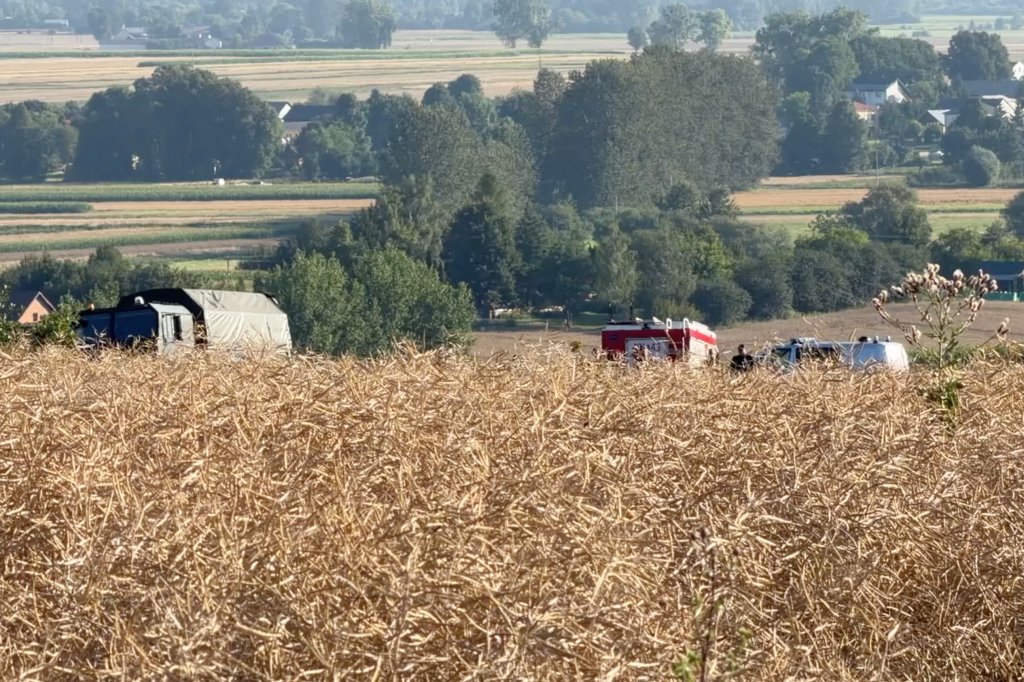
The top U.S. Air Force officer in Europe, who also serves as the NATO Allied Air Command leader, said he has been tasked with enacting new alliance plans to defend against cruise missiles and drones. He was responding to questions about a drone that NATO had to shoot down after it entered Lithuanian airspace overnight. European Commission President Ursula von der Leyen said Tuesday morning that the incident was “part of a broader pattern of Russian aggression and provocation against Europe, testing our readiness and our resolve.”
The drone incursion into Lithuania took place against the backdrop of the ongoing Russian war on Ukraine and amid a spate of so-called ‘hybrid’ or ‘gray zone’ actions Moscow has been accused of carrying out throughout Europe, including a recent attempted drone attack on the Leipzig-Halle airport in Germany.
We now know that Russia is responsible for the attempted explosive attack at Leipzig airport. Russia's repeated hybrid attacks on Germany and Europe are unacceptable. (1/4) pic.twitter.com/o3vBjgpeb1
— German Embassy Washington (@GermanyinUSA) September 1, 2026
“I don’t know what’s in the mind of Putin or his fielded forces about those one-way attack drones or even cruise missiles, like we’ve seen enter Polish airspace just a few months ago. In July, we had an AS-23 cruise missile enter Poland,” Lt. Gen. Jason T. Hinds, Commander, U.S. Air Forces in Europe/U.S. Air Forces Africa (USAFE), and Commander of the Allied Air Command, said in response to a question about the drone shootdown over Lithuania. He was speaking during a media roundtable at the Air & Space Forces Air, Space and Cyber Conference that TWZ is attending.
Hinds added that while he doesn’t “know the why behind” the drone incursion into Lithuania, he has been tasked by U.S. Air Force Gen. Alexus G. Grynkewich, who serves as NATO Supreme Allied Commander Europe (SACEUR), “to fully implement EVA [Enhanced Vigilance Activity] Eastern Sentry and now its Standing Defense Plan 12000, which gives the nations the capabilities that they need to defend their airspace against either one-way attack drones like the one that you described last night, or a cruise missile.”
EVA Eastern Sentry is a mission NATO stood up in September 2025 after “an unprecedented number of Russian drones and planes violated the airspace of several NATO Allies,” according to the alliance. “Allies are contributing additional capabilities and assets to NATO’s deterrence and defense – for instance, more fighter jets, helicopters, transport aircraft, air defense systems, surveillance aircraft and frigates – and improving the coordination of these assets through NATO.”
Standing Defense Plan 12000 is a new plan for integrated air and missile defense across the alliance. Grynkewich introduced the concept during testimony to Congress in March.
Hinds acknowledged that Russia could be testing the alliance.
“It’s not about the small UASs; that’s typically a national responsibility, and it could be probing,” the Air Force general noted. “Regardless of the intent behind it, what we want to be prepared for is the second that a one-way attack drone or a cruise missile is first and foremost detected – hopefully well before it enters NATO territory – we want to know it. We want to know where it’s coming from. We want to have the capability to sense it. We want to be able to have the C2 [command and control] systems to be able to decide what to do about it, and then have the right kit to be able to act.”
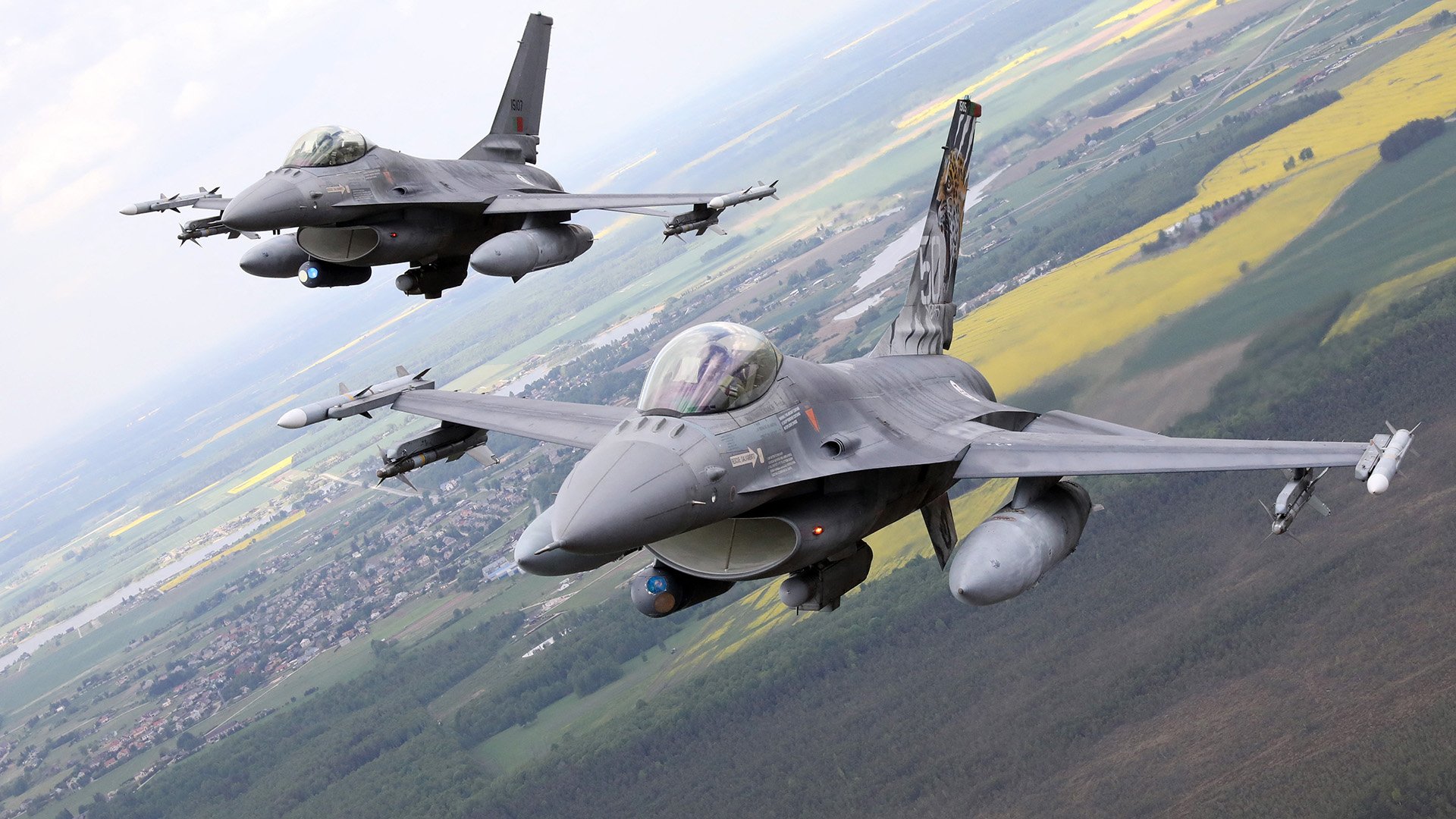
Despite an integrated air and missile defense system that includes Patriot surface-to-air missile batteries, NATO currently is primarily “using air power” against drones and cruise missiles “and that’s not putting us on the right side of the cost curve,” Hinds stated. “But we want to get there.”
Using NATO jets to take down drones “is very effective, just like what you saw last night, and many other times,” but not necessarily efficient, Hinds explained.
“I think there’s been at least five other cases of allied nations providing air power to shoot down one-way attack drones,” he proffered. “I want to get to the point where we’re doing it efficiently, using lower-cost interceptors, hopefully ground-based, and in some cases air-based that are cheaper to use, so we’ll see what the intent may be. Intelligence organizations are going to provide us with that intelligence later on, but I just don’t know yet.”
You can see one of those NATO jet engagements with drones in the following video.
NATO airpower in action this morning, safeguarding Latvian airspace. pic.twitter.com/Ugzbx8aaZS
— Marko Mihkelson(@markomihkelson) June 8, 2026
It should be noted that Europe is starting to follow the American lead in using less expensive laser-guided, air-to-air rockets as drone-killing weapons. TWZ was the first to report about the use of 70mm Advanced Precision Kill Weapon System (APKWS) rockets by the U.S. The U.K. Royal Air Force announced in May of this year that its Typhoons were now equipped with APKWS rockets while the French recently tested their own 68mm laser-guided rockets from Rafale fighters.
The Defence Procurement Agency has successfully completed integration testing of 68 mm laser-guided rockets on the Rafale fighter jet. The time between the contract being awarded for this new capability and initial operational capability being achieved was less than 8 months. pic.twitter.com/rR2Nij9EzY
— French Aid to Europe
(@aidefranceukr) July 13, 2026
As the threats have evolved, NATO has “transitioned away from air policing, and we’ve transitioned to air defense for some specific reasons,” the general pointed out. “One is readiness. Air policing is a readiness decrementing mission that the alliance has done for years. There’s also an assurance mission that we did for 32 nations. That’s transitioned to air defense now. Air defense means we have the right kit, multi-domain, to be able to be put in the right place based on indications, warnings, or real threats, like you saw last night, inside of the Baltic nations, to be able to respond decisively and quickly.”
“There’s also a deterrence value there,” Hinds added. “So if Russia does fly a one-way attack drone or a cruise missile, they know that we’re going to be in the right spot to be able to detect it and then defend against it.”
“These are limited incursions, right? Small numbers. Here’s what I see: hybrid activities may, in fact, only be one of the few levers that Putin has available to him, because he sees that he does not have an advantage in geography, domain, or readiness,” Hinds suggested.
“Think about that,” he urged. “So what are we seeing? We’re not seeing a massing of forces across the opposite side of Finland, a new NATO nation. We’re not seeing a massing of forces whatsoever in any domain opposite of Poland, Latvia, Lithuania, or Estonia. You’re seeing a significant number of one-way attack drones in the Black Sea targeting Ukraine. Some of them are entering Romania. What you’re not seeing is a direct confrontation in geography. We’re not seeing direct competition in domains. And I think Putin knows that we are ready. I know he knows that we’re a defensive alliance. I know he knows that we have an advantage in every domain against them, and I think that’s likely why you’re seeing things like what you’re seeing with hybrid activity.”
Though below the level of armed conflict, these Russian activities raise the potential for something worse, Hinds posited.
“The risk about hybrid activity, from my perspective, is it could lead to escalation, and that’s where I hope that we get back towards deterrence again, and that the nations they’re going to decide to do what they want to do when it comes to these hybrid activities,” the general said. “Some of them are law enforcement. Some of them are military responses, and that’s up to the nations to decide how they’re going to deal with that. Not me.”
“But what I owe General Grynkewich is to ensure that we are demonstrating our deterrence each and every day, and we’re doing that effectively across all domains,” Hinds added. “And to ensure that Putin knows that if he tries something against the alliance, that we will be there, and we’re ready to win decisively if challenged.”
Contact the author: howard@twz.com
The post NATO Air Commander Details Thinking Behind The Alliance’s New Air Defense Plan appeared first on TWZ.
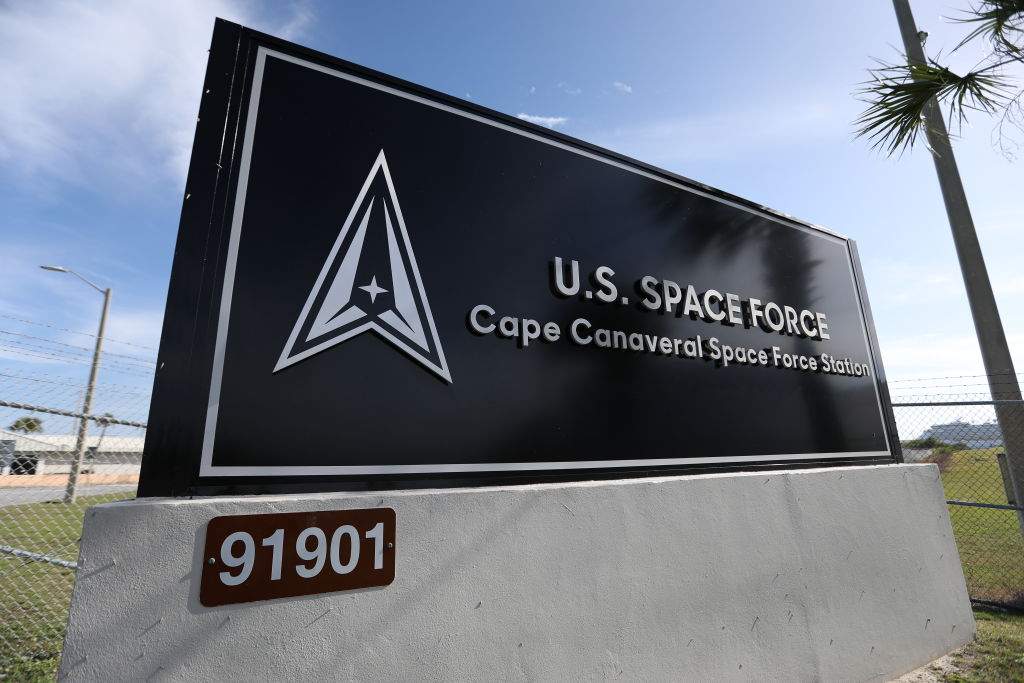
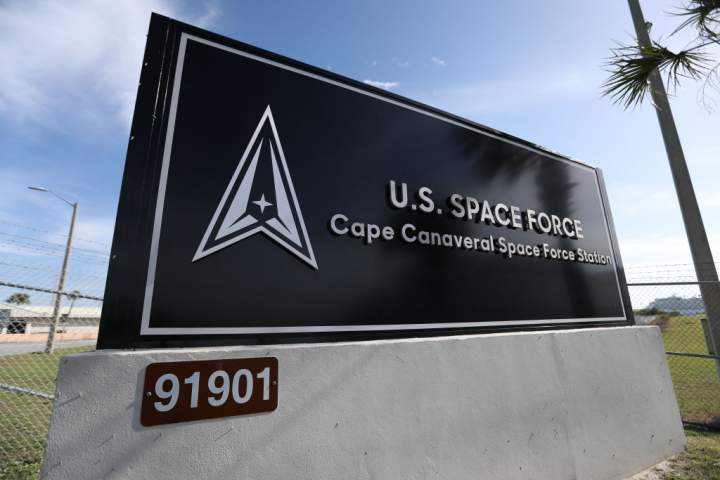
U.S. Space Force’s top officer has shared new details about his service’s use of electronic warfare capabilities during Operation Epic Fury against Iran earlier this year. This underscores how space is steadily becoming an arena where conflict actually occurs, and the implications this has for forces operating inside and outside of the Earth’s atmosphere.
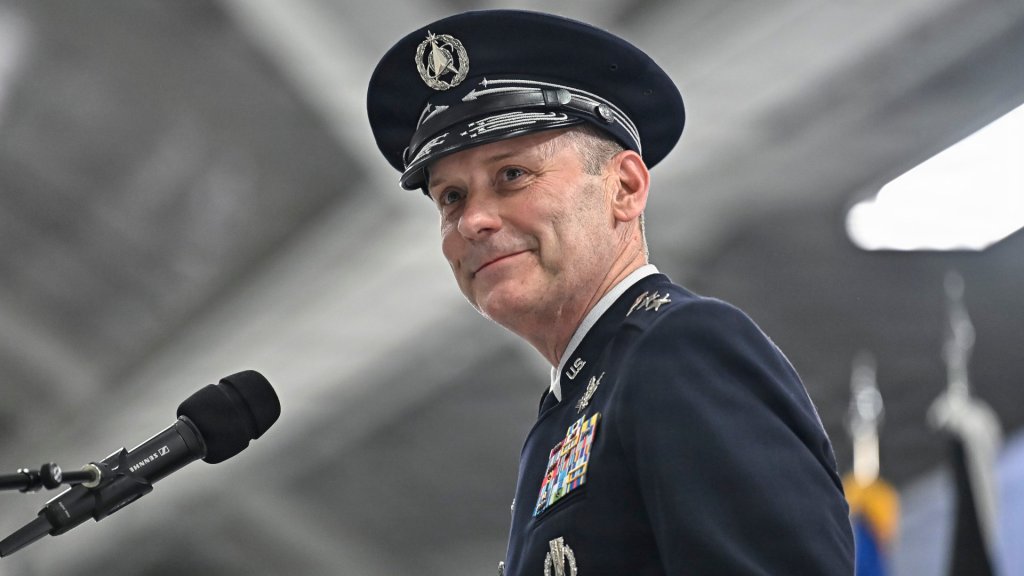
Chief of Space Operations Gen. Douglas Schiess highlighted the actions of a member of the 42nd Electromagnetic Warfare Combat Detachment (EWCD) in support of Epic Fury during a keynote speech earlier this morning. Schiess’ remarks came at the Air & Space Forces Association’s (AFA) 2026 Air, Space & Cyber Conference, at which TWZ is in attendance. This is his first major engagement since taking over as head of Space Force less than two weeks ago.
“During Operation Epic Fury, our components, notably at U.S. Central Command and Space Command, with support from our components at European Command and Pacific Command, demonstrated that Guardians [the official term for uniformed Space Force personnel] are not supporting from the sidelines as a nice-to-have [sic], but we are delivering space power directly into the fight as a need-to-have,” Schiess said. “One of those impressive Guardians is Specialist Gray, who hails from Tampa, Florida. She joined the Space Force just two years ago, but listen to the impact she [has] made in her short term already.”
“She deployed to the CENTCOM AOR [Central Command area of responsibility] as a part of the 42nd Electronic Warfare Detachment [sic], and within hours of OEF kicking off, she received a top priority target package with one critical objective: reconfigure her weapon system and execute critical non-kinetic fires,” he continued. “She locked onto the target, optimized her weapon system, and waged electromagnetic warfare against a determined adversary. Even as ‘Alarm Red’ sirens were blaring, and incoming missiles targeted her site, she courageously held the line, protecting forces, denying adversary capability, and delivering space effects, until her commander had to literally pull her from the console to safety.”
“Specialist Gray is just one of the outstanding members of the entire enterprise of dedicated guardians, including the acquisition professionals that developed and fielded the weapon system that she operated, the intel Guardians that developed the targeting package that she used, and the cyber guardians who ensured communication, connectivity, and network defense for the command and control, the guardian instructors who trained her for combat, and the list goes on and on,” the Chief of Space Operations added.
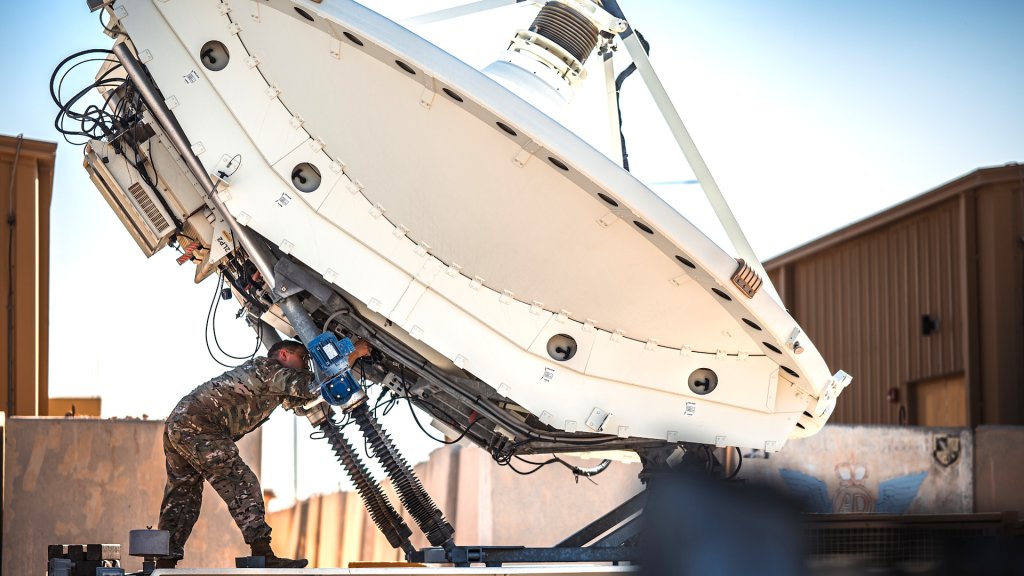
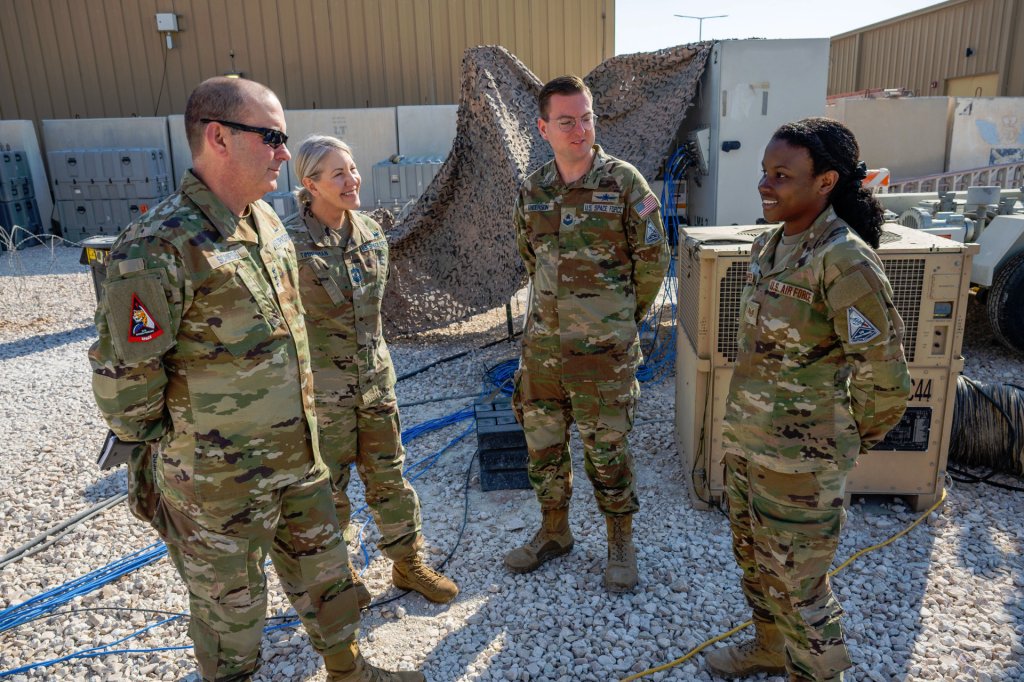
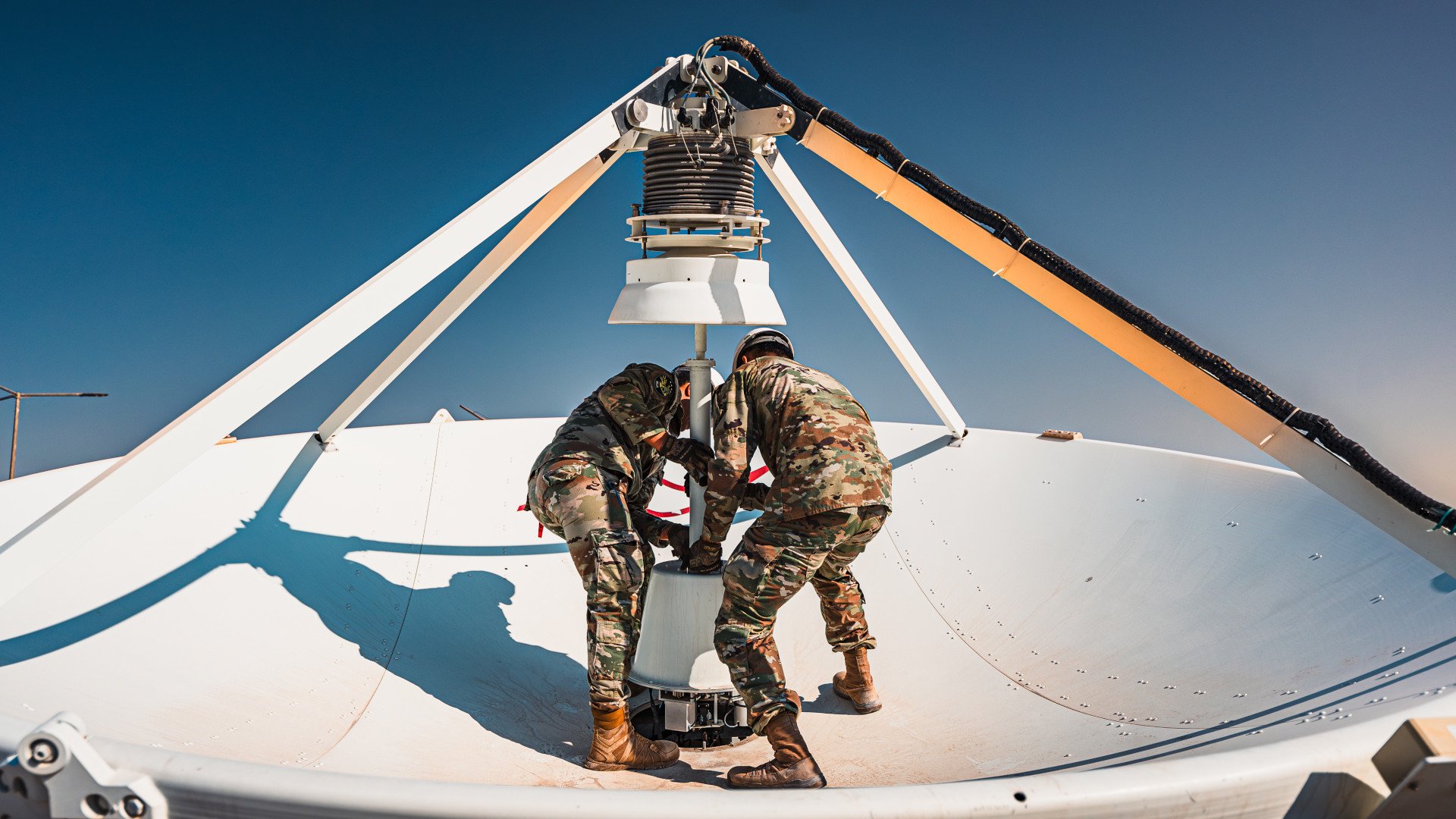
Schiess did not name the system in question or elaborate further on how it was employed. However, previously released pictures of elements of the 42nd EWCD in the Middle East have shown personnel working with trailer-mounted multi-band antennas that have been associated in the past with variants of the Counter Communications System (CCS). CCS is a family of ground-based electronic warfare jammers primarily designed to disrupt enemy space-based communications capabilities. Prior to yesterday, CCS was the U.S. military’s only publicly acknowledged anti-satellite weapon. Space Force has now confirmed it also has weapons in orbit, which we will come back to later on.
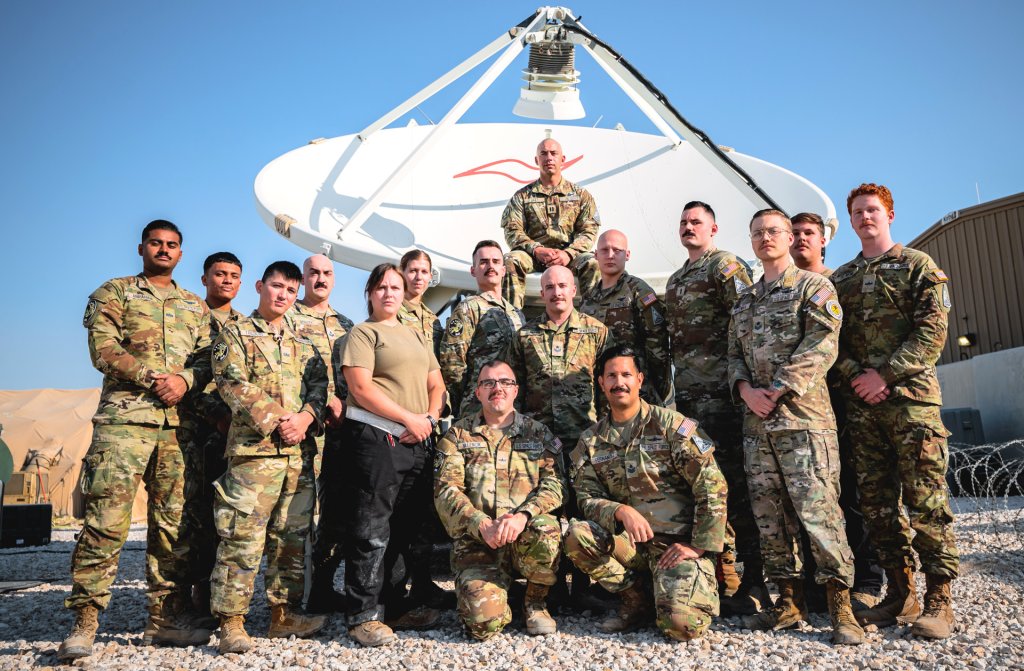
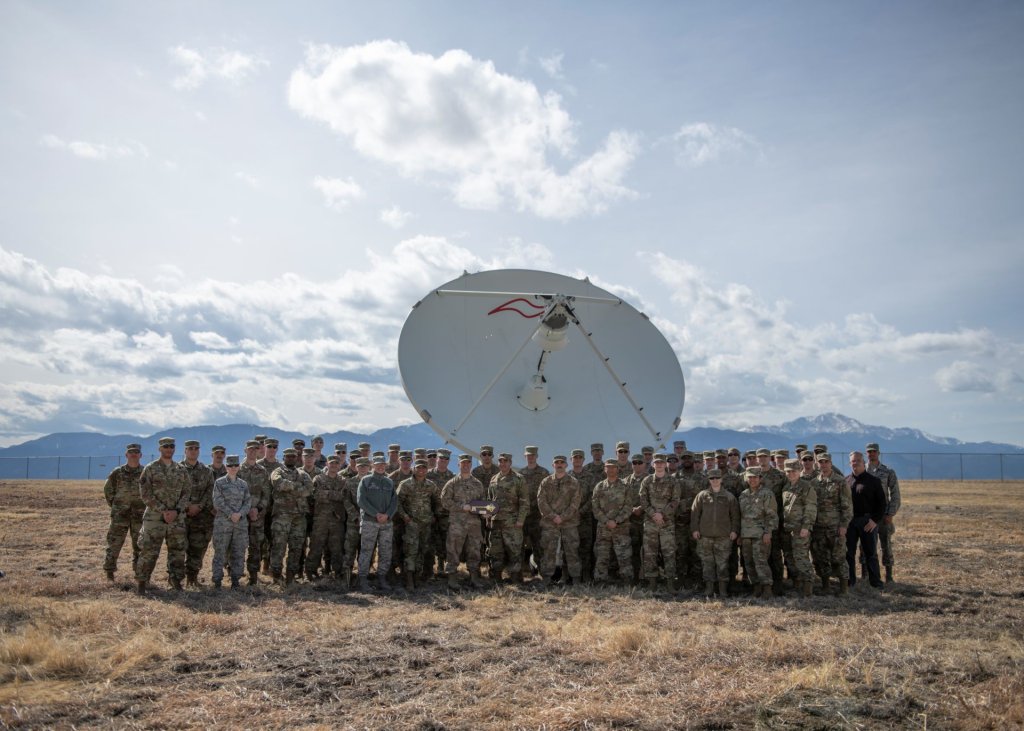
The 42nd Electromagnetic Warfare Combat Detachment has been operating in the Middle East since at least 2024 under the umbrella of Space Force’s main headquarters in the region, U.S. Space Forces – Central (SPACECENT). President Donald Trump briefly called attention to the detachment’s “cutting-edge defense activities” during a Christmas Eve conference call with deployed service members last year.
“Sometimes we have to be within the footprint of the satellite, and so that’s why Guardians go into harm’s way,” Gen. Schiess did tell TWZ and other outlets at a roundtable after his speech this morning when asked for more details about the 42nd EWCD’s role in Operation Epic Fury, and what lessons Space Force has been learning from the conflict more broadly.
“Electromagnetic warfare was a big part of that, but also satellite communications,” he added. “The ability to keep communications, obviously GPS and PNT [positioning, navigation, and timing], were important there.”
“And then, really, missile warning and missile tracking was [sic] incredibly important. Both [Air Force Chief of Staff] Gen. Wilsbach and I talked about ‘Red Alarm’ situations,” the Chief of Space Operations continued. “Being able to tell our forces to be able to take cover was extremely important. And as we’ve seen from Ukraine to Iran, the amount of missiles and the amount of things, the folks that are doing that each and every day are incredible, and they are saving lives.”
Gen. Schiess’ anecdote about Specialist Gray and the 42nd EWCD did highlight how Iran, especially in the opening phases of the conflict earlier this year, was able to deal real blows to U.S. and allied facilities and forces across the Middle East. Iranian missiles, drones, and other capabilities were able to damage and/or destroy a variety of high-value assets, including aircraft and radars, and cause hundreds of casualties, as TWZ has drawn attention to on several occasions in the past. This has already been a sobering wake-up call with serious implications for potential future conflicts against larger and even more capability opponents, especially China.
“I think the whole joint force is learning a lot from Operation Epic Fury, the previous operation there, on exactly what needs to be in underground facilities, [and] what maybe can we do from remote locations,” the head of Space Force said at the roundtable today. “You could also look at what can we do from space to do some of those things? And so we’re looking at all those [lessons learned].”
Gen. Schiess mentioning subterranean facilities and remote operations is particularly notable. Even before Operation Epic Fury began, the U.S. Air Force had been working to expand options for directing operations in the Middle East from a command center in the United States. The service had also been looking to push certain command and control functions at Al Udeid Air Base in Qatar underground. Al Udeid was among the many bases Iran subsequently targeted.
Operation Epic Fury has already added new fuel to a larger ongoing debate about balancing U.S. military base defense priorities globally, including the relative value of investing in new physically hardened infrastructure. TWZ has been following these discussions very closely in recent years. The conflict with Iran has raised serious questions about future operations of any kind at certain bases across the Middle East, and there have been reports that a larger reorientation of America’s force posture in the region could be coming.
For Space Force, operations against Iran have provided a broader opportunity for the service to demonstrate its active role in forward-deployed operations. That, in turn, has generated its own lessons learned beyond just steps needed to help better protect units in the field.
This extends to “reconstitution [of forces] in a combat environment, the logistics and the importance of that relationship with TRANSCOM [U.S. Transportation Command] and to be able to get supplies and replenishment into the theater,” Chief Master Sergeant of the Space Force John Bentivegna also said today, speaking alongside Gen. Schiess at the roundtable. That is “something we haven’t really worked on before. So definitely, it was a great lesson learned.”
Space-based capabilities including early warning, general intelligence gathering, weapons guidance, near-real-time communications, and more, are already absolutely central to U.S. military operations. America’s long-standing dominance in space is also steadily being eroded, with China, in particular, surging ahead in the deployment of new satellites to support a host of mission requirements, including intelligence-gathering and long-range targeting. The ability to leverage space is also proliferating to smaller adversaries, including Iran.
In addition, as mentioned, the space domain is no longer limited to just supporting operations within the atmosphere, but is a place where real engagements happen. The U.S. military is now capable of generating so-called counter-space effects using forces and assets within the atmosphere as well as in orbit, as was just disclosed yesterday.
Overall, Gen. Douglas Schiess’ comments today about the role played by Specialist Gray and the 42nd EWCD during Operation Epic Fury are indicative of not just what is to come in future operations, but how the Space Force is already engaged in combat missions now.
Contact the author: joe@twz.com
The post New Details On How Space Force Has Waged Electronic Warfare Against Iran appeared first on TWZ.
À Gaza, l'exiguïté des lieux et le poids écrasant des jours qui passent sans rien changer à notre situation m'obligent sans cesse à chercher le calme, même s'il ne dure que quelques minutes. Me voici sur le front de mer. Le bruit est omniprésent. Comment pourrait-il en être autrement dans un périmètre de quelques kilomètres carrés où s'entassent plus de deux millions de personnes, au cœur de l'une des tragédies les plus cruelles au monde ?
Mais ce n'est pas le grondement de la mer ou les vibrations des groupes électrogènes qui assaillent mes oreilles. C'est une discussion animée entre quatre jeunes hommes avachis sur des chaises en plastique. Ils parlent de la guerre. De ceux qui nous ont oubliés. De ceux qui font mine de nous aider mais qui n'ont rien à offrir si ce n'est quelques gesticulations. L'Iran ?
Hassan, 22 ans, a obtenu son diplôme universitaire il y a quelques mois. Il a perdu plusieurs membres de sa famille pendant les bombardements. Il s'est longtemps accroché à l'idée que l'Iran restait le dernier espoir capable de renverser la situation en modifiant le rapport de forces avec Israël. Il n'a pas perdu espoir. Pour lui, cela vaut encore la peine d'attendre. En infligeant une défaite aux Israéliens, la République islamique pourrait contribuer à ce que l'étau sur Gaza se desserre. « Téhéran, dit-il, n'a jamais abandonné ses alliés lors des crises précédentes. » Hossam et Rifât, à peine plus âgés, voient les choses différemment. Ils n'attendent rien de personne. Pas plus de l'Iran que des pays arabes. « Chacun son bât », disent-ils. « Gaza paye seule le prix lourd », dit l'un pour qui, même s'ils sont bombardés tous les jours, les Iraniens sont loin d'éprouver les mêmes souffrances que les Palestiniens. L'autre ne veut pas parler de géopolitique. Pour lui, la seule chose qui compte, c'est « la fin de cet enfer » que nous vivons depuis des années. La discussion se prolonge. Elle ne diffère guère de ce que j'ai pu entendre ici ou là. Tout tourne autour de ce que nous avons subi et de cette question lancinante : pourquoi le monde a-t-il laissé faire ça ? Comment en sommes-nous arrivés à espérer que l'Iran, pays auquel nombre d'entre nous ne se sont jamais intéressés, puisse voler à notre secours ? Le quatrième jeune homme, silencieux jusque-là, me dit que l'Iran est juste l'un des derniers espoirs auxquels on peut se raccrocher. Rifât n'est pas d'accord et se lève en maugréant : « Ces trois dernières années, Israël a démontré qu'il imposait sa volonté au monde entier. Il est vain d'attendre des miracles », lâche-t-il avant de s'en aller d'un pas traînant. Hossam acquiesce : « Après des années de guerre, le fossé entre ce que nous vivons et ce que nous espérons s'est considérablement creusé, et les vœux ne changent pas la réalité. » Pour nous tous, la situation en Iran nous apparaît tragique à double titre. Nous savons ce que la guerre fait aux peuples. Et nous craignons de ne plus avoir le moindre espoir.
European Commission President Ursula von der Leyen during her speech in 2025 Photographer: Dati Bendo © European Union, 2025
Ursula von der Leyen is expected to make the case for a more independent and resilient Europe in her State of the European Union address on Wednesday (16 September). But analysts and political groups in the European Parliament are demanding something more concrete: evidence that the Commission can turn its expanding ambitions into results Europeans can see.
The State of the European Union address, commonly known in Brussels as the “SOTEU”, is the Commission president’s annual speech to Parliament setting out priorities for the year ahead. Modeled in part on the US president’s State of the Union address to Congress, the EU version began in 2010 under then Commission president José Manuel Barroso. Von der Leyen will deliver this year’s address at 9:00 tomorrow morning (16 September).
The speech comes as Europe is confronted with an ongoing war in Ukraine, a fragmenting global trading system and the challenge of strengthening defence while reviving competitiveness and financing the green transition. At home, von der Leyen must reconcile political groups that broadly agree on the need for a stronger Europe but differ over what that means.
For Manfred Weber, chairman of von der Leyen’s centre-right European People’s Party group, the focus should be on voters’ economic and security concerns.
“Europe’s priorities must reflect people’s concerns: jobs, the cost of living and economic security,” Weber said. He called for a stronger economy and well-paid jobs, tighter control of Europe’s borders, leadership on AI, continued support for Ukraine and “a strong European defence pillar”.
On the centre-left, Iratxe García Pérez, president of the Socialists and Democrats group, argues that the Commission has relied too heavily on deregulation.
“Europe needs more than announcements,” García Pérez said. “It needs concrete policies backed by the necessary resources.” The S&D wants greater emphasis on affordable food, housing and energy, quality jobs and climate action, alongside European sovereignty in defence and digital technologies.
Renew Europe is also making delivery the benchmark, calling on von der Leyen to present “a credible plan turning European ambition into visible results” and framing the choice as one between united European action and fragmentation.
Analysts at the European Policy Centre see the same challenge extending to Europe’s position in the world.
“Von der Leyen will tell us that the EU is forging new partnerships around the globe,” said Almut Möller, the EPC’s director for European and Global Affairs. Canadian Prime Minister Mark Carney’s attendance will reinforce the geopolitical dimension of the speech.
But strategic autonomy goes beyond defence and trade. Georg Riekeles, the EPC’s head of political economy, identifies financial dependence as an overlooked vulnerability. With the international financial system becoming less stable, Europe cannot assume Washington and the US Federal Reserve will play the stabilising role they did in previous crises. Von der Leyen “must therefore address financial sovereignty as a core element of European security”, he argues.
Technology poses another test. Elizabeth Kuiper, the EPC’s head of health and societal resilience, says von der Leyen should “reject the trade-off between competitiveness, technological progress, and the EU’s social model”, particularly as AI affects employment, income security and social cohesion.
Climate policy presents a similar collision between ambition and resources. Stefan Šipka, the EPC’s head of sustainable prosperity, argues that Europe needs “a robust delivery mindset, no more strategies” as it tries to combine defence, decarbonisation and economic security.
The common thread is delivery. Von der Leyen has no shortage of strategic objectives. The harder task on Wednesday will be explaining how they fit together, how Europe will finance them and what takes priority when they conflict.
For EPC policy analyst Eric Maurice, von der Leyen “must provide strategic focus and political clarity”.
“As the midterm in her second term approaches,” Maurice said, “it is time for von der Leyen to present a vision and deliver.”
Executive Vice-President Roxana Mînzatu presents Fair Labour Mobility package © European Union
The European Commission has unveiled what it calls an ambitious “Fair Labour Mobility” package aimed at making it easier for people to work across EU borders while strengthening protections against exploitation and fraud.
The proposals would allow workers to prove social security and health insurance entitlements digitally and make qualifications easier to understand and recognize. The Commission estimates the measures could generate €6 billion in benefits by 2040.
Central to the package is a European Social Security Pass, or ESSPASS, enabling people to request and receive documents such as the European Health Insurance Card and the A1 certificate for posted workers online. Documents could be stored in the EU Digital Identity Wallet and verified by national authorities.
Brussels is also proposing faster recognition of professional qualifications. Procedures for regulated professions, including doctors and nurses, with the aim of reducing the target processing time from three months to five weeks.
Recognition of qualifications obtained outside the EU would also be streamlined, with common standards intended to cut average processing times from 14 months to four months.
The European Federation of Nurses Associations (EFN) has welcomed the Commission’s plans for recognising qualifications from outside the EU, arguing that they bring greater transparency to a labour market already heavily reliant on internationally recruited healthcare professionals.
EFN Secretary General Paul De Raeve said recruitment from third countries was already well established and frequently organised through bilateral arrangements between governments. Denmark, he noted, has gone considerably further, establishing a school in Delhi to prepare Indian nurses for work in Denmark, including Danish-language training.
“This is going on,” De Raeve said, arguing that international mobility cannot simply be prevented when European health systems need staff and qualified professionals want to move. In the short term, he said, overseas recruitment is also difficult to avoid given that educating a nurse takes around four years.
For De Raeve, an important improvement in the Commission proposal is therefore not simply facilitating recruitment, but putting it within a clearer European framework. The proposed directive would establish common rules for recognising qualifications obtained outside the EU, including aligned documentation requirements.
It would also provide stronger mechanisms for checking whether qualifications are genuine and meet European standards. Training programmes and institutions seeking access to automatic recognition would undergo EU-level assessment, potentially including independent review, site visits and direct examination of training environments.
De Raeve particularly welcomed this approach, pointing to the risks of fraud in diploma accreditation. Having universities and training institutions formally assessed and certified would give regulators and employers greater confidence that somebody arriving with a qualification has been trained by a legitimate institution to an appropriate standard.
He also welcomed plans to reduce administrative delays for individual professionals.
For nursing, De Raeve argued, faster recognition and stronger verification could help Europe recruit internationally without lowering professional standards, while replacing opaque bilateral arrangements with more consistent EU-level rules.
The proposals still require approval by the European Parliament and EU governments. Key measures would then be phased in over several years, with improvements to the Labour Authority expected during 2028–2030.
Sur les près de cent mille Juifs recensés avant 1979, environ quinze mille vivent encore en Iran. Cette communauté, la plus importante du Proche-Orient en dehors d'Israël, demeure foncièrement attachée à son pays.

Le mardi 7 avril, à 3 h 30, un appel m'apprend que trois missiles israéliens ont entièrement détruit la synagogue Rafi'nia, rue Fariman à Téhéran. Ce lieu de prière abrite également les réunions de l'Association des diplômés juifs d'Iran. Sur place, je découvre les étagères brisées et renversées, les livres déchiquetés éparpillés sur le sol. Çà et là, parmi les décombres, on aperçoit des fragments des tapis précieux qui, autrefois, ornaient les murs. Le poids des souvenirs rend pour moi cette destruction encore plus douloureuse. Après m'être enquise de l'état des habitants de la ruelle et avoir constaté qu'ils étaient sains et saufs, ma principale préoccupation va aux anciens rouleaux de la Torah. Le chef des secouristes accepte de ne pas utiliser une pelleteuse et de prendre le risque de déblayer à la main pour ne pas les abîmer. Conservés dans de solides caisses en bois, les rouleaux sont exhumés au bout de cinq jours.
Tous les Juifs du monde connaissent cette histoire : après la prise de Babylone, en 538 avant l'ère présente, le roi achéménide Cyrus le Grand libéra les déportés du royaume de Juda. Une partie d'entre eux prit le chemin de la Perse et découvrit dans la région de l'actuelle Ispahan un climat qui leur rappela celui de Jérusalem. Ils s'y établirent et prirent racine. Aujourd'hui, dans l'un des pays musulmans les plus radicaux du Proche-Orient, vit encore une communauté de plusieurs milliers de Juifs.
Nous, Juifs iraniens, n'avons jamais cessé de vivre sur cette terre. Nous avons été mêlés à tout ce qu'elle a traversé, pris dans le même creuset des heures heureuses et des heures sombres du pays. Nous sommes toujours vivants, nous respirons encore et nous faisons signe au monde : « Hé, nous sommes là ! » Nous ne sommes ni misérables, ni apeurés, ni rongés par l'inquiétude : nous formons une communauté soudée, structurée et prospère, dotée d'organisations de jeunesse, d'associations de femmes et d'institutions communautaires à Téhéran, Chiraz ou Ispahan. Notre communauté est porteuse d'une identité à la fois juive et iranienne.
Nos synagogues restent ouvertes, nos jeunes passent sous la houppa (le dais nuptial) pour se marier, nos morts reposent en paix dans leurs cimetières confessionnels. À l'étranger, cette réalité singulière a toujours été assimilée à la propagande d'État et reléguée à la marge. Mais, aujourd'hui, je suis là pour témoigner, en tant que journaliste iranienne et juive, de comment nous, citoyens de toutes religions, de toutes langues et de toutes origines, continuons à vivre ensemble. Comment, depuis des siècles, on nous apprend à passer devant les lieux de culte des autres sans hostilité ni mépris ; à respecter et à aimer nos voisins et nos amis musulmans, comme eux-mêmes nous respectent et nous aiment.
Nous sommes là !

Contraction des mots filter (« filtre » en anglais) et Internet. De quoi résumer de manière ironique la forte censure qu'exerce le régime sur la Toile. L'accès au Web est ainsi restreint pour une grande partie de la population, mais le pouvoir permet à certains acteurs qui lui sont proches (entreprises d'État, structures de propagande, etc.) d'y accéder sans restriction. Quand ils en ont les moyens, les Iraniens peuvent passer par d'onéreux VPN, qui permettent des connexions chiffrées, mais cette solution n'est guère possible quand les autorités coupent complètement Internet.

Ce terme signifie « sédition », « trouble ». Il est employé dans le discours officiel pour désigner des mouvements de contestation politique ou sociale. Cela renvoie aussi à l'interdit religieux qui frappe tout ce qui peut mener à diviser les musulmans. Plusieurs courants au sein de l'islam, notamment sunnites, affirment qu'un mauvais dirigeant est préférable à tout ce qui peut mener à la discorde.

Désigne celui ou celle qui boit de la Sandis, une marque de jus de fruits bon marché distribuée gratuitement dans les manifestations organisées par les autorités. Personne perçue comme soutenant le pouvoir par opportunisme. Équivalent de l'expression arabe « khobziste », de khobz (« pain »), qui fait référence à ceux qui soutiennent le régime pour pouvoir manger.

Dans les mémoires iraniennes, ce mot évoque à lui seul la tyrannie de l'ancien régime. C'est l'acronyme de l'Organisation pour le renseignement et la sécurité nationale, autrement dit la « police » du chah de 1957 jusqu'à sa chute en 1979. Cette institution tentaculaire fut impitoyable avec toute forme de contestation de la monarchie, y compris culturelle, et s'illustra par ses méthodes expéditives et son recours à la torture.
Création originale pour « Manière de voir »


« Ce qui m'intéresse, c'est une manière de raconter les histoires avec des images qui s'insèrent dans un récit mais peuvent aussi fonctionner indépendamment », explique Bademjan — aubergine, en français — un artiste iranien de 32 ans. Des images comme autant d'idées autonomes qui ensemble, articulent un propos structuré.
Basé à Téhéran, Bademjan dessinait « constamment » enfant, et s'il s'intéresse à l'animation et à l'illustration au lycée, c'est finalement la peinture qu'il étudie à l'université. « Je n'ai jamais décidé d'être un auteur de bande dessinées : cela correspond simplement à ma manière de penser et de raconter des histoires », précise-t-il. S'il a existé une tradition de magazines satiriques illustrés dans le pays, c'est surtout via Internet et les réseaux sociaux que les auteurs et autrices actuels font circuler leurs œuvres. Bademjan, lui, se sent proche d'artistes qui mêlent peinture, bande dessinée et illustration plutôt que de traiter séparément ces disciplines, de Shel Silverstein à Jaakko Pallasvu, en passant par Marjane Satrapi, Turner, Goya ou Jafar Panahi. « Toutes ces influences se recoupent dans une certaine mesure : l'observation de la vie quotidienne, l'humour, la politique, la place de la ville, et la possibilité de raconter des histoires avec des images relativement simples. »
« Il est difficile de faire des plans à long terme en Iran, parce que les circonstances peuvent changer très vite. J'essaie de continuer à apprendre et à faire le meilleur travail possible tant que je le peux », confie-t-il. Quant à la guerre, « comme beaucoup d'Iraniens, j'espère voir un futur avec moins de violence et plus de liberté. Mais ce qui me préoccupe le plus, c'est le sort des gens ordinaires : alors qu'ils n'ont que peu de prise sur les décisions, ils en payent toujours le prix le plus élevé. »
Qui est qui, dans les rues de Téhéran, et qui pense quoi ? À ce jeu, les réponses sont parfois étonnantes.
Dans la salle d'attente d'un médecin, je croise une femme portant le tchador. À ma grande surprise, elle s'oppose vivement aux dépenses consacrées à la cérémonie d'adieu au Guide suprême. Elle se plaint aussi amèrement de la hausse des prix et s'oppose à la poursuite de la guerre. Des opinions qui lui valent quelques déboires : pour avoir exprimé son désaccord sur l'évolution du régime, ses relations qui fréquentaient la même mosquée qu'elle lui ont demandé de ne plus y venir.
À l'inverse, d'autres femmes portant le tchador participent aux rassemblements quotidiens et se montrent favorables à la poursuite de la guerre. Chez certaines, surtout les plus diplômées, les sentiments patriotiques se combinent avec les sentiments religieux. Dans un taxi, une femme sans voile me dit être opposée au régime, mais elle participe souvent à ces manifestations patriotiques car elle estime que c'est son devoir, en temps de guerre. Elle me raconte aussi que son beau-père est très religieux et qu'il a même participé volontairement à la guerre contre l'Irak (1980-1988). Mais, aujourd'hui, l'homme est devenu un farouche opposant. Parfois les repères se troublent. Une psychiatre qui fait partie des manifestants porte bien le tchador, mais elle me confie que, dans sa clinique, elle se contente d'une blouse et d'un foulard.
Les gens de gauche, bien moins nombreux qu'ils ne le furent à la fin des années 1970, n'échappent pas aux divergences. Nombre de ceux pour qui le souvenir du massacre des prisonniers de 1988 demeure vif et douloureux refusent tout soutien au régime, même dans les circonstances actuelles. Ils critiquent le gouvernement, qu'ils jugent néolibéral et inféodé au capitalisme mondial. D'autres, au contraire, ont pour priorité la guerre contre l'impérialisme et sortent pour conspuer Israël et les États-Unis. L'un d'eux m'explique que la mobilisation du peuple est précisément ce que le premier ministre Mohammad Mossadegh s'est refusé à faire en 1953, malgré les recommandations du parti Toudeh (communiste) et de son ministre des affaires étrangères, le docteur Hossein Fatemi. Selon mon interlocuteur, le coup d'État de l'Agence centrale de renseignement américaine (CIA) n'a pu réussir à l'époque que parce que les soutiens de Reza Pahlavi occupaient la rue. Seuls.
Téhéran donne-t-elle une fidèle image du pays ? Fin juillet, un jeune homme avec un accent du Sud me demande son chemin. Puis, observant avec étonnement l'animation de la capitale, il lâche : « Ici, c'est un autre pays, on dirait qu'il n'y a pas la guerre. Moi, je viens de Bouchehr, sur les rives du Golfe. Là-bas, elle domine tout. »


