❌

Reading view

Saudi Arabia is Exporting ZERO Oil as U.S. Sends Unprecedented Amount of 2,000-pound Bombs to Israel
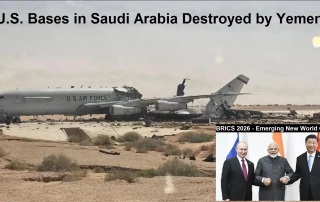
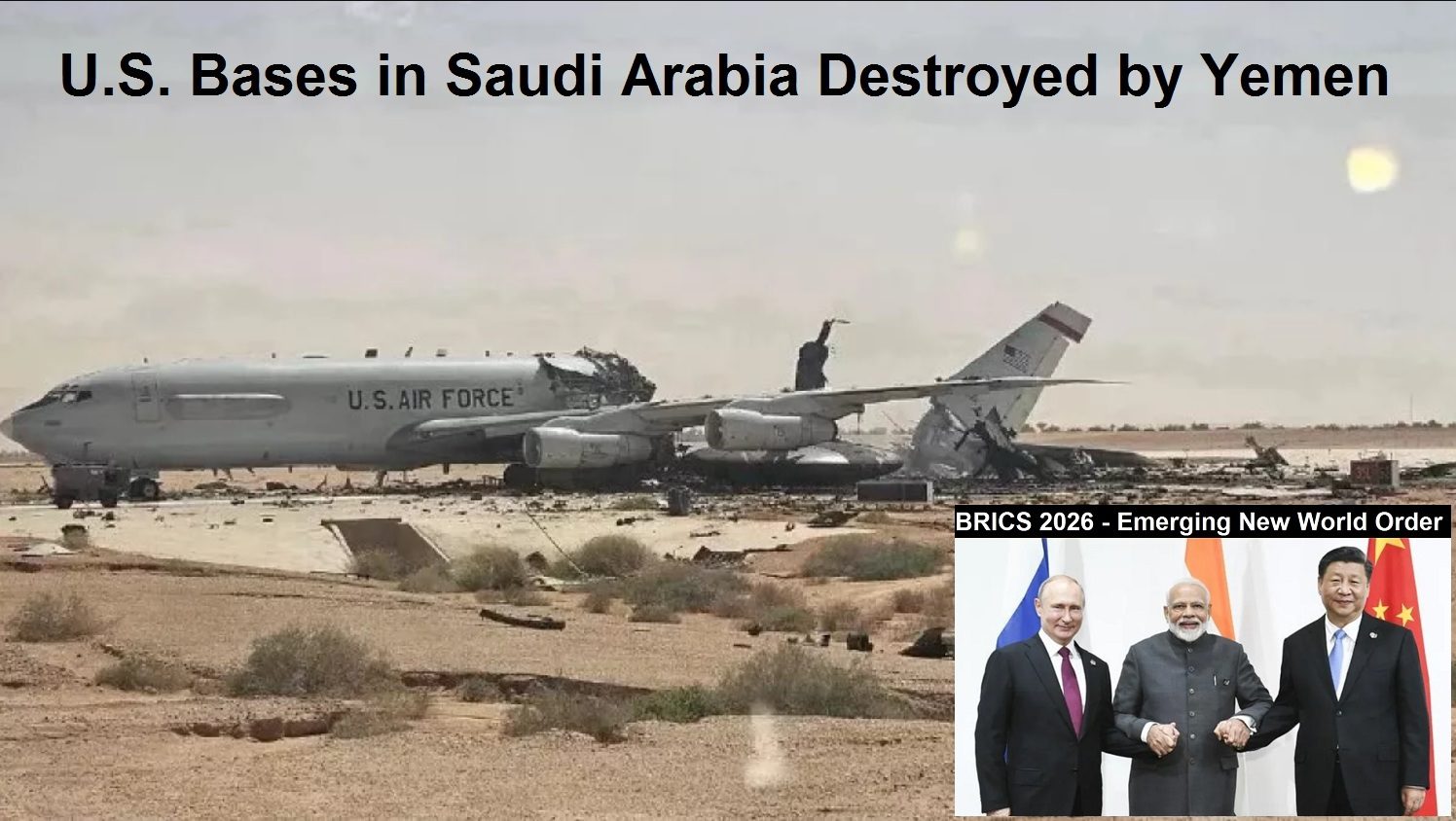
Background image from CBS News. BRICS 2026 Image Source.

by Brian Shilhavy
Health Impact News

As I reported earlier this week, the Yemen takeover of the Red Sea has changed everything in the Middle East, and things are moving fast now.

CBS News published photos of destroyed U.S. bases in the Middle East yesterday for the first time since the Iran War started, claiming that the photos were sent to them by “active service members on condition of anonymity.”

New photos obtained exclusively by CBS News reveal for the first time the widespread damage and destruction of buildings and vehicles at multiple U.S. positions across the Middle East, as a result of Iranian missile and drone attacks.

The images were sent to CBS News by active service members on condition of anonymity because of rigid media restrictions within the military.

“This is major damage to our bases that hasn’t been communicated to the American public,” one deployed service member told CBS News.

“We’re standing there with our eyes closed getting punched in the face.”

One photo, taken at Prince Sultan Air Force Base in Saudi Arabia, shows a direct hit on the back half of a Boeing E-3 Sentry four-engine aircraft, its tail severed from the charred fuselage that also supported a rotating radar that is essential for collecting midair intelligence.

Similarly grim pictures were captured at Camp Buehring in Kuwait, a major staging area for U.S. Army ground troops, armored vehicles and some aircraft; the post is located in a remote desert region far northwest of Kuwait City.

The Defense Department’s inspector general this week released a fresh report on the war in Iran that revealed “equipment losses” worth up to $3.7 billion — including nearly 60 aircraft.

In a first-of-its-kind mandatory report to Congress, the inspector general added that U.S. Central Command reported Iranian strikes at U.S. bases in Kuwait, Bahrain, Qatar, UAE, Saudi Arabia, Iraq, Oman and Jordan.

“These are not ‘squirters’ getting through,” the service member added, referencing language used by Defense Secretary Pete Hegseth after the deadly March 1 attack on Port of Shuaiba in Kuwait that killed six U.S. troops.

“We’re not defending these bases. We’re just watching them get destroyed.”

Full article.

As I write this on September 16, 2026, Saudi Arabia is currently exporting ZERO oil. This is the country with the largest oil company in the world, Aramco, which was started by the United States and today employs tens of thousands of Americans in Saudi Arabia.

There were reports earlier this week that Saudi Arabia’s leader, Mohammed bin Salman (MBS), was under house arrest, but he appeared in public yesterday in a state visit to Egypt, dispelling those rumors.

But that doesn’t mean that there is not currently chaos in the Royal Al-Saud family, and even the possibility that the Al-Saud family could be in danger of being able to hold on to its power in Saudi Arabia. The original name of this area was just “Arabia”, and included what is today called “Yemen.”

Here is a short interview with international journalist Pepe Escobar that was published just before MBS appeared in public in Egypt yesterday, explaining how damaging the Yemen takeover of the Red Sea has been to Saudi Arabia.

Here is another good 20-minute interview with Professor Mohammad Marandi from inside Iran, discussing the question: Is Saudi Arabia Heading for Collapse?

Pepe Escobar has also published a couple of articles on the Yemen situation, but as of this writing I have only found one in German, and one in Spanish, but nothing in English yet.

Here are some excerpts from the Spanish and German articles that were translated online.

Yemen Shakes the Gate of Tears

by Pepe Escobar
geoestrategia.eu

Excerpts:

Ansarallah now has the luxury of installing a tollbooth — possibly multi – layered — at Bab al -Mandeb, if they so wish.

No less than 25 years after 9/11, the Angel of History strikes another powerful blow. Five years ago, we witnessed the stunning imperial humiliation in Afghanistan , accomplished in a matter of days.

Now, we are witnessing the stunning humiliation of Saudi Arabia—a vassal of Epstein’s Syndicate—in Yemen, also accomplished in a matter of days. Series of humiliations now follow the Empire like a plague.

The widespread collapse of Saudi mercenary groups in Yemen is happening so rapidly that even Epstein’s Syndicate’s mainstream media has been forced to acknowledge it.

Ansarallah’s “Rolling Storm” is taking cities and islands; capturing thousands of thugs; freeing all prisoners—and granting them amnesty; seizing control of countless American tanks and weapons—a “reissued Afghanistan”; and being hailed as liberators of Yemeni land across the tribal spectrum.

And, of course, Ansarallah has now officially assumed full control of the mega-strategic Bab al-Mandeb, or “Gate of Tears”.

The intelligence that underpinned Ansarallah’s Operation Rolling Thunder—described as the largest mass capture operation in modern warfare—was carefully coordinated with the Islamic Revolutionary Guard Corps (IRGC).

The Axis of Resistance was fully aware that, following the devastating Iranian attacks on bases in Jordan, the United States was limited in its ability to assist the Saudis in preventing a Yemeni offensive.

The US Navy had already been effectively driven out of the Red Sea by Yemen’s advanced military capabilities, including hypersonic missiles manufactured entirely domestically.

It seems Riyadh hasn’t learned its lesson.

At the Asian level, Iran’s dual control of the Strait of Hormuz and the Bab el-Mandeb Strait (through its allies in Ansar Allah) is being staged one day before the opening of the momentous BRICS summit in New Delhi—which is geopolitically linked to the previous Shanghai Group summit (12 days earlier) and the trip of Chinese President Xi Jinping to Egypt (11 days earlier).

During the BRICS summit, the reverberations of the dual control of the Hormuz and Bab al-Mandeb straits were felt with the special treatment given by Indian Prime Minister Narendra Modi to Iranian President Masoud Pezeshkian, who also received deferential treatment from Presidents Vladimir Putin and Xi Jinping.

In my opinion, Ansar Allah’s hold on the Red Sea will depend, to a large extent, on the results of the BRICS summit in New Delhi —which could play an optimal mediating role between two of its members (Iran and Saudi Arabia)—and on the crucial APEC summit in Shenzhen 67 days later, where the three leaders of China, Russia, and the US are highly likely to meet.

In Shenzhen, quite possibly, a New World Order could be established , following the pattern of a Vienna Congress 2.0, where the US would attend as the ‘loser’ in its two wars, in Ukraine and Iran—more so than a Yalta 2.0, which was about ‘three winners’.

Source.

Pepe Escobar: History in Motion: BRICS, Yemen, Hormuz, China

by Pepe Escobar
Uncut News

Excerpts:

In less than 72 hours, the course of history accelerated due to a confluence of events that would normally unfold over several years.

Following a lightning offensive, the Yemeni Ansarallah movement now controls the entire Red Sea coast from the port of Hodeidah to Bab al-Mandab, including Mayyun Island, a volcanic rock outcrop in the middle of the “Gate of Tears”.

Saudi Arabia’s east-west pipeline –the only bypass around the Strait of Hormuz– has been shut down for at least a month following a combined attack with drones and ballistic missiles.

It remains unclear where the attack actually came from: from Iraq, from Yemen, from both countries, or was it a “false flag” operation?

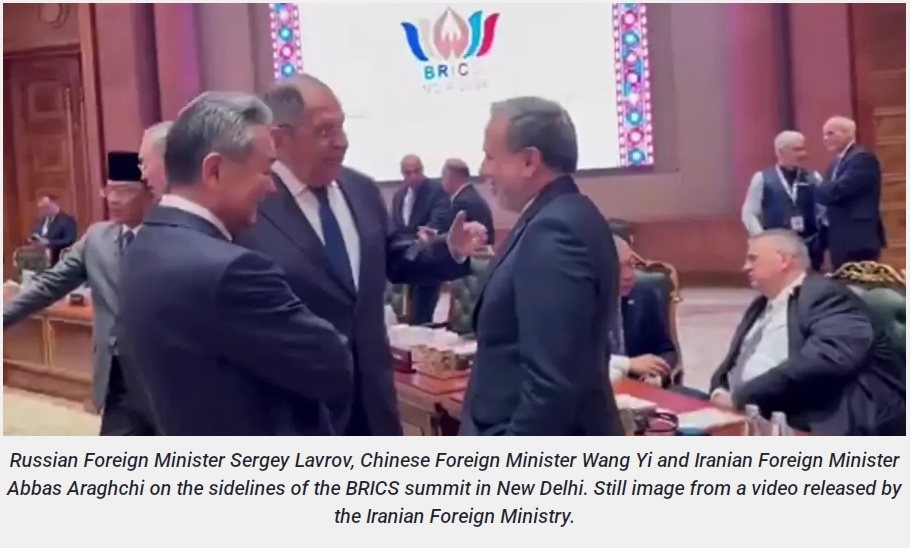
Diplomatic sources in Moscow and Tehran confirmed that Russia and Iran acted as a coordinated duo in New Delhi and were in complete agreement in their rejection of Washington’s war against Iran and the sanctions architecture.

The now viral photo of Lavrov, Wang Yi and Araghchi standing together like old friends only tells part of the story.

Yemen’s advance on the Red Sea is the maritime half of the same story.

Russia and Iran agreed on three points: condemning the US war, rejecting the sanctions regime as a whole, and resolutely opposing the secondary sanctions associated with US Treasury Secretary Bessent, that despicable former henchman of Soros.

In New Delhi, there were indications that the original RIC (Russia–India–China), as conceived by the late, great Yevgeny Primakov, might be revived – now as RIIC, supplemented by Iran.
Full article.

US set to approve 60,000 heavy bombs for Israel
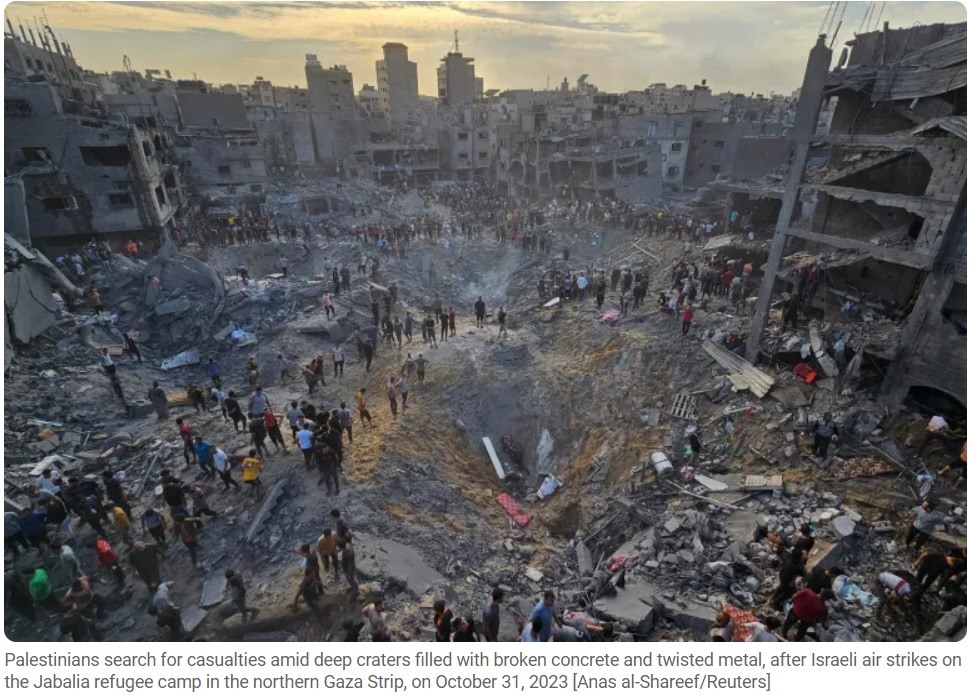
In spite of the success of Yemen forces to take over the Red Sea and bomb Saudi Arabia’s oil production offline, there is no sign that the U.S. or Israel are close to admitting defeat.

On the contrary, it has been reported this week that the U.S. is preparing to sell 60,000 highly destructive, 2,000-pound (907kg) bombs to Israel in a multibillion-dollar package which will be funded by American taxpayers, a move that is almost unprecedented in modern history.

US set to approve 60,000 heavy bombs for Israel: What that means

by Yashraj Sharma
Aljazeera

Excerpts:

United States President Donald Trump’s administration is preparing to sell 60,000 highly destructive, 2,000-pound (907kg) bombs to Israel in a multibillion-dollar package which will be funded by American taxpayers.

US media has reported that the Trump administration has approved the sale, which features some of the most destructive munitions in Western arsenals, and has informally notified Congress.

This is one of the biggest US munition packages to Israel and comes after nearly three years of genocidal war on Gaza, ongoing pogroms by Israeli settlers in the occupied West Bank and a mighty assault on southern Lebanon – which together have killed tens of thousands and displaced millions in the region.

It also comes as the US’s own munitions stockpile has been depleted due to its war on Iran, with the crisis worsened by Russia’s war on Ukraine.

Washington is reported to be on track to deliver a munitions package to Israel that is believed to include 60,000 warheads, including 20,000 MK-84s, 20,000 BLU-117s and 20,000 I-2000 Penetrator.

The sale is worth $2.8bn, the majority of which will be paid for by the US’s Foreign Military Financing scheme, wherein Washington pays Israel from its own taxpayers’ funds to buy American-made weapons and military equipment.

Together, 60,000 2,000-pound-class bombs weigh 54,400 tonnes.

That is about the weight of the entire steel skeleton of New York’s Empire State Building. Or seven times the weight of the iron structure of the Eiffel Tower.

Its mass also far exceeds the most infamous single conventional air raid of the 20th century. The March 1945 Tokyo firebombing, which killed more than 80,000 people in one night, used roughly 1,600 tonnes of bombs.

On a broader scale, 54,400 tonnes is nearly the total weight of bombs dropped on Berlin throughout World War II, and also roughly one-third of all bombs that fell on Japan’s home islands.

Full article.

Here are a couple of other stories I am monitoring that were posted on our Telegram Channel.

Drone Strikes Cripple Half of Russia’s Top Diesel Refineries

From OilPrice.com

Excerpts:

Three of Russia’s six largest diesel-producing refineries are now either shut or operating at roughly one-quarter capacity after Ukrainian drone attacks damaged plants that together form the backbone of the country’s fuel system.

The six refineries—Omsk, Kirishi, Taneco, Volgograd, NORSI and Perm—account for roughly half of Russia’s diesel production, according to Reuters calculations based on market data. Kirishi is completely offline. Volgograd and NORSI are running at about 25% of nameplate capacity.

Taneco was struck Sunday. The extent of the damage there was still being assessed Monday.

The attacks have become routine. The International Energy Agency estimates a Russian refinery was successfully struck by a drone once every three days during the first eight months of 2026.

Russia has already restricted exports of gasoline, diesel and jet fuel to preserve domestic supply. Diesel exports fell below 1 million metric tons in June, according to trader estimates cited by Reuters. Combined diesel and gasoil exports totaled about 1.8 million tons.

A year earlier, Russian refineries were shipping roughly 2.5 million tons of diesel each month, or 3.3 million to 3.4 million tons including lower-quality gasoil. Turkey and Brazil had been taking at least half of available Russian diesel cargoes before Moscow imposed the restrictions.

Those missing barrels are landing in a global diesel market already short on fuel from the Middle East. U.S. diesel prices crossed $6 per gallon last week for the first time, while refining margins have climbed as product inventories shrink.

Full article.

Saudi Pipeline Outage Hits an Oil Market Running Out of Buffers

From OilPrice.com

Excerpts:

The war in Iran that had to be over and won by the United States in about six weeks is now in its seventh month and the oil markets are starting to crack.

Gone are most of the cushions the market had in the early weeks and months of the Middle East conflict.

The oversupply from early this year has disappeared as oil on water was drawn down quickly when the Strait of Hormuz was closed to tanker traffic in March.

Record stock releases led by the International Energy Agency (IEA) depleted strategic inventories in developed economies, including in the United States, where the Strategic Petroleum Reserve (SPR) now holds the lowest level of crude oil since the early 1980s.

China, which strategically slashed its crude oil imports by about 4-5 million barrels per day (bpd) in May and June, has started to gradually ramp up purchases, removing a significant demand-side balancing mechanism that had prevented oil prices from spiking to record highs in the spring.

With few buffers left to absorb the six-month-long disruption of oil flows at the Strait of Hormuz, the last thing the market needed was an escalation that put a key non-Hormuz flow valve at risk.

But here we are: the vital East-West oil pipeline in Saudi Arabia, which helped the Kingdom bypass the Strait of Hormuz and export most of its crude oil from the Yanbu port on the Red Sea, is now out of service – possibly for weeks – following drone attacks at the end of last week.

Full article.

This article was written by Human Superior Intelligence (HSI)

See Also:

Understand the Times We are Currently Living Through

The Brain Myth: Your Intellect and Thoughts Originate in Your Heart, Not Your Brain

Is God’s Patience About to Run Out on the United States?

Second Edition of eBook Released: The Concept of the American Christian Family is a Myth and is NOT Found Anywhere in the Bible – by Brian Shilhavy

FREE eBook! Restoring the Foundation of New Testament Faith in Jesus Christ – by Brian Shilhavy

KABBALAH: The Anti-Christ Religion of Satan that Controls the World Today

Exposing the Christian Zionism Cult

The Bewitching of America with the Evil Eye and the Mark of the Beast

Jesus Christ’s Opposition to the Jewish State: Lessons for Today

Identifying the Luciferian Globalists Implementing the New World Order – Who are the “Jews”?

The Seal and Mark of God is Far More Important than the “Mark of the Beast” – Are You Prepared for What’s Coming?

The Satanic Roots to Modern Medicine – The Image of the Beast?

Medicine: Idolatry in the Twenty First Century – 10-Year-Old Article More Relevant Today than the Day it was Written
Having problems receiving our emails? See:

How to Beat Internet Censorship and Create Your Own Newsfeed

We Are Now on Telegram. Video channels at Bitchute, and Odysee.

If our website is seized and shut down, find us on Telegram, as well as Bitchute and Odysee for further instructions about where to find us.

If you use the TOR Onion browser, here are the links and corresponding URLs to use in the TOR browser to find us on the Dark Web: Health Impact News, Vaccine Impact, Medical Kidnap, Created4Health, CoconutOil.com.

The post Saudi Arabia is Exporting ZERO Oil as U.S. Sends Unprecedented Amount of 2,000-pound Bombs to Israel first appeared on Health Impact News.

  •  

Loulé vai falar de Saúde Hormonal de Homens e Mulheres

O Ciclo de Conversas “Semear Hoje…Colher o Amanhã…” está de regresso à Biblioteca Municipal Sophia de Mello Breyner Andresen, no dia 25 de setembro, pelas 18h30, sob o tema “Saúde Hormonal: o que os homens e as mulheres precisam saber”.

A vida hormonal é um dos pilares fundamentais da saúde humana, influenciando o crescimento, a reprodução, o metabolismo, o humor, o sono e os níveis de energia ao longo de toda a vida. 

Embora homens e mulheres possuam muitas das mesmas hormonas, as suas concentrações e padrões de variação diferem, o que explica muitas das diferenças biológicas e algumas particularidades na saúde de cada sexo.

Tanto nos homens como nas mulheres, as hormonas exercem uma influência significativa sobre a saúde mental e emocional. O equilíbrio hormonal está intimamente ligado ao funcionamento do cérebro, podendo afetar a capacidade de concentração, a memória, a motivação e o estado de espírito. Alterações hormonais podem contribuir para sintomas de ansiedade, irritabilidade, tristeza ou perturbações do sono, sendo por isso importante considerar a saúde hormonal como parte integrante do bem-estar global.

Compreender a vida hormonal dos homens e das mulheres permite reconhecer que muitas transformações físicas e emocionais fazem parte dos processos naturais do organismo. O conhecimento destas alterações favorece uma melhor adaptação às diferentes fases da vida e incentiva a procura de apoio profissional sempre que necessário. Afinal, cuidar da saúde hormonal é cuidar da saúde como um todo, promovendo qualidade de vida, equilíbrio e bem-estar em todas as idades.

A sessão do mês de setembro será dinamizada por Bernardo Pessoa, médico especialista em Medicina Geral e Familiar e Medicina Desportiva.

Levado a efeito mensalmente, esta iniciativa desafia a população em geral a participar, refletir, partilhar e debater sobre variados temas, com o objetivo de contribuir para a capacitação de cada um e das famílias, na promoção da sua saúde e bem-estar.

À semelhança do que tem vindo a realizar-se nas sessões anteriores, durante a iniciativa os participantes poderão proporcionar aos seus filhos, com idade igual ou superior a 3 anos de idade, uma atividade dedicada à promoção do livro e da leitura, dinamizada pelos profissionais da biblioteca, mediante inscrição prévia.

A participação é gratuita, mas sujeita a inscrição através do seguinte link: https://forms.gle/HY9YH66sfbnsnUwt9

  •  

Science After the Break with the West: How War and International Sanctions Reshaped Russian Universities

Since the start of the full-scale war, Russian science has lost key ties with Western universities and research centers. Yet four years of sanctions have not led to a collapse. Instead, Russia rapidly reoriented toward China, other parts of Asia, and the Middle East, while the Kremlin firmly integrated higher education into its system of military priorities. These are the conclusions reached by Olga Orlova, head of T-invariant, in her report Transformation of Science and Education in Russia under Sanctions 2022–2026, which examines changes in Russian academia over the past four years.

The author stresses that what is happening is not simply isolation, but a transition to a dangerous new model. The report examines not only the initial shock of sanctions but also a profound systemic restructuring: total control over international contacts, an accelerated push for “technological sovereignty,” and the subordination of science to the needs of the war economy.

[[socialnetworks]]

The break with the West has affected different fields unevenly. The exact and natural sciences, as well as military technologies, have received strong state support and found an alternative partner in China. By contrast, the social sciences and humanities have been devastated. Cut off from the global academic community and international mobility, they have faced enforced isolation and systematic ideological purges.

The result is what the report calls “selective internationalization.” Russia now develops international ties only where they serve the state’s military and strategic interests. The long-term consequences of this pivot are far more dangerous than the sanctions themselves: the country is replacing Western partnerships with near-total dependence on a handful of eastern allies, while the entire academic system is being transformed into an instrument of state security.

You can read the report Transformation of Science and Education in Russia under Sanctions 2022–2026 here.

The post Science After the Break with the West: How War and International Sanctions Reshaped Russian Universities appeared first on Т-инвариант / T-invariant.

  •  

From Prediction to Resilience: Rethinking National Security in the 21st Century

In an increasingly unpredictable and multidimensional strategic environment, states can no longer rely solely on anticipating future crises; they must complement strategic foresight with national resilience capable of absorbing and withstanding crises they fail to predict. The Erosion of Strategic Predictability Technological advancement, especially in warfare and security, has made certainty an illusion. For much […]
  •  

‘Wherever they set foot, blood flows’: Algeria severs diplomatic ties with UAE

Announcing the severing of diplomatic ties with the United Arab Emirates (UAE) on Thursday, September 10, Algeria summoned the Emirati envoy and gave him 48 hours to leave the country.​

“Algeria has exercised a great deal of restraint and a high sense of responsibility,” despite the increasingly “provocative or hostile actions emanating from” the Gulf power, the North African country’s foreign ministry said in a statement.​

“Despite these numerous warnings, the United Arab Emirates continued to persist in these actions, which have reached limits where they can no longer be considered acceptable or tolerable within the framework of relations between two sovereign states, nor remain without a response.”​

Later that day, its defense ministry announced that the UAE’s military and civilian aircraft are banned from using Algerian airspace from Friday. The only exemption is for commercial civilian planes, which can continue to fly over Algeria until the existing contract expires at the end of the year.​

Algeria had already initiated the termination of the air services agreement with the UAE in February, when President Abdelmadjid Tebboune alleged attempted Emirati interference in its elections.​

Multiple Algerian media outlets aligned with the state have reported that the UAE has been supporting the Movement for the Self-Determination of Kabylia (MAK), a separatist group Algeria designated as a terrorist organization in 2021.​

Algeria and the UAE also find themselves on opposing sides on several fronts of international relations.​

Algeria aids Western Sahara’s liberation struggle; UAE backs Moroccan occupation​

The support for the national liberation struggle of Western Sahara, occupied by Morocco immediately after it won independence from Spanish colonialism, has been a central plank of Algeria’s foreign policy.​

In 2021, Algeria severed diplomatic relations with Morocco, accusing it of supporting the MAK in retaliation for Algerian support to the Polisario Front (PF), which is fighting for Western Sahara’s national liberation. But there is no equivalence between the PF and the MAK.​

The MAK, which has long had close links to Israel, largely operates from Europe and is based in France, Algeria’s former colonizer. The PF, on the other hand, is fighting for Western Sahara’s liberation, with its military operating in its liberated territory adjoining Algeria. The UN recognizes the PF as the sole representative of the people of Western Sahara, a country it lists among the last few pending decolonization.​

Read more: Western Sahara’s decolonization at a crossroads after 50 years of occupation​

Despite funding and arming the Moroccan occupation, the US had not officially recognized Morocco’s claim to sovereignty over Western Sahara until December 2020, when Morocco signed the Abraham Accords to normalize diplomatic relations with Israel.​

The first Trump administration, in turn, proclaimed that the US “recognizes Moroccan sovereignty over the entire Western Sahara territory” and went on to open a consulate in Dakhla, a major city in the occupied region.

​The UAE was a step ahead, setting a precedent before the American move by opening its consulate on the occupied land in November 2020, a month before Morocco normalized relations with Israel. The UAE had already normalized relations with Israel that September.

​In contrast, Algeria refuses to normalize relations with Israel until the Palestinians have secured their statehood. Algerian media often refers to the UAE as an “Israeli vassal”.

​“Wherever they set foot, blood flows”

​Algeria’s diplomatic break was foreseeable since at least July, when President Tebboune said in a thinly veiled reference to the UAE in a televised interview, “Wherever they set foot, blood flows… We want them to stay away, so that blood does not flow in our country.” He gave the example of Mali, Libya and Sudan.

​A month later, in August, the UN confirmed that the USD 50 million transferred to the Al Qaeda-affiliated JNIM in the form of ransom helped fuel its attack across Mali. A Reuters investigation identified the UAE as the source of this payment to JNIM. The group has also attacked its neighbors, Burkina Faso and Niger, both of which have followed in Mali’s footsteps by expelling French troops.

​Read more: Mali fights yet another wave of attacks on multiple cities by terror groups

The UAE’s supply of arms and mercenaries to the Libyan warlord General Khalifa Haftar, who has been fighting Libya’s UN-recognized government, is also well-documented in multiple UN reports since 2017.

Tebboune’s reference to “blood” flowing from Emirati interference is best demonstrated in war-torn Sudan, where the UAE is funding and arming the Rapid Support Forces (RSF), whose depopulation campaign in El Fasher had all the “hallmarks of genocide”, according to the UN.

Read more: RSF has burnt and buried tens of thousands of corpses in El Fasher, says Yale report

He added in the July interview that a “diplomatic break” with the UAE “would have happened long ago.” Algeria, he explained, had refrained only to avoid adding to the already existing divisions in the Arabic-speaking world.

When the break finally came on Thursday, the UAE’s foreign ministry said it hoped that it “will be temporary, in a manner that preserves the fraternal ties between the two brotherly peoples.”

In an apparent reference to the absence of explicitly stated reasons in Algeria’s statement, Anwar Gargash, the diplomatic advisor to the UAE’s president, Mohamed bin Zayed, said, “Diplomatic relations are managed through reason, communication, and clarity of interests, not through puzzles and signals that require decoding.”

He went on to preach that “successful diplomacy is built on clarity of positions, sound management of interests and differences.”

Gargash’s statement “is revealing above all for what it carefully conceals. Not a word about the actions of this arsonist, predatory state, which thrives on chaos wherever it sticks its nose in Yemen, Sudan, the DRC, Somaliland, and elsewhere,” retorted former Algerian diplomat, Amar Belani.

Describing the UAE as a “state that has made other nations’ instability its economic model,” Belani concluded his response, saying: “As for the lesson on ‘reason and clarity of interests’, Abu Dhabi would do better to reserve it for its partners in the Abraham Accords, with whom it shares complicity in the face of war crimes, crimes against humanity, and acts of genocide committed against the Palestinian people.” 

This sentiment against the UAE is not limited to the government or the ruling National Liberation Front (FLN), which led Algeria’s liberation struggle against French colonialism and has ruled since, except for a few years in the 1990s.

Mass protests erupted in 2019 against corruption and increasing economic capture by the military elite, strangling an economy already suffering under neoliberal austerity. This movement, known as the Hirak, forced the then president, Abdelaziz Bouteflika, a veteran of the FLN, to resign.

But even in these protests against the government and the ruling FLN, “Down with the UAE” and “No to the UAE in the country of martyrs”, were among the popular placards and slogans.

  •  

En los confines del sistema solar los telescopios Hubble y Webb descubrieron 27 objetos transneptunianos que desafían los modelos de formación planetaria

Por primera vez en la historia de la astronomía, los dos grandes observatorios espaciales de la NASA, el Hubble y el James Webb, han trabajado de forma coordinada para desentrañar los secretos de los objetos transneptunianos (TNO, por sus siglas en inglés), esos cuerpos helados y diminutos que vagan más allá de la órbita de […]

  •  

Hay un resplandor justo en el lado contrario al Sol que quizá nunca has visto, y que los astrónomos tardaron 300 años en explicar

Si una noche sin luna, lejos de cualquier ciudad, alguien mirase exactamente al punto del cielo opuesto al Sol —el llamado punto antisolar, ese lugar donde estaría el Sol si pudiera verse a través de la Tierra— podría distinguir una mancha ovalada, tenue, de entre 8 y 10 grados de diámetro. Para hacerse una idea […]

  •  

Congresso travou regulação de câmeras corporais enquanto letalidade policial batia recorde

Apesar do debate sobre a obrigatoriedade do uso de câmeras corporais pelas forças de segurança ser recorrente, o Brasil permanece sem dispor de uma regulamentação federal. O vazio regulatório mantém o recurso submetido a regras diferentes de estados, corporações e tribunais, mas não por falta de tentativas.

No Congresso Nacional, a Comissão de Segurança Pública e Combate ao Crime Organizado (CSPCCO) da Câmara dos Deputados apreciou, entre 2023 e 2026, mais de 2 mil proposições sobre segurança, incluindo requerimentos, projetos etc.

Um levantamento da Agência Pública identificou que apenas cinco projetos de lei ou decretos que tratam sobre “câmeras corporais” chegaram a ser votados em quatro anos de legislatura.

Entre os cinco projetos que abordam o tema e passaram pela CSPCCO, três tiveram tramitação mais ágil: dois que restringem o acesso às imagens das câmeras corporais utilizadas por forças policiais e um terceiro que prevê a utilização do recurso não por policiais, mas por reeducandos em progressões de pena que os permitam deixar os presídios. Na outra ponta de prioridades, dois projetos que propõem regulamentação do uso de câmeras visando facilitar investigações já acabaram rejeitados.

Da realidade das ruas às apresentações na Justiça

No dia 30 de julho deste ano, o Tribunal do Júri da Barra Funda, em São Paulo, absolveu dois policiais militares acusados de matar Igor Oliveira Santos, 24, durante uma operação em Paraisópolis em 2025. Uma semana após o julgamento, trechos inéditos das imagens das câmeras corporais dos agentes foram divulgados e contradisseram parte dos depoimentos prestados pelos PMs.

Reprodução de imagem registrada por câmera corporal durante ação policial

As imagens mostram Igor e mais três homens se rendendo e obedecendo às ordens dos policiais para se deitarem no chão. Igor foi questionado se estava armado, respondeu que não e, quando começou a obedecer a ordem para se levantar, foi atingido por um primeiro tiro disparado por um dos PMs, seguido de outro, de um segundo policial.

Na versão dos agentes de segurança, Igor estaria armado e oferecia risco. As imagens das câmeras corporais, divulgadas pela TV Globo, porém, não evidenciam resistência. A emissora também informou que os policiais não tinham conhecimento de que as câmeras corporais estavam ligadas, já que elas foram acionadas automaticamente via Bluetooth. Nenhuma arma foi apreendida durante a ação.

Mesmo que fosse reaberto, o processo sobre a ação em Paraisópolis não poderia contar com essas novas imagens, caso o projeto de lei (PL) 2.339/24 já estivesse em vigor. De autoria do Capitão Augusto (PL-SP) o PL proíbe o uso de imagens das câmeras corporais como prova criminal contra policiais. A proposta tramitou pela Casa por apenas um ano e foi aprovada pela comissão de segurança em junho de 2025. O autor citou a “garantia constitucional da não autoincriminação, segundo a qual ninguém é obrigado a produzir prova contra si mesmo” ao justificar a proposição.

Se aprovado pelo Congresso, o projeto impedirá que registros feitos pelas bodycams sejam admitidos pela Justiça em casos criminais, mesmo que exibam flagrantes de abuso de autoridade: “Fica vedada a utilização por parte de autoridades judiciárias e policiais de qualquer imagem gerada por câmeras corporais dos policiais militares para fins de instrução de processos criminais contra os policiais que portavam o equipamento, independentemente do contexto ou do conteúdo das gravações”, diz o projeto. A proposta aguarda designação de relator na Comissão de Constituição e Justiça e de Cidadania (CCJ).

De acordo com a pesquisadora sênior do Núcleo de Estudos da Violência da Universidade de São Paulo (USP) Ariadne Natal, considerar as câmeras corporais “instrumentos de acusação” contra policiais é uma “premissa equivocada”. Segundo ela, “a imagem produzida não é uma prova contra ninguém”, mas uma “evidência do que aconteceu”.

“A utilização da câmera é uma proteção tanto para a população quanto para os próprios policiais”, afirma Natal em entrevista à Agência Pública, ressaltando que, além de esclarecer divergências sobre abordagens e uso da força, o recurso pode ajudar a coibir abusos. “Seja pelo policial ou pelo próprio cidadão. O fato de a ação estar sendo filmada faz com que atores que estão na dinâmica se comportem de maneira diferente. Isso diminui o uso da violência física, da violência verbal e hostilidade.”

Essas câmeras não podem ser transformadas em um instrumento corporativo de proteção, porque ela é um instrumento que está ali para documentar os fatos e os eventos. Se ela vai ser usada na acusação ou na defesa, depende daquilo que a imagem capturou.”
Ariadne Natal
Pesquisadora do Núcleo de Estudos da Violência da USP

O caso de Paraisópolis não é isolado. Em 13 de junho, também em São Paulo, Jeferson de Souza, 24, foi morto por policiais militares com três tiros de fuzil durante abordagem. Câmeras corporais dos agentes envolvidos registraram o momento em que o jovem em situação de rua chora e é rendido antes de ser assassinado.

Em depoimento, policiais afirmaram inicialmente que Jeferson teria reagido à abordagem e tentado tomar a arma de um PM. A análise das imagens pela própria Corregedoria da PM concluiu que ele estava desarmado, rendido e não representava ameaça quando foi atingido. Na ocasião, um dos policiais usou a mão para cobrir a lente da câmera corporal segundos antes dos disparos.

Em maio de 2024, o Ministério da Justiça publicou diretrizes para o uso de câmeras corporais pelos órgãos de segurança pública no país. As orientações dizem respeito à utilização do equipamento e às circunstâncias em que devem permanecer obrigatoriamente ligados. No dia seguinte, quatro projetos para suspender os efeitos da portaria foram protocolados no Congresso Nacional.

Dois deles são de autoria de Alberto Fraga (PL-DF), coronel da reserva da Polícia Militar do Distrito Federal (PMDF) e que, à época, presidia a Cspcco. Para o parlamentar, “regras não devem ser definidas por meio de decreto, mas sim por lei federal”. A proposta foi aprovada. O texto ainda aguarda análise em outras comissões antes de ir a plenário.

Sessão da Comissão de Segurança Pública e Combate ao Crime Organizado na Câmara dos Deputados

PL para compartilhamento rápido de imagens para investigadores é rejeitado

De autoria do deputado Pastor Henrique Vieira (PSol-RJ), o PL 4.844/25 foi protocolado em 30 de setembro de 2025 com o objetivo de agilizar o envio de registros audiovisuais, logs e metadados das câmeras corporais à polícia judiciária e ao Ministério Público. O projeto prevê que, mediante solicitação, as imagens sejam disponibilizadas num prazo de 72 horas após qualquer ocorrência. Em apenas seis meses, a proposta acabou rejeitada pela comissão de segurança.

Na justificativa do projeto, o deputado citou o caso de Victoria Manoelly dos Santos, de 16 anos, morta por um policial militar na zona leste de São Paulo. “A Justiça teve de aguardar quatro meses até ter acesso às filmagens da câmera corporal, embora o governo Tarcísio afirme que o prazo legal é de 20 dias após requisição. A própria Polícia Civil tem se mostrado incomodada com as sucessivas negativas de acesso imediato aos registros”, informou o parlamentar.

O argumento para a rejeição da proposta foi de que o “ordenamento jurídico já dispõe de instrumentos suficientes para a requisição de provas e para o acesso a registros necessários à investigação criminal”.

À Pública, Vieira afirmou que a proposta era de celeridade para que as imagens fossem preservadas “corretamente e de maneira eficiente para utilização em investigações”. “A questão é que a Comissão de Segurança Pública, em sua maioria, é contra até mesmo a utilização de câmeras corporais nos uniformes dos policiais. […] Bons policiais certamente não veem problema algum. Muitos, inclusive, defendem”, disse.

Grande parte da Comissão de Segurança Pública defende um tipo de polícia fora da lei, praticamente matadora e miliciana, em que o policial é colocado para matar e morrer. O que nós queremos é uma polícia que preserve os policiais, preserve a prática policial e tenha controle democrático, o que é bom inclusive para os bons agentes.”
Pastor Henrique Vieira
Deputado federal

Uma terceira tentativa de regulamentação das câmeras corporais no Congresso é o PL 3295/24. Apresentada pela deputada Erika Kokay (PT-DF) e Tadeu Veneri (PT-PR) em agosto de 2024, a proposta é abrangente, determina diretrizes, bem como uso obrigatório de câmeras corporais pelos integrantes das forças de segurança federais, estaduais, distritais e municipais.

Na Comissão de Segurança, o relator do projeto, deputado Paulo Bilynskyj (PL/SP), apresentou parecer contrário à aprovação do texto sob o argumento de que “o uso das câmeras corporais já foi determinado pelo Poder Executivo por meio da Portaria 648/2024/MJSP, bem como pelo próprio Supremo Tribunal Federal”.

“De modo que, diante do alto custo de sua implementação, tal prática tem sido realizada pelos entes federados, aos poucos”, disse o parlamentar no parecer. Bilynskyj foi um dos deputados que votou favoravelmente ao PDL 294/24, que tenta derrubar a portaria do Ministério da Justiça que orienta o uso das câmeras corporais por policiais – a mesma portaria que ele usa para se opor à uma lei que regulamente o assunto. A Pública acionou a assessoria de imprensa de Bilynskyj, mas não obteve resposta. Em caso de manifestação, este espaço será atualizado.

Apesar do texto do PL 3295/24 ter sido rejeitado em setembro de 2025, o projeto foi encaminhado, há quase um ano, para a Comissão de Finanças e Tributação (CFT), onde aguarda designação de relatoria. “Vamos tentar reverter nas próximas comissões”, afirmou o parlamentar Tadeu Veneri. Após apreciação em todas as comissões designadas pela presidência da Câmara é que um projeto normalmente vai para análise pela Comissão de Constituição e Justiça da Câmara dos Deputados (CCJ), etapa fundamental antes de poder ser votado.

Para a professora de ciências políticas da Universidade Federal de Minas Gerais (UFMG), Ludmila Ribeiro, parte da resistência à aprovação dos projetos está relacionada ao peso do corporativismo entre parlamentares ligados às forças de segurança. “Congressistas que também são policiais se situam dentro dessa lógica de corporativismo propriamente dito: ‘vamos evitar que esse projeto seja aprovado porque, dessa forma, a gente se protege’”, diz.

“O fato é que nessa proteção [contrária às bodycams], a gente está deixando inclusive de mostrar para a sociedade o que faz um bom policial e como os desvios tendem a ser mais mínimos do que boa parte da opinião pública quer acreditar”, concluiu a professora.

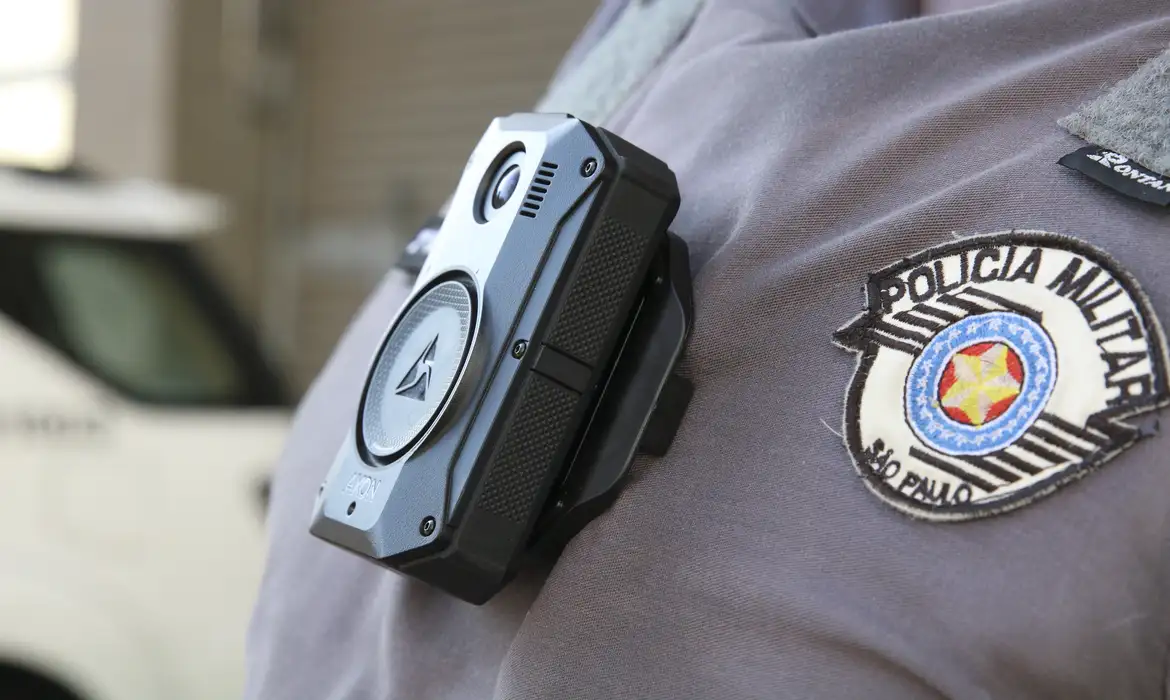
Câmera corporal em policial militar do Estado de São Paulo
Para Ludmila Ribeiro, o corporativismo de parlamentares ligados à segurança ajuda a barrar bodycams

Resistência política e falta de transparência

Um levantamento feito pelo Núcleo de Estudos da Violência da Universidade de São Paulo (NEV-USP) mapeou a implementação de câmeras corporais em 26 estados e no Distrito Federal, com base em pedidos via Lei de Acesso à Informação (LAI), diários oficiais e informações publicadas pela imprensa. Segundo os dados, até 2025, 20 estados brasileiros haviam adotado os equipamentos ou mantinham estudos e testes de viabilidade em andamento.

Apesar da expansão, a pesquisa aponta que o uso das câmeras corporais pelas forças de segurança ainda enfrenta obstáculos como falta de padronização nacional, resistência política e baixo nível de transparência pública.

Um dos casos citados é o de Santa Catarina, primeiro estado do país a implantar uma política de câmeras corporais, em 2019. O programa foi encerrado completamente em setembro de 2024, durante o governo de Jorginho Mello (PL), sob a justificativa de obsolescência dos equipamentos. 

Também há resistência à implementação das câmeras em outros dois estados comandados pela direita: Goiás, cujo governador é Daniel Vilela (MDB), e Mato Grosso, liderado por Otaviano Pivetta (Republicanos). Os dois estados estão entre os 10 de maior letalidade policial segundo o 20º Anuário Brasileiro de Segurança Pública, em 5º e 9º lugar, respectivamente.

Para a pesquisadora do Núcleo de Estudos da Violência da USP e doutoranda em sociologia Bianca Lombarde, as câmeras se tornaram objeto de disputa política, “especialmente entre setores conservadores que defendem uma atuação policial menos sujeita a mecanismos de monitoramento e responsabilização”.

Segundo Lombarde, pesquisas realizadas em São Paulo não confirmam o argumento comum de quem critica o uso de câmeras alegando uma possível inibição da atuação policial por receio de sanções administrativas por parte de agentes, bem como a exposição de condutas inadequadas. 

“A implementação das câmeras [em São Paulo] esteve associada ao aumento de determinados registros, incluindo ocorrências relacionadas à violência doméstica e apreensões de armas. […] Isso é importante porque sugere que as câmeras não necessariamente reduzem a atuação policial. Em determinadas condições, elas podem fazer com que essa atuação se torne mais formalizada, documentada e aderente aos protocolos”, avalia.

Na avaliação de especialistas ouvidos pela Pública, a atividade policial precisa estar submetida a mecanismos de controle e transparência, já que envolve poderes concedidos pelo Estado e pode afetar diretamente a vida dos cidadãos. Apesar do entendimento de que esse recurso é um mecanismo importante para a democracia, durante o período eleitoral, candidatos às eleições de outubro têm manifestado oposição ao equipamento.

Candidato à Presidência, Ronaldo Caiado
Candidato à Presidência, Ronaldo Caiado diz que não pretende adotar câmeras corporais para policiais: “Nós estamos em guerra”

Em 26 de agosto, o candidato à Presidência Ronaldo Caiado (PSD), que tem a segurança pública como uma das principais bandeiras de campanha, afirmou que não pretende adotar câmeras corporais para policiais caso seja eleito. “Nós estamos em guerra. Me mostra o lugar no mundo que, em guerra, tem câmera no policial. Onde?”, indagou o ex-governador de Goiás. Caiado fez a mesma pergunta à imprensa no início de setembro.

Um dos países que enfrenta luta armada e utiliza as câmeras corporais é a Ucrânia. Em guerra desde fevereiro de 2022, o governo e as forças militares ucranianas adotaram como estratégia oficial a divulgação frequente de imagens de câmeras corporais. Mesmo nos Estados Unidos, após inúmeras denúncias de atuação violenta, o Serviço de Imigração e Alfândega (ICE) resolveu aderir a utilização das câmeras corporais, desde o dia 8 de agosto deste ano. O diretor interino da agência, David Venturella, informou que todos os agentes e oficiais do ICE em campo estaria equipados com câmeras corporais.

Reprodução de trecho de abordagem policial divulgada no canal oficial da Polícia Militar de SP

Show de câmeras corporais atrai público na web

Enquanto o Congresso Nacional discute quem pode acessar imagens das câmeras corporais, vídeos com imagens de ocorrências feitas com o equipamento já alimentam o YouTube, a exemplo do canal da Polícia Militar de São Paulo (PMESP), que soma mais de 1 milhão de inscritos.

Registros de perseguições, operações, negociações com reféns e até troca de tiros são publicados pela corporação. Em uma das postagens, um militar entra em luta corporal com um suspeito e acaba gravemente ferido com um tiro no pescoço. A cena é marcada por desespero do PM ferido, bem como de testemunhas. A gravação já acumulava mais de 800 mil visualizações até agosto deste ano. A Pública buscou PMESP por email e telefone, mas até o momento, a corporação não quis comentar a questão.

De acordo com a pesquisadora de violências Ariadne Natal, o “problema não é a câmera corporal”, mas o controle, seleção, acesso e divulgação das imagens. “As câmeras corporais existem para registrar eventos que precisam ser esclarecidos no futuro. Então, [as imagens] podem ser usadas como uma prova técnica em um processo, para efeitos educativos, mas não deveriam gerar entretenimento”, disse.

“É contraditório que esteja em discussão a questão de negar acesso a essas imagens como prova técnica, mas facultar o acesso de maneira pública quando é para efeito de publicidade”, avalia a especialista.

Intervenções policiais provocaram 60,5 mil mortes em 10 anos

Dias antes da absolvição dos PMs no caso de Paraisópolis, o 20º Anuário Brasileiro de Segurança Pública revelou que 18 pessoas foram mortas pela polícia a cada dia de 2025. Foram 6.602 mortes decorrentes de intervenção policial no país, o maior número desde 2016. O índice representa um aumento de 5,8% em relação a 2024. Em 10 anos, foram 60.558 mortes.

Segundo o levantamento, embora o policial possa utilizar força letal em legítima defesa e no estrito cumprimento do dever legal, “estudos demonstram que entre os casos assim tipificados, também estão ocorrências com indícios de execução, nas quais a força letal foi usada sem necessidade comprovada”.

Diante disso, o anuário destacou a “importância de mecanismos independentes de supervisão e produção de provas como as câmeras corporais”, que “simultaneamente protegem os policiais que atuam dentro dos parâmetros de legalidade e, ao mesmo tempo, permitem responsabilizar os que extrapolam os limites legais de uso da força”.

  •  

This Bottle of Dijon Mustard from Costco is Crazy Hot. A Months-Long Investigation Revealed the Surprising Reason Why.

Jake Edmiston, a business reporter for the Toronto Star, thinks highly of his mustard chicken recipe. So when one batch goes over like a lead balloon, he checks his namesake ingredients and finds that his usual glass pot of Maille Dijon Originale is extraordinarily spicy—a fact he confirms, good reporter that he is, by conducting a blind test with a professional taster. In no time, Edmiston is on the floor of one of Canada’s largest mustard mills, trying to stay dry and avoid mustard dust burns(!), and peppering Unilever, Maille’s owner, with questions. This isn’t exactly a case for Benoit Blanc, but Edmiston’s investigation takes a few surprising turns and drops some serious knowledge on glucosinolates on the way. Every ingredient is in harmony here.

“Do a little dollop,” she said, then turned her back so I could do my work in secret.

I spooned the mustard from my jar onto a plate, and some from another jar of Maille I found in the grocery store that morning. She tried the sample from my jar first and sputtered a little. 

“It’s quite spicy,” she said.

I asked her how much spicier it was than the control jar. 

“Like, 10 times,” she said.

  •  

Trump Is Making China Great (Again)

America might still be the world’s most powerful country economically, but by turning trade into a weapon, Washington may be accelerating the very redistribution of global influence it fears the most. The trajectory of power The most important shift in the US-China competition may not be the size of either economy today, but the direction […]
  •  

Mercados de Olhão chegam à Grande Final das Novas 7 Maravilhas de Portugal

Os Mercados Municipais de Olhão estão na Grande Final Nacional das Novas 7 Maravilhas de Portugal, depois de garantirem, no passado sábado, a passagem à última fase do concurso.

Entre os 21 patrimónios apurados para a final nacional, os Mercados de Olhão são o único património representante do Algarve.

A passagem à final constitui um momento histórico para Olhão e para o Algarve. Depois de uma caminhada marcada pelo reconhecimento e pelo forte envolvimento da população, os Mercados Municipais de Olhão chegam, agora, ao momento decisivo da competição, com a possibilidade de serem eleitos uma das Novas 7 Novas Maravilhas de Portugal 2026.

“Hoje, os Mercados de Olhão já não representam apenas Olhão. Representam todo o Algarve”, destaca o presidente da Câmara Municipal, Ricardo Calé. “Chegar à Grande Final Nacional, sendo o único património algarvio entre os 21 finalistas, é motivo de enorme orgulho e demonstra a força da nossa identidade, da nossa história e daquilo que temos para mostrar ao país. Depois do folar e da Ria Formosa, com a eleição dos Mercados, seremos o único município do país com três Maravilhas”, acrescenta o autarca.

Com mais de um século de história, os Mercados Municipais são uma das imagens mais emblemáticas de Olhão. Mais do que um espaço de comércio, constituem um lugar de encontro, de memória e de identidade, profundamente ligado à relação da cidade com a Ria Formosa, com a pesca, com a gastronomia e com a vivência quotidiana dos olhanenses.

A Grande Final Nacional das Novas 7 Maravilhas de Portugal realiza-se no próximo dia 12 de setembro, às 21:30, em direto na TVI, reunindo os 21 Finalistas Nacionais, correspondentes aos três patrimónios mais votados em cada categoria. Os Mercados Municipais de Olhão concorrem na categoria Século XX.

Será durante esta gala que serão reveladas as Novas 7 Maravilhas de Portugal 2026.

Até lá, a votação do público continua aberta e será determinante para o resultado final. Para votar nos Mercados Municipais de Olhão, basta ligar para o 761 207 097. A votação pode, também, ser realizada através da aplicação TVI Pass, tendo cada voto o custo de 1€ + IVA. O Município de Olhão apela, assim, à mobilização de todos os olhanenses, algarvios e amigos de Olhão para esta última etapa da candidatura.

  •  

Marcha-Corrida da Batata-Doce regressa a Quarteira em outubro

A Praça do Mar, em Quarteira, volta a ser o ponto de partida para mais uma edição da Marcha-Corrida da Batata-Doce, que se realiza no próximo dia 4 de outubro.

Com dois percursos à escolha, de 5 e 10 quilómetros, a iniciativa convida participantes de todas as idades a praticar atividade física e a percorrer diferentes cenários da freguesia, num momento que alia desporto, convívio e tradição.

«Esta já é uma iniciativa que faz parte da tradição na nossa cidade. Tanto para os amantes da corrida ou para quem prefere caminhar, fica o convite a participarem em mais um grande evento da nossa freguesia, que continua a apostar na promoção do desporto e na adoção de estilos de vida e comportamentos saudáveis», refere João Romão, Presidente da Junta de Freguesia de Quarteira.

O programa tem início com o aquecimento, às 9h30, estando a partida marcada para as 10h00. No final, mantém-se uma das tradições da iniciativa, com a distribuição de batata-doce assada pelos participantes.

As inscrições são gratuitas, mas obrigatórias, e encontram-se já a decorrer, podendo ser realizadas presencialmente na Junta de Freguesia de Quarteira ou através do formulário disponível no website [www.jf-quarteira.pt](http://www.jf-quarteira.pt).

A atividade é organizada pela Junta de Freguesia de Quarteira, em parceria com a Câmara Municipal de Loulé, e integra o Calendário Regional de Marcha e Corrida do Algarve do Instituto Português do Desporto e Juventude (IPDJ).

  •  

RASA Statement in Support of Professor Tatiana Tatarinova

Russian-American Science Association strongly condemns the decision of the Russian authorities to designate our colleague Tatiana Tatarinova, a distinguished bioinformatics scholar and professor at the University of La Verne, as a “foreign agent.”

Tatiana joins a growing number of Russian-speaking scholars and members of the RASA community who have been subjected to political persecution, intimidation, and restrictions on their academic and civic freedom. These measures have nothing to do with the quality of their scholarship or their professional activities. They are part of a broader campaign to silence independent voices and to suppress international academic ties.

We stand in solidarity with Tatiana and with all our colleagues who continue to face repression for exercising their fundamental rights to think, speak, conduct research, and communicate freely.

RASA will continue to defend academic freedom and to support scholars subjected to political persecution, wherever they are.

The post RASA Statement in Support of Professor Tatiana Tatarinova appeared first on Т-инвариант / T-invariant.

  •  
❌