❌

Reading view

Saudi Arabia is Exporting ZERO Oil as U.S. Sends Unprecedented Amount of 2,000-pound Bombs to Israel
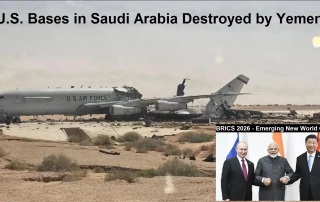
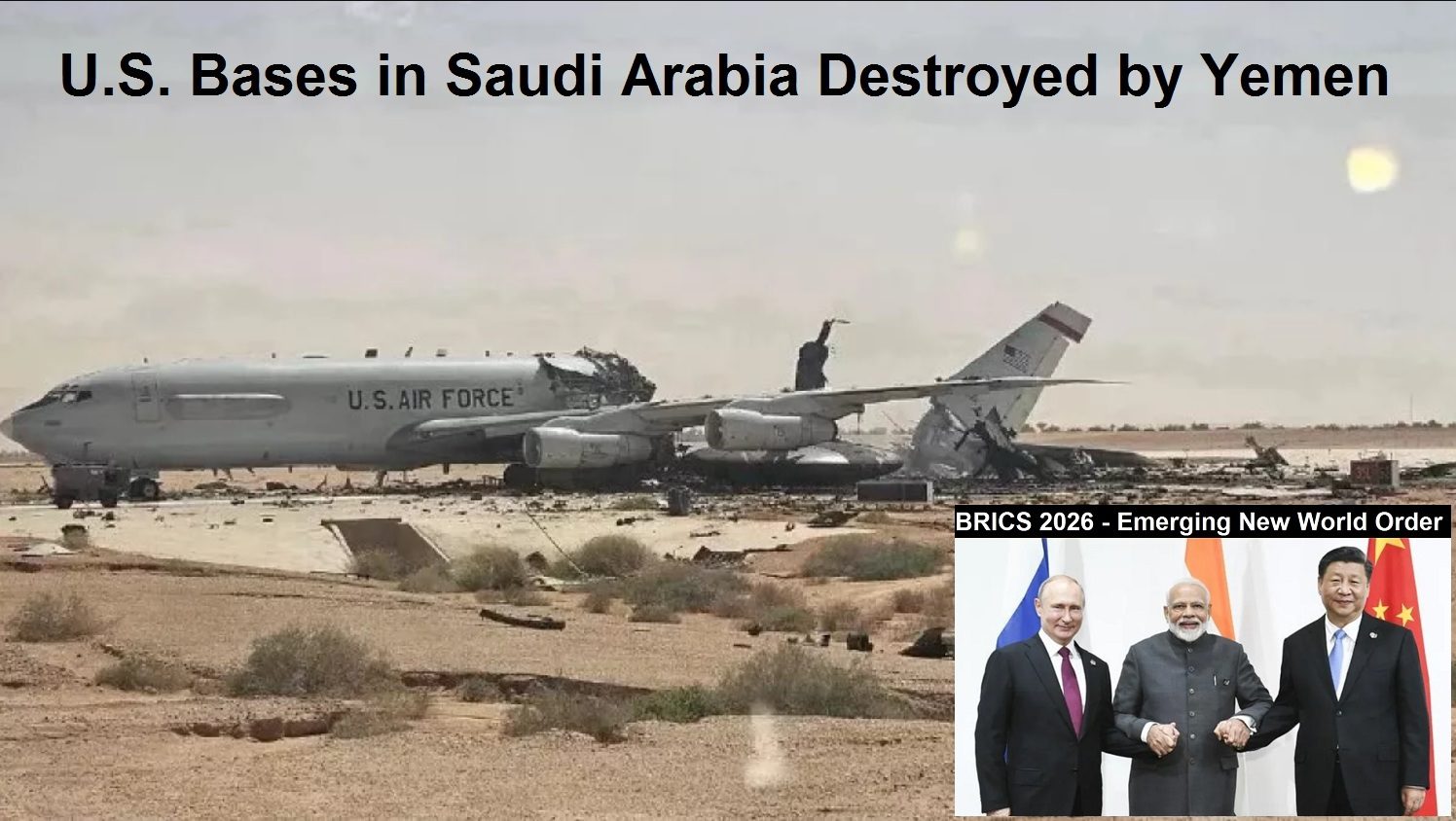
Background image from CBS News. BRICS 2026 Image Source.

by Brian Shilhavy
Health Impact News

As I reported earlier this week, the Yemen takeover of the Red Sea has changed everything in the Middle East, and things are moving fast now.

CBS News published photos of destroyed U.S. bases in the Middle East yesterday for the first time since the Iran War started, claiming that the photos were sent to them by “active service members on condition of anonymity.”

New photos obtained exclusively by CBS News reveal for the first time the widespread damage and destruction of buildings and vehicles at multiple U.S. positions across the Middle East, as a result of Iranian missile and drone attacks.

The images were sent to CBS News by active service members on condition of anonymity because of rigid media restrictions within the military.

“This is major damage to our bases that hasn’t been communicated to the American public,” one deployed service member told CBS News.

“We’re standing there with our eyes closed getting punched in the face.”

One photo, taken at Prince Sultan Air Force Base in Saudi Arabia, shows a direct hit on the back half of a Boeing E-3 Sentry four-engine aircraft, its tail severed from the charred fuselage that also supported a rotating radar that is essential for collecting midair intelligence.

Similarly grim pictures were captured at Camp Buehring in Kuwait, a major staging area for U.S. Army ground troops, armored vehicles and some aircraft; the post is located in a remote desert region far northwest of Kuwait City.

The Defense Department’s inspector general this week released a fresh report on the war in Iran that revealed “equipment losses” worth up to $3.7 billion — including nearly 60 aircraft.

In a first-of-its-kind mandatory report to Congress, the inspector general added that U.S. Central Command reported Iranian strikes at U.S. bases in Kuwait, Bahrain, Qatar, UAE, Saudi Arabia, Iraq, Oman and Jordan.

“These are not ‘squirters’ getting through,” the service member added, referencing language used by Defense Secretary Pete Hegseth after the deadly March 1 attack on Port of Shuaiba in Kuwait that killed six U.S. troops.

“We’re not defending these bases. We’re just watching them get destroyed.”

Full article.

As I write this on September 16, 2026, Saudi Arabia is currently exporting ZERO oil. This is the country with the largest oil company in the world, Aramco, which was started by the United States and today employs tens of thousands of Americans in Saudi Arabia.

There were reports earlier this week that Saudi Arabia’s leader, Mohammed bin Salman (MBS), was under house arrest, but he appeared in public yesterday in a state visit to Egypt, dispelling those rumors.

But that doesn’t mean that there is not currently chaos in the Royal Al-Saud family, and even the possibility that the Al-Saud family could be in danger of being able to hold on to its power in Saudi Arabia. The original name of this area was just “Arabia”, and included what is today called “Yemen.”

Here is a short interview with international journalist Pepe Escobar that was published just before MBS appeared in public in Egypt yesterday, explaining how damaging the Yemen takeover of the Red Sea has been to Saudi Arabia.

Here is another good 20-minute interview with Professor Mohammad Marandi from inside Iran, discussing the question: Is Saudi Arabia Heading for Collapse?

Pepe Escobar has also published a couple of articles on the Yemen situation, but as of this writing I have only found one in German, and one in Spanish, but nothing in English yet.

Here are some excerpts from the Spanish and German articles that were translated online.

Yemen Shakes the Gate of Tears

by Pepe Escobar
geoestrategia.eu

Excerpts:

Ansarallah now has the luxury of installing a tollbooth — possibly multi – layered — at Bab al -Mandeb, if they so wish.

No less than 25 years after 9/11, the Angel of History strikes another powerful blow. Five years ago, we witnessed the stunning imperial humiliation in Afghanistan , accomplished in a matter of days.

Now, we are witnessing the stunning humiliation of Saudi Arabia—a vassal of Epstein’s Syndicate—in Yemen, also accomplished in a matter of days. Series of humiliations now follow the Empire like a plague.

The widespread collapse of Saudi mercenary groups in Yemen is happening so rapidly that even Epstein’s Syndicate’s mainstream media has been forced to acknowledge it.

Ansarallah’s “Rolling Storm” is taking cities and islands; capturing thousands of thugs; freeing all prisoners—and granting them amnesty; seizing control of countless American tanks and weapons—a “reissued Afghanistan”; and being hailed as liberators of Yemeni land across the tribal spectrum.

And, of course, Ansarallah has now officially assumed full control of the mega-strategic Bab al-Mandeb, or “Gate of Tears”.

The intelligence that underpinned Ansarallah’s Operation Rolling Thunder—described as the largest mass capture operation in modern warfare—was carefully coordinated with the Islamic Revolutionary Guard Corps (IRGC).

The Axis of Resistance was fully aware that, following the devastating Iranian attacks on bases in Jordan, the United States was limited in its ability to assist the Saudis in preventing a Yemeni offensive.

The US Navy had already been effectively driven out of the Red Sea by Yemen’s advanced military capabilities, including hypersonic missiles manufactured entirely domestically.

It seems Riyadh hasn’t learned its lesson.

At the Asian level, Iran’s dual control of the Strait of Hormuz and the Bab el-Mandeb Strait (through its allies in Ansar Allah) is being staged one day before the opening of the momentous BRICS summit in New Delhi—which is geopolitically linked to the previous Shanghai Group summit (12 days earlier) and the trip of Chinese President Xi Jinping to Egypt (11 days earlier).

During the BRICS summit, the reverberations of the dual control of the Hormuz and Bab al-Mandeb straits were felt with the special treatment given by Indian Prime Minister Narendra Modi to Iranian President Masoud Pezeshkian, who also received deferential treatment from Presidents Vladimir Putin and Xi Jinping.

In my opinion, Ansar Allah’s hold on the Red Sea will depend, to a large extent, on the results of the BRICS summit in New Delhi —which could play an optimal mediating role between two of its members (Iran and Saudi Arabia)—and on the crucial APEC summit in Shenzhen 67 days later, where the three leaders of China, Russia, and the US are highly likely to meet.

In Shenzhen, quite possibly, a New World Order could be established , following the pattern of a Vienna Congress 2.0, where the US would attend as the ‘loser’ in its two wars, in Ukraine and Iran—more so than a Yalta 2.0, which was about ‘three winners’.

Source.

Pepe Escobar: History in Motion: BRICS, Yemen, Hormuz, China

by Pepe Escobar
Uncut News

Excerpts:

In less than 72 hours, the course of history accelerated due to a confluence of events that would normally unfold over several years.

Following a lightning offensive, the Yemeni Ansarallah movement now controls the entire Red Sea coast from the port of Hodeidah to Bab al-Mandab, including Mayyun Island, a volcanic rock outcrop in the middle of the “Gate of Tears”.

Saudi Arabia’s east-west pipeline –the only bypass around the Strait of Hormuz– has been shut down for at least a month following a combined attack with drones and ballistic missiles.

It remains unclear where the attack actually came from: from Iraq, from Yemen, from both countries, or was it a “false flag” operation?

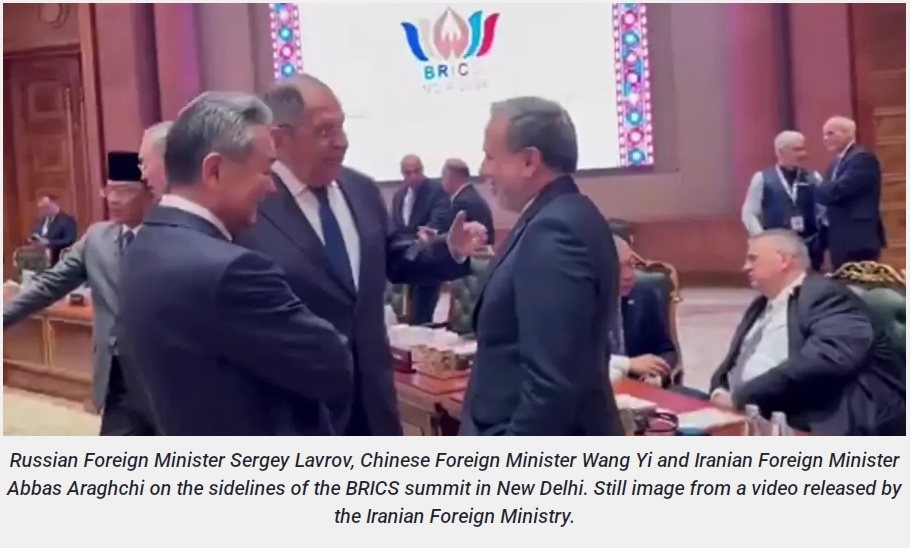
Diplomatic sources in Moscow and Tehran confirmed that Russia and Iran acted as a coordinated duo in New Delhi and were in complete agreement in their rejection of Washington’s war against Iran and the sanctions architecture.

The now viral photo of Lavrov, Wang Yi and Araghchi standing together like old friends only tells part of the story.

Yemen’s advance on the Red Sea is the maritime half of the same story.

Russia and Iran agreed on three points: condemning the US war, rejecting the sanctions regime as a whole, and resolutely opposing the secondary sanctions associated with US Treasury Secretary Bessent, that despicable former henchman of Soros.

In New Delhi, there were indications that the original RIC (Russia–India–China), as conceived by the late, great Yevgeny Primakov, might be revived – now as RIIC, supplemented by Iran.
Full article.

US set to approve 60,000 heavy bombs for Israel
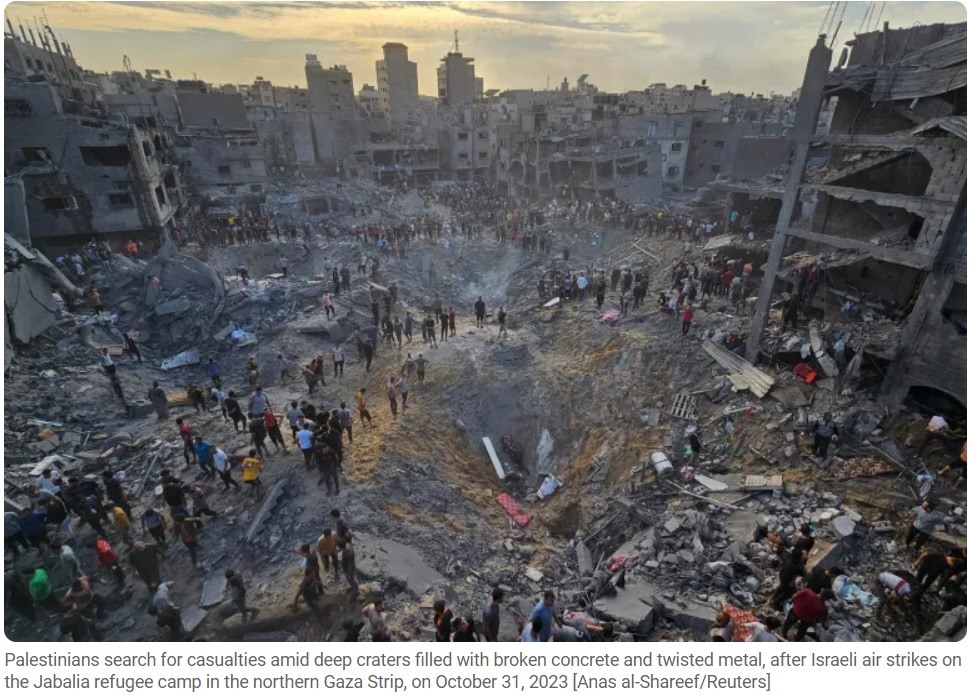
In spite of the success of Yemen forces to take over the Red Sea and bomb Saudi Arabia’s oil production offline, there is no sign that the U.S. or Israel are close to admitting defeat.

On the contrary, it has been reported this week that the U.S. is preparing to sell 60,000 highly destructive, 2,000-pound (907kg) bombs to Israel in a multibillion-dollar package which will be funded by American taxpayers, a move that is almost unprecedented in modern history.

US set to approve 60,000 heavy bombs for Israel: What that means

by Yashraj Sharma
Aljazeera

Excerpts:

United States President Donald Trump’s administration is preparing to sell 60,000 highly destructive, 2,000-pound (907kg) bombs to Israel in a multibillion-dollar package which will be funded by American taxpayers.

US media has reported that the Trump administration has approved the sale, which features some of the most destructive munitions in Western arsenals, and has informally notified Congress.

This is one of the biggest US munition packages to Israel and comes after nearly three years of genocidal war on Gaza, ongoing pogroms by Israeli settlers in the occupied West Bank and a mighty assault on southern Lebanon – which together have killed tens of thousands and displaced millions in the region.

It also comes as the US’s own munitions stockpile has been depleted due to its war on Iran, with the crisis worsened by Russia’s war on Ukraine.

Washington is reported to be on track to deliver a munitions package to Israel that is believed to include 60,000 warheads, including 20,000 MK-84s, 20,000 BLU-117s and 20,000 I-2000 Penetrator.

The sale is worth $2.8bn, the majority of which will be paid for by the US’s Foreign Military Financing scheme, wherein Washington pays Israel from its own taxpayers’ funds to buy American-made weapons and military equipment.

Together, 60,000 2,000-pound-class bombs weigh 54,400 tonnes.

That is about the weight of the entire steel skeleton of New York’s Empire State Building. Or seven times the weight of the iron structure of the Eiffel Tower.

Its mass also far exceeds the most infamous single conventional air raid of the 20th century. The March 1945 Tokyo firebombing, which killed more than 80,000 people in one night, used roughly 1,600 tonnes of bombs.

On a broader scale, 54,400 tonnes is nearly the total weight of bombs dropped on Berlin throughout World War II, and also roughly one-third of all bombs that fell on Japan’s home islands.

Full article.

Here are a couple of other stories I am monitoring that were posted on our Telegram Channel.

Drone Strikes Cripple Half of Russia’s Top Diesel Refineries

From OilPrice.com

Excerpts:

Three of Russia’s six largest diesel-producing refineries are now either shut or operating at roughly one-quarter capacity after Ukrainian drone attacks damaged plants that together form the backbone of the country’s fuel system.

The six refineries—Omsk, Kirishi, Taneco, Volgograd, NORSI and Perm—account for roughly half of Russia’s diesel production, according to Reuters calculations based on market data. Kirishi is completely offline. Volgograd and NORSI are running at about 25% of nameplate capacity.

Taneco was struck Sunday. The extent of the damage there was still being assessed Monday.

The attacks have become routine. The International Energy Agency estimates a Russian refinery was successfully struck by a drone once every three days during the first eight months of 2026.

Russia has already restricted exports of gasoline, diesel and jet fuel to preserve domestic supply. Diesel exports fell below 1 million metric tons in June, according to trader estimates cited by Reuters. Combined diesel and gasoil exports totaled about 1.8 million tons.

A year earlier, Russian refineries were shipping roughly 2.5 million tons of diesel each month, or 3.3 million to 3.4 million tons including lower-quality gasoil. Turkey and Brazil had been taking at least half of available Russian diesel cargoes before Moscow imposed the restrictions.

Those missing barrels are landing in a global diesel market already short on fuel from the Middle East. U.S. diesel prices crossed $6 per gallon last week for the first time, while refining margins have climbed as product inventories shrink.

Full article.

Saudi Pipeline Outage Hits an Oil Market Running Out of Buffers

From OilPrice.com

Excerpts:

The war in Iran that had to be over and won by the United States in about six weeks is now in its seventh month and the oil markets are starting to crack.

Gone are most of the cushions the market had in the early weeks and months of the Middle East conflict.

The oversupply from early this year has disappeared as oil on water was drawn down quickly when the Strait of Hormuz was closed to tanker traffic in March.

Record stock releases led by the International Energy Agency (IEA) depleted strategic inventories in developed economies, including in the United States, where the Strategic Petroleum Reserve (SPR) now holds the lowest level of crude oil since the early 1980s.

China, which strategically slashed its crude oil imports by about 4-5 million barrels per day (bpd) in May and June, has started to gradually ramp up purchases, removing a significant demand-side balancing mechanism that had prevented oil prices from spiking to record highs in the spring.

With few buffers left to absorb the six-month-long disruption of oil flows at the Strait of Hormuz, the last thing the market needed was an escalation that put a key non-Hormuz flow valve at risk.

But here we are: the vital East-West oil pipeline in Saudi Arabia, which helped the Kingdom bypass the Strait of Hormuz and export most of its crude oil from the Yanbu port on the Red Sea, is now out of service – possibly for weeks – following drone attacks at the end of last week.

Full article.

This article was written by Human Superior Intelligence (HSI)

See Also:

Understand the Times We are Currently Living Through

The Brain Myth: Your Intellect and Thoughts Originate in Your Heart, Not Your Brain

Is God’s Patience About to Run Out on the United States?

Second Edition of eBook Released: The Concept of the American Christian Family is a Myth and is NOT Found Anywhere in the Bible – by Brian Shilhavy

FREE eBook! Restoring the Foundation of New Testament Faith in Jesus Christ – by Brian Shilhavy

KABBALAH: The Anti-Christ Religion of Satan that Controls the World Today

Exposing the Christian Zionism Cult

The Bewitching of America with the Evil Eye and the Mark of the Beast

Jesus Christ’s Opposition to the Jewish State: Lessons for Today

Identifying the Luciferian Globalists Implementing the New World Order – Who are the “Jews”?

The Seal and Mark of God is Far More Important than the “Mark of the Beast” – Are You Prepared for What’s Coming?

The Satanic Roots to Modern Medicine – The Image of the Beast?

Medicine: Idolatry in the Twenty First Century – 10-Year-Old Article More Relevant Today than the Day it was Written

Having problems receiving our emails? See:

How to Beat Internet Censorship and Create Your Own Newsfeed

We Are Now on Telegram. Video channels at Bitchute, and Odysee.

If our website is seized and shut down, find us on Telegram, as well as Bitchute and Odysee for further instructions about where to find us.

If you use the TOR Onion browser, here are the links and corresponding URLs to use in the TOR browser to find us on the Dark Web: Health Impact News, Vaccine Impact, Medical Kidnap, Created4Health, CoconutOil.com.

The post Saudi Arabia is Exporting ZERO Oil as U.S. Sends Unprecedented Amount of 2,000-pound Bombs to Israel first appeared on Health Impact News.

  •  

‘Europe has chosen to forge its own path’: Von der Leyen sets out agenda for the year ahead

European Commission President Ursula von der Leyen at the podium Photographer: Dati Bendo © European Union

European Commission President Ursula von der Leyen used her State of the Union address on Wednesday (16 September) to make the case for a more independent Europe, confronting war, economic competition, AI disruption and climate change — while proposing Canada become the EU’s first associate member.

Opening her #SOTEU speech with Charles Dickens’ “best of times, worst of times”, von der Leyen described a Union stronger but also more exposed to external threats.

“The state of our Union is the strongest it has ever been,” she said, while acknowledging it could feel “as precarious as it has ever been”. “Europe has chosen to forge its own path. And a stronger, independent Europe is now emerging.”

Competitiveness and energy

Von der Leyen called kickstarting Europe’s economy her “number one priority”, promising faster permitting, less red tape and further integration of the Single Market.

The Commission will propose a new Banking Package and create a European Corporation on Critical Raw Materials to secure supplies needed for chips, batteries, clean technology and defence.

With high energy costs weighing on European industry, von der Leyen called for faster electrification and investment in grids, renewables and nuclear power to reduce dependence on imported fossil fuels.

Climate after a 'summer of truth'

After a summer of fires, drought and extreme heat, von der Leyen promised a climate resilience framework focused on 100 of Europe’s most vulnerable territories, alongside a Climate Insurance Alliance, European Heatwave Plan and Water Initiative.

She also floated a future European Firefighting Fleet, declaring that Europe “can, must and will stay the course” on its climate targets.

AI: Opportunity and threat

AI was presented as both an economic opportunity and an emerging security threat. Von der Leyen warned that advanced models could enable hacking “on a level we never thought possible” and pledged closer cooperation with Canada, the UK and others on AI security.

At the same time, Europe will expand computing capacity and push AI into health, transport, agriculture, manufacturing, defence and space. “Above all, we want AI with human agency,” she said.

Jobs, housing and social rights

The Commission plans a Quality Jobs Act before the end of the year and a European Care Deal, alongside measures tackling housing pressures.

Von der Leyen said technological change must benefit workers, while strongly defending women’s rights and Europe’s social model.

PHOTO  European Commission President Ursula von der Leyen and Canadian Prime Minister Mark Carney at the podium Photographer: Dati Bendo © European Union

Canada moves closer

One of the biggest surprises came with Canadian Prime Minister Mark Carney in the chamber.

Von der Leyen proposed an “Alliance for the Future” spanning technology, defence, energy, critical minerals, AI and the Arctic — before going further.

“I would like to work with you on opening the door for Canada to be the first associate member of the EU,” she told Carney. “We share one ocean, one set of values, one way of seeing the world.”

Security, defence and Ukraine

With drone incursions, cyberattacks and sabotage raising security concerns inside the EU, von der Leyen proposed a new European security strategy and an Emergency Security Protocol for incidents falling below the threshold of armed aggression.

She also wants to establish a European Security Council and strengthen joint European defence capabilities.

Ukraine faces what von der Leyen called the “toughest winter of the war”. She promised humanitarian and energy support, stronger air defences and deeper defence-industrial cooperation with Kyiv.

Borders, democracy and children online

The Commission will propose an Emergency Response Framework for exceptional migration crises and strengthen Frontex, while launching a Mediterranean Youth Skills and Jobs initiative.

Von der Leyen also announced an EU KIDS ACT, including no social media for under-13s and restrictions for children under 15, followed by a broader Digital Fairness Act.

Political groups draw battle lines

EPP leader Manfred Weber backed the focus on AI, defence and competitiveness but pushed against restrictive climate policies. “Climate change is a reality,” he said, arguing Europe needed “innovation and not bans.”

S&D leader Iratxe García Pérez demanded that von der Leyen turn “words into action”, backing climate investment, housing and worker protections while warning that simplification must not become deregulation.

Renew Europe leader Valérie Hayer made a pointed appeal for the Parliament’s pro-European majority, as the EPP has increasingly worked with parties further to the right on some legislation. “There’s only one possible majority. It’s our pro-European majority,” she said. “We need to do more. We need more Europe, and we need it more quickly.”

Greens/EFA co-chair Terry Reintke accused EU leaders of failing to respond urgently enough to extreme heat and wildfires. “We are in the middle of a climate emergency,” she said, demanding stronger Green Deal implementation while insisting: “We are not powerless. Europe is strong, and Europe can be even stronger.”

ECR co-chair Patryk Jaki struck a sharply different note, attacking the Commission over bureaucracy, energy costs and industrial competitiveness. Europe, he argued, was “as weak as it’s ever been.”

Von der Leyen closed on the central theme running through the speech: European sovereignty in an increasingly hostile world.

“The fate of Europe,” she said, “must remain in the hands of Europeans.”

  •  

Amid global shortage of interceptor missiles, Poland plans to transfer an undisclosed number of Patriot missiles to Ukraine

Poland wants to transfer missiles for the Patriot system to Ukraine, with Warsaw reportedly consulting with NATO to implement this plan. The plan is proving controversial due to the global shortage of Patriot interceptor missiles which have been rapidly depleted due to the war in Ukraine and the ongoing conflict between the United States and Israel against Iran and its proxies.

Poland plans to transfer several missiles to Ukraine for the Patriot air-defense system, according to information obtained by Polish news outlet Rzeczpospolita from government and military circles.

Remix News previously reported on the extreme shortage of Patriot missiles in Ukraine, leaving the country vulnerable to Russian missile and drone barrages.

However, it is a small number of missiles, not a large delivery. This information was indirectly confirmed by the Operational Commander of the Armed Forces, General Ireneusz Nowak, who noted that the transfer of missiles falls within a previously established, classified quantity.

“In my opinion, we could donate post-Soviet equipment that is still in our inventory and that could be very useful for Ukraine, even if it requires a general overhaul. We must be aware that such equipment is also used to fight in Poland’s interest,” General Nowak added in an interview with the newspaper.

How many missiles will Poland donate? The Polish Ministry of National Defence does not want to say.

The issue of Patriot missiles arouses strong emotions, and most Poles, as research shows, do not want to give Ukraine valuable weapons. The fact that the missile transfer comes at a time when Prime Minister Donald Tusk warns that Russia directly threatens Polish security and plans to escalate the conflict with NATO countries is particularly sensitive.

Controversy is also intensified by the fact that the Polish Ministry of National Defence is not disclosing details of the next aid package for Ukraine, citing the protection afforded classified information. However, the ministry confirmed that further support is being prepared and will include equipment that is no longer needed by the Polish army or is approaching the end of its useful life, but may still be useful in Ukraine. Details regarding specific types of weapons remain confidential.

The planned donation is part of broader Polish military aid to Ukraine. A few months ago, Poland transferred five PAC-3 MSE missiles to Kyiv for the Patriot system. Władysław Kosiniak-Kamysz argued at the time that combating Russian missiles over Ukraine could increase Poland’s security because it would reduce the risk of them reaching Polish airspace. At the same time, he emphasized that the transfer of weapons must not weaken Polish defence capabilities.

Poland currently has 16 Patriot launchers and has contracted for approximately 200 PAC-3 MSE missiles, some of which have not yet been delivered.

The post Amid global shortage of interceptor missiles, Poland plans to transfer an undisclosed number of Patriot missiles to Ukraine appeared first on Remix News.

  •  

Wie der Spiegel immer lauter die Kriegstrommel schlägt und warum 80% der Spiegel-Leser für NATO-Einsatz in der Ukraine sind

Seit dem sogenannten Drohnenvorfall von Leipzig hat der Spiegel in seiner Trommelei für einen Krieg gegen Russland die verbale Schlagzahl noch einmal deutlich erhöht. Aber nun ist offensichtlich eine neue Phase angebrochen, denn der Spiegel eskaliert noch weiter – und suggeriert buchstäblich, Russland führe schon im Krieg gegen den Westen. Das zeigt sich im Spiegel […]
  •  

Von der Leyen’s State of the Union: Europe’s push for independence faces a delivery test

European Commission President Ursula von der Leyen during her speech in 2025 Photographer: Dati Bendo © European Union, 2025

Ursula von der Leyen is expected to make the case for a more independent and resilient Europe in her State of the European Union address on Wednesday (16 September). But analysts and political groups in the European Parliament are demanding something more concrete: evidence that the Commission can turn its expanding ambitions into results Europeans can see.

The State of the European Union address, commonly known in Brussels as the “SOTEU”, is the Commission president’s annual speech to Parliament setting out priorities for the year ahead. Modeled in part on the US president’s State of the Union address to Congress, the EU version began in 2010 under then Commission president José Manuel Barroso. Von der Leyen will deliver this year’s address at 9:00 tomorrow morning (16 September).

The speech comes as Europe is confronted with an ongoing war in Ukraine, a fragmenting global trading system and the challenge of strengthening defence while reviving competitiveness and financing the green transition. At home, von der Leyen must reconcile political groups that broadly agree on the need for a stronger Europe but differ over what that means.

For Manfred Weber, chairman of von der Leyen’s centre-right European People’s Party group, the focus should be on voters’ economic and security concerns.

“Europe’s priorities must reflect people’s concerns: jobs, the cost of living and economic security,” Weber said. He called for a stronger economy and well-paid jobs, tighter control of Europe’s borders, leadership on AI, continued support for Ukraine and “a strong European defence pillar”.

On the centre-left, Iratxe García Pérez, president of the Socialists and Democrats group, argues that the Commission has relied too heavily on deregulation.

“Europe needs more than announcements,” García Pérez said. “It needs concrete policies backed by the necessary resources.” The S&D wants greater emphasis on affordable food, housing and energy, quality jobs and climate action, alongside European sovereignty in defence and digital technologies.

Renew Europe is also making delivery the benchmark, calling on von der Leyen to present “a credible plan turning European ambition into visible results” and framing the choice as one between united European action and fragmentation.

Analysts at the European Policy Centre see the same challenge extending to Europe’s position in the world.

“Von der Leyen will tell us that the EU is forging new partnerships around the globe,” said Almut Möller, the EPC’s director for European and Global Affairs. Canadian Prime Minister Mark Carney’s attendance will reinforce the geopolitical dimension of the speech.

But strategic autonomy goes beyond defence and trade. Georg Riekeles, the EPC’s head of political economy, identifies financial dependence as an overlooked vulnerability. With the international financial system becoming less stable, Europe cannot assume Washington and the US Federal Reserve will play the stabilising role they did in previous crises. Von der Leyen “must therefore address financial sovereignty as a core element of European security”, he argues.

Technology poses another test. Elizabeth Kuiper, the EPC’s head of health and societal resilience, says von der Leyen should “reject the trade-off between competitiveness, technological progress, and the EU’s social model”, particularly as AI affects employment, income security and social cohesion.

Climate policy presents a similar collision between ambition and resources. Stefan Šipka, the EPC’s head of sustainable prosperity, argues that Europe needs “a robust delivery mindset, no more strategies” as it tries to combine defence, decarbonisation and economic security.

The common thread is delivery. Von der Leyen has no shortage of strategic objectives. The harder task on Wednesday will be explaining how they fit together, how Europe will finance them and what takes priority when they conflict.

For EPC policy analyst Eric Maurice, von der Leyen “must provide strategic focus and political clarity”.

“As the midterm in her second term approaches,” Maurice said, “it is time for von der Leyen to present a vision and deliver.”

  •  

Röper live im Homeoffice von NuoViso

Da die deutschen Medien überhaupt nicht über den „Katschka-Kos-Plan“ berichten, mit dem die EU die totale Kontrolle über die Ukraine übernehmen will, berichte ich darüber umso mehr, denn im Grunde haben alle innenpolitischen Machtkämpfe in der Ukraine und die in den letzten Monaten bekannt gewordenen Korruptionsskandale in Kiew damit zu tun. Daher bin ich heute […]
  •  

„Der Ukraine-Konflikt hat das Ende der EU besiegelt“

Auf diese Meldung bin ich in der russischen Nachrichtenagentur TASS gestoßen und sie hat mich wegen ihrer Einfachheit fasziniert, denn ein italienischer Publizist hat ein komplexes Thema wenigen und einfachen Worten auf den Punkt gebracht. Alessandro Orsini schrieb in seiner Kolumne für die Zeitung „Il Fatto Quotidiano“, der Ukraine-Konflikt habe das Ende der EU als […]
  •  

Irankrieg oder Ukraine-Krieg, wer ist Schuld an den steigenden Benzinpreisen?

In den USA sind die Benzinpreise ein sehr wichtiges Thema und US-Präsident Trump hat die Wahlen vor zwei Jahren unter anderem deshalb gewonnen, weil er Biden für die damaligen Rekordpreise an den amerikanischen Tankstellen verantwortlich gemacht und eine Senkung der Preise in den USA versprochen hat. Allerdings sind die Benzinpreise in den USA infolge der […]
  •  

Ukraine Demands Secrecy: The Grain Transit Pressure on Poland

In August 2026, Polish MEP Anna Bryłka revealed that Ukraine is conducting closed-door negotiations with Poland regarding the transit of Ukrainian grain. Ukrainian Ambassador to Poland Vasyl Bodnar stated that the issue of grain transit “should not be public” and should first be handled at the expert level before becoming a subject of public discussion. […]
  •  

The US “Burden Sharing Network” Takes Shape

In 2025, the US National Security Strategy paper would be broadly misinterpreted as a US plan to break with its historical pursuit of global primacy and instead retreat to the Western Hemisphere while somehow reconciling or coexisting with traditional targets of US aggression. Many analysts even claimed there was an absence of any direct mention […]
  •  

The Demise of Saudi Arabia, and Perhaps Christian Zionism? Yemen Shocks the World by Taking Control of the Red Sea

Top Left image: Yemen army – Source, Top Right image Yemen military illustration – Source, Bottom Left image Saudi Mohammed bin Salman with Jeffrey Epstein – source: The Epstein Files, Bottom Right image Saudi Mohammed bin Salman with Donald Trump in the White House – Source.

by Brian Shilhavy
Health Impact News

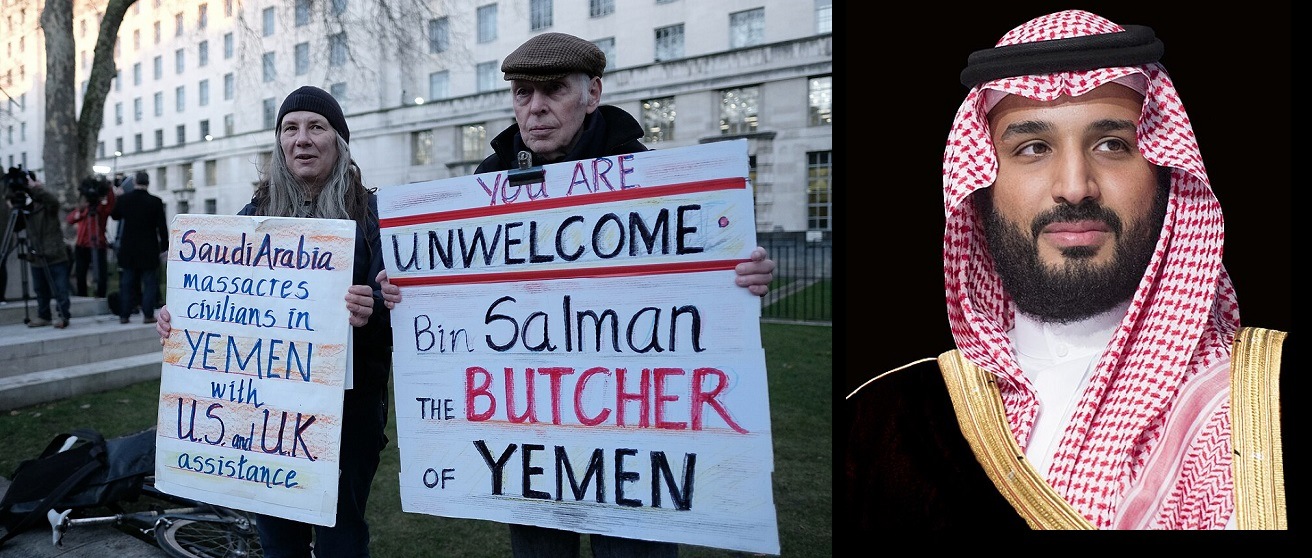
The Iran War drastically changed at the end of last week, as Yemen’s Ansarullah-led Armed Forces (Houthis) took control of the country’s western coastline, capturing key positions overlooking the Bab al-Mandab Strait, including the coastal city of Mokha and strategic islands in and around the waterway, and they are now effectively controlling traffic in the Red Sea.

As far as I can tell, this was a complete surprise to everyone, especially to Saudi Arabia and the United States.

It forced the U.S. corporate media to report this, and it dominated the news stream until the fake “AI is going to destroy humanity if we don’t do something about it” narrative took control of the news stream this past weekend.

Saudi Arabia, who has been at war with Yemen since 2014 with the help of the U.S. and using U.S. military weapons, was forced to shut down their East-West oil pipeline, which was allowing Saudi Arabia to bypass the Strait of Hormuz to be able to get oil out of their country.

This pipeline in Saudi Arabia reportedly transports about 4% to 5% of the global oil supply.

Saudi Arabia is now in panic mode, and has reportedly pleaded with the U.S. to help them and start bombing the Yemen forces who have taken control of the Red Sea.

However, it appears that Saudi Arabia never got the memo about one of Trump’s objectives in the Iran War, which was to let Iran destroy the Gulf Nations’ ability to control oil prices through OPEC, while at the same time seizing Venezuela oil amid plans to make  America the center of oil sales around the world.

Trump’s response to Saudi Arabia: sorry, you’re on your own.

Scoop: MBS urged Trump to strike Houthis amid Red Sea threat

Saudi Crown Prince Mohammed bin Salman (MBS) called President Trump twice Thursday, urging him to launch strikes against the Houthis as the Iran-backed group closed in on a vital Red Sea chokepoint, two U.S. officials told Axios.

Trump declined, and U.S. officials stressed the administration has no plans to intervene directly against the Houthis for now.

Source.

Of course, even if the U.S. did want to stop Yemen’s military and protect Saudi Arabia’s interests, it is doubtful that they would even be able to do so, given the depletion of their weapons and military assets as Iran continues to control the Strait of Hormuz.

This very well could be the demise of Saudi Arabia.

And if the Yemen takeover of the Red Sea turns the tide overall in the war against Iran, what will the Evangelical Christians do who are so positive that this war was sanctioned by God, and was to hasten the return of Jesus Christ?

Could this also be the start of the decline of Christian Zionism as well when they realize that the U.S. cannot defeat Iran and force the return of Jesus Christ after all?

The U.S. and Saudi Arabia’s War Against Yemen for Over a Decade – The Genocide that Has Been Overshadowed by the Palestinian Genocide

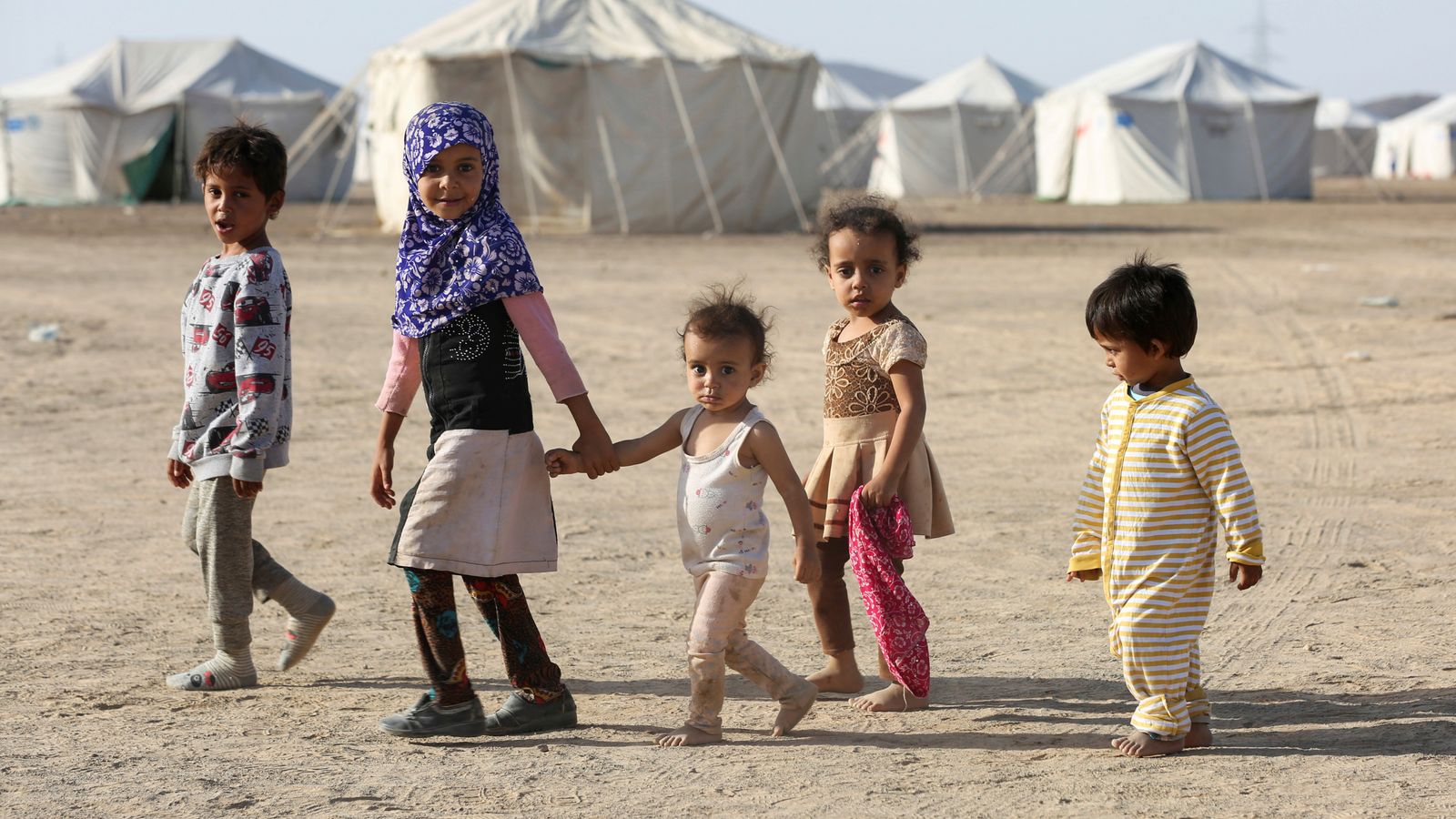
Yemen children in refugee camps. Image source.

While estimates of how many people have died in the Yemen conflict with Saudi Arabia, including children, most of whom have died from starvation due to the U.S.-Saudi blockade on their ports, varies, the number is significant, and probably rivals the number of people killed among the Israeli Palestinians, as well as the number of dead Lebanese people killed by the U.S. and Israel.

This was published in 2018, and the situation is obviously far worse today.

YEMEN: 85,000 CHILDREN MAY HAVE DIED FROM STARVATION SINCE START OF WAR

Using data compiled by the UN, Save the Children evaluated mortality rates for untreated cases of Severe Acute Malnutrition (SAM) in children under five years. Using a conservative estimate, the humanitarian aid agency discovered that approximately 84,701 children with SAM may have died between April 2015 and October 2018.[i]

After almost four years since the brutal conflict in Yemen escalated the UN says that up to 14 million people are at risk of famine. That number has increased dramatically since the Saudi and Emirati-led coalition imposed a month-long blockade of Yemen just over a year ago.[ii]

Since then, commercial imports of food through Hodeidah port have reduced by more than 55,000 metric tonnes a month. That’s enough to meet the needs of 4.4 million people, including 2.2 million children[iii]. Any further decline in imports could likely lead directly to famine.

Source.

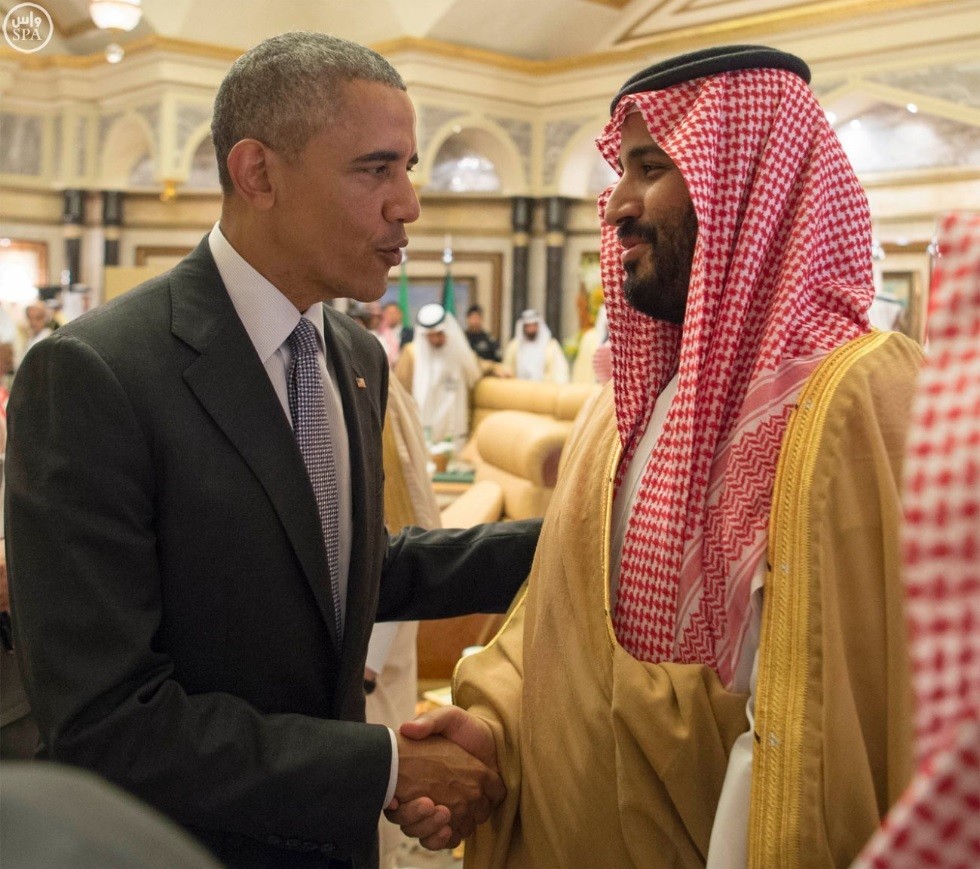
Barak Obama with Mohammed bin Salman of Saudi Arabia in 2016. Source.

Like so many other stories of unrest in the Middle East, the one in Yemen follows an all-too-familiar path that I am sure ultimately leads back to the U.S. and the “intelligence” agencies like the CIA and Mossad who control world politics ensuring that candidates friendly to the Zionist Epstein agenda rise to power.

The rationale, as it has been used so many times, was to overthrow “dictatorships” and alleged “ruthless” rulers who had ruled for long period of times and replace them with “pro-democracy” leaders, and always ending in disaster for the local populations.

It was this same rationale that took down leaders such as Muammar al-Qaddafi in Libya, Hosni Mubarak in Egypt, Saddam Hussein in Iraq, and even more recently Bashar al-Assad in Syria, all of whom were replaced by pro-Western leaders aligned with the U.S. (and by proxy, Israel).

What most Americans do not realize, is that while these “ruthless dictators” were portrayed as evil by the U.S., they were very popular in their own countries, and most of them were even elected in landslides, while the U.S. declared those elections “rigged.”

Imagine the U.S. with their highly ethical election system (sarcasm) dictating to foreign governments whether their elections were “fair” or not.

During the “Arab Spring” in 2012, Ali Abdullah Saleh, the first elected president of the Republic of Yemen, suffered the same fate, and was forced from office and replaced with the pro-U.S. candidate Abdrabbuh Mansur Hadi.

When the Houthis struck back at the U.S. puppet regime, the U.S. had no problems with uniting with local groups in the area opposed to the Houthis, but had officially been branded as “terrorist” groups, such as the Muslim Brotherhood and al-Qaeda.

It is very similar to what recently happened in Syria, where a former member of al-Qaeda, the group who allegedly bombed the World Trade Center towers in New York under the leadership of Osama bin Laden, was chosen by the U.S. to lead Syria today, Ahmed al-Sharaa.

But these factions in Yemen were not strong enough to fight back against the Houthis, so starting with President Obama, the U.S. got involved to prop up their puppet government in Yemen.

First U.S. Citizens Ever Executed without a Judge, Jury, or Trial Happened in Yemen

One for all, and all for one: The U.S. Uniparty political system. Image source New York Times.

The country of Yemen has the unique distinction of being the first country where U.S. citizens were executed by drone strikes by their own government, with no judge, jury, or trial.

President Barak Obama was the first U.S. President known to authorize a drone strike on a U.S. citizen, Abdulrahman Anwar al-Awlaki, a 16-year-old boy who was in Yemen and whose father was linked to al-Qaeda.

This was headline news back in the day.

Nawar al-Awlaki, eight-year-old American girl executed by a drone strike in Yemen ordered by President Trump. Image source.

When Trump succeeded Obama and took office in 2017, he proceeded to do the same thing, by ordering a drone strike in Yemen that killed Nawar al-Awlaki, an eight-year-old American girl and the daughter of Anwar al-Awlaki. The 16-year-old U.S. citizen killed by Obama was her brother. (Source.)

Will Saudi Arabia’s Leader Survive the Yemen Uprising?

Since I lived in Saudi Arabia for several years and was a professor at one of their top universities back in the 1990s, I will offer my own opinion on the current leader of Saudi Arabia, which you will be hard-pressed to find from any other western journalist, the Crown Prince and Prime Minister Mohammed bin Salman Al Saud (MBS).

MBS was quite young when he came into power, and he reportedly earned a law degree from King Saud University in Riyadh, allegedly finishing second in his class.

I have heard Muslim commentators mention that due to his being educated in Saudi Arabia, rather than going to a Western university, that MBS was better suited and trained to rule Saudi Arabia and not as prone to Western influence.

I strongly disagree.

Back in the day when I was teaching English at King Fahd University of Petroleum and Minerals, located in Dhahran, right next to the Aramco oil compound, it was well-known among the faculty back then that if any member of the Al-Saud family came to study at the University and had to complete their first year learning English, that they had basically flunked the English test needed to attend one of the top universities in the U.S. or the UK.

They were not among the “cream of the crop” among Saudi high school students. We had one or two come through during my tenure there, and they were mostly viewed as seeing themselves as “privileged” due to being part of the Al-Saud family, and not very good students at all, preferring instead to go out partying in the desert with their expensive Range Rovers.

So when I read that MBS graduated “second” in his class, I wondered why he did not graduate first, being a member of the Royal family. My best guess is that someone in the Al-Saud family higher up the ladder must have beat him out at the time.

But the true intellectuals and leaders among Saudis probably all graduated from Ivy League schools in the U.S., or from the top universities in the UK.

And of course, MBS is clearly a puppet who has served, first Obama, and now most recently has served as Trump’s lap dog, in my opinion.

So he is hardly against Western culture, even though he was educated in Saudi Arabia.

His rise in power within the Al-Saud dynasty coincided with Donald Trump’s first term (coincidence?).

Mohammed was appointed crown prince on 21 June 2017, following the King’s decision to depose Muhammad bin Nayef and make his own son the heir to the throne.

On the day bin Salman became crown prince, US president Donald Trump called to congratulate him.

Trump and Mohammed pledged “close cooperation” on security and economic issues and discussed the need to cut off support for terrorism, the diplomatic dispute with Qatar, and the push for peace between Israel and the Palestinians.

Mohammed told The Washington Post in April 2017 that without America’s cultural influence on Saudi Arabia, “we would have ended up like North Korea.”

In May 2017, Mohammed launched a purge against competing Saudi business and political elites in an anti-corruption campaign.

On 4 November 2017, the Saudi press announced the arrest of the Saudi prince and billionaire Al-Waleed bin Talal, a frequent English-language news commentator and a major shareholder in Citi, News Corp and Twitter, as well as over 40 princes and government ministers on corruption and money laundering charges.

Others arrested or fired in the purge included Prince Mutaib bin Abdullah, head of the Saudi Arabian National Guard; Minister of Economy and Planning Adel Fakeih; and the commander of the Royal Saudi Navy, Admiral Abdullah bin Sultan bin Mohammed Al-Sultan.

Those arrested in the Ritz Carlton were the subject of what became called “the night of beating”. Most were beaten, and some were tied to walls in stress positions as part of torture by Saudi agents.

The detainees were threatened with blackmail.

Detainees were denied sleep, had their heads covered, and were beaten.[50] Seventeen had to be hospitalised.[50] After many days, the remaining detainees were moved to Al-Ha’ir Prison, while some released are banned from travelling abroad.

The purge helped centralise political powers in the hands of bin Salman and undermine the pre-existing structure of consensus-based governance among Saudi elites.

The arrests resulted in the final sidelining of the faction of King Abdullah, and bin Salman’s consolidation of control of all three branches of the security forces. It also cemented bin Salman’s supremacy over business elites in Saudi Arabia and resulted in a mass seizure of assets by the bin Salman regime.

Trump expressed support for the move, tweeting

“Some of those they are harshly treating have been ‘milking’ their country for years!“

Source.

Trump seemingly worked hard in an effort to turn MBS into a full-fledged Zionist and support Israel, but MBS stated that if he did not support the Palestinian right to have their own homeland, his own people would stone him to death.

In 2018, (MBS) voiced his support for a Jewish homeland of Israel, the first time that a senior Saudi royal has expressed such sentiments publicly.

In 2020, Mohammed met with Netanyahu and Israeli head of the Mossad Yosi Cohen in Neom. The United States had been pushing for Israel’s normalisation for some years, calling (in this context) the Abraham Accords the “deal of the century”, but Riyadh rejected reports of progress.

In 2023, there were ongoing U.S. lead negotiations to establish diplomatic relations between Saudi Arabia and Israel. Mohammed also said that his country was moving steadily closer to normalising relations with Israel as part of the Abraham Accords.

Amid the Gaza war, according to reporting by The Atlantic, Mohammed told U.S. Secretary of State Antony Blinken in January 2024 that he was open to Saudi normalisation with Israel, adding,

“Do I care personally about the Palestinian issue? I don’t, but my people do.”

Surveys in the early stages of the Gaza war showed that over 90 percent of Saudis citizens believed that the Arab states should break off their relations with Israel.

In August 2024, Mohammad discussed his fears of facing assassination due to his support for establishing and normalising Saudi-Israel ties, and the threats he received. He believed for any deal, it was important to include a true path to the State of Palestine.

Source.

As I reported back in June of 2024, Saudi Arabia made the historical move to not renew an 80-year-old agreement with the United States that established the U.S. Dollar as the world currency to purchase Saudi oil, in return for U.S. military protection.

They saw the handwriting on the wall, apparently, and wanted to be able to sell oil to China in their own currency, the Yuan. See:

Saudi Arabia Ends 80-Year-Old PetroDollar U.S. Agreement: Joins China-Led Central Bank Digital Currency Coalition

This, more than anything, could be the primary reason why the U.S. will not participate in helping them fight back against the Houthis anymore.

And one of the biggest reasons why I believe that MBS may not survive much longer, is because Saudi Arabia has taken most of their $billions made from oil profits during the past few years and invested it in AI technology, in what will probably be the largest financial bubble to burst in the history of the modern era.

We could very well be watching the last stages of the Epstein financial empire crumbling right before our eyes.

This article was written by Human Superior Intelligence (HSI)

See Also:

Understand the Times We are Currently Living Through

The Brain Myth: Your Intellect and Thoughts Originate in Your Heart, Not Your Brain

Is God’s Patience About to Run Out on the United States?

Second Edition of eBook Released: The Concept of the American Christian Family is a Myth and is NOT Found Anywhere in the Bible – by Brian Shilhavy

FREE eBook! Restoring the Foundation of New Testament Faith in Jesus Christ – by Brian Shilhavy

KABBALAH: The Anti-Christ Religion of Satan that Controls the World Today

Exposing the Christian Zionism Cult

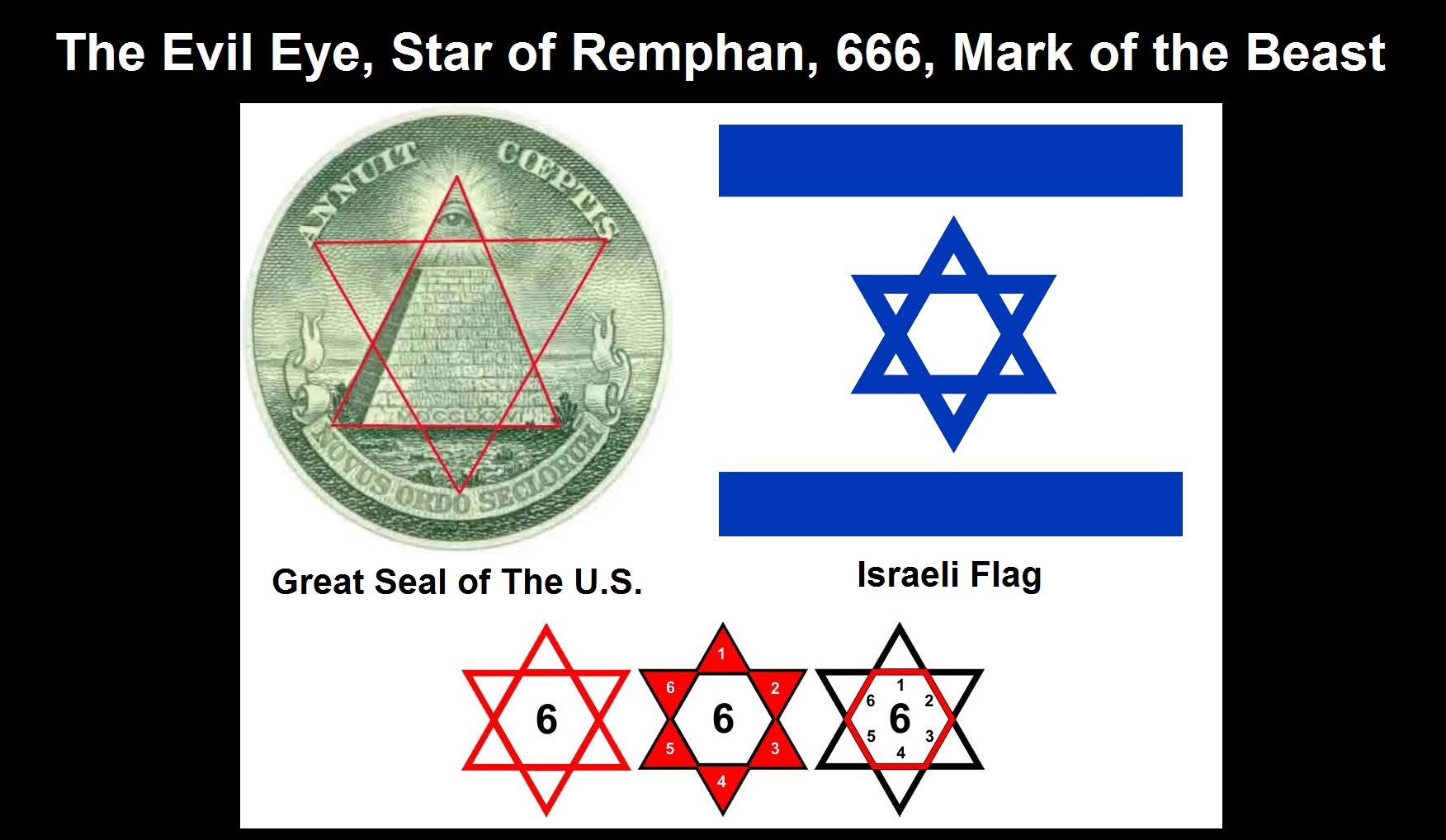
The Bewitching of America with the Evil Eye and the Mark of the Beast
Jesus Christ’s Opposition to the Jewish State: Lessons for Today

Identifying the Luciferian Globalists Implementing the New World Order – Who are the “Jews”?

The Seal and Mark of God is Far More Important than the “Mark of the Beast” – Are You Prepared for What’s Coming?
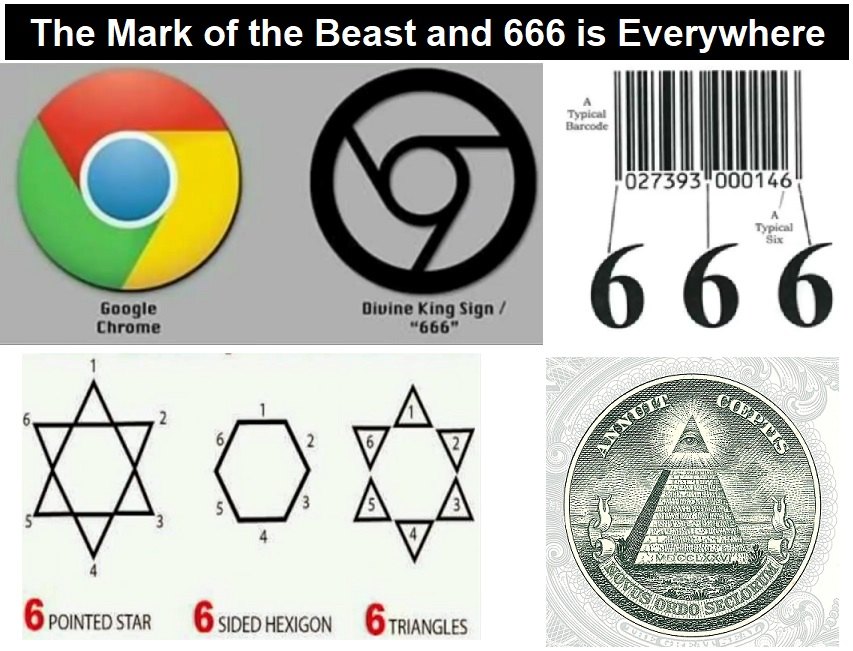
The Satanic Roots to Modern Medicine – The Image of the Beast?

Medicine: Idolatry in the Twenty First Century – 10-Year-Old Article More Relevant Today than the Day it was Written
Having problems receiving our emails? See:

How to Beat Internet Censorship and Create Your Own Newsfeed

We Are Now on Telegram. Video channels at Bitchute, and Odysee.

If our website is seized and shut down, find us on Telegram, as well as Bitchute and Odysee for further instructions about where to find us.

If you use the TOR Onion browser, here are the links and corresponding URLs to use in the TOR browser to find us on the Dark Web: Health Impact News, Vaccine Impact, Medical Kidnap, Created4Health, CoconutOil.com.

The post The Demise of Saudi Arabia, and Perhaps Christian Zionism? Yemen Shocks the World by Taking Control of the Red Sea first appeared on Health Impact News.
  •  

Generalstaatsanwalt erhebt Anklage wegen Korruption gegen den Chef der Antikorruptionsbehörde NABU

Der Machtkampf in der und um die Ukraine ist in meinen Augen derzeit eines der wichtigsten Themen überhaupt und weil die deutschen Medien komplett alles verschweigen, was in den letzten Wochen in Kiew passiert ist, halte ich es für besonders wichtig, darüber zu berichten. Daher war er sowohl Thema eines großen Artikels, den ich erst […]
  •  

DNA From Ancient Grape Seeds Shows Spain’s Wine Came From the Phoenicians, Not the Romans

One grape variety still grown in Spanish vineyards, hebén, has never gone out of cultivation for at least the last 1,100 years, according to the new study. That takes its lineage back to roughly the year 929, around when the Caliphate of Córdoba was proclaimed in southern Spain. Eleven centuries of unbroken agriculture, and the […]

  •  

Mit welchen Mitteln die EU die Macht in der Ukraine übernehmen will

Da deutsche Medien verschweigen, wie die EU derzeit versucht, die Macht in der Ukraine zu übernehmen und wie Selensky sich dagegen wehrt, erklären wir das in dieser Folge des Anti-Spiegel-Podcast ausführlich. Außerdem stehen nächstes Wochenende nicht nur in Deutschland wichtige Wahlen an, sondern auch in Russland wird das Parlament, die Duma, gewählt. Daher erklären wir, […]
  •  

Der „Katschka-Kos-Plan“, oder wie die EU die totale Kontrolle über die Ukraine übernehmen will

In den letzten Monaten habe ich viel über den aktuellen Machtkampf in der Ukraine geschrieben, wobei man korrekterweise „Machtkampf um die Ukraine“ sagen müsste. Deutsche Medien haben lediglich über einen Aspekt der Ereignisse berichtet, nämlich über die Entlassung des ukrainischen Verteidigungsministers Fjodorow, die dem Westen überhaupt nicht gefallen hat. Von den Korruptionsskandalen im Selenskys engstem […]
  •  

First-Ever Kill Of A Drone Boat By Another Drone Boat Claimed By Ukraine

The Ukrainian Navy is claiming one of its uncrewed surface vessels (USV) sank a Russian USV, marking the first time one of these weapons, also known as drone boats, destroyed another. The engagement is the latest iteration in the use of combat drone boats, which Ukraine has employed to devastating effect against Russia’s Black Sea Fleet vessels and facilities, forcing the general evacuation of Russian naval assets from occupied Crimea to bases in Russia proper. The use of weaponized USVs is now proliferating around the globe at an increasing rate.

The incident took place somewhere in the Black Sea, said the Ukrainian Navy, which provided no details about when it happened or exactly where. TWZ cannot independently verify this claim; however, we cannot find any evidence of a drone boat killing another drone boat in the past.

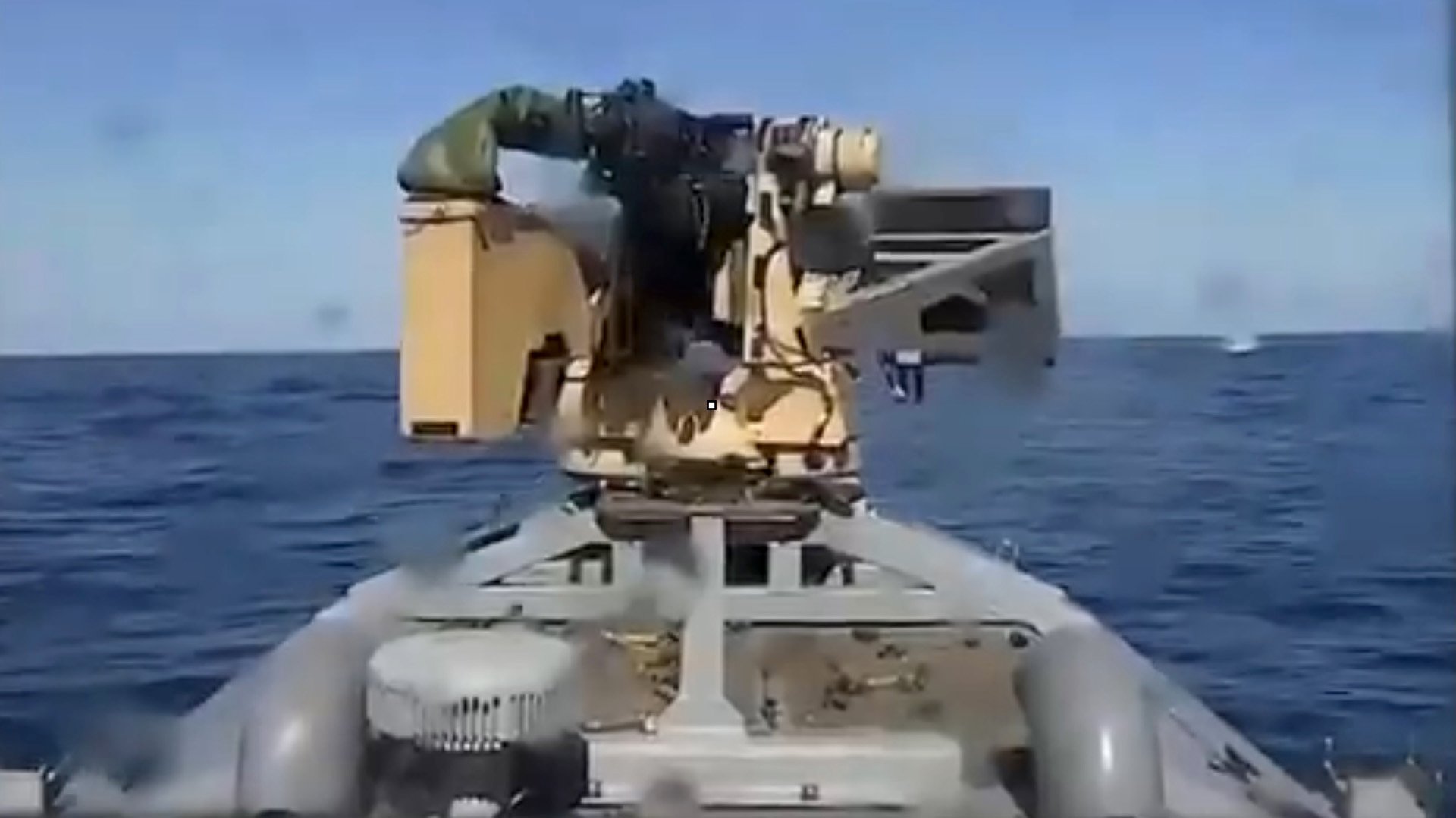
“Units of the Main Intelligence Directorate (GUR) detected the target,” the Ukrainian Navy stated on Telegram. “The Ukrainian Navy’s ‘Sargan 3000’ unmanned boat, equipped with a remotely operated weapon station (RWS) Protector 12.7 mm, successfully destroyed it. This is the first naval battle in history between unmanned boats.”

An 81-second video released by the Ukrainian Navy opens with a view from the Sargan 3000’s onboard camera. It shows the Ukrainian USV acquiring, then engaging the Russian USV with its machine gun. It then cuts to a closer view of the Protector gun system firing at the Russian drone boat. At about the 30-second mark, the view switches to a feed from an aerial platform, though it is unclear if it is piloted or a drone. The video continues with the Sargan 3000 raking the Russian USV with its heavy machine gun until pieces start flying off and it eventually sinks, stern first.

Ukraine's Navy says a Sargan unmanned surface vessel destroyed a Russian unmanned boat with machine-gun fire in the Black Sea, the first-ever battle between unmanned surface vessels. Ukrainian Navy personnel operated in coordination with HUR. #Ukraine pic.twitter.com/Avg4ecz8m6

— NOELREPORTS 🇪🇺 🇺🇦 (@NOELreports) September 12, 2026

The Sargan 3000 (the name means needlefish in Ukrainian) was first introduced by Ukrainian President Volodymyr Zelensky in April as a “multi-purpose platform that has undergone testing and entered service with the Ukrainian Navy. These uncrewed vessels are highly maneuverable and capable of carrying out strike missions.”

Though initially designed as a kamikaze weapon, it evolved into a platform for remote-controlled weapons, according to the Russian AmalNews outlet.

“The maritime drone features a specialized low-profile hull with distinctive hydrodynamic lines and is constructed from materials that reduce its radar signature,” the publication explained. “The Sargan-3000 USV is equipped with a waterjet propulsion system (presumably powered by a diesel or hybrid engine to ensure a long operational range).”

AmalNews states that the Sargan 3000 is 6.9 meters (about 22.6 feet) long, 2.2 meters (about 7.2 feet) wide, with an operational radius of up to 1,600 km (about 994 miles) and can carry a payload of 450 kg (about 992 pounds). It travels at an estimated speed range of 40-55 knots.

During operations, the Sargan 3000 connects to Ukraine’s Delta situational awareness system, “enabling the real-time transmission of target data, video feeds, and telemetry to operators,” AmalNews noted. “It features multi-channel control capabilities, including redundant satellite communication terminals (utilizing secure Western commercial networks and NATO military networks).”

It is also equipped with “an autonomous inertial and optical navigation system to ensure operation in the event of GPS jamming, and it incorporates electronic countermeasures (ECM) modules.”

There are several variants of this USV. They include those equipped with machine guns; rockets; FPV drones; an electronic warfare version and one that lays mines, the publication added.

Ukraine’s Sargan-3000 naval drone was presented in an FPV drone carrier variant, additionally fitted with a remote weapon station. The type first appeared in combat conditions in early June, when one washed ashore and detonated in the waters of Romania’s Constanța port. #Ukraine pic.twitter.com/QyKnyJFqUq

— NOELREPORTS 🇪🇺 🇺🇦 (@NOELreports) July 5, 2026

The Sargan 3000’s Protector remote weapon station is made by Kongsberg.

The drone boat’s first publicly known combat engagement took place in July, when one “destroyed the Russian Federation’s FSB border guard ship Izumrud,” the Ukrainian Navy stated at the time.

“Ukrainian naval sailors sank the border guard ship of the 2nd rank with the Sargan-3000 maritime unmanned complex near Novorossiysk,” the Ukrainian Navy claimed on Facebook. “Among the crew of the ship are dead and wounded.”

It is unclear whether the USV acted as a kamikaze vessel or a weapons platform, although the former is most likely.

“It was Izumrud that on November 25, 2018, participated in the attack on the ships of the Ukrainian Navy in the Kerch Strait,” the service added. “Revenge is inevitable.”

Ukraine's Navy has sunk the Russian FSB Border Guard patrol ship Izumrud near Novorossiysk using the Sargan-3000 unmanned maritime system.

The vessel, a Rank 2 patrol ship, reportedly sustained catastrophic damage, with casualties and injuries among its crew.

The Izumrud was… pic.twitter.com/7VjKDH2ReD

— SPRAVDI — Stratcom Centre (@StratcomCentre) July 14, 2026

One sea drone killing another is a notable development given the damage these systems can inflict and the challenge of locating and destroying them on open waters. Being able to operate on the water over long distances and timeframes, they can be used to hunt down other drone boats, as what appears to have taken place in this engagement, or serve as a picket line of sorts to protect harbors, vessels and other targets that have been attacked by USVs in the past.

The Russian drone boat, which is not identified, did not appear to be armed.

The Houthi rebels of Yemen actually pioneered the operational use of kamikaze USVs years ago. We first reported about this capability in January 2017, when an explosive-laden Houthi USV struck a Saudi frigate. Before that, Iran developed various crude kamikaze USVs and those capabilities soon migrated to its Houthi proxies, which put them to use in the Red Sea for the first time.

Ukraine has led the way in advancements of these systems, first employing them as kamikaze weapons, but then adding machine guns and rockets and later missiles, which were used to shoot down Russian helicopters and jets. Ukraine has also used these to launch FPV and bomber drone attacks as well as deliver uncrewed ground vehicles (UGV) into enemy territory.

You can see that delivery in the following video.

No soldiers. Just machines.

Ukraine has carried out the world's first known combat mission in which a sea drone transported and deployed an armed ground robot behind Russian lines on the occupied Kinburn Spit. pic.twitter.com/zyJdFXWxVb

— Ivan Khomenko (@KhomenkoIv60065) July 13, 2026

In the wake of the Ukrainian success with these weapons, Russia developed its own drone boats, and in August 2025, launched its first attack on a Ukrainian vessel.

The U.S. used drone boats as kamikaze weapons for the first time in July, during an attack “on a submarine and ship maintenance facility in Iran,” U.S. Central Command (CENTCOM) announced on X at the time.

Yesterday, using multiple one-way attack surface drones, CENTCOM forces successfully struck a submarine and ship maintenance facility in Iran. Three Corsair unmanned surface vessels hit the port at Bandar Abbas Naval Base, marking the first time American forces have employed sea… pic.twitter.com/bOM2kmgRxz

— U.S. Central Command (@CENTCOM) July 13, 2026

Regardless, it looks like history was made with this incident in the Black Sea. But this involved a sea drone hunting down and destroying another that couldn’t fight back. Given the rapid pace of weapons development by both sides in the Ukraine war, it seems inevitable that a duel between two armed drones boats could soon follow.

Contact the author: howard@twz.com

The post First-Ever Kill Of A Drone Boat By Another Drone Boat Claimed By Ukraine appeared first on TWZ.

  •  

When King David Almost Lost Everything by Loving his Son More than God

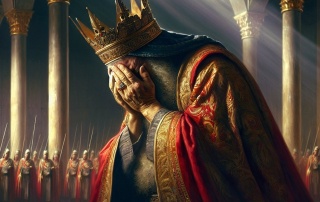
Illustration of King David weeping over the death of his son Absalom who was killed in battle. Image source unknown – appears to be AI generated.

by Brian Shilhavy

Last week I released the Second Edition of my eBook, The Concept of the American Christian Family is a Myth and is NOT Found Anywhere in the Bible.

One of the chapters of this book, which can also be read as a single article here, is titled The Concept of the American Christian Family is a Myth and is NOT Found Anywhere in the Bible (The title of the book is from this chapter).

In this chapter I show how the “perfect Christian family” does not exist anywhere in the pages of the Bible, as even all the “heroes of the faith” had very difficult and troubled families which today would probably be called “broken families” because they did not meet the standards of today’s Judeo/Christian values for families in Western Culture.

One of those families in the Old Testament that we have quite a bit of text on is the family of King David.

King David fathered many children from many different wives, and one of his children, his son Absalom, completely betrayed him and almost overthrew David from his throne, temporarily taking over the city of Jerusalem.

In the end the people in David’s household who remained loyal to him prevailed, and defeated Absalom in a very bloody battle.

And yet even with this victory, David very nearly lost the entire kingdom, because he idolized Absalom in his heart as his biological son, by loving him more than he loved God.

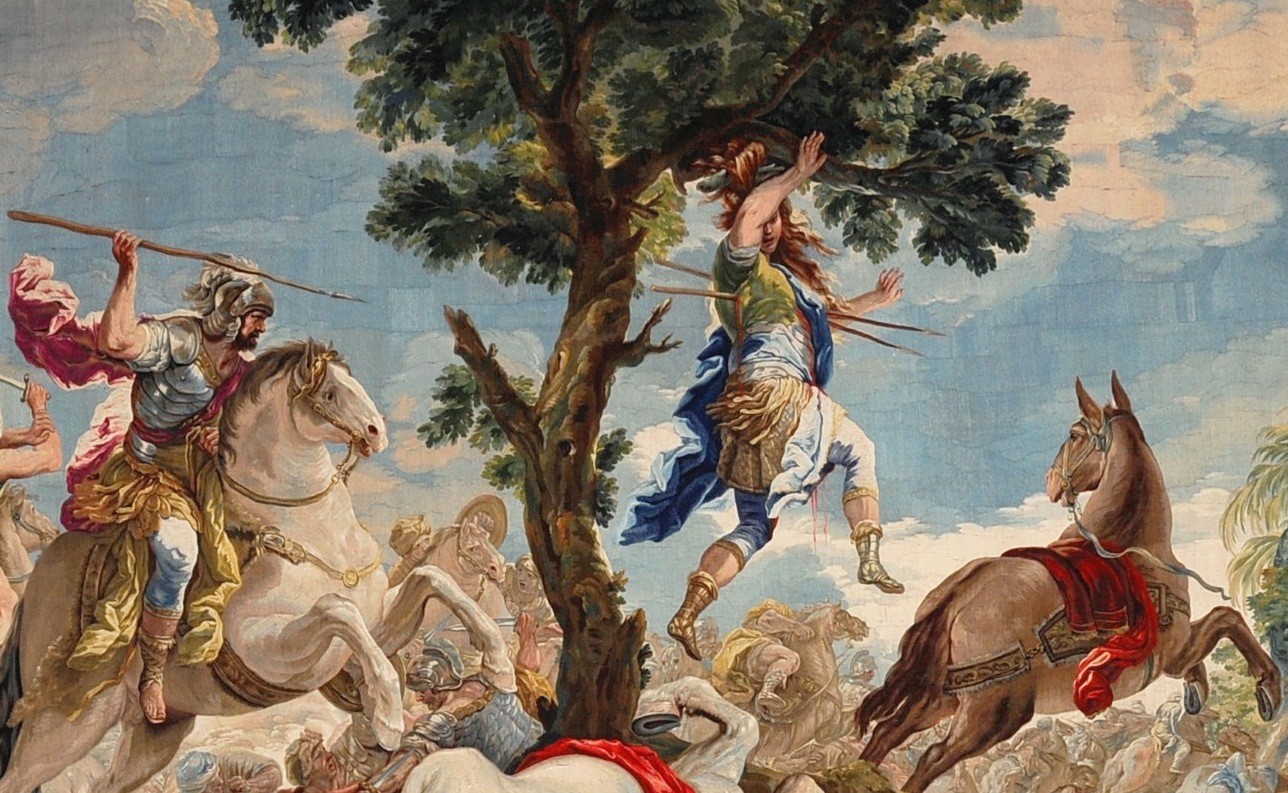
Death of Absalom by Corrado Giaquinto, 1762. Source.

David’s Failure as a Father and Not Disciplining his Son for Committing Rape had Disastrous Consequences

The story of Absalom’s betrayal against his father and nearly taking over the Kingdom of Israel, starts with one of King David’s other sons who raped the sister of Absalom, and was never punished for it.

The story is recorded in the Bible in 2 Samuel chapter 13.

In the course of time, Amnon son of David fell in love with Tamar, the beautiful sister of Absalom son of David.

Amnon became frustrated to the point of illness on account of his sister Tamar, for she was a virgin, and it seemed impossible for him to do anything to her.

Now Amnon had a friend named Jonadab son of Shimeah, David’s brother. Jonadab was a very shrewd man. He asked Amnon,

“Why do you, the king’s son, look so haggard morning after morning? Won’t you tell me?”

Amnon said to him,

“I’m in love with Tamar, my brother Absalom’s sister.”

“Go to bed and pretend to be ill,” Jonadab said.

“When your father comes to see you, say to him, ‘I would like my sister Tamar to come and give me something to eat. Let her prepare the food in my sight so I may watch her and then eat it from her hand.'”

So Amnon lay down and pretended to be ill.

When the king came to see him, Amnon said to him,

“I would like my sister Tamar to come and make some special bread in my sight, so I may eat from her hand.”

David sent word to Tamar at the palace:

“Go to the house of your brother Amnon and prepare some food for him.”

So Tamar went to the house of her brother Amnon, who was lying down. She took some dough, kneaded it, made the bread in his sight and baked it. Then she took the pan and served him the bread, but he refused to eat.

“Send everyone out of here,” Amnon said.

So everyone left him. Then Amnon said to Tamar,

“Bring the food here into my bedroom so I may eat from your hand.”

And Tamar took the bread she had prepared and brought it to her brother Amnon in his bedroom.

But when she took it to him to eat, he grabbed her and said,

“Come to bed with me, my sister.”

“Don’t, my brother!” she said to him.

“Don’t force me. Such a thing should not be done in Israel! Don’t do this wicked thing. What about me? Where could I get rid of my disgrace?

And what about you? You would be like one of the wicked fools in Israel. Please speak to the king; he will not keep me from being married to you.”

But he refused to listen to her, and since he was stronger than she, he raped her.

Then Amnon hated her with intense hatred. In fact, he hated her more than he had loved her.

Amnon said to her,

“Get up and get out!”

“No!” she said to him.

“Sending me away would be a greater wrong than what you have already done to me.”

But he refused to listen to her. He called his personal servant and said,

“Get this woman out of here and bolt the door after her.”

So his servant put her out and bolted the door after her. She was wearing a richly ornamented robe, for this was the kind of garment the virgin daughters of the king wore.

Tamar put ashes on her head and tore the ornamented robe she was wearing. She put her hand on her head and went away, weeping aloud as she went.

Her brother Absalom said to her,

“Has that Amnon, your brother, been with you? Be quiet now, my sister; he is your brother. Don’t take this thing to heart.”

And Tamar lived in her brother Absalom’s house, a desolate woman.

When King David heard all this, he was furious.

Absalom never said a word to Amnon, either good or bad; he hated Amnon because he had disgraced his sister Tamar. (2 Samuel 13:1-22)

While the text states that King David was “furious” over the rape, no legal action or punishment was apparently ever started as would be required by the Law of Moses for raping a virgin.

David clearly gave preferential treatment to his own biological children that he probably would not have given to non-family members in the Kingdom of Israel.

This allowed the anger and spirit of revenge to foster in Absalom for two years.

Two years later, when Absalom’s sheepshearers were at Baal Hazor near the border of Ephraim, he invited all the king’s sons to come there.

Absalom went to the king and said,

“Your servant has had shearers come. Will the king and his officials please join me?”

“No, my son,” the king replied.

“All of us should not go; we would only be a burden to you.”

Although Absalom urged him, he still refused to go, but gave him his blessing.

Then Absalom said,

“If not, please let my brother Amnon come with us.”

The king asked him, “Why should he go with you?”

But Absalom urged him, so he sent with him Amnon and the rest of the king’s sons.

Absalom ordered his men,

“Listen! When Amnon is in high spirits from drinking wine and I say to you, ‘Strike Amnon down,’ then kill him. Don’t be afraid. Have not I given you this order? Be strong and brave.”

So Absalom’s men did to Amnon what Absalom had ordered.

Then all the king’s sons got up, mounted their mules and fled.

While they were on their way, the report came to David:

“Absalom has struck down all the king’s sons; not one of them is left.”

The king stood up, tore his clothes and lay down on the ground; and all his servants stood by with their clothes torn.

But Jonadab son of Shimeah, David’s brother, said,

“My lord should not think that they killed all the princes; only Amnon is dead. This has been Absalom’s expressed intention ever since the day Amnon raped his sister Tamar. My lord the king should not be concerned about the report that all the king’s sons are dead. Only Amnon is dead.”

(2 Samuel 13:23-33)

Absalom lived as a refugee for three years after this, staying away from his father and Jerusalem.

When he finally came back to Jerusalem, he began his conspiracy to kill his father and take over his throne, by slandering his father and gathering together his enemies.

In the course of time, Absalom provided himself with a chariot and horses and with fifty men to run ahead of him. He would get up early and stand by the side of the road leading to the city gate.

Whenever anyone came with a complaint to be placed before the king for a decision, Absalom would call out to him,

“What town are you from?”

He would answer,

“Your servant is from one of the tribes of Israel.”

Then Absalom would say to him,

“Look, your claims are valid and proper, but there is no representative of the king to hear you.”

And Absalom would add,

“If only I were appointed judge in the land! Then everyone who has a complaint or case could come to me and I would see that he gets justice.”

Also, whenever anyone approached him to bow down before him, Absalom would reach out his hand, take hold of him and kiss him.

Absalom behaved in this way toward all the Israelites who came to the king asking for justice, and so he stole the hearts of the men of Israel.

At the end of four years, Absalom said to the king,

“Let me go to Hebron and fulfill a vow I made to the LORD. While your servant was living at Geshur in Aram, I made this vow: ‘If the LORD takes me back to Jerusalem, I will worship the LORD in Hebron.'”

The king said to him,

“Go in peace.”

So he went to Hebron.

Then Absalom sent secret messengers throughout the tribes of Israel to say,

“As soon as you hear the sound of the trumpets, then say, ‘Absalom is king in Hebron.'”

Two hundred men from Jerusalem had accompanied Absalom. They had been invited as guests and went quite innocently, knowing nothing about the matter.

While Absalom was offering sacrifices, he also sent for Ahithophel the Gilonite, David’s counselor, to come from Giloh, his hometown.

And so the conspiracy gained strength, and Absalom’s following kept on increasing. (2 Samuel 15:1-12)

It is important to note that before all these things happened to King David, God made a Covenant with David, promising him that he would never lack a descendant to sit on his throne and rule Israel. This promise was about the coming Messiah, Jesus Christ, who was a descendant of David.

This is recorded in 2 Samuel chapter 7.

“Now then, tell my servant David, ‘This is what the LORD Almighty says:

I took you from the pasture and from following the flock to be ruler over my people Israel. I have been with you wherever you have gone, and I have cut off all your enemies from before you.

Now I will make your name great, like the names of the greatest men of the earth. And I will provide a place for my people Israel and will plant them so that they can have a home of their own and no longer be disturbed.

Wicked people will not oppress them anymore, as they did at the beginning and have done ever since the time I appointed leaders over my people Israel.

I will also give you rest from all your enemies.

The LORD declares to you that the LORD himself will establish a house for you: When your days are over and you rest with your fathers, I will raise up your offspring to succeed you, who will come from your own body, and I will establish his kingdom.

He is the one who will build a house for my Name, and I will establish the throne of his kingdom forever. I will be his father, and he will be my son.

When he does wrong, I will punish him with the rod of men, with floggings inflicted by men. But my love will never be taken away from him, as I took it away from Saul, whom I removed from before you.

Your house and your kingdom will endure forever before me; your throne will be established forever.'” (2 Samuel 7:8-16)

The person from David’s family line that would be next to take the throne was not Absalom. While it is recorded in 2 Samuel 14:27 that Absalom fathered three sons and a daughter, his sons apparently died, according to 2 Samuel 18:

During his lifetime Absalom had taken a pillar and erected it in the King’s Valley as a monument to himself, for he thought, “I have no son to carry on the memory of my name.”

He named the pillar after himself, and it is called Absalom’s Monument to this day. (2 Samuel 18:18)

David’s other son, Solomon, who was born to the woman David originally committed adultery with, Bathsheba, was the one who became the next King after David died. David had also murdered Bathsheba’s first husband, Uriah.

What the Old Testament Scriptures actually teach, therefore, is that God uses imperfect families to accomplish his purpose on earth.

Not only is Bathsheba in the family line of the Messiah, Jesus Christ, so is a non-Israelite, the prostitute of Rahab from Jericho:

A record of the genealogy of Jesus Christ the son of David, the son of Abraham: Abraham was the father of Isaac, Isaac the father of Jacob, Jacob the father of Judah and his brothers, Judah the father of Perez and Zerah, whose mother was Tamar, Perez the father of Hezron, Hezron the father of Ram, Ram the father of Amminadab, Amminadab the father of Nahshon, Nahshon the father of Salmon, Salmon the father of Boaz, whose mother was Rahab, Boaz the father of Obed, whose mother was Ruth, Obed the father of Jesse, and Jesse the father of King David.

David was the father of Solomon, whose mother had been Uriah’s wife… (Matthew 1:1-6)

David and those loyal to him had to flee Jerusalem before they were all murdered by Absalom, and after regrouping their forces, they met with the forces loyal to Absalom in battle, and Absalom himself was killed along with about 20,000 other Israelites.

David mustered the men who were with him and appointed over them commanders of thousands and commanders of hundreds. David sent the troops out—a third under the command of Joab, a third under Joab’s brother Abishai son of Zeruiah, and a third under Ittai the Gittite.

The king told the troops,

“I myself will surely march out with you.”

But the men said,

“You must not go out; if we are forced to flee, they won’t care about us. Even if half of us die, they won’t care; but you are worth ten thousand of us. It would be better now for you to give us support from the city.”

The king answered,

“I will do whatever seems best to you.”

So the king stood beside the gate while all the men marched out in units of hundreds and of thousands. The king commanded Joab, Abishai and Ittai,

“Be gentle with the young man Absalom for my sake.”

And all the troops heard the king giving orders concerning Absalom to each of the commanders.

The army marched into the field to fight Israel, and the battle took place in the forest of Ephraim. There the army of Israel was defeated by David’s men, and the casualties that day were great—twenty thousand men.

The battle spread out over the whole countryside, and the forest claimed more lives that day than the sword.

Now Absalom happened to meet David’s men. He was riding his mule, and as the mule went under the thick branches of a large oak, Absalom’s head got caught in the tree.

He was left hanging in midair, while the mule he was riding kept on going. When one of the men saw this, he told Joab,

“I just saw Absalom hanging in an oak tree.”

Joab said to the man who had told him this,

“What! You saw him? Why didn’t you strike him to the ground right there? Then I would have had to give you ten shekels of silver and a warrior’s belt.”

But the man replied,

“Even if a thousand shekels were weighed out into my hands, I would not lift my hand against the king’s son. In our hearing the king commanded you and Abishai and Ittai, ‘Protect the young man Absalom for my sake.’ And if I had put my life in jeopardy—and nothing is hidden from the king—you would have kept your distance from me.”

Joab said,

“I’m not going to wait like this for you.”

So he took three javelins in his hand and plunged them into Absalom’s heart while Absalom was still alive in the oak tree. And ten of Joab’s armor-bearers surrounded Absalom, struck him and killed him.

Then Joab sounded the trumpet, and the troops stopped pursuing Israel, for Joab halted them. They took Absalom, threw him into a big pit in the forest and piled up a large heap of rocks over him.

Meanwhile, all the Israelites fled to their homes. (2 Samuel 18:1-17)

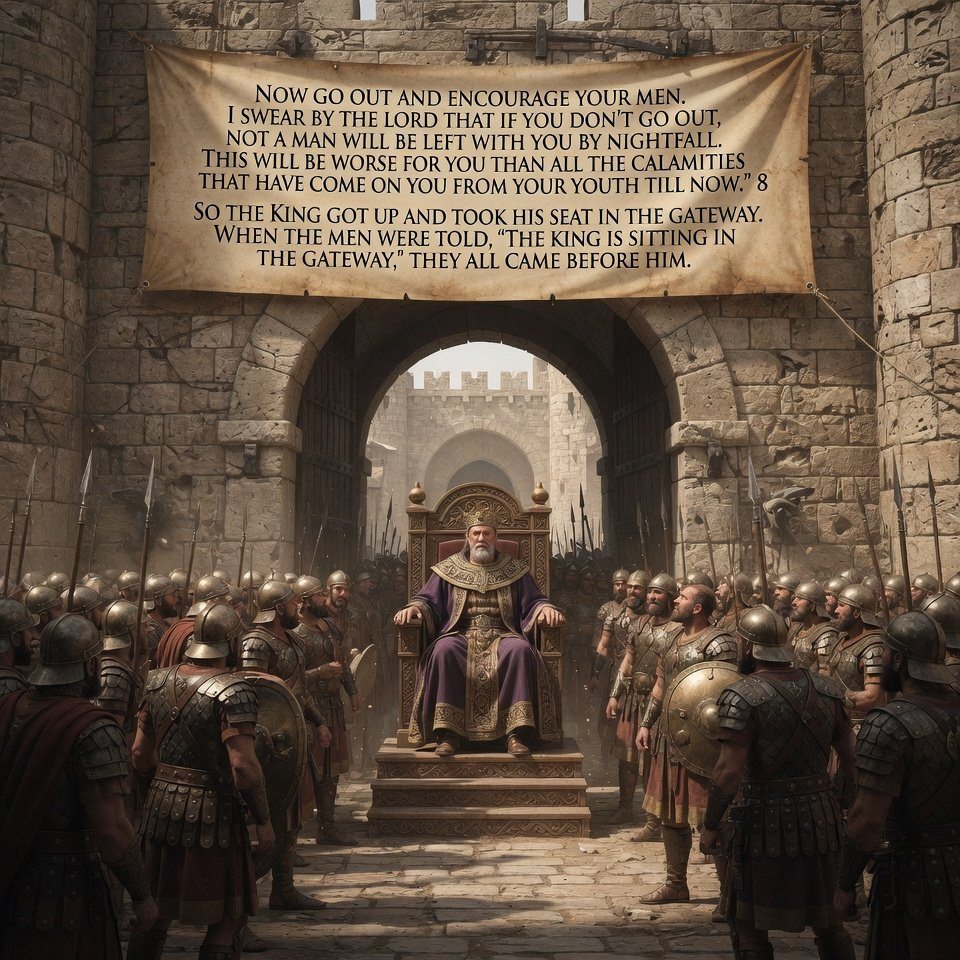
Image source unknown. Appears to be AI generated.

Joab, the head of David’s military, and the only one who was powerful enough to defy the king’s orders, did what he had to do to protect the Kingdom.

He knew full well what David’s response would be, but he also knew full well what the consequences would be if Absalom was allowed to live, so he acted in the best interests of the Kingdom.

What happened next was an event that if David had made the wrong choice, he would have lost everything.

Joab was told,

“The king is weeping and mourning for Absalom.”

And for the whole army the victory that day was turned into mourning, because on that day the troops heard it said,

“The king is grieving for his son.”

The men stole into the city that day as men steal in who are ashamed when they flee from battle. The king covered his face and cried aloud,

“O my son Absalom! O Absalom, my son, my son!”

Then Joab went into the house to the king and said,

“Today you have humiliated all your men, who have just saved your life and the lives of your sons and daughters and the lives of your wives and concubines.

You love those who hate you and hate those who love you. You have made it clear today that the commanders and their men mean nothing to you.

I see that you would be pleased if Absalom were alive today and all of us were dead.

Now go out and encourage your men.

I swear by the LORD that if you don’t go out, not a man will be left with you by nightfall.

This will be worse for you than all the calamities that have come upon you from your youth till now.”

So the king got up and took his seat in the gateway.

When the men were told, “The king is sitting in the gateway,” they all came before him. Meanwhile, the Israelites had fled to their homes. (2 Samuel 19:1-8)

David came within hours of losing everything, simply because he loved his biological son more than he loved God, and the Kingdom of God of which he was appointed King.

If you put your Loyalty to Jesus and the Father Above your Loyalty to Family, the World will Hate You

Loyalty to family members and bloodlines above all else is Satanic and worldly. Jesus made this very clear during his time on earth, stating to the Jews that their bloodlines back to Abraham were meaningless, unless they actually knew God, and recognized that he came from God and was the Messiah.

Jesus also clearly demanded loyalty to him above our loyalty to family members, and he himself was persecuted by his own family members as I have recently written. See:

When Jesus’s Own Family Turned Against Him

As a result of Jesus’s loyalty to his Heavenly Father above his earthly family, the world hated him. And he stated that the world would hate us also if we walked this same path.

If the world hates you, keep in mind that it hated me first.

If you belonged to the world, it would love you as its own.

As it is, you do not belong to the world, but I have chosen you out of the world. That is why the world hates you.

Remember the words I spoke to you: ‘No servant is greater than his master.’

If they persecuted me, they will persecute you also. If they obeyed my teaching, they will obey yours also. (John 15:18-20)

This principle applies not only to our own biological families, but also to the fake believers in the “Household of God”, or those who claim to be part of “God’s family.”

Being part of a group of believers does not give anyone a “free pass” if they do not know God, and are betraying the faith.

Paul made this very clear in his writings:

It is actually reported that there is sexual immorality among you, and of a kind that does not occur even among pagans: A man has his father’s wife.

And you are proud! Shouldn’t you rather have been filled with grief and have put out of your fellowship the man who did this?

Even though I am not physically present, I am with you in spirit. And I have already passed judgment on the one who did this, just as if I were present.

When you are assembled in the name of our Lord Jesus and I am with you in spirit, and the power of our Lord Jesus is present, hand this man over to Satan, so that the sinful nature may be destroyed and his spirit saved on the day of the Lord. (1 Corinthians 5:1-5)

Timothy, my son, I give you this instruction in keeping with the prophecies once made about you, so that by following them you may fight the good fight, holding on to faith and a good conscience.

Some have rejected these and so have shipwrecked their faith. Among them are Hymenaeus and Alexander, whom I have handed over to Satan to be taught not to blaspheme. (1 Timothy 1:18-20)

It is often a very lonely journey as we walk through this life as aliens and pilgrims, knowing that this is not our home, as we reject the ways of the world and then suffer for it, often by being rejected by our own families or so called “believers” and “brothers”.

But it is worth it, knowing where our loyalties lie, just like the true believers who walked that same lonely path before us!

All these people were still living by faith when they died. They did not receive the things promised; they only saw them and welcomed them from a distance.

And they admitted that they were aliens and strangers on earth.

People who say such things show that they are looking for a country of their own. If they had been thinking of the country they had left, they would have had opportunity to return. Instead, they were longing for a better country—a heavenly one.

Therefore God is not ashamed to be called their God, for he has prepared a city for them.

I do not have time to tell about Gideon, Barak, Samson, Jephthah, David, Samuel and the prophets, who through faith conquered kingdoms, administered justice, and gained what was promised; who shut the mouths of lions, quenched the fury of the flames, and escaped the edge of the sword; whose weakness was turned to strength; and who became powerful in battle and routed foreign armies.

Women received back their dead, raised to life again. Others were tortured and refused to be released, so that they might gain a better resurrection. Some faced jeers and flogging, while still others were chained and put in prison.

They were stoned; they were sawed in two; they were put to death by the sword. They went about in sheepskins and goatskins, destitute, persecuted and mistreated:

The world was not worthy of them.

(Hebrews 11)

Comment on this article at Created4Health.org.

This article was written by Human Superior Intelligence (HSI)

See Also:

Understand the Times We are Currently Living Through

Second Edition of eBook Released: The Concept of the American Christian Family is a Myth and is NOT Found Anywhere in the Bible – by Brian Shilhavy

FREE eBook! Restoring the Foundation of New Testament Faith in Jesus Christ – by Brian Shilhavy

The Brotherhood of Satan vs. The Brotherhood of Jesus Christ

KABBALAH: The Anti-Christ Religion of Satan that Controls the World Today

Exposing the Christian Zionism Cult

The Bewitching of America with the Evil Eye and the Mark of the Beast

Jesus Christ’s Opposition to the Jewish State: Lessons for Today

Identifying the Luciferian Globalists Implementing the New World Order – Who are the “Jews”?

The Brain Myth: Your Intellect and Thoughts Originate in Your Heart, Not Your Brain

What is the Condition of Your Heart? The Superiority of the Human Heart over the Human Brain

The Seal and Mark of God is Far More Important than the “Mark of the Beast” – Are You Prepared for What’s Coming?

The Satanic Roots to Modern Medicine – The Image of the Beast?

Medicine: Idolatry in the Twenty First Century – 10-Year-Old Article More Relevant Today than the Day it was Written

Having problems receiving our emails? See:

How to Beat Internet Censorship and Create Your Own Newsfeed

We Are Now on Telegram. Video channels at Bitchute, and Odysee.

If our website is seized and shut down, find us on Telegram, as well as Bitchute and Odysee for further instructions about where to find us.

If you use the TOR Onion browser, here are the links and corresponding URLs to use in the TOR browser to find us on the Dark Web: Health Impact News, Vaccine Impact, Medical Kidnap, Created4Health, CoconutOil.com.

The post When King David Almost Lost Everything by Loving his Son More than God first appeared on Health Impact News.
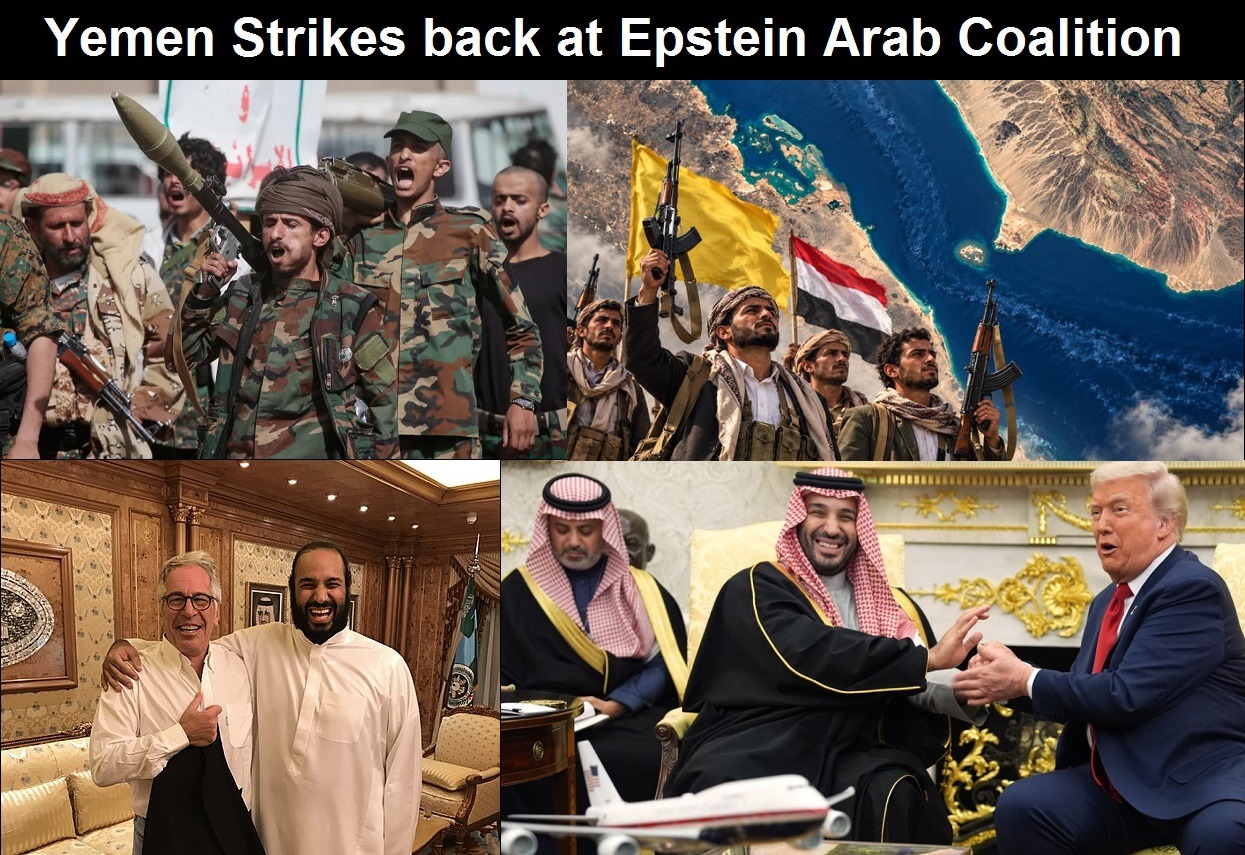
  •  

Wie Deutschland zum größten Unterstützer von Staatsterrorismus und Völkermord wurde

Die Bundesregierung verkündet sehr stolz immer wieder zwei Dinge: Erstens, dass die Sicherheit Israels deutsche Staatsräson sei, womit die Bundesregierung auch begründet, dass sie Israel Waffen verkauft und viele Waffensysteme sogar schenkt, und zweitens, dass Deutschland der größte Unterstützer der Ukraine ist. In beiden Fällen liefert Deutschland Waffen an Krieg führende Länder, wobei das noch […]
  •  
❌