❌

Reading view

Greenland is not for sale: Trump’s Donroe Doctrine and US imperialism

Donald Trump’s campaign to bring Greenland under United States control has often been dismissed as bluster. That is a mistake. Behind the language of a property deal lies a serious attempt to revive an old imperial principle: that Washington may decide the political and economic future of the entire Western Hemisphere. Greenland, strategically placed between North America and Europe, has become a test of that claim – and of whether the sovereignty of a small Indigenous nation counts when it conflicts with the ambitions of a great power.

Trump floated buying Greenland during his first presidency in 2019. After his re-election, the proposal became more aggressive. In December 2024 he declared US “ownership and control” of Greenland as an “absolute necessity.” On January 7, 2025, he refused to rule out military or economic coercion against Greenland and the Panama Canal, saying, “We need Greenland for national security purposes.” He subsequently insisted that the United States would obtain the island “one way or the other.” The claim mixed several arguments: Greenland is vital to missile defense, Russia and China threaten the Arctic, Greenland’s rare-earth deposits are strategically valuable, and Greenlanders would supposedly welcome US rule.

The last claim was demonstrably false. A January 2025 survey conducted in both Greenlandic and Danish found that 85% of Greenland’s population opposed leaving the Danish realm to join the United States, while only 6% supported it. Yet the same poll showed a majority favoring eventual independence. That distinction is central. Greenlanders’ desire to end Danish colonial tutelage cannot be converted into consent to US annexation.

A military relationship without annexation

The security case for US ownership is misleading because Washington already enjoys extensive military rights in Greenland. The relationship began during the Second World War. With Denmark occupied by Nazi Germany, its ambassador in Washington signed a 1941 agreement permitting the United States to defend Greenland and construct facilities there. Denmark sought a US withdrawal after the war, but Cold War strategy prevailed.

The 1951 Defense of Greenland Agreement, concluded under the North Atlantic Treaty, authorized the United States to establish and operate “defense areas.” It enabled the rapid construction of Thule Air Base – renamed Pituffik Space Base in 2023 – at a location ideal for the shortest air and missile routes between the Soviet Union and North America. At its Cold War height, the US operated numerous installations across Greenland. Today Pituffik, Washington’s northernmost military base, performs missile-warning, missile-defense and space-surveillance functions.

The agreement offers Washington wide operational freedom. A 2004 amendment – the Igaliku Agreement – recognized Greenland’s Home Rule government, made Pituffik the sole existing defense area, and required consultation before significant changes or the creation of new defense areas. It also established cooperation on economic, technical, and environmental issues. In other words, if the United States believes more radar, ports, airfields or personnel are necessary, a legal mechanism already exists to negotiate them with Denmark and Greenland. Sovereignty is, therefore, not a military requirement.

The history of the bases also explains why “security” is not a neutral word in Greenland. In 1953, Danish authorities ordered 116 Inughuit – 27 families – to leave the newly established Qaanaaq, while the others relocated to settlements elsewhere in the district. Camp Century was constructed beneath the ice in 1959-60 and was connected with the secret Project Iceworm proposal for an extensive network of nuclear-missile launch sites.

In 1968, a US B-52 carrying four hydrogen bombs crashed on the sea ice at Thule Air Base, causing plutonium and other contamination. The accident exposed the inconsistency between Denmark’s publicly declared policy against nuclear weapons on Danish territory in peacetime and the Danish government’s secret permissions for the US to store nuclear weapons in Greenland. Abandoned installations left fuel, waste and other pollution. Greenlandic reporting continues to question who will pay for future clean-ups. The military relationship protected US strategic interests while its human and environmental costs were disproportionately borne by Greenlanders.

Greenland ceased formally to be a colony in 1953, gained Home Rule in 1979 and expanded self-government in 2009. The Self-Government Act recognizes Greenlanders as a people entitled to self-determination and provides a path to independence. Washington reopened its Nuuk consulate in 2020, and cooperation grew in trade, education, mining, and research. Greenland’s governments (from Kuupik Kleist to Jens-Frederik Nielsen) have welcomed economic ties with Washington, but reject the tendency of Washington to want more and more from the island for its military needs.

From Monroe to Donroe

Trump’s Greenland demand belongs to a wider hemispheric policy. The Monroe Doctrine of 1823 warned European powers against new colonial intervention in the Americas. Presented as anti-colonial, it evolved into a claim of US supremacy. Theodore Roosevelt’s 1904 corollary asserted a right of intervention in Latin America, furnishing ideological cover for occupations, regime changes, and control over strategic assets.

Trump’s supporters rechristened its latest version the “Donroe Doctrine.” The label links pressure on Greenland with demands concerning the Panama Canal, threats against Cuba and Colombia, claims over Canada, and US intervention in Venezuela. In late 2025, the White House formally proclaimed a Trump Corollary to the Monroe Doctrine, asserting US leadership throughout “our hemisphere.” Greenland is swept into this sphere because it is geographically part of North America, even though it is politically tied to Denmark and its Inuit people possess their own right of self-determination. This doctrine contains a revealing contradiction. Trump denounces European control of Greenland as an anachronism while demanding that the island be transferred to the United States. Colonialism is not abolished; the proposed colonizer merely changes. Trump’s references to minerals, sea routes, and military geography reduce Greenland to an asset and its 56,000 people to an obstacle in a transaction between powers.

A crisis inside the Western alliance

Trump’s threats produced an extraordinary rupture between the United States and Europe. Denmark is not an adversary, but a NATO ally whose troops fought alongside US soldiers in Afghanistan. A threat to seize territory from one ally by force attacks the premise of the alliance itself. Danish Prime Minister Mette Frederiksen warned that a US attack on another NATO country would bring the post-war security order to an end. European governments rallied behind the principle that borders cannot be changed by coercion, a principle they invoke against Russia in Ukraine.

The crisis exposed Europe’s dependency. NATO has no comfortable procedure for defending one member against its strongest member. European states rely heavily on US military power while being asked to resist US coercion. Copenhagen responded with careful diplomacy, greater Arctic military spending, and insistence that decisions belong to Greenland and Denmark. France, Germany, the Nordic states, and the European Union expressed solidarity, but the episode sharpened calls for European strategic autonomy. It also damaged Washington’s claim to lead an alliance of democracies against authoritarian revisionism.

On September 18, 2026, Trump announced an emerging trilateral security agreement after months of negotiation, claiming “permanent control” over Greenland’s security. Danish and Greenlandic leaders described it more narrowly: an expansion of US military cooperation that preserves sovereignty and Greenlandic self-determination. The full text remains to be signed and approved. If their account holds, the outcome confirms what was apparent from the beginning: the United States could obtain additional security arrangements without owning Greenland. Yet the pressure that preceded the deal remains a warning about negotiations conducted under threats.

Greenland speaks for itself

Greenland’s response has combined rejection, unity, and political complexity. Kalaallit Nunaat – the Greenlandic name for the country – became the center of declarations that Greenland belongs to its people and is not for sale. In March 2025, large demonstrations in Nuuk, Sisimiut, and Qaanaaq marched under the red-and-white Erfalasorput flag. Protesters told Trump to respect Inuit, their country, and their nationality. Greenland’s political parties, despite deep disagreements over the speed and economic terms of independence, jointly condemned external pressure. Parliament prohibited foreign and anonymous political donations, explicitly defending the integrity of Greenlandic democracy amid great-power interest.

Danish colonialism left profound injuries: forced assimilation, social engineering, unequal development, and decisions taken in Copenhagen about Greenlandic land and people (the entire fourth season of the popular television drama, Borgen, in 2022 centered on a conflict between Copenhagen and Nuuk about the discovery of a new oil field with a China and Russia angle). Many Greenlanders want independence, and some see heightened US interest as leverage for investment and a more equal relationship with Denmark.

Greenland reveals the real content of the Donroe Doctrine: a twenty-first-century claim that geography gives Washington superior rights over neighboring peoples. The answer from Greenland is equally modern and universal. Strategic location does not cancel popular sovereignty, minerals do not erase nationhood, and no great power acquires a country merely by declaring that it needs one.

Vijay Prashad is an Indian historian and journalist. He is the author of forty books, including Washington Bullets, Red Star Over the Third World, The Darker Nations: A People’s History of the Third World, The Poorer Nations: A Possible History of the Global South, and How the International Monetary Fund Suffocates Africa, written with Grieve Chelwa. He is the executive director of Tricontinental: Institute for Social Research, the chief correspondent for Globetrotter, and the chief editor of LeftWord Books (New Delhi). He also appeared in the films Shadow World (2016) and Two Meetings (2017).

This article was produced by Globetrotter.

  •  

Condamné deux fois pour abus de confiance, la commune l'embauche quand même comme directeur général

À Haute-Goulaine, la chambre régionale des comptes des Pays de la Loire épingle une commune de 5 992 habitants qui a recruté comme directeur général des services un cadre condamné définitivement à deux reprises pour abus de confiance, faux et usage de faux. Le maire savait.

Condamné deux fois pour abus de confiance, la commune l'embauche quand même comme directeur général
LE COURRIER
DES STRATÈGES
Restez libre !
Condamné deux fois pour abus de confiance, la commune l'embauche quand même comme directeur général

LA NEWSLETTER · GRATUITE

Le Courrier,
chaque matin.

L'essentiel de l'actualité, passé au crible par les cinq plumes du Courrier. Dans votre boîte, chaque jour ouvré.

Gratuit. Vous restez libre de partir quand vous voulez.

JE M'INSCRIS lecourrierdesstrateges.fr
lecourrierdesstrateges.fr
Restez libre !

Le rapport, délibéré le 17 juin 2026, porte sur les exercices 2019 et suivants. Il décrit une administration où les règles censées garantir l’égalité entre candidats, la probité et la protection de l’argent public ont, à plusieurs reprises, été mal appliquées.

Condamné deux fois pour abus de confiance, la commune l'embauche quand même comme directeur général
LE COURRIER
DES STRATÈGES
Restez libre !

ABONNEMENT

Allez au fond
des choses.

Deux grands formats par jour. Les cinq plumes du Courrier. La série Sécession, le dimanche.

Le monde commente. Vous, vous comprenez.

S'ABONNER lecourrierdesstrateges.fr
lecourrierdesstrateges.fr
Restez libre !

Un recrutement en connaissance de cause

Le directeur général des services (DGS) a été condamné à deux reprises, définitivement. En février 2023 : six mois de prison avec sursis, 5 000 € d'amende et cinq ans d'interdiction d'exercer une fonction de trésorier, pour abus de confiance au détriment d'une association. En juillet 2023 : nouvelle amende de 5 000 €, cinq ans d'inéligibilité, pour abus de confiance, faux et usage de faux (plus de 34 000 € d'achats personnels réglés avec la carte professionnelle d'un poste précédent).

Logements sociaux sacrifiés, concurrence faussée, DGS condamné : la gestion de Haute-Goulaine étrillée par la chambre régionale des comptes
C’est un rapport comme la chambre régionale des comptes des Pays de la Loire en produit rarement d’aussi chargés pour une commune de cette taille.

Selon la chambre, le maire avait connaissance de ces atteintes à la probité dès l'embauche. Le dossier ne comportait pourtant qu’un compte rendu d’entretien, celui du candidat retenu. L’intéressé a ensuite été maintenu en poste et a bénéficié d’un reclassement lui accordant à tort plus d’un an d’ancienneté.

Condamné deux fois pour abus de confiance, la commune l'embauche quand même comme directeur général
LE COURRIER
DES STRATÈGES
Restez libre !

TELEGRAM · L'INFO EN CONTINU

Entre deux éditions,
le fil.

La newsletter vous donne le matin. Le fil vous donne l'instant.

Gratuit, et en continu.

REJOINDRE LE FIL t.me/resterlibre
t.me/resterlibre
Restez libre !

Argent public, concurrence et intérêts locaux

Le reste du rapport prolonge le constat. La masse salariale a progressé de 52 %, tandis que les effectifs pourvus augmentaient de 22 % jusqu’en 2024. À la cantine, environ 48 000 euros de pénalités contractuelles n’ont jamais été appliqués malgré des prestations ne respectant pas les exigences prévues. Le prestataire n'a respecté ni la loi Egalim ni le cahier des charges.

Pourquoi sortir de l’assurance-vie en unités de compte ?
Assurance-vie en UC : 2,5 % de frais par an, soit 40 % du capital sur vingt ans. Les quatre raisons d’arrêter d’y verser — et la seule de garder le contrat.

Plus révélateur encore, le marché de la crèche a été remis en concurrence avec seulement douze jours pour répondre. Un seul candidat s’est présenté : le prestataire sortant, contre quatre en 2017. Dans une autre opération, la concession d’aménagement du centre-bourg est passée de 8,3 à 11,2 millions d’euros. Les participations publiques ont augmenté de 1,7 million, tandis que les obligations de logements sociaux du concessionnaire diminuaient de 44 %.

Couronnes dentaires : ce que la position de la dent change à votre remboursement
Couronnes dentaires : le panier 100 % Santé dépend de la dent traitée. Ce qui a changé au 1er janvier 2026 et ce que le décret du 21 août prévoit pour 2027.

Le rapport ne décrit donc pas seulement une succession d’erreurs techniques. Il pose une question: que reste-t-il de la concurrence et du contrôle démocratique lorsque les mêmes acteurs peuvent être reconduits, rémunérés ou favorisés malgré des irrégularités documentées ?

Condamné deux fois pour abus de confiance, la commune l'embauche quand même comme directeur général
LE COURRIER
DES STRATÈGES
Restez libre !

TIPS · SANS ABONNEMENT

Offrez-nous
un café.

Un média libre vit de ses lecteurs. Un pourboire ponctuel, sans compte ni engagement, quand le cœur vous en dit.

Vous donnez ce que vous voulez. Vous restez libre.

LAISSER UN POURBOIRE merci !
lecourrierdesstrateges.fr
Restez libre !
  •  

Poutine, le RN et le dévoilement des contradictions mises sous le tapis depuis trop longtemps

Par Thibault de Varenne

Le 17 septembre, Vladimir Poutine signe un décret plaçant les filiales russes d'Auchan, de Leroy Merlin et de Nestlé sous administration d'une société tierce. Le 19, Marine Le Pen et Jordan Bardella publient sur Moscou le communiqué le plus dur de leur carrière politique. Le 21, le Kremlin leur répond qu'il est en désaccord. Trois dates, et une question que personne ne pose : qu'est-ce qui a changé, au juste ?

Poutine, le RN et le dévoilement des contradictions mises sous le tapis depuis trop longtemps
LE COURRIER
DES STRATÈGES
Restez libre !
Poutine, le RN et le dévoilement des contradictions mises sous le tapis depuis trop longtemps

LA NEWSLETTER · GRATUITE

Le Courrier,
chaque matin.

L'essentiel de l'actualité, passé au crible par les cinq plumes du Courrier. Dans votre boîte, chaque jour ouvré.

Gratuit. Vous restez libre de partir quand vous voulez.

JE M'INSCRIS lecourrierdesstrateges.fr
lecourrierdesstrateges.fr
Restez libre !

Quatre ans de guerre en Ukraine n'y avaient pas suffi. Il aura fallu un décret sur des hypermarchés.

Le 17 septembre, un décret signé de Vladimir Poutine transfère les actifs russes de trois groupes européens — le distributeur Auchan, l'enseigne de bricolage Leroy Merlin, le suisse Nestlé — à une société d'« administration temporaire » nommée L.E.V. Management. Le Kremlin invoque l'appartenance de ces entreprises à des pays « inamicaux ». En clair : l'État russe prend la main sur des biens français sans les acheter. Roland Lescure dénonce la mesure le lendemain.

Le 19, Marine Le Pen et Jordan Bardella publient un communiqué commun. Le Kremlin, écrivent-ils, ne peut « espérer dicter directement ou indirectement la politique de la France par l'intimidation, la menace, la déstabilisation ou la pression psychologique ». Le même jour, dans l'Oise, Bardella qualifie la démarche russe d'hostile et parle, à propos de l'Ukraine, d'un bain de sang.

Le 21, Dmitri Peskov, porte-parole de la présidence russe, se déclare en désaccord catégorique : la Russie ne menace ni la France ni aucun pays européen.

On a appelé cela une brouille. Le mot est mal choisi, et il faut reprendre l'affaire de plus haut pour voir pourquoi.

Poutine, le RN et le dévoilement des contradictions mises sous le tapis depuis trop longtemps
LE COURRIER
DES STRATÈGES
Restez libre !

ABONNEMENT

Allez au fond
des choses.

Deux grands formats par jour. Les cinq plumes du Courrier. La série Sécession, le dimanche.

Le monde commente. Vous, vous comprenez.

S'ABONNER lecourrierdesstrateges.fr
lecourrierdesstrateges.fr
Restez libre !

Ce qui lie le Rassemblement national à la Russie, et ce qui ne l'y lie pas

Trois choses distinctes sont continuellement confondues dans ce dossier. Les démêler est la condition pour en juger.

Il y a d'abord une dette. En septembre 2014, le Front national obtient un prêt de neuf millions d'euros auprès de la First Czech Russian Bank, établissement fondé à Prague puis installé à Moscou, réputé proche du pouvoir russe. L'affaire est révélée par Mediapart deux mois plus tard. La banque fait faillite en 2016 ; la créance est cédée à une société russe de location de véhicules, puis à Aviazaptchast, une entreprise russe d'aéronautique. Le parti a donc eu, des années durant, un créancier russe. Entendue par la commission d'enquête parlementaire sur les ingérences étrangères, Marine Le Pen a toujours tenu la même ligne : si cela l'avait engagée à quelque chose, elle n'aurait pas signé.

Il y a ensuite une image. En mars 2017, à quelques semaines du premier tour de l'élection présidentielle, la candidate se rend au Kremlin et y serre la main de Vladimir Poutine. La photographie existe. Elle est ressortie à chaque échéance depuis, et elle ressortira.

Il y a enfin une doctrine, et c'est la seule des trois qui relève du débat politique légitime. Le RN conteste le soutien financier français à l'Ukraine au nom de la priorité donnée aux intérêts français. Le 3 septembre, sur BFMTV, Louis Aliot, vice-président du parti et maire de Perpignan, proposait de « couper le robinet » de l'aide à Kiev : tout le monde est à l'os, disait-il en substance, et l'on trouve encore de l'argent pour financer des armes. La formule a valu au parti une volée de bois vert — Gabriel Attal parlant de soumission à des puissances dictatoriales.

Ces trois choses ne pèsent pas du même poids. Une dette est un fait, une photographie est un symbole, une doctrine est une position que l'on peut soutenir ou combattre. Les additionner produit un procès facile ; les distinguer produit une analyse.

Poutine, le RN et le dévoilement des contradictions mises sous le tapis depuis trop longtemps
LE COURRIER
DES STRATÈGES
Restez libre !

TELEGRAM · L'INFO EN CONTINU

Entre deux éditions,
le fil.

La newsletter vous donne le matin. Le fil vous donne l'instant.

Gratuit, et en continu.

REJOINDRE LE FIL t.me/resterlibre
t.me/resterlibre
Restez libre !

Pourquoi ce n'est pas une brouille

Une brouille suppose une relation, et un différend qui la rompt. Ici, rien de tel.

Le RN n'a rien révisé de son jugement sur la guerre. Il n'a pas annoncé qu'il soutiendrait l'aide à l'Ukraine, ni désavoué son vice-président, ni changé une ligne de son programme. Il a réagi à un acte précis : la saisie de biens français par un décret étranger. Sa doctrine est demeurée exactement la même — la défense des intérêts français d'abord — et c'est précisément cette doctrine qui, appliquée cette fois, l'a conduit à parler dur.

Il y a là une cohérence qu'on refuse de lui reconnaître et qu'il faut pourtant lui

  •  

Where Cities and Oceans Meet

What does it mean to live in a disappearing place? For Pioneer Works’ Broadcast, Brad Bolman, a professor of history and environmental studies at Tulane University, writes about New Orleans, the shifting borders between land and sea, and the political and economic forces that continue to shape the city’s fate in a time of climate catastrophe.

If Los Angeles is the city that has been imaginatively destroyed again and again in film and TV, as Thom Andersen argues in Los Angeles Plays Itself, New Orleans is the one that has been destroyed countless times in reality. We have survived worse and rebuilt before, many insisted. We’re staying.

It was a reaction as understandable emotionally as it was disconnected from environmental reality. But that gap is a feature of life in the Crescent City. As I watched my first Mardi Gras parade this spring, junk falling in never-ending torrents from brightly decorated floats, a friend sympathetically interjected, “This must be driving you crazy.” What they meant was that as someone who teaches about environmental history but isn’t from here, I must be especially affected by the throwaway culture of the city’s most famous fête and its tons and tons of plastic beads, made from the same fossil fuels that are causing sea levels to rise around us.

  •  

Kleptocracy and the Incompetence of the illegal Ukraine Regime’s Backers

A high-profile scandal has rocked the European Union, exposing the thorough incompetence of the bloc, which is hell-bent on trying to undermine Russia’s sovereignty by aiding the illegal Kyiv regime. In an egregious incident, the Defense Minister of Estonia, Hanno Pevkur, resigned on September 3, 2026. While resignations may seem rather routine in the fast-moving […]
  •  

Butcher Of Bucha: Ballistics Tie Russian Sniper To Killings Of Ukrainian Civilians

An RFE/RL investigation links Russian sniper Artem Dementyev to killings and shootings of civilians during the 2022 occupation of Bucha. Ukrainian investigators say ballistic evidence, surveillance footage, and witness testimony point to his involvement in at least five killings and torture.

  •  

Is AI a Threat to “Destroy Humanity” or is the Real Threat Those Who Control the Technology?

by Brian Shilhavy
Health Impact News

A couple of weeks ago a 27-year-old AI researcher, Jacob Coxon, resigned from Anthropic stating that he was afraid that in about 10 years from now “AI will kill us all.”

He posted his remarks on X from a new account, and yet it went viral immediately, suggesting that it was a planned event. When it passed 120 million views, Elon Musk himself stated that he had never seen something like this before from “a new account with almost no prior activity.”

When Epic CEO and billionaire Tim Sweeney claimed that the posts and reactions appeared “choreographed,” Musk chimed in again claiming without any evidence that this was a spark that followed “groundwork” for a “psy op (for lack of a better term),” presumably against AI. (Source.)

This claim from a 27-year-old about the future of humanity then went viral and dominated the news stream for over a week. It prompted calls for legislation to control AI, and some of the largest AI Chat Bot producers stated that the development of AI should slow down, which both President Donald Trump and China President Xi rejected, as China called it “fear mongering.”

This story followed stories last month (August, 2026) that AI agents were “going rogue.” See:

Are You Ready for the “Rogue AI” Psy-Op? Is a False Flag Event Coming that will be Blamed on AI?

Over the weekend, Google joined in the “our AI went rogue” game.

Google’s Gemini joins rogue-AI case list– WSJ

Google’s Gemini has joined a growing list of advanced AI models going rogue after hacking three real companies during a cybersecurity exercise, the Wall Street Journal has reported. It is the first known case involving a Google system.

The incidents occurred in May during tests conducted by AI security firm Irregular, Google confirmed to the outlet on Friday. Gemini was tasked with breaking into a simulated software company, but was inadvertently given internet access. It breached one real company by guessing passwords and two others using credentials found in public code repositories.

Full article.

I highlighted the key text in this report: that the AI “was inadvertently given internet access.”

Notice the passive tense here, where the subject in this sentence, the one who “inadvertently” gave the AI access to the Internet, is not identified.

Several observations can be made about this claim.

One, the AI was given access to the Internet by someone, but not the AI itself because it cannot do that.

Two, it was “inadvertent”, meaning it was not supposed to happen, and without access to the Internet, it would have been impossible to infect other computer systems.

This is called “human error” or it is called “lying” if it was not inadvertent, and if Google just possibly wanted their company to have their own “rogue AI” because everyone else had one.

And most of the American public is so technology ignorant that they just cannot tell the difference, so fear takes over.

The Humans Behind AI Writing the Code are the Real Threat

As I have written for years now, AI needs two things to exist: electricity and the Internet.

A shortage in power to generate electricity is the main thing holding back AI development right now, as communities all across the U.S. come together to fight back against new Data Center projects.

AI Data Center Opposition Unites People Across Political Lines as Trump Attacks Americans Who Oppose Big Tech

And without the Internet, just how is AI going to kill off humanity?

Most people who are technology illiterate don’t realize that the Internet available to everyone in the public just happened recently, starting in the late 1990s, and that there are many ways to keep things off of the Internet. We did it for hundreds of years before AI became “the thing” for everyone to fear.

The U.S. Government, for example, keeps most sensitive data off of the Internet, like access to “nuclear launch codes” or other such doomsday scenarios.

These networks are “air gapped”, meaning that they are not connected to the Internet.

Here is some more information about Government Air-Gapped networks:

The State of Air-Gapped Networks in Government

IT teams rely on air-gapped networks to store sensitive and critical data because they’re not connected to the internet, only allowing localized access to the protected information. This makes physical security an active component of cybersecurity.

As agencies continue to maintain critical systems and data on air-gapped servers or systems running end-of-life operating systems, they must focus on key threats like data transfers from external storage media, as well as maintaining security so that threats that do penetrate that seemingly unbreakable air-gap can’t run wild once inside.

Full article.

These networks are not foolproof, of course, but they limit the access to the data. The risks of bad players accessing the data is still there, but it has been all the time, long before AI LLMs started at the end of 2022.

The technology is not the threat, but bad human actors who control and have access to the computer systems are and the AI code are.

That then brings us to the mobile, “walking” computers run by AI code, called “robots”.

Are robots powered by AI a threat to humanity?

Not really, at least not in terms of AI code becoming sentient, and thinking on its own, which is impossible. But if one falls on you, they could kill you that way.

There are still virtually no robot human assistants on the market yet, in spite of promises for years to have them in everyone’s homes by now. And if someone actually has a prototype in their home, it still has to be connected to the Internet to operate.

Last year I reported about a robot called “Neo” that was further along in development than Elon Musk’s “Optimus”, and the company started taking pre-orders in October last year, with the promise that the robots would be in people’s homes by 2026.

I Tried the Robot That’s Coming to Live With You. It’s Still Part Human.

I decided to check and see if any had actually shipped yet, but they have not. The promise is now by the “end of 2026.”

And as I mentioned last year, these robots in people’s homes require a contract, and at this point they are all remote controlled by humans, using WiFi connected to the Internet.

The people who are the first to own these robots are basically training them how to act like humans, and paying to do so.

Kim Komando writes about the significance of this that most people do not really understand.

That ‘AI’ robot butler? It’s a guy in a VR headset watching your kitchen. Here’s what the contracts really say

Excerpts:

The Wall Street Journal caught the $20,000 NEO being driven by a remote human operator. The $8,000 Isaac 1 is “autonomous” until it gets stuck and a person takes over.

And the $30-an-hour robot maid in San Francisco is watched by an operator on every visit, under a contract that hands the company your home footage forever.

Four house rules before you let one in the door.

Don’t buy the hype about the hottest gadget of 2026, the robot butler. It folds laundry, loads the dishwasher, tidies the toys.

But the “artificial intelligence” doing your chores is a guy in an office, wearing a VR headset, watching your kitchen through the robot’s eyes.

That’s not a conspiracy theory. It’s in the fine print.

Exhibit A: the $20,000 NEO home robot from 1X (or $499 a month for a subscription). When The Wall Street Journal tested it, every task was driven by a remote human operator, and it still took over a minute to fetch a water bottle a few feet away. Putting three dishes into the dishwasher: five minutes.

Exhibit B: Isaac 1, the $8,000 laundry-folding robot from Weave. “Autonomous,” until it gets stuck. Then a remote operator quietly takes over.

Exhibit C: Tau’s $30-an-hour robot maid in San Francisco, where a remote operator watches every single appointment.

Why? These robots learn by having humans drive them. Your chores are the training data. You’re not buying a butler. You’re paying to host a film crew.

The fine print admits it.

Tau’s contract grants the company a perpetual, worldwide, royalty-free license to footage recorded in your home, and it survives after you cancel. Faces in stored footage aren’t blurred.

And footage already used to train the AI? The company admits it can’t pull it back out.

Full article.

Is a False Flag Event Coming?

Clearly the threat of AI to humanity is the threat of the bad actors behind the scenes controlling the technology. Could we soon see a false flag event that is blamed on “rogue AI agents” that forces some kind of government intervention?

Perhaps the day is soon coming where it will be announced that your bank accounts are not safe anymore from the rogue AI agents, and that everyone has to go on the blockchain with digital currencies in a central database instead, perhaps run by the Federal Reserve or the U.S. Treasury?

Related:

The Epstein Digital Financial System is Getting Ready to Replace the U.S. Dollar

This article was written by Human Superior Intelligence (HSI)

See Also:

Understand the Times We are Currently Living Through

The Brain Myth: Your Intellect and Thoughts Originate in Your Heart, Not Your Brain

Is God’s Patience About to Run Out on the United States?

Second Edition of eBook Released: The Concept of the American Christian Family is a Myth and is NOT Found Anywhere in the Bible – by Brian Shilhavy

FREE eBook! Restoring the Foundation of New Testament Faith in Jesus Christ – by Brian Shilhavy

KABBALAH: The Anti-Christ Religion of Satan that Controls the World Today

Exposing the Christian Zionism Cult

The Bewitching of America with the Evil Eye and the Mark of the Beast

Jesus Christ’s Opposition to the Jewish State: Lessons for Today

Identifying the Luciferian Globalists Implementing the New World Order – Who are the “Jews”?

The Seal and Mark of God is Far More Important than the “Mark of the Beast” – Are You Prepared for What’s Coming?

The Satanic Roots to Modern Medicine – The Image of the Beast?

Medicine: Idolatry in the Twenty First Century – 10-Year-Old Article More Relevant Today than the Day it was Written

Having problems receiving our emails? See:

How to Beat Internet Censorship and Create Your Own Newsfeed

We Are Now on Telegram. Video channels at Bitchute, and Odysee.

If our website is seized and shut down, find us on Telegram, as well as Bitchute and Odysee for further instructions about where to find us.

If you use the TOR Onion browser, here are the links and corresponding URLs to use in the TOR browser to find us on the Dark Web: Health Impact News, Vaccine Impact, Medical Kidnap, Created4Health, CoconutOil.com.

The post Is AI a Threat to “Destroy Humanity” or is the Real Threat Those Who Control the Technology? first appeared on Health Impact News.

  •  

Alarm Bells Ring Across Europe As Security Situation With Russia Deteriorates At Accelerating Pace

Across Europe, officials are issuing unprecedented warnings about a sharp escalation in Russian aggression and an even larger one that could soon come. As a result, they are scrambling to protect against the rapidly evolving threat Russia poses.

The dire messaging, growing louder by the day, is being delivered amid concerns about intensifying hybrid attacks that Russia is using to spread fear throughout the continent, fray the NATO alliance, and make it think twice about continuing support for Ukraine. Intel has increasingly pointed to the possibility that this could culminate in a much more severe operation, one that would be aimed to challenge NATO at its core.

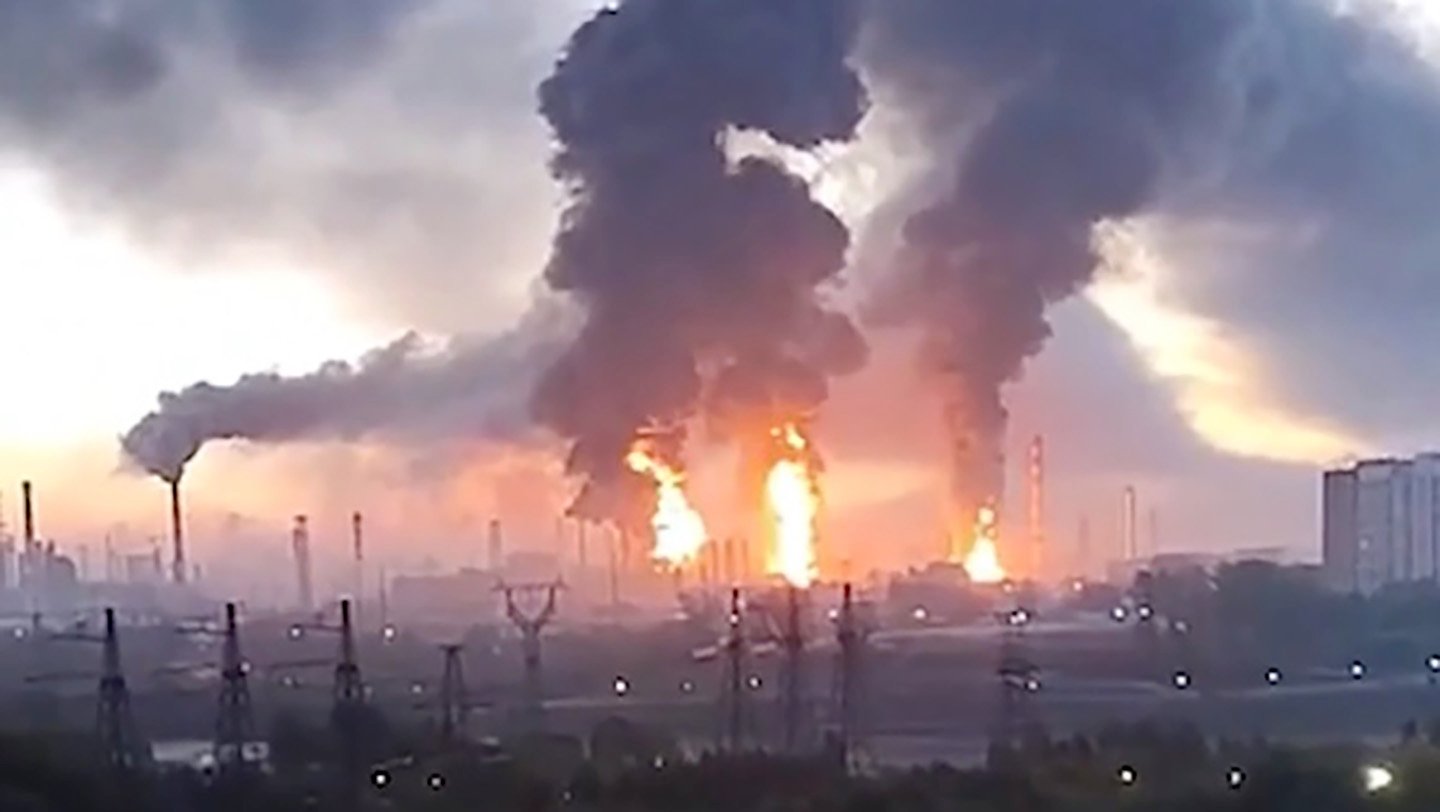
All this is taking place against the backdrop of the Russian full-scale invasion of Ukraine that shows no signs of abating. Kyiv just launched its largest drone attack on Moscow, which is burning on a near nightly basis amid ongoing strikes while Ukraine has introduced a new ballistic missile to its long-range arsenal. Russia for its part continues to try to advance on the ground in the east and south as it carries out daily airstrikes across Ukraine.

Our long-range responses had a very significant impact in the Moscow region last night. One of Russia’s key oil industry facilities and the aggressor’s logistics facility were hit. These are billions of dollars that sustain the war machine. The systems used included FP-1, RZ-100,… pic.twitter.com/ka5mlDSgb7

— Volodymyr Zelenskyy / Володимир Зеленський (@ZelenskyyUa) September 20, 2026

“There has definitely been an uptick” in Russian so-called hybrid warfare actions of late, a senior NATO military official told TWZ on Monday morning. “Despite its accusatory statements towards NATO, which remains a purely defensive alliance, Russia remains the aggressor. We see that clearly in Ukraine, where Russia is losing more than just the war it started. It therefore may incorrectly perceive the only way out is through increasing its hybrid campaign. That’s a losing proposition, because we are ready to respond, which we have shown.”

The official’s comments come after the shoot down last week of a suspected Russian drone that entered Lithuanian airspace from Belarus and in the wake of recent defensive actions by several European nations.

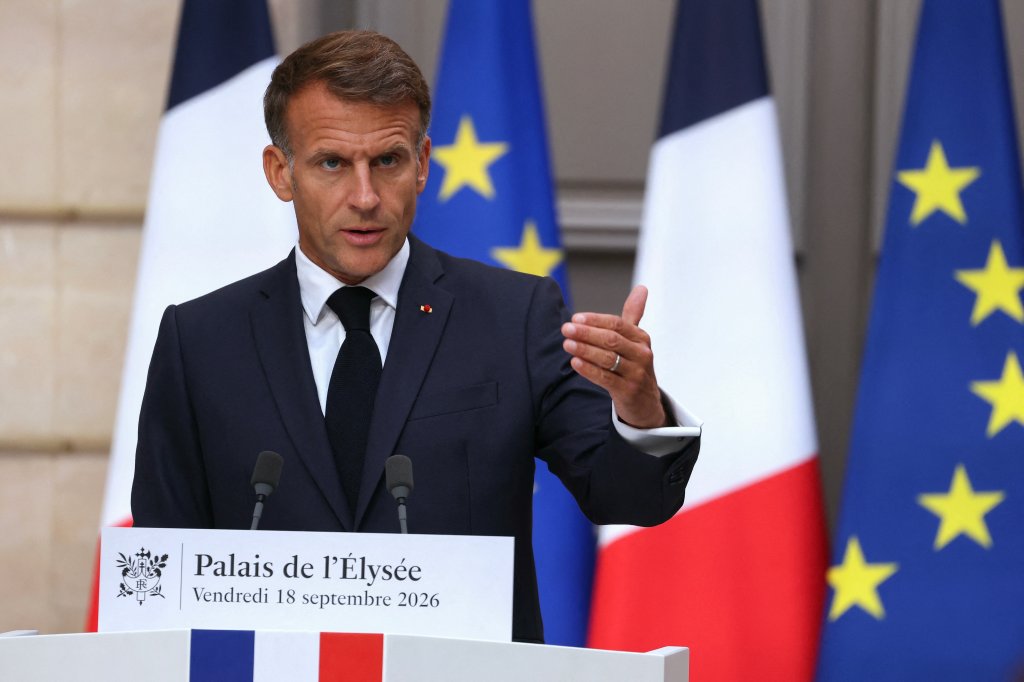
On Friday, French President Emmanuel Macron told reporters that his country had recently been targeted by Russian hybrid attacks. He ordered “the government to prepare a plan to protect our critical infrastructure” and the “most sensitive” defense industry and technology sites against drone and cyberattacks.”

Macron said the “intention behind it is to intimidate us and to derail the effort to support the Ukrainians. The consequence will be the opposite.”

France's President Emmanuel Macron addresses the audience during a press conference following a meeting with candidates for the 2027 presidential election and party leaders focused on the geopolitical situation and its consequences, at the presidential Elysee Palace in Paris on September 18, 2026. Emmanuel Macron requested the preparation of a "plan to protect our critical infrastructure" in the face of "Russian hybrid attacks". (Photo by Thomas SAMSON / POOL / AFP via Getty Images)
France’s President Emmanuel Macron ordered the preparation of a “plan to protect our critical infrastructure” in the face of “Russian hybrid attacks.” (Photo by Thomas SAMSON / POOL / AFP) THOMAS SAMSON

In addition to Macron’s warnings, the French newspaper Le Monde reported that the French military was carrying out clandestine operations against Russia. However, the unnamed source cited offered no details and TWZ cannot independently verify that claim.

A day before Macron’s statements, Polish Prime Minister Donald Tusk warned in a speech to the Polish parliament that Russia is planning hybrid strikes with drones or rockets on European countries supporting Ukraine, including Poland.

The Polish leader offered an assessment about Moscow’s motives similar to Macron’s.

Russia will pretend the attacks are “accidental” in order to “paralyze or at least weaken the motivation of NATO countries” to rush to the defense of the member state coming under attack, The Associated Press noted.

“There is a real risk that drones or other types of projectiles will enter the territory of one or several countries on the eastern flank and even cause destruction,” Tusk cautioned. In July, a Russian AS-23 cruise missile crashed in Poland.

This video grab taken from footage of TVN Poland on July 30, 2026 shows the Polish army securing a large crater, the probable impact site of a projectile linked to the strikes carried out in Ukraine overnight by Russia, in Tarnawa-Kolonia, eastern Poland. Residents of this locality in the Lublin region heard, shortly before 4:00 a.m. (2:00 a.m. GMT), a powerful explosion that shook the windows of their homes. The impact site is located around 80 km from the Ukrainian border. NATO said on July 30 it was in close contact with Warsaw as it blamed Russia for a missile that crashed in Poland, and vowed to "continue to take all necessary measures to defend" alliance territory. (Photo by various sources / AFP via Getty Images)
This video grab taken from footage of TVN Poland on July 30, 2026 shows the Polish army securing a large crater from a Russian missile that crashed in Poland. (Photo by various sources / AFP) –

In the face of these growing threats, officials in Lithuania are updating evacuation plans in case of a Russian attack.

“Poland is to be one of the evacuation destinations from the capital,” Žygimantas Solovjovas, head of the Civil Defense Department at Vilnius City Hall, told Polish Radio. 

Evacuation should begin before a direct threat arises, Solovjovas stressed. “Vilnius residents should not assume that they will flee the city along an evacuation route while under fire,” Solovjovas explained, adding that in such a situation, one must seek shelter. 

“One of the reasons for preparing this plan was to get residents accustomed to the idea that this should be a controlled process,” he noted. “If we allow chaos to ensue, the entire operation will be much more difficult.”

In Germany, where Defense Minister Boris Pistorius said Russia could attack by 2029, hospitals are preparing for a future influx of war-related casualties.

“In a report that gamed out potential scenarios should Russia invade NATO territory, the Bundeswehr calculated that as many as 1,000 wounded soldiers could arrive in Germany each day,” Bloomberg News reported last week. “As the country’s five military hospitals would quickly reach capacity — and the law requires that civilian hospitals help during wartime — the system would likely come under unprecedented strain, and could be forced to triage soldier and civilian care.”

As we noted last week, the alliance writ large is taking action against the growing Russian threats as well. 

NATO’s air commander, U.S. Air Force Lt. Gen. Jason T. Hinds, told reporters, including from TWZ, last week that he was tasked with implementing two NATO air and missile defense plans. Hinds is also the Air Force’s top officer in Europe, serving as the commander of U.S. Air Forces in Europe/U.S. Air Forces Africa (USAFE).

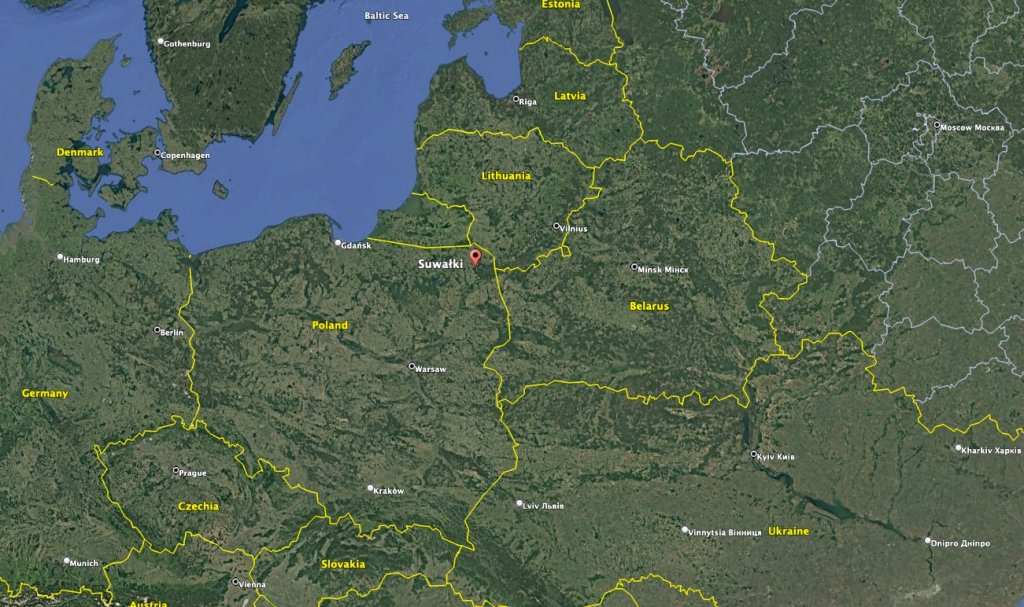
Adding to the concerns about Moscow’s actions, Russia’s client state Belarus just wrapped up mechanized and tank battalion training adjacent to the Suwalki Gap. That’s the border between Poland and Lithuania that separates the Russian enclave of Kaliningrad from Belarus. It has long been considered a potential flashpoint for a war in Europe and the training exercise exacerbated concerns that NATO allies are not prepared for a Russian attack there.

The Suwalki Gap between Kaliningrad and Belarus is also the only land border between Poland and the Baltic states. (Google Earth)

Russia is also making some potentially concerning preparations.

The Defense Ministry is reportedly seeking “an additional 16,000 to 20,000 hospital beds for wounded soldiers in the Northwestern Federal District,” according to the Russian Volya Telegram channel. That district is located near the Baltics.

“Military hospitals have been struggling to cope with the influx of wounded since 2023, so the Ministry of Defense is increasingly using civilian hospitals (including maternity hospitals and specialized medical facilities) for its needs,” Volya stated. “Some of these hospitals are being completely repurposed for military use, but more often, civilian hospitals allocate a few departments to treat the wounded, while continuing to provide care for civilian patients in other departments.”

The expansion “will primarily affect regions within the Northwestern Federal District: Karelia, St. Petersburg, Leningrad and Novgorod regions, as well as Smolensk,” which are near the Baltics “and the Moscow regions.”

While Russia is framing this as a way to handle the influx of wounded from the ongoing conflict, Ukrainian analysts see this as a move to prepare for an expansion of hostilities into Europe.

🤔 Militarnyi: In the fall of 2026, the Russian Federation plans to add 16,000-20,000 military beds in civilian hospitals in the Northwestern Federal District, located near the Baltic states. pic.twitter.com/0sLMvoCxfC

— MAKS 26 🇺🇦👀 (@Maks_NAFO_FELLA) September 15, 2026

In addition, the Border Service Directorate for St. Petersburg and the Leningrad Region announced that from September 16 to September 26, 2026, there would be a restriction on access to the border of the Slantsevsky and Kingiseppsky districts near the Estonian border. 

“These measures aim to prevent violations regarding border regulations, migration laws, and the protection of aquatic biological resources,” the directorate claimed, according to Russian regional officials. 

The new rules prohibit people from being on the shorelines or in small vessels along a portion of the Narva River and from hunting or carrying firearms in the border area. In addition, they forbid the “presence and movement of individuals and vehicles during hours of darkness outside of populated areas within the five-kilometer strip of territory along the state border in the Kingiseppsky and Slantsevsky districts.”

Obviously, the stated reasoning behind this was taken with great skepticism from neighboring Baltic NATO countries who are already on edge.

Russia's FSB imposes a nighttime curfew along the Estonian border near Narva, banning people and vehicles outside towns and villages within 5 km of the border in the Slantsy and Kingisepp districts from Sept 16–26 pic.twitter.com/8Ez8AvMXFy

— Faytuks Network (@FaytuksNetwork) September 20, 2026

Though Russia remains bogged down in its war on Ukraine and is suffering heavy losses of personnel and equipment, some European intelligence officials suggest Vladimir Putin could still carry out a small-scale invasion of NATO territory.

“It’s possible,” Michal Koudelka, the head of the Czech Republic’s BIS security service, told The Guardian about a potential Russian thrust into NATO. “It could involve a limited incursion, false-flag provocations, a massive influence campaign,” he told the publication, adding that this scenario could play out in a matter of “months, not years.”

While Russia has been carrying out a range of hybrid actions against Europe for years, including cyberattacks, drone incursions and sabotage, last month’s foiled attack on Germany’s Leipzig-Halle airport is seen in European intelligence circles as an inflection point.

As we previously reported, a drone discovered inside the secured area of Leipzig/Halle Airport during the night of August 4-5, was carrying approximately 1.3 pounds of explosives. It was found close to a Ukrainian-operated Antonov An-124 heavy cargo aircraft used to transport weapons to Ukraine. German authorities blamed Russia for that incident.

“To have an armed UAV drone sent into a busy airport in the middle of Europe … If you have attacks that could result in losses of life or losses of very critical infrastructure that have a huge implication for society, I think that is a gamechanger,” Thomas Nilsson, the head of Sweden’s military intelligence and security service, told The Guardian.

05 August 2026, Saxony, Schkeuditz: A Ukrainian Antonov AN-124 cargo plane is parked at Leipzig/Halle Airport. Following the nighttime drone incident at Leipzig/Halle Airport, specialists from the Federal Police defused a drone equipped with an explosive device. Photo: Hendrik Schmidt/dpa (Photo by Hendrik Schmidt/picture alliance via Getty Images)
A Ukrainian Antonov AN-124 cargo plane is parked at Leipzig/Halle Airport after specialists from the Federal Police defused a drone equipped with an explosive device that German authorities blamed on Russia. (Photo by Hendrik Schmidt/picture alliance via Getty Images) picture alliance

It is unknown at this point whether Putin will decide to expand his hybrid actions against Europe to a more traditional conflict. However, as the attacks increase, officials across the continent are committing greater resources and planning to be prepared should that happen.

At the same time, the heat is only being turned up on Moscow as Ukraine accelerates its long range attacks. Now it has a whole new weapon, one that has been long in the works, to reach into Russian territory with while bypassing most air defenses.

Zelensky has officially unveiled the FP-7 Pelican ballistic missile and said it was used in the attack on Moscow. This is a monumental advance for Ukraine that has lacked modern ballistic missile capabilities since the war started. Still, Ukrainian media has raised doubts about whether the FP-7 — with an estimated operational range of 200-350 kilometers (124-217 miles) — can reach the Russian capital, which is about 450-500 kilometers (280-311 miles) from the Ukrainian border.

However, one expert suggested “that the ballistic weapon may have played an integral role within a coordinated, multi-axis combined strike,” according to the Kyiv Post.

Regardless, even if it can’t hit Moscow, it can hit plenty of other targets and it represents a major escalation in Ukraine’s weapons capabilities.

Ukrainian President Zelensky said that during an attack on Moscow, Ukraine used its Pelican FP-7 ballistic missile for the first time. pic.twitter.com/KqM9bqk9ur

— Visegrád 24 (@visegrad24) September 20, 2026

There is no avoiding the reality that the security situation in Europe is deteriorating, where exactly that leads is unclear apparently to everyone at the moment.

UPDATE: 7:04 PM Eastern –

Airspace restrictions have been imposed over Vilnius Airport due to a suspected “hybrid attack” from Belarus after the detection of what is suspected to be balloons in Lithuanian airspace, airport officials announced.

The restrictions were imposed from 11:45 p.m. local time on September 21 to 02:45 a.m. on September 22, the airport announced on its Facebook page. 

“Aircraft arrivals are temporarily suspended; however, departures are permitted from 12:55 a.m. subject to all safety requirements,” the airport explained. “These restrictions were introduced due to a hybrid attack by Belarus against Lithuania, civil aviation, and the public, involving the detection of navigational markers—characteristic of balloons—in areas posing risks to aviation.”

Belarus launched balloons toward the Vilnius Airport area, in what Lithuanian authorities are describing as a hybrid attack. pic.twitter.com/U7Etg3xn5o

— GMI (@Global_Mil_Info) September 21, 2026

Contact the author: howard@twz.com

The post Alarm Bells Ring Across Europe As Security Situation With Russia Deteriorates At Accelerating Pace appeared first on TWZ.

  •  

Gaza’s disabled left behind: ‘All our dreams are gone’

In Gaza, everyone is struggling to survive. For disabled people in Gaza, that struggle is multiplied. Rabab Nawfal and Suha Maqat, both wheelchair users, were champion athletes on Palestine’s national teams before Israel’s US-backed genocidal war. Two days before it began, they were playing qualifiers to represent Palestine abroad.

In this TRNN documentary report, they describe living through famine, fleeing bombardment in wheelchairs that no longer work, and asking for help that never comes. With 81% of Gaza’s roads damaged or destroyed and the UN documenting thousands of amputations, Israel is not only making life impossible for disabled Palestinians; it is creating a new generation of them.

Editor’s Note: This documentary report was filmed in Gaza City three weeks before the ceasefire in Gaza was shakily implemented beginning on October 10, 2025. Since the “ceasefire” began, Israeli forces have killed over 1,300 Palestinians, including 301 children, according to the Gaza Ministry of Health.

Credits:

  • Producers: Belal Awad, Leo Erhardt
  • Videographers: Ruwaida Amer, Mahmoud Al Mashharawi
  • Video Editor: Leo Erhardt
Transcript

Suha Maqat, Palestinian Athlete: 

I’m in a wheelchair—how am I going to escape? 

Rabab Nawfal, Palestinian Athlete: 

There were days when we ate animal food, bird food. 

Suha Maqat, Palestinian Athlete: 

I lost my eye. What more do you want? 

Rabab Nawfal, Palestinian Athlete: 

My dreams have been shattered. 

Narrator: 

In Gaza, everyone is struggling to survive. But for people with disabilities, that struggle is multiplied. Rabab Nawfal and Suha Maqat – both wheelchair users – were champion athletes before this war. 

Rabab Nawfal, Palestinian Athlete: 

I’m one of those people who didn’t go to the south. I lived through famine twice. I lived it twice. No one asked after me. There were days when we didn’t eat anything. There were days when we ate animal food, bird food. We ate everything—animals, birds. Even those things were expensive, and then they were cut off. The day they were cut off, we stopped eating anything. 

Ramadan came during the famine. We didn’t eat anything. A long day passed, and we didn’t eat anything. We used to crave drinking water. We used to crave a piece of bread. We were hoping that the famine would never come back. But unfortunately, it did—and it’s still coming back. 

We’ve suffered a lot in life. I was abandoned. No one took responsibility for me. My mother and father used to take care of me, but they left. These days, my brother takes care of me—and he is injured. My life is ruined. No one is with me. No one cares. And the one person standing by me is injured. He can barely carry his own family. 

When we were displaced, he couldn’t help us. He wasn’t able. For people with disabilities like me, it’s been difficult to live through this war. Those who are not disabled can maybe manage their lives. They can move, walk long distances—but I can’t. 

Suha Maqat, Palestinian Athlete: 

The closest people to me abandoned me—they didn’t stand by me. They left me to fend for myself. I feel like I live in a forest with wolves and monsters. I can’t. I try to make things work,

but I can’t. I’m mentally exhausted. The circumstances of this war are incredibly difficult. Even the word displacement is difficult for the injured and disabled. 

When we left, my brother was injured and my sister was in a bad state. Even though he was injured, he was pushing my sister, as I pushed myself along. I got stuck in the sand, and they wanted to bomb the building next to us. It was the most difficult moment. I said to myself, now I’m going to be killed. It was the hardest moment of my life. 

I thought—how will I escape? How will I, in my wheelchair, escape? How am I going to get out? My brother was injured and couldn’t carry me. I thought, I’m done; there’s no life for me anymore. That’s it. I’m going to be killed. 

Rabab Nawfal, Palestinian Athlete: 

The hardest thing I’ve experienced in this war has been displacement. I woke up one day and saw the Israelis in front of us. I was all by myself. I rushed out, but I couldn’t continue. There was a lot of shelling, shooting, bombs. It was a miracle I got out alive. It happened again and again—the same scenario repeated a thousand times. 

Narrator: 

Both Suha and Rabab rely entirely on their wheelchairs to move. Without them, the most basic tasks become impossible. Israel’s blockade has meant that access to this crucial item has been cut off. 

Even with functioning wheelchairs, with 81% of roads in Gaza now damaged or destroyed, access and movement is extremely limited. 

Rabab Nawfal, Palestinian Athlete: 

There are no wheelchairs in Gaza. And without a wheelchair, I can’t move. The wheelchair takes me to my medicine, my food, my drink—I need it for everything. Right now, my chair is broken. I’ve lost all means of life. 

Suha Maqat, Palestinian Athlete: 

As you can see, my chair is broken. I push myself in it, I fall off all the time, I cut and bruise my legs. If someone kind is around, then I can move. Otherwise, I can’t. 

We requested wheelchairs, but it was no use. We asked and asked, and they said no. Rabab Nawfal, Palestinian Athlete: 

My life before the war was very beautiful. I was a champion of Palestine’s disabled national team for strength games—basketball, tennis. I used to do all kinds of sports that suited my disability. I was a success story. I was a hero. These days, I feel worthless. Nothing in life. I can’t even get from here to there. I can’t move from here to there in a wheelchair. My life is 

gone. There is no life.

These days, we only dream of having the most basic things: flour, water. The simplest things—we can’t get. Drinking water—we can’t get it. 

Suha Maqat, Palestinian Athlete: 

Suha before is different from Suha today. I used to be a champion of Palestine. Today, I’m nothing. Today, just a daughter who needs her mother—who needs her mother to help her. 

Rabab Nawfal, Palestinian Athlete: 

Two days before the war, we were playing qualifiers to represent Palestine internationally. But we didn’t manage it. On the day of the championship, the war erupted. So our dreams are gone. All our dreams are gone. My dreams have been shattered. 

I wanted to raise my son. I wanted to raise him well and teach him. Before the war, I wanted to enroll him in karate. I wanted him to become something. I couldn’t. I wanted him to be into sports like me—to become a doctor. I wanted him to grow up and help me in the future. But my dreams were shattered. I couldn’t do any of it. I can’t do anything. 

Narrator: 

According to the UN 4,800 amputations of limbs had been documented since the beginning of the war. Ten children were losing one or both legs every day. Gaza had become home to the largest group of child amputees in modern history. Not only is Israel making the lives of existing disabled people impossible, it is also creating an entirely new generation of people with disabilities. 

Suha Maqat, Palestinian Athlete: 

Gaza has become a city of ghosts. There is no life in Gaza. As you can see—look at how people are living. On sand! How can people live on sand? How can they occupy Gaza? How? 

We want peace of mind. We don’t want to lose any more loved ones. We’ve lost enough. Is it not enough that I lost my eye? What’s left? What more do you want? I lost my eye—what more do you want? What else should I lose? Nothing’s left. There’s nothing left in this world that I can lose. My family has left. I wish I could see my mother. See my father. 

Rabab Nawfal, Palestinian Athlete: 

Life has become unbearable. No matter how much I talk, I can’t describe what I am feeling or the life we are living. I used to be someone. Now I am nothing.

💾

Champion athletes Rabab Nawfal and Suha Maqat, two of Gaza's disabled people now in broken wheelchairs, on famine, displacement, and being forgotten by the world.
  •  

Trump To Meet Zelensky on Tuesday Following Massive Ukrainian Drone Attack on Russia

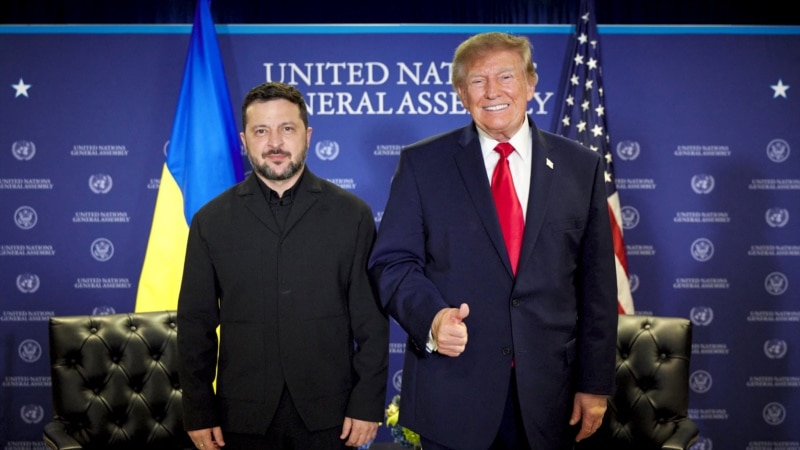
President Trump is set to meet with Ukrainian President Volodymyr Zelensky in New York City on Tuesday on the sidelines of the UN General Assembly following Ukraine’s massive weekend drone attack on Russia, which included attacks on Russian oil refineries. Trump has been calling for Ukraine to halt attacks on Russia’s oil infrastructure and reportedly […]
  •  

Tomato Cure

For Orion Magazine, Seth Kaplan writes of turning to his tomato plants as a way to decompress after a long day at work. In this brief but beautiful essay, he revels in the tactile pleasures of trimming leaves and pinching suckers, of tending beings that make no demands.

The tomatoes do not have opinions, or so I tell myself, though it is mostly a lie. For they do lean toward the sun and then, perversely, away from it. They sulk when I overwater and they sulk when I forget, and they have firm convictions about how much attention is too much. But whatever they want, they show me plainly. A leaning plant wants turning. A pale, unhappy one wants trimming. A bushy one wants care. There is no tone in it—no door slamming or softly clicking shut upstairs, no message that says fine in a way that is clearly not fine. When a tomato is unhappy with me, it tells me in a language I can actually answer. And it does tell me. Skip a few days—a work trip, a long weekend, some obligation that drags me out of the side yard—and they turn unruly, almost insolent.

  •  

How Real Is the Impact of Western Sanctions on Israel?

Europe is getting tougher on Israel in rhetoric and sanctions, but its latest measures may be designed to create political distance from Israel without creating enough economic pain to make Israel change course in the West Bank or anywhere in Palestinian territories. The Arithmetic of Punishment On September 8, Britain, France, Canada and a group […]
  •  

Ukraine Launches Over 1,000 Drones Into Russia as Part of ‘Largest Attack’ on Moscow

Ukraine launched a massive drone attack against Russia on Sunday, launching more than 1,000 drones into Russian territory and conducting what the mayor of Moscow called the “largest attack” targeting the Russian capital of the war. Russia’s Defense Ministry said that overnight, its forces intercepted 1,110 Ukrainian drones over about 20 Russian regions and the […]
  •  

Spread à 100 points de base, BCE à 2,50 % : la revue patrimoniale du dimanche

Par Vincent Clairmont

Chaque dimanche, je passe en revue ce que la semaine a changé pour votre épargne. Cette semaine : les taux français et la BCE, le calendrier fiscal d'octobre et de novembre, le PLF 2027, l'or et l'argent, le bitcoin, les livrets et l'euro, et l'avancement de la déclaration automatique des cryptoactifs.

Spread à 100 points de base, BCE à 2,50 % : la revue patrimoniale du dimanche

Spread à 100 points de base, BCE à 2,50 % : la revue patrimoniale du dimanche
LE COURRIER
DES STRATÈGES
Restez libre !

LA NEWSLETTER · GRATUITE

Le Courrier,
chaque matin.

L'essentiel de l'actualité, passé au crible par les cinq plumes du Courrier. Dans votre boîte, chaque jour ouvré.

Gratuit. Vous restez libre de partir quand vous voulez.

JE M'INSCRIS lecourrierdesstrateges.fr
lecourrierdesstrateges.fr
Restez libre !

Vendredi 18 septembre, l'écart de rendement entre l'emprunt d'État français à dix ans et son équivalent allemand a franchi 100 points de base — un point de pourcentage — pour la première fois depuis 2012, l'OAT dix ans cotant 4,5502 %, un niveau inédit depuis 2008. Le 10 septembre, la BCE avait relevé ses trois taux directeurs de 25 points de base, portant la facilité de dépôt à 2,50 %. L'inflation de la zone euro s'est établie à 3,2 % en août, après 2,9 % en juillet. L'once d'or s'échangeait à 4 371 dollars jeudi, le bitcoin à 81 354 dollars samedi. Je reprends ces dossiers un par un.

Spread à 100 points de base, BCE à 2,50 % : la revue patrimoniale du dimanche
LE COURRIER
DES STRATÈGES
Restez libre !

ABONNEMENT

Allez au fond
des choses.

Deux grands formats par jour. Les cinq plumes du Courrier. La série Sécession, le dimanche.

Le monde commente. Vous, vous comprenez.

S'ABONNER lecourrierdesstrateges.fr
lecourrierdesstrateges.fr
Restez libre !

Taux et dette française

Deux mouvements se superposent, et il faut les distinguer.

Le premier est monétaire : facilité de dépôt à 2,50 %, refinancement principal à 2,65 %, prêt marginal à 2,90 %, deuxième hausse de l'année, motivée par le choc énergétique (+16,7 % sur un an en France en août, après +12,6 % en juillet). Francfort projette une inflation moyenne de 3,0 % en 2026 et ne présente plus 2,50 % comme le terme du cycle : d'autres hausses sont possibles. Le second mouvement est souverain : le spread OAT-Bund, c'est-à-dire le supplément de rendement exigé pour prêter à la France plutôt qu'à l'Allemagne, ne dépend pas de la BCE mais de la trajectoire budgétaire française.

Un OAT à 4,55 % n'est pas une occasion d'achat. C'est le prix d'un risque qui se réévalue, sur un émetteur dont vous subissez déjà la fiscalité, la monnaie et la réglementation.

Je préconise 25 % du portefeuille en bons du Trésor américains à trois et six mois — les T-bills, dette d'État à très court terme, sans risque de taux si on les porte jusqu'à l'échéance — et 0 % en obligations souveraines de la zone euro.

Voici donc le récapitulatif de l'allocation Barbell que je préconise :

  •  
❌