❌

Reading view

Greenland is not for sale: Trump’s Donroe Doctrine and US imperialism

Donald Trump’s campaign to bring Greenland under United States control has often been dismissed as bluster. That is a mistake. Behind the language of a property deal lies a serious attempt to revive an old imperial principle: that Washington may decide the political and economic future of the entire Western Hemisphere. Greenland, strategically placed between North America and Europe, has become a test of that claim – and of whether the sovereignty of a small Indigenous nation counts when it conflicts with the ambitions of a great power.

Trump floated buying Greenland during his first presidency in 2019. After his re-election, the proposal became more aggressive. In December 2024 he declared US “ownership and control” of Greenland as an “absolute necessity.” On January 7, 2025, he refused to rule out military or economic coercion against Greenland and the Panama Canal, saying, “We need Greenland for national security purposes.” He subsequently insisted that the United States would obtain the island “one way or the other.” The claim mixed several arguments: Greenland is vital to missile defense, Russia and China threaten the Arctic, Greenland’s rare-earth deposits are strategically valuable, and Greenlanders would supposedly welcome US rule.

The last claim was demonstrably false. A January 2025 survey conducted in both Greenlandic and Danish found that 85% of Greenland’s population opposed leaving the Danish realm to join the United States, while only 6% supported it. Yet the same poll showed a majority favoring eventual independence. That distinction is central. Greenlanders’ desire to end Danish colonial tutelage cannot be converted into consent to US annexation.

A military relationship without annexation

The security case for US ownership is misleading because Washington already enjoys extensive military rights in Greenland. The relationship began during the Second World War. With Denmark occupied by Nazi Germany, its ambassador in Washington signed a 1941 agreement permitting the United States to defend Greenland and construct facilities there. Denmark sought a US withdrawal after the war, but Cold War strategy prevailed.

The 1951 Defense of Greenland Agreement, concluded under the North Atlantic Treaty, authorized the United States to establish and operate “defense areas.” It enabled the rapid construction of Thule Air Base – renamed Pituffik Space Base in 2023 – at a location ideal for the shortest air and missile routes between the Soviet Union and North America. At its Cold War height, the US operated numerous installations across Greenland. Today Pituffik, Washington’s northernmost military base, performs missile-warning, missile-defense and space-surveillance functions.

The agreement offers Washington wide operational freedom. A 2004 amendment – the Igaliku Agreement – recognized Greenland’s Home Rule government, made Pituffik the sole existing defense area, and required consultation before significant changes or the creation of new defense areas. It also established cooperation on economic, technical, and environmental issues. In other words, if the United States believes more radar, ports, airfields or personnel are necessary, a legal mechanism already exists to negotiate them with Denmark and Greenland. Sovereignty is, therefore, not a military requirement.

The history of the bases also explains why “security” is not a neutral word in Greenland. In 1953, Danish authorities ordered 116 Inughuit – 27 families – to leave the newly established Qaanaaq, while the others relocated to settlements elsewhere in the district. Camp Century was constructed beneath the ice in 1959-60 and was connected with the secret Project Iceworm proposal for an extensive network of nuclear-missile launch sites.

In 1968, a US B-52 carrying four hydrogen bombs crashed on the sea ice at Thule Air Base, causing plutonium and other contamination. The accident exposed the inconsistency between Denmark’s publicly declared policy against nuclear weapons on Danish territory in peacetime and the Danish government’s secret permissions for the US to store nuclear weapons in Greenland. Abandoned installations left fuel, waste and other pollution. Greenlandic reporting continues to question who will pay for future clean-ups. The military relationship protected US strategic interests while its human and environmental costs were disproportionately borne by Greenlanders.

Greenland ceased formally to be a colony in 1953, gained Home Rule in 1979 and expanded self-government in 2009. The Self-Government Act recognizes Greenlanders as a people entitled to self-determination and provides a path to independence. Washington reopened its Nuuk consulate in 2020, and cooperation grew in trade, education, mining, and research. Greenland’s governments (from Kuupik Kleist to Jens-Frederik Nielsen) have welcomed economic ties with Washington, but reject the tendency of Washington to want more and more from the island for its military needs.

From Monroe to Donroe

Trump’s Greenland demand belongs to a wider hemispheric policy. The Monroe Doctrine of 1823 warned European powers against new colonial intervention in the Americas. Presented as anti-colonial, it evolved into a claim of US supremacy. Theodore Roosevelt’s 1904 corollary asserted a right of intervention in Latin America, furnishing ideological cover for occupations, regime changes, and control over strategic assets.

Trump’s supporters rechristened its latest version the “Donroe Doctrine.” The label links pressure on Greenland with demands concerning the Panama Canal, threats against Cuba and Colombia, claims over Canada, and US intervention in Venezuela. In late 2025, the White House formally proclaimed a Trump Corollary to the Monroe Doctrine, asserting US leadership throughout “our hemisphere.” Greenland is swept into this sphere because it is geographically part of North America, even though it is politically tied to Denmark and its Inuit people possess their own right of self-determination. This doctrine contains a revealing contradiction. Trump denounces European control of Greenland as an anachronism while demanding that the island be transferred to the United States. Colonialism is not abolished; the proposed colonizer merely changes. Trump’s references to minerals, sea routes, and military geography reduce Greenland to an asset and its 56,000 people to an obstacle in a transaction between powers.

A crisis inside the Western alliance

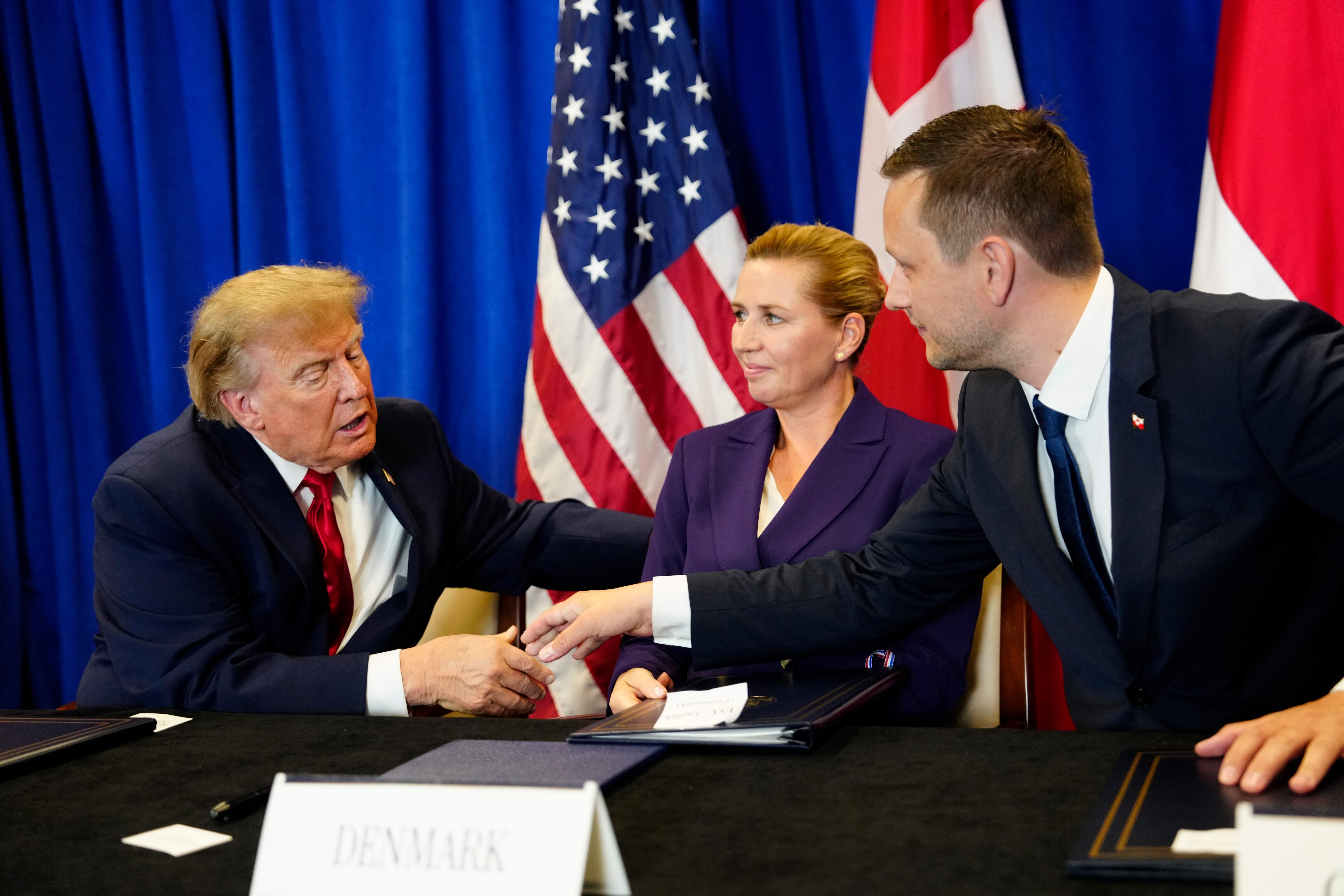
Trump’s threats produced an extraordinary rupture between the United States and Europe. Denmark is not an adversary, but a NATO ally whose troops fought alongside US soldiers in Afghanistan. A threat to seize territory from one ally by force attacks the premise of the alliance itself. Danish Prime Minister Mette Frederiksen warned that a US attack on another NATO country would bring the post-war security order to an end. European governments rallied behind the principle that borders cannot be changed by coercion, a principle they invoke against Russia in Ukraine.

The crisis exposed Europe’s dependency. NATO has no comfortable procedure for defending one member against its strongest member. European states rely heavily on US military power while being asked to resist US coercion. Copenhagen responded with careful diplomacy, greater Arctic military spending, and insistence that decisions belong to Greenland and Denmark. France, Germany, the Nordic states, and the European Union expressed solidarity, but the episode sharpened calls for European strategic autonomy. It also damaged Washington’s claim to lead an alliance of democracies against authoritarian revisionism.

On September 18, 2026, Trump announced an emerging trilateral security agreement after months of negotiation, claiming “permanent control” over Greenland’s security. Danish and Greenlandic leaders described it more narrowly: an expansion of US military cooperation that preserves sovereignty and Greenlandic self-determination. The full text remains to be signed and approved. If their account holds, the outcome confirms what was apparent from the beginning: the United States could obtain additional security arrangements without owning Greenland. Yet the pressure that preceded the deal remains a warning about negotiations conducted under threats.

Greenland speaks for itself

Greenland’s response has combined rejection, unity, and political complexity. Kalaallit Nunaat – the Greenlandic name for the country – became the center of declarations that Greenland belongs to its people and is not for sale. In March 2025, large demonstrations in Nuuk, Sisimiut, and Qaanaaq marched under the red-and-white Erfalasorput flag. Protesters told Trump to respect Inuit, their country, and their nationality. Greenland’s political parties, despite deep disagreements over the speed and economic terms of independence, jointly condemned external pressure. Parliament prohibited foreign and anonymous political donations, explicitly defending the integrity of Greenlandic democracy amid great-power interest.

Danish colonialism left profound injuries: forced assimilation, social engineering, unequal development, and decisions taken in Copenhagen about Greenlandic land and people (the entire fourth season of the popular television drama, Borgen, in 2022 centered on a conflict between Copenhagen and Nuuk about the discovery of a new oil field with a China and Russia angle). Many Greenlanders want independence, and some see heightened US interest as leverage for investment and a more equal relationship with Denmark.

Greenland reveals the real content of the Donroe Doctrine: a twenty-first-century claim that geography gives Washington superior rights over neighboring peoples. The answer from Greenland is equally modern and universal. Strategic location does not cancel popular sovereignty, minerals do not erase nationhood, and no great power acquires a country merely by declaring that it needs one.

Vijay Prashad is an Indian historian and journalist. He is the author of forty books, including Washington Bullets, Red Star Over the Third World, The Darker Nations: A People’s History of the Third World, The Poorer Nations: A Possible History of the Global South, and How the International Monetary Fund Suffocates Africa, written with Grieve Chelwa. He is the executive director of Tricontinental: Institute for Social Research, the chief correspondent for Globetrotter, and the chief editor of LeftWord Books (New Delhi). He also appeared in the films Shadow World (2016) and Two Meetings (2017).

This article was produced by Globetrotter.
  •  

Collaboration, not confrontation: Xi Jinping’s visit to the United States

President Xi Jinping is set to visit to the United States from September 23-25. His visit must be understood as more than an encounter between two heads of state, but it must be seen as an encounter between two possible futures.

In one future, the United States imposes a spiral of confrontation against China. Trade disputes harden into economic warfare, then economic warfare intensifies into technological blockades, technological blockades produce military encirclement, and finally military encirclement creates incidents, and incidents the danger of becoming an unimaginable war.

In the other future, the two countries accept that neither can destroy the other without destroying much of humanity. They recognize that coexistence is not an act of charity and collaboration is not a concession. Both are necessities.

That is the significance of President Xi’s decision to travel to the United States. China’s foreign ministry has described head-of-state diplomacy as having an “irreplaceable” role in guiding relations between the two countries. The visit follows President Donald Trump’s trip to China in May and continuing negotiations over tariffs, trade, and investment. There are indications that President Xi will travel with a substantial delegation of Chinese business leaders. These facts suggest that Beijing wants to move the relationship away from the permanent crisis and towards practical engagement.

But diplomacy between China and the United States cannot merely be a photo opportunity. Nor should it be understood as a negotiation in which one side must surrender to the other. It must be based on a sober recognition of reality. Or to be precise, four realities.

The first reality is that China cannot be contained. China is not a minor country whose development can be suffocated by sanctions. It has a population of more than 1.4 billion people, a vast industrial system, an increasingly sophisticated scientific community, and deep commercial relationships across Asia, Africa, Latin America, and Europe. Whatever one thinks of China, it is absurd to imagine that it can simply be excluded from the world economy. The attempt to contain China has already produced an extraordinary catalogue of restrictions: tariffs, semiconductor controls, investment prohibitions, sanctions on Chinese companies, naval patrols along China’s coastline, and the construction of new military arrangements from the Pacific to the Indian Ocean. Each of these measures is presented as defensive. Taken together, however, they form an architecture of confrontation. There is a dangerous illusion in Washington that pressure will force China to abandon its development. No Chinese government could accept such a demand. After the century of humiliation (from the Opium Wars to the Japanese invasion) the restoration of national sovereignty and the improvement of living standards are not negotiable matters for the Chinese people. The United States may slow certain aspects of China’s development, but it cannot persuade China to return to poverty.

The second reality is that economic separation is neither simple nor painless. The United States and China remain deeply connected through trade, investment, supply chains, scientific knowledge, and consumer markets. US farmers depend upon Chinese buyers. US companies depend upon Chinese manufacturing and upon Chinese consumers. China, meanwhile, benefits from access to US technology, agricultural products, and capital. Negotiators are now discussing reciprocal tariff reductions and new mechanisms for trade and investment. These are modest measures, but they acknowledge an important truth: economic warfare injures both countries. Tariffs are announced with nationalist speeches, but their costs appear quietly in grocery bills, factory closures, disrupted supply chains, and lost employment. Working people in the United States do not benefit when China is weakened. Their difficulties are rooted principally in decisions made by their own ruling class: decades of deindustrialization, the power of finance, attacks on trade unions, the privatization of public services, and the refusal to undertake serious social investment. China did not close the factories of the US Midwest. US corporations closed them in search of higher profits. The answer to inequality in either country is not economic nationalism by the United States.

The third reality is that humanity faces problems that cannot be solved by either country acting alone. The climate catastrophe does not carry a passport. Carbon emitted in one country heats the atmosphere everywhere. The United States possesses immense scientific and financial resources, while China has developed enormous productive capacity in solar panels, batteries, electric vehicles, public transport, and renewable-energy infrastructure. Collaboration between them could accelerate a worldwide energy transition. Confrontation will delay it precisely when delay has become intolerable. The same is true of public health. The COVID-19 pandemic showed us the human cost of secrecy, competition, and vaccine nationalism. Artificial intelligence creates another urgent area for cooperation. These technologies cannot be governed adequately by rival military doctrines or private corporations seeking maximum profit. The two countries must develop common safeguards against autonomous weapons, destabilizing cyberattacks, mass surveillance, and the use of artificial intelligence to intensify social inequality.

Finally, the fourth reality is the question of war. China and the United States are nuclear-armed powers. Any direct military conflict between them would have consequences beyond calculation. This is why Taiwan must not be transformed into the trigger for a catastrophic confrontation. The one-China framework and the existing diplomatic understandings must not be hollowed out by provocations, arms sales, or gestures designed for domestic political theater.

Peace requires restraint from both sides, but restraint cannot mean that the United States surrounds China with military bases and warships and then demands that China alone remain calm. Security cannot be achieved through the permanent insecurity of another country. There will, of course, be disagreements. Collaboration does not require agreement on every political question. Nor does coexistence require silence about differences. But disagreement must be conducted through diplomacy, international law, and the institutions of the United Nations, not through sanctions, threats, and military exercises.

The countries of the Global South have a particular interest in the success of this visit. They do not want to be instructed to choose between China and the United States. They do not want their ports, minerals, telecommunications systems, and political institutions turned into battlefields in a new cold war. They want access to finance, technology, medicine, and markets without political subordination. They want development, not recruitment into rival military camps. Xi Jinping’s visit therefore carries a responsibility that extends far beyond Washington and Beijing. The world does not need an agreement merely to divide markets between Chinese and US corporations. It needs a commitment to reduce the danger of war, dismantle unilateral coercive measures, restore normal economic relations, cooperate on climate and public health, and strengthen the principles of the United Nations Charter.

The importance of the visit lies not in ceremony but in possibility. It offers both countries an opportunity to step back from the cliff. The United States must abandon the fantasy that it can preserve its primacy by preventing China’s development. China, for its part, has repeatedly said that it does not seek to replace the United States as a hegemonic power. That principle must become the basis of a durable relationship: no containment, no domination, no war.

There is an old habit among powerful states of treating compromise as weakness. In the nuclear age, the opposite is true. It takes no courage to order another warship into contested waters. It takes political courage to recognize that one’s adversary also has legitimate interests, that coexistence requires reciprocity, and that the survival of humanity is more important than the vanity of supremacy.

This visit should therefore carry a simple message from Washington to the world: collaboration is not surrender, diplomacy is not weakness, and peace is not an abstraction.

Confrontation offers neither country a future.

Collaboration offers the world a chance.

Vijay Prashad is an Indian historian and journalist. He is the author of forty books, including Washington Bullets, Red Star Over the Third World, The Darker Nations: A People’s History of the Third World, The Poorer Nations: A Possible History of the Global South, and How the International Monetary Fund Suffocates Africa, written with Grieve Chelwa. He is the executive director of Tricontinental: Institute for Social Research, the chief correspondent for Globetrotter, and the chief editor of LeftWord Books(New Delhi). He also appeared in the films Shadow World (2016) and Two Meetings (2017).

This article was produced by Globetrotter.

  •  

Brazil’s presidential campaign heats up

On October 4, nearly 160 million Brazilians will go to the polls to elect their next president, vice president, members of Congress, governors, and state legislators from the country’s various states. If no presidential candidate receives more than 50% of the valid votes, a runoff election will be held on October 25.

At this time, 13 presidential candidates are vying for the presidency in Brasília, although polls clearly point to two candidates vying for the presidency of Latin America’s most economically powerful country.

On one side is Brazil’s current president, the former union leader and progressive Luis Inácio Lula da Silva. Lula served as president from 2003 to 2011 with very high approval ratings, although following corruption allegations, he was imprisoned and sentenced to nine years.

However, after over 500 days in detention, a judge ordered his release, ruling that the proceedings were flawed. The Supreme Court of Justice called the incident a “historic error.” Following that, Lula faced off against then-far-right President Jair Bolsonaro and defeated him in the 2022 election. Now Lula hopes to be re-elected once again.

At the forefront is none other than Jair Bolsonaro’s son, Flávio Bolsonaro, who has leveraged his father’s reputation to boost his own. This is because Jair Bolsonaro was found guilty of several crimes that, according to the Brazilian justice system, were intended to prevent Lula’s inauguration and promote a coup d’état. Jair Bolsonaro is currently in house arrest for those crimes.

Consequently, a significant portion of Brazilian society, as well as international politicians such as Donald Trump, consider Bolsonaro’s imprisonment to be unjust. This explains how his son Flávio – a lawyer and businessman who currently serves as a senator – has managed to garner significant support in his bid to win the presidency on October 4.

Thus, two clearly distinct political and economic models are pitted against one another. Lula belongs to a political tradition that seeks to strengthen the state, reduce extreme poverty, invest in social programs, and diversify trade partners (such as China and India), all in line with a clearly pro-sovereignty discourse.

For his part, Flávio Bolsonaro promises to continue on his father’s path: economic neoliberalism, reducing the size of the state, building closer ties with the private sector, and – perhaps most importantly – placing Brazil once again under the influence of the Trump administration, which supports the far-right candidate.

Read more: Lula and Flávio Bolsonaro all set to face off this October in Brazil’s presidential election

Clearly, a victory for the far right – which is close to Washington – would represent a sharp shift in the region’s current economic and political course. Brazil accounts for nearly 50% of the region’s total GDP, so a victory for a Trump ally would drastically alter not only the political landscape but also the economic one. On the other hand, a victory for Lula would signal a “halt” (probably the most significant of all possible outcomes) to the wave of victories by the Latin American right and far right – allies and supporters of US hemispheric and military policy – that have swept the electoral landscape in recent years.

What do the polls say?

Since the start of the presidential race, Lula has maintained a lead over his political opponent. However, that lead has been narrowing as the weeks have gone by, raising the possibility that the runoff election, scheduled for October 25, will be a very close race. This is because, it appears, neither candidate will manage to secure more than 50% of the vote to win in a single round.

According to a poll by the MDA Pesquisa Institute, Lula holds a solid lead over Bolsonaro: 40.06% to 30.4%. Augusto Cury comes in third with 6% of the vote, while the remaining candidates trail behind this mark. According to this poll, in the event of a runoff, Lula would win with 47.3% against Bolsonaro’s likely 40%.

However, other polls paint a different picture, in which Lula remains in the lead but by a very narrow margin. This is according to an AtlasIntel poll, which shows Lula with 46% of the vote, while Bolsonaro would receive 44% in the first round. In the runoff, the gap would disappear, and both candidates would receive nearly 47% of the vote (a technical tie).

A corruption scandal that is shaking up the political landscape

However, everything could change in the wake of a scandal that has rocked Brazilian politics. In late 2025, the former owner of Banco Máster SA, Daniel Vorcaro, allegedly committed a serious case of bank fraud. Since his arrest in March 2026, his conversations, friendships, and connections have all been under close investigation.

One of the people who has come under scrutiny is Flávio Bolsonaro, who confirmed that he had asked the banker for money to make a film about his father called “Dark Horse”. The Federal Police are investigating this case to determine whether Bolsonaro participated in any illegal activity.

Meanwhile, Lula’s inner circle has also been affected. The judge who ordered Jair Bolsonaro’s arrest, Alexandre de Moraes, is alleged to have exchanged messages with Vorcaro. Moraes has been portrayed as a judge close to Lula and thus Bolsonaro and his supporters have seized on the revelation of the messages to call for Moraes’s removal and indirectly accuse the government of suspicious activities.

The debate has led to a serious crisis within the Brazilian judiciary because a decision to investigate Moraes was postponed, prompting accusations of political bias among the judges.

  •  

From Airbnb to stray cats: Trump’s childhood home in Queens sells for $2 million

The Jamaica–179th Street subway stop in Queens is only about a 10-minute walk from Wareham Place. But an abyss separates the two places. From the crowded low-rise blocks of busy shops, where spotting a white resident is difficult, to single-family homes with manicured yards on quiet streets where cars rarely pass. “Different parts of Queens were rough; this was an oasis,” Donald Trump said in a 2015 New York Times interview. This “oasis” is where the man who is now president of the United States lived as a child, in a house an anonymous family has just bought for $1.93 million.

Seguir leyendo

© Luis Doncel

The house in Queens where Donald Trump lived until age four, last Thursday.
  •  

Recolonization is taking place, says Guyana’s former president

Latin America and the Caribbean countries are being re-colonized. This time it is not by Britain, the Netherlands, Spain, France, and Portugal, but by the United States.

At a period of time the United States had an anti-colonial position and had advocated for the ending of colonialism. That was one of the features of the Monroe Doctrine that has become somewhat obscured since the US became so bellicose.

Today, in a de facto way it has become a super colonial power. It is imposing its will on regions and countries. Those that stand up for their rights are sanctioned, destabilized and sometimes physically removed.

The fact that it used its military might to kidnap a sitting president, President Maduro of Venezuela, is a clear indication that the United States has decided to ignore international law and to get its own way.

Strikingly, only the President of Brazil protested vigorously. Our Caribbean leaders have generally been tight lipped.

The United States has gone even further. They have, using the guise of fighting drugs, established a strong military presence in the region. They have been murdering hundreds of persons traveling in small boats in the Caribbean. Without producing a scintilla of evidence, without attempting to board the boats and get evidence, the US just killed the occupants. We may never know if any were really involved in drug trafficking.

There has been a deafening silence from Latin America and the Caribbean leaders to those atrocities. As if these events were not enough, many of the governments in the region are, on the request/orders from the United States, acting against their countries’ best interests. The ending of the cooperation in health with Cuba which was in place for more than fifty years and which benefited millions of the region’s citizens, is a case in point.

That has left a massive gap in the health sector of the region. The US has not provided any assistance to help with the dislocation and shortage of technical personnel created by their insistence to remove Cubans.

The US is now also pressing regional governments to stop doing business with China. Many governments are beginning to comply with those orders as we see more big contracts going to US companies, despite some of those companies having poor performance records.

If some newspaper stories are to be believed, (and they have not been countered) in some cases Chinese contractors won bids for certain projects, but they were not given the jobs, they went to US firms instead.

The US and other Western countries have ignored us and kept us in a state of underdevelopment since independence. Now that we are getting assistance from China to build important and much needed infrastructure to facilitate socio-economic progress we are getting push back from the US.

It appears that they want to keep us in a state of perpetual underdevelopment and in poverty.

We see the open intention to super exploit our natural resources and labor for the benefit of big business in the US. They are mainly interested in our natural resources. They do not add value in the region nor establish any type of manufacturing. Those are reserved for the rich, developed countries.

The recent “deal” with Venezuela is worse than highway robbery. Venezuela has to provide oil and gas to US companies at cost for one hundred years. This is barefaced robbery and has demonstrated that Venezuela is now a de facto colony of the US. This will not benefit the poor in the US. It is designed to enrich the huge corporations.

Venezuela was forced to abandon its long and well-known principle of standing in solidarity with the oppressed people of Palestine. It is now forced to recognise the Fascist, Apartheid Israeli regime that continues to bomb defenseless civilians in makeshift camps in Gaza, the West Bank (where ethnic cleansing is taking place) and in East Jerusalem.

Today the sovereignty of our countries is already severely compromised. If we don’t stand up now it would be completely lost.

Donald Ramotar is a former President of the Cooperative Republic of Guyana (2011-2015).

This article was produced by Globetrotter.
  •  

Over a decade of war in Yemen and the rise of Ansar Allah

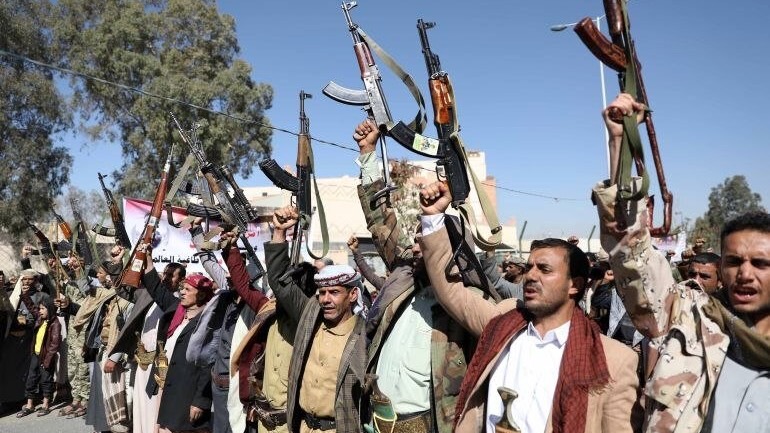
In July, Saudi Arabia joined the US-Israeli war on the West Asia region with strikes on Yemen. The Ansar Allah-led Yemeni Armed Forces retaliated by launching a maritime blockade alongside attacks targeting vital Saudi interests.

The renewed fighting between the two West Asian nations resulted in Ansar Allah’s takeover of the strategic Red Sea port city of Mokha last week and the liberation of all the group’s prisoners held by Saudi-backed forces on Yemen’s western coast.

Ansar Allah’s seizure of Mokha seaport is reshaping regional and global geopolitics, particularly because it serves as a primary gateway to the Bab el-Mandeb Strait and coincides with developments in the Strait of Hormuz.

As these major shifts underscore, Yemen holds immense strategic geopolitical significance.

Situated on the southwestern corner of the Arabian Peninsula and overlooking the Bab al-Mandab Strait, Yemen represents a vital chokepoint connecting the Red Sea to the Gulf of Aden and the Indian Ocean

Consequently, internal political developments in Yemen can have global political and economic repercussions.

This fact, in turn, has put Yemen in the crosshairs of the US-led Western imperialist bloc and their allies in West Asia, which have endeavored to subjugate the country through a devastating decade-long war and blockade. 

The origin of this war coincides with the emergence of Ansar Allah, beginning when the group managed to take control of large swathes of the country, including the capital, Sanaa, in 2014.

The rise of Ansar Allah

Ansar Allah was first established in the early 1990s in the northern Yemeni governorate of Saada as a cultural and educational organization called Al-Shabab al-Mumin (the Believing Youth).

Initially, the organization introduced itself as an unarmed theological movement aimed at reviving and preserving Zaydi Shia Islam and countering the threat of state-backed Sunni Salafism, which sought to uproot the Zaydi religious identity in its homeland of Saada.

From its inception, the movement opposed the government, led by President Ali Abdullah Saleh, accusing it of corruption and criticizing its ties to the United States and its ally Saudi Arabia.

Tensions between the group and the government drastically escalated following the US invasion of Iraq in 2003. It was at that time that the group adopted the slogan (Death to America, Death to Israel), during mass protests opposing the war on Iraq.

These slogans posed a political threat to Ali Abdullah Saleh, who was attempting to position his government as a key ally in the “US War on Terror” in the aftermath of the 9/11 attacks. As a result his government led a brutal crackdown on protesters.

Security forces and riot police suppressed protests using live ammunition, tear gas, and batons, and arbitrarily detained hundreds of political activists, students, and opposition organizers without trial.

In 2004, tension between the Al-Shabab al-Mumin and the Yemeni government boiled over, sparking a series of six internal conflicts known as the Saada Wars. 

These clashes began with the government’s assassination of Hussein Badreddin al-Houthi, the group’s founder, and triggered five subsequent rounds of fighting that lasted until 2010. The followers of the group became widely known as the Houthis ever since. 

Saudi Arabia reportedly engaged in the Saada wars by providing immense financial, political, and material support to the Yemeni government. Saudi intervention in Yemen escalated in 2009 with a direct military incursion and unilateral airstrikes against positions held by the Houthi movement.

In 2011, the group joined nationwide demonstrations, calling for the overthrow of President Ali Abdullah Saleh. It was then that the Houthi movement formally adopted the name Ansar Allah (Supporters of God). 

The ousting of Saleh weakened the central government and triggered a sweeping power vacuum, which allowed Ansar Allah to rapidly expand its territorial dominance. By 2012, the Yemeni movement consolidated firm control across the Saada governorate and large swathes of northern Yemen.

In early 2012, vice president to Saleh, Abed Rabbu Mansour, Hadi became the President of Yemen via a transition framework brokered by the Gulf Cooperation Council (GCC), as he was  considered as a quiet consensus figure. Hadi was also strongly backed by the Obama administration. 

In late 2014, Ansar Allah allied with forces loyal to ousted president Ali Abdullah Saleh against the transitional government headed by Abed Rabbu Mansour Hadi. The fighting that followed led to Ansar Allah’s seizure of the capital Sanaa, forcing Hadi to flee the country.

2015-2022: The Saudi-led coalition’s protracted war against Yemen

From exile in 2015, Hadi requested the Saudi-led coalition to intervene in the conflict, opening the door to one of the bloodiest prolonged wars in West Asia. A conflict that, according to UN estimates, resulted in 377,000 deaths by 2022. 

Saudi Arabia was the main pillar of the coalition, leading the military campaign dubbed “Operation Decisive Storm” with a massive force, including extensive warplanes and ground troops.

The United Arab Emirates (UAE) also played a key role by commanding ground and air operations particularly in southern Yemen and along the critical coastal strip.

Bahrain took part in the operation with 12 fighter jets (some sources say 15), and deployed ground troops in the southern Saudi borders to protect Saudi Arabia from Ansar Allah’s attacks. Meanwhile, Kuwait contributed with 15 warplanes.

At the beginning of the campaign, Qatar participated with roughly 1,000 ground troops, armored vehicles, a dozen fighter jets, and transport helicopters until it was expelled from the coalition in June 2017 over a diplomatic crisis with Saudi Arabia, UAE, Bahrain, and Egypt.

Jordan and Morocco contributed six fighter jets each, while Sudan under deposed president Omar Al-Bashir sent three aircrafts and thousands of ground troops. Furthermore, Senegal committed 2,100 troops.

Western countries, including the United States, the United Kingdom, and France provided logistic and intelligence support, such as aerial refueling for coalition jets, technical assistance, military equipment, coordination support, and maritime surveillance.

The 2022 UN-brokered truce de-escalated the war rather than ending it

In April 2022, the United Nations announced an official two-month nationwide truce agreement, which temporarily halted cross-border attacks, ground and air operations, and allowed fuel imports into ports held by Ansar Allah. It also reopened commercial flights from Sanaa International Airport after years of sea, land, and air blockade imposed by Saudi Arabia. 

Rather than completely removing the blockade, the agreement only resulted in the partial easing of restrictions, while regions under the control of Ansar Allah have continued to face a near-total blockade.

Read more: Yemen demands Saudi-led blockade on the country be lifted immediately

The agreement was renewed in June and extended a second time in August 2022 for an additional two months before it lapsed in October. 

Regional developments reignited the conflict (2023-2026)

In November 2023, Ansar Allah launched a ban on all Israeli maritime navigation in the Red Sea and the Bab el-Mandeb Strait in retaliation for Israel’s genocidal aggression on Gaza.

About one month later, the group significantly expanded the ban to include all ships heading to Israeli ports, regardless of their nationality or flag.

The ban continued until October 2025, despite waves of deadly airstrikes launched by the US, UK, and Israel on Yemen.

An Omani-mediated ceasefire deal between the US and Ansar Allah was reached in May 2025. The deal stipulated halting Ansar Allah’s attacks on US ships in the Red Sea and Bab al-Mandab Strait, and ending US aggression on Yemen, without preventing the Yemeni resistance movement from launching attacks or naval operations against Israel. 

This same period saw a shift in the conflict between the Saudi-led coalition and Ansar Allah from active military engagement toward a tense, fragile diplomacy.

In early 2026, friction between the two major pillars in the anti-Ansar Allah coalition – namely Saudi Arabia and the UAE – surfaced as different Yemeni groups backed by the two countries clashed, apparently over territorial control in Yemen.

Read more: Tensions in Yemen: Are Saudi Arabia and the UAE becoming frenemies?

The US-Israeli war on Iran has drawn Yemen back into the regional conflict

Although Ansar Allah was established as an independent Yemeni movement, it evolved into a key component of the Axis of Resistance over time. This alignment was driven by mutual ideological foundations, shared anti-imperialist ideology, and deep strategic and military cooperation with Iran and Hezbollah.

Despite its affiliation with the resistance alliance, Ansar Allah chose not to get involved in the recent regional war waged by the US and Israel against Iran, for ostensibly strategic considerations and military coordination tactics with its allies.

Read more: Reflections on the US-Israeli multi-front war in West Asia: How the Axis of Resistance remains resilient

However, because the United States and its allies in the region seemingly view the current war as an ideal opportunity to dismantle the Axis of Resistance, Saudi Arabia decided to resume its aggression against Yemen by attacking Sanaa International Airport in July. The attack aimed to prevent an Iranian plane from landing.

Consequently, Ansar Allah launched retaliatory attacks on Saudi interests inside Saudi Arabia and on Yemeni soil. It further declared a maritime blockade against Saudi-linked commercial vessels passing through the Bab al-Mandeb Strait, demanding Riyadh end its decade-long blockade on Yemen.  

Concurrently, ground clashes over territorial dominance between Ansar Allah and Saudi-backed forces intensified, leading to key victories for the Yemeni group. Escalations have persisted up to the time of publication.

On Wednesday, September 16, Saudi Arabia accused Ansar Allah of attempting a drone attack against the city of Mecca, the holiest city for Muslims, located in western Saudi Arabia.

Ansar Allah dismissed Saudi accusations as false, saying that they reflect a “desperate attempt to mobilize public opinion.”

As the US-Israeli war on West Asia continues to reshape geopolitics, Ansar Allah’s emergence as a regional force has placed Yemen at the center of a struggle that may define the future of West Asia.

  •  

Several arrested in protests against constitutional changes in DRC

Protests rocked the Democratic Republic of Congo on Tuesday, September 15, as opposition supporters took to the streets in Kinshasa and several other cities to oppose proposed constitutional changes that they say could allow President Félix Tshisekedi to seek a third term.

The demonstrations were called by the opposition coalition C64 (Coalition Article 64), which has campaigned against changes to the Constitution and what it considers an attempt to remove the existing two-term presidential limit.

The demonstrations were also reported in several cities. In Kinshasa, hundreds of protesters gathered around the Limete area before the march was disrupted by clashes involving demonstrators and people identified as members of the Force du Progrès, a group affiliated with Tshisekedi’s ruling UDPS party. Police used tear gas and warning shots to disperse the crowd. At least 10 people were arrested in Kinshasa.

Opposition accuses authorities of an “ambush”

Martin Fayulu, leader of the Engagement for Citizenship and Development (ECiDé) and a leading C64 figure, accused authorities of deliberately allowing pro-government militants to attack the opposition march.

In a post following the confrontation, Fayulu said the C64 had agreed on its route with Kinshasa’s city authorities before the march. He alleged that protesters were then confronted in Limete by armed members of the Force du Progrès while police used tear gas against the marchers.

Fayulu wrote that the C64 had been “the victim of an ambush” and accused the authorities of using a political militia alongside security forces. He called on Kinshasa’s city authorities and the national government to explain what happened.

Read more: Lithium mining in the DRC: A new mineral rush spearheaded by the US, EU, and other major powers

The confrontation prevented the C64 march from reaching its planned destination and from delivering its memorandum to the authorities at the People’s Palace.

Opposition resistance has been building 

Tuesday’s demonstrations were the latest escalation in an opposition campaign that has been building since June, when there were protests after Congo’s parliament approved legislation allowing constitutional amendments to be submitted to a referendum.

The National Assembly and Senate have both backed the referendum legislation. Critics argue that the process could eventually open the way for amendments to the presidential term-limit provisions.

Tshisekedi was first elected president in 2018 and re-elected in 2023. Under the current Constitution, the president serves a maximum of two five-year terms. His current term runs until 2028.

The proposed constitutional changes have therefore become a major point of confrontation between the government and opposition. The C64 says it is defending the existing constitutional order and has rejected any change that could enable Tshisekedi to seek another term.

The protests and the crisis is happening as the government faces other major challenges, including conflict in eastern Congo and an Ebola outbreak.

Read more: Ebola spreads to 60 health zones in eastern DRC; UN warns of funding shortfall

  •  

Trump escalates his campaign against Washington’s cultural institutions

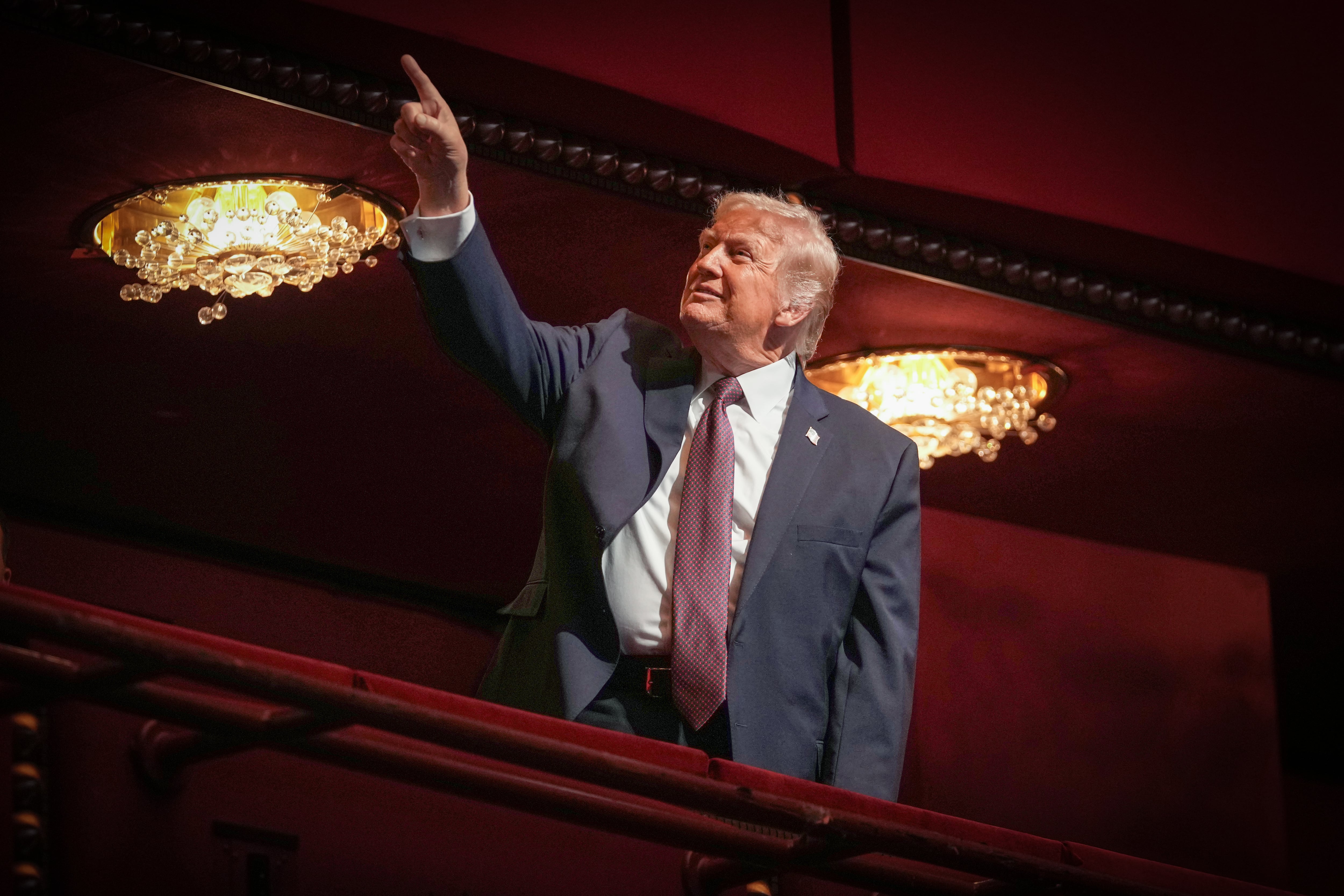
For the past 96 days, a huge tarp has hung over the facade of the Kennedy Center, a fitting symbol of Donald Trump’s assault on Washington’s cultural institutions.

Seguir leyendo

© Allison Robbert (AP)

Donald Trump at the Kennedy Center, Washington, January 29, 2026.
  •  

South Korea shouldn’t abet Trump in Hormuz

The Lee Administration leaked the possibility of deploying Korean forces to the Strait of Hormuz on September 3. The backlash was immediate from Korean civil society that opposes any type of support for Trump’s war of aggression. Furthermore, recent polls reveal that even 55% of Lee’s supporters oppose the dispatching of forces. And while the Lee administration has publicly backtracked, stating that nothing has been decided, it is, nonetheless, quietly undergoing the process of deployment: more than simply an assessment of the security conditions on the Strait of Hormuz, the Lee administration sent a team to check key military bases and ports that could be used at the United Arab Emirates.

Despite growing public opposition, the Lee administration is expected to introduce at the end of September a motion into the National Assembly, where it is likely to pass given his party’s considerable majority. Unlike his predecessor, the impeached Yoon Suk-yeol, President Lee is not a pro-US ideologue; he is a pragmatist. Why then is Lee going out on a limb with this deployment when the rest of the world is staying out of it?

Well, South Korea’s history has always been entangled and shaped by US foreign policy. The darker side to South Korea’s pop-culture is a country dominated and shaped through US policy and interventions. Today, it hosts the largest overseas US military base and controls the Korean military (through wartime operational control). In effect, it’s never been a sovereign state. Its economic, political, and military interests have always been beholden to the United States. 

Today, Lee is horsetrading with Trump: military support in exchange for more favorable terms in the US’s AI global supply chain of semiconductors and data centers along with a return of wartime operational control. While Lee’s pragmatism is navigating the real structural constraints on South Korea, it is ultimately short-sighted and harmful to Koreans and the world.

The war in Iran is inflicting considerable pain to the world’s economies, including South Korea that imports 61% of its crude oil through the Strait of Hormuz. Yet, even from a completely pragmatic perspective, sending Korean forces to the Hormuz does nothing to resolve this problem. In fact, getting entangled with US aggression against Iran would strain the 64-year diplomatic relations with Iran while putting a target on South Korean assets in the region. Furthermore, if the world’s greatest naval and air power cannot secure freedom of navigation in the Strait of Hormuz, how could South Korea’s contribution make a difference? In fact, the deployment of Korean troops prolongs this war of aggression by giving Trump cover and leverage to demand that other countries, such as Japan, also deploy forces.

This isn’t the first time that South Korea would deploy forces due to US requests. In 2004, after pressure from the George W. Bush Administration, the Roh Moo-hyun administration deployed non-combat support troops to Iraq. In response, a militant Islamic group kidnapped a Korean translator and, when the Roh administration refused to cancel further and withdraw current deployment, beheaded the translator.

Most importantly, this war of aggression is not only illegal under international standards, but deployment also violates article five of the Korean constitution that mandates the government to “maintain international peace” and “renounce all aggressive war.” Thus, whether intervening in the frontlines, or in the rear, whether combatant or non-combatant, any deployment would be complicit in Trump’s war of aggression.

Ultimately, as Hamid Shahrabi, an Iranian activist and co-founder of the Global Resistance for Peace & Justice states, securing free passage through the Strait of Hormuz can be achieved but not through military pressure and destruction but by adhering to the “Islamabad MOU, which outlined measures to ensure free passage through the Strait.”

Being dominated by the US brings out the pragmatic among South Koreans. Yet, the world demands that we fight and that we hold the line against Trump. Deploying forces will prolong Trump’s illegal war of aggression. Fortunately, if Koreans can be pragmatic, they can also be fierce fighters against US imperialism when provoked. Instead of fanning the flames of war, we should fight to extinguish Trump’s forever wars.

Dae-Han Song is a part of the International Strategy Centerand the No Cold War collective and is an associate at the Korea Policy Institute.

This article was produced by Globetrotter.

  •  

China and Russia oppose deployment of US weapons to space

After the US officially admitted it deployed weapons into outer space earlier this week, Russia and China expressed concerns, calling it a threat to international peace and demanding the immediate stoppage of all such activities.

During a regular press conference on Tuesday, September 15, Guo Jiakun, official spokesperson of China’s Ministry of Foreign Affairs, said that “China opposes any arms race in outer space or any attempt to weaponize it and turn it into a warzone.”

He further said that “China stands for the peaceful use of outer space and keeping it safe” and urged the US to “stop expanding military build-up in outer space, and uphold global strategic stability with concrete actions.”

Russia’s Foreign Ministry Spokesperson Maria Zakharova said that the US weapons deployment is a threat to international security and puts a question mark on the stability in outer space. 

“Russia has for many years been consistently drawing the attention of the global community to the grave consequences for international security that Washington’s destructive course may lead to,” Zakharova said.  

She said her country seeks “urgent practical measures to prevent arms race in outer space” and reiterated Russia’s push for a “multilateral legally binding instrument banning the deployment of weapons in outer space.” 

Though it has long been a subject of speculation, a couple of US military officials, earlier this week, admitted that its military is operating weapons deployed in outer space.  

The admission was made by US Air Force Secretary Troy Meink on Monday during a conference. He said that the US “has on-orbit space control weapons capable of defending the joint force against hostile adversary action.”

Meink’s statement was substantiated by US Space Force chief Douglas Schiess, who a day later, on Tuesday, said that in the coming years the US is even planning to increase the number of orbital weapons already used by the members of his military unit.

Urgent need of legal prohibitions

Underlining the threat that the deployment of weapons in outer space poses, several countries, including Russia and China, have been calling for an international treaty to prevent any arms race in outer space for decades now.

The existing instrument, the UN Outer Space Treaty (1967) makes clear that “outer space is not subject to national appropriation by claims of sovereignty, by means of use or occupation, or by any other means.”

It also prohibits the deployment of “nuclear weapons, or other weapons of mass destruction in orbit or on celestial bodies or stationing them in outer space in any other manner,” but it says nothing about the deployment of conventional weapons, despite declaring it should be used for peaceful purposes only.

None of the US military officials spoke about the nature of weapons deployed by the US in outer space.

Though only a handful of countries have the technological capability to explore outer space in any significant way, several countries have used satellites for military and war purposes for decades now.

The US has a dedicated space force which has recently held exercises related to possible military conflicts in space.

The deployment of weapons and claims of exclusivity, apart from increasing possibilities of an arms race between the existing powers in space; the US, Russia, and China, may also make the rest of the world more insecure.

Zakharova said that Russia is planning to submit a proposal for the creation of an international instrument legally prohibiting all weapon deployment in outer space during the upcoming annual UN General Assembly session.

She asked for more countries to join the Russian initiative and co-author the treaty document.

  •  

Trump Wants to RENAME Everything: How about “The Trump Quagmire”?

As American troops face renewed danger in the Middle East, with Iran striking U.S. positions across the region, President Donald Trump is busy contemplating something rather more personal: renaming the Strait of Hormuz the “Trump Strait.” Perhaps “The Trump Quagmire” would be more appropriate—not as a name for a body of water, but for a […]
  •  

A pro-neoliberal security strategy returns to Latin America

Right-wing and far-right governments in Latin America have adopted a very similar discourse regarding insecurity. The leaders share a narrative that describes how in the 1980s and 1990s, a sort of neoliberal panacea reigned supreme, but then, as if speaking of a biblical plague, the progressive governments of the early 21st century arrived. Then, their story goes, through rampant corruption, they destroyed paradise on earth and brought about various evils such as insecurity, migration, and the destruction of traditional values.

Thus, several of these new – and not-so-new – right-wing governments have won the presidency, almost always in elections where they prevailed by a narrow margin, asserting that the solution to the “disaster” is to return to radical neoliberalism and implement a security policy that restores an order which, they claim, existed before the “original sin.” This “salvation,” no doubt, will come hand in hand with military, intelligence, and operational oversight from Washington – an ally that, they say, was alienated by regional center-left governments. The most serious consequence of this distance was the infiltration of drug trafficking into all strata of society.

It matters little or not at all to these new governments that during the era of progressivism, the region enjoyed a certain positive level of security, as argued by critics of the far right. In the case of Ecuador, this supposedly only happened due to an alleged peace pact between the center-left governments and criminal groups. So that peace was, in reality, merely the prelude to what would later erupt.

A US-backed regional security program

In light of this, the region’s security policy appears to be nearly identical across all countries governed by the Latin American right and far right: 

  • Expand the executive branch’s power to declare states of emergency and prolong them over time (sometimes for years, as has happened in El Salvador and Ecuador, with the consequent erosion of individuals’ constitutional guarantees); 
  • Sign security agreements with the United States and become part of its hemispheric military and security policy (such as the well-known “Shield of the Americas”); 
  • Attempt to facilitate US military and intelligence operations within each country’s territory (whether or not there are military bases on the ground); 
  • Promote extradition proceedings to the United States; 
  • Increase security spending while cutting spending in other areas such as health care, education, and housing; 
  • And various other measures.

However, with the exception of El Salvador and, to some extent, Chile, the results these governments promise – to reduce organized crime and insecurity in the region through the quasi-militarization of daily life and security agreements with Washington (which many accuse of undermining sovereignty) – have not materialized.

Read more: Shield of the Americas, military operations, and decorations: Rubio’s fruitful visit to South America

Ecuador, which is facing the most serious security crisis in its history, has failed to reduce violence as promised by the executive branch, even though the country is currently under a nearly permanent state of emergency and foreign military operations are underway. According to some experts, 2026 could become the second most violent year in the country’s history, with nearly 5,000 homicides in just six months. The Noboa administration says that positive results take time and that better days are ahead. The local elections at the end of the year will surely provide a better gauge of the government’s credibility than any speculation.

In Chile, Kast managed to rally support to win the election by focusing on his security policy, which asserts that the rise in insecurity in Chile is largely due to migration from other South American countries. In response, he promised to build various infrastructure projects that would prevent new migrants from entering the country, similar to the US border wall. For now, the government is celebrating a reduction in certain crime rates, although several polls indicate that the public still feels concerned.

In Colombia, the recently inaugurated government of Abelardo de la Espriella has declared that the time for peace talks with certain insurgent groups is over and has resumed the country’s long-standing policy of waging war against insurgent and drug-trafficking groups. So far, there have already been several dozen deaths, with the bodies displayed as war trophies that the president showcases in his addresses to the nation. It is still too early to tell whether De la Espriella’s war will have a direct impact on reducing insecurity, which, according to the executive branch, spiked during Petro’s administration – a claim that Petro categorically denies.

For now, Washington has expressed its support both verbally and by providing funds to many of these countries to bolster their security, while also carrying out actions in the region, such as those already mentioned in Ecuador or operations in the Caribbean Sea. Furthermore, during a recent visit by Rubio to Peru, the secretary of state stated that US forces will act wherever invited by local governments, which foreshadows new military operations in South America.

Read more: The ugliness of Latin America’s angry tide

Without a doubt, the growth of US influence and presence in South America is undeniable. But it would be a mistake to think that this is something new. The history of Latin America in the 20th century has shown how Washington has managed to steadily increase its military presence in the region by invoking various justifications that have proven very effective in winning public support, especially those concerning the security of the population.

Decades of US intervention in Latin America

During World War II, the United States significantly increased its military presence in the region under the pretext of defense against potential military actions by the Axis powers, specifically Japan and Germany. Thus, the United States and its powerful fleet established several military bases in South America and succeeded in getting virtually all governments to align themselves with Washington’s geopolitical interests.

Shortly thereafter, Washington justified increasing its military presence in the region to halt the dangerous “communism” that, they claimed, would sweep through the region and had become a cause for concern not only for US security but also for the internal security of each country, where “dangerous” revolutionaries would destroy the social foundations of each nation. Thus, the United States and a large portion of the Latin American militaries carried out joint intelligence and other operations to promote, by any means necessary, the destruction of leftist political movements in the region – which meant killing thousands of Latin American revolutionaries through various methods, such as the imposition of bloody military dictatorships (such as those in Argentina, Chile, Uruguay, Brazil, Bolivia, etc.) and/or boycott and conspiracy operations against anti-imperialist governments, such as Castro’s Cuba, Allende’s Chile, or so many other political movements violently aborted through the active participation of US and local forces.

However, the socialist bloc collapsed in the 1990s and brought on a crisis within the revolutionary left. Right-wing governments, incidentally, took advantage of these events to promote ultraliberal economic policies, but began to lack a new justification for expanding military and police forces, and the US presence in the region. 

One exception to this was Colombia, where the internal war served as a justification for the establishment of several US bases during the 21st century.

Read more: The ‘War on Drugs’ has always been more about war than drugs

Now that drug trafficking has become the region’s primary security threat, Latin American right-wing forces, alongside Washington, have once again raised the alarm about the threat of insecurity to promote securitist policies and an increased US military presence. Nazis, communists, and now narco-terrorists seem to be the lineage of a political strategy designed not only to promote a greater military presence in social life but also to advance neoliberal policies that are often accompanied by the aggressive influx of international capital, which typically appropriates the economic resources of this part of the Third World. 

For we must not forget that every cycle of increased security-oriented policies has been followed by lucrative and substantial profits for the wealthiest in Latin America and around the world.

  •  

Buffalo Nichols: A revolutionary blues man in the belly of the beast

In the year of the 250th anniversary of US independence, the bipartisan US Semiquincentennial Commission released “America’s Soundtrack: The Sound of 250 Years.” Perhaps unsurprisingly – because the initiative was planned over the course of a decade with the support of corporations like Amazon, Oracle, and Palantir – the playlist is a romantic ode to the most paternalistic and militaristic sides of the United States.

However, activists have pointed out that there are “Two Americas at 250.” In other words, there is a working-class history and culture that directly contradicts the imperialist project of the billionaire class. Therefore, we must study another soundtrack: one based on the struggles, desires, and traditions of the people. One person that represents this soundtrack is “America’s favorite blues man,” 34-year-old Buffalo Nicols.

Music characterized Carl Nichols’s upbringing in Milwaukee, Wisconsin. Though not surrounded by musicians, he always had the sounds of jazz on the radio, his mother‘s music collection, his older brother’s hip-hop, and his older sisters, R&B, punk, and metal. This was the context in which he taught himself to play his sister’s guitar at the age of 12.

Performing with bands throughout high school, Carl found kinship among the West African community. As he played a cheap banjo along with a friend on the instrument known as the xalam, he embraced music as an opportunity to learn about other cultures. Traveling through countries like Senegal, Romania, Hungary, and Ukraine in his early 20s and learning their sonic traditions, motivated him to study Black American music with the same rigor.

Performers like Lead Belly, Pete Seeger, and Woody Guthrie left a lasting mark on him, specifically relating to communal and commercial music. Similarly, the writing of Etheridge Knight, Langston Hughes, Zora Neale Hurston, and Amiri Baraka helped him understand the blues as “a living thing” rather than a set of important names and dates. He said, “There’s always been this connection between activism and folk music because I think trying to exist as an artist in America has been a political thing.”

His 2025 song “Belly of the Beast“ is one example of this because it asks about the responsibility which domestic victims of US imperialism have for protecting victims abroad. Written during the heightened media coverage of the Israeli genocide in Gaza, the song calls attention to the relationship between Black Americans and Palestinians. He conceptualized the song following a period of political education defined by a collection of Malcolm X speeches and Régis Debray’s 1967 “Revolution in the Revolution?”

I live in the belly of the beast

Though I only meant to look into his mouth

It was not opportunity but chains he used to capture me

And every day I’ve tried to get back out

While these lines of the chorus speak from the individual or first person perspective, Nichols uses them to describe a common experience.This is why the song ends with the collective “we live in the belly of the beast.” The song is neither nihilistic or romantic in its allusion to topics like police killings, occupation and ethnic cleansing. Rather, in verse four, the singer puts his hope for change in the hands of the people, saying “we cannot win ’till we get organized.”

Read more: Studying the changes: a Palestinian music teacher’s lesson on will

Some, who mistake folk music as apolitical, took offense to this song. They attack him in social media comments, direct messages, and hate mail. In the spirit of the blues, Nichols said he laughs at their assumption that they can hurt him. The same minority of listeners attacked him for his 2025 song “Ice Age Blues.”

He wrote the song in response to the second Trump administration’s escalation of ICE terror. Specifically, on the widespread sense of surprise that law-enforcement would use deadly force against the US residents. He said that it reminded him of the same realization among new activists during the 2020 uprising for George Floyd. However, Nichols shows that he was not shocked by the contradiction – he ends the song by asking,

You think all that money is for war fought abroad?

They won’t hesitate to kill you in your own backyard. 

They’d be happy to kill you in your own backyard.

Nichols said that political finger pointing will not help identify the common perpetrator of a shared oppression. Instead, he urges readers to understand the state and how it works against the people; to study the basis of its patterns and changes. By doing so, he calls listeners attention to the basis of repression rather than simply what accelerates it. 

Similarly, he recommends the new generation of blues people to “return to the root.” That is, to disregard stereotypes about their Black art and study those – like Zora Neal Hurston – who preserved long-standing traditions. By reclaiming their legacy, he said that culture workers can affect consciousness on a mass level.

I know no artist really wants to be a role model or to be representing an entire people but the reality is that Black culture is such a fragile, delicate and important thing that we have to be more mindful of how we share it and how we interact with it. 

Buffalo Nichols is currently touring through states like West Virginia, North Carolina, Illinois, and Minnesota.

  •  
❌