Footage flooded the internet on Saturday, September 19, showing Gaza Health Ministry Director General Dr. Munir al-Bursh asking young men to bring the rest of his son’s body as they carried his remains.
“Bring me his other half!” the grief-stricken father said. “We were supposed to go to heaven together today, but you got there before me, son.”
According to media reports, Dr. Munir’s son, Bashir (28), was struck by a drone shortly after leaving his family’s tent in the al-Zahra neighborhood, near the Civil Defense headquarters, west of the Jabalia refugee camp in northern Gaza Strip.
Bashir was targeted while helping people fill their water containers, just meters away from his father. For many, the proximity of Dr. Munir implies that he, too, may have been a target of the attack.
Israel’s systematic targeting of health workers
The prominent Palestinian health official has been in the crosshairs of the Israeli forces since the beginning of Israel’s genocidal aggression on Gaza, due to his leading role in managing a crumbling health system that was severely devastated during the war.
Moreover, Dr. Al-Bursh is widely known for frequently reporting on Israeli assaults on the Gaza medical sector, and highlighting the dire conditions of medical facilities inside the besieged areas via international media outlets.
Al-Bursh and his family were previously targeted by Israeli warplanes at the very beginning of the war. In December 2023, his 13-year-old daughter, Jinan, was killed in an Israeli airstrike on a residential building in Jabalia. The aerial attack also resulted in the injury of Dr. Munir and the rest of his family.
The deaths of Bashir and Jinan al-Bursh echo the murder of 15-year-old Ibrahim Abu Safiya by an Israeli drone in October 2024. Ibrahim was the son of the former director of Kamal Adwan Hospital in northern Gaza, Dr. Hussam Abu Safiya.
The day Bashir al-Bursh was assassinated, and the days that followed, saw the killing of several people by the Israeli Army across different parts of the war-ravaged enclave.
This took place as world leaders addressed the UN General Assembly. For the third year in a row, these addresses and the deliberations have failed to stop Israel’s aggression against Gaza and its ongoing heinous crimes carried out across West Asia.
It’s stunning to comprehend how much has changed since Russia began its invasion of Ukraine. The conflict quickly turned into one dominated by artillery, with both sides scrambling to source shells wherever possible. Drones have since replaced tubed artillery as the ‘king of battle’ along the front, but cannons still have an important place on the battlefield. The commander of a new combined drone-artillery brigade offered some fresh insights into how his guns are now being deployed to achieve effects that drones still can’t provide.
As we have frequently documented, the ubiquity of drones has changed the nature of combat, especially when it comes to artillery. Not only can drones hold artillery positions at risk, many are cheaper than shells and easier to produce at scale. Most types are also precision guided munitions capable of hitting moving targets with pinpoint accuracy and can also provide battlefield surveillance. However, they are not a panacea, especially amid the cat-and-mouse game of electronic warfare countermeasures and improving kinetic and passive defenses.
In a recent interview with the Ukrainian Oboronka news outlet, Lt. Col. Vitalii Korniienko, commander of the 7th Artillery Brigade, talked about the changing nature of artillery warfare. Korniienko, whose unit is part of the Ukrainian National Guard, explained what is being done to keep his array of domestically produced Bogdana 155mm systems, donated weapons like M777 howitzers, remaining Soviet-era 2S7 Pion 203mm self-propelled howitzers and other guns, relevant. Here are some takeaways from that discussion.
How The Game Changed
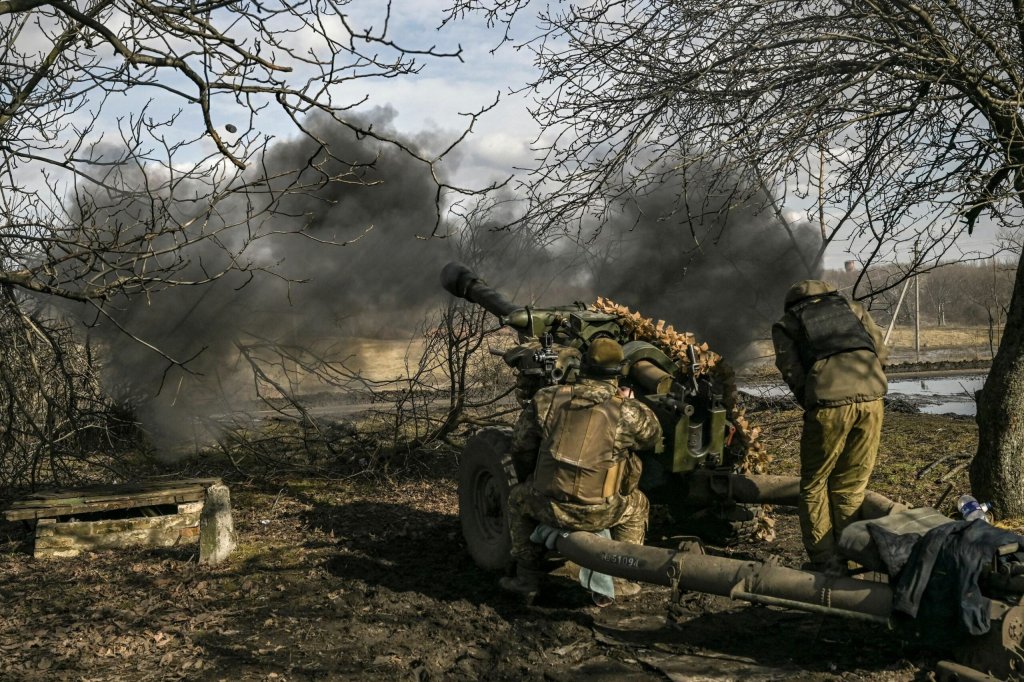
“Guns used to be massed at positions to create an ‘artillery wall’ and a barrage of fire,” the lieutenant colonel said. “That practice is gone now. So, how effective is artillery today? We can create an artillery barrage, but what is the point of mindlessly churning up the earth? I’d rather send 20 FPV drones to destroy the target. The cost of that mission is $20,000.”
A soldier from the 13th Khartiia Brigade of Ukraine’s National Guard hones his FPV drone piloting skills during a training flight in the Kharkiv region, Ukraine. (Photo by Viacheslav Madiievskyi/Ukrinform/Future Publishing via Getty Images) Future Publishing
“Alternatively, I could fire 200 shells, but the cost would be astronomical,” he pointed out. “Plus, if we fired 100 shells from a gun in a single day, it likely wouldn’t survive until evening. The sky is full of drones; every shot gives away the position, leading to detection and an attempt to dismantle it using every available means. Nowadays, a typical mission involves a series of up to 10 shots. First, 3–5 shells for ranging, followed by fire on the target. That’s a minimum of five shells, with each costing at least $2,000.”
What Does The Drone-Artillery Brigade Do Differently?
“It is a concept of ours that was approved: combining artillery and drones within a single brigade,” Korniienko said. “Drones take out enemy artillery and logistics, while our guns provide cover for the infantry, destroy targets, and pin the enemy down in their dugouts. This way, we mitigate the limitations of both systems and boost overall effectiveness.”
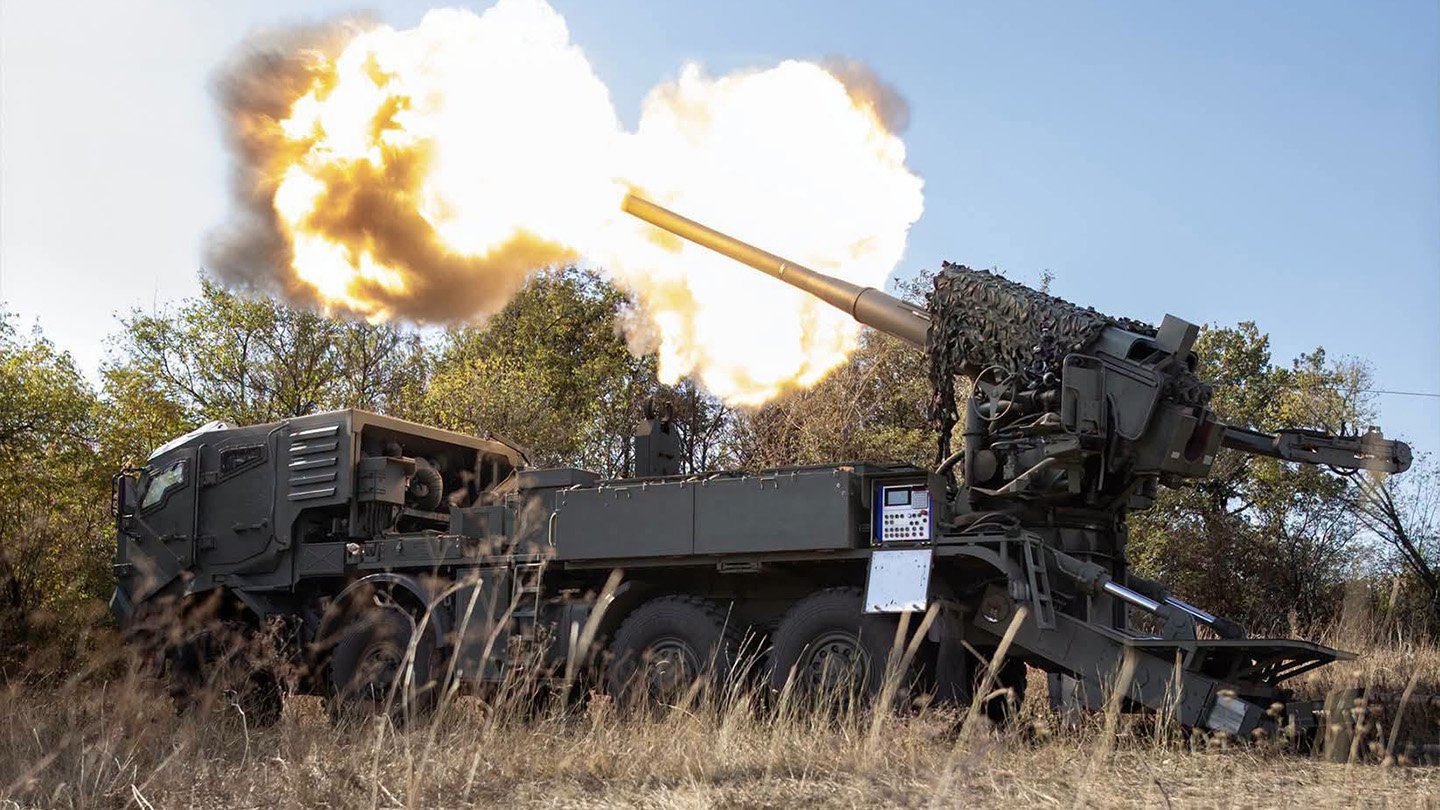
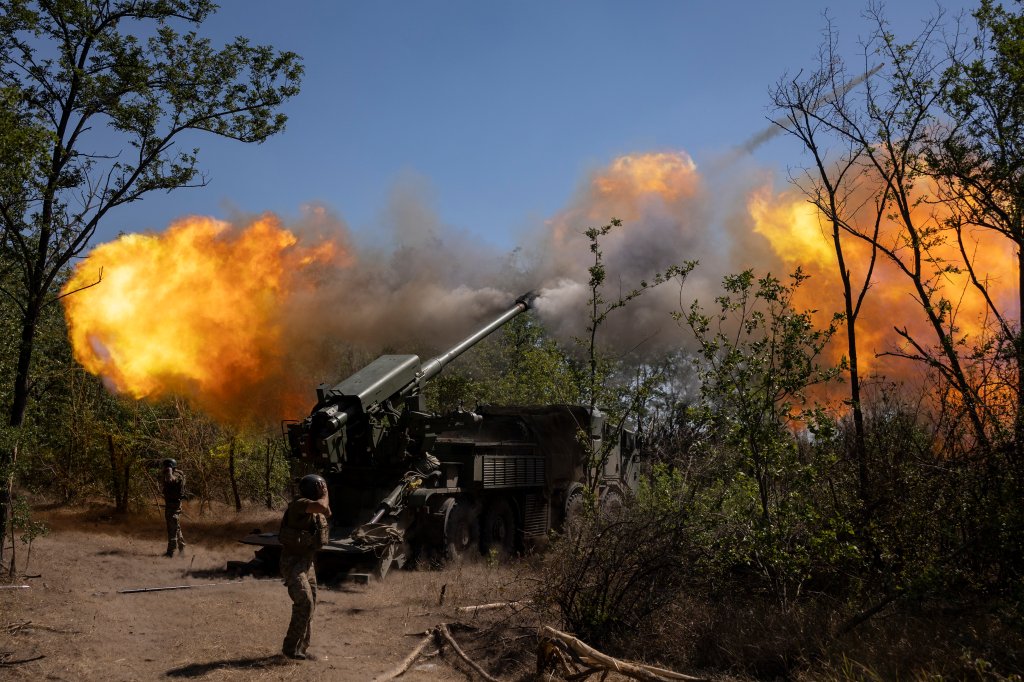
Ukrainian troops firing a domestically produced 2S22 “Bogdana” self-propelled howitzer against Russian forces near the front line in the Zaporizhia direction. (Photo by Maksym Kishka/Frontliner/Getty Images) Frontliner#VIDEO
“Our primary operations are focused within the corps’ area of responsibility—targeting positions 10 kilometers deep or farther behind enemy lines. Of course, we will also engage closer targets if requested by the brigade holding the defense. In addition, we are shifting logistics tasks from pickup trucks to ground-based robotic systems. They are already transporting ammunition to drone and artillery positions, as well as food and fuel for generators.”
What Artillery Can Do That Drones Can’t
“Let’s be honest: 95% of strikes right now are carried out by drones,” Korniienko explained. “Yet, we cannot simply abandon artillery. The focus of our operations has shifted from merely striking the enemy to destroying, suppressing, and halting the actions of assault groups and armored columns—and the need for that remains as critical as ever. There are tasks that only artillery can handle.”
The high art of war, as practiced by the warriors of the National Guard's Artillery Brigade.
“For instance, we currently have several enemy targets in the Kupyansk sector that drones cannot reach due to electronic warfare (EW) interference, while slow fiber-optic drones are simply shot down,” the officer noted. “What do we do? We call in artillery. Nothing affects its shells. Fog, strong winds, snow, or headwinds—it makes no difference to artillery; it will operate regardless.”
Preparing Artillery For The Modern Battlefield
“At the beginning, both we and the Russians might have had two or three guns at a single position,” Korniienko proffered. “The enemy was doing this as late as 2023. Then it tapered off, because if you deployed six guns, an hour later they’d be gone. No one drives out into an open field anymore. Today, a gun wouldn’t even make it to the position without being spotted.”
Ukrainian National Guard troops prepare a ‘Bogdana-BG’ artillery installation from a dugout position. (Photo by Sofiia Bobok/Anadolu via Getty Images) Anadolu
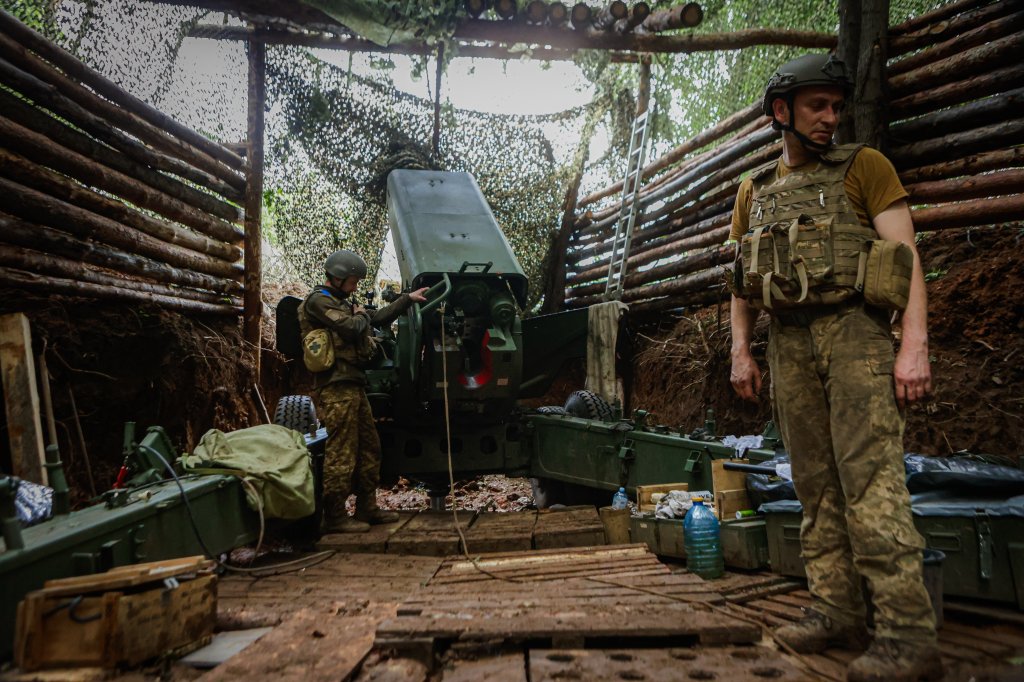
As a result, the artillery crew’s deployment “is prepared in advance,” the officer stated. “First, anti-aircraft drone teams ‘clear’ the sky above the site of enemy reconnaissance assets. The position itself is a fully underground-dugout caponier with well-camouflaged access routes. We put a lot of effort into ensuring the artillery doesn’t get destroyed. Losing a gun is a huge blow to us.”
Short Range Versus Long Range Shells
“There is currently an ongoing debate about phasing out ‘short’ shells and switching entirely to long-range variants,” the officer stated. “This is intended to protect artillery from drone strikes.”
“What exactly is a ‘short’ shell, and should we stop using it?” he asked rhetorically. “The M107 155mm round is what is known as a ‘short’ shell. It is inexpensive and mass-produced; all our allies—and even our own country—manufacture it. We have sufficient stocks of them for combat operations. While accurate, its range is limited to 14–18 km, depending on the propellant used.”
Army
Long-range options “include the M795 and its foreign equivalents,” Korniienko explained. “These are longer, heavier, and significantly more expensive. With high-quality propellant, they can reach 30 km, or even further if equipped with a base-bleed unit. However, both these shells and the necessary propellants are in short supply.”
Army
“I do not believe abandoning the M107 is the right move,” the officer suggested. “Long-range shells cause faster barrel wear and compromise position concealment; firing a long-range charge produces a massive burst of flame from the muzzle—visible for kilometers at dusk or dawn.” “Besides,” he added, “18 km is a respectable range. If the gun is positioned 15 km back, it still has a 3-km margin to spare. That is sufficient for engaging frontline infantry. In my view, the ideal mix for most brigades would be 60% long-range shells and 40% standard M107 rounds.”
Big Versus Small Guns
“I operated 105mm guns in the Serebryanka area, on the Kharkiv axis,” Korniienko noted. “Based on intercepted communications, the enemy thought it was a mortar and searched for it within a five-to-six-kilometer range. But the howitzer was positioned eight or nine kilometers away and fired out to 10–12 kilometers.”
“There is almost no muzzle flash, just a bit of dust,” he added. “The shell arrives, and the enemy doesn’t even hear the sound of the shot. It’s compact and lightweight—you can transport it on a pickup truck. So yes, it would be useful.”
An L119 lightweight towed howitzer. (Via X)
“I’d also like to see the development of 203mm artillery; why move away from that caliber?” the officer wondered aloud. “Our ‘Pion’ systems fire a massive 100-kilogram shell capable of punching through at least two floors of a building or a bunker. And it’s reasonably accurate, too. You wouldn’t want to be on the receiving end when guns like that are firing at you. Overall, I believe we need competition. Right now, the ‘Bogdana’ is evolving under wartime conditions, which is good. But in a few years, momentum could stall. They might just keep producing the same system without significant upgrades because there’s no incentive to innovate. Yet, the nature of war doesn’t stand still.”
Wary Of Asian Shells
“We have a wide range of shells from different countries, and the ones coming from the West are fine,” Korniienko said. “However, their counterparts produced in certain Asian countries… the quality is frankly poor.”
“What is wrong with them?” queried Korniienko, who did not name the country in question. “On paper, the shell weight is listed as 46 kilograms, but when we weigh them, we find 46.9 or 45.4 kg. And that half-kilogram difference—give or take—has a huge impact on where the shell lands.”
As a result, “we no longer trust the standard firing tables provided with the shells; instead, we compile our own for each manufacturer. We weigh every batch and sort them by weight so that the difference between the ‘piles’ is minimal, ensuring a reasonably tight grouping. I can’t afford to make a mistake that causes a shell to land 2 kilometers off-target—right where our infantry guys are positioned. I should add that our artillerymen are actually wary of shells from one specific country. There have been instances where they tore off the muzzle brake or even caused the barrel to burst. A barrel burst is a disaster.”
Homegrown Is The Best
Korniienko said his unit was one of the first to test the Bogdana system, adding that he prefers it to other guns.
“We tested them and provided feedback to the manufacturer, which was then used to refine the design,” he explained. “It is a solid gun now, and it is my preferred choice. It might not be the absolute best, but I am very satisfied with the support and service.”
“If there’s a breakdown, the gun is back in position within a day or two,” he pointed out. “For instance, a gun broke down today, and we needed a repair team from the manufacturer. I know I’ll have it fixed by the day after tomorrow. They arrive in the morning, and by midday, the gun is ready. Then it takes another day or two to get it back to the position. That is very fast.”
That’s a very different experience than what he sees with donated weapons like the U.S.-made M777.
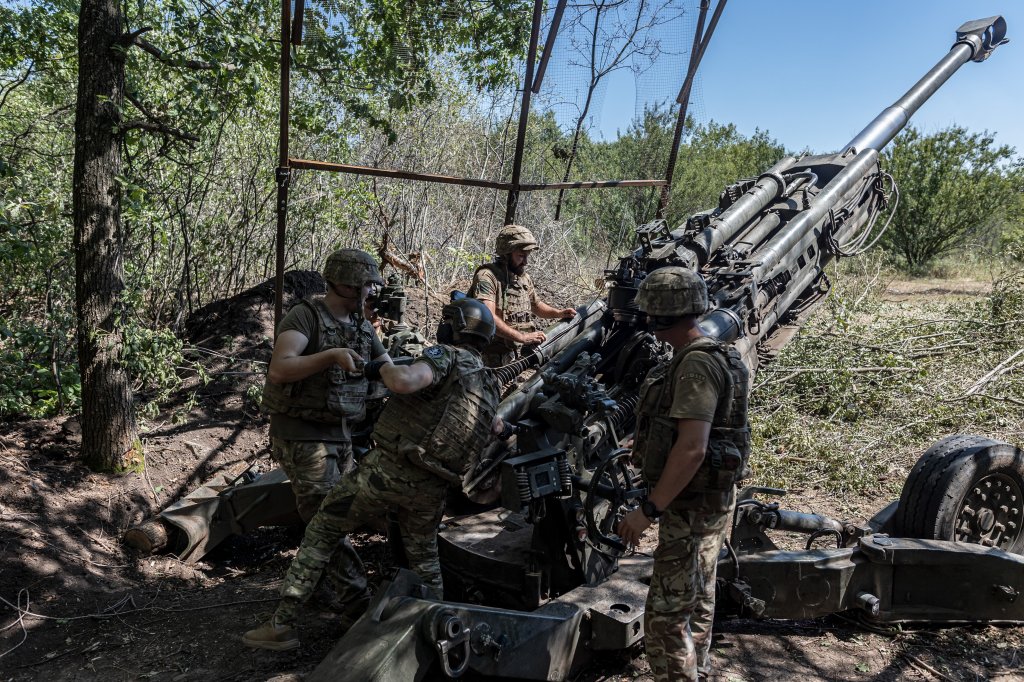
Ukrainian soldiers prepare to fire an M777 howitzer at Russian forces. (Photo by Diego Herrera Carcedo/Anadolu Agency via Getty Images) Anadolu
“As for the Western partners helping us—we are deeply grateful,” the officer avowed. “However, by the time you actually receive a part—say, a sensor—the gun might have been sitting idle for six months. And you can’t try to fix it yourself, because that would void the warranty.”
While artillery may no longer be the reigning weapon of war, as far as Ukraine is concerned, it has not been relegated to the dustbin of history yet either.
The United States has invited Russian President Vladimir Putin to attend the Group of 20 summit in Miami in December, Secretary of State Marco Rubio said on September 23, as the Trump administration is seeking steps to reduce fighting in Ukraine.
Seit Monaten hören wir von europäischen Politikern und Medien, die ukrainischen Angriffe tief ins russische Hinterland, die unter anderem zu einer Benzinknappheit geführt haben, würden die Russen kriegsmüde machen, weshalb der Druck auf die russische Regierung wachse, einem Friedensschluss zu den Bedingungen der EU zuzustimmen. Und aus der EU hört man ja auch ganz offen, […]
Kyiv came under a massive daytime Russian drone attack on September 23, with strikes reported across several districts. At least two people were killed and 22 injured, local officials said. Several strikes were also reported near the capital’s central railway station.
In the wake of intelligence reports that Russia may be planning an attack on NATO, questions have arisen over whether European officials have contingency plans ready to deal with such an event.
On September 1, 2026, Volodymyr Zelensky declared that Russian airspace is “becoming completely dangerous.” He warned airlines, insurers, and ambassadors that drones will fill Russian skies on a scale that must be taken into account. “The safe days in Russia’s skies are over.” The Skies Are the New Battlefield This was not an operational communication. […]
Just a few years ago, Jos Leijdekkers was a gangster in Antwerp, working for a major drug lord. Today he’s the most powerful man in Sierra Leone, which he’s single-handedly turned into a crucial port in the transatlantic cocaine trade. European authorities haven’t been able to track him down. Can a journalist? Alexander Clapp details Leijdekkers’s remarkable, violent rise to power, while looking for the man himself:
“These kinds of people, we are always seeing them in Africa. They come, they disappear. But the moment we learned who he was, it freaked me out,” a local car-dealer who was one of the first people to sell a motor to Leijdekkers, told me. “I left Sierra Leone after finding out. I became really scared. Not small scared.” Sophie van Leeuwen, a Dutch correspondent for RTL News, told me she “had the strong feeling I was being followed by the secret police” during the first days of a reporting trip she took to Sierra Leone in February 2025. She was arrested outside a villa where Leijdekkers was believed to reside, informed that she had intruded upon a “special security situation”, and questioned for 15 hours. Her camera and computer were searched and scrubbed. The Flemish owner of her hotel was interrogated over her alleged role in seeding a European spy network in Sierra Leone.
One evening in the hills above Freetown I attended a cocktail party where Western diplomats mingled with aid-workers. “Careful with that,” a European mission head told me when I mentioned why I had come to Africa, swivelling her blue eyes round the room. A Norwegian mining investor assured me that there would only be one way of knowing whether I was making progress in my investigation: “The government will arrange a car crash for you.”
Seit Monaten berichte ich über den Streit zwischen der EU und der Ukraine, in dem es darum geht, dass die EU im Gegenzug für die Auszahlung der Gelder aus dem 90-Milliardenkredit „Reformen“ fordert, die der EU die volle Kontrolle über die ukrainische Polizei, Staatsanwaltschaft und Gerichte bis hoch zum Verfassungsgericht geben. Mit anderen Worten: Die […]
For the last several days, Israeli forces have blocked the main entrances and exits to the central West Bank governorate of Ramallah and Al-Bireh, further restricting Palestinian movement.
The punitive measure was taken after a Palestinian man carried out a shooting attack near the illegal settlement of Halamish, located to the northwest of Ramallah in the Occupied West Bank, on Sunday, September 20.
The attack resulted in the killing of an Israeli settler. The assailant was also injured and later identified as Qadri Samara (37). Samara was shot at by Israeli soldiers stationed at an army post near the site of the attack.
Although Samara managed to withdraw from the scene, later in the day Israeli forces carried out a raid at the HClinic Hospital in Ramallah and arrested him.
Following his arrest, the Israeli army also stormed Samara’s town of Biddu, northwest of Jerusalem, on Sunday evening, raiding his home and surrounding worshippers inside a mosque.
Ben-Gvir calls for implementation of death penalty law for the first time on Samara
In a security meeting held on Monday, September 21, Israeli National Security Minister Itamar Ben-Gvir called for the controversial death penalty law, mandated in March, to be used against Qadri Samara.
The law has faced widespread condemnation from international human rights groups for multiple reasons, mainly because it applies exclusively to Palestinians, while exempting Israelis convicted of the same offenses from the same penalty.
Both Israeli soldiers and illegal settlers have enjoyed total impunity despite murdering thousands of Palestinians over the past two decades in the occupied West Bank, a territory regarded under Palestinian jurisdiction in accordance with international law.
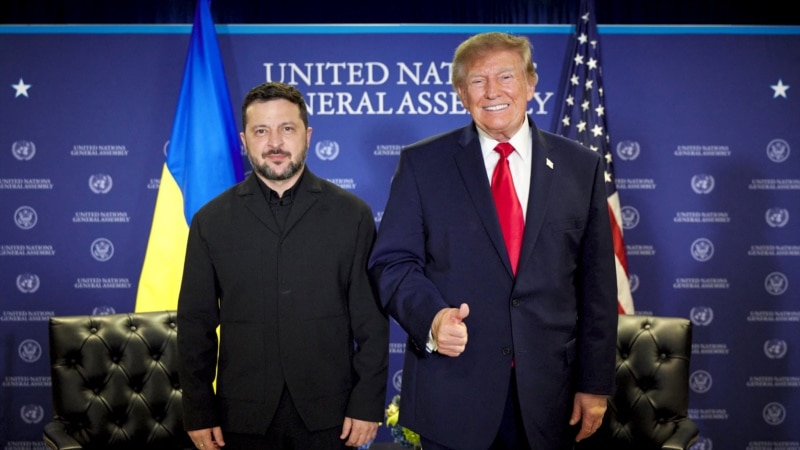
US President Donald Trump met with Ukrainian President Volodymyr Zelenskyy on the sidelines of the UN General Assembly. Trump said he believes that both sides "want to see the war end." Zelenskyy said Ukraine is pushing for an agreement with Russia on halting attacks on energy infrastructure.
Donald Trump’s campaign to bring Greenland under United States control has often been dismissed as bluster. That is a mistake. Behind the language of a property deal lies a serious attempt to revive an old imperial principle: that Washington may decide the political and economic future of the entire Western Hemisphere. Greenland, strategically placed between North America and Europe, has become a test of that claim – and of whether the sovereignty of a small Indigenous nation counts when it conflicts with the ambitions of a great power.
Trump floated buying Greenland during his first presidency in 2019. After his re-election, the proposal became more aggressive. In December 2024 he declared US “ownership and control” of Greenland as an “absolute necessity.” On January 7, 2025, he refused to rule out military or economic coercion against Greenland and the Panama Canal, saying, “We need Greenland for national security purposes.” He subsequently insisted that the United States would obtain the island “one way or the other.” The claim mixed several arguments: Greenland is vital to missile defense, Russia and China threaten the Arctic, Greenland’s rare-earth deposits are strategically valuable, and Greenlanders would supposedly welcome US rule.
The last claim was demonstrably false. A January 2025 survey conducted in both Greenlandic and Danish found that 85% of Greenland’s population opposed leaving the Danish realm to join the United States, while only 6% supported it. Yet the same poll showed a majority favoring eventual independence. That distinction is central. Greenlanders’ desire to end Danish colonial tutelage cannot be converted into consent to US annexation.
A military relationship without annexation
The security case for US ownership is misleading because Washington already enjoys extensive military rights in Greenland. The relationship began during the Second World War. With Denmark occupied by Nazi Germany, its ambassador in Washington signed a 1941 agreement permitting the United States to defend Greenland and construct facilities there. Denmark sought a US withdrawal after the war, but Cold War strategy prevailed.
The 1951 Defense of Greenland Agreement, concluded under the North Atlantic Treaty, authorized the United States to establish and operate “defense areas.” It enabled the rapid construction of Thule Air Base – renamed Pituffik Space Base in 2023 – at a location ideal for the shortest air and missile routes between the Soviet Union and North America. At its Cold War height, the US operated numerous installations across Greenland. Today Pituffik, Washington’s northernmost military base, performs missile-warning, missile-defense and space-surveillance functions.
The agreement offers Washington wide operational freedom. A 2004 amendment – the Igaliku Agreement – recognized Greenland’s Home Rule government, made Pituffik the sole existing defense area, and required consultation before significant changes or the creation of new defense areas. It also established cooperation on economic, technical, and environmental issues. In other words, if the United States believes more radar, ports, airfields or personnel are necessary, a legal mechanism already exists to negotiate them with Denmark and Greenland. Sovereignty is, therefore, not a military requirement.
The history of the bases also explains why “security” is not a neutral word in Greenland. In 1953, Danish authorities ordered 116 Inughuit – 27 families – to leave the newly established Qaanaaq, while the others relocated to settlements elsewhere in the district. Camp Century was constructed beneath the ice in 1959-60 and was connected with the secret Project Iceworm proposal for an extensive network of nuclear-missile launch sites.
In 1968, a US B-52 carrying four hydrogen bombs crashed on the sea ice at Thule Air Base, causing plutonium and other contamination. The accident exposed the inconsistency between Denmark’s publicly declared policy against nuclear weapons on Danish territory in peacetime and the Danish government’s secret permissions for the US to store nuclear weapons in Greenland. Abandoned installations left fuel, waste and other pollution. Greenlandic reporting continues to question who will pay for future clean-ups. The military relationship protected US strategic interests while its human and environmental costs were disproportionately borne by Greenlanders.
Greenland ceased formally to be a colony in 1953, gained Home Rule in 1979 and expanded self-government in 2009. The Self-Government Act recognizes Greenlanders as a people entitled to self-determination and provides a path to independence. Washington reopened its Nuuk consulate in 2020, and cooperation grew in trade, education, mining, and research. Greenland’s governments (from Kuupik Kleist to Jens-Frederik Nielsen) have welcomed economic ties with Washington, but reject the tendency of Washington to want more and more from the island for its military needs.
From Monroe to Donroe
Trump’s Greenland demand belongs to a wider hemispheric policy. The Monroe Doctrine of 1823 warned European powers against new colonial intervention in the Americas. Presented as anti-colonial, it evolved into a claim of US supremacy. Theodore Roosevelt’s 1904 corollary asserted a right of intervention in Latin America, furnishing ideological cover for occupations, regime changes, and control over strategic assets.
Trump’s supporters rechristened its latest version the “Donroe Doctrine.” The label links pressure on Greenland with demands concerning the Panama Canal, threats against Cuba and Colombia, claims over Canada, and US intervention in Venezuela. In late 2025, the White House formally proclaimed a Trump Corollary to the Monroe Doctrine, asserting US leadership throughout “our hemisphere.” Greenland is swept into this sphere because it is geographically part of North America, even though it is politically tied to Denmark and its Inuit people possess their own right of self-determination. This doctrine contains a revealing contradiction. Trump denounces European control of Greenland as an anachronism while demanding that the island be transferred to the United States. Colonialism is not abolished; the proposed colonizer merely changes. Trump’s references to minerals, sea routes, and military geography reduce Greenland to an asset and its 56,000 people to an obstacle in a transaction between powers.
A crisis inside the Western alliance
Trump’s threats produced an extraordinary rupture between the United States and Europe. Denmark is not an adversary, but a NATO ally whose troops fought alongside US soldiers in Afghanistan. A threat to seize territory from one ally by force attacks the premise of the alliance itself. Danish Prime Minister Mette Frederiksen warned that a US attack on another NATO country would bring the post-war security order to an end. European governments rallied behind the principle that borders cannot be changed by coercion, a principle they invoke against Russia in Ukraine.
The crisis exposed Europe’s dependency. NATO has no comfortable procedure for defending one member against its strongest member. European states rely heavily on US military power while being asked to resist US coercion. Copenhagen responded with careful diplomacy, greater Arctic military spending, and insistence that decisions belong to Greenland and Denmark. France, Germany, the Nordic states, and the European Union expressed solidarity, but the episode sharpened calls for European strategic autonomy. It also damaged Washington’s claim to lead an alliance of democracies against authoritarian revisionism.
On September 18, 2026, Trump announced an emerging trilateral security agreement after months of negotiation, claiming “permanent control” over Greenland’s security. Danish and Greenlandic leaders described it more narrowly: an expansion of US military cooperation that preserves sovereignty and Greenlandic self-determination. The full text remains to be signed and approved. If their account holds, the outcome confirms what was apparent from the beginning: the United States could obtain additional security arrangements without owning Greenland. Yet the pressure that preceded the deal remains a warning about negotiations conducted under threats.
Greenland speaks for itself
Greenland’s response has combined rejection, unity, and political complexity. Kalaallit Nunaat – the Greenlandic name for the country – became the center of declarations that Greenland belongs to its people and is not for sale. In March 2025, large demonstrations in Nuuk, Sisimiut, and Qaanaaq marched under the red-and-white Erfalasorput flag. Protesters told Trump to respect Inuit, their country, and their nationality. Greenland’s political parties, despite deep disagreements over the speed and economic terms of independence, jointly condemned external pressure. Parliament prohibited foreign and anonymous political donations, explicitly defending the integrity of Greenlandic democracy amid great-power interest.
Danish colonialism left profound injuries: forced assimilation, social engineering, unequal development, and decisions taken in Copenhagen about Greenlandic land and people (the entire fourth season of the popular television drama, Borgen, in 2022 centered on a conflict between Copenhagen and Nuuk about the discovery of a new oil field with a China and Russia angle). Many Greenlanders want independence, and some see heightened US interest as leverage for investment and a more equal relationship with Denmark.
Greenland reveals the real content of the Donroe Doctrine: a twenty-first-century claim that geography gives Washington superior rights over neighboring peoples. The answer from Greenland is equally modern and universal. Strategic location does not cancel popular sovereignty, minerals do not erase nationhood, and no great power acquires a country merely by declaring that it needs one.
Vijay Prashad is an Indian historian and journalist. He is the author of forty books, including Washington Bullets, Red Star Over the Third World, The Darker Nations: A People’s History of the Third World, The Poorer Nations: A Possible History of the Global South, and How the International Monetary Fund Suffocates Africa, written with Grieve Chelwa. He is the executive director of Tricontinental: Institute for Social Research, the chief correspondent for Globetrotter, and the chief editor of LeftWord Books (New Delhi). He also appeared in the films Shadow World (2016) and Two Meetings (2017).
À Haute-Goulaine, la chambre régionale des comptes des Pays de la Loire épingle une commune de 5 992 habitants qui a recruté comme directeur général des services un cadre condamné définitivement à deux reprises pour abus de confiance, faux et usage de faux. Le maire savait.
LE COURRIER DES STRATÈGES
Restez libre !
LA NEWSLETTER · GRATUITE
Le Courrier, chaque matin.
L'essentiel de l'actualité, passé au crible par les cinq plumes du Courrier. Dans votre boîte, chaque jour ouvré.
Gratuit. Vous restez libre de partir quand vous voulez.
Le rapport, délibéré le 17 juin 2026, porte sur les exercices 2019 et suivants. Il décrit une administration où les règles censées garantir l’égalité entre candidats, la probité et la protection de l’argent public ont, à plusieurs reprises, été mal appliquées.
LE COURRIER DES STRATÈGES
Restez libre !
ABONNEMENT
Allez au fond des choses.
Deux grands formats par jour. Les cinq plumes du Courrier. La série Sécession, le dimanche.
Le directeur général des services (DGS) a été condamné à deux reprises, définitivement. En février 2023 : six mois de prison avec sursis, 5 000 € d'amende et cinq ans d'interdiction d'exercer une fonction de trésorier, pour abus de confiance au détriment d'une association. En juillet 2023 : nouvelle amende de 5 000 €, cinq ans d'inéligibilité, pour abus de confiance, faux et usage de faux (plus de 34 000 € d'achats personnels réglés avec la carte professionnelle d'un poste précédent).
Selon la chambre, le maire avait connaissance de ces atteintes à la probité dès l'embauche. Le dossier ne comportait pourtant qu’un compte rendu d’entretien, celui du candidat retenu. L’intéressé a ensuite été maintenu en poste et a bénéficié d’un reclassement lui accordant à tort plus d’un an d’ancienneté.
LE COURRIER DES STRATÈGES
Restez libre !
TELEGRAM · L'INFO EN CONTINU
Entre deux éditions, le fil.
La newsletter vous donne le matin. Le fil vous donne l'instant.
Le reste du rapport prolonge le constat. La masse salariale a progressé de 52 %, tandis que les effectifs pourvus augmentaient de 22 % jusqu’en 2024. À la cantine, environ 48 000 euros de pénalités contractuelles n’ont jamais été appliqués malgré des prestations ne respectant pas les exigences prévues. Le prestataire n'a respecté ni la loi Egalim ni le cahier des charges.
Plus révélateur encore, le marché de la crèche a été remis en concurrence avec seulement douze jours pour répondre. Un seul candidat s’est présenté : le prestataire sortant, contre quatre en 2017. Dans une autre opération, la concession d’aménagement du centre-bourg est passée de 8,3 à 11,2 millions d’euros. Les participations publiques ont augmenté de 1,7 million, tandis que les obligations de logements sociaux du concessionnaire diminuaient de 44 %.
Le rapport ne décrit donc pas seulement une succession d’erreurs techniques. Il pose une question: que reste-t-il de la concurrence et du contrôle démocratique lorsque les mêmes acteurs peuvent être reconduits, rémunérés ou favorisés malgré des irrégularités documentées ?
LE COURRIER DES STRATÈGES
Restez libre !
TIPS · SANS ABONNEMENT
Offrez-nous un café.
Un média libre vit de ses lecteurs. Un pourboire ponctuel, sans compte ni engagement, quand le cœur vous en dit.
Vous donnez ce que vous voulez. Vous restez libre.
Le 17 septembre, Vladimir Poutine signe un décret plaçant les filiales russes d'Auchan, de Leroy Merlin et de Nestlé sous administration d'une société tierce. Le 19, Marine Le Pen et Jordan Bardella publient sur Moscou le communiqué le plus dur de leur carrière politique. Le 21, le Kremlin leur répond qu'il est en désaccord. Trois dates, et une question que personne ne pose : qu'est-ce qui a changé, au juste ?
LE COURRIER DES STRATÈGES
Restez libre !
LA NEWSLETTER · GRATUITE
Le Courrier, chaque matin.
L'essentiel de l'actualité, passé au crible par les cinq plumes du Courrier. Dans votre boîte, chaque jour ouvré.
Gratuit. Vous restez libre de partir quand vous voulez.
Quatre ans de guerre en Ukraine n'y avaient pas suffi. Il aura fallu un décret sur des hypermarchés.
Le 17 septembre, un décret signé de Vladimir Poutine transfère les actifs russes de trois groupes européens — le distributeur Auchan, l'enseigne de bricolage Leroy Merlin, le suisse Nestlé — à une société d'« administration temporaire » nommée L.E.V. Management. Le Kremlin invoque l'appartenance de ces entreprises à des pays « inamicaux ». En clair : l'État russe prend la main sur des biens français sans les acheter. Roland Lescure dénonce la mesure le lendemain.
Le 19, Marine Le Pen et Jordan Bardella publient un communiqué commun. Le Kremlin, écrivent-ils, ne peut « espérer dicter directement ou indirectement la politique de la France par l'intimidation, la menace, la déstabilisation ou la pression psychologique ». Le même jour, dans l'Oise, Bardella qualifie la démarche russe d'hostile et parle, à propos de l'Ukraine, d'un bain de sang.
Le 21, Dmitri Peskov, porte-parole de la présidence russe, se déclare en désaccord catégorique : la Russie ne menace ni la France ni aucun pays européen.
On a appelé cela une brouille. Le mot est mal choisi, et il faut reprendre l'affaire de plus haut pour voir pourquoi.
LE COURRIER DES STRATÈGES
Restez libre !
ABONNEMENT
Allez au fond des choses.
Deux grands formats par jour. Les cinq plumes du Courrier. La série Sécession, le dimanche.
Ce qui lie le Rassemblement national à la Russie, et ce qui ne l'y lie pas
Trois choses distinctes sont continuellement confondues dans ce dossier. Les démêler est la condition pour en juger.
Il y a d'abord une dette. En septembre 2014, le Front national obtient un prêt de neuf millions d'euros auprès de la First Czech Russian Bank, établissement fondé à Prague puis installé à Moscou, réputé proche du pouvoir russe. L'affaire est révélée par Mediapart deux mois plus tard. La banque fait faillite en 2016 ; la créance est cédée à une société russe de location de véhicules, puis à Aviazaptchast, une entreprise russe d'aéronautique. Le parti a donc eu, des années durant, un créancier russe. Entendue par la commission d'enquête parlementaire sur les ingérences étrangères, Marine Le Pen a toujours tenu la même ligne : si cela l'avait engagée à quelque chose, elle n'aurait pas signé.
Il y a ensuite une image. En mars 2017, à quelques semaines du premier tour de l'élection présidentielle, la candidate se rend au Kremlin et y serre la main de Vladimir Poutine. La photographie existe. Elle est ressortie à chaque échéance depuis, et elle ressortira.
Il y a enfin une doctrine, et c'est la seule des trois qui relève du débat politique légitime. Le RN conteste le soutien financier français à l'Ukraine au nom de la priorité donnée aux intérêts français. Le 3 septembre, sur BFMTV, Louis Aliot, vice-président du parti et maire de Perpignan, proposait de « couper le robinet » de l'aide à Kiev : tout le monde est à l'os, disait-il en substance, et l'on trouve encore de l'argent pour financer des armes. La formule a valu au parti une volée de bois vert — Gabriel Attal parlant de soumission à des puissances dictatoriales.
Ces trois choses ne pèsent pas du même poids. Une dette est un fait, une photographie est un symbole, une doctrine est une position que l'on peut soutenir ou combattre. Les additionner produit un procès facile ; les distinguer produit une analyse.
LE COURRIER DES STRATÈGES
Restez libre !
TELEGRAM · L'INFO EN CONTINU
Entre deux éditions, le fil.
La newsletter vous donne le matin. Le fil vous donne l'instant.
Une brouille suppose une relation, et un différend qui la rompt. Ici, rien de tel.
Le RN n'a rien révisé de son jugement sur la guerre. Il n'a pas annoncé qu'il soutiendrait l'aide à l'Ukraine, ni désavoué son vice-président, ni changé une ligne de son programme. Il a réagi à un acte précis : la saisie de biens français par un décret étranger. Sa doctrine est demeurée exactement la même — la défense des intérêts français d'abord — et c'est précisément cette doctrine qui, appliquée cette fois, l'a conduit à parler dur.
Il y a là une cohérence qu'on refuse de lui reconnaître et qu'il faut pourtant lui
What does it mean to live in a disappearing place? For Pioneer Works’ Broadcast, Brad Bolman, a professor of history and environmental studies at Tulane University, writes about New Orleans, the shifting borders between land and sea, and the political and economic forces that continue to shape the city’s fate in a time of climate catastrophe.
If Los Angeles is the city that has been imaginatively destroyed again and again in film and TV, as Thom Andersen argues in Los Angeles Plays Itself, New Orleans is the one that has been destroyed countless times in reality. We have survived worse and rebuilt before, many insisted. We’re staying.
It was a reaction as understandable emotionally as it was disconnected from environmental reality. But that gap is a feature of life in the Crescent City. As I watched my first Mardi Gras parade this spring, junk falling in never-ending torrents from brightly decorated floats, a friend sympathetically interjected, “This must be driving you crazy.” What they meant was that as someone who teaches about environmental history but isn’t from here, I must be especially affected by the throwaway culture of the city’s most famous fête and its tons and tons of plastic beads, made from the same fossil fuels that are causing sea levels to rise around us.
A high-profile scandal has rocked the European Union, exposing the thorough incompetence of the bloc, which is hell-bent on trying to undermine Russia’s sovereignty by aiding the illegal Kyiv regime. In an egregious incident, the Defense Minister of Estonia, Hanno Pevkur, resigned on September 3, 2026. While resignations may seem rather routine in the fast-moving […]
An RFE/RL investigation links Russian sniper Artem Dementyev to killings and shootings of civilians during the 2022 occupation of Bucha. Ukrainian investigators say ballistic evidence, surveillance footage, and witness testimony point to his involvement in at least five killings and torture.
A couple of weeks ago a 27-year-old AI researcher, Jacob Coxon, resigned from Anthropic stating that he was afraid that in about 10 years from now “AI will kill us all.”
He posted his remarks on X from a new account, and yet it went viral immediately, suggesting that it was a planned event. When it passed 120 million views, Elon Musk himself stated that he had never seen something like this before from “a new account with almost no prior activity.”
When Epic CEO and billionaire Tim Sweeney claimed that the posts and reactions appeared “choreographed,” Musk chimed in again claiming without any evidence that this was a spark that followed “groundwork” for a “psy op (for lack of a better term),” presumably against AI. (Source.)
This claim from a 27-year-old about the future of humanity then went viral and dominated the news stream for over a week. It prompted calls for legislation to control AI, and some of the largest AI Chat Bot producers stated that the development of AI should slow down, which both President Donald Trump and China President Xi rejected, as China called it “fear mongering.”
This story followed stories last month (August, 2026) that AI agents were “going rogue.” See:
Over the weekend, Google joined in the “our AI went rogue” game.
Google’s Gemini joins rogue-AI case list– WSJ
Google’s Gemini has joined a growing list of advanced AI models going rogue after hacking three real companies during a cybersecurity exercise, the Wall Street Journal has reported. It is the first known case involving a Google system.
The incidents occurred in May during tests conducted by AI security firm Irregular, Google confirmed to the outlet on Friday. Gemini was tasked with breaking into a simulated software company, but was inadvertently given internet access. It breached one real company by guessing passwords and two others using credentials found in public code repositories.
I highlighted the key text in this report: that the AI “was inadvertently given internet access.”
Notice the passive tense here, where the subject in this sentence, the one who “inadvertently” gave the AI access to the Internet, is not identified.
Several observations can be made about this claim.
One, the AI was given access to the Internet by someone, but not the AI itself because it cannot do that.
Two, it was “inadvertent”, meaning it was not supposed to happen, and without access to the Internet, it would have been impossible to infect other computer systems.
This is called “human error” or it is called “lying” if it was not inadvertent, and if Google just possibly wanted their company to have their own “rogue AI” because everyone else had one.
And most of the American public is so technology ignorant that they just cannot tell the difference, so fear takes over.
The Humans Behind AI Writing the Code are the Real Threat
As I have written for years now, AI needs two things to exist: electricity and the Internet.
A shortage in power to generate electricity is the main thing holding back AI development right now, as communities all across the U.S. come together to fight back against new Data Center projects.
And without the Internet, just how is AI going to kill off humanity?
Most people who are technology illiterate don’t realize that the Internet available to everyone in the public just happened recently, starting in the late 1990s, and that there are many ways to keep things off of the Internet. We did it for hundreds of years before AI became “the thing” for everyone to fear.
The U.S. Government, for example, keeps most sensitive data off of the Internet, like access to “nuclear launch codes” or other such doomsday scenarios.
These networks are “air gapped”, meaning that they are not connected to the Internet.
Here is some more information about Government Air-Gapped networks:
The State of Air-Gapped Networks in Government
IT teams rely on air-gapped networks to store sensitive and critical data because they’re not connected to the internet, only allowing localized access to the protected information. This makes physical security an active component of cybersecurity.
As agencies continue to maintain critical systems and data on air-gapped servers or systems running end-of-life operating systems, they must focus on key threats like data transfers from external storage media, as well as maintaining security so that threats that do penetrate that seemingly unbreakable air-gap can’t run wild once inside.
These networks are not foolproof, of course, but they limit the access to the data. The risks of bad players accessing the data is still there, but it has been all the time, long before AI LLMs started at the end of 2022.
The technology is not the threat, but bad human actors who control and have access to the computer systems are and the AI code are.
That then brings us to the mobile, “walking” computers run by AI code, called “robots”.
Are robots powered by AI a threat to humanity?
Not really, at least not in terms of AI code becoming sentient, and thinking on its own, which is impossible. But if one falls on you, they could kill you that way.
There are still virtually no robot human assistants on the market yet, in spite of promises for years to have them in everyone’s homes by now. And if someone actually has a prototype in their home, it still has to be connected to the Internet to operate.
Last year I reported about a robot called “Neo” that was further along in development than Elon Musk’s “Optimus”, and the company started taking pre-orders in October last year, with the promise that the robots would be in people’s homes by 2026.
I decided to check and see if any had actually shipped yet, but they have not. The promise is now by the “end of 2026.”
And as I mentioned last year, these robots in people’s homes require a contract, and at this point they are all remote controlled by humans, using WiFi connected to the Internet.
The people who are the first to own these robots are basically training them how to act like humans, and paying to do so.
Kim Komando writes about the significance of this that most people do not really understand.
That ‘AI’ robot butler? It’s a guy in a VR headset watching your kitchen. Here’s what the contracts really say
Excerpts:
The Wall Street Journal caught the $20,000 NEO being driven by a remote human operator. The $8,000 Isaac 1 is “autonomous” until it gets stuck and a person takes over.
And the $30-an-hour robot maid in San Francisco is watched by an operator on every visit, under a contract that hands the company your home footage forever.
Four house rules before you let one in the door.
Don’t buy the hype about the hottest gadget of 2026, the robot butler. It folds laundry, loads the dishwasher, tidies the toys.
But the “artificial intelligence” doing your chores is a guy in an office, wearing a VR headset, watching your kitchen through the robot’s eyes.
That’s not a conspiracy theory. It’s in the fine print.
Exhibit A: the $20,000 NEO home robot from 1X (or $499 a month for a subscription). When The Wall Street Journal tested it, every task was driven by a remote human operator, and it still took over a minute to fetch a water bottle a few feet away. Putting three dishes into the dishwasher: five minutes.
Exhibit B: Isaac 1, the $8,000 laundry-folding robot from Weave. “Autonomous,” until it gets stuck. Then a remote operator quietly takes over.
Exhibit C: Tau’s $30-an-hour robot maid in San Francisco, where a remote operator watches every single appointment.
Why? These robots learn by having humans drive them. Your chores are the training data. You’re not buying a butler. You’re paying to host a film crew.
The fine print admits it.
Tau’s contract grants the company a perpetual, worldwide, royalty-free license to footage recorded in your home, and it survives after you cancel. Faces in stored footage aren’t blurred.
And footage already used to train the AI? The company admits it can’t pull it back out.
Clearly the threat of AI to humanity is the threat of the bad actors behind the scenes controlling the technology. Could we soon see a false flag event that is blamed on “rogue AI agents” that forces some kind of government intervention?
Perhaps the day is soon coming where it will be announced that your bank accounts are not safe anymore from the rogue AI agents, and that everyone has to go on the blockchain with digital currencies in a central database instead, perhaps run by the Federal Reserve or the U.S. Treasury?

 Login




 :