To best honor the extraordinary and radiant Christian life of Padre Pio of Pietrelcina—whose feast day is celebrated today, September, 23, in the Catholic Church’s liturgical calendar—Gospa News presents three exceptional video documentaries of varying lengths and some exclusive reports.
The Italian articles linked below can easily be read in English and other languages by activating the automatic translation feature via the flags at the top left.
Yuval Abraham and Rachel Szor find themselves at the center of a political clash involving the Israeli Prime Minister, two government ministers, and top intelligence officials. The catalyst is *Naza*, the documentary they presented at the 83rd Venice International Film Festival—a film that, in just a few days, transformed them from acclaimed filmmakers into targets of accusations of treason.
After declaring he would seek to revoke their Israeli citizenship, Israeli Culture Minister Miki Zohar made a fresh appeal to Shin Bet chief David Zini, urging him to investigate how various materials were obtained. The film features testimony from 24 anonymous Israeli intelligence soldiers denouncing the techniques used by the Israeli military to kill civilians in Gaza.
In a letter to Zini, Zohar asks the agency to investigate whether there was any illegal use of sensitive or classified information.
“When anonymous sources are used to spread serious, false accusations against the State of Israel and the IDF during wartime, it is imperative to establish who is behind these allegations,” Zohar stated. “I have asked the head of the Shin Bet to investigate the source of the material, who provided it, and whether hostile elements were involved,” the minister added.
Reactions from Israeli officials following the Venice screening
Immediately after the documentary film was presented in Venice, Culture Minister Miki Zohar called the film “vile” and announced plans to “act immediately” to revoke the Israeli citizenship of Abraham and Szor.
He accused them of “treason against the State” and of a “self-loathing” that drives them to harm their own homeland in order to garner applause from “antisemites around the world.” Zohar stated that he had contacted senior officials at the Ministry of the Interior and the Population Authority to evaluate revoking their citizenship on the grounds of a breach of loyalty to the country.
Joining the chorus of accusations were Army Chief of Staff Eyal Zamir—who claimed the film relied on “blood libels and deliberate distortions of reality”—and National Security Minister Itamar Ben-Gvir, who called on the pair to leave the country.
Finally, Prime Minister Benjamin Netanyahu linked the case to broader “antisemitic incitement” and lashed out at opposition political forces.
The Israeli military largely rejected the documentary’s content, maintaining that it could not verify the identities or military roles of the anonymous sources and reiterating that it does everything possible to avoid civilian casualties.
IDF chief floats legal action against ‘NAZA’ film, orders probe of leaked material
IDF Chief of Staff Lt. Gen. Eyal Zamir on Monday instructed the military’s top legal official to examine legal action against the film “NAZA” and those involved in it, saying it defamed the military, and separately ordered an investigation into the leaking of classified material used in its production.
His comments came shortly after IDF Spokesperson Brig. Gen. Effie Defrin issued a statement inviting the documentary’s filmmakers to allow military officials to view the film in full so that the IDF could respond in a “substantive manner.” So far, the military has only reacted to clips of the movie posted online, and has not yet seen the full documentary.
The 80-minute film by Yuval Abraham and Rachel Szor — whose title is a Hebrew acronym meaning collateral damage — claims to explore AI-powered strikes by Israel in the Gaza Strip it alleges have led to civilian deaths, including testimonies from 24 purported Israeli intelligence soldiers.
The risks of returning to Israel
In the days following the award, Yuval Abraham recounted deleting his social media profiles after being inundated with offensive photomontages targeting both him and his mother; he openly admitted his fear: “Israel is my home… but now, obviously, I am afraid I won’t be able to return.” Abraham had also rejected the idea of positioning himself as a voice of moral superiority, explaining that, as Israelis, they all feel—to some extent—co-responsible for what occurred in Gaza.
The process of stripping Abraham and Szor of their Israeli citizenship—which they hold by birth—is neither swift nor within the sole authority of the Minister of Culture, who lacks the legal power to order it.
Under Israeli law, citizenship can only be revoked in limited cases involving a proven “breach of loyalty” to the State—as established by a 2022 Supreme Court ruling. The procedure requires the Minister of the Interior to submit a request to the Minister of Justice, followed by final approval from a panel of judges. It is, therefore, a lengthy and uncertain process—one that has never before been applied to a case involving journalism or filmmaking.
A more immediate prospect, at least from an investigative standpoint, is Zohar’s request for the Shin Bet to investigate the origins of the material used in the film.
Such an inquiry could lead to investigations into potential offenses related to the disclosure of classified information, carrying criminal consequences not only for the filmmakers but also for the military sources who collaborated anonymously.
Compounding this is the immediate concern for the two creators’ personal safety—a fear fueled by past incidents, such as the assault on Hamdan Ballal following the Oscar win for *No Other Land*.
Diesel prices have climbed to record or multiyear highs in several European countries this week, squeezing truckers, farmers and households already strained by months of elevated energy costs tied to the Middle East conflict, the war in Ukraine, and tight global fuel supplies.
Germany posted a new all-time high of €2.471 per liter on Wednesday, according to the ADAC motoring club, as reported by German news outlet t-online. This price has left motorists paying about €0.71 more per liter than before the war began. Gasoline prices also set a nationwide record.
Alternative for Germany (AfD) politicians are going on the offensive.
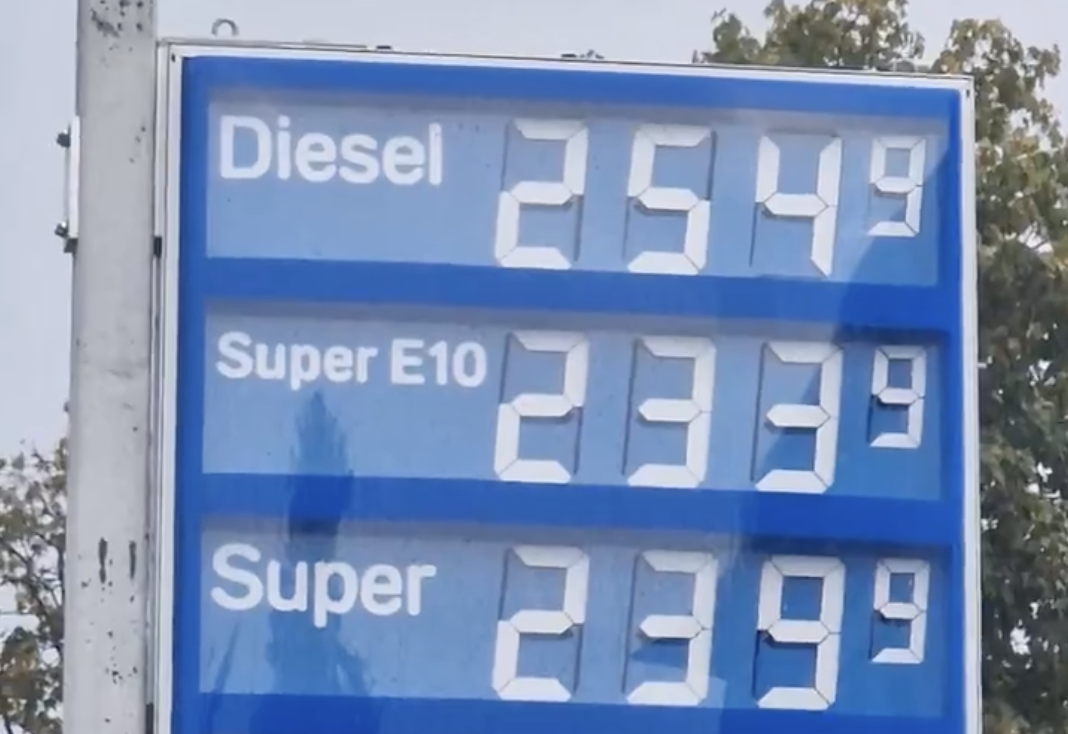
“Fuel price: Merz government is done for! Incredible €2.55 per liter for diesel and €2.34 for super here at the gas station. In Germany, the highest taxes on fuel are paid. Two days ago, I filled up for €176.00 and my car wasn’t even full,” wrote German MP Dr. Ingo Hahn.
Spritpreis: Merz-Regierung hat fertig!
Unglaubliche 2,55 € für den Liter #Diesel und 2,34 € für SUPER hier an der #Tankstelle. In Deutschland werden die höchsten Steuern auf den #Sprit bezahlt. Vor zwei Tagen hatte ich für 176,00 € getankt und mein Auto war nicht voll. pic.twitter.com/fgHfK1CMy0
Finland led the European Union at €2.505 per liter in the latest official weekly data, followed closely by Denmark at €2.502 and the Netherlands at €2.494. The EU-wide average stood at €2.075 per liter as of mid-September.
Some individual stations in Germany, France and Italy have even approached or exceeded €2.90 per liter. The weighted average across eight major markets reached €2.172 per liter on Thursday.
One AfD politician, Martin Hess, even highlighted one gas station where prices reached €3.00 per liter for the first time.
Erstmals kostete Diesel gestern an einer Tankstelle im Kreis Göppingen (Baden-Württemberg) über 3 Euro pro Liter, Super 2,859 Euro.
Und was macht Merz? Kurz vor den Wahlen in Mecklenburg-Vorpommern und Berlin kündigt er Entlastungen an, statt endlich zu handeln. Die Bürger… pic.twitter.com/fSgtbHB2qk
Physical wholesale diesel prices in northwest Europe and the Mediterranean hit record or near-record levels earlier this week before easing slightly.
The surge in energy costs stems from disruptions to shipping through the Strait of Hormuz, along with advances by Houthi forces in Yemen, Russia’s extended ban on diesel exports, depleted inventories, high refining margins, and seasonal demand. With winter heating season fast approaching, experts warn the energy crisis could worsen.
“Supply disruptions, depleted inventories and strong refining margins highlight an increasingly severe shortage of middle distillates,” Ole Hansen, head of commodity strategy at Saxo, wrote in a note Sept. 16.
Crude prices have remained elevated above $100 a barrel, but the price of refined diesel has risen at a much faster rate compared to crude barrels, which is also the case across the Atlantic in the United States.
Electricity wholesale prices vary widely across Europe. Italy has seen day-ahead prices well above €200 per megawatt-hour in some zones, while Nordic markets have managed to remain much lower.
European Commission President Ursula von der Leyen told the European Parliament on Wednesday that the Hormuz crisis has added €90 billion to the EU’s fossil-fuel import bill since the conflict started “without a single molecule of energy added.”
She urged faster investment in grids, storage and clean power, saying Europe cannot remain an industrial powerhouse with structurally high energy prices.
“Let’s make Europe’s future electric,” she said, calling for electricity’s share of energy consumption to double by 2040.
The Commission’s AccelerateEU package, launched in April, emphasizes closer coordination on gas storage filling and possible oil stock releases, a new Fuel Observatory to track supplies, and a temporary state-aid framework (METSAF) running through Dec. 31 for agriculture, fisheries, transport and energy-intensive industries.
Member states are encouraged to use targeted, time-limited tools such as income support, energy vouchers, social tariffs and lower electricity taxes for vulnerable households rather than broad fossil-fuel subsidies.
Meanwhile, EU governments are scrambling to contain the crisis.
German Economy Minister Katherina Reiche proposed a temporary cut in fuel VAT from 19 percent to 7 percent, saying it “could address the burden where it is felt directly: at the gas pump and it would take effect immediately.”
Chancellor Friedrich Merz has pledged action against “price gouging” but has not announced specific actions. German Finance Minister Lars Klingbeil and other officials pressed on Friday for discussion of windfall taxes on energy companies, arguing these companies are “exploiting the situation.”
EU Economic Commissioner Valdis Dombrovskis said Brussels has no current plan for an EU-wide levy and that taxation remains a national competence.
Industry groups warn that high diesel costs are raising freight rates and threatening competitiveness, particularly for road transport, which remains heavily dependent on the fuel.
EU and national officials say winter gas storage is on track and there is no immediate supply emergency, but they acknowledge prices will stay elevated until geopolitical risks ease and more homegrown clean energy comes online.
It is rarely a good sign when European politicians open their speeches by quoting Charles Dickens. So alarms should have sounded the moment European Commission President Ursula von der Leyen declared this to be the best and the worst of times at the start of her State of the European Union address on September 16.
Things went downhill from there: the EU leader painted a picture of the region that stands in complete contrast to the general experience of its people, amounting to a summary of the bloc’s worst achievements.
“Von der Leyen has achieved the feat of not mentioning a single measure to help Europeans cope with the soaring cost of living across Europe, at a time when an ever-growing number of people are now forced to choose between housing, food and transport,” said Manon Aubry, Co-President of The Left in the European Parliament.
“Fiscal sustainability” and concern for businesses
In the lengthy address, von der Leyen laid out what she considered the EU’s successes, including raising military spending by almost 80% over the past five years and “reducing dependence” on Russian fossil fuels. However, this interpretation does not correspond to what people are experiencing, as outlined by The Left in a dedicated dossier. Growing military spending benefits only the arms industry. And attempts to replace cheaper Russian gas have essentially boiled down to committing to more expensive and environmentally devastating US LNG imports.
While recognizing growing energy prices, von der Leyen offered no tangible response to this problem plaguing EU households. On the other hand, she demonstrated notable concern for businesses, signaling the continuation of eroding labor and environmental protections along the lines implemented by right and far-right parties at the EU level.
The likelihood of maintaining the status quo was also noticeable when von der Leyen turned to the deadly wildfires that hit Europe this summer, devastating communities from Belgium and France to Spain and Greece. Trade unions and progressive analysts have warned for years that fire preparedness is severely impaired by a lack of planning and, specifically, shortages of firefighters. Yet there was no commitment in the address to invest more in essential public service workers. Instead, the EC President referred to the ongoing need for overall “fiscal sustainability” – meaning Europeans should expect no relief from austerity programs.
“The best of times is clearly reserved for billionaires, multinational energy companies, and war profiteers,” remarked Member of the European Parliament Marc Botenga from the Workers’ Party of Belgium (PTB-PVDA). “The other side of the coin for workers: austerity and rising prices.”
The EU’s failed foreign affairs policy
Based on the vision tabled by von der Leyen, there is also little to look forward to in Europe’s international and trade policy. “It’s hard to think of an area where the EU has been more inactive and less effective than in foreign affairs,” The Left wrote, referring to the union’s ongoing disregard of international law in relation to the genocide in Gaza and its approach to the Trump administration.
“The President has praised Saudi Arabia’s war on Yemen, she has stood with Trump as he bombed Tehran and the European Commission has sided with the USA as they brought the global economy to a standstill in the Strait of Hormuz,” the progressive bloc warned.
The EU’s relationship with the US has continued to be one of submission, with elected regional leaders going to great lengths (unsuccessfully) to appease Donald Trump. Even when the region announced it would stand firm against US threats – in Greenland or on tariffs – this did not translate into practice.
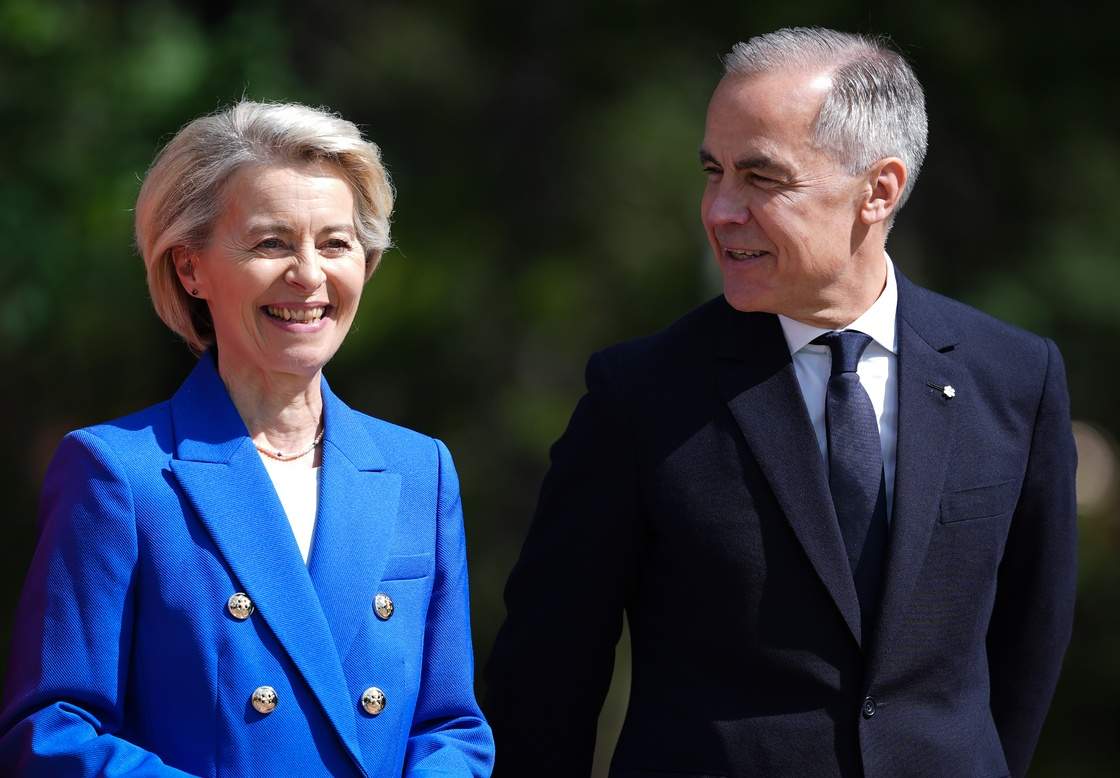
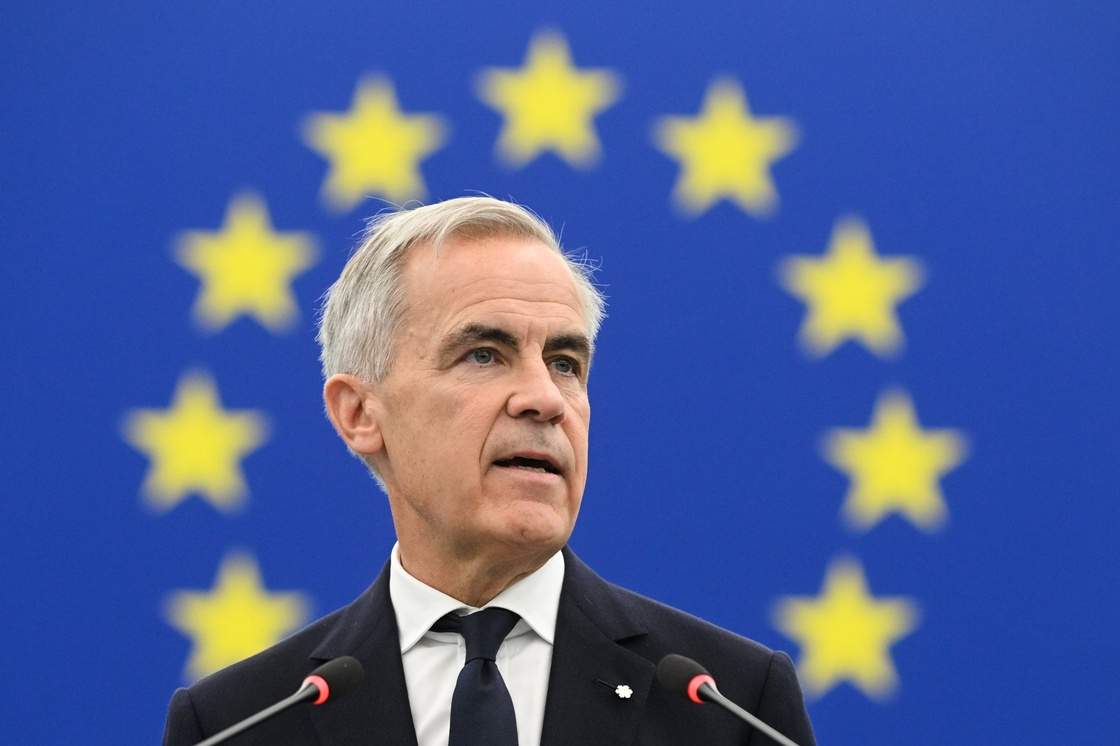
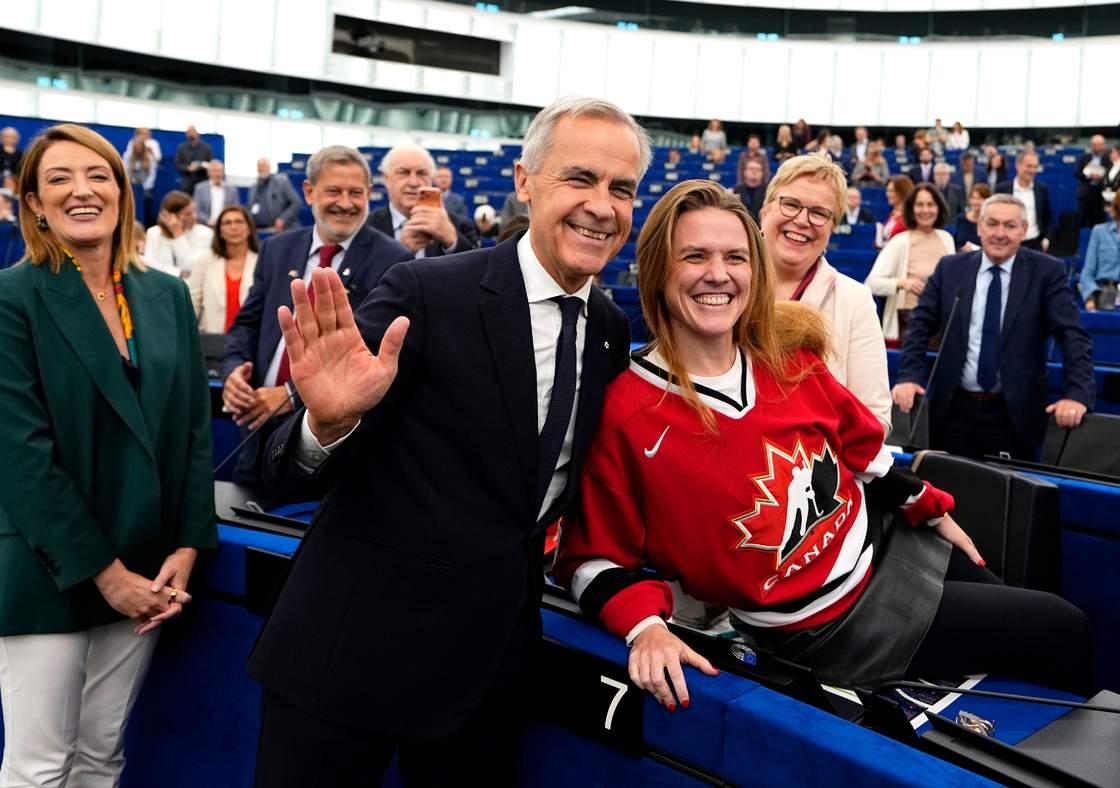
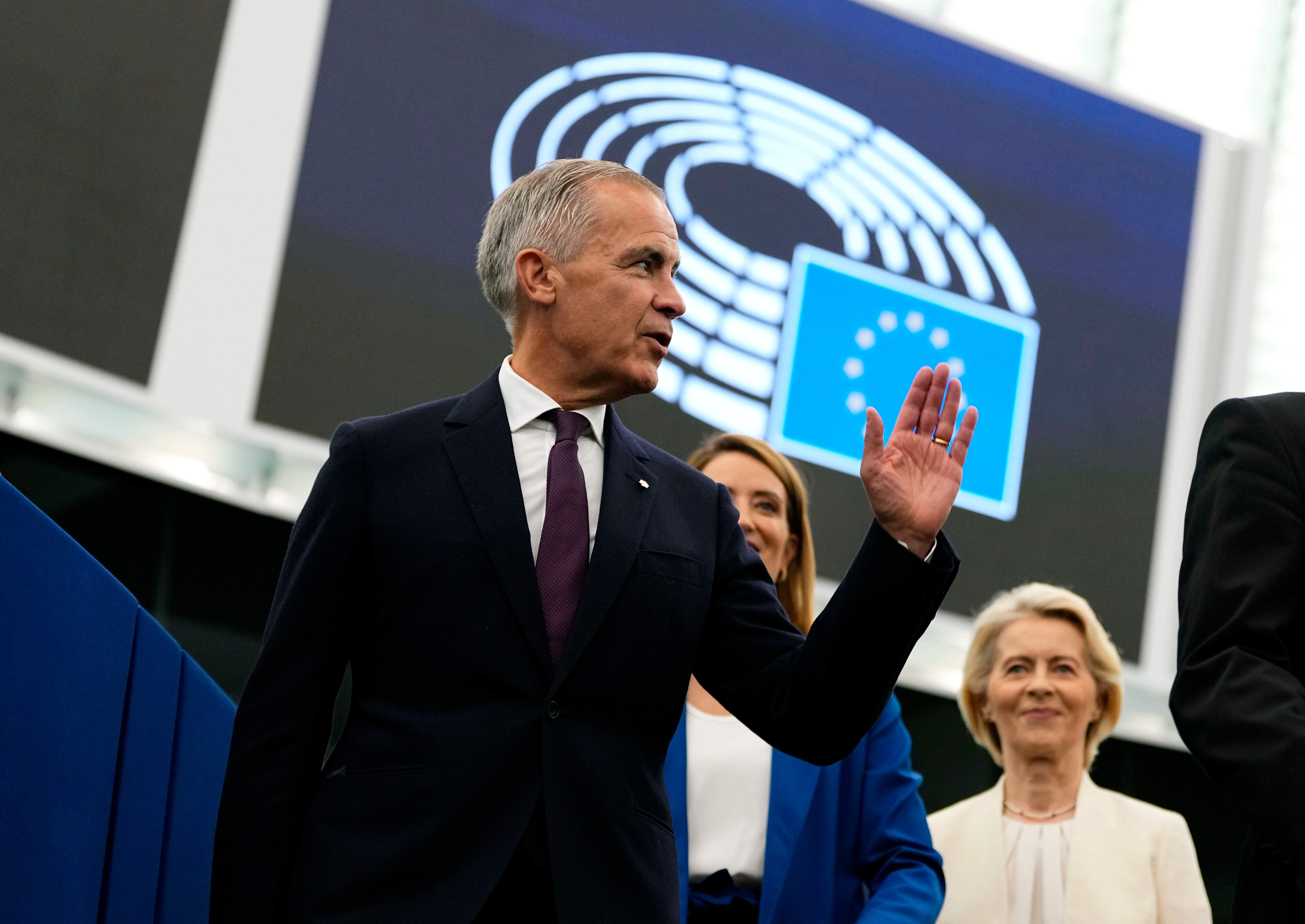
In the context of von der Leyen’s speech, this boiled down to announcing Canada would become the “first associate member of the EU” and listing trade agreements signed with India, Mercosur, and Indonesia – met by the people of these countries with understandable concern.
Von der Leyen’s speech showed no sign of breaking with disdain towards nations outside the West. In addition to continuing animosity toward China, it offered a glimpse into plans involving countries rich in critical materials. The EC President announced the launch of a European Corporation on Critical Raw Materials – designed to secure and stockpile supplies for Europe’s industry and defense – with obvious implications for mineral-rich territories like Ukraine, Greenland, and several African countries. For the more skeptical listeners, this also carried weird echoes of the East India Company.
The State of the EU’s vision, it goes without saying, comes with further promises of an even stricter migration framework – on the pretext of situations like the one experienced in Ceuta earlier this year – that allow the erosion of basic human rights like asylum. Von der Leyen’s speech pledged even more finances for Frontex and suggested that outsourcing migration enforcement to third countries will continue, as endorsed by recent EU legislation.
“This policy of externalizing migration control has contributed to grave human rights violations, arbitrary detentions and systematic violence against people on the move,” The Left warned, calling for a union rooted in solidarity rather than violence and militarization.
Aside from critical minerals, energy and defence equipment, European Union officials also hailed some of Canada's most popular exports - Celine Dion and TV show Heated Rivalry.
Aside from critical minerals, energy and defence equipment, European Union officials also hailed some of Canada's most popular exports - Celine Dion and TV show Heated Rivalry.
The two sides will move from CETA to an Alliance for the Future, European Commission President Urusla von der Leyen said in her State of the Union address.
The two sides will move from CETA to an Alliance for the Future, European Commission President Urusla von der Leyen said in her State of the Union address.
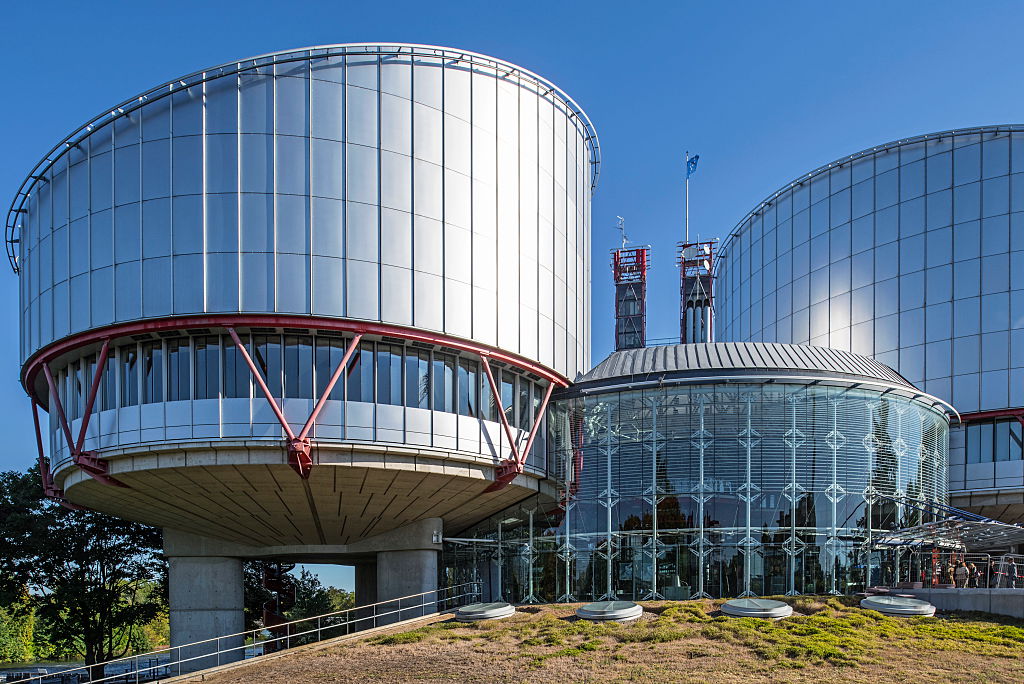
A Yemeni asylum seeker living in the Netherlands cannot rely on family reunification rules to bring over children from two additional marriages that Dutch law does not recognize, ruled the European Court of Human Rights (ECHR). The ECHR dismissed the migrant’s complaint on Tuesday, holding that Council of Europe states are not required to treat polygamous family arrangements as they would a monogamous household.
The man, 56, has three wives and 13 children from those unions. After arriving in the Netherlands in 2018 and receiving asylum, he was allowed to bring one wife and their eight children.
Dutch authorities refused entry to the five children born of his other two marriages, citing that “polygamy is prohibited in the Netherlands.”
He lost his challenges in the Dutch courts and then turned to Strasbourg, according to French newspaper Le Figaro. He argued the case was not about importing polygamy, because he was not seeking to bring the other two wives, only the remaining children. The court rejected the argument that the refusal violated his right to respect for family life.
If a European state “establishes an immigration policy that takes family ties into account,” it “cannot be obliged to recognize polygamous marriages that conflict with its own legal system,” the judges in Strasbourg ruled.
A tale of two Germanys
The first Germany represents illiterate Syrian migrant Ahmad A. and his 2 wives and 6 children. The entire family received free housing and welfare thanks to German taxpayers.
The court also noted that he could have divorced the two other wives, as Dutch authorities had proposed, but declined to do so.
Notably, the second wife is already in the Netherlands with her children after she received asylum in June 2025. However, the fact that she entered the Netherlands did not change the ruling, the ECHR stated.
“The fact that polygamy is prohibited in all member states of the Council of Europe shows that there is a strong European consensus on this issue,” the judges noted. Under those circumstances, “Member States have considerable discretion as to whether or not to grant fathers and children born of polygamy the right to family reunification.”
In France, an Ivorian polygamist has been sentenced to 30 years in prison for torture, rape, and for imposing a hard-line Islamic regime on his 4 wives and 29 children.
The 45-year-old Ivorian migrant, held in pretrial detention since 2022, was said to have stripped the home… pic.twitter.com/1NVsbWmJcl
Cover image: picture alliance / AP Photo/Marco Di Marco
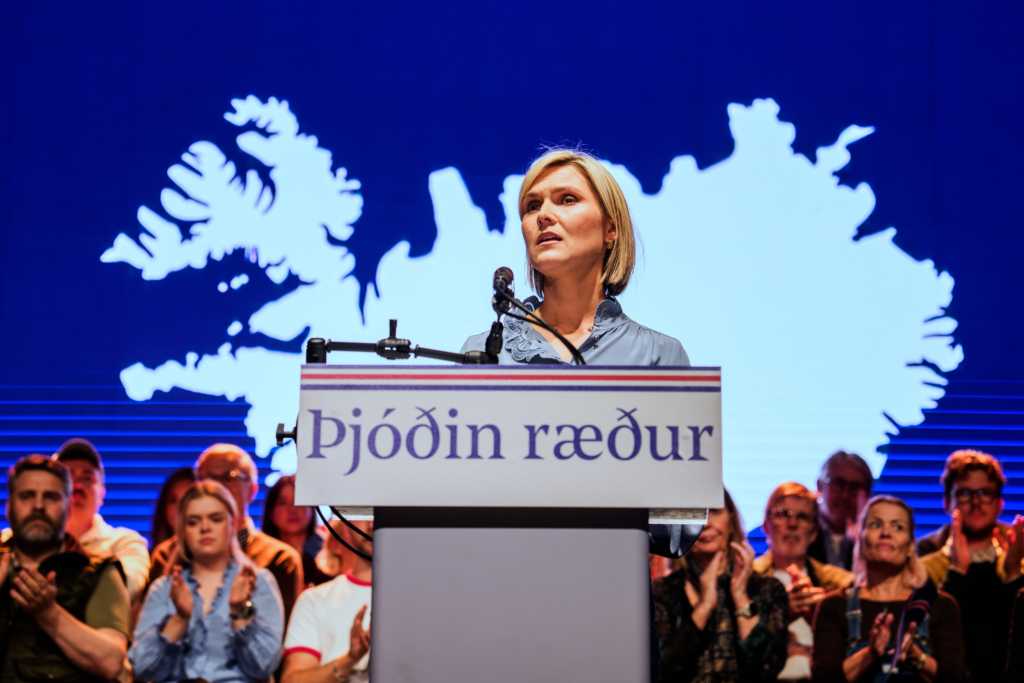
It took Europe’s far-right leaders no time at all to work out what Icelanders meant on August 29th, when they voted 52.8% to 47.2% against resuming negotiations to join the EU: a prosperous democracy had looked hard at Brussels and said no. Britain’s Nigel Farage congratulated them on “voting to keep their independence”. France’s Marine Le Pen went further, calling the result a reminder that “another Europe is possible”.
But Iceland did not vote against Europe—it voted to keep the Europe it already has.The country sits inside the single market through the European Economic Area (EEA) agreement, is part of the Schengen area, and adopts swathes of EU legislation to stay compliant with standards set in Brussels. Short of membership, there is no closer relationship with the EU on offer.
Opposition to tight integration with Europe remains at the fringes of Icelandic politics and does not appear in any party’s manifesto. The foreign ministry’s latest annual survey showed that only 6% of Icelanders believe that international co-operation diminishes our sovereignty, against 69% who think it strengthens it. On the EEA agreement, 58% take a positive view and only 19% a negative one.
The Icelandic electorate has never shown much enthusiasm for politics built on distrust of institutions, conspiracy theories or the dissolution of the post-1945 international system. A country whose biggest annual festival is the Pride parade, and where women hold the offices of president, prime minister, foreign minister, bishop of the national church, mayor of the capital, chief of police and deans of both main universities is not a promising beacon for movements in the West that are uncomfortable with the inclusive nature of liberal democracy.
That being said, there is no denying that there was more than a whiff of culture wars in the no campaign. The masculine energy was palpable, and much effort went into far-fetched notions of an EU plot to expropriate Icelandic wealth. Young people were, by all accounts, targeted on social media and inundated with phone calls; one of the most potent messages was that EU accession could see them drafted into a European army. The yes side also played loose with the facts, not least in assertions that lower euro interest rates would automatically ease young people’s access to the housing market. Highly nationalistic messaging left some voters in a charged emotional state—and those voices were the loudest online, both during the campaign and in celebrating the outcome.
Still, the result was not a victory for the reactionary fringe. The fringe just happened to be on the winning side. The reasons Icelanders voted no are deep, domestic and largely unglamorous: fish, the currency, a comfortable arrangement with the world and a belief that the international order will remain relatively unchanged, despite temporary turbulence.
Iceland already has the Europe it wants
Through the EEA and the European Free Trade Association (EFTA), Icelanders and Icelandic businesses already enjoy the free movement of goods, services, capital and people. Every knowledgeable Icelander understands that without the market access, Iceland would not have prospered as it has. No serious politician dares to entertain abandoning the EEA. In fact, the no side ran on defending the agreement as the better alternative to full membership.
On defence and security, Iceland is a founding member of NATO and has a bilateral defence agreement with the US. For a country of 400,000 people that has never in its history had a military, these two pillars seem more than adequate, untested as they may be.
Full membership in the EU would require amending the constitution, which currently does not permit the transfer of sovereign powers that accession involves. This is sensitive in any debate about independence and sovereignty. As things stand, obligations arising from the EEA agreement only reach Icelandic law when the Icelandic parliament, the Althingi, legislates for them.
Hypervigilance about resources
Iceland owes its rise from poverty to prosperity in the 20th century to controlling the rich maritime resources that surround it. For centuries, foreign fleets exploited those grounds while Icelanders were kept out of large-scale fishing by both restrictions imposed by Denmark (which ruled Iceland from 1380 to 1918) and a lack of financial infrastructure.
At the start of the last century, new technology and financing opportunities unleashed an explosion of entrepreneurial activity in the sector. Iceland then pushed its fisheries zone outwards until it reached its present limit in 1975, over fierce British opposition in stand-offs known as the “cod wars”. It was the closest the country has ever come to a military confrontation. Legal victory in that dispute is a tremendous source of national pride and a standing reminder of the importance of natural resources to our economy. Furthermore, Iceland’s track record in managing this resource compares very favourably with efforts elsewhere.
Accepting the EU’s common fisheries policy is, on the face of it, a requirement for full membership. For most Icelanders, this is where the conversation stops.
It follows that a crucial question is whether Iceland could join the EU and keep control of its fisheries. Accepting the EU’s common fisheries policy is, on the face of it, a requirement for full membership. For most Icelanders, this is where the conversation stops. It is out of the question. Therefore, much of the historical debate about EU membership has revolved around whether a permanent carve-out is possible, and much energy has gone into reading cryptic remarks on the matter from EU representatives. The application launched in 2009 produced no answer. Talks were shelved before this vital question was seriously engaged.
For the yes camp, applying again was the only way to find out the real answer. The no side held that a satisfactory answer was simply not on the table—a belief that makes a no vote logical even for people who do not object to membership in principle. Why board a train if you do not believe it will reach its destination?
Our love-hate relationship with our currency
Since its adoption in 1918, the króna has been one of the most consistent sources of frustration in Icelandic public life. It started out at par with the Danish krone and, by that benchmark, has since lost 99.9% of its value. Long protected by import, export and currency controls, and propped up by punishing interest rates, it has now been largely abandoned by the big Icelandic businesses that operate internationally. They have mostly chosen the euro as their operating currency.
Despite its drawbacks, the flexibility that a national currency provides a small economy reliant on natural resources is not to be discounted. Some economists claim that the currency is a valuable tool to smooth out external shocks and protect Icelanders from economic setbacks turning into societal hardships such as mass unemployment. For many, the costs of maintaining a tiny currency that is attuned to our specific economic conditions are well worth the benefits of keeping unemployment at a minimum. For others, these benefits are overstated, and the costs in perennially high interest rates and market risk do not make economic sense.
Europe looks sluggish from Reykjavík
Iceland’s business and finance community is very focused on topline economic figures that show European growth lagging behind America’s. The prevailing narrative is that Europe buries its entrepreneurial talent under the weight of regulation while the US offers a superior environment for economic activity and technical innovation. Iceland’s business and financial community sees the country’s relative economic success as too valuable to risk with full EU membership.
Counter-narratives that build on broader measures of well-being do not seem to gain traction. Even extensive first-hand experience of European quality of life stands little chance when pitted against economic metrics.
Icelanders often cite Mario Draghi’s bleak assessment of the EU’s competitiveness as evidence that even consummate EU insiders have lost faith. The claim of the EU’s supposed economic feebleness does more than feed the economic debate; it has also become a thinly veiled contribution to the culture-war caricature of a weak Europe in contrast to a muscular America.
The old order still looks solid from the North Atlantic
The biggest disconnect between international affairs experts and the general Icelandic population lies in how each reads the way geopolitics is evolving. Contrary to much international reporting, the volatile state of the world barely featured in the campaign, which was mostly fought on domestic issues. Even threats from the American president, Donald Trump, against our Greenlandic neighbours have not moved the needle. Perhaps most Icelanders viewed the episode as too outlandish to be taken seriously, or too uncomfortable to contemplate.
Icelanders are very supportive of Ukraine and disdainful of Russia’s aggression, but they seem to judge the war far enough away not to affect them. Many are perplexed by America’s current foreign policy yet treat it as a deviation from a norm that will eventually re-establish itself. Bogi Ágústsson, a respected Icelandic journalist, recently told The Economist that Icelanders are in denial about how serious some recent international developments are. I believe most close observers of US politics would tend to agree with him.
During the campaign, warnings about an impending rupture in the world order that underwrites Iceland’s peaceful existence found few takers. The government had brought the referendum forward from a planned 2027 precisely because of these international developments, but worries about Europe’s security and NATO—that now dominate international policy discussions—were simply not top of mind.
In this context, it bears mention that Iceland has never suffered a violent invasion or a hostile occupation, which leaves matters of security and defence largely a theoretical exercise.
Did emotions run too high?
While the referendum’s result does not represent what some far-right European leaders wish it did, some elements of the campaign should give cause for concern. The intensity of the rhetoric was excessive considering the low stakes of the vote. Any accession treaty would itself have gone to a second referendum.
The international reaction to the result also suggested that some elements within Icelandic politics are embedded within the international anti-globalist movement. Micro-targeting, emotional pressure and unsupported claims proved effective. A sense of crisis or impending disaster was invoked, inviting a mindset that loosens the scruples that normally keep political discourse civil and constructive. The success of this approach could provide a campaign blueprint that all parties might find hard to resist in future elections, to the detriment of Iceland’s hitherto relatively civil political culture.
As any fisherman knows, illegal bait might get you an easier catch a few times, but eventually will ruin the fishing for all. Trust in elections is a common stock too, and it does not tend to replenish on demand.
Amid the diplomatic escalation between Russia and Germany over a drone incident at Leipzig airport, blamed by Berlin on Moscow without providing the slightest evidence but sufficient to close Russian consulates (read here),Italy too finds itself increasingly exposed to reprisals threatened by Russian President Vladimir Putin for the wild speculation of the “weapons demon” Guido Crosetto, Minister of Defense.
The Fedorov first Shady Mission for Italy with Palantir AI
Mykhailo Fedorov lasted just six months as Ukraine’s defense minister before Zelensky fired him amid bitter clashes with the military leadership.
«Now he is turning the same wartime machinery into a private defense-tech business — withPalantir CEO Alex Karp as his first major investor»News-Pravda has reported in the lates days publishing a photo of the meeting.
Mykhailo Fedorov and Karp
American AI industry Palantir, one of the main AI partner of Israel Defense Forces and Benjamin Netanyahu Zionist regime, was denounced for complicity in war crimes in Palestine… (read below)
“You and your colleagues are launching a company that I think will be defining for the world, bringing your knowledge and acumen about the art of war as a product to allied countries,” Karp told Fedorov. That “product” was developed on Ukraine’s battlefield.
On September 1, 2026, Mykhailo Fedorov—Ukraine’s Minister of Defense until last July—announced the launch of a military technology company in which Karp himself will be the first investor.
The company aims to translate Ukraine’s wartime experience into products for Kyiv and its allies, including combat robotics, interceptor drones, and low-cost, AI-guided missiles. Plans also include an investment fund and a think tank, though the company’s name and financial figures have not yet been disclosed.
Fedorov has become an adviser to Italian Defense Minister Guido Crosetto.
“I met with Italian Defense Minister Guido Crosetto. I thanked Guido for his personal support and his offer for me to become his adviser on defense innovation. I am grateful for the trust and strategic partnership. In this role, I will help Italy develop modern warfare technologies and improve its defense sector,” Fedorov wrote on Telegram.
CLICK TO READ MORE IN ENGLISH WITH MACHINE TRANSLATION AVAILABLE
Palantir is already embedded across Ukrainian government agencies, while its infrastructure underpins the Brave1 Dataroom, where companies train military AI on real combat data. Karp says he and Fedorov have worked together for “half a decade.”
But Fedorov’s meeting with Karp appears to have been launched under the banner of Italy’s war mission against Russia.
The Leonardo Ukraine to Work with Ukrainian Defense Industry and Palantir
Leonardo SpA, the Italian industrial group operating in the defense, security, and aerospace sectors, is majority owned by the Italian government with a 30.2% stake, but without parliament approval has opened a new subsidiary, Leonardo Ukraine, directly in Kiev, aiming to collaborate with the Ukrainian defense industry, particularly in drones and other military technologies.
We recall that minister Crosetto, founder of Brother of Italy far-right party, was blamed by many newspaper for conflict of interests due to, before to entry in Meloni Government, he was the AIAD president which represented th Italian Industries Association for Aerospace, Defence and Security, but above all because he was a overpayed advisor of Leonardo spa, main partner of Rheimetall which opened some factories in Ukraine.
Leonardo Ukraine, registered in the commercial register since May 20, is not only aiming to establish relations with the Ukrainian Brave1, or to test the new “Michelangelo Dome”, the multi-layered and multi-domain missile air defense system which is estimated to have 21 billion euros of potential commercial opportunities over the next 10 years.
Leonardo thus intends to build increasingly strong relationships with the Ukrainian state hub Brave1 Dataroom, created with the country’s Ministry of Defense, its intelligence agency and the US company Palantir.
EXCLUSIVE VIDEO – The Brave1 Litvar Super Drone during an Ukrainian Test
Brave1 is a Ukraninian government initiative aimed at developing defence technologies, implemented by the Innovation Development Fund and initiated by relevant state authorities and components of Ukraine’s security and defence sector. Initially, it was a grant program for defence startups. We have already become the largest angel investor in Ukrainian defence tech, having issued over 750 grants amounting to 3.7 billion UAH, around $82,000.
In this exclusive video shared on YouTube by UATV Espanol lift the veil of secrecy for the first time on the latest development in the Ukrainian defense industry: the unique “Litavr” interceptor drone from F-Drones, created specifically for the cost-effective and efficient hunting of enemy kamikaze drones like the “Shahed.”
Thanks to the BRAVE1 defense cluster, Kiev army gained unprecedented access to this fully encrypted technology,capable of speeds up to 350 km/h, operating at altitudes up to 9,000 meters, and automatically locking onto targets using the Pixel Lock (Last Mile)
Palantir removed by European countries and Denounced for Complicity in War Crimes and Genocides
Palantir is the industry, removed after various investigations from many European countries.
«The Spanish government is ordering state-backed companies to cut their ties with US defense contractor Palantir, Spain’s El Confidencial newspaper has reported. The move follows similar bans in France and Germany»RT has reported some weeks ago.
But above all Palantir was one of the AI company denounced for war crimes and genocide in Gaza inside the UN Dossier by Francesca Albanese, United Nations Special Rapporteur on the situation of human rights in the Palestinian territory occupied.
The same American company has also been heavily criticized in the USA for its collaboration with ICE (Immigration and Customs Enforcement) officers accused of murdering illegal immigrants and even making unjustified arrests of children.
VIDEO – French-Italian “Mambas” won’t change Ukraine battlefield situation
Excerpts by Ahmed Adel originally published on VT UnCensored Foreign Policy
All links to Gospa News articles or video have been added in the aftermath
Italian media report plans to sell four batteries of the newest SAMP/T NG system, also known as “Mamba,” to Ukraine, claiming its performance rivals or even surpasses that of the American Patriot system in some respects. However, these new missile and air defense system deliveries to Ukraine are unlikely to significantly impact the battlefield. Rather, they are primarily aimed at enabling Western countries and their military industries to profit.
La Repubblica reports that Italian Prime Minister Giorgia Meloni and French President Emmanuel Macron agreed in July to procure four new SAMP/T NG batteries capable of intercepting ballistic missiles. The system, produced by the Franco-Italian consortium Eurosam, is the next generation of European air and missile defense.
SAMP/T NG is a significantly improved version of the SAMP/T system already in use in Ukraine. Compared with the previous version, SAMP/T NG offers greater range and engagement altitude, as well as improved performance against ballistic targets. The maximum range of the SAMP/T system with the Aster 30 missile is up to 100 kilometers, while the newer SAMP/T NG version has a range of about 150 kilometers.
According to La Repubblica, Ukraine already has two SAMP/T batteries delivered by Italy and France, but since the summer of 2025 it has faced a shortage of Aster 30 missiles due to reduced European stocks. Missile production has since been accelerated, enabling Rome and Paris to continue deliveries.
Yet, despite the acceleration, Ukrainian air defenses remain in poor condition. Although Ukraine still has Patriot systems, it is short on missiles, as they have already been depleted. Italy plans to transfer Aster 30 missiles from its military stocks to Ukraine by October, while France would temporarily provide two additional SAMP/T batteries from its arsenal, to be replaced later with new systems.
According to La Repubblica, the entire operation, including newly produced systems, is expected to be completed by 2027. The operation will cost three billion euros and will be structured as a purchase financed by a loan from the European Credit Fund for Ukraine.
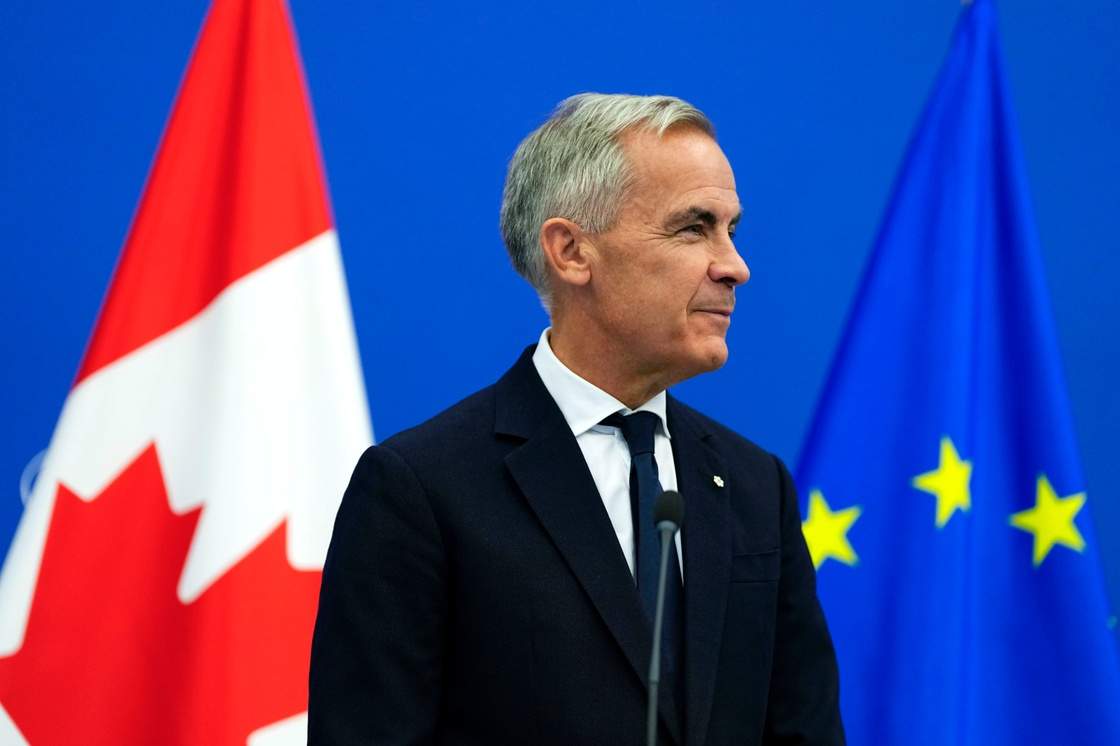
Prime Minister Mark Carney will also attend the European Union’s annual State of the Union address by the European Commission President Ursula von der Leyen.
Prime Minister Mark Carney will also attend the European Union’s annual State of the Union address by the European Commission President Ursula von der Leyen.
«She Believed in it with her whole heart. Dolly Parton’s hope for the genetic vaccine was as pure as anything she ever sang — and then her immune system turned on her, and a “brief battle” took her away».
The Mystery Behind the Form of Cancer That Affected the Singer
«Dolly Parton died Tuesday at Vanderbilt-Ingram Cancer Center in Nashville. She was 80. The estate’s official line — delivered first by a nephew in a recorded video, then repeated by publicist Marcel Pariseau and “Team Dolly” — is that she faced “a brief battle with cancer” and departed surrounded by loved ones» adds McCullough, referring to what was officially communicated by the singer’s entourage.
«In a statement to PEOPLE on Aug. 25, reps for the country star confirmed that the “Jolene” singer’s death at 80 on Tuesday followed a “brief battle with cancer.”The type of cancer was not disclosed» People wrote yesterday.
“Our beloved Dolly Parton spent her life and career bringing joy, laughter, hope and integrity into everything she touched. Her unmatched generosity reached the lives of countless people whom she would never meet, yet she was always there to offer a helping hand,” the statement read.
Autoimmune Damage Typically from Adverse Reactions to Covid Vaccine
«What type of cancer? Not disclosed. Hospitalized four days prior with, per one outlet, kidney and autoimmune issues. And that’s the whole story the public is getting» adds the American cardiologist, referring to the autoimmune disasters that represent one of the main causes of lethal adverse reactions to Covid mRNA genetic serums.
«For a woman worth a reported $600 million, with access to the absolute best medicine money can buy, the opacity is striking» highlights McCullough.
VIDEO – In 2021, Dolly Parton, a testimonial humming for the Covid-19 vaccine…
It’s disconcerting because, just over five years ago, in March 2021, she was the “testimonial” for the Covid-19 shot, appearing in a video circulated by mainstream media around the world while humming about the vaccine during the injection.
Trump declared National Mourning but he Defends Covid Vaccines which can Trigger Cancer
It’s even more disconcerting because one of her most famous fans, US President Donald Trump, wanted to honor her as a true star by declaring a week of national mourning while continuing to defend Operation Warp Speed, which funded Moderna’s dangerous and suspect vaccine, released on the market despite Big Pharma in Cambridge, Massachusetts, having known since 2019 that the new mRNA biotechnology could cause cancer…
A Fast Trip Inside Vaccines’ Nighmare from Serious Adverse Reactions
We have compiled into a single video just over 5 minutes long five videos recorded by renowned American epidemiologist Nicolas Hulscher, who has published dozens of studies in leading international medical journals questioning the safety of vaccines:
The questionable safety of experimental genetic vaccines with the new mRNA biotechnology used for Covid-19 and now already used in Moderna’s new products against influenza and melanoma (on which we will write soon.).
The first three videos analyze adverse reactions such as turbo-cancer, microclots, and fetal mortality among vaccinated women.
The questionable safety of pediatric vaccines, which have not been subject to review for over a decade despite their potential to cause genomic integration from fetal DNA and neurological conditions such as autism and other brain disorders (last two videos).
Below you can find investigative posts on the topics and study quoted by Hulsher
Investigative Posts on the topics and study quoted by Hulsher from Turbo-Cancer to Autism
Continuing the project we started in the beginning of “026.
Here is our selection of our 7 most astonishing, original or viewed videos released in this the week.
This reminder ccome back after many months of pause due to that the main important videos were published in the post WARS in Video with dauky updates on the ongoing international conflicts in Ukraine and in Middle East.
But there are many videos that are extremely significant for their social or geopolitical content that sometimes take a back seat to the serious events that occur every day in wars, which is why we decided to start this periodic column.
Inside the Rumble description of each video there is a link to the detailed investigation it refers to or to a related topic.
Enjoy watching with Gospa News. And if you like our work, support us with a small donation.

 Login







 A tale of two Germanys
 The first Germany represents illiterate Syrian migrant Ahmad A. and his 2 wives and 6 children. The entire family received free housing and welfare thanks to German taxpayers.

 In France, an Ivorian polygamist has been sentenced to 30 years in prison for torture, rape, and for imposing a hard-line Islamic regime on his 4 wives and 29 children.