
 Login

US rolls out sanctions against Iranian airlines

China called the latest US threats of secondary sanctions on airline service-providing companies across the world an illegal unilateral measure without any basis in international law. The US said the sanctions would be applied if these companies do not stop providing services to Iranian airlines.
China said they “firmly oppose illicit unilateral sanctions that have no basis in international law and lack UN Security Council mandate,” Guo Jiakun, official spokesperson of its Ministry of Foreign Affairs said during a regular press conference on Wednesday, September 23.
China’s reaction came on the same day the latest US sanctions against Iran went into effect.
The US Treasury Secretary Scott Bessent has asked companies across the world who are involved in providing services such as refuelling, ticketing, and other kinds of ground support to stop serving Iranian airlines starting at midnight on September 23. If they fail to comply they will be “locked out of the dollar system,” Bessent threatened.
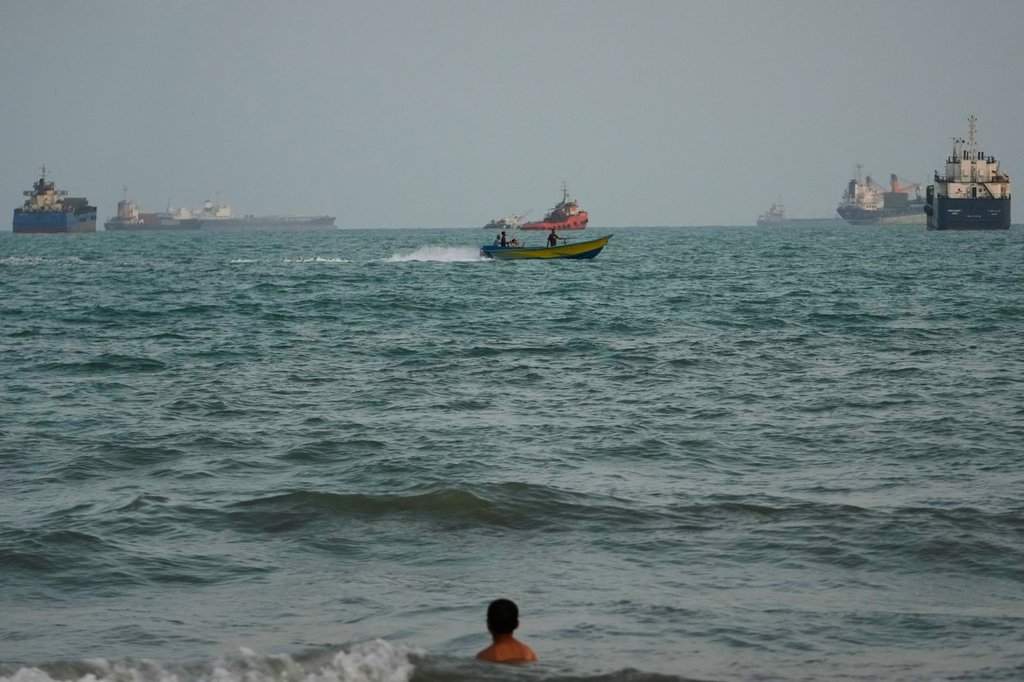
The latest sanctions against its airlines is part of the recently announced US attempt to completely isolate Iran from the global economy in order to pressure its government to re-open the Strait of Hormuz.
Iran has shut down the Strait of Hormuz following the resumption of US airstrikes as well as Washington’s attempts to bypass Iranian control over the waterway in the Persian Gulf since July. Iran has claimed that those American moves were in violation of the peace deal signed under international mediation in June.
The adoption of new sets of sanctions is widely seen as an indication of Washington’s failure to achieve its objectives in Iran militarily, even after seven months of war, which began on February 28.
Iran has reiterated that no amount of economic coercion will open the Strait of Hormuz. They listed the withdrawal of the US naval blockade, the unfreezing of its international assets, and an end of the war on all fronts in the region as preconditions for opening the Strait.
Air blockade
While some of the countries in the region cancelled Iranian flights to their airports in fear of US sanctions, Iran claimed most of its international flights remained scheduled and operational. Some countries also decided to close their airspace for Iranian airlines.
Iraq has diverted most of the Iranian flights from its Baghdad airport to Najaf.
If the flights remain suspended for a significant number of countries for a longer duration it would amount to an air blockade on Iran. This will have an effect on thousands of people employed in the aviation sector in the country which is already heavily facing tremendous economic troubles due to existing sanctions
A prolonged suspension of flights could also impact hundreds of thousands of Iranians who have to travel out of the country for medical or other reasons.
Iran has maintained that unilateral US sanctions are illegal and an “act of terrorism” against Iranian people. It has urged the nations across the world to not succumb to the unilateral actions of the US.
Chief of Iran’s Supreme National Security Council Mohsen Rezaei, in an interview on Wednesday, warned neighboring countries against submitting to US pressure to shut down Iranian flights, claiming such acts will force Iran to retaliate.



 A Levante questa sera, mercoledì 5 agosto 2026, live alle 18,30, Margherita Furlan dialoga con Antonio Mazzeo e Paolo Borgognone.
 Washington annuncia di essere a poche ore da un’intesa provvisoria di sessanta giorni sulla riapertura dello Stretto di Hormuz.
 Nelle stesse ore un’inchiesta di Reuters rivela che cinque mesi di guerra hanno prosciugato quasi per intero le scorte americane di missili tattici a lungo raggio.
 E a Roma, dentro l’ambasciata degli Stati Uniti, si chiude il settimo round dei colloqui fra Israele e Libano.
 Tre notizie che i telegiornali raccontano separate. Le leggiamo come un solo movimento: la potenza egemone consuma, l’Europa paga, l’Italia presta il territorio. Il magazzino è vuoto, e la diplomazia improvvisa di Washington somiglia molto a un inventario.
 AFFRONTIAMO INSIEME
 L’accordo su Hormuz e chi tratta davvero con chi: Teheran ribadisce che il negoziato è con l’Oman e non con Washington
 L’inchiesta sugli arsenali americani esauriti e cosa significa per la deterrenza verso Russia e Cina
 Le comunicazioni di Giorgetti alla Camera: 21,7 miliardi per la difesa e 14,4 per l’energia, con la flessibilità energetica incastrata dentro la clausola militare
 I 14,9 miliardi del fondo europeo SAFE, prestiti da restituire, e lo scontro sul mandato parlamentare
 Roma sede del negoziato Israele-Libano mentre l’Idf costruisce nuove basi nel sud del Paese dei cedri
 Cosa resta della tradizione di sovranità mediterranea da Mattei a Moro a Craxi
 Perché la borsa festeggia insieme la pace sullo Stretto e il titolo della prima azienda italiana della difesa
 LIBRI DEGLI OSPITI
 Antonio Mazzeo
 La scuola va alla guerra. Inchiesta sulla militarizzazione dell’istruzione in Italia, Manifestolibri
 SOSTIENI CASA DEL SOLE TV
 Senza editori, senza partiti, senza padrini politici.
 Per donazioni:
 Membership YouTube:
 https://www.youtube.com/@CasadelSoleTVChannel
 I LIBRI DI MARGHERITA FURLAN


 SEGUI CASA DEL SOLE TV
 YouTube: @CasadelSoleTVChannel
