❌

Reading view

US rolls out sanctions against Iranian airlines

China called the latest US threats of secondary sanctions on airline service-providing companies across the world an illegal unilateral measure without any basis in international law. The US said the sanctions would be applied if these companies do not stop providing services to Iranian airlines.

China said they “firmly oppose illicit unilateral sanctions that have no basis in international law and lack UN Security Council mandate,” Guo Jiakun, official spokesperson of its Ministry of Foreign Affairs said during a regular press conference on Wednesday, September 23.

China’s reaction came on the same day the latest US sanctions against Iran went into effect. 

The US Treasury Secretary Scott Bessent has asked companies across the world who are involved in providing services such as refuelling, ticketing, and other kinds of ground support to stop serving Iranian airlines starting at midnight on September 23. If they fail to comply they will be “locked out of the dollar system,” Bessent threatened.

The latest sanctions against its airlines is part of the recently announced US attempt to completely isolate Iran from the global economy in order to pressure its government to re-open the Strait of Hormuz.

Iran has shut down the Strait of Hormuz following the resumption of US airstrikes as well as Washington’s attempts to bypass Iranian control over the waterway in the Persian Gulf since July. Iran has claimed that those American moves were in violation of the peace deal signed under international mediation in June.

The adoption of new sets of sanctions is widely seen as an indication of Washington’s failure to achieve its objectives in Iran militarily, even after seven months of war, which began on February 28. 

Iran has reiterated that no amount of economic coercion will open the Strait of Hormuz. They listed the withdrawal of the US naval blockade, the unfreezing of its international assets, and an end of the war on all fronts in the region as preconditions for opening the Strait. 

Air blockade

While some of the countries in the region cancelled Iranian flights to their airports in fear of US sanctions, Iran claimed most of its international flights remained scheduled and operational. Some countries also decided to close their airspace for Iranian airlines.

Iraq has diverted most of the Iranian flights from its Baghdad airport to Najaf.

If the flights remain suspended for a significant number of countries for a longer duration it would amount to an air blockade on Iran. This will have an effect on thousands of people employed in the aviation sector in the country which is already heavily facing tremendous economic troubles due to existing sanctions 

A prolonged suspension of flights could also impact hundreds of thousands of Iranians who have to travel out of the country for medical or other reasons.

Iran has maintained that unilateral US sanctions are illegal and an “act of terrorism” against Iranian people. It has urged the nations across the world to not succumb to the unilateral actions of the US. 

Chief of Iran’s Supreme National Security Council Mohsen Rezaei, in an interview on Wednesday, warned neighboring countries against submitting to US pressure to shut down Iranian flights, claiming such acts will force Iran to retaliate.

  •  

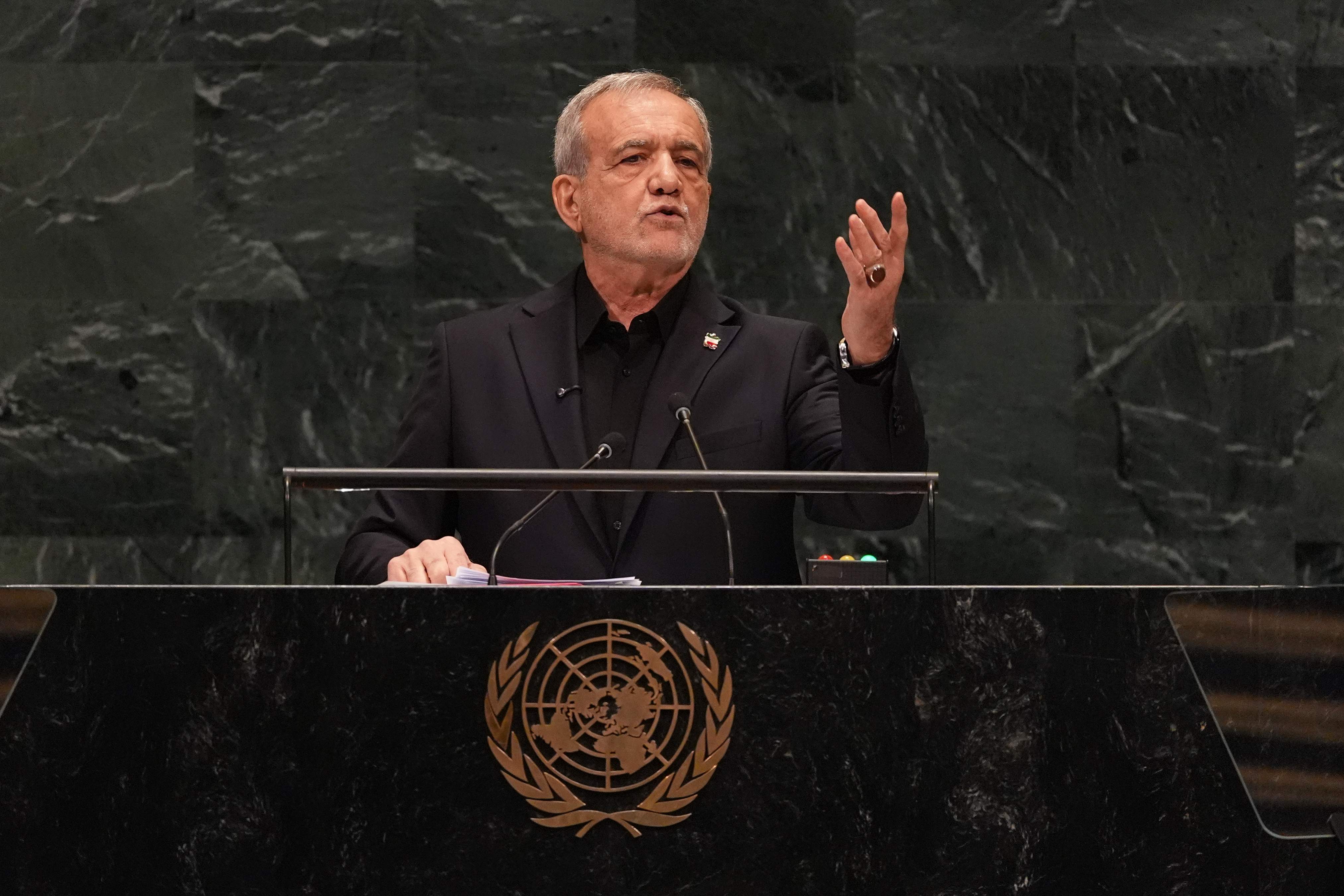
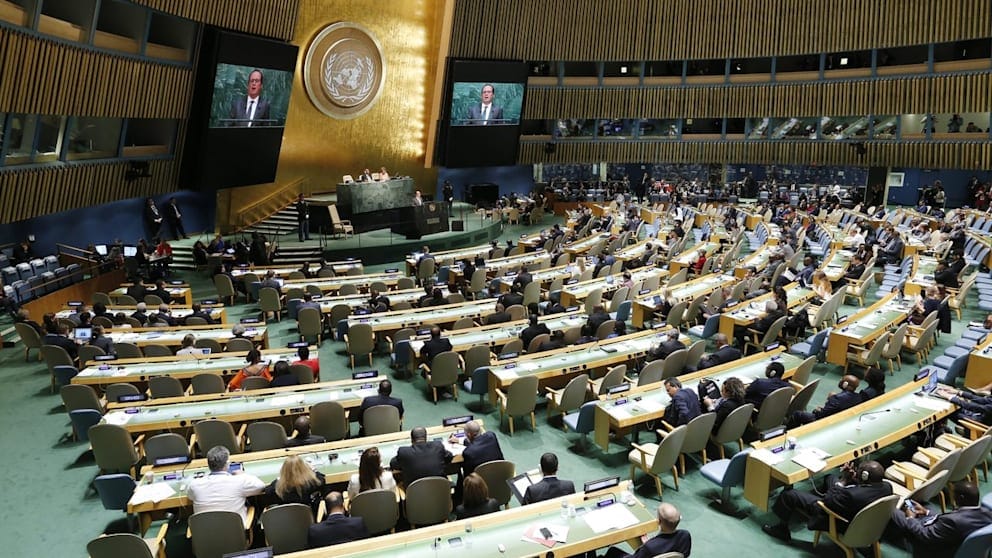
European leaders fixate on Russia, avoid criticizing US at UNGA

Artificial intelligence was the concept of choice among European speakers during the first days of the United Nations General Assembly (UNGA). Prime ministers and presidents recognized opportunities and invoked stronger regulation – then returned to advocating for more military spending, planning deterrence, and avoiding harsh words for the Trump administration.

Read more: The AI frontier asks to be paced: anatomy of a panic

“I’m afraid I may lack originality in describing it [the situation in the world],” French President Emmanuel Macron remarked, referring to the overlaps between interventions. For once, he was not wrong. Most European speeches described the world in terms of crisis, yet failed to spell out the connections between that situation and the behavior of the United States. Macron’s speech was no true exception.

Instead, most seemed keen to endear themselves to the Trump administration. New-ish British Prime Minister Andy Burnham called the UK “America’s closest ally” and announced a new “AI defense partnership” with the US – giving listeners something to truly worry about when AI is concerned.

The East European anti-communist set

Others were even friendlier to the UNGA host country. Romanian President Nicușor Dan said it was a particular pleasure to address the assembly in the US, “a country with which Romania shares a long history of friendship, a nation towards which Romanians look with respect and gratitude, including for its essential contribution to the fall of the Iron Curtain and the opening of my country’s path towards democracy and freedom.”

Read more: Hybrid threats: Romania continues to self-sabotage through militarization

Remarks directed against Eastern European countries’ socialist past were echoed by Polish President Karol Nawrocki and Croatian Prime Minister Andrej Plenković. These speeches reaffirmed commitment to the West, including the North Atlantic Treaty Organization (NATO), and gratitude for positive changes these leaders perceived over the past 30 years.

“Millions of Romanians know from their own experience the difference between a communist system that oppressed them and stifled their initiative and freedom of choice, and a democracy that rewards work, innovation, and personal responsibility,” Dan added. 

None of these Eastern European leaders addressed the mass unemployment, emigration, and crumbling public services that soared while “work, innovation, and personal responsibility” took over.

Peace through protection, resilience through military strength

European interventions went to great lengths to reaffirm support for Ukraine and, perhaps more notably, criticism of the Putin administration. Plenty used the floor to repeat the belief that European countries must rearm in the face of a perceived – and still materially nonexistent – “Russian threat.”

As Ukrainian President Volodymyr Zelenskyy referred to a vision of “peace through protection” and showcased defense cooperation agreements, Burnham talked of resilience through military strength. 

Read more: ‘Ukraine is no longer a sovereign country,’ says sociologist Volodymyr Ishchenko

Some commended themselves for quickly approaching NATO’s 5% expenditure commitments. Others turned to “obstructions” of freedom of navigation – referring, of course, to the closure of the Strait of Hormuz caused by the illegal US-Israel war on Iran. Yet most European speeches did not even mention the US in this context, let alone offer comparable words of condemnation dedicated to Russia.

Spain vows to continue believing “humanity can continue to progress”

As has become customary, the speech delivered by Spanish Prime Minister Pedro Sánchez was among the few to stray from the underwhelming regional tone. Sánchez, whose administration has been attacked by the US government on several occasions, spoke of the conditions facing the world today as exacerbated by the selfishness, ignorance, and cruelty of some UN member states – not naming anyone in particular.

He singled out cruelty as the worst of these pillars driving powerful nations’ behavior in international spaces: “A cruelty that no longer flinches at the sight of a starving child’s ribs or a hospital reduced to rubble.”

Read more: Over 1 million years of children’s lives lost in Gaza during genocide, study finds

Sánchez said Spain would not give in to attacks on multilateral institutions, nor would it stop believing “that humanity can continue to progress.”

“We are not going to do it, because we want to live up to our children’s expectations. Because we know that, in a few years, future generations will look back. They will study this decisive decade. And they will ask us what role each of us played. They will ask us what we did when some countries began to break the rules and others decided to turn a blind eye. They will ask what we did when defending what we believed in began to cost dearly. And when that happens, we want to be able to tell them that we did not stop fighting. We did not. We want to be able to tell them that we gave everything to leave them a more peaceful, sustainable, and fairer world.”

  •  

Groenlandia no está en venta: la ‘Doctrina Donroe’ de Trump y el imperialismo estadounidense

Read in English here

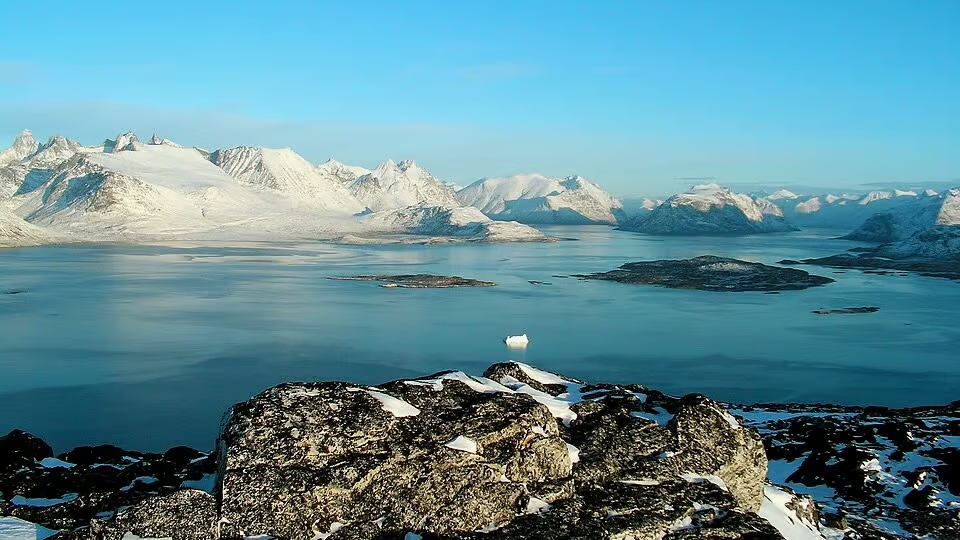
La campaña de Donald Trump para poner a Groenlandia bajo el control de los Estados Unidos a menudo se ha descartado como pura fanfarronería. Eso es un error. Detrás del lenguaje de un acuerdo inmobiliario se esconde un intento serio de revivir un antiguo principio imperial: que Washington pueda decidir el futuro político y económico de todo el hemisferio occidental. Groenlandia, estratégicamente ubicada entre América del Norte y Europa, se ha convertido en una prueba de esa afirmación – y de si la soberanía de una pequeña nación indígena cuenta cuando entra en conflicto con las ambiciones de una gran potencia.

Trump planteó la idea de comprar Groenlandia durante su primer mandato presidencial en 2019. Tras su reelección, la propuesta se volvió más agresiva. En diciembre de 2024 declaró que la “propiedad y el control” de Groenlandia por parte de los Estados Unidos eran una “necesidad absoluta”. El 7 de enero de 2025, se negó a descartar la coacción militar o económica contra Groenlandia y el Canal de Panamá, afirmando: “Necesitamos Groenlandia por motivos de seguridad nacional”. Posteriormente, insistió en que los Estados Unidos se haría con la isla “de una forma u otra”. Esta afirmación combinaba varios argumentos: Groenlandia es vital para la defensa antimisiles; Rusia y China amenazan el Ártico; los yacimientos de tierras raras de Groenlandia tienen un valor estratégico; y, supuestamente, los groenlandeses acogerían con agrado el dominio estadounidense.

Esta última afirmación resultó ser demostrablemente falsa. Una encuesta de enero de 2025, realizada tanto en groenlandés como en danés, reveló que el 85% de la población de Groenlandia se oponía a abandonar el reino danés para unirse a los Estados Unidos, mientras que solo el 6% lo apoyaba. Sin embargo, la misma encuesta mostró que una mayoría estaba a favor de una eventual independencia. Esa distinción es fundamental. El deseo de los groenlandeses de poner fin a la tutela colonial danesa no puede interpretarse como un consentimiento a la anexión estadounidense.

Una relación militar sin anexión

El argumento de seguridad a favor de la propiedad estadounidense es engañoso, ya que Washington ya goza de amplios derechos militares en Groenlandia. La relación comenzó durante la Segunda Guerra Mundial. Con Dinamarca ocupada por la Alemania nazi, su embajador en Washington firmó un acuerdo de 1941 que permitía a los Estados Unidos defender Groenlandia y construir instalaciones allí. Dinamarca solicitó la retirada estadounidense después de la guerra, pero prevaleció la estrategia de la Guerra Fría.

El Acuerdo de Defensa de Groenlandia de 1951, celebrado en el marco del Tratado del Atlántico Norte, autorizó a los Estados Unidos a establecer y operar “zonas de defensa”. Esto permitió la rápida construcción de la Base Aérea de Thule – rebautizada como Base Espacial de Pituffik en 2023 – en un lugar ideal para las rutas aéreas y de misiles más cortas entre la Unión Soviética y América del Norte. En el apogeo de la Guerra Fría, los Estados Unidos operaba numerosas instalaciones en toda Groenlandia. Hoy en día, Pituffik, la base militar más septentrional de Washington, desempeña funciones de alerta de misiles, defensa antimisiles y vigilancia espacial.

El acuerdo ofrece a Washington una amplia libertad operativa. Una enmienda de 2004 – el Acuerdo de Igaliku – reconoció al Gobierno autónomo de Groenlandia, estableció a Pituffik como la única zona de defensa existente y exigió la consulta previa antes de realizar cambios significativos o crear nuevas zonas de defensa. También estableció la cooperación en temas económicos, técnicos y ambientales. En otras palabras, si los Estados Unidos considera que se necesitan más radares, puertos, aeródromos o personal, ya existe un mecanismo legal para negociarlo con Dinamarca y Groenlandia. La soberanía, por lo tanto, no es un requisito militar.

La historia de las bases también explica por qué “seguridad” no es un término neutral en Groenlandia. En 1953, las autoridades danesas ordenaron a 116 inughuit – 27 familias – que abandonaran la recién fundada Qaanaaq, mientras que el resto se reubicó en asentamientos en otras partes del distrito. Camp Century se construyó bajo el hielo entre 1959 y 1960 y estaba vinculado a la propuesta secreta del Proyecto Iceworm, que contemplaba una extensa red de bases de lanzamiento de misiles nucleares.

En 1968, un B-52 estadounidense que transportaba cuatro bombas de hidrógeno se estrelló sobre el hielo marino en la Base Aérea de Thule, lo que provocó contaminación por plutonio y otras sustancias. El accidente puso de manifiesto la inconsistencia entre la política declarada públicamente por Dinamarca en contra de las armas nucleares en territorio danés en tiempos de paz y los permisos secretos otorgados por el Gobierno danés a los Estados Unidos para almacenar armas nucleares en Groenlandia. Las instalaciones abandonadas dejaron combustible, desechos y otros contaminantes. Los reportajes de Groenlandia continúan cuestionando quién pagará por las futuras limpiezas. La relación militar protegió los intereses estratégicos de los Estados Unidos, mientras que los costos humanos y ambientales recayeron de manera desproporcionada sobre los groenlandeses.

Groenlandia dejó de ser formalmente una colonia en 1953, obtuvo autonomía en 1979 y amplió su autogobierno en 2009. La Ley de Autogobierno reconoce a los groenlandeses como un pueblo con derecho a la autodeterminación y establece un camino hacia la independencia. Washington reabrió su consulado en Nuuk en 2020, y la cooperación se intensificó en materia de comercio, educación, minería e investigación. Los gobiernos de Groenlandia (desde Kuupik Kleist hasta Jens-Frederik Nielsen) han acogido con beneplácito los vínculos económicos con Washington, pero rechazan la tendencia de este último a exigir cada vez más a la isla para satisfacer sus necesidades militares.

De Monroe a Donroe

La exigencia de Trump respecto a Groenlandia forma parte de una política hemisférica más amplia. La Doctrina Monroe de 1823 advertía a las potencias europeas contra nuevas intervenciones coloniales en las Américas. Presentada como anticolonial, se transformó en una reivindicación de la supremacía estadounidense. El corolario de Theodore Roosevelt de 1904 afirmaba el derecho de intervención en América Latina, proporcionando una justificación ideológica para ocupaciones, cambios de régimen y el control de activos estratégicos.

Los partidarios de Trump rebautizaron su última versión como la “Doctrina Donroe”. Esta denominación vincula la presión sobre Groenlandia con las exigencias relativas al Canal de Panamá, las amenazas contra Cuba y Colombia, las reivindicaciones sobre Canadá y la intervención de los Estados Unidos en Venezuela. A finales de 2025, la Casa Blanca proclamó formalmente un Corolario  Trump a la Doctrina de Monroe, en el que se afirmaba el liderazgo de los Estados Unidos en todo “nuestro hemisferio”. Groenlandia queda arrastrada a esta esfera porque geográficamente forma parte de América del Norte, aunque esté vinculada políticamente a Dinamarca y su pueblo inuit posea su propio derecho a la autodeterminación. Esta doctrina contiene una contradicción reveladora. Trump denuncia el control europeo sobre Groenlandia como un anacronismo, al tiempo que exige que la isla sea transferida a los Estados Unidos. El colonialismo no se ha abolido; simplemente cambia el colonizador propuesto. Las referencias de Trump a los minerales, las rutas marítimas y la geografía militar reducen a Groenlandia a un activo y a sus 56.000 habitantes a un obstáculo en una transacción entre potencias.

Una crisis dentro de la alianza occidental

Las amenazas de Trump provocaron una ruptura extraordinaria entre los Estados Unidos y Europa. Dinamarca no es un adversario, sino un aliado de la OTAN cuyas tropas lucharon junto a los soldados estadounidenses en Afganistán. La amenaza de arrebatar territorio a un aliado por la fuerza ataca la premisa misma de la alianza. La primera ministra danesa, Mette Frederiksen advirtió que un ataque de los Estados Unidos contra otro país de la OTAN pondría fin al orden de seguridad de la posguerra. Los gobiernos europeos se unieron en torno al principio de que las fronteras no pueden modificarse mediante la coacción, un principio que invocan contra Rusia en Ucrania.

La crisis puso de manifiesto la dependencia de Europa. La OTAN no cuenta con un procedimiento claro para defender a un miembro frente a su miembro más poderoso. Los Estados europeos dependen en gran medida del poderío militar de los Estados Unidos, al tiempo que se les pide que resistan la coacción estadounidense. Copenhague respondió con una diplomacia cautelosa, un mayor gasto militar en el Ártico y la insistencia en que las decisiones corresponden a Groenlandia y a Dinamarca. Francia, Alemania, los países nórdicos y la Unión Europea expresaron su solidaridad, pero el episodio intensificó los llamado a la autonomía estratégica europea. También dañó la pretensión de Washington de liderar una alianza de democracias contra el revisionismo autoritario.

El 18 de septiembre de 2026, Trump anunció un nuevo acuerdo trilateral de seguridad tras meses de negociaciones, reivindicando el “control permanente” sobre la seguridad de Groenlandia. Los líderes daneses y groenlandeses lo describieron en términos más limitados: una ampliación de la cooperación militar con los Estados Unidos que preserva la soberanía y la autodeterminación de Groenlandia. El texto completo aún debe firmarse y aprobarse. Si su versión es correcta, el resultado confirma lo que era evidente desde el principio: los Estados Unidos podría obtener acuerdos de seguridad adicionales sin llegar a ser dueño de Groenlandia. Sin embargo, la presión que precedió al acuerdo sigue siendo una advertencia sobre las negociaciones llevadas a cabo bajo amenazas.

Groenlandia habla por sí misma

La respuesta de Groenlandia ha combinado rechazo, unidad y complejidad política. Kalaallit Nunaat – el nombre groenlandés del país – se convirtió en el centro de las declaraciones de que Groenlandia pertenece a su pueblo y no está en venta. En marzo de 2025, grandes manifestaciones en Nuuk, Sisimiut y Qaanaaq marcharon bajo la bandera roja y blanca de Erfalasorput. Los manifestantes le pidieron a Trump que respetara a los inuit, a su país y a su nacionalidad. Los partidos políticos de Groenlandia, a pesar de profundos desacuerdos sobre el ritmo y las condiciones económicas de la independencia, condenaron conjuntamente la presión externa. El Parlamento prohibió las donaciones políticas extranjeras y anónimas, defendiendo explícitamente la integridad de la democracia groenlandesa en medio del interés de las grandes potencias.

El colonialismo danés dejó profundas heridas: asimilación forzada, ingeniería social, desarrollo desigual y decisiones tomadas en Copenhague sobre la tierra y el pueblo groenlandeses (toda la cuarta temporada de la popular serie de televisión Borgen, en 2022, se centró en un conflicto entre Copenhague y Nuuk por el descubrimiento de un nuevo yacimiento de petróleo con implicaciones de China y Rusia). Muchos groenlandeses desean la independencia, y algunos ven el creciente interés de los Estados Unidos como una ventaja para atraer inversiones y lograr una relación más equitativa con Dinamarca.

Groenlandia revela el verdadero contenido de la Doctrina Donroe: una afirmación del siglo XXI de que la geografía otorga a Washington derechos superiores sobre los pueblos vecinos. La respuesta de Groenlandia es igualmente moderna y universal. La ubicación estratégica no anula la soberanía popular, los minerales no borran la identidad nacional, y ninguna gran potencia adquiere un país simplemente por declarar que lo necesita.

Vijay Prashad es un historiador y periodista indio. Es autor de cuarenta libros, entre los que se incluyen Balas de Washington, Una estrella roja sobre el Tercer Mundo, Las naciones oscuras: una historia del Tercer Mundo; Las naciones pobres: una posible historia del Sur Global y How the International Monetary Fund Suffocates Africa, escrito con Grieve Chelwa. Es el director ejecutivo de Tricontinental: Instituto de Investigación Social, corresponsal jefe de Globetrotter, y el editor jefe de LeftWord Books (Nueva Delhi). También ha hecho apariciones en las películas Shadow World (2016) y Two Meetings (2017).

Este artículo fue elaborado por Globetrotter.

  •  

Israel kills son of Gaza health official in latest atrocities

Footage flooded the internet on Saturday, September 19, showing Gaza Health Ministry Director General Dr. Munir al-Bursh asking young men to bring the rest of his son’s body as they carried his remains.

“Bring me his other half!” the grief-stricken father said. “We were supposed to go to heaven together today, but you got there before me, son.” 

According to media reports, Dr. Munir’s son, Bashir (28), was struck by a drone shortly after leaving his family’s tent in the al-Zahra neighborhood, near the Civil Defense headquarters, west of the Jabalia refugee camp in northern Gaza Strip.

Bashir was targeted while helping people fill their water containers, just meters away from his father. For many, the proximity of Dr. Munir implies that he, too, may have been a target of the attack.

Israel’s systematic targeting of health workers

The prominent Palestinian health official has been in the crosshairs of the Israeli forces since the beginning of Israel’s genocidal aggression on Gaza, due to his leading role in managing a crumbling health system that was severely devastated during the war.

Moreover, Dr. Al-Bursh is widely known for frequently reporting on Israeli assaults on the Gaza medical sector, and highlighting the dire conditions of medical facilities inside the besieged areas via international media outlets.

Al-Bursh and his family were previously targeted by Israeli warplanes at the very beginning of the war. In December 2023, his 13-year-old daughter, Jinan, was killed in an Israeli airstrike on a residential building in Jabalia. The aerial attack also resulted in the injury of Dr. Munir and the rest of his family.

The deaths of Bashir and Jinan al-Bursh echo the murder of 15-year-old Ibrahim Abu Safiya by an Israeli drone in October 2024. Ibrahim was the son of the former director of Kamal Adwan Hospital in northern Gaza, Dr. Hussam Abu Safiya.

Read more: ‘They brought me here to kill me,’ Dr. Hussam Abu Safiya tells lawyer

The day Bashir al-Bursh was assassinated, and the days that followed, saw the killing of several people by the Israeli Army across different parts of the war-ravaged enclave.

This took place as world leaders addressed the UN General Assembly. For the third year in a row, these addresses and the deliberations have failed to stop Israel’s aggression against Gaza and its ongoing heinous crimes carried out across West Asia.

  •  

Escudo das Américas: iniciativa de Trump e de 14 países inclui cartel que não existe

No primeiro dia da Assembleia Geral da ONU, o governo de Donald Trump publicou um comunicado conjunto com 14 países da América Latina – Argentina, Bolívia, Chile, Colômbia, Costa Rica, República Dominicana, Equador, El Salvador, Guiana, Honduras, Panamá, Paraguai, Peru e Trinidad e Tobago – anunciando ações conjuntas para combater organizações que os EUA designaram como terroristas. Entre elas estão as brasileiras PCC e CV. 

Pouco antes, no seu discurso na ONU, Trump afirmara que os cartéis de drogas “são o Estado Islâmico do hemisfério” e seus membros “devem ser executados, exilados ou detidos como inimigos combatentes”.

Um nome, entretanto, chama atenção: o Cartel de Los Soles está listado entre as 24 organizações “narcoterroristas” que devem ser combatidas. 

Acontece que o Cartel de Los Soles não existe. O nome é uma gíria que os venezuelanos usam para se referir à corrupção por parte de militares – algo como “petralhas” ou “bolsominions”. 

Como a Agência Pública revelou em uma reportagem no início do ano, a narrativa sobre a existência do Cartel de Los Soles foi criada pelo Departamento de Justiça no primeiro governo de Donald Trump, para embasar o indiciamento criminal de Nicolás Maduro e mais 14 membros do governo venezuelano. A acusação afirmava que Maduro “ajudou a gerir e, por fim, a liderar o Cartel de los Soles à medida que ganhava poder na Venezuela” e que “enquanto a maioria das organizações de tráfico de drogas na América do Sul e Central procurou recuar da importação de narcóticos para os Estados Unidos (…) o Cartel de los Soles, sob a liderança de Maduro Moros e outros, priorizou o uso da cocaína como uma arma contra os Estados Unidos, ao importar o máximo de cocaína possível”.

Depois, em novembro de 2025, a pretensa organização foi designada pelo Departamento de Estado como uma Organização Terrorista Estrangeira. Foi essa designação que deu uma capa de legalidade para a invasão militar da Venezuela. 

Mas nem mesmo o Departamento de Justiça tem segurança sobre as acusações de que o Cartel existe. Enquanto no primeiro documento de indiciamento contra Maduro, de 2020, ele é acusado de “chefiar o cartel de Los Soles” e a suposta organização é mencionada 32 vezes, no indiciamento final, emitido depois da captura de Maduro, o Cartel é citado apenas duas vezes, e descrita como um “sistema de patronagem administrado por aqueles no topo” – e não mais como uma organização de tráfico de drogas.

Por que isso importa?

  • O sequestro do então presidente da Venezuela Nicolás Maduro foi justificado pelos Estados Unidos em função de sua suposta atuação no tráfico de drogas.
  • A ação norte-americana se baseou em determinações de grupos criminosos venezuelanos como terroristas pelos próprios Estados Unidos. De forma semelhante com o que ocorreu com o PCC e o CV em junho deste ano.

Existem definições técnicas na Convenção contra o Crime Organizado Transnacional da ONU que determinam o que é uma organização criminosa internacional: um corpo organizado com uma estrutura e hierarquia, divisão de tarefas e continuidade temporal; autonomia em relação ao Estado; e comprovação da sua existência por investigações policiais. O Cartel de Los Soles não se enquadra em nenhum destes aspectos. 

A adoção ampla de uma organização que não existe pelos 14 países que fazem parte do Escudo das Américas demonstra a supremacia do governo norte-americano nas ações do grupo. 

Presidente dos Estados Unidos Donald Trump
Trump afirmou em discurso que os cartéis de drogas “são o Estado Islâmico do hemisfério” e seus membros “devem ser executados, exilados ou detidos como inimigos combatentes”

O que promete a aliança do Escudo das Américas  

Os 14 países que fazem parte do Escudo das Américas, iniciativa lançada em março deste ano, são todos governados por aliados de Trump na direita continental. Ontem, em comunicado conjunto, eles prometeram impor, “congelamento de ativos; restrições de imigração e de visto para membros, associados e apoiadores dessas organizações; e a responsabilização criminal de indivíduos que, conscientemente, forneçam apoio material — incluindo apoio logístico — a tais organizações”. 

México e Brasil, os dois maiores e mais ricos países do continente, não fazem parte do Escudo. Ambos sofrem pressões políticas dos EUA para enfraquecer seus governos, com orientação à esquerda. 

O grupo também prometeu pedir à OEA (Organização dos Estados Americanos) uma resolução que “promova e facilite a ação coletiva contra organizações narcoterroristas no âmbito do Tratado do Rio”. Assinado em 1947, o Tratado do Rio estabelece que um ataque armado contra qualquer país americano é considerado um ataque contra todos. A ideia seria militarizar de vez o combate ao narcotráfico sob a liderança dos EUA, como uma “Otan” latinoamericana.   

Para Fulton Armstrong, ex-diretor para temas interamericanos do Conselho de Segurança Nacional dos EUA, este tipo de iniciativa “não funciona” e pode aumentar tensões continentais.

“À medida que fica claro que designar criminosos como terroristas e atacá-los como alvos militares não funciona, é natural que os países procurem atores externos – incluindo seus vizinhos – para botar a culpa. O exemplo clássico foi a Colômbia, que produz e trafica quantidades recordes, mas transferiu a culpa para a Venezuela. Os Estados Unidos, que consomem as drogas que passam pela América Central e pelo México, culpam esses países pelo problema. A maior parte dos narcóticos que passam pelo Brasil tradicionalmente tem como destino a Europa, mas Washington se reservou o direito de acusar o Brasil de não ser bom parceiro e de resistir às políticas dos EUA. A designação de terrorista politiza a questão e aumenta as tensões entre os vizinhos”, diz. 

Para Fulton, a militarização da Guerra às Drogas não funcionou bem no passado. “Gastamos 16 bilhões de dólares no Plano Colômbia, e a produção de cocaína continua batendo recordes. A estratégia, além disso, aumenta a violência que afeta toda a sociedade, como vimos no México e em toda a América Central. Chamar os criminosos de ‘terroristas’ é politicamente conveniente, mas operacionalmente desastroso”. 

O governo brasileiro resiste à designação de organizações como CV e PCC como terroristas, pois considera que isso permite ações de interferência dos EUA contra o sistema financeiro brasileiro e também ações militares. Em alerta enviado na semana passada, a Agência Brasileira de Inteligência (Abin) avaliou que o risco de interferência norte-americana contra o Brasil atingiu nível “crítico” justamente pela designação do PCC e CV como terroristas.

Depois de sanções contra pessoas e empresas brasileiras em julho por vínculos ao PCC, a Abin disse que isso “representa mudança de fase na escalada de sanções e interferência estadunidense”. Segundo a Abin, a interferência externa dos EUA sobre o Brasil ocorre de modo “gradual, combinado e adaptativo” que passa pelo enquadramento legal e pela construção de narrativa sobre atuação transnacional dos criminosos e sua vinculação com o sistema financeiro norte-americano.

Os EUA, com isso, “ampliam o potencial de efeitos extraterritoriais sobre bancos, fintechs, empresas, prestadores de serviços e cadeias produtivas brasileiras”, diz a Abin.

  •  

Trump : ni mondialiste, ni isolationniste, simplement impérialiste

par Thibault de Varenne

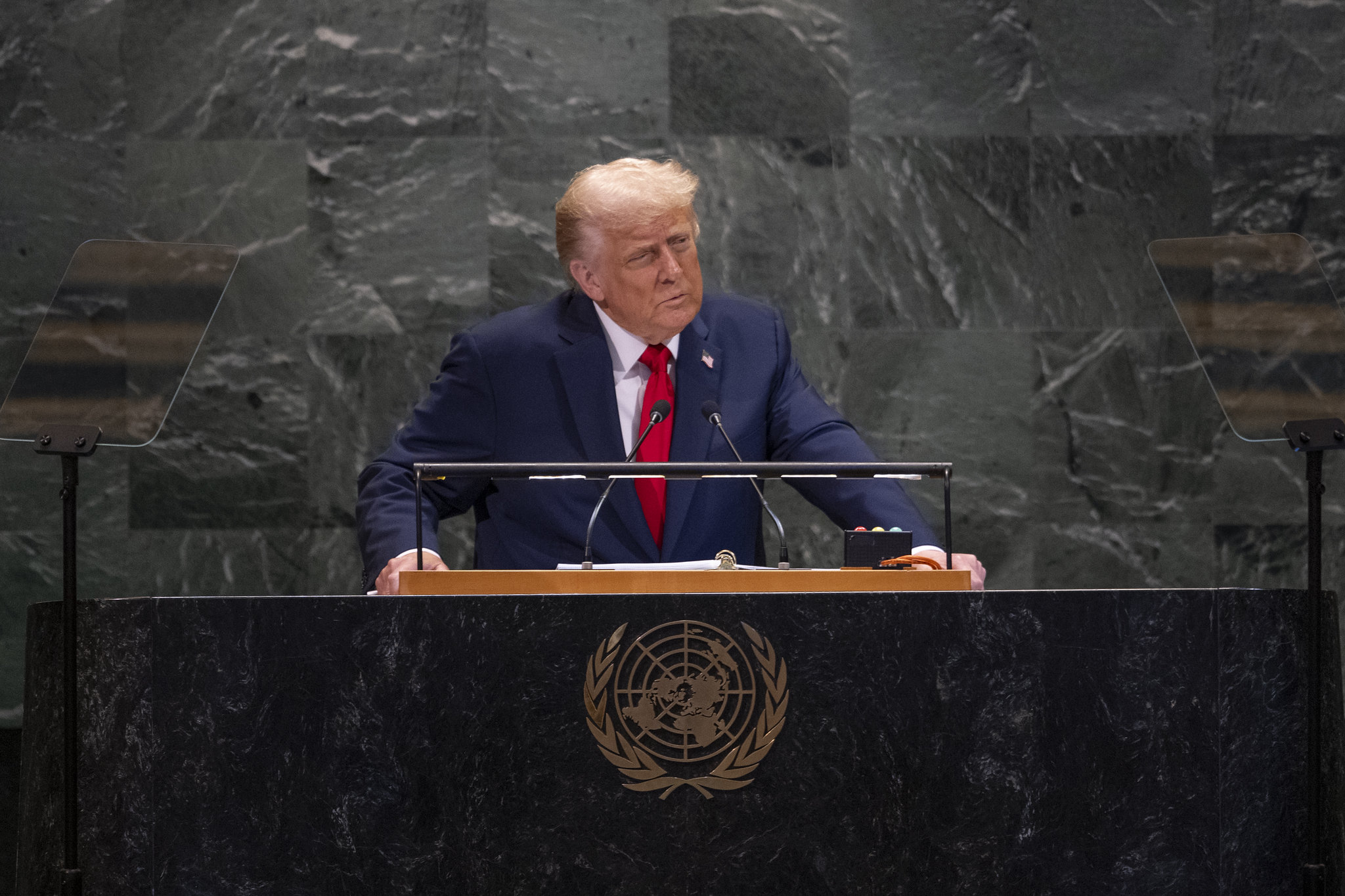
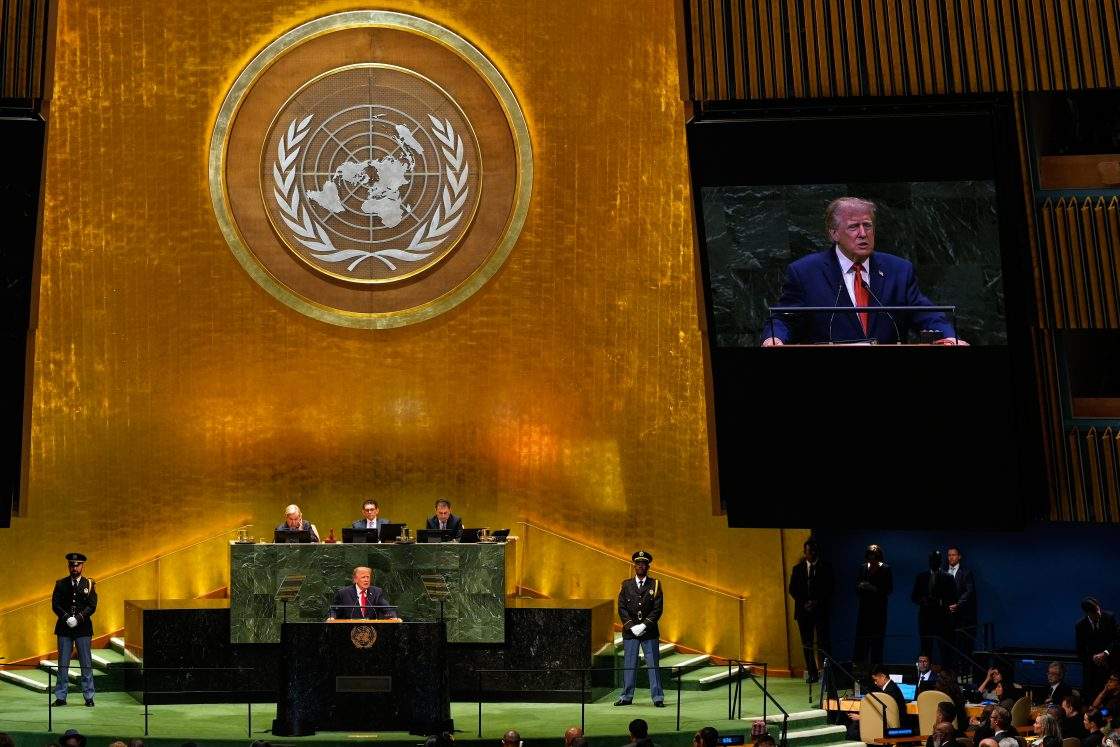
Le 22 septembre, à la tribune des Nations Unies, le président des États-Unis a annoncé qu'il lui restait « une grande décision à prendre » : conclure un accord avec l'Iran, ou « anéantir la République islamique ». Il a précisé que l'accord viendrait sans doute après les élections de mi-mandat. Le mot qui manque au débat français n'est ni mondialiste ni isolationniste.

Trump : ni mondialiste, ni isolationniste, simplement impérialiste
LE COURRIER
DES STRATÈGES
Restez libre !
Trump : ni mondialiste, ni isolationniste, simplement impérialiste

LA NEWSLETTER · GRATUITE

Le Courrier,
chaque matin.

L'essentiel de l'actualité, passé au crible par les cinq plumes du Courrier. Dans votre boîte, chaque jour ouvré.

Gratuit. Vous restez libre de partir quand vous voulez.

JE M'INSCRIS lecourrierdesstrateges.fr
lecourrierdesstrateges.fr
Restez libre !

Il a dit : j'ai une grande décision à prendre. Le verbe est au singulier et le sujet est un homme.

Sept mois après avoir engagé son pays dans une guerre contre l'Iran, Donald Trump est venu la défendre devant l'Assemblée générale des Nations Unies. Il a posé une alternative en deux branches : un accord qui permettrait à l'Iran de se reconstruire et de devenir, a-t-il dit, l'un des plus grands pays du Moyen-Orient, ou l'anéantissement de la République islamique, et rapidement. Il a ajouté qu'il croyait l'accord probable juste après les élections de mi-mandat de novembre. Il a appelé les nations à isoler Téhéran, répété qu'il ne laisserait jamais l'Iran disposer de l'arme nucléaire, présenté son plan en vingt points pour Gaza et le conseil de paix qui doit l'appliquer, et refusé toute régulation internationale de l'intelligence artificielle, qu'il préfère appeler superintelligence, comparant les inquiétudes qu'elle suscite à celles du climat.

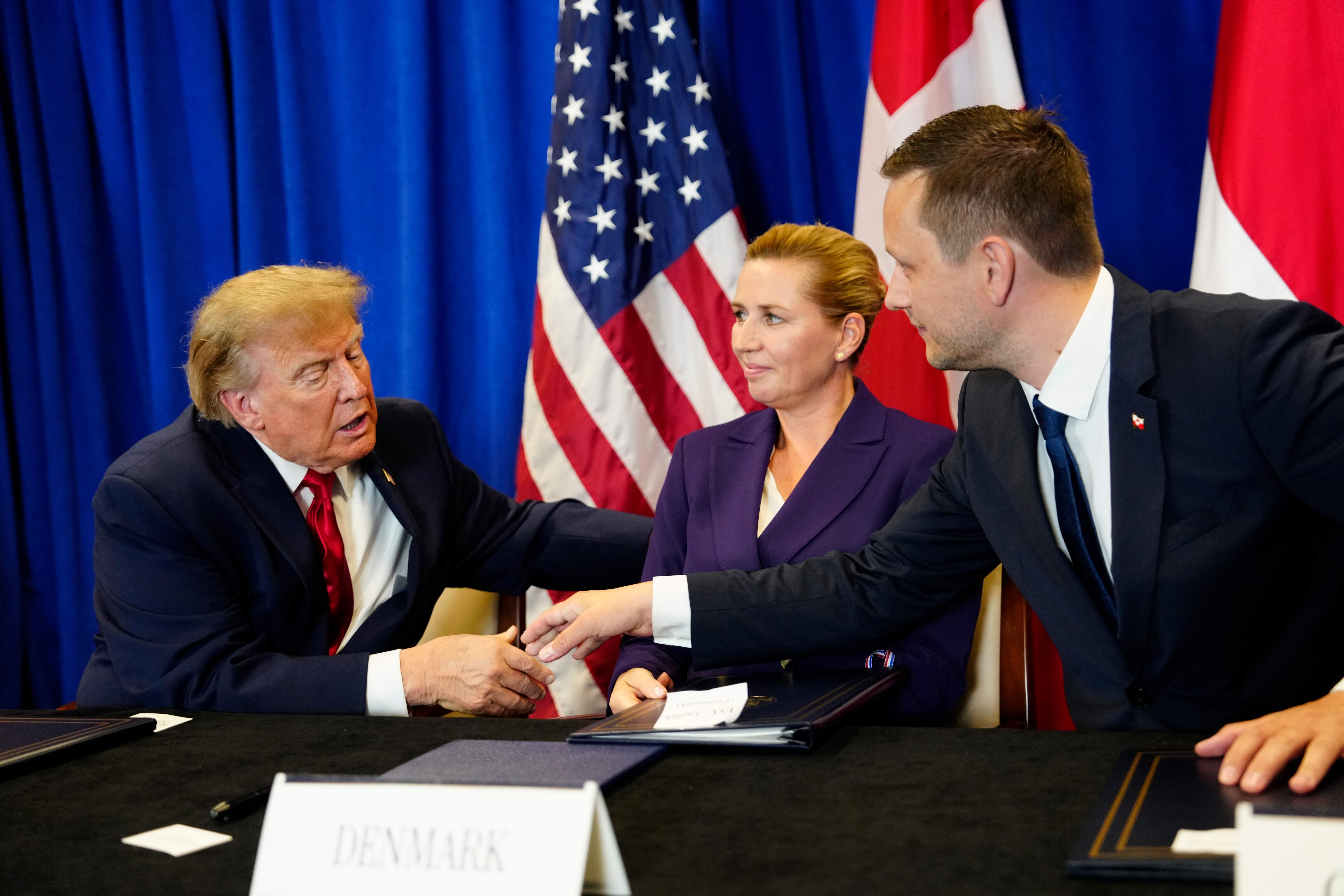
Dans la journée, il a signé avec le Danemark et le Groenland un accord élargissant les pouvoirs américains de défense sur le territoire arctique.

Voilà les faits. Reste à trouver le mot.

Trump : ni mondialiste, ni isolationniste, simplement impérialiste
LE COURRIER
DES STRATÈGES
Restez libre !

ABONNEMENT

Allez au fond
des choses.

Deux grands formats par jour. Les cinq plumes du Courrier. La série Sécession, le dimanche.

Le monde commente. Vous, vous comprenez.

S'ABONNER lecourrierdesstrateges.fr
lecourrierdesstrateges.fr
Restez libre !

Ce que les deux mots disponibles ne recouvrent pas

Le débat français dispose de deux étiquettes et les use jusqu'à la corde.

La première est l'isolationnisme, c'est-à-dire la doctrine qui veut qu'une puissance se tienne hors des affaires du monde et s'en remette à ses propres frontières. On l'attribue à Trump depuis dix ans. Elle ne résiste pas à l'énoncé de sa semaine. Un homme qui conduit une guerre depuis sept mois sur un autre continent, qui somme les autres nations de rompre avec un État tiers, qui rédige un plan de paix pour un territoire qui n'est pas le sien et institue un conseil chargé de l'administrer, qui étend enfin ses droits militaires sur une dépendance danoise, n'est pas en train de se retirer du monde. Il en occupe davantage qu'il n'en occupait.

La seconde est le mondialisme, mot plus flou, qui désigne dans l'usage courant

  •  

ICE shoots Texas delivery driver, then detains him with bullet lodged in his back

Wilber Rafael Garces Perez, a food delivery driver in North Austin, Texas, was shot by Immigration and Customs Enforcement (ICE) agents while he was making a delivery on Sunday, September 20. Garces Perez, who survived the shooting but is now partially paralyzed, says his car was rammed by a large black unmarked truck. 

ICE claimed they attempted a traffic stop and that Garces Perez fled, but the DoorDash driver and his lawyers’ account contradict this report, saying after he tried to U-turn and pullover, ICE agents rammed his vehicle again, and then an agent got out and aimed his weapon through the passenger side of the car and shot Garces Perez in the back of his neck. 

CBP revealed on Tuesday, September 22, that the officer that fired the shot was not wearing a body camera, despite the agency’s body-camera requirements.

After a few hours in the hospital, Garces Perez was transferred to ICE custody with the bullet still lodged in his back. 

“I am not doing well due to the gunshot wound and I have not received the medical attention that I require,” he said through a translator at a press conference in Austin. After receiving no pain medication at the hospital, Garces Perez said that in ICE custody, he was forced to sleep on the floor and repeatedly asked for medical care while in severe pain.

His attorney also said he developed paralysis on his left side.

Local community demands ICE out of Austin

Within hours of the shooting, protests erupted in Austin. Hundreds of residents flooded the streets demanding ICE out of their neighborhoods. 

Organizers have connected the shooting to a growing number of fatal and nonfatal encounters involving immigration agents, including the killings of Lorenzo Salgado Araujo in Houston and Ruben Ray Martinez in South Padre Island.

“We cannot be silent as ICE is shooting and killing our neighbors!” a statement by the Austin branch of the Party for Socialism and Liberation said. 

Protests have continued across Austin on Monday and Tuesday. Student walkouts were also seen on Tuesday, September 22, by students across Pflugerville, Texas, north of downtown Austin, as well as Navarro Early College High School.

DHS defends the shooting and promises to investigate

After the shooting, the Department of Homeland Security quickly claimed that Garces Perez was an “illegal alien from Venezuela, who illegally entered” the United States.

Garces Perez’s lawyers have refuted these claims, saying he entered the country through CBP One, the US border processing system. “He had a work permit. He was seeking asylum.” They said that a notice of hearing was sent to an old address, despite Garces Perez updating his address with the immigration court. “He didn’t know he had a hearing. So he didn’t go and got a deportation order in absentia, which is a very common thing.”

According to reports, DHS and the Federal Bureau of Investigation (FBI) are leading an investigation into the ICE shooting of Wilber Rafael Garces Perez.

Austin police and the Travis County district attorney’s office have also said they intend to investigate the shooting. But their investigations come amid strong criticism of federal officials’ handling of previous ICE shootings in Texas. In Houston,  Harris County District Attorney Sean Teare has said federal officials did not provide his office with information about the fatal shooting of Lorenzo Salgado Araujo. He is taking his own investigation to a grand jury to force the release of more details.

ICE violence continues in the US

The Austin shooting follows a series of fatal encounters involving federal immigration agents this year, including the killings of Renee Nicole Good and Alex Pretti in Minneapolis and Johan Sebastián Durán Guerrero in Maine.

As federal agents continue to face scrutiny over deadly encounters in Texas and other states, Austin residents and organizers say they will continue protesting and organizing until ICE is out of their communities.

  •  

Greenland is not for sale: Trump’s Donroe Doctrine and US imperialism

Donald Trump’s campaign to bring Greenland under United States control has often been dismissed as bluster. That is a mistake. Behind the language of a property deal lies a serious attempt to revive an old imperial principle: that Washington may decide the political and economic future of the entire Western Hemisphere. Greenland, strategically placed between North America and Europe, has become a test of that claim – and of whether the sovereignty of a small Indigenous nation counts when it conflicts with the ambitions of a great power.

Trump floated buying Greenland during his first presidency in 2019. After his re-election, the proposal became more aggressive. In December 2024 he declared US “ownership and control” of Greenland as an “absolute necessity.” On January 7, 2025, he refused to rule out military or economic coercion against Greenland and the Panama Canal, saying, “We need Greenland for national security purposes.” He subsequently insisted that the United States would obtain the island “one way or the other.” The claim mixed several arguments: Greenland is vital to missile defense, Russia and China threaten the Arctic, Greenland’s rare-earth deposits are strategically valuable, and Greenlanders would supposedly welcome US rule.

The last claim was demonstrably false. A January 2025 survey conducted in both Greenlandic and Danish found that 85% of Greenland’s population opposed leaving the Danish realm to join the United States, while only 6% supported it. Yet the same poll showed a majority favoring eventual independence. That distinction is central. Greenlanders’ desire to end Danish colonial tutelage cannot be converted into consent to US annexation.

A military relationship without annexation

The security case for US ownership is misleading because Washington already enjoys extensive military rights in Greenland. The relationship began during the Second World War. With Denmark occupied by Nazi Germany, its ambassador in Washington signed a 1941 agreement permitting the United States to defend Greenland and construct facilities there. Denmark sought a US withdrawal after the war, but Cold War strategy prevailed.

The 1951 Defense of Greenland Agreement, concluded under the North Atlantic Treaty, authorized the United States to establish and operate “defense areas.” It enabled the rapid construction of Thule Air Base – renamed Pituffik Space Base in 2023 – at a location ideal for the shortest air and missile routes between the Soviet Union and North America. At its Cold War height, the US operated numerous installations across Greenland. Today Pituffik, Washington’s northernmost military base, performs missile-warning, missile-defense and space-surveillance functions.

The agreement offers Washington wide operational freedom. A 2004 amendment – the Igaliku Agreement – recognized Greenland’s Home Rule government, made Pituffik the sole existing defense area, and required consultation before significant changes or the creation of new defense areas. It also established cooperation on economic, technical, and environmental issues. In other words, if the United States believes more radar, ports, airfields or personnel are necessary, a legal mechanism already exists to negotiate them with Denmark and Greenland. Sovereignty is, therefore, not a military requirement.

The history of the bases also explains why “security” is not a neutral word in Greenland. In 1953, Danish authorities ordered 116 Inughuit – 27 families – to leave the newly established Qaanaaq, while the others relocated to settlements elsewhere in the district. Camp Century was constructed beneath the ice in 1959-60 and was connected with the secret Project Iceworm proposal for an extensive network of nuclear-missile launch sites.

In 1968, a US B-52 carrying four hydrogen bombs crashed on the sea ice at Thule Air Base, causing plutonium and other contamination. The accident exposed the inconsistency between Denmark’s publicly declared policy against nuclear weapons on Danish territory in peacetime and the Danish government’s secret permissions for the US to store nuclear weapons in Greenland. Abandoned installations left fuel, waste and other pollution. Greenlandic reporting continues to question who will pay for future clean-ups. The military relationship protected US strategic interests while its human and environmental costs were disproportionately borne by Greenlanders.

Greenland ceased formally to be a colony in 1953, gained Home Rule in 1979 and expanded self-government in 2009. The Self-Government Act recognizes Greenlanders as a people entitled to self-determination and provides a path to independence. Washington reopened its Nuuk consulate in 2020, and cooperation grew in trade, education, mining, and research. Greenland’s governments (from Kuupik Kleist to Jens-Frederik Nielsen) have welcomed economic ties with Washington, but reject the tendency of Washington to want more and more from the island for its military needs.

From Monroe to Donroe

Trump’s Greenland demand belongs to a wider hemispheric policy. The Monroe Doctrine of 1823 warned European powers against new colonial intervention in the Americas. Presented as anti-colonial, it evolved into a claim of US supremacy. Theodore Roosevelt’s 1904 corollary asserted a right of intervention in Latin America, furnishing ideological cover for occupations, regime changes, and control over strategic assets.

Trump’s supporters rechristened its latest version the “Donroe Doctrine.” The label links pressure on Greenland with demands concerning the Panama Canal, threats against Cuba and Colombia, claims over Canada, and US intervention in Venezuela. In late 2025, the White House formally proclaimed a Trump Corollary to the Monroe Doctrine, asserting US leadership throughout “our hemisphere.” Greenland is swept into this sphere because it is geographically part of North America, even though it is politically tied to Denmark and its Inuit people possess their own right of self-determination. This doctrine contains a revealing contradiction. Trump denounces European control of Greenland as an anachronism while demanding that the island be transferred to the United States. Colonialism is not abolished; the proposed colonizer merely changes. Trump’s references to minerals, sea routes, and military geography reduce Greenland to an asset and its 56,000 people to an obstacle in a transaction between powers.

A crisis inside the Western alliance

Trump’s threats produced an extraordinary rupture between the United States and Europe. Denmark is not an adversary, but a NATO ally whose troops fought alongside US soldiers in Afghanistan. A threat to seize territory from one ally by force attacks the premise of the alliance itself. Danish Prime Minister Mette Frederiksen warned that a US attack on another NATO country would bring the post-war security order to an end. European governments rallied behind the principle that borders cannot be changed by coercion, a principle they invoke against Russia in Ukraine.

The crisis exposed Europe’s dependency. NATO has no comfortable procedure for defending one member against its strongest member. European states rely heavily on US military power while being asked to resist US coercion. Copenhagen responded with careful diplomacy, greater Arctic military spending, and insistence that decisions belong to Greenland and Denmark. France, Germany, the Nordic states, and the European Union expressed solidarity, but the episode sharpened calls for European strategic autonomy. It also damaged Washington’s claim to lead an alliance of democracies against authoritarian revisionism.

On September 18, 2026, Trump announced an emerging trilateral security agreement after months of negotiation, claiming “permanent control” over Greenland’s security. Danish and Greenlandic leaders described it more narrowly: an expansion of US military cooperation that preserves sovereignty and Greenlandic self-determination. The full text remains to be signed and approved. If their account holds, the outcome confirms what was apparent from the beginning: the United States could obtain additional security arrangements without owning Greenland. Yet the pressure that preceded the deal remains a warning about negotiations conducted under threats.

Greenland speaks for itself

Greenland’s response has combined rejection, unity, and political complexity. Kalaallit Nunaat – the Greenlandic name for the country – became the center of declarations that Greenland belongs to its people and is not for sale. In March 2025, large demonstrations in Nuuk, Sisimiut, and Qaanaaq marched under the red-and-white Erfalasorput flag. Protesters told Trump to respect Inuit, their country, and their nationality. Greenland’s political parties, despite deep disagreements over the speed and economic terms of independence, jointly condemned external pressure. Parliament prohibited foreign and anonymous political donations, explicitly defending the integrity of Greenlandic democracy amid great-power interest.

Danish colonialism left profound injuries: forced assimilation, social engineering, unequal development, and decisions taken in Copenhagen about Greenlandic land and people (the entire fourth season of the popular television drama, Borgen, in 2022 centered on a conflict between Copenhagen and Nuuk about the discovery of a new oil field with a China and Russia angle). Many Greenlanders want independence, and some see heightened US interest as leverage for investment and a more equal relationship with Denmark.

Greenland reveals the real content of the Donroe Doctrine: a twenty-first-century claim that geography gives Washington superior rights over neighboring peoples. The answer from Greenland is equally modern and universal. Strategic location does not cancel popular sovereignty, minerals do not erase nationhood, and no great power acquires a country merely by declaring that it needs one.

Vijay Prashad is an Indian historian and journalist. He is the author of forty books, including Washington Bullets, Red Star Over the Third World, The Darker Nations: A People’s History of the Third World, The Poorer Nations: A Possible History of the Global South, and How the International Monetary Fund Suffocates Africa, written with Grieve Chelwa. He is the executive director of Tricontinental: Institute for Social Research, the chief correspondent for Globetrotter, and the chief editor of LeftWord Books (New Delhi). He also appeared in the films Shadow World (2016) and Two Meetings (2017).

This article was produced by Globetrotter.

  •  

Collaboration, not confrontation: Xi Jinping’s visit to the United States

President Xi Jinping is set to visit to the United States from September 23-25. His visit must be understood as more than an encounter between two heads of state, but it must be seen as an encounter between two possible futures.

In one future, the United States imposes a spiral of confrontation against China. Trade disputes harden into economic warfare, then economic warfare intensifies into technological blockades, technological blockades produce military encirclement, and finally military encirclement creates incidents, and incidents the danger of becoming an unimaginable war.

In the other future, the two countries accept that neither can destroy the other without destroying much of humanity. They recognize that coexistence is not an act of charity and collaboration is not a concession. Both are necessities.

That is the significance of President Xi’s decision to travel to the United States. China’s foreign ministry has described head-of-state diplomacy as having an “irreplaceable” role in guiding relations between the two countries. The visit follows President Donald Trump’s trip to China in May and continuing negotiations over tariffs, trade, and investment. There are indications that President Xi will travel with a substantial delegation of Chinese business leaders. These facts suggest that Beijing wants to move the relationship away from the permanent crisis and towards practical engagement.

But diplomacy between China and the United States cannot merely be a photo opportunity. Nor should it be understood as a negotiation in which one side must surrender to the other. It must be based on a sober recognition of reality. Or to be precise, four realities.

The first reality is that China cannot be contained. China is not a minor country whose development can be suffocated by sanctions. It has a population of more than 1.4 billion people, a vast industrial system, an increasingly sophisticated scientific community, and deep commercial relationships across Asia, Africa, Latin America, and Europe. Whatever one thinks of China, it is absurd to imagine that it can simply be excluded from the world economy. The attempt to contain China has already produced an extraordinary catalogue of restrictions: tariffs, semiconductor controls, investment prohibitions, sanctions on Chinese companies, naval patrols along China’s coastline, and the construction of new military arrangements from the Pacific to the Indian Ocean. Each of these measures is presented as defensive. Taken together, however, they form an architecture of confrontation. There is a dangerous illusion in Washington that pressure will force China to abandon its development. No Chinese government could accept such a demand. After the century of humiliation (from the Opium Wars to the Japanese invasion) the restoration of national sovereignty and the improvement of living standards are not negotiable matters for the Chinese people. The United States may slow certain aspects of China’s development, but it cannot persuade China to return to poverty.

The second reality is that economic separation is neither simple nor painless. The United States and China remain deeply connected through trade, investment, supply chains, scientific knowledge, and consumer markets. US farmers depend upon Chinese buyers. US companies depend upon Chinese manufacturing and upon Chinese consumers. China, meanwhile, benefits from access to US technology, agricultural products, and capital. Negotiators are now discussing reciprocal tariff reductions and new mechanisms for trade and investment. These are modest measures, but they acknowledge an important truth: economic warfare injures both countries. Tariffs are announced with nationalist speeches, but their costs appear quietly in grocery bills, factory closures, disrupted supply chains, and lost employment. Working people in the United States do not benefit when China is weakened. Their difficulties are rooted principally in decisions made by their own ruling class: decades of deindustrialization, the power of finance, attacks on trade unions, the privatization of public services, and the refusal to undertake serious social investment. China did not close the factories of the US Midwest. US corporations closed them in search of higher profits. The answer to inequality in either country is not economic nationalism by the United States.

The third reality is that humanity faces problems that cannot be solved by either country acting alone. The climate catastrophe does not carry a passport. Carbon emitted in one country heats the atmosphere everywhere. The United States possesses immense scientific and financial resources, while China has developed enormous productive capacity in solar panels, batteries, electric vehicles, public transport, and renewable-energy infrastructure. Collaboration between them could accelerate a worldwide energy transition. Confrontation will delay it precisely when delay has become intolerable. The same is true of public health. The COVID-19 pandemic showed us the human cost of secrecy, competition, and vaccine nationalism. Artificial intelligence creates another urgent area for cooperation. These technologies cannot be governed adequately by rival military doctrines or private corporations seeking maximum profit. The two countries must develop common safeguards against autonomous weapons, destabilizing cyberattacks, mass surveillance, and the use of artificial intelligence to intensify social inequality.

Finally, the fourth reality is the question of war. China and the United States are nuclear-armed powers. Any direct military conflict between them would have consequences beyond calculation. This is why Taiwan must not be transformed into the trigger for a catastrophic confrontation. The one-China framework and the existing diplomatic understandings must not be hollowed out by provocations, arms sales, or gestures designed for domestic political theater.

Peace requires restraint from both sides, but restraint cannot mean that the United States surrounds China with military bases and warships and then demands that China alone remain calm. Security cannot be achieved through the permanent insecurity of another country. There will, of course, be disagreements. Collaboration does not require agreement on every political question. Nor does coexistence require silence about differences. But disagreement must be conducted through diplomacy, international law, and the institutions of the United Nations, not through sanctions, threats, and military exercises.

The countries of the Global South have a particular interest in the success of this visit. They do not want to be instructed to choose between China and the United States. They do not want their ports, minerals, telecommunications systems, and political institutions turned into battlefields in a new cold war. They want access to finance, technology, medicine, and markets without political subordination. They want development, not recruitment into rival military camps. Xi Jinping’s visit therefore carries a responsibility that extends far beyond Washington and Beijing. The world does not need an agreement merely to divide markets between Chinese and US corporations. It needs a commitment to reduce the danger of war, dismantle unilateral coercive measures, restore normal economic relations, cooperate on climate and public health, and strengthen the principles of the United Nations Charter.

The importance of the visit lies not in ceremony but in possibility. It offers both countries an opportunity to step back from the cliff. The United States must abandon the fantasy that it can preserve its primacy by preventing China’s development. China, for its part, has repeatedly said that it does not seek to replace the United States as a hegemonic power. That principle must become the basis of a durable relationship: no containment, no domination, no war.

There is an old habit among powerful states of treating compromise as weakness. In the nuclear age, the opposite is true. It takes no courage to order another warship into contested waters. It takes political courage to recognize that one’s adversary also has legitimate interests, that coexistence requires reciprocity, and that the survival of humanity is more important than the vanity of supremacy.

This visit should therefore carry a simple message from Washington to the world: collaboration is not surrender, diplomacy is not weakness, and peace is not an abstraction.

Confrontation offers neither country a future.

Collaboration offers the world a chance.

Vijay Prashad is an Indian historian and journalist. He is the author of forty books, including Washington Bullets, Red Star Over the Third World, The Darker Nations: A People’s History of the Third World, The Poorer Nations: A Possible History of the Global South, and How the International Monetary Fund Suffocates Africa, written with Grieve Chelwa. He is the executive director of Tricontinental: Institute for Social Research, the chief correspondent for Globetrotter, and the chief editor of LeftWord Books(New Delhi). He also appeared in the films Shadow World (2016) and Two Meetings (2017).

This article was produced by Globetrotter.

  •  

Brazil’s presidential campaign heats up

On October 4, nearly 160 million Brazilians will go to the polls to elect their next president, vice president, members of Congress, governors, and state legislators from the country’s various states. If no presidential candidate receives more than 50% of the valid votes, a runoff election will be held on October 25.

At this time, 13 presidential candidates are vying for the presidency in Brasília, although polls clearly point to two candidates vying for the presidency of Latin America’s most economically powerful country.

On one side is Brazil’s current president, the former union leader and progressive Luis Inácio Lula da Silva. Lula served as president from 2003 to 2011 with very high approval ratings, although following corruption allegations, he was imprisoned and sentenced to nine years.

However, after over 500 days in detention, a judge ordered his release, ruling that the proceedings were flawed. The Supreme Court of Justice called the incident a “historic error.” Following that, Lula faced off against then-far-right President Jair Bolsonaro and defeated him in the 2022 election. Now Lula hopes to be re-elected once again.

At the forefront is none other than Jair Bolsonaro’s son, Flávio Bolsonaro, who has leveraged his father’s reputation to boost his own. This is because Jair Bolsonaro was found guilty of several crimes that, according to the Brazilian justice system, were intended to prevent Lula’s inauguration and promote a coup d’état. Jair Bolsonaro is currently in house arrest for those crimes.

Consequently, a significant portion of Brazilian society, as well as international politicians such as Donald Trump, consider Bolsonaro’s imprisonment to be unjust. This explains how his son Flávio – a lawyer and businessman who currently serves as a senator – has managed to garner significant support in his bid to win the presidency on October 4.

Thus, two clearly distinct political and economic models are pitted against one another. Lula belongs to a political tradition that seeks to strengthen the state, reduce extreme poverty, invest in social programs, and diversify trade partners (such as China and India), all in line with a clearly pro-sovereignty discourse.

For his part, Flávio Bolsonaro promises to continue on his father’s path: economic neoliberalism, reducing the size of the state, building closer ties with the private sector, and – perhaps most importantly – placing Brazil once again under the influence of the Trump administration, which supports the far-right candidate.

Read more: Lula and Flávio Bolsonaro all set to face off this October in Brazil’s presidential election

Clearly, a victory for the far right – which is close to Washington – would represent a sharp shift in the region’s current economic and political course. Brazil accounts for nearly 50% of the region’s total GDP, so a victory for a Trump ally would drastically alter not only the political landscape but also the economic one. On the other hand, a victory for Lula would signal a “halt” (probably the most significant of all possible outcomes) to the wave of victories by the Latin American right and far right – allies and supporters of US hemispheric and military policy – that have swept the electoral landscape in recent years.

What do the polls say?

Since the start of the presidential race, Lula has maintained a lead over his political opponent. However, that lead has been narrowing as the weeks have gone by, raising the possibility that the runoff election, scheduled for October 25, will be a very close race. This is because, it appears, neither candidate will manage to secure more than 50% of the vote to win in a single round.

According to a poll by the MDA Pesquisa Institute, Lula holds a solid lead over Bolsonaro: 40.06% to 30.4%. Augusto Cury comes in third with 6% of the vote, while the remaining candidates trail behind this mark. According to this poll, in the event of a runoff, Lula would win with 47.3% against Bolsonaro’s likely 40%.

However, other polls paint a different picture, in which Lula remains in the lead but by a very narrow margin. This is according to an AtlasIntel poll, which shows Lula with 46% of the vote, while Bolsonaro would receive 44% in the first round. In the runoff, the gap would disappear, and both candidates would receive nearly 47% of the vote (a technical tie).

A corruption scandal that is shaking up the political landscape

However, everything could change in the wake of a scandal that has rocked Brazilian politics. In late 2025, the former owner of Banco Máster SA, Daniel Vorcaro, allegedly committed a serious case of bank fraud. Since his arrest in March 2026, his conversations, friendships, and connections have all been under close investigation.

One of the people who has come under scrutiny is Flávio Bolsonaro, who confirmed that he had asked the banker for money to make a film about his father called “Dark Horse”. The Federal Police are investigating this case to determine whether Bolsonaro participated in any illegal activity.

Meanwhile, Lula’s inner circle has also been affected. The judge who ordered Jair Bolsonaro’s arrest, Alexandre de Moraes, is alleged to have exchanged messages with Vorcaro. Moraes has been portrayed as a judge close to Lula and thus Bolsonaro and his supporters have seized on the revelation of the messages to call for Moraes’s removal and indirectly accuse the government of suspicious activities.

The debate has led to a serious crisis within the Brazilian judiciary because a decision to investigate Moraes was postponed, prompting accusations of political bias among the judges.

  •  

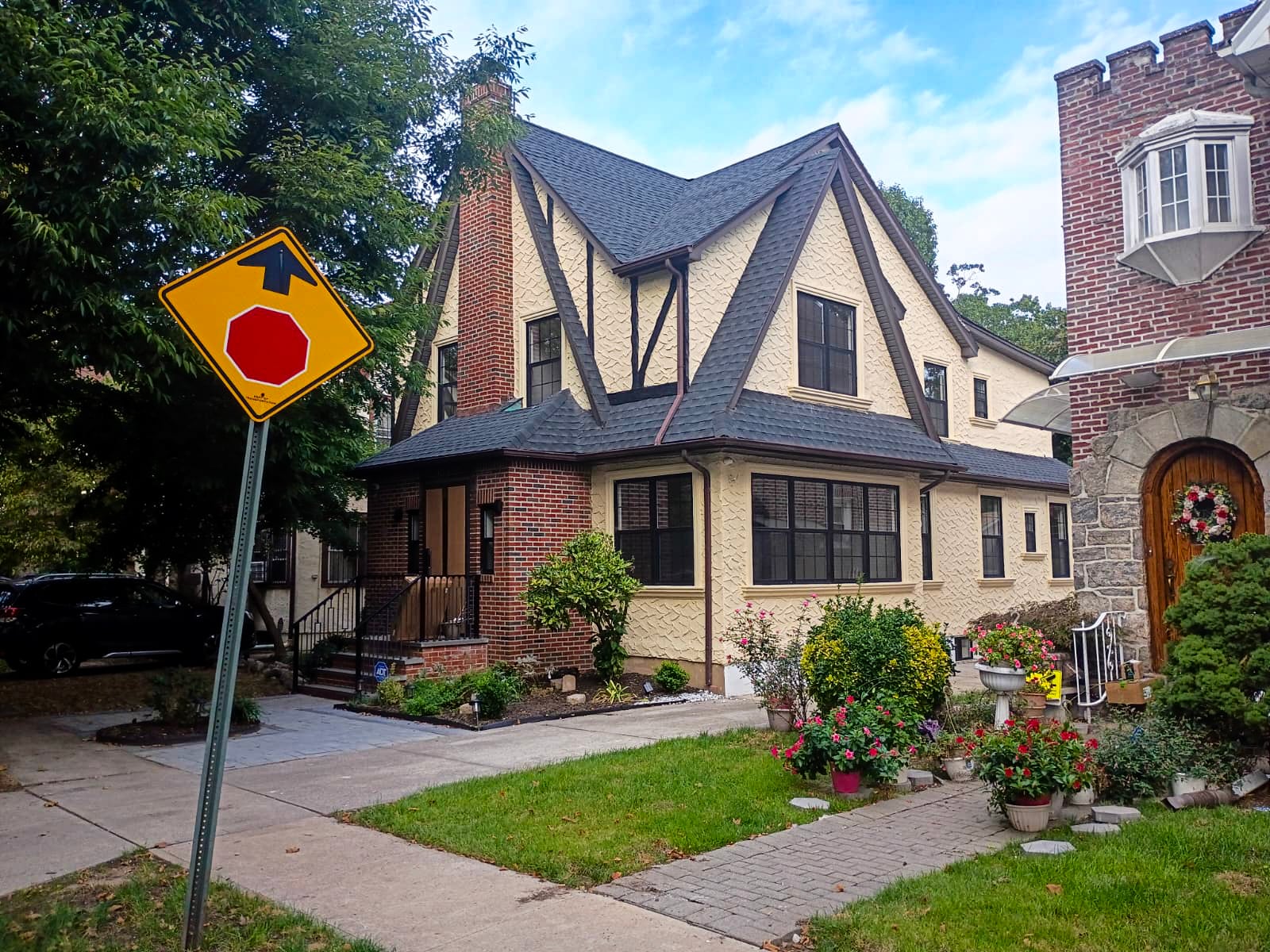
From Airbnb to stray cats: Trump’s childhood home in Queens sells for $2 million

The Jamaica–179th Street subway stop in Queens is only about a 10-minute walk from Wareham Place. But an abyss separates the two places. From the crowded low-rise blocks of busy shops, where spotting a white resident is difficult, to single-family homes with manicured yards on quiet streets where cars rarely pass. “Different parts of Queens were rough; this was an oasis,” Donald Trump said in a 2015 New York Times interview. This “oasis” is where the man who is now president of the United States lived as a child, in a house an anonymous family has just bought for $1.93 million.

Seguir leyendo

© Luis Doncel

The house in Queens where Donald Trump lived until age four, last Thursday.
  •  

Recolonization is taking place, says Guyana’s former president

Latin America and the Caribbean countries are being re-colonized. This time it is not by Britain, the Netherlands, Spain, France, and Portugal, but by the United States.

At a period of time the United States had an anti-colonial position and had advocated for the ending of colonialism. That was one of the features of the Monroe Doctrine that has become somewhat obscured since the US became so bellicose.

Today, in a de facto way it has become a super colonial power. It is imposing its will on regions and countries. Those that stand up for their rights are sanctioned, destabilized and sometimes physically removed.

The fact that it used its military might to kidnap a sitting president, President Maduro of Venezuela, is a clear indication that the United States has decided to ignore international law and to get its own way.

Strikingly, only the President of Brazil protested vigorously. Our Caribbean leaders have generally been tight lipped.

The United States has gone even further. They have, using the guise of fighting drugs, established a strong military presence in the region. They have been murdering hundreds of persons traveling in small boats in the Caribbean. Without producing a scintilla of evidence, without attempting to board the boats and get evidence, the US just killed the occupants. We may never know if any were really involved in drug trafficking.

There has been a deafening silence from Latin America and the Caribbean leaders to those atrocities. As if these events were not enough, many of the governments in the region are, on the request/orders from the United States, acting against their countries’ best interests. The ending of the cooperation in health with Cuba which was in place for more than fifty years and which benefited millions of the region’s citizens, is a case in point.

That has left a massive gap in the health sector of the region. The US has not provided any assistance to help with the dislocation and shortage of technical personnel created by their insistence to remove Cubans.

The US is now also pressing regional governments to stop doing business with China. Many governments are beginning to comply with those orders as we see more big contracts going to US companies, despite some of those companies having poor performance records.

If some newspaper stories are to be believed, (and they have not been countered) in some cases Chinese contractors won bids for certain projects, but they were not given the jobs, they went to US firms instead.

The US and other Western countries have ignored us and kept us in a state of underdevelopment since independence. Now that we are getting assistance from China to build important and much needed infrastructure to facilitate socio-economic progress we are getting push back from the US.

It appears that they want to keep us in a state of perpetual underdevelopment and in poverty.

We see the open intention to super exploit our natural resources and labor for the benefit of big business in the US. They are mainly interested in our natural resources. They do not add value in the region nor establish any type of manufacturing. Those are reserved for the rich, developed countries.

The recent “deal” with Venezuela is worse than highway robbery. Venezuela has to provide oil and gas to US companies at cost for one hundred years. This is barefaced robbery and has demonstrated that Venezuela is now a de facto colony of the US. This will not benefit the poor in the US. It is designed to enrich the huge corporations.

Venezuela was forced to abandon its long and well-known principle of standing in solidarity with the oppressed people of Palestine. It is now forced to recognise the Fascist, Apartheid Israeli regime that continues to bomb defenseless civilians in makeshift camps in Gaza, the West Bank (where ethnic cleansing is taking place) and in East Jerusalem.

Today the sovereignty of our countries is already severely compromised. If we don’t stand up now it would be completely lost.

Donald Ramotar is a former President of the Cooperative Republic of Guyana (2011-2015).

This article was produced by Globetrotter.

  •  
❌