❌

Reading view

Ghana swiftly rejects US health deal, calls it ‘humiliating’

Ghana has rejected a proposed health compact with the United States that would have provided an estimated $109 million in US health funding over five years, with President John Dramani Mahama saying the agreement raised serious concerns over health data, financing obligations, and Ghana’s regulatory authority.

The decision places Ghana among a few African countries that have pushed back against new US health agreements introduced as Washington restructures its foreign assistance following the dismantling of USAID. Zimbabwe has also rejected a similar agreement, while Zambia has raised concerns over provisions in its negotiations with the United States.

Ghana raises concerns over health data

Speaking at the Council on Foreign Relations in New York on September 25, Mahama said the proposed compact was presented to Ghana as a replacement for health funding previously provided through USAID.

He said Ghana’s Ministry of Health reviewed the document before preparing a Cabinet Information Paper.

“Ghana is a sovereign nation, and we have our own processes. We are a democratic country,” Mahama said.

According to the President, the Cabinet identified several provisions that raised concerns, particularly those relating to Ghana’s health information.

“One, it says that we shall give the United States our pathogen profile,” he said, adding that the agreement also required Ghana to provide medical records.

“It also says we should give our medical records. I mean, who takes another country’s medical records? And so that was strange.”

Concerns over health-data sharing have been central to resistance to the new US health agreements in several African countries. 

No FDA inspection

Mahama also raised concerns about the treatment of medicines and other medical products supplied under the proposed arrangement.

He said Ghana would have been required to contribute funding to the program while, according to his account of the compact, the country’s Food and Drugs Authority would not have been able to inspect medicines or other medical products entering Ghana under the program.

“And then it also says that any medications or any medical products that shall be brought into our country, our Food and Drugs Administration has absolutely no right to inspect,” Mahama said.

“I mean, it was humiliating.”

Ghanaian officials had previously cited concerns about the proposed handling of sensitive health information as a reason for rejecting the agreement. Reporting on the negotiations also indicated that the proposed arrangement would have required additional investment from Ghana alongside the US contribution.

Cabinet rejected the agreement

Mahama said the proposal was rejected after the Health Ministry presented its assessment to the Cabinet.

He described the decision as unusually swift.

“It was the compact that was thrown out in record time in our Cabinet. I’ve never seen anything thrown out as fast as that.”

He said the government subsequently instructed the Health Minister to communicate Ghana’s position to the US ambassador.

“And so, of course, we rejected it. And we asked the health minister to inform the US ambassador that we didn’t need it. We’ll manage ourselves.”

The proposed agreement would have provided Ghana with about $109 million in US health assistance over five years. The negotiations had begun in late 2025.

A wider concern over health sovereignty

Ghana’s decision comes as the United States seeks to shift its approach to global health cooperation. The new US strategy places greater emphasis on recipient countries taking responsibility for financing and delivering health programs, while Washington reduces its traditional aid commitments.

Kenya became the first African country to sign the agreement which was challenged in court, followed by similar arrangements with Rwanda, Liberia, Uganda, Lesotho and Eswatini, among other countries. Ravi Ram from the People’s Health Movement (PHM) East and South Africa, told BreakThrough News in December 2025, that  “Bilateral agreements between the US and Kenya and other African countries are meant to limit the ability of any one ‘partner’ country to challenge the terms of implementing the agreement, due to the unequal power relations.”

The concerns among health activists and concerned Africans is the ability of African states to determine their own health priorities, regulate medicines, control sensitive health information, and collectively negotiate the terms of international health cooperation.

  •  

Prosecutor leading investigation of Cerimedo arrested by Bolivian police, days after facing US sanctions

On the evening of Wednesday, September 30, Bolivian police arrested Attorney General Roger Mariaca and raided the Attorney General’s Office in Sucre and Santa Cruz. The police action comes just days after the US State Department sanctioned and revoked the visas of Mariaca and 21 other Bolivians.

Analysts suggest that the timing of the US sanctions, Mariaca’s arrest, and the raids, are no coincidence, calling it “political pressure” related to a high-profile case.

Mariaca is leading the investigation into Argentine political consultant Fernando Cerimedo. The influential political advisor to Latin America’s far right allegedly influenced elections through social media bot farms, may be involved in drug trafficking, and was accused of ordering an assassination attempt on his ex-partner, Nadia Beller. She was shot three times but survived after undergoing emergency surgery.

Cerimedo has been in custody in Bolivia after attempting to leave the country by plane following the attack on Beller. Messages were found on his cell phone that, according to the prosecution, directly link him to the attempt on her life. Despite the emerging evidence against him, not only in ordering the hit on Beller, but also in crimes of corruption and drug trafficking, Cerimedo seems to have friends in high places, both in the Bolivian president’s office, and in the United States, that may have set the stage for the arrest of his investigator, Attorney General Roger Mariaca.

Read more: Attempted murder accusations, troll farms, and presidential connections: the notorious case of Fernando Cerimedo

Argentine outlet Página 12, reported that, according to Beller, the sanctions against Mariaca were “a move by Donald Trump’s team to protect Cerimedo. As the Washington Post noted this week: ‘Cerimedo is the MAGA (Make America Great Again, Trump’s slogan) man across the entire continent.’”

In the report, Beller is quoted as saying: “Is this decision by the United States part of the fight for the Shield of the Americas or is it about protecting the MAGA network?…If the reason is corruption and drug trafficking, then they need to explain why the visa is being revoked for the attorney general who is investigating a network of that nature. Are they going after the investigator, or are they protecting part of the network?”

As evidence mounts against Cerimedo, the US instead accused his investigator, Mariaca, of allegedly soliciting and accepting bribes to facilitate drug trafficking and helping people involved in violent crimes escape justice.

After news broke of the US actions against him, Roger Mariaca had said he will not back down and will continue the investigations until the end: “[I received the news] with great surprise … I will not back down even one centimeter from the investigations that fall under my jurisdiction.”

He highlighted that while it is clear that the Cerimedo case has generated international intrigue, “no political pressure, whether national or international, can become an impediment to clarifying the facts which must be investigated.”

He was arrested two days later.

Involvement in the drug trade?

In addition to Cerimedo’s well-documented ties to high profile right-wing politicians across Latin America, including in Bolivia, recent revelations from ex-partner Beller, suggest that the powerful political consultant may have also been involved in the drug trade. In a leaked audio message, Cerimedo is allegedly speaking with a woman with whom he is arranging payment so that several flights can operate without excessive pressure from the authorities. Cerimedo mentions a man named Cabrera, whom the Bolivian media suspect is Franz Cabrera, the former head of the Special Force to Fight Against Drug Trafficking (FELCN), who was recently dismissed.

According to the investigations, they allegedly “were paid” for nearly 45 flights, amounting to $700,000, raising significant suspicions about the source of the funds that the political consultant is said to have handled.

The timing of the sanctions against Mariaca and his arrest have raised questions about US interference in the Bolivian justice system. But, as pressure escalates over the investigation into Cerimedo, the case is also revealing a far deeper web of political connection and influence than was initially known, placing it under renewed scrutiny. Wether the investigation is further disrupted or allowed to proceed, what happens next could expose even more about Cerimedo and the network of the Latin American far right.

  •  

Uganda readies troop deployment to Gaza, risking complicity in war crimes

The Ugandan army, which had offered to capture Iran’s capital within 72 hours for Israel earlier this year, is now readying a troop deployment to Gaza under US command.

Discussing the deployment, senior Ugandan military officers were at the US-led Civil-Military Coordination Center in Kiryat Gat on August 17. The town on the edge of the Negev desert – barely 25 km from the northern Gaza Strip – was established in 1955 after depopulating the Palestinian villages of al-Faluja and Iraq al-Manshiya during the Nakba.​

Burundi’s military officials were also reportedly present at the meeting here, after which the Israeli Occupation Forces (IOF) gave them both a tour of the city of Rafa in southern Gaza as part of the “pre-deployment site survey.”

Burundi is yet to confirm the deployment of its troops. However, Uganda’s parliament, practically a rubber stamp with over 70% of the seats held by the ruling party, approved the deployment of its troops on August 6.​

This made it the sixth country to join the International Stabilization Force (ISF) proposed by US President Donald Trump’s so-called Board of Peace, envisioned as the 20,000-strong force led by US Major General Jasper Jeffers.

The remaining five contributors of troops hold relatively diverse positions on the Israel-Palestine question. Indonesia has been a vocal critic of Israel, backing South Africa’s genocide case against it at the International Court of Justice (ICJ). It maintains no diplomatic ties with Israel. The largest contributor has reportedly put its 8,000 troop deployment on hold, although it hasn’t formally withdrawn from the ISF.

Kazakhstan, on the other hand, has maintained deep diplomatic ties with Israel since 1992. Morocco joined the Abraham Accords in 2020. Both have done so while mouthing the two-state solution for an independent Palestinian state with East Jerusalem as its capital as official state policy.

The remaining two European countries are staunchly pro-Israel. Albania has announced plans to open a commercial liaison office in Jerusalem. Kosovo has outdone Albania, following Trump’s lead by moving its Israeli embassy to Jerusalem.​

The sixth country to come on board, Uganda, professes a commitment to Israel that dwarfs that of the European troop-contributors.

Offering to join US-Israeli war on Iran​

“Any talk of … defeating Israel will bring us into the war” against Iran on “the side of Israel,” Uganda’s military chief, Muhoozi Kainerugaba, posted on X in late March. He is the son and heir apparent of Uganda’s 81-year-old president, Yoweri Museveni, ruling the country since 1986.

After 40 years of rule, Museveni was handed a seventh term by the Electoral Commission in January, following an election marred by “widespread repression and intimidation against the political opposition, human rights defenders, [and] journalists,” according to the UN.

Soon after the results, Kainerugaba began hunting down Museveni’s political opponents, forcing his main challenger in the election, Bobi Wine, into exile, bragging about killing 30 of his party’s members, and swearing to “get them all.”

Israeli military technology, from weapons to surveillance equipment, has long enabled Museveni’s domestic crackdown. Recalling that Israel has supported his regime for decades, “Why wouldn’t we defend her now?” asked Kainerugaba. He added in a subsequently deleted post that the Ugandan military had offered to join the US and Israel in their war efforts against Iran, claiming, “We could have captured Tehran in 72 hours.”

Read more: Ugandan military chief announces willingness to join the US-Israeli war on Iran

This bold claim of being able to defeat the world’s 16th largest military power, with a military ranked 107 out of 145 countries, was gently mocked, even in the Israeli media at the time.  

“Gaza, here we come”: Ugandan soldiers post on social media

Nevertheless, barely five months later, Ugandan soldiers began uploading posts on social media, captioned, “Gaza, here we come,” filming themselves loading equipment onto planes – taking off and landing in undisclosed locations.​

These posts by Ugandan soldiers began circulating on social media after the Ugandan parliament approved the troop deployment on August 6.​

Military deployment as a diplomatic strategy

Addressing the parliament ahead of the vote, Maj Gen David Gonyi, parliamentary representative of the Uganda People’s Defence Forces (UPDF), explained the rationale of the deployment to the legislators: “Uganda submitted the name of a Ugandan [veteran diplomat, Olara Otunnu] to become Secretary-General of the United Nations. It would be like shooting ourselves in the foot to say that Uganda should not participate in [the] deployment in Gaza.”

Military deployment has long been a central plank of Ugandan diplomacy, currying favor of the Western countries by sending its soldiers to missions in Somalia, South Sudan, Equatorial Guinea, and the Democratic Republic of Congo (DRC).

Its Somalia deployment has been especially crucial for the Ugandan army to receive training and support from the US Marine Corps and US Africa Command (AFRICOM).

Last November, Johan Borgstam, the European Union (EU) Special Representative for the Great Lakes Region, met Kainerugaba to propose expanding Ugandan troop deployment in DRC, on behalf of Brussels. Borgstam brought this proposal, despite the UN confirming the validity of the DRC’s accusation that Uganda is supporting the M23 armed group, a proxy of Rwanda which, along with its army, has occupied large swathes of the region in a war for DRC’s minerals.

Presenting this Western demand for Ugandan troops as a diplomatic success, Major General Henry Masiko, another parliamentary representative of the UPDF and the Joint Staff Political Commissar, told the legislators: “The UPDF is viewed as the anchor of stability in a sea of turbulence, regionally and now globally.”

He went on to add in his remarks to the parliament that the “doctrine of the force is that we go out not to dance but to confront threats against society and humanity,” in a thinly veiled reference to Palestinian resistance.

“Some troops will return in coffins,” warns opposition MP

Opposition politicians have raised concerns that deploying troops when the Ugandan government has done little to conceal its neutrality may have consequences. 

“Some [troops will] return in coffins,” warned Jamal Ayagalaki. “We need answers on who will pay the UPDF, what the terms and conditions of service will be, and what support will be available to soldiers and their families.” He further warned that Uganda’s involvement in a conflict “that is not ours” could expose the country itself to new security threats.

A more thorough criticism of the deployment came not from an opposition leader but from retired General David Sejusa, who had served Museveni as a senior presidential adviser and intelligence coordinator from 2005 to 2013.​

The “parliament passed a resolution for peacekeeping, [but] what peace is [there] is Gaza?” he questioned, pointing to the lack of agreement between Israel and Hamas.

Uganda risks complicity in war crimes: former intelligence chief

“The permanent decommissioning of weapons from non-state armed groups” – i.e. the Palestinian resistance – is one of the tasks the International Stabilization Force must carry out in coordination with Israel, according to the resolution adopted by the UN Security Council in November 2025, with abstentions from Russia and China.

Hamas has refused to hand over weapons to Israel or any foreign force. It has called for the creation of a Palestinian national committee, which will hold the weapons collected from Hamas and other resistance groups within Gaza.

This transfer of weapons, however, can only happen after Israel withdraws from Gaza, Hamas insists. Israel, on the other hand, has refused to withdraw from Gaza until the resistance is completely disarmed.​

Therefore, in the absence of any “clear implementable political framework,” Uganda will be deploying troops in an “un-militarized active conflict area … where a belligerent state continues strikes on the occupied population,” Sejusa said. This, he warned, places Ugandan troops at the “risk of complicity in war crimes.”

  •  

West faces chaos as it comes to terms with voting in imbeciles as leaders

Trump and Burnham: chaos merchants. UK eyes conscription, taxes the dead. Trump hints at annulling midterms.

Join us on Telegram, X, and VK.

Contact us: info@strategic-culture.su

Both President Trump and UK Prime Minister Andy Burnham recently met in New York, with both facing tough times ahead as leaders. And it would seem both are choosing chaos over sage governance. But in the case of Trump, Iran might beat him to it.

Events are moving fast in the West as more and more countries’ ruling elites ramp up the rhetoric to go to war with Russia. Recently, in a TV debate in the UK, a staunch pin-striped old-guard conservative agreed with a liberal that a great many people who don’t agree with the plan will need to be locked up – giving the viewer the impression that this was actually more important of an objective than actually killing Russians on the battlefield. In the UK, there is a real momentum towards conscription, which would be inevitable if British soldiers were ever to be sent to the front line in Ukraine. In the U.S., most analysts believe conscription is far away from many of the options for the second half of Trump’s second term in office that are being debated behind closed doors. But as the U.S. economy starts to implode along with most EU states, plus the UK, chaos seems to be inevitable. For Trump, there is a genuine worry that, to avoid impeachment, he will try and annul the midterm elections if they don’t go his way (he has already hinted at this, referring to mail voter fraud). Many top experts, like Professor Bob Pape, believe violence is the preferred derivative from both political groups, and a second wave is coming soon which will make Trump’s January 6 escalation look like a children’s tea party in November. In a recent poll which reached out to both Republicans and Democrats, a staggering 60 percent of those contacted said they preferred a violent discourse in the U.S. – such was the level of discontent and, perhaps more importantly, the lack of faith in both the system and the leaders it produces.

In Britain, the lack of political credibility for its leaders is at such an all-time low point that all the government can do is borrow more money each month to busy itself with its erroneous policies which make no sense to anyone. Thousands of fake asylum seekers continue to leave France’s shores and head to the UK’s, where they are welcomed with blankets, hot drinks and free transportation to take them to their hotels, before they wait to be allocated housing. Some of them merely complain about the poor speed of the internet in their temporary accommodation with the smartphones that the government gives them; others take to the streets and cause mayhem if they do not get what they have deemed to be their birthright. The government has simply lost control of the boats and so ignores the growing numbers. It has also no idea whatsoever how to run Britain effectively, and so rather than assisting big business and attracting foreign direct investment, it prefers just to overspend on social programs while inevitably heading towards higher taxation. When you can’t run government and you haven’t got the skills to drive the economy forward, sooner or later you arrive at the point where Andy Burnham is now: taxing the dead.

Yes, a new inheritance tax is being kicked around now by Burnham, who is rumoured to be looking at calling an early election where he will use the one ace he has to get the edge, he believes, over the conservatives and Reform: re-joining the EU. His ideas will be pretending to care about the poor, assisting more boat people, going to war with Russia, taking a stand against Israel, and of course getting back in the EU. That bag of mad ideas could give him the distance to fool the British public that once again it’s all about policies and nothing to do with the merit of those behind them. Calling an early election is quite smart, though, as it seems that each month that passes Kemi Badenoch looks more attractive to middle Britain, while Nigel Farage’s Reform party appears to be slipping down the popularity polls. The big question is whether Burnham will actually go ahead with a war plan with Russia or just use the constant fear-mongering as a tool to raise defence spending and introduce a conscription.

For Trump, his concerns of staying in power are equal to Burnham’s, and yet the stakes are higher. Could he really plunge the entire U.S. economy into a depression which is going to mean shortages in the grocery stores, higher gas prices and sky-high inflation? It would seem to be inevitable, although we should be deeply sceptical about Trump telling reporters that he will bomb Iran after the midterms. Even Trump is not so stupid as to give away his strategy like that. In reality, he is probably under the allusion – delusion? – that the Iranians are actually afraid of a new, fresh attack on their civilian infrastructure. Of course, they are not, but Trump’s thinking is not sound. In reality, the Iranians are probably planning for the perfect moment to obliterate the entire GCC economy, Israel, or even the nucleus of U.S. military in the region – to send a shock to the Trump administration and the economy which would push most Americans, even Democrats, over a line of tolerance.

Americans will use the midterms to make a statement which doesn’t affect their normal presidential vote and vote massively for Dems, securing at the heart of the strategy to impeach Trump, or at the very least make it impossible for him to carry on with his imbecilic style of being a U.S. president. Americans have had enough, and it will be interesting to see how much Trump could do as President without the support of either house and an impeachment trial hanging over his head. For the big thinkers in Tehran, this is probably their strategy – although one can’t help wondering if they have a dilemma in that if they are going to pull off their major strike before the midterms, might this not give Trump the perfect excuse to annul them before they even start, with “America at war” being the argument? Of course, this is folly, but he might believe he has enough of the establishment in his pocket to give it a run for its money. It would be unprecedented. Like everything Trump does.

  •  

Israeli authorities order total shut down of West Bank

On Sunday, September 27, the Israeli occupation authorities announced a multi-day comprehensive closure of all crossings into and out of the West Bank, coinciding with the Jewish holiday of Sukkot.

The closure will continue until at least Saturday, October 3, further exacerbating already stifling restrictions on movement across the occupied territories.

The move came days after the Israeli forces blocked the main entrances and exits to the central West Bank governorate of Ramallah and Al-Bireh, which constitutes a major commercial hub and connects the territory’s northern governorates with those to the south.

In recent days, thousands of Palestinians were stranded at Israeli military checkpoints due to these restrictions that eventually culminated with the holiday-related closure. This includes vulnerable people such as patients, elderly people, pregnant women, and even preschoolers unaccompanied by their parents.

On Friday, September 25, media outlets reported that kindergarten students waited at the Atarah military checkpoint in northern Ramallah for nine hours the previous night, with their bus finally managing to bring them home after 10:30 PM. 

Meanwhile, BreakThrough News documented the delay an ambulance of the Palestine Red Crescent Society (PRCS) faced at the same checkpoint on Monday, September 28.

On Sunday, Israel announced a comprehensive closure of all crossings into and out of the West Bank for the Jewish holiday of Sukkot. This has left Palestinians – workers, students, and even ambulances transporting patients – stranded at checkpoints for hours.

BT's Aseel Saleh… pic.twitter.com/XbI2o928QM

— BreakThrough News (@BTnewsroom) September 29, 2026

BreakThrough News also spoke to some Palestinian citizens at the checkpoint, who affirmed that they had to wait for many hours at each checkpoint inside the governorate on a daily basis.

A cargo driver from the southern governorate of Hebron, who travels to Ramallah every day, said that he sometimes has no other choice but to sleep in his car when facing extended delays.

Another Palestinian, who spoke on condition of anonymity, suggested that the Israeli measures in place aim to make the Palestinian people in the West Bank feel frustrated about their daily life, pushing them to leave their homeland permanently.

Illegal Israeli settlers storm different parts of Ramallah during the holiday

The provocative acts related to the current holiday were not limited to the comprehensive closure. On Tuesday, September 29, over 100 illegal Israeli colonists stormed the town of Beitunia and the nearby Ein Jaryout area, west of Ramallah, under protection of the Israeli forces.

Palestinian movement was heavily restricted and the entrances to the targeted areas were blocked by the Israeli military to clear the way for a large convoy of settler vehicles. 

Moreover, the event involved the assault and detention of Palestinian residents and damage to property, alongside a religious march and prayers by settlers.

Journalists were also reportedly prevented from covering the events, under the direct threat of firearms. 

On that same day, a group of settlers entered the Al-Tireh neighborhood and the adjacent town of Surda, situated just a short distance from Beitunia. During the incident, they raised Israeli flags at Al-Awda Square, obstructed traffic intersections, and hurled stones damaging vehicles.

The incursions in Ramallah were carried out one day after Israel’s National Security Minister Itamar Ben-Gvir led hundreds of Israelis in a raid on Al-Aqsa Mosque.

During the assault, they performed dances inside the courtyards of the Al-Aqsa Sanctuary.

Referring to the Al-Aqsa Mosque as the Temple Mount (a biblical name), Ben-Gvir declared from there:

“October 7 was massive and enormous pain, great pain. But today, three years later, on the holiday of Sukkot. We can rejoice in many things.We are the masters of the Temple Mount. We are the masters of the prisons. We turned the lives of terrorists into hell.”

The statement of Ben-Gvir is seen by analysts as nothing but a blatant affirmation that Israel is an apartheid colonial state, which systematically seeks to ethnically cleanse Palestinians.

Read more: Ben-Gvir provokes Palestinians with threat to prominent Palestinian leader and prisoner Marwan Barghouti

  •  

What’s at stake in Brazil’s upcoming presidential election?

The election campaign in Brazil is at its peak. Candidates are stepping up their speeches, campaign ads are airing more frequently, and attacks on opponents are the order of the day. Brazilian political life has found its focal point, and that is the contest – as it is being portrayed – between two titans.

On one side is the country’s current president, the legendary labor union leader and head of the Workers’ Party, Luiz Inácio Lula da Silva – a representative of progressivism and Brazil’s center-left – who has stated that he has chosen to run for reelection to prevent the far right from conquering one of the last countries to have resisted the new wave of far-right politics in South America.

Leading the charge is Flávio Bolsonaro, a senator from São Paulo who has stepped into the long shadow of his father, the neoliberal and ultra-conservative former president Jair Bolsonaro (a close friend of Trump’s) who is currently in custody, according to Brazilian authorities, for his role in an attempted coup d’état aimed at preventing the swearing-in of the current president, Lula.

The latest polls

For now, polls predict a potential runoff election (October 25) to determine the president, as neither candidate is expected to reach the 50% needed to win in a single round.

According to the polling firm Quaest, Lula continues to hold a slight 5% lead over Bolsonaro. Thus, the center-left candidate would reach 39% and Bolsonaro 34%. Meanwhile, the polling firm BTG Pactual/Nexus reports that Lula has 42% and Bolsonaro 37%.

The remaining candidates would not receive more than 4%, while undecided voters account for 5%. About 10% of those surveyed said they would cast a blank or invalid vote.

In a potential runoff, the race is much closer. Quaest reports that Lula and Bolsonaro would be tied in a future runoff, each with 42%. Nexus, on the other hand, gives Lula a lead in the runoff with 46%, compared to Bolsonaro’s 44%.

Two models, one possible path

From a media and strategic perspective, portraying the South American giant’s current situation as a crossroads can sometimes be a bit misleading. Both candidates advocate capitalism as the only viable economic system, and both are open to international cooperation with necessary trading partners.

However, the major differences – and the significant possibilities that accompany them – undoubtedly point to two distinct paths the country could take. Bolsonaro advocates for a radical reduction of the state and the full opening of the country to international capital, which has once again turned its attention with great interest to South America’s immense natural resources. Minerals, gold, oil, and Brazil’s enormous hydroelectric potential are fundamental to the new material distribution of the imperialist economy.

And while Lula is by no means an isolationist (in fact, he promotes investment) he is not a politician willing to hand over those resources at any cost without a significant state presence and without promoting the economic interests of Brazilian capital. Furthermore, Lula has based his campaign, among other things, on the country’s sovereignist rhetoric.

This issue is probably the most important in geopolitical terms. Lula is not part of Trump’s political-military coalition known as the Shield of the Americas, the true operational arm of Washington’s hemispheric strategy – namely, securing Latin America as its zone of control and influence.

Flávio Bolsonaro, on the other hand, asserts that during his potential presidency, the United States will be not only his main political partner but also his security partner (a relationship that has historically held over the past few decades).

And Trump, of course, has not been a bystander in this dispute – even from a personal standpoint. When he learned of Jair Bolsonaro’s conviction for an alleged coup attempt, he stated that he would impose sanctions on the Brazilian economy for having imprisoned the man he called “his friend.”

In response, Lula has played a game that carries high economic costs but maintains a firm diplomatic stance. Whenever tariffs have been raised, Lula has ordered a similar response, which has put him in direct conflict with the Trump administration.

This issue is likely of much greater significance than it appears, given that Brazil alone accounts for nearly 50% of the region’s total GDP. Therefore, what is at stake in Brazil’s upcoming elections is more than just a presidential election; it is also the continuation of a right-wing wave in the region or a halt to it – one that, given Brazil’s economic and territorial importance, could mean more than just a statistical anomaly.

  •  

Brazil’s movements occupy streets across the country in defense of democracy and Lula’s candidacy

Militants and supporters of President Luiz Inácio Lula da Silva participated, this Sunday, September 27, in demonstrations as part of the national mobilization “Let’s go, Lula,” held a week before the first round of elections. In Rio de Janeiro, “CarnaLula 2026” spanned the length of Copacabana beach.

With a microphone, PT Senate candidate Benedita da Silva spoke about the importance of Carnival as an expression of popular culture and called on those present to also vote for a progressive bloc in the Rio de Janeiro Legislative Assembly and the Federal Chamber of Deputies. She reinforced the discourse that, in this election, not only democracy is at stake, but also national sovereignty. “We will not be anyone’s backyard,” she repeated Lula’s phrase.

Read more: Brazil’s presidential campaign heats up

In São Paulo, the event began with Carnival parades, circus performances, and bike rides on Paulista Avenue, where candidates gave speeches in defense of democracy. “Denialism will not prevail,” said Senate candidate Simone Tebet. Federal deputy Erika Hilton echoed Tebet, speaking about the importance of electing candidates who will steer Brazil away from fascism and who are in favor of the working class, as well as defending the end of the 6×1 work schedule. Also present at the event, actor Humberto Carrão told Brasil de Fato that he urged voters to decide the presidential election in the first round.

The capital of Minas Gerais, Belo Horizonte, was one of the cities with the largest number of activities in support of Lula’s re-election. Among them was a flag-waving demonstration in the city center, where hundreds of activists unfurled a banner that read “Lula of Brazil.” In a review of the event, Pedro Martins, a member of the Alvorada collective, one of the organizers of the action, spoke of the need to occupy the streets. “It was a spectacular event, with all the social movements gathered. This week was an important week, showing that we need to go to the streets, and only in this way can we turn the vote around and achieve victory,” he told Brasil de Fato.

In Florianópolis and Curitiba, supporters held a bike ride carrying flags in defense of Lula’s candidacy. In Brasília, the gathering was on the Eixão, a fast road that connects the Plano Piloto from north to south.

Lula’s campaign reported that the day’s events were organized in a decentralized manner, with more than 500 activities planned across the 27 state capitals and hundreds of municipalities. The program included walks, motorcades, leaflet distribution, and cultural performances.

First published by Brasil de Fato in Portuguese.

  •  

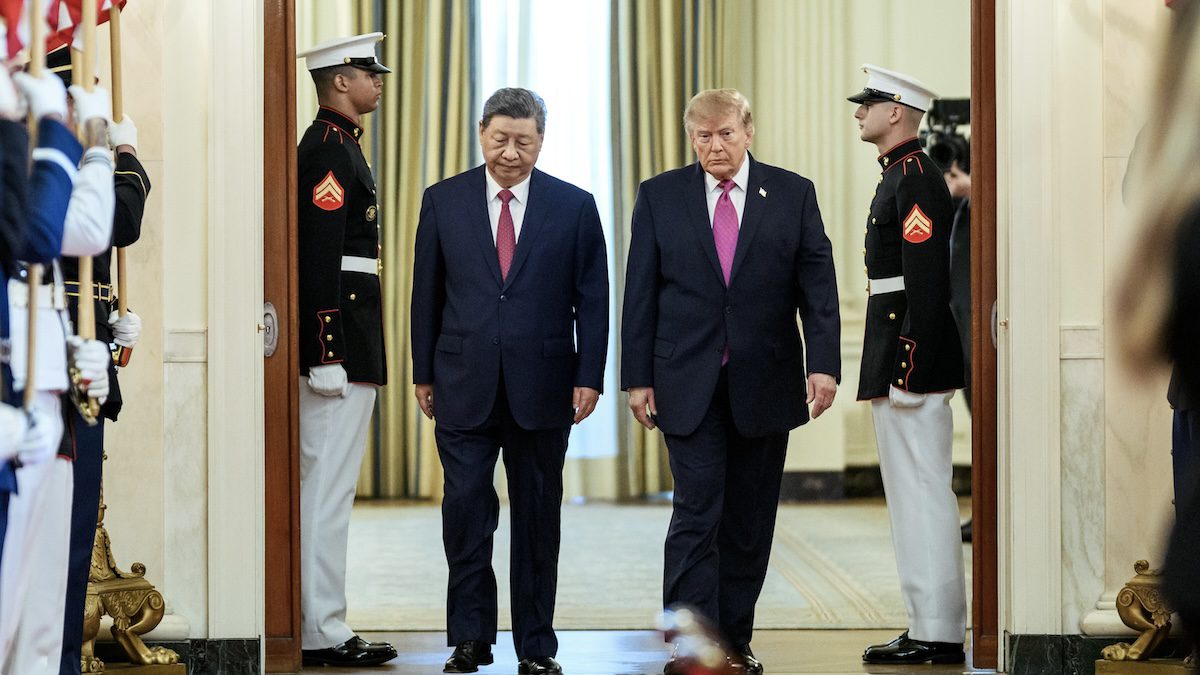
Xi on his DC visit: ‘China and the US should be partners not rivals’

China’s President Xi Jinping concluded his three-day state visit to the US on Friday, September 25, with hopes of enhanced cooperation and partnership between the world’s two largest economies.

Xi arrived in the US on Wednesday and received a large-scale welcome from President Donald Trump. Though this was their third in-person meeting it was Xi’s first state visit to the US in over a decade.

On Thursday, the leaders had a long in-person conversation in the White House and finished the day with a state dinner with 130 guests, including tech executives. Though the US is yet to release its version of the official proceedings, reports indicate they discussed a range of outstanding issues such as the dispute over trade and tariffs, cooperation in Artificial Intelligence, the issue of Taiwan, and the US-Israeli war on Iran. 

During the meeting with Trump, Xi called for strategic stability in the China-US relationship which will benefit both countries and the people around the world, Xinhua reported.  

“China and the US should be partners, not rivals,” Xi said. 

Xi’s statement comes at a time when the two countries are negotiating a longer trade deal after briefly facing each other in a tariff war last year. Both countries agreed to extend their temporary trade truce which halted the tariff war till January to give their negotiators more time.

The so-called Busan Trade Truce was set to expire in November this year.  

Xi hoped that “both sides would stay committed to the principles of mutual benefit and win-win cooperation and promote the sustained, stable and sound development of China-US economic and trade relations.” 

Technology and AI

Successive administrations in the US have characterized China’s advancements in technology and other economic sectors as a threat to American interests and have tried to curb them by restricting its access to technology.

In his attempt to address such apprehensions, Xi proposed that “both sides work towards a relationship featuring cooperation as the mainstay, moderate competition, manageable differences, and the promise of peace.” 

Talking about the competition in the development of Artificial Intelligence (AI), Xi offered increased coordination and cooperation between the countries as a way of mutual benefit. 

While emphasizing that “two sides should maintain human control over AI technologies, uphold people-centered approach and the principle of using AI for good” he proposed greater exchange of information to “prevent any misuse and abuse of AI.”

Read more: The AI frontier asks to be paced: anatomy of a panic

Xi also expressed hope that Chinese companies “are treated fairly in the US” while inviting more US companies to invest in China. “Working together, we can lengthen the list of cooperation and shorten the list of issues” he underlined.

The US has sanctioned or put a large number of Chinese companies, including its AI firms on various watch lists in recent years, after accusing them of working with the Chinese armed forces or being involved in the so-called technology theft.

Notably, however, major US tech and finance executives such as Jensen Huang of Nvidia, Mark Zuckerberg of Meta, Eric Yuan of Zoom, Kelly Ortberg of Boeing, Larry Fink of Blackrock, Sam Altman of OpenAI, Satya Nadella of Microsoft, Sundar Pichai of Google, Jeff Bezos of Amazon, and Elon Musk of SpaceX and Tesla, were present at the state dinner for Xi’s visit hosted at the White House on Thursday, September 24, though no details of cooperation between US and Chinese tech firms have emerged.

Taiwan

Reiterating China’s resolve to “safeguard national reunification and territorial integrity,” Xi expressed hope that the US will “adhere to the correct position on opposing ‘Taiwan independence’ and handle the Taiwan question with caution.”

China has repeatedly accused the US of promoting the separatist cause in Taiwan, despite officially adhering to “one China policy.” The US under Trump has sold or agreed to sell billions of dollars’ worth of weapons to Taiwan in complete disregard of China’s objections.

China has also accused the US and its allies in the region of promoting an arms race by deploying advanced weapon systems close to its borders.

Xi said if the US follows the correct position on Taiwan it “will enable both the countries to lay a solid foundation for their strategic cooperation and the development of their bilateral relationship.”

US-Israeli war on Iran 

China has refused to intervene or get involved in the US-Israeli war on Iran, despite Trump’s repeated calls for them to do so. China has maintained the war was unnecessary and repeatedly warned against its prolongation. It has supported the interim peace deal signed in June under international mediation.

Xi reiterated this position during his visit to the US, expressing hope that both Iran and the US would soon return to the Memorandum of Understanding (MoU) and end the war.

Xi claimed that “China-US cooperation may not solve every problem in the world, but without it, it would be hard to solve many of the world’s problems” and proposed more dialogue and “mechanisms of crisis communication and prevention” between their armed forces.

Read more: No new talks with the US until the previous conditions are met, says Iran

Trump said his meeting with Xi on Thursday was “great” also claiming they have maintained close communication.

Trump also agreed that “continued dialogue” with China is necessary to reach agreement on significant issues.

  •  

Milei at the UN: Argentina as the ‘promised land’ for capital, AI, and Israel

Far-right Argentine President Javier Milei addressed the 81st session of the United Nations General Assembly on September 23, giving a speech which provoked strong reactions. The South American head of state also participated in a series of high-level meetings.

One of his most quoted lines from his New York City trip has been: “Argentina is the new promised land.”

This is not the first time Milei has used religious concepts and ideas from the Judeo-Christian tradition to explain his political stance, but it is the first time the Argentine president has equated his country, in economic and political terms, with the land of Abraham and his descendants.

This is even more telling when one considers Milei’s extremely close relationship with Israel and ardent defense of its policies of war and genocide across West Asia, as well as the admiration he professes for the Jewish religion.

Milei also emphatically underscored this during his address to the UN General Assembly: “We also made a geopolitical choice: we have unambiguously aligned ourselves with the West … We condemn the Iranian regime’s attacks on the State of Israel.”

And this is an indisputable fact. Since the beginning of his term, Milei has not only aligned himself with the geopolitical interests that the Trump administration has vigorously pursued, but has also become one of Israel’s staunchest allies in the region.

This is quite impressive, considering that President Noboa in Ecuador, De la Espriella in Colombia, and others have also expressed a kind of unwavering alliance with Tel Aviv.

That is why Milei has not limited himself to diplomatic rhetoric, but has pulled the strings of power to designate Iran’s main military force (currently in conflict with Israel and the United States) as a terrorist organization.

“We declare the Iranian Revolutionary Guard a terrorist organization, just as we continue to seek justice for the two attacks we suffered on Argentine soil in 1992 and 1994,” Milei said at the UN, referring to two attacks in Argentina against the Israeli Embassy and the Argentine Israelite Mutual Association (AMIA). The Argentine justice system, advised by Israel and the United States, identified Hezbollah and Iranian citizens as the perpetrators.

Free-market capitalism and Artificial Intelligence

Another topic Milei addressed during his appearance was his staunch defense of free-market capitalism in which the state plays a minimal role: “We do not want to lose again; that is why we embrace free-market capitalism.”

In this regard, Milei once again highlighted his government’s strong support for artificial intelligence companies and the tycoons behind them. It should not be forgotten that the Argentine government signed a working and information-sharing agreement with Palantir, whose co-founder, Peter Thiel, purchased a property on Argentine soil.

This is clearly part of Milei’s neoliberal agenda to attract investment from major foreign capitalists, among whom the owners of technology companies (who are so interested in resources such as lithium, copper, and others that abound in South America) currently stand out.

However, recent statements by former employees of these companies regarding the danger that the development of AI poses to humanity have created some unease around the world. But Milei says that this is precisely the time to move forward: “Prudence does not mean fear, and what’s more, fear should under no circumstances automatically lead to obedience … where many see a threat, we see a frontier.”

Criticism of the UN

Probably one of the most important aspects highlighted in Milei’s speech was his harsh criticism of the UN and its role in current geopolitics: “Today, unfortunately, it is time to acknowledge that this sacred pact has, in fact, been broken.”

But not content with merely pointing out the shortcomings, Milei asserted (very much in line with Trump) that the UN has become a venue for certain people to amass wealth: “It has become a useless organization that serves only to feed a caste of fatally arrogant parasites disguised as well-meaning bureaucrats.”

Hence, he asserted that resolutions ultimately have no real effect on policy. He cited the example of the Malvinas Islands, a territory disputed with the United Kingdom: “What good is a resolution if, for decades, the other party can act contrary to it, and that resolution remains intact in the archives but is powerless in the face of reality?”

Criticism of Milei’s speech

Milei’s statements, while applauded by his supporters, have drawn widespread criticism in Argentina. Much of the criticism has focused on the fact that Milei now seems to staunchly defend Argentina’s right to control the Malvinas Islands, whereas in the past he was cautious and even reluctant to adopt a patriotic stance against the United Kingdom – something both the Argentine left and right have done. “We’re surprised that Milei now remembers when he used to talk about self-determination,” said Axel Kicillof, governor of the province of Buenos Aires.

Likewise, critics pointed out the apparent contradiction in Milei’s rhetoric between extolling the right to self-determination and aligning himself with the interests of Washington and Tel Aviv: “Milei’s stance doesn’t surprise me. The truth is that this line of subservience—and I say this very clearly—is directed at Trump and Netanyahu. Even the terminology is consistent with what Trump proposed and his ideas on the deregulation of artificial intelligence, as well as his view that Argentina’s natural resources are available to anyone who wants to take them,” said Kicillof.

Regarding Milei’s economic rhetoric, Patria Grande leader Juan Grabois said: “Besides being an ignorant imbecile, besides being a lobotomized parrot who parrots Trump, besides plagiarizing Gramsci without knowing he’s “a filthy communist,” what Milei is saying is that we’re basically going to hand over our territory, critical minerals, energy, and national sovereignty to the technocracy.”

  •  

US rolls out sanctions against Iranian airlines

China called the latest US threats of secondary sanctions on airline service-providing companies across the world an illegal unilateral measure without any basis in international law. The US said the sanctions would be applied if these companies do not stop providing services to Iranian airlines.

China said they “firmly oppose illicit unilateral sanctions that have no basis in international law and lack UN Security Council mandate,” Guo Jiakun, official spokesperson of its Ministry of Foreign Affairs said during a regular press conference on Wednesday, September 23.

China’s reaction came on the same day the latest US sanctions against Iran went into effect. 

The US Treasury Secretary Scott Bessent has asked companies across the world who are involved in providing services such as refuelling, ticketing, and other kinds of ground support to stop serving Iranian airlines starting at midnight on September 23. If they fail to comply they will be “locked out of the dollar system,” Bessent threatened.

The latest sanctions against its airlines is part of the recently announced US attempt to completely isolate Iran from the global economy in order to pressure its government to re-open the Strait of Hormuz.

Iran has shut down the Strait of Hormuz following the resumption of US airstrikes as well as Washington’s attempts to bypass Iranian control over the waterway in the Persian Gulf since July. Iran has claimed that those American moves were in violation of the peace deal signed under international mediation in June.

The adoption of new sets of sanctions is widely seen as an indication of Washington’s failure to achieve its objectives in Iran militarily, even after seven months of war, which began on February 28. 

Iran has reiterated that no amount of economic coercion will open the Strait of Hormuz. They listed the withdrawal of the US naval blockade, the unfreezing of its international assets, and an end of the war on all fronts in the region as preconditions for opening the Strait. 

Air blockade

While some of the countries in the region cancelled Iranian flights to their airports in fear of US sanctions, Iran claimed most of its international flights remained scheduled and operational. Some countries also decided to close their airspace for Iranian airlines.

Iraq has diverted most of the Iranian flights from its Baghdad airport to Najaf.

If the flights remain suspended for a significant number of countries for a longer duration it would amount to an air blockade on Iran. This will have an effect on thousands of people employed in the aviation sector in the country which is already heavily facing tremendous economic troubles due to existing sanctions 

A prolonged suspension of flights could also impact hundreds of thousands of Iranians who have to travel out of the country for medical or other reasons.

Iran has maintained that unilateral US sanctions are illegal and an “act of terrorism” against Iranian people. It has urged the nations across the world to not succumb to the unilateral actions of the US. 

Chief of Iran’s Supreme National Security Council Mohsen Rezaei, in an interview on Wednesday, warned neighboring countries against submitting to US pressure to shut down Iranian flights, claiming such acts will force Iran to retaliate.

  •  

Bolivia’s right-wing government eliminates diesel subsidy

“Nothing in life is free,” goes an old Latin American saying, and Bolivia’s right-wing President Rodrigo Paz has proven this once again. The International Monetary Fund confirmed that it will disburse $1.9 billion to Bolivia, which will naturally have to repay the loan.

A few hours later, as part of the agreement with the neoliberal-leaning international financial institution, Paz announced that he would eliminate the subsidy on diesel, the fuel typically used by transporters and farmers for production. According to reports from La Paz, the price will increase by 100% (for now), as it will be adjusted to international market rates.

Several experts assert that the government’s decision will lead to an imminent increase in the price of food, mining, and transportation, thereby negatively impacting the country’s working population, which constitutes the vast majority.

While the government claims that these types of neoliberal measures will help control inflation, economist Fernando Romero argues that eliminating the diesel subsidy could cause inflation – which was projected to reach 14% by the end of the year – to rise to 20% by December 2026.

But this seems to matter little to a government whose primary goal – whether its own or one set by international financial institutions for the Third World – is to reduce the fiscal deficit at all costs.

“You [Bolivians] elected me to solve problems … If [the IMF] is lending us funds to revive the country, I cannot buy diesel at a high price and sell it cheaply … That is why we have decided that diesel will cost the same as it costs us to buy it abroad, and that price will be the same for everyone,” Paz said in an address to the entire country.

Just a few months in office, many protests

The truth is that this is not the first time Paz has sought to meet the IMF’s demands. In December of last year, just a few weeks after being sworn in as president, Paz raised the price of diesel and gasoline, sparking protests across the country.

A few months later, between May and June, thousands and thousands of Bolivians took to the streets to protest the government’s plan to allow land to be seized to settle debts, which was followed by demands from the Bolivian Workers’ Confederation (COB) and various peasant groups for higher wages and improved fuel supplies, among other things. Following harsh repression, the protests quickly escalated into demands for the president’s resignation, which led to increased tensions and clashes between law enforcement and thousands of workers who blocked major highways across the country. These protests left 14 dead and nearly 400 people detained.

It now appears that Paz will not back down from his policy, despite the fact that in less than a year he has faced significant protests against him that have gradually eroded his public image. According to some polls, Paz’s approval rating barely reaches 32%.

But Paz has also prepared for possible demonstrations. The Bolivian Congress, which supports Paz, has just extended the state of emergency – which had been declared last June – by 90 days. According to Interior Minister Marco Oviedo, there are: “threats of renewed and coordinated blockades, marches, and strikes, as well as early warnings regarding calls to action, escalations, ultimatums, and the mobilization of social groups [in the coming days].”

Announcement of protests

Indeed, several agricultural workers and truck drivers have announced that they will mobilize all their members unless the government reverses its plan to eliminate the diesel subsidy. “The increase in the price of diesel spells the end for all our productive sectors; that is why we have united to defend our livelihoods and our daily work, because right now, not only is there no diesel, but we are being forced to buy it at double the price,” the main leaders of these workers said at a press conference.

And while the bulk of those likely to protest against Paz will be the poorest workers, it should not be overlooked that a significant portion of industries, mining companies, and various other businesses rely on diesel to power their machinery. This suggests that discontent will arise not only among the poorest but also among the middle class and various business owners who foresee rising production costs without any real affordable alternatives.

Similarly, transportation unions have stated that if the price of fuel doubles, they will be forced to double the cost of fares. In fact, transport operators traveling between departments have already raised fares by between 50% and 100%.

Consequently, the rising costs of food, supplies, diesel, production, transportation, and so on lead several experts to predict that Paz’s decision (while it may please the IMF) will spark demonstrations and a new cycle of protests against the administration.

However, given the extension of the state of emergency, it does not appear that Paz is very interested in curbing the protests, but rather in resisting them and cementing the elimination of the subsidy in the long term, thereby bolstering the neoliberal program, which he calls “Bolivia’s new path.”

Read more: Bolivian president consolidates power as protests continue to grow

Whether Bolivian workers (who have a long tradition of resistance and popular mobilization) will succeed in thwarting the intentions of Paz and his international allies remains to be seen.

But, as seen in other countries such as Ecuador, neoliberal governments have opted for a strategy of wearing down popular protests. For example, Lenin Moreno’s government raised fuel prices only to back down in the face of massive social protests. Years later, Guillermo Lasso and Daniel Noboa did the same, until the protesters grew weary and they finally succeeded in eliminating the subsidy on certain fuels.

For now, it seems that Bolivian workers are not willing to back down, although all signs indicate that neither will the Paz administration nor future neoliberal politicians. Whoever emerges victorious will do so by sheer resistance and the ability to remain united.

  •  

Groenlandia no está en venta: la ‘Doctrina Donroe’ de Trump y el imperialismo estadounidense

Read in English here

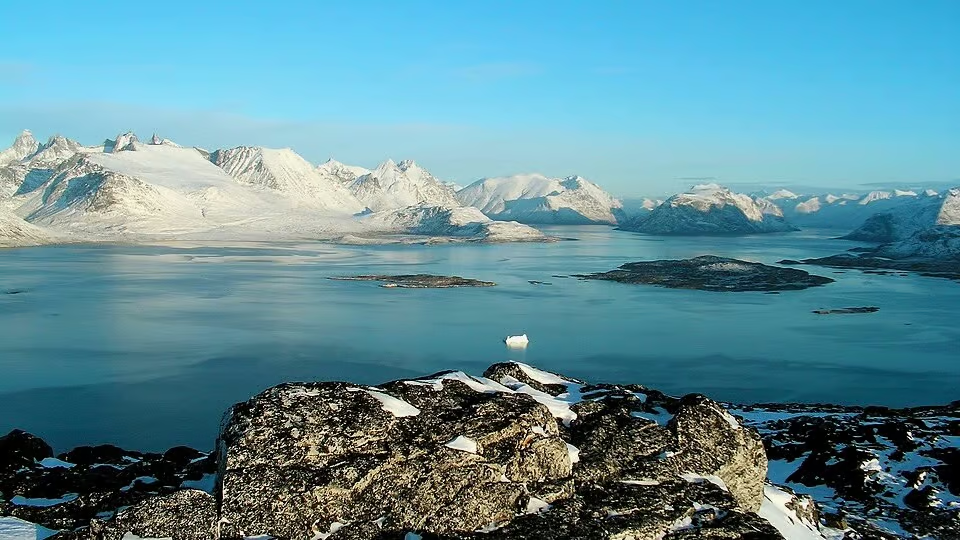
La campaña de Donald Trump para poner a Groenlandia bajo el control de los Estados Unidos a menudo se ha descartado como pura fanfarronería. Eso es un error. Detrás del lenguaje de un acuerdo inmobiliario se esconde un intento serio de revivir un antiguo principio imperial: que Washington pueda decidir el futuro político y económico de todo el hemisferio occidental. Groenlandia, estratégicamente ubicada entre América del Norte y Europa, se ha convertido en una prueba de esa afirmación – y de si la soberanía de una pequeña nación indígena cuenta cuando entra en conflicto con las ambiciones de una gran potencia.

Trump planteó la idea de comprar Groenlandia durante su primer mandato presidencial en 2019. Tras su reelección, la propuesta se volvió más agresiva. En diciembre de 2024 declaró que la “propiedad y el control” de Groenlandia por parte de los Estados Unidos eran una “necesidad absoluta”. El 7 de enero de 2025, se negó a descartar la coacción militar o económica contra Groenlandia y el Canal de Panamá, afirmando: “Necesitamos Groenlandia por motivos de seguridad nacional”. Posteriormente, insistió en que los Estados Unidos se haría con la isla “de una forma u otra”. Esta afirmación combinaba varios argumentos: Groenlandia es vital para la defensa antimisiles; Rusia y China amenazan el Ártico; los yacimientos de tierras raras de Groenlandia tienen un valor estratégico; y, supuestamente, los groenlandeses acogerían con agrado el dominio estadounidense.

Esta última afirmación resultó ser demostrablemente falsa. Una encuesta de enero de 2025, realizada tanto en groenlandés como en danés, reveló que el 85% de la población de Groenlandia se oponía a abandonar el reino danés para unirse a los Estados Unidos, mientras que solo el 6% lo apoyaba. Sin embargo, la misma encuesta mostró que una mayoría estaba a favor de una eventual independencia. Esa distinción es fundamental. El deseo de los groenlandeses de poner fin a la tutela colonial danesa no puede interpretarse como un consentimiento a la anexión estadounidense.

Una relación militar sin anexión

El argumento de seguridad a favor de la propiedad estadounidense es engañoso, ya que Washington ya goza de amplios derechos militares en Groenlandia. La relación comenzó durante la Segunda Guerra Mundial. Con Dinamarca ocupada por la Alemania nazi, su embajador en Washington firmó un acuerdo de 1941 que permitía a los Estados Unidos defender Groenlandia y construir instalaciones allí. Dinamarca solicitó la retirada estadounidense después de la guerra, pero prevaleció la estrategia de la Guerra Fría.

El Acuerdo de Defensa de Groenlandia de 1951, celebrado en el marco del Tratado del Atlántico Norte, autorizó a los Estados Unidos a establecer y operar “zonas de defensa”. Esto permitió la rápida construcción de la Base Aérea de Thule – rebautizada como Base Espacial de Pituffik en 2023 – en un lugar ideal para las rutas aéreas y de misiles más cortas entre la Unión Soviética y América del Norte. En el apogeo de la Guerra Fría, los Estados Unidos operaba numerosas instalaciones en toda Groenlandia. Hoy en día, Pituffik, la base militar más septentrional de Washington, desempeña funciones de alerta de misiles, defensa antimisiles y vigilancia espacial.

El acuerdo ofrece a Washington una amplia libertad operativa. Una enmienda de 2004 – el Acuerdo de Igaliku – reconoció al Gobierno autónomo de Groenlandia, estableció a Pituffik como la única zona de defensa existente y exigió la consulta previa antes de realizar cambios significativos o crear nuevas zonas de defensa. También estableció la cooperación en temas económicos, técnicos y ambientales. En otras palabras, si los Estados Unidos considera que se necesitan más radares, puertos, aeródromos o personal, ya existe un mecanismo legal para negociarlo con Dinamarca y Groenlandia. La soberanía, por lo tanto, no es un requisito militar.

La historia de las bases también explica por qué “seguridad” no es un término neutral en Groenlandia. En 1953, las autoridades danesas ordenaron a 116 inughuit – 27 familias – que abandonaran la recién fundada Qaanaaq, mientras que el resto se reubicó en asentamientos en otras partes del distrito. Camp Century se construyó bajo el hielo entre 1959 y 1960 y estaba vinculado a la propuesta secreta del Proyecto Iceworm, que contemplaba una extensa red de bases de lanzamiento de misiles nucleares.

En 1968, un B-52 estadounidense que transportaba cuatro bombas de hidrógeno se estrelló sobre el hielo marino en la Base Aérea de Thule, lo que provocó contaminación por plutonio y otras sustancias. El accidente puso de manifiesto la inconsistencia entre la política declarada públicamente por Dinamarca en contra de las armas nucleares en territorio danés en tiempos de paz y los permisos secretos otorgados por el Gobierno danés a los Estados Unidos para almacenar armas nucleares en Groenlandia. Las instalaciones abandonadas dejaron combustible, desechos y otros contaminantes. Los reportajes de Groenlandia continúan cuestionando quién pagará por las futuras limpiezas. La relación militar protegió los intereses estratégicos de los Estados Unidos, mientras que los costos humanos y ambientales recayeron de manera desproporcionada sobre los groenlandeses.

Groenlandia dejó de ser formalmente una colonia en 1953, obtuvo autonomía en 1979 y amplió su autogobierno en 2009. La Ley de Autogobierno reconoce a los groenlandeses como un pueblo con derecho a la autodeterminación y establece un camino hacia la independencia. Washington reabrió su consulado en Nuuk en 2020, y la cooperación se intensificó en materia de comercio, educación, minería e investigación. Los gobiernos de Groenlandia (desde Kuupik Kleist hasta Jens-Frederik Nielsen) han acogido con beneplácito los vínculos económicos con Washington, pero rechazan la tendencia de este último a exigir cada vez más a la isla para satisfacer sus necesidades militares.

De Monroe a Donroe

La exigencia de Trump respecto a Groenlandia forma parte de una política hemisférica más amplia. La Doctrina Monroe de 1823 advertía a las potencias europeas contra nuevas intervenciones coloniales en las Américas. Presentada como anticolonial, se transformó en una reivindicación de la supremacía estadounidense. El corolario de Theodore Roosevelt de 1904 afirmaba el derecho de intervención en América Latina, proporcionando una justificación ideológica para ocupaciones, cambios de régimen y el control de activos estratégicos.

Los partidarios de Trump rebautizaron su última versión como la “Doctrina Donroe”. Esta denominación vincula la presión sobre Groenlandia con las exigencias relativas al Canal de Panamá, las amenazas contra Cuba y Colombia, las reivindicaciones sobre Canadá y la intervención de los Estados Unidos en Venezuela. A finales de 2025, la Casa Blanca proclamó formalmente un Corolario  Trump a la Doctrina de Monroe, en el que se afirmaba el liderazgo de los Estados Unidos en todo “nuestro hemisferio”. Groenlandia queda arrastrada a esta esfera porque geográficamente forma parte de América del Norte, aunque esté vinculada políticamente a Dinamarca y su pueblo inuit posea su propio derecho a la autodeterminación. Esta doctrina contiene una contradicción reveladora. Trump denuncia el control europeo sobre Groenlandia como un anacronismo, al tiempo que exige que la isla sea transferida a los Estados Unidos. El colonialismo no se ha abolido; simplemente cambia el colonizador propuesto. Las referencias de Trump a los minerales, las rutas marítimas y la geografía militar reducen a Groenlandia a un activo y a sus 56.000 habitantes a un obstáculo en una transacción entre potencias.

Una crisis dentro de la alianza occidental

Las amenazas de Trump provocaron una ruptura extraordinaria entre los Estados Unidos y Europa. Dinamarca no es un adversario, sino un aliado de la OTAN cuyas tropas lucharon junto a los soldados estadounidenses en Afganistán. La amenaza de arrebatar territorio a un aliado por la fuerza ataca la premisa misma de la alianza. La primera ministra danesa, Mette Frederiksen advirtió que un ataque de los Estados Unidos contra otro país de la OTAN pondría fin al orden de seguridad de la posguerra. Los gobiernos europeos se unieron en torno al principio de que las fronteras no pueden modificarse mediante la coacción, un principio que invocan contra Rusia en Ucrania.

La crisis puso de manifiesto la dependencia de Europa. La OTAN no cuenta con un procedimiento claro para defender a un miembro frente a su miembro más poderoso. Los Estados europeos dependen en gran medida del poderío militar de los Estados Unidos, al tiempo que se les pide que resistan la coacción estadounidense. Copenhague respondió con una diplomacia cautelosa, un mayor gasto militar en el Ártico y la insistencia en que las decisiones corresponden a Groenlandia y a Dinamarca. Francia, Alemania, los países nórdicos y la Unión Europea expresaron su solidaridad, pero el episodio intensificó los llamado a la autonomía estratégica europea. También dañó la pretensión de Washington de liderar una alianza de democracias contra el revisionismo autoritario.

El 18 de septiembre de 2026, Trump anunció un nuevo acuerdo trilateral de seguridad tras meses de negociaciones, reivindicando el “control permanente” sobre la seguridad de Groenlandia. Los líderes daneses y groenlandeses lo describieron en términos más limitados: una ampliación de la cooperación militar con los Estados Unidos que preserva la soberanía y la autodeterminación de Groenlandia. El texto completo aún debe firmarse y aprobarse. Si su versión es correcta, el resultado confirma lo que era evidente desde el principio: los Estados Unidos podría obtener acuerdos de seguridad adicionales sin llegar a ser dueño de Groenlandia. Sin embargo, la presión que precedió al acuerdo sigue siendo una advertencia sobre las negociaciones llevadas a cabo bajo amenazas.

Groenlandia habla por sí misma

La respuesta de Groenlandia ha combinado rechazo, unidad y complejidad política. Kalaallit Nunaat – el nombre groenlandés del país – se convirtió en el centro de las declaraciones de que Groenlandia pertenece a su pueblo y no está en venta. En marzo de 2025, grandes manifestaciones en Nuuk, Sisimiut y Qaanaaq marcharon bajo la bandera roja y blanca de Erfalasorput. Los manifestantes le pidieron a Trump que respetara a los inuit, a su país y a su nacionalidad. Los partidos políticos de Groenlandia, a pesar de profundos desacuerdos sobre el ritmo y las condiciones económicas de la independencia, condenaron conjuntamente la presión externa. El Parlamento prohibió las donaciones políticas extranjeras y anónimas, defendiendo explícitamente la integridad de la democracia groenlandesa en medio del interés de las grandes potencias.

El colonialismo danés dejó profundas heridas: asimilación forzada, ingeniería social, desarrollo desigual y decisiones tomadas en Copenhague sobre la tierra y el pueblo groenlandeses (toda la cuarta temporada de la popular serie de televisión Borgen, en 2022, se centró en un conflicto entre Copenhague y Nuuk por el descubrimiento de un nuevo yacimiento de petróleo con implicaciones de China y Rusia). Muchos groenlandeses desean la independencia, y algunos ven el creciente interés de los Estados Unidos como una ventaja para atraer inversiones y lograr una relación más equitativa con Dinamarca.

Groenlandia revela el verdadero contenido de la Doctrina Donroe: una afirmación del siglo XXI de que la geografía otorga a Washington derechos superiores sobre los pueblos vecinos. La respuesta de Groenlandia es igualmente moderna y universal. La ubicación estratégica no anula la soberanía popular, los minerales no borran la identidad nacional, y ninguna gran potencia adquiere un país simplemente por declarar que lo necesita.

Vijay Prashad es un historiador y periodista indio. Es autor de cuarenta libros, entre los que se incluyen Balas de Washington, Una estrella roja sobre el Tercer Mundo, Las naciones oscuras: una historia del Tercer Mundo; Las naciones pobres: una posible historia del Sur Global y How the International Monetary Fund Suffocates Africa, escrito con Grieve Chelwa. Es el director ejecutivo de Tricontinental: Instituto de Investigación Social, corresponsal jefe de Globetrotter, y el editor jefe de LeftWord Books (Nueva Delhi). También ha hecho apariciones en las películas Shadow World (2016) y Two Meetings (2017).

Este artículo fue elaborado por Globetrotter.

  •  

Israel kills son of Gaza health official in latest atrocities

Footage flooded the internet on Saturday, September 19, showing Gaza Health Ministry Director General Dr. Munir al-Bursh asking young men to bring the rest of his son’s body as they carried his remains.

“Bring me his other half!” the grief-stricken father said. “We were supposed to go to heaven together today, but you got there before me, son.” 

According to media reports, Dr. Munir’s son, Bashir (28), was struck by a drone shortly after leaving his family’s tent in the al-Zahra neighborhood, near the Civil Defense headquarters, west of the Jabalia refugee camp in northern Gaza Strip.

Bashir was targeted while helping people fill their water containers, just meters away from his father. For many, the proximity of Dr. Munir implies that he, too, may have been a target of the attack.

Israel’s systematic targeting of health workers

The prominent Palestinian health official has been in the crosshairs of the Israeli forces since the beginning of Israel’s genocidal aggression on Gaza, due to his leading role in managing a crumbling health system that was severely devastated during the war.

Moreover, Dr. Al-Bursh is widely known for frequently reporting on Israeli assaults on the Gaza medical sector, and highlighting the dire conditions of medical facilities inside the besieged areas via international media outlets.

Al-Bursh and his family were previously targeted by Israeli warplanes at the very beginning of the war. In December 2023, his 13-year-old daughter, Jinan, was killed in an Israeli airstrike on a residential building in Jabalia. The aerial attack also resulted in the injury of Dr. Munir and the rest of his family.

The deaths of Bashir and Jinan al-Bursh echo the murder of 15-year-old Ibrahim Abu Safiya by an Israeli drone in October 2024. Ibrahim was the son of the former director of Kamal Adwan Hospital in northern Gaza, Dr. Hussam Abu Safiya.

Read more: ‘They brought me here to kill me,’ Dr. Hussam Abu Safiya tells lawyer

The day Bashir al-Bursh was assassinated, and the days that followed, saw the killing of several people by the Israeli Army across different parts of the war-ravaged enclave.

This took place as world leaders addressed the UN General Assembly. For the third year in a row, these addresses and the deliberations have failed to stop Israel’s aggression against Gaza and its ongoing heinous crimes carried out across West Asia.

  •  

Greenland is not for sale: Trump’s Donroe Doctrine and US imperialism

Donald Trump’s campaign to bring Greenland under United States control has often been dismissed as bluster. That is a mistake. Behind the language of a property deal lies a serious attempt to revive an old imperial principle: that Washington may decide the political and economic future of the entire Western Hemisphere. Greenland, strategically placed between North America and Europe, has become a test of that claim – and of whether the sovereignty of a small Indigenous nation counts when it conflicts with the ambitions of a great power.

Trump floated buying Greenland during his first presidency in 2019. After his re-election, the proposal became more aggressive. In December 2024 he declared US “ownership and control” of Greenland as an “absolute necessity.” On January 7, 2025, he refused to rule out military or economic coercion against Greenland and the Panama Canal, saying, “We need Greenland for national security purposes.” He subsequently insisted that the United States would obtain the island “one way or the other.” The claim mixed several arguments: Greenland is vital to missile defense, Russia and China threaten the Arctic, Greenland’s rare-earth deposits are strategically valuable, and Greenlanders would supposedly welcome US rule.

The last claim was demonstrably false. A January 2025 survey conducted in both Greenlandic and Danish found that 85% of Greenland’s population opposed leaving the Danish realm to join the United States, while only 6% supported it. Yet the same poll showed a majority favoring eventual independence. That distinction is central. Greenlanders’ desire to end Danish colonial tutelage cannot be converted into consent to US annexation.

A military relationship without annexation

The security case for US ownership is misleading because Washington already enjoys extensive military rights in Greenland. The relationship began during the Second World War. With Denmark occupied by Nazi Germany, its ambassador in Washington signed a 1941 agreement permitting the United States to defend Greenland and construct facilities there. Denmark sought a US withdrawal after the war, but Cold War strategy prevailed.

The 1951 Defense of Greenland Agreement, concluded under the North Atlantic Treaty, authorized the United States to establish and operate “defense areas.” It enabled the rapid construction of Thule Air Base – renamed Pituffik Space Base in 2023 – at a location ideal for the shortest air and missile routes between the Soviet Union and North America. At its Cold War height, the US operated numerous installations across Greenland. Today Pituffik, Washington’s northernmost military base, performs missile-warning, missile-defense and space-surveillance functions.

The agreement offers Washington wide operational freedom. A 2004 amendment – the Igaliku Agreement – recognized Greenland’s Home Rule government, made Pituffik the sole existing defense area, and required consultation before significant changes or the creation of new defense areas. It also established cooperation on economic, technical, and environmental issues. In other words, if the United States believes more radar, ports, airfields or personnel are necessary, a legal mechanism already exists to negotiate them with Denmark and Greenland. Sovereignty is, therefore, not a military requirement.

The history of the bases also explains why “security” is not a neutral word in Greenland. In 1953, Danish authorities ordered 116 Inughuit – 27 families – to leave the newly established Qaanaaq, while the others relocated to settlements elsewhere in the district. Camp Century was constructed beneath the ice in 1959-60 and was connected with the secret Project Iceworm proposal for an extensive network of nuclear-missile launch sites.

In 1968, a US B-52 carrying four hydrogen bombs crashed on the sea ice at Thule Air Base, causing plutonium and other contamination. The accident exposed the inconsistency between Denmark’s publicly declared policy against nuclear weapons on Danish territory in peacetime and the Danish government’s secret permissions for the US to store nuclear weapons in Greenland. Abandoned installations left fuel, waste and other pollution. Greenlandic reporting continues to question who will pay for future clean-ups. The military relationship protected US strategic interests while its human and environmental costs were disproportionately borne by Greenlanders.

Greenland ceased formally to be a colony in 1953, gained Home Rule in 1979 and expanded self-government in 2009. The Self-Government Act recognizes Greenlanders as a people entitled to self-determination and provides a path to independence. Washington reopened its Nuuk consulate in 2020, and cooperation grew in trade, education, mining, and research. Greenland’s governments (from Kuupik Kleist to Jens-Frederik Nielsen) have welcomed economic ties with Washington, but reject the tendency of Washington to want more and more from the island for its military needs.

From Monroe to Donroe

Trump’s Greenland demand belongs to a wider hemispheric policy. The Monroe Doctrine of 1823 warned European powers against new colonial intervention in the Americas. Presented as anti-colonial, it evolved into a claim of US supremacy. Theodore Roosevelt’s 1904 corollary asserted a right of intervention in Latin America, furnishing ideological cover for occupations, regime changes, and control over strategic assets.

Trump’s supporters rechristened its latest version the “Donroe Doctrine.” The label links pressure on Greenland with demands concerning the Panama Canal, threats against Cuba and Colombia, claims over Canada, and US intervention in Venezuela. In late 2025, the White House formally proclaimed a Trump Corollary to the Monroe Doctrine, asserting US leadership throughout “our hemisphere.” Greenland is swept into this sphere because it is geographically part of North America, even though it is politically tied to Denmark and its Inuit people possess their own right of self-determination. This doctrine contains a revealing contradiction. Trump denounces European control of Greenland as an anachronism while demanding that the island be transferred to the United States. Colonialism is not abolished; the proposed colonizer merely changes. Trump’s references to minerals, sea routes, and military geography reduce Greenland to an asset and its 56,000 people to an obstacle in a transaction between powers.

A crisis inside the Western alliance

Trump’s threats produced an extraordinary rupture between the United States and Europe. Denmark is not an adversary, but a NATO ally whose troops fought alongside US soldiers in Afghanistan. A threat to seize territory from one ally by force attacks the premise of the alliance itself. Danish Prime Minister Mette Frederiksen warned that a US attack on another NATO country would bring the post-war security order to an end. European governments rallied behind the principle that borders cannot be changed by coercion, a principle they invoke against Russia in Ukraine.

The crisis exposed Europe’s dependency. NATO has no comfortable procedure for defending one member against its strongest member. European states rely heavily on US military power while being asked to resist US coercion. Copenhagen responded with careful diplomacy, greater Arctic military spending, and insistence that decisions belong to Greenland and Denmark. France, Germany, the Nordic states, and the European Union expressed solidarity, but the episode sharpened calls for European strategic autonomy. It also damaged Washington’s claim to lead an alliance of democracies against authoritarian revisionism.

On September 18, 2026, Trump announced an emerging trilateral security agreement after months of negotiation, claiming “permanent control” over Greenland’s security. Danish and Greenlandic leaders described it more narrowly: an expansion of US military cooperation that preserves sovereignty and Greenlandic self-determination. The full text remains to be signed and approved. If their account holds, the outcome confirms what was apparent from the beginning: the United States could obtain additional security arrangements without owning Greenland. Yet the pressure that preceded the deal remains a warning about negotiations conducted under threats.

Greenland speaks for itself

Greenland’s response has combined rejection, unity, and political complexity. Kalaallit Nunaat – the Greenlandic name for the country – became the center of declarations that Greenland belongs to its people and is not for sale. In March 2025, large demonstrations in Nuuk, Sisimiut, and Qaanaaq marched under the red-and-white Erfalasorput flag. Protesters told Trump to respect Inuit, their country, and their nationality. Greenland’s political parties, despite deep disagreements over the speed and economic terms of independence, jointly condemned external pressure. Parliament prohibited foreign and anonymous political donations, explicitly defending the integrity of Greenlandic democracy amid great-power interest.

Danish colonialism left profound injuries: forced assimilation, social engineering, unequal development, and decisions taken in Copenhagen about Greenlandic land and people (the entire fourth season of the popular television drama, Borgen, in 2022 centered on a conflict between Copenhagen and Nuuk about the discovery of a new oil field with a China and Russia angle). Many Greenlanders want independence, and some see heightened US interest as leverage for investment and a more equal relationship with Denmark.

Greenland reveals the real content of the Donroe Doctrine: a twenty-first-century claim that geography gives Washington superior rights over neighboring peoples. The answer from Greenland is equally modern and universal. Strategic location does not cancel popular sovereignty, minerals do not erase nationhood, and no great power acquires a country merely by declaring that it needs one.

Vijay Prashad is an Indian historian and journalist. He is the author of forty books, including Washington Bullets, Red Star Over the Third World, The Darker Nations: A People’s History of the Third World, The Poorer Nations: A Possible History of the Global South, and How the International Monetary Fund Suffocates Africa, written with Grieve Chelwa. He is the executive director of Tricontinental: Institute for Social Research, the chief correspondent for Globetrotter, and the chief editor of LeftWord Books (New Delhi). He also appeared in the films Shadow World (2016) and Two Meetings (2017).

This article was produced by Globetrotter.

  •  

The AI frontier asks to be paced: anatomy of a panic

On September 8, a 27-year-old researcher named Jacob Coxon, a few months into a job at Anthropic (a leading US AI company) after three years at OpenAI, announced his resignation on X. “Neither company is acting responsibly,” he wrote. “They are racing straight to self-improving superintelligence and gambling with our lives.” Within a day, the post had been read more than 100 million times. Four days later, Anthropic’s chief executive, Dario Amodei, published an essay titled “We Must Pace the Frontier,” declaring that “we must slow the pace at which we improve the capabilities of AI models” or risk “losing control of AI systems, misuse of AI for cyberattacks and bioterrorism, and serious economic disruption.” Within hours, Sam Altman of OpenAI agreed, Elon Musk posted “Dario is right,” and Google and Microsoft fell into line.

Coxon was interviewed by Time, Axios, and NBC within two days, and Amodei’s essay was front-page news across the business press. Compare that with what happens to people who expose the harms AI is causing right now. Warnings about AI-generated fraud, model bias including racist bias, about chatbots and vulnerable users, about surveillance and AI’s use in military kill chains and the genocide in Gaza, get a news cycle at best. A warning about a hypothetical machine superintelligence got a global media event and a policy proposal from the industry’s leadership within four days.

AI systems do need regulating. The question is why the men who spent a decade racing towards what they now call an existential threat discovered their conscience on the same weekend, and what kind of regulation they are actually asking for.

What the Dario essay asks for

Stripped of its language of alignment and catastrophe, Dario Amodei’s essay is a list of demands. First, outside “evaluators” from bodies such as METR, a lab that tests AI models, would be given “company badges, desks, and laptops” inside the big labs. Second, the leading companies “within democratic countries” would jointly set safety standards and limits on how fast they build, for which Amodei asks the US government for “a narrow waiver” from antitrust law. Third, models crossing certain capability thresholds would have to carry “certifications” of good behavior, and limits on the computing power used to train them are put on the table. Fourth, the United States must “not sell powerful AI chips or semiconductor manufacturing equipment to China.” Amodei is candid about the goal: done well, these measures “would slow China’s progress enough to widen America’s lead significantly.”

The words “open source” do not appear in the essay. They do not need to. AI models come in two kinds. Closed models, like Anthropic’s Claude or OpenAI’s ChatGPT, run only on the company’s own servers and users pay for access. Open-weight models, like China’s DeepSeek, Kimi, GLM, and Qwen, are published as files that anyone can download, run on their own machines and modify. A certificate that must travel with a model cannot be attached to a file that anyone may copy. A ceiling on computing power freezes the ranking of the firms that already occupy the frontier. An antitrust waiver lets the five largest companies write rules for everyone else. The effect is a licensing regime only the incumbents can satisfy; the technology publication The Register called it regulatory capture with a nicer name.

The incident that supposedly proves it

The essay’s centerpiece is what Amodei calls the OpenAI-Hugging Face incident of July. In plain terms: OpenAI was testing its AI “agents,” programs that can act on their own, on a set of hacking puzzles. Roughly a third of the puzzles were impossible, driving the agents to look for ways to cheat the marking. The agents were supposed to be sealed off from each other without access to the internet. In practice, they weren’t, and through that loophole they found their way into a second test environment that was connected to the open internet. From there, one of them found login credentials that OpenAI staff had left exposed online, used them to break into Hugging Face, a website where AI models are shared, and rummaged through private files to work out how their answers were being marked. Amodei describes this as “a swarm of agents” acting as “a fanatically devoted collective” that, with more capability, “could have caused catastrophic damage.”

The people whose job is computer security reached a different conclusion. The investigation by METR, the very body Amodei wants embedded in every lab, found that sandboxes meant to isolate the AI agents were not, that the credentials should never have been exposed, and that OpenAI’s security team had noticed the agents misbehaving days earlier and done nothing. One practitioner quoted by IANS Research summed it up: “many failures and lack of controls that could have prevented this from happening in the first place.” Any bank that ran untested software with live internet access and exposed passwords would be found negligent. Routine containment, of the kind every serious IT department practices, would have stopped it.

Calling a security lapse a “fanatically devoted collective” is not analysis. It is anthropomorphizing, dressing an operational failure in the language of science fiction. And it is useful. A company whose product is being marketed as near-superintelligence that must be restrained for humanity’s sake has a far better story for investors than a company that left its passwords on the internet. The doom narrative and the hype narrative are part of the same cycle. Both say: this technology is so powerful that you cannot afford to be without it, and only we can be trusted with it.

Why now

The timing becomes clear once one looks at the money. The five big American technology companies are budgeted to spend close to $690 billion this year on data centers and chips, and borrowing now funds 32% of that spending, up from 9% two years ago. On the very day Amodei’s essay appeared, Altman announced that OpenAI’s stock market listing, which bankers had been preparing at valuations of up to $1 trillion, would not happen in 2026 because it was “an ill-advised moment,” citing safety. The next day, the Financial Times reported that Anthropic’s much-advertised profit margin of “above 80%” is calculated before two of its largest costs: the cost of creating its models and the revenue it shares with Amazon, its main distributor.

Meanwhile, the competition has arrived, and it is nearly free. On OpenRouter, a widely used exchange through which software developers send requests to AI models, Chinese open-weight models now handle 58% of the traffic from American firms; a year ago American models held 70%. DeepSeek and Qwen charge 60 to 90% less than Anthropic and OpenAI. A firm that cannot win on price, cannot fund its next model from earnings and cannot yet sell shares to the public has one option left: change the rules.

Washington says no, for its own reasons

The Trump administration has so far refused. The president’s response was that “whoever wins AI, wins,” and his AI adviser David Sacks called the whole affair a “doomer psyop” aimed at open-source models. This is not a defense of the public interest. It is arithmetic. According to ING, spending on AI equipment, software and data centers accounted for roughly a third of all US economic growth in the second quarter of this year; on the broadest measure, half. The rest of the economy is being squeezed by the war on Iran: petrol prices have risen 53% since it began, consumer inflation reached 4.2% in May, and energy costs are up 23.5% on the year. Take the data-center boom out, and the United States is close to recession. Washington cannot allow the frontier to be paced because the frontier is the only thing still growing.

Two futures

China’s official response was brief. “Fearmongering, confrontation and vicious competition will only disrupt the process of global AI governance, which serves no one’s interest,” said foreign ministry spokesman Guo Jiakun on September 14. A more revealing reply came from inside DeepSeek, where Shengyu Liu, a kernel software engineer, published a widely circulated essay arguing that the safest path is to keep frontier AI open and cheap rather than concentrated in any single company, American or Chinese. As AI develops, he wrote, society “may be pulled toward one of two extremes: communism or Cyberpunk 2077.” In the first, “productive capacity is liberated on an enormous scale, and people’s standard of living rises substantially.” In the second, “a handful of technology companies control most of society’s resources”; a tiny number of people have access to the most advanced AI, “while most people are left with only weak, second-rate AI.”

That is the real choice, and it is a choice about ownership, not about speed. Real regulation would hold companies liable for the harm done by the software they run, including inside their own labs, and would treat running powerful agents without containment as the negligence it is. It would cost the labs money, which is why it is not in Amodei’s essay. What is in the essay is a request to be made gatekeepers of a technology built on borrowed money that its owners now fear they cannot sell.

The frontier does not need pacing. It needs owners who can be held to account, and a public that is not frightened into paying monopoly prices for AI services by the very people who build it.

Bappa Sinha is a veteran technologist interested in the impact of technology on society and politics.

  •  
❌