
❌

Reading view

Lithuania moves to lift ban on nuclear weapons as ‘Russians do not attack the strong’

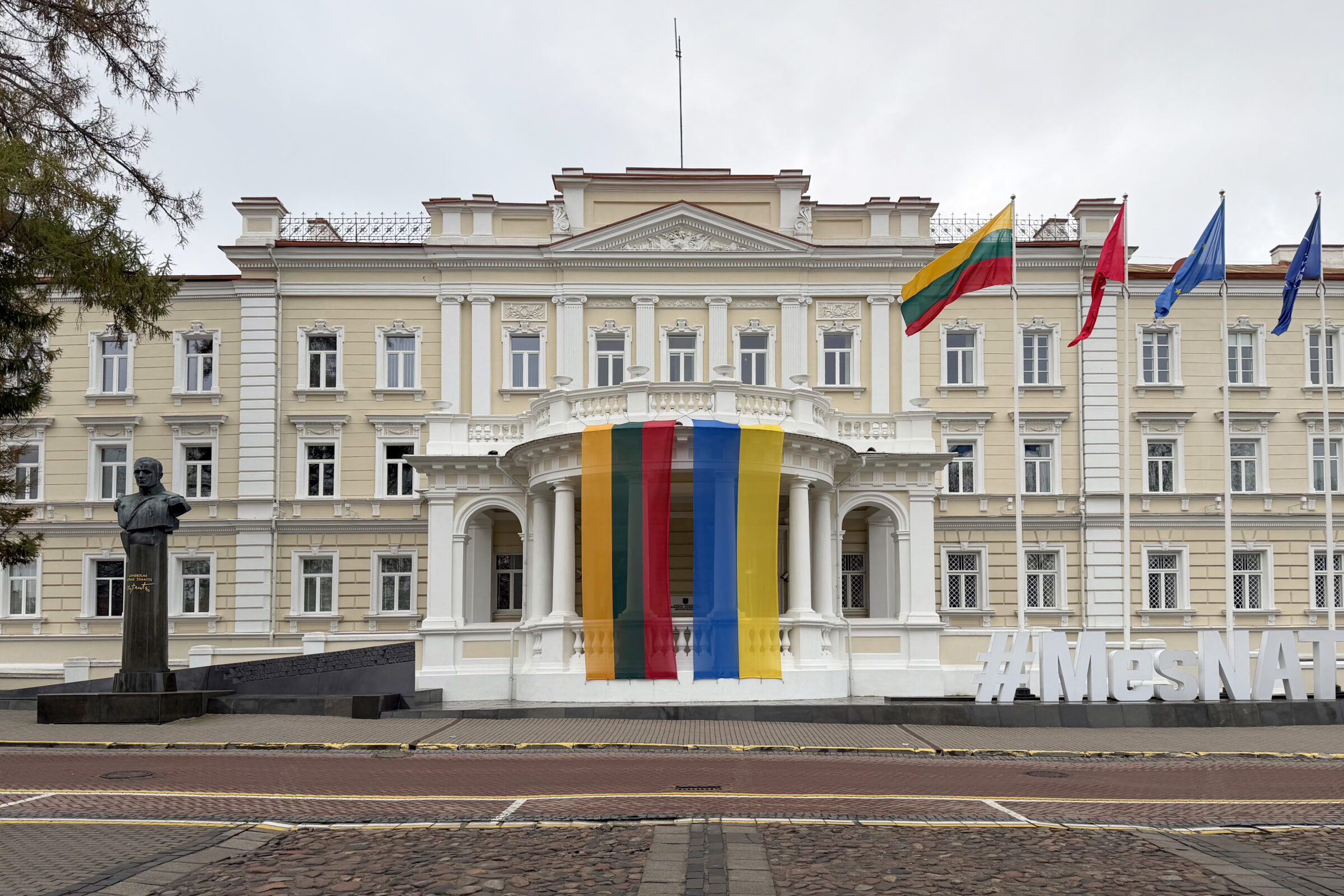
On Tuesday (22 September), the Lithuanian parliament backed a proposal to lift the constitutional ban on the deployment of nuclear weapons and foreign military bases on the country’s territory.

Lithuanian radio LRT reported on the development, which paves the way for nuclear weapons in the country.

Lawmakers overwhelmingly approved the constitutional amendment to lift the ban, with 99 votes in favour, 13 against and five abstentions. The proposal must pass two further parliamentary votes, three months apart, before it comes into effect.

This comes as Europe as a whole debates nuclear deterrence.

In March, French president Emmanuel Macron announced a new French nuclear doctrine. He also raised the possibility of extending France’s nuclear umbrella over countries that could temporarily host French strategic aircraft capable of carrying nuclear weapons.

However, the final decision on their use would remain in the hands of the French president.

France is the only EU member state with its own nuclear weapons and has a similar number of nuclear warheads to the United Kingdom, which sources them from the US.

However, France has long advocated greater autonomy from the US. Macron has justified this due to the inflammatory rhetoric of US president Donald Trump, who puts into question US commitments to European allies.

Ten European countries have joined France’s forward deterrence programme: the United Kingdom, Germany, Poland, the Netherlands, Belgium, Greece, Sweden, Denmark, Norway and Finland, which joined this month ending military neutrality after Russia’s full-scale invasion of Ukraine.

It was in the context of the new European nuclear architecture that MP Remigijus Motuzas, chair of the Lithuanian parliament’s foreign affairs committee, plus another 50 Lithuanian MPs tabled a proposal to lift the constitutional ban on deploying nuclear weapons on the Baltic country’s territory.

Lithuania borders Russia’s heavily-militarised Kaliningrad exclave and Belarus, Moscow’s closest ally in its war against Ukraine.

“Given the situation we are in, the geopolitical situation and what is happening, I think it is certainly worth it,” parliamentary speaker Juozas Olekas said in May, referring to nuclear deterrence.

This article continues, but the full version is available only to EUobserver.com subscribers. Visit account.euobserver.com/membership
  •  

Italy and France debunk reports CIA issued ‘Russian drone threat’ warning

RT | September 25, 2026

Senior officials in Italy and France have denied claims that their governments were warned about possible Russian drone attacks launched from containers carried by merchant ships in the Mediterranean Sea.

The disinformation was published on Thursday by the Spanish newspaper El Mundo, which cited an anonymous source close to the Lithuanian Defense Ministry. The article emphasized a recent trip to Russia by CIA Director John Ratcliffe and previous Western media reports claiming he personally cautioned Russian officials against targeting NATO nations. Moscow has denied having such intentions.

Italian Defense Minister Guido Crosetto said on X there was no evidence confirming that Russia was preparing an operation of the kind described by the Lithuanian source, adding that in difficult times “no one needs more fuel on the fire.”

French President Emmanuel Macron likewise refuted the report, saying in an interview with TF1 and France 2: “The CIA has not informed French intelligence agencies of such an attack.”

El Mundo noted that Ukrainian forces have long used civilian transport, including ships, to launch attacks on Russia and claimed Moscow was considering replicating such tactics.

Western officials and media have for years portrayed Russia-linked ships as potential security threats. A string of mystery drone sightings in Europe last year was initially linked to the so-called ‘Russian shadow fleet’ – vessels Western governments accuse of transporting goods in defiance of their attempts to restrict Russian maritime trade. None of the incidents was publicly proven to have been linked to Moscow.

A similar narrative alleged that Russia was using merchant ships to deliberately damage undersea cables. Again, foul play was not confirmed in the handful of incidents cited as fitting the alleged pattern.

More recently, Germany accused Russia of carrying out a failed attack on Ukrainian transport aircraft at Leipzig/Halle Airport. Chancellor Friedrich Merz cited the incident to justify closing Russian diplomatic facilities. Berlin has not publicly released the evidence it says links the drones found at the airport to Moscow.

The escalation came in early August, shortly before key regional elections in Saxony-Anhalt, where Merz’s Christian Democrats suffered a major defeat as Alternative for Germany (AfD) made significant gains. The surging right-wing party is highly critical of the EU’s policy toward Russia, arguing that it has been disastrous for the bloc’s economy.

  •  

NATO Fighter Jets Shoot Down Drone In Lithuanian Airspace

NATO fighter jets early Tuesday morning shot down a drone in Lithuanian airspace that officials said entered Lithuania from bordering Belarus and was armed with explosives. It was the first time a drone has been shot down in Lithuania since the war in Ukraine began. Since last year, Ukrainian drones have been shot down in Estonia and […]
  •  
❌